Showing posts with label Deanna Durbin. Show all posts

Wednesday, 1 May 2013

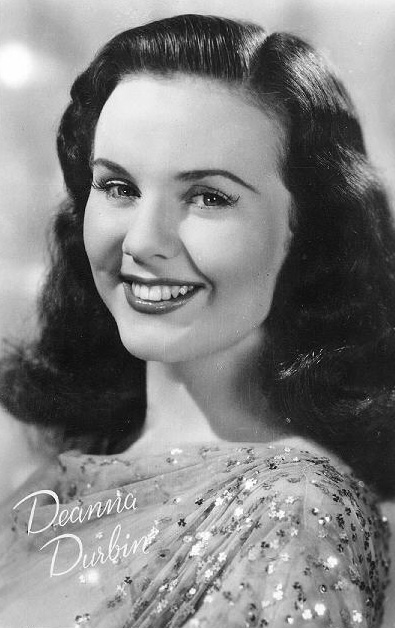
Deanna Durbin RIP


Deanna Durbin, who has passed away aged 91, was a performer of almost supernatural talents.

Not just the voice - that voice - as beautiful an instrument as the movies have ever heard, but the dramatic chops that meant Renoir was desperate to work with her (and which led to some of the loveliest moments of the Golden Age), and that ever-underrated comic ability, incorporating a singular, faux-grown-up "lovestruck" mode, rolled out at regular intervals ("I know, David"), that remains one of the great joys of cinema.

Not all of her pictures were great - she thought the last four so poor that she quit movies and went to live in France - but she was an unfailingly magnificent screen presence, and, when the scripts were worthy of her gifts, the results were just spectacular. 100 Men and a Girl was Churchill's favourite movie (he used to watch it as a treat after major military victories) and the success of that and her other starring vehicles saved Universal studios. Without Durbin, no Destry Rides Again, Jaws, E.T., Back to the Future or Happy Gilmore (sorry about the last one).

Deanna had only pitched up at Universal after being snubbed by MGM. She'd appeared in a two-reeler with Judy Garland, intended as a glorified screen test. MGM could only take on one of them. "Get rid of the fat one," said studio head Louis B Mayer. They got rid of Durbin. He meant Garland. Nice guy.

Her mentor, Joe Pasternak, famously passed up any credit for spotting her talent, declaring: "Deanna's genius had to be unfolded, but it was hers and hers alone, always has been, always will be, and no one can take credit for discovering her."

And genius isn't too strong a word for what she had. When she broke into song, the other actors were usually required to just stare slack-jawed in amazement, or burst into tears. It can't have been hard: I'm usually doing the same thing. Not many comedians could elicit so many laughs from such erratic material, and only a handful of actresses could carry a movie on their shoulders like Durbin. But it's the voice - that voice - that deserves the final word. It's technically flawless but it's also wrenchingly powerful, thanks to the abundance of emotion she invests in everything she sings. Her heartbreaking balladeering on songs like Goin' Home and I'll Take You Home Again Kathleen destroys me. Precious few singers have ever moved me so deeply.

***

Here's a quick primer on one of the greatest talents ever to grace a cinema screen.

Six essential recordings:


My Own (from That Certain Age)
Ave Maria (from It's a Date)
There'll Always Be an England (from the British print of Nice Girl?, a sort of Easy A for the late '30s)
Goin' Home (from It Started with Eve, opposite the mighty Charles Laughton - sorry about the squashed image)
Nessun Dorma (from His Butler's Sister, which sounds like a made-up '40s movie, but really does exist)
I'll Take You Home Again Kathleen (from For the Love of Mary, an iffy romantic comedy about romantic complications at the White House)

***

Six essential films:


Three Smart Girls (Henry Koster, 1936)
A starmaking vehicle, model romantic-comedy and peerless helping of Depression-era escapism all in one, as Durbin - in her feature debut - appears as bright-eyed 14-year-old, Penny Marshall, who reunites her parents with the help of two older siblings. It's funny, moving and wonderfully uplifting, with great numbers and a notable early role for Ray Milland. Durbin is introduced bellowing My Heart Is Singing at the top of her lungs, as is only right. This box-office smash was followed by two sequels: the first is well-acted but overly glum, the second a bit of a slog.

Mad About Music (Norman Taurog, 1938)
Swiss-set boarding school shenanigans, with film star's daughter Durbin pretending her dad is a holidaying composer (Herbert Marshall). A particular treat for fans of people singing whilst riding around on bicycles, and a sweet, perfectly-formed little film.

That Certain Age (Edward Ludwig, 1938)
Deanna grows up, a little, in this completely charming age-gap rom-com, written by Billy Wilder and Charles Brackett, falling for suave middle-aged man Melvyn Douglas, much to the disgust of her suitor, Jackie Cooper. It includes Durbin's spellbindingly beautiful rendition of My Own, which got a Best Song nom.


Spring Parade (Henry Koster, 1940)
The hardest to find of all Durbin's films - it was missing from the 19-disc DVD retrospective, along with It's a Date - but well worth the effort. Cleverly integrating romance, song and dance, it has a feel all its own, with a rich (Americanised) Viennese atmosphere fashioned on a Hollywood soundstage. Durbin's four songs are all sensational.

The Amazing Mrs Holliday (Bruce Manning, 1943)
This is easily the worst film on the list, but it's also perhaps the most interesting: a WWII drama, originally directed by Jean Renoir, that was bashed into the shape of a weak, family-orientated rom-com after Universal got cold feet over the rushes. Durbin gives a sensitive, beguiling dramatic performance - by far the best of her career - and her reading of Mighty Lak' a Rose is extraordinarily moving.

Lady on a Train (Charles David, 1944)
Back in the game! After a few misfires, Durbin came roaring back, her hair bleached blonde, with this Christmas-set fusion of comedy, whodunit and film noir. She's brilliant, leading man David Bruce is hilarious and there's a stunning supporting cast featuring Edward Everett Horton, Ralph Bellamy, Samuel Hinds, Allen Jenkins and Dan Duryea. The numbers include a lovely reading of Silent Night that's curiously imagined but exquisitely sung, the sultry Give Me a Little Kiss, and Cole Porter's Night and Day, cleverly staged and given a complex, tom tom-led arrangement. She appeared in one other noir, Christmas Holiday, directed by genre legend Robert Siodmak, and co-starring Gene Kelly. That's a muddled, overly melodramatic film, but her fascinating turn just about keeps it afloat.

***

If you get a chance to see a Durbin picture, don't pass it up. Perhaps the final few weren't so hot, but she was always incredible to watch, and her vocal numbers are unfailingly magnificent. She'll be much missed, but at least she lived a long and happy life, giving it all up to do what she really wanted. (Incidentally, the bit about her last four movies inspiring her retirement was an exaggeration, but there is some truth behind it. See her only post-retirement interview for more.)

RIP Deanna Durbin.

Tuesday, 15 May 2012

Edison, explosions and Deanna Durbin - Reviews #115

Presenting MGM's two-part Thomas Edison biopic, Douglas Fairbanks' silent swansong and Aziz Ansari helping his mate rob a bank, in the latest reviews round-up.


Young Tom Edison (Norman Taurog, 1940) - Captivating Americana based on the boyhood of the famed inventor, played here by Mickey Rooney, who is kicked out of school for his intense inquisitiveness - and his habit of staring out the window, and that big explosion - is branded "addle-pated" by the townsfolk, but ultimately comes good. Rooney's stock persona was as a brash, cartoonish know-it-all who gets a lesson in humility (at which point he starts crying and saying sorry), but his best performances came when he was asked to calm down and actually act, doing extraordinary work in The Human Comedy and National Velvet. He's superb here - using slightly broader strokes than in those seminal later performances - and surrounded by a cast of top character actors, including Virginia Weidler as his affectionate sister, Fay Bainter as his protective mother and George Bancroft as a stern patriarch with impressive sideburns but an unfortunate propensity to ignore his son's protestations of innocence. It's a wonderfully-mounted production, with a literate script that mixes things that actually happened, things you wish had happened and MGM staples like the family sing-along. And it climaxes with two extraordinary, unbearably tense suspense sequences. If you're a cynic, just don't bother. For everyone else, this is a rosy primer on Edison's early years and a poignant, exciting and flavourful example of MGM at its absolute best. (4)


Edison, the Man (Clarence Brown, 1940) - The second part of MGM's Ed-stravaganza, prepared by the same producers, was released two months later but featured an all-new cast, with the story picking up a good decade later. It's a more conventional biopic, with an unnecessary framing device and the needless fabrication of a villain (though if they were going to insist on a chubby, selfish financier standing in the way of progress, at least they had the decency to make it Gene Lockhart), but the story is engrossing, MGM's top production values are still much in evidence and there's a good central performance from Spencer Tracy - if not one of his very best. Incidentally, he was so affronted that the film didn't get nominated for a Best Picture Oscar that he never attended the event again. (3)

***


The Long Kiss Goodnight (Renny Harlin, 1996) - Amnesiac Geena Davis delves into her past with the help of a low-rent PI (Samuel L. Jackson) and discovers that she used to be a deadly assassin. Meanwhile, her psychotic old adversaries find out she's still alive. This Shane Black concoction is shlocky, ridiculous and morally confused, but also incredibly entertaining, with a great performance from Jackson, dozens of brilliant jokes and a knowingly over-the-top climax that is one of the funniest, silliest and best things I've seen so far this year. (3.5)

***


*SPOILERS*
It Happened Here (Kevin Brownlow and Andrew Mollo, 1966)
- Brownlow and Mollo's film has some bad acting and confusing plotting, but achieves something truly remarkable in convincing you that the Nazis really did occupy Britain during World War Two, and that Our Finest Hour was shortly followed by Our Collapse and Our Shameful Period of Collaboration, with Jewish areas ghettoised, resistance fighters betrayed and sick men euthanised. It's also remarkable in failing to provide any moral heroics - or moments of catharsis - while articulating with invigorating intelligence and a clear understanding of history and rhetoric exactly how collaboration would have been justified. A shame, then, that it starts so poorly and that the documentary levels of realism are undermined by the non-professional cast. (3)

***


The Big Year (David Frankel, 2011) - "Birders" Jack Black, Owen Wilson and Steve Martin compete to spot the largest number of species in a calendar year, in this sweet-natured comedy-drama. Gratifyingly - given the presence of Black and Martin - it leans towards realism rather than zaniness, and while there are no real belly laughs or revelations, it's all very pleasant. (2.5)

***


*SPOILERS*
The Iron Mask (Allan Dwan, 1929)
- Douglas Fairbanks' farewell to silent swashbucklers has one of the greatest openings to a film I have ever seen - including D'Artagnan's exquisite, playful courtship of Constance - and climaxes with an utterly staggering final scene. What comes between is often excellent, but sometimes undermined by serving Dumas' story too slavishly, with dense plotting at the expense of action and character drama. It's still a great movie, better in fact than The Three Musketeers, with many wonderful vignettes and a fittingly heavy human cost that is rare in Fairbanks' films. (3.5)

See also: I've written reviews of Fairbanks' classic films Robin Hood and The Black Pirate right here.

***


*SPOILERS*
Pretty in Pink (John Hughes, 1986)
- Hughes's best film is an affecting teen drama about lovers from literally the opposite side of the tracks. Molly Ringwald is all homemade clothes and vaguely subversive socio-political leanings, while Andrew McCarthy is a "richie". Their budding romance is threatened, ahead of the prom, by their suspicious friends, including Ringwald's obsessive suitor (Jon Cryer) - who likes round shades, fast patter and leaping around a record store miming to Otis Redding - and McCarthy's horny bleach-blonde buddy James Spader, who's a dick. The leads are very likeable - well, except for when he bails on her, and when she calls her acolyte a "retarded little dwarf" - but the really great performances come from Cryer, who's moving, funny and most importantly credible in a potentially cartoonish part, and Harry Dean Stanton, as Ringwald's depressive father. In some ways it's a typical Hughes movie - full of rock music, teen angst and drunken parties, everything dripping with '80sness - but it's more incisive, mellow and heartfelt, without concessions to either idiotic humour (hello, Sixteen Candles) or heavy-handed speechifying (The Breakfast Club, I'm looking at you). A little gem. (4)

***


It's a Date (William A. Seiter, 1940) - Deanna Durbin wants to be an actress like her famous mum (Kay Francis). So when she lands the role of a lifetime, she's understandably chuffed. Unfortunately, her mum thought she was going to get the part. And they both want to get off with the same guy (Walter Pidgeon). This transitional vehicle for former child star Durbin has its fair share of cliches and contrivances, but it's appealing, particularly well-photographed and seems to have a genuine understanding of acting and the theatre, courtesy of screenwriter (and playwright) Norman Krasna. As for Deanna, her character isn't as obviously sympathetic as usual - she's a bit of a drama queen - but her songs are mesmerising (including Loch Lomond, Love Is All, Ave Maria and an aria from La Boheme) and that "smitten" routine with the glazed eyes and steady voice that she does in the penultimate scene is absolutely hilarious. She had everything. The excellent supporting cast includes Cecilia Loftus, Eugene Pallette, Henry Stephenson, S. Z. Sakall and Samuel S. Hinds. (3) This was the last of Durbin's 21 features I got around to, and one of two still unavailable on DVD in the UK or US.

***


30 Minutes or Less (Ruben Fleischer, 2011) - Pizza delivery driver Jesse Eisenberg is having a bad day. He's just fallen out with his best friend (Aziz Ansari) when an annoyance with a goatee (Danny McBride) straps a bomb to his chest and tells him to rob a bank. This lively comedy-thriller boasts a hilarious performance from Ansari ("'Do you think Lisa will go out with me?' I don't think so - she's laughing in your face!"), great chemistry between the leads and an entertaining, twisty-turny narrative, but relies too much on unfunny sex gags in its first half hour and stops dead every time McBride turns up. I don't know why all those talented people on the DVD documentary are falling over themselves to praise him - he's a no-trick pony. (3)

Monday, 13 February 2012

Deanna Durbin - Reviews #99

I've talked about Deanna Durbin before, because she is awesome. For a quick potted history, go here. Here are a couple more reviews, dealing with her final film - and then perhaps her oddest.


For the Love of Mary (Frederick de Cordova, 1948) – Former child star Deanna Durbin has at least five classic musical comedies to her name, but she was notoriously critical of her final quartet of movies. "Just take a look at my last four films and you’ll appreciate that the stories I had to defend were mediocre, near impossible," she said in her only post-retirement interview. This, the last, is arguably the best of them (though Something in the Wind has Donald O'Connor doing an earlier version of his Make 'em Laugh routine), as she genuinely gives her all to a film in which she has to wear a fake moustache while serenading Don Taylor in a park with an aria from The Barber of Seville, before falling in a lake. It's a silly but pleasant love square, in which fish expert Taylor, lawyer Jeffrey Lynn and completely unsuitable light leading man Edmond O'Brien (playing a naval officer) compete for Deanna's affections. And as she's a White House switchboard operator, naturally the President and his secretary (Ray Collins) keep sticking their oar in. Presumably the Russians weren't up to much that month. There aren't many laughs, but it's generally entertaining and sustained by Durbin's lovely, unaffected central performance. She was such an appealing presence and she had a wonderful voice – her spellbinding reading of I'll Take You Home Again, Kathleen is the unquestioned highlight. It makes the hairs on the back of the neck stand up. Durbin retired to Paris the next year, aged 27, marrying Charles David, who had directed her in her last truly great film, Lady on a Train. (2.5)

***

Here's what happened when Jean Renoir tried to make a Deanna Durbin film:


The Amazing Mrs. Holliday (Bruce Manning, 1943) is an uneven, frustrating WWII comedy-drama, worth seeing for Deanna Durbin's sensitive, beguiling performance, the best of her adult career. She plays a schoolteacher and missionary's daughter who comes to America with a gaggle of war orphans and has to pose as the widow of a wealthy sea captain to keep them together. Then the dead guy's grandson (Edmond O'Brien) starts taking an interest. The film was started by Jean Renoir off the back of Swamp Water. He was a fan of Durbin and regarded her as "ravishing", but dropped out of the project after interference from the studio, Universal. (We are talking about a man who didn't finish perhaps his greatest film, Partie de campagne, because it was raining.) His brilliantly-directed rustic footage is used as a flashback and offers a tantalising glimpse of what might have been, before apparent plans for a grown-up, humanist drama somehow morphed into this clumsy amalgam of effective sentiment, forced conflict (the plotting really doesn't make sense) and laboured comedy. The director said later that Durbin was "imprisoned by the genre that made her a success" - one he could not master - and criticised both the script and the manner of improvisation encouraged by producer Bruce Manning. Though two-thirds of the finished film was apparently shot by the French director, much of that was under pressure from executives following round-table discussions. Having taken over, Manning pieced together the existing footage and shot new scenes, including extra musical numbers.

The movie is at its best in the gentler moments, Durbin's nuanced characterisation to the fore, her expressive face articulating fear, resolve and quiet sorrow. There's one particularly striking close-up of the star that has Renoir's pawprints all over it. In contrast, the film's comic interludes seem incongruous and completely unnecessary, aside from a brilliant cameo from Gus Schilling near the end that comes out of nowhere and is hysterically funny. NB to Universal: if you're going to cast aside your potential masterpiece in the name of commerciality, at least try to include a few good jokes. Durbin's music is typically transcendent, particularly the glorious version of Mighty Lak' a Rose, though the numbers are shoehorned in even more arbitrarily than usual (her less inventive films tend to climax with a big charity fundraiser in which she sings). Elsewhere, peacetime makes the propagandist opening a bit of an uncomfortable watch, while time itself has rendered the billing of one young actor as simply "THE CHINESE BABY" slightly unacceptable.

It's not a great film, but for classic film fans it's essential viewing as both a picture of Durbin at the peak of her powers, and a curio: another cautionary tale of what happens when a maverick goes head-to-head with a massive fucking corporation. (2.5)

Saturday, 26 November 2011

Nine things I like about movies - Part One

... in which I shine a big fat light on films, scenes and movie folks deserving of greater recognition, with the help of words and videos. Nine at a time. I'm not sure why it's nine. This first instalment features backflipping, the Depression and a couple of policemen trying to decide who would win in a fight between a tuna and a lion.

Why not tell me your own below? Oh go on, it'll be fun.


1. The Nicholas Brothers
You know Fred Astaire? That guy who was the finest hoofer of all time? He thought the Nicholas Brothers' Jumpin' Jive routine in Stormy Weather was the greatest dance number ever filmed - and who am I to disagree? (Well, I'm Rick, and I think Fred was being modest. Let's Face the Music and Dance is the best.) This astonishingly athletic duo - real-life brothers Fayard and Nicholas - debuted in early-30s shorts, when Harold was just 11, then made a name for themselves through extraordinary routines that typically began with some rhythmic shuffling, then built exponentially, until by the end they were skipping with handkerchiefs, leaping over each other's heads while doing the splits, or backflipping. Fox, who held their contract in the early-'40s never incorporated the pair into the plots of their films, meaning they could snip the stand-alone scenes from musicals when they played in racist areas of the South. Yes, you read that right. If you've got a few minutes spare some time this week, you should really check out these numbers - three of their best - as they're just about the most amazing thing ever to happen on a cinema screen.

Things for you to watch and enjoy:
Chattanooga Choo Choo (also featuring Dorothy Dandridge), from Sun Valley Serenade
Down Argentine Way from Down Argentine Way
Jumpin' Jive from Stormy Weather.
Be a Clown from The Pirate. If you recognise the tune, it was purloined - uncredited, I believe - for the Make 'em Laugh number in Singin' in the Rain.

***


2. Frank McHugh
"Haaaaaerh... haaaaerh... haaaaerh." The best laugh in the movies (referred to by fans as the "one, two, three") belonged to the best character comic of the Golden Age - though McHugh did star in a couple of features: He Couldn't Say No, opposite an improbably-smitten Jane Wyman (they generally occupied different strata in the star stakes), and Three Men on a Horse. McHugh, much admired by contemporary and friend James Cagney, could play it straight as well as most - check out his moving performance in the teary One-Way Passage - but it was as an affable, often confused comic foil that he excelled. Who else could have kept up with William Powell's tour-de-force in I Love You Again? McHugh did - and perhaps even surpassed him - with that drunken phone call to Edmund Lowe. And he's just bloody amazing leading a superb ensemble in Three Men on a Horse. In fact, you could argue that the three funniest comedies of the '30s and '40s all feature McHugh: that, I Love You Again and Blessed Event.

Become an instant fan here:
From McHughTube, lol lol lol, a funny moments montage with lots of spoilers.

***


3. Three Smart Girls (Henry Koster, 1936)
The pinnacle of Deanna Durbin's career: a blissful mix of comedy, romance and lovely music. Canadian child star Durbin - an ordinary kid with an extraordinary operatic voice - was a simply terrific performer and she's in her element here: powering a sentimental, wonderfully entertaining movie that's a bit like The Parent Trap, but with songs instead of twins. Though he sometimes claimed otherwise for propaganda purposes, Durbin's breakthrough film, One Hundred Men and a Girl, was Churchill's favourite movie. Both are available as part of various box-sets, or on their own.

For your delectation:
The trailer.

***


Decent quality pics in short supply, I'm afraid.

4. How Could You Believe Me When I Said I Love You, When You Know I've Been A Liar All My Life (from Royal Wedding)
The MGM number with the longest title of all, and one of my favourites. Hilarious, invigorating and exhilarating, especially when the beat speeds up and Fred starts striding around the stage, being all awesome. It's from Royal Wedding, which has four or five of the greatest musical interludes of all time, but devotes too much of its running time to Winston Churchill's daughter Sarah (Fred's worst leading lady), rather than the excellent Jane Powell.

Because I am nice:
The full routine in all of its considerable glory.

***


5. Joan Leslie
The most purely likeable actress ever to grace the screen - a fine actor, brilliant reactor, top dancer, great singer and master of the cartoonish expression later popularised by Debbie Reynolds. She starred with Gary Cooper, Cagney and Astaire, and even played herself - as a romantic lead - in wartime flagwaver Hollywood Canteen.

Now see her in action:
Joan performing A Lot in Common with You with Fred in The Sky's the Limit.

***


6. Remember My Forgotten Man (from Gold Diggers of 1933)
The production number to end them all: a jaw-dropping crystallisation of Depression-era America in which the myriad ills and marauding malaises afflicting the Land of the Free are paraded across the screen for seven whole minutes. Crippled soldiers sold out by their nation, gaunt, starving widows and bereaved old women take the place of chorus girls, before the massed ranks of the proletariat march relentlessly towards the camera, like something out of a Communist propaganda film. Astonishingly bold and confrontational, it could only have been made by one American studio: Warner Bros, where writers and directors injected searing social comment into the most innocuous-looking entertainments - in this case, a Dick Powell musical. Kudos too to musical director Busby Berkeley for scoring a key passage with a bluesy vocal by a black singer, Etta Moten. Remember My Forgotten Man is remarkably powerful, deeply moving and - aside from The Grapes of Wrath, a remarkable translation of Steinbeck's book crafted by John Ford and noted union-basher Darryl F. Zanuck in 1940 - remains the most striking, outrageously left-wing bit of film ever to emerge from mainstream Hollywood.

See it here:
And be astounded.

***


7. Mickey Rooney really acting
He's much maligned, our Mickey, and sometimes with good cause. There's that, err, questionable performance in Breakfast at Tiffany's ("Aaaaaaaaaaaaaaaaaah, Miss Gorightery!"), lacklustre turns in films like Pulp and a tendency towards absurd caricature in pictures that I nevertheless delight in: Boys Town, the Andy Hardy series and those other musicals with Judy Garland that helped make him a star, the pick of them being Girl Crazy. There's a lot more to Rooney, though, namely the dramatic chops that saw him described by Tennessee Williams as "the greatest actor of all time". When he was encouraged - perhaps even forced - to dial it down, Rooney displayed a simple style, emotions never far from the surface, that was devastatingly effective. In The Human Comedy he plays an adolescent forced to grow up ahead of time, as the ravages of work take their toll on his home town. In National Velvet, he's unforgettable as the gifted, mysterious, duplicitous horse trainer fighting his demons as he primes a gelding for the biggest race of its life. They're two of the most affecting, revelatory performances in cinema history. A few impressive roles followed, Rooney wrestling memorably with the fictionalised difficulties of Lorenz Hart in the musical biopic Words and Music - which couldn't mention that Hart's main problems related to being gay - but he seemed to lack a handle on exactly what his strengths were, overplaying terribly given the merest whiff of a chance. It'll probably take him shuffling off this mortal coil to get the credit he's always deserved, but you can beat the rush by checking out these twin peaks of screen acting, in which the biggest box-office earner of 1939, 1940 and 1941 briefly turned into the best actor in America.

Watch this:
Rooney's Homer delivers a telegram to the mother of a soldier in The Human Comedy.

***


8. Tuna vs Lion (from The Other Guys)
For a change of pace, here's one of my favourite scenes from The Other Guys, among the funniest - and most underrated - comedies of the past few years. Will Ferrell is an unsmiling, officious cop whose commitment to keeping his job desk-bound raises the ire of his partner, the perpetually furious Mark Wahlberg.

Watch it here:
Tuna vs Lion.

***


9. Jojo (from Etre at avoir)
Here's perhaps the cutest movie character of all-time - and he's real. Jojo is the undisputed star of the 2002 documentary Etre et avoir, the simple story of a small primary school in rural France. He can't wash his hands properly, he can't work a photocopier, but he has just seen a wasp. Awwwwwwwww.

See this:
Jojo has trouble getting his hands entirely clean.

Monday, 31 January 2011

Harold Lloyd, The King's Speech and Tarzan's most annoying friend - Reviews #53


You know Harold Lloyd. Dark hair. Glasses. Smart suit. Hanging from a clock. I've been watching a heap of his films of late. Here's some stuff about them.

Harold Lloyd in...

For Heaven's Sake (Sam Taylor, 1926) - Wow. This will take some beating. A genuinely beguiling, hilarious Harold Lloyd comedy about a spoilt millionaire getting involved with a mission, to win the heart of a girl (Jobyna Ralston). I find Lloyd's work pretty variable. This is one of his less ambitious films but - along with The Kid Brother - the best I've encountered, with a touching romance, stunning set pieces and the funniest drunks that side of Frank McHugh. And the Robert Israel score is one of the loveliest things I've ever heard. (4)

Grandma's Boy (Fred C. Newmeyer, 1922) - Reactionary but charming and pastoral Harold Lloyd vehicle. Nearly missteps with a flashback sequence, then pulls it out of the bag, before climaxing in typically exciting fashion. (4)

A Sailor-Made Man (Fred C. Newmeyer, 1921) - Lloyd's first feature, coming in at a trim 47 minutes, isn't as good as Chaplin's (The Kid), but turns out better than Buster's (The Saphead), with neat characterisation, clever sight gags and an exuberant action climax. Pretending you're a cushion and then kicking someone up the bum so they fall into a swimming pool is always going to be funny. Special mention too for the penultimate scene, where Lloyd just can't get a kiss. (3)

Dr. Jack (Fred C. Newmeyer, 1922) - Unwaveringly pleasant Lloyd vehicle, with our hero as an idiosyncratic country doctor trying to save a sensitive, cloistered girl (Mildred Davis) from her fraudulent doctor, who keeps her dosed up and in the dark. Lots of gentle jokes, before a frenetic finale with more than a hint of Keaton's classic short The Goat, released the previous year. (3)

Why Worry? (Fred C. Newmeyer, 1923) - The first half of this much-praised outing is flatly disappointing, with a super set-up - a hypochondriac gets caught up in a revolution - thwarted by a succession of forced gags. Then suddenly the film bursts into life, climaxing with three hysterical fight scenes and some desperately tender, affecting romantic scenes opposite the wonderful Jobyna Ralston - by far the best of Lloyd's leading ladies, with an easy humour and tremendous natural warmth. There's a sublime closing scene too, which is anarchic, absurd and just plain old nice. (3)

The Cat's Paw (Sam Taylor, 1934) - *SPOILERS* Fine fish-out-of-water Lloyd talkie hampered by a notoriously bizarre final act in which he becomes a dictator. Una Merkel is a glorious leading lady. (3)

Movie Crazy (Clyde Bruckman, 1932) - I read a very enthusiastic review of this sound feature, which is what inspired me to dig out the Lloyd box-set in the first place (I bought it when it came out, watched half of the stuff on it, then got sidetracked and stuck it in a cupboard). Ironically, it's one of his weaker features, with its dearth of genuine belly laughs extending to a notably laughless, scoreless finale, which is essentially just a brutal fight. That's not to say the film doesn't offer plenty of enjoyment. Harold remains an engaging hero, Constance Cummings is a likeable and agreeably modern leading lady and there are some funny set-pieces, like our hero accidentally ruining her car, and his famous "magician's coat" sequence. But the Hollywood setting isn't adequately exploited (it hurts a little that there are no gag cameos; sometimes being independent must suck) and the highs just aren't as high as you'd hope, meaning it can't come close to matching Lloyd's silent classics. It would take Preston Sturges to give him the talkie - and the swansong - he deserved, some 16 years later. (3)

Hot Water (Fred C. Newmeyer and Sam Taylor, 1924) - Little-seen Harold Lloyd comedy is disappointing, disjointed and stressful rather than funny, at least in its first half. Picks up a bit in the second, with a couple of nice thrill sequences. (2.5)

... and here are the rest of the January reviews:

CINEMA: The King's Speech (Tom Hooper, 2010) - Brilliant stuff. As my girlfriend said: "I thought Colin Firth would be Oscar-worthy, but I didn't know he'd be good as well." And he is. Astonishingly good. The script isn't always faithful to the history, we could have used a little less symbolic Churchill and there's a slightly saggy bit at the end of the first third full of Gambon and Pearce, but for the most part this is stirring, funny and riotously enjoyable, with super support from Bonham Carter, Rush and the ever-underrated Anthony Andrews. (4)


The Last Days of Disco (Whit Stillman, 1998) - I dismissed this somewhat on first viewing, as it can't touch Stillman's other entries in the "doomed bourgeois in love" trilogy, Metropolitan and Barcelona. Also, three of the characters look pretty much identical, which meant I found the plot a little hard to follow. Silly old me. A rewatch reveals it to be a minor classic, with Stillman's typically fine ear for dialogue, another brilliant Eigeman performance and plenty of astute commentary on youth, romance and popular culture. I'll catch it again soon. (3.5)

Let Him Have It (Peter Medak, 1991) - Excellent but virtually unwatchable recounting of the Derek Bentley miscarriage of justice. Powerful, polemical and superbly acted across the board, with Paul Reynolds (Press Gang's Colin) matching Eccleston and veterans Courtenay and Atkins. I'll never watch it again, though, as I still feel bloody dreadful a day after seeing it. (3.5)

Quick Change (Howard Franklin and Bill Murray, 1990) - Considered by everyone to be "the great lost Bill Murray comedy", which I think makes that untrue. It's funny, entertaining and offbeat, with a particularly strong opening 15 and plenty of surprises thereafter, even if it's marginally less compelling than Scorsese's unjustly neglected After Hours, with which it has much in common. (3.5)

The Social Network (David Fincher, 2010) - Not quite great, but fascinating and entertaining, with a strong script and performances. (3.5)


The Night They Raided Minsky's (William Friedkin, 1968) - Not much story, but a dazzling evocation of burlesque in the '20s, with a wonderfully eclectic cast: Jason Robards, Jr., Bert Lahr (the Cowardly Lion in The Wizard of Oz), Britt Ekland, Norman Wisdom and Fender from Bilko. (3.5)

Flushed Away (David Bowers and Sam Fell, 2006) - I avoided this first time around, due to the apparently unappealing subject matter (I'm as up for a poo gag as the next man who finds poo really funny, but I wasn't sure I wanted to spend a whole film down the toilet), so it's nice to find that it's actually a really refreshing movie. The animation looks a touch primitive compared to recent ventures and Hugh Jackman is all wrong voicing our toffish protagonist, but Winslet's love interest is appealing, the supporting characters are really funny and the chase sequences are genuinely thrilling. (3)

CINEMA: The Green Hornet (Michel Gondry, 2011) - It seems half-finished, with iffy retro-fitted 3D, extended comic interludes crowbarred in pretty much indiscriminately and a minimal amount of Gondry magic. I really didn't care, as it made me laugh a lot. (2.5)

Scott Pilgrim vs. the World (Edgar Wright, 2010) - Flashy, memorable and yet still a bit disappointing really, given the fields of lovingly-tended hype surrounding it. There are loads of good things in it (sight gags, non-sequiturs, one-liners - "Your bad is saying 'My bad'"), but it doesn't quite work as a whole - like Igby Goes Down. And Kieran Culkin is the best thing on show - like Igby Goes Down. Wright's uber-stylised direction and cut-to-the-quick editing provides plenty of colour while cramming about eight hours' worth of stuff into just two, and the supporting cast is really strong, but Cera is uncharacteristically annoying (and, no, I don't think that's intentional) and his chemistry with Lucy McClane is non-existent. Added to which, her character isn't developed beyond a cool wardrobe. And most of the music is a bit weak. Sorry. Still quite good though. (2.5)


Atonement (Joe Wright, 2007) - Knightley is surprisingly good, as is the kid, and the Dunkirk sequence is a knockout (Wright is clearly a fine director), but I'm not sure what the point is. Is it clearer in the novel? (2.5)

Starsky & Hutch (Todd Phillips, 2004) - Good fun, with a few big laughs. I'll watch Owen Wilson in anything (except Meet the Little Fockers). Snoop Dogg has quite a high-pitched voice. (2.5)

Con Air (Simon West, 1997) - Vivid characterisations make this OTT actioner a touch better than average, but the last half hour is pretty boring, and capped off with a hideously ill-judged coda. Cusack and Malkovich are really effective, but then they always are. (2.5)

The Queen (Stephen Frears, 2006) - There are impressive things in it - particularly Mirren - but it's overly repetitive and, like so many of the supporting performances, contrives to just miss the target. Peter Morgan can only write one type of film, can't he? And this is no Frost/Nixon. We could probably all live long and happy lives without the stag metaphor. (2.5)


Torchy Blane.. Playing with Dynamite (Noel M. Smith, 1939) - We wrapped up another series with this one, the final entry in Warner's popular B-movie run of the late 1930s. Blane was the inspiration for Superman's Lois Lane, the name partly drawn from Lola Lane, who played the character in one outing. Glenda Farrell was the only true Blane, though, appearing in seven of the nine entries and getting it supremely, effortlessly right each time. Absent here, Farrell is obviously missed, but Jane Wyman does an unexpectedly strong job of deputising, and Allen Jenkins is very good as her cop boyfriend, replacing Barton McLane. Absent-minded desk sergeant George Guhl is also elsewhere (literally this time), but ever-present Tom Kennedy is back for more as Gahagan, the soft detective with a yen for composing verse. The key for the series was really the performances. The first Blane film, Smart Blonde, benefited from snappy, clever dialogue, but generally the scripts were rushed, meaning the plots were full of holes and the patter erratic. Here, the story is better than usual, with Blane getting slung in jail to befriend gangster's moll Sheila Bromley, though her tactic of getting there - raising 11 false fire alarms - is slightly questionable, and her supposed rivalry with the police evaporates after about 10 minutes. Still, it's tense and enjoyable, with an abrupt ending that works quite well. (2.5)

She Knew All the Answers (Richard Wallace, 1941) - Fun romantic comedy with Franchot Tone, Joan Bennett and such familiar faces as William Tracy (Pepe from The Shop Around the Corner), Thurston Hall, Chester Clute and Billy Benedict in support. Bennett is a showgirl trying to get her boyfriend's stuffy uncle (Tone) to approve of her, so as to free up his mammoth inheritance. He's inheriting money, incidentally, not mammothseses. Instead, Tone takes a bit of a shine to her. The film borrows liberally from Easy Living in its stocks-and-shares subplot - and can't approach the majesty of that cast-iron classic - but it's all very pleasant, and they go to a fair at Coney Island. (2.5)

Dark Alibi (Phil Karlson, 1946) - Unusually well-directed Monogram Chan with an atypically coherent plot. Among the best of the series, then, though still dirt-cheap, with the familiar paucity of scriptwriting class reflected in the cut-price aphorisms. It's worth repeating that these Poverty Row programmers aren't a patch on the Fox films, which are simply wonderful, but fans will probably want to investigate them, once they've worked their way through those earlier classics. (2.5)


I'll Be Yours (William A. Seiter, 1947) - Pretty weak remake of The Good Fairy, with excessive re-writing losing the essence of the original and Tom Drake completely miscast in the Herbert Marshall role. It's one of the final four Deanna Durbin films, which she derided in her 1983 interview with David Shipman. It's perhaps not quite as bad as she made out, but it's streets behind Three Smart Girls or Mad About Music. (2)

Pulp (Mike Hodges, 1972) - A smug, disengaging and often incoherent homage to pulp fiction. There are a few bright moments, a handful of funny in-jokes (that nevertheless betray a certain desperation) and Lizabeth Scott's only movie appearance since 1957, but really it's just a massive disappointment - like a failed version of Gumshoe. (2)

Turner & Hooch (Roger Spottiswoode, 1989) - I saw bits and pieces of this when I was little (I'm 6' 3" now), but thought it deserved a proper go because I read a post on Empire Online raving about it, albeit with the caveat that it had a nostalgic pull. It was alright: Hanks was pretty decent, I'm really not sure about the ending. (2)

Bridget Jones's Diary (Sharon Maguire, 2001) - A zeitgeisty novel becomes undemanding, conventional romantic fare mining the comedy of embarassment. The three leads are all decent, but the script isn't. The Auschwitz joke made me wince. Death camp uniforms, lol. (2)


Indiana Jones and the Kingdom of the Crystal Skull (Steven Spielberg, 2008) - Oh dear. Annoying dialogue, action scenes largely shorn of their trademark wonder, a laughably awful plot and a terrible baddie. Even John Hurt's rubbish in it. It makes Temple of Doom look nearly good. Half a mark for the ghost village and old times' sake. (1.5)

"Through the forest I carry the mail/Singing better than a nightingale/As great a lover as postman/And particular friend of the mighty Tarzan."
Tarzan and the Mermaids (Robert Florey, 1948)
*SOME SPOILERS*

The last, and by far the least, of the Weissmuller Tarzans. It's stultifying, truth be told, with a risible storyline utilising a hammy George Zucco, and an inexplicable number of terrible songs (please see above), crooned by John Laurenz. The only brightspots are the snippets of Robert-Florey-does-Robert-Flaherty faux-documentary footage, some decent underwater photography, a bit where loads of stuntmen leap off a cliff and the unexpected octopus duel (it won't be unexpected anymore; sorry). The remaining 61 of the 64 minutes consist of Tarzan swimming and people getting into and out of boats (calling to mind that famous review of They Were Expendable; alas, the similarities end there), as well as those bloody songs. Even Johnny Sheffield and the decent Cheetas had buggered off by this time. RKO's revival of the popular MGM series ultimately created one minor classic of its kind (Desert Mystery), two enjoyable timewasters (Triumphs and Huntress), a pair of iffy, cheesy romps and this dud. (1.5)
Wednesday, 13 January 2010

Bathtime and dancing leopard idiots - Reviews #2


Can't Help Singing (Frank Ryan, 1944) - Deanna Durbin was the Canadian opera star who saved Universal Studios (the dream factory, not the tourist attraction). Beginning as a 14-year-old in 1936's Three Smart Girls, she made 21 tuneful, attractive musicals that charmed America, and provided Winston Churchill with his favourite film, 100 Men and a Girl. Can't Help Singing is notable for a few reasons. It was Durbin's only colour vehicle, the only one with an Old West setting and the only one with songs by Jerome Kern, the tunesmith who wrote the score to Swing Time, was immortalised in the spotty 1946 biopic Till the Clouds Roll By (£3 at a shop near you) and was once discovered by '30s star Myrna Loy sitting on her porch, trapped in a glass jar.

Durbin plays a flighty senator's daughter who heads out West after her caddish lover (David Bruce, whose character is abominably underdeveloped) but finds herself falling for travelling companion Robert Paige. Akim Tamiroff and Leonid Kinskey (Sascha in Casablanca) are a pair of feckless tramps also along for the ride, while Ray Collins (Gettys in Citizen Kane) is Durbin's father. The set-up, borrowed from the Capra/Riskin classic It Happened One Night, is solid, but the narrative moves too quickly, with a dearth of scenes charting the growing relationship between Durbin and Paige. The unfailingly charming leads do their best, despite Deanna having been made-up to within an inch of her life - boasting blusher that seems to be causing her near-constant embarassment. It's a shame the script isn't stronger, as the songs are gloriously performed with the big budget allowing them to be extravagantly, imaginatively staged.

Durbin and Paige's duet to Can't Help Singing is a tremendous addition to the singin' in the bathtub tradition (think Winnie Lightner in The Show of Shows, Lena Horne in that legendary deleted scene from Cabin in the Sky, or me the other day, crooning Tom Waits as I washed my feet), with Californ-i-ay a superior precursor to Oklahoma!'s title tune and Any Moment Now really rather touching. One could argue that Elbow Room - performed by a knockabout chorus - is the most dispensable entry in the canon of 20th century song, but More and More more than makes up for it. Can't Help Singing doesn't rank with the best of the Durbin films, but it's good fun, with a slew of musical highlights making up for the slightly hurried plotting. (3)

***


Tarzan and the Leopard Woman (Kurt Neumann, 1946) - This is a touch better than Amazons (see Reviews #1), with plenty of action (quite well done) and a lively performance by Weissmuller, who'd looked a bit out of sorts in the previous entry. The plot, by now following a path through the jungle wilds so well-trodden it resembles a motorway, sees the Ape Man battling a weird cult with silly leopard costumes that's really into robbery and human sacrifice. Considering the movies were aimed at kids, their marketing is curiously sexualised, with the poster art invariably flagging up the tits of whichever minor character was most well-endowed. Here it's Acquanetta, who gets shared billing. Her leopard bikini is at least a bit better thought-out than those ridiculous capes the other cult members are wearing.

I rather enjoyed the film, particularly its adherence to near wall-to-wall action, but it provides quite a bit of unintentional hilarity. That comes partly from its incredibly low opinion of natives (who are all duplicitous, hateful bastards) and partly from the barely-choreographed dance the leopard men do around the fire. They look like drunk clubbers wearing their wives' coats. One interesting element of the film is "half-native" Edgar Barrier, a Western-educated cultist who denounces the decadence of the imperialists and leads the fight against them. All the RKO series regulars return here: Brenda Joyce is still somewhat one-note as Jane, Boy is entering puberty (giving him an all-new voice and face) and Cheeta hogs the limelight once more. I'm going to be an old cynic and suggest that it's not really him playing that music on the trumpet, though. (2)