Showing posts with label Francois Truffaut. Show all posts

Friday, 12 August 2016

Rick's 100 favourite movies: Part 4

Hello. Here's the final part of my top 100 countdown, containing my favourite 25 films.

The others parts are here: 100-76, 75-51 and 50-26.

25. Les quatre cents coups (François Truffaut, 1959)
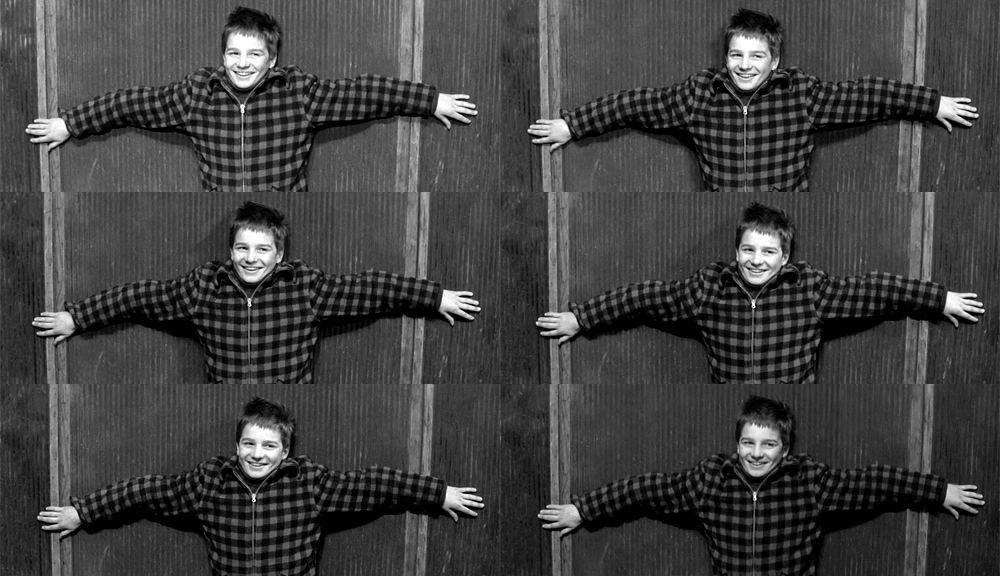
A film that changed my life. Truffaut's debut is a masterpiece on any terms, and was my gateway film to the joys of world cinema, and to cinema as a whole. Full review.

24. Libeled Lady (Jack Conway, 1936)
This is my ultimate comfort movie: I must have seen it 50 times. Aside from one broad slapstick set-piece, a dated Chinese valet and Tracy's competent but uninspired performance, everything works. Loy and Powell simply sparkle together - she at her most arch, warm and beautiful, he turning every line into a mellifluous wonder - while Harlow is in unmissable screwball overdrive, displaying what a truly superb comedian she'd become by this time. Snappily, imaginatively directed by Jack Conway, it's highly quotable, richly romantic and intensely, intensely funny. In fact, it's just about as good as movies get.

23. The Big Parade (King Vidor, 1925)
King Vidor's emotionally overpowering WWI film – of layabout aristo John Gilbert going off to fight in a fug of patriotism, falling in love with French farmgirl Renée Adorée, then finding that war is hell – was a critical and box-office sensation in 1925, and remains unsurpassed in the genre. With a lighthearted first half followed by a brutal second, it's a seamless whole formed of countless unforgettable vignettes, its knockabout comedy and beguiling romance giving way to taut, then horrific action sequences emphasising the brutal lottery of battle. Adorée learning to chew gum; Gilbert arsing about with a barrel on his head, then later sharing a shellhole with the dying German he's just shot; that astonishing ending – its classic scenes are legion, each blessed by an astounding visual poetry. Best of all is the lovers' devastating farewell, one of my favourite scenes in movies, in which a departing Gilbert – finally prised from Adorée's grip – flings his treasured possessions at her from the back of a truck. Finding that he has nothing else of value to throw, he takes off a boot, and chucks that instead. She cradles it in her arms, before collapsing on the road, alone. She's great, as the sexy, pure-hearted, then bereft love interest. And Gilbert's excellent too: this is Exhibit A for the case that his damaged reputation is ill-deserved. The Big Parade made a star out of him, and made the career of Vidor, who would create another contender for 'finest film of the silent era' – The Crowd – and then the first great American talkie (and singie), Hallelujah!

22. Beasts of the Southern Wild (Benh Zeitlin, 2012)

"For the animals that didn’t have a daddy to put them on the boat, the end of the world already happened. They’re down below, trying to breathe through water." What a stunning, dreamlike film this is, and what a beautiful, credible and unique performance lies at its centre, courtesy of the then six-year-old Quvenzhané Wallis, whose Hushpuppy is one of the great characters of recent decades. More here.

21. My Own Private Idaho (Gus Van Sant, 1991)
Gus Van Sant’s dazzling, gutting, phantasmagorical Rent Boy Henry IV. Full review here.

20. Ball of Fire (Howard Hawks, 1941)
That Richard III scene. Oof. Two reviews here.

19. The Apartment (Billy Wilder, 1960)

Like nothing else ever seen in American romantic-comedy. Review.

18. It’s a Wonderful Life (Frank Capra, 1946)
Sometimes you rage against the cinematic canon, and sometimes you realise it's just dead right. Capra's best, Stewart's best, Goodrich and Hackett's best. Just about perfection, and a film that celebrates at once individuality and communality. You have to go through so much pain for the ending, and it's worth it every time. See you at Christmas.

17. How Green Was My Valley (John Ford, 1941)
John Ford's much-maligned film about Welsh miners beat Citizen Kane to the Best Picture Oscar, and rightly so. The opening passage *is* cinema, though only the version of it that we got, the US release doesn't compare.

16. Lucky Star (Frank Borzage, 1929)

Everything Gaynor does is remarkable on one level or another. Review.

15. Paris, Texas (Wim Wenders, 1984)
"I knew these people, these two people..."

14. The Searchers (John Ford, 1956)
The best opening and closing shots in cinema, and what's in between isn't bad either. By my all-time favourite director, and the highest-placed of four John Ford films in this list. I wrote 4,000 words on it here.

13. Amélie (Jean-Pierre Jeunet, 2001)

"No. I'm nobody's little weasel." A wise, warm, whimsical piece of perfection, blessed with an unparalleled Parisian atmosphere and centred on a performance of uncommon brilliance. Review.

12. A Canterbury Tale (Michael Powell and Emeric Pressburger, 1944)
Intrigue and self-revelation amidst the ghosts and games of wartime Britain. Powell and Pressburger fashioned a unique atmosphere in this erotic story of faith and renewal.

11. The Dead (John Huston, 1987)
Oh man, that ending. A dying John Huston took the greatest short story ever written and made a film every bit as good - and perhaps even better.

10. Metropolitan (Whit Stillman, 1990)

Stillman's unique worldview powers this astonishingly clever, literate and moving rom-com about a working class Fourierist seduced by the aristocratic set he happens upon. Chris Eigeman's Nick is the funniest character in the history of movies.

9. Major Barbara (Gabriel Pascal, 1941)
"Did you believe that I was a deserter? That I, who have stood in the streets, and taken my people to my heart, and talked of the holiest and greatest things with them, could ever turn back and chatter foolishly to fashionable people about nothing in a drawing room?" A beautiful, enrapturing performance from the incomparable Wendy Hiller: the perfect, compassionate, warm and beating heart of a satirical, often cynical Bernard Shaw gabfest that cocks a snook at temperance, the Sally Army and those who see nobility in poverty. Many words here.

8. Cinema Paradiso (Giuseppe Tornatore, 1988/2002)
This film isn't perfect but it means so much to me for innumerable reasons. Morricone's score, Tornatore's evocation of Sicily and the magic of movies, and two of my favourite performances of all time (from the young and old Totos) are some (but not all) of them. The film that everyone knows is the 1989 'International Version', but the troubling, more jaundiced 2002 Director's Cut is even better (if markedly less escapist). Review here.

7. A Tree Grows in Brooklyn (Elia Kazan, 1945)

James Dunn towers above all as the twinkly-eyed Irish charmer beset by guilt and self-loathing: the definitive cinematic pipe dreamer. Review.

6. The Student Prince in Old Heidelberg (Ernst Lubitsch, 1927)
"It must be wonderful to be a prince," muses one of the town kids, studying a portrait of the student prince (Novarro). On this evidence, not so much, but then isn't life just about enjoying those perfect moments when they come? This film has more than almost any other. More here.

5. The Life and Death of Colonel Blimp (Michael Powell and Emeric Pressburger, 1943)
Powell and Pressburger's masterpiece about what it means to be British, and at war. Filled with romance, invention and a sad, quiet and reflective wisdom, it's also a film about what it means to be old and sidelined.

4. Ghost World (Terry Zwigoff, 2001)


A melancholy, bitingly hilarious crystallisation of teen ennui, which sees school leaver Thora Birch gravitate towards loner-with-lumbar-support Steve Buscemi. Beautifully written, superbly played and endlessly quotable. "It's America, dude, learn the rules."

3. Hoop Dreams (Steve James, 1994)
You won't forget this documentary in a hurry: four years (and three hours) in the company of two teenage basketball players from inner-city Illinois who dream of the big-time, seeing the NBA as their ticket out of poverty. Shocking, exhilarating and heartbreaking, with astonishing twists of fate, it's a virtuosic, unforgettable film that has as much to say about life itself than any other movie I've ever seen.

2. Les enfants du paradis (Marcel Carne, 1945)
The towering achievement of French cinema: a portrait of a vanished world, a hymn to the art of acting and an allegory about Free France, boasting three of the finest performances ever committed to celluloid. Carné's handling is breathtaking, Prevert's script is clever, witty and worldly-wise and the timeless story seems to grow in strength and resonance with each passing year. More here.

1. Remember the Night (Mitchell Leisen, 1940)

A witty, knockabout Preston Sturges comedy that slips gently into an extraordinarily powerful articulation of romantic love: romantic love as both the saviour of and ultimate threat to family, career and existence itself. Review.

***

Thanks for reading. A few dull stats:

By country:
US: 64
UK: 14
France: 12
Italy: 2
Brazil: 1
Hong Kong: 1
Denmark: 1
Sweden: 1
NZ: 1
Various: 3

By decade:
1920s: 7
1930s: 9
1940s: 16
1950s: 16
1960s: 8
1970s: 6
1980s: 13
1990s: 13
2000s: 7
2010s: 5

Most represented director: John Ford (4)
Colour/black and white: 51/49
Silent films: 8
Musicals: 5
Documentaries: 1
Films in which Eddie Bracken is mistaken for a war hero: 1

And here's the list in pictoral format.

Wednesday, 24 February 2016

Ten things I learned about Alfred Hitchcock

This is part of a series that I do now and then.


The near-legendary movie tome, Hitchcock/Truffaut (1967, updated 1983), is the subject of a new documentary, so I thought I better finally read it. It’s a sublime exploration of one virtuosic director by another and essential for anyone with 10 quid and a love of film. It changed many of my thoughts and preconceptions about movies, and about Hitchcock himself, while perhaps underlining some reservations I have about his work (he is both annoyed by and painfully conscious of the “plausibles”, those critics who criticise his work for its lack of believability).

Along the way, the Master explains the thinking – and the technical tricks – behind many of the key sequences in his films, displaying a staggering, hypnotic understanding of the medium and revealing an obsessive attention to detail that went far beyond anything I was expecting, even from a legendary filmmaker. Truffaut argues that Hitchcock is the key visual director of the post-silent era (along with Orson Welles), and describes his predecessor’s work as “pure cinema”, a fascinating distinction that prizes visual storytelling – via imagery and editing – beyond dialogue or performance.

Fascinating stuff, and a mine of Hitchcock trivia too – including some incredible ‘deleted scenes’ that were never filmed, let alone cut. I picked these 10 bits to tell you about:


1. Period drama
Hitchcock hadn’t heard of menstruation until 1925, when he was 26.


2. The problem with killing a child
Hitch regretted that suspenseful but ultimately baffling scene in his British film, Sabotage (1936), in which a child is blown up on a bus. “I made a serious mistake in having the little boy carry the bomb,” he says, with no small understatement. “The boy was involved in a situation that got him too much sympathy from the audience, so that when the bomb exploded and he was killed, the public was resentful”. He suggests that it would have worked better if the villain of the piece had killed the child on purpose – rather than by mistake – giving his sister a stronger reason for revenge, while keeping the audience on side.


3. Technicolor slaughter
Had Foreign Correspondent been shot in colour, the director could have worked in a Holland-set scene that he was never able to bring to fruition: a murder in a tulip field. A Jack-the-Ripper type approaches a girl in a tulip field from behind. As his shadow creeps up on her, the camera pans to their struggling feet, then dollies into one of the tulips, the sound of the struggle in the background. “One petal fills the screen, and suddenly a drop of blood splashes all over it.” Cut.


4. Sal-y sausage (or How Not to Use the Most Beautiful Woman in Hollywood)
Salvador Dali’s original idea for his dream sequence in Spellbound was hilariously impractical, but kind of brilliant. Hitchcock aimed “to convey the dreams with great visual sharpness and clarity … I wanted Dali because of the architectural sharpness of work”. Instead, the legendary surrealist “wanted a statue to crack like a shell falling apart, with ants crawling all over it, and underneath, there would be Ingrid Bergman, covered by the ants! It just wasn’t possible.” Shame.


5. Unstable behaviour
The director had little time for The Paradine Case, his cataloguing of its flaws beginning with star Gregory Peck (“I don’t think he can properly represent an English lawyer”) and ending with the casting of Louis Jourdan as a sexy stable hand, a character that should have “really reeked of manure”. His actor of choice was Robert Newton, whose characterisation would have had “horny hands, like the devil!”.


6. Suspense v surprise
Hitchcock explains his preference for suspense over surprise with the example of a bomb that we don’t know about going off, or a bomb being about to explode at 1pm. “In the first case we have given the public 15 seconds of surprise at the moment of the explosion. In the second we have provided them with 15 minutes of suspense.” In Strangers on a Train he topped a suspense sequence (Farley Granger tackling a threatening dog on the stairs) with a surprise (the identity of the person in the room he’s heading to).


7. Office party
The vertiginous effects in The New Greatest Film Ever Made (TM), Vertigo, were based on Hitch being drunk at my office. This wasn’t exactly new – as we mentioned it in a Film Programme piece last year entitled ‘Hitchcock and the Hall’ – but it’s nice to have the full story. “I always remember one night at the Chelsea Arts Ball at [the Royal] Albert Hall in London when I got terribly drunk and I had the sensation that everything was going far away from me. I tried to get that into Rebecca [in the inquest scene], but they couldn’t do it. The viewpoint must be fixed, you see, while the perspective is changed as it stretches lengthwise. I thought about the problem for 15 years. By the time we got to Vertigo, we solved it by using the dolly and zoom simultaneously.” The effect cost $19,000.


8. Miles from stardom
Vera Miles was the original leading lady in Vertigo, having been fitted for her wardrobe and done final tests, only to be forced to drop out. “She became pregnant just before the part that was going to turn her into a star,” said Hitchcock. “After that I lost interest; I couldn’t get the rhythm going with her again.”


9. Detroitus
One amazing idea that Hitchcock devised for North by Northwest, but never used, was this scene set at the Ford factory in Detroit: “I wanted to have a long dialogue scene between Cary Grant and the factory workers as they walk along the assembly line. They might, for instance, be talking about one of the foremen. Behind them a car is being assembled, piece by piece. Finally, the car they’ve seen being put together from a simple nut and bolt is complete, with gas and oil, and all ready to drive off the lines. The two men look at it and say, ‘Isn’t it wonderful!’ Then they open the door to the car and out drops a corpse.” Sadly he couldn’t find a way to integrate it into the story (that never really stopped him before).


His credits were cool though.
10. Bass, how low can you go
Credits maestro Saul Bass designed the first version of Arbogast’s ascent of the stairs in Psycho, but really badly. Hitch’s explanation explains how he built the tension during the film, and how Bass's ideas threatened to dissipate it: “There was a shot of [Arbogast’s] hand on the rail, and of feet seen in profile, going up through the bars of the balustrade ... it wasn’t an innocent person but a sinister man who was going up those stairs ... We had gone to a lot of trouble to prepare the audience for this scene: we had established a mystery woman in the house; we had established the fact that this mystery woman had come down and slashed a woman to pieces under her shower. All the elements that would convey suspense to the detective’s journey upstairs had gone before and we therefore needed a simple statement. We needed to show a staircase and a man going up that staircase in a very simple way.”

***

Thanks for reading.

Tuesday, 23 February 2016

Basia Bulat, Sunny Afternoon and some fillums - Reviews #226

I've been out and about. Read some books too.

FILMS


The League of Gentlemen (Basil Dearden, 1960)
- A superior, extremely punchy British crime caper from the start of the ‘60s, with Jack Hawkins reacting to being kicked out of the army by recruiting a litany of dishonourable dischargees to rob a bank.

It’s weirdly – even poorly – paced, and only really achieves the desired air of fatalism in its final reel, but the cast is a who’s who of contemporary talent and the film is full of brilliant, stylised Bryan Forbes dialogue, including that famous, rather misogynistic gag about Hawkins’ wife (represented by a portrait of Deborah Kerr from The Life and Death of Colonel Blimp).

Some may struggle to get on board with a movie in which the heroes include a flasher who likes pretending to be a priest (Roger Livesey), but the film’s anti-everything cynicism is actually gloriously refreshing and it all builds to a wonderfully satisfying climax – from the atmospheric, beautifully-photographed heist (Smoke! Gasmasks! Impressive economy!) to a farewell party and beyond. Nigel Patrick is particularly good as Race, a refined former blackmarketeer enlisted for his transport nous. (3.5)

***


20 Feet from Stardom (Morgan Neville, 2013) - Full disclaimer: I was having a bit of a chat while this was on, so I’m even less equipped than usual to offer an opinion.

It’s a heartfelt documentary about African-American backing singers from the ‘60s to the present day, focusing on the likes of Darlene Love, Lisa Fischer and Merry Clayton – all of whom I’d heard, but none of whom I could’ve named, since they’re rather better known for their contributions to other people’s work than on their own terms.

It seemed to me like a worthwhile film – with some great moments – that suffered a little from a jumbled structure and story threads varying in interest. There are many arresting moments and telling anecdotes, though, alongside a neat gimmick isolating the backing tracks to underline their sheer power, resonance and quality, as well as a handful of tall tales that have since been rather comprehensively debunked. I don’t necessarily understand why it won the Oscar, but then I rarely do. (3)

***


The Story of Adele H (Francois Truffaut, 1975) - Francois Truffaut’s passion for making period dramas seems to have completely outstripped his aptitude for them, as this is another prettily-photographed borefest along the lines of Anne and Muriel, with the same uncomfortable bilingual presentation and complete monotony of tone.

Isabelle Adjani is quite good as the title character, the daughter of Victor Hugo, who is driven to distraction and then insanity by her unrequited love for a caddish soldier (the future writer-director of Withnail & I, Bruce Robinson).

It sounds promising and Néstor Almendros’s cinematography is once more sumptuous, but the (true life) story itself is interminable: just the same thing over and over, without wit, respite or even any great insight, not helped by Truffaut’s perverse dedication to the idea that Adele’s meltdown is the only thing worth investigating, not her seduction and not any potential last-act catharsis.

Like Les quatre cents coups, it ends with a monochrome freeze-frame (of a sort), but whereas that film buzzed with life and invention - and bristled with hurt - right up until its final frame, this one just sort of sits there.

***

LIVE


THEATRE: Sunny Afternoon (The Harold Pinter Theatre)
– An entertaining Kinks show that’s at its best when dealing with Ray Davies’ personal issues – artfully integrating his timeless songs into a nicely paraphrased story of sibling rivalry and crippling despondency – or giving us big, stompy musical numbers performed by on-stage musicians, at its worst when whining at length about greedy industry agents (they may have right on their side, but there’s little more tedious than rock stars moaning about money) or going for the purely cartoonish over the authentic or the intelligently heightened.

There’s some dialogue-writing-by-numbers (Ray's wife keeps saying "It's ahright") and musical-writing-by-numbers, as an outfitting results in the group singing Dedicated Follower of Fashion, but mostly it’s deftly done and the delightfully populist presentation of Sunny Afternoon – evoking the summer of ’66 – beautiful lead in to Waterloo Sunset (deftly mythologising its different, complementary, immaculately congealing parts) and crowd-pleasing encore are superbly handled.

The cast is mostly pretty good too, especially Danny Horn as the diffident, difficult but sympathetic Ray, and Oliver Hoare in a more obvious, showboating performance as the hellraising, whisky-swigging, cross-dressing Dave, and while the script sometimes gets lost in self-pity or trades lazily on jokes about events to come (Lennon ‘wouldn’t stay in bed for days’, McCartney ‘wouldn’t let his wife sing on his records’), the overall effect is rather lovely, lit by some conventional but exuberant staging and a frankly improbable number of brilliant songs: taking place chiefly from 1964-7, but integrating more obvious numbers from later on, we don’t even hear from the majestic but relatively idiosyncratic Village Green or Arthur eras. (3)

***


GIG: Basia Bulat (Rough Trade East) – An irresistible mini-gig from Canada’s best half-Polish folkie (and just about my favourite act of recent years), the mellifluous, extraordinarily distinctive Basia Bulat. Ditching her usual autoharp in favour of a guitar and a three-part backing band, she launched her new pop record, Good Advice, with a seven-song set comprising five new songs and two old ones (Heart of My Own and It Can’t Be You) – the oldies, as well as Someday Soon, performed solo. Highlights included an explosive version of the stunning Fool, her vocal modified into something harder from the trilling falsetto on the album due to the battle with the band, and two of the catchiest things Bulat has written – aside from which they could scarcely be more different – the knockabout, self-mocking La La Lie and the plaintive, exploratory In the Name Of. Her London show in September was the best show I saw last year; I’m back for another full-length concert in April, but until then this will do nicely. (4)

***

BOOKS


Lucky Jim by Kingsley Amis (1954) - Not a word is wasted in Kingsley Amis’s effortlessly brilliant debut novel, the pungent, uproarious and – for me – alarmingly relatable story of Jim Dixon, a lecturer at a red brick university who is caught between two very different women, and plagued by a litany of unspeakable men, as he attempts to hold on to his job and arrest a casual but definite decline brought on by booze, poor fortune, general confusion and a tragic inability to Play the Game. Barely a sentence goes by without Amis introducing some black, bleak or brilliant idea, revolving on some inspired turn of phrase, and the book’s blending of the cynical, romantic and inutterably, breathtakingly funny is just about perfect. A wonder. (4)

***


Election by Tom Perrotta (1998) – An absolutely exceptional story told from five vantage points, and prefaced with perfection by Irish novelist William Trevor's observation that "the world is the school gone mad". Mr M is a progressive, popular young teacher who becomes rather too involved in the election of the school president, a three-way fight between the high-achieving Tracy Flick, clever, warm-hearted Paul Warren and Mark’s sister: a sarcastic, malevolent, romantic lesbian whose campaign slogans include, “Vote for Tammy, she’s inexperienced and kind of lazy”. The story may be familiar from Alexander Payne’s excellent cinematic adaptation (with Reese Witherspoon a fitting Flick), but the book is rather different: not a vicious, misanthropic satire, but a sharp, dark, extremely and unexpectedly poignant work that cares for each of its characters, making you laugh out loud, rage and broil, then undercutting all of that with moments of desperate sadness. (4)

***

Thanks for reading.

Tuesday, 9 February 2016

Truffaut, Inside Llewyn Davis and the Singing Sweethearts' swansong - Reviews #224

INTRO


Greetings from my desk, as I upload this blog before going to the staff quiz night. Sometimes it's good to turn off the TV and be sociable. Apparently. Yes, hello.

Last night I saw Eileen Atkins doing her Ellen Terry show, which was wonderful, despite my tummy ache.

As well as mining my brain for a piece on the history of Westerns, I'm currently exploring the lesser-known movies of Francois Truffaut, one of my favourite filmmakers. I have seven remaining. The first three were... a little underwhelming.

FILMS

Truffaut special:


Anne and Muriel (1971) - Truffaut’s second adaptation of a Henri-Pierre Roché novel is even worse than the mystifyingly lauded Jules et Jim, with the director essentially just reading out the book to provide exposition and motivation, as his cast acts out a succession of short scenes. In the lead, his frequent alter-ego, Jean-Pierre Léaud, is limp and bland as the young Frenchman espousing free love whilst romancing two English girls, the spirited, progressive Anne (Kika Markham) and her sister: taciturn, haunted, ginger Muriel (Stacey Tendeter).

The title characters – and the actresses playing them – are sufficiently distinctive to stick with you after the credits roll, and Néstor Almendros’s cinematography is absolutely gorgeous, but this is no way to adapt a novel, and an object, abject lesson in why filmmakers shouldn’t direct scenes in their second language: Mark Peterson’s line readings as Mr Flint are absolutely atrocious. There’s a reason why he only ever made one other film, and it was called Terror in the Swamp. Philippe Léotard, who was such a disaster in Truffaut's next film (see below), is unexpectedly good here, in a barely written role.

All in all, it just seems an odd project for Truffaut to choose and one upon which he never quite gets a handle. I would advise that you watch Polanski’s not dissimilar Tess, but unfortunately he’s a convicted paedophile who refuses to serve his sentence, so I won’t. (2)


A Gorgeous Girl Like Me (1972) - A sociologist (Andre Dussollier) interviews a criminal (Bernadette Lafont) about her past conquests and falls under the same spell as the other men, in this little-known Truffaut movie, which is brilliantly filmed but sadly wastes its promising premise with a narrative - and performances - that unfortunately recall the Confessions series, that '70s sex-comedy nadir of British cinema.

The caricatured, charmless performances and flashes of flesh are about as arousing as TB and for all the gushing reviews eulogising the film's "jet black comedy", it's simply a one-joke affair, the one joke being that Dussollier sees Lafont as a victim, rather than a calculating nymphomaniac.

But what sounds on paper like the set-up for a dazzling psychodrama or subversive satire doesn't even have the precision of character to work on its own terms. Despite that, the tracking shots, elegant zooms and explicit nods to past works do at least remind you - however fleetingly - of the movies which assured Truffaut's reputation as one of the greatest filmmakers who ever lived, while the "Mr Farrell" sequence and the offbeat final shot call to mind my own very personal relationship with his work. (1.5)


Finally, Sunday! (1983) - Truffaut’s swansong is a gentle (though not particularly funny) comedy-murder mystery, with Jean-Louis Trintignant playing a real estate broker suspected of murder, and Fanny Ardant as the stoic, lovelorn secretary seeking to clear his name (shades of Mark Stevens and Lucille Ball in The Dark Corner).

The movie rarely evokes the Old Hollywood tone for which it strives, but Ardant is charming and truly touching, Nelson Almendros’s monochrome cinematography shimmers and beguiles, and the movie’s rather shapeless, unsatisfying narrative does end up somewhere both philosophically interesting and reasonably tense.

The whimsical final image, shot through with Truffaut's familiar love of children, is just about the perfect sign-off for this giant of cinema, unwitting though it was. (2.5)

***


Inside Llewyn Davis (Joel Coen, 2013) - I have an uneasy relationship with the Coen Bros. I watch most of their films and like many of them, but I also find them frustrating and difficult to love, their movies aloof, smugly self-involved and with a fatal lack of heart, along with a fondness for perverse, self-satisfied twists that take you on the road less travelled to nowhere in particular.

This, though, is my favourite so far.

It took me a while to get around to it (for those reasons I just mentioned), but the lure of the leads and the attraction of the Village milieu that has tantalised me since I was a kid finally got me there. Sometimes its self-conscious oddness (hello John Goodman) and wilful, spiteful unsentimentality (hello a man shitting himself to spoil a potentially moving sequence about dementia) grates, but for the most part this sad, whimsical and purposefully baggy story of missed opportunities and shambling urban alienation is an extraordinarily special piece of work, and one which avoids cliché not because it thinks it’s clever to do so, but because this is how things would be, how the characters would behave.

So Oscar Isaac’s titular folk-singer – shuffling around Greenwich Village in the desperate calm before the coming folk boom – doesn’t visit his young son (because he can’t face it); can’t channel his anger into his music when faced with genuine social ills (whereas Dylan wrote When the Ship Comes In after a receptionist was rude to him at a hotel); and fails his audition for a kingmaker agent through no real fault of his own, certainly no disaster. It simply happens – the try-out doesn’t quite work, perhaps a matter of taste. Nor, indeed, does Llewyn’s dubious novelty record explode in some echo of O Brother Where Art Thou? It doesn’t even come out during the film.

Isaac and Carey Mulligan (as his sometime girlfriend) are both utterly superb – the former better than I have ever seen him – and the music, the cinematography, the explosions of regret and rage are note-perfect. I found the film as a whole unusually and arrestingly affecting. And the cats are wonderful too. Perhaps my relationship with the Coens could yet blossom - this could be the beginning of a beautiful friendship. (3.5)

***


I Married an Angel (W. S. Van Dyke, 1942) - On the one hand, it’s nice that this Nelson Eddy and Jeanette MacDonald musical tries something new, but, on the other, it’s an almost complete disaster. The pair made their name as the ‘Singing Sweethearts’ with formulaic but wonderfully, peerlessly escapist period movies like Naughty Marietta, Rose Marie and Maytime, in which their characters fell in love and sang together, while one, the other or both were pursued by villainous forces (including, memorably, Maytime’s John Barrymore). Only one of the six movies they made with that template – a bastardised version of Noel Coward’s Bitter Sweet – failed to work the requisite magic.

This, their last film – and the second to deviate from the tried-and-tested formula, following 1938’s Sweethearts – goes off the deep end with a flamboyantly original storyline that is sadly also completely incoherent, and consists principally of one long, bafflingly misguided dream sequence. Eddy plays a carousing banker oblivious to the unrequited love – and indeed the existence – of his patient, doting secretary (MacDonald). After getting hammered at his fancy dress party, to which she’s come badly dressed as an angel, he falls asleep and dreams of a genuine celestial being (again MacDonald) who comes down to Earth to marry him, only for her innocence to prove their undoing. Sort of. It’s not very well conceived.

Neither performer is at their best here, with Eddy in particular merely going through the motions, devoid of his usual energy and vigour, while the ambitious narrative flits from one half-baked scenario to another, arbitrarily crowbarring in the disparate numbers. Despite said that, there are some minor pleasures: a handful of excellent Rodgers & Hart songs, the imaginative rendering of both the angel’s arrival and the I’ll Tell the Man in the Street number, and MacDonald vamping it up as a fallen angel: in her somewhat naff, slightly embarrassing and dated way, I’ve always found MacDonald weirdly sexy (especially in black and white), so that sequence was particularly… involving.

Sadly none of those compensations come close to rescuing this unworthy swansong for one of cinema’s most charming couples, a film so poorly devised that even Edward Everett Horton isn't good in it. (1.5)

***

Thanks for reading.

Thursday, 26 November 2015

Truffaut, Pulp Fiction and how to spot a psychopath - Reviews #218

Here are all the books and films I've consumed lately. And here's a piece I wrote about actor-director combos to flog tickets in my day job.


Day for Night (François Truffaut, 1973) - I love François Truffaut beyond almost anyone else who has worked in the medium of film. There’s that quote – “I always loved the reflection of life more than life itself” – which seems to crystallise an essential truth about those of us who live through film, or have at one time or another. His movies radiate a love of cinema, its possibilities and its pleasures, its ability to transport us, bewitch us, change us. He also seems to have been invented to cater for my specific tastes: sentimental about love, art and childhood, whilst understanding and articulating the limitations of all three.

This film is the only one he made that’s explicitly about the movies, or as he put it: “The subject of Day for Night was, quite simply, my reason for living.” It’s a deceptively deep ensemble comedy-drama about the making of a melodrama, starring Truffaut himself as the director, his regular cinematic alter-ego Jean-Pierre Leaud as his callow leading man, and Jacqueline Bisset, Valentina Cortese and Jean-Pierre Aumont as the other principal cast members, each with their own insecurity, their own past.

Examining and celebrating the artifice, the potential for perfection and yet the compromise of cinema (a collaborative medium in which logistical improvisation is king), the film starts with a scene that needs to be retaken and goes on from there, tipping us a wink as it wheels out a gentle set-piece about a misbehaving cat or a hairy stuntman doubling for Bisset, tightening the knot in your stomach as a cast or crew member begins to go to pieces, and then slowly but surely revealing its subtle depths: an ability to move, enchant and beguile, as all truly great movies do.

It’s light and playful – impeccably constructed, as Truffaut’s roaming camera drops us into one conversation, one story, then another – but it’s also substantial, with myriad delights that encompass administrator Nathalie Baye’s abrupt, laidback seduction technique, montages of moviemaking that draw you in to a walled-off world, and a breathtaking speech by Truffaut to Leaud about the disparity between fantasy and reality that is one of the most affecting (and clearly autobiographical) things that the director ever did. As, in fact, is the dream sequence so tantalisingly previewed early on, and then revealed in its full majesty near the close.

Not every scene has the same emotional charge or conviction of performance as Truffaut’s urgent pep talk, but for fans of the director – or of cinema in general – it’s still a rare sort of treat: stuffed with in-jokes and fun nods to cinematic icons like Hitchcock, Howard Hawks and Jean Vigo, but more importantly underscored by an implicit understanding of the responsibility of the filmmaker, the collision between art and life, and the joy of the film set itself: what Orson Welles once called “the biggest electric train set a boy ever had”. No-one else could have made this film. (3.5)

***


English, motherfucker. Do you speak it?

Pulp Fiction (Quentin Tarantino, 1994) - This film is just so, so good. More than 20 years on, the freshness and effortlessness of it all is still astounding. Its vernacular. Its spiky, absurdist humour. Its moments of heart. Those long, wordless takes. The diner. The toaster. The watch up Walken’s ass. The legion of stylised lines that never feel mannered or forced. Actors like Samuel L. Jackson, Travolta and Uma Thurman producing performances from nowhere that continue to reward and astound. QT hasn’t done anything comparable since. Nowadays I will him to succeed – and with Django he did – but there was a brief time when all you could do was watch in slack-jawed amazement as he created dizzying, dazzling films that re-wrote the rules of genre cinema. (4)

***


Philomena (Stephen Frears, 2013) - A simply wonderful movie about journo Steve Coogan trying to trace the adopted son of Irish pensioner Judi Dench, a victim of the notorious Magdalene laundries. It’s often desperately bleak, but also unstintingly warm-hearted, full of the most brilliant jokes, and as emotionally and intellectually rewarding as anything I’ve seen this year. It’s also a little formulaic in structure, looks pretty much like every other British drama made in the last 10 years and has some final-reel villainy that’s a little too on-the-nose (not to mention hysterical), but the story is utterly fascinating, the acting and script exceptional, and its ultimate question of how best to move on is one answered with nuance, dignity and grace. (3.5)
***


Ex Machina (Alex Garland, 2015) - Computer programmer Domhnall Gleason wins a company competition to hang out with Google-but-not-Google CEO Oscar Isaac in his remote headquarters, where he's introduced to an AI called Ava (Alicia Vikander), and encouraged to submit her to the Turing Test. But seriously, America, it's pronounced "Tyouring", not "Too-ring", show some fucking respect.

There are plot holes in Alex Garland's zeitgeisty thriller, along with a few obvious 'surprises' to go with the more novel ones, but it's an entertaining, immersive, quite thought-provoking film that maintains the courage of its convictions right up to a superb twisty-turny ending. And then carries on for another five minutes for absolutely no reason. (3)

***


The Leopard Man (Jacques Tourneur, 1943) - I watched The Leopard Man for @ValLeween, the Val Lewton-based live-tweetathon that happens every Halloween (this reviews update has been a while in coming), and the whole thing was a lot of fun.

The film isn’t one of my favourites from the pioneering producer – this tale of a black cat terrifying a Mexican village is a little disjointed, with some iffy acting – but Lewton does a good job of creating a world through scripting, scoring and a handful of sets, and his horror high points are exhilarating, the moments of sustained terror as poetic, beautiful and self-contained as Astaire and Rogers dance numbers.

The blood under the door? Wow. (3)

***


The Limey (Steven Soderbergh, 1999) - Soderbergh’s malevolently playful editing illuminates this brooding thriller, helping to turn it from a potentially straightforward Get Carter transplant into something rather more interesting, aided by an imposing central turn, intelligent use of footage of the star as a younger man – taken from Ken Loach’s debut film, Poor Cow – and a surprising, surprisingly affecting pay-off.

Terence Stamp is a seriously violent ex-con who comes to LA straight from the slammer, plotting revenge on the criminals what caused his daughter’s death, a group apparently led by counter-culture beancounter Terry Valentine (a perfectly cast Peter Fonda). Sometimes the script flounders, especially when resorting to cliché or having Stamp repeatedly use and then explain Cockney rhyming slang – he is a British character written for American audiences – but at other times it’s extremely strong, especially when Fonda is explaining the ‘60s (a speech that passes from the sort of platitudes you can basically mouth along to, to something poignant and surprising) or Stamp is lamenting his mistakes.

Where it really works, though, is in the presentation: fragments of action that drop us forwards or back in time, flashes of pathos at unexpected moments, action scenes that take place off camera or in the back of the frame, Soderbergh drawing thematic parallels like a young Terence Davies, or flicking between scenes in a way that recalls nothing as much as... Easy Rider: the film that launched Fonda and defined a generation, at least in cinematic terms. Stamp’s good too: some of his line readings seem wooden, but he catches the eye and holds it, and that scene in the warehouse still has the ability to shock and appal and rather worryingly excite. All together now: “Tell him I’m coming!” (3)

***


The Chocolate Soldier (Roy Del Ruth, 1941) - This wasn't the gay porn I thought I'd ordered.

Worse than that, it's not even a bona fide operetta. Though its songs come from the 1909 work, The Chocolate Soldier, the writer of the source story, George Bernard Shaw, objected to its being adapted, so they were grafted onto a play by the oft-adapted Ferenc Molnar, The Guardsman, occasionally intelligently, but more often completely incoherently.

Still, at least Nelson Eddy's here, right? A lot of people are sniffy about Nelson Eddy nowadays, in the unlikely event that they've heard of him at all, but I'm quite a fan. He was an underrated actor (catch his performance in Ben Hecht's liberal drama, Let Freedom Ring, for evidence of that) and a magnificent singer, especially vital and appealing when paired with regular leading lady Jeanette MacDonald.

What he wasn't, was a comedian. He proves that beyond any doubt here, playing a jealous husband who - in typical early '40s comedy style - tests his wife's fidelity by posing as an amorous Russian. That stock device of masquerade occasionally worked, but needed subtle writing and intelligent playing, neither of which it gets here. Eddy is so broad and flat it hurts, Metropolitan Opera diva Rise Stevens simply transmits none of the spark required for such battle-of-the-sexes comedy, and Nigel Bruce is really beginning to annoy me now.

The result is a pathologically unfunny film: bitter, laughless, joyless and sexless, with only a handful of reasonable musical numbers relieving the oppressive tedium. And no gay sex. (1)

***


Gunsight Ridge (Francis D. Lyon, 1957) - This atrocious oater plays rather like a parody of B-Westerns by someone who's hardly seen any, as Wells Fargo agent Joel McCrea tries to root out a highwayman in a small town and finds a frustrated pianist prone to fits of hysterical anger (Mark Stevens). Ernest Laszlo's photography is unusually handsome for a movie from a no-name studio, but the ageing stars can do nothing with the abysmal script from MGM veteran Talbot Jennings and his wife Elisabeth, which manages to be both clichéd and completely ludicrous, hopping from one silly scenario to the next with barely a credible line of dialogue to be heard. The great McCrea comes off merely as trivial and smug, but Stevens manages to set fire to the huge pile of goodwill left over from the bristling noir The Dark Corner, crossing over into ridiculousness early on, and never returning. The scene in which he is out-acted by a confused horse is a particular low. (1)

***

BOOKS

Fiction:


The Railway Children by E. Nesbit (1905) - This beloved children's story has a mother who's good to be true, some understandably stuffy contentions about the way the world works and a rather clunky writing style to which it takes some adjusting, but it's also full of vivid characters, fine sentimental moments and thrilling scenes of escapism and middle-class adventure: virtues that ultimately win out over its shortcomings. (3)


Ragtime by E. L. Doctorow (1975) - I liked this kaleidoscopic portrait of early-20th century New York, drawn to its world, its scope, and its moments of terrible clarity (particularly concerning lovelorn depression and the everyday poetry of squalid urban life), but found its quasi-Hemingway, quotation-free style rather one-note, contrived and detached. (3)

Non-fiction:


Hons and Rebels by Jessica Mitford (1960)
- This memoir from The Communist Mitford is good and sometimes brilliant, trespassing into the latter territory when it deals with family dynamics and human emotion, or when the author punctures pomposity with some lancet-like line. I admire Decca's perfectly pitched irony and sense of poignancy, borne of a complete lack of sentimentality. And I like her names for her siblings, such as Boud (Unity), Debo(rah) and the delightful Tudemmy (Tom). Her journey around America is ultimately a lot less interesting than what predates it, though, with many of the tales notably lacking a sufficiently strong punchline. But I'll now be reading absolutely everything about the Mitfords anyway, beginning with Decca's second volume of autobiography. (3)


Them: Adventures with Extremists by Jon Ronson (2005) - More a collection of pre-9/11 features than a coherent work, but an immensely readable, blackly comic journey through the world of political and religious extremism that sees Ronson rubbing shoulders with Muslim fundamentalists, KKK members and David Icke, and finding that - hey guys, maybe you're not all so different after all. Which I suppose is heartening. In a way. (3)


The Psychopath Test by Jon Ronson (2011) - Ronson's study of psychology, psychiatry and psychopathy is fast-moving, consistently hilarious, and completely and utterly fascinating. It's also a little unfocused: a scattershot treatment of the subject in which his angle seems determined by the eccentric people he can find to interview, before he attempts to drag together some conclusions at the death. I did bloody love reading it, though, and I learned a lot: the revelation about the official classification of mental illnesses is absolutely astonishing. (3.5)

TV:


Parks and Recreation: Season 7 (2014-15)
- I'm sad to see my favourite sitcom go, but it's probably about time, as towards the end this started to feel very familiar: at times fuzzily, more often in a rather worn way. These final 13 episodes kicked the story into 2017, a scenario occasionally exploited for poor non-sequitur gags about fictitious world events, but more often used to up the emotional ante, as in a genuinely affecting storyline about the estrangement between central character Leslie Knope (Amy Poehler) and her former boss, Ron Swanson (Nick Offerman). Its flaws are evident, almost all the sign of an enterprise that's gone on for too long - the Johnny Karate novelty episode doesn't really work, Craig (Billy Eichner) remains a horrendously unfunny, one-note character, and the walk-ons by real politicians give the distinct impression that the programme is now on the inside (rarely the best place for a show with a satiric bent) - but it's still hard to say goodbye to a show that's given me so much joy, and which still makes me laugh out loud and tear up with some regularity, even in its seventh and final season. (3)

***

Thanks for reading.

Wednesday, 25 July 2012

Truffaut, Gazza and not re-evaluating Hitchcock - Reviews #125

In part two of the summer round-up, I spend a day in the dark with Truffaut, don't bother re-appraising Hitchcock's alleged "lost masterpiece" and go on about Joseph Gordon-Levitt again.


*SPOILERS*
Jules et Jim (François Truffaut, 1962)
- An introspective Austrian (Oskar Werner's Jules) and a moustachioed ladies' man (Henri Serre's Jim) find their intense friendship variously compromised and cemented by their dealings with the capricious Catherine (Jeanne Moreau), who marries one but makes an intangible connection with the other. This is one of Truffaut's two most famous films - the other being the unassailable, unimpeachable Les quatre cents coups, one of the most remarkable achievements in all of cinema - but it's really not all that great. It's intellectually stimulating but emotionally deadening, with an intrusive, almost ever-present third-person narration that strives for a novelistic feel, but winds up dominating the picture, and either telling us what we already know or reeling off exposition, while failing to adequately convey the passage of time. The film's fabled atmosphere of exuberance - which extends to some inspired freeze-framing and a joyous dash across a bridge - evaporates after a half-hour, leaving us stranded in the company of the annoying audio commentary, an unsympathetic heroine and the inscrutable Jim. The movie does have moments of unusual clarity - the points it makes about the gender of language are memorable and fascinating - and there's a lovely airiness to the outdoor scenes, but it's one established classic that doesn't quite stand up to its fearsome reputation. (2.5)

***

Three encounters with Antoine Doinel:


*SPOILERS*
SHORT: Antoine et Colette (François Truffaut, 1962)
– Truffaut made five films featuring his alter-ego Antoine Doinel (Jean-Pierre Léaud), of which this short movie was the second. It followed Les quatre cents coups – the film that got me into films, and still one of my absolute favourites – and was part of a portmanteau project combining the efforts of five directors from around the world, called Love at Twenty. Truffaut's segment is a simple story that sees the self-sufficient, 17-year-old Antoine throwing his ordered life to the wind as he falls in love for the first time. Sadly Colette sees him as a friend, rather than a lover, and seems slightly perturbed when he installs himself in a hotel opposite her bedroom. Still, her parents take a shine to the polite young man. This isn’t a classic as Les quatre cents coups is – a landmark movie about adolescence, told in a freewheeling yet neorealist style – but it’s very deftly done, the potentially minor storyline brought to vivid life through skilful editing, witty, quietly lyrical direction (spotlighted in the first concert sequence and three balcony shots, each significant in their own way), as well as Léaud’s lovely characterisation, closer to the semi-improvised realism of what had come before than the quiet mugging and hair-flicking of those subsequent sex comedies. I also like the timeless way Truffaut’s monochrome movies look; his colour films are positively hideous in comparison. (3.5)


*SPOILERS*
Bed and Board (François Truffaut, 1970)
– Further seriocomic adventures in the life of Truffaut’s self-destructive, self-obsessed alternate self, Antoine Doinel, who is blessed with a son, lands a ridiculous, undeserved job, and fouls up his marriage – having fallen for a taciturn Japanese temptress. It’s entertaining, wise and funny, with several gags worthy of Lubitsch, and there’s a typically charismatic lead performance from Léaud, but if I have a criticism, it’s that both his performance and the film lack the naturalism that made Les quatre cents coups so very special. This is very much a movie, and his turn is very much that of a movie star, rather than one which draws you in through attractive or desperate realism. As movies go, though, it's great fun. (3.5)


*MINOR SPOILERS*
Love on the Run (François Truffaut, 1979)
– The last in the Antoine Doinel series draws so heavily on footage from the previous four films that it sometimes resembles one of those sitcom episodes where the characters get stuck in a lift and then just remember things that have happened. The film does eventually find an identity of its own, though, and the final scene is very moving, segueing artfully and powerfully into footage from the theme park sequence of Les quatre cents coups in a way that made the hairs on the back of my neck stand up. It’s really the only time that the archive clips really work, while the storyline – such as it is – relies too much on coincidence, just as the film leans a little too much on our goodwill, and our fondness for Léaud’s wayward protagonist, a character who in Truffaut’s words is “only comfortable in extreme situations”. There are effective moments, not least Antoine's farewell to his mother's lover, but as the director acknowledged, this is more a “curtain call” – a nostalgia trip for Doinel fans, and a chance to tie up a lot of loose ends through cold, analytical talkiness – than a coherent and important movie in itself. (2.5)

And, from the archive, here's a review of Les quatre cents coups, from a Top 100 list I did in 2009.


Les quatre cents coups (Francois Truffaut, 1959) - Thanks Mr Hutton. He was the fifth-form French teacher who treated us to a module on French cinema. Having screened Jean de Florette in previous years – and accidentally shown us Vigo's Zero de conduite due to an incorrectly-labelled video – he then ignited my burgeoning passion for cinema with Truffaut's rulebook-eschewing New Wave classic. Applying the innovations of that nascent movement to a semi-autobiographical story about a 12-year-old misfit, former film critic Truffaut created a movie that cut deeper and raised you higher than his contemporaries (among them Godard, Chabrol and Malle) could ever manage. Jean-Pierre Léaud is Antoine Doinel, unhappy at home and at school as he graduates from innocence to cynicism. He bunks off his comprehensive to go to the fair, almost burns down his house with an ill-advised shrine to Balzac and gets sent to reform school after a litany of misdemeanours. Like lying to his teacher that his mum is dead. Exhibiting a sense of assurance that's dazzling for a debut filmmaker, Truffaut utilises a loose narrative style that has time for fairground fun and a heap of freeform, improvised character stuff. In doing so, he creates a movie that's beguiling, funny and utterly unique. It's hard-hitting too, but deceptively so, as it presents the world through Doinel's eyes. There's misery there, and a sense of bristling injustice, but contrasted with moments of childlike euphoria - particularly in the opening half hour. The offbeat ending is one of the great unresolved climaxes. I was obsessed with the movie for about five years. I suppose I still am.

Favourite bit: The puppet show, in which the unquestioning glee of the children is contrasted with the growing cynicism of Doinel and his pal.

See also: Truffaut's ode to childhood, Small Change, damaged by poor plotting and one truly terrible special effect, but full of superb vignettes. The scene in which a baby unpacks his mum's shopping is one of the funniest, most anarchic things you'll ever seen on screen. Truffaut revisited Doinel in five subsequent films. The first full-length sequel in Stolen Kisses: a decent comedy of deceit and sexual longing that's a little too rooted in time.

***


*SPOILERS FOR THIS FILM AND PRETTY IN PINK*
Some Kind of Wonderful (Howard Deutch, 1987)
- Teenager Keith (Eric Stoltz) is hard-up, likes art and works part-time in a garage. So in '80s American high school terms, he's an outsider. His sole ally is a drumming, quietly smitten tomboy called Watts (Mary Stuart Masterson) - who bears more than a passing resemblance to Pretty in Pink's Ducky - until he catches tiny-mouthed belle of the school Amanda Jones (Lea Thompson) on the rebound. A little while ago, I suggested Pretty in Pink was John Hughes' best film, but actually this is, with Hughes fixing the problems with both that film (the lead ends up with the wrong person) and The Breakfast Club (that hideous makeover scene). It's complete escapism, but also affecting, intelligent and funny, with the writer-producer's usual stylised characters and vivid dialogue, and wonderful performances from both Stoltz and Masterson, who may be my favourite movie chauffeur. Only quibble: they should have let Brilliant Mind by Furniture play out, as it's great. (4)

***


This is definitely what teenagers are like and how they get girls.

10 Things I Hate About You (Gil Junger, 1999) - Shakespeare's The Taming of the Shrew is transplanted to an American high school (Padua High) in this bright comedy-drama. Sweet-natured Joseph Gordon-Levitt loves arrogant, coquettish Larisa Oleynik, but her protective father will only let her date when rebellious elder sister Julia Stiles gets a boyfriend too. So Gordon-Levitt and his scheming pal get obnoxious Andrew Keegan - also after Oleynik - to pay loser Keith Ledger to snare Stiles. Got it? The film has little idea of how teenagers actually behave (a Riot Grrrl genuinely goes gooey over someone publicly singing an Andy Williams song at her), but it's fast-paced, witty and very nicely-played, particularly by Stiles and Gordon-Levitt, whose singular style was somewhat unformed, but whose talent and natural likeability shine through. "And I'm... back in the game!" (3)

***


Rio (Carlos Saldanha, 2011) – Formulaic but fun animated feature, from Brazilian director Saldanha and the rest of the Ice Age gang, about rare macaw Blu (Jesse Eisenberg), who decamps from Minnesota to his birthplace of Rio, but finds himself out of his depth, as he can’t fly, he’s chained to a withering free spirit (Anne Hathaway) and he’s about to be stolen by bird smugglers. The film continues an inauspicious tradition, that began with Merrie Melodies and persists apace, of non-sequitur songs in which animals spoof contemporary acts; odd, then, that a rap number featuring an evil cockatoo called Nigel somehow emerges as a comic highlight. There’s a lot to like about the film: it has an excellent score, some very attractive visuals and Eisenberg’s likeable voicework, while Saldanha does acknowledge some of Rio’s more unsavoury aspects within the framework of a kids’ feature. But the story is over-familiar and unadventurous, and there are just too many characters, the majority given a single funny moment at most. (2.5)

***


*SPOILERS*
The Trouble with Harry (Alfred Hitchcock, 1955)
... is that he's dead. People are forever trying to re-evaluate this as Hitchcock’s lost masterpiece, when really it’s just a passable black comedy with enough of The Master’s hallmarks that eager theorists can link it to his better films. Single mum Shirley MacLaine, modern artist John Forsythe and ageing romantics Edmund Gwenn and Mildred Natwick are among the small-townsfolk who stumble across a dead body, and then either think they’ve killed it, bury it, or dig it up, across 99 minutes. It starts quite iffily, hampered by a self-satisfied script that keeps giving Gwenn dreadful asides which he has to read to himself, but its comedic and romantic elements do congeal, making it reasonable if unexceptional entertainment. MacLaine’s charming debut performance is a major bonus, as is the autumnal cinematography, though it jars somewhat with the studio interiors. Bernard Herrman’s score was his first for Hitchcock. (2.5)

***


One Night in Turin (James Erskine, 2010) – Erskine’s documentary about England’s 1990 World Cup campaign has most of the flaws of his subsequent movie – From the Ashes, which dealt with the 1981 cricket series – but few of the virtues. There are no insightful talking heads, so the slack is picked up by an unbearable pseudo-poetic script, written by the director and read by Gary Oldman, while the match footage is constantly interrupted by unnecessary, amateurish reconstructions that serve only to spoil pivotal moments in the action. The attempts to contextualise the tournament in socio-political terms are also as hamfisted as in Erskine's later film: yes, bring the hooliganism aspect into the discussion, but why bother offering an irrelevant, sketchy crash course in Thatcherism? The central story remains a fine one – even when it’s framed in an unconvincing way that paints Gazza as a second Maradona, and Bobby Robson as a tactical genius – and there’s a very moving (and intelligently subtitled) sequence that reveals just what the manager said to his tear-flecked playmaker before the shoot-out against Germany – but this is a film that doesn’t do its subject justice. And no-one ever called Gary Lineker “Golden Boots”. (2)

***


Wedding Daze (Michael Ian Black, 2006) – Atrocious romantic comedy about strangers Jason Biggs and Isla Fisher getting engaged on a whim. There are actually six or seven laughs, and Biggs is quite good, but the story makes literally no sense – none at all – and the movie is overflowing with horrible, indefensible jokes and detestable characters, including Edward Herrmann degrading himself in a part that he presumably thought would reinvent him as another Eugene Levy. Yuck. (1)