Showing posts with label 2013. Show all posts

Tuesday, 10 December 2013

Lucille Ball, The Hunger Games and the strange case of Benny Wilder - Reviews #178

Plus: Wes Anderson flailing, and noir icons directing pirate capers, in the latest reviews update. Feel free to argue or agree with me below or on Twitter.


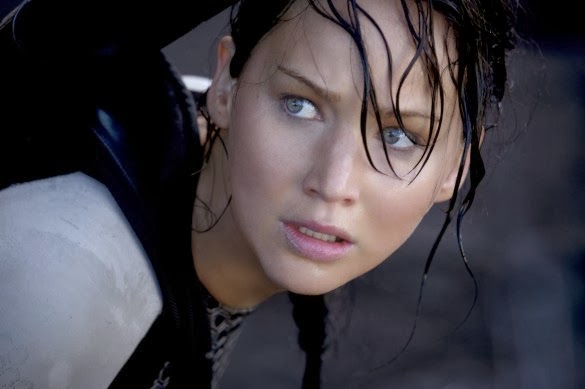
CINEMA: The Hunger Games: Catching Fire (Francis Lawrence, 2013) - There were two reasons why I wanted to see this film, and to pay 10 quid for the privilege.

The first was Jennifer Lawrence's startling expressiveness, that deftness of delivery and effortless evocation of complex emotion that makes my critical faculties exalt, and which has so far turned fair scripts into good films, and stronger ones into masterpieces. She lit up Winter's Bone and Silver Linings Playbook - two of this decade's best five, for me - and transformed the original Hunger Games from a potentially daft, trivial film built on formulaic lines and obscured by ephemeral trappings into something sporadically vital, exciting and real.

The other reason was that I'd forgotten I wasn't a 12-year-old girl.

Of course, in the event that I'd made a big, G.O.B. Bluth-like mistake, I wasn't going to suffer alone, so I dragged my mate Owen along too, violently kicking and deafeningly screaming, and a very good time was had by all (except Owen).

This sequel picks up a short while on, with Katniss (Lawrence) haunted by memories of that legendary killing contest, and caught between the man she loves (Liam Hemsworth) and the one she claims she doesn't (Josh Hutcherson, whose unlikely status as a sex symbol gives hope to those of us with jutting chins everywhere). Unfortunately, the president (evil Donald Sutherland, whose facial hair is distractingly asymmetrical) has his own reasons for wanting a hot Lawrence-Hutcherson love match, so they're forced to carry on the charade, whilst trying not to start a revolution on their national "victors' tour".

The film - and presumably the book - makes a good case for the eponymous event being "just games", but the fight against oppression being real... then decides to have some more games anyway (they're fun, aren't they?), prompting a partial retread of the first film, though with a few arbitrary threats that are in the vein of Cube (electrocution, poisonous fumes) and one that isn't (baboons).

It's paced like a drunk guy in a pub trying to walk to the toilets, the script by Full Monty creator Simon Beaufoy and Little Miss Sunshine writer Michael Arndt doesn't go anywhere terribly revelatory, and I don't think Hutcherson (phwoarr) can really act. But there's just something about it I liked - and I think again it's to be found at the feet of Lawrence. I'm not sure she's as good as we've seen her here, but it's all relative. She's still magnetically watchable, completely persuasive no matter what dubious dialogue she's being forced to recite, and able to signify more with a single look than most actresses could with a Robert Towne monologue. There really may as well be no-one else in the film.

As it happens, the cast has a couple of strong additions from last time around: Jena Malone as an axe-wielding rival whose vote-winning horniness evaporates remarkably quickly, and Philip Seymour Hoffman playing the mysterious new "games master", who may quite conceivably be a massive bastard. Of the returnees, Woody Harrelson and Stanley Tucci are both good if slightly narrowly-defined, while I found Elizabeth Banks' returning Effie extraordinarily irritating to begin with, only for this to prove one of those rare occasions (Tommy Steele in Finian's Rainbow was another) where I was won round by an avowedly eccentric turn, as it opened up to reveal something a little more human. Those lively characterisations compensate for a less compelling narrative than first time around, and the film's enduring preoccupation with fashion as a means to fight oppression, which is probably something 12-year-old girls think, but isn't anything I've seen any evidence to support.

Directorially, Francis Lawrence proves less interesting and distinctive than Gary Ross, though his Ben-Hur homage is good fun, the set-piece with the archery training is nicely edited and there's one lovely scene near the end featuring a shaft of daylight and an almost motionless (Jennifer) Lawrence. That passage made me wonder why the rest of the film often felt so functional, rather than trying to grab us by the throat.

It's no Empire Strikes Back, no Godfather: Part II, no Aliens, but it's no Cloudy 2 either. Beyond the "ooh, I know, how about this?" plotting, the "I'm not sure this bit's aimed at me" window-dressing, and the fact that we don't end up much further along than when we went in, I liked it. Most of that's down to Lawrence. I doubt there's a filmgoer out there not in thrall to her ability but, if there is, the final few frames of the film should win them around: leading to one of those abrupt endings that makes you go: "Hey wait, that can't be the... actually, yeah, OK."

I am a 29-year-old man. (2.5)

***


The Big Street (Irving Reis, 1942) - An often exceptional Damon Runyon story, in his familiar style and filled with his usual affable crooks, about two inhabitants of New York’s Losers’ Street: a selfish showgirl (Lucille Ball) consigned to a wheelchair by her violent ex-boyfriend, and the meek busboy (Henry Fonda) who appoints himself her protector, idolising her beyond all reason and continuing to stick by her even when everyone else gives up.

The production and direction is disappointingly bland – too cheap and yet not cheap enough – but the dialogue and characterisation is utterly remarkable, with Ball and Fonda both in spellbinding form, each proving amusing, heartbreaking and unfailingly convincing, cast boldly against type in doggedly unconventional parts.

Fonda played dupes and mugs in plenty of films during this period – The Lady Eve, Rings on Her Fingers, The Magnificent Dope – but never a character as innocent, stoical nor blindly loyal as Little Pinks, allying the naivete of Sturges’ “Hoppsy” to something like the high-minded view of humanity espoused by Tom Joad. It’s a really beautiful performance.

On a more trivial note, fans of his singular diction will also enjoy hearing Hank say “huh-wheeels” and “ve-heercle” in a single sentence, and Ball gets a cracking new love song to sing, Who Knows. There’s fun support too from Eugene Pallette (as a competitive eater), Sam Levene and Citizen Kane alumni Agnes Moorehead and Ray Collins.

The film isn’t perfect – it sags a little at the beginning of the final third, taking Ball off screen for too long, and I’m in two minds about the ending – but, at its best, its blending of the seedy, the funny and the warmly humane reminds me of my favourite movie, Remember the Night, and I can’t think of any higher praise than that. (3.5)

***


The Front Page (Billy Wilder, 1974) - An unnecessary but enjoyable third screen version of former journalists Ben Hecht and Charles MacArthur's immortal 1929 play, The Front Page, filmed in '31 under that name, and by Howard Hawks nine years later as His Girl Friday, one of the fastest, funniest comedies ever made, with an added sexual charge due to its ingenious gender swap.

This version of the tale, which as in the source sees unscrupulous Chicago editor Walter Burns (Walter Matthau) trying to persuade ace reporter Hildy Johnson (Jack Lemmon) to drop his fiancee (Susan Sarandon), and cover a hot murder case, is as much a homage to the play and the era than it is a film in its own right. There are references to All Quiet on the Western Front (a year early), Jimmy Cagney (at least two years early), Ruth Snyder, Lindbergh and the rest, and the film looks at least as '30s as the first version - aside from a curious softness in the cinematography, the light fairly streaming off Lemmon's white boater. That jaunty ragtime theme tune is one hell of an earworm too.

Wilder's main innovations are the typical ones when adapting material from a more censorious era: swear words and bad taste gags, this time about paedophilia, prostitution and diabetes. He's also on curiously juvenile form, with a running gag about a cub reporter wetting himself, and a bafflingly unfunny, sped-up sequence concerning a runaway hospital bed that seems to suggest an oft-overlooked influence on his work from Benny Hill.

Wilder and co-writer I. A. L. Diamond put Walter and Hildy behind bars near the close, which isn't in the original work and rather slows the momentum, while letting the mayor get away with his nefarious doings: a perhaps unsatisfying but nevertheless smartly cynical touch rather typical of the director. The only entirely new sequence I found amusing and worthwhile was Burns posing as a parole officer to tell Peggy that Hildy was a convicted flasher, though it strays from the blackly comic to the unpleasant towards the end. Wilder's only other additions of note are a nice gag about the operetta The Student Prince (adapted into a film by his hero, Ernst Lubitsch, in 1927) and having the central murderer taking rather too literally the suggestion that he pose in a manner befitting a "caged animal".

The film's basic material remains amazing, though - its cynical reporters and crooked politicos enduringly fascinating, as much for Hecht's murky morality as his blistering dialogue - and the acting's good. When Lemmon does his "yadda yadda" scatting, I still want to punch him in the face, but he's very charismatic and adept at nailing Hildy's curious blend of the hard-bitten and the compassionate, as his character shoulders the burden of the story in the way he doesn't in the other versions. Matthau isn't anywhere near as good as he was elsewhere in the decade (this was shortly after that glorious one-two of Charley Varrick and Pelham One Two Three), but he's decent enough, there are interesting spins on murderer Earl Williams and his "girlfriend" Molly Malloy from Austin Pendleton and Carol Burnett, while Vincent Gardenia proves funny if sometimes a little overripe as "Honest" Pete, the sheriff. Veterans of '40s comedy also crop up, with David Wayne as Bensinger - now unmistakably a homosexual - and the great Allen Jenkins as the wizened telegrapher in the final scene.

There's no real reason for the film to exist, and Wilder's abilities were clearly flagging - he seemed somewhat uncertain how to adapt to a permissive industry where he could say whatever he wanted as a writer - but it's good fun and, in an odd way, an interesting, perhaps unwitting experiment in the Far from Heaven vein: taking a near-legendary template and performing it in a largely faithful style while using the new moral code to try to inject it with a greater realism. Well, apart from the bit with the hospital bed. It's ultimately the least of the three versions, but worth it regardless. (3)

See also: My favourite actor, Lee Tracy, originated the role of Hildy on stage. I wrote this piece about him for EatSleepLiveFilm.

***


*A FEW MINOR SPOILERS*
The Crimson Pirate (Robert Siodmak, 1952)
- Or 'The Crimson Pirate in an Adventure with a Scientist', this film's peculiar third act presumably the inspiration for the Gideon Defoe novel brought so wonderfully to the screen by Aardman. But I'm getting ahead of myself.

Really this fondly remembered flick is a mix of Doug Fairbanks' 1924 cutlass-clasping classic, The Black Pirate, and the 1950 actioner The Flame and the Arrow, marrying the story of a Seven-Seas-scourge who turns noble for the sake of a woman, to the kind of colourful, stunt-heavy, circus-flavoured fun in which Burt Lancaster was briefly typecast. But unlike the sumptuous, seductive Fairbanks film, this one is aimed squarely at a Saturday morning kids' audience. (By a quirk of studio workings, both this and The Flame and the Arrow were directed by men more commonly associated with film noir: Jacques Tourneur (Out of the Past) and Robert Siodmak (The Killers).)

The film is basically and solidly entertaining without often exploding into life the way it might. The one thing you really need in a pirate movie is ingenuity: think of Depp hopping onto the second ship or Fairbanks riding down the main sail on his sword. There are brief flashes here, but only really in the final reel, as Lancaster slices a rope to fly skywards and his sidekick Nick Cravat takes out a bunch of soldiers with a swinging mast. The rest of the film is consistently enjoyable, but not perhaps escapist or imaginative in the way it should be. It feels somewhat tied down: by its obvious, overly serious plotting, by Lancaster's irritatingly simplistic acting, and by a strange insistence on subverting its trumpeted credentials by wandering ashore or just getting a bit distracted.

Don't get me wrong: it's a solid, eventful watch and it throws just about everything into the mix - from a mutiny to a submarine, cross-dressing to nitroglycerine - while there's happiness to be found in the stars' stuntwork: the massive, energetic, hilariously twinkle-toed Lancaster and beardy, well-built little Cravat leaping, rolling and tumbling (not a sex thing). I'm just not sure it's quite the unassailable genre highpoint it might seem when viewed through a haze of nostalgia. In fact, I'm pretty sure it isn't. (Sorry for being such a misery.) (3)

***


*SPOILERS*
SHORT: Castello Cavalcanti (Wes Anderson, 2013)
- I'll defend Wes Anderson pretty much to the death. Aside from the baffling misfire that was smugness's Fantastic Mr Fox, I love every single one of his magnificent, micro-consistent movies. The features, that is. I'm not sure he's very good at shorts. The Moonrise Kingdom animations were transcendent, but quite how much of a hand he had in those, I'm not sure. Hotel Chevalier, the brief precursor to The Darjeeling Limited, was faintly affecting, but pretty pretentious and seriously slight. Castello Cavalcanti, bankrolled by Prada, is so minor it's barely even there.

The tranquility of an Italian square (pan shot, pan shot, yes, it all looks rather pretty) is rudely interrupted by rally driver Jason Schwartzman, who writes off his car against a wall. He chats briefly - in the most painfully mannered way - to some folks who turn out to be his ancestors, has a fun phone call with his mechanic, then talks to a girl. The end. In the right role, I like Schwartzman a great deal: in Rushmore, in Huckabees, in much of Bored to Death. Outside of those limitations (Slackers, Shopgirl, Bored to Death Season 3, here), he can often appear to have forgotten what acting is. He probably isn't helped by a film that has nothing to say except "shop at Prada". (1.5)

***

Thanks for reading.

Sunday, 1 December 2013

Review: Napoleon at the Royal Festival Hall

Saturday, November 30, 2013


Yesterday saw a rare screening of Kevin Brownlow's near-mythic five-and-a-half-hour reconstruction of Abel Gance's silent film Napoleon, a labour of love that has dominated more than 50 years of the historian's life, but has never been available on home video, and maybe never will be, due to ongoing and thorny contract wrangles with Francis Ford Coppola, who has his own version, which is incomplete, runs at the wrong speed and has a score written by his dad.

Brownlow's version, by contrast, is scored by arguably the greatest of all silent film composers, Carl Davis, his collaborator on the legendary Thames Silents project in the 1980s, and the man responsible for two of the all-time great soundtracks: The Student Prince in Old Heidelberg and The Kid Brother. And yesterday, at the Royal Festival Hall, that accompaniment came live, with Davis conducting the Philharmonia Orchestra in front of a packed house, to stunning effect.

Seen in this, its true form, Napoleon is a staggering achievement, a consistently dazzling mixture of innovation, spectacle and history writ-large, where insight into character and dramatic metaphor often come courtesy of a seemingly endless box of tricks, including octuple-exposure, montages stuffed with brain-scrambling cross-cutting, and a camera that's going to go wherever Gance wants it to, with no thought as to whether such things have ever been done on screen before.

The film kicks off with two of the most extraordinary sequences I've ever seen on celluloid. The first is a marriage of visual poetry and foreshadowing, saturated in its character's singular iconography, as the 10-year-old Napoleon wages war in the snowy environs of his school, Brienne, where such games are seen as a judge of character. Napoleon, an intense, unsmiling boy who lives in "wild isolation", is already a military mastermind, whose use of decoy, reflective vision and attack-as-defence wins him a victory against almost impossible odds. This passage climaxes with a barrage of unforgettable imagery, arresting pictures laid one on top of the other at frenetic speed, as our hero stands motionless in his battlefield, barking instructions until the glory is his. At one point, Gance even breaks out a handheld camera, at another shoots from a child's eyeline, capturing the weird dynamic of this deadly serious duel.

The next set-piece, which surely influenced Jean Vigo's surrealistic masterwork Zero de conduite, released in France just six years later, has Napoleon reacting to the setting free of his (highly symbolic) pet eagle by punching everybody in his dorm room, culminating in a pillow fight that covers every frame in feathers. The pay-off, with Napoleon alone, resting on a cannon, feathers in his hair and tears dripping down his face, only for the eagle to return and a rare smile to bless his angry little face, is an image I don't think I'll ever forget.

I didn't find the next two big sequences as successful, though there are superb things in both of them. The first is only tangentially related to Napoleon: a reconstruction of the first public performance of Le Marseillaise which has a few rousing moments, but only really comes to life with its introduction of the central figure (now played by Albert Dieudonné), leaning against a pillar, looking as cool as Belmondo in A bout de souffle, before turning to the camera in profile. Then the chap who wrote the anthem asks him his name - there's quite a lot of people asking other people what their names are in this film, so it can introduce both character and actor in a handy title-card. More consistent is an ingenious passage in which we see the growing dominance of mob rule, crystallised in one bloody night, as Napoleon saw it: snatches of cries, shadows and incomplete images, viewed through the grates of a run-down second floor apartment.

Despite its impressive credentials, including shooting on the genuine Corsican locales where the events transpired, the next major passage lacks dramatic engagement - with too much footage of people merely sitting around - until the film announces that Napoleon is about to embark on an "incredible adventure" and then all hell breaks loose: there's a stunning sequence in a bar, with Napoleon rising to counter his naysayers, then an escape on horseback, and then a simply staggering sequence in which he steals a French flag from the government headquarters and uses it as a sail to evade his pursuers as he heads off into a brewing sirocco, his battle against the elements juxtaposed with a gathering storm in parliament, shot by Gance - in one of those left-centre moves that suggests you're in the presence of genuine greatness - as if it were also being rocked by the tempestuous waves. There's just time for a neat, funny cameo for Horatio Nelson, then the intermission sign flashes up. End of part one.

Part two is much shorter and rather less revolutionary in both subject and style, dealing largely with the Siege of Toulon, in which Napoleon - now an artillery captain - stakes his reputation on a risky offensive against a far greater force (shadows of Brienne). There's stunning imagery to spare - rain-swept battlefields, a fleet on fire, Napoleon standing amidst the wreckage (a jawdropping image that forms the centre-piece of the event programme) - but it isn't as coherent or emotionally engaging as what precedes or what follows.

The third quarter is the most tonally outrageous, in a film that doesn't give a single damn about convention, as Napoleon and Josephine - still relative strangers - are each targeted by "the Terror", personified by Gance's ruthless, outwardly measured Saint-Just, before engaging in a hilariously awkward courtship that can genuinely be filed under "romantic comedy". In between, we get a vignette about a bureaucrat who saves lives by eating execution orders, and watch Napoleon zip to national prominence by quelling an uprising with devastating defensive tactics, then we're into the "Victims' Ball", a decadent, shimmeringly-photographed affair, in which our grim-faced hero, chin jutting out in that formidable fashion, proves he is the sort of man who would play chess at an orgy. And win.

But while the middle passages of the film are often touched with a rare brilliance, it's the first and fourth that I think give Napoleon its claims to greatness. The last is simply a tour-de-force, with two astonishing high points. As Napoleon heads to Italy to revive a tiring army, he stops at the deserted National Assembly hall. There, in the dead of night, the ghosts of the Revolution come to him, rising from the ether and next from their seats, calling on him to be the strong leader that his country needs, the dictator of an all-conquering France, then a united Europe. Allying the best of Eisenstein to the wizardry of Man with a Movie Camera and the seductive fascism of something like Gabriel Over the White House - in which liberal ends are achieved through totalitarian means - it's a piece of propaganda quite unlike anything else I've ever seen, either in form or content.

The other showstopper, as you may have heard, is that ending, in which the curtain pulls away to reveal... three screens, a vast panorama, a massive canvas on which Gance can paint, as Napoleon rouses his army, rides to victory, then reflects on it all from a mountain top: images from his life rushing breathlessly across the triptych: his successes, his calculations - scribbled across endless sheets - his beloved Josephine and his nose twin, that eagle who represents his power, his utter relentlessness and his fortitude.

It's the longest film I've ever seen and among the strangest, most restlessly innovative and technically astounding. There are shortcomings: the characters are generally very black and white - and sometimes too sketchily drawn or aloof to engage with - the film has a propensity for melodrama, and there are sequences that either confuse or drag. And while the acting is largely convincing, it's also - with the exception of Gance and the stony-faced Dieudonné (whose performance as the Christ-like central figure I found perhaps a little too underplayed) - done with rather broad strokes. But such things pale into gripy insignificance when put aside what it does achieve. There's a scope here, not just in terms of its epic logistics, but its destruction of cinematic barriers, that is unmatched not only in the context of silent film, but arguably within film as a whole. Gance attempts to explain Napoleon: his achievements, his character, his mind, not through dialogue, not even through performance, but via an arsenal of innovations that bring to life the man, the way he saw himself, his consuming obsessions.

When Napoleon encounters Josephine at the Victims' Ball, even before he shuns the boobs to go and play chess round the corner, Gance does something so perfect that I'm amazed no-one had ever tried it before - but so inspired that it's probably no surprise at all - he cuts together, in rapid-fire motion, every meaningful, fleeting moment they've shared, like a head rush of romance, every bit as affecting as Borzage's more reflective, more obviously effusive ruminations on the same subject. It's an act of narrative simplicity but technical genius that sums up this most staggering of motion pictures. It's as if Gance had never seen a film before, and no-one had told him that this simply isn't how it's done. (4 - out of 4, for newcomers)

Wednesday, 1 May 2013

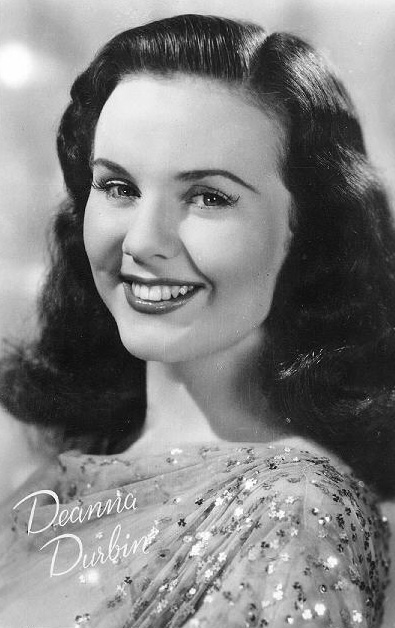
Deanna Durbin RIP


Deanna Durbin, who has passed away aged 91, was a performer of almost supernatural talents.

Not just the voice - that voice - as beautiful an instrument as the movies have ever heard, but the dramatic chops that meant Renoir was desperate to work with her (and which led to some of the loveliest moments of the Golden Age), and that ever-underrated comic ability, incorporating a singular, faux-grown-up "lovestruck" mode, rolled out at regular intervals ("I know, David"), that remains one of the great joys of cinema.

Not all of her pictures were great - she thought the last four so poor that she quit movies and went to live in France - but she was an unfailingly magnificent screen presence, and, when the scripts were worthy of her gifts, the results were just spectacular. 100 Men and a Girl was Churchill's favourite movie (he used to watch it as a treat after major military victories) and the success of that and her other starring vehicles saved Universal studios. Without Durbin, no Destry Rides Again, Jaws, E.T., Back to the Future or Happy Gilmore (sorry about the last one).

Deanna had only pitched up at Universal after being snubbed by MGM. She'd appeared in a two-reeler with Judy Garland, intended as a glorified screen test. MGM could only take on one of them. "Get rid of the fat one," said studio head Louis B Mayer. They got rid of Durbin. He meant Garland. Nice guy.

Her mentor, Joe Pasternak, famously passed up any credit for spotting her talent, declaring: "Deanna's genius had to be unfolded, but it was hers and hers alone, always has been, always will be, and no one can take credit for discovering her."

And genius isn't too strong a word for what she had. When she broke into song, the other actors were usually required to just stare slack-jawed in amazement, or burst into tears. It can't have been hard: I'm usually doing the same thing. Not many comedians could elicit so many laughs from such erratic material, and only a handful of actresses could carry a movie on their shoulders like Durbin. But it's the voice - that voice - that deserves the final word. It's technically flawless but it's also wrenchingly powerful, thanks to the abundance of emotion she invests in everything she sings. Her heartbreaking balladeering on songs like Goin' Home and I'll Take You Home Again Kathleen destroys me. Precious few singers have ever moved me so deeply.

***

Here's a quick primer on one of the greatest talents ever to grace a cinema screen.

Six essential recordings:


My Own (from That Certain Age)
Ave Maria (from It's a Date)
There'll Always Be an England (from the British print of Nice Girl?, a sort of Easy A for the late '30s)
Goin' Home (from It Started with Eve, opposite the mighty Charles Laughton - sorry about the squashed image)
Nessun Dorma (from His Butler's Sister, which sounds like a made-up '40s movie, but really does exist)
I'll Take You Home Again Kathleen (from For the Love of Mary, an iffy romantic comedy about romantic complications at the White House)

***

Six essential films:


Three Smart Girls (Henry Koster, 1936)
A starmaking vehicle, model romantic-comedy and peerless helping of Depression-era escapism all in one, as Durbin - in her feature debut - appears as bright-eyed 14-year-old, Penny Marshall, who reunites her parents with the help of two older siblings. It's funny, moving and wonderfully uplifting, with great numbers and a notable early role for Ray Milland. Durbin is introduced bellowing My Heart Is Singing at the top of her lungs, as is only right. This box-office smash was followed by two sequels: the first is well-acted but overly glum, the second a bit of a slog.

Mad About Music (Norman Taurog, 1938)
Swiss-set boarding school shenanigans, with film star's daughter Durbin pretending her dad is a holidaying composer (Herbert Marshall). A particular treat for fans of people singing whilst riding around on bicycles, and a sweet, perfectly-formed little film.

That Certain Age (Edward Ludwig, 1938)
Deanna grows up, a little, in this completely charming age-gap rom-com, written by Billy Wilder and Charles Brackett, falling for suave middle-aged man Melvyn Douglas, much to the disgust of her suitor, Jackie Cooper. It includes Durbin's spellbindingly beautiful rendition of My Own, which got a Best Song nom.


Spring Parade (Henry Koster, 1940)
The hardest to find of all Durbin's films - it was missing from the 19-disc DVD retrospective, along with It's a Date - but well worth the effort. Cleverly integrating romance, song and dance, it has a feel all its own, with a rich (Americanised) Viennese atmosphere fashioned on a Hollywood soundstage. Durbin's four songs are all sensational.

The Amazing Mrs Holliday (Bruce Manning, 1943)
This is easily the worst film on the list, but it's also perhaps the most interesting: a WWII drama, originally directed by Jean Renoir, that was bashed into the shape of a weak, family-orientated rom-com after Universal got cold feet over the rushes. Durbin gives a sensitive, beguiling dramatic performance - by far the best of her career - and her reading of Mighty Lak' a Rose is extraordinarily moving.

Lady on a Train (Charles David, 1944)
Back in the game! After a few misfires, Durbin came roaring back, her hair bleached blonde, with this Christmas-set fusion of comedy, whodunit and film noir. She's brilliant, leading man David Bruce is hilarious and there's a stunning supporting cast featuring Edward Everett Horton, Ralph Bellamy, Samuel Hinds, Allen Jenkins and Dan Duryea. The numbers include a lovely reading of Silent Night that's curiously imagined but exquisitely sung, the sultry Give Me a Little Kiss, and Cole Porter's Night and Day, cleverly staged and given a complex, tom tom-led arrangement. She appeared in one other noir, Christmas Holiday, directed by genre legend Robert Siodmak, and co-starring Gene Kelly. That's a muddled, overly melodramatic film, but her fascinating turn just about keeps it afloat.

***

If you get a chance to see a Durbin picture, don't pass it up. Perhaps the final few weren't so hot, but she was always incredible to watch, and her vocal numbers are unfailingly magnificent. She'll be much missed, but at least she lived a long and happy life, giving it all up to do what she really wanted. (Incidentally, the bit about her last four movies inspiring her retirement was an exaggeration, but there is some truth behind it. See her only post-retirement interview for more.)

RIP Deanna Durbin.