Saturday, 26 November 2011

Nine things I like about movies - Part One

... in which I shine a big fat light on films, scenes and movie folks deserving of greater recognition, with the help of words and videos. Nine at a time. I'm not sure why it's nine. This first instalment features backflipping, the Depression and a couple of policemen trying to decide who would win in a fight between a tuna and a lion.

Why not tell me your own below? Oh go on, it'll be fun.


1. The Nicholas Brothers
You know Fred Astaire? That guy who was the finest hoofer of all time? He thought the Nicholas Brothers' Jumpin' Jive routine in Stormy Weather was the greatest dance number ever filmed - and who am I to disagree? (Well, I'm Rick, and I think Fred was being modest. Let's Face the Music and Dance is the best.) This astonishingly athletic duo - real-life brothers Fayard and Nicholas - debuted in early-30s shorts, when Harold was just 11, then made a name for themselves through extraordinary routines that typically began with some rhythmic shuffling, then built exponentially, until by the end they were skipping with handkerchiefs, leaping over each other's heads while doing the splits, or backflipping. Fox, who held their contract in the early-'40s never incorporated the pair into the plots of their films, meaning they could snip the stand-alone scenes from musicals when they played in racist areas of the South. Yes, you read that right. If you've got a few minutes spare some time this week, you should really check out these numbers - three of their best - as they're just about the most amazing thing ever to happen on a cinema screen.

Things for you to watch and enjoy:
Chattanooga Choo Choo (also featuring Dorothy Dandridge), from Sun Valley Serenade
Down Argentine Way from Down Argentine Way
Jumpin' Jive from Stormy Weather.
Be a Clown from The Pirate. If you recognise the tune, it was purloined - uncredited, I believe - for the Make 'em Laugh number in Singin' in the Rain.

***


2. Frank McHugh
"Haaaaaerh... haaaaerh... haaaaerh." The best laugh in the movies (referred to by fans as the "one, two, three") belonged to the best character comic of the Golden Age - though McHugh did star in a couple of features: He Couldn't Say No, opposite an improbably-smitten Jane Wyman (they generally occupied different strata in the star stakes), and Three Men on a Horse. McHugh, much admired by contemporary and friend James Cagney, could play it straight as well as most - check out his moving performance in the teary One-Way Passage - but it was as an affable, often confused comic foil that he excelled. Who else could have kept up with William Powell's tour-de-force in I Love You Again? McHugh did - and perhaps even surpassed him - with that drunken phone call to Edmund Lowe. And he's just bloody amazing leading a superb ensemble in Three Men on a Horse. In fact, you could argue that the three funniest comedies of the '30s and '40s all feature McHugh: that, I Love You Again and Blessed Event.

Become an instant fan here:
From McHughTube, lol lol lol, a funny moments montage with lots of spoilers.

***


3. Three Smart Girls (Henry Koster, 1936)
The pinnacle of Deanna Durbin's career: a blissful mix of comedy, romance and lovely music. Canadian child star Durbin - an ordinary kid with an extraordinary operatic voice - was a simply terrific performer and she's in her element here: powering a sentimental, wonderfully entertaining movie that's a bit like The Parent Trap, but with songs instead of twins. Though he sometimes claimed otherwise for propaganda purposes, Durbin's breakthrough film, One Hundred Men and a Girl, was Churchill's favourite movie. Both are available as part of various box-sets, or on their own.

For your delectation:
The trailer.

***


Decent quality pics in short supply, I'm afraid.

4. How Could You Believe Me When I Said I Love You, When You Know I've Been A Liar All My Life (from Royal Wedding)
The MGM number with the longest title of all, and one of my favourites. Hilarious, invigorating and exhilarating, especially when the beat speeds up and Fred starts striding around the stage, being all awesome. It's from Royal Wedding, which has four or five of the greatest musical interludes of all time, but devotes too much of its running time to Winston Churchill's daughter Sarah (Fred's worst leading lady), rather than the excellent Jane Powell.

Because I am nice:
The full routine in all of its considerable glory.

***


5. Joan Leslie
The most purely likeable actress ever to grace the screen - a fine actor, brilliant reactor, top dancer, great singer and master of the cartoonish expression later popularised by Debbie Reynolds. She starred with Gary Cooper, Cagney and Astaire, and even played herself - as a romantic lead - in wartime flagwaver Hollywood Canteen.

Now see her in action:
Joan performing A Lot in Common with You with Fred in The Sky's the Limit.

***


6. Remember My Forgotten Man (from Gold Diggers of 1933)
The production number to end them all: a jaw-dropping crystallisation of Depression-era America in which the myriad ills and marauding malaises afflicting the Land of the Free are paraded across the screen for seven whole minutes. Crippled soldiers sold out by their nation, gaunt, starving widows and bereaved old women take the place of chorus girls, before the massed ranks of the proletariat march relentlessly towards the camera, like something out of a Communist propaganda film. Astonishingly bold and confrontational, it could only have been made by one American studio: Warner Bros, where writers and directors injected searing social comment into the most innocuous-looking entertainments - in this case, a Dick Powell musical. Kudos too to musical director Busby Berkeley for scoring a key passage with a bluesy vocal by a black singer, Etta Moten. Remember My Forgotten Man is remarkably powerful, deeply moving and - aside from The Grapes of Wrath, a remarkable translation of Steinbeck's book crafted by John Ford and noted union-basher Darryl F. Zanuck in 1940 - remains the most striking, outrageously left-wing bit of film ever to emerge from mainstream Hollywood.

See it here:
And be astounded.

***


7. Mickey Rooney really acting
He's much maligned, our Mickey, and sometimes with good cause. There's that, err, questionable performance in Breakfast at Tiffany's ("Aaaaaaaaaaaaaaaaaah, Miss Gorightery!"), lacklustre turns in films like Pulp and a tendency towards absurd caricature in pictures that I nevertheless delight in: Boys Town, the Andy Hardy series and those other musicals with Judy Garland that helped make him a star, the pick of them being Girl Crazy. There's a lot more to Rooney, though, namely the dramatic chops that saw him described by Tennessee Williams as "the greatest actor of all time". When he was encouraged - perhaps even forced - to dial it down, Rooney displayed a simple style, emotions never far from the surface, that was devastatingly effective. In The Human Comedy he plays an adolescent forced to grow up ahead of time, as the ravages of work take their toll on his home town. In National Velvet, he's unforgettable as the gifted, mysterious, duplicitous horse trainer fighting his demons as he primes a gelding for the biggest race of its life. They're two of the most affecting, revelatory performances in cinema history. A few impressive roles followed, Rooney wrestling memorably with the fictionalised difficulties of Lorenz Hart in the musical biopic Words and Music - which couldn't mention that Hart's main problems related to being gay - but he seemed to lack a handle on exactly what his strengths were, overplaying terribly given the merest whiff of a chance. It'll probably take him shuffling off this mortal coil to get the credit he's always deserved, but you can beat the rush by checking out these twin peaks of screen acting, in which the biggest box-office earner of 1939, 1940 and 1941 briefly turned into the best actor in America.

Watch this:
Rooney's Homer delivers a telegram to the mother of a soldier in The Human Comedy.

***


8. Tuna vs Lion (from The Other Guys)
For a change of pace, here's one of my favourite scenes from The Other Guys, among the funniest - and most underrated - comedies of the past few years. Will Ferrell is an unsmiling, officious cop whose commitment to keeping his job desk-bound raises the ire of his partner, the perpetually furious Mark Wahlberg.

Watch it here:
Tuna vs Lion.

***


9. Jojo (from Etre at avoir)
Here's perhaps the cutest movie character of all-time - and he's real. Jojo is the undisputed star of the 2002 documentary Etre et avoir, the simple story of a small primary school in rural France. He can't wash his hands properly, he can't work a photocopier, but he has just seen a wasp. Awwwwwwwww.

See this:
Jojo has trouble getting his hands entirely clean.

Sunday, 20 November 2011

The Lookout, Christmas and Downton Abbey - Reviews #88


*SEVERE SPOILERS*
The Lookout (Scott Frank, 2007)
- This is a truly exceptional character-study-cum-crime-thriller about a former high school hockey star (Joseph Gordon-Levitt) trying to put back the pieces of his life, four years on from causing a car crash that took his girlfriend's left leg and killed two friends. Without a short-term memory, subsidised and patronised by his family, he works nights as a janitor in a bank, sequencing his days in biro. Then he meets charismatic, gaunt Matthew Goode, who introduces him first to a red-haired Luvlee (Isla Fisher) and then to some big plans. Gordon-Levitt's performance is absolutely astonishing - from his odd, shuffling walk (the legacy of his physical injuries) to the pained way he forces out sentences, and his guilt-stricken emoting, articulated partly through an unusually effective voiceover. For me, he's one of the best two or three actors of his generation, and I have never seen him do anything comparable to this - not even Brick.

Like another masterpiece of recent years, Winter's Bone, the film knows what its strength is and zeroes in on it: a compelling protagonist forced to trudge through a swamp of moral degradation in search of the money to ease their burden. The noir-literate script by Out of Sight scribe Frank is extremely eloquent and precise, there are solid supporting turns from Goode, Fisher and Jeff Daniels - playing Gordon-Levitt's blind flatmate - and the chilly cinematography from Alar Kivilo adds to the atmosphere of isolation and quiet desperation pervading this extraordinary directorial debut. The Lookout is what I hoped Memento would be like. It doesn't trick or abuse its hero. It doesn't rely on gimmickry. It shows the human cost of a fleeting error of judgement, the devastating fall-out from one moment of idiocy. And then a second. It's a compassionate, incisive drama so real, so sure-footed, so devoid of cliche, that it just blew me away. (4)

***


*MINOR SPOILERS*
Moon (Duncan Jones, 2009)
- This is a modern sci-fi masterpiece, reminiscent of Silent Running in its intelligent story, retro visuals and atmosphere of loneliness and melancholia. Sam Rockwell is a Moon-based technician, nearing the end of a three-year contract harvesting energy for Earth, who starts to believe that he's not alone. Is he going mad, or is there more to his mission than meets the eye? Rockwell is absolutely stunning in a perilously difficult, demanding part, Kevin Spacey does a great job voicing his robotic colleague (whose changing "emotions" are hilariously detailed via a little yellow face) and the superb Clint Mansell score effectively soundtracks the dizzying narrative as it traverses through confusion and heartbreak to potential salvation. There's also a bit where Rockwell does a funny dance. (4)


SHORT: Whistle (Duncan Jones, 2002) - Prior to Moon, this was the sum of Jones' directorial career: a short notable for its ludicrous story - a hitman lives in a house way up a mountain, assassinating political leaders with his computer thanks to a long-range missile - poor acting, and one glimmer of brilliance: that arresting final shot. How on earth did he get clearance to use David Bowie's Subterraneans on the soundtrack? Oh I see. (1.5)

***


Before the Devil Knows You’re Dead (Sidney Lumet, 2007) – Lumet’s final film is a densely-plotted heist movie, rich in misery and human drama, about a pair of brothers – sweaty, arrogant Philip Seymour Hoffman and twitchy, babyish Ethan Hawke – who decide to knock off their parents’ jewellery store. The time-shifting script is cleverly assembled and Lumet’s handling is typically meticulous: the movie’s cumulative power amassing by the minute as it did in the his seminal cop-corruption drama, Prince of the City. Hawke is very good, Albert Finney gives one of his better turns of recent years as the pair’s father, and Marisa Tomei does her best in a slightly muddled part, but Hoffman blows them all away with an astonishingly effective, multi-layered performance. His flailing real estate salesman appears at first glance to be an utter shit, but people rarely occupy such extremes, and after nearly two hours in his company, you see the hurt, the flecks of human decency amidst the amorality, violence and bitter desperation. A few scenes go on a little long and those featuring a camp, unsympathetic drug dealer (“My mom’s dying”, “Bummer”) seem to have been shoehorned in for the sake of plot convenience, but this gripping film – full of anger, compromise and regret – is a fitting swansong to Lumet’s brilliant career. (3.5)

***


Dazed and Confused (Richard Linklater, 1993) - Linklater's breakthrough is less pretentious than the films he made either side - Slacker and Before Sunrise - with the characters living and breathing, rather than acting as conduits for his assorted philosophical musings. It's a low-key, well-acted ensemble drama about freshmen and seniors celebrating the last day of school in 1976, with a few good jokes and a cast of stars-to-be, including Ben Affleck, Matthew McConaughey, Milla Jovovich, Joey Lauren Adams and Parker Posey. Some characterisations are better and more detailed than others, the standouts being Jason London's "Pink" - a compassionate, forthright star-quarterback-turned-stoner - and Wiley Wiggins's awestruck Mitch, embarking on his first all-nighter. It's always nice to see Adam Goldberg too, playing a nebbish questioning his place in the world. With its period high school setting, sympathetic look at dropouts, and themes of anti-authoritarianism and personal honour, it's clearly a key influence on Apatow and Paul Feig's Freaks and Geeks. More importantly, it's an enjoyable and insightful film on its own terms, a handful of memorable male characters making up for the periodic dramatic lulls (there are a few scenes in which people just drive past each other shouting) and underwritten female roles. (3)

See also: Goldberg went on to appear in the two best episodes of Friends, Terence Malick's The Thin Red Line and Julie Delpy's: 2 Days in Paris.

***


The Angel Doll (Alexander Johnston, 2002) - Overly sentimental Christmas film set in 1950, with aspirations beyond both its budget and its talents. Parachuted in for the present day framing device, former Altman co-conspirator Keith Carradine is the patriarch looking back on his childhood - and his friendship with poor kid Whitey (Cody Newton), who dreamed of acquiring an "angel doll" for a younger sister dying of polio. There are some nice moments in a kind of sub-Stand by Me manner: storytelling around a campfire, bonding in a junkyard, ragging a burgeoning dickhead who then falls off his bike; and both the kids do a decent job, even if Newton has the voice of a 50-year-old homicide detective. But the supporting cast is less impressive and the script veers from the story I was quite enjoying (aside from the mawkish superimposition of the terminally ill girl in the play-within-a-film - bleurgh) to curiously underdeveloped subplots about race and tolerance. It's also saddled with an unfortunate tendency to miss out parts of its narrative at key junctures and, having aimed for weepie territory with an ill-judged twist near the end, then entirely fails to provide the anticipated climax, as Carradine just lounges around, wittering about dolls. It's apparently based on a true story, though, so if that's the way things really happened, fair enough. A decent script editor and a couple of better grownups in the period scenes could still have made it flow a whole lot better. Michael Welch, playing the young Carradine, is apparently now an integral part of the Twilight universe. The film is dedicated to director Johnston, who died shortly after filming wrapped. (2)

***


DTV: The Littlest Light on the Christmas Tree (Anthony and John Gentile, 2004) - It's not really Christmas yet, but my fiancee had added this to LoveFilm and they just couldn't control themselves, so we watched it last night. It's a minor animation, very much for children, with primitive CGI, broad characterisation and a surprisingly large number of original songs for a 45-minute direct-to-video production. The visuals are so clunky that it would surely have worked better as a hand-drawn affair or a radio play, but its heart is in the right place and there is a good bit where the tree ornaments come to life - the quality of the animation suddenly ratcheting up a notch as a clown unicycles along a tightrope and some inexplicably nasty Christmas lights decide to duff up the eponymous figure. Not the best Christmas film I'll see this year, but so nice that being any harsher than that just seems mean. (2)

***


*ONE INSTANCE OF CHILDISH SWEARING IN THIS REVIEWS*
The Man (Les Mayfield, 2005)
– Haha, this is rubbish! Eugene Levy plays a dental supplies salesman roped into helping tough cop Samuel L. Jackson bust a gun-running ring in this appalling action-comedy, which imagines itself to be Midnight Run, witlessly spoofs Pulp Fiction, but takes longer to watch than it apparently did to write – and only runs 83 minutes. There are a couple of OK human moments, but the “comedy” is unstintingly abysmal. Lol, he did a fart. Lol, he’s about to be anally violated by customs officials. Fuck me, it’s bad. (1)

***


*SPOILERS*
TV: Downton Abbey (Series 2, 2011)
- Diverting but disappointing second series that lapses into ludicrousness on a dishearteningly regular basis. The good: Maggie Smith, Matthew and Mary. The bad: plotting straight of cheap melodrama, Brendan Coyle (whose line readings are all absolutely identical) and Daisy, who is just flat-out terrible. Fellowes is clearly more comfortable examining the minutiae of aristocratic life than he is dealing with the lot of the servants, whose stories are almost unfailingly uninteresting. There are effective dramatic scenes scattered throughout the series (the two utilising sentimental period tunes were really nicely done), the doomed romantic couple at the centre are great both alone and together, and Smith's waspish one-liners are a joy, but this decidedly erratic fare is ultimately undone by its stale, silly plotting and muddled execution. (2.5)

Thursday, 10 November 2011

Source Code, Sixteen candles and six Bob Dylans - Reviews #87


*IF YOU DON'T LIKE RUDE WORDS, SKIP THIS ONE*
I’m Not There (Todd Haynes, 2007)
– “What’s this shit?” as Greil Marcus memorably enquired of Bob Dylan’s 1970 album, Self Portrait. What indeed? The shape-shifting Dylan is split into six different personas, including a flirtatious, feline ball of wiry hair with no emotions (Cate Blanchett), an 11-year-old black troubadour called Woody Guthrie (Marcus Carl Franklin), and a poetic, talking head Bob (Pingu from Nathan Barley), being quizzed by an unseen interrogator. They’re all pretty good while a section with a bland Richard Gere – as the old, incognito Billy the Kid – works nicely (especially his ride into town to the wondrous strains of The Man in the Long Black Coat), but Keith Ledger is wasted in a boring story strand and Christian Batman is just rubbish, mistaking "leaning forward" for "being shy". Haynes' film is based on an intriguing idea and the results are generally entertaining, but it's nevertheless riddled with pretension and emotionally unsatisfying, especially when most of this story has been told so powerfully already in Scorsese’s coruscating, excoriating No Direction Home. (2.5)

***


Rango (Gore Verbinski, 2011) – OK animated feature about a chameleon posing as a hero in the town of Dirt, which works in extended spoofs of spaghetti Westerns and Chinatown, along with some excellent slapstick and a peculiar predilection for jokes about adult health complaints. Johnny Depp’s voicework is a bit strained and the story is bitty in the extreme, but there are effective stretches. Kung Fu Panda 2 was aces, but with this, Tangled and Cars 2, it hasn’t been a great year for animation, all told. (2.5)

***


*SPOILERS*
Source Code (Duncan Jones, 2011)
– Supremely entertaining sci-fi movie that cuts Groundhog Day down to eight minutes and then shoves it into thriller territory. Jake Gyllenhaal is the disorientated war vet reliving the final moments of a commuter’s life in a bid to thwart a terrorist atrocity – whilst falling in love with the doomed acquaintance opposite. There may be plot holes and inconsistencies, while a saccharine pay-off alienated many, but this is so slick, imaginative and well-executed that I didn’t really care. With this, Never Let Me Go and The Adjustment Bureau, it’s been a good year for intelligent sci-fi with a bit of heart. (3.5)

***


Sixteen Candles (John Hughes, 1984) - A sweet story about 16-year-old Molly Ringwald's disastrous birthday, her encounter with a horny geek and her mad crush on a soulful, chiselled jock emerges, shaken, from beneath a mountain of cartoonish gags, materialist moans and objectionable epithets ("fag", "retard", "spaz") in this textbook Hughes comedy-drama. The overwhelming impression is that he didn't trust the central story to hold interest for 100 minutes, or didn't know how to adequately sustain it, so just started furiously padding. Ringwald and Anthony Michael Hall - as the nerd with a litany of fictional sexual conquests - are both very good in their realistic, star-making parts, and Justin Henry is funny as Ringwald's acerbic little brother, but the ratio of great scenes to disposable ones is about 50:50 (special mention for the terrible mafia subplot) and every moment Ringwald is off screen, it really suffers.

The film has attracted criticism for its supposedly racist Chinese character, but he's kind of a hero and - even taking into account the bit where he leaps out of a tree in traditional dress, shouting "Banzai!", which is hilarious - he's no more of a stereotype than the other characters, with the humour arising from his exuberant idiocy rather than his ethnic background. I should also mention for all John Cusack afficionados (and who could claim to be anything else and still expect to be taken seriously), that he has a fun part as one of Hall's even geekier pals. While Hughes' breakthrough film is maddeningly unfocused, at its heart is something really nice and tender: anchored by a new kind of screen teen. By the '90s and early-'00s, such adolescent angst would be boiled down to its emotional core in heartstopping shows and films like My So-Called Life and Ghost World. Here, as in so many "me decade" films, the universal themes are somewhat obscured by consumerist griping, gratuitous tits and misguided frat house-ry. (3)

***


*MILD SPOILERS*
Parks and Rec: Season 3 (2011)
- What a wonderful programme this is. Warm, funny and - when necessary - razor-sharp, with an irresistible ensemble. It's great to see Adam Scott slotting into the cast so well: he gets the biggest laugh of the series with his spectacular meltdown on Ya' Heard? With Perd. (4)

See also: That review was rubbish, but don't let that put you off my review of Season 2.

Sunday, 30 October 2011

Blue Valentine, Romain Duris and two days in Paris - Reviews #86


*SPOILERS*
Blue Valentine (Derek Cianfrance, 2010)
- Intense, insightful, semi-improvised indie about the death of a relationship, starring perhaps the two best young actors in the world: Ryan Gosling and Michelle Williams. He's a former removal man and ambition vacuum who drinks too much and twists around everything she says. She's a put-upon, busy nurse who thwarts his attempts at physical reconciliation and allows the family dog to get run over. The film doesn't make judgements about these flawed, very real characters: it just throws their story onto the screen and forces you to watch as something utterly beautiful disintegrates, until all that remains is malice, unhappiness and desperation. There are fragments of warmth and love, and even a couple of very Gosling-ish jokes ("That's a funny name"), but the overall effect is like being whacked in the face. One of the best I've seen this year. (4)

***


*SPOILERS*
The Beat That My Heart Skipped (Jacques Audiard, 2005)
– Audiard, Romain Duris is in trouble in this enigmatic collision of character study, thriller and piano concert. Did you get that? It was like "oh dear”. This star-making vehicle for one of Europe's most interesting, versatile, quiveringly-intense actors chronicles the travails of a low-level gangster and wannabe concert pianist negotiating the shadow of his father, who used to be a somebody in the Parisian underworld. It's a genuinely offbeat film: a collection of rough scenes in which Duris argues with his pops, sulks and rages at his fingers, boffs his associate's wife and later tries to beat someone to death with a briefcase. It's also largely brilliant, lit by Duris' shambling, megawatt persona and full of brilliantly-observed passages ruminating on such interesting subjects as family, honour and violence. It is a remake of the '70s American film, Fingers. I'm sick and tired of the French remaking American films, just because their audiences are too lowbrow to watch anything with subtitles. As observed recently by some otherwise insufferable bore on Radio 4, it's also an interesting companion piece to the recent Drive. (3.5)

***


2 Days in Paris (Julie Delpy, 2007) - Very entertaining portrait of a Franco-American couple (Julie Delpy and Adam Goldberg) who spar, bicker, quibble and sporadically make up while spending two peculiar days in the City of Light. Revealing, intelligent and directed with a truly original eye, meaning that you can forgive some false steps and a feeling - which soon vanishes - that you've already seen this, and it was called Before Sunset. Delpy and Goldberg are both superb. (3.5)

***


*SOME SPOILERS*
Outrageous Fortune (Arthur Hiller, 1987)
is a very daft, very '80s but kind of enjoyable buddy movie starring Bette Midler and Diane off of Cheers. They're the chalk-and-cheese New Yorkers who – like Team America's Gary Johnson – have to use their acting powers to save the day, after two-timing boyfriend (Peter Coyote) turns out to be a Russian mole. This action comedy is a bit predictable – not dissimilar to Hiller's The In-Laws, which is much better – but for all its cheesiness and implausibility (why do they keep running away once they've knocked a lone bad guy to the ground?), I got quite into it. George Carlin turns up near the end as a faux-Native American tracker, if that's of interest, and there's also an appearance from Altman regular John Schuck. When he was born, I bet the doctor took one look at his face, turned to his parents and said: "Congratulations - it's a character actor!"(2.5)

***


Tangled (Nathan Greno and Byron Howard, 2010) – A princess with magic hair (Mandy Moore, whose voicework is terrible) is swiped from her cradle by a manipulative old bag and kept in a dock-off tower, but dreams of one day escaping. Then into her closeted universe (and ultimately her closet) comes cocksure thief Flynn Rider (Zachary Levi). Disney's spin on the Rapunzel legend has its moments of excitement and slapstick levity – not least the I've Got a Dream set-piece, in which a barroom of thugs reveal a more arty side – and an agreeably sly, passive-aggressive baddie. But it's let down by erratic computer animation, the mannered, stagey butchering of a pleasant song score and a second half in which the extremely entertaining comic relief – an expressive, Gromit-esque chameleon – largely disappears. But I suppose I should have expected that from a chameleon. As in so many of its lesser films, Disney applies a thick layer of hideously mawkish, sanctimonious, patronising sentiment to any sequence it possibly can. (2.5)

***

... and a couple of Judd Apatow films I'd missed:


Pineapple Express (David Gordon Green, 2008) - Process server Seth Rogen witnesses a murder and is forced to go on the run with his weed dealer (James Franco) in this paradoxically enthusiastic stoner comedy. Most stoner comedies aren't funny unless you're, well, on drugs (French Connection II was a particularly poor effort), but this one's a slight cut above, thanks to an appealing performance from Franco as the dazed dealer and a typically amusing one from Rogen - the pair reuniting after Freaks and Geeks, also produced by Judd Apatow. It's very minor, there aren't enough good jokes and the shift into action at the climax doesn't work, but it's kind of sweet in its muddled way and the leads make a nice pair. (2.5)


Talladega Nights: The Legend of Ricky Bobby (Adam McKay, 2006) - Unpleasant, self-indulgent but sometimes funny Will Ferrell vehicle, in which the star's insufferable speed freak takes stock car racing by storm, before crashing out in a ball of invisible fire (it'll make sense if you watch it) - only to rise again. It's directed by regular Ferrell collaborator McKay, but the improv approach that worked sporadically on Anchorman largely fails them here, as it would with Step Brothers. For every genuinely great line ("So when you say psychosomatic, you mean, like he could start a fire with his thoughts?") there are a half-dozen that just don't work, and the supporting cast of foul-mouthed kids, a grasping wife, a drug-dealing absent father and a neglected pensioner are more upsetting than funny. Ferrell readjusting to life in the fast lane by driving at 26mph made me laugh, and having him evade trackside flunkies by running in circles wearing only his pants is always going to work, but the film is ultimately too cold and cruel to engender any goodwill, which is what's needed when the material is as spotty as this. On the plus side, McKay and Ferrell's fourth collaboration, the cop comedy The Other Guys, is an unheralded classic - the improvisation augmenting rather than replacing a strong narrative and proper characters. "Gater needs his gat." (2)

***


*SPOILERS*
TV: Parks and Recreation: Season 2 (2009-10)
- As anyone will tell you, this second season is a massive step up from the first: think the gulf between Tom Waits' first two records, or Buster Keaton's Three Ages and Our Hospitality. This time around the characters feel real, their low-level quandaries important, whether that means romantic entanglements, some misguided plan to sell unhealthy health bars at the city's parks or dealing with the fallout from marrying two gay penguins. The nominal lead is Amy Poehler - playing eternally positive workaholic Leslie Knope - while Aziz Ansari's desperate, perma-grinning Tom Haverford has garnered most of the critical plaudits, but it's three other members of the ensemble that really make this sublime, satirical series fly: lazy libertarian boss Nick Offerman, pleasant, witless shoeshiner Chris Pratt and sarcastic, deadpan intern Aubrey Plaza. It's just a joy. (4)

***


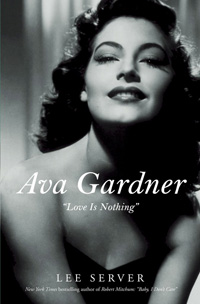
BOOK: Ava Gardner: Love Is Nothing by Lee Server - Server can be a superb biographer, one of the elite crowd who are both diligent researchers and excellent writers (ex-tabloid hack Howard Sounes may have unearthed Dylan's financial records and his second wife, but I still have nightmares about the songwriter's lyrics being "like magic birds that fly into the ear of the listener"). In 2001, he published the definite Bob Mitchum tome, Baby I Don't Care, a fascinating story and brilliant character study told in an awesome prose style that aped Mitchum's own hip, jive-talkin' persona, full of the "hell"s, "man"s and "baby"s that littered the actor's vernacular. This follow-up, which curiously omits Gardner's supposed fondness for "golden showers" - mentioned in the Mitchum book - is a somewhat less compelling affair due to its often dislikeable heroine, events that seem to repeat themselves on an endless cycle and muted stylistic leanings that can probably be filed under "Diet Faulkner". It's still zippy and entertaining, with a particularly strong mid-section (from Gardner's arrival in Hollywood to her time filming Bhowani Junction) and numerous memorable anecdotes involving such supporting cast members as Frank Sinatra, Ernest Hemingway and Luis Miguel Dominguín - the best bullfighter in Spain. (3)

Saturday, 22 October 2011

CLAIRE DANES SPECIAL

That's a headline. She is. We like her. She's completely lacking in self-consciousness in a way that very few performers are and it makes her characterisations seem very truthful - which is probably the best thing you can say about an actor. We'll tell you more about that one day, but for now here are four reviews. You can read about Romeo + Juliet and Me and Orson Welles elsewhere on the blog.


TV: My So-Called Life (1994) - A phenomenal piece of television that swells with confidence and ambition as it progresses through a single 19-episode season. It begins as standard, sometimes humourless but insightful teen fare largely carried by Claire Danes' wonderful performance, then becomes ever more nuanced, adventurous and hard-hitting, lit by a brilliant ensemble (special mention for Wilson Cruz) and balanced by quiet sentiment and great little comic passages ("Are you Brain?"), leading to a note-perfect pay-off. The plotlines featuring the parents can't match the startling truth of those dealing with teen life, but then what can? Danes' tour-de-force remains simply one of the most important and arresting ever to grace the small screen. Her unconventional, give-everything form of emotional expression, and her innate understanding of how human beings develop and change meant she always deserved a great career. It's been a rocky, fascinating road since then, studded with curious gems; now with the critical acclaim afforded Temple Grandin and Homeland, it looks like she has it. (4)

***


*SOME SPOILERS*
Shopgirl (Anand Tucker, 2005)
- It has a great cold neon look, a commanding central performance from Claire Danes and an impressive, oppressive musical score, but nothing about this oddly downbeat romantic drama, adapted from a Steve Martin novella*, quite fits together. Danes plays a lonely department store salesgirl who's looking for love, but finds only schlubby logo designer Jason Schwartzman. Then charming, aloof, slightly melted-looking middle-aged businessman Martin strolls into her life. There are a couple of cracking scenes - Danes asking "Why don't you love me?" will live long in the memory and her climactic chat with Martin is very well-handled - but Martin himself is a bit creepy (he's always been better at wacky than sincere) and Schwartzman's character - though amusing - is too dislikeable and ridiculous to be a credible romantic figure. It's not a bad film by any stretch, but it's a frustrating one, as every time it touches greatness it immediately falls away again into nothing. The committed way Danes cries: all snotty, with big puffy lips, sums up what a great actress she is. (2.5)
*What did Steve Martin say when he'd finished his book? "Ivor Novella." BOOM!

***


The Rainmaker (Francis Ford Coppola, 1997) - A powerhouse cast ignites this massively entertaining Grisham adaptation about an idealistic young attorney (Matt Damon) taking on the case of a poor leukemia victim whose insurance company is refusing to pay out. In a second, equally engrossing story strand, he also moves to protect a young woman (Claire Danes) hospitalised by her abusive boyfriend. The film slips into melodrama a couple of times and the last five minutes is sadly muddled, but everything else about this courtroom drama is first-rate. Damon is perfect in the lead, Danes scores big in a sensitive, affecting performance, and the support is a veritable who's who of top character actors, including Roy Scheider, Jon Voight (imposing if occasionally silly), Dean Stockwell, Mickey Rourke and Danny Glover. Best of the supporting bunch is Danny De Vito, playing a roguish researcher on the boundaries of the law. (3.5)

***


*SOME SPOILERS*
Stardust (Matthew Vaughn, 2007)
- Simply lovely stuff. A post-modern fairy tale, riffing on It Happened One Night, that's stuffed with fun, invention and familiar faces (how on earth did they manage to assemble that cast?!). Charlie Cox is a touch callow in the lead and Pfeiffer's volte-face at the close makes precisely no sense, but those are minor quibbles in what is a tremendously enjoyable film. Claire Danes is cool. (3.5)

Wednesday, 19 October 2011

Woody finds his mojo, Lisbeth gets a mohawk and Peter Falk disses Albanians - Reviews #85


*SPOILERS for Midnight in Paris and The Purple Rose of Cairo*
CINEMA: Midnight in Paris (Woody Allen, 2011)
- He did it! He finally did it! Woody made a good film again! I actually want to give him a little hug. What a sweet, gentle, funny, winning, interesting, relevant, piquant, magical and thoughtful little film this is. So just as The Purple Rose of Cairo was a film that chose reality - for all its flaws - over fantasy, so this nostalgia trip has a few smart little observations to make about living in the past. Owen Wilson, typically excellent, is a Hollywood hack and aspiring novelist who travels to Paris with his shallow fiancee (Rachel McAdams). It's nice enough, but the city of which he fantasises is the Paris of the '20s - of Hemingway, Fitzgerald, Picasso and Dali. And out for a stroll one evening, that's exactly where he ends up, wandering into the past, where he converses with long-dead legends and sparks with artists' muse Marion Cotillard. There's the odd dry spot or antique celeb cameo too many, but this is still the best thing Woody has done since Anything Else - and arguably since since Sweet and Lowdown. Added to which, Adrien Brody is a superb Dali. "Rhinoceros." (3.5)

See also:


*SPOILERS*
Hannah and Her Sisters (Woody Allen, 1986)
- Allen's masterpiece begins with a little surface posturing (you've seen Ibsen, Woody? How terrific), but quickly reveals itself to be the most profound, perceptive and insightful of his many great films. Tracing the romantic fortunes of three actress sisters (Mia Farrow, Dianne Wiest and Barbara Hershey), its superbly-scripted episodes have a rare cumulative power, while the writer-director is at his nicest: understanding and empathising with his characters, and giving each a happy ending. This being Allen, we're not concerned only with love, but also with death - as hypochrondriac Woody (playing Farrow's ex-husband) wrestles with the big questions, flirting with Catholicism and Buddhism, before settling for the Marx Brothers - a subplot that contains the bulks of the film's laughs. A score of '30s standards creates the mood, while the exceptional ensemble nails every nuance of the dialogue: the cast boasting Golden Age luminaries Lloyd Nolan and Maureen O'Sullivan, Bergman favourite Max Von Sydow and Michael Caine. And how about that last line? It always makes me grin. And cry. (4)

***


*MAJOR SPOILERS, SOME OF THEM HAIR-RELATED*
Millennium Trilogy: Extended Editions (Niels Arden Oplev, 2009)
- Being the original nine-hour TV extravaganza from which those three The Girl... movies were sculpted, complete with a tasteful, slightly spoiler-heavy animated credits sequence: the buzzing of a taser complete with lively music serving as a wonderfully cathartic metaphor. Dragon Tattoo (Parts 1 and 2) is obviously the best of the bunch, its frankly horrible mystery nevertheless providing a superlative showcase for Noomi Rapace as the endlessly fascinating Lisbeth Salander. Sequel Played with Fire (Parts 3 to 4) is a zippy, intriguing film that delves into her back-story and benefits from excellent acting, though it undeniably suffers from obstinately keeping Lisbeth and co-conspirator Mikael Blomkvist (Michael Nyqvist) apart for its entire duration. Once Salander's protagonist becomes a largely helpless victim in the final two-parter, the series loses something of its energy and its point. On the plus side, and for all its conventionality and fat, Hornet's Nest (Parts 5 and 6) remains an entertaining-enough final instalment: a conspiracy thriller mercifully light on horrendous sexual violence and blessed with a satisfying climactic half-hour. I fancy rocking a mohican if I'm ever hauled up in court due to the machinations of a shadowy organisation known as The Section. (4)/(3.5)/(3)

See also: Our review of the theatrical cut of Dragon Tattoo can be found here.

***


Manderlay (Lars von Trier, 2005) - This sequel to Dogville takes a good 10 minutes to get going - or else for one to acclimatise to its obdurant staginess - but once that's done, it's something pretty special: an exploration of American racism with an argument so incisive, so controversial and so cleverly arrived at that you've just got to marvel at von Trier's massive, swinging testicles. Bryce Dallas Howard is terrific in the Kidman role as gangster's daughter Grace, who pitches up at a plantation in 1933 to find that slavery is still in full flow. Taking over the property through a mixture of might and right, she attempts to turn it into a workers' co-operative, with mixed results, whilst feeling oddly drawn to proud, noble worker William (Isaac De Bankole). It's bracingly original and devilishly clever, with a denouement that's like being smacked in the gob. That's still nothing compared to the end credits: a montage of photos from American history - set once more to Bowie's Young Americans - including pictures of murdered Southern blacks, and a little baby in a Klan hood. (3.5)

***


Up in the Air (Jason Reitman, 2009) - George Clooney gives his best performance to date in this light-but-serious drama that uses the insular existence of a "downsizing expert" to examine the selfishness of modern America. As we learned from North by Northwest - which saw Cary Grant triumphantly arresting a desperate slide into mediocrity - that suntanned smug-suaveness is only interesting (and indeed bearable), if you rupture it, at which time it becomes heartbreaking. The film has something to say, and says it through singular iconography and a distinctive vernacular, so you can forgive it the occasional misfire or loose end. What's harder to take is Reitman leaving out the brilliant "spacesuit" dream sequence cut to Ricky Nelson's Lonesome Town, a perfect visual metaphor that would have lifted the film onto a whole other, ahem, plane, in the same way that heightened Mamas and the Papas climax elevated Morvern Callar to greatness. (3.5)

***


Stranger Than Fiction (Marc Forster, 2006) - Clever, Charlie Kaufman-esque comedy about an inland revenue agent (Will Ferrell) who begins to hear a disembodied voice (Emma Thompson) narrating his life - and predicting his death. Hoping to get to the bottom of things - and so thwart his impending demise - he enlists the help of literature professor Dustin Hoffman, who suggests he turn his life into a comedy by pursuing an improbable romance with tattooed baker Maggie Gyllenhall. The first half is simply brilliant, full of great jokes and outlandish ideas which are superbly realised, but the film doesn't deliver on that promise, failing to engender sympathy for Ferrell's plight and so appearing strangely aloof and detached as the gag-rate slows. It's still an interesting movie, and there are a couple of genuinely hysterical scenes - Ferrell repeatedly double-taking while brushing his teeth, and later being quizzed by Hoffman about which genre he might be living in ("Do you find yourself inclined to solve murder mysteries in large, luxurious homes to which you may or may not have been invited?") - but it's neither engaging enough to be another Purple Rose, nor bold enough to approach the warped, delirious mayhem of, say, Synecdoche, New York. (3)

***


*SPOILERS FOR FIRST 20 MINUTES*
Ghost Town (David Koepp, 2008)
is a surprisingly successful attempt to turn Ricky Gervais into a Hollywood romcom lead (who's next, Dudley Moore? Oh right), conventional without appearing compromised, and agreeably lacking in lazy anti-Britishness. Gervais plays a misanthropic dentist who dies on the operating table and returns to life to find he can see ghosts - and they all want his help. The most overbearing is tuxedoed adulterer Greg Kinnear, who's desperate for him to break up the marriage of ex-wife Tea Leoni. There's a bit of Sixth Sense in there, a lot of Groundhog Day and a chunk of Amélie, but Ghost Town does ultimately carve out a small niche of its own, with a fair few laughs (the funniest bit has Gervais being continually interrupted by doctor Kristen Wiig) and some reflective moments from the star that provide the unexpected highpoints. Karl Pilkington said it was good. I should have believed him, but he's been wrong about things before. Like Stephen Hawking being an alien. "I'm not Stephen, I'm just a brain." (3)

***


*SOME SPOILERS*
John Grisham adaptation A Time to Kill (Joel Schumacher, 1996) isn't really in the same league as The Rainmaker, trappings of trashiness serving to blunt the impact of its essentially interesting narrative about race and justice in the Deep South. Matthew McConaughey is a Southern lawyer who springs to the defence of a black man (Samuel L. Jackson) accused of a double-murder, after he guns down the rednecks who raped his 10-year-old daughter. The crusading attorney - who has personal reasons for taking the powder-keg of a case - becomes a target for thugs, while assisted by the usual ragtag band of misfits: a liberal law student (Sandra Bullock), a brilliant old soak (Donald Sutherland in fine form) and a twinkingly immoral pal who deals only in divorce cases (Oliver Platt). McConaughey is very good - this was back in the days when he looked like he might become a really interesting actor - and he features in the film's four best scenes: talking to Bullock in the diner, to Sutherland in the courtroom corridor, to Jackson in his cell the night before summation, and finally to the jury - recounting the rape in sickening detail. The film's celebration of vigilante justice is unpalatable, and a subplot about the rebirth of the KKK is essentially just Mississippi Burning 2 (which no-one wants), but there is enough in the fast-paced narrative and typically strong cast to grip. (3)

***


Sons and Lovers (Jack Cardiff, 1962) - Three of the most idiosyncratic and interesting actors in movie history combine for this fascinating but flawed D.H. Lawrence adaptation. Dean Stockwell doesn't go near a regional accent, but does do a good job in the overwritten part of a sexually-charged young artist from Nottingham troubled by familial responsibility and the sexual repression of his true love. Trevor Howard overdoes it a bit as his eternally bellowing coal miner father, who "acts low because thee think I'm low" (or words to that effect), apparently having wandered in from an altogether different movie. I just kept thinking of the cleverly inverted Python sketch, Working Class Playwright. So the film belongs to Wendy Hiller in one of her sporadic, effortlessly devastating big screen appearances, incorporating a couple of little breakdowns that made me whimper. Which other actress has ever made you feel - actually feel - something of the loss of a child, or the ruination of another? The script is often too long-winded and thematically jumbled for the film to approach greatness, but there's no questioning the power of individual scenes and the whole thing is wonderfully-shot by Jack Cardiff - a couple of hideous back-projection shots aside. (3)

***


*SPOILERS*
Waiting for Guffman (Christopher Guest, 1996)
is a bit overbalanced by Guest's obvious turn as a camp theatrical producer, but this tale of am-dram hopefuls waiting for a Broadway bigshot is quite nicely done, especially in the opening scenes, which have a Parks and Rec feel. It also avoids turning the climactic show into a series of calamities - a clear pitfall - building up goodwill through some clever, throwaway jokes and its gallery of likeable schlubs. Its main failing is that it can't ever hope to touch the Bilko episode that also deals with the staging of a small-scale historical play - probably my favourite ever. I think Guffman is supposed to be a mixture of Godot and a MacGuffin. (2.5)

***


Clerks II (Kevin Smith, 2006) - I saw this more out of hope than conviction - a director notable for his diminishing returns, revisiting the only great film he's ever made? - but it wasn't bad. Well, the inter-species erotica was appallingly unfunny, Randal is too much of a bully in the early exchanges and much of the best stuff is locked away in the deleted scenes, but there are a handful of neat routines, the bit in the jail is genuinely touching and the set-piece about Randal's grandmother is one of the funniest things I've seen all year. Smith also seems like a thoroughly nice chap, which makes me feel bad about disliking so many of his movies. (2.5)

***


*SKIP THIS REVIEW IF RUDE WORDS OFFEND*
Equilibrium (Kurt Wimmer, 2002)
- Very silly but largely entertaining sci-fi yarn about a world in which emotions are banned (yeah, I know). It all looks and feels oddly amateurish, though it moves at a fair clip, and the action sequences, Christian Bale's performance and the scenes with his kids are pretty effective. I only really watched it for the titan that is Emily Watson - she doesn't have much screen time and is doing a very quiet Irish accent, but offers a couple of nice moments amidst a large amount of complete and utter fucking nonsense. (2.5)

***


Bowfinger (Frank Oz, 1999) - Pretty good comedy about a down-at-heel wannabe movie producer Bobby Bowfinger (Steve Martin) whose plans to make alien flick Chubby Rain are shot down by superstar Kit Ramsey (Eddie Murphy). Undeterred, Bowfinger begins to follow him, staging scenes around the terrified star, who becomes convinced he's the target of pod people. When Ramsey checks into a cultish rehab centre, Bowfinger needs a Plan B - and turns to dorkish Ramsey lookalike Jiff (Murphy again). It's scattershot stuff but there are a few inspired moments of silliness and some decent satirical barbs, while Murphy gives probably his best performance of the decade in a dual role. Martin's pretty good too, though just when you think he's not going to indulge that unfortunate penchant for terribly unfunny mock-kung fu, he gives in. (2.5)

***


Iron Man (Jon Favreau, 2008) - Meh. This was what all the fuss was about? Still, it turns out that weapons launched by the Americans never harm innocent civilians. I suppose that is news. Gwyneth Paltrow always seems to land these old-fashioned, appealing characters (see also: Sky Captain and the World of Tomorrow), but lacks the smarts or the spark to do anything with them. (2)

***


Yeah, the excellent period detail doesn't really come across in this poster.

Tune in Tomorrow... (Jon Amiel, 1990) - Radio soap opera writer Peter Falk helps (or hinders?) the course of true love between news writer Keanu Reeves and his sort-of-aunt Barbara Hershey in this '50s-set comedy. Falk is actually quite annoying, Reeves' New Orleans accent is terrible and the plot is very hard to understand, though the relationship between the leads is sweet, there's period atmosphere in spades and it has spoken opening credits - very cool. A subplot about Falk's hatred of Albanians starts off amusingly, then becomes markedly less so as its language becomes horribly reminiscent of anti-semitic Nazi propaganda. (2)