Showing posts with label Season 2. Show all posts

Tuesday, 13 June 2017

Dustin Hoffman, The Black Dahlia, and bent coppers – Reviews #267

... in which I arrive five years late to the Line of Duty party to find that all the bent coppers have already been caught.


Black Dahlia Avenger by Steve Hodel (2003/2015) − In 2003, former LAPD homicide detective Steve Hodel held a press conference to announce that he had solved perhaps the most notorious unsolved murder case in American history: the 1947 slaying of the 'Black Dahlia', an aspiring actress named Elizabeth Short, whose brutally mutilated body was found in a parking lot in Los Angeles. The unforgettable appellation − often misattributed to tabloid hacks repurposing the film noir title, The Blue Dahlia − was actually Short's nickname in life, and, with the singularly horrifying manner of the body (cut in two with surgeon-like precision), may explain why it became such a sensational newspaper story. Yellow journalism fanned the flames of a tale that had everything − a beautiful victim, a sadistic villain, and innumerable conspiracy theories − turning the hunt for the killer into a dark parlour game, rather than it remaining what it should always have been: the search for justice after the death of a young woman, almost certainly murdered by an abusive ex-boyfriend. By 1950, she was a line in Sunset Blvd. Four decades later, James Ellroy revisited the crime in the dark, semi-fictional opening novel of his LA Quartet.

Hodel's theory, which made his book an international best-seller, is that the killer was his own father: a doctor, former musical prodigy and bona fide genius, by the name of George Hill Hodel. And for a third of its 500-page length, Black Dahlia Avenger − the name the killer gave himself, and Steve's self-appointed role here − is a gripping read: clumsily written and riddled with typos, but presenting a compelling narrative piecing together a timeline from innumerable press cuttings, fascinatingly documenting George's past, underscored by Steve's uneasy but loving relationship with him, and incorporating a remarkable gallery of supporting players, from Maltese Falcon director John Huston to surrealist, sadistic photographer Man Ray, and the big players in law enforcement in 1940s LA.

Then we get to the 'evidence' and it's sketchy as hell, Steve consistently going about a third of the way to proving something, and then considering the job done, and calling back to it, with an "as I have shown". The bits at the beginning were decidedly questionable too, including two supposed pictures of Short in George's personal effects which don't look like her at all (one of them has since been proven, by Steve himself, not to be her), but I'd hoped that was just the catalyst for his investigation, not a central part of it. Parts of the investigation at least support the case for further analysis of Hodel, Sr as a suspect − particularly handwriting comparisons − but the author seems conspicuously unable to differentiate between credible evidence, coincidence and batshit conspiracy theory. He'll also do things like (on p. 275 of the 2015 edition) show how his dad looked just like a composite picture, by airbrushing out his dad's moustache. Yes, OK, but your dad had a moustache. At one point he suggests, without further elaboration or investigation, that the "wealthy Hollywood man" being sought by police must have been his father.

"Who's your father?"
"George Hill Hodel."
"Ah yes, George Hill Hodel, the only wealthy man in Hollywood."

I do have some sympathy for Steve. His dad was clearly an awful, awful person − as evidenced by his rape of Steve's 14-year-old half-sister, of which he was cleared, but clearly guilty − and he may well have been capable of this crime. He may even have done it. But the author's obsessive attempt to link him to every unsolved rape and homicide in LA in the 1940s is less than convincing. His cries of a cover-up, as supposedly evidenced by the 1949 grand jury hearings into the failure to find the killer, are also patchy. In the 'Aftermath' section, added in 2005, we hear from Lt Jemison, appointed by the DA's office to look into the initial LAPD investigation, who attributes the failings to incompetence, rather than wrongdoing.

It's in the Aftermath section − missing, of course, from the original 2003 edition − that we realise Steve wasn't as mad as we thought. He may have begun the investigation because he decided that a photo of a random woman was Elizabeth Short, but his father really was a suspect, to the extent that he was bugged, and his phone tapped, by the DA's investigators. And there, in the transcripts, he seems to hint at some complicity in the Black Dahlia killing ("Supposin' I did kill the Black Dahlia? They couldn't prove it now"), while practically confessing to the murder of his secretary, Ruth Spaulding. But, as we see from Jemison's subsequent report, something cleared Hodel, Sr from suspicion, and he was eliminated as a suspect. Steve's contention that Jemison was being forced to drop the investigation into his father, and used the phrase "tends to eliminate him as a suspect" to show his unease, is unconvincing and not backed up by any evidence.

It's a frustrating book, then, and by no means 'case closed'. And while Steve clearly cares about Short, and makes a good fist of reclaiming her as a lovelorn young woman, rather than the dissolute slut painted by misogynistic cops and writers down the decades, he also wallows in the depravity and sadism of her murder and countless other murders of young women. I was suckered in by my fascination with Ellroy, LA noir and an unsolved mystery, but found myself feeling sickened, exploited and depressed by the end.

Hodel has since alienated most of his defenders by asserting that his dad was also the Zodiac Killer. (2.5)

See also: For a long time I avoided 'true crime', because it made me feel either guilty or unhappy. Those concerns were overridden by a couple of books which sounded too fascinating to neglect: Michael Finkel's True Story and Truman Capote's In Cold Blood. Now I may be back where I started.

***


The Folks That Live on the Hill by Kingsley Amis (1990) – Amis’s blinding wit can’t always rescue this poisonously misanthropic book about outwardly avuncular academic Harry Caldecote and his troubled family: the bereaved Clare, alcoholic Fiona, henproteckted Freddie, brutalised Bunty, and feckless, possibly criminal Piers, who exist in a Torily-realised London of crushing mundanity, waspish disgust and drab, brownly toneless multiculturalism. And at times even that voice fails altogether, turning in on itself to birth such laboriously self-satisfied sentences as the Amis of Lucky Jim would himself have lampooned, and necessitating that one read each of them several times to unpick the text, subtext, etc. That’s a parody of one of them.

There are others when the author’s unparalleled, deliciously English turn of phrase still dazzles, Amis cramming deadpan observations and dismissive putdowns into exposition and description, places where most other writers wouldn’t dare (or indeed bother). But he’s forever punching downwards, the malevolence and jaundice of his worldview rendering his work less than human, while he articulates the working class experience about as effectively as David Mitchell attempting a cockney accent. Or Andrea Leadsom. Occasionally, particularly towards the end, he offers his characters a little solace and understanding – if not a lifeline – but for far too long Amis seems to treat his characters with contempt, smugly revelling in not only their imperfections, but in the misogyny and absence of compassion that he mistakes for charming roguishness.

It’s also boring: rooted in a time and place (the Primrose Hill of 1990) that seems not only fleeting but also desperately uninteresting, people by characters whom it’s difficult to care about, since the man who created them can’t really be bothered. Amis displays flashes of lucid empathy – particularly in the deeply moving final chapter – where he effectively humanises and empathises with Clare, while I found the passages dealing with why an alcoholic like Fiona drinks truthful and even profound, but the bulk of this detached, inert book has uninteresting characters doing almost nothing aside from thinking about why they dislike one another, a prejudice that ultimately I couldn’t help but share. (2)

***

FILM


CINEMA: Little Big Man (Arthur Penn, 1970) – This revisionist Western from Bonnie and Clyde director Arthur Penn is unfocused when it should be freewheeling, and cartoonish in a way that undermines its seriousness and integrity, but it has a few vivid moments, and helped pave the way for not only Blazing Saddles and Altman's Buffalo Bill, but Jarmusch’s deadpan Dead Man and Costner's brilliant Dances with Wolves, which also portrayed the bluecoats of the U. S. Cavalry as lying, duplicitous murderers.

Dustin Hoffman is Jack Crabb, at 121 years old the only white survivor of the Battle of Little Bighorn (or 'Custer's Last Stand'), that monument to arrogant, genocidal, imperialist complacency. During the film's 139 minutes, Crabb becomes a multitude of genre archetypes, from orphaned pioneer kid to gunslinger, Indian to Indian Fighter, medicine man to town drunk, hermit to trail scout, as the film swings wildly between sincerity and surrealism, subversion and sex comedy.

It’s possible to be both cartoonish and deftly satirical – Frank Tashlin did it with his 1957 masterpiece, Will Success Spoil Rock Hunter? – but Little Big Man is far too erratic to sustain that for more than a few minutes of time, drifting from its fine opening 30 into spoofs of Stagecoach, Shane, The Searchers and My Darling Clementine and some risible sex comedy little better than what you’d find in a Carry On film (the same year, Peckinpah interrupted his superb, elegiac Western, The Ballad of Cable Hogue with Benny Hill-like inserts), even if having Faye Dunaway deliver it means that you can at least gorge yourself on her translucent beauty (those cheekbones, fuck me).

Its passages in the Indian camp are often affecting, sensitive and richly ironic, deeply rooted in a wise, glowing humanity, and blessed with a fantastic performance from Chief Dan George as Hoffman’s adopted grandfather (George played a similar role in Clint’s The Outlaw Josey Wales). There are also flashes of brilliance in Penn’s direction: Sunshine framed in the tepee doorway, silence after a killing, and the chilling and unforgettable first appearance of the cavalry – announced by Hoffman’s desperate sprint through the camp-site, which is captured on handheld camera, and eerily, masterfully utilising the music and iconography of the bluecoats familiar from a hundred films in which they were the heroes (perhaps most memorable, Ford’s She Wore a Yellow Ribbon.

But the film as a whole is a bit of a shambles: tonally incoherent, frequently and offputtingly aloof, and rarely as pointed and furious as it needs to be: Richard Mulligan’s Custer is amusingly trivial, but playing him as a vainglorious imbecile makes him seem more like Maid Marian and Her Merry Men’s Robin than the deluded, arrogant bigot of history, and the climactic battle – crucial to the whole picture – is irritating and badly-staged, trading comprehension for what it imagines wrongly to be visceral excitement, and then trading any vestiges of that for low comedy and sledgehammer satire.

Hoffman is also way out of his depth for much of the film. Perhaps he’s here as a post-modern joke – because you wouldn’t expect to find a titular Jewish nebbish as a Western hero, because his recognisable persona only really makes sense in 1970s America – but he seems merely miscast, and cast adrift by a script that chucks out its sense of anger and purpose not only at will, but for not discernible reason, aside from the instant gratification of a cheap laugh. (2.5)

***

TV

Here are some thoughts on Line of Duty. My 8,000-word fan theory on how the length of Vicky McClure's hair relates to the scale of her inner turmoil is still to come.


Line of Duty: Season 1 (2012) – OK, I'm finally diving in. A principled counter-terrorism officer (Martin Compson) botches a case and winds up in anti-corruption, where he's asked to investigate the charismatic, popular Tony Gates (Lennie James), whose crime-solving stats are off the scale. It's not great timing for Tony, who's just helped his mistress (Gina McKee) cover up a hit-and-run, or perhaps for ambitious young cop Kate Fleming (Vicky McClure), trying manfully to get on his team. This gripping, consistently surprising cop series is simply too far-fetched and melodramatic at times, but it's also beautifully acted – especially by James and McClure – with above-average dialogue from creator Jed Mercurio, and intelligent, extremely effective direction, with a blue tint to proceedings, and characters up-close-and-personal, or dwarfed by monolithic buildings or the enormity of their burdens. Its greatest virtue, though, and it has a few, is its scope of characterisation. It's not non-judgemental, exactly, it's more that it's even-handed, with Mercurio assured in his ability to economically, and without warning, skewer our sympathies: to engender sympathy for a villain or cause us to rage at a hero's sanctimony. That shifting perspective, allied to an impeccably-plotted narrative, saw me race through the bulk of this in one sitting. (3.5)

***


Line of Duty: Season 2 (2014) – A sometimes stunning second season: a bit messy, a bit silly, but keeping you guessing throughout, and with a fantastic performance from Keeley Hawes. She’s DI Lindsey Denton, the sole survivor of a hit on a protected witness, and so ripe for investigation by Steve (Martin Compston), Kate (Vicky McClure) and their hard-nosed, Roman-nosed boss (Adrian Dunbar). But is she a criminal mastermind, a victim or something else entirely? Line of Duty can be gimmicky at times, with a bit of screenwriting-by-the-book – the oldest trick in that book being to give every supporting character a quirk (like the pathologist with a heavy cold in the first series), or to half-inch your highlights, the hospital sequences here using tricks familiar from both The Godfather and Nighthawks – but it’s also thrilling and gripping and with truly great set-pieces, including the powerhouse interview sequences that are its calling card, and are now prefixed by that ominous, unpleasant honking on the tape.

The show does a good job, too, of drawing you in, both by developing its characters and by withholding information about them: that tends to work better when you’ve got an actor like Mark Bonnar (as a questionable DCC) rather than Sacha Dhawan (whose performance I found both flat and unconvincing), a truth underlined by McClure working wonders with a somewhat underwhelming subplot about an affair. Former Ken Loach discovery, Compston, is also so effective – and defines the tone and feel of the series – with a very definite style that initially struck me as woodenness, but is a sort of unyielding, unpolished and awkward stoicism. The important thing, I think, is just how wrapped up in this all I became: it’s possible to pick holes in it, perhaps even to pick it till it unravels, and I don’t think it quite matches The Shadow Line – that weird, dark and bleak vision of endemic moral and professional corruption – but I just can’t wait to return to it. I’ve started Season 3 already. (3.5)

***


*A FEW SPOILERS FOR SERIES 1 AND 2*
Line of Duty: Series 3 (2015)
– One of my problems with the (delightful) French cop drama, Spiral, is that is has no memory: it ended its first series on a cliffhanger that was never mentioned again, while undercover agent Sami disappeared from the series for four years, and wasn’t brought back again until the writers got a bit stuck in Series 4. Line of Duty looked to be going down the same route for a while, but by the beginning of Series 3 it became clear that the revelations of its past two seasons hadn’t been forgotten about, they’d just been put on a timer, and they were about to blow. The result is the best season yet, taut, compelling and compulsive, giving two knockout characters – historically corrupt DI, Dot Cottan (Craig Parkinson), and it’s-way-more-complicated-than-that DCI Lindsey Denton (Keeley Hawes) – extraordinarily gripping storylines.

This one kicks off with hotheaded, bullying tough-nut Danny Waldron (Daniel Mays) shooting dead a suspect, and dressing it up as self-defence. As always, it takes a little time to acclimatise to the new characters (I just want to see Ted, Steve and Kaaaaaate), but Mays is explosive and arresting (ironic, really), and his storyline’s topicality is just the sort of thing TV should be doing, even in this showy, tabloid way. The other new cops are less than convincing – with the supporting cast members either average (Arsher Ali) or actively poor (Leanne Best and Will Mellor, who was once excessively rude to my secondary school am-dram group at a charity event) – but our intense personal investment in these people (and particularly the relationship between Steve and Kate) informs the programme’s balance of characterisation and rug-pulling revelation, which reaches fever pitch in the final two episodes (the last a bumper edition).

Its imperfections, particularly its underwhelming bit-players and concessions to ridiculousness (not to mention unnecessary inaccuracy) can frustrate, because it is so nearly great. As it is, it’s great fun: addictive, immersive and with passages of brilliance. A mention too for Neil Morrissey, whose supporting bits are always welcome, even though the second series changed his storyline from one of quiet, bitter pathos to one of astounding and off-putting cynicism. (3.5)

***

Thanks for reading.

Friday, 9 September 2016

Caroline Proust, My Night at Maud's and the birth of satire − Reviews #240

A round-up of some things I never got around to sharing, plus Season 2 of Spiral.


*SOME SPOILERS*
My Night at Maud’s (Eric Rohmer, 1969)
− I’ve become a huge Eric Rohmer fan over the past few years. The older I get, and the more complex my idea of life becomes, the more I appreciate his work: full of eroticism, irony and paradox, where the sun only comes out to cast darker shadows. There’s no denying, though, that many of his films follow a certain formula: not just in their plots (his six Moral Tales, made between 1962 and ’72, are all based on F. W. Murnau’s expressionist silent romance, Sunrise), but also in the form and structure he favours. My Night at Maud’s isn’t his best movie, but it’s perhaps his most Rohmerish, almost to the point of exaggeration: it begins slowly, turns tiringly talky and then whacks you in the solar plexus with a coda that’s rooted in the philosophical groundwork he’s been laying, while trading the verbose, probing philosophy for poignant, nail-on-the-head specificity. Stop someone halfway through a Rohmer film, and they might tell you they’re bored. Ask them what they think at the finish, and they’ll tell you they’re floored.

My Night at Maud’s – his most famous and popular film, and the third of his Moral Tales (though released after part four, La collectionneuse) – reminds me a bit of Melville’s superb and atypical Leon Morin, Priest, in which a sexually frustrated war widow becomes infatuated with a kind, cerebral and undeniably hot man of the cloth (Jean-Paul Belmondo). This too is an exploration of sex and spirituality, though not of celibacy, as a practical but serious Catholic (Jean-Louis Trintignant), not entirely unlike Rohmer himself, is caught between two women: one whom he sees as pure and innocent – blonde churchgoer Françoise (Marie-Christine Barrault, the niece of Jean-Pierre, star of the greatest French film of all, Les enfants du paradis) – and the other whom he dismisses as too slutty and too atheist, Maud (Françoise Fabian).

The film’s opening and closing chapters are dazzlingly presented, but the middle-section – the night at Maud’s – is almost wilfully uncinematic in conventional terms, consistingly largely of Trintignant and Fabian in a room, chatting circularly about faith and attraction. The presentation, aside from a single cut-away to a snowy exterior, is drab and restricted, but it forces us to focus on the nuances, zoning in on the basic incongruity of the situation, as Trintignant’s Jean-Louis mounts an aggressively calm, contextualised campaign of verbal self-justification, as his passions are stoked by this woman who seems to represent everything he purports to detest, and yet on some level is also everything he wants: and that’s not just a sexual level, he finds her invigorating and fascinating, a philosophical adversary and yet perhaps a spiritual twin. His face tells the story, as his voice lies. That disconnect between a character’s actual desires and what they will admit, even to themselves – that gaping chasm of self-awareness – is what powers these films.

I’m not a big fan of Trintignant generally, but here he’s so deep in his quiet, serious but impassioned personification that you can’t imagine what this film would be without him. Barrault is used more as a symbol than as an actress, but works brilliantly as an avatar for Rohmer and Jean-Louis’s collision of humanism and idealism, while Fabian floods the screen with a desperate, exhausted pragmatism that inspires an endless empathy. Sometimes in its central sequence the film does feel too heavily academicised for me, becoming more a discussion of abstract ideas than of these characters’ burning and overwhelming preoccupations, but it’s littered with fascinating insights, and when it turns from mere talk to action and revelation it’s a genuinely explosive film, explosive in the way that only Rohmer’s films are, as a character quietly implodes and it blows us apart. The ending here, picking up five years after the story proper, is one of his biggest departures, biggest gambles and most extraordinary successes, taking us to the beach and flipping the whole film upside down. (3.5)

See also: I've reviewed the first three Moral Tales already: The Bakery Girl of Monceau, Suzanne's Career and The Collector.

***


Robert Evans with convicted rapist Roman Polanski.

The Kid Stays in the Picture (Nanette Burstein and Brett Morgen, 2002) - The charming former Paramount honcho Robert Evans tells us repeatedly how handsome he is in this classic ‘unreliable narrator’ doc (though he is admittedly quite handsome), which allows him to spout forth on his life and work, and take credit for just about everything, though particularly The Godfather.

There’s some great footage, especially at the beginning when we see his three movie appearances as a young man – which start well and end with him giving arguably the most ridiculous performance of all time – and later when he’s selling the moneymen on his most beloved project (himself), but the bulk of the picture is just artfully animated photos and some film of his house, accompanied by Evans spinning tales in voiceover: his fortuitous rise to prominence, his marriage to Ali McGraw, and his coke-fuelled descent into redundancy and worse. It’s all rather shallow, but also colourful, conspiratorial and highly entertaining: a fast-moving Hollywood saga bringing to life the highlights of his memoir, also called The Kid Stays in the Picture.

That title, incidentally, is what Evans claims legendary Fox producer Daryll F. Zanuck yelled through a bullhorn on the set of The Sun Also Rises, a Hemingway adaptation from which the author – and almost everyone else connected with the film – attempted to sack him. Director Brett Morgen went on to make a functional but enjoyable Rolling Stones doc, Crossfire Hurricane, before compiling that bloody awful Kurt Cobain cinematic biography, Montage of Heck. (3)

***

TV


The Thick of It (Series 4)
− The last, and least, of the definitive modern political comedy's four series traverses mostly old ground, though it's still very funny, and extremely prescient in its depiction of the crumbling Labour Party. Its main flaw, aside from familiarity, is that the character comics playing the Lib Dem leader and his special advisor are too broad and mannered, the incisive material rarely emerging unscathed from their superficial sitcom delivery. Still, the first instalment − in which outdated 'one nation' Tory Peter Mannion (Roger Allam) attempts to launch a tech initiative − is a classic, and the double-length penultimate episode concerning a public inquiry is ambitious, cleverly conceived and extremely impressive. (3)

***


Beyond the Fringe (1964) − It’d be convenient if Beyond the Fringe no longer existed – most of it, anyway. This astonishingly popular comic revue was so important and so influential, single-handedly inspiring the British satire boom of the 1960s, and yet long stretches of it are virtually unwatchable today.

The best routines are all Peter Cook’s, and the best of those are as funny as anything he ever did: the ‘Great Train Robbery’ sketch, with its overly literal investigating officer, the ‘Perkins’ section of The Aftermyth of War – in which Jonathan Miller’s private is asked to make an entirely futile sacrifice – the surrealistic monologue by a regretful miner, ‘The End Is Nigh’, which closes the show, and the famous ‘One Leg Too Few’ (with Dudley Moore as a manically cheery, one-legged actor auditioning for the role of Tarzan), which was added midway through the run.

The rest of the two-hour show ranges largely from the pale to the painful: Miller mugging, Moore playing interminable ‘comic’ piano pieces, and Alan Bennett apparently ill at ease with a succession of sketches that require him to play posh idiots; of the non-Cook pieces, only his T. E. Lawrence skit stands the test of time, as Bennett recalls his brief friendship with the famed adventurer, which begins with the narrator accidentally going to the wrong house where he mistakes a schoolboy for the aged Lawrence. (2.5)

***


Misfits (Series 3, 2011) – This third series is a big step down from the first two, struggling to know what to do with the metaphysical relationship between Simon (Iwan Rheon) and Alisha (Antonia Thomas) developed so stunningly last time out, until a dazzling conclusion to the final episode, and offering little in the way of compelling through-lines. Instead it serves up a succession of self-contained outings that are often involving and amusing, but sometimes just a little desperate (an episode about Nazis has an astonishingly good prologue but then goes awry, with little to say and a completely nonsensical treatment of time-travel; and another in which Simon is manipulated by a comic book artist begins to unpick the fabric of the programme). With Nathan – the funniest character in the show – now written out, the bulk of the comedic burden falls on newcomer Rudy (Joseph Gilgun). While it takes an episode to get used to his big performance, he is extremely funny, but he isn’t properly integrated into the ensemble: often he’s grandstanding brilliantly and the others are simply forced to pull faces in the background, an awkward juxtaposition that stops you from becoming immersed in the action. The third series is a pleasant enough time-filler, but it’s not exceptional as the first two series were, at least until it wraps up Simon’s story in perfect, mythmaking fashion. (3)

***


Spiral (Season 2, 2008) – This second series retools the original template to perfection: as sexycop Laure Berthaud and her team launch a season-long war on dealers, the incidental, self-contained storylines are stripped down to the bare essentials, the purpose of them now to pad out an hour’s TV but to shine a light into the corners of its characters. Original, involving, literate, confrontational and, in its denouement, almost unwatchably tense, it offers a gallery of new characters – including brilliant undercover agent Samy – revels in the multi-layered, multi-faceted complexity of its others, and turns an interesting show into one that’s simply unmissable. I start on the next series tonight. (4)

***

Thanks for reading.

Monday, 17 March 2014

Veronica Mars: The Movie - Reviews #187

Veronica Mars (Rob Thomas, 2014)


*NO REAL SPOILERS, BUT IF YOU'RE A FAN, BEST TO GO IN BLIND*

She's back!

The ballsy, whipsmart heroine of this iconic '00s teen noir series finally returns, thanks to the determination of creator Rob Thomas, and the cheque books of some 91,000 fans (me included).

For the uninitiated, Veronica Mars was one of the defining shows of the last decade, and certainly my favourite, creating a Hammett-style hero who just happened to be a teenage girl, and mixing equal parts mystery, high school drama and absurdly sharp comic writing. If you're wondering why some of us continue to root for that blonde girl with the distinctive schnozzola as she endures yet another dodgy romcom (including the other school reunion flick with Jamie Lee Curtis, the bowels of hell's You Again), then this is your answer - she's Kristen Bell, and she's cool as flip.

The show lasted just two spellbinding seasons in its true form before its poor ratings caught up with it. The third was a botch job that provided many memorable moments but smelt of compromise. The pilot for a divergent fourth was never picked up. There was talk of a novel or a comic book, before all went quiet. Then one day a Kickstarter page appeared...

The film picks up nine years after Season 3, with law graduate Veronica tempted out of retirement when her ex-boyfriend Logan (Jason Dohring, flexing that sad smile once more) is suspected of murdering his pop star girlfriend. He thinks an obsessive fan might be responsible, but her alibi isn't letting in much air.

Thomas, who directed as well as co-scripting with Diane Ruggiero, struggles to find his footing a little for the first half hour: his script inevitably exposition-heavy and overly compacted, needing stakes high enough to justify Warner Bros' backing, but having just 100 minutes to tell its tale.

But as it unfolds, toying with stock series tropes, dropping loving in-jokes and breathing life back into its strong, combustible human relationships, you see that it's doing everything right by its characters, right the way through to a simply stunning pay-off. The best evidence I can give? Boring old Piz is now likeable: a wry, smart and self-aware young man, rather than an interloping wet blanket with bad hair. Certainly the packed screening I was in seemed to go for the film completely, from the playful theme songs at the kick-off to the real thing over the end credits.

The performances are just a treat, Bell effortlessly recapturing Veronica's inimitable combo of bad-assery and off-kilter sentiment, Dohring slipping back into Logan's pec-boobs and sardonic asides (but where's his cool necklace?) and Rico Colantino giving the whole enterprise that lovely Keith Martian warmth. The clear affection that these actors have for their creations, abandoned seven years ago, extends right across the cast, to Mac (ace hair), Wallace (love that file gag) and Weevil, whose journey to respectability mirrors Veronica's own. Dick Casablancas is basically now just comic relief writ large, and who could object?

There are some things that maybe don't work (James Franco's cameo is funny but utterly incongruous) and others that certainly don't, including a mundane supporting performance from Martin Starr (one of *four* Freaks & Geeks alumni, including Percy Daggs III), and a smattering of clunky lines that would doubtless have been ironed out with a longer shooting schedule. Truth be told, the mystery itself is only middling, squashed into this shorter format instead of playing out over 22 shows.

The things that matter, though, it gets right: Veronica coming to terms with her past and herself - negotiating the ties that fray but never break, and facing the part of her personality that has lain dormant for seven years. Increasingly, those choices are presented in the most invigorating, viscerally exciting way, with Thomas all over his show's singular mythology in a way that should satiate even the most hard to please fans.

Is it objectively a very good film? How can I be objective? She's back. (3)

See also: Dohring also went to a school reunion - and tried to solve a mystery - whilst Scouting for Sonny. I'm sure I've reviewed it somewhere. Link to follow. Brief reviews of Veronica Mars Seasons 1 to 3 are via that link just there.

Tuesday, 3 April 2012

Senna, Anna Friel's accent, and the dude going West - Reviews #106

Cars going vroom-vroom, Brendan Gleeson swearing and Rainn Wilson wielding a wrench, in our latest round-up of reviews. I say "our", I mean "my".


The Guard (John Michael McDonagh, 2011) – Fun comedy about a sweary, pill-popping, apparently racist provincial Irish cop (Brendan Gleeson) with his own code of ethics, and what happens when he’s asked to help an FBI agent (Don Cheadle) bust a drug-smuggling ring. The film has an irreverent if sometimes predictably contrary sense of humour – I particularly liked the taunts in the briefing and Gleeson’s “milkshake headache” – an excellent performance from its star and the odd, oddly-moving moment, even if those concessions to sentiment seem somewhat shoehorned in. It also treats its crime plot lightly, not allowing it to unbalance the film, and – having seen the various scenes that ended up on the cutting room floor – knows when to quit. It isn’t in the same league as the dazzling In Bruges, to which it’s constantly compared, but it’s a charming and amusing film, and an enjoyable way to spend an hour-and-a-half. (3)

***


The Dude Goes West (Kurt Neumann, 1948) – Thoroughly likeable Western spoof, similar in tone to the Gary Cooper classic Along Came Jones, about a bookish gunsmith (Eddie Albert) who tangles with Indians, gunmen and an endlessly-suspicious hottie (Gale Storm) after swapping Brooklyn for Arsenic City. Albert, best remembered today for his part as Gregory Peck’s mate Irving in Roman Holiday, is good value in the lead, the script is full of sly, affectionate digs at the genre – the audience discovering this alternate West alongside its hero – and there’s a superb supporting cast, including Binnie Barnes as a nefarious saloon-keeper, Gilbert Roland playing her fast-drawing henchman and, best of all, Barton MacLane – spectacular as Albert’s guardian angel, a heavy-set murderer with a price on his head. The only shortcoming is the heavy-handed score, which flags up every big gag or ominous development with unnecessary bombast. (3)

***


*SPOILERS*
Super (James Gunn, 2010)
– A massive loser (Rainn Wilson) loses his wife (Liv Tyler) to a badass drug dealer (Kevin Bacon, obviously), then loses the plot, reinventing himself as a wrench-wielding superhero called The Crimson Bolt. This DIY spin on comic book mythos is truer, darker and more subversive than Kick-Ass, boosted by Wilson’s surprisingly deep, complex characterisation as a man at the end of his tether. It’s also very funny for the most part, though harmed somewhat by a troubling scene in which the excellent Ellen Page, as Wilson’s slightly unhinged kid sidekick, effectively rapes him. I’m not sure if it’s supposed to be funny or sexy, but it’s neither, it’s just illegal. A shame, as the murals with tiny hands, Wilson’s hilarious catchphrases (“Shut up, crime”) and Page’s acerbic, excitable jabbering (“Unless you’re laughing at how gay it is...”) show a sharp and silly wit at work. That mystifying misstep aside, it’s a good film, with a genuine heart beating beneath all of its hilariously excessive violence. Great credits sequence too. (3)

***


*SPOILERS*
Senna (Asif Kapadia, 2010)
– I was a big Senna fan as a kid and I was devastated when he died. I actually had two Senna matchbox cars in his McLaren days, because I didn’t realise that they all had his name on one side and Alain Prost’s on the other – and I thought I’d bought the Prost one by mistake, so my mum got me another (thanks Mum). Anyway, that meant they could race each other on the window-sill, so that was cool. This hagiography is exciting, engrossing and affecting, if slightly slim in scope and painting the somewhat controversial Senna as little less than a saint. I particularly liked the sequence set around his first Brazilian Grand Prix win, an extraordinary feat of endurance that sent much of his upper body into impotent spasm. We learn little of Senna’s childhood or private life and the spoken contributions are largely from journalists (the rare insights from insiders like Sid Watkins are generally far more interesting), but there’s a wealth of classic racing footage and some revealing behind-the-scenes film of the hero sticking it to that prize-one-dick-of-an-FIA-boss, Jean-Marie Balestre. Alain Prost, portrayed here as a snooty, boring and calculating hypocrite, also makes for a great villain. The final 20 minutes, dealing with Senna’s untimely death on the track at Imola, are virtually unwatchable, taking me back to that awful Sunday and walking onto the field behind our house to tell my dad that Senna was dead. (3)

***


The MatchMaker (Mark Joffe, 1997) – This much-maligned comedy is actually quite appealing in its brainless way. It’s another in the seemingly endless line of “uptight city slicker decamps to the country, is won over by its quirky charms and falls in love” movies. That classic set-up has given us I Know Where I’m Going, Local Hero and Seducing Dr. Lewis, but its increasingly formulaic sub-genre also houses all manner of mediocre and slapdash efforts. Here, filling in the blanks, it’s Boston political assistant Janeane Garofalo (in her short career as a mainstream romantic lead) who decamps to Ireland and falls in love with bartender and former journalist David O’Hara. Conflict is presented in the shape of pouty Saffron Burrows, Garofalo’s thankless task of digging up Irish roots to help win her senator an election, and her colleague Denis Leary, who looks and acts like Alastair Campbell. The title figure is Milo O’Shea, who hosts an annual match-making festival, and bets £100 that he can get Garofalo and O’Hara together.

The plotting is muddled, with contrivances so clumsily foreshadowed it's like all the characters have Donnie Darko-style tubes coming out of them, and so many threads left untied it’s difficult to keep count, while the jokes range from the genuinely offbeat and amusing to the grindingly obvious. In terms of atmosphere, there really is a crane shot of Garofalo running along by the coast, whooping and waving her arms about as the strings soar. And the film’s knowledge of traditional Celtic song is based almost entirely on Van Morrison’s album Irish Heartbeat. But I thought The MatchMaker was nice: easy to take in its meandering, sloppy way, that hoary old set-up still as winning as it ever was, the lovely scenery, gentle pace and constant, pleasant diversions compensating for a script that’s essentially a bit of a mess – perhaps because it was comprehensively re-tooled by a second writer before shooting. Garofalo is alright – I usually really enjoy her schtick, but I think she’s slightly miscast here, or else struggling with inconsistent characterisation – though it's O’Hara, O’Shea and David Kelly (who only turns up for a minute or two) who lift the spotty material. It's... cosy. (2.5)
***


Land of the Lost (Brad Silberling, 2009) – Binge-eating scientific genius Will Ferrell, leggy assistant Anna Friel and vest-wearing fireworks salesman Danny McBride find a porthole to a parallel world filled with dinosaurs, monkey men and lizard people in this resounding box-office flop. Another comic reboot of a straight ‘70s TV show, it features bizarrely amateurish special effects for a film that cost $100m, but it’s fairly funny – especially Ferrell’s delivery of dialogue – and lacks the mean-spiritedness present in too many of his collaborations with Adam McKay. I also like Friel’s voice – it’s nice to hear a Rochdale accent in a Hollywood film, even if there’s no such thing as Manchester Zoo. Rounding out the trio, McBride is less irritating than usual: I still think he’s completely talentless, but at least he tones it down a bit. It’s quite a lazy film, and there’s not much story to speak of, but as a Sunday afternoon watch it’s kind of fun. (2.5)

***


30 Rock (Season 2, 2007-8) - Mediocre second season of the somewhat overrated hit sitcom. It's not a bad show, but it isn't in the same league as Parks and Rec, Community or Party Down - perhaps because it's constantly eyeing those big ratings. The main problem is a complete lack of character development, at least until they try to cram loads of the stuff into the last episode. These are just cartoons who learn nothing. Season 2 offers nothing more than further adventures from the lives of TV show writer Tina Fey, corporate slickster Alec Baldwin, troublesome stars Tracy Morgan and Jane Krakowski, page Jack McBrayer - a toothy, deferential yes-man from the sticks - and arch nerd Judah Friedlander. There are a couple of big laughs in most episodes, and a handful of smaller ones, but there's little heart or depth, and a surprisingly amount of pointless nastiness begins to creep in by the close. The worst episode is still the first one, which Jerry Seinfeld clearly agreed to do in exchange for them letting him relentlessly promote Bee Movie. It's pretty embarrassing and I didn't come back to 30 Rock for about three weeks afterwards. Ultimately, there are no genuinely classic half-hours here, though the best moments belong to guest star Will Arnett (G.O.B. from Arrested Development), as Baldwin's gay, conniving nemesis. Matthew Broderick also has a hilarious part in the season finale, while Friedlander and Morgan are always good value - the latter consistently breathing comic life into his vain, preening, ludicrous megastar. All in all, a bit disappointing, really. (2.5)

Friday, 17 February 2012

The Wrestler, the Talmadges, and Troy and Abed in the morning - Reviews #101

A film, a short and a TV series, because I am lovely.


The Wrestler (Darren Aronofsky, 2008) reminded me a little of Anvil, in its portrait of likeable, long-haired '80s relics playing to passionate but dwindling audiences. It's a heavy-handed, obvious but well-acted study of ageing pro-wrestler Mickey Rourke, who tries to connect with a lap dancer (Marisa Tomei) and his daughter (Evan Rachel Wood) after a stark reminder of his mortality. Aronofsky seems to have little faith in his audience's ability to understand even the simplest analogies, initially hinting at the fact that Rourke and Tomei are both past-it pieces of meat before deciding to clobber us over the head with it, and soundtracking our hero's walk to a new job at the deli with crowd noises - as if the way it's filmed doesn't make the connection obvious enough. OH RIGHT DARREN THANK YOU FOR EXPLAINING IT. I also suspect that if Aronofsky could direct an entire film as a tracking shot from just behind someone's head then he definitely would. The story is engrossing, building in power as it progresses, though the dialogue is variable and the self-satisfied gags about in-the-ring villains being absolutely lovely off-stage wear thin after a while. Rourke's performance is good rather than great, aside from the scene by the water, which is superb in every way and presumably what got him the Oscar nom. That and his leathery skin. Tomei, also nominated, was arguably more interesting when she was a sensitive mainstream lead* rather than a challenging, perma-naked wreck-specialist, but she does a decent job with a cliched part. I'm not sure about Wood's performance: she was excellent at the start, but by the end she was just shouting her trite dialogue whilst staring at the floor. I don't think this is the masterpiece others do, though it's still worth seeing, if only for that superlative monologue: "You're my girl. You're my little girl. And now, I'm an old broken down piece of meat... and I'm alone. And I deserve to be all alone. I just don't want you to hate me." The Nintendo game was also cool. The Wrestler was remade by Aronofsky in 2010 as Black Swan. (3)

See also: Marisa Tomei also appeared in Only You, doing her sweet-girl-abroad routine, and Before the Devil Knows You're Dead, not.

*This not apply to her performance in My Cousin Vinny.

***


SHORT: My Wife's Relations (Buster Keaton, 1922) - One of Buster's most underrated films, with a great through-line, several hysterically funny little set-pieces and a performance by its star that is essentially a series of priceless reaction shots. Accidentally married to a hefty woman with a massive dad and three big brothers, our hero navigates a family meal, a night's sleep, a photo-shoot and a posh party, displaying an impressive mix of patience, persistence and almost perpetual confusion. It's modest, with just a brief burst of dazzling stuntwork at the close (the 'carpet roll' is incredible), but the standard of throwaway gags is absolutely extraordinary, elevated by perhaps the cleverest, subtlest performance of the star's pre-features career. There's the bit where he pours the coffee into the sugar bowl to (sarcastically?) impress an in-law, the sequence with the collapsing bed and the indescribably brilliant moment in which everyone droops to the floor in unison with the photographer's slumping tripod. And how Buster can transmit such a variety of emotion whilst essentially keeping a Stoneface I don't know. The star's marital difficulties with Norma Talmadge do seem to have affected the way he portrayed love on-screen - and that's before we even get onto the subject of her relations - but where the subject matter is less tender, the films do tend to be irreverent and sardonic, rather than bleak or cynical. This one's a minor classic. (3.5)

See also: Many of Buster's other great early solo shorts are reviewed here.

***


"WANTED - GAY AND ALIVE"
TV: Community (Season 2, 2010-11)
is alternately better and lesser than the first series, with a few sincere scenes that are its finest moments to date, but far more genre episodes; pastiches in the Spaced mould. Though fine in themselves, they're not really what Community used to be about. There's a great ensemble - even if Jeff, Pierce, Annie, Troy and Abed are significantly funnier and more interesting than Shirley, Britta and the one-note Chang - and barely an episode goes by without three or four massive laughs and a dozen smaller ones. The weakest episode is probably #22, set around an anthropology exam. The best is #10, with Troy's 21st birthday party: the scene at the end with him and Annie is wonderful. Overall, it's probably a shade below the debut season, but it's still a real treat. (4)

Wednesday, 15 February 2012

Silent film. And Buster Keaton singing - Reviews #100

For our 100th reviews round-up, we present The Artist, The Circus and Buster Keaton's spoof of '30s musicals. To mark the centenary, I also seem to have taken up swearing, for which I can only blinking apologise.


CINEMA: The Artist (Michel Hanavicius, 2011) - George Valentin has a problem. The swashbuckling, perma-twinkling charmer is a matinee idol, but he is a silent one, and it is 1927. Within two years, his kind will be obsolete, as the movies learn to talk. On the front-line of this revolution is Peppy Miller, a fresh-faced ingénue whose star is about to go stratospheric. They meet and fall in love, but seem destined to be forever apart. The Artist is really a simple melding of A Star Is Born, Singin’ in the Rain and Sunset Blvd. (all movies of the 1950s), but the stroke of genius was to shoot it as a silent film – the finest since Chaplin hung up his Little Tramp costume in 1936. Often, when you see a spoof of early cinema, the overriding feeling is that the people who made it have never seen a silent film. With The Artist, the impression is that the writer, director and stars are immersed in the mythos of the medium, and that of studio system movies as a whole. But while this homage is a spot-on pastiche, it is also a whole lot more than that. The Artist reclaims the mantle of silent film as popular art, while adding a new classic to the canon. There are nods to stars Greta Garbo and Douglas Fairbanks, directors F. W. Murnau and Fritz Lang, and exuberant, Hollywood-on-film efforts of the ‘20s, like Show People.

It mixes sweet set-pieces – particularly the “tuxedo cuddle”, which wouldn’t be out of place in one of Harold Lloyd’s silent masterpieces – with stylised montages, experimental, expressionistic fantasy sequences and segments of black drama. Jean Dujardin’s heightened performance as the boozy star on the skids is wonderful, while Bérénice Bejo is suitably taken and toothy as the peppy Peppy, and the film features what is comfortably one of cinema’s best five dogs. If there is a flaw, it’s that the pacing of the less visually inventive scenes is sometimes a little off, as if writer-director Michel Hazanavicius hasn’t quite got to grips with handling talky moments in a silent film. Perhaps that’s why The Artist isn’t ultimately as heartwrenchingly powerful as wordless wonders like The Crowd, The Wind or City Lights. But for all that, it’s still the best silent film for 75 years. (3.5)

***


*SPOILERS*
The Circus (Charles Chaplin, 1928)
– Lovely Chaplin comedy – placing him in an eminently suitable setting – in which the Little Tramp accidentally becomes a star of the Big Top, while having his heart broken by a sweet, abused stunt-rider (Merna Kennedy). Not everything here gels, but it’s full of clever set pieces and hilarious running jokes, and there’s a beautiful love story at its centre. (3.5)

***


*SOME SPOILERS*
SHORT: Grand Slam Opera (Buster Keaton and Charles Lamont, 1936)
- After being sacked by MGM in 1933, Buster Keaton pitched up at Educational Pictures, a Poverty Row studio that had switched from shooting films for schools to making comedy two-reelers, billing itself as "the spice of the program". He regarded the 16 films he made there, across three years, as a creative low point, but remained proud of two of them: the baseball-themed One Run Elmer, and Grand Slam Opera, universally regarded as the pick of the bunch. It is a delightful shot of musical-comedy silliness in which Buster sings, dances and destroys a bed. The film begins with him on the back of a train - a leitmotif in his work - crooning along to So Long, Elmer (a spoof of the George M. Cohan song, So Long, Mary), as he leaves Arizona to try for stardom in New York. Once there, he attempts to land a break via a radio talent show, and romances pancake chef Diana Lewis by repeatedly asking her, "How about dinner and a show?". The low budget means that a couple of scenes are slightly stilted, while Lewis (later the wife of the great William Powell) is extremely wooden, and the star no longer draws on his famed gracefulness and athleticism. But, and this is one of the biggest buts I've ever had to write, Grand Slam Opera is an exceptionally good film. There's a lovely bit of business in which Buster dances to an ever-changing medley of international dances, a slapstick duel (borrowed from his vaudeville days) where he and a conductor exchange wallops in time to an orchestra, and a fine collection of incidental gags: the object of his affections disappearing on a passing bus, his attempts to hitch a ride on a parked car and the climactic pratfall. The pièce de résistance is a superlative spoof of Fred Astaire's No Strings number from Top Hat. Fred kept Ginger awake with a spectacular tap routine utilising his whole hotel room, before lulling her to sleep via a delicate sand dance. By contrast, Buster clumps around excitably, clambers messily over the furniture - obliterating his bed - and then, while trying to make amends, does quite the opposite. It is one of the great set-pieces of his career, the high point of one of his most improbable triumphs. (3.5)

NB: I watched Grand Slam Opera on the excellent Kino DVD pictured above, but it is available on YouTube, beginning here.

See also: Several of Buster's finest early solo shorts are reviewed here.

***


Bolt (Byron Howard and Chris Williams, 2008) – Impressive Disney animation about a superhero dog whose life isn’t all it seems. It opens with a bang and fills in the character drama later, with a Pixar-ish sensibility and a welcome lack of cloying sentiment. The hamster’s funny too. (3)

***


*SOME SPOILERS*
The Public Menace (Erle C. Kenton, 1935)
- Zippy, entertaining Columbia crime comedy about cocky journo George Murphy enjoying an on-off relationship with screwballish manicurist Jean Arthur while trying to get the scoop on crime kingpin Douglass Dumbrille. It's no His Girl Friday, but Arthur is as lovely as ever, Murphy's rival reporters are funny and I like the fact that our hero's plays for the big time are essentially quite rubbish. Especially the one about delivering a heavily-armed gangster to your boss. (3)

***


Apa (István Szabó, 1966) aka Father – A young boy who lost his father in the Second World War concocts fantasies that the old man was a resistance leader – and an action hero. A potentially brilliant idea is somewhat mangled in the translation. There are poetic stretches – not least the ‘three memories’ – but the film is a little hard to follow and has no real emotional pull, despite its semi-autobiographical material. (2.5)

***


The Client (Joel Schumacher, 1994) – I have a soft spot for Grisham adaptations, but Schumacher’s tend to be a bit trashy. This one is also saddled with a slightly confusing story, in that the viewer isn’t quite sure what they’re supposed to want to happen. It’s fast-moving and fairly entertaining, with a strong cast, but somewhat lacking in thrills. (2.5)

See also: Schumacher's A Time to Kill, also from a Grisham novel, is reviewed here.

***


Ocean’s Twelve (Steven Soderberg, 2004) is like a big, long in-joke to which you’re not party. At one point, Julia Roberts’s character has to pretend to be Julia Roberts – oh, the complete opposite of hilarity! It’s rare to come across a film that’s so utterly inept and yet so extraordinarily pleased with itself, with its atrocious plotting, babbling, inane overlapping dialogue and expensive swooping shots of each big name actor’s preening fizzog. Having said that, it is quite a lot less objectionable than A Touch of Class (see below), the 'laser dance' is nifty and I do rather like Matt Damon. (1.5)

***


The Three Caballeros (Norman Ferguson, 1944) – Bafflingly bad Disney feature in which inveterate pussy hound Donald Duck becomes acquainted with some of the most tedious aspects of Latin American culture. The title number is a wow and there’s some clever integration of live-action and animated footage, but long stretches of the film are just interminably boring. (1.5)

***


Mr. Woodcock (Craig Gillespie, 2007) – Unfunny, unpleasant ‘comedy’ about self-help guru Seann William Scott having a breakdown when his vindictive old gym teacher (Billy Bob Thornton) starts slamming/porking/boning his mum (Susan Sarandon) - and that varied repetition is the only laugh in the film. This premise was dealt with superbly in Freaks and Geeks; Mr. Woodcock is just a catastrophe. Amy Poehler’s character is an alcoholic, lol. (1)

***


Glenda Jackson, putting her considerable talents to dubious use.

A Touch of Class (Melvin Frank, 1973) – Can detestably smug adulterer George Segal keep saucy divorcee Glenda Jackson as a mere side dish? Who gives a shit? Appalling romantic comedy-drama in which love blossoms after she says she wishes he’d raped her. (1)

***

TV


Sherlock: Series 2 (2012) - Ridiculously, almost obscenely good, at least in the first and last episodes, which boasted a couple of the best scripts you're ever likely to find. The middle chapter was the weak link again, with a silly plot and Russell Tovey overacting in a key supporting part. Regardless, this second series is a remarkable achievement, with exceptional direction, performances - particularly by Freeman, Cumberbatch and Andrew Scott - and music. Final episode, The Reichenbach Fall, just raised the bar in terms of British TV drama. (4)

***


Community (Season 1, 2009-10) – Exceptional post-modern comedy about a self-styled “loveable gang of misfits” who band together at community college after each hitting a crisis in their lives. It begins in a Bilko vein, focusing on selfish, grandstanding former lawyer Joel McHale, but opens up impressively to spotlight a gallery of brilliantly-etched subversive archetypes, including pop culture-obsessed Asperger’s sufferer Danny Pudi, “decent person” Alison Brie, and vacant jock and secret modern dancer Donald Glover. There are a handful of episodes that don’t quite work in this initial batch of 25, but at its best it is as funny as anything I’ve seen on American TV. The most surprising thing of all? Its secret weapon is Chevy Chase, as the racist, gay-obsessed Pierce, who has probably the best two lines of the series in the final episode. (4)

***


30 Rock: Season 1 (2007-8) - In spots, dangerously funny, though it's not very consistent and has a tendency towards caricature. The cast is excellent, particularly Tracy Morgan, Judah Friedlander and Scott Adsit. (3)

***


Charlie Brooker's 2011 Wipe (2010) - A bit erratic. Doug Stanhope was atrocious, but the sequence about Freddie Flintoff's Christmas advert made me cry with laughter. (3)

***


TVM: Hawking (2004) - A portrait of the scientist as a young man, as Steve-O (Benedict Cumberbum) tries to find his place in the world, while dealing with romantic distractions and the onset of his illness. The framing device is absolutely atrocious - another transparent attempt to sell our dramas to the States - the story is unfocused and some of the dialogue sucks so much it creates a black hole... but it's worth it for Cumberbum's excellent central performance, and that stunning scene at the train station. Lisa Dillon, who doesn't get out much, is decent, if somewhat underused, as his beau. (2.5)

Sunday, 30 October 2011

Blue Valentine, Romain Duris and two days in Paris - Reviews #86


*SPOILERS*
Blue Valentine (Derek Cianfrance, 2010)
- Intense, insightful, semi-improvised indie about the death of a relationship, starring perhaps the two best young actors in the world: Ryan Gosling and Michelle Williams. He's a former removal man and ambition vacuum who drinks too much and twists around everything she says. She's a put-upon, busy nurse who thwarts his attempts at physical reconciliation and allows the family dog to get run over. The film doesn't make judgements about these flawed, very real characters: it just throws their story onto the screen and forces you to watch as something utterly beautiful disintegrates, until all that remains is malice, unhappiness and desperation. There are fragments of warmth and love, and even a couple of very Gosling-ish jokes ("That's a funny name"), but the overall effect is like being whacked in the face. One of the best I've seen this year. (4)

***


*SPOILERS*
The Beat That My Heart Skipped (Jacques Audiard, 2005)
– Audiard, Romain Duris is in trouble in this enigmatic collision of character study, thriller and piano concert. Did you get that? It was like "oh dear”. This star-making vehicle for one of Europe's most interesting, versatile, quiveringly-intense actors chronicles the travails of a low-level gangster and wannabe concert pianist negotiating the shadow of his father, who used to be a somebody in the Parisian underworld. It's a genuinely offbeat film: a collection of rough scenes in which Duris argues with his pops, sulks and rages at his fingers, boffs his associate's wife and later tries to beat someone to death with a briefcase. It's also largely brilliant, lit by Duris' shambling, megawatt persona and full of brilliantly-observed passages ruminating on such interesting subjects as family, honour and violence. It is a remake of the '70s American film, Fingers. I'm sick and tired of the French remaking American films, just because their audiences are too lowbrow to watch anything with subtitles. As observed recently by some otherwise insufferable bore on Radio 4, it's also an interesting companion piece to the recent Drive. (3.5)

***


2 Days in Paris (Julie Delpy, 2007) - Very entertaining portrait of a Franco-American couple (Julie Delpy and Adam Goldberg) who spar, bicker, quibble and sporadically make up while spending two peculiar days in the City of Light. Revealing, intelligent and directed with a truly original eye, meaning that you can forgive some false steps and a feeling - which soon vanishes - that you've already seen this, and it was called Before Sunset. Delpy and Goldberg are both superb. (3.5)

***


*SOME SPOILERS*
Outrageous Fortune (Arthur Hiller, 1987)
is a very daft, very '80s but kind of enjoyable buddy movie starring Bette Midler and Diane off of Cheers. They're the chalk-and-cheese New Yorkers who – like Team America's Gary Johnson – have to use their acting powers to save the day, after two-timing boyfriend (Peter Coyote) turns out to be a Russian mole. This action comedy is a bit predictable – not dissimilar to Hiller's The In-Laws, which is much better – but for all its cheesiness and implausibility (why do they keep running away once they've knocked a lone bad guy to the ground?), I got quite into it. George Carlin turns up near the end as a faux-Native American tracker, if that's of interest, and there's also an appearance from Altman regular John Schuck. When he was born, I bet the doctor took one look at his face, turned to his parents and said: "Congratulations - it's a character actor!"(2.5)

***


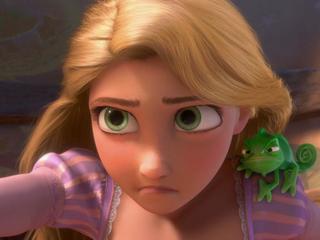
Tangled (Nathan Greno and Byron Howard, 2010) – A princess with magic hair (Mandy Moore, whose voicework is terrible) is swiped from her cradle by a manipulative old bag and kept in a dock-off tower, but dreams of one day escaping. Then into her closeted universe (and ultimately her closet) comes cocksure thief Flynn Rider (Zachary Levi). Disney's spin on the Rapunzel legend has its moments of excitement and slapstick levity – not least the I've Got a Dream set-piece, in which a barroom of thugs reveal a more arty side – and an agreeably sly, passive-aggressive baddie. But it's let down by erratic computer animation, the mannered, stagey butchering of a pleasant song score and a second half in which the extremely entertaining comic relief – an expressive, Gromit-esque chameleon – largely disappears. But I suppose I should have expected that from a chameleon. As in so many of its lesser films, Disney applies a thick layer of hideously mawkish, sanctimonious, patronising sentiment to any sequence it possibly can. (2.5)

***

... and a couple of Judd Apatow films I'd missed:


Pineapple Express (David Gordon Green, 2008) - Process server Seth Rogen witnesses a murder and is forced to go on the run with his weed dealer (James Franco) in this paradoxically enthusiastic stoner comedy. Most stoner comedies aren't funny unless you're, well, on drugs (French Connection II was a particularly poor effort), but this one's a slight cut above, thanks to an appealing performance from Franco as the dazed dealer and a typically amusing one from Rogen - the pair reuniting after Freaks and Geeks, also produced by Judd Apatow. It's very minor, there aren't enough good jokes and the shift into action at the climax doesn't work, but it's kind of sweet in its muddled way and the leads make a nice pair. (2.5)


Talladega Nights: The Legend of Ricky Bobby (Adam McKay, 2006) - Unpleasant, self-indulgent but sometimes funny Will Ferrell vehicle, in which the star's insufferable speed freak takes stock car racing by storm, before crashing out in a ball of invisible fire (it'll make sense if you watch it) - only to rise again. It's directed by regular Ferrell collaborator McKay, but the improv approach that worked sporadically on Anchorman largely fails them here, as it would with Step Brothers. For every genuinely great line ("So when you say psychosomatic, you mean, like he could start a fire with his thoughts?") there are a half-dozen that just don't work, and the supporting cast of foul-mouthed kids, a grasping wife, a drug-dealing absent father and a neglected pensioner are more upsetting than funny. Ferrell readjusting to life in the fast lane by driving at 26mph made me laugh, and having him evade trackside flunkies by running in circles wearing only his pants is always going to work, but the film is ultimately too cold and cruel to engender any goodwill, which is what's needed when the material is as spotty as this. On the plus side, McKay and Ferrell's fourth collaboration, the cop comedy The Other Guys, is an unheralded classic - the improvisation augmenting rather than replacing a strong narrative and proper characters. "Gater needs his gat." (2)

***


*SPOILERS*
TV: Parks and Recreation: Season 2 (2009-10)
- As anyone will tell you, this second season is a massive step up from the first: think the gulf between Tom Waits' first two records, or Buster Keaton's Three Ages and Our Hospitality. This time around the characters feel real, their low-level quandaries important, whether that means romantic entanglements, some misguided plan to sell unhealthy health bars at the city's parks or dealing with the fallout from marrying two gay penguins. The nominal lead is Amy Poehler - playing eternally positive workaholic Leslie Knope - while Aziz Ansari's desperate, perma-grinning Tom Haverford has garnered most of the critical plaudits, but it's three other members of the ensemble that really make this sublime, satirical series fly: lazy libertarian boss Nick Offerman, pleasant, witless shoeshiner Chris Pratt and sarcastic, deadpan intern Aubrey Plaza. It's just a joy. (4)

***


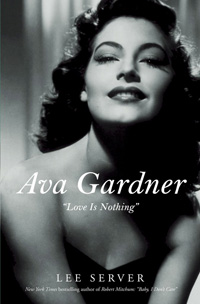
BOOK: Ava Gardner: Love Is Nothing by Lee Server - Server can be a superb biographer, one of the elite crowd who are both diligent researchers and excellent writers (ex-tabloid hack Howard Sounes may have unearthed Dylan's financial records and his second wife, but I still have nightmares about the songwriter's lyrics being "like magic birds that fly into the ear of the listener"). In 2001, he published the definite Bob Mitchum tome, Baby I Don't Care, a fascinating story and brilliant character study told in an awesome prose style that aped Mitchum's own hip, jive-talkin' persona, full of the "hell"s, "man"s and "baby"s that littered the actor's vernacular. This follow-up, which curiously omits Gardner's supposed fondness for "golden showers" - mentioned in the Mitchum book - is a somewhat less compelling affair due to its often dislikeable heroine, events that seem to repeat themselves on an endless cycle and muted stylistic leanings that can probably be filed under "Diet Faulkner". It's still zippy and entertaining, with a particularly strong mid-section (from Gardner's arrival in Hollywood to her time filming Bhowani Junction) and numerous memorable anecdotes involving such supporting cast members as Frank Sinatra, Ernest Hemingway and Luis Miguel Dominguín - the best bullfighter in Spain. (3)