Showing posts with label Parks and Recreation. Show all posts

Thursday, 26 November 2015

Truffaut, Pulp Fiction and how to spot a psychopath - Reviews #218

Here are all the books and films I've consumed lately. And here's a piece I wrote about actor-director combos to flog tickets in my day job.


Day for Night (François Truffaut, 1973) - I love François Truffaut beyond almost anyone else who has worked in the medium of film. There’s that quote – “I always loved the reflection of life more than life itself” – which seems to crystallise an essential truth about those of us who live through film, or have at one time or another. His movies radiate a love of cinema, its possibilities and its pleasures, its ability to transport us, bewitch us, change us. He also seems to have been invented to cater for my specific tastes: sentimental about love, art and childhood, whilst understanding and articulating the limitations of all three.

This film is the only one he made that’s explicitly about the movies, or as he put it: “The subject of Day for Night was, quite simply, my reason for living.” It’s a deceptively deep ensemble comedy-drama about the making of a melodrama, starring Truffaut himself as the director, his regular cinematic alter-ego Jean-Pierre Leaud as his callow leading man, and Jacqueline Bisset, Valentina Cortese and Jean-Pierre Aumont as the other principal cast members, each with their own insecurity, their own past.

Examining and celebrating the artifice, the potential for perfection and yet the compromise of cinema (a collaborative medium in which logistical improvisation is king), the film starts with a scene that needs to be retaken and goes on from there, tipping us a wink as it wheels out a gentle set-piece about a misbehaving cat or a hairy stuntman doubling for Bisset, tightening the knot in your stomach as a cast or crew member begins to go to pieces, and then slowly but surely revealing its subtle depths: an ability to move, enchant and beguile, as all truly great movies do.

It’s light and playful – impeccably constructed, as Truffaut’s roaming camera drops us into one conversation, one story, then another – but it’s also substantial, with myriad delights that encompass administrator Nathalie Baye’s abrupt, laidback seduction technique, montages of moviemaking that draw you in to a walled-off world, and a breathtaking speech by Truffaut to Leaud about the disparity between fantasy and reality that is one of the most affecting (and clearly autobiographical) things that the director ever did. As, in fact, is the dream sequence so tantalisingly previewed early on, and then revealed in its full majesty near the close.

Not every scene has the same emotional charge or conviction of performance as Truffaut’s urgent pep talk, but for fans of the director – or of cinema in general – it’s still a rare sort of treat: stuffed with in-jokes and fun nods to cinematic icons like Hitchcock, Howard Hawks and Jean Vigo, but more importantly underscored by an implicit understanding of the responsibility of the filmmaker, the collision between art and life, and the joy of the film set itself: what Orson Welles once called “the biggest electric train set a boy ever had”. No-one else could have made this film. (3.5)

***


English, motherfucker. Do you speak it?

Pulp Fiction (Quentin Tarantino, 1994) - This film is just so, so good. More than 20 years on, the freshness and effortlessness of it all is still astounding. Its vernacular. Its spiky, absurdist humour. Its moments of heart. Those long, wordless takes. The diner. The toaster. The watch up Walken’s ass. The legion of stylised lines that never feel mannered or forced. Actors like Samuel L. Jackson, Travolta and Uma Thurman producing performances from nowhere that continue to reward and astound. QT hasn’t done anything comparable since. Nowadays I will him to succeed – and with Django he did – but there was a brief time when all you could do was watch in slack-jawed amazement as he created dizzying, dazzling films that re-wrote the rules of genre cinema. (4)

***


Philomena (Stephen Frears, 2013) - A simply wonderful movie about journo Steve Coogan trying to trace the adopted son of Irish pensioner Judi Dench, a victim of the notorious Magdalene laundries. It’s often desperately bleak, but also unstintingly warm-hearted, full of the most brilliant jokes, and as emotionally and intellectually rewarding as anything I’ve seen this year. It’s also a little formulaic in structure, looks pretty much like every other British drama made in the last 10 years and has some final-reel villainy that’s a little too on-the-nose (not to mention hysterical), but the story is utterly fascinating, the acting and script exceptional, and its ultimate question of how best to move on is one answered with nuance, dignity and grace. (3.5)
***


Ex Machina (Alex Garland, 2015) - Computer programmer Domhnall Gleason wins a company competition to hang out with Google-but-not-Google CEO Oscar Isaac in his remote headquarters, where he's introduced to an AI called Ava (Alicia Vikander), and encouraged to submit her to the Turing Test. But seriously, America, it's pronounced "Tyouring", not "Too-ring", show some fucking respect.

There are plot holes in Alex Garland's zeitgeisty thriller, along with a few obvious 'surprises' to go with the more novel ones, but it's an entertaining, immersive, quite thought-provoking film that maintains the courage of its convictions right up to a superb twisty-turny ending. And then carries on for another five minutes for absolutely no reason. (3)

***


The Leopard Man (Jacques Tourneur, 1943) - I watched The Leopard Man for @ValLeween, the Val Lewton-based live-tweetathon that happens every Halloween (this reviews update has been a while in coming), and the whole thing was a lot of fun.

The film isn’t one of my favourites from the pioneering producer – this tale of a black cat terrifying a Mexican village is a little disjointed, with some iffy acting – but Lewton does a good job of creating a world through scripting, scoring and a handful of sets, and his horror high points are exhilarating, the moments of sustained terror as poetic, beautiful and self-contained as Astaire and Rogers dance numbers.

The blood under the door? Wow. (3)

***


The Limey (Steven Soderbergh, 1999) - Soderbergh’s malevolently playful editing illuminates this brooding thriller, helping to turn it from a potentially straightforward Get Carter transplant into something rather more interesting, aided by an imposing central turn, intelligent use of footage of the star as a younger man – taken from Ken Loach’s debut film, Poor Cow – and a surprising, surprisingly affecting pay-off.

Terence Stamp is a seriously violent ex-con who comes to LA straight from the slammer, plotting revenge on the criminals what caused his daughter’s death, a group apparently led by counter-culture beancounter Terry Valentine (a perfectly cast Peter Fonda). Sometimes the script flounders, especially when resorting to cliché or having Stamp repeatedly use and then explain Cockney rhyming slang – he is a British character written for American audiences – but at other times it’s extremely strong, especially when Fonda is explaining the ‘60s (a speech that passes from the sort of platitudes you can basically mouth along to, to something poignant and surprising) or Stamp is lamenting his mistakes.

Where it really works, though, is in the presentation: fragments of action that drop us forwards or back in time, flashes of pathos at unexpected moments, action scenes that take place off camera or in the back of the frame, Soderbergh drawing thematic parallels like a young Terence Davies, or flicking between scenes in a way that recalls nothing as much as... Easy Rider: the film that launched Fonda and defined a generation, at least in cinematic terms. Stamp’s good too: some of his line readings seem wooden, but he catches the eye and holds it, and that scene in the warehouse still has the ability to shock and appal and rather worryingly excite. All together now: “Tell him I’m coming!” (3)

***


The Chocolate Soldier (Roy Del Ruth, 1941) - This wasn't the gay porn I thought I'd ordered.

Worse than that, it's not even a bona fide operetta. Though its songs come from the 1909 work, The Chocolate Soldier, the writer of the source story, George Bernard Shaw, objected to its being adapted, so they were grafted onto a play by the oft-adapted Ferenc Molnar, The Guardsman, occasionally intelligently, but more often completely incoherently.

Still, at least Nelson Eddy's here, right? A lot of people are sniffy about Nelson Eddy nowadays, in the unlikely event that they've heard of him at all, but I'm quite a fan. He was an underrated actor (catch his performance in Ben Hecht's liberal drama, Let Freedom Ring, for evidence of that) and a magnificent singer, especially vital and appealing when paired with regular leading lady Jeanette MacDonald.

What he wasn't, was a comedian. He proves that beyond any doubt here, playing a jealous husband who - in typical early '40s comedy style - tests his wife's fidelity by posing as an amorous Russian. That stock device of masquerade occasionally worked, but needed subtle writing and intelligent playing, neither of which it gets here. Eddy is so broad and flat it hurts, Metropolitan Opera diva Rise Stevens simply transmits none of the spark required for such battle-of-the-sexes comedy, and Nigel Bruce is really beginning to annoy me now.

The result is a pathologically unfunny film: bitter, laughless, joyless and sexless, with only a handful of reasonable musical numbers relieving the oppressive tedium. And no gay sex. (1)

***


Gunsight Ridge (Francis D. Lyon, 1957) - This atrocious oater plays rather like a parody of B-Westerns by someone who's hardly seen any, as Wells Fargo agent Joel McCrea tries to root out a highwayman in a small town and finds a frustrated pianist prone to fits of hysterical anger (Mark Stevens). Ernest Laszlo's photography is unusually handsome for a movie from a no-name studio, but the ageing stars can do nothing with the abysmal script from MGM veteran Talbot Jennings and his wife Elisabeth, which manages to be both clichéd and completely ludicrous, hopping from one silly scenario to the next with barely a credible line of dialogue to be heard. The great McCrea comes off merely as trivial and smug, but Stevens manages to set fire to the huge pile of goodwill left over from the bristling noir The Dark Corner, crossing over into ridiculousness early on, and never returning. The scene in which he is out-acted by a confused horse is a particular low. (1)

***

BOOKS

Fiction:


The Railway Children by E. Nesbit (1905) - This beloved children's story has a mother who's good to be true, some understandably stuffy contentions about the way the world works and a rather clunky writing style to which it takes some adjusting, but it's also full of vivid characters, fine sentimental moments and thrilling scenes of escapism and middle-class adventure: virtues that ultimately win out over its shortcomings. (3)


Ragtime by E. L. Doctorow (1975) - I liked this kaleidoscopic portrait of early-20th century New York, drawn to its world, its scope, and its moments of terrible clarity (particularly concerning lovelorn depression and the everyday poetry of squalid urban life), but found its quasi-Hemingway, quotation-free style rather one-note, contrived and detached. (3)

Non-fiction:


Hons and Rebels by Jessica Mitford (1960)
- This memoir from The Communist Mitford is good and sometimes brilliant, trespassing into the latter territory when it deals with family dynamics and human emotion, or when the author punctures pomposity with some lancet-like line. I admire Decca's perfectly pitched irony and sense of poignancy, borne of a complete lack of sentimentality. And I like her names for her siblings, such as Boud (Unity), Debo(rah) and the delightful Tudemmy (Tom). Her journey around America is ultimately a lot less interesting than what predates it, though, with many of the tales notably lacking a sufficiently strong punchline. But I'll now be reading absolutely everything about the Mitfords anyway, beginning with Decca's second volume of autobiography. (3)


Them: Adventures with Extremists by Jon Ronson (2005) - More a collection of pre-9/11 features than a coherent work, but an immensely readable, blackly comic journey through the world of political and religious extremism that sees Ronson rubbing shoulders with Muslim fundamentalists, KKK members and David Icke, and finding that - hey guys, maybe you're not all so different after all. Which I suppose is heartening. In a way. (3)


The Psychopath Test by Jon Ronson (2011) - Ronson's study of psychology, psychiatry and psychopathy is fast-moving, consistently hilarious, and completely and utterly fascinating. It's also a little unfocused: a scattershot treatment of the subject in which his angle seems determined by the eccentric people he can find to interview, before he attempts to drag together some conclusions at the death. I did bloody love reading it, though, and I learned a lot: the revelation about the official classification of mental illnesses is absolutely astonishing. (3.5)

TV:


Parks and Recreation: Season 7 (2014-15)
- I'm sad to see my favourite sitcom go, but it's probably about time, as towards the end this started to feel very familiar: at times fuzzily, more often in a rather worn way. These final 13 episodes kicked the story into 2017, a scenario occasionally exploited for poor non-sequitur gags about fictitious world events, but more often used to up the emotional ante, as in a genuinely affecting storyline about the estrangement between central character Leslie Knope (Amy Poehler) and her former boss, Ron Swanson (Nick Offerman). Its flaws are evident, almost all the sign of an enterprise that's gone on for too long - the Johnny Karate novelty episode doesn't really work, Craig (Billy Eichner) remains a horrendously unfunny, one-note character, and the walk-ons by real politicians give the distinct impression that the programme is now on the inside (rarely the best place for a show with a satiric bent) - but it's still hard to say goodbye to a show that's given me so much joy, and which still makes me laugh out loud and tear up with some regularity, even in its seventh and final season. (3)

***

Thanks for reading.

Sunday, 2 December 2012

Silver Linings Playbook, Paul Rudd, and the beta Zeta - Reviews #138

The best film I've seen at the cinema this year! My favourite sitcom! A really underwhelming, disappointing David Wain comedy that lacks a coherent structure or characters you can truly root for! All in this latest update, which contains more swearing than it strictly should, possibly because I'm sleepy. Or showing off, I forget which.

MOVIES:


*VERY MINOR SPOILERS*
CINEMA: Silver Linings Playbook (David O. Russell, 2012)
– At last! I’ve been waiting all my life for a film about a character who’s a bit like me. And now it’s here. Because Bradley Cooper’s bruised, bipolar protagonist really fucking hates Stevie Wonder’s Ma Cherie Amour. Just like me! And that’s not the only reason to celebrate, since Russell’s original, screwball-y film of two lost, damaged souls connecting, is the best film I’ve seen at the cinema this year.

Cooper is a psychiatric patient released after eight months in a hospital, following an explosive episode brought on by his wife’s infidelity. Invited to dinner by his best friend, he meets a bereaved, "slutty" depressive (Jennifer Lawrence) who offers him a deal: she can get a message to his estranged wife, if he helps her compete in a dance contest. Its rom-com framework may appear conventional, but the film consistently surprises. It’s true that most depictions of mental illness ring false, because a realistic work would usually be really fucking boring, but this is a film that manages to entertain without trivialising its characters or their problems. While angling on the humour of their situation, spotlighting the obsessiveness and lack of social skills that are often a symptom or by-product of mental illness, it takes the subject seriously, an admirably honest approach in a genre often beset by duplicity. Simply put, it’s nice to see these kinds of characters – and specifically these characters – on a movie screen. And like Tom McCarthy or Alexander Payne, Russell can offer escapism while making you think, and feel, a welcome trick on a Friday night, when the temptation can be to immerse oneself in froth.

Cooper, who was just unbearable in The Hangover (a film I loathe), is nothing short of a revelation, and his chemistry with Lawrence – one of the finest actresses working today – is really beautiful. There’s also a nice performance from De Niro, his most interesting in years, as Cooper’s father, who may be trying to build bridges with his son – or may just be using him as a good-luck charm to win money betting on football. His sequences seem distracting early on, taking us away from a beguiling burgeoning friendship, but the film’s apparently disparate elements slot together perfectly as it progresses, leading to a wonderfully satisfying finale. I loved it to pieces. (4)

***


Mostly Martha (Sandra Nettelback, 2001) – When the Catherine Zeta-Jones romcom, No Reservations, was on telly recently, I sought advice from the internet as to whether I should watch it. Almost without exception, everybody in the world told me to avoid it like the plague (or Spice-World), but to track down the German-language original immediately. So I did. Martha (Martina Gedeck) is a lonely, workaholic chef whose solitary existence is transformed forever by the arrival of her niece (Maxime Foerste), whose mother – Martha’s sister – has died in an accident. At the same time, Martha's job as head honcho in the kitchen appears threatened by the arrival of a charming Italian cook (Sergio Castellitto). What I most enjoyed about this grown-up film film was how its happy moments were so well earned, and its downtime so true to its story, a lesson most American rom-coms could do with learning about 30 years ago. Really it’s a well-observed human drama, with flashes of welcome levity, that isn’t afraid of the emotional messiness that’s a part of real-life, or the mistakes, grudges or fuzzy reconciliations that go with it. The film has some minor shortcomings in that its score leans towards cheese (complete with light jazz sax), its cinematography is too glossy and clean for the material and its "blind tasting" scene is a bit tired, but Gedeck is stunning in the lead, and the story really sucks you in, as well as making you terrifically hungry. (4)

***


The Decoy Bride (Sheree Folkson, 2011) – A sassy Scotswoman (Kelly Macdonald) returns to the Isle of Man the Hebrides after getting her heart broken, where fate casts her into the life of a ridiculous twitching caricature (David Tennant) – an author and all-time phony who’s about to wed a big-jawed American movie star. This rehash of I Know Where I’m Going! – via Leap Year – doesn’t really deserve to share a sentence with either, as it doesn’t occupy the same realm as P&P’s transcendent romance, nor plumb the depths of that recent, insultingly lazy slab of shite. Any charm it does have rests on the superhuman efforts of Macdonald – whose appealing performance weathers all manner of ridiculous developments – and the lovely Isle of Man locales. As with almost any British production that tries to include some Americans, chunks of it are rather embarrassing (ex pony-smacker Sally Phillips, who co-wrote this one, bizarrely forces herself to play a supporting part with an unstintingly terrible US accent), and this would doubtless have worked better had the leading man approximated the behaviour of a human being – even if his sentimental sequence with the bagpipes is rather sweet. Thanks to Macdonald, though, it turns out alright, her comic timing, periodic underplaying and attractive fieriness breathing life into a story that’s been told too many times. (2.5)

***


*SPOILERS*
Wanderlust (David Wain, 2012)
– A woman wearing too much make-up (Jennifer Aniston) and Paul Rudd (Paul Rudd) chance upon a hippy commune and, after first bidding it goodbye forever, resolve that it’s where they should spend the rest of their lives – pending a two-week trial. It’s his decision to go back there, but it’s she who blossoms, by which the film means that she flashes her tits, wipes her arse with some leaves and shags Justin Theroux’s pretentious slimeball. This mystifyingly misfiring comedy from the people who brought you Wet Hot American Summer (muted applause), The Baxter (exuberant applause) and Role Models (sheepish cheering) has a couple of massive laughs at the start, benefits from Rudd’s typically amusing performance (spotlighting his deadpan, very English sensibility) and boasts a strong cast on paper, but is pointlessly confrontational, emotionally vapid and ultimately nothing more than a string of barely-connected, clichéd set-pieces, each more desperate than the last. If you find yourself watching a film, thinking, “I could probably have written this”, that’s usually a bad sign. Especially if your next thought is: “I’m fucking glad I didn’t.” (2)

***

TV:


"Behind every successful man is... me, smiling and taking partial credit."
Parks and Recreation: Season 4 (2011-12) - I'm something of a novice when it comes to TV, but this may be the greatest season of small screen comedy I've ever seen. Tracing Leslie's election campaign from genesis to polling day, with a few inspired diversions, it expertly refines her central character, uses the show's supporting heroes – Ron, Andy, April, Ben and Tom – in the best possible way, breathes real life into previously uninvolving figures like Chris and "Ann Perkins!" and finds room for enjoyable guest spots from Paul Rudd (as idiotic election rival Bobby Newport) and Kathryn Hann. There are a handful of lesser episodes along the way (I'm Leslie Knope, Pawnee Rangers, Bowling for Votes), but it's very much relative, and the overwhelming majority are astonishingly good: like End of the World, Smallest Park, The Trial of Leslie Knope, Campaign Ad and Win, Lose or Draw. This fourth season is smart, sharp and satirical (particularly in the nerve-shredding episode, The Debate, which is a complete triumph and may just be the best thing Parks and Rec has ever done), but retains its cheeringly, often exaltingly soft centre. It's also breathtakingly funny. "First of all, you did the right thing by hiding under this table." (4)

See also: There are brief reviews of Season 2 and Season 3 elsewhere on the blog.

Sunday, 30 October 2011

Blue Valentine, Romain Duris and two days in Paris - Reviews #86


*SPOILERS*
Blue Valentine (Derek Cianfrance, 2010)
- Intense, insightful, semi-improvised indie about the death of a relationship, starring perhaps the two best young actors in the world: Ryan Gosling and Michelle Williams. He's a former removal man and ambition vacuum who drinks too much and twists around everything she says. She's a put-upon, busy nurse who thwarts his attempts at physical reconciliation and allows the family dog to get run over. The film doesn't make judgements about these flawed, very real characters: it just throws their story onto the screen and forces you to watch as something utterly beautiful disintegrates, until all that remains is malice, unhappiness and desperation. There are fragments of warmth and love, and even a couple of very Gosling-ish jokes ("That's a funny name"), but the overall effect is like being whacked in the face. One of the best I've seen this year. (4)

***


*SPOILERS*
The Beat That My Heart Skipped (Jacques Audiard, 2005)
– Audiard, Romain Duris is in trouble in this enigmatic collision of character study, thriller and piano concert. Did you get that? It was like "oh dear”. This star-making vehicle for one of Europe's most interesting, versatile, quiveringly-intense actors chronicles the travails of a low-level gangster and wannabe concert pianist negotiating the shadow of his father, who used to be a somebody in the Parisian underworld. It's a genuinely offbeat film: a collection of rough scenes in which Duris argues with his pops, sulks and rages at his fingers, boffs his associate's wife and later tries to beat someone to death with a briefcase. It's also largely brilliant, lit by Duris' shambling, megawatt persona and full of brilliantly-observed passages ruminating on such interesting subjects as family, honour and violence. It is a remake of the '70s American film, Fingers. I'm sick and tired of the French remaking American films, just because their audiences are too lowbrow to watch anything with subtitles. As observed recently by some otherwise insufferable bore on Radio 4, it's also an interesting companion piece to the recent Drive. (3.5)

***


2 Days in Paris (Julie Delpy, 2007) - Very entertaining portrait of a Franco-American couple (Julie Delpy and Adam Goldberg) who spar, bicker, quibble and sporadically make up while spending two peculiar days in the City of Light. Revealing, intelligent and directed with a truly original eye, meaning that you can forgive some false steps and a feeling - which soon vanishes - that you've already seen this, and it was called Before Sunset. Delpy and Goldberg are both superb. (3.5)

***


*SOME SPOILERS*
Outrageous Fortune (Arthur Hiller, 1987)
is a very daft, very '80s but kind of enjoyable buddy movie starring Bette Midler and Diane off of Cheers. They're the chalk-and-cheese New Yorkers who – like Team America's Gary Johnson – have to use their acting powers to save the day, after two-timing boyfriend (Peter Coyote) turns out to be a Russian mole. This action comedy is a bit predictable – not dissimilar to Hiller's The In-Laws, which is much better – but for all its cheesiness and implausibility (why do they keep running away once they've knocked a lone bad guy to the ground?), I got quite into it. George Carlin turns up near the end as a faux-Native American tracker, if that's of interest, and there's also an appearance from Altman regular John Schuck. When he was born, I bet the doctor took one look at his face, turned to his parents and said: "Congratulations - it's a character actor!"(2.5)

***


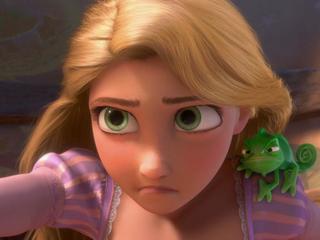
Tangled (Nathan Greno and Byron Howard, 2010) – A princess with magic hair (Mandy Moore, whose voicework is terrible) is swiped from her cradle by a manipulative old bag and kept in a dock-off tower, but dreams of one day escaping. Then into her closeted universe (and ultimately her closet) comes cocksure thief Flynn Rider (Zachary Levi). Disney's spin on the Rapunzel legend has its moments of excitement and slapstick levity – not least the I've Got a Dream set-piece, in which a barroom of thugs reveal a more arty side – and an agreeably sly, passive-aggressive baddie. But it's let down by erratic computer animation, the mannered, stagey butchering of a pleasant song score and a second half in which the extremely entertaining comic relief – an expressive, Gromit-esque chameleon – largely disappears. But I suppose I should have expected that from a chameleon. As in so many of its lesser films, Disney applies a thick layer of hideously mawkish, sanctimonious, patronising sentiment to any sequence it possibly can. (2.5)

***

... and a couple of Judd Apatow films I'd missed:


Pineapple Express (David Gordon Green, 2008) - Process server Seth Rogen witnesses a murder and is forced to go on the run with his weed dealer (James Franco) in this paradoxically enthusiastic stoner comedy. Most stoner comedies aren't funny unless you're, well, on drugs (French Connection II was a particularly poor effort), but this one's a slight cut above, thanks to an appealing performance from Franco as the dazed dealer and a typically amusing one from Rogen - the pair reuniting after Freaks and Geeks, also produced by Judd Apatow. It's very minor, there aren't enough good jokes and the shift into action at the climax doesn't work, but it's kind of sweet in its muddled way and the leads make a nice pair. (2.5)


Talladega Nights: The Legend of Ricky Bobby (Adam McKay, 2006) - Unpleasant, self-indulgent but sometimes funny Will Ferrell vehicle, in which the star's insufferable speed freak takes stock car racing by storm, before crashing out in a ball of invisible fire (it'll make sense if you watch it) - only to rise again. It's directed by regular Ferrell collaborator McKay, but the improv approach that worked sporadically on Anchorman largely fails them here, as it would with Step Brothers. For every genuinely great line ("So when you say psychosomatic, you mean, like he could start a fire with his thoughts?") there are a half-dozen that just don't work, and the supporting cast of foul-mouthed kids, a grasping wife, a drug-dealing absent father and a neglected pensioner are more upsetting than funny. Ferrell readjusting to life in the fast lane by driving at 26mph made me laugh, and having him evade trackside flunkies by running in circles wearing only his pants is always going to work, but the film is ultimately too cold and cruel to engender any goodwill, which is what's needed when the material is as spotty as this. On the plus side, McKay and Ferrell's fourth collaboration, the cop comedy The Other Guys, is an unheralded classic - the improvisation augmenting rather than replacing a strong narrative and proper characters. "Gater needs his gat." (2)

***


*SPOILERS*
TV: Parks and Recreation: Season 2 (2009-10)
- As anyone will tell you, this second season is a massive step up from the first: think the gulf between Tom Waits' first two records, or Buster Keaton's Three Ages and Our Hospitality. This time around the characters feel real, their low-level quandaries important, whether that means romantic entanglements, some misguided plan to sell unhealthy health bars at the city's parks or dealing with the fallout from marrying two gay penguins. The nominal lead is Amy Poehler - playing eternally positive workaholic Leslie Knope - while Aziz Ansari's desperate, perma-grinning Tom Haverford has garnered most of the critical plaudits, but it's three other members of the ensemble that really make this sublime, satirical series fly: lazy libertarian boss Nick Offerman, pleasant, witless shoeshiner Chris Pratt and sarcastic, deadpan intern Aubrey Plaza. It's just a joy. (4)

***


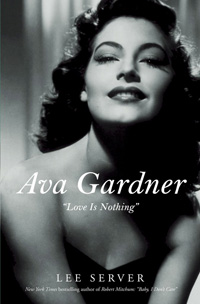
BOOK: Ava Gardner: Love Is Nothing by Lee Server - Server can be a superb biographer, one of the elite crowd who are both diligent researchers and excellent writers (ex-tabloid hack Howard Sounes may have unearthed Dylan's financial records and his second wife, but I still have nightmares about the songwriter's lyrics being "like magic birds that fly into the ear of the listener"). In 2001, he published the definite Bob Mitchum tome, Baby I Don't Care, a fascinating story and brilliant character study told in an awesome prose style that aped Mitchum's own hip, jive-talkin' persona, full of the "hell"s, "man"s and "baby"s that littered the actor's vernacular. This follow-up, which curiously omits Gardner's supposed fondness for "golden showers" - mentioned in the Mitchum book - is a somewhat less compelling affair due to its often dislikeable heroine, events that seem to repeat themselves on an endless cycle and muted stylistic leanings that can probably be filed under "Diet Faulkner". It's still zippy and entertaining, with a particularly strong mid-section (from Gardner's arrival in Hollywood to her time filming Bhowani Junction) and numerous memorable anecdotes involving such supporting cast members as Frank Sinatra, Ernest Hemingway and Luis Miguel Dominguín - the best bullfighter in Spain. (3)