Showing posts with label Billy Wilder. Show all posts

Wednesday, 17 May 2017

Folk music, The Apartment, and the other Elizabeth Taylor – Reviews #265

Behold such riches as have rarely been seen on Advice to the Lovelorn: one of my favourite 20 movies, two fantastic books, and the amazing psychedelic folk records that one of them has turned me onto. I also enjoyed a phenomenally intense Yasmine Hamdan performance at London's sweaty, sensational Scala, and saw the Moomin exhibition at the Southbank and the sensational butterflies at the Natural History Museum. Those sojourns will turn up in my review of the year, but for now let's talk films, books and music:


*MINOR SPOILERS*
The Apartment (Billy Wilder, 1960)
– I will never get over how much I love this movie: a film about unrequited love, with Jack Lemmon taking a verbal and physical pummeling to protect the elevator girl he loves, the beautiful Miss Kubelik (Shirley MacLaine).

She's the one left holding the sleeping pills after his spineless corporate climbing – achieved by leasing the titular abode to horny company executives – and her naïve romanticism bring them into the circle of all-time business shitweasel, Mr Sheldrake (Fred MacMurray, cast brilliantly against type). Recovering in Lemmon's apartment, MacLaine begins to fall for the poor fool, but damn it if he can't quite untangle himself from acquiescence, subversience and the hollow, ill-gotten glories of corporate success, and become a mensch.

The greatest of Wilder's many masterpieces (I'd say he made nine), it's a perfect marriage of cynicism and innocence, with Lemmon perfectly balancing his character's myriad complexities, making us feel sorry for a fawning, amoral and (admittedly) piteous schmuck for 20 minutes, transmitting his character's innate sensitivity and subsequent moral awakening – inspired by his beautifully unselfish love for the bob-cutted, pixie-ish Miss Kubelik – and negotiating the frustration of a hero who'll try to set up the love of his life with his arsehole boss out of pure selflessness, then enjoy the societal and financial rewards. I've said it before and I'll say it again: Lemmon needed a tight rein on him or it was all overbearing humming and unbearable mugging. Here he does a little of that, but it's part of the densely-packed mesh of a believable, human character.

MacMurray too is superb as the evil, ageing twin of his character in Remember the Night (my favourite film), who abandons his suicidal mistress on Christmas Day and tries to fuck her on New Year's Eve. Best of all is MacLaine's performance, which she has never come close to approaching, despite decades of fine work. Her haircut might be pure MPDG, but she's a real woman, with real difficulties, delusions and selfish impulses, real pain and anger shining from those eyes, and a real, rewarding sweetness, tenderness and humanity.

In its gorgeous widescreen, monochrome, city-based cinematography and perfectly-timed blasts of melodic jazz, it anticipates Woody Allen's Manhattan, and its ending has the same joyous dash towards romance, the same profoundly understated, compassionate, off-kilter pay-off. (It's in a constant conversation with cinema too, being inspired by an incidental element of Brief Encounter and explicitly referencing MGM's all-star 1932 movie, Grand Hotel and the westerns of John Ford.) This whole film feels like perfection, but its last 10 minutes especially so, as every seed that Wilder has sown throughout the past 115 bursts into bloom, as MacLaine sprints through the streets, a crown on her head, the camera shaking as it struggles to keep up. A mention too for the scene with Lemmon, MacLaine and the broken mirror, in which every element is so perfectly integrated, from language to image to performance. I'd die happy if I could ever write something just a tenth as good.

It's a film about gentlessness, stoicism and the need to tell power to take a running jump. My film. And as good as it gets, cinema-wise. (4)

This was #19 on that all-time top 100 I put together last year.

***


Awakenings (Penny Marshall, 1990) – An effective, sentimental story about awkward, passionate doctor Robin Williams getting a job in a chronic hospital in the Bronx, and realising that the supposed vegetables peopling the ward – including former encephalitis patient Robert De Niro – might be alive in there after all.

For more than an hour it's like a lighter, extremely entertaining variation on One Flew Over, as Williams fights the authorities for the right to administer untested medication in an attempt to “awaken” these trapped souls, and modern-day miracles begin to happen. Then the movie becomes darker and more troubling, making it a richer, more human and more profound film, but notably less comfortable viewing.

Williams' closing speech is the kind of vague, wooly, catch-all bollocks I can't stand (who, precisely, has forgotten “work, play, friendship, family”?! Even Hitler was a fan of all four), but the rest of the film is extremely well done, with strong performances, a familiar but slick script, and some thoughtful direction, Marshall's Hollywood instincts and visual shadowing of moods augmented by some artistic touches, including fine, subtle use of handheld camera.

Its overall presentation is none-more-1990, with some of the broad strokes (and subsequent distancing) you’d expect, but also the attendant entertainment value, as the film’s edge, basic commitment to the facts and underlying sincerity begins to work away at you. (3.5)

(This viewing was in the annual pre-Eurovision slot, with my friend Vicky, following last year's acclaimed screening of We Bought a Zoo.)

***


CINEMA: Adam & Paul (Lenny Abrahamson, 2004) – Michael Smiley introduced this at the BFI, saying it was a film that gave him a funny feeling inside, and a movie he’d shared with friends, always asking them to pass the DVD on, rather than giving it back. Justin Johnson, chief programmer at the BFI, said people could regard it as the most hilarious film ever made, or the most heartbreaking. For me it’s not quite either, though it does have a special something about it.

It’s essentially Waiting for Godot relocated to junkie Dublin, as two addicts who’ve been missing for a month wander the streets looking for their next hit. They are gentle, meek, apologetic Paul (Tom Murphy) and the taller, quieter, grumpier Paul (Mark O'Halloran, who wrote it), and the day we spend with them is poignant and troubling and sometimes hysterically funny. The leads aren’t unfailingly convincing, but they have just the right mix of sensitivity and selfishness, as O’Halloran’s script traverses comfortable ground, then expects us to navigate abrupt, discomforting developments, like the pitiful, pitiless mugging of a kid with Down syndrome). Adam and Paul are loveable in their innocent, Laurel and Hardy-ish way, but that scene reveals a cruelty born of desperation just beneath the surface.

The film was directed by Lenny Abrahamson, who’s since gone on to big things with Frank and Room, and while you’d never mistake it for a film with a big budget, its low-rent look and the drab Dublin it presents suit the subject matter. When there is a need to slip into something more cinematic, he really delivers: the mini-flashback (or flash-forward?) in the baby sequence is a jolt of auteuristic brilliance.

Adam & Paul is a little shabby and at times too much a melange of styles (the comic scene at the gas station is superbly done, but out of step with the rest of the picture), but there’s a great feel to it: sad and humanist and quietly absurd, with a cleverly contrarian treatment of tropes: we want these characters to be happy, but their goal is the worst possible thing for them; we want them to have friends, but if they reconnect with Janine (Louise Lewis), the new mum is likely to get hooked on heroin again. That uneasiness, our complicity in it, and the touching (if not entirely original) unspoken bond between Adam and Paul – deep, unconditional, unspoken – may well account for that funny feeling, as I got it too. I suppose I'm one of Smiley's people. (3.5)

I'd also like to mention here that my tweet about the film (and Tim Farron) got RTs from Smiley and O'Halloran. But I won't, that would be both insufferable and pathetic.

***


CINEMA: Chinese Roulette (Rainer Werner Fassbinder, 1976) – All the elements are here for another fine Fassbinder film – an intriguing set-up, an amusingly subversive villain, Anna Karina looking hot in a cool black bandana – but it never quite gets there, and in the meantime it’s all v-e-r-y s—l—o—w.

A married couple (Alexander Allerson and Margit Carstensen) each take a lover to their country estate, where they’re joined by their malevolent ‘crippled’ daughter, her governess, the housekeeper (Brigitte Mira) and the housekeeper’s son (Volker Spengler), an aspiring author. It sounds fascinating, but it flails impotently for an age, with Fassbinder abandoning his usual precise, methodical approach, taking a stab at a kind of cerebral Godardianism, his portentous, nebulous script directed at a halting face suffused with pregnant pauses.

Its characters are mysterious and craftily unexpected enough for it to gather momentum at times, but its intriguing dynamics and occasional surprises (a brief but brilliant off-the-wall dance sequence underlining its strong use of music; an unforgettable close up on a beaded hair net after an explosive tragedy) are bogged down by a laissez faire approach that obfuscates when it should elucidate, expecting us to basically make up both the story and what all of it means. This is typified by the titular, climactic game, which reaches a fairly worthwhile crescendo but takes an interminable amount of time to get there, forcing us to slog through synthetic dialogue, snail-paced delivery and endless silences.

It is fascinating and eerie to watch Mira standing there as Fassbinder invokes Nazi collaboration, though. The half-Jewish actress was a key performer in Goebbels’ state propaganda series, Liese und Miese, as the ‘bad’ citizen whose behaviour was a cautionary tale for German audiences.

From what I’d read, I was expecting something twisted and refreshing, with the best kid villain since Bonita Granville’s malicious gossip in These Three. What I got was less elusive than illusive, a slip of a film that you can read a lot into, much of it perhaps not really there. (2)

***

BOOKS


Electric Eden by Rob Young (2010)
– This is a rare gem of a book: a beautifully-written, passionately-argued history – and defence – of British folk music from its origins in the pastoral socialism of William Morris and classical composers Holst, Vaughan Williams and Delius, through to Kate Bush, Julian Cope and Talk Talk in the 1980s. The meat of the book, though, is a conversational, amusing and astute evocation of the British folk boom of 1965-74, with vivid, condensed portraits of the likes of Pentangle, Fairport Convention, John Martyn and the Incredible String Band, their origins, obsessions and place in the canon impeccably but accessibly explained and elucidated, alongside that of an abundance of odd, often forgotten contemporaries, from the bleak and furious art rock of Comus to, erm, a moonlighting Playaway presenter involved in naked pagan rituals (these sequences are occasionally laborious or tenuously linked, but far more often utterly fascinating).

Young does a simply extraordinary job of stripping away decades of murkiness and myth, tracing an elegant through-line from 1890 to the 1980s, and confronting and considering many of the questions and controversies that dog the genre, tackling supposed middle-class hijacking – and Victorian sanitisation – of working class song preserved in the oral tradition, dismantling the associated notions of ‘authenticity’ that dominated folk in the 1960s, and repeatedly defending Morris dancing (he’s a braver man than I). He writes brilliantly about music too. There are a few too many 'tendril's and 'brew's, but his ingenious use of the pastoral vernacular, and his creating of neologisms and metaphors by riffing on album titles, is a joy to read: colourful and ambitious but precise, without the meaningless pretension of, say, '80s NME, or the drab, dryly factual contextualisation which seems to serve as music journalism today. He also takes an enormous gamble (in non-fiction terms) by slipping into allegorical fiction during the Rocket Cottage chapter, a stylistic quirk that is, if not a total success, extremely memorable.

Though a few furious pedants have found errors in the book, I’d argue that it’s better to write a passionate, revelatory book casting extraordinary light on British culture than to not bother because some bores might get cross. And while – due to the subjective nature of music – it inevitably becomes at times a personal history (Young omits June Tabor, has little time for Sandy Denny’s extraordinary second album, and neglects to even mention Fotheringay’s ‘Banks of the Nile’, perhaps the towering achievement of the era), its forays into the wider cultural context are extraordinarily invigorating, with the inclusion of A Canterbury Tale, Bagpuss and the films of Humphrey Jennings – allied to the genre’s root in socialism and a pastoral, nostalgic vision of Albion – suggests that everything I like is in some way related to British folk music.

The greatest joy of this book is the wealth of wonderful music it has inspired me to investigate. Best of the lot is the Incredible String Band, whose outrageously original psychedelic folk is illuminating each walk to and from work. Here's your four-step guide to becoming a fan:

a) Put on 5,000 Spirits or the Layers of the Onion
b) Do not turn it off
c) Do it again
d) You are now a fan
(4)

***


Angel by Elizabeth Taylor (1957) – This impeccably restrained, richly ironic novel is the story of Angel Deverell, a 15-year-old liar and aspirant author who seeks to transcend the pathetic life of servitude mapped out for her, through sheer, incandescent genius. Her genius, though, isn’t for art but for matching the taste of the public, which greets her epic, florid, ‘risqué’, wildly inaccurate tour-de-force, The Lady Irania, with little short of hysteria, catapulting the waspish, selfish and humourless egomaniac into a life of which she has merely dreamt, and yet has dreamt relentlessly.

Taylor’s writing is intoxicatingly crisp and precise, allowing her to define character, invoke laughter or evoke tragedy with a minimum of language or apparent effort, as she traces Angel’s path from the deprivations of working-class Volunteer Street to the peak of renown and ridicule, and then on, towards desire, rot and ruin in a landscape blanched by snow, as lives fester beneath delusion, but compassion flowers from the muck.

In Angel’s world, horrors are envisaged then never arrived upon, as others emerge from the shadows; no passage goes where you expect it to, or elicits the emotion you anticipated; and Taylor creates not so much a cautionary tale as a devastating character study: the writer as a monster, chained to her art, anti-social and self-obsessed, in communion with herself, and fashioning the world as it should be, not as it is, both on the page and beyond.

It’s exquisitely beautiful, piercingly funny, and segues from brutish to elegiac quite seamlessly, Angel’s story peopled by vividly-realised supporting characters: her protective editor, Theo, with his perfectly-manufactured kid gloves; Nora, whose blinkers are replaced by perpetual martyrdom; lazy, deceptively doting Marvell; and that callow, listless and dissipated prettyboy, Ésme. In tone, style and subject, it’s like nothing else I’ve read. (4)

***

Thanks for reading.

Monday, 13 January 2014

Greta Garbo, Sherlock, and down-and-out like Flynn - Reviews #180

Here's some stuff I watched and read over the past couple of weeks. Let me know if I'm overselling it.

FILMS


One, Two, Three (Billy Wilder, 1961) - Wilder's second-to-last masterpiece - and Jimmy Cagney's penultimate picture - is a rapid-fire Cold War comedy that ranks as one of the funniest films ever made.

Caggers is a veteran Coca Cola executive, marooned in West Berlin, who's forced to call on every ounce of his resources - and every trick in the book - after he lets the boss's daughter (Pamela Tiffin) marry a card-carrying communist (Horst Buchholz).

After a slow but steady 15-minute set-up, a little light on laughs, it's just non-stop entertainment: clever jokes, silly jokes, Nazi jokes, Stalin sight gags, cross-dressing, satire, in-jokes and innuendo, with Cagney a whirlwind of chicanery, juggling crooked commissars, suspicious journos and a bum-wiggling secretary with an "ümlaut".

Back in his element after a decade of mostly misfires, the star effortlessly recaptures the Cagney of old, of Blonde Crazy, Jimmy the Gent and Torrid Zone. It's a performance so full of manic energy that he then had to lie down for 20 years, only re-emerging for 1981's Ragtime. He's supported by a fun and perpetually shouting Buchholz, and a little-known but faultless ensemble, from his matchlessly acerbic wife (Arlene Francis) - whose every utterance is a gem - to the effusive, impressionable none-more-Southern Tiffin, and a sidekick who claims he was too far underground to know what Hitler was up to (Hanns Lothar).

Lots of later filmmakers have tried to recapture the zany spirit of '30s and early '40s comedies, but few have succeeded. Since Wilder wrote most of the best - from Midnight to Ball of Fire - he's not paying homage, merely remembering, and this one's the true spiritual successor to the immortal Ninotchka, co-written by him and directed by his hero Ernst Lubitsch, with the same culture-clash comedy, and the same well-lubricated, well horny Russian emissaries.

Incidentally, while Wilder gave both capitalism and communism what for in Ninotchka (and in 1933 Cagney described Stalin as "the greatest man in the world"), here he sides quite clearly with the West, while loading the script with acidic references to Germany's recent past - a beautiful, almost saintly way to deal with the events that had so impacted upon his own life, his nuclear family having largely perished at Auschwitz.

Many actors and directors never retained or reclaimed the carefree sensibility of the '30s after the horrors of the war. Bomber pilot Jimmy Stewart swore off mere entertainments, immersing himself in murky Westerns. Comedy specialist George Stevens never made another after filming the liberation of the death camps. But after getting some of his angst and anger out with his moody 1948 film, A Foreign Affair, shot on the ravaged streets of Berlin, Wilder merely dug in and kept pitching, the political gags still flying, a film still a place where anything went and everything was good for a laugh.

His last masterpiece came nine years after this one: a butchered but remarkable riff on the Sherlock Holmes legend that was up there with the Brett adaptations as my favourite treatment of Conan Doyle's legendary detective... until Moffat and Gatiss went to work. (4)

Trivia note: The movie in-jokes here alone are worth the price of admission, with Cagney doing his grapefruit bit from The Public Enemy, Cagney doing Edward G. Robinson in Little Caesar (more of which below) and, best of all, a guy doing a Cagney impression at Cagney...!

***


The Man in the Iron Mask (James Whale, 1939) - A glossy, successful version of Dumas' timeless tale, very different in focus and feel to Doug Fairbanks' take on the story, The Iron Mask, but with the same Cardinal Richelieu (Nigel de Brulier appearing briefly his fourth time out) and that same classic closing shot.

Away from the realm of the star vehicle, the emphasis here is not on the ageing D'Artagnan - putting his life on the line for perhaps the last time - but on the title character, with Louis Hayward excelling in a dual role as the effete, pampered and murderous king, and his brave, empathetic, hounded brother - a finer man than he will ever be.

Hayward was one of the most talented and underrated leading men of his era, memorably playing The Saint as a smirking, hard-edged vigilante in the greatest ever incarnation of Leslie Charteris' hero, and he creates two diverse, contrasting and perfectly rounded characters here. Almost as soon as the film begins, you simply forget this is the same man, aided by the clarity of the writing, perhaps, but largely due to Hayward ability to craft two so distinctive and memorable personas. He really is terrific.

Dog-faced Pre-Code lothario Warren William is strangely cast as D'Artagnan, struggling to embody the character's great virtues (a challenge which Fairbanks met effortlessly), and the action climax is a bit of a letdown - aside from one impressive fall under some horses - but it's a slick, handsome and fast-moving movie, with a very good performance at its centre and some lovely, lushly-scored romantic scenes between Hayward and Joan Bennett. There are also a few striking images courtesy of Frankenstein director Whale, almost all of them within the confines of that jail cell, spotlighting that brutal, hideous mask. And, alas, there is one concession to Code-era "morality", as one character is punished for promiscuity by being quite inexplicably shot.

I still prefer The Iron Mask, a flawed but frequently fantastic rendering of the story which served as Fairbanks' emotional farewell to the silent screen, but this entertaining film - from Hollywood at its height - does a lot right, and shouldn't disappoint anyone, except perhaps those seeking some exciting action to go with their impressively rendered period drama. Indeed, its changes to Dumas's original proved so popular and effective that later adaptations often based themselves on this version of the story, rather than the celebrated novel. (3)

***


Garbo (Kevin Brownlow, 2005) - An insightful, respectful Brownlow documentary on one of the greats, perhaps overly concerned with her reclusiveness, but also well-researched, with a few interesting talking heads (plus Snore Vidal) and a wealth of exceptional footage: not only from her films, but also from her private life, her fabled 1949 screentest for a comeback that never transpired, and, most extraordinarily, two adverts she shot as a chunky, generously-eyebrowed teenager. The typically beautiful original score from frequent Brownlow collaborator Carl Davis is a massive bonus, and the montage of kisses - presumably inspired by Cinema Paradiso - is a jolt of sensual old movie joy. (3)

***


It's All True (Richard Wilson, Myron Meisel and Bill Krohn, 1993) - In 1942, Orson Welles was asked by the American government to make a film in Brazil as part of its "Good Neighbour" policy, which was designed to warm up relations with South America and so prevent the countries there from siding with the Axis. For reasons of office politics and global politics - not to mention Welles' unpredictability, obsessiveness, perfectionism, erratic work ethic, quest for authenticity and desire to fill his magnum opus with socialism - It's All True was never finished.

Fifty-one years later, his assistant director Dick Wilson put together this crucial, often magical and sometimes quite frustrating documentary, bearing the same name and containing some of the recently rediscovered footage. It begins with a hagiographic history of the project - ironing out Welles' various shortcomings and mistakes - and catches up with many of the impoverished Brazilians who became the stars of It's All True, or would have done, had it ever been completed.

For some reason, and this is the biggest frustration, the documentary contains mere snippets of My Friend Bonito - the Mexican pastoral piece directed by Norman Foster under Welles' specific instruction - but, most significantly, it climaxes with a lengthy reconstruction of Orson's pet project, Four Men on a Raft, telling the story of four penniless "jangaderos" who sailed the unimaginable journey from Fortaleza to Rio to demand the same civil rights as those in the cities.

This piece of silent poetry, shot in Welles' distinctive style but also bearing the influence of Robert Flaherty, couldn't be presented as the director intended - he was long dead, and the footage emerged from the vaults simply as dailies - and comes with an unsuitable, overbearing and overly modern musical score, but it is a priceless piece of film history nonetheless, containing its share of longueurs and non-professional woodenness, but also much breathtaking imagery. The sequence in which a sobbing child tackles an obstacle course of daily life, as she runs to report the body she's just found, is simply magical filmmaking, especially when one considers the clunky cameras Welles was having to use by the time his team pitched up in Fortaleza. And there's plenty more where that came from: boats silhouetted against a tempestuous sea, working-class Brazilians preparing meticulously for the daily catch, or marching endlessly by as they bury their dead, an emotional charge beneath the sheer beauty of the pictures.

As a chronicle of Welles' doomed South American project, the film only really works in conjunction with Simon Callow's biography - which properly contextualises and explains the myriad problems surrounding the shoot - but it does fill in a major blank in one of the most important and fascinating of all cinematic careers, sharing the almost mythic footage collected during surely the boldest and most ridiculously managed venture ever attempted by a Hollywood director. (3)

***


Brother Orchid (Lloyd Bacon, 1940) - Edward G. Robinson seemed to spend more time riffing playfully on his gangster image than actually defining it, but I suppose the immortal Little Caesar was all it really took.

This 1940 "crime comedy", though, isn't really what you'd expect, especially when you hear that Eddie G will be playing an underworld kingpin who hides out in a monastery. Perhaps the comic possibilities of the premise couldn't be fully exploited because Code-era movies were banned from anything that might be seen to lampoon religion, or perhaps the writers were just looking to do something different from a culture clash comedy - because this is certainly different.

Robinson's uncouth mobster returns from five years abroad - searching in vain for "real class", as he had in The Little Giant - to discover that he's yesterday's news, and his malevolent, duplicitous old partner, Humphrey Bogart, is now running the show. Our hero's ditsy dame (Ann Sothern) tries to smooth things out, but instead sets him up for a gangland slaying, which he only just manages to avoid, collapsing fortuitously in front of a monastery run by wise, gentle Donald Crisp.

The first half is a mixed bag, with Lloyd Bacon showing his usual lack of panache behind the camera, but there are a few good jokes, including Robinson's line about a postcard from a psychiatric hospital and Frank Orth's bit with the phone, while the scene in which our hero thinks he's been betrayed by his girl is unexpectedly moving. There's also a first-rate cast: not just the commanding star, Bogart, Sothern and Crisp, but also the likes of Ralph Belllamy, Allen Jenkins and Richard Lane.

But nothing really prepares you for what follows: a strange, heartfelt and earnest diversion - perhaps not entirely different from the ones that followed in On Dangerous Ground and Looper - featuring a couple of sly, funny gangster-out-of-water gags concerning "chumps" and "rewards", but rather more concerned with showing Robinson the error of his ways. While it's not entirely successful, providing neither the crime that we were promised, nor the comedy, it is agreeably unusual, perhaps due to the input of maverick associate producer Mark Hellinger. In fact, it's so good that even Bacon perks up, his obviousness offset by the rather lovely presentation of the scenes at the monastery.

Sometimes studio films of this era turn into something else entirely, merely because the writers were under such time pressure that they wrapped things up any way they could think of. With this one, based on a Collier's Magazine story, you get the impression that the redemptive tale into which it develops is the whole point, the cliched crime and comedy trappings are mere dressing for what the talented, often left-leaning screenwriters Earl Baldwin (Wild Boys of the Road) and Richard Connell (Meet John Doe) were trying to say. As such, it doesn't really compare with Robinson vehicles like Larceny, Inc. and A Slight Case of Murder, precisely because it isn't supposed to. It's so shot through with flaws that they may as well have been coming out of a Tommy Gun, but this gentle movie is also more satisfying than many others of its era, because it has a proper message underlying its immediate story.

Bellamy's final scene should also astound anyone familiar with his '30s and '40s work... (3)

***


Forever Female (Irving Rapper, 1953) - A backstage comedy-drama, with a pinch of Dodsworth, centring on a vain, ageing actress still playing 29 (Ginger Rogers), her producer and ex-husband (Paul Douglas), the headstrong young man who wrote her latest play (William Holden) - and who makes her feel young - and the ambitious, pretentious newcomer (Pat Crowley) trying to nab her role, and her man.

The script by Casablanca scribes Julius and Philip Epstein is predictable and rarely laugh-out-loud funny, but also enjoyable and pretty witty, with a fair Broadway flavour and an approach to attraction, relationships and middle-age that's perhaps erratic but also unusually mature.

The three big-name leads are in good if not tip-top form. Rogers never delivered on the comic or dramatic potential of her performance in Stage Door, but she's more modulated than normal, and her closing scenes are good. Holden, ironically, is simply too old for his part, and has little chance to trade on either his seductive cynicism (Sunset Blvd., Stalag 17) or dynamic muscularity (Picnic), but he's solid enough, while Douglas - a heavy, jowly stage success - does his usual bit, as reliable as he is unexciting.

The long-forgotten Crowley gets a huge credit at the start and another siamese stand-alone one at the end, billing her as a "future Paramount star", going to prove William Goldman's acerbic adage that no-one in Hollywood knows anything. She holds her own in the prestigious company, offering a decent variation on Anne Baxter's All About Eve heroics, and won the Golden Globe for Best Newcomer, but her energetic, charismatic performance is less nuanced than it should be, her sudden and not entirely convincing graduation from peppy youngster to wise young woman reminiscent of - and directly analogous to - Phoebe Nicholls' pleasant but mannered turn in the TV version of Brideshead Revisited. (3)

***


Black Legion (Archie Mayo and Michael Curtiz, 1937) - This bristling social drama is still shocking - and relevant - today, as an American everyman (Humphrey Bogart) loses a promotion to a second-generation immigrant, and joins the Klan. Or rather a Klan-like group called the Black Legion, though that rebranding appears to have had more to do with legal caution than moral cowardice, as the KKK is explicitly namechecked in the film.

It's a B-movie, really, with some convenient plotting, a lot of thick characters and a bit more romantic padding than is really welcome - as sweet as it is - but the central story retains a haunting power, much of it from the chilling imagery: masked figures swathed in black laying waste to farms and drug stores, whipping half-stripped immigrants, or conducting initiation ceremonies in the dead of night, at gunpoint, in which new recruits sign away their souls.

Scorsese must have had Bogart's revolver-based posing in mind, too, when Travis Bickle enquired as to whether anybody was talking to him. And there's something sublime about the movie calling into action bland, benign character players like Charles Halton and Harry Hayden (you'll probably know the faces, if not the names) to play its more banal, inconspicuous fascists. A shame, then, that the film's transparent contention that its higher-ranking Legionnaires are motivated more by money than proper racism does seem to be rather missing the point.

Warner Bros was more socially conscious, and spent more time and effort speaking to immigrant audiences, than any other studio, and this film goes where MGM and the rest would never have dreamt. It has its fair share of wooden acting, trite scripting and even silliness, while its attack is more on vigilantism than intolerance, but the boldness of the concept endures - along with a few unforgettable moments. (2.5)

***


Two-Faced Woman (George Cukor, 1941) - Three words: Garbo career apocalypse.

The ethereal Swedish sufferer works absolute wonders in this most unlikely of settings - a screwball comedy containing barely a trace of her established image - but the film around her is utterly dire, with a brainless, bad-tempered script, a supporting cast simply going through the motions, and the laziest direction Cukor ever gave. Stung by the (understandably) vitriolic critical reception, the great Garbo would never make another picture.

For what it's worth (and that really is very little), Garbo plays a Swedish ski instructor whose new husband (Melvyn Douglas) either wants to return to New York so that he can work incredibly hard editing his magazine, or just doss around chatting up women - the film is incredibly confused on this point. So she creates a twin sister for herself, who is apparently going to be such a handful that Douglas will return to the arms of his wife. Only he falls for her. But also finds out almost immediately that it's a ruse. So it's a battle-of-the-sexes comedy in which the male is entirely in charge the whole time, which also makes absolutely no sense, and which is bookended by some of the unfunniest slapstick ever misguidedly committed to film.

Douglas is so half-arsed it's little wonder that he soon took his considerable talents to the stage and the political arena - the scene in which he conceitedly smirks whilst hoodwinking her on the phone seems to sum up what he thought of the role - and the likes of Ruth Gordon, Roland Young and Constance Bennett look similarly embarrassed to be associated with something so abysmally conceived.

Somehow, despite all that, Garbo gives one of her most charming and delightful performances, following up her comic debut in Ninotchka with an altogether different characterisation: vivacious yet tormented, full of life, fun and flirtation, but with a heartbreakingly melancholy undercurrent. It would be the last time audiences would ever see her: Sweden's greatest cinematic export vanishing from sight for all time; well, except for to clomp around the streets of Manhattan in a huge hat and sunglasses for 50 years, the "hermit about town". (2)

***


These probably weren't that much use in the end.

*A FEW SPOILERS*
Tarzan Escapes (Richard Thorpe and John Farrow, 1936)
- A film that's better known for what it doesn't contain than what it does, its notorious "vampire bats" sequence being excised after previews as it was deemed too frightening for audiences - and later lost (though some fans report seeing it in the '60s). As such, the characters climactically travel into a cave and emerge bloodied and beaten for no discernable reason, which I think we can file under "continuity error". Ironically, the whole film had already been completely repatterned by MGM after the 1935 cut, Tarzan Returns, was said to lack a central menace. Make your mind up, fellas.

As it exists today, Tarzan Escapes contains the usual mix of staggering racism, breathtaking colonial arrogance, incoherent philosophising and haplessly incorporated location footage, partially rescued - as ever - by some lively mythmaking and the megawatt charisma of Johnny Weissmuller (Tarzan) and Maureen O'Sullivan (Jane).

Plummy Benita Hume idiotically provokes a lioness, who is then shot dead - nice work, moron - with the travelling party doing nothing to atone, while black characters plummet to their death only for their civilised overlords to remark: "That was a close one." Indeed, the tribal inhabitants of Tarzan's perilous paradise exist only to be slaughtered, so that we, the viewer, are aware some white guy might be in a spot of danger - which, of course, they never are.

The film cleverly keeps Tarz off screen - aside from a couple of aaaheehaaaeeeaaaahs - for a good 20 minutes, then introduces him unexpectedly with a pip of a reveal, the camera swooping backwards to show his imposing frame in the upper reaches of a jungle tree. There's also a killer PoV shot of Tarzan kissing a very horny Jane, cutting to a flower floating in an inky lake that's very artily done, but the film in its entirety is an almost plotless inconsequence, its small snippets of story merely rehashed from its two predecessors, and coming out as dull domestic drama.

Jane's jungle house is impossible to take seriously in light of the excoriating Me Cheeta, James Lever's "autobiography" of the simian performer, while, perhaps most damagingly, Herbert Mundin provides some of the unfunniest, most overbearing comic relief I've ever seen - aside from his final scene - even if surprisingly effective when asked to play it straight. Had the whole production hadn't been so appallingly tortuous - going through three directors, including O'Sullivan's husband, John Farrow - you could almost accuse the film of being very, very lazy. As it is, it's perhaps just notably lacking in inspiration.

Then with 15 minutes left, it finally finds a bit of rhythm: Tarzan's escape is good fun, the swampy, foggy cave into which he leads his gang is overloaded with proto-noirish atmosphere - as man-eating lizards skulk around, gobbling black people - and the punchline to the sequence is superbly conceived. What it's really crying out for, though, is a topper: something to erase the tedium of the preceding 70 minutes and make it all worthwhile. You know, like vampire bats. (2)

***

BOOKS


Agent Zigzag by Ben Macintyre (2007) - You may remember this as the book that everyone was buying for everyone else (and particularly their dads) six Christmases ago. I gave it to my brother, but only just got around to borrowing it. It's the superb, ridiculous true story of Eddie Chapman, the North Eastern safecracker, womaniser and all-round Jack-the-lad who managed to get out of a Jersey prison by offering to spy on Britain for the Nazi occupiers... then turned double-agent under the guidance of spymasters supreme Tar Robertson, John Masterson, and his handler, Ronnie Reed. Barely a paragraph passes without some remarkable or hilarious detail, from fervent Nazi Walter Praetorius's obsession with Morris dancing, to the German agent who blew his cover in Britain by paying £10 and six shillings for a train ticket costing "10 and six". Chapman emerges as a fascinating character, his life the stuff of fiction, whose motives were often murky but who was transformed by that most appalling of creations - war - into a man of conscience. Meticulously assembled and written with the lightest of touches, it's one of the most enjoyable factual books I've read in an age. Highly recommended. (4)

***


My Wicked, Wicked Ways by Errol Flynn and Earl Conrad (1959) - Flynn's epic, notorious (and ghost-written) final statement is a patchwork of lies, fantasy and perhaps even a few things that actually happened, underscored by an obsession with sex that borders on the hysterical. It's the heartbreaking climactic third, though, that shifts it from a rollicking good read to something timeless, shot through as it is with sadness and loneliness, the spectre of addiction dominating. In addition to countless tall tales about his death-defying escapades, a false murder confession and some troubling sexual politics - Flynn and his aide lurching from one topic to the next with little interest in structure but a killer turn of phrase - there's an extraordinary amount in the book about the meaning and purpose of existence, somewhat at odds with the image of its (purported) author as a brainless carouser. But, as he so forcefully argues, he is as contradictory as any man, or indeed, as all of them. (3.5)

***


See You at the Movies by Melvyn Douglas and Tom Arthur (1986) - A wise, intimate autobiography with a rather misleading title, since the suave leading man turned heavyweight character player is so much more enamoured of his stage work than the featherweight Hollywood efforts that made his name. There are a few extremely insightful pen portraits of stars like Joan Crawford and Cary Grant, but Douglas spends more time - and energy - on the art of acting, the politics of the period, and his relationship with his beloved wife, Helen Gahagan Douglas. He's self-critical, frequently self-effacing - undercutting seriousness with sarcasm in the most unexpected places - and occasionally self-satisfied. He's also a charming companion in this, his twilight, with an irredeemable fondness for stories in which he behaves arrogantly and then trips over: pride coming before a quite literal fall. (3.5)

***

TV


Sherlock (Season 3, 2013) - Still the best thing on TV, perfectly balancing humour, sentiment and suspense, and provoking one of the most tedious, unconvincing backlashes in living memory. There's nothing here to touch the Season 2 finale, but then there's little else I've ever seen to touch the Season 2 finale. The first episode perhaps missteps by reuniting John and Sherlock in a comic, rather than a heartfelt manner, a few of the one-off supporting characters (the train nerd, the women on the online forum) have a case of the woodens, and there isn't always that much detecting going on, but those are infinitesimal quibbles with a truly remarkable programme - one of those works of dramatic art that exalts you, then leaves you bereft as the credits roll. The season finale, His Last Vow, is simply gobsmacking. Face-licking too, at one point. (4)

***


Veep (Season 1, 2012) - Armando Iannucci and Simon Blackwell's attempt to transfer their profound, profanity-laced brand of political satire to the US is a complete and staggering success, the unmistakable feel of their work remaining gloriously untouched, albeit with a touch of Parks and Rec sweetness smuggled in. Cracking ensemble too. I loved it. (4)

Tuesday, 10 December 2013

Lucille Ball, The Hunger Games and the strange case of Benny Wilder - Reviews #178

Plus: Wes Anderson flailing, and noir icons directing pirate capers, in the latest reviews update. Feel free to argue or agree with me below or on Twitter.


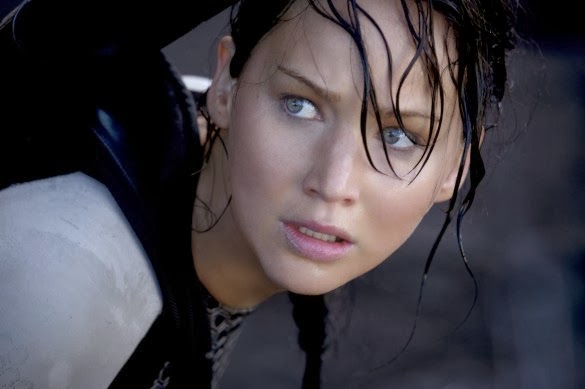
CINEMA: The Hunger Games: Catching Fire (Francis Lawrence, 2013) - There were two reasons why I wanted to see this film, and to pay 10 quid for the privilege.

The first was Jennifer Lawrence's startling expressiveness, that deftness of delivery and effortless evocation of complex emotion that makes my critical faculties exalt, and which has so far turned fair scripts into good films, and stronger ones into masterpieces. She lit up Winter's Bone and Silver Linings Playbook - two of this decade's best five, for me - and transformed the original Hunger Games from a potentially daft, trivial film built on formulaic lines and obscured by ephemeral trappings into something sporadically vital, exciting and real.

The other reason was that I'd forgotten I wasn't a 12-year-old girl.

Of course, in the event that I'd made a big, G.O.B. Bluth-like mistake, I wasn't going to suffer alone, so I dragged my mate Owen along too, violently kicking and deafeningly screaming, and a very good time was had by all (except Owen).

This sequel picks up a short while on, with Katniss (Lawrence) haunted by memories of that legendary killing contest, and caught between the man she loves (Liam Hemsworth) and the one she claims she doesn't (Josh Hutcherson, whose unlikely status as a sex symbol gives hope to those of us with jutting chins everywhere). Unfortunately, the president (evil Donald Sutherland, whose facial hair is distractingly asymmetrical) has his own reasons for wanting a hot Lawrence-Hutcherson love match, so they're forced to carry on the charade, whilst trying not to start a revolution on their national "victors' tour".

The film - and presumably the book - makes a good case for the eponymous event being "just games", but the fight against oppression being real... then decides to have some more games anyway (they're fun, aren't they?), prompting a partial retread of the first film, though with a few arbitrary threats that are in the vein of Cube (electrocution, poisonous fumes) and one that isn't (baboons).

It's paced like a drunk guy in a pub trying to walk to the toilets, the script by Full Monty creator Simon Beaufoy and Little Miss Sunshine writer Michael Arndt doesn't go anywhere terribly revelatory, and I don't think Hutcherson (phwoarr) can really act. But there's just something about it I liked - and I think again it's to be found at the feet of Lawrence. I'm not sure she's as good as we've seen her here, but it's all relative. She's still magnetically watchable, completely persuasive no matter what dubious dialogue she's being forced to recite, and able to signify more with a single look than most actresses could with a Robert Towne monologue. There really may as well be no-one else in the film.

As it happens, the cast has a couple of strong additions from last time around: Jena Malone as an axe-wielding rival whose vote-winning horniness evaporates remarkably quickly, and Philip Seymour Hoffman playing the mysterious new "games master", who may quite conceivably be a massive bastard. Of the returnees, Woody Harrelson and Stanley Tucci are both good if slightly narrowly-defined, while I found Elizabeth Banks' returning Effie extraordinarily irritating to begin with, only for this to prove one of those rare occasions (Tommy Steele in Finian's Rainbow was another) where I was won round by an avowedly eccentric turn, as it opened up to reveal something a little more human. Those lively characterisations compensate for a less compelling narrative than first time around, and the film's enduring preoccupation with fashion as a means to fight oppression, which is probably something 12-year-old girls think, but isn't anything I've seen any evidence to support.

Directorially, Francis Lawrence proves less interesting and distinctive than Gary Ross, though his Ben-Hur homage is good fun, the set-piece with the archery training is nicely edited and there's one lovely scene near the end featuring a shaft of daylight and an almost motionless (Jennifer) Lawrence. That passage made me wonder why the rest of the film often felt so functional, rather than trying to grab us by the throat.

It's no Empire Strikes Back, no Godfather: Part II, no Aliens, but it's no Cloudy 2 either. Beyond the "ooh, I know, how about this?" plotting, the "I'm not sure this bit's aimed at me" window-dressing, and the fact that we don't end up much further along than when we went in, I liked it. Most of that's down to Lawrence. I doubt there's a filmgoer out there not in thrall to her ability but, if there is, the final few frames of the film should win them around: leading to one of those abrupt endings that makes you go: "Hey wait, that can't be the... actually, yeah, OK."

I am a 29-year-old man. (2.5)

***


The Big Street (Irving Reis, 1942) - An often exceptional Damon Runyon story, in his familiar style and filled with his usual affable crooks, about two inhabitants of New York’s Losers’ Street: a selfish showgirl (Lucille Ball) consigned to a wheelchair by her violent ex-boyfriend, and the meek busboy (Henry Fonda) who appoints himself her protector, idolising her beyond all reason and continuing to stick by her even when everyone else gives up.

The production and direction is disappointingly bland – too cheap and yet not cheap enough – but the dialogue and characterisation is utterly remarkable, with Ball and Fonda both in spellbinding form, each proving amusing, heartbreaking and unfailingly convincing, cast boldly against type in doggedly unconventional parts.

Fonda played dupes and mugs in plenty of films during this period – The Lady Eve, Rings on Her Fingers, The Magnificent Dope – but never a character as innocent, stoical nor blindly loyal as Little Pinks, allying the naivete of Sturges’ “Hoppsy” to something like the high-minded view of humanity espoused by Tom Joad. It’s a really beautiful performance.

On a more trivial note, fans of his singular diction will also enjoy hearing Hank say “huh-wheeels” and “ve-heercle” in a single sentence, and Ball gets a cracking new love song to sing, Who Knows. There’s fun support too from Eugene Pallette (as a competitive eater), Sam Levene and Citizen Kane alumni Agnes Moorehead and Ray Collins.

The film isn’t perfect – it sags a little at the beginning of the final third, taking Ball off screen for too long, and I’m in two minds about the ending – but, at its best, its blending of the seedy, the funny and the warmly humane reminds me of my favourite movie, Remember the Night, and I can’t think of any higher praise than that. (3.5)

***


The Front Page (Billy Wilder, 1974) - An unnecessary but enjoyable third screen version of former journalists Ben Hecht and Charles MacArthur's immortal 1929 play, The Front Page, filmed in '31 under that name, and by Howard Hawks nine years later as His Girl Friday, one of the fastest, funniest comedies ever made, with an added sexual charge due to its ingenious gender swap.

This version of the tale, which as in the source sees unscrupulous Chicago editor Walter Burns (Walter Matthau) trying to persuade ace reporter Hildy Johnson (Jack Lemmon) to drop his fiancee (Susan Sarandon), and cover a hot murder case, is as much a homage to the play and the era than it is a film in its own right. There are references to All Quiet on the Western Front (a year early), Jimmy Cagney (at least two years early), Ruth Snyder, Lindbergh and the rest, and the film looks at least as '30s as the first version - aside from a curious softness in the cinematography, the light fairly streaming off Lemmon's white boater. That jaunty ragtime theme tune is one hell of an earworm too.

Wilder's main innovations are the typical ones when adapting material from a more censorious era: swear words and bad taste gags, this time about paedophilia, prostitution and diabetes. He's also on curiously juvenile form, with a running gag about a cub reporter wetting himself, and a bafflingly unfunny, sped-up sequence concerning a runaway hospital bed that seems to suggest an oft-overlooked influence on his work from Benny Hill.

Wilder and co-writer I. A. L. Diamond put Walter and Hildy behind bars near the close, which isn't in the original work and rather slows the momentum, while letting the mayor get away with his nefarious doings: a perhaps unsatisfying but nevertheless smartly cynical touch rather typical of the director. The only entirely new sequence I found amusing and worthwhile was Burns posing as a parole officer to tell Peggy that Hildy was a convicted flasher, though it strays from the blackly comic to the unpleasant towards the end. Wilder's only other additions of note are a nice gag about the operetta The Student Prince (adapted into a film by his hero, Ernst Lubitsch, in 1927) and having the central murderer taking rather too literally the suggestion that he pose in a manner befitting a "caged animal".

The film's basic material remains amazing, though - its cynical reporters and crooked politicos enduringly fascinating, as much for Hecht's murky morality as his blistering dialogue - and the acting's good. When Lemmon does his "yadda yadda" scatting, I still want to punch him in the face, but he's very charismatic and adept at nailing Hildy's curious blend of the hard-bitten and the compassionate, as his character shoulders the burden of the story in the way he doesn't in the other versions. Matthau isn't anywhere near as good as he was elsewhere in the decade (this was shortly after that glorious one-two of Charley Varrick and Pelham One Two Three), but he's decent enough, there are interesting spins on murderer Earl Williams and his "girlfriend" Molly Malloy from Austin Pendleton and Carol Burnett, while Vincent Gardenia proves funny if sometimes a little overripe as "Honest" Pete, the sheriff. Veterans of '40s comedy also crop up, with David Wayne as Bensinger - now unmistakably a homosexual - and the great Allen Jenkins as the wizened telegrapher in the final scene.

There's no real reason for the film to exist, and Wilder's abilities were clearly flagging - he seemed somewhat uncertain how to adapt to a permissive industry where he could say whatever he wanted as a writer - but it's good fun and, in an odd way, an interesting, perhaps unwitting experiment in the Far from Heaven vein: taking a near-legendary template and performing it in a largely faithful style while using the new moral code to try to inject it with a greater realism. Well, apart from the bit with the hospital bed. It's ultimately the least of the three versions, but worth it regardless. (3)

See also: My favourite actor, Lee Tracy, originated the role of Hildy on stage. I wrote this piece about him for EatSleepLiveFilm.

***


*A FEW MINOR SPOILERS*
The Crimson Pirate (Robert Siodmak, 1952)
- Or 'The Crimson Pirate in an Adventure with a Scientist', this film's peculiar third act presumably the inspiration for the Gideon Defoe novel brought so wonderfully to the screen by Aardman. But I'm getting ahead of myself.

Really this fondly remembered flick is a mix of Doug Fairbanks' 1924 cutlass-clasping classic, The Black Pirate, and the 1950 actioner The Flame and the Arrow, marrying the story of a Seven-Seas-scourge who turns noble for the sake of a woman, to the kind of colourful, stunt-heavy, circus-flavoured fun in which Burt Lancaster was briefly typecast. But unlike the sumptuous, seductive Fairbanks film, this one is aimed squarely at a Saturday morning kids' audience. (By a quirk of studio workings, both this and The Flame and the Arrow were directed by men more commonly associated with film noir: Jacques Tourneur (Out of the Past) and Robert Siodmak (The Killers).)

The film is basically and solidly entertaining without often exploding into life the way it might. The one thing you really need in a pirate movie is ingenuity: think of Depp hopping onto the second ship or Fairbanks riding down the main sail on his sword. There are brief flashes here, but only really in the final reel, as Lancaster slices a rope to fly skywards and his sidekick Nick Cravat takes out a bunch of soldiers with a swinging mast. The rest of the film is consistently enjoyable, but not perhaps escapist or imaginative in the way it should be. It feels somewhat tied down: by its obvious, overly serious plotting, by Lancaster's irritatingly simplistic acting, and by a strange insistence on subverting its trumpeted credentials by wandering ashore or just getting a bit distracted.

Don't get me wrong: it's a solid, eventful watch and it throws just about everything into the mix - from a mutiny to a submarine, cross-dressing to nitroglycerine - while there's happiness to be found in the stars' stuntwork: the massive, energetic, hilariously twinkle-toed Lancaster and beardy, well-built little Cravat leaping, rolling and tumbling (not a sex thing). I'm just not sure it's quite the unassailable genre highpoint it might seem when viewed through a haze of nostalgia. In fact, I'm pretty sure it isn't. (Sorry for being such a misery.) (3)

***


*SPOILERS*
SHORT: Castello Cavalcanti (Wes Anderson, 2013)
- I'll defend Wes Anderson pretty much to the death. Aside from the baffling misfire that was smugness's Fantastic Mr Fox, I love every single one of his magnificent, micro-consistent movies. The features, that is. I'm not sure he's very good at shorts. The Moonrise Kingdom animations were transcendent, but quite how much of a hand he had in those, I'm not sure. Hotel Chevalier, the brief precursor to The Darjeeling Limited, was faintly affecting, but pretty pretentious and seriously slight. Castello Cavalcanti, bankrolled by Prada, is so minor it's barely even there.

The tranquility of an Italian square (pan shot, pan shot, yes, it all looks rather pretty) is rudely interrupted by rally driver Jason Schwartzman, who writes off his car against a wall. He chats briefly - in the most painfully mannered way - to some folks who turn out to be his ancestors, has a fun phone call with his mechanic, then talks to a girl. The end. In the right role, I like Schwartzman a great deal: in Rushmore, in Huckabees, in much of Bored to Death. Outside of those limitations (Slackers, Shopgirl, Bored to Death Season 3, here), he can often appear to have forgotten what acting is. He probably isn't helped by a film that has nothing to say except "shop at Prada". (1.5)

***

Thanks for reading.

Wednesday, 20 April 2011

The way it crumbles, cookie-wise - Reviews #64


"Shut up and deal."

*THOUSANDS OF SPOILERS AND TWO RUDE WORDS*
The Apartment (Billy Wilder, 1960)


Mea culpa. That's Latin for "OK, a swift about-face coming up." I've really warmed to Jack Lemmon's performance here, the only aspect of this wondrous film that ever lodged in my critical craw. There is still that annoying bit where he sings the stupid song and does his nervous laugh as he's making the spaghetti, but that's really the only false note in a characterisation that sees his Buddy Baxter shift from neurotic nebbish to marvellous mensch as he casts off the shackles of corporate weaseldom. He's an ambitious, put-upon office worker whose journey up the greasy pole (that's not a euphemism) is quickened by lending his apartment to executives for their extra-curricular activities (that is a euphemism). Alas, his collaboration with all-time love-rat Fred MacMurray - superbly cast against type - means breaking his own heart, as the utter, utter bastard is getting it on with the love of Lemmon's life, sweet, bob-haired elevator girl Fran Kubelik (Shirley MacLaine, giving the showing of a lifetime in an appealing but complex part).

I think there's an argument that this is Wilder's greatest film. The script and story, by the director and frequent later career co-writer I. A. L. Diamond, is remarkably original, both in its conception and execution, centring on several lengthy set-pieces that are like nothing ever seen before in American romantic comedy: the hero laboriously rescheduling a series of home-wrecking trysts, a suicide attempt and the subsequent rescue. It also features one of the best "trying on a bowler hat" sequences I've seen, part of a tradition begun by Cary Grant in The Awful Truth and continued by Giulietta Masina in La Strada and Gary Farmer in Dead Man. There are three scenes I particularly enjoyed. Fran's last-minute change of heart and Lemmon taking the flak (and two blows to the face) for her overdose are obvious sentimental high-spots, as lovely as anything you'll ever see. The other is the amazing first encounter between Lemmon and MacMurray, and Buddy's dawning realisation of exactly what it is his brazen boss is asking for. With measured desperation, MacMurray says he had been led to believe by Buddy's previous clients that the ambitious young buck was "alert, astute, and quite imaginative". "Oh," replies Lemmon. "Oh!" It's a brilliant comic two-hander.

Gloriously, every scene is packed with that kind of Lubitsch-y invention and innuendo, aided by some sublime running references. There's Buddy's reputation with his neighbours as a medical miracle, of course, due to the amount of drinking and shagging going on his apartment. And then there is the suffix "-wise", which begins as management speak, soundtracks absurdity and despondency, and winds up as romantic poetry. In the final minutes, warming to the idea that Buddy really, truly loves her, Fran's face breaks into an excited grin. "What's he got against you, anyway?" asks MacMurray, missing the point by several blocks. "I don't know," she replies, eyes shining, before plucking a cherished Buddy line from her memory. "I guess that's the way it crumbles, cookie-wise." (4)

See also: Like Lemmon? Then witness his star-making turns in It Should Happen to You, Phffft! and My Sister Eileen, via the medium of text. To read about his finest hour, mosey on over here.

Thursday, 22 April 2010

The weekend has landed, 1920s German style - Reviews #31


*VERY MINOR SPOILERS*
People on Sunday (Robert Siodmak and Edgar G. Ulmer, 1929) is a sunny, carefree holiday film that's remarkable in a half-dozen ways. There's the sense of ambition, with incisive use of cross editing and jump cuts that's about 40 years ahead of its time. The use of non-professional actors well before "neo-realism" entered the filmic lexicon. Its portrait of pre-Nazi Germany: charming, accessible and somehow familiar, without the debauchery and excess commonly attributed to the Weimar Republic. Then there's the laid-back, quiet sexiness in the film's evocation of young lust that's unlike anything else in '20s cinema (I'm referring to the beachside frolicking, rather than the schoolboys slapping each other on the bum). The celebration of weekend freedom that's influenced everything from Bank Holiday to Spare Time to Human Traffic. And the truly staggering collection of talent associated with the movie, including five future Hollywood directors and an Oscar-winning cinematographer. Noir legend Robert Siodmak (The Killers, Criss Cross) helmed the film, assisted by B-movie legend Edgar G. Ulmer (The Black Cat, Detour). Billy Wilder (Sunset Blvd., Some Like It Hot) wrote the dialogue-free scenarios, based on an idea by Siodmak's brother Curt, who later penned The Wolf Man and directed some horror dross. People on Sunday was shot by Eugen Schüfftan - who photographed Eyes Without a Face and The Hustler - with help from From Here to Eternity director Fred Zinnemann. Yes indeed. That clunking sound you may have heard was my jaw dropping on the floor when I first read about this movie.

The story is simplicity itself: a taxi driver (Erwin Splettstößer) and a wine seller (Wolfgang von Waltershausen) take a pair of girls (Brigitte Borchert and Christl Ehlers) from Berlin to the country for a blissful, lazy Sunday, while Erwin's model girlfriend snoozes in bed. The quartet laugh, play, argue and flirt, as one coupling peters out and another holds strong. Both romances feature the same man, incidentally, illustrating the modern attitudes permeating this highly watchable, fast-paced film. The scale of invention is on a par with the dizzying Russian documentary Man With a Movie Camera, released the same year, but it's put to better use, serving an immensely engaging story with a rich rural atmosphere. Renoir must surely have seen this before preparing his own heightened, pastoral film, Partie de campagne. The non-professional actors, all essentially playing themselves, are extraordinarily naturalistic, enhancing the singular feel of this thoroughly lovely film. (4)

Trivia note: The BFI release features a brilliant score by Elena Kats-Cherin. The DVD's accompanying booklet includes an interview with Borchert published shortly after the film's release. Though the movie was a huge hit in Germany, she confides to the reporter that her friends didn't enjoy it, as it was too similar to their own lives.

Tuesday, 2 March 2010

The Godfather, and Caggers on fire - Reviews #18

Five reviews in this latest update. For newcomers: movie ratings go from one star (Spice World) to four (The Searchers). Thanks for reading - comments are very welcome below.


Houseboat (Melville Shavelson, 1958) - Romantic comedies with kids attached rarely get it spot on. As a rule, they're too fraught, a tad preachy and with a dearth of genuine laughs. Though there's One Fine Day and Listen, Darling, products of the genre tend to turn out more like Please Don't Eat the Daisies. But despite boasting fraughtness, preachiness and only a smattering of giggles, Houseboat succeeds on the strength of its sheer charm. Cary Grant is an estranged father-of-three who returns from Government business abroad after his ex-wife's death and finds his children don't want to know him. Enter fiery Sophia Loren, a prospective governess who can't cook and can't sew, but might just be able to bring the family back together - so long as she doesn't fall for her charges' father. It's flabby and sentimental, but that meandering and manipulation is part of its charm, and though there are obvious story flaws - like Martha Hyer (the other woman) turning into a scumbag for no reason other than dramatic convenience - the leads are effortlessly likeable, the setting is pleasant and there's a showboating supporting part from Harry Guardino as a handyman with two roving eyes. John Litel, who played Carson Drew in Warner's Nancy Drew series, appears briefly. Loren sings Bing! Bang! Bong! a hatful of times. (3)

***


One, Two, Three (Billy Wilder, 1961) is a lightning-paced Cold War comedy from writer-director Billy Wilder. In Ninotchka he flirted with the more palatable aspects of communism, whilst embracing capitalist Paris. Here he's had it with the Bolshies entirely, siding with Coca Cola's man in west Berlin (James Cagney) as the executive tour-de-force schemes relentlessly to land a top job in London, despite the fact the boss's daughter left in his care is now up the duff by a shouty communist (Horst Buchholz). Playing like an update of those glorious pre-Code Lee Tracy vehicles - most obviously Clear All Wires! - it's an uproarious, often startlingly inventive comedy, with rat-a-tat dialogue that shoots down subservient civilians, commie interrogators and ex-Nazis in a shower of well-chosen words. In addition, Wilder and co-writer I.A.L. Diamond throw in a frenzied variation on the Lady for a Day makeover challenge, a bunch of great movie in-jokes (there's a classic referencing Cagney's starmaking turn in The Public Enemy) and quite a bit of finely-honed smut, pitched between the wink-wink approach of classic Hollywood and the uncomfortable fleshiness of Avanti! The script is matched by the performances. No-one, with the possible exception of Tracy, could have brought such manic zeal to the central megalomaniac as Cagney. He expended so much energy here he needed a liedown for 20 years. This was his last film until 1981's Ragtime, his final screen appearance. Arlene Francis is perfect as Cagney's wife - shorn of her lust for life - while Pamela Tiffin (that's her name, don't tell Sid James) is suitably annoying as the boss's daughter and Sig Ruman has a funny voice-only cameo, if you're wondering why his unmistakable Germanic tones are emerging from an unrecognisable fizzog. (4)

***


Finding Nemo (Andrew Stanton and Lee Unkrich, 2003) is an episodic entry from Pixar, inexplicably hailed by many as the studio's best. In a moving prologue, we see the wife and unborn spawn of clownfish Marlin (voiced by Albert Brooks) eaten by a predator. He aside, the sole survivor is an offspring with a weak fin: Nemo (Alexander Gould). The attack - and birth - has a profound attack on the formerly carefree Marlin, who becomes absurdly, embarassingly protective of his son. When the youngster is captured by a diver, his father must embark on a revelatory quest, braving shark attacks and jungles of jellyfish in a bid for reunion. The film is exciting, moving and stunningly animated, but has too many incidental characters who aren't sufficiently well-drawn, and a habit of hitting you over the head with its message. "You can’t never let anything happen to [Nemo] - then nothing would ever happen to him," says periodically annoying comic relief Dory (Ellen DeGeneres). That would be pithy had we not already got the point. It's still a good film. (3)

***


"I believe in America..."
*MAJOR SPOILERS*
The Godfather (Francis Ford Coppola, 1972)
would appear to be the best film I've seen so far in 2010. I hadn't watched it for a good five years, incidentally, during which time it seems to have got even better. Marlon Brando is Vito Corleone, the mafia don whose empire starts to crumble when he opts out of a move into narcotics, only for war-hero son Michael (Al Pacino) to enter the fold, jettisoning his father's dream that he'd become a senator. It's grand and sweeping, and yet intensely personal: a wonderfully-acted fusion of family saga and human tragedy whose key players inhabit a vivid world of fierce ethics and bloody violence. Coppola and co-scripter Mario Puzo (who wrote the source novel) have plenty to say about family, honour and the American Dream - and the classic scenes are just legion. Some have argued that Brando's Oscar-winning performance is really a supporting role, but, despite a lack of screen time, he dominates the entire film and provides many of its finest moments. There's the moment he learns of Sonny's death, then calls in an emotional favour ("Look how they massacred my boy"), and a simply staggering two-handed sequence in which he maps out past and future to his successor. "I thought that... when it was your time that - that you would be the one to hold the strings," he says. "This wasn't enough time, Michael, it wasn't enough time..." The old-fashioned storytelling, complete with impeccable production design, is augmented by Coppola's use of '70s innovations, like overlapping dialogue and informal out-of-focus close-ups, as well as Nino Rota's unforgettable score. The staggering ensemble includes not only Brando and Pacino (who is simply brilliant), but also James Caan as the last word in likeable hotheads, Robert Duvall playing pragmatic family lawyer Tom Hagen and veteran Richard Conte, superb in his key supporting role as Don Barzini. It's a magnificent movie. (4) Parts II and III to follow as soon as I can free up the time.

***


James Cagney described Torrid Zone (William Keighley, 1940) as "Hildy Johnson goes bananas" - that is, The Front Page on a fruit plantation, though in its portrayal of tough men and women slugging it out in unbearable heat, it also recalls Only Angels Have Wings. The story sees manager Pat O'Brien conniving to keep sparky, moustachioed underling Cagney in the tropics, while the want-away heel relaxes from the toils of his job by romancing two morally dubious women and chasing a revolutionary around the hills. For the most part it's fantastic entertainment, with exceptional badinage between Cagney and card cheat Ann Sheridan and a plot that offers endless twists and turns; though on first viewing there were a couple of dry spots. I'm going to revisit this again very soon to get the rapid-fire gags I missed, so I'll see how it measures up second time around. George Tobias is fun as the bandit Rosario; Joseph Calleia, George Reeves (who takes a supporting role) and Alan Hale were among those who auditioned for the part. This was the last of eight Cagney-O'Brien pairings at Warner (including, of course, Angels With Dirty Faces) - both later appeared in Ragtime, though they didn't share the screen. (3.5)