Showing posts with label stream. Show all posts

Monday, 16 October 2017

Next year's best films: London Film Festival 2017 round-up − Part 2

Here are my 10 favourites from the BFI London Film Festival 2017. To read about the less good films, please toddle on over here. And thanks for reading, it makes me happy.

***

10. Wrath of Silence


Director: Yukun Xin
Cast: Wu Jiang, Yang Song, Wenkang Yuan
Country: China
UK release date: No release confirmed
Rating: 3/4

A genuinely unusual take on that old chestnut, the 'psycho looking for his missing kid' flick, but used to interrogate the iniquities of contemporary Chinese society (without anyone involved in the production gettinh killed), as a mute miner – left behind by the rapid pace of progress – engages in a bleak, apparently hopeless quest that's punctuated by moments of dark comedy and bone-crunching action (there's a lot of him just kicking people really hard).

The final shot could have used a bit of work, but the ending is otherwise superb, a fitting capper to a film with a few rough edges (cartoonish villainy, an opening that's more confusing than intriguing, a little mid-section bagginess) but interesting ideas, superb imagery – that in-camera shot of the desert giving way to the city! – and the best exhausted fight scene in aeons. Clever title too.

It's basically Kurosawa's High and Low, but for China in 2017. Having said that, and as the director acknowledged, there are no state officials involved in wrongdoing: the corruption shown is all in the private sector, even if it's high-ranking lawyers who operate within the public realm and increasingly dominate Chinese society.

... and curiously, like my previous film in the festival, Wonderstruck, it hinges on a mute person and a taxidermical diorama. This one's good, though.


Director Yukun Xin (centre), his producers and friends, outside NFT1 at BFI Southbank.

***

9. Our Time Will Come


Director: Ann Hui
Cast: Zhou Xun, Eddie Peng, Wallace Huo, Paw Hee-ching, Jessie Li
Country: China
UK release date: No release confirmed

Rating: 3/4

Stories from the Chinese underground: a film of great moments, appreciable humanity and unapologetic feminism, those virtues triumphing over some more prosaic flaws, like irregular pacing, a curious framing structure, and a few flirtations with propaganda and artifice.

It's a film of wit, stoicism and sincerity, with two key scenes ruminating on honour and duty that recall those towering triumphs of French cinema, Grand Illusion and Army in the Shadows, for which one can forgive some improbable (but dynamic) action heroics, a monochrome round-table that just made me think of Woody Allen, and a few too many scenes of people wrapping things up in blankets.

***

8. Angels Wear White


Director: Vivian Qu
Cast: Vicky Chen (as Qi Wen), Zhou Meijun, Mengnan Li, Weiwei Liu, Jing Peng
Country: China
UK release date: No release confirmed
Rating: 3.5/4

An excoriating moral thriller about the destruction of innocence – though not, director Vivian Qu says, the debasement of "purity" – which follows two girls left behind by the pace of progress in China: an 11-year-old abandoned to the appetites of a police commissioner, and the 15-year-odd runaway (Vicky Chen), doing odd jobs in a hotel, who's the only witness.

The film's closest analogue is probably Half Nelson – and not just because Qu and Dardennes cinematographer Benoît Dervaux get the most out of some playground tunnels amongst other quasi-surrealist diversions. Like that film, it's an intelligent, consistently surprising heartbreaker that never goes for the soft option when a tough lesson will do.

The writer-director of another Chinese film in the season, Wrath of Silence (see #10), said he steered clear of criticising state officials, as his scripts had to be cleared by the censorship office. Qu (who offers a heroic lawyer where Wrath's was corrupt) clearly doesn't give a shit, and this painful, richly symbolic work – which keeps its violence off camera, and any sentiment or sensationalism off the screen – is a vivid indictment of a society that simply isn't looking after its kids.

Angels Wear White isn't some worthy lecture, though, and while it's slightly uneven, it's a bleakly vibrant, well-acted, quietly poetic, furious film about desperation, the potential for change, and systematic, state-sanctioned abuse masquerading as justice and progress.

It's also the best Marilyn Monroe film since 1961.


Dervaus and Wu trying to ignore the weirdo with the mobile phone all up in their grills.

***

7. On Chesil Beach


<3 Saoirse Ronan. After Brooklyn and this, I'm starting to think she can do no wrong.

Director: Dominic Cooke
Cast: Saoirse Ronan, Billy Howle, Emily Watson, Anne-Marie Duff, Samuel West, Adrian Scarborough
Country: UK
UK release date: 19 January 2018
Rating: 3.5/4

For almost its entire length, this adaptation of Ian McEwan's 2007 novella is close to perfect: the beautifully-modulated, restrained story of a strait-laced couple in the still strait-laced early '60s who look back on their often idyllic courtship from the claustrophobic environs of their honeymoon suite.

McEwan and director Dominic Cooke don't change much of the book: they and their cast just subtly externalise feelings that were elucidated as thoughts on the page, and cast off a few memorable moments that might alienate or unwittingly unnerve a cinematic audience (a spasming muscle, jizz on the face).

The leads are brilliant, particularly Saoirse Ronan as the sexually repressed violin prodigy Florence, and if a couple of elements don't quite work − McEwan's slightly embarrassing fixation with Edward (Billy Howle) liking a good ruck, and Anne Marie-Duff's simplistic scenes as his mother, which are tonally off − those are offset by passages of understated lyricism and rich, convincing romance which clash gloriously with the hysterically uncomfortable wedding night, from the inedible none-more-1962 meal (rendered gloriously on the screen: slice of melon with glace cherry, anyone?) to Edward rolling off the bed because he can't have sex with his shoes on.

When the explosion comes, and it does, it's heartbreakingly portrayed, and one of those sequences that works so well because it's so faithfully rendered. Then McEwan starts to write new scenes that were merely summarised in the book, and all bets are off. The first three − dealing with Edward and his family − are minor but quite satisfying, especially the one with his father, and the fourth is an absolute belter, a slightly obvious but incredibly affecting scene set in a record shop in 1975.

If only they'd ended the film there, as the next has Edward explaining not just the moral but also the text of the story, before a closing sequence set in 2007 that has some of the worst Old Person Make-Up that I've seen: he looks like he's been badly burned, and the rest of the cast are only slightly less ridiculous. Yes, the moment that it's all leading up to got to me, even while I knew I was being manipulated, but from Edward's risible stance at the crease onwards, it's an embarrassing and completely unnecessary coda.

Look, lads, you've got a while till the general release, how about heading back and having another go? Because most of this movie is bloody brilliant.

***

6. Battle of the Sexes


Director: Jonathan Dayton and Valerie Faris
Cast: Emma Stone, Steve Carell, Andrea Riseborough, Sarah Silverman, Bill Pullman
Country: USA
UK release date:
Rating: 3.5/4

A hugely uplifting, entertaining movie, with a typically dynamic central performance from Emma Stone, who inhabits the character of Billie Jean King almost entirely, as the tennis legend breaks away from the sexist tennis establishment, confronts the fact she's a lesbian, and gears up for the eponymous match, opposite self-styled 'male chauvinist pig', the shy and retiring Bobby Riggs.

When I heard about the movie, I thought it might be dressing the occasion up as something it isn't, but it gets Riggs right − played by Steve Carell with great subtlety and chutzpah as a slightly pathetic hustler who plays the press like a violin − seeing the villain (represented by Bill Pullman's Jack Kramer) as the society that allows his phony chauvinistic bluster to land.

Almost everything about the film is first-rate: the montages (I love a sports montage!), the pacing, much of the dialogue, it's just the one-dimensional nature of the human villainy (Kramer, Margaret Court) and the overt on-the-nose social commentary that feels too shallow and Hollywoodised: Alan Cumming's character, a gay costume designer, seems to have wandered in from The Hunger Games and just doesn't seem real. The audience loved him, but he's so magic gay: an acerbic queen who's really a wise and profound guardian angel.

On the whole it's a really lovely film, though: incredibly fun and with such a deep, appealing performance from Stone: that penultimate scene in the changing room is so perfectly played, so complex and apposite, when most movies would have given her an unconvincing and sentimental fictional heart-to-heart with Riggs that explained her character and justified his.


***

At the midway point, let's pause for some trivia.

Cinematic celebrities spotted: Mike Leigh (at the next film in the list), Terry Gilliam at the #1 movie.
Most comfortable screen: Vue Leicester Square: Screen 5
Most exciting screen: Odeon Leicester Square (shame about the leg-room)
Best loos: Vue Leicester Square.
Worst loos: Empire Leicester Square, somehow worst than the portaloos at Embankment Garden Cinema.
Best Q&A: The Florida Project for the lolz and adorableness, Angels Wear White for the insights into Vivian Qu's creative process.
Worst Q&A: The pretentiousness of Zama, both film and Q&A, wound me up. Red carpet feeds (I saw The Battle of the Sexes and 3 Billboards) aren't for me, I just find the fawning absolutely unbearable, and though Emma Stone fielded her questions with a bit of humour and panache, and Martin McDonagh offered some insights into the genesis of his film, there's not much that one can really say to questions like "How are you so brilliant and gorgeous?"
Most exciting person to see in the flesh: AUBREY PLAZA FROM PARKS AND REC, especially as I was just about certain that she wouldn't come over for the film.
Request for next year: Please, more variety in the Q&As for the really big screenings: these always just centre around the same two questions (To the writer/director: 'How did you come up with the idea?'; to the stars: 'How did you get on board?' or 'What did you think when you read the script?'), and subsequently the same two answers, while the format is so rigid that there are never any follow-up questions. As a result, they're nowhere near as insightful as the Q&As for smaller events. It's such a wasted opportunity and makes it seem like we've just got the stars over from Hollywood for a fashion parade. Considering the incredible amount of preparation that clearly goes into this amazing festival, it seems really half-arsed.

All in all, though, it was just such a magical and exciting 11 days, and I feel so privileged to have been able to go to it at all, let alone to so many exciting events.

***

5. The Meyerowitz Stories: New and Selected


Director: Noah Baumbach
Cast: Adam Sandler, Grace Van Patten, Dustin Hoffman, Elizabeth Marvel, Emma Thompson
Country: USA
UK release date: 13 October 2017 (on Amazon)
Rating: 3.5/4

A moving, frequently hilarious comedy-drama – sort of 'Woody Allen's The Royal Tenenbaums – about a family living in the shadow of impossible oft-married patriarch and undiscovered sculptor, Harold Meyerowitz (Dustin Hoffman).

It has perhaps a couple of endings too many, and Emma Thompson misses the mark as a ditsy New York alcoholic, but the rest of the cast is great, some of the comic, character-rooted flourishes are instant classics – Sandler and Stiller's conversation about business, the way Hoffman runs (I tell you, if he'd done this in Marathon Man, it would've been twice as good) – and there are several darkly comic passages addressing neuroses that frequently debilitate me: Stiller asking a nonplussed nurse if he's abandoning his father by going to a meeting, Sandler's summation of his dad's legacy.

In fact, Sandler has several scenes here that are superb, and if his familiar excesses occasionally intrude (or at least call to mind his dual life as the shittest thing on screen), he's now started giving so many good performances that he's in danger of becoming liked and respected. The call with his daughter (Grace Van Patten) early on in the picture is a beauty.

The Meyerowitz Stories is a really terrific film, Baumbach's best since the unassailable Frances Ha, and yet after 10 minutes I thought I was going to hate it, the director setting it up as a film about privileged, self-serious New York intellectuals with their meaningless problems, before tipping us a huge wink with a line about houmous.

***

4. You Were Never Really Here


Director: Lynne Ramsay
Cast: Joaquin Phoenix, Ekaterina Samsonov, Alessandro Nivola, Alex Manette, John Doman
Country: UK/France/USA
UK release date: No release date confirmed, but probably February
Rating: 3.5/4

Well what did you think a Lynne Ramsay noir with Joaquin Phoenix as a hitman would be like?

Ramsay can write great dialogue, but with a Hitchcockian desire to tell stories using just pictures, that visual imagination – CCTV action sequence ftw! – and her matchless ear for apposite pop music, she rarely needs it. Admittedly she loves a long arthouse silence, so your tolerance for her work may depend on whether you do too, but once this one gets going it's unmissable.

There's Phoenix out intense-ing himself to a Jonny Greenwood score, a deeply moving Jonathan Ames story that invokes and updates the likes of Taxi Driver, The Searchers and A History of Violence without ever feeling like a retread, and a lot of people being twatted in the head with a hammer. Really, what more could you ask for?

Except, of course, the star and director turning up pissed to the screening and spoiling the festival director's Q&A with a mixture of in-jokes and gratuitous flirting.

I just can't get over that line in the politician's dining room, this film's inspired inversion of "Let's go home, Debbie." It damn near broke me.


***

3. A Fantastic Woman


Director: Sebastián Lelio
Cast: Daniela Vega, Francisco Reyes, Luis Gnecco, Aline Küppenheim, Nicolás Saavedra
Country: Chile
UK release date: 2 March 2018
Rating: 3.5/4

This is really, really good.

I'm always struck by the sky-high ratings on IMDb for bad LGBT movies, and wonder if it's attributable to a) the comparative paucity of these films, meaning that we should celebrate those we get, regardless of their technical or artistic deficiencies (the extension, I suppose, is the tribalistic mindset this engenders, in which you can't judge them as bad films, as they're not just films); b) my lack of insight into what these films should be doing in relation to their audience and LGBT issues in 2017.

Anyway, no such ruminations necessary on this one, it's fucking brilliant: a dazzling, poetic, sometimes dream-like Chilean film about a trans woman (Daniela Vega) trying to hold it together – and reach some point of resolution – after the death of her boyfriend. I should mention that his family aren't helping.

Vega has the most fascinating face and the camera makes the most of it, not least in a dazzling nightclub sequence that moves from pain to sensuality to a fantasy dance number, but there's such depth to her characterisation too, and the film's refusal to give her easy, sassy victories is uniquely satisfying, grappling profoundly and humanely with issues that are both specific and universal.

The effect is of a Dardennes story adapted by Almodovar, but I haven't seen anyone like Vega before. I'm not sure she can really sing classical (the best use of 'Ombra mai fu' is now and forever in Humphrey Jennings' seismic short film, Spare Time, Handel fans), but the rest of the music's a treat, with British composer Matthew Herbert delivering an audial dreamscape that like the script, photography and performances serves to conjure a very particular mood.


***

2. Bad Lucky Goat


Director: Samir Oliveros
Cast: Jean Bush, Kiara Howard, Ambrosio Huffington, Honlenny Huffington, Elkin Robinson
Country: Colombian
UK release date: No release confirmed
Rating: 4/4

I was expecting Brewster's-Millions-with-a-goat, I got something like the very essence of charm: a wonderfully atmospheric story of burgeoning sibling friendship, set on a Caribbean island, about a brother and sister who accidentally wreck their parents' car by running over a goat, and hatch one scheme after another to try to get level.

Colombian director Samir Oliveros shot the film on Providence Island (an old colonial outpost owned by Colombia) using non-professional local actors, a score written by local musicians (several of whom play on screen) and the locales as another character in a way that recalls a film of escape, change and geographical flavour that I've always loved, Seducing Doctor Lewis. Bad Lucky Goat is very funny when it wants to be, though it's not packed with jokes: much of the joy lies in its genuinely offbeat sensibility and its deceptively lofty ambitions.

Oliveros, who'd made just one previous short and is now doing a master's in LA, told me (as I was bothering him in the lobby) that he shot this one "guerrilla-style" and is now learning how to be a professional filmmaker, ideally in Hollywood. I hope that training doesn't erode the instinctive brilliance of this debut, which is fast-moving but laid-back, packing an astounding amount into its 76 minutes, dealing with themes of superstition, familial loyalty and accidental goat slaughter, and featuring beautiful performances from the two young leads − both of whom are now eyeing careers on screen. Like the rest of the cast, they adapted Oliveros' English-language script into their phonetic local language, Creole, and I could listen to their slang-heavy exchanges all day.

I got lost in its world, and while the film's trip to the cockfights may be a bit of a rude shock to myself and my other libtard cucks, it ultimately did little to dispel the film's very special atmosphere.

***

1. The Shape of Water


Director: Guillermo del Toro
Cast: Sally Hawkins, Michael Shannon, Richard Jenkins, Octavia Spencer, Michael Stuhlbarg
Country: USA
UK release date: 16 February 2018
Rating: 4/4

Guillermo del Toro's wonderful fable – "my favourite thing I've ever done" – is kind of like Arrival starring Amélie, as a shy, mute cleaner (Sally Hawkins) at a government base begins to communicate with the aquaman in the tank, and feels the first flickerings of love.

Set – like my previous film at the LFF, On Chesil Beach (see #7) – in 1962, it's really about today: a plea for tolerance in the light of Trump and co's war on Muslims, blacks and gays, and a monster movie in which the monster isn't the Other, it's right-wing, gung-ho America, represented here by Michael Shannon, as a psychotic vet in a teal Cadillac who'll beat the living shit out of anything that doesn't conform to his very specific notion of a person. The toxic machismo and vicious hatred of otherness isn't restricted to him, though, it's endemic: and hiding behind the most benign of fronts.

Shot in a rich, stylised palette of greens and browns (admittedly more City of Lost Children), set partly above an old, working cinema and filled with little visual effects – though with a creature who's delightfully and resolutely real – it reminded me of nothing as much as Amélie. That 2001 movie might be the last time I felt quite so charmed by a lead character as by Hawkins' Eliza Esposito, whose increasingly appealing, steely, sexy performance recalls that holy trinity of great mute turns: Dorothy McGuire in >The Spiral Staircase, Samantha Morton in Sweet and Lowdown and Jane Wyman in Johnny Belinda, and is just as full of nobility and pathos; just as lacking in gimmickry.

There's nice work too from Richard Jenkins, who is frequently held hostage in underwhelming comedies, but showed in Tom McCarthy's 2007 masterpiece, The Visitor that he's just about the best actor in America when he can be bothered. As Eliza's gay flatmate, a struggling, alcoholic advertising artist, he's never self-pitying or trite, and those traits no more define who he is than the fact he's bald.

The plot is fine: diverting, involving and well-balanced between moments of intrigue, suspense and humour, but it's the passages of poetry that completely bewitched me, including one sequence in a waterlogged bathroom that took the breath away.

There's another beguiling flight of fancy that memorably references Fred and Ginger's 'Let's Face the Music and Dance', and music is critical to this film: Hawkins and Jenkins engage in an impromptu tap, Alexandre Desplat equips her with the most enchanting theme, and del Toro exhibits his great love for – and understanding of – classic Hollywood by including several clips from old Fox musicals, including Bojangles and Shirley Temple in The Little Colonel and colour clips of Alice Faye and Carmen Miranda rendered in the monochrome of '60s tube TV. Realising that I was in a cinema in which a modern audience was being forced to watch old footage of Alice Faye, and listen to a short monologue discoursing on her ill-fad career was just the most delightful thing.

So… a sci-fi, a horror, a monster movie, a romance, a Cold War thriller, and a history lesson about Alice Faye: this genre-bender is many things, but above all it's an emotional experience, a clear-sighted, glowing-hearted picture with some of the most beautiful imagery and a performance I'm going to be rhapsodising about for weeks, months, years.


Del Toro, his producers, and Richard Jenkins. Sally Hawkins got ill. ***

Thanks for reading.

Next year's best films: London Film Festival 2017 round-up − Part 1


If you see this man, do not approach him or he will bore you about films.

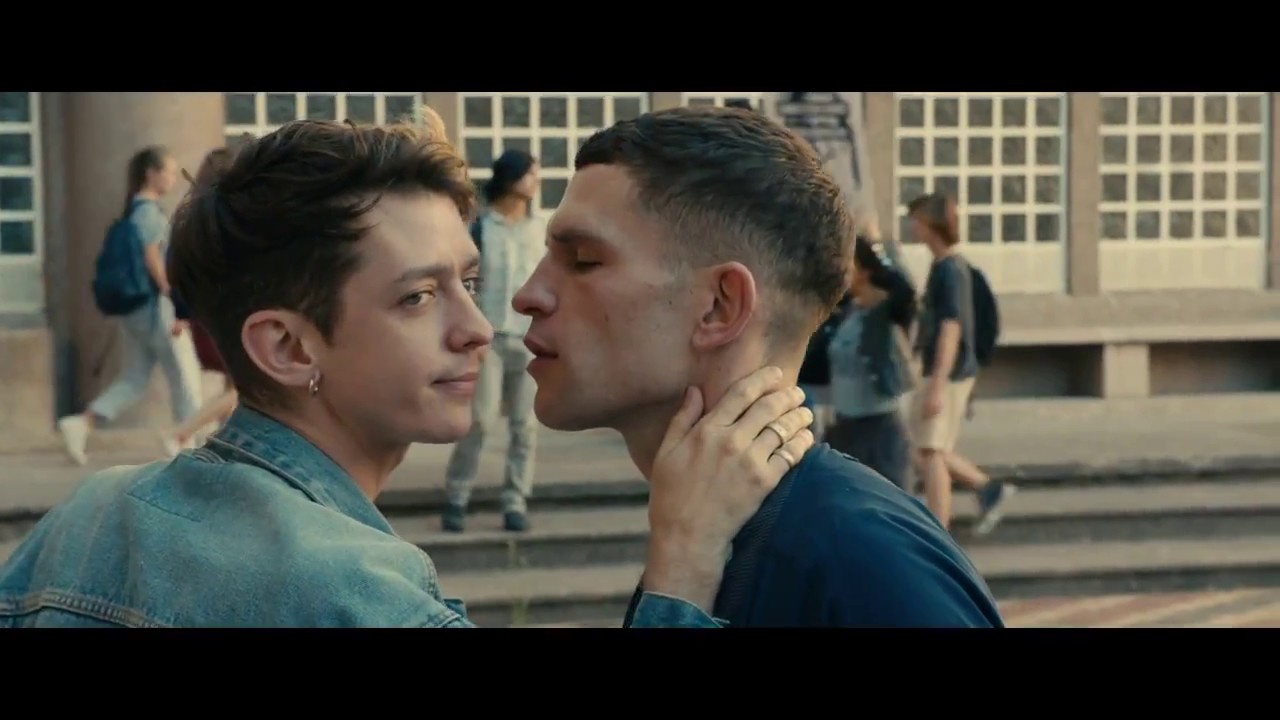
Well, you asked for it. Or at least partially dictated the format. So here's all 20 movies I saw at this year's London Film Festival, from worst to best.

Part 1 includes films by the likes of Todd Haynes, Dee Rees and Martin McDonagh, as well as a Chilean documentary on the world's worst aunt, a pulsating French drama about AIDS activists, and Aubrey Plaza being amazing (again). Plus at least two crushing disappointments.

It seems a little odd to make you read an article about the 10 worst films I saw at a festival, but not as odd as publishing a 6,000-word blog, which is why I've split this in two. Also, films #11-14 are really worth s

eeing, and hopefully the reviews of the others are more entertaining than the movies themselves, which isn't the highest bar. Now join me in saying the official catchphrase of the festival, spoken at least four times during every Q&A by a festival programmer: "Congratulations on what I think is an extraordinary movie."

***

20. Wonderstruck


"Make her look a bit cross-eyed with warty eyelids. There we go: old. Done."

Director: Todd Haynes
Cast: Millicent Simmonds, Julianne Moore, Cory Michael Smith, James Urbaniak, Damian Young
Country: USA
Rating: 1.5/4
UK release date: mid-November 2017

How is a Todd Haynes film with a character based on Lillian Gish this bad? And why is this his follow-up to Carol?!

This YA mystery – adapted by its author – has an intriguing dual-time structure, a nice Carter Burwell score and some neat nods to silents, but it's also cloying, not very mysterious, and incredibly longwinded: not trusting its audience to understand anything, and struggling with some laborious translation problems reminiscent of Le mèpris, in which a lot of the dialogue has to be written down and held up. It doesn't help that the central kid seems to have wandered in from a school play. Or that it ends up looking like an extended advertorial for some museums.

It's sort of like Hugo, if everything that Scorsese's film had done had gone a bit wrong.

(The Gish films being homaged, incidentally, are primarily The Wind (the poster of the film-within-a-film starring 'Lillian Mayhew' is based directly on a publicity image for this 1928 masterpiece) and Orphans of the Storm, though she played mothers in few of her starring vehicles and Wonderstruck diverts considerably from her real life.)

***

19. Zama


Director: Lucrecia Martel
Cast: Daniel Giménez Cacho, Lola Dueñas, Matheus Nachtergaele, Juan Minujín, Nahuel Cano
Country: Numerous
UK release date: No release confirmed
Rating: 2/4

"Think of the film as a whiskey... Sometimes you might get drunk and fall asleep. For me that's a good thing. There are some films I love that I've seen five times, and I fell asleep five times." – writer-director Lucrecia Martel

Yeah, I don't feel the same, though that does explain why your film is quite boring.

Zama is about a colonial magistrate who just wants to go home, but forever finds one more obstacle in his way. There's some glorious imagery, and the odd interesting scene – with Lola Dueñas great as a prostitute elevated to society life, and a neat mini-twist near the end – but the characters aren't for the most part well-drawn, and the film's lack of context and air of aloof pretentiousness got on my wick. With a half hour to go, I just couldn't wait for it to end.

The Q&A, as you can tell, managed to be even more annoying than the film (yeah, I shouldn't have stayed). At one point she said that hens have greater attention to detail than humans.

***

... and the award for The Biggest Disappointment of LFF 2017 goes to...

18. The Florida Project


Director: Sean Baker
Cast: Willem Dafoe, Brooklynn Prince, Valeria Cotto, Bria Vinaite, Christopher Rivera
Country: USA
UK release date: 10 November 2017
Rating: 2/4

An Our Gang movie set among the 'hidden homeless' in run-down motels around Disneyworld sounds brilliant, but this tone-deaf film is too horrible and muddled to be anything but a trial.

As it moves from a film about resourceful, anarchic children to one about the world they're forced to inhabit, it forgets that in order to root for a character, they have to not be just the most appalling dickhead. Because of my background, I tend to feel a great affinity towards damaged working-class characters, and subscribe to the lefty notion that there are few bad people, we're shaped more than we might ever like to admit by our privileges and opportunities, rather than by innate attributes. I'm sure, too, that the mum here loves her daughter, as that sweet scene in the rain attests. But she's still a selfish, ungrateful arsehole.

You don't have to love a film's characters to love a film, but from the way Sean Baker has set up this movie, and used it to try to open up a debate about homelessness, you're clearly supposed to feel something, if only pity. For a masterclass, see the Dardennes' The Kid with the Bike, which gave us a self-centred, troublesome protagonist incinerating his second chances and made us want to save his life. Here you see characters like Willem Dafoe's motel manager exhibiting a gentle human kindness towards Bria Vinaite's character, and her treating them repeatedly like shit.

Nor does the kid stuff come off much better. All the child actors are good, especially Brooklynn Prince as Moonee, but most of the jokes grow simply from kids behaving inappropriately like adults: a situation used solely for cheap (but undeniable) laughs, without ever really addressing its essential sadness. I'm as much of a fan as the next person of a kid not really knowing how to swear and just shouting: "You are shit!" at a neighbour, but there's an inmate tragedy there that the film never approaches in its reluctance to acknowledge that while Moonee is slowly waking to a nightmare caused by the callous lie that is capitalism, her mum is also a dick.

It's only when the film slips into an improvisatory mode, allowing its kids to be kids, and a gentle, insular almost surreal silliness to intrude, that it manages to truly evoke childhood, and so achieve the juxtaposition essential to making its premise work. The ending calls to mind Les 400 Coups, surely not accidentally, and it's beautifully done, but it's hardly enough.

The hilarious Q&A with the kids was way better than this unpleasant, inexplicably lauded film.


***

17. Mudbound


Director: Dee Rees
Cast: Carey Mulligan, Garrett Hedlund, Jonathan Banks, Jason Clarke, Jason Mitchell
Country: USA
Rating: 2/4
UK release date: 17 November 2017 (Netflix and simultaneous theatrical release)

Ronsel quick-drying mud stain: it does exactly what it says on the tin – attempts to create a weighty, socially-conscious art movie from Hillary Jordan's plotty, slightly trashy but well-meaning page-turner.

Dee Rees's film spends more time in battle, fleshes out the Ronsel-Jamie relationship, and dwells on the minutiae of African-American life in the Deep South, but in a choppily uninvolving way, and at the expense of Laura's intriguing story of love, repression, sexual and racial guilt.

Critically, it never summons the book's sense of inexorable, fatalistic dread, nor knows what to do as it reaches its climax, which is first silly, then rushed and finally pointlessly and unconvincingly rose-tinted.

Mudbound has a few painterly images, good performances from Jason Mitchell and Carey Mulligan (who has one fantastic scene largely disconnected from the narrative and the worst pregnancy prop in decades) and an unvarnished understanding of the unglamorous, subservient pragmatism needed to survive as a black man in '40s Mississippi, but it isn't very compelling or convincing.

I say this as a middle-class white bloke, but... what promised to be a timely exploration of the African-American experience from an urgent and valuable contemporary voice is instead just a standard book adaptation: a mediocre melodrama that deals with big themes in a handsome but hackneyed way. Plus lots of Mary J. Blige staring out of windows.


***

16. Downsizing


Director: Alexander Payne
Cast: Matt Damon, Hong Chau, Christoph Waltz, Kristen Wiig, Rolf Lassgård
Country: USA
UK release date: 19 January 2018
Rating: 2.5/4

Payne's latest is a funny, sometimes affecting but also confused and rambling satire about everyman Matt Damon joining the growing number of humans 'downsizing' to about 0.035% of their previous body mass, in order to save the environment (and get a better house).

Many of the familiar Payne themes and tropes are here – the search for meaning, economics becoming personal, a climactic moment of supposed quiet catharsis – but the film is all over the shop, mixing neat sight gags, piercing one-liners and heavyhanded comment with variable effects, disastrous diversions and Christoph Waltz being pretty funny but in a different film to everyone else.

Between a broad beginning and an earnest, incoherent end – and seriously, after this, Only Cowgirls Get the Blues (Van Sant), Wanderlust (Wain), keep good American directors away from hippy communes – it does find a sweet spot and a real rhythm for what must be 45 minutes, with Hong Chau absolutely terrific as a bossy Vietnamese dissident (I await the terrible thinkpieces about whether her character is racist). And I loved the fact, perhaps minor to many, that it preached tolerance but took faith seriously: a balance that remains unusual, since evangelical America has rightly revolted anyone with a sense of decency.

But where Election was compact and deadly, and The Descendants elegantly elongated and profound, this feels like about five films cobbled together – and the last couple aren't really any good.

***

15. The Venerable W.


Director: Barbet Schroeder
Country: France/Switzerland
UK release date: TBC
Rating: 2.5/4
A pretty good documentary from Barbet Schroeder − a former Éric Rohmer collaborator who now makes factual films about awful people − dealing with Ashin Wirathu, the world's naughtiest baby. Oh, OK, he's a Buddhist hate preacher. Who's eaten quite enough alms, by the looks of him. It's more a potted history of the path to genocide − with a bit of access and some intelligently-compiled raw footage shot by others − than an in-depth portrait of its subject, though it's an important story and a timely primer on an urgent humanitarian crisis.

As a film, it might be more effective if it had taken the route of its trailer, which makes the Errol Morris-like decision to unveil The Venerable W's toxic Islamophobia at the midway point, rather than leading with it. In the screening, a woman behind me tutted at everything from fascist rhetoric to burning bodies, as if otherwise we'd think that she was endorsing the behaviour in the film.

***

... and the award for The Most Objectionable Audience of LFF 2017 goes to...

14. Three Billboards Outside Ebbing, Missouri (Are McDonagh's films increasingly just an arsehole magnet? Discuss.)


Director: Martin McDonagh
Cast: Frances McDormand, Woody Harrelson, Sam Rockwell, Abbie Cornish, Peter Dinklage
Country: UK/USA
UK release date: 12 January 2018
Rating: 3/4

Martin McDonagh's third film may lack the effortless grace of his stunning debut, In Bruges, but it’s more coherent and confident than his follow-up, Seven Psychopaths, getting its humanistic points across covered by the usual maelstrom of swearing, violence and taboo-punching.

Frances McDormand plays a plain-talking cracker mom who hires three defunct billboards in a bid to attract the attention of a police force that has spent seven months failing to find the man who raped and killed her daughter.

Those cops are led by Chief Willoughby (Woody Harrelson), a family man dying of pancreatic cancer, and the slow-witted, hair-triggered Officer Dixon (Sam Rockwell, brilliant again), one of the most intelligently, interestingly developed characters I’ve seen in a while.

It doesn’t always delve into its serious themes in enough depth – McDonagh’s recent stage hit, Hangmen, dealt with justice and bloodlust in a more intriguing yet incisive way – and the writer-director’s unfortunate predilection for midget gags continues, suggesting a comic imagination that’s as committed to cheap laughs on any terms as it is to shocking us out of apathy (I’ll let him off on the profusion of ‘retard’s, as it makes sense for that to be in these characters’ vernacular).

But his sarcastic, pedantic humour is still great fun to indulge, even when he has to file off the cultural specificity for a mass audience, and there are stunning scenes here: a one-take act of brutality, a breakdown, letters from beyond the grave, and a fiery callback to In Bruges’ Raglan Road set-piece.

I don’t think the movie quite manages to make you feel McDormand’s grief and sorrow, only really her helplessness and exasperation, but this typically outrageous, confrontational and well-acted film is full of surprises, appealingly nuanced characterisation and moments of quiet emotion, and if it feels too disjointed and too detached from the more urgent themes at which it hints, it does have a little to say about the abandoned in America, the seductive symmetry of eye-for-an-eye retribution, and the reasons why tub-thumping calls to arms from a literal moron might currently have the capital that they do.

I might try to see this again when I'm not so tired, as it was my 20th big-screen film in 11 days, and it started really late.

Incidentally, is Lucas Hedges the most morosely uninteresting actor working today?

***

13. 120 Beats per Minute


Director: Robin Campillo
Cast: Nahuel Pérez Biscayart, Arnaud Valois, Adèle Haenel, Antoine Reinartz, Félix Maritaud
Country: France
UK release date: 6 April 2018
Rating: 3/4

An intelligent yet visceral film about the gay community in '80s Paris, which starts brilliantly – focusing on the protests and meetings of Act Up, a group of guerrilla AIDS activists – before turning into a film about a man dying of the illness.

No matter how compassionately, credibly and intimately it does that, segueing from a film about ideas to one about the individual, contrasting the character's dynamism and beauty with his pain-ravaged impotence, and showing the body – not the city – as the battleground, it's ground we've covered countless times before, and (at the risk of sounding awful) it made the movie increasingly tedious.

At its best, this confrontational, unsentimental but humanistic film has unexpected echoes of Melville's Army in the Shadows, which looked at action, division and necessity within the French Resistance, and I understand why it included so many sequences of illness and fucking, but those elements don't seem as interesting as the story it started to tell. When it returns to it in those final moments, loaded with the suffering and sadness of what's gone before, the results are admittedly astounding.

Nahuel Pérez Biscayart is absolutely terrific as Sean, a founding member, Mesut Őzil-alike and all-round complex human being, first introduced to us justifying the fact that he and his mates have handcuffed a government official to a post during his team's PowerPoint presentation.

***

12. Adriana's Pact


Director: Lissette Orozco
Country: Chile
UK release date: TBC, but it's been picked up by Articial Eye
Rating: 3/4

A riveting documentary about a young Chilean filmmaker, Lissette Orozco, who discovers that her beloved aunt was a member of Pinochet's notorious secret police.

As a (debut) film, its balancing of the disparate elements is perhaps a little off – too much unrelated footage of other family members, too much of the director talking about her feelings – and it does become slightly repetitive towards the end, but its story and levels of access are incredible, and it's one of those few films deserving of that most overused of adjectives: brave.

Also Orozco has a lovely pretty face. Her next film, brilliantly, is about an uncle!

***

11. Ingrid Goes West


Director: Matt Spicer
Cast: Aubrey Plaza, Elizabeth Olsen, O'Shea Jackson Jr., Wyatt Russell, Billy Magnussen
Country: USA
UK release date: 17 November 2017
Rating: 3/4

A genre-blurring indie starring Aubrey Plaza (I will watch anything starring Aubrey Plaza) as the lost, damaged and impressionable Ingrid, who gets out of the psychiatric hospital after one of the great opening scenes, takes the insurance money she got from her mum's death and hot-foots it to LA in the hope of befriending Insta superstar Taylor Sloane (Elizabeth Olsen).

Matt Spicer's film isn't always as piercingly, exaltingly dark as it might be, but it treats Ingrid with just the right balance of interest, empathy and fear, and Plaza − who also produced − is absolutely superb in the lead, bringing a great depth, sadness and humanity to a character who can be the most appalling, manipulative monster, but somehow still isn't that big on Instagram.

There are elements that don't quite come off (Billy Magnussen's Nick is an interesting second act catalyst, but it's such a big performance that he unbalances the film; the love interest's Batman fixation is funny but pushed beyond the bounds of credibility), but it's a very interesting, enjoyable film that works as a black comedy, horror, psychological thriller, character study and satire on the skewed and unhealthy forced perspective of social media, in which everything is 'the best' and everything is put through a filter until it's perfect.

That's not perhaps the most profound observation, but the unexpected human fragility beneath Ingrid's monstrousness gives the film a real resonance, and makes it something slightly different to the razor-sharp, take-no-prisoners movie being sold to us.

#iamingrid


At the screening: It was interesting to hear Plaza (above, with Spicer (second from left) and Magnussen (right) say that her own preference is for an ending with at least a little hope in it, a sentiment hinting at the warmth beneath the nihilistic bravado, which it's tempting to compare with that of April Ludgate, her character in all-time classic sitcom, Parks and Recreation. "In essence, we're all fucked," she said at another point during the Q&A, asked to pontificate on the future of the world.

***

Thanks for reading. Part 2 will be up shortly.

Friday, 21 July 2017

And introducing… #3. Lee Tracy

Here's part three of the series. Previous instalments were about John Ford and Wendy Hiller. Some of the films dealt with below also feature in my two-part 'FDR's Hollywood' feature, looking at political cinema of the 1930s and '40s.

#3. Lee Tracy


Who?
The electrifying, motormouthed comedian whose career came to a sudden and dramatic halt in the mid-1930s.

How so?
He pissed on the Mexican Army.

He what now?
He (allegedly) relieved himself nakedly on a passing military parade during the location filming of MGM’s Viva Villa! in November 1933, and was thrown out of Mexico.

Well, if you’ve got to go...
Indeed – though for Tracy’s part, he denied it all. He was sacked by the studio anyway and spent the rest of his career at lesser studios, before a brief, remarkable comeback in the 1960s.


Was he any good?
The best. Tracy was an explosive, compelling performer: the living embodiment of the “pre-Code” movie – those do-anything, say-anything films that packed out cinemas in the early ‘30s, before the Hays Office went and spoiled everyone’s fun. The impending censorship clampdown of 1934 effectively put Tracy’s kind of movie out of business, which might have been why MGM weren’t too sorry to see him go.

Any trademarks?
Plenty. A wild-eyed delight at his amoral manoeuvring getting him on top once more. A twirling forefinger, a selection of distinctive vocal trills (“You’re thrrrrrough”) and an arsenal of singular gestures, from the way he appeared to be literally seizing control of a scene – bending forward, arms wide apart – to his deft, farewell flick of the hand.


Where do I start?
With Blessed Event, the 1932 Warner Bros comedy about an unscrupulous gossip columnist, which may just be the funniest movie ever made (watch the trailer here). Tracy’s Alvin Roberts, “that kid from advertising”, is allowed to look after the paper’s social section while the regular author is away, and proceeds to turn it into the most popular – and unpopular – column in the country, incurring the wrath of a gangster, and engaging in a gleeful tit-for-tat rivalry with eternally upbeat crooner Bunny Harmon (Dick Powell). Playing a character loosely based on Walter Winchell – then one of the most influential men in America, and the subject of a half-dozen semi-fictional films – Tracy is hysterically funny, spewing a constant stream of wisecracks, though the film’s centrepiece is a terrifying, perilously dark set-piece in which he talks mobster Allen Jenkins through a trip to the electric chair. He shoves a picture of noted victim Ruth Snyder in Jenkins’ face, before navigating the henchman through a florid, impossibly graphic description of state-sanctioned death, every part of his body seeming to contort as he dominates the screen. You would die with one finger twitching upwards, Tracy concludes with a shaking voice, “to where you’re... not... going”.

That sounds, err, fun?
It doesn’t, but somehow it’s exhilarating, because you’ve never seen anyone act like that before: it’s neither conventional, nor stagy, nor necessarily naturalistic, it’s just dynamic.


What else did Tracy do?
Having originated the role of Hildy Johnson in the legendary stage play, The Front Page (above), he had come to Hollywood in ’29. He appeared as a low-level criminal in Frank Borzage’s abysmal translation of Liliom (later musicalised as Carousel), and had a bit in John Ford's gangster flick, Born Reckless, but came to real prominence with three supporting roles in 1932: The Strange Love of Molly Louvain – a nasty, compelling Pre-Coder that spotlighted his singular, rapidly-quickening style of delivery – Love Is a Racket (a film he would have starred in just months later) and the near-legendary two-strip Technicolor horror-comedy, Doctor X, playing an endlessly quipping reporter – a market he had quickly cornered. After Blessed Event, he starred in a succession of tailor-made vehicles making use of the go-getter persona so beloved of Depression-era audiences, beginning with The Half-Naked Truth (which cast him as a promoter), Clear All Wires! (sending his journalist to Communist Russia), the classic romantic comedy The Nuisance (with Tracy as the last word in amoral shysters) and the fantasy masterpiece, Turn Back the Clock, in which his unsatisfied grocer has the chance to live his adulthood over. The final two were made at MGM, the world's biggest and most prestigious movie studio, which could scarcely miss the impact he had been having over at Warner Bros, and didn't hesitate in offering him a fat long-term contract.

Is that all?
Of course not! This was the early '30s, when actors were treated abysmally, so there are always tons of films to enjoy. Tracy had also appeared in Washington Merry-Go-Round, which anticipated Mr Smith Goes to Washington, and went on to deliver an unforgettable supporting performance as the agent to alcoholic actor John Barrymore in Dinner at Eight (perhaps the most prestigious MGM film of 1933), run rings round Jean Harlow’s diva in the superlative, lightning-paced comedy, Bombshell, and star in a bastardised version of Nathanael West’s 'Miss Lonelyhearts' called Advice to the Lovelorn (sound familiar?), designed to cash in on the success of Blessed Event. It was his 14th film in just two years. After that came Mexico. And the rest, as they say, is history.


I’m not sure it is. Please fill me in.
Tracy did the rounds, pitching up at Columbia, RKO and even the Poverty Row studio PRC, where – looking a bit more jowly than 10 years before – he rolled back the years, recapturing some of that old Blessed Event magic in a zingy film called The Pay-Off. His other post-MGM films are a mixed bag, though the mid-‘30s comedy-thrillers Wanted: Jane Turner and Behind the Headlines are pretty great for what they are, while I’ll Tell the World – which cast him opposite Old Rose from Titanic (Gloria Stuart) – is a charming movie in which his dogged, dynamic reporter falls in love with a European princess, without losing his passion for skulduggery and sarcasm.


Tell us about the ones that didn’t work.
It’s not that they don’t work, it’s that they don’t work fully, sometimes leaving Tracy high and dry as the films run out of momentum, or trade sardonism for sanctimony. He’s always worth watching, though, and endearing oddities during this period include a boxing comedy alongside Roscoe Karns (Two-Fisted), a weird comedy-weepie co-starring Jimmy Durante (Carnival), the Hollywood-on-film shenanigans of Crashing Hollywood, 1940’s gimmicky Millionaires in Prison (inevitably featuring Raymond Walburn as one such moneyman), and a variety of vehicles with Tracy in crooked attorney parts, such as Criminal Lawyer – uneven but great fun – and The Spellbinder, which like 1934’s You Belong to Me cast him as a dad, before degenerating quickly into soap operatics.

That doesn’t sound very good. His worst?
No, his worst is definitely The Power of the Press (1943), a hopeless, excruciating collision of small-town patriotic wisdom and WWII propaganda flick – based on a Sam Fuller story, wtf?! – in which folksy newspaper editor Guy Kibbee takes over a New York paper infested with fascist fifth columnists, including Hearst-like businessman Otto Kruger, who's in preposterous form. Tracy’s OK as a snappy but spineless, circulation-chasing editor, but it’s a profoundly depressing experience. He made three more films over the next four years, each more obscure than the last, and then disappeared from the big screen.


So what’s all this about a comeback?
Having made his way slowly down the ladder, and then crossed over to TV, Tracy returned to the stage in the early ‘60s, playing a former President – patterned after Harry Truman – in Gore Vidal’s vital, vivid political play, The Best Man. When it transferred to the screen, Tracy played the role again: a glorious, measured, nostalgic characterisation that showed a range largely untapped by a Hollywood system forever trading off familiar persona, finally allowed him to swear (he swears superbly), and landed him a well-deserved Oscar nomination. Sadly, talk of a comeback was scuppered by his faltering health – he died four years later – but as swansongs go, it was one of the finest.

A case of what might have been, perhaps, had he not made that ill-fated trip to a Mexican hotel balcony. He did, right?
Who knows? In his book, cinematographer Charles G. Clarke said he was standing outside during the parade, and the incident never happened. In his version of events, Tracy had responded to an obscene gesture on the street by making one of his own, but that after the papers got wind of his supposed insult to the nation, MGM had sacrificed Tracy in order to be allowed to continue filming there. Director Howard Hawks was also kicked off the picture for siding with Tracy.


What to say: “Blessed Event is the epitome of pre-Code filmmaking: daring, lightning-paced and furiously funny.”

What not to say: “Blessed Event is so good it makes me want to wee on soldiers.”

***

Thanks for reading.

Wednesday, 19 July 2017

And introducing... #2. Wendy Hiller

Following on from the surprisingly successful John Ford feature (650 hits, thank you very much), here's part two.

#2. Wendy Hiller


One of the most extraordinary things to happen to me in recent times was the discovery – quite by chance, aside from the fact that I’m generally talking about Wendy Hiller – that my dad’s new girlfriend’s mum grew up next door to Wendy Hiller, the only actress who truly vies for my affections alongside Miss Lillian Gish. This discovery has culminated with my cool new grandma giving me the signed photograph that Hiller gave her upon returning to her childhood home upon making it, a quite exquisite act of kindness and generosity. So for the second instalment of the ‘And introducing…’ series, we’re talking all things Wendy Hiller.

Who?
One of the most distinctive actresses of the 20th century, with her inimitable, tremulous voice, arrestingly unusual features and irresistible presence, guaranteed to wrench your attention away from everything else on screen.


She sounds good. Why haven’t I heard of her?
The Cheshire-born actress was primarily a stage star, but she lent her talents to 18 films across 50 years, as well as doing a bit of TV. Fans of British filmmaking legends Michael Powell and Emeric Pressburger will know her as the social climber scuppered by love in their Hebridean romantic drama, ‘I Know Where I’m Going!’ (above). She was also George Bernard Shaw’s favourite actress and appeared in definitive film versions of two of his finest plays: Pygmalion – later musicalised as My Fair Lady – and Major Barbara, giving perhaps my favourite performance of all time (here's the opening scene, it's an absolute wonder). Her later film work included lower billing in everything from an exhaustingly compromised colonial drama (Something of Value) to Southern Gothic (Toys in the Attic), soaring, searing religious drama (A Man for All Seasons), and David Lynch’s The Elephant Man.


That was some big talk about Major Barbara. Tell me more.
Hiller gives a beautiful, enrapturing performance as the title figure (above), whose faith in the noble work of her Salvation Army is shattered when her bosses accept a donation from her father, a supercilious, ominously-twinkling arms dealer (Robert Morley) who looks and acts like a mix of Shaw and Satan. She’s the perfect, compassionate, warm and beating heart of a satirical, often cynical Bernard Shaw gabfest that cocks a snook at temperance, the Sally Army and those who see nobility in poverty.

Go on.
It’s an extraordinary showcase for a rare and remarkable talent, Hiller’s greatest creation a living, breathing, wonderful woman of Shavian rhetorical powers, uplifting faith and arresting, all-consuming empathy. "Oh, did you think my courage would never come back?" she asks screen beau Rex Harrison in a transcendent closing monologue. "Did you believe that I was a deserter? That I, who have stood in the streets, and taken my people to my heart, and talked of the holiest and greatest things with them, could ever turn back and chatter foolishly to fashionable people about nothing in a drawing-room?" It absolutely floors me.

Whit-whoo. You love her.
Please. This is ridiculous.

You do.
I do a bit.


She’s your wife. So what else did your wife make that’s worth watching?
Pygmalion (above) is high-grade, surprisingly glamorous entertainment – featuring Leslie Howard’s white-hot comic smarts and Hiller’s definitive Eliza – and has a good deal to say about life, love and how to pretend you’re not a Cockney. There’s a committed group of cinephiles who hold ‘I Know Where I’m Going!’ as their favourite film ever, and you can well understand why. Hiller’s performance is a masterclass in thawing-out, her stuffy bride-to-be throwing caution to the wind – and a future of security in the bin – as she falls for penniless Scottish charmer Roger Livesey. Hiller is the best thing about both the batshit colonial melodrama Outcast of the Islands and the conventional war drama, Sailor of the King, though she disappears from the latter after the prologue.

Written out after the prologue? Sounds like she was in decline.
How dare you. Five years later she won the Best Supporting Actress Oscar – despite having most of her best scenes snipped – playing a stoically lovelorn hotelier in Separate Tables, opposite Burt Lancaster, Rita Hayworth, David Niven and her Major Barbara co-star Deborah Kerr. She delivered another of her sporadic, effortlessly devastating performances four years later in Sons and Lovers. It may be difficult to watch much of the film without thinking of Monty Python’s deft spoof, but Hiller is spectacular as a mother who retains her essential goodness despite the oppressive brutality of life. Her performance incorporates a couple of little breakdowns that make you whimper. Which other actress has ever made you feel – actually feel – something of the loss of a child, or the ruination of another? She went on to play Thomas More’s wife Alice in A Man for All Seasons, an exceptional characterisation that transcends its relative brevity, and formed part of an impeccable supporting cast assembled around The Elephant Man. Her final big screen role was opposite a rampaging, marauding, self-loathing Maggie Smith in the erratic 1987 film, The Lonely Passion of Judith Hearne – in which Hiller is afforded just one truly stirring scene, but what magic she weaves from it.


Hiller in Separate Tables.

Be honest, though, how did a Bramhall-born favourite of the British stage translate to a slice of Southern Gothic?
Incredibly well. I was surprised too. Toys in the Attic, written by Lillian Hellman, is a little ripe, a little familiar, but extremely well done. Geraldine Page and Hiller are cast as spinster sisters in New Orleans whose sheltered life is shaken by the return of ne'er-do-well brother, Dean Martin, suddenly flush with cash but somewhat reticent to say why. In his company is his neurotic young wife (Yvette Mimieux), whose harsh, strident mother (Gene Tierney) may have made the match. It's largely shot on one set, but future New Hollywood hero George Roy Hill directs it all extremely nicely, and much of the acting is an absolute treat, with Page and Hiller dominating in two mesmerising characterisations. Both play women who are blind and deluded, though in quite different ways, Page hitting a peak of quivering self-loathing, Hiller shuffling the moods as she did so superbly in these mid-career characterisations that she loved to (infrequently) take on: not the shimmering archetypes she had embodied in Bernard Shaw plays, but starkly real characters made beautiful by their flaws and contradictions. Though billed fourth, it's actually a rare instance during her postwar career that she was front and centre, and the results are simply sublime.


Surely she must have done something rubbish?
Well, she was in the all-star Murder on the Orient Express (above), one of the most tedious, overrated and silly films of the ‘70s, playing the pale, aloof Princess Dragomiroff – not her best work, but still the most watchable thing on show, opposite Albert Finney and his little moustache-hammock. The 1978 version of that hoary old horror, The Cat and the Canary, is also a bit of a stinker, though Hiller is both droll and appealing as the executor.

I might give those a miss. Was she in anything as weird as John Ford’s sex hygiene film?
Arguably. Outcast of the Islands is a kind of batshit colonial Third Man, with raffish thief Trevor Howard winding up at a trading outpost, where he falls for a female warrior (Kerima) and proceeds to betray his best friend (Ralph Richardson). It’s a strange, intense drama – complete with broad comic interludes – that lacks a consistency of tone, oscillates between profundity and pomposity and is too low-budget to realise its ambitions, leading to continuity problems and some iffy back-projection. But it has a whole deck of wild cards that make it a must-see for fans of classic British film. Where else would you get to watch Robert Morley trussed up in a cocoon-like hammock, swinging, whooping above a bonfire? Or Richardson – in full Captain Birdseye make-up – trudging up a mountain, unsure whether to shoot or lecture his protégé? Indeed, much of the acting has to be seen to be believed, with a masterclass in madness from Howard, a poignant part from Richardson, Morley’s bilious turn as a barking, greedy trader, and Hiller impossibly touching, in what could have been a hackneyed part, as the unhappily-married woman looking to trade in one bastard for another. It’s a film of rough edges and odd diversions, but it’s very interesting, and at its best, it’s just great. Something of Value is the film’s boring cousin: a sincere but muddled movie about the Mau Mau uprising in colonial Kenya, with Rock Hudson and Sidney Poitier as childhood friends caught on opposite sides of the conflict. It's a gruelling watch and its narrative flaws are legion, but Poitier is superb and Hiller steals the film (doesn't she always?) being variously sexy and transcendent and covered in blood and shooting a gun. Phwoarr.


I am glad you fancy your wife. Where does her TV work come on the Brideshead-to-Stranger-Things spectrum?
Do you mean, ‘Is it white flannelled English period drama or populist, internet-backed American sci-fi?’

No, I mean, ‘Is it amazing or terrible?’
Oh. Well I haven’t seen all of it, but there are dazzling highlights. Like All Passion Spent, a three-part adaptation of Vita Sackville-West's most popular novel, with Hiller as an 85-year-old widow – previously wedded to the establishment – who finally gets to show her innate non-conformity. It takes ages to get going (the first half of the mini-series is basically just her purchasing and redecorating a house), but the music's nice, the script is unusually classy and meditative, and the scenes between Hiller and her eccentric longtime admirer (Harry Andrews) are extraordinarily moving. This portrait of a stoical, accepting and non-judgemental woman, blessed with a gentle power that comes from deep within, is among the great achievements of her incomparable career. What surrounds it isn't generally in the same league, but it's worth seeing for the central performance alone.


I’m not going to watch 90 minutes of someone redecorating a house. What else?
How about her 1983 reunion with Rex Harrison, The Kingfisher (above)? This marvellously escapist drama, ab sees a lonely bachelor (Harrison), living with his gay old butler (Cyril Cusack), make a move for the one that that got away a half-century ago (Hiller), following the death of her husband. The material is good if imperfect – there's a touch of pointless slapstick and an ill-advised diversion about Harrison's fatal conquests that seems in rather bad taste given the actor's involvement in Carole Landis's suicide – while the direction is fairly standard and unimaginative, but the performances are an absolute joy, with Harrison and Hiller sparking as they had in Major Barbara 42 years earlier, and Cusack providing memorable though not exactly hilarious support. Sexy Rexy plays the unrepentant but genuine, wistful old cove you'd expect, dialogue still like honey on his lips, while Hiller creates another of those impeccable, distinct characterisations she could turn out at will: a twinkly-eyed, joshing, witty, knowing and self-aware woman who's happy to get sloshed but blessed with tremendous emotional intelligence (a pensioned-off, very English version of Myrna Loy's character in Libeled Lady, perhaps).

Warmer. Next!
OK, best of all is The Best of Friends, a remarkably thoughtful and mature TV movie based on the correspondence between legendary playwright George Bernard Shaw (Patrick McGoohan), esteemed museum curator Sydney Cockerell (John Gielgud) and Dame Laurentia McLachlan (Hiller), a Benedectine nun who was one of the world's leading authorities on church music. Quite how a play in which the characters simply wander in and out of one another's rooms and gardens, reciting their letters, can be this entertaining, immersive and affecting is rather beyond me, but Hugh Whitmore's script is remarkably incisive, insightful and inspiring − even curiously, enduringly comforting − in its ruminations on friendship, religion and death. That's especially true in the hands of these performers, with McGoohan a barnstorming but immensely likeable Shaw, and two of the finest actors of all time delivering late masterclasses: Gielgud's Cockerell understated, self-deprecating and self-aware, Hiller's Dame Laurentia radiating compassion, humanity and understanding: a fitting companion piece, in Hiller's penultimate appearance, to the greatest performance she ever gave, in Shaw's own Major Barbara.


Please can you summarise this blog for people in a hurry?
The filmed legacy of this renowned stage actress is a strange and spotty thing: she made just 18 movies, along with 40-odd TV appearances, during a career that spanned from 1937 to 1992, but what remains is of inestimable value for anyone who admires the artistry of acting. Through the nuanced control of her incomparable face, a stage-honed understanding of gesture that she adapted for the all-seeing camera, and that deep, modulated and inimitable voice, she thought out loud, and what she thought was usually extraordinarily beautiful. I really do think she's the greatest sound actress of all time. The world’s finest playwrights wrote roles for her, the world’s finest directors sought her out, and the world’s greatest performers were acted off the screen by her.

So where do I start?
With Pygmalion if you want something light but substantial, with Major Barbara if you want to have your very foundations shook.

Anything else to report?
If you ever come across a copy of her 1937 debut, Lancashire Luck, please alert me with extreme prejudice.

I bet she never expected to become a weird cult figure, if only in the head of an obsessive 33-year-old Press Executive.
On the contrary. Asked by the BBC how she would like to be remembered, if at all, the replied: “Oh, I think a little posterity must always be nice. After I'm dead I'll probably be a cult and they'll have entire seasons of me at the National Film Theatre. Thank God I won't have to watch them all." I've tweeted the NFT (now BFI Southbank), though, and they're ignoring me.

What to say: “Taking the bus to the video store to find out more about Wendy Hiller? Not bloody likely – I’m going in a taxi.”

What not to say: “I feel that she did her best work in the mid-to-late ‘70s.”

***

Thanks for reading. I didn't make any of the gifs, as I don't know how. You can find credits here.