Showing posts with label picture. Show all posts

Sunday, 25 May 2014

Forbidden Hollywood: Vol. 3, and Bergman getting sexy - Reviews #189


The Forbidden Hollywood series is a very interesting project curated by Turner Classic Movies, which spotlights mainstream American movies made prior to the big censorship clampdown of 1934. Before the Hays Office cleaned up Hollywood's act/spoiled everyone's fun (delete as applicable), there was a chance for criminals to triumph on screen, for men and women to climb in to bed together willy-nilly (pun intended), and for filmmakers to properly discuss social problems like poverty and political corruption. There were also a lot of bad, tawdry, cynical movies that substituted footage of women in their underwear for things like proper stories, so let's not overly romanticise the Pre-Code era.

This third volume is slightly more concerned with social issues than the first two, which mostly dealt with sex, spotlighting six films made by the fairly talented Hollywood director William Wellman, who made the first Best Picture winner, Wings, as well as one of the best and most politically-charged movies of the '40s, the anti-lynching drama The Ox-Bow Incident, a rare film that took a big subject during this censorious era, and didn't fudge the issue. Handily, the discs in this collection are split into double-bills: the two films on Disc 1 are rubbish, the coupling on Disc 2 are good, and the pair on Disc 3 are great. All the films look fantastic, even the ones that don't really deserve the sparkling restoration job, and there are also the usual strong extras in the shape of bonus shorts and a pair of documentaries about Wellman.

All in all it's a fascinating set, and well worth it if you're interested in old movies, film history, or indeed 20th century American history in general.

The films:


Other Men’s Women (1931) - A well-photographed but very tedious adultery melodrama, with Grant Withers turning from an annoying idiot into a nobly self-destructive grump after falling for the wife (Mary Astor) of his best mate (Regis Toomey), who wants him to spade her backyard.

The male leads are so bland they almost blend into the scenery, and the writers seem to be making it up as they go along, though the perma-horny Astor is quite good (she gave her best performance in Smart Woman the same year) - compensating for her early-talkie delivery with a subtle facial expressiveness - and there's a cool bit where Jimmy Cagney does a dance, he and Joan Blondell adding a bit of colour in support.

If I ever own a café, I will also erect a huge sign outside saying: "EATS". (1.5)

***


The Purchase Price (1932) - Barbara Stanwyck could act the pants off just about everyone in Hollywood, but she sure as hell couldn't sing. She kicks off this Pre-Code Wellman outing by murdering Take Me Away in cold blood, displaying a vocal range of about three notes.

Otherwise, her typically committed performance is the best thing about this mix of witless comedy and nonsensical drama, in which her nightclub singer hides out with an unsuspecting patsy; shades of the immortal Ball of Fire, only she's hiding from her boyfriend (Lyle Talbot), her host is a wheat farmer (George Brent), it's nothing like it, and it's rubbish. It's also very '30s - at one point Talbot says: "You daffy little tomato, I'm bugs about you", which is also very Looney Tunes.

There are a few nice shots right at the end, but it's a largely unenjoyable watch, and Brent's brutish, judgemental character most be about the most dislikeable goody this side of Birth of a Nation. Just watch Murnau's City Girl instead. (1.5)

***


*SPOILERS*
Frisco Jenny (1933)
- After a couple of dreadful films, this is more like it: a Madame X variation starring Ruth Chatterton as a brothel madam whose son becomes a crusading DA.

It's disjointed and the ending doesn't quite do it for me, but Chatterton's good, there's a strong supporting cast - including the tragic James Murray, whose poignant piano solo is the highlight - and the story manages to encompass an earthquake, a doomed romance, two shootings, a birth, an adoption, an election campaign, a Prohibition-era police bust, a murder trial and a final shot that may have influenced Citizen Kane.

Not bad in 71 minutes. (3)

***


*A FEW SPOILERS*
Midnight Mary (1933)
- Fierce, big-eyed Loretta Young is brutalised, falls in with gangsters and wears a hat like a Cornish pasty in this very watchable, strikingly-edited Pre-Coder.

There isn't a great deal of substance to the movie and its comic relief is awful, but it makes a solid point about poverty turning people to crime, has an appealingly straightforward approach to sex, and trusts its (stunning) visuals far more than most films.

Shot by journeyman James Van Trees, it's positively stuffed to the gills with unusual and original imagery, from fantasy neon signs proclaiming unemployment, to a corpse animatedly juddering against a forced door. And in terms of nailing both a character and a prevailing mood, the first shot of Young is about as good as they come - even if it doesn't make a tremendous amount of sense in retrospect.

Young herself, who soon developed a dislikeable sanctimoniousness in both her on-screen and off-screen personas, is really excellent here. Many have gone gooey about her gargantuan peepers and singular cheekbones, and she is extravagantly lit and kitted out, but it's more her believability and charisma that sells it. She's asked to carry the whole film, and she does it superbly. Well, at least until the ending, which is pure MGM. (3)

***


*SPOILERS*
Wild Boys of the Road (1933)
- As I hinted above, before the censorship clampdown of 1934, spearheaded by Nazi sympathiser Joseph Breen, Hollywood made its fair share of problem pictures: hard-hitting social dramas dealing with the big issues of the day.

This angry, bristling and uncompromising portrait of teenagers brutaised by the Depression, hopping freight trains only to find yet more privation and suffering, is one of the greatest.

There's some small town sentiment, a little incongruous character comedy from Sterling Holloway and a soft-hearted ending, but much else you won't have seen from Golden Age Hollywood before, as a marauding army of youths bands together to beg, beat up railroad cops and murder a rapist - all with the film on their side.

This one has timeless imagery to spare: Wellman bloody loved trains, and the footage of the kids pouring out of the carriages or climbing atop them to hurl debris at their oppressors is exhilarating, matched by a pitched battle against cops with water cannons, and a brilliantly conceived climax at a movie theatre. It also has supporting actor Grant Mitchell, usually as interesting as the furniture, giving a rather lovely little performance as a jobless father. And if you think the director shoots freckled Dorothy Coonan in a hazily romantic way, well, he married her the following year.

Taken scene by scene, there are things that don't quite work - wooden line readings, a little hokiness intruding now and then - but the overall effect is unforgettable, with Frankie Darro exhibiting a raw star power in the lead, and the film tackling its subject head on, anticipating The Grapes of Wrath in its story of desperate people forced to wander aimlessly away from their homes and happiness in search of a living. (4)

***


*SOME SPOILERS*

Heroes for Sale (William Wellman, 1933)
- Thirteen months later and this film would have had no teeth at all, but in June 1933 Warner Bros was taking few prisoners: Heroes for Sale is all bravado and socialism, ticking off the references to marauding social ills as if they were quarrels in a rom-com or ditties in a musical.

Former silent star Richard Barthelmess, his face still somewhat immobile after a botched face lift, is Tom Morris, the most unlucky man in the world - and an emblem of the Lost Generation - who misses out on war hero status, gets hooked on prescription morphine, loses his job to his own invention, is jailed for trying to stop a riot, and then gets tagged as a Red and run out of town.

Though the film is tonally confused, and has one disastrously ill-conceived comic communist, it's also bracingly modern and fiercely politicised, with an opening 20 and a closing 15 that are extraordinarily and enduringly powerful. Hollywood wouldn't deal with drug addiction in this way again until 1955, while the scenes of broken-down tramps squatting on parkland, eating anything they can lay their hands on, are as valuable and resonant as those in Gold Diggers of 1933 and The Grapes of Wrath.

There are great moments in between - landlady Aline MacMahon's heart quietly breaking, the feeling of "Oh dear" that comes with Edwin Maxwell and Douglas Dumbrille taking over your business, and a riot staged in Wellman's distinctive, tear-gas streaked style - but it's those bold and brilliant bookends that make it one of the key films of its era, before Hollywood found that its function was now to distract from the status quo, not to drag the nation's ills beneath its searing lens. (3.5)

***

Other things I've been watching lately:


Smiles of a Summer Night (Ingmar Bergman, 1955) - Bergman does sex comedy - and the result is a deep, delicate, just about perfect movie, like the best of Lubitsch and Ophüls mixed with Partie de campagne. And while it's influenced everyone from New York-based Jewish songwriter Stephen Sondheim to New York-based Jewish filmmaker Woody Allen, the original remains by far the best.

A lawyer, his young wife, his mistress, her lover, her lover's wife, the mistress's mother, the lawyer's son and a couple of horny servants flirt, argue and try to cop off with each other (except the mum), the whole group ultimately coming together for a sunlit weekend in the country.

Beautifully written, acted and photographed, it's equal parts sentiment, melancholia, absurdism, witty badinage, and timeless, mind-expanding philosophy on the nature of love, lust and language, full of surprises, clever bon mots and rich characterisation. There's even a bit where someone falls in a puddle.

I do wish Paul Giamatti was in it, though, so he could shout: "I am not drinking any wine containing stallion semen!" (4)

***


Cat People (Jacques Tourneur, 1942) - Boy meets girl, boy marries girl, girl accidentally turns into a bloodthirsty panther. (3.5) My full review of the film for MovieMail is here.

***


*A FEW SPOILERS*
Flamingo Road (Michael Curtiz, 1949)
- A superior, noir-tinged soap, with carnival dancer Joan Crawford pitching her tent in the town of Boldon, falling in love with weak-willed deputy sheriff Zachary Scott, and tangling endlessly with his boss, a crooked, ferocious, sweat-drenched politico played by Sydney Greenstreet.

You'd never mistake it for great literature, nor real life, but it's beautifully directed by Curtiz, the dialogue is often very rich, and the performances are a treat, with Crawford far better than usual, Scott making a fine transition from noble to feeble, Fred Clark proving a suitably hard-boiled newspaperman, and Greenstreet positively seizing the film from them as the pungent, hulking, drawling villain. It's a bit mean how people always says his characters are fat, though. Leave him alone, poor chap. (3)

***


*A FEW SPOILERS*
Saratoga (Jack Conway, 1937)
- I'm always a bit reticent about these sorts of films. Jean Harlow died after collapsing on the set of Saratoga, with the film subsequently completed using the help of her double, Mary Dees, a pair of binoculars, a floppy hat and some rather cumbersome re-writing. But unlike, say, the final films of River Phoenix, this isn't for the most part an eerie or upsetting experience - more a chance to say a fond farewell to one of the most appealing actresses of her generation.

Despite her ailing health, Harlow at least appears to be in fine fettle - in fact, her spirited performance is the best thing about the movie - and the doubling, with its tragic connotations, is limited to a handful of obvious but minor scenes towards the end. Admittedly the way her character is rather bumped out of the plot for the final third is somewhat telling, but the only moments that properly got me were the "fever" sequence (the last footage Harlow ever shot) and the short scene with Pidgeon and Dees in an ante-room at a party: knowing there'd been another version of this scene, with a heartbreaking denouement, shook me a little. I'm so glad that, after a Harlow-light final 30, we get her back for the closing shot.

Were it not for her dreadfully sad demise, the film would be barely remembered today, since it's just a standard example of MGM production line hokum. The story is less interesting and focused than usual, as bookmaker Clark Gable targets the millionaire fiancé (Walter Pidgeon) of the woman he loves (Harlow), but the pace is fast, Gable's solid and Harlow's lovely, showing again what a good actress she had become, after an uncertain beginning in Hollywood as essentially just some blonde hair with boobs attached. The scene in which she has to puff on a cigar to cover up for the Gable under her sofa displays her considerable comic flair. The supporting cast is also quite impressive, with Una Merkel upstaging veterans Frank Morgan and Lionel Barrymore, playing Gable's fun-loving, horse-loving ex, faithful to her husband, no matter what he might think.

In the pantheon of Harlow films, it's no Libeled Lady, while her role doesn't stretch her like Riffraff, but it's a fair send-off for an eternally underrated performer, and I'm glad MGM put it out, Dees, hats and all. (2.5)

***

Thanks for reading.

Monday, 17 March 2014

Veronica Mars: The Movie - Reviews #187

Veronica Mars (Rob Thomas, 2014)


*NO REAL SPOILERS, BUT IF YOU'RE A FAN, BEST TO GO IN BLIND*

She's back!

The ballsy, whipsmart heroine of this iconic '00s teen noir series finally returns, thanks to the determination of creator Rob Thomas, and the cheque books of some 91,000 fans (me included).

For the uninitiated, Veronica Mars was one of the defining shows of the last decade, and certainly my favourite, creating a Hammett-style hero who just happened to be a teenage girl, and mixing equal parts mystery, high school drama and absurdly sharp comic writing. If you're wondering why some of us continue to root for that blonde girl with the distinctive schnozzola as she endures yet another dodgy romcom (including the other school reunion flick with Jamie Lee Curtis, the bowels of hell's You Again), then this is your answer - she's Kristen Bell, and she's cool as flip.

The show lasted just two spellbinding seasons in its true form before its poor ratings caught up with it. The third was a botch job that provided many memorable moments but smelt of compromise. The pilot for a divergent fourth was never picked up. There was talk of a novel or a comic book, before all went quiet. Then one day a Kickstarter page appeared...

The film picks up nine years after Season 3, with law graduate Veronica tempted out of retirement when her ex-boyfriend Logan (Jason Dohring, flexing that sad smile once more) is suspected of murdering his pop star girlfriend. He thinks an obsessive fan might be responsible, but her alibi isn't letting in much air.

Thomas, who directed as well as co-scripting with Diane Ruggiero, struggles to find his footing a little for the first half hour: his script inevitably exposition-heavy and overly compacted, needing stakes high enough to justify Warner Bros' backing, but having just 100 minutes to tell its tale.

But as it unfolds, toying with stock series tropes, dropping loving in-jokes and breathing life back into its strong, combustible human relationships, you see that it's doing everything right by its characters, right the way through to a simply stunning pay-off. The best evidence I can give? Boring old Piz is now likeable: a wry, smart and self-aware young man, rather than an interloping wet blanket with bad hair. Certainly the packed screening I was in seemed to go for the film completely, from the playful theme songs at the kick-off to the real thing over the end credits.

The performances are just a treat, Bell effortlessly recapturing Veronica's inimitable combo of bad-assery and off-kilter sentiment, Dohring slipping back into Logan's pec-boobs and sardonic asides (but where's his cool necklace?) and Rico Colantino giving the whole enterprise that lovely Keith Martian warmth. The clear affection that these actors have for their creations, abandoned seven years ago, extends right across the cast, to Mac (ace hair), Wallace (love that file gag) and Weevil, whose journey to respectability mirrors Veronica's own. Dick Casablancas is basically now just comic relief writ large, and who could object?

There are some things that maybe don't work (James Franco's cameo is funny but utterly incongruous) and others that certainly don't, including a mundane supporting performance from Martin Starr (one of *four* Freaks & Geeks alumni, including Percy Daggs III), and a smattering of clunky lines that would doubtless have been ironed out with a longer shooting schedule. Truth be told, the mystery itself is only middling, squashed into this shorter format instead of playing out over 22 shows.

The things that matter, though, it gets right: Veronica coming to terms with her past and herself - negotiating the ties that fray but never break, and facing the part of her personality that has lain dormant for seven years. Increasingly, those choices are presented in the most invigorating, viscerally exciting way, with Thomas all over his show's singular mythology in a way that should satiate even the most hard to please fans.

Is it objectively a very good film? How can I be objective? She's back. (3)

See also: Dohring also went to a school reunion - and tried to solve a mystery - whilst Scouting for Sonny. I'm sure I've reviewed it somewhere. Link to follow. Brief reviews of Veronica Mars Seasons 1 to 3 are via that link just there.

Wednesday, 25 December 2013

Review of 2013: Part one - Best films of this year

This year's review comes in two parts. The first is my top 10 of 2013, taking in everything from indie comedies to animation - and a couple of neat returns to form. The second contains my 20 favourite "discoveries" of the year, from silent film to a documentary from last year, along with the usual round-up of the year's highs and lows. Previous annual reviews are available here:

2010
2011
2012

Top 10 of 2013

1. Frances Ha


Director: Noah Baumbach
Starring: Greta Gerwig, Mickey Sumner, Adam Driver and Michael Zegen
What we said: "What a great film: Baumbach doing his thing, and Gerwig doing hers, this plotless ramble emanating its writer-director's usual good-natured angst, uncertainty about contemporary life and warm-hearted, off-kilter sentimentality. It cares about in-jokes, the intensity of true friendship (in the shape of Mickey Sumner, whose chemistry with Gerwig is absolute), and the random, aimless but fulfilling way in which we muddle through this world, in a way that's very unusual. It's also a very funny film in that shambling Baumbachian way, jokes tossed this way and that, muttered, thrown away and occasionally properly milked: like the beauty that closes the picture. What seems at first to be a succession of mild comic sketches is really a character study of a conflicted, grown-up child afraid of the world into which she's been unceremoniously dumped. Its cumulative impact is enormous." Full review.

2. The Way, Way Back


Directors: Nat Faxon and Jim Rash
Starring: Liam James, Sam Rockwell, Steve Carell and AnnaSophia Robb
What we said: "This is like a big hug in cinematic form, as awkward, taciturn teen Duncan (Liam James) is taken under the wing of a flamboyant motormouth (Sam Rockwell) whom he happens upon at a rundown waterpark. It's a bit like Adventureland, a lot like every other coming-of-age film you've ever seen - the stifling domestic strife, the pubescent blushing, then the sudden blossoming of one's self-confidence - and there are familiar lines and some unconvincing readings to go with the trite, cliched character of the boozy, easy next-door neighbour. But damn it if this isn't the funniest, loveliest film I've seen in ages, with a perfectly-pitched central relationship, a sure-footed story leading to a hugely satisfying climax, and a staggering performance from Rockwell as the wise, reflective, comically phantasmagoric Owen: a true screen maverick but one with a real and recognisable human frailty."

3. Paperman


Director: John Kahrs
What we said: "An intoxicating short: a silent, black-and-white masterwork that pays oblique - and then overt - homage to The Red Balloon, as a paper plane with a mind of its own (and a fair few friends) tries to unite two lonely souls. It's extraordinary."

4. Wreck-It Ralph


Director: Rich Moore
Starring (voice only): John C. Reilly, Jack McBrayer, Jane Lynch and Sarah Silverman
What we said: "We've seen a friendship between a hulking monster with a heart of gold and a sweet, brown-haired little girl before - in exec producer John Lasseter's Monsters, Inc. - and yet this feels so fresh and funny and original. We've been pitched into a 3D video game world packed with peril and racing cars, in the execrable Spy Kids 3: Game Over, but that was a film that did almost everything wrong, just as this one does almost everything right. There's a sense of ambition and imagination here that's been missing from most Disney animations since its brief renaissance in the '90s - I haven't seen them do anything this good since The Lion King." Full review.

5. Django Unchained


Director: Quentin Tarantino
Starring: Jamie Foxx, Christoph Waltz, Leonardo DiCaprio and Kerry Washington
What we said: "Tarantino’s direction has seemed to falter in recent years, being geared towards people with the world’s shortest attention span (Kill Bill: Vol 2), those with limitless patience who really like fire and blood (UpROARious P0th3ads), or sado-masochists (Death Proof). Here he’s absolutely on top form, delivering the requisite thrills through a fusion of pyrotechnics and restraint that he hasn’t had in check since Pulp Fiction. And this is, unquestionably, his best film since Pulp Fiction: a masterful, genre-bending movie that’s full of superb exchanges and exceptional individual scenes, but also works as a compelling and consummately confident whole." Full review.

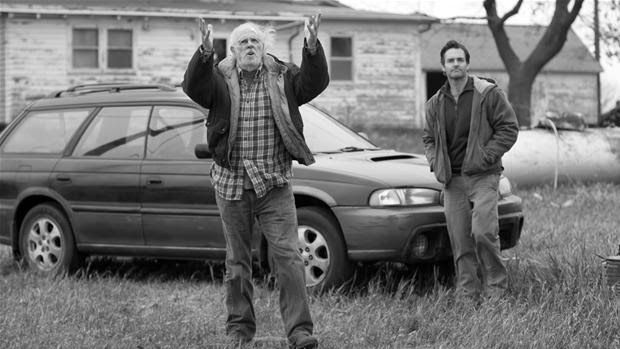
6. Nebraska


Director: Alexander Payne
Starring: Bruce Dern, Will Forte, June Squibb and Bob Odenkirk
What we said: "A(nother) road movie about old age and family: an unsentimental, monochrome variation on the likes of Don't Come Knocking and The Straight Story, bearing the unmistakable handprint of the mighty Alexander Payne." Full review.

7. Blue Jasmine


Director: Woody Allen
Starring: Cate Blanchett, Alec Baldwin, Peter Sarsgaard and Sally Hawkins
What we said: "Woody Allen’s erratic latter-day renaissance continues with this throbbingly neurotic update of A Streetcar Named Desire. Back from Europe, he proves at home in San Fran, with a central character he understands, and who feels completely human, thanks to a writer on form and an actress on fire." Full review.

8. Gravity


Director: Alfonso Cuaron
Starring: Sandra Bullock, George Clooney, Ed Harris and Orto Ignatiussen
What we said: "This film turned me into the aliens from Toy Story. 3D tears in zero gravity? 'Oooooooooooooh.'" Full review.

9. The World's End


Director: Edgar Wright
Starring: Simon Pegg, Nick Frost, Martin Freeman and Rosamund Pike
What we said: "The first half is a wonder: affecting, surprising - with a first scene just as clever as Wreck-It Ralph's similar opening salvo - and full of brilliant gags. Despite being the weakest of Wright's "Cornetto trilogy", it's a fitting wrap-up too: narratively the most inconsistent, with an unconvincing, barely escalating external threat - a legion of blue-blooded aliens - but also the most ambitious, and arguably successful of the three in terms of characterisation, emotional maturity and belly laughs." Full review.

10. The Place Beyond the Pines


Director: Derek Cianfrance
Starring: Ryan Gosling, Bradley Cooper, Eva Mendes and Anthony Pizza
What we said: "People Magazine's two sexiest men of 2011, together at last. It begins as Drive, turns into Prince of the City and then becomes a film all its own, and all the better for it: an epic tale of fathers and sons, heading inexorably for that place beyond the pines. I admire the film's sense of grandeur, its scope and scale, the energy of the action interludes, the artistry of much of the storytelling, and the intensity of the performances." Full review.

Tuesday, 10 December 2013

Lucille Ball, The Hunger Games and the strange case of Benny Wilder - Reviews #178

Plus: Wes Anderson flailing, and noir icons directing pirate capers, in the latest reviews update. Feel free to argue or agree with me below or on Twitter.


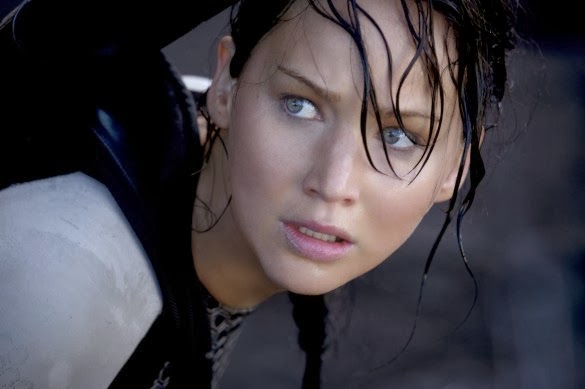
CINEMA: The Hunger Games: Catching Fire (Francis Lawrence, 2013) - There were two reasons why I wanted to see this film, and to pay 10 quid for the privilege.

The first was Jennifer Lawrence's startling expressiveness, that deftness of delivery and effortless evocation of complex emotion that makes my critical faculties exalt, and which has so far turned fair scripts into good films, and stronger ones into masterpieces. She lit up Winter's Bone and Silver Linings Playbook - two of this decade's best five, for me - and transformed the original Hunger Games from a potentially daft, trivial film built on formulaic lines and obscured by ephemeral trappings into something sporadically vital, exciting and real.

The other reason was that I'd forgotten I wasn't a 12-year-old girl.

Of course, in the event that I'd made a big, G.O.B. Bluth-like mistake, I wasn't going to suffer alone, so I dragged my mate Owen along too, violently kicking and deafeningly screaming, and a very good time was had by all (except Owen).

This sequel picks up a short while on, with Katniss (Lawrence) haunted by memories of that legendary killing contest, and caught between the man she loves (Liam Hemsworth) and the one she claims she doesn't (Josh Hutcherson, whose unlikely status as a sex symbol gives hope to those of us with jutting chins everywhere). Unfortunately, the president (evil Donald Sutherland, whose facial hair is distractingly asymmetrical) has his own reasons for wanting a hot Lawrence-Hutcherson love match, so they're forced to carry on the charade, whilst trying not to start a revolution on their national "victors' tour".

The film - and presumably the book - makes a good case for the eponymous event being "just games", but the fight against oppression being real... then decides to have some more games anyway (they're fun, aren't they?), prompting a partial retread of the first film, though with a few arbitrary threats that are in the vein of Cube (electrocution, poisonous fumes) and one that isn't (baboons).

It's paced like a drunk guy in a pub trying to walk to the toilets, the script by Full Monty creator Simon Beaufoy and Little Miss Sunshine writer Michael Arndt doesn't go anywhere terribly revelatory, and I don't think Hutcherson (phwoarr) can really act. But there's just something about it I liked - and I think again it's to be found at the feet of Lawrence. I'm not sure she's as good as we've seen her here, but it's all relative. She's still magnetically watchable, completely persuasive no matter what dubious dialogue she's being forced to recite, and able to signify more with a single look than most actresses could with a Robert Towne monologue. There really may as well be no-one else in the film.

As it happens, the cast has a couple of strong additions from last time around: Jena Malone as an axe-wielding rival whose vote-winning horniness evaporates remarkably quickly, and Philip Seymour Hoffman playing the mysterious new "games master", who may quite conceivably be a massive bastard. Of the returnees, Woody Harrelson and Stanley Tucci are both good if slightly narrowly-defined, while I found Elizabeth Banks' returning Effie extraordinarily irritating to begin with, only for this to prove one of those rare occasions (Tommy Steele in Finian's Rainbow was another) where I was won round by an avowedly eccentric turn, as it opened up to reveal something a little more human. Those lively characterisations compensate for a less compelling narrative than first time around, and the film's enduring preoccupation with fashion as a means to fight oppression, which is probably something 12-year-old girls think, but isn't anything I've seen any evidence to support.

Directorially, Francis Lawrence proves less interesting and distinctive than Gary Ross, though his Ben-Hur homage is good fun, the set-piece with the archery training is nicely edited and there's one lovely scene near the end featuring a shaft of daylight and an almost motionless (Jennifer) Lawrence. That passage made me wonder why the rest of the film often felt so functional, rather than trying to grab us by the throat.

It's no Empire Strikes Back, no Godfather: Part II, no Aliens, but it's no Cloudy 2 either. Beyond the "ooh, I know, how about this?" plotting, the "I'm not sure this bit's aimed at me" window-dressing, and the fact that we don't end up much further along than when we went in, I liked it. Most of that's down to Lawrence. I doubt there's a filmgoer out there not in thrall to her ability but, if there is, the final few frames of the film should win them around: leading to one of those abrupt endings that makes you go: "Hey wait, that can't be the... actually, yeah, OK."

I am a 29-year-old man. (2.5)

***


The Big Street (Irving Reis, 1942) - An often exceptional Damon Runyon story, in his familiar style and filled with his usual affable crooks, about two inhabitants of New York’s Losers’ Street: a selfish showgirl (Lucille Ball) consigned to a wheelchair by her violent ex-boyfriend, and the meek busboy (Henry Fonda) who appoints himself her protector, idolising her beyond all reason and continuing to stick by her even when everyone else gives up.

The production and direction is disappointingly bland – too cheap and yet not cheap enough – but the dialogue and characterisation is utterly remarkable, with Ball and Fonda both in spellbinding form, each proving amusing, heartbreaking and unfailingly convincing, cast boldly against type in doggedly unconventional parts.

Fonda played dupes and mugs in plenty of films during this period – The Lady Eve, Rings on Her Fingers, The Magnificent Dope – but never a character as innocent, stoical nor blindly loyal as Little Pinks, allying the naivete of Sturges’ “Hoppsy” to something like the high-minded view of humanity espoused by Tom Joad. It’s a really beautiful performance.

On a more trivial note, fans of his singular diction will also enjoy hearing Hank say “huh-wheeels” and “ve-heercle” in a single sentence, and Ball gets a cracking new love song to sing, Who Knows. There’s fun support too from Eugene Pallette (as a competitive eater), Sam Levene and Citizen Kane alumni Agnes Moorehead and Ray Collins.

The film isn’t perfect – it sags a little at the beginning of the final third, taking Ball off screen for too long, and I’m in two minds about the ending – but, at its best, its blending of the seedy, the funny and the warmly humane reminds me of my favourite movie, Remember the Night, and I can’t think of any higher praise than that. (3.5)

***


The Front Page (Billy Wilder, 1974) - An unnecessary but enjoyable third screen version of former journalists Ben Hecht and Charles MacArthur's immortal 1929 play, The Front Page, filmed in '31 under that name, and by Howard Hawks nine years later as His Girl Friday, one of the fastest, funniest comedies ever made, with an added sexual charge due to its ingenious gender swap.

This version of the tale, which as in the source sees unscrupulous Chicago editor Walter Burns (Walter Matthau) trying to persuade ace reporter Hildy Johnson (Jack Lemmon) to drop his fiancee (Susan Sarandon), and cover a hot murder case, is as much a homage to the play and the era than it is a film in its own right. There are references to All Quiet on the Western Front (a year early), Jimmy Cagney (at least two years early), Ruth Snyder, Lindbergh and the rest, and the film looks at least as '30s as the first version - aside from a curious softness in the cinematography, the light fairly streaming off Lemmon's white boater. That jaunty ragtime theme tune is one hell of an earworm too.

Wilder's main innovations are the typical ones when adapting material from a more censorious era: swear words and bad taste gags, this time about paedophilia, prostitution and diabetes. He's also on curiously juvenile form, with a running gag about a cub reporter wetting himself, and a bafflingly unfunny, sped-up sequence concerning a runaway hospital bed that seems to suggest an oft-overlooked influence on his work from Benny Hill.

Wilder and co-writer I. A. L. Diamond put Walter and Hildy behind bars near the close, which isn't in the original work and rather slows the momentum, while letting the mayor get away with his nefarious doings: a perhaps unsatisfying but nevertheless smartly cynical touch rather typical of the director. The only entirely new sequence I found amusing and worthwhile was Burns posing as a parole officer to tell Peggy that Hildy was a convicted flasher, though it strays from the blackly comic to the unpleasant towards the end. Wilder's only other additions of note are a nice gag about the operetta The Student Prince (adapted into a film by his hero, Ernst Lubitsch, in 1927) and having the central murderer taking rather too literally the suggestion that he pose in a manner befitting a "caged animal".

The film's basic material remains amazing, though - its cynical reporters and crooked politicos enduringly fascinating, as much for Hecht's murky morality as his blistering dialogue - and the acting's good. When Lemmon does his "yadda yadda" scatting, I still want to punch him in the face, but he's very charismatic and adept at nailing Hildy's curious blend of the hard-bitten and the compassionate, as his character shoulders the burden of the story in the way he doesn't in the other versions. Matthau isn't anywhere near as good as he was elsewhere in the decade (this was shortly after that glorious one-two of Charley Varrick and Pelham One Two Three), but he's decent enough, there are interesting spins on murderer Earl Williams and his "girlfriend" Molly Malloy from Austin Pendleton and Carol Burnett, while Vincent Gardenia proves funny if sometimes a little overripe as "Honest" Pete, the sheriff. Veterans of '40s comedy also crop up, with David Wayne as Bensinger - now unmistakably a homosexual - and the great Allen Jenkins as the wizened telegrapher in the final scene.

There's no real reason for the film to exist, and Wilder's abilities were clearly flagging - he seemed somewhat uncertain how to adapt to a permissive industry where he could say whatever he wanted as a writer - but it's good fun and, in an odd way, an interesting, perhaps unwitting experiment in the Far from Heaven vein: taking a near-legendary template and performing it in a largely faithful style while using the new moral code to try to inject it with a greater realism. Well, apart from the bit with the hospital bed. It's ultimately the least of the three versions, but worth it regardless. (3)

See also: My favourite actor, Lee Tracy, originated the role of Hildy on stage. I wrote this piece about him for EatSleepLiveFilm.

***


*A FEW MINOR SPOILERS*
The Crimson Pirate (Robert Siodmak, 1952)
- Or 'The Crimson Pirate in an Adventure with a Scientist', this film's peculiar third act presumably the inspiration for the Gideon Defoe novel brought so wonderfully to the screen by Aardman. But I'm getting ahead of myself.

Really this fondly remembered flick is a mix of Doug Fairbanks' 1924 cutlass-clasping classic, The Black Pirate, and the 1950 actioner The Flame and the Arrow, marrying the story of a Seven-Seas-scourge who turns noble for the sake of a woman, to the kind of colourful, stunt-heavy, circus-flavoured fun in which Burt Lancaster was briefly typecast. But unlike the sumptuous, seductive Fairbanks film, this one is aimed squarely at a Saturday morning kids' audience. (By a quirk of studio workings, both this and The Flame and the Arrow were directed by men more commonly associated with film noir: Jacques Tourneur (Out of the Past) and Robert Siodmak (The Killers).)

The film is basically and solidly entertaining without often exploding into life the way it might. The one thing you really need in a pirate movie is ingenuity: think of Depp hopping onto the second ship or Fairbanks riding down the main sail on his sword. There are brief flashes here, but only really in the final reel, as Lancaster slices a rope to fly skywards and his sidekick Nick Cravat takes out a bunch of soldiers with a swinging mast. The rest of the film is consistently enjoyable, but not perhaps escapist or imaginative in the way it should be. It feels somewhat tied down: by its obvious, overly serious plotting, by Lancaster's irritatingly simplistic acting, and by a strange insistence on subverting its trumpeted credentials by wandering ashore or just getting a bit distracted.

Don't get me wrong: it's a solid, eventful watch and it throws just about everything into the mix - from a mutiny to a submarine, cross-dressing to nitroglycerine - while there's happiness to be found in the stars' stuntwork: the massive, energetic, hilariously twinkle-toed Lancaster and beardy, well-built little Cravat leaping, rolling and tumbling (not a sex thing). I'm just not sure it's quite the unassailable genre highpoint it might seem when viewed through a haze of nostalgia. In fact, I'm pretty sure it isn't. (Sorry for being such a misery.) (3)

***


*SPOILERS*
SHORT: Castello Cavalcanti (Wes Anderson, 2013)
- I'll defend Wes Anderson pretty much to the death. Aside from the baffling misfire that was smugness's Fantastic Mr Fox, I love every single one of his magnificent, micro-consistent movies. The features, that is. I'm not sure he's very good at shorts. The Moonrise Kingdom animations were transcendent, but quite how much of a hand he had in those, I'm not sure. Hotel Chevalier, the brief precursor to The Darjeeling Limited, was faintly affecting, but pretty pretentious and seriously slight. Castello Cavalcanti, bankrolled by Prada, is so minor it's barely even there.

The tranquility of an Italian square (pan shot, pan shot, yes, it all looks rather pretty) is rudely interrupted by rally driver Jason Schwartzman, who writes off his car against a wall. He chats briefly - in the most painfully mannered way - to some folks who turn out to be his ancestors, has a fun phone call with his mechanic, then talks to a girl. The end. In the right role, I like Schwartzman a great deal: in Rushmore, in Huckabees, in much of Bored to Death. Outside of those limitations (Slackers, Shopgirl, Bored to Death Season 3, here), he can often appear to have forgotten what acting is. He probably isn't helped by a film that has nothing to say except "shop at Prada". (1.5)

***

Thanks for reading.
Sunday, 8 December 2013

John Ford, Romeo and Juliet, and a bawdy grandad - Reviews #177

Plus: Ben Hecht, Maggie Smith and a damp squib of a kung fu film.


Romeo and Juliet (George Cukor, 1936) - This is an astonishingly good translation of the Shakespeare play, devised and demanded by the brilliant, doomed producer Irving Thalberg, but only greenlit in the wake of Warner Bros' massively successful Midsummer Night's Dream, staged by Max Reinhardt. Thalberg was a prodigious, literary-minded man with an ailing body but a will of steel, who had escaped into books during a teenage year committed to his bed, and in the final years before his death at 37 brought to the screen such ambitious projects as The Good Earth and Marie Antoinette. His fingerprints are all over the best moments of this extravagantly mounted movie and, as much as I like elements of Luhrmann's version, this is one of the few film adaptations of Shakespeare that renders his work accessible to a modern audience without resorting to gimmickry or novelty.

Its masterstroke - and bizarrely its most derided element - lies in the casting of the titular lovers. At 36, Norma Shearer was twice as old as Juliet (who's supposed to be 14), while the 43-year-old Leslie Howard is at least 20 years older than the typical present-day Romeo. In the grand scheme of things, though, it doesn't really matter. Not only can they each pass for a decade younger - sprightly and sensitively lit as they are - but in order for the play to work, the flowering of first love needs only to convince, not to be between teenagers. It does that effortlessly, partly because both the leads are absolutely sensational.

As a rule, I'm far more a fan of Howard's humorous work than his dramatic parts. In films like Pygmalion and It's Love I'm After he's a comic whirlwind, a force to be reckoned with, spewing epithets and brilliant bile, seizing the material and contorting it to devastating ends. In his dramatic parts, he tends to be a bit of a wet blanket. But whereas his speechifying introspection in The Petrified Forest - that risible philosophical gangster movie - comes across as unbearably smug and irritating, put him in tights, in love and in the right setting, and such characterisation can work wonders. Added to which, he's simply a lot better here, his heartbreaking portrayal of the tragic lover equipped with a quicksilver air and a latent dynamism to go with that impossibly romantic posturing.

Shearer was married to Thalberg, and the likes of Joan Crawford spend a good deal of their time downplaying her talent, saying she was cross-eyed (she was, but it's very charming) and that she only got ahead because she was "sleeping with the boss". Considering that Crawford was not only about a tenth of the actress that Shearer was, but was actually sleeping with most of her bosses, that seems a bit rich. At her best, Shearer was an absolutely exceptional performer: a great actress, a muse, a centrepiece of truly great romances like The Student Prince in Old Heidelberg, Lubitsch's immortal silent. Certainly she achieved less after Thalberg's death - her final film, We Were Dancing, really is a bit of a clunker - and clearly he tailored films to her talents, but what talents they were. She's a magnificent Juliet: ethereal, impulsive and matchlessly tender, grasped by one emotion and then the next, navigating a complex part with a skill, intelligence and emotional sensitivity that takes the breath away. Yes she's 36, but - without wanting to sound too much like a pompous idiot (it is hard for me) - is that honestly the level at which we're going to judge art? "She's a bit old"?

It's that stunning central coupling, perfect together or alone, their masterful handling of the dialogue rendering it utterly modern and entirely unforgettable, that gives the film its grip, its hold, its haunting power, and makes up for the things the movie does wrong, several of which are slightly baffling. Edna May Oliver, perhaps the least talented person in '30s America, is typically one-note as Juliet's nurse, while future John Ford stock company alumnus Andy Devine provides atrocious comic relief in a beefed-up role as her assistant. And, then, of course, there are Shakespeare's own shortcomings. He was one hell of a writer - of course he was - but that doesn't mean you can't quibble with plotting that includes a potion replicating the symptoms of death, a father figure who can't really be arsed to ensure Romeo's safety, and an extremely sudden, remarkably convenient outbreak of pestilence.

There's also bloody Mercutio, of course, arguably the most annoying character in theatre, here brought to life by the 54-year-old John Barrymore (OK, Thalberg, now you really are taking the piss), the legendary thespian who transformed the art of Shakespeare with his stage versions of Richard III and Hamlet, but here is a mere bloated, pointing shadow of his former self, his energy and genius traded for a raised eyebrow, a finger raised to the sky and, at most, two fleeting moments of resonance. In support, it's only Basil Rathbone as a stuck-up Tybalt and Reginald Denny's Benvolio who impress.

It's a film with dips, then: troughs filled with broad comedy and lazy hamming. But boy are those peaks mighty: Cukor and William H. Daniels' often masterful compositions - Romeo lit silver as he plays to the balcony, Juliet "dead" beneath a transparent veil - and Shakespeare's glorious words and intensely moving scenarios performed to perfection by two extraordinary actors. (3.5)

***


It’s a Wonderful World (W. S. Van Dyke II, 1939) - "I swear by my eyes." Claudette Colbert's Hechtian vow is right up there with "I close the iron door on you" (Twentieth Century), "I thought you thought so" (Libeled Lady) and "Oh Dook" (I Love You Again) as one of those Golden Age phrases that instantly transports me to a happier place. And every time she says it, it gets slightly funnier. This daft, fast-paced screwball thriller isn't terribly deep and isn't terribly polished, hopping from one comic scenario to the next with no thought other than where the next laugh might be coming from, but it's a film I happily return to every couple of years, always to discover that, yes, it still rocks. Hard. And - due to my current commuting - that I am sitting on a train, laughing out loud at my laptop like a weirdo.

Jimmy Stewart is a cynical, woman-hating private detective (in the film) who goes on the lam to try to save his playboy employer from the electric chair, and so scoop 100 Gs. Claudette Colbert is poetess and potentially incriminating witness Edwina Corday, who first finds herself his prisoner, then decides to never leave him alone, since she totally fancies him. It's one of the few variations on It Happened One Night that doesn't make me want to sue the writers out of sheer annoyance. At one point Stewart punches Colbert in the face, at another he does a blackface routine, but somehow it's all kind of fine, because the film is so light, charming and hysterically funny, thanks to Hecht's dialogue, the transcendent performances of the leads, and supporting masterclasses from Guy Kibbee and Nat Pendleton - the latter forming one of cinema's great "dumb cop" double acts with Edgar Kennedy.

Most of Hecht's favourite things are in here - tough-but-secretly-sentimental heroes, cynical reporters, smart one-liners ("You couldn't find that guy if he was riding in a float"), absurd catchphrases, dizzy dames and murder - and they're mostly my favourite things too (the only one I'm not as keen on is murder), so that's cool. It's a Wonderful World isn't quite top-tier screwball, but it's close enough: endlessly quotable escapism, and another '30s comedy to be filed under "instant joy". (3.5)

***


Young Cassidy (John Ford, 1965) - I was surprised by how strong Young Cassidy was: a good movie that does a few things wrong, rather than a bad one that does a few things right. It's oddly billed, as "a John Ford film... directed by Jack Cardiff", as the great American director was on his penultimate legs and had to bail after two weeks of shooting, and that's about right: its themes and its characters are Fordian, its stylistics are for the most part pure Cardiff, the whole thing shot in the same way as Sons and Lovers, merely in colour. The exceptions, perhaps rather are obviously, are the pub brawl (recalling She Wore a Yellow Ribbon, and most of Ford's others) and a crucial death scene, both of which were filmed by Ford.

It's all based on a memoir by the great Irish playwright Seán O'Casey, climaxing with the first night of his breakthrough work - The Plough and the Stars - which was filmed by Ford in 1936. Australian actor Rod Taylor is O'Casey, Johnny Cassidy by birth, a drunken, brawling working man with an artist's sensitivity, or "the most John Ford character ever", in shorthand. There's no narrative drive until the last 15 minutes, but what there is is a succession of vignettes, many of them interesting and powerful, as we move from a beautiful credits sequence, through O'Casey's encounters with poverty, free-spirited women and Irish rebels, to the flowering of his art and the meeting of the love of his life, a meek, virginal librarian played with a beguiling sincerity by Maggie Smith.

The film is far more effective from an emotional perspective than a historical one. O'Casey cheerily laments at one point that the Abbey Theatre feels he can never strike the right balance between plot and character. Neither can the film. Its feelings are real, but its storytelling is sometimes ham-fisted, particularly in the first half. The Easter Rising is effectively evoked, but the street battle that precedes it is poorly staged, and the grinding poverty of O'Casey's family is marked only by death, which intrudes guttingly but too suddenly. There's also the age-old problem with films about writers: how do you squeeze the literature into your story? At least here the whole thing is an O'Casey work, but there's still too little of his language, his themes, the specifics of his worldview: the things we're told about but rarely made privy to.

From a human angle, though, it works. I've seen Taylor in eight previous films (and have always wanted to see The Picture Show Man), without him ever making much of an impression beyond being a man with a broad hairy chest. I suppose he did a fair job with a weak part in 36 Hours, but his performance here is on a whole other level. There are three crucial parts to his characterisation: his macho energy, his massive screen presence - completely dominating the frame - and his total immersion in the character. It's superb stuff, bringing to vivid and convincing life a complex, contradictory and crucial figure.

Smith is even better. I always enjoy her work, but up until the late '80s it seemed like she still had something to prove, taking on complex, varied roles and doing flatly incredible things with them. On paper, her character may seem like a younger version of her Judith Hearne, but on celluloid she makes these shy, nervous and religious women utterly singular creations. The scenes between Taylor and Smith could have tipped over variously into comedy, farce or melodrama, but instead they feel entirely genuine, attaining a complex, multi-layered truth central - and perhaps largely responsible - for the film's claims to some sort of greatness.

By contrast, the supporting cast is studded with familiar names, but suffers from '60s-itis, stellar players piled into the picture to lend some glamour, then given little to do: Michael Redgrave, Dame Edith Evans, Flora Robson... At least Julie Christie's chapter is worth it: she's magnetic as a kept woman, and her sexually-charged meetings with O'Casey form an effective counterpoint to his relationship with Smith. Speaking of '60s-itis, veteran Carol Reed collaborator Ted Scaife also throws in a few of those crappy zoom-ins and zoom-outs that can provoke no possible response aside from: "Oh yes, now I remember, this is a film and it was made in the 1960s." With Cardiff shooting rather than directing, I wonder if we might have got something a little more artful and imaginative, something closer to what Freddie Young did on Ryan's Daughter.

As a Ford fan(cier), I also can't help but imagine what he would have done with this material. And, to be honest, it isn't hard to imagine. He was a masterful editor of scripts and would surely have zoned in more closely on the points of conflict. He was a great director of action and would have made the most of the two big set-pieces. He was a lover of Ireland who would have made the country a central character, as it was in The Quiet Man. He was a shameless sentimentalist who would have beefed up and milked the film's tragic elements. And he was an unapologetic whitewasher and lover of strong women, who would perhaps have taken the edge off Taylor's performance, and the fragility out of Smith's, giving us a less resonant and significant central pairing.

As it is, Young Cassidy is "a John Ford film... directed by Jack Cardiff", a good but not great movie without the urgency of its hero or the mark of the master, but with an abundance of vim, vigour and actorly poetry. (3)

***


*A FEW SPOILERS*
The Unsuspected (Michael Curtiz, 1947)
- This sort of nasty, noirish melodrama was all the rage in the mid-'40s, and The Unsuspected owes more than a small debt to the likes of The Spiral Staircase, Laura and Undercurrent.

The mellifluously-voiced Claude Rains is Victor Grandison, an outwardly affable broadcaster whose interest in murder goes well beyond a ghoulish weekly radio show examining notorious cases. After his saintly, virginal and absolutely loaded ward (Joan Caulfield) dies in an explosion, and his secretary is murdered - the police call it suicide - his house is invaded by a smug, angry guy called Steve (Ted "Michael" North), who wants some answers, and claims to be Caulfield's husband. Further complicating matters are Grandison's malevolent, sexually voracious niece (Audrey Totter), her callow, gloomy and drunken husband (Hurd Hatfield, MGM's Dorian Gray), and Caulfield, whose bland, nervy Matilda isn't very dead after all.

It isn't particularly tense or at all mysterious, and there are more than a few loose ends, but it is an extraordinarily good-looking and stylish film, courtesy of Curtiz - who's simply oozing confidence - and the magnificent cinematographer Woody Bredell. There are touches here that will linger long after the rather erratic story has faded from memory: a murderer's face reflected upside down on a glass table, North pumping Totter for information (no smirking) - observed through net curtains and in full-length - and a Murder My Sweet-ish shot from the PoV of the addled, ODing Caulfield.

There are some good performances too. Caulfield, North and Hatfield are uninteresting, and William H. O'Brien is distractingly awful as the house butler, but, as you'd expect, Rains effectively inhabits the skin of the amoral, greedy Grandison - obsessed with playing God - Constance Bennett is ace in a small part as his Eve Arden-esque secretary, and character comic Fred Clark finds the sweet spot that he sometimes passed by through overplaying.

None of them can hold a candle to Totter, though, who strides off with the film as a bitter, cynical and extremely horny socialite too selfish to report a murder, and too distracted by North to stay faithful to her husband. Totter wasn't as integral to The Genre That Didn't Know Its Own Name as Gloria Grahame - who basically was film noir (sorry, Scorsese) - but in her own way she was also crucially important (and just as talented), appearing in everything from The Postman Always Rings Twice to the PoV noir, Lady in the Lake, High Wall and The Set-Up. She's sensational here, giving a well-directed but somewhat ponderous, flawed movie a proper shot in the arm. (3)

***


The Private Life of Henry VIII (Alexander Korda, 1933) - This is regarded as the grandaddy of British period dramas, but it's a bawdy, annoying sort of grandad who has no concept of how to pace a movie, and keeps pulling silly faces.

Rex Harrison memorably opined of Charles Laughton: "Everyone said he was a genius, I just thought he was a bit of a show-off." I think Laughton would have trounced Harrison in a talent-off, but this early performance is probably the sort of thing he had in mind, a mannered, slightly ridiculous turn full of stagy quirks that keeps the audience at arm's length, never letting you forget that you're watching someone acting. And acting rather badly at that.

I like the set piece about "The King's Guard!" and Laughton's yelling during the climactic council meeting - indeed, there are flashes of quality in both his performance and the film as a whole - but it's by and large a frustratingly empty, unfunny, superficial affair, in which triviality and tedium triumph, and supporting characters are reduced to a single characteristic, wasting a potentially astonishing ensemble that includes Robert Donat, Merle Oberon, Elsa Lanchester, Wendy Barrie, Binnie Barnes, Lady Tree, John Loder, Miles Mander and Claude Allister. (2)

***


Tai-Chi Master (Yuen Woo-Ping, 1993) - A bloody, ultimately pretty tiresome wire-fu wuxia film from Yuen Woo-Ping, nowhere near as good as Iron Monkey or Wing Chun – the two films he made either side – and notable only as the sole teaming of martial arts icons Jet Li and Michelle Yeoh... at least until The Mummy: Tomb of the Dragon Emperor (I haven’t seen it, is it any good?).

Leaning on a story as old as the hills (or at least 1934’s Manhattan Melodrama), the film follows childhood friends who ends up on opposite sides of the law, though in this instance it’s Chin Sui Ho’s amoral soldier who’s in the wrong – propping up a despicable regime – while the fugitive Li demands our sympathy, getting involved with a group of rebels defending some put-upon townsfolk, and boasting among their number the high-kicking Yeoh (have I mentioned my crush on Michelle Yeoh? Yes I have).

The comedy is wretched, even making the usual allowances for cross-cultural differences, incorporating an extended set-piece in which we’re encouraged to laugh at a man having a nervous breakdown (the film came out in 1993, but its understanding of mental illness is from 1893), the plotting is clichéd and largely uninvolving, and the acting is mediocre at best, though there are at least a few decent fight scenes.

I say “a few” as, though the film is action-heavy, its basic weakness calls to mind Fred Astaire’s objection to Busby Berkeley-style films: “either the camera dances or I do”. Not only does Woo-Ping frequently wander into the realm of the cartoonishly incredible, but his flights of fancy here bear so little relation to reality that he can only achieve them by throwing together mere fragments of film – a flying foot here, a barrel there, a disappearing victim way over there – all meant to represent some outlandish feat, an approach that has an altogether alienating effect, while failing dismally to showcase the gobsmacking gifts of Li and Yeoh.

It’s hard to nullify them entirely, though, and the stars do shine in fits and starts: when they fight side by side – if not quite in the buddy movie style you might like – it just about makes it worth sitting through the rest. (2)

***

... and I reviewed this one for MovieMail:


To Be or Not to Be (Ernst Lubitsch, 1942) - It starts, of course, with Hitler. August 1939, and he is alone in Warsaw, bringing the streets to a standstill as he peruses the window of a delicatessen. Except it's not him. This is a film full of imposters and this Führer is our first: a stage actor (Tom Dugan) merely trying to prove a point.

That memorable, rug-tugging gag merely commences a legendary black comedy, the darkest, most ambitious movie to which Ernst Lubitsch ever turned his touch. It has a catchphrase about concentration camps, a palpable sense of fear and foreboding, and such gallows one-liners as Nazi colonel Sig Ruman's observation that what stage star Joseph Tura did to Shakespeare, 'we are now doing to Poland'. And yet it never strays into bad taste, thanks to the deftness of Lubitsch's handling, the strength of his righteous fury, and a simply pitch-perfect ensemble.

Jack Benny is Tura, an actor in Warsaw who comes complete with a massive ego and an unfaithful wife (Carole Lombard), also a renowned star. Their quarrelling, concerning a handsome young flyer (Robert Stack), is rudely interrupted by the Nazis, and the arrival in Warsaw of a double-agent who plans to smash the resistance. Cue the actors putting their skills to good use in the real world, with Benny posing as the colonel and the spy, Dugan reprising his Hitler, and Felix Bressart's spear-carrier finally getting to play Shylock.

Lubitsch was a magnificent director of actors and here he draws career-best performances from just about everyone involved: radio comic Benny, whose double-takes are a thing of sheer beauty, screwball titan Lombard - who tragically died prior to the film's release - and a supporting ensemble that includes such familiar faces as Bressart, Dugan, Charles Halton and Sig Ruman, who steals the show as the garrulous, idiotic 'Concentration Camp Ehrhardt'.

The film's stakes are high, and yet it can frequently break off into absurdity, poke gentle fun at actorly pretension, or knock you sideways with a deadpan gag. Like Benny wandering into a nest of Nazis who have left him to stew with a corpse. "I tried to open up a conversation with your friend in there," he says calmly, "but he seems to be dead." (4)

See also: This is one of my three reviews for MovieMail this month. The others are David Copperfield and Wings.

***

Thanks for reading.