Showing posts with label Eric Rohmer. Show all posts

Friday, 9 September 2016

Caroline Proust, My Night at Maud's and the birth of satire − Reviews #240

A round-up of some things I never got around to sharing, plus Season 2 of Spiral.


*SOME SPOILERS*
My Night at Maud’s (Eric Rohmer, 1969)
− I’ve become a huge Eric Rohmer fan over the past few years. The older I get, and the more complex my idea of life becomes, the more I appreciate his work: full of eroticism, irony and paradox, where the sun only comes out to cast darker shadows. There’s no denying, though, that many of his films follow a certain formula: not just in their plots (his six Moral Tales, made between 1962 and ’72, are all based on F. W. Murnau’s expressionist silent romance, Sunrise), but also in the form and structure he favours. My Night at Maud’s isn’t his best movie, but it’s perhaps his most Rohmerish, almost to the point of exaggeration: it begins slowly, turns tiringly talky and then whacks you in the solar plexus with a coda that’s rooted in the philosophical groundwork he’s been laying, while trading the verbose, probing philosophy for poignant, nail-on-the-head specificity. Stop someone halfway through a Rohmer film, and they might tell you they’re bored. Ask them what they think at the finish, and they’ll tell you they’re floored.

My Night at Maud’s – his most famous and popular film, and the third of his Moral Tales (though released after part four, La collectionneuse) – reminds me a bit of Melville’s superb and atypical Leon Morin, Priest, in which a sexually frustrated war widow becomes infatuated with a kind, cerebral and undeniably hot man of the cloth (Jean-Paul Belmondo). This too is an exploration of sex and spirituality, though not of celibacy, as a practical but serious Catholic (Jean-Louis Trintignant), not entirely unlike Rohmer himself, is caught between two women: one whom he sees as pure and innocent – blonde churchgoer Françoise (Marie-Christine Barrault, the niece of Jean-Pierre, star of the greatest French film of all, Les enfants du paradis) – and the other whom he dismisses as too slutty and too atheist, Maud (Françoise Fabian).

The film’s opening and closing chapters are dazzlingly presented, but the middle-section – the night at Maud’s – is almost wilfully uncinematic in conventional terms, consistingly largely of Trintignant and Fabian in a room, chatting circularly about faith and attraction. The presentation, aside from a single cut-away to a snowy exterior, is drab and restricted, but it forces us to focus on the nuances, zoning in on the basic incongruity of the situation, as Trintignant’s Jean-Louis mounts an aggressively calm, contextualised campaign of verbal self-justification, as his passions are stoked by this woman who seems to represent everything he purports to detest, and yet on some level is also everything he wants: and that’s not just a sexual level, he finds her invigorating and fascinating, a philosophical adversary and yet perhaps a spiritual twin. His face tells the story, as his voice lies. That disconnect between a character’s actual desires and what they will admit, even to themselves – that gaping chasm of self-awareness – is what powers these films.

I’m not a big fan of Trintignant generally, but here he’s so deep in his quiet, serious but impassioned personification that you can’t imagine what this film would be without him. Barrault is used more as a symbol than as an actress, but works brilliantly as an avatar for Rohmer and Jean-Louis’s collision of humanism and idealism, while Fabian floods the screen with a desperate, exhausted pragmatism that inspires an endless empathy. Sometimes in its central sequence the film does feel too heavily academicised for me, becoming more a discussion of abstract ideas than of these characters’ burning and overwhelming preoccupations, but it’s littered with fascinating insights, and when it turns from mere talk to action and revelation it’s a genuinely explosive film, explosive in the way that only Rohmer’s films are, as a character quietly implodes and it blows us apart. The ending here, picking up five years after the story proper, is one of his biggest departures, biggest gambles and most extraordinary successes, taking us to the beach and flipping the whole film upside down. (3.5)

See also: I've reviewed the first three Moral Tales already: The Bakery Girl of Monceau, Suzanne's Career and The Collector.

***


Robert Evans with convicted rapist Roman Polanski.

The Kid Stays in the Picture (Nanette Burstein and Brett Morgen, 2002) - The charming former Paramount honcho Robert Evans tells us repeatedly how handsome he is in this classic ‘unreliable narrator’ doc (though he is admittedly quite handsome), which allows him to spout forth on his life and work, and take credit for just about everything, though particularly The Godfather.

There’s some great footage, especially at the beginning when we see his three movie appearances as a young man – which start well and end with him giving arguably the most ridiculous performance of all time – and later when he’s selling the moneymen on his most beloved project (himself), but the bulk of the picture is just artfully animated photos and some film of his house, accompanied by Evans spinning tales in voiceover: his fortuitous rise to prominence, his marriage to Ali McGraw, and his coke-fuelled descent into redundancy and worse. It’s all rather shallow, but also colourful, conspiratorial and highly entertaining: a fast-moving Hollywood saga bringing to life the highlights of his memoir, also called The Kid Stays in the Picture.

That title, incidentally, is what Evans claims legendary Fox producer Daryll F. Zanuck yelled through a bullhorn on the set of The Sun Also Rises, a Hemingway adaptation from which the author – and almost everyone else connected with the film – attempted to sack him. Director Brett Morgen went on to make a functional but enjoyable Rolling Stones doc, Crossfire Hurricane, before compiling that bloody awful Kurt Cobain cinematic biography, Montage of Heck. (3)

***

TV


The Thick of It (Series 4)
− The last, and least, of the definitive modern political comedy's four series traverses mostly old ground, though it's still very funny, and extremely prescient in its depiction of the crumbling Labour Party. Its main flaw, aside from familiarity, is that the character comics playing the Lib Dem leader and his special advisor are too broad and mannered, the incisive material rarely emerging unscathed from their superficial sitcom delivery. Still, the first instalment − in which outdated 'one nation' Tory Peter Mannion (Roger Allam) attempts to launch a tech initiative − is a classic, and the double-length penultimate episode concerning a public inquiry is ambitious, cleverly conceived and extremely impressive. (3)

***


Beyond the Fringe (1964) − It’d be convenient if Beyond the Fringe no longer existed – most of it, anyway. This astonishingly popular comic revue was so important and so influential, single-handedly inspiring the British satire boom of the 1960s, and yet long stretches of it are virtually unwatchable today.

The best routines are all Peter Cook’s, and the best of those are as funny as anything he ever did: the ‘Great Train Robbery’ sketch, with its overly literal investigating officer, the ‘Perkins’ section of The Aftermyth of War – in which Jonathan Miller’s private is asked to make an entirely futile sacrifice – the surrealistic monologue by a regretful miner, ‘The End Is Nigh’, which closes the show, and the famous ‘One Leg Too Few’ (with Dudley Moore as a manically cheery, one-legged actor auditioning for the role of Tarzan), which was added midway through the run.

The rest of the two-hour show ranges largely from the pale to the painful: Miller mugging, Moore playing interminable ‘comic’ piano pieces, and Alan Bennett apparently ill at ease with a succession of sketches that require him to play posh idiots; of the non-Cook pieces, only his T. E. Lawrence skit stands the test of time, as Bennett recalls his brief friendship with the famed adventurer, which begins with the narrator accidentally going to the wrong house where he mistakes a schoolboy for the aged Lawrence. (2.5)

***


Misfits (Series 3, 2011) – This third series is a big step down from the first two, struggling to know what to do with the metaphysical relationship between Simon (Iwan Rheon) and Alisha (Antonia Thomas) developed so stunningly last time out, until a dazzling conclusion to the final episode, and offering little in the way of compelling through-lines. Instead it serves up a succession of self-contained outings that are often involving and amusing, but sometimes just a little desperate (an episode about Nazis has an astonishingly good prologue but then goes awry, with little to say and a completely nonsensical treatment of time-travel; and another in which Simon is manipulated by a comic book artist begins to unpick the fabric of the programme). With Nathan – the funniest character in the show – now written out, the bulk of the comedic burden falls on newcomer Rudy (Joseph Gilgun). While it takes an episode to get used to his big performance, he is extremely funny, but he isn’t properly integrated into the ensemble: often he’s grandstanding brilliantly and the others are simply forced to pull faces in the background, an awkward juxtaposition that stops you from becoming immersed in the action. The third series is a pleasant enough time-filler, but it’s not exceptional as the first two series were, at least until it wraps up Simon’s story in perfect, mythmaking fashion. (3)

***


Spiral (Season 2, 2008) – This second series retools the original template to perfection: as sexycop Laure Berthaud and her team launch a season-long war on dealers, the incidental, self-contained storylines are stripped down to the bare essentials, the purpose of them now to pad out an hour’s TV but to shine a light into the corners of its characters. Original, involving, literate, confrontational and, in its denouement, almost unwatchably tense, it offers a gallery of new characters – including brilliant undercover agent Samy – revels in the multi-layered, multi-faceted complexity of its others, and turns an interesting show into one that’s simply unmissable. I start on the next series tonight. (4)

***

Thanks for reading.

Thursday, 21 July 2016

Jane Wyman, A Confederacy of Dunces, and the lost review - Reviews #234

I had a week off, so I have quite a few reviews to put up. Here's the first batch:

BOOKS


A Confederacy of Dunces by John Kennedy Toole (1980)
- This near-mythic helping of acrid Southern Gothic is at times almost wilfully offputting, as its verbose, over-educated and oversized hero Ignatius J. Reilly gorges himself on rank hot dogs, unveils yellowing, stained bed sheets during a workers' revolt, or updates us for the thousandth time about the status of his "valve" - the God-given contraption in his stomach regulating his chronic flatulence. But it's also hypnotically original, full of virtuosic passages of bilious wit, as Ignatius and a gallery of hysterically funny supporting characters go almost aimlessly about their daily business in a vividly-realised nightmare of New Orleans, before you realise that Toole has been shuffling everyone expertly into position for a quite brilliant finale. Jones, the sarcastic, jive-talking black "vagran" who takes an interest in Reilly, would rightly walk off with just about any other book, but this isn't any other book: often revolting and sometimes repetitive, it's also a unique artistic vision, with a mesmerising anti-hero, that has to be experienced to be believed. (3.5)

***


Little Children by Tom Perrotta (2004) - A modern masterpiece that entirely transcends its suburban trappings, becoming universal through its specificity, because its characters aren't broad and aren't archetypes, no matter how much they may seem to be at first. From a jock-turned-stay-at-home dad to a feminist Madame Bovary apologist and a sarcastic child molester, this portrait of overgrown children, with little children either in tow or in their eyeline, gives every character their due, as each is crushed or raised high by their flaws and failings. One of Perrotta's gifts is his compassion for characters that you don't really like, and another is his ability to shift seamlessly from sarcasm to sentiment, and both are in ample evidence here. He writes with such pace and grace, and such alarming, beguiling honesty, that he changes the way you see the world. (4)

***

TV


Misfits: Season 1
Misfits: Season 2
Misfits: Xmas Special

An antidote to morality plays, Marvel movies and just about everything else, this high-concept comedy-drama about young offenders getting superpowers can genuinely be called great: acerbic, inventive and ironic, with a smart, sweary and avowedly juvenile sense of humour that's all its own, but also invested with a humanity that's expressed in unusual and surprising ways. You get the feeling that writer-director Howard Overman came up with some of these storylines simply because he thought they'd be funny, then couldn't help himself dealing with them seriously and empathetically (that's how the best episode of Freaks and Geeks, 'The Little Things' came into being), and the results are overpowering. Just when you think it's beginning to run out of ideas near the end of Season 1, it properly explodes into life, leading to a second series that's even better. That's dominated by a storyline about recovering social cripple Simon (Iwan Rheon) which provoked that back-of-the-throat feeling of nostalgia and complete immersion I haven't had since finishing Veronica Mars, though Robert Sheehan's tousle-haired, perma-quipping and unfailingly inappropriate Nathan is also a continuing joy. (4)

***


Johnny Belinda (Jean Negulesco, 1948) - Dark, near-classic Americana (though set in Nova Scotia) that blends all sorts of influences, from folksy dramas about rural doctors, to a pair of classic late silents: The Wind (a thematic cousin) and Lucky Star (a spiritual and aesthetic big brother). It's best known, though, for Jane Wyman's performance as the mute, brutalised heroine, Belinda, which won the late-developing actress, and first wife of Ronald Reagan, the Best Actress Oscar. And she is transcendent: gentle, steely and extraordinarily appealing as she blossoms under the tutelage of sympathetic doctor Lew Ayres.

I'm a huge fan of Ayres, particularly his performance in Holiday, as a dissolute, self-loathing playboy, but here his turn − though lit by moments of brilliance ("Forgive me, I didn't know") − strays a little far into corn, with many of his line readings given in identikit fashion, and the slow-paced delivery enforced by his need to translate for Wyman occasionally tips over into parody. It's probably only noticeable because Charles Bickford and Agnes Moorehead are so damn good: Bickford giving surely the best performance of his erratic career as Belinda's loving but quick-tempered father, and Moorehead once again taking a little while to adjust to, since her work − given direction by the young Welles − was bigger and more extreme than most actresses of her generation, at first emitting the whiff of melodrama, before you realise that actually there's a hell of a lot more going on here.

As well as boasting three truly great performances, it's also notable for its simply empathy and for some of the best photography of the decade. Ted McCord shot East of Eden for Kazan, but did most of his best work in black-and-white: the sleazy Flamingo Road, Huston's matchlessly evocative Treasure of the Sierra Madre, and this film, McCord busting the rule of thirds as he throws the horizon up to the top or usually down to the bottom of the frame, and finds astonishing compositions: Wyman pumping water as inky branches stretch into the blanched sky; the heroine writing up a tree, as her father watches her in the distance; or McCord sticking his camera inside the shop, fixed on the gift, as Ayres buys his protégé a veil. Images you could hang in your living room.

Not everything's as great: the shopkeeper is made-up as ridiculously as Lee J. Cobb in Golden Boy, Ayres' speech about "intuition" undoes some of the film's good work by suggesting that people who can't speak aren't really like the rest of us after all, and the denouement is somehow unsatisfying, not giving its heroine the chance to save herself, which for so long felt like the point of the film (the weird trailer, incidentally, neglects to mention the basic premise at all!). All this set against an isolated world that is intriguing and atmospheric, but also not entirely convincing, and peopled by supporting characters too underdeveloped to really connect.

It's imperfect then, certainly, but there's artistry here in both the acting and the cinematography that's often breathtaking to behold, as well as a human story that despite its ultimate shortcomings is extremely powerful and moving. Wyman's performance is so genuine and so far from the mannered, Oscar-ogling fodder I thought it might be, that I felt almost ashamed, as well as completely blown away. I always assumed that Dorothy McGuire's performance in The Spiral Staircase was an unassailable highpoint in the 'mute heroine' genre, but now I'm not so sure. (3.5)

***


La collectionneuse (Eric Rohmer, 1967) - Eric Rohmer's Six Moral Tales don't have a moral lesson (that would be terrible), but instead are six variations based on F. W. Murnau's classic silent movie, Sunrise - about a protagonist caught between two lovers. That protagonist narrates the story, so the tale is about their personal morality (or lack of), and how that informs their actions.

The fourth of the series (though released before #3, My Night at Maud's) is oddly nasty and vitriolic, as a smug art dealer (Patrick Bauchau), holidaying with a vindictive painter (Daniel Pommereulle), tries to explain away in voiceover his burgeoning obsession with the promiscuous Haydée (Haydée Politoff), amidst the hills and beaches of sunlit St Tropez.

Politoff is perfect, and so is the seductive, sensual yet clear-headed way that Rohmer uses her, but the film's central story, at times ironic, affecting and entrancing, is often hard to watch, as the two male protagonists − and another who enters later and can't act − are so misogynistic and cruel.

Those problems come to a head in a final act that makes you so hostile to Bauchau's character, playing a weird sexual mind game with Politoff, that it switches off our in-built affinity with a narrator, though the final scene is so brilliantly conceived that you can't help but be crushed by it.

Rohmer's second full-length feature and his first of any kind shot in colour (superbly by a debuting Nestor Almendros) is a really interesting film: philosophically dense yet filled with red herrings, but so difficult to warm to that I can't class it among his best. For all that, I won't forget Haydée in a while. (3.5)

See also: The first two entries in the series are reviewed here and include the best film I've seen this year: The Bakery Girl of Monceau.

***

I wrote this review when the film came out, then didn't post it as I was looking for jobs and didn't want my prospective employers to read all my wanking jokes. It's fine now.


CINEMA: Don Jon (Joseph Gordon-Levitt, 2013) - Joseph Gordon-Levitt's debut as a writer-director is an entertaining, sometimes thought-provoking movie that doesn't quite go all the way. That's a joke about sex, like reviewers in newspapers do. Did you like it?

JGL, just about the most exciting man-actor in movies today, casts himself as Don Jon, an Italian-American stud with a silly haircut. He's muscular, handsome (apart from the silly haircut) and a hit with the laydeez: hence the nickname, which is a pun on Don Juan, off of the legend and the Byron poem. He's also addicted to porn, which is apparently a thing on the internet that shows men and women having full sex!

Be right back.

*returns three hours later*

I can confirm this is a real thing.

The film follows Jon as he tries to reform for the sake of a "dime" (an alleged 10/10 hottie, portrayed by Scarlett Johansson; I'm actually more of a Thora Birch kind of Ghost World fan), who-

Sorry, I've just got to go and "make a drink".

*returns four hours later, looking guilty*

-has some unrealistic expectations of her own, perpetuated by Hollywood romantic comedies.

At first Gordon-Levitt appears to be merely doing an impression of a young De Niro, having contracted smirk-itis, but after a while he disappears into the part, as the movie begins to cleverly and astutely shift our sympathies towards this arrogant, preening and conflicted young man. I'm not sure that he quite makes sense as a character, but at least he's arresting, and his story is a largely interesting one. And if his Italian-American family is less nuanced and interesting than the one in Moonstruck (or The Godfather), at least it's superior to the one in Full of Life. As the love interest, Johansson is better than usual, trying out a Jewish New Jersey intonation that suggests her character is a real human being rather than merely another of her appearances as herself-

Sorry, I've remembered another thing I have to do.

*returns 10 minutes later wearing different trousers*

-though Gordon-Levitt succumbs to cartoonish triviality at least once behind the camera, getting her to coo, goggle-eyed at her rom-coms (presented as a distractingly phony film-within-a-film), a point that could have been made with a bit more finesse. His other flourishes include a fondness for fast, rhythmic editing to hammer home a routine - a trick he presumably learnt while appearing in Scott Frank's The Lookout, but also done by Aronofsky in Requiem for a Dream - and, as a writer, that predictable gimmick of having an otherwise silent character (Brie Larson) whose one spoken contribution is something incredibly profound.

Speaking of profound, there's something profound I need to urgently research on the internet.

*returns three days later, appearing entirely drained of fluid*

Julianne Moore appears in a key supporting role as a nightschool classmate of Jon's, who isn't employed by the story in anything like the way you might expect. In that sense, and in its basic subject matter, Don Jon is quite original, and there's plenty to chew over in the movie, as it raises some interesting questions above love, desire and the presentation of sex in the media and beyond. Having said that, it doesn't necessarily have many answers, and seems too rigid and clichéd in its presentation of the sexes, making it a good film rather than a great one, and an intriguing experience rather than a satisfying one. Much like the way that Don Jon has sex at the start of the movie, which you're welcome to put in your newspaper.

*unpacks Kleenex*
*fires up laptop*
*removes trousers*
*dies of exhaustion*

(3)

***

Thanks for reading.

Wednesday, 11 May 2016

Jerome Kern, The Boys from Brazil and Wilder's worst film - Reviews #236

Éric Rohmer has now made the best movie I've seen this year, as well as the worst. Also featuring this time around: Buster Keaton, D. W. Griffith and all that other stuff I won't shut up about.

FILMS:

After Le signe du lion, I'm back in love with Rohmer, courtesy of this double-bill:


The Bakery Girl of Monceau (1963) - A mesmerising, intoxicating Rohmer short that's as close to a personal manifesto as you'll ever see on screen. His enduring preoccupation was where eroticism touches romance, and his view of both was heady, wise, ironic. After the false start that was the director's abysmal debut feature, the tedious, neorealist Signe du Lion, this story of a law student (Barbet Schroeder) flirting with a counter girl at a Parisian bakery (Claudine Soubrier) as he waits for his true love (Michèle Girardon) to walk past is extraordinarily affecting, honest and insightful: grubbily conspiratorial as we're asked to see everything from his jaundiced viewpoint (it's a 'moral tale' in so much as it's about personal morality), a little eerie as it ponders fate and chance, and gloriously sensual when they duck into an alleyway to talk and he starts stroking her neck.

The first of Rohmer's Six Moral Tales, and – at 23 minutes – the best film I've seen this year. (4)


Suzanne’s Career (1963) - The second of Rohmer's Six Moral Tales, with quiet, judgemental Bertrand (Philippe Beuzen) observing the relationship between his cruel best friend, Guillaume (Christian Charrière) and the put-upon, unglamorous Suzanne (Catherine Sée), who seems lost and beset by cripplingly low self-worth. The characters are tough to like – or even to spend time with – but Rohmer knows exactly what he’s doing, as he drags us towards a brilliant and completely unexpected climax radiating a peculiar warmth and empathy. A very unusual and interesting movie. (3.5)

***


Ben Affleck doing some acting.

Argo (Ben Affleck, 2012) - '70s-style thriller meets against-the-clock blockbuster in Affleck's Oscar-winning movie, which is best when cranking up the tension unbearably or playing it agreeably scuzzy, less appealing when it gets an attack of the smugs (all that "Argo fuck yourself" stuff is too smirkily Oceans 11-like for my taste, complete with cartoonish performances from John Goodman and Alan Arkin). Ben Affleck is a CIA operative (in the film, not in real life) who attempts to get six American diplomats out of Iran under the guise of a phony film entitled 'Argo'. There's a touch of Dog Day Afternoon about its short time-frame and docu-realism, more of an attempt to place international events in context than you usually get from Hollywood (though protesting Iranians are still portrayed as the 'other') and a really good supporting performance from Bryan Cranston as Affleck's boss, whose reaction to the fate of the mission is beautifully judged. Imperfect but impressive. (3)

***


SHORT: Hayseed Romance (Charles Lamont, 1935) - A funny Buster short from his fallow mid-'30s period, as his hapless handyman gets a job at a farmhouse and comes close to destroying the place. It opens with a tired gag stolen from his 1922 film, My Wife's Relations, but quickly picks up, with more than enough laughs and even some unexpected ingenuity, courtesy of that double-exposure trick he introduced so memorably in Sherlock, Jr (and which here brings his conscience into the picture). It's all fairly minor, but the star's timing is exquisite, whether trying - and failing - to wash dishes, mend a leaky roof or escape from the house via an upstairs window. Well above-par for one of his Educational vehicles. (3)

***


A Nazi smile, if ever I saw one.

The Boys from Brazil (Franklin J. Schaffner, 1978) - Completely stupid movie about Nazi eugenicist Josef Mengele (Gregory Peck) trying to breed a new master race, to the understandable alarm of Ezra Lieberman (Laurence Olivier), a high-pitched, shambling and brilliant ‘Nazi hunter’ patterned after Simon Wiesenthal. It’s complete trash, but there are some very effective moments – especially involving the kids – and Olivier is absolutely excellent in a performance that seems at first to be alarmingly wide of the mark. The stunt casting of Peck works neatly too, though sadly James Mason is given almost nothing to do as his aristocratic confederate. (2.5)

***


Till the Clouds Roll By (Richard Whorf, 1946) - Sometimes you just have to go with the consensus: bad story, good songs. This is a middling musical from MGM about the life of Showboat and Swing Time composer, Jerome Kern, who told the writers that his life had frankly been too boring to adapt into a film, at which time they came up with a largely fictional narrative surely even more tedious than the real thing.

The script is just completely idiotic: a series of individually effective clichés stitched together to form a risible whole in which none of the characters’ actions making any sense. The second half concerns Kern’s entirely uninteresting (fatherly) relationship with his mentor’s daughter, Lucille Bremer – a regular in these musicals primarily because she was having sex with powerful producer Arthur Freed.

The composer’s played, incidentally, by Robert Walker, a reasonable, greatly troubled actor best remembered as Strangers on a Train’s Bruno, where Hitchcock used his essential callowness so chillingly (he is also very good opposite his then-wife, Jennifer Jones, in the Home Front masterpiece, Since You Went Away); here he’s adequate, doing what he can with such poor material. And it is poor: you know you’re in trouble when the amazing Van Heflin can’t make something look good.

I’m not going to say “thankfully Kern died during production”, but thankfully Kern’s tragic death – during production – led to the studio kicking this one into the A bracket, and stuffing it with stars, as well as incorporating a weird coda where he turns up at the studio to watch a gigantic production number medley, in which the ugly backdrop is exactly the same shade of red as singer Tony Martin.

There are quite a few good numbers, including a couple of appearances from June Allyson – who stole the studio’s next big composer biopic, Words and Music – a goofy I Won’t Dance featuring Bremer and Van Johnson, and a snippet of pre-fame Cyd Charisse dancing with Gower Champion to Smoke Gets in Your Eyes, but the film is dominated by three others.

There’s Lena Horne’s plaintive, erotic Can’t Help Lovin’ Dat Man – from the compressed Showboat production that opens the movie (she wanted to reprise the role of Julie La Verne in the studio’s 1951 adaptation, but was overlooked in favour of Ava Gardner) – an incredible version of Look for the Silver Lining sung by Judy Garland and directed by husband Vincente Minnelli, who throws in a superlative tracking shot following her from dressing room to stage that underlines the hopeless, static camerawork elsewhere in the film, and Frank Sinatra’s Ol’ Man River.

The latter is so synonymous with black performers (and particularly Paul Robeson) that this version almost feels like cultural appropriation, but it’s long been one of my favourite things in movies: a breathtaking vocalisation by a complete arsehole at the peak of his unbelievable powers; I could write a thousand words about his breathing technique alone.

So yes, the consensus is right: not a great movie, but a movie with great things in it, and as such a fair tribute to a fine songwriter, even if it’s missing both his best song – The Way You Look Tonight – and the best Kern story, which is when he got stuck in a big glass jar outside Myrna Loy’s house, completely naked. (2.5)

***


The film is approximately this good.

The Emperor Waltz (Billy Wilder, 1948) - Chronically unfunny Wilder film, with a brash, irritating Bing Crosby going to Austria to sell gramophones and falling in love with a horrible, stuck-up countess (Joan Fontaine). It's ugly, dislikeable and boring, with banal dialogue and dreadful songs. Every plot development is to do with dogs. (1)

***


More like bleurgh-glar, am-I-right?

SHORT: The Burglar’s Dilemma (D. W. Griffith, 1912) - I can’t believe that this film only lasts 15 minutes, as I could have sworn that Robert Harron spent literally two hours shaking his head at the police while they took it in turns to shout at him. There are some real gems in director D. W. Griffith’s earliest work – particularly the gangster blueprint, Musketeers of Pig Alley, released just six weeks before – but this isn’t one of them. Henry B. Walthall (the Little Colonel in Griffith’s notorious Birth of a Nation) is a feckless, drunken lout who thinks he’s killed his brother (Lionel Barrymore) and pins the crime on a cowardly crook (Harron) terrorised by his underworld boss (Harry Carey). Despite the presence of those big names, it’s totally drab and uninteresting, with Griffith at his most pious, patronising and long-winded. It’s interesting to see Barrymore and Lillian Gish on screen together, though (she turns up to wish him a happy birthday, which is what sets Walthall off drinking), 34 years before they played husband and wife in the post-war box-office sensation, Duel in the Sun. (1)

***

Thanks for reading.

Monday, 25 June 2012

Romcoms, Rohmer and Harry Langdon - Reviews #121


CINEMA: The Five-Year Engagement (Nicholas Stoller, 2012) – This romantic comedy from the Judd Apatow stable starts brilliantly and ends well, but suffers from a sour and silly middle third in which its hero is reinvented as a deeply unhappy deer-hunter with mutton chops. Yes, I know. Sous chef Jason Segel proposes to English girlfriend Emily Blunt, but after her work takes them from San Francisco to the snowy cultural wasteland of Michigan, their relationship begins to sputter. And that’s where the terrifying whiskers come in. Apatow's improvisational approach tends to create fun but flabby films that are always good but never great, with sentimental central stories too serious to engender much comedy, leading him to shove in dozens of subplots or supporting characters to supply the laughs. While that works on a comic level, and provides his films with minor delights, it also results in a certain shapelessness and lack of focus. It's a curious problem, in that the things most appealing about his films are often the ones that shouldn't be there. The movie offers some insight in its treatment of relationships and the practical compromises essential within them, but not quite enough: after a while its central narrative just takes to making the same point over and over. For once, though, the bladder-baiting running time works in Apatow's favour, allowing the film to get back on track after its overly gloomy, distractingly unrealistic mid-section.

Blunt is excellent, of course, her easy, gently-joshing charm creating chemistry with everyone she plays against, but the film’s secret weapons are perhaps the sweetest, funniest second leads since torch singer Lillian Roth and acrobatic comedian Lupino Lane lit up The Love Parade. (That was 1929.) For playing Segel’s best mate and Blunt’s oddly-accented sister are two of the brightest talents from two of the best sitcoms around: Parks and Recreation’s Chris Pratt and Community’s Alison Brie – their parts nicely incorporated into the story. Pratt’s very public song – in which he attempts to list all of Segel’s past conquests to the tune of We Didn’t Start the Fire – and his monologue about the importance of honesty in a relationship are the comic highlights in a film which has many. Because for every wearisome bout of swearing or lazy gag about grandparents, there’s a cracking one-liner or some inspired bit of oddness. Often from the mouth of furious psychologist Randall Park (though special mention to an explosion of adult sibling rivalry conducted in the voices of Elmo and the Cookie Monster). The Five-Year Engagement doesn’t come close to troubling the twin peaks of recent romantic comedy – Just Like Heaven and last year’s Crazy, Stupid, Love – the narrative is too muddled and padded for that, but the appealing leads and a typically strong supporting cast just about make it work, even when the hirsute, murderous Segel takes to serving mead from a hairy mug. (3)

See also: Apatow struck gold with the TV series Freaks and Geeks. His best movie to date is probably Drillbit Taylor or Walk Hard: The Dewey Cox Story.

***


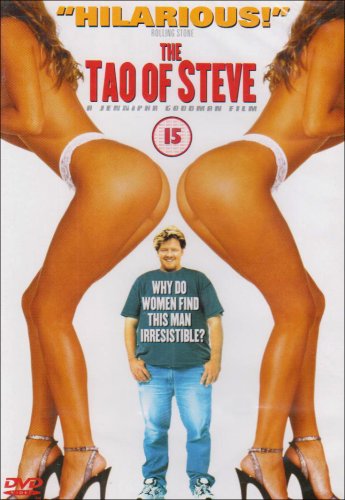
The Tao of Steve (Jenniphr Goodman, 2000) – Tubby, permanently stoned slacker Dex (Donal Logue) has a way with women. Specifically, the way of Steve: a theory of living drawn from the greatest minds down the ages, infused with the cool of McQueen, and geared exclusively towards getting him laid. Then a forgotten figure from his bleary-eyed past appears, forcing a sea-change in his attitudes. The conventional romantic comedy structure houses a genuinely fresh and funny philosophy: incredibly literate, clever and original, with dialogue exchanges that are ambitious and even learned, but knowing, and lacking in pretension. This quiet indie got some attention from movie magazine Empire at the time for the wrongheaded and misleading way the studio attempted to market it as a raunchy sex comedy. It’s a fine film, something really different, with an outstanding performance from Logue and an unusually apt song score. (3.5)

***


*SPOILERS*
The Green Ray (Eric Rohmer, 1986)
- An unhappy, fragile and lonely young woman (Marie Riviere) muddles through encounters with well-meaning friends, confused carnivores (she's a veggie) and free-spirited adventurers during her summer break, hopping disconsolately back and forth between Paris, Biarritz and the mountains, on her way to a (possibly) significant encounter beneath the "green ray" of Saint-Jean-de-Luz's setting sun. My second Rohmer tackles highly original subject matter in an impressively thoughtful, non-judgemental way, though its vivid portrait of a depressed loner who finds it impossible to be "normal" is – almost by definition – tough, meandering and even a little boring in spots, while studded with moments of visual and actorly poetry. (3)

See also: I was blown away by my first Rohmer film, Rendezvous in Paris. You can read about it here.

***

My first forays into the career of silent comedian Harry Langdon left me decidedly underwhelmed:


Tramp, Tramp, Tramp (Harry Edwards, 1926) - Harry Langdon is often cited as the fourth great silent clown, but he's not really. He's a strange, sexless, moon-faced, childlike mime with a distinct lack of ambition, whose moments of great comic and emotional lucidity are too often usurped by an undeveloped acting style that frequently just sees him mugging vaguely at the camera. He only appeared in a handful of silent features (including Frank Capra's first directorial effort, The Strong Man, see below), of which this was the first. Langdon plays a shoemaker's son who takes part in a $25,000 cross-country walking race - organised by a corporation-y corporation - in a bid to save his father's shop and win the heart of cloche-hatted poster model Joan Crawford (and for no other reason than that it's funny, let's now remember that Bette Davis called her "the original good time that was had by all"). The film starts off well - there's a particularly sweet scene in which Langdon first meets Crawford, whilst blowing kisses at a billboard of her - but soon reveals itself to be a disjointed collection of erratic set-pieces, rather than a coherent whole. Langdon has neither Chaplin's skill in effortlessly tying together story strands, nor Keaton and Lloyd's gift for building to a frantic finish. There is a cyclone climax that predates Steamboat, Bill Jr's hurricane by two years, but frankly it's rubbish. The best bits, and there are a few genuinely marvellous moments, come when the film is being sensitive, gleefully silly, or preferably both, with a special mention to the sequence where Langdon covers a room with pictures of Crawford - and then with feathers - and later gets caught by a farmer putting a marrow in his trousers. Elsewhere it's mostly the kind of material that does a disservice to silent comics - Langdon pretending to be sleepy or struggling to put on some clothes - while the supposed "thrill" sequences don't work, because the techniques behind them are so transparent, from safety platforms to close-ups, model work and stunt doubles. It's diverting enough, and Crawford's a charming leading lady, but it's hardly Sherlock, Jr, and Harry is certainly no Buster. Mighty fine DVD label Kino have done a Langdon collection in the States, but the Region 2 DVD is one of the worst I've ever encountered, with a clean but washed-out print and the same three pieces of music (total running time: four minutes 30) simply repeated over and over with no attention to the action. (2.5)


The Strong Man (Frank Capra, 1926) – Harry Langdon’s most famous comedy – and Capra’s first film as director – is a fitfully funny silent that hints at greatness but never sustains such lofty ambitions beyond a couple of minutes at a time. Langdon plays a Belgian Red Cross worker who survives WWI (the scenes set in the trenches are genuinely peculiar, prefiguring the consummate strangeness that was to follow in the notorious Long Pants) and moves to America as a strongman's assistant, all the while searching for the sweet girl whose letters sustained him during the conflict. Quite what was said in the letters, I'm not sure, as the print on the Region 2 DVD is catastrophically bad, while the score simply loops the same four-and-a-half minutes of annoying music used for Tramp, Tramp, Tramp. The central romance, when it finally arrives, is sweet (though Langdon's character again makes little sense, changing from an idiotic man-child to a sensitive leading man in the blink of an eye), while Capra's decision to break away from the star for a full five minutes in the middle of the picture, to contrast the God-fearing folk and beer-swilling reprobates of a border town, is an interesting snapshot of a massive talent at the beginning of his career. But the comedy is wildly erratic, with a handful of great jokes - Langdon accidentally climbing a ladder, encountering a nude model and, most memorably, being kicked off a bus - interspersed with long, tiresome routines that frequently have nothing even resembling a punchline. The climax, in which he takes on a bar-full of heavies using a cannon and a trapeze, is vastly superior to the cyclone set-piece in Tramp, Tramp, Tramp, but pales in comparison to the sorts of routines Buster was putting together at this time, partly because it's quite small-scale, but largely because you don't believe Langdon is really doing those things. And really the problem with the film doesn't lie with Capra's direction, the story - which is a little more streamlined and coherent than before - or the gags. It lies with Langdon. Not only is he not that funny (he has a couple of very nice moments in Tramp, Tramp, Tramp, but here the laughs come almost entirely from the situations into which he's dropped), but he's constantly acting to the camera, a style of performance that was at least 10 years out of date. Good acting can often mean you forget you're watching a film. I forgot I was watching a film here, but only because I felt like I was watching a play. If this was the best Langdon could do, I won't be coming back for more. (2.5)

***


Three Loves Has Nancy (Richard Thorpe, 1938) - After being stood up on her wedding day, straightforward Southern gal Janet Gaynor goes to New York in search of her errant fiance - only to fall in with selfish author Robert Montgomery and his publisher Franchot Tone (in a typically downbeat, sozzled characterisation). This by-the-numbers romantic comedy suffers from some weak material, but benefits from a good - and game - cast, led by Gaynor in an unusually broad, screwballish turn. She has just one real dramatic scene, in a lift, but plays it so beautifully that the whole film seems to rise a couple of storeys. Presumably someone on the ground floor then pushed the button. The funniest bit in the picture is the "sleepwalking" sequence, a nice piece of physical comedy from Tone and Montgomery, though old movie buffs should get a kick out of the identity of Gaynor's beau, revealed at the death. There's also able support from character players like Guy Kibbee, Emma Dunn, Reginald Owen and Charley Grapewin. It's a shame a cast this talented wasn't given a script to match, but it's pleasant enough - well, apart from that joke about killing Chinese babies, that's one of the most horrible things I've ever heard. (2.5)

Thursday, 14 June 2012

Pre-Coders, policemen and the real Paris - Reviews #120

It's been hard fitting in too many films these past eight days, what with the feast of football, but I've seen a few. This round-up features my first Eric Rohmer, my second viewing of The Other Guys and Jimmy Cagney at his considerable best.


Rendezvous in Paris (Eric Rohmer, 1995) – I try to see a fair mix of movies, but somehow I’d never gotten around to an Eric Rohmer. This was my first, and I thought it was wonderful: an epic outdoor walk-and-talkathon that resembles Before Sunrise and (more obviously) Before Sunset, as various youngish people stroll around the city's less celebrated landmarks and boulevards, espousing their views on love. Each of its three chapters seems low-key, almost incidental at first, before revealing hidden depths. And each is special in its own way. The first (and probably best) sees the excellent Clara Bellar negotiating relationships with a possible cheater, a possible thief and a sizeable coincidence; though as the screenplay insists, “coincidences do happen”. The second concerns an offbeat, adulterous affair played out across various day-long dates, as Serge Renko pleads repeatedly with Aurore Rauscher to leave her boyfriend, while the final chapter is a neat spin on the “live every moment” cliché, with artist Michael Kraft deciding to follow Bénédicte Loyen into and out of a gallery, only to not get quite what he bargained for. The film’s thoughts on life, liberty and the pursuit of women are genuinely original, clever and insightful, and there’s a lovely lightness to the director’s handling. I’m not a Parisian (sorry if this comes as a shock to any of you), but the film seems largely unique in appearing to capture something of the genuine nature and flavour of the city. Old Hollywood idealised it – that old-school presentation still informing films like Ratatouille, A Monster in Paris and Hugo – while later American films rendered it banal and flavourless. The French have had a fair crack, with Malle (Zazie dans le métro) and Delpy (Two Days in Paris) offering vivid, distinctive takes, while a gaggle of notable names provided vastly differing portraits in the occasionally successful portmanteau picture, Paris, je t’aime. But this film – with its endlessly tramping camera pulling you around Paris – brings a painter’s eye, a capricious, coquettish woman’s fancies and a hardened girl’s perspective to bear on the City of Light, creating something indelible and unforgettable from the everyday. (4)

***


*SPOILERS AND A RUDE WORD*
The Other Guys (Adam McKay, 2010)
- When L.A.'s iconic cop duo Danson and Highsmith (The Rock and Samuel L. Jackson) perish in a "head for the trees" 10-storey-jump calamity, it's up to Hoitz (Mark Wahlberg) and Gamble (Will Ferrell) to fill the void. Unfortunately, Hoitz is an office-trashing hothead haunted by his shooting of a sporting celebrity, and Gamble refuses to leave his desk, as he has some very important paperwork to do. The leads have superb chemistry, and Wahlberg is very funny playing it largely straight, but the film is dominated by Ferrell's brilliant performance. When people talk about his best work, they tend to plump for the dramatic roles, in Stranger Than Fiction - a Charlie Kaufman-esque slice of post-modern invention that begins panting a few miles from the finish - Everything Must Go and Woody Allen's Melinda and Melinda. But this is the one: a deft, dialled-down characterisation that creates some incredible comic moments (tuna vs lion, "To give me back my real gun?", the "desk pop") while giving him somewhere to go. Ferrell has generally spent too much of his career yelling, which is why making him a staid, sheltered, officious and easily offended administrator is such a masterstroke - and why his periodic explosions are so much funnier than usual ("I am going to make you eat a plate of human shit!"). The plot, in which an underused Steve Coogan engages in dodgy deals, honestly isn't developed enough to be described as "not very good" and the film flags a little in places before running out of steam at the end (stick around for the post-credits sequence, though, as it's amazing), but at its best it makes me laugh louder and harder than any film I've seen since Team America: "They found your red Prius trying to vote for Ralph Nader", "If you were with me, you wouldn't be here in this strip club, shaking it for dollar bills", "I saw how aggressive you were being, and I thought: 'Wow, I gotta go even bigger than that since we're doing 'bad cop, bad cop'" and - this incapacitated me for an entire minute last night - "We will have sex in your car - it will happen again". Amazing. (4)

***


Jimmy the Gent (Michael Curtiz, 1934) – Bloody hell, this is good fun, a lightning-paced comedy about a no-good, scruple-free inheritance fraudster (Jimmy Cagney – who else?) trying to land a 200G case through a series of phony weddings, big fat lies, and furious rants at his sidekick Allen Jenkins – all the while pretending to reform for the benefit of his former flame, the understandably suspicious Bette Davis. It’s reminiscent in its best moments of the legendary Blessed Event (which was originally set to star Cagney), as well as Satan Met a Lady – a screwball comedy riff on The Maltese Falcon also featuring Davis – and powered by a simply explosive central performance. With his unruly eyebrows threatening to escape his face each time he engages in another morally-indefensible tirade, and sporting the harshest haircut I have ever seen (he’s seen from behind in the opening scene, with two big scars across the back of his head), Cagney is almost illegally funny. (3.5)

***


Beauty and the Boss (Roy Del Ruth, 1932) – Banker Warren William has two eyes for the ladies – but only after office hours, which might be why he hasn’t noticed secretary Marian Marsh. Either that or because she’s a machine in a bad hat. This very entertaining, dirty comedy from the master of Pre-Coders (Del Ruth also did Blessed Event and the weird Cagney vehicle Blonde Crazy) is occasionally affected by its leading lady’s woodenness, but has a genuinely sweet centre and an incredible scene – shot from above – in which William chases Marsh around his office, trying to kiss her. After a slightly sluggish opening five, this short, sharp, censorship-free shock becomes a fast-paced mix of romantic drama, makeover show and rude jokes that provides top escapism, an interesting portrait of early-‘30s sexual politics and a perfect example of Hollywood product before the Hays Code stopped everyone’s fun. It also has an amazing trailer, light on footage but heavy on kaleidoscopic images, exciting fonts and hyperbole, which promises things the film could never possibly deliver. (3)

***


*A FEW SPOILERS*
Black Dynamite (Scott Sanders, 2009)
- "Dy-na-mite! Dy-na-mite!" This spoof of blaxploitation movies gets everything right in its send-up of the genre, but is maddeningly inconsistent in terms of laughs. Black Dynamite (Michael Jai White) is a Vietnam vet, ex-CIA agent and all round bad-ass who "use Kung Fu when we want to, has sex when he please". After his brother is killed by The Man and he finds a corrupt politician selling smack to orphans, he cracks open an entire crate of whuppery, only to uncover a plot more dastardly than anything he could have possibly imagined. White is excellent in the lead, doing not-very-good acting brilliantly, and the film looks and particularly sounds just right, with an arsenal of low-rent '70s visual tricks and a heap of apposite funk songs that drip with clumsy exposition. But while there are some hilarious moments - the "puddle of blood" line, a convoluted uncovering of the central mystery that takes in rock 'n' roll, spelling and Roman mythology, the young, orphaned Black Dynamite throwing some bullies through a window, and, especially, the hero's hysterically uncomfortable attempts to frolic gaily in a park - there are entire scenes that pass without a smile, especially towards the end. Part of the problem is that spoofing kung fu isn't funny. It wasn't funny in The Jerk, it wasn't funny in Wayne's World 2 and it isn't funny now. You could argue that at least Black Dynamite plays its martial arts scenes straight, but watching people doing reasonably good kung fu in an apparent pastiche of Black Belt Jones isn't really entertainment - and too much of the short running time consists of precisely that. Sorry to come across all Judge Joyless but, given all the hype around this one, I had high hopes, and it didn't quite deliver. (2.5)

***


Quick, someone push them in the water.

Failure to Launch (Tom Dey, 2006) – I thought this might be mindless fun. Well, I was half right. Matthew McConaughey’s parents hire professional “interventionist” Sarah Jessica Parker to get him out of their house. Her trick? To make him fall in love with her. It’s a shame they’re both idiots. This is a shallow, ridiculous romantic comedy that moves from one contrived comic situation to another (most of which seem to involve people being bitten by animals), with horrible swings in tone and characters that make no sense, even within the film’s unbelievable parameters. Its only saving grace is a funny supporting performance from Zooey Deschanel, who works wonders with her part as Parker’s moody roommate. (1.5)

***


Moonrise Kingdom animation (Various, 2012) - You know those books that Suzy takes with her when she runs away? Well Wes Anderson and a group of illustrators and animators have brought little snippets of those fictional creations to life, in this droll, inventive and attractive short, which packs more humour and heart into its four minutes than many modern American films manage in 90. As someone who watched Failure to Launch out of choice yesterday, I realise this may come across as a little rich. If you liked the feature, it's a wonderful little bonus, with narration by Kara Hayward and links by Bob Balaban. (3.5) You can see it here.