Wednesday, 21 December 2016

Sam Fuller, Rogue One and Chaplin's last stand – Reviews #252

I have a week off before Christmas, so I've spent the first part of it mostly just watching loads of movies. That's included catching up with a couple of films that the Guardian included in their 'best films' piece (SPOILER: don't bother), ahead of my review of the year, as well as getting around to two movies I've been intending to see for years: the final major artistic statements by master filmmakers Charlie Chaplin and Sam Fuller. If you're new to the blog, ratings are out of four, as that's what how the first movie book I ever owned did it, and it's going to mess up my lists if I change it now.


*MINOR SPOILERS*
CINEMA: Rogue One: A Star Wars Story (Gareth Edwards, 2016)
– This is great: a film that hums with a love of the original trilogy, that adds layers to the Star Wars universe, but that stands on its own two feminist feet, telling a story which invokes the saga's singular iconigraphy and chimes with its enduring preoccupations – family, destiny and righteous rebellion – while going resolutely its own way. The ending, we know; but the rest is up for grabs, and the results are frequently electrifying.

Felicity Jones is superb as Jyn, the daughter of an imperial collaborator (Mads Mikkelsen), who's dragged into the rebellion after Empire pilot Riz Ahmed defects – and claims to be carrying an important message from her old man. Collecting cosmic detritus on her journey to find him – a scowling scruple vacuum (Diego Luna), a blind monk (Donnie Yen), a hilariously tactless droid (Alan Tudyk) – she discovers a purpose and a principle: rebellions are built on hope, so if the Alliance doesn't take her dad's upbeat message seriously, she's going to kick ass until they do.

The film's a little disjointed to begin with, as it hops from planet to planet, and even after it picks up momentum it has its shortcomings: some characters, like Ahmed's flyer, are disappointingly nondescript, and at its worst it has fleeting moments that plays like a skeptic's idea of Star Wars: daft creatures, tortuous gobbledegook and a surfeit of explosions. (Also Darth Vader doing his first pun.)

Such moments are in a minority; mostly Rogue One is an intricate, loving meshing of series folklore and pulsating action, which plants its feet firmly in the 21st century, but got its clothes and hair done in 1977. The inspired casting of Ben Mendelssohn as one of those transatlantic imperial functionaries with the side-parting and pursed lips is indicative of the care that's gone into crafting this, and at least one departed cast member clambers out of the Uncanny Valley to join in the fun.

I said earlier that the film's highpoints are simply electrifying, and there are many: from a dynamic dust-up in the streets of Jedah to a heartstopping "Father!" – recalling a legendary scene, but crucially credible on its own terms – and a final 10 minutes that just does everything right, climaxing with a ballet of destruction, a farewell on a beach and a closing scene that seems to fuse Empire's explosive malevolence with Old Boy's spatial innovation. The latter is one of those "Did you fucking see that?!" moments that cinema only serves up every couple of years.

As much as that, though, I loved Jones's performance. Rey is a great character, but Daisy Ridley's about as convincing as an action hero as I am. Her plummy vowels, Knightley-esque chin-acting and am-dram line readings constantly tipped me out of The Force Awakens, a film that recaptured the spirit of Star Wars, but in the way that above-average fan fiction might. Rogue One feels like a part of the original (and only) trilogy in a way that nothing has since Luke lit his dad on fire and Alec Guinness turned up as a ghost (sorry, 'as one with the Force') on the proviso he didn't have to say any George Lucas dialogue. The film is commanding, convincing and really fucking cool, and the same goes for Jones.

Its vivid sketching between the lines, its inspired expansion of the universe, and its layering of detail upon detail – including some red-hot X-wing action and a Giacchino score that incorporates Williams' themes superbly while deviating from them in the most perfect ways – is allied to Edwards' visual inventiveness (a sumptuous, turbo-charged Longest Day-style sweep across an invaded beach that he does not once but twice, each time snapping without a cut to action in the foreground) and the best jokes since Empire, most of them coming from K-2SO, a reprogrammed Imperial droid who'll tell you whatever's on his mind. The sense of humour recalled Guardians of the Galaxy, the most charming and least portentous thing Marvel has done in yonks.

So yes, it was great. And if you are a Breitbart reader who has expressed some concerns over the film's progressive gender politics and multicultural cast, I have some good news. There's a Star Wars film you will love: the women are largely decorative and it's chocka with lazy racial stereotypes. It's called The Phantom Menace and meesa thinkin yousa gonna loooove it. (3)

***


A Bigger Splash (Luca Guadagnino, 2015) – I should have known this would be crap, as it's in The Guardian's films of the year.

It's a self-satisfied nothing about middle clarseholes: something like Joanna Hogg's Archipelago relocated to the rock world and to a Sicilian isle, with Tilda Swinton as a singer whose romantic recuperation with Matthias Schoenarts is interrupted by noisy old flame Ralph Fiennes and his daughter (Dakota Johnson).

There's an awful lot of acting, pretension and shagging, but barely a credible character or recognisable feeling in the whole thing, which starts promisingly and then proceeds to go on for ever.

I've now seen Tilda Swinton in 14 films and she's only good in two of them. Her name in the credits seems to be a sure fire warning that I'm about to be annoyed for 124 minutes.

You do get to see Ralph Fiennes' willy, though. (1.5)

See also: Yes, this is even worse than the last Tilda Swinton film about a rock star: Jarmusch's dreadful Only Lovers Left Alive.

***


Anomalisa (Charlie Kaufman and Duke Johnson, 2015) – A disconnected David Thewlis turns up in a foreign city and starts treating its women really badly. It could be Mike Leigh's Naked, except that the city is Cincinnati, Thewlis is stop-motion and the women all have men's voices. In fact, the same man's voice.

Charlie Kaufman's film about love, alienation and the modern world takes overly familiar material and channels it through animation and gimmickry. The results are impressive, visually arresting and occasionally touching, but so sour and nihilistic that by the end I had begun to hate the film, sickened by its sneering superiority and utter lack of compassion for most of its characters. (2)

***


It's incredibly important here to include a photo of Dona Drake.

Kansas City Confidential (Phil Kaufman, 1952) – An absolutely knockout noir, with burly criminal mastermind Preston Foster hiring three career crooks (Jack Elam, Lee Van Cleef and Neville Brand) to pull off the perfect crime, snatching $1.2m from a Kansas bank. When they escape in a flower van, florist's driver John Payne is picked up by the cops, who start to sweat and swat him...

Startlingly directed by unheralded genre giant Phil Karlson, this one's packed with breakneck twists, and has fantastic performances across the board. Elam and Van Cleef are particularly good as giant-featured gunmen for whom the tables are forever being flipped, while Payne excels in an unusually embittered role.

Though the film has none of Out of the Past's dark poetry, it has concessions to noir's other secret strong suit: critiquing post-war America. While something like Pitfall paints crime and punishment as the price to be paid for rupturing the American Dream – whether or not it deserves to be smashed to splinters – Kansas City Confidential shows it as the consequence of a country that deserts its saviours, like Payne's Iwo Jima hero, scratching out a living driving a truck, and a perfect fall guy when the police need a patsy. It helps in narrative and dramatic terms that Payne's army past establishes him as a guy to root for and funds his next move, but that's by no means all that's going on here.

The sets are rather synthetic, the camera spoonfeeds us too much at the opening and the intrusion of a romance slows things a little at first (as well as informing the usual weak coda), but those are minor gripes with a gripping, thrilling and altogether sensational sleeper that traverses at least one big Old Hollywood taboo. (4)

***


"There's something about working the streets I like. It's the tramp in me, I suppose."
Limelight (Charles Chaplin, 1952) – A portrait of the artist as an old man, and a pure artistic statement at that, dripping with the gifts, flaws and excesses of its maker: the incomparable Charlie Chaplin. You can't read an autobiography by one of his contemporaries without finding a story of them essentially being held captive in Chaplin's library, as he insists on acting out feature-length stories until the early hours of the morning. And that's essentially what Limelight is.

He wrote it, directed it, scored it, starred in it and moved his cast around like marionettes, each simply giving the performance he demanded. His arrogance, smugness, compassion, self-obsession and brilliance are much in evidence in a film that's rough-edged, messy, self-aggrandising, sentimental, overlong and not very funny, and yet as perfect a portrait of the ailing, alienated genius in his dotage as you could want.

Chaplin is Calvero, a legendary comedian, a titan of the Music Hall stage, now reduced to drunkenness and irrelevance, until he saves the life of a neurotic, suicidal ballerina (Claire Bloom) and finds a new purpose in life. With shadows of A Star Is Born, her star begins to climb as his drifts into the gutter, and yet there's no bitterness in Calvero, just an apparently endless succession of noble bon mots and capsule philosophies, which will strike you as clever and warming or unbearably patronising, depending on your mood. (He could certainly have varied the line delivery a little, but then he'd only learned to speak in 1940.)

It's clichéd at times, there are countless, Wellesian production errors (from shoddy back-projection to supposedly uproarious sequences that play to audience silence), and it's not always clear which routines are meant to be amusing and which tragically unfunny, but it's also an extremely rewarding, deeply moving film, with a keenly felt romance at its centre, innumerable nods to its creator's legendary career, and many moments of sweetness, tenderness and sincerity that eulogise love, the stage and the noble art of comedy.

When Chaplin's character talks about the "waves of laughter" coming from the audience, it's autobiography not fiction, while there's melancholy and pathos to spare in the film's unspoken undercurrent: his budget had been less than half that of The Great Dictator, released 12 years earlier, and after the HUAC hearings Chaplin was sidelined and about to be banned from America, never to return. This is an artist looking back on his career and making one last major cinematic statement, because he might never get the chance to make another.

Limelight is not the place to start investigating Chaplin's legacy, but if you admire him, it's a must, its virtues ranging from a magnificent score to his only screen pairing with Buster Keaton (I only counted two laughs, but smell the history) via a litany of gifts from an incomparable talent. It's akin to being trapped in his library. (3)

***


The Wild Child (François Truffaut, 1970) – A boy of 10 or 11 is found living wild in the woods, apparently deaf, dumb and feral, and taken under the wing of a doctor (François Truffaut), who sets about trying to educate him. At first you wonder what exactly the point of the film is, or why Truffaut's directing it much of it like an old D. W. Griffith film, ending scenes with an 'iris in'.

But after a while you become accustomed to the stylistics (designed to root the film securely in the past) and the simple story starts to work its magic, accumulating power as it progresses. There are shades of The Elephant Man, as well as Rousseau and Voltaire's disseminations on the subject of savagery vs civilisation, published just 40 years before these real events took place in 1798, but the film is less judgemental than either writer managed (coming from opposite ends of the spectrum), being in praise of both civilisation and innocence, and seeing the doctor as a good man whose passion for discovery may act against his better nature.

Voiceover is often a vice in Truffaut's work, a shortcoming that suggests an absence of ingenuity in his writing, but here it works well, the doctor's original transcripts giving the piece a sense of authenticity and authority. He also draws an excellent performance from Jean-Pierre Cargol, the titular character, which for the most part seems utterly credible, when it could easily have fallen short or stepped over into histrionics or caricature.

Sometimes, especially early on, The Wild Child is too functional and factual, lacking the revelatory spirituality, flecked with surrealism, of Herzog's The Enigma of Kaspar Hauser or the overpowering sadness of Lynch's The Elephant Man. But ultimately the fact that it's so straightforward, understated and unsentimental allows it to sneak up on you, until you're holding your breath, wondering whether the doctor's test of morality and justice will blow their bond to smithereens. (3.5)

See also: I've watched eight of Truffaut's lesser-known movies this year (three to go!). Most of them have been quite disappointing, to be honest – The Wild Child (originally L'enfantssauvage) is the best of the eight – though Le peau douce and The Woman Next Door were very well done. ***


When England was unfortunately ruled by a sad clown.

The Private Lives of Elizabeth and Essex (Michael Curtis, 1939) – This historical romance from Warner Bros is a mixture of the silly and the sublime, with sets and situations that are often patently ridiculous, and yet a score, a central performance and a selection of scenes that are anything but. Bette Davis is the tempestuous, ghost-faced Elizabeth I, who spars with the lover who calls her his liege, the Earl of Essex (Errol Flynn), a proud, charming war hero with a thirst for power.

Across polished floors, in spotless clothes and beneath the baking sun − none of which denote Elizabethan England − they quarrel and make up, their verbiage crackling with intensity (most of it emanating from Davis) before a final 20 that's weighed down in semantics and cursed with an inevitability that's more tedious than fatalistic.

Along the way, there are serious treats in store, including a classic score from the legendary Erich Wolfgang Korngold, a commanding performance from Davis in which − that unmistakable nose and bark aside − she's largely subsumed by her character, and a handful of set pieces that rise way above the ordinary. The pick of the bunch is at the halfway stage: a profoundly moving conversation between Elizabeth and Essex, in which she gives him a ring denoting her affection, no matter how "sharp and wearing days" will change them irrevocably.

It's a remarkably literate passage worthy of Joyce, and acted with immense feeling by Davis, Korngold's music sweeping gently beneath the verse. And in its foreshadowing of less simple times, when the memory of this encounter and the lingering of loyalty may cause nothing but sorrow, it brought to mind one of my favourite pieces of writing: the final chapter of A. A. Milne's 'House at Pooh Corner'.

Much of the film is sadly more prosaic and pretend, with empty pageantry and box-ticking more associated with accounting than artistry, though it's fun to see a gawky 28-year-old Vincent Price as a despicable Sir Walter Raleigh, and Olivia De Havilland cast against type as a bit of a bitch (at least at first). The film's slightly salacious title, by the way, may have been inspired by Alexander Korda's work across the Atlantic, where he used the 'Private Life of' prefix to spice up historical titles, including one about Elizabeth's dad, released in 1933.

The Private Lives of Elizabeth and Essex is something of an anomaly: a splashy Technicolor outing that's often excessively talky and a period Errol Flynn vehicle directed by Curtiz and scored by Korngold with little to no swashbuckling, which gives him Bette Davis as a love interest, despite the presence of regular co-star De Havilland.

Flynn and Davis, incidentally, were mired in mutual antipathy, amusingly recalled in his rakish autobiography. When you see her lamp him in the face in the film's opening moments, she wasn't acting. But while his performance is rather lacking in energy, hers is a testament to a remarkable talent, her physical transformation not in place of a performance − a problem I have with a lot of Meryl Streep's work − but merely a starting point from which she can delve deep into the character and the viewer's being. The material here isn't always worthy of her but, when it is, the results are extraordinary. (3)

***


The Green Man (Robert Day, 1956) – Alastair Sim is an assassin trying to off a government minister in this comedy from Launder and Gilliat, best known for one of their weaker offerings – the St Trinian’s series – but responsible for several of the highpoints of classic British film, including the brilliant Happiest Days of Your Life (St Trinian’s if it was a-gag-a-minute and razor sharp), Hitchcock’s The Lady Vanishes (which they wrote) and the classic 1946 crime-comedy Green for Danger, which inserts Sim’s wry, quipping detective into a murder mystery plot of rare complexity and brilliance.

When I first heard of The Green Man, I assumed it might be more of the same, but it’s not at all: the premise is merely the excuse for an old-fashioned farce that’s well done if you like farce, which with a few exceptions I really don’t. All the stock genre fodder is there: characters nearly seeing each other through closing doors, suspecting affairs because they find people lying together on the floor or finding that a corpse keeps disappearing or re-appearing, and – as you might suspect – it’s mostly too broad to be really funny, accentuated by one of Muir Matheson's overbearing, unbearable 'comic' scores.

Since it’s Launder and Gilliat, there are flashes of quality, though the film’s principal virtue is Sim’s performance, his impeccable timing and ability to throw himself into a scenario – no matter what it is – wringing most of the dark or dry humour from the sitcom-style scenes. When he isn't on screen, as he isn't for much of the middle act, the film noticeably drags. It's not another L&G classic, then, just a pleasant enough timewaster, with the gorgeous Jill Adams and an unusually callow, well-spoken George Cole adequate in support, and Terry-Thomas naturally stealing his two scenes. The title, incidentally, is the name of the hotel where the movie reaches its climax. (2.5)

***


White Dog (Samuel Fuller, 1982) – A heartwarming girl-and-her-pet story, about an actress (Kristy McNichol) who rescues an injured dog, nurses it back to health and finds it's been programmed to attack black people.

Ludicrously banned on racism grounds and then long unavailable, Sam Fuller's B-movie attained a near-mythic status that it would surely never have found otherwise. It's striking and original, with a few excellent set-pieces and a Morricone score, but it's also unfocused, possessed of a Hallmark TV movie aesthetic that sometimes makes it feel like a piss-take, and full of frankly crap acting. While wooden performances lend some of Fuller's early films a disorientating feel, somehow enhancing their outsider status, they undermine White Dog, and expose the atypical weaknesses in Fuller and Curtis Hanson's dialogue.

The problem is that the film works best as an allegory, but is frequently too literal to be one. In Our Friends in the North, the pitbull that savages a former Jarrow March veteran isn't just emblematic of the working class's new-found selfishness, it is the lack of solidarity. Here there are passages that work brilliantly, like the attack in the church, but elsewhere the story stops being about racism and is just about a scary dog. It doesn't help that Fuller dilutes the story with a subplot about Burl Ives training animals for movies, which is mostly used to make jokes about the industry resenting Star Wars, and drags us away from the cracking premise.

In fact, I got the feeling watching White Dog that I experienced with Peckinpah's The Osterman Weekend or Wilder's Avanti!: of a master filmmaker with some of their old powers, the odd flash of genius still crackling through them, but all at sea in a new world with new rules. And with White Dog I really do wonder if it would have the same reputation if Sam Fuller's name wasn't on it, or it hadn't been banned. Though it has an elusive resonance due to its horrific nature and Fuller's eye for an unforgettable image, it winds up as a great idea in search of a great movie, largely sunk by seriously sloppy execution.

I've added half a star because McNichol is glimpsed reading a John Barrymore biography in bed: Gene Fowler's classic 'Good Night, Sweet Prince'. (2.5)

See also: My favourite Fuller films are Pickup on South Street, The Big Red One and Forty Guns. He made a lot of great movies, though: Shock Corridor and The Crimson Kimono are B-movie classics, and Park Row – perhaps his most personal film – is a must for fans.

***

SHORTS


The Royal Rodeo (George Amy, 1939)
– Garish nonsense apparently designed to test out John Paine as a singing cowboy. Child star and future cautionary tale Scotty Beckett is a 10-year-old king in a small European state who excitedly receives a troupe of cowboys, including Paine and Cliff 'Ukulele Ike' Edwards (the voice of Jiminy Cricket the next year).

As they're American, they inevitably intervene in a foreign dispute, keeping the 10-year-old puppet leader on his throne. It's faintly diverting fluff, including one hilarious stunt sequence that sees Beckett doubled by a full-grown man about twice his size. That's Doug Fairbanks, Sr's niece, Lucile (technically Hollywood royalty), as Marianne. (2)

***


You remember that time you took acid?

Old Glory (Spike Jones, 1939) – A fascinating curio: overbearing, sanctimonious propaganda, with Uncle Sam coming to Porky Pig in a dream to teach him the great myths about America. I wish Kurt Vonnegut had appeared instead; his clear-sighted, humane and sardonic treatment of US history really should be taught in schools. There are a few nice images in there, shame about the reactionary brainwashing. (1.5)

***

TV


HyperNormalisation (Adam Curtis, 2016)
– A fascinating, terrifying new epic documentary from Adam Curtis, about Syria, the internet, Donald Trump, finance, the inter-connectivity of everything, and the fact that we rely on simplistic, erroneous narratives in this 'post-politics' age, because the world is far too complex for us to make sense of.

Curtis's style can be long-winded – as a book this would run to perhaps 70 pages, and much of the material creates only a mood, rather than enhancing his argument – but polemics of such intelligence, boldness and ambition are rarely seen on screen, and for me he's sort of TV's Lars von Trier: there's real depth beneath his attention-grabbing, he forces you to look at the world in a different way, and every new film is a bleak, immersive adventure that I'm compelled to go on, despite myself. (3.5)

See also: I watched Curtis's Bitter Lake last year. Both films are on iPlayer.

***

EXHIBITION
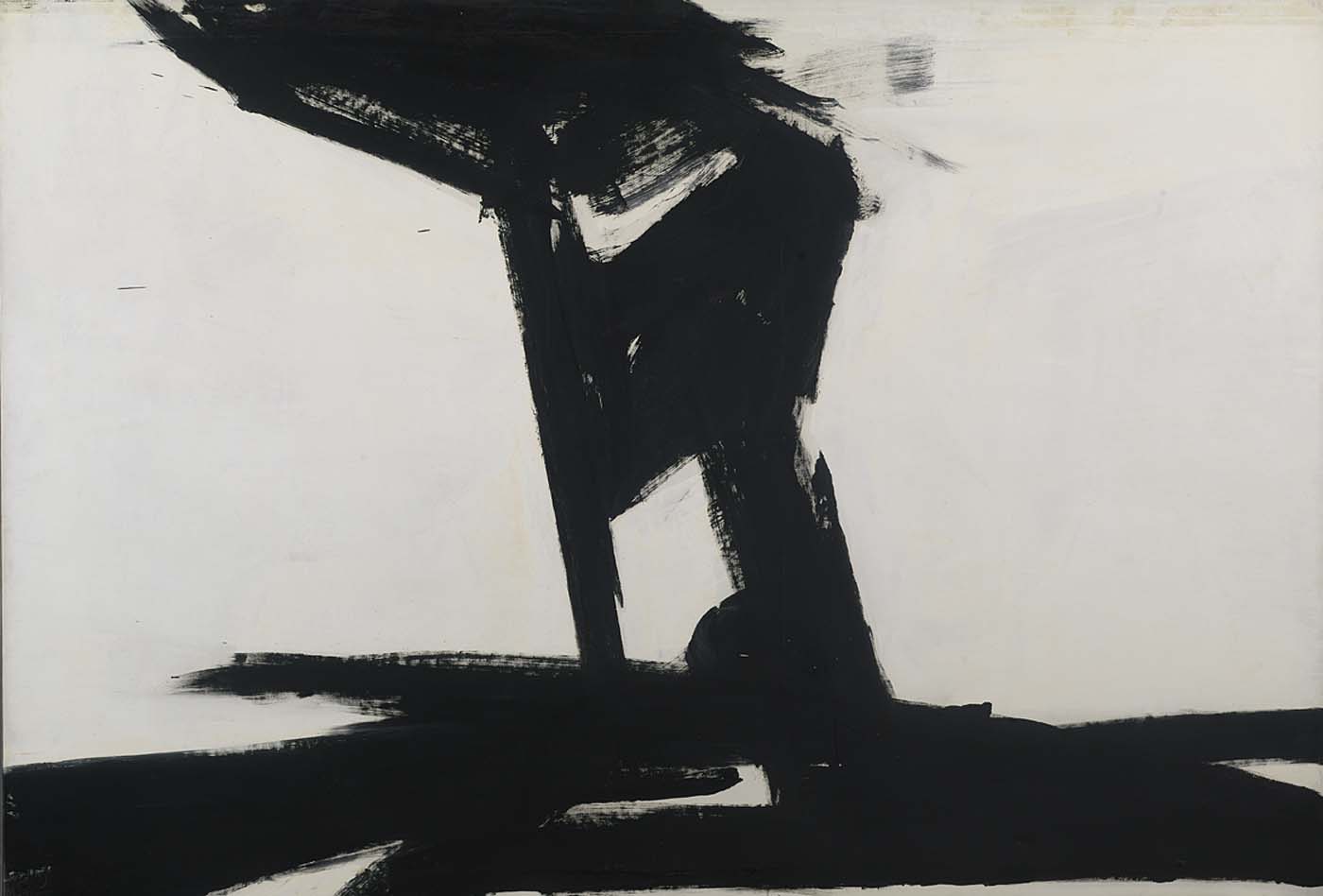


Abstract Expressionism (Royal Academy) – A heavy-hitting overview that did a fair job of making this material accessible to a beginner like me, showing Pollock's versatility, range and the muscularity of his art, expanding my understanding of Rothko beyond his status as a creator of moods, and introducing me to a selection of (apparently well-known) contemporaries. Robert Motherwell's endless evoking of the Spanish Civil War sounded promising but left me cold, but Still's ever-climbing verticals and the "violent marks" of Kline – stark black lines conjuring noirish city scapes – took my breath away, and I found the fleshy eroticism of de Kooning's 'women' period beguiling. The Pollock and Rothko pieces were utterly overpowering, in both scale and content, and a room of drawings and photos included a lovely shot of the former 'disappearing in light' as he dripped onto a vast canvas. For the most part, this was a really interesting, rewarding exhibition, though with the usual moments of nagging unease I get from modern art exhibitions, as some pictures and painters leave me with the distinct feeling that either I'm stupid or they're shit. (3.5)

***

Thanks for reading. And Happy Christmas.

Wednesday, 14 December 2016

Omar Sy, The Hateful Eight, and the rise of the far-right − Reviews #251

Merry Christmas!

FILMS


The Hateful Eight (Quentin Tarantino, 2015)
– A bloody, bloody brilliant fusion of Western, horror and black comedy that confirms Tarantino's return to relevance after the glorious surprise that was Django Unchained, a swaggering, effortless movie following 17 years of self-conscious, self-plagiarising films.

The Hateful Eight is even better: potentially self-restricting in its claustrophobic, dialogue-heavy set-up, but with an ambition and chutzpah that causes it to leap from the screen. At times it’s reminiscent of a Ranown movie – one of those cynical, weary chamber pieces that marked a highpoint of the B-Western – with some DNA shared with Carpenter's The Thing, but when anyone is talking… well only one person could have written those lines. The stylisation in his writing is still there, but then it always was: what’s changed is that his naturalism is back and so is his range: for a while, every character in his films seemed to speak in the same, stilted way – or actually in one of two ways, sassy woman or malevolent man – but now they’re distinct, different and speaking in a way that drags you into the film, not reminds you that you’re watching one. I think that by Inglourious Basterds his writing was once more starting to sing, and his gift for suspense was much in evidence, but such virtues were rather obscured by the film’s overbearing smugness and silliness.

This one begins with bounty hunter John Ruth (Kurt Russell) transporting $10,000 prisoner Daisy Domergue (Jennifer Jason Leigh) to the town of Red Rock. En route, he and driver O. B. Jackson (James Parks) pick up a former Civil War hero, Major Marquis Warren (Samuel L. Jackson) and a self-proclaimed sheriff (Walton Goggins), before a blizzard drives them to a haberdashery. There, a loquacious English hangman (Tim Roth, sounding like Edmund Blackadder), a hulking Mexican (Demián Bichir), a racist retired general (Bruce Dern) and a mystery man named Joe Gage (Michael Madsen) are waiting, and at least one of them has a secret that’s about to soak these walls in blood.

Since reading Truffaut/Hitchcock earlier this year, I’ve begun to look at films in a different way, particularly the way in which they create suspense – and by suspense I don’t just mean nerve-shredding tension caused by sky-high stakes (though I do partly mean that), but also basic dramatic interest. Tarantino does this unbelievably well from the get-go: from a standing start we care implicitly, overwhelmingly and relentlessly what happens next, and frequently we care so much not because the characters are likeable (see: the title), but because of Tarantino’s imagination, specificity and meticulous, tight-as-a-drum scene construction. Catharsis, when it comes, is via revelation, sardonically cartoonish violence and some of the best jokes in ages. For a director who sometimes gives the impression that he’s making films so black people will think he’s cool, he certainly gives his give detestable, racist antagonists some of the funniest lines. In a more straightforward but equally crucial sense, the film is spectacularly unpredictable, and when we can guess what's about to happen, that too's a tool, Tarantino using it to ratchet up the tension we feel.

The performances are generally good, but with superb work by Jackson (in unusually committed, dynamic form – he hasn’t been this good in 20 years), Goggins, a foully credible Dern and – probably best of all – Jennifer Jason Leigh. She’s always been a cracking actress and here she’s just superb: putrid, virulently unpleasant and increasingly covered in blood, she becomes more and more central to the story and, with it, grows in power, reaching an apogee of almost supernatural gothicism. It’s slightly ironic, then, that Tarantino seems to have borrowed her surname from RKO actress Faith Domergue, the most notoriously untalented (and most conspicuously underage) of Howard Hughes's innumerable mistresses.

I said earlier that Tarantino’s worst films seemed to be cursed by self-plagiarism. I think the problem was that this seemed more like desperation than auteurism, as here he also draws on his past, but to devastating effect. Reteaming Roth and Madsen isn’t the only sign that he’s reviving the spirit of Reservoir Dogs, the mesmerising mission statement that announced his arrival as a major new director. It’s dressed in furs, not sharp, identikit black suits, but The Hateful Eight is also a talky, gun-heavy movie about eight bad men trapped in a single room, trying to work out which one of them sold out the others. John Carpenter would appove: his hero Howard Hawks made Rio Bravo three times in various guises, before Carpenter himself had a go with Assault on Precinct 13.

The Hateful Eight might not be for all tastes – if you cringe at the n-word or gratuitous gore, give it a wide berth – but it seems an objectively good film. The scene-setting is inspired, Morricone’s sparsely-used music is marvellous, and Tarantino’s dialogue is incredibly rich: unmistakably his yet steeped in the Western tradition, with its grand allusions to the Civil War, its bitter dark humour and its contemporary resonances (which are basically what the Western is for). The film takes a massive gamble with an hour to go, and takes a little while to stop wobbling – its raison d’etre less compelling, Zoe Bell farcically wooden – but even then it regathers itself and goes again, before a final chapter of dazzling, blood-drenched Carpenter-esque Boys’ Own potency. I’ve long since given up trying to reconcile Tarantino’s embarrassing public persona – braying, posturing and misrepresenting his cinematic forefathers – with the man who can write like this.

So yes, Django wasn’t a happy accident, a brief hiatus from a spiral downwards into complete irrelevance, it was a comeback: an invigorating example of a filmmaker rediscovering his voice. The Hateful Eight goes one better, breathing new life into a moribund genre. It’s a delirious, down-and-dirty exercise in restrained mayhem that doubles as a clarion call: Tarantino is back and if he’ll never make another film as incredible as Pulp Fiction, the very literal car crash that was Death Proof is receding in the rear-view mirror, after a Western one-two of power, persuasion and startling panache. (4)

See also: I love Jennifer Jason Leigh's performance in Fast Times at Ridgemont High.

***


CINEMA: Chocolat (Roschdy Zem, 2016) – A prestigious French biopic of black clown, Chocolat (Omar Sy), who became a superstar in the first years of the 20th century, which succeeds on the strength of its story and performances, but could do with playing a little less safe.

There's no denying that the story is a grabber: a penniless black refugee, posing as a 'savage' in a travelling circus, graduates to becoming a clown and become one of the most celebrated comics in the country – but longs for respect in a deeply racist society, while dealing (somewhat less interestingly) with the temptations of sudden fame.

And the mighty Omar Sy, star of that massive international hit, The Intouchables, gives it his all, delivering a deep, multi-faceted performance that infuses the film with whatever mood it's attempting to evoke, from knockabout fun to the melancholic self-loathing that comes with debasing your race for a living (even if it means giving people of your background a success story to cheer, a situation that later faced Hollywood character comics like Stepin Fetchit and Willie Best).

He's well supported by (the exceptionally handsome) James Thierrée as Footit, the arrogant, closeted but basically decent clown with whom he forges a partnership and proceeds to take Paris by storm, though most of the other characters merely represent viewpoints or challenges faced by Chocolat, and that's indicative of the film's shortcomings.

There are some nice flourishes – a notably fine wide shot of the circus stage, shot from low down; a neat montage trick that feels both slick and old-fashioned, as different parts of the frame are filled with smartly juxtaposed shots – but in a lot of ways the presentation, and the writing, are functional rather than arresting. A feeling seems to pervade the film that the story and the performances are enough to ensure that it works; and it does, but it should be more than that. Certainly there are few biopic or period piece clichés that aren't checked off (a rise-and-fall narrative, a moustachioed villain enticing our hero to betray his conscience, a man with TB coughing blood into a hanky), and its closing moments betrays a certain artlessness that frustrated me: why pan to a night sky, rather than a circus tent?!

But for all that, it is a good film. The story is fascinating, the movie never pulls its punches when dealing with difficult and even morally complex subject matter, and Chocolat and Footit's routines are impressively and exuberantly evoked, particularly given that at first you wonder if this is going to be a chore, because clowns.

More importantly than that, it's a welcome corrective in sharing Chocolat's neglected story with the world, and provides a showcase for Thierrée and more importantly Sy, who in some ways is his character's spiritual successor: a brilliant black performer in a racially-divided France, who risks his career as a comic to take on ambitious and important roles with real social significance. While the film may be safe – at least in its lack of formal ambition – its leading man is anything but. (3)

***


"THIS IS AN EMERGENCY!"
CINEMA: Chi-Raq (Spike Lee, 2015) – It seems a bit churlish to say it, but Spike Lee’s important film about the ongoing scandal of gun deaths in Chicago is an absolute shambles. It sometimes seems like he’s never seen a film before (in terms of his structure and scripting, not his natty visual sense) and while at the beginning of the movie that’s a virtue – his confrontational collage crackling with life – by the end it’s because he’s asking you to swallow an incoherent mixture of mawkishly-done melodrama and incredibly boring sex comedy. There’s a real argument for making entertainments out of critical issues, as Adam McKay did so well with The Big Short recently, because it’s a way of reaching a mass market and changing minds. But the pitfalls are obvious from Chi-raq, which simply alternates between speechifying and superficiality, and ultimately fails a subject that Lee clearly cares deeply about. Perhaps he’s just too close to this issue.

Kicking off with a dazzling credits sequence that’s basically just a YouTube lyrics video, the opening is decidedly grabby: a black urban update of Aristophanes’ Lysistrata, with musical sequences, rhyming dialogue and some shouty fourth-wall-breaking from Samuel L. Jackson, basically doing his tiresome Barclaycard schtick, because he’s apparently unable to do anything else nowadays. Like Lysistrata, it’s a comedy about a sex strike, which here sees gangster’s girl Teyonah Parris trying to bring an end to mob violence by padlocking her poonani (not literally, that would be awful) and agitating for other women to follow. Nick Cannon is her eponymous lover, an extravagantly tattooed rapper with twitchy pecs who might as well be a different species considering how little I could relate to anything he said.

There are elements that work: a eulogy from throaty local priest John Cusack that starts as mere journalism but builds to a ferocious climax; a fine performance from the mighty Angela Bassett as a voice of angry, responsible reason; apposite song choices, moments of cinematic style and bits of blistering rage from a filmmaker who’s always had plenty to spare. But as a film it’s increasingly shapeless, redundant and, well, tedious, ultimately to the point of severe embarrassment. By then I was too bored and annoyed to be turned on. (2)

***


CINEMA: Remember the Night (Mitchell Leisen, 1940) – My all-time favourite film: a work of simple grace and beguiling beauty about the relationship between a shoplifter (Barbara Stanwyck) and the DA who lands her in jail over Christmas (Fred MacMurray), before feeling the first stirrings of conscience.

The marriage of Stanwyck's consummate, unique artistry and screenwriter Preston Sturges' fusion of the hard-boiled and heartfelt begins to work its magic instantly, and by the time they pitch up in Indiana to spend the holidays with MacMurray's family, I'm a mess. MacMurray too is astonishingly good, giving far and away the greatest, deepest performance of a long and erratic career.

Probably the 12 most moving moments in cinema history are crammed into this one film – among them, a meltdown at a New York nightclub, Elizabeth Patterson's love letters and Stanwyck's immortal "you bet" – while former costume designer and set dresser Leisen's very specific style (including props in the foreground to colour the whole frame) leads to some astonishing imagery: including a New Year's kiss shot through streamers and a Niagara Falls scene filmed almost entirely in silhouette. Its atmosphere is like nothing else I've ever experienced.

The movie's hilarious too, from MacMurray's ironic admission of state-sanctioned hedonism ("Oh yes, my life is just one endless parade of whoopee"), through Sturges' memorable ruminations on honesty, to a climactic courtroom scene that's both emotionally redolent and gloriously petulant, as MacMurray goes from intimidating the defendant to insulting the jury. Even the supporting characters are given pure gold: deftly sketched personas spouting stellar lines, including a ludicrously loquacious lawyer (Willard Robertson), dullwitted bondsman Fat Mike (Tom Kennedy) and overstretched orphan Willie (Sterling Holloway) – working for his supper at MacMurray's ma's house.

But the film's much more than a smart, moving, even heady rom-com: it's a plea for love, tolerance and social justice, a film about second chances, the malleability of human nature and the conditions that breed criminals, all masquerading as a holiday romance.

I've seen it perhaps a dozen times now – this was my second time on the big screen this year – and there's nowhere I'd rather be than at Beulah Bondi's house, as her son Jack (MacMurray) and the thief he's prosecuting (Stanwyck) swap songs, stories and presents, while falling desperately and irredeemably in love. (4)

See also: Here's my all-time top 25, with Remember the Night in first place.

***

BOOK


Chavs: The Demonisation of the Working Class by Owen Jones (he’s the author, he didn’t demonise the working class) (2011/12)
– Jones’ star-making polemic is a very fine book: hopeful, angry and humane as it drags the media and politicians of all stripes over the coals for systematically destroying the British working class, sneering at the consequences and then managing to shift the blame to immigrants. Much of the material is familiar if you’re a student of modern British political history (one of the few things of which I’m a student), but there are surprises – who knew that more people worked in call centres in 2011 than ever worked in coal mining at one time? – and the accumulation of detail allied to Jones’ clear-sighted analysis and rich on-the-ground reporting adds up to a populist polemic of urgency, eloquence and unusual power. Despite the crispness of the writing, there’s a little too much repetition in both his contentions and his language (he repeatedly uses the words “rump” and “brew” like some sort of bawdy northern witch), but it’s an immensely valuable work and also a prescient one, laying bare the sheer irrationality and cruelty of a country as unequal as the one in which we live, as well as anticipating the continuing rise of the far-right, which makes it as relevant to the post-Brexit dystopia we’re inhabiting as the world Jones was addressing five years ago. (3.5)

Next up: Evelyn Waugh's Vile Bodies.

***

Thanks for reading.

Monday, 5 December 2016

Stewart Lee, Stories We Tell and extremely melancholy whores − Reviews #250

We're at a quarter millennium of reviews, but they're not getting any better. This time: autobiography, corrupt cops and more (but worse) Huey Long.

LIVE


Stewart Lee: Content Provider at Leicester Square Theatre (02/12/16)
− A show with all the virtues and vices of a remarkable, occasionally infuriating stand-up. It's been marketed as Lee's first full-length show in five years, but that's semantics: it's simply that he's no longer honing half-hour segments for a TV show, since that TV show's been cancelled. As he pungently points out, though, the BBC does still have the resources to fund a reboot of Are You Being Served?, which given the demise of the British department store should rightly be filmed in an Amazon warehouse, where Mrs Slocombe makes various oblique references to her cat, as a collection of Eastern Europeans look on in confusion.

And really it's no more coherent or cohesive than his previous shows, perhaps less so, without the through-line that his intro (or sporadic meta-commentary) suggests. He pitches it as a commentary on the life of the individual in this social media age, or says it would have been if Brexit and Trump hadn't got in the way. To be honest, that's to his advantage, as he's superb on politics, great at providing a dual-level experience − utilising a constructed persona who's vain, arrogant and contemptuous of his audience and his peers − and able to corral his audience's anger and angst into catharsis, without giving it an easy ride.

But whereas he deliriously, hilariously dismisses Game of Thrones without having seen it, his lack of understanding of modern technology critically undermines his deconstruction of it. There are many things wrong with social media, but if your starting point is that you don't understand the point of Twitter and you think Tinder is a paid-for app where you tick boxes about your interests, then you're fatally undercutting the significance of anything you have to say on the subject. That's the starting point of a Grumpy Old Men audition, not the bleeding edge of British comedy.

That hobby horse also powers a never-ending routine about homemade S&M equipment in the '30s, which extends a throwaway bit from his last tour into an interminable rant about the easy availability of everything in the modern world. I like the idea of alighting on something so perverse and obscure, I admire comics who play with the very rules of stand-up, and I know Lee's repetition, recounting and belabouring of a point are as integral to his work as the principles that underpin it, but the routine doesn't work. If he'd done something as conventional as tying it to an indictment of nostalgia, it might have, but as it is it just sort of lies there, a hollowness at its centre. I feel it's also beset with a pretentiousness that can stop Lee's shows stone dead, jettisoning much of the audience while giving a few of them the chance to show very loudly that they understand the joke; it was the same in January when he brought an unbearable joke about anarcho-syndicalists.

There's material here that's as good as anything anyone is doing right now. Surrounded by dozens of £0.01 DVDs from less-acclaimed, more popular comedians, he revives his assault on Russell Howard by seizing on a TV trailer in which the younger comic says that after running out of loo-roll he wiped his arse on a sock. Lee seizes on this faux-proletarian utterance by declaring it "observational comedy from a Victorian mental hospital", launching him into a superb juxtaposition of chummy Live at the Apollo-style stand-up and horrific human rights violations.

He follows it with an extended bit about other comics' reactions to his taunting of Howard (the sentence: "Why you say those things about Russell Howard, mate?" said perhaps 80 times, Lee's face and voice horrifically contorted) which is daring, inspired, stupid, clever, very funny and deceptively deep, while recalling interviews with Howard, John Robins and others about Lee's thin skin and yet how impervious he is to the idea that he might be genuinely upsetting young comics who idolise him by destroying their reputations in public. (I should add that I've met Stewart Lee a couple of times (once after a show and once on the street) and he was really nice and weirdly shy.)

He's now in an exalted position and I'm glad, because he's an artist who takes chances, someone with a distinctive, doggedly unconventional style, and I think that pretension is often merely what happens when your ambition overtakes your ability or the boundaries of the form, boundaries that are moved over time. But that doesn't mean you can't point out shortcomings in his work, even if he tends to obliterate anyone who does so in a whirlwind of blistering sardonism and repetition. (3)

***

FILMS


Stories We Tell (Sarah Polley, 2012)
− If you're ever worried you might be oversharing, watch Sarah Polley's immaculate 2012 documentary, Stories We Tell, in which the incisively intelligent, staggeringly honest writer-director of Take This Waltz lays bare her family's history while telling the story of her late mother, Diane.

Like her earlier film, it's a movie that talks about things we know and recognise and are terrified by, and yet rarely discuss: the centrality of sex to everything, the difficulties and disappointments of relationships, and the often irresistible attractions that threaten to sever those crucial ties, perhaps irreparably. It's a film about secrets, about stories, about a search for identity, about the way we manufacture narratives to make sense of our memories and our lives.

At the start of the film, one of Polley's relatives asks why she's making it, since who else could be interested in this story? The answer, I think, is everyone. Because if you’re honest, you'll surely recognise parts of yourself in some of these characters, and perhaps in all of them. And all of them are honourable in some ways, spitefully selfish in others, wrestling with agendas and virtues and tragedies.

I don't want to say any more about either the subject or the style, as to do so would numb the impact of its surprises, but it is a remarkable film: haunting and bravura and with a genuine ovaries-out bravery that knocked me sideways. (4)

***


The Seven Five (Tiller Russell, 2014) − The apparently shameless Michael Dowd waves his arms about a lot as he explains how he made thousands of pounds committing robberies and drug deals as a New York cop in the 1980s. This is basically Cocaine Cowboys but not set in Miami and a bit more nuanced, thanks to a minor but appreciable grasp of morality and a central bromance as Shakespearean as the relationship between Paul and Frances in last week's Apprentice. (2.5)

***


Tight Spot (Phil Karlson, 1955) − A clunky, unconvincing crime film, with hapless lurches in tone, about luckless model Ginger Rogers sitting in a hotel room talking, as she tries to wriggle out of testifying against an underworld kingpin. Edward G. Robinson is the tough, plain-talking DA., with Brian Keith an irascible, sweaty cop who starts to warm to her.

For an hour, it's exceedingly stagy, its mannered script cursed with a uniquely irritating sense of humour; though there is one really sweet scene in which Rogers and Keith dance to a song on the radio, and the thaw sets in. Then finally the film judders into real life, transcending its origins to set up for a tense climax with a couple of really nice little touches in both the script and direction.

I've only ever seen Rogers give one great performance, in Gregory La Cava's dazzling comedy-drama Stage Door and she's all over the shop here (as is her accent), in a role that would have best suited a 1933 Barbara Stanwyck; for all that, she has odd moments of clarity and believability, and as a HUAC cheerleader doubtless cherished getting to state the case for informing. Keith isn't bad, if rather too hulking and obvious, so it's left to Robinson to take the acting honours, as assured as ever, in easily the least interesting of the three parts. (2)

***

TV


Huey Long (Ken Burns, 1985)
− A poor documentary about one of the most fascinating figures of the American century: the rabble-rousing Louisiana radical (and spit of Frank McHugh), Huey Long, who wielded more power over his state than any politician in history and was gearing up to run for president when he was gunned down in 1935.

I've just read T. Harry Williams' phenomenal, Pulitzer Prize-winning biography and, next to that, Ken Burns' film seems embarrassingly trite and shallow, conspicuously lacking in a coherent narrative voice. Williams got to the crux of every matter: from charges of fascism and racketeering to laying bare Long's extraordinary qualities and his acts of petty-minded vindictiveness. Here, one person says one thing, another says the opposite, and you've no idea which of them is telling the truth.

I was interested to see Robert Penn Warren interviewed, as Long is mostly remembered today (if at all) as the inspiration for his book, All the King's Men − twice adapted as a film − but his only telling contribution is to read a couple of excerpts, the second accompanied by a touching montage.

It's slim pickings all round, really. Long's son Russell provides the best of the insights − including the memorable contention that by subverting democratic institutions and safeguards, his father actually promoted democracy, because for the first time people got what they had voted for − Randy Newman sings a nice song over the closing credits, and there are a few choice archive clips, but just read the book. (2)

***

BOOK


Memories of My Melancholy Whores by Gabriel García Márquez (2004)
− More profound and moving than any novel about a 90-year-old hiring a 14-year-old prostitute for his birthday has any right to be. Its language like silk or sand, its narrator pitiful and poetic and precise, his moments of nobility and beauty offset by a pestilent past and a pitiless self-awareness, as he moves from voracious self-involvement to reflective idealism and finally a cagey understanding of the same. Some of its grace notes (like citing numerous books I could hardly break off to read) seem perversely obscure, as does Márquez's starting point, as if he's trying to prove that he can fashion something rhapsodic, pure and mature out of the most offputting material. Or he's just a bit sexist. I'm new to his work. (3.5)

***

Thanks for reading.

Thursday, 1 December 2016

Amy Adams, The Big Short and a biography of rare brilliance – Reviews #249

Here's what I've been consuming of late:

BOOK


Huey Long by T. Harry Williams (1969)
– This is a political biography of rare brilliance: a heavyweight chronicle of the life of Huey P. Long, one of the most extraordinary figures of the American century. A humble-born native of Louisiana, Long found work as a travelling salesman and a lawyer before entering politics and proceeding to dominate the state like no-one has ever dominated a state. By the time of his assassination in 1935, the senator for Louisiana was one of the most popular – and reviled – figures in America, and preparing to run for president on a radical platform of wealth redistribution.

Williams’ epic, Pulitzer-winning biography, two decades in the writing and clocking in at 900 pages, is a work of uncommon clarity, insight and poetry, drawing on 275 interviews, archive memos, newspapers and private letters, and painting a rich, vivid portrait of the man. Williams dismantles claims of fascism, despotism and racketeering, but his clear-sighted analysis does acknowledge Long’s egomania, vindictiveness and increasingly erratic decision-making, while illustrating at length the brilliance of his subject’s mind, the quality of his oratory and the sincerity with which he went about changing the lives of the state's – and the country’s – poorest and most vulnerable people. It’s also a work of stunning breadth, detailing the unique character of Louisiana, establishing its political scene and examining the context that made Long’s rise to prominence possible, while leaning on the ‘great man’ theory and maintaining that while someone would have come along to grasp this mantle, it did not have to be a Huey P. Long.

Beyond that, it’s also an extremely funny and entertaining work, not only in its recounting of the innumerable colourful stories involving Long – from greeting foreign dignitaries in his pyjamas to threatening a rail company with exorbitant taxes unless it gave all LSU students cheap passage to a football game and his fabled stump speech about ‘High Popalorum and Low Popahirum’ – but also thanks to Williams’ wonderfully dry sense of humour, his prose peppered with ironic commentary on the hypocrisy of both Long’s supporters and his nemeses. The overall effect is astonishing and enveloping, placing you at the scene of some of the most remarkable political happenings of the 20th century, from filibusters on the floor of the Senate to deals in smoke-filled rooms and the devastating assassination that naturally closes the book. By the time it comes, you’re so invested in Long, and in his programme for change, that you can barely turn the pages.

There’s no question that Long was a great man, but what surprised me is that he also comes across as a good man. There are times when he oversteps the mark – threatening a newspaper editor with blackmail, trying to utterly destroy (rather than just beat) his rivals and leaning occasionally on race prejudice (though Williams makes it clear that he did less of this than any of his Southern contemporaries) – but it’s also true that he’s one of the few left-wing leaders in the Western world who, when faced with the pitiless onslaught that faces anyone trying to change things for the better, fought his foes with everything at his disposal, until they were nothing but dust. There are times in 1934-5 when his local power-grabs and recourses to martial law are utterly contrary to democracy, and I found that disillusioning and difficult to swallow, but Long really was trying to change the lives of poor people for the better, he was just greedy for every bit of credit that went with it. His story is astonishing, inspiring and also critical to understanding the Roosevelt years, for without him, FDR would never have been dragged so far to the left, and become – for many, myself included – America's greatest president. (4)


Expect that to figure prominently in my books of the year round-up, one of three review collections coming up, as ever, at the end of December (the other focus on films and live events).

***

FILMS


CINEMA: Nocturnal Animals (Tom Ford, 2016)
– A film about emotional violence, cruelty and revenge, as disquieting and unpleasant as any mainstream Hollywood movie I can remember, and for that reason both an experience that I can’t recommend and that I must. It’s a collision of three stories, three universes: an antiseptic art world, where curator Amy Adams and her Tom Ford glasses live a cool, detached life contorted by compromise; a headily romantic Hollywood film in which her younger self flirts with old acquaintance Jake Gyllenhaal and then flirts with giving him up; and a horrifying slab of Southern gothic – rendered by the current day Gyllenhaal, in which his ‘weak’ husband is run off a Texas road by mutton-chopped psychopath writ large, Aaron Taylor Johnson.

The start of its horror thread – long, unflinching and uninterrupted – is particularly arresting: hypnotically, seductively awful; a harrowing, caricatured journey into man’s dark heart, a panic attack in film form. But this strand isn’t new. None of them are. Where this dazzling, dizzyingly surefooted movie astounds is in its outlandish, hugely ambitious juxtapositions: an ingenious, incisive structure; a combination of the cerebral, sentimental and utterly visceral that tosses you about the theatre like a ragdoll. At first you wonder if Ford can tie these threads together properly, if the knot will be tight enough without pulling the individual stories out of shape. He can: the cumulative effect is far greater than the parts, three stories of one dimension adding up to a whole that’s in three.

Where the film does fall down is in hitting its emotional and dramatic zenith a half-hour from the end – while its final five minutes are haunting, certainly the gothic part plods onwards for some time after it’s become submerged in lacklustre familiarity – but it’s an extremely unusual and refreshing reworking of genre clichés, novelistic but also invigoratingly cinematic. It’s a model of how to utilise cinematic grammar (particularly abrupt, busy but restrained editing) to tell a story, and to layer that story so densely and virtuosically that it embeds itself in you. The performances are great too, with Johnson fine in a big performance that doesn’t slip from showy dynamism into hamminess, and Shannon absolutely superb as the intense, taciturn and unsmiling sheriff called into action by Gylenhaal’s tale of terror.

Don’t miss it, and don’t come crying to me after you've been. (3.5)

***


The Big Short (Adam McKay, 2015) – An audacious, counter-intuitive and richly entertaining polemic about the financial crisis, its raw anger cooked up into a fun old caper movie, studded with vividly sketched characters, sourly profane dialogue and a heap of meta gags: a few of them overdone, but most melting in the mouth before leaving an aftertaste akin to charred vomit. McKay knows what he’s doing, and even if he’s sometimes doing it too loudly or just with tits, it’s ultimately worth it.

It’s the story of a one-eyed maths whiz (Christian Bale, superb), a smarmy, roguish narrator (Ryan Gosling), a bereaved, self-loathing fund manager (Steve Carell, never better) and two naïve kids trying to get onto Wall Street with the help of a gloomy neighbour (Brad Pitt) – all of whom see the financial crash coming, and start betting against the market.

A few left-leaning critics have questioned its morality, but that’s such a blinkered, reductionist view. If you make a film about a poor guy losing his house or a morality play condemning bankers, you might win an award, but you won’t find a mass audience. The Big Short made over $133m (Inside Job, the brilliant, Oscar-winning documentary dealing with the same story grossed under $8m) – and in that context it’s pure dynamite. The punters may be so wowed by the shiny, Ryan Gosling-patterned paper they won’t realise they’re holding a textbook, but the film is nimble enough to make its viewpoint clear. It’s like The Wolf of Wall Street if it wasn’t a nasty, incoherent shambles.

More than that, though, it’s intellectually daring. Like Reitman’s Thank You for Smoking and Up in the Air, it trades not in heroes or spoonfeeding, but in ideas and shades of grey. Oddly, this is actually McKay’s second stab at a financial crisis comedy. While The Other Guys is my favourite Ferrell film and probably the funniest mainstream comedy since Team America, its attempts at social comment were hapless, with only the end credits PowerPoint landing any blows at all.

The Big Short may be playful but it’s pointed enough to draw real blood, asking you to question your preconceptions and priorities – while being ferociously funny and quite ludicrously fun. (3.5)

***


*SOME SPOILERS*
West of Memphis (Amy Berg, 2012)
– A powerful, polemical documentary about a notorious miscarriage of justice, in which three eight-year-olds were murdered, turtles nipped at the bodies, and ambitious, blinkered public officials ill-equipped to deal with the case decided that these injuries could only have been caused by satanists, robbing 14 years from the lives of three teenage outsiders: damaged Damien Echols, softly-spoken Jason Baldwin and Jessie Misskelley, a mentally handicapped young man whose ‘confession’ formed a key part of the case.

For anyone gripped by Making a Murderer, this is more of the same, but ahead of the fact and without the same doubt in your mind: these three were knowingly fitted up by the state, and that should chill your blood. Unlike Making a Murderer – and indeed the first two Paradise Lost documentaries previously dealing with this case – it’s all told in retrospect, so it becomes a clear-sighted indictment of the American legal system, rather than the campaigning piece needed so desperately in previous years.

As a film, Amy Berg’s condensed account is fast-moving and often forensic, though with an eye for an entertaining aside or celebrity angle – among the campaigners interviewed are Peter Jackson, Eddie Vedder and Henry Rollins – as it paints a complete picture of the case, and posits a highly credible theory of its own (though if you think about it, that's pretty hypocritical!). It’s also, ultimately, an oddly uplifting film, as well as a gruelling and horrific one, as it depicts the selflessness of the West Memphis Three’s champions: including the girlfriend of Damien Echols, Lorri Davis, who took up his case after watching Paradise Lost.

Some people still think these three dunit, but when their evidence is things like “known history of mental illness”, it makes you wonder what the fuck. I have a known history of mental illness and have never murdered any children.

A chilling postscript is that Echols later had to meet Piers Morgan, surely more awful than any experience he endured in prison. (3)

***


My Scientology Movie (John Dower, 2015) – This is an amusing but infuriating documentary, in which Louis Theroux fails to speak to any Scientologists, except to explain that he has a filming permit and doesn’t see why he should leave. That’s the problem with making a film about an incredibly powerful, secretive cult. Sorry, religion. Sorry, obviously cult. If you don’t know anything about the subject, I suppose it’s mildly insightful – with various reenactions, interviews with ex-Scientologists and archive clips of Tom Cruise being weird and frightening – while Theroux’s façade of amiable bumbling makes for some funny encounters, but like his fellow posh, shambling English documentary-maker, Nick Broomfield, he thinks that being asked to leave somewhere is investigative journalism in itself. (2)

***


Brothers in Law (Roy Boulting, 1957) – A below-par legal satire from the Boulting Brothers that starts promisingly but gets sidetracked by broad, lazy set-pieces and bits of ‘business’ that surely someone must find hysterical, though I’ve no idea who. If you’re the kind of person who finds a nervous Ian Carmichael bumping into people funny, then get ready for the greatest night of your life. He’s a recent graduate of the bar trying to find his feet in the legal world of London, who finds an unlikely ally in selfish Dickie Attenborough, a powerful sponsor in Miles Malleson and a girlfriend in the charming Jill Adams, but bumbles haplessly through his first few cases and – in one interminable, laughless sequence – incurs the wrath of judge John Le Mesurier while playing golf.

Carmichael’s relationship with his parents, particularly his warm, proud father (Henry B. Longhurst) is delightful and touching, Malleson is quite amusing, and now and then there are some intelligent sideswipes at the law – particularly when Attenborough tries to avoid leading questions and cocky criminal Terry-Thomas enlists Carmichael’s assistance – but it’s too often unfocused and unfunny, without the teeth of the Boultings’ best comedies (the more I see of their later work, the more I wish it was all like Heavens Above!), and replete with irrelevant story threads that exist only for their unsatisfying and obvious pay-offs. (2)


***

SHORT: Come Together (Wes Anderson, 2016) – Anderson’s H&M advert (sorry, ‘new short film’) is droll, tender and really rather magical, with that undertug of disconnected, Keatonesque melancholia blossoming into selfless humanity that makes his films so deceptively substantial. It’s otherwise extremely straightforward and almost self-parodically designed, harking back to The Darjeeling Limited in its setting – a stylised, late-running train dominated by sad-eyed conductor Adrien Brody – and telling a Christmas story of impeccable (and arguably insulting) simplicity. One complaint, though – and I know my class warfare may be showing – must the kids in his films always look so preppy and spoilt? I appreciate that all children deserve a nice Christmas, and money isn’t necessarily a signifier of a life easily lived, but on the whole I can think of worthier subjects than some prep school Tarquin in his designer blazer. It’s still affecting, though, and one to pop on the list of brief festive films worth visiting and then revisiting: not a patch on The Snowman, Jolly Snow or Star in the Night – that miraculous Tex-Mex Nativity story directed by a young Don Siegel! – but blessed with a certain seasonal something. (3)

***

THEATRE


King Lear (The Old Vic, 19/11/16)
– Glenda Jackson makes a triumphant return to the stage in this sparsely-staged version of one of Shakespeare’s most long-winded and inaccessible plays. The set is all white screens and functional tables, the effects done with lighting and a proliferation of bin bags, and across it Jackson rampages or creeps, dynamic and desperate as the king “more sinned against than sinning” as he loses his authority and his mind. There are great moments, and the acting is a treat – with a surprisingly effective Rhys Ifans as the Fool, and Sargon Yelda, Simon Manyonda and Karl Johnson putting bigger names Jane Horrocks and Celia Imrie to shame with nuanced, sometimes hilarious performances – allied to an energetic and bawdy reading of the text, but so much of it is just mad people shouting nonsense: if I wanted that, I’d just open my Twitter notifications. (3)

***

Thanks for reading.

Sunday, 13 November 2016

The Nicholas Brothers, Arrival and the sound of silence – Reviews #248

Plus: Jimmy Joyce's laugh riot and a load of rubbish starring Ryan Gosling.


CINEMA: Arrival (Denis Villeneve, 2016) – This cerebral, mind-bending and emotionally devastating sci-fi film takes a while to reveal itself, but absolutely floors you when it does.

After vast, charcoal-coloured alien pods appear at 12 spots worldwide, the US army sends linguistics professor Amy Adams − still reeling from the death of her daughter − to the one hovering in Montana, tasked with finding out what the visitors want. With the help of good-natured physicist Jeremy Renner, she makes contact and begins to decipher the inky circles of text being cast into the air, as the world loots and panics.

It opens like Up (see #26 in my all-time Top 100), with a breathtakingly beautiful, vividly universal montage of Adams' life with her daughter, then threatens to fall away, as you wonder if it will have anything to it at all. That's a false impression: Villeneuve is zoning in slowly but unerringly on the film's emotional centre, and when that grabs you, you can't get loose.

His movie blends the literate, sun-dappled nostalgia of The Tree of Life, with Gravity's sense of nervous wonder and Moon's freaky but human edge, but it meant a lot more to me than any of those films, and it's still commandeering my brain now, almost a day later, with its rich tapestry of emotions, Adams' characteristically immersive performance and a reveal that you won't forget in a hurry. Without giving anything away, you realise that the ordeal awaiting her is really what life is.

As La La Land and Certain Women aren't on general release here until 2017, I think we can comfortably call it the movie of the year. We never did learn why Portuguese is different to the other romance languages, though. (4)

***


The Nicholas Brothers managing to steal the limelight from Cab Calloway's trousers.

CINEMA: Stormy Weather (Andrew L. Stone, 1943) – The last five minutes of this film briefly made me forget President Trump. They are that bloody good.

I've lost count of how many times I've watched this film over the years, though this was the first time on the big screen, with soul singer and Wire actor Clarke Peters choosing it (via a fascinating if confusing intro) for his 'screen epiphany', as part of the BFI's Black Star strand.

For all its flaws, it's unmissable entertainment: standard studio escapism but with an all-African American cast, including many of the leading jazz, blues and dance stars of the era. The comedy is dated, some of the racial elements are wince-inducingly offensive (black female dancers with golliwog caricatures on the backs of their heads, anyone?) and the plot is just a frail thing to hang the numbers on – as 65-year-old Bill "Bojangles" Robinson vaguely romances smoking hot Lena Horne, 26 – but this was a relatively positive, modern and aspirational film for black audiences (previous attempts, Hallelujah! and Cabin in the Sky, were superbly done but dripping with patronising, cod-Biblical archetypes), and the music is simply sensational.

There's Fats Waller doing a playful Ain't Misbehavin', Horne performing a succession of standards – including a breathtaking version of the title track – Bojangles belying his age with some fine hoofing, and the pièce de fucking resistance: Cab Calloway's exuberant Jumpin' Jive, which segues into a Nicholas Brothers routine that's nothing short of the greatest dance number of all time, according to me and – more significantly – Fred Astaire.

It's almost like minority communities contribute a huge amount to society, and to the arts which make living worthwhile, even when they're being treated like shit. (3.5)


***


CINEMA: No Way Out (Joseph L. Mankiewicz, 1950) – What a film to see today*: an uncompromising, perceptive and prescient film about a blonde, furious, self-pitying white supremacist (Richard Widmark) railing against elites and PC language as he turns the life of a black doctor (Sidney Poitier) into a living hell.

Mankiewicz's film – released just three months before his All About Eve! – is of its time in terms of the terminology and studio trappings, but remarkably relevant and resonant in its presentation of racism as a social disease afflicting the disenfranchised, with some typically fine dialogue, and standout performances from a credible Poitier (in his screen debut) and a silkily charismatic Widmark, whose ability to turn resentment into race hate chillingly foreshadows this fucking binfire of a year. (3.5)

*it was the day of Trump's victory

***


Only God Forgives (Nicolas Winding Refn, 2013) – Appallingly pretentious, plot-free wank. Like Wong Kar-Wai directing a story by a drunk guy at a party who won't leave you alone. The music's gorgeous, though. (1)

***

And here's a review of Ghostbusters from 7 August, as apparently I never put it up on the blog:


Ghostbusters (Paul Feig, 2016) – I'm so glad this film exists. The decade has seen a rebirth of mainstream films dominated by strong female characters – from Gravity to the magnificent Mad Max and Star Wars – and rebooting a boys' toys concern as a feminist buddy movie was about the only thing that could have dragged me into the cinema to watch a Ghostbusters remake.

The direction of cinema shouldn't be determined, though, by one film. If, as an action comedy fronted by women, this one had turned out badly, that doesn't mean the whining, furiously wanking teenage sexists were right, it just means that lots of movies aren't very good and this would have been another one.

It's actually pretty good, though. The central dynamic is refreshing, its adapted iconography can be spectacular when not tying itself up in smug, post-modern knots, and there's a fantastic character in Holtzmann (Kate McKinnon), a scientist, weapons manufacturer and all-round badass, with an unstudied cool, an infectious sense of silliness and at least one superb action sequence. Most importantly - and enjoyably - she isn't a pubescent masturbation fantasy or a manic pixie coming to save the main character, she's a proper woman, a self-sufficient person defined by herself and her job, who spends her time inventing, hanging with her friends and shooting ghosts.

My issue with the film is that it doesn't feel finished – the last movie I saw that came off as this slapdash was The Green Hornet – with a dull, hackneyed plot, a dire villain and a script that gives Kristen Wiig almost nothing good to do, while forcing the 'the busters to regurgitate reams of dialogue consisting only of scientific and supernatural jargon. What's the point of that? As vengeful janitor Rowan, Neil Casey is a desperately uninteresting foil, and Chris Hemsworth's idiotic secretary - while sometimes quite funny in himself - overbalances the movie. The worst performance is probably by Dan Aykroyd, who does an incredibly dated, unfunny bit about New York taxi drivers who won't take you where you want to go (diddums, did the millionaire not get to his next engagement quickly enough?), but at least it's only a cameo.

I'd also quibble with Feig and co-writer Katie Dippold's decision to hold a pivotal action sequence at a rock show: I'm not very easily offended, but I presume everyone else was also just thinking: "I really hope there isn't lots of carnage, as lots of people were murdered at the Bataclan less than a year ago." There isn't much. Just the CGI gubbins that fits this film to bursting.

An almost incomprehensible post-credits sting sets up the possibility of a sequel. I hope both that it happens and that they iron out all the wrinkles in the script before they make it, because there's real potential here: not just to stick it to the fucking twats on the internet, but to do something pretty special. (2.5)

***

BOOK


Pic from Slate.

Dubliners by James Joyce (1914) – Have your heart broken every eight pages by James Joyce's most accessible work, which was two years in the writing and took a further seven to navigate its way past nervous editors who balked at its sexual frankness. Rooted in a repressed city that finds escape only in booze and self-destruction, it's a collection of 15 short stories: 14 ironic, distinct and yet stiflingly similar, and the final one, The Dead, perhaps my favourite piece of writing: a portrait of the artist as a young man effortlessly evoking nostalgia, pity, shame, sexual longing and the fragile impermanence of existence. Following mere fragments of prose that distill the perfect essence of a greater whole, the 50-page closer is a work of clarity, genius and extraordinary openness: haunting and heartbreaking. Dubliners is bleak and sometimes difficult, its vernacular specific and its frame of reference obscure (thank goodness for Penguin's lengthy notes section!), but its lack of linguistic deconstruction, its universality of themes, and Joyce's compassion and patience with the human condition make it easier to take to – and understand – than many of the books that followed. It took me a while to read it (and this was my second go round!), but it's both a remarkable snapshot of a time and place, and an unforgettable commentary on humanity's capacity for self-harm, with a final chapter that's gorgeously lyrical and chokingly sad. (4)

See also: John Huston's adaptation of The Dead is one of the great book-to-film translations, and was at #12 in my list of all-time favourite movies. I'll revisit it at greater length some time soon.

***

LIVE


Paul Simon at the Royal Albert Hall (Tue 8 Oct 2016)
– One of the best 10 shows I've seen (and I've been going to gigs for 23 years now, and work at a music venue). Simon's voice has held up better than anyone else's of his generation − with the possible exception of James Taylor − and this show, which ran to over two-and-a-half hours without an interval, was a stunning, moving, exultant tour of one of the finest back catalogues in popular music.

He gave us much of Graceland, that seminal 1982 record infused with African rhythms, spotlighted greatest hits from 'Still Crazy After These Years' to 'Me and Julio...', their melodies tweaked and modernised yet still timeless, and drew on the Simon and Garfunkel years a full seven times, with highlights that included a poignant 'America' (I woke up the next morning and realised we've never needed it more), a sing-along take on 'The Boxer', and a delicate, heart-stopping, acoustic 'Sound of Silence' which rendered that unique and magnificent song utterly fresh.

Dylan is a contrarian and McCartney a crowdpleaser, but Simon's something else: a man at peace with his legacy who'll give you the hits in a new way, and knows you'll love it. The show brought us to our feet and dancing countless times, prompted four standing ovations and included both the best ('Stranger to Stranger') and worst ('Wristband') of his current record, but it was his haunting hymn to serenity and sorrow that really took my breath away. (4)

***

Thanks for reading.