Showing posts with label Sam Fuller. Show all posts

Wednesday, 21 December 2016

Sam Fuller, Rogue One and Chaplin's last stand – Reviews #252

I have a week off before Christmas, so I've spent the first part of it mostly just watching loads of movies. That's included catching up with a couple of films that the Guardian included in their 'best films' piece (SPOILER: don't bother), ahead of my review of the year, as well as getting around to two movies I've been intending to see for years: the final major artistic statements by master filmmakers Charlie Chaplin and Sam Fuller. If you're new to the blog, ratings are out of four, as that's what how the first movie book I ever owned did it, and it's going to mess up my lists if I change it now.


*MINOR SPOILERS*
CINEMA: Rogue One: A Star Wars Story (Gareth Edwards, 2016)
– This is great: a film that hums with a love of the original trilogy, that adds layers to the Star Wars universe, but that stands on its own two feminist feet, telling a story which invokes the saga's singular iconigraphy and chimes with its enduring preoccupations – family, destiny and righteous rebellion – while going resolutely its own way. The ending, we know; but the rest is up for grabs, and the results are frequently electrifying.

Felicity Jones is superb as Jyn, the daughter of an imperial collaborator (Mads Mikkelsen), who's dragged into the rebellion after Empire pilot Riz Ahmed defects – and claims to be carrying an important message from her old man. Collecting cosmic detritus on her journey to find him – a scowling scruple vacuum (Diego Luna), a blind monk (Donnie Yen), a hilariously tactless droid (Alan Tudyk) – she discovers a purpose and a principle: rebellions are built on hope, so if the Alliance doesn't take her dad's upbeat message seriously, she's going to kick ass until they do.

The film's a little disjointed to begin with, as it hops from planet to planet, and even after it picks up momentum it has its shortcomings: some characters, like Ahmed's flyer, are disappointingly nondescript, and at its worst it has fleeting moments that plays like a skeptic's idea of Star Wars: daft creatures, tortuous gobbledegook and a surfeit of explosions. (Also Darth Vader doing his first pun.)

Such moments are in a minority; mostly Rogue One is an intricate, loving meshing of series folklore and pulsating action, which plants its feet firmly in the 21st century, but got its clothes and hair done in 1977. The inspired casting of Ben Mendelssohn as one of those transatlantic imperial functionaries with the side-parting and pursed lips is indicative of the care that's gone into crafting this, and at least one departed cast member clambers out of the Uncanny Valley to join in the fun.

I said earlier that the film's highpoints are simply electrifying, and there are many: from a dynamic dust-up in the streets of Jedah to a heartstopping "Father!" – recalling a legendary scene, but crucially credible on its own terms – and a final 10 minutes that just does everything right, climaxing with a ballet of destruction, a farewell on a beach and a closing scene that seems to fuse Empire's explosive malevolence with Old Boy's spatial innovation. The latter is one of those "Did you fucking see that?!" moments that cinema only serves up every couple of years.

As much as that, though, I loved Jones's performance. Rey is a great character, but Daisy Ridley's about as convincing as an action hero as I am. Her plummy vowels, Knightley-esque chin-acting and am-dram line readings constantly tipped me out of The Force Awakens, a film that recaptured the spirit of Star Wars, but in the way that above-average fan fiction might. Rogue One feels like a part of the original (and only) trilogy in a way that nothing has since Luke lit his dad on fire and Alec Guinness turned up as a ghost (sorry, 'as one with the Force') on the proviso he didn't have to say any George Lucas dialogue. The film is commanding, convincing and really fucking cool, and the same goes for Jones.

Its vivid sketching between the lines, its inspired expansion of the universe, and its layering of detail upon detail – including some red-hot X-wing action and a Giacchino score that incorporates Williams' themes superbly while deviating from them in the most perfect ways – is allied to Edwards' visual inventiveness (a sumptuous, turbo-charged Longest Day-style sweep across an invaded beach that he does not once but twice, each time snapping without a cut to action in the foreground) and the best jokes since Empire, most of them coming from K-2SO, a reprogrammed Imperial droid who'll tell you whatever's on his mind. The sense of humour recalled Guardians of the Galaxy, the most charming and least portentous thing Marvel has done in yonks.

So yes, it was great. And if you are a Breitbart reader who has expressed some concerns over the film's progressive gender politics and multicultural cast, I have some good news. There's a Star Wars film you will love: the women are largely decorative and it's chocka with lazy racial stereotypes. It's called The Phantom Menace and meesa thinkin yousa gonna loooove it. (3)

***


A Bigger Splash (Luca Guadagnino, 2015) – I should have known this would be crap, as it's in The Guardian's films of the year.

It's a self-satisfied nothing about middle clarseholes: something like Joanna Hogg's Archipelago relocated to the rock world and to a Sicilian isle, with Tilda Swinton as a singer whose romantic recuperation with Matthias Schoenarts is interrupted by noisy old flame Ralph Fiennes and his daughter (Dakota Johnson).

There's an awful lot of acting, pretension and shagging, but barely a credible character or recognisable feeling in the whole thing, which starts promisingly and then proceeds to go on for ever.

I've now seen Tilda Swinton in 14 films and she's only good in two of them. Her name in the credits seems to be a sure fire warning that I'm about to be annoyed for 124 minutes.

You do get to see Ralph Fiennes' willy, though. (1.5)

See also: Yes, this is even worse than the last Tilda Swinton film about a rock star: Jarmusch's dreadful Only Lovers Left Alive.

***


Anomalisa (Charlie Kaufman and Duke Johnson, 2015) – A disconnected David Thewlis turns up in a foreign city and starts treating its women really badly. It could be Mike Leigh's Naked, except that the city is Cincinnati, Thewlis is stop-motion and the women all have men's voices. In fact, the same man's voice.

Charlie Kaufman's film about love, alienation and the modern world takes overly familiar material and channels it through animation and gimmickry. The results are impressive, visually arresting and occasionally touching, but so sour and nihilistic that by the end I had begun to hate the film, sickened by its sneering superiority and utter lack of compassion for most of its characters. (2)

***


It's incredibly important here to include a photo of Dona Drake.

Kansas City Confidential (Phil Kaufman, 1952) – An absolutely knockout noir, with burly criminal mastermind Preston Foster hiring three career crooks (Jack Elam, Lee Van Cleef and Neville Brand) to pull off the perfect crime, snatching $1.2m from a Kansas bank. When they escape in a flower van, florist's driver John Payne is picked up by the cops, who start to sweat and swat him...

Startlingly directed by unheralded genre giant Phil Karlson, this one's packed with breakneck twists, and has fantastic performances across the board. Elam and Van Cleef are particularly good as giant-featured gunmen for whom the tables are forever being flipped, while Payne excels in an unusually embittered role.

Though the film has none of Out of the Past's dark poetry, it has concessions to noir's other secret strong suit: critiquing post-war America. While something like Pitfall paints crime and punishment as the price to be paid for rupturing the American Dream – whether or not it deserves to be smashed to splinters – Kansas City Confidential shows it as the consequence of a country that deserts its saviours, like Payne's Iwo Jima hero, scratching out a living driving a truck, and a perfect fall guy when the police need a patsy. It helps in narrative and dramatic terms that Payne's army past establishes him as a guy to root for and funds his next move, but that's by no means all that's going on here.

The sets are rather synthetic, the camera spoonfeeds us too much at the opening and the intrusion of a romance slows things a little at first (as well as informing the usual weak coda), but those are minor gripes with a gripping, thrilling and altogether sensational sleeper that traverses at least one big Old Hollywood taboo. (4)

***


"There's something about working the streets I like. It's the tramp in me, I suppose."
Limelight (Charles Chaplin, 1952) – A portrait of the artist as an old man, and a pure artistic statement at that, dripping with the gifts, flaws and excesses of its maker: the incomparable Charlie Chaplin. You can't read an autobiography by one of his contemporaries without finding a story of them essentially being held captive in Chaplin's library, as he insists on acting out feature-length stories until the early hours of the morning. And that's essentially what Limelight is.

He wrote it, directed it, scored it, starred in it and moved his cast around like marionettes, each simply giving the performance he demanded. His arrogance, smugness, compassion, self-obsession and brilliance are much in evidence in a film that's rough-edged, messy, self-aggrandising, sentimental, overlong and not very funny, and yet as perfect a portrait of the ailing, alienated genius in his dotage as you could want.

Chaplin is Calvero, a legendary comedian, a titan of the Music Hall stage, now reduced to drunkenness and irrelevance, until he saves the life of a neurotic, suicidal ballerina (Claire Bloom) and finds a new purpose in life. With shadows of A Star Is Born, her star begins to climb as his drifts into the gutter, and yet there's no bitterness in Calvero, just an apparently endless succession of noble bon mots and capsule philosophies, which will strike you as clever and warming or unbearably patronising, depending on your mood. (He could certainly have varied the line delivery a little, but then he'd only learned to speak in 1940.)

It's clichéd at times, there are countless, Wellesian production errors (from shoddy back-projection to supposedly uproarious sequences that play to audience silence), and it's not always clear which routines are meant to be amusing and which tragically unfunny, but it's also an extremely rewarding, deeply moving film, with a keenly felt romance at its centre, innumerable nods to its creator's legendary career, and many moments of sweetness, tenderness and sincerity that eulogise love, the stage and the noble art of comedy.

When Chaplin's character talks about the "waves of laughter" coming from the audience, it's autobiography not fiction, while there's melancholy and pathos to spare in the film's unspoken undercurrent: his budget had been less than half that of The Great Dictator, released 12 years earlier, and after the HUAC hearings Chaplin was sidelined and about to be banned from America, never to return. This is an artist looking back on his career and making one last major cinematic statement, because he might never get the chance to make another.

Limelight is not the place to start investigating Chaplin's legacy, but if you admire him, it's a must, its virtues ranging from a magnificent score to his only screen pairing with Buster Keaton (I only counted two laughs, but smell the history) via a litany of gifts from an incomparable talent. It's akin to being trapped in his library. (3)

***


The Wild Child (François Truffaut, 1970) – A boy of 10 or 11 is found living wild in the woods, apparently deaf, dumb and feral, and taken under the wing of a doctor (François Truffaut), who sets about trying to educate him. At first you wonder what exactly the point of the film is, or why Truffaut's directing it much of it like an old D. W. Griffith film, ending scenes with an 'iris in'.

But after a while you become accustomed to the stylistics (designed to root the film securely in the past) and the simple story starts to work its magic, accumulating power as it progresses. There are shades of The Elephant Man, as well as Rousseau and Voltaire's disseminations on the subject of savagery vs civilisation, published just 40 years before these real events took place in 1798, but the film is less judgemental than either writer managed (coming from opposite ends of the spectrum), being in praise of both civilisation and innocence, and seeing the doctor as a good man whose passion for discovery may act against his better nature.

Voiceover is often a vice in Truffaut's work, a shortcoming that suggests an absence of ingenuity in his writing, but here it works well, the doctor's original transcripts giving the piece a sense of authenticity and authority. He also draws an excellent performance from Jean-Pierre Cargol, the titular character, which for the most part seems utterly credible, when it could easily have fallen short or stepped over into histrionics or caricature.

Sometimes, especially early on, The Wild Child is too functional and factual, lacking the revelatory spirituality, flecked with surrealism, of Herzog's The Enigma of Kaspar Hauser or the overpowering sadness of Lynch's The Elephant Man. But ultimately the fact that it's so straightforward, understated and unsentimental allows it to sneak up on you, until you're holding your breath, wondering whether the doctor's test of morality and justice will blow their bond to smithereens. (3.5)

See also: I've watched eight of Truffaut's lesser-known movies this year (three to go!). Most of them have been quite disappointing, to be honest – The Wild Child (originally L'enfantssauvage) is the best of the eight – though Le peau douce and The Woman Next Door were very well done. ***


When England was unfortunately ruled by a sad clown.

The Private Lives of Elizabeth and Essex (Michael Curtis, 1939) – This historical romance from Warner Bros is a mixture of the silly and the sublime, with sets and situations that are often patently ridiculous, and yet a score, a central performance and a selection of scenes that are anything but. Bette Davis is the tempestuous, ghost-faced Elizabeth I, who spars with the lover who calls her his liege, the Earl of Essex (Errol Flynn), a proud, charming war hero with a thirst for power.

Across polished floors, in spotless clothes and beneath the baking sun − none of which denote Elizabethan England − they quarrel and make up, their verbiage crackling with intensity (most of it emanating from Davis) before a final 20 that's weighed down in semantics and cursed with an inevitability that's more tedious than fatalistic.

Along the way, there are serious treats in store, including a classic score from the legendary Erich Wolfgang Korngold, a commanding performance from Davis in which − that unmistakable nose and bark aside − she's largely subsumed by her character, and a handful of set pieces that rise way above the ordinary. The pick of the bunch is at the halfway stage: a profoundly moving conversation between Elizabeth and Essex, in which she gives him a ring denoting her affection, no matter how "sharp and wearing days" will change them irrevocably.

It's a remarkably literate passage worthy of Joyce, and acted with immense feeling by Davis, Korngold's music sweeping gently beneath the verse. And in its foreshadowing of less simple times, when the memory of this encounter and the lingering of loyalty may cause nothing but sorrow, it brought to mind one of my favourite pieces of writing: the final chapter of A. A. Milne's 'House at Pooh Corner'.

Much of the film is sadly more prosaic and pretend, with empty pageantry and box-ticking more associated with accounting than artistry, though it's fun to see a gawky 28-year-old Vincent Price as a despicable Sir Walter Raleigh, and Olivia De Havilland cast against type as a bit of a bitch (at least at first). The film's slightly salacious title, by the way, may have been inspired by Alexander Korda's work across the Atlantic, where he used the 'Private Life of' prefix to spice up historical titles, including one about Elizabeth's dad, released in 1933.

The Private Lives of Elizabeth and Essex is something of an anomaly: a splashy Technicolor outing that's often excessively talky and a period Errol Flynn vehicle directed by Curtiz and scored by Korngold with little to no swashbuckling, which gives him Bette Davis as a love interest, despite the presence of regular co-star De Havilland.

Flynn and Davis, incidentally, were mired in mutual antipathy, amusingly recalled in his rakish autobiography. When you see her lamp him in the face in the film's opening moments, she wasn't acting. But while his performance is rather lacking in energy, hers is a testament to a remarkable talent, her physical transformation not in place of a performance − a problem I have with a lot of Meryl Streep's work − but merely a starting point from which she can delve deep into the character and the viewer's being. The material here isn't always worthy of her but, when it is, the results are extraordinary. (3)

***


The Green Man (Robert Day, 1956) – Alastair Sim is an assassin trying to off a government minister in this comedy from Launder and Gilliat, best known for one of their weaker offerings – the St Trinian’s series – but responsible for several of the highpoints of classic British film, including the brilliant Happiest Days of Your Life (St Trinian’s if it was a-gag-a-minute and razor sharp), Hitchcock’s The Lady Vanishes (which they wrote) and the classic 1946 crime-comedy Green for Danger, which inserts Sim’s wry, quipping detective into a murder mystery plot of rare complexity and brilliance.

When I first heard of The Green Man, I assumed it might be more of the same, but it’s not at all: the premise is merely the excuse for an old-fashioned farce that’s well done if you like farce, which with a few exceptions I really don’t. All the stock genre fodder is there: characters nearly seeing each other through closing doors, suspecting affairs because they find people lying together on the floor or finding that a corpse keeps disappearing or re-appearing, and – as you might suspect – it’s mostly too broad to be really funny, accentuated by one of Muir Matheson's overbearing, unbearable 'comic' scores.

Since it’s Launder and Gilliat, there are flashes of quality, though the film’s principal virtue is Sim’s performance, his impeccable timing and ability to throw himself into a scenario – no matter what it is – wringing most of the dark or dry humour from the sitcom-style scenes. When he isn't on screen, as he isn't for much of the middle act, the film noticeably drags. It's not another L&G classic, then, just a pleasant enough timewaster, with the gorgeous Jill Adams and an unusually callow, well-spoken George Cole adequate in support, and Terry-Thomas naturally stealing his two scenes. The title, incidentally, is the name of the hotel where the movie reaches its climax. (2.5)

***


White Dog (Samuel Fuller, 1982) – A heartwarming girl-and-her-pet story, about an actress (Kristy McNichol) who rescues an injured dog, nurses it back to health and finds it's been programmed to attack black people.

Ludicrously banned on racism grounds and then long unavailable, Sam Fuller's B-movie attained a near-mythic status that it would surely never have found otherwise. It's striking and original, with a few excellent set-pieces and a Morricone score, but it's also unfocused, possessed of a Hallmark TV movie aesthetic that sometimes makes it feel like a piss-take, and full of frankly crap acting. While wooden performances lend some of Fuller's early films a disorientating feel, somehow enhancing their outsider status, they undermine White Dog, and expose the atypical weaknesses in Fuller and Curtis Hanson's dialogue.

The problem is that the film works best as an allegory, but is frequently too literal to be one. In Our Friends in the North, the pitbull that savages a former Jarrow March veteran isn't just emblematic of the working class's new-found selfishness, it is the lack of solidarity. Here there are passages that work brilliantly, like the attack in the church, but elsewhere the story stops being about racism and is just about a scary dog. It doesn't help that Fuller dilutes the story with a subplot about Burl Ives training animals for movies, which is mostly used to make jokes about the industry resenting Star Wars, and drags us away from the cracking premise.

In fact, I got the feeling watching White Dog that I experienced with Peckinpah's The Osterman Weekend or Wilder's Avanti!: of a master filmmaker with some of their old powers, the odd flash of genius still crackling through them, but all at sea in a new world with new rules. And with White Dog I really do wonder if it would have the same reputation if Sam Fuller's name wasn't on it, or it hadn't been banned. Though it has an elusive resonance due to its horrific nature and Fuller's eye for an unforgettable image, it winds up as a great idea in search of a great movie, largely sunk by seriously sloppy execution.

I've added half a star because McNichol is glimpsed reading a John Barrymore biography in bed: Gene Fowler's classic 'Good Night, Sweet Prince'. (2.5)

See also: My favourite Fuller films are Pickup on South Street, The Big Red One and Forty Guns. He made a lot of great movies, though: Shock Corridor and The Crimson Kimono are B-movie classics, and Park Row – perhaps his most personal film – is a must for fans.

***

SHORTS


The Royal Rodeo (George Amy, 1939)
– Garish nonsense apparently designed to test out John Paine as a singing cowboy. Child star and future cautionary tale Scotty Beckett is a 10-year-old king in a small European state who excitedly receives a troupe of cowboys, including Paine and Cliff 'Ukulele Ike' Edwards (the voice of Jiminy Cricket the next year).

As they're American, they inevitably intervene in a foreign dispute, keeping the 10-year-old puppet leader on his throne. It's faintly diverting fluff, including one hilarious stunt sequence that sees Beckett doubled by a full-grown man about twice his size. That's Doug Fairbanks, Sr's niece, Lucile (technically Hollywood royalty), as Marianne. (2)

***


You remember that time you took acid?

Old Glory (Spike Jones, 1939) – A fascinating curio: overbearing, sanctimonious propaganda, with Uncle Sam coming to Porky Pig in a dream to teach him the great myths about America. I wish Kurt Vonnegut had appeared instead; his clear-sighted, humane and sardonic treatment of US history really should be taught in schools. There are a few nice images in there, shame about the reactionary brainwashing. (1.5)

***

TV


HyperNormalisation (Adam Curtis, 2016)
– A fascinating, terrifying new epic documentary from Adam Curtis, about Syria, the internet, Donald Trump, finance, the inter-connectivity of everything, and the fact that we rely on simplistic, erroneous narratives in this 'post-politics' age, because the world is far too complex for us to make sense of.

Curtis's style can be long-winded – as a book this would run to perhaps 70 pages, and much of the material creates only a mood, rather than enhancing his argument – but polemics of such intelligence, boldness and ambition are rarely seen on screen, and for me he's sort of TV's Lars von Trier: there's real depth beneath his attention-grabbing, he forces you to look at the world in a different way, and every new film is a bleak, immersive adventure that I'm compelled to go on, despite myself. (3.5)

See also: I watched Curtis's Bitter Lake last year. Both films are on iPlayer.

***

EXHIBITION
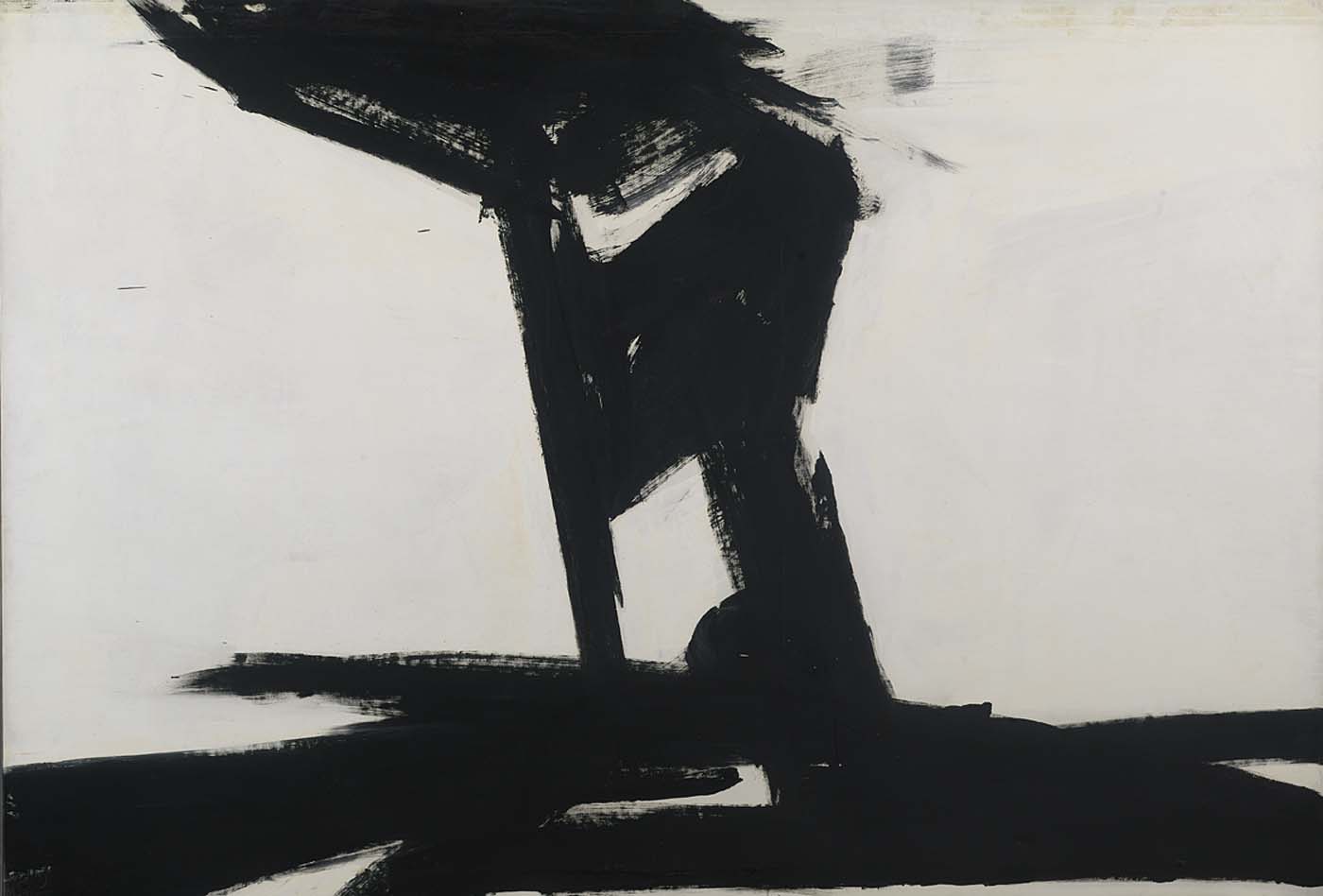


Abstract Expressionism (Royal Academy) – A heavy-hitting overview that did a fair job of making this material accessible to a beginner like me, showing Pollock's versatility, range and the muscularity of his art, expanding my understanding of Rothko beyond his status as a creator of moods, and introducing me to a selection of (apparently well-known) contemporaries. Robert Motherwell's endless evoking of the Spanish Civil War sounded promising but left me cold, but Still's ever-climbing verticals and the "violent marks" of Kline – stark black lines conjuring noirish city scapes – took my breath away, and I found the fleshy eroticism of de Kooning's 'women' period beguiling. The Pollock and Rothko pieces were utterly overpowering, in both scale and content, and a room of drawings and photos included a lovely shot of the former 'disappearing in light' as he dripped onto a vast canvas. For the most part, this was a really interesting, rewarding exhibition, though with the usual moments of nagging unease I get from modern art exhibitions, as some pictures and painters leave me with the distinct feeling that either I'm stupid or they're shit. (3.5)

***

Thanks for reading. And Happy Christmas.

Thursday, 21 July 2016

Sam Fuller, Maggie's Plan, and Buster Keaton on the skids - Reviews #235

And nothing else.


The Big Red One: The Reconstruction (Samuel Fuller 1980/2004)

What doesn't this war movie have?

- Big speeches
- Monologues about 'back home'
- Emotional death scenes
- Acts of heroism
- Anyone with special skills besides a few words of German or Italian

Sam Fuller's masterpiece, released in butchered form in 1980 then 'reconstructed' 24 years later according to his original shooting script, is a war movie like no other: the episodic, wryly fatalistic story of four dogfaces, dubbed 'the four horsemen of the apocalypse' who fight the battles that the writer-director had in World War Two: in North Africa, France, Belgium, Germany and Czechslovakia, under the wing of a taciturn, decent and unsentimental sergeant (Lee Marvin, himself a veteran of the conflict). Fuller himself is immortalised as 'Zab' (played by Robert Carradine), a cigar-chomping wannabe writer with a smart mouth, though his daughter Samantha says she could see him in all four of the horsemen, including the initially cowardly Griff, the most notable non-Luke part that Mark Hamill played during the first Star Wars run.

The Big Red One, named after the 1st Infantry Division of the American army, is a series of brilliant suspense sequences, alternated with poetic, poignant vignettes bearing the mark of memory, that seems to reach an essential truth about war that almost no other film has managed: it's just about survival. There are a couple of incidental flaws − foreigners talking English to one another with foreign accents (a now outdated device) as well as a scene in a castle near the close, which I just don't see the point of − but I found the experience completely and utterly overwhelming, in turn bloody, brutal and enrapturingly beautiful, with moments of tabloid ghoulishness and yet passages of almost Bresson-like humanism. It places you in the centre of battle like nothing else, but has no interest in glorifying its country, characters or the conflict in which they find themselves. It's simply the best war movie I've ever seen. (4)

***


CINEMA: Maggie's Plan (Rebecca Miller, 2015) - The only previous film I've seen from Rebecca Miller was Personal Velocity: Three Portraits, an extremely earnest slice of arthouse feminism that didn't quite come off. This film could hardly be more different: light, funny and accessible, a bit like a Lubitsch movie (it's thematically similar to both Angel and his classic, still contemporary comedy, That Uncertain Feeling) transplanted to the literate middle-class world of Woody Allen and Noah Baumbach.

The story concerns Maggie (Greta Gerwig), who works in arts marketing, sidelines as a complete control freak, and falls in love with a self-obsessed anthropologist and wannabe novelist (Ethan Hawke), bringing her into conflict with his terrifying wife (Julianne Moore). It's an odd combination of competing and probably contradictory ideas, but what it does really well initially is treating these characters as real, really flawed people, and allowing that − rather than Hollywood convention − to determine what happens next.

It also takes them seriously: Hawke nicely plays on his established persona as a sensitive intellectual, Moore seems too broad at first, playing Danish and with a soft 'r', but it's actually a really rounded performance, merely with a couple of quirks, while Gerwig is just magnificent. Again. She reminds me a bit of Jean Arthur, one of my favourite actresses, in that she has a screwball sensibility but roots it in the real. There's a vulnerability, an appealing hesitancy and a melancholia in her heroines, always just beneath the surface, that brings pathos to her comedy. But also her timing is impeccable. Over the past five years, the roles she's been given have mostly been within certain clearly-defined parameters (even stylistically: their outfits are broadly identical), but she never repeats herself: you could put her characters from Frances Ha, Mistress America, >Damsels in Distress, While We're Young (a rare misfire) and Maggie's Plan on screen together, and pick out each one in an instant. Finally, there's one of the best kids' performances I've seen in an age: so natural and unaffected that they must have simply left little Ida Rohatyn to it.

My problem with this movie, though, is highlighted by the ending. I really enjoyed watching Maggie's Plan: it made me laugh, and feel, and even think a little, despite a little flabbiness in the script and the occasional bum note, but the pay-off is just too conventional and convenient; so much so, that it feels like an affront to the rest of the movie. Then I realised that actually that didn't come out of the blue, I just hadn't picked up on the film's thematic failings because I was having too much fun, and because its narrative keeps you guessing through a succession of little twists. While it's dressed in the clothes of contemporary feminism, with a couple of strong female characters and a general disgust at the idea of Gerwig having to support her husband as the breadwinner, its message (if there is one) is actually pretty muddled, while it's very happy to employ worn old rom-com scenarios, including the snowed-in-lovers fallback used in innumerable '30s and '40s romances (especially comedies), from And So They Were Married and Sun Valley Serenade to My Reputation and the Garbo career apocalypse that was Two-Faced Woman, even if it does them very well.

What I love about Frances Ha isn't just its sumptuous monochrome photography and off-kilter humour, it's that it's about something: a relatable portrait of late 20s aimlessness. I'm not really sure what Maggie's Plan is about, beyond its immediate story, and when you think it's about to go somewhere exciting and novel in its final reel, it serves up a piece of wish-fulfilment that really disappointed me. So I'm in an odd position: as a film this is vastly superior to Personal Velocity, which often bored the pants off me as well as leaning on stylistic clichés like freeze-frames, but yet it doesn't feel an authentic statement of any kind, just a highly entertaining, extremely well-acted film that'll keep you laughing and interested for close to two hours. That's plenty, it's often what I feel like, but next to Gerwig's big artistic statements, and from a writer like Miller, I expected something different, and possibly something more. (3)

***

Buster Keaton shorts:


Keaton's heyday was the 1920s, an astonishing period of creativity largely unmatched in the annals of American film, with every single movie he made extraordinary in one way or another. He made the biggest mistake of his year in 1928, signing with MGM, who robbed him off his autonomy, stunted his creativity and then kicked him out the door in '34, by which time he'd become a hopeless alcoholic. Attempting to get back his mojo, he made 16 films at a so-called Poverty Row studio (a film factory with miniscule budgets), Educational Pictures. They're an incredibly mixed mag: some of them are utterly and irredeemably dreadful - embarrassing, depressing dirge bereft of imagination - but there's one genuine classic, Grand Slam Opera, which I reviewed here, and a handful of the others are really good fun. The problem is that it's almost impossible to guess which film will fit into which bracket, so I watched the lot. The final 10 are here:


The E-Flat Man (Charles Lamont, 1935) - This gentle spoof of Frank Capra's massively successful It Happened One Night - which sees Buster eloping incompetently with regular co-star Dorothea Kent - might not have cheered me before I started my Educational expedition, but viewed alongside some of the most upsetting comedy shorts I've ever seen, it's a welcome interpolation. The film starts badly but picks up, with a few strong gags and stunts that hark back to his silent classics Cops (that horizontal escape from the frame), Neighbours (as he's lifted onto a rooftop), The Scarecrow (a famous bit directly lifted from the 1920 movie) and The General (as he sits on the outside of a train before it unexpectedly sets off). Buster's persona in these shorts isn't very attractive: he's clumsy, finickity and frightened, light years from the energetic, era-defining young man who streaked like a comet across the sky of twenties cinema, and is now saggy, glum and more interested in slightly re-arranging items he's dislodged, like a proto-Hulot. He's also offered no thought into how you translate silent comedy to the sound era: so there's merely action without dialogue or the rhythmic, mood-enhancing narration of a score. In that damaging, alienating context, at least here there are some proper jokes, delivered with a hint of the elan that made him a superstar. (2)

The Timid Young Man (Mack Sennett, 1935) - Dire Keaton short incorporating the talents of washed-up Keystone Kops director Mack Sennett and former Laurel and Hardy heavy Tiny Sandford to absolutely no effect. Buster is Milton, the timid young man of the title, who flees a prospective wedding to bad-tempered Kitty McHugh (sister of then ubiquitous character actors Frank and Matt), picks up man-hating hitchhiker Lona Andre and gets into a spat with hulking bully boy Sandford, after inexplicably ramming his car off a cliff. Andre is appealing, the final shot is great and there are a couple of halfway-decent ideas somewhere in there, but they're drowned out by atrocious writing, painful running jokes and a succession of large continuity errors. (1)

Three on a Limb (Charles Lamont, 1936) - Buster romances a woman with two tough boyfriends in this weak short. A couple of the gags are funny - particularly the hero volunteering to a traffic cop that he also went through a red light - and womanising hard nut Grant Withers (later Ike Clanton in Ford's My Darling Clementine) gives the film a shot in the arm when he arrives, leading to an agreeably frenetic if rather botched ending, but most of it's just incredibly obvious and uninspired, the star's reunion with his nemesis from College and The Cameraman, Harold Goodwin, another pale shadow of past glories. (1.5)

Tars and Stripes (Charles Lamont, 1935) - Keaton's "in the Navy now" short is incredibly embarrassing and completely demoralising: painfully unfunny garbage with barely an ounce of ingenuity (and what there is restricted to the final two minutes). He's a hapless sailor perpetually in trouble with a superior (Vernon Dent) who keeps falling in the sea. Seeing Buster playing with a cannon calls to mind his Civil War masterpiece - The General - made eight years (and an entire lifetime) earlier, which serves only to make it even more upsetting. It looks like the studio, Educational, was so excited about the chance to film at a naval base that they rushed in without actually coming up with any material. The results are horrid. (1)


Blue Blazes (Raymond Kane, 1936) - Keaton's follow-up to Grand Slam Opera is a funny short with the star as a fireman, following that successful old formula in which he goes from patronised zero to celebrated hero. This one starts inauspiciously but the second half is great value, with three huge laughs. Buster's makeshift fire engine is such a great gag. (2.5)

The Chemist (Al Christie, 1936) - Another one that starts slowly but is really motoring by the end. Here he's a scientist working on various revolutionary powders, which make creatures multiply in size, women fall in love or things go bang. When he's illustrating these during a laughless sequence in the first reel, all you can think is: at this time, Chaplin was working on Modern Times. But by 1936 Keaton had got over his drink problem and got his confidence back, and from the time he's abducted by gangster Donald McBride (later a ubiquitous character comic, who looks a lot like Butch from Tom and Jerry) the good gags come thick and fast, leading to an un-PC closer that I really didn't see coming. (2.5)

Mixed Magic (Raymond Kane, 1936) - A good idea that really doesn't work, with Keaton as a hapless assistant to a tyrannical magician. There's barely a snicker, though you learn how a few magic tricks work and the star's Arabian outfit is cool. (1.5)


Jail Bait (Charles Lamont, 1937) - A fun little film, with Buster framing himself for murder, so his best mate can investigate the real crime. Again, the establishing of the plot is tedious, but the sequence in which he's trying to get arrested by a disinterested cop is genuinely hilarious, and there are some great ideas in here, including an outfit that's half convict-half guard, so his character can survive a prison break (Buster re-used the joke as a gag-writer on A Southern Yankee, a remake of The General starring the abominable Red Skelton), as well as a basic premise essentially reworked in the Fritz Lang thriller, Beyond a Reasonable Doubt. The sign in the window of the jeweller's, incidentally, is a lift from Keaton's early silent classic, The Goat. (2.5)

Ditto (Charles Lamont, 1937) - An incredibly tired farce, with unfortunate echoes of Keaton's gobsmacking technical achievement, The Play House, which also concerned itself with twins − while taking the premise rather further! The opening gag is poignant, the rest is just shit. (1)

Love Nest on Wheels (Charles Lamont, 1937) - The last of Buster's 16 films at Educational is a lousy, predictable short that lifts most of its better moments from The Bell Boy, which he'd made with Fatty Arbuckle, 19 years earlier. It's fun to see his family acting alongside him, especially his mum Myra chewing on a corn pipe, but the material is very weak. (1.5)

Here's the overall ranking for the series (with links to the other six reviews):


Grand Slam Opera (3.5)
Hayseed Romance (3)
Jail Bait (2.5)
The Gold Ghost
Blue Blazes
One Run Elmer
The Chemist
The E-Flat Man (2)
Allez-Oop
Three on a Limb (1.5)
Mixed Magic
Love Nest on Wheels
The Timid Young Man (1)
Tars and Stripes
Ditto
Palooka from Paducah

My conclusion is that Buster simply hadn't devised a coherent way of translating the essence of his silent successes to the sound era. Even when his imagination is firing and there are brief passages of brilliance, you know that his vision will be thwarted by a lack of money or a lack of clarity, that his momentum is liable to be stopped dead by a stilted, awkward dialogue scene at any moment, and that whatever rare genius was crackling through him in his heyday has now departed. After a similarly problematic period at Columbia Pictures, the star abandoned attempts to revive his solo film career and settled into character parts. Occasionally these were poignant and beautiful (as in the barely-seen San Diego, I Love You, Billy Wilder's sensational Sunset Blvd. and Chaplin's Limelight), but more often they showed a man betrayed by the studio system and his own demons, carrying on as best he could, because there was nothing else to do. There was a happy ending, though: as he went back to his stage roots, dried out and inspired anew by his third wife, he became a hit in Paris. Then the critical and popular renaissance of his 1920s work (tied to the rehabilitation of silent movies as a respected artform, rather than a laughing stock) saw him lauded across the globe as a cinematic pioneer and a true original. Finally, in 1965 (a year before his death), he returned to silent film itself, travelling across Canada for the gentle, self-homaging film, The Railrodder, a fitting finale with nods to many of his early classics.


If you want to see the Educational films and make your own mind up, they're on this DVD, 'Lost Keaton'.

The movie stills are from busterkeaton.com.

***

Thanks for reading.

Tuesday, 20 April 2010

Wolverine, the Black Sox and Meryl Streep being Irish - Reviews #30


*SOME SPOILERS*
Eight Men Out (John Sayles, 1988) is a meticulous reconstruction of the Black Sox scandal, which saw a gaggle of poorly-paid Chicago baseball players agree to throw the 1919 World Series for 10 grand a piece. Based on a 1963 novel, Sayles' straightforward, detailed telling focuses on Buck Weaver (John Cusack), pitcher Eddie Cicotte (David Strathairn) and the legendary "Shoeless" Joe Jackson (D.B. Sweeney, who is just superb). Though Weaver sat in on meetings between the conspirators, he never took a penny and was singled out in contemporary press reports as the White Sox's top performer during the series. Cicotte initially resisted organiser Chick Gandil's overtones, but ultimately buckled after he was denied a bonus by club owner Charles Comiskey. Jackson's role remains disputed, though historians tend to lean towards his innocence. The three were ultimately banned from baseball for life, along with five other players.

We start with an uplifting opening sequence that sees the rampaging White Sox clinch the pennant. Superbly scored, shot and edited, with one particular high spot that sees Jackson thump a home run, the scene may just have got me interested in baseball. Returning to the club house, the players find a celebratory crate of wine and decide it's a good time to enquire about their long-promised bonus. You're looking at it, Comiskey's sidekick tells them. It's flat, naturally. With pay so low and their boss backtracking on his word, Sayles suggests, the players are plum pickings for unscrupulous gamblers, including Sleepy Bill Burns (Christopher Lloyd, who's distractingly artificial), Billy Maharg (Richard Edson) and Sport Sullivan (Kevin Tighe), all three ultimately backed by multi-millionaire gangster Arnold Rothstein (Michael Lerner). When the series starts, and the on-field fluffs keep coming, sportswriters Ring Lardner (Sayles himself) and Hugh Fullerton (Studs Terkel) smell a rat - and start digging.

Sayles slightly contracts the timeframe for dramatic purposes - the incident with the wine happened after the team's 1917 series win, while the team played on into 1920 and the players' trial ended in 1921 - but shows an impressive fidelity to the bulk of the facts that extends to the locations of meetings. Where he falls short is in successfully elaborating on the motives of the crooked players, beyond the pay packet, which wasn't that substantial. Though Sayles shows Rothstein's exact movements during a matchday and Cicotte's aggressive pitch that signalled the fix was on, he skimps on the explanatory conversations that would have filled in various blanks and leaves out the odd telling detail, curiously neglecting to mention Cicotte's expensive new farm. Or Gandil's swift departure for California, with $35,000 in his pocket.

It's difficult to fault the rendering of time and place and, at least to this unskilled eye, the restaging of the matches is extremely adept and exciting. Cusack's look of bewilderment, alienation and frustration on the field as he sees the team crumbling around him is moving and the scenes of the Sox briefly reneging on their pledges and going hell for leather are triumphant, but given the absolutely fascinating, highly emotive subject matter, Sayles doesn't really articulate the scale of human drama present, or provide the social and emotional context to make Eight Men Out a great, even definitive take on the scandal. That the gut-smacking sledgehammer to end them all, a young boy's tearful plea to his idol for some form of explanation ("Say it ain't so, Joe") doesn't pack a wallop is a sign of the film's failings. Indeed, the film doesn't strike quite the right note until the devastating, bleached-out coda, which works extremely well and set the tone for the following year's Field of Dreams, another movie dealing with the Shoeless Joe legend. Eight Men Out is a highly engrossing, very well-acted movie, but given the writer-director and the entirely compelling topic, it doesn't quite hit the heights. (3)

***


The Perfect Specimen (Michael Curtiz, 1937) is a fun Warner Bros comedy, with Errol Flynn cast against type as the eponymous figure: a sheltered heir to a small fortune, imprisoned within the ivory towers of his grandmother’s estate. One day sassy chick Joan Blondell smashes through the fence and drives off with his heart. Not literally, of course, that wouldn’t play so well to a mainstream audience. The film is episodic and slight, but unapologetically so, with some amusing set pieces that include Flynn’s roadside punch up with hopeless pugilist Allen Jenkins. The ever-likeable Jenkins (later the voice of Top Cat’s Officer Dibble) is just one of a heap of well-known character actors turning up here, along with Hugh Herbert, May Robson, Harry Davenport and Edward Everett Horton – stealing the film hands down as a pathetically subservient, nervy personal secretary. There’s the odd concession to high culture, with a recurring reference to Cervantes’ Don Quixote, but mostly this is standard screwball stuff, utilising the considerable charm of its impressive cast. (2.5)

See also: Flynn's screwball follow-up, Four's a Crowd.

***


Park Row (Samuel Fuller, 1952) – Maverick director and former tabloid hack Sam Fuller made 22 features. This 1952 labour of love remained his favourite: a hymn to the founders of modern American journalism that begins with a long, sentimental speech about the titans of Park Row (America’s Fleet Street) and features a great action sequence in which crusading editor Gene Evans repeatedly dashes a low-level gangster’s head against a statue of Benjamin Franklin. Nice.

Our story proper begins in that most Fuller-ish of places, a saloon. There, a bunch of hacks on New York’s bestselling daily, The Star, spends their evenings swilling booze and exchanging dreams and bitter bon mots. When idealistic reporter Gene Evans takes a break from the bar to nail an epitaph to the grave of an executed man that reads ‘Murdered by The Star’ – an acerbic bolt of pure fury from Fuller that’s among the neatest things he ever did – the paper’s owner (Mary Welch) marches in, sacking him and his chums on the spot.

So Evans starts up the paper he’s always dreamt of – The Globe – and cheery, impressionable young buck George O’Hanlon throws himself off the Brooklyn Bridge for a laugh, giving him a first-rate first splash. But Welch doesn’t take such competition lying down, especially not from a man she quite fancies, and so begins a circulation war that spills over into resentment, hatred and good old-fashioned violence.

As you would expect, Fuller has a real feel for the material, filling his script with the usual insider terminology and slang. Leaving just enough in his account for some vodka and cigars, the writer-director-producer spent the rest of his savings – some $200,000 accrued making hit war films – on this pet project. Much of the cash went on a fastidiously complete recreation of the Park Row of his memory, including a multitude of four-storey buildings. The film’s designers queried his logic, saying the tops of the structures would never be seen on camera. Fuller said he didn’t care: "I had to see it all. I had to know everything was there, exact in every detail."

The sets are constructed in an ingenious way that allows Fuller’s camera to wind his way through the nooks and crannies of the offices, the intensity of the shooting schedule belied by the wealth of innovation behind the camera. The director’s crab dolly, a wheeled platform that allowed the camera to move in any direction, aids the spectacular direction, getting us up close and personal during Evans’ periodic stomps up and down the titular street, generally looking for someone to thump.

Park Row is a punchy, sometimes dynamic blend of heartfelt sentiment and acerbic cynicism that could only have come from one director. Whilst it occasionally appears over-earnest or self-congratulatory, and has too much repetition across its 80 minutes, it’s flavourful and immersive, with a no-name cast that ideally suits its ink-stained universe. (3)

***


Ah yes, the old trick of filling the poster with pictures of boobs. To be honest, if you went to see the film based on this, you'd be disappointed. Steiger's Native American wife wears an unrevealing tunic for the whole film. At no time does she dig out a scanty green number and expose her heaving chest.

Run of the Arrow (Samuel Fuller, 1957) is an embryonic version of Dances With Wolves in director Sam Fuller's familiar tabloid style: short, flamboyantly written and with the best stuff right at the top. It begins on Palm Sunday, 1865, "the last day of the war between the states", with Fuller taking us to the very heart of the conflict via a mesmerising opening tracking shot. Corpses are strewn across the smoking landscape, where an unmanned cannon has fallen silent, smashed to pieces. An air of desperation and exhaustion hangs heavy over the action. A Yankee soldier on a knackered horse staggers towards some unknown, meaningless destination. A shot rings out and he slumps to the ground. A Confederate infantryman (Rod Steiger) lowers his gun and moves forward. Ransacking the man's pockets, he finds a food parcel and begins eating the spoils off the dying man's stomach. That line from The Night They Drove Old Dixie Down comes to mind: "We were hungry, just barely alive." Having had his fill, Steiger straps the man to the guy's own horse, and takes him to a field hospital. It's a brilliant intro. But then Steiger starts talking and the film goes downhill.

Accents are a funny thing. It's nice when someone gets a voice down pat, but it often feels like window-dressing. And illogical window-dressing at that, since Nazis don't generally converse with one another in heavily-accented English. Jimmy Stewart gave a great performance in The Shop Around the Corner without attempting a Hungarian accent, and Claude Rains was a fitting French captain in Casablanca despite his distinctive English tones. Keeping your own accent also means you avoid taking a road to supposed 'authenticity' that's full of pitfalls. A terrible voice can sink a film, or at least prove a major distraction, and that's the case here. Playing a second-generation Irish immigrant fighting for the Confederacy, who finds a new home with the Sioux, Steiger opts for an accent that can best be described as 'South Asian Norwegian'. Perhaps he was confused about playing an honorary Indian, because no matter how bold and progressive the film is, offering an insightful look at Sioux customs, it still has a hero who sounds like a sort of Slumdog John Qualen. By d'yevil.

Such self-satisfied broadsides aside (I'm sorry, I really do like Fuller), Run of the Arrow turns out alright. The titular rite-of-passage - which sees Steiger forced to outpace some rampaging Sioux, or else find a new skin - is exciting and well-paced, with an intelligent follow-up in the second half. Fuller's much-celebrated focus on the feet during that sequence was actually enforced by Steiger's sore ankle, but elsewhere there's some strong direction that makes the most of several ambitious, realistic sets. Steiger is periodically effective, even hampered by that ridiculous voice, with Ralph Meeker perfectly cast as his main nemesis - a cigar-chomping Indian-hater - and Brian Keith an effective moral yardstick, though the rest of the cast is largely nondescript. The interesting, well-researched portrait of the Native American lifestyle is ultimately overtaken by a drawn-out action climax that begins effectively, with an interesting subversion of Western folklore that sees the Indians riding to the rescue, but frankly goes on a bit. Fuller's script also lacks clarity, even when dealing with his favourite theme of redemption, which is very unusual for this filmmaker.

In the end, Run of the Arrow is a fascinating, admirably ambitious film, but it's a long way from being a classic, with confused plotting and an inability to build on its fascinating opening scenes. On this evidence, it's a damn shame that Fuller never made a full Civil War picture, as he seems ideally suited to the material. But then again, every Fuller film starts and ends with a bang, and though John Ford's 21-minute section of How the West Was Won ('The Civil War') is extraordinary, his feature-length treatment of the conflict he remained so obsessed with, The Horse Soldiers, is a shambles. (2.5)

Trivia note: This was the first movie to use blood squibs. No Run of the Arrow, no Wild Bunch. A small price to pay for that peculiar thing Steiger is doing with his larynx.

***


C'me 'ere Rogue: Paquin's mutant hitches a ride with Wolverine.

X-Men (Bryan Singer, 2000) is a superior comic book yarn, thanks to intelligent writing and deft characterisation, alongside the whizz-bang thrills. Anna Paquin is Rogue, a teenage girl who goes for her first kiss and leaves the recipient in a coma. She’s one of a breed of mutants left with powers they can’t control after a leap forward in evolution. Allying herself with a fellow mutant, cage fighter Wolverine (Hugh Jackman), Rogue is taken under the wing of Professor Xavier (Patrick Stewart), who wants to forge a peaceful future for mutants and humans alike. Unfortunately his old ally Magneto (Ian McKellen) thinks a war is brewing and is keen to get in some pre-emptive strikes, ideally using the super-powers of Xavier’s students. The film has its shortcomings, relying too heavily on CGI effects – which date very quickly and don’t really have the requisite movie magic – and failing to flesh out several minor characters. But it’s a very well-scripted, engaging film: sometimes funny, frequently touching and with impressive star turns from Paquin and Jackman. Roll on X-Men 2! It came out in 2003? Oh I see. (3)

***


Dancing at Lughnasa (Pat O'Connor, 1996) is an oddly muted drama in which nothing really happens, for an hour and a half. "Progress is a comfortable disease," observed grammar-phobic poet e e cummings. For him, maybe, but for five unmarried sisters in '30s Ireland, it's anything but, as the march of time throws their life together into jeopardy. The spectre of industry and dwindling school rolls are looming, threatening to put teacher Meryl Streep (who is really annoying here, sometimes intentionally) and professional knitters Sophie Thompson and Brid Brennan out of work and break up the family unit. Not that they seem very happy to begin with, bickering and casting light on another's neuroses in a way that becomes quickly wearing very quickly. There's love in the house, for sure, but there's a lot more repression and glumness, much of it uninteresting and trite.

As well as the breadwinners, we meet happy-go-lucky Kathy Burke, fifth sister Catherine McCormack - spending a summer with returning lover Rhys Ifans - a clergyman brother ravaged by dementia (Michael Gambon), and young Darrell Johnston, the story told through his eyes. The film has uniformly good performances, but it's often cliched and unenlightening, with an opening and closing voiceover that apes How Green Was My Valley (see #19) and seems to bear little relation to the action in between. On the plus side, occasional moments of insight peek through the overbearing script and there are two really good scenes. One has the family flicking through a photo album and recalling lost love; it's a quiet tour-de-force from Burke. The other, which partly gives the film its title, is simply great, as the sisters begin dancing to a song on the radio, their celebrations growing ever more feverish until they spill out into the yard. It's a moment of sheer wonder amid much muddled misery. (2.5)