Showing posts with label 2012. Show all posts

Monday, 5 December 2016

Stewart Lee, Stories We Tell and extremely melancholy whores − Reviews #250

We're at a quarter millennium of reviews, but they're not getting any better. This time: autobiography, corrupt cops and more (but worse) Huey Long.

LIVE


Stewart Lee: Content Provider at Leicester Square Theatre (02/12/16)
− A show with all the virtues and vices of a remarkable, occasionally infuriating stand-up. It's been marketed as Lee's first full-length show in five years, but that's semantics: it's simply that he's no longer honing half-hour segments for a TV show, since that TV show's been cancelled. As he pungently points out, though, the BBC does still have the resources to fund a reboot of Are You Being Served?, which given the demise of the British department store should rightly be filmed in an Amazon warehouse, where Mrs Slocombe makes various oblique references to her cat, as a collection of Eastern Europeans look on in confusion.

And really it's no more coherent or cohesive than his previous shows, perhaps less so, without the through-line that his intro (or sporadic meta-commentary) suggests. He pitches it as a commentary on the life of the individual in this social media age, or says it would have been if Brexit and Trump hadn't got in the way. To be honest, that's to his advantage, as he's superb on politics, great at providing a dual-level experience − utilising a constructed persona who's vain, arrogant and contemptuous of his audience and his peers − and able to corral his audience's anger and angst into catharsis, without giving it an easy ride.

But whereas he deliriously, hilariously dismisses Game of Thrones without having seen it, his lack of understanding of modern technology critically undermines his deconstruction of it. There are many things wrong with social media, but if your starting point is that you don't understand the point of Twitter and you think Tinder is a paid-for app where you tick boxes about your interests, then you're fatally undercutting the significance of anything you have to say on the subject. That's the starting point of a Grumpy Old Men audition, not the bleeding edge of British comedy.

That hobby horse also powers a never-ending routine about homemade S&M equipment in the '30s, which extends a throwaway bit from his last tour into an interminable rant about the easy availability of everything in the modern world. I like the idea of alighting on something so perverse and obscure, I admire comics who play with the very rules of stand-up, and I know Lee's repetition, recounting and belabouring of a point are as integral to his work as the principles that underpin it, but the routine doesn't work. If he'd done something as conventional as tying it to an indictment of nostalgia, it might have, but as it is it just sort of lies there, a hollowness at its centre. I feel it's also beset with a pretentiousness that can stop Lee's shows stone dead, jettisoning much of the audience while giving a few of them the chance to show very loudly that they understand the joke; it was the same in January when he brought an unbearable joke about anarcho-syndicalists.

There's material here that's as good as anything anyone is doing right now. Surrounded by dozens of £0.01 DVDs from less-acclaimed, more popular comedians, he revives his assault on Russell Howard by seizing on a TV trailer in which the younger comic says that after running out of loo-roll he wiped his arse on a sock. Lee seizes on this faux-proletarian utterance by declaring it "observational comedy from a Victorian mental hospital", launching him into a superb juxtaposition of chummy Live at the Apollo-style stand-up and horrific human rights violations.

He follows it with an extended bit about other comics' reactions to his taunting of Howard (the sentence: "Why you say those things about Russell Howard, mate?" said perhaps 80 times, Lee's face and voice horrifically contorted) which is daring, inspired, stupid, clever, very funny and deceptively deep, while recalling interviews with Howard, John Robins and others about Lee's thin skin and yet how impervious he is to the idea that he might be genuinely upsetting young comics who idolise him by destroying their reputations in public. (I should add that I've met Stewart Lee a couple of times (once after a show and once on the street) and he was really nice and weirdly shy.)

He's now in an exalted position and I'm glad, because he's an artist who takes chances, someone with a distinctive, doggedly unconventional style, and I think that pretension is often merely what happens when your ambition overtakes your ability or the boundaries of the form, boundaries that are moved over time. But that doesn't mean you can't point out shortcomings in his work, even if he tends to obliterate anyone who does so in a whirlwind of blistering sardonism and repetition. (3)

***

FILMS


Stories We Tell (Sarah Polley, 2012)
− If you're ever worried you might be oversharing, watch Sarah Polley's immaculate 2012 documentary, Stories We Tell, in which the incisively intelligent, staggeringly honest writer-director of Take This Waltz lays bare her family's history while telling the story of her late mother, Diane.

Like her earlier film, it's a movie that talks about things we know and recognise and are terrified by, and yet rarely discuss: the centrality of sex to everything, the difficulties and disappointments of relationships, and the often irresistible attractions that threaten to sever those crucial ties, perhaps irreparably. It's a film about secrets, about stories, about a search for identity, about the way we manufacture narratives to make sense of our memories and our lives.

At the start of the film, one of Polley's relatives asks why she's making it, since who else could be interested in this story? The answer, I think, is everyone. Because if you’re honest, you'll surely recognise parts of yourself in some of these characters, and perhaps in all of them. And all of them are honourable in some ways, spitefully selfish in others, wrestling with agendas and virtues and tragedies.

I don't want to say any more about either the subject or the style, as to do so would numb the impact of its surprises, but it is a remarkable film: haunting and bravura and with a genuine ovaries-out bravery that knocked me sideways. (4)

***


The Seven Five (Tiller Russell, 2014) − The apparently shameless Michael Dowd waves his arms about a lot as he explains how he made thousands of pounds committing robberies and drug deals as a New York cop in the 1980s. This is basically Cocaine Cowboys but not set in Miami and a bit more nuanced, thanks to a minor but appreciable grasp of morality and a central bromance as Shakespearean as the relationship between Paul and Frances in last week's Apprentice. (2.5)

***


Tight Spot (Phil Karlson, 1955) − A clunky, unconvincing crime film, with hapless lurches in tone, about luckless model Ginger Rogers sitting in a hotel room talking, as she tries to wriggle out of testifying against an underworld kingpin. Edward G. Robinson is the tough, plain-talking DA., with Brian Keith an irascible, sweaty cop who starts to warm to her.

For an hour, it's exceedingly stagy, its mannered script cursed with a uniquely irritating sense of humour; though there is one really sweet scene in which Rogers and Keith dance to a song on the radio, and the thaw sets in. Then finally the film judders into real life, transcending its origins to set up for a tense climax with a couple of really nice little touches in both the script and direction.

I've only ever seen Rogers give one great performance, in Gregory La Cava's dazzling comedy-drama Stage Door and she's all over the shop here (as is her accent), in a role that would have best suited a 1933 Barbara Stanwyck; for all that, she has odd moments of clarity and believability, and as a HUAC cheerleader doubtless cherished getting to state the case for informing. Keith isn't bad, if rather too hulking and obvious, so it's left to Robinson to take the acting honours, as assured as ever, in easily the least interesting of the three parts. (2)

***

TV


Huey Long (Ken Burns, 1985)
− A poor documentary about one of the most fascinating figures of the American century: the rabble-rousing Louisiana radical (and spit of Frank McHugh), Huey Long, who wielded more power over his state than any politician in history and was gearing up to run for president when he was gunned down in 1935.

I've just read T. Harry Williams' phenomenal, Pulitzer Prize-winning biography and, next to that, Ken Burns' film seems embarrassingly trite and shallow, conspicuously lacking in a coherent narrative voice. Williams got to the crux of every matter: from charges of fascism and racketeering to laying bare Long's extraordinary qualities and his acts of petty-minded vindictiveness. Here, one person says one thing, another says the opposite, and you've no idea which of them is telling the truth.

I was interested to see Robert Penn Warren interviewed, as Long is mostly remembered today (if at all) as the inspiration for his book, All the King's Men − twice adapted as a film − but his only telling contribution is to read a couple of excerpts, the second accompanied by a touching montage.

It's slim pickings all round, really. Long's son Russell provides the best of the insights − including the memorable contention that by subverting democratic institutions and safeguards, his father actually promoted democracy, because for the first time people got what they had voted for − Randy Newman sings a nice song over the closing credits, and there are a few choice archive clips, but just read the book. (2)

***

BOOK


Memories of My Melancholy Whores by Gabriel García Márquez (2004)
− More profound and moving than any novel about a 90-year-old hiring a 14-year-old prostitute for his birthday has any right to be. Its language like silk or sand, its narrator pitiful and poetic and precise, his moments of nobility and beauty offset by a pestilent past and a pitiless self-awareness, as he moves from voracious self-involvement to reflective idealism and finally a cagey understanding of the same. Some of its grace notes (like citing numerous books I could hardly break off to read) seem perversely obscure, as does Márquez's starting point, as if he's trying to prove that he can fashion something rhapsodic, pure and mature out of the most offputting material. Or he's just a bit sexist. I'm new to his work. (3.5)

***

Thanks for reading.

Wednesday, 5 February 2014

Ten things I learned about Woody Allen

Woody Allen - A Documentary (Robert B. Wiebe, 2012)


First things first, as it's all over the papers. I don't know the truth about Dylan Farrow's allegations against Woody Allen. I'm a huge fan of Allen as an artist, and would hate for these things to have been happened (I haven't been able to watch a Polanski film in years), but the crucial thing is that the truth be established. This typically superb Onion piece says something about the quandary facing fans, as trivial as this is in the context of the allegations.

It seems an odd time to watch an Allen doc, then, but it arrived in the post recently, I had a spare three hours, and this insightful, incredibly entertaining film is chiefly about Allen's work, rather than his life. And rather wonderful it is too, if you can put the headlines briefly out of your mind, full of intimate interviews and rare footage, even if it becomes a little shapeless towards the end, and seems to think Match Point is a great film. The clips from that and Vicky Cristina - along with on-set footage from You Will Meet a Tall Dark Stranger - do illustrate just what a creative slump he was in prior to Midnight in Paris. The doc scores a (3.5).

Ten things I learned:

1. Allen (born Alan Konigsberg) chose a nom de plume because he didn't want people at school asking him about his gag-writing for newspaper columnists, and picked "Woody" because it was the first thing that came into his head.

2. As a nipper, he was too active and "too much of a child" for his mum. She later regretted being so strict, saying he would otherwise have been a softer, warmer and less impatient person.

3. He regards his first four or five films as funny but "essentially trivial".

4. What does he see as his legacy? If his life had been snuffed out by a nanny at an early age, as it almost was, the world "would be poorer a number of great one-liners".

5. Production nuggets: cinematographer supreme, Gordon Willis, was known as "The Prince of Darkness" due to his grouchy disposition and fondness for low-level lighting (as showcased in The Godfather). The first scene he ever filmed for Allen was the celebrated lobsters sequence in Annie Hall. He shot Manhattan in super-widescreen (2.35:1) because Allen thought it would be interesting to make a small romance on that visual scale. Woody was never as specific as to tell him to shoot Stardust Memories in a Fellini-esque way. Casting director Juliet Taylor kept a folder of "Woody faces": eccentric-looking character actors she thought he could use.

6. Allen decides his next project by emptying a draw full of scribbled ideas onto his bed and going through them one by one, waiting for inspiration to strike. One says: "a man inherits all the magic tricks of a great magician".

7. Purple Rose originally had Michael Keaton in the Jeff Daniels part, but Allen thought him too contemporary.

8. He sends a personalised but formulaic covering letter to every actor along with the script, essentially saying they can embellish it and chuck out the speeches they hate, and if they find the prospect of working on this one nauseating/disgusting/grim, he still hopes they can work together in this lifetime. He only seems to have signed off the one to Scarlett Johansson with "I'm a big fan."

9. He claims Hannah is a bleak film that audiences thought was optimistic due to his incompetence (I think this might be a fib if you look at the final scene, which he admittedly added belatedly).

10. Farrow confronted Allen about his pictures of Soon-Yi Previn over the phone, whilst Allen was with producer Robert Greenhut. Which must have been quite tricky for everyone involved.

It's highly recommended for committed Allen fans, though I'd caution against others getting a copy, because if you hate him you'll hate this, and if you're still investigating his work there are a lot of spoilers. I'll leave you with this beaut from one of the stand-up clips:

"I had a rough marriage. Well, my wife was an immature woman and, ah, that's all I can say, she... see if this is not immature to you: I would be home in the bathroom, taking a bath, and my wife would walk right in, whenever she felt like, and sink my boats."

See also: The first in my "Ten things I learned..." series was on Michael Winterbottom.

Thursday, 2 August 2012

The greatest movies of all time - my Sight and Sound ballot


Despite this special effect, Vertigo has been named the greatest film of all time.

This week, British film mag Sight and Sound published its list of the 50 greatest movies ever made, as voted for by critics. Having topped the list since 1962, Citizen Kane came second this time, with Alfred Hitchcock's Vertigo replacing it at number one. The changing of the guard has made headlines worldwide, with journalists confusedly declaring that Kane is "no longer the greatest film of all time".

For me, Kane remains as good a bet as any, its timeless screenplay and arresting performances allied to a matchless sense of innovation that changed the face of movie-making. Taking his lead from a pair of John Ford films, Stagecoach and The Long Voyage Home, Welles proceeded to comprehensively re-write the rules of cinema, employing jaw-dropping deep focus photography (developed with the legendary Gregg Toland), ceilinged sets that opened up the possibility of outlandish camera angles and an arsenal of frankly astounding visual tricks, all to serve a riveting, moving, aggressively non-linear narrative in which a man gains a fortune but loses his soul.

I like Vertigo - it's an interesting, masterfully-directed movie with a fine central performance from Jimmy Stewart, and a cut above much of Hitchcock's later work - but like rather too many films on the list, it engages the brain rather than the heart. And if I was sitting down to watch a Hitchcock film tonight, for entertainment rather than to write a thesis about it, I can think of a dozen I'd rather see. As Pauline Kael said about The Searchers (more of which later): "You can read a lot into it, but it isn't very enjoyable." In fact, that's how I feel about too many films on the list.

Jean-Luc Godard - everyone's favourite annoying, self-satisfied cinematic philosopher - has four entries on the list, including the disappointing Le Mépris, while Jacques Tati's interminable Play Time also makes an inexplicable appearance. The Bergman entry is the intriguing Persona, rather than the affecting Wild Strawberries, the Fellini movies are 8 1/2 and La Dolce Vita - rather than La Strada and Nights of Cabiria - both of which prize dazzling direction over human emotion, while the Renoir isn't La Grande illusion, but La Règle du jeu. Kubrick wasn't renowned for his weepies, but Paths of Glory can destroy a man; can the same be said of 2001? And between them, Man with a Movie Camera, Battleship Potemkin and Stalker don't offer a character you can engage with on any level, even if for fans of montage, double-exposure or having a three-hour nap (Stalker), there's lots to enjoy.

There are, of course, moving movies amongst the selection. Chaplin's exquisite City Lights is there, Truffaut's Les Quatre cents coups, and Dreyer's startling Passion of Joan of Arc, one of the most intense experiences that cinema has to offer. Sunrise is a perfect marriage of style, poignancy and entertainment; Bicycle Thieves makes me weep buckets. But it seems a list of slightly skewed priorities: over-familiar and celebrating the cerebral over the emotional.

***

My list

For reasons too obvious to document, I wasn't invited to vote in the poll (as you can see, I'm not bitter), so I thought I'd tack up my own top 10 here. All of which have made me cry, because I am a girl.


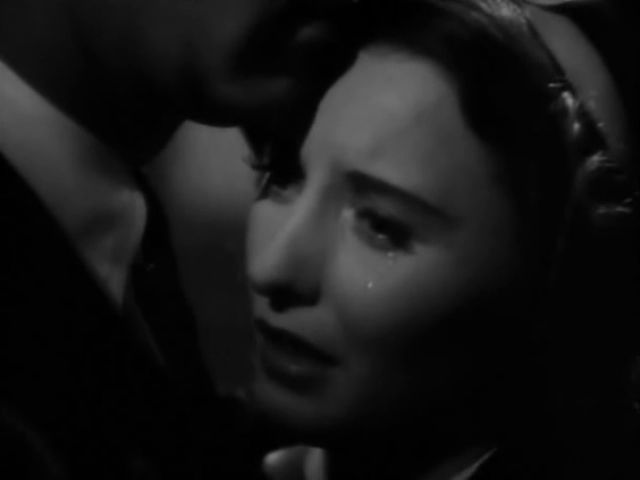
Remember the Night (Mitchell Leisen, 1940) - Written by comedy legend Preston Sturges and uniting the stars of Double Indemnity four years ahead of the fact, this holiday movie begins as a screwball comedy but morphs into a matchlessly moving romance, as prosecutor Fred MacMurray plays a dirty trick on shoplifter Barbara Stanwyck, then winds up spending Christmas and New Year with her. Spotlighting Leisen's startling visual sense and led by pitch-perfect performances - supporting players Beulah Bondi, Elizabeth Patterson and Sterling Holloway each given one scene in which to sparkle - it's a mesmerising, magical movie.


The Life and Death of Colonel Blimp (Michael Powell and Emeric Pressburger, 1943) - What does it mean to be British? Powell and Pressburger have a few ideas, serving up a mixture of character study, history lesson and state-of-the-nation address, as they chart the life of colonial-soldier-turned-Home-Guard instructor Clive Wynn-Candy (Roger Livesey, giving the performance of a lifetime). Churchill hated it, but what the hell did he know?


Hoop Dreams (Steve James, 1994) – You won't forget this documentary in a hurry: four years (and three hours) in the company of two teenage basketball players from inner-city Illinois who dream of the big-time, seeing the NBA as their ticket out of poverty. Shocking, exhilarating and heartbreaking, with astonishing twists of fate, it's a virtuosic, unforgettable film that has more to say about life itself than any other movie I've ever seen.


Ghost World (Terry Zwigoff, 2001) - A melancholy, bitingly hilarious crystallisation of teen ennui, which sees school leaver Thora Birch gravitate towards loner-with-lumbar-support Steve Buscemi. Beautifully written, superbly played and endlessly quotable. "It's America, dude, learn the rules."


Les enfants du paradis (Marcel Carne, 1945) - The towering achievement of French cinema: a portrait of a vanished world, a hymn to the art of acting and an allegory about Free France, boasting three of the finest performances ever committed to celluloid. Carné's handling is breathtaking, Prevert's script is clever, witty and worldly-wise and the timeless story seems to grow in strength and resonance with each passing year. Full review here.


The Searchers (John Ford, 1956) - Ford's dazzling odyssey of revenge and redemption has the greatest opening and closing sequences in all of cinema, and what's in between isn't bad either, dominated by John Wayne's towering characterisation. There are 4,000 words on it here.


Major Barbara (Gabriel Pascal, 1941) - There are some performances that bypass your critical faculties altogether, connecting not with your brain but with your soul. They are desperately few, those characterisations of such heightened sensitivity, such emotional resonance that the effect is both exalting and suffocating. I don't know why, or how, but every time Wendy Hiller utters a line or holds the frame in Major Barbara, I am on the verge of tears. It's just such a beautiful, enrapturing performance, the perfect, compassionate, warm and beating heart of a satirical, often cynical Bernard Shaw gabfest that cocks a snook at temperance, the Sally Army and those who see nobility in poverty. Full review here.


Cinema Paradiso: Director's Cut (Giuseppe Tornatore, 1988/2002) - In any form, Cinema Paradiso is a richly evocative movie that radiates a love of film and scales some unforgettable heights - the exam set-piece, the outdoor screening, the montage of kisses. This remarkable cut turns much of what you think you know on its head, twisting the film back from a crowd-pleaser to an upsetting, uncompromising artistic statement. And when Jacques Perrin's aged filmmaker puts his hands behind his head, it's hard to hold back the tears. Full review here.


Diary for Timothy (Humphrey Jennings, 1945) A summation of propagandist Jennings' wartime films: a portrait of Britain at war, made for a newborn child. Scripted by E.M. Forster and narrated by Michael Redgrave, it shows the country as you've never seen it: suffering and hardening, bogged down in a seemingly endless war of attrition as its people struggle to maintain business as usual for a fifth, ravaged year. As he would in his 1949 classic, The Dim Little Island, Jennings focuses on four diverse Britons: in this case a miner, a farmer, a train driver and a wounded pilot undergoing rehabilitation. Theoretically, anyway. In typical fashion, his scope encompasses not just conventional morale-boosting fodder, but also culture (Shakespeare, Beethoven), homelife and the contrast between the industrial heartlands and the tranquil countryside a stone's throw away. It's at once realistic and poetic. The fellow who edited the chaptering on the film's first DVD release said it was impossible to do it satisfactorily, because its themes are so interlocked. But while you could study it for weeks and still draw more from its immaculate construction, Diary for Timothy really works because it speaks not to the head but to the heart, and the part of all of us that will remain forever England.


A Tree Grows in Brooklyn (Elia Kazan, 1945) - Kazan's debut is impossible to fault, an utterly draining movie about teenager Peggy Ann Garner's coming-of-age in early-20th century New York, flawlessly-directed, with immense performances in which every detail, every gesture rings true. Dorothy McGuire excels as Garner's mother - hardened by poverty - Joan Blondell is superb in a rare dramatic role as the girl's oft-married aunt, and James Dunn delivers an indelible characterisation as Garner's dad, an alcoholic pipe dreamer oscillating between euphoria and desperation. His reading of the folk song Annie Laurie soundtracks one of the most wondrous sequences I've ever seen on film.

Tuesday, 19 June 2012

Review: Tom Petty and the Heartbreakers at the Royal Albert Hall

Monday, June 18, 2012


Humility isn’t usually Tom Petty’s strong suit.

The Floridian rock star has twinkingly commandeered members of other bands, fiercely clung onto songs written for other voices and largely swaggered through a 35-year career that has seen him pegged variously as a punk rock upstart (see Peter Bogdanovich’s doc, Runnin’ Down a Dream, for how he earned that improbable accolade), FM radio regular and nostalgic balladeer.

Tonight, though, he’s overwhelmed. First by the venue – he says twice that it’s been a long-held dream to play the Royal Albert Hall, later adding wistfully, "What a place" – and then by the rapturous crowd, which gives him at least a half-dozen standing ovations (mine was permanent, as I was in the gallery).

After a supporting set from Jonathon Wilson that begins in an average vein only for the singer (who seems to have wandered in from the 1970s) to reveal unexpected levels of musicianship and originality - his every song better than the last - Petty treats the packed hall to a two-and-a-half hour set that includes blistering blues (Good Enough from his most recent album Mojo), acoustic crooning (Something Coming, from the same LP) and a gaggle of glorious hits that span three decades. As opening gambits go, the words: “We’re going to play a lot of songs for you tonight” are about as welcome as they come.

The highlights include a triumphant I Won’t Back Down – a song that simply evokes the stoicism and steel beneath Petty’s blonde, perma-grinning persona – and two cuts from the near-legendary Damn the Torpedos: the romantic rocker Here Comes My Girl (as sweet an evocation of the redemptive power of a good woman as you’ll ever find) and Refugee, which has an unwittingly tasteless chorus but gorgeous verses and one hell of a riff. The former is faster than on record, but still lifts you above the world, while the latter is heavy but crashingly anthemic.

There are crowd pleasers in the shape of the inevitable, wonderful Free Fallin’, Last Dance with Mary Jane (not a personal favourite, but lovely in London), a sing-along Learning to Fly and the iconic early single American Girl. Elsewhere, Petty gives a rare outing to the Hard Promises album track Something Big - which he's striving to rescue from obscurity - and even proffers an invitation to “mosh” via the tuneless audial assault of I Should Have Known It, a rare dud tune on a thrilling night. Don’t Come Around Here No More, which Petty wrote with Dave Stewart then refused to hand over because he was too fond of it, is successfully transformed from a choppy, synth-heavy curio (one of the finest and least typical Petty tracks) into a conventional, pleasing rocker, while the lovely Traveling Wilburys single Handle with Care gets a breezy, beautiful airing, dedicated to fallen comrades Roy Orbison and George Harrison.

Complemented by the Heartbreakers (was there ever a better name for a backing band?), who include Mike Campbell – Petty’s long-time co-conspirator and one of the most underrated lead guitarists around – as well as the wonderfully gifted pianist and organ player Benmont Tench (not Ben 10, that’s a different person), Petty is on top form throughout, exhibiting an effortless stage presence, some tight, tasty licks and an easy rapport with an avid audience who've flocked from across the country.

That inimitable voice has barely faltered since 1979, Petty's energy levels can never be faulted (he even engages in some questionable bum-wiggling at a couple of junctures) and his all-conquering self-confidence is as evident as ever. But tonight, playing his first UK gig in 13 years, at a venue he’s never graced before, it’s coupled to something else: a sense of excitement, wonder and ultimately jubilation. A dream realised – and not just for him.

Setlist:

Listen to Her Heart
You Wreck Me
I Won't Back Down
Here Comes My Girl
Handle with Care
Good Enough
Oh Well (Peter Green-era Fleetwood Mac cover)
Something Big
Don't Come Around Here No More
Free Fallin'
It's Good to Be King
Something Good Coming
Learning to Fly
Yer So Bad
I Should Have Known It
Refugee
Runnin' Down a Dream
Encore:
Mary Jane's Last Dance
American Girl