Showing posts with label Blu-ray. Show all posts

Monday, 16 October 2017

Next year's best films: London Film Festival 2017 round-up − Part 1


If you see this man, do not approach him or he will bore you about films.

Well, you asked for it. Or at least partially dictated the format. So here's all 20 movies I saw at this year's London Film Festival, from worst to best.

Part 1 includes films by the likes of Todd Haynes, Dee Rees and Martin McDonagh, as well as a Chilean documentary on the world's worst aunt, a pulsating French drama about AIDS activists, and Aubrey Plaza being amazing (again). Plus at least two crushing disappointments.

It seems a little odd to make you read an article about the 10 worst films I saw at a festival, but not as odd as publishing a 6,000-word blog, which is why I've split this in two. Also, films #11-14 are really worth s

eeing, and hopefully the reviews of the others are more entertaining than the movies themselves, which isn't the highest bar. Now join me in saying the official catchphrase of the festival, spoken at least four times during every Q&A by a festival programmer: "Congratulations on what I think is an extraordinary movie."

***

20. Wonderstruck


"Make her look a bit cross-eyed with warty eyelids. There we go: old. Done."

Director: Todd Haynes
Cast: Millicent Simmonds, Julianne Moore, Cory Michael Smith, James Urbaniak, Damian Young
Country: USA
Rating: 1.5/4
UK release date: mid-November 2017

How is a Todd Haynes film with a character based on Lillian Gish this bad? And why is this his follow-up to Carol?!

This YA mystery – adapted by its author – has an intriguing dual-time structure, a nice Carter Burwell score and some neat nods to silents, but it's also cloying, not very mysterious, and incredibly longwinded: not trusting its audience to understand anything, and struggling with some laborious translation problems reminiscent of Le mèpris, in which a lot of the dialogue has to be written down and held up. It doesn't help that the central kid seems to have wandered in from a school play. Or that it ends up looking like an extended advertorial for some museums.

It's sort of like Hugo, if everything that Scorsese's film had done had gone a bit wrong.

(The Gish films being homaged, incidentally, are primarily The Wind (the poster of the film-within-a-film starring 'Lillian Mayhew' is based directly on a publicity image for this 1928 masterpiece) and Orphans of the Storm, though she played mothers in few of her starring vehicles and Wonderstruck diverts considerably from her real life.)

***

19. Zama


Director: Lucrecia Martel
Cast: Daniel Giménez Cacho, Lola Dueñas, Matheus Nachtergaele, Juan Minujín, Nahuel Cano
Country: Numerous
UK release date: No release confirmed
Rating: 2/4

"Think of the film as a whiskey... Sometimes you might get drunk and fall asleep. For me that's a good thing. There are some films I love that I've seen five times, and I fell asleep five times." – writer-director Lucrecia Martel

Yeah, I don't feel the same, though that does explain why your film is quite boring.

Zama is about a colonial magistrate who just wants to go home, but forever finds one more obstacle in his way. There's some glorious imagery, and the odd interesting scene – with Lola Dueñas great as a prostitute elevated to society life, and a neat mini-twist near the end – but the characters aren't for the most part well-drawn, and the film's lack of context and air of aloof pretentiousness got on my wick. With a half hour to go, I just couldn't wait for it to end.

The Q&A, as you can tell, managed to be even more annoying than the film (yeah, I shouldn't have stayed). At one point she said that hens have greater attention to detail than humans.

***

... and the award for The Biggest Disappointment of LFF 2017 goes to...

18. The Florida Project


Director: Sean Baker
Cast: Willem Dafoe, Brooklynn Prince, Valeria Cotto, Bria Vinaite, Christopher Rivera
Country: USA
UK release date: 10 November 2017
Rating: 2/4

An Our Gang movie set among the 'hidden homeless' in run-down motels around Disneyworld sounds brilliant, but this tone-deaf film is too horrible and muddled to be anything but a trial.

As it moves from a film about resourceful, anarchic children to one about the world they're forced to inhabit, it forgets that in order to root for a character, they have to not be just the most appalling dickhead. Because of my background, I tend to feel a great affinity towards damaged working-class characters, and subscribe to the lefty notion that there are few bad people, we're shaped more than we might ever like to admit by our privileges and opportunities, rather than by innate attributes. I'm sure, too, that the mum here loves her daughter, as that sweet scene in the rain attests. But she's still a selfish, ungrateful arsehole.

You don't have to love a film's characters to love a film, but from the way Sean Baker has set up this movie, and used it to try to open up a debate about homelessness, you're clearly supposed to feel something, if only pity. For a masterclass, see the Dardennes' The Kid with the Bike, which gave us a self-centred, troublesome protagonist incinerating his second chances and made us want to save his life. Here you see characters like Willem Dafoe's motel manager exhibiting a gentle human kindness towards Bria Vinaite's character, and her treating them repeatedly like shit.

Nor does the kid stuff come off much better. All the child actors are good, especially Brooklynn Prince as Moonee, but most of the jokes grow simply from kids behaving inappropriately like adults: a situation used solely for cheap (but undeniable) laughs, without ever really addressing its essential sadness. I'm as much of a fan as the next person of a kid not really knowing how to swear and just shouting: "You are shit!" at a neighbour, but there's an inmate tragedy there that the film never approaches in its reluctance to acknowledge that while Moonee is slowly waking to a nightmare caused by the callous lie that is capitalism, her mum is also a dick.

It's only when the film slips into an improvisatory mode, allowing its kids to be kids, and a gentle, insular almost surreal silliness to intrude, that it manages to truly evoke childhood, and so achieve the juxtaposition essential to making its premise work. The ending calls to mind Les 400 Coups, surely not accidentally, and it's beautifully done, but it's hardly enough.

The hilarious Q&A with the kids was way better than this unpleasant, inexplicably lauded film.


***

17. Mudbound


Director: Dee Rees
Cast: Carey Mulligan, Garrett Hedlund, Jonathan Banks, Jason Clarke, Jason Mitchell
Country: USA
Rating: 2/4
UK release date: 17 November 2017 (Netflix and simultaneous theatrical release)

Ronsel quick-drying mud stain: it does exactly what it says on the tin – attempts to create a weighty, socially-conscious art movie from Hillary Jordan's plotty, slightly trashy but well-meaning page-turner.

Dee Rees's film spends more time in battle, fleshes out the Ronsel-Jamie relationship, and dwells on the minutiae of African-American life in the Deep South, but in a choppily uninvolving way, and at the expense of Laura's intriguing story of love, repression, sexual and racial guilt.

Critically, it never summons the book's sense of inexorable, fatalistic dread, nor knows what to do as it reaches its climax, which is first silly, then rushed and finally pointlessly and unconvincingly rose-tinted.

Mudbound has a few painterly images, good performances from Jason Mitchell and Carey Mulligan (who has one fantastic scene largely disconnected from the narrative and the worst pregnancy prop in decades) and an unvarnished understanding of the unglamorous, subservient pragmatism needed to survive as a black man in '40s Mississippi, but it isn't very compelling or convincing.

I say this as a middle-class white bloke, but... what promised to be a timely exploration of the African-American experience from an urgent and valuable contemporary voice is instead just a standard book adaptation: a mediocre melodrama that deals with big themes in a handsome but hackneyed way. Plus lots of Mary J. Blige staring out of windows.


***

16. Downsizing


Director: Alexander Payne
Cast: Matt Damon, Hong Chau, Christoph Waltz, Kristen Wiig, Rolf Lassgård
Country: USA
UK release date: 19 January 2018
Rating: 2.5/4

Payne's latest is a funny, sometimes affecting but also confused and rambling satire about everyman Matt Damon joining the growing number of humans 'downsizing' to about 0.035% of their previous body mass, in order to save the environment (and get a better house).

Many of the familiar Payne themes and tropes are here – the search for meaning, economics becoming personal, a climactic moment of supposed quiet catharsis – but the film is all over the shop, mixing neat sight gags, piercing one-liners and heavyhanded comment with variable effects, disastrous diversions and Christoph Waltz being pretty funny but in a different film to everyone else.

Between a broad beginning and an earnest, incoherent end – and seriously, after this, Only Cowgirls Get the Blues (Van Sant), Wanderlust (Wain), keep good American directors away from hippy communes – it does find a sweet spot and a real rhythm for what must be 45 minutes, with Hong Chau absolutely terrific as a bossy Vietnamese dissident (I await the terrible thinkpieces about whether her character is racist). And I loved the fact, perhaps minor to many, that it preached tolerance but took faith seriously: a balance that remains unusual, since evangelical America has rightly revolted anyone with a sense of decency.

But where Election was compact and deadly, and The Descendants elegantly elongated and profound, this feels like about five films cobbled together – and the last couple aren't really any good.

***

15. The Venerable W.


Director: Barbet Schroeder
Country: France/Switzerland
UK release date: TBC
Rating: 2.5/4
A pretty good documentary from Barbet Schroeder − a former Éric Rohmer collaborator who now makes factual films about awful people − dealing with Ashin Wirathu, the world's naughtiest baby. Oh, OK, he's a Buddhist hate preacher. Who's eaten quite enough alms, by the looks of him. It's more a potted history of the path to genocide − with a bit of access and some intelligently-compiled raw footage shot by others − than an in-depth portrait of its subject, though it's an important story and a timely primer on an urgent humanitarian crisis.

As a film, it might be more effective if it had taken the route of its trailer, which makes the Errol Morris-like decision to unveil The Venerable W's toxic Islamophobia at the midway point, rather than leading with it. In the screening, a woman behind me tutted at everything from fascist rhetoric to burning bodies, as if otherwise we'd think that she was endorsing the behaviour in the film.

***

... and the award for The Most Objectionable Audience of LFF 2017 goes to...

14. Three Billboards Outside Ebbing, Missouri (Are McDonagh's films increasingly just an arsehole magnet? Discuss.)


Director: Martin McDonagh
Cast: Frances McDormand, Woody Harrelson, Sam Rockwell, Abbie Cornish, Peter Dinklage
Country: UK/USA
UK release date: 12 January 2018
Rating: 3/4

Martin McDonagh's third film may lack the effortless grace of his stunning debut, In Bruges, but it’s more coherent and confident than his follow-up, Seven Psychopaths, getting its humanistic points across covered by the usual maelstrom of swearing, violence and taboo-punching.

Frances McDormand plays a plain-talking cracker mom who hires three defunct billboards in a bid to attract the attention of a police force that has spent seven months failing to find the man who raped and killed her daughter.

Those cops are led by Chief Willoughby (Woody Harrelson), a family man dying of pancreatic cancer, and the slow-witted, hair-triggered Officer Dixon (Sam Rockwell, brilliant again), one of the most intelligently, interestingly developed characters I’ve seen in a while.

It doesn’t always delve into its serious themes in enough depth – McDonagh’s recent stage hit, Hangmen, dealt with justice and bloodlust in a more intriguing yet incisive way – and the writer-director’s unfortunate predilection for midget gags continues, suggesting a comic imagination that’s as committed to cheap laughs on any terms as it is to shocking us out of apathy (I’ll let him off on the profusion of ‘retard’s, as it makes sense for that to be in these characters’ vernacular).

But his sarcastic, pedantic humour is still great fun to indulge, even when he has to file off the cultural specificity for a mass audience, and there are stunning scenes here: a one-take act of brutality, a breakdown, letters from beyond the grave, and a fiery callback to In Bruges’ Raglan Road set-piece.

I don’t think the movie quite manages to make you feel McDormand’s grief and sorrow, only really her helplessness and exasperation, but this typically outrageous, confrontational and well-acted film is full of surprises, appealingly nuanced characterisation and moments of quiet emotion, and if it feels too disjointed and too detached from the more urgent themes at which it hints, it does have a little to say about the abandoned in America, the seductive symmetry of eye-for-an-eye retribution, and the reasons why tub-thumping calls to arms from a literal moron might currently have the capital that they do.

I might try to see this again when I'm not so tired, as it was my 20th big-screen film in 11 days, and it started really late.

Incidentally, is Lucas Hedges the most morosely uninteresting actor working today?

***

13. 120 Beats per Minute
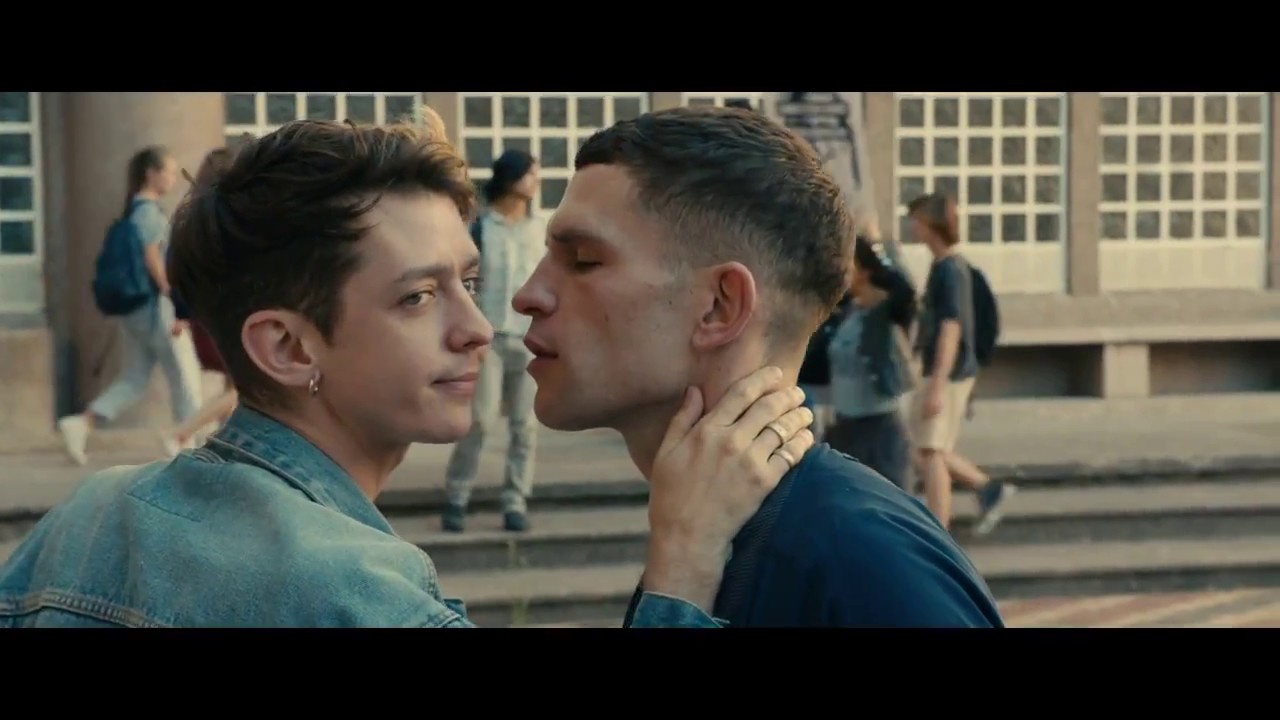


Director: Robin Campillo
Cast: Nahuel Pérez Biscayart, Arnaud Valois, Adèle Haenel, Antoine Reinartz, Félix Maritaud
Country: France
UK release date: 6 April 2018
Rating: 3/4

An intelligent yet visceral film about the gay community in '80s Paris, which starts brilliantly – focusing on the protests and meetings of Act Up, a group of guerrilla AIDS activists – before turning into a film about a man dying of the illness.

No matter how compassionately, credibly and intimately it does that, segueing from a film about ideas to one about the individual, contrasting the character's dynamism and beauty with his pain-ravaged impotence, and showing the body – not the city – as the battleground, it's ground we've covered countless times before, and (at the risk of sounding awful) it made the movie increasingly tedious.

At its best, this confrontational, unsentimental but humanistic film has unexpected echoes of Melville's Army in the Shadows, which looked at action, division and necessity within the French Resistance, and I understand why it included so many sequences of illness and fucking, but those elements don't seem as interesting as the story it started to tell. When it returns to it in those final moments, loaded with the suffering and sadness of what's gone before, the results are admittedly astounding.

Nahuel Pérez Biscayart is absolutely terrific as Sean, a founding member, Mesut Őzil-alike and all-round complex human being, first introduced to us justifying the fact that he and his mates have handcuffed a government official to a post during his team's PowerPoint presentation.

***

12. Adriana's Pact


Director: Lissette Orozco
Country: Chile
UK release date: TBC, but it's been picked up by Articial Eye
Rating: 3/4

A riveting documentary about a young Chilean filmmaker, Lissette Orozco, who discovers that her beloved aunt was a member of Pinochet's notorious secret police.

As a (debut) film, its balancing of the disparate elements is perhaps a little off – too much unrelated footage of other family members, too much of the director talking about her feelings – and it does become slightly repetitive towards the end, but its story and levels of access are incredible, and it's one of those few films deserving of that most overused of adjectives: brave.

Also Orozco has a lovely pretty face. Her next film, brilliantly, is about an uncle!

***

11. Ingrid Goes West


Director: Matt Spicer
Cast: Aubrey Plaza, Elizabeth Olsen, O'Shea Jackson Jr., Wyatt Russell, Billy Magnussen
Country: USA
UK release date: 17 November 2017
Rating: 3/4

A genre-blurring indie starring Aubrey Plaza (I will watch anything starring Aubrey Plaza) as the lost, damaged and impressionable Ingrid, who gets out of the psychiatric hospital after one of the great opening scenes, takes the insurance money she got from her mum's death and hot-foots it to LA in the hope of befriending Insta superstar Taylor Sloane (Elizabeth Olsen).

Matt Spicer's film isn't always as piercingly, exaltingly dark as it might be, but it treats Ingrid with just the right balance of interest, empathy and fear, and Plaza − who also produced − is absolutely superb in the lead, bringing a great depth, sadness and humanity to a character who can be the most appalling, manipulative monster, but somehow still isn't that big on Instagram.

There are elements that don't quite come off (Billy Magnussen's Nick is an interesting second act catalyst, but it's such a big performance that he unbalances the film; the love interest's Batman fixation is funny but pushed beyond the bounds of credibility), but it's a very interesting, enjoyable film that works as a black comedy, horror, psychological thriller, character study and satire on the skewed and unhealthy forced perspective of social media, in which everything is 'the best' and everything is put through a filter until it's perfect.

That's not perhaps the most profound observation, but the unexpected human fragility beneath Ingrid's monstrousness gives the film a real resonance, and makes it something slightly different to the razor-sharp, take-no-prisoners movie being sold to us.

#iamingrid


At the screening: It was interesting to hear Plaza (above, with Spicer (second from left) and Magnussen (right) say that her own preference is for an ending with at least a little hope in it, a sentiment hinting at the warmth beneath the nihilistic bravado, which it's tempting to compare with that of April Ludgate, her character in all-time classic sitcom, Parks and Recreation. "In essence, we're all fucked," she said at another point during the Q&A, asked to pontificate on the future of the world.

***

Thanks for reading. Part 2 will be up shortly.

Wednesday, 17 May 2017

Folk music, The Apartment, and the other Elizabeth Taylor – Reviews #265

Behold such riches as have rarely been seen on Advice to the Lovelorn: one of my favourite 20 movies, two fantastic books, and the amazing psychedelic folk records that one of them has turned me onto. I also enjoyed a phenomenally intense Yasmine Hamdan performance at London's sweaty, sensational Scala, and saw the Moomin exhibition at the Southbank and the sensational butterflies at the Natural History Museum. Those sojourns will turn up in my review of the year, but for now let's talk films, books and music:


*MINOR SPOILERS*
The Apartment (Billy Wilder, 1960)
– I will never get over how much I love this movie: a film about unrequited love, with Jack Lemmon taking a verbal and physical pummeling to protect the elevator girl he loves, the beautiful Miss Kubelik (Shirley MacLaine).

She's the one left holding the sleeping pills after his spineless corporate climbing – achieved by leasing the titular abode to horny company executives – and her naïve romanticism bring them into the circle of all-time business shitweasel, Mr Sheldrake (Fred MacMurray, cast brilliantly against type). Recovering in Lemmon's apartment, MacLaine begins to fall for the poor fool, but damn it if he can't quite untangle himself from acquiescence, subversience and the hollow, ill-gotten glories of corporate success, and become a mensch.

The greatest of Wilder's many masterpieces (I'd say he made nine), it's a perfect marriage of cynicism and innocence, with Lemmon perfectly balancing his character's myriad complexities, making us feel sorry for a fawning, amoral and (admittedly) piteous schmuck for 20 minutes, transmitting his character's innate sensitivity and subsequent moral awakening – inspired by his beautifully unselfish love for the bob-cutted, pixie-ish Miss Kubelik – and negotiating the frustration of a hero who'll try to set up the love of his life with his arsehole boss out of pure selflessness, then enjoy the societal and financial rewards. I've said it before and I'll say it again: Lemmon needed a tight rein on him or it was all overbearing humming and unbearable mugging. Here he does a little of that, but it's part of the densely-packed mesh of a believable, human character.

MacMurray too is superb as the evil, ageing twin of his character in Remember the Night (my favourite film), who abandons his suicidal mistress on Christmas Day and tries to fuck her on New Year's Eve. Best of all is MacLaine's performance, which she has never come close to approaching, despite decades of fine work. Her haircut might be pure MPDG, but she's a real woman, with real difficulties, delusions and selfish impulses, real pain and anger shining from those eyes, and a real, rewarding sweetness, tenderness and humanity.

In its gorgeous widescreen, monochrome, city-based cinematography and perfectly-timed blasts of melodic jazz, it anticipates Woody Allen's Manhattan, and its ending has the same joyous dash towards romance, the same profoundly understated, compassionate, off-kilter pay-off. (It's in a constant conversation with cinema too, being inspired by an incidental element of Brief Encounter and explicitly referencing MGM's all-star 1932 movie, Grand Hotel and the westerns of John Ford.) This whole film feels like perfection, but its last 10 minutes especially so, as every seed that Wilder has sown throughout the past 115 bursts into bloom, as MacLaine sprints through the streets, a crown on her head, the camera shaking as it struggles to keep up. A mention too for the scene with Lemmon, MacLaine and the broken mirror, in which every element is so perfectly integrated, from language to image to performance. I'd die happy if I could ever write something just a tenth as good.

It's a film about gentlessness, stoicism and the need to tell power to take a running jump. My film. And as good as it gets, cinema-wise. (4)

This was #19 on that all-time top 100 I put together last year.

***


Awakenings (Penny Marshall, 1990) – An effective, sentimental story about awkward, passionate doctor Robin Williams getting a job in a chronic hospital in the Bronx, and realising that the supposed vegetables peopling the ward – including former encephalitis patient Robert De Niro – might be alive in there after all.

For more than an hour it's like a lighter, extremely entertaining variation on One Flew Over, as Williams fights the authorities for the right to administer untested medication in an attempt to “awaken” these trapped souls, and modern-day miracles begin to happen. Then the movie becomes darker and more troubling, making it a richer, more human and more profound film, but notably less comfortable viewing.

Williams' closing speech is the kind of vague, wooly, catch-all bollocks I can't stand (who, precisely, has forgotten “work, play, friendship, family”?! Even Hitler was a fan of all four), but the rest of the film is extremely well done, with strong performances, a familiar but slick script, and some thoughtful direction, Marshall's Hollywood instincts and visual shadowing of moods augmented by some artistic touches, including fine, subtle use of handheld camera.

Its overall presentation is none-more-1990, with some of the broad strokes (and subsequent distancing) you’d expect, but also the attendant entertainment value, as the film’s edge, basic commitment to the facts and underlying sincerity begins to work away at you. (3.5)

(This viewing was in the annual pre-Eurovision slot, with my friend Vicky, following last year's acclaimed screening of We Bought a Zoo.)

***


CINEMA: Adam & Paul (Lenny Abrahamson, 2004) – Michael Smiley introduced this at the BFI, saying it was a film that gave him a funny feeling inside, and a movie he’d shared with friends, always asking them to pass the DVD on, rather than giving it back. Justin Johnson, chief programmer at the BFI, said people could regard it as the most hilarious film ever made, or the most heartbreaking. For me it’s not quite either, though it does have a special something about it.

It’s essentially Waiting for Godot relocated to junkie Dublin, as two addicts who’ve been missing for a month wander the streets looking for their next hit. They are gentle, meek, apologetic Paul (Tom Murphy) and the taller, quieter, grumpier Paul (Mark O'Halloran, who wrote it), and the day we spend with them is poignant and troubling and sometimes hysterically funny. The leads aren’t unfailingly convincing, but they have just the right mix of sensitivity and selfishness, as O’Halloran’s script traverses comfortable ground, then expects us to navigate abrupt, discomforting developments, like the pitiful, pitiless mugging of a kid with Down syndrome). Adam and Paul are loveable in their innocent, Laurel and Hardy-ish way, but that scene reveals a cruelty born of desperation just beneath the surface.

The film was directed by Lenny Abrahamson, who’s since gone on to big things with Frank and Room, and while you’d never mistake it for a film with a big budget, its low-rent look and the drab Dublin it presents suit the subject matter. When there is a need to slip into something more cinematic, he really delivers: the mini-flashback (or flash-forward?) in the baby sequence is a jolt of auteuristic brilliance.

Adam & Paul is a little shabby and at times too much a melange of styles (the comic scene at the gas station is superbly done, but out of step with the rest of the picture), but there’s a great feel to it: sad and humanist and quietly absurd, with a cleverly contrarian treatment of tropes: we want these characters to be happy, but their goal is the worst possible thing for them; we want them to have friends, but if they reconnect with Janine (Louise Lewis), the new mum is likely to get hooked on heroin again. That uneasiness, our complicity in it, and the touching (if not entirely original) unspoken bond between Adam and Paul – deep, unconditional, unspoken – may well account for that funny feeling, as I got it too. I suppose I'm one of Smiley's people. (3.5)

I'd also like to mention here that my tweet about the film (and Tim Farron) got RTs from Smiley and O'Halloran. But I won't, that would be both insufferable and pathetic.

***


CINEMA: Chinese Roulette (Rainer Werner Fassbinder, 1976) – All the elements are here for another fine Fassbinder film – an intriguing set-up, an amusingly subversive villain, Anna Karina looking hot in a cool black bandana – but it never quite gets there, and in the meantime it’s all v-e-r-y s—l—o—w.

A married couple (Alexander Allerson and Margit Carstensen) each take a lover to their country estate, where they’re joined by their malevolent ‘crippled’ daughter, her governess, the housekeeper (Brigitte Mira) and the housekeeper’s son (Volker Spengler), an aspiring author. It sounds fascinating, but it flails impotently for an age, with Fassbinder abandoning his usual precise, methodical approach, taking a stab at a kind of cerebral Godardianism, his portentous, nebulous script directed at a halting face suffused with pregnant pauses.

Its characters are mysterious and craftily unexpected enough for it to gather momentum at times, but its intriguing dynamics and occasional surprises (a brief but brilliant off-the-wall dance sequence underlining its strong use of music; an unforgettable close up on a beaded hair net after an explosive tragedy) are bogged down by a laissez faire approach that obfuscates when it should elucidate, expecting us to basically make up both the story and what all of it means. This is typified by the titular, climactic game, which reaches a fairly worthwhile crescendo but takes an interminable amount of time to get there, forcing us to slog through synthetic dialogue, snail-paced delivery and endless silences.

It is fascinating and eerie to watch Mira standing there as Fassbinder invokes Nazi collaboration, though. The half-Jewish actress was a key performer in Goebbels’ state propaganda series, Liese und Miese, as the ‘bad’ citizen whose behaviour was a cautionary tale for German audiences.

From what I’d read, I was expecting something twisted and refreshing, with the best kid villain since Bonita Granville’s malicious gossip in These Three. What I got was less elusive than illusive, a slip of a film that you can read a lot into, much of it perhaps not really there. (2)

***

BOOKS


Electric Eden by Rob Young (2010)
– This is a rare gem of a book: a beautifully-written, passionately-argued history – and defence – of British folk music from its origins in the pastoral socialism of William Morris and classical composers Holst, Vaughan Williams and Delius, through to Kate Bush, Julian Cope and Talk Talk in the 1980s. The meat of the book, though, is a conversational, amusing and astute evocation of the British folk boom of 1965-74, with vivid, condensed portraits of the likes of Pentangle, Fairport Convention, John Martyn and the Incredible String Band, their origins, obsessions and place in the canon impeccably but accessibly explained and elucidated, alongside that of an abundance of odd, often forgotten contemporaries, from the bleak and furious art rock of Comus to, erm, a moonlighting Playaway presenter involved in naked pagan rituals (these sequences are occasionally laborious or tenuously linked, but far more often utterly fascinating).

Young does a simply extraordinary job of stripping away decades of murkiness and myth, tracing an elegant through-line from 1890 to the 1980s, and confronting and considering many of the questions and controversies that dog the genre, tackling supposed middle-class hijacking – and Victorian sanitisation – of working class song preserved in the oral tradition, dismantling the associated notions of ‘authenticity’ that dominated folk in the 1960s, and repeatedly defending Morris dancing (he’s a braver man than I). He writes brilliantly about music too. There are a few too many 'tendril's and 'brew's, but his ingenious use of the pastoral vernacular, and his creating of neologisms and metaphors by riffing on album titles, is a joy to read: colourful and ambitious but precise, without the meaningless pretension of, say, '80s NME, or the drab, dryly factual contextualisation which seems to serve as music journalism today. He also takes an enormous gamble (in non-fiction terms) by slipping into allegorical fiction during the Rocket Cottage chapter, a stylistic quirk that is, if not a total success, extremely memorable.

Though a few furious pedants have found errors in the book, I’d argue that it’s better to write a passionate, revelatory book casting extraordinary light on British culture than to not bother because some bores might get cross. And while – due to the subjective nature of music – it inevitably becomes at times a personal history (Young omits June Tabor, has little time for Sandy Denny’s extraordinary second album, and neglects to even mention Fotheringay’s ‘Banks of the Nile’, perhaps the towering achievement of the era), its forays into the wider cultural context are extraordinarily invigorating, with the inclusion of A Canterbury Tale, Bagpuss and the films of Humphrey Jennings – allied to the genre’s root in socialism and a pastoral, nostalgic vision of Albion – suggests that everything I like is in some way related to British folk music.

The greatest joy of this book is the wealth of wonderful music it has inspired me to investigate. Best of the lot is the Incredible String Band, whose outrageously original psychedelic folk is illuminating each walk to and from work. Here's your four-step guide to becoming a fan:

a) Put on 5,000 Spirits or the Layers of the Onion
b) Do not turn it off
c) Do it again
d) You are now a fan
(4)

***


Angel by Elizabeth Taylor (1957) – This impeccably restrained, richly ironic novel is the story of Angel Deverell, a 15-year-old liar and aspirant author who seeks to transcend the pathetic life of servitude mapped out for her, through sheer, incandescent genius. Her genius, though, isn’t for art but for matching the taste of the public, which greets her epic, florid, ‘risqué’, wildly inaccurate tour-de-force, The Lady Irania, with little short of hysteria, catapulting the waspish, selfish and humourless egomaniac into a life of which she has merely dreamt, and yet has dreamt relentlessly.

Taylor’s writing is intoxicatingly crisp and precise, allowing her to define character, invoke laughter or evoke tragedy with a minimum of language or apparent effort, as she traces Angel’s path from the deprivations of working-class Volunteer Street to the peak of renown and ridicule, and then on, towards desire, rot and ruin in a landscape blanched by snow, as lives fester beneath delusion, but compassion flowers from the muck.

In Angel’s world, horrors are envisaged then never arrived upon, as others emerge from the shadows; no passage goes where you expect it to, or elicits the emotion you anticipated; and Taylor creates not so much a cautionary tale as a devastating character study: the writer as a monster, chained to her art, anti-social and self-obsessed, in communion with herself, and fashioning the world as it should be, not as it is, both on the page and beyond.

It’s exquisitely beautiful, piercingly funny, and segues from brutish to elegiac quite seamlessly, Angel’s story peopled by vividly-realised supporting characters: her protective editor, Theo, with his perfectly-manufactured kid gloves; Nora, whose blinkers are replaced by perpetual martyrdom; lazy, deceptively doting Marvell; and that callow, listless and dissipated prettyboy, Ésme. In tone, style and subject, it’s like nothing else I’ve read. (4)

***

Thanks for reading.

Thursday, 30 March 2017

Ten things I learned about Gas, Food Lodging

The latest in my now-almost-regular series. Recent articles include The Crying Game, Peter Lorre and Lillian Gish.


Yes, I do have excellent seats, thank you for noticing.

Allison Anders’ 1992 indie has been a favourite of mine for years. I’ve lost count of the number of times I’ve watched my battered, pan-and-scan VHS copy, taped off Channel 4 a few years later. I love Anders’ unique viewpoint – empathetic, unsensationalised, real – her film’s delicate balancing of emotions, and its aesthetic and emotional treats: J Mascis’s spare, evocative guitar score, Dean Lent’s decolourised, subtly beautiful cinematography, and Fairuza Balk’s performance, the greatest of a sporadically spectacular career in which she has been unfailingly fine, but in films only sometimes befitting her transcendent gifts.

She’s the teenage, introspective Shade, who lives with her sister Trudie (Ione Skye) and their single mom (Brooke Adams) in a New Mexico trailer. Like River Phoenix’s hero in Idaho, Shade is also searching for a family, but in an inert, haphazard way that keeps her within the boundaries of a drab, colourless small town. Ione, the town slut, has regular shouting matches with her witty, loyal, self-pitying mother, but both are masking a desperate pain, scrolling through romantic misadventures much like Shade’s heroes, those characters depicted by glamorous Spanish movie star Elvia Rivero in the local fleapit.


It’s a series of glorious vignettes – held together within an ingenious, elasticated structure – from those gloriously-realised films-within-a-film, a romantic encounter in a cave lit by violet light, and Adams’ charmingly weird ‘first date’ with an old flame, to Balk’s hilariously incompetent, profoundly moving seduction of Darius (Donovan Leitch, Jr.), and her gradual discovery of a soulmate in the shape of cherubic ‘cholo’ Javier (Jacob Vargas). Balk dominates throughout, with a performance of startling depth and beguiling sensitivity, though I don’t see it as the whole show, as I think I used to. Skye and Adams are both terrific (despite the odd wooden line-reading), James Brolin is superb as a benevolent stranger and, seeing the film as it should be – on a big screen, in a sumptuous new digital print – one is struck by the clarity of Anders’ artistic vision, her lack of judgmentalism, and her consummating shepherding of her creative collaborators, their talents drawn out and drawn together in the service of the story.

That story seems fresh now, was ahead of its time even in 1998, and must have been positively revolutionary six years earlier. Just watch Trudie’s departure for Dallas, a sequence that Kelly Reichardt would be proud of in 2017, and see how Anders deals with these female characters frankly and honestly, employing a deft, humanist poetry born of mutual dependence, pragmatism and real love, in place of the trite sentimentalism that dominates so much of cinema. And watch Balk trailing off into the brush, her ferocious loyalty and protectiveness of her spiky, abrasive older sister paying off not with a Hollywood ending, but with one that’s ultimately more satisfying, because it’s honest.

It's a great film. One of the great films. And, like Idaho, it's not flawless, but it's more important than films which arguably are.


That absolutely American DVD cover (it's never been released over here), with a misleading photo and a dreadful tagline: "When Shade's good, she's very good. But when Trudi's bad, she's better."

On Tuesday, the BFI held a special 25th anniversary screening. Here are 10 things I learnt from writer-director Allison Anders’ post-film Q&A:


1. Learning on a Wim
Anders was mentored by arthouse giant Wim Wenders, after a sustained campaign to win his favour that include writing him letters up to 30 pages long, and – with two of her friends – winning grants to study with him on the set of Paris, Texas, without asking him if it would be OK. When she did, Wenders looked into the distance, and said: “Oh well, you better come along then.” Dean Lent, who went on to shoot Gas, Food Lodging, studied cinematographer Robby Müller obsessively on the set of Paris, Texas. Her second mentor was Martin Scorsese. His Universal deal in the mid-1990s included the capacity to produce five smaller-budget features. His then-girlfriend, Ileana Douglas, asked for a meeting with Anders, they got on well, and decided to make Grace of My Heart (Anders’ 1996 movie, set in the Brill Building). Scorsese had planned a Lieber and Stoller biopic himself, but couldn’t get the knots out of his story. When Anders was briefly away from the Grace set, star Matt Dillon found himself working under Scorsese. “I can’t believe you left me with this hack,” he told her.


2. Chicago fired
Anders’ Belgian producer, Carl Colpaert, picked up Gas, Food Lodging’s source novel – Don’t Look and It Won’t Hurt by Richard Peck – at a thrift store for 10 cents, and optioned the rights. Anders wrote two drafts of the script, in the process scrapping the Chicago setting, streamlining Trudie’s character – “you can’t be both the town slut and the most popular girl in school”, adding a sex life for the mum (“a tired woman who just worked and raised the kids”) – and removing a third kid “because to be honest, [the mum] had enough to do”. By the time filming commenced, almost all of the material was her own.


3. ‘I’m never gonna cease to roam’
The film was set in New Mexico “because the producers wanted to go to New Mexico”. Anders was determined not to shoot somewhere too beautiful, like Santa Fe, as the basic drabness of the setting was integral to her vision, which coupled the mundane and the magical. The scenes set inside the trailer were filmed in a trailer home, put in a warehouse for absolute control over the setting.


4. Caving in
Nick Cave was the original choice for Robert Knepper’s character, an English rock-collector, which would have been ideal, as he spends most of his time in caves. An unnamed, high-profile English actor was then cast, but then dropped out at the last minute. Anders apologised for Knepper’s accent, but it’s actually pretty good.


5. Balking at Barrymore
Anders tested "every actor of that age who is now famous" for the part of Shade, including Drew Barrymore and Reese Witherspoon. She wanted the character to have a range and complexity that was beyond the capabilities of everyone aside from Balk. "All the actors were either bubbly or dark, but Fairuza had that lightness and depth." In my question, I'd said that Balk was "so good" in the film. "Isn't she?!" enthused Anders, adding that she is "great in everything". (I've discussed Fairuza's erratic career here.) She singled out the scene in the hospital room (perhaps the greatest thing the actress does in the picture), joking that she was "incredibly grateful to Milos Forman, as he had taught her to cry effortlessly on demand" while filming Valmont. Anders said Balk's performance resonated so much because "she was quite like that character, and she had been raised by a single mum", as had Skye, while Anders and Adams were both single parents themselves.


6. Darius' vassal
Is Darius, the object of Shade's initial affections, gay? Anders and her editor, Tracy Granger decided in the edit that it should be unresolved. And Leitch, in his performance, had done the same thing. "He's camp, and he's probably gay, but maybe he's just a New Romantic," Anders said.


7. Up to scratch
Granger 'aged' the Elvia Rivero footage by scratching it with her stepdad's Victrola. He was Richard Brooks, and it was the one he had used on the set of In Cold Blood. Her parents, incidentally, were two greats of the British screen: the ethereal Jean Simmons, and matinee idol Stewart Granger.


8. Lost in translation
Anders' one regret with the finished film is that she didn't subtitle the Spanish dialogue (though the Rivera sequences were subtitled when it screened on Channel 4, and I have the beaten-up pan-and-scan video to prove it). The reason, apparently, was money, and Anders' concern that audiences weren't used to watching subtitled films. Mascis was particularly disappointed when he saw the completed version, saying that it spoiled the climactic scene between Shade and Javier.


9. Allison's starting to happen
Having studied the French New Wave, German New Cinema and British Free Cinema at UCLA, Anders (top of frame) wanted to be part of a movement "and then I was": the American arthouse scene of the early '90s. She's directed seven features in total, as well as three TV movies, and has directed episodes of The Mentalist, Orange Is the New Black and a certain vapid show about four single women exploring Manhattan's dating scene. Though Anders isn't a big fan of TV, those four Sex and the City episodes keep the money rolling in even now, and have presumably helped her to realise other, more personal, projects.


10. Terrence's stamp
An essential 10th insight courtesy of the Telegraph's Tim Robey, who asked Anders about the apparent influence of Terrence Malick's breathtaking Days of Heaven, perhaps the most beautiful colour film ever made, which he'd spotted in Shade's voiceover and the final shot. You're right, said Anders, and it was intentional.

... and finally...


Those are not typos above. After all these years, we FINALLY have an answer on the title. It is not 'Gas Food Lodging' (as in the BFI's programme) or 'Gas, Food, Lodging' as it's frequently written but, erm, 'Gas, Food Lodging' (kudos to IMDb, who have it correct). "We couldn't afford a second comma in the credits," according to Anders, which is NOT an explanation and renders the above poster INACCURATE.

***

Thanks for reading.

Thursday, 16 February 2017

Ten things I learned about The Crying Game

*Warning: plenty of spoilers in this one, please see the film first*


Last night I was privileged enough to attend the BFI's very special cast and crew reunion celebrating 25 years since the release of The Crying Game, the seminal Irish film from Neil Jordan. It's a movie so good that Jordan, who finds it almost impossible to watch his own work, managed to sit through the whole film. Star Stephen Rea said that back in 1992 he thought it was a good little film, but it's only now that he can appreciate it as a masterpiece.

I've already said everything that I want to about this genre-hopping, gender-warping classic, one of the greatest movies ever made about love, but the Q&A was extremely enlightening, so I thought I'd share its greatest insights here. The greatest thrill was an unexpected appearance from Jaye Davidson, who walked away from a film career two years after receiving an Oscar nomination for the film, and who has largely avoided being in the public eye ever since.

This is an occasional series I do on the blog. Previous instalments are on Michael Winterbottom, Woody Allen, Sense and Sensibility, Warren William, Peter Lorre, Alfred Hitchcock and Lillian Gish (she got two obviously, here and here).


1. Behan inspired
Jordan explained that he was initially − if unwittingly − inspired by Frank O'Connor's short story, Guests of the Nation, and the Brendan Behan play that grew from it, The Hostage, which both dealt with the relationship between a British soldier and the IRA operative who's taken him hostage. In his initial drafts, the IRA operative met up with the soldier's widow (a hairdresser, as in the finished film), but that character wasn't a male transvestite. The change was inspired, he thinks, by seeing the Pulitzer-nominated M. Butterfly on stage. "We're often inspired by things and don't even realise it, that's not uncommon," he said. Another influence were those post-war American crime films. "When Miranda turns up in London, it turns into a noir," Jordan said. "There are shadows everywhere, and she's wearing that Joan Crawford jacket with the shoulders," added Rea. He had been Jordan's number one choice for the role of Fergus since the off. Woolley recalled constant calls from the actor's agent asking if the project was finally going to happen, because he'd been offered another play or film. "I'd say 'yes'," and before I could say, "but it's not going to be for a while", she'd have hung up.

2. A Dil pickle
Jaye Davidson was part of punky arthouse filmmaker Derek Jarman's coterie, and was spotted by Jordan at the wrap party for Edward II. When Jordan invited dozens of transsexuals to a casting call, Davidson "knew every one of them". The casting of a black transvestite as the love interest confounded potential financiers. Several studios, including one of Britain's biggest, agreed to back the film if they would swap Davidson out for an actress, who would wear a prosthetic in the movie's grand unveiling. Jordan refused. Stephen Rea shared a story about how a 'red-blooded Irish male' in one early screening said he fancied Dil and that Davidson was clearly a man, pointing to the mention of 'prosthetics' in the end credits to back his case. Due to the problems with finding backers, the film was made on a tiny budget, with producer Stephen Woolley giving costume designer Sandy Powell cash in hand to buy the movie's quietly iconic outfits.


3. Can't see the Forest for the trees
Jordan was criticised by the press for giving an American, Forest Whitaker, a role that a British actor could have played. Miranda Richardson chipped in to say that she was criticised for playing a role that an Irish actress could have played. And Stephen Rea recalled that Irish audiences and critics complained that the men were too feminised and the women too masculine.

4. All's fair in love and war
The opening fairground sequence was shot in three days in November, "and somehow we got the sunshine we needed," Woolley recalled.

5. Dudley and more
Composer and Anne Dudley worked on her song routine together in Islington, though nobody can remember who sang the vocal that he mimes to. Lots of the background music during the film is unreleased offcuts supplied by Neil Tennant of the Pet Shop Boys, who also produced Boy George's cover of the title song, which plays over the end credits.

6. Giving films a bad name
The working title was 'The Soldier's Wife' (which is clear from the closing credits, which contain the words at least a half-dozen times!). Stephen Woolley (producer): "Neil thought that we should change it because people would expect a war film." Neil Jordan: "No, I wanted The Crying Game because that's its name."


7. Bombing in Britain
The film got mixed reviews in Britain and only found an audience after it exploded in America. Jordan says it was seen in the States as a story about gender and love. In a Britain still living in the shadow of the Birmingham bombing, the threat from the IRA was real, so audiences found it difficult to accept Stephen Rea's Fergus as someone human. Davidson said that a similar film today could succeed in Trump's America, because there are still "intelligent and interesting" people in every society. He added, though, that when visiting and later moving to America, he was struck by the lack of integration between different races, even when just walking into a bar. Jordan wasn't surprised by the film's success, because he believed everyone in the world would watch it, "or what's the point of making it", though Jaye only signed up for the project because he thought no-one would see it.

8. Gene therapy
Richardson remembered that Gene Hackman was incredibly taken with Jaye at the Oscars ceremony. "He was very sweet," said Davidson with a smile.

9. Jaye rights
I've always been interested in Davidson's decision to walk away from the career he could have had, so I asked him about that, and how he looked back on his time in the movies now. "There were few roles for black men and even fewer for gay black men," he said. "I don't think there was a career for me, and I didn't want to scrub around for a few weak roles, so I got out. To me it was a long time ago, and I don't regret it, because I'm happy with my life now."


10. Rea of sunlight
Did Fergus love Dil? "I still do," said Stephen Rea.

***

Thanks for reading. If you enjoyed it, please share it.

Wednesday, 14 December 2016

Omar Sy, The Hateful Eight, and the rise of the far-right − Reviews #251

Merry Christmas!

FILMS


The Hateful Eight (Quentin Tarantino, 2015)
– A bloody, bloody brilliant fusion of Western, horror and black comedy that confirms Tarantino's return to relevance after the glorious surprise that was Django Unchained, a swaggering, effortless movie following 17 years of self-conscious, self-plagiarising films.

The Hateful Eight is even better: potentially self-restricting in its claustrophobic, dialogue-heavy set-up, but with an ambition and chutzpah that causes it to leap from the screen. At times it’s reminiscent of a Ranown movie – one of those cynical, weary chamber pieces that marked a highpoint of the B-Western – with some DNA shared with Carpenter's The Thing, but when anyone is talking… well only one person could have written those lines. The stylisation in his writing is still there, but then it always was: what’s changed is that his naturalism is back and so is his range: for a while, every character in his films seemed to speak in the same, stilted way – or actually in one of two ways, sassy woman or malevolent man – but now they’re distinct, different and speaking in a way that drags you into the film, not reminds you that you’re watching one. I think that by Inglourious Basterds his writing was once more starting to sing, and his gift for suspense was much in evidence, but such virtues were rather obscured by the film’s overbearing smugness and silliness.

This one begins with bounty hunter John Ruth (Kurt Russell) transporting $10,000 prisoner Daisy Domergue (Jennifer Jason Leigh) to the town of Red Rock. En route, he and driver O. B. Jackson (James Parks) pick up a former Civil War hero, Major Marquis Warren (Samuel L. Jackson) and a self-proclaimed sheriff (Walton Goggins), before a blizzard drives them to a haberdashery. There, a loquacious English hangman (Tim Roth, sounding like Edmund Blackadder), a hulking Mexican (Demián Bichir), a racist retired general (Bruce Dern) and a mystery man named Joe Gage (Michael Madsen) are waiting, and at least one of them has a secret that’s about to soak these walls in blood.

Since reading Truffaut/Hitchcock earlier this year, I’ve begun to look at films in a different way, particularly the way in which they create suspense – and by suspense I don’t just mean nerve-shredding tension caused by sky-high stakes (though I do partly mean that), but also basic dramatic interest. Tarantino does this unbelievably well from the get-go: from a standing start we care implicitly, overwhelmingly and relentlessly what happens next, and frequently we care so much not because the characters are likeable (see: the title), but because of Tarantino’s imagination, specificity and meticulous, tight-as-a-drum scene construction. Catharsis, when it comes, is via revelation, sardonically cartoonish violence and some of the best jokes in ages. For a director who sometimes gives the impression that he’s making films so black people will think he’s cool, he certainly gives his give detestable, racist antagonists some of the funniest lines. In a more straightforward but equally crucial sense, the film is spectacularly unpredictable, and when we can guess what's about to happen, that too's a tool, Tarantino using it to ratchet up the tension we feel.

The performances are generally good, but with superb work by Jackson (in unusually committed, dynamic form – he hasn’t been this good in 20 years), Goggins, a foully credible Dern and – probably best of all – Jennifer Jason Leigh. She’s always been a cracking actress and here she’s just superb: putrid, virulently unpleasant and increasingly covered in blood, she becomes more and more central to the story and, with it, grows in power, reaching an apogee of almost supernatural gothicism. It’s slightly ironic, then, that Tarantino seems to have borrowed her surname from RKO actress Faith Domergue, the most notoriously untalented (and most conspicuously underage) of Howard Hughes's innumerable mistresses.

I said earlier that Tarantino’s worst films seemed to be cursed by self-plagiarism. I think the problem was that this seemed more like desperation than auteurism, as here he also draws on his past, but to devastating effect. Reteaming Roth and Madsen isn’t the only sign that he’s reviving the spirit of Reservoir Dogs, the mesmerising mission statement that announced his arrival as a major new director. It’s dressed in furs, not sharp, identikit black suits, but The Hateful Eight is also a talky, gun-heavy movie about eight bad men trapped in a single room, trying to work out which one of them sold out the others. John Carpenter would appove: his hero Howard Hawks made Rio Bravo three times in various guises, before Carpenter himself had a go with Assault on Precinct 13.

The Hateful Eight might not be for all tastes – if you cringe at the n-word or gratuitous gore, give it a wide berth – but it seems an objectively good film. The scene-setting is inspired, Morricone’s sparsely-used music is marvellous, and Tarantino’s dialogue is incredibly rich: unmistakably his yet steeped in the Western tradition, with its grand allusions to the Civil War, its bitter dark humour and its contemporary resonances (which are basically what the Western is for). The film takes a massive gamble with an hour to go, and takes a little while to stop wobbling – its raison d’etre less compelling, Zoe Bell farcically wooden – but even then it regathers itself and goes again, before a final chapter of dazzling, blood-drenched Carpenter-esque Boys’ Own potency. I’ve long since given up trying to reconcile Tarantino’s embarrassing public persona – braying, posturing and misrepresenting his cinematic forefathers – with the man who can write like this.

So yes, Django wasn’t a happy accident, a brief hiatus from a spiral downwards into complete irrelevance, it was a comeback: an invigorating example of a filmmaker rediscovering his voice. The Hateful Eight goes one better, breathing new life into a moribund genre. It’s a delirious, down-and-dirty exercise in restrained mayhem that doubles as a clarion call: Tarantino is back and if he’ll never make another film as incredible as Pulp Fiction, the very literal car crash that was Death Proof is receding in the rear-view mirror, after a Western one-two of power, persuasion and startling panache. (4)

See also: I love Jennifer Jason Leigh's performance in Fast Times at Ridgemont High.

***


CINEMA: Chocolat (Roschdy Zem, 2016) – A prestigious French biopic of black clown, Chocolat (Omar Sy), who became a superstar in the first years of the 20th century, which succeeds on the strength of its story and performances, but could do with playing a little less safe.

There's no denying that the story is a grabber: a penniless black refugee, posing as a 'savage' in a travelling circus, graduates to becoming a clown and become one of the most celebrated comics in the country – but longs for respect in a deeply racist society, while dealing (somewhat less interestingly) with the temptations of sudden fame.

And the mighty Omar Sy, star of that massive international hit, The Intouchables, gives it his all, delivering a deep, multi-faceted performance that infuses the film with whatever mood it's attempting to evoke, from knockabout fun to the melancholic self-loathing that comes with debasing your race for a living (even if it means giving people of your background a success story to cheer, a situation that later faced Hollywood character comics like Stepin Fetchit and Willie Best).

He's well supported by (the exceptionally handsome) James Thierrée as Footit, the arrogant, closeted but basically decent clown with whom he forges a partnership and proceeds to take Paris by storm, though most of the other characters merely represent viewpoints or challenges faced by Chocolat, and that's indicative of the film's shortcomings.

There are some nice flourishes – a notably fine wide shot of the circus stage, shot from low down; a neat montage trick that feels both slick and old-fashioned, as different parts of the frame are filled with smartly juxtaposed shots – but in a lot of ways the presentation, and the writing, are functional rather than arresting. A feeling seems to pervade the film that the story and the performances are enough to ensure that it works; and it does, but it should be more than that. Certainly there are few biopic or period piece clichés that aren't checked off (a rise-and-fall narrative, a moustachioed villain enticing our hero to betray his conscience, a man with TB coughing blood into a hanky), and its closing moments betrays a certain artlessness that frustrated me: why pan to a night sky, rather than a circus tent?!

But for all that, it is a good film. The story is fascinating, the movie never pulls its punches when dealing with difficult and even morally complex subject matter, and Chocolat and Footit's routines are impressively and exuberantly evoked, particularly given that at first you wonder if this is going to be a chore, because clowns.

More importantly than that, it's a welcome corrective in sharing Chocolat's neglected story with the world, and provides a showcase for Thierrée and more importantly Sy, who in some ways is his character's spiritual successor: a brilliant black performer in a racially-divided France, who risks his career as a comic to take on ambitious and important roles with real social significance. While the film may be safe – at least in its lack of formal ambition – its leading man is anything but. (3)

***


"THIS IS AN EMERGENCY!"
CINEMA: Chi-Raq (Spike Lee, 2015) – It seems a bit churlish to say it, but Spike Lee’s important film about the ongoing scandal of gun deaths in Chicago is an absolute shambles. It sometimes seems like he’s never seen a film before (in terms of his structure and scripting, not his natty visual sense) and while at the beginning of the movie that’s a virtue – his confrontational collage crackling with life – by the end it’s because he’s asking you to swallow an incoherent mixture of mawkishly-done melodrama and incredibly boring sex comedy. There’s a real argument for making entertainments out of critical issues, as Adam McKay did so well with The Big Short recently, because it’s a way of reaching a mass market and changing minds. But the pitfalls are obvious from Chi-raq, which simply alternates between speechifying and superficiality, and ultimately fails a subject that Lee clearly cares deeply about. Perhaps he’s just too close to this issue.

Kicking off with a dazzling credits sequence that’s basically just a YouTube lyrics video, the opening is decidedly grabby: a black urban update of Aristophanes’ Lysistrata, with musical sequences, rhyming dialogue and some shouty fourth-wall-breaking from Samuel L. Jackson, basically doing his tiresome Barclaycard schtick, because he’s apparently unable to do anything else nowadays. Like Lysistrata, it’s a comedy about a sex strike, which here sees gangster’s girl Teyonah Parris trying to bring an end to mob violence by padlocking her poonani (not literally, that would be awful) and agitating for other women to follow. Nick Cannon is her eponymous lover, an extravagantly tattooed rapper with twitchy pecs who might as well be a different species considering how little I could relate to anything he said.

There are elements that work: a eulogy from throaty local priest John Cusack that starts as mere journalism but builds to a ferocious climax; a fine performance from the mighty Angela Bassett as a voice of angry, responsible reason; apposite song choices, moments of cinematic style and bits of blistering rage from a filmmaker who’s always had plenty to spare. But as a film it’s increasingly shapeless, redundant and, well, tedious, ultimately to the point of severe embarrassment. By then I was too bored and annoyed to be turned on. (2)

***


CINEMA: Remember the Night (Mitchell Leisen, 1940) – My all-time favourite film: a work of simple grace and beguiling beauty about the relationship between a shoplifter (Barbara Stanwyck) and the DA who lands her in jail over Christmas (Fred MacMurray), before feeling the first stirrings of conscience.

The marriage of Stanwyck's consummate, unique artistry and screenwriter Preston Sturges' fusion of the hard-boiled and heartfelt begins to work its magic instantly, and by the time they pitch up in Indiana to spend the holidays with MacMurray's family, I'm a mess. MacMurray too is astonishingly good, giving far and away the greatest, deepest performance of a long and erratic career.

Probably the 12 most moving moments in cinema history are crammed into this one film – among them, a meltdown at a New York nightclub, Elizabeth Patterson's love letters and Stanwyck's immortal "you bet" – while former costume designer and set dresser Leisen's very specific style (including props in the foreground to colour the whole frame) leads to some astonishing imagery: including a New Year's kiss shot through streamers and a Niagara Falls scene filmed almost entirely in silhouette. Its atmosphere is like nothing else I've ever experienced.

The movie's hilarious too, from MacMurray's ironic admission of state-sanctioned hedonism ("Oh yes, my life is just one endless parade of whoopee"), through Sturges' memorable ruminations on honesty, to a climactic courtroom scene that's both emotionally redolent and gloriously petulant, as MacMurray goes from intimidating the defendant to insulting the jury. Even the supporting characters are given pure gold: deftly sketched personas spouting stellar lines, including a ludicrously loquacious lawyer (Willard Robertson), dullwitted bondsman Fat Mike (Tom Kennedy) and overstretched orphan Willie (Sterling Holloway) – working for his supper at MacMurray's ma's house.

But the film's much more than a smart, moving, even heady rom-com: it's a plea for love, tolerance and social justice, a film about second chances, the malleability of human nature and the conditions that breed criminals, all masquerading as a holiday romance.

I've seen it perhaps a dozen times now – this was my second time on the big screen this year – and there's nowhere I'd rather be than at Beulah Bondi's house, as her son Jack (MacMurray) and the thief he's prosecuting (Stanwyck) swap songs, stories and presents, while falling desperately and irredeemably in love. (4)

See also: Here's my all-time top 25, with Remember the Night in first place.

***

BOOK


Chavs: The Demonisation of the Working Class by Owen Jones (he’s the author, he didn’t demonise the working class) (2011/12)
– Jones’ star-making polemic is a very fine book: hopeful, angry and humane as it drags the media and politicians of all stripes over the coals for systematically destroying the British working class, sneering at the consequences and then managing to shift the blame to immigrants. Much of the material is familiar if you’re a student of modern British political history (one of the few things of which I’m a student), but there are surprises – who knew that more people worked in call centres in 2011 than ever worked in coal mining at one time? – and the accumulation of detail allied to Jones’ clear-sighted analysis and rich on-the-ground reporting adds up to a populist polemic of urgency, eloquence and unusual power. Despite the crispness of the writing, there’s a little too much repetition in both his contentions and his language (he repeatedly uses the words “rump” and “brew” like some sort of bawdy northern witch), but it’s an immensely valuable work and also a prescient one, laying bare the sheer irrationality and cruelty of a country as unequal as the one in which we live, as well as anticipating the continuing rise of the far-right, which makes it as relevant to the post-Brexit dystopia we’re inhabiting as the world Jones was addressing five years ago. (3.5)

Next up: Evelyn Waugh's Vile Bodies.

***

Thanks for reading.

Thursday, 1 December 2016

Amy Adams, The Big Short and a biography of rare brilliance – Reviews #249

Here's what I've been consuming of late:

BOOK


Huey Long by T. Harry Williams (1969)
– This is a political biography of rare brilliance: a heavyweight chronicle of the life of Huey P. Long, one of the most extraordinary figures of the American century. A humble-born native of Louisiana, Long found work as a travelling salesman and a lawyer before entering politics and proceeding to dominate the state like no-one has ever dominated a state. By the time of his assassination in 1935, the senator for Louisiana was one of the most popular – and reviled – figures in America, and preparing to run for president on a radical platform of wealth redistribution.

Williams’ epic, Pulitzer-winning biography, two decades in the writing and clocking in at 900 pages, is a work of uncommon clarity, insight and poetry, drawing on 275 interviews, archive memos, newspapers and private letters, and painting a rich, vivid portrait of the man. Williams dismantles claims of fascism, despotism and racketeering, but his clear-sighted analysis does acknowledge Long’s egomania, vindictiveness and increasingly erratic decision-making, while illustrating at length the brilliance of his subject’s mind, the quality of his oratory and the sincerity with which he went about changing the lives of the state's – and the country’s – poorest and most vulnerable people. It’s also a work of stunning breadth, detailing the unique character of Louisiana, establishing its political scene and examining the context that made Long’s rise to prominence possible, while leaning on the ‘great man’ theory and maintaining that while someone would have come along to grasp this mantle, it did not have to be a Huey P. Long.

Beyond that, it’s also an extremely funny and entertaining work, not only in its recounting of the innumerable colourful stories involving Long – from greeting foreign dignitaries in his pyjamas to threatening a rail company with exorbitant taxes unless it gave all LSU students cheap passage to a football game and his fabled stump speech about ‘High Popalorum and Low Popahirum’ – but also thanks to Williams’ wonderfully dry sense of humour, his prose peppered with ironic commentary on the hypocrisy of both Long’s supporters and his nemeses. The overall effect is astonishing and enveloping, placing you at the scene of some of the most remarkable political happenings of the 20th century, from filibusters on the floor of the Senate to deals in smoke-filled rooms and the devastating assassination that naturally closes the book. By the time it comes, you’re so invested in Long, and in his programme for change, that you can barely turn the pages.

There’s no question that Long was a great man, but what surprised me is that he also comes across as a good man. There are times when he oversteps the mark – threatening a newspaper editor with blackmail, trying to utterly destroy (rather than just beat) his rivals and leaning occasionally on race prejudice (though Williams makes it clear that he did less of this than any of his Southern contemporaries) – but it’s also true that he’s one of the few left-wing leaders in the Western world who, when faced with the pitiless onslaught that faces anyone trying to change things for the better, fought his foes with everything at his disposal, until they were nothing but dust. There are times in 1934-5 when his local power-grabs and recourses to martial law are utterly contrary to democracy, and I found that disillusioning and difficult to swallow, but Long really was trying to change the lives of poor people for the better, he was just greedy for every bit of credit that went with it. His story is astonishing, inspiring and also critical to understanding the Roosevelt years, for without him, FDR would never have been dragged so far to the left, and become – for many, myself included – America's greatest president. (4)


Expect that to figure prominently in my books of the year round-up, one of three review collections coming up, as ever, at the end of December (the other focus on films and live events).

***

FILMS


CINEMA: Nocturnal Animals (Tom Ford, 2016)
– A film about emotional violence, cruelty and revenge, as disquieting and unpleasant as any mainstream Hollywood movie I can remember, and for that reason both an experience that I can’t recommend and that I must. It’s a collision of three stories, three universes: an antiseptic art world, where curator Amy Adams and her Tom Ford glasses live a cool, detached life contorted by compromise; a headily romantic Hollywood film in which her younger self flirts with old acquaintance Jake Gyllenhaal and then flirts with giving him up; and a horrifying slab of Southern gothic – rendered by the current day Gyllenhaal, in which his ‘weak’ husband is run off a Texas road by mutton-chopped psychopath writ large, Aaron Taylor Johnson.

The start of its horror thread – long, unflinching and uninterrupted – is particularly arresting: hypnotically, seductively awful; a harrowing, caricatured journey into man’s dark heart, a panic attack in film form. But this strand isn’t new. None of them are. Where this dazzling, dizzyingly surefooted movie astounds is in its outlandish, hugely ambitious juxtapositions: an ingenious, incisive structure; a combination of the cerebral, sentimental and utterly visceral that tosses you about the theatre like a ragdoll. At first you wonder if Ford can tie these threads together properly, if the knot will be tight enough without pulling the individual stories out of shape. He can: the cumulative effect is far greater than the parts, three stories of one dimension adding up to a whole that’s in three.

Where the film does fall down is in hitting its emotional and dramatic zenith a half-hour from the end – while its final five minutes are haunting, certainly the gothic part plods onwards for some time after it’s become submerged in lacklustre familiarity – but it’s an extremely unusual and refreshing reworking of genre clichés, novelistic but also invigoratingly cinematic. It’s a model of how to utilise cinematic grammar (particularly abrupt, busy but restrained editing) to tell a story, and to layer that story so densely and virtuosically that it embeds itself in you. The performances are great too, with Johnson fine in a big performance that doesn’t slip from showy dynamism into hamminess, and Shannon absolutely superb as the intense, taciturn and unsmiling sheriff called into action by Gylenhaal’s tale of terror.

Don’t miss it, and don’t come crying to me after you've been. (3.5)

***


The Big Short (Adam McKay, 2015) – An audacious, counter-intuitive and richly entertaining polemic about the financial crisis, its raw anger cooked up into a fun old caper movie, studded with vividly sketched characters, sourly profane dialogue and a heap of meta gags: a few of them overdone, but most melting in the mouth before leaving an aftertaste akin to charred vomit. McKay knows what he’s doing, and even if he’s sometimes doing it too loudly or just with tits, it’s ultimately worth it.

It’s the story of a one-eyed maths whiz (Christian Bale, superb), a smarmy, roguish narrator (Ryan Gosling), a bereaved, self-loathing fund manager (Steve Carell, never better) and two naïve kids trying to get onto Wall Street with the help of a gloomy neighbour (Brad Pitt) – all of whom see the financial crash coming, and start betting against the market.

A few left-leaning critics have questioned its morality, but that’s such a blinkered, reductionist view. If you make a film about a poor guy losing his house or a morality play condemning bankers, you might win an award, but you won’t find a mass audience. The Big Short made over $133m (Inside Job, the brilliant, Oscar-winning documentary dealing with the same story grossed under $8m) – and in that context it’s pure dynamite. The punters may be so wowed by the shiny, Ryan Gosling-patterned paper they won’t realise they’re holding a textbook, but the film is nimble enough to make its viewpoint clear. It’s like The Wolf of Wall Street if it wasn’t a nasty, incoherent shambles.

More than that, though, it’s intellectually daring. Like Reitman’s Thank You for Smoking and Up in the Air, it trades not in heroes or spoonfeeding, but in ideas and shades of grey. Oddly, this is actually McKay’s second stab at a financial crisis comedy. While The Other Guys is my favourite Ferrell film and probably the funniest mainstream comedy since Team America, its attempts at social comment were hapless, with only the end credits PowerPoint landing any blows at all.

The Big Short may be playful but it’s pointed enough to draw real blood, asking you to question your preconceptions and priorities – while being ferociously funny and quite ludicrously fun. (3.5)

***


*SOME SPOILERS*
West of Memphis (Amy Berg, 2012)
– A powerful, polemical documentary about a notorious miscarriage of justice, in which three eight-year-olds were murdered, turtles nipped at the bodies, and ambitious, blinkered public officials ill-equipped to deal with the case decided that these injuries could only have been caused by satanists, robbing 14 years from the lives of three teenage outsiders: damaged Damien Echols, softly-spoken Jason Baldwin and Jessie Misskelley, a mentally handicapped young man whose ‘confession’ formed a key part of the case.

For anyone gripped by Making a Murderer, this is more of the same, but ahead of the fact and without the same doubt in your mind: these three were knowingly fitted up by the state, and that should chill your blood. Unlike Making a Murderer – and indeed the first two Paradise Lost documentaries previously dealing with this case – it’s all told in retrospect, so it becomes a clear-sighted indictment of the American legal system, rather than the campaigning piece needed so desperately in previous years.

As a film, Amy Berg’s condensed account is fast-moving and often forensic, though with an eye for an entertaining aside or celebrity angle – among the campaigners interviewed are Peter Jackson, Eddie Vedder and Henry Rollins – as it paints a complete picture of the case, and posits a highly credible theory of its own (though if you think about it, that's pretty hypocritical!). It’s also, ultimately, an oddly uplifting film, as well as a gruelling and horrific one, as it depicts the selflessness of the West Memphis Three’s champions: including the girlfriend of Damien Echols, Lorri Davis, who took up his case after watching Paradise Lost.

Some people still think these three dunit, but when their evidence is things like “known history of mental illness”, it makes you wonder what the fuck. I have a known history of mental illness and have never murdered any children.

A chilling postscript is that Echols later had to meet Piers Morgan, surely more awful than any experience he endured in prison. (3)

***


My Scientology Movie (John Dower, 2015) – This is an amusing but infuriating documentary, in which Louis Theroux fails to speak to any Scientologists, except to explain that he has a filming permit and doesn’t see why he should leave. That’s the problem with making a film about an incredibly powerful, secretive cult. Sorry, religion. Sorry, obviously cult. If you don’t know anything about the subject, I suppose it’s mildly insightful – with various reenactions, interviews with ex-Scientologists and archive clips of Tom Cruise being weird and frightening – while Theroux’s façade of amiable bumbling makes for some funny encounters, but like his fellow posh, shambling English documentary-maker, Nick Broomfield, he thinks that being asked to leave somewhere is investigative journalism in itself. (2)

***


Brothers in Law (Roy Boulting, 1957) – A below-par legal satire from the Boulting Brothers that starts promisingly but gets sidetracked by broad, lazy set-pieces and bits of ‘business’ that surely someone must find hysterical, though I’ve no idea who. If you’re the kind of person who finds a nervous Ian Carmichael bumping into people funny, then get ready for the greatest night of your life. He’s a recent graduate of the bar trying to find his feet in the legal world of London, who finds an unlikely ally in selfish Dickie Attenborough, a powerful sponsor in Miles Malleson and a girlfriend in the charming Jill Adams, but bumbles haplessly through his first few cases and – in one interminable, laughless sequence – incurs the wrath of judge John Le Mesurier while playing golf.

Carmichael’s relationship with his parents, particularly his warm, proud father (Henry B. Longhurst) is delightful and touching, Malleson is quite amusing, and now and then there are some intelligent sideswipes at the law – particularly when Attenborough tries to avoid leading questions and cocky criminal Terry-Thomas enlists Carmichael’s assistance – but it’s too often unfocused and unfunny, without the teeth of the Boultings’ best comedies (the more I see of their later work, the more I wish it was all like Heavens Above!), and replete with irrelevant story threads that exist only for their unsatisfying and obvious pay-offs. (2)


***

SHORT: Come Together (Wes Anderson, 2016) – Anderson’s H&M advert (sorry, ‘new short film’) is droll, tender and really rather magical, with that undertug of disconnected, Keatonesque melancholia blossoming into selfless humanity that makes his films so deceptively substantial. It’s otherwise extremely straightforward and almost self-parodically designed, harking back to The Darjeeling Limited in its setting – a stylised, late-running train dominated by sad-eyed conductor Adrien Brody – and telling a Christmas story of impeccable (and arguably insulting) simplicity. One complaint, though – and I know my class warfare may be showing – must the kids in his films always look so preppy and spoilt? I appreciate that all children deserve a nice Christmas, and money isn’t necessarily a signifier of a life easily lived, but on the whole I can think of worthier subjects than some prep school Tarquin in his designer blazer. It’s still affecting, though, and one to pop on the list of brief festive films worth visiting and then revisiting: not a patch on The Snowman, Jolly Snow or Star in the Nightthat miraculous Tex-Mex Nativity story directed by a young Don Siegel! – but blessed with a certain seasonal something. (3)

***

THEATRE


King Lear (The Old Vic, 19/11/16)
– Glenda Jackson makes a triumphant return to the stage in this sparsely-staged version of one of Shakespeare’s most long-winded and inaccessible plays. The set is all white screens and functional tables, the effects done with lighting and a proliferation of bin bags, and across it Jackson rampages or creeps, dynamic and desperate as the king “more sinned against than sinning” as he loses his authority and his mind. There are great moments, and the acting is a treat – with a surprisingly effective Rhys Ifans as the Fool, and Sargon Yelda, Simon Manyonda and Karl Johnson putting bigger names Jane Horrocks and Celia Imrie to shame with nuanced, sometimes hilarious performances – allied to an energetic and bawdy reading of the text, but so much of it is just mad people shouting nonsense: if I wanted that, I’d just open my Twitter notifications. (3)

***

Thanks for reading.