Showing posts with label BFI. Show all posts

Monday, 16 October 2017

Next year's best films: London Film Festival 2017 round-up − Part 1


If you see this man, do not approach him or he will bore you about films.

Well, you asked for it. Or at least partially dictated the format. So here's all 20 movies I saw at this year's London Film Festival, from worst to best.

Part 1 includes films by the likes of Todd Haynes, Dee Rees and Martin McDonagh, as well as a Chilean documentary on the world's worst aunt, a pulsating French drama about AIDS activists, and Aubrey Plaza being amazing (again). Plus at least two crushing disappointments.

It seems a little odd to make you read an article about the 10 worst films I saw at a festival, but not as odd as publishing a 6,000-word blog, which is why I've split this in two. Also, films #11-14 are really worth s

eeing, and hopefully the reviews of the others are more entertaining than the movies themselves, which isn't the highest bar. Now join me in saying the official catchphrase of the festival, spoken at least four times during every Q&A by a festival programmer: "Congratulations on what I think is an extraordinary movie."

***

20. Wonderstruck


"Make her look a bit cross-eyed with warty eyelids. There we go: old. Done."

Director: Todd Haynes
Cast: Millicent Simmonds, Julianne Moore, Cory Michael Smith, James Urbaniak, Damian Young
Country: USA
Rating: 1.5/4
UK release date: mid-November 2017

How is a Todd Haynes film with a character based on Lillian Gish this bad? And why is this his follow-up to Carol?!

This YA mystery – adapted by its author – has an intriguing dual-time structure, a nice Carter Burwell score and some neat nods to silents, but it's also cloying, not very mysterious, and incredibly longwinded: not trusting its audience to understand anything, and struggling with some laborious translation problems reminiscent of Le mèpris, in which a lot of the dialogue has to be written down and held up. It doesn't help that the central kid seems to have wandered in from a school play. Or that it ends up looking like an extended advertorial for some museums.

It's sort of like Hugo, if everything that Scorsese's film had done had gone a bit wrong.

(The Gish films being homaged, incidentally, are primarily The Wind (the poster of the film-within-a-film starring 'Lillian Mayhew' is based directly on a publicity image for this 1928 masterpiece) and Orphans of the Storm, though she played mothers in few of her starring vehicles and Wonderstruck diverts considerably from her real life.)

***

19. Zama


Director: Lucrecia Martel
Cast: Daniel Giménez Cacho, Lola Dueñas, Matheus Nachtergaele, Juan Minujín, Nahuel Cano
Country: Numerous
UK release date: No release confirmed
Rating: 2/4

"Think of the film as a whiskey... Sometimes you might get drunk and fall asleep. For me that's a good thing. There are some films I love that I've seen five times, and I fell asleep five times." – writer-director Lucrecia Martel

Yeah, I don't feel the same, though that does explain why your film is quite boring.

Zama is about a colonial magistrate who just wants to go home, but forever finds one more obstacle in his way. There's some glorious imagery, and the odd interesting scene – with Lola Dueñas great as a prostitute elevated to society life, and a neat mini-twist near the end – but the characters aren't for the most part well-drawn, and the film's lack of context and air of aloof pretentiousness got on my wick. With a half hour to go, I just couldn't wait for it to end.

The Q&A, as you can tell, managed to be even more annoying than the film (yeah, I shouldn't have stayed). At one point she said that hens have greater attention to detail than humans.

***

... and the award for The Biggest Disappointment of LFF 2017 goes to...

18. The Florida Project


Director: Sean Baker
Cast: Willem Dafoe, Brooklynn Prince, Valeria Cotto, Bria Vinaite, Christopher Rivera
Country: USA
UK release date: 10 November 2017
Rating: 2/4

An Our Gang movie set among the 'hidden homeless' in run-down motels around Disneyworld sounds brilliant, but this tone-deaf film is too horrible and muddled to be anything but a trial.

As it moves from a film about resourceful, anarchic children to one about the world they're forced to inhabit, it forgets that in order to root for a character, they have to not be just the most appalling dickhead. Because of my background, I tend to feel a great affinity towards damaged working-class characters, and subscribe to the lefty notion that there are few bad people, we're shaped more than we might ever like to admit by our privileges and opportunities, rather than by innate attributes. I'm sure, too, that the mum here loves her daughter, as that sweet scene in the rain attests. But she's still a selfish, ungrateful arsehole.

You don't have to love a film's characters to love a film, but from the way Sean Baker has set up this movie, and used it to try to open up a debate about homelessness, you're clearly supposed to feel something, if only pity. For a masterclass, see the Dardennes' The Kid with the Bike, which gave us a self-centred, troublesome protagonist incinerating his second chances and made us want to save his life. Here you see characters like Willem Dafoe's motel manager exhibiting a gentle human kindness towards Bria Vinaite's character, and her treating them repeatedly like shit.

Nor does the kid stuff come off much better. All the child actors are good, especially Brooklynn Prince as Moonee, but most of the jokes grow simply from kids behaving inappropriately like adults: a situation used solely for cheap (but undeniable) laughs, without ever really addressing its essential sadness. I'm as much of a fan as the next person of a kid not really knowing how to swear and just shouting: "You are shit!" at a neighbour, but there's an inmate tragedy there that the film never approaches in its reluctance to acknowledge that while Moonee is slowly waking to a nightmare caused by the callous lie that is capitalism, her mum is also a dick.

It's only when the film slips into an improvisatory mode, allowing its kids to be kids, and a gentle, insular almost surreal silliness to intrude, that it manages to truly evoke childhood, and so achieve the juxtaposition essential to making its premise work. The ending calls to mind Les 400 Coups, surely not accidentally, and it's beautifully done, but it's hardly enough.

The hilarious Q&A with the kids was way better than this unpleasant, inexplicably lauded film.


***

17. Mudbound


Director: Dee Rees
Cast: Carey Mulligan, Garrett Hedlund, Jonathan Banks, Jason Clarke, Jason Mitchell
Country: USA
Rating: 2/4
UK release date: 17 November 2017 (Netflix and simultaneous theatrical release)

Ronsel quick-drying mud stain: it does exactly what it says on the tin – attempts to create a weighty, socially-conscious art movie from Hillary Jordan's plotty, slightly trashy but well-meaning page-turner.

Dee Rees's film spends more time in battle, fleshes out the Ronsel-Jamie relationship, and dwells on the minutiae of African-American life in the Deep South, but in a choppily uninvolving way, and at the expense of Laura's intriguing story of love, repression, sexual and racial guilt.

Critically, it never summons the book's sense of inexorable, fatalistic dread, nor knows what to do as it reaches its climax, which is first silly, then rushed and finally pointlessly and unconvincingly rose-tinted.

Mudbound has a few painterly images, good performances from Jason Mitchell and Carey Mulligan (who has one fantastic scene largely disconnected from the narrative and the worst pregnancy prop in decades) and an unvarnished understanding of the unglamorous, subservient pragmatism needed to survive as a black man in '40s Mississippi, but it isn't very compelling or convincing.

I say this as a middle-class white bloke, but... what promised to be a timely exploration of the African-American experience from an urgent and valuable contemporary voice is instead just a standard book adaptation: a mediocre melodrama that deals with big themes in a handsome but hackneyed way. Plus lots of Mary J. Blige staring out of windows.


***

16. Downsizing


Director: Alexander Payne
Cast: Matt Damon, Hong Chau, Christoph Waltz, Kristen Wiig, Rolf Lassgård
Country: USA
UK release date: 19 January 2018
Rating: 2.5/4

Payne's latest is a funny, sometimes affecting but also confused and rambling satire about everyman Matt Damon joining the growing number of humans 'downsizing' to about 0.035% of their previous body mass, in order to save the environment (and get a better house).

Many of the familiar Payne themes and tropes are here – the search for meaning, economics becoming personal, a climactic moment of supposed quiet catharsis – but the film is all over the shop, mixing neat sight gags, piercing one-liners and heavyhanded comment with variable effects, disastrous diversions and Christoph Waltz being pretty funny but in a different film to everyone else.

Between a broad beginning and an earnest, incoherent end – and seriously, after this, Only Cowgirls Get the Blues (Van Sant), Wanderlust (Wain), keep good American directors away from hippy communes – it does find a sweet spot and a real rhythm for what must be 45 minutes, with Hong Chau absolutely terrific as a bossy Vietnamese dissident (I await the terrible thinkpieces about whether her character is racist). And I loved the fact, perhaps minor to many, that it preached tolerance but took faith seriously: a balance that remains unusual, since evangelical America has rightly revolted anyone with a sense of decency.

But where Election was compact and deadly, and The Descendants elegantly elongated and profound, this feels like about five films cobbled together – and the last couple aren't really any good.

***

15. The Venerable W.


Director: Barbet Schroeder
Country: France/Switzerland
UK release date: TBC
Rating: 2.5/4
A pretty good documentary from Barbet Schroeder − a former Éric Rohmer collaborator who now makes factual films about awful people − dealing with Ashin Wirathu, the world's naughtiest baby. Oh, OK, he's a Buddhist hate preacher. Who's eaten quite enough alms, by the looks of him. It's more a potted history of the path to genocide − with a bit of access and some intelligently-compiled raw footage shot by others − than an in-depth portrait of its subject, though it's an important story and a timely primer on an urgent humanitarian crisis.

As a film, it might be more effective if it had taken the route of its trailer, which makes the Errol Morris-like decision to unveil The Venerable W's toxic Islamophobia at the midway point, rather than leading with it. In the screening, a woman behind me tutted at everything from fascist rhetoric to burning bodies, as if otherwise we'd think that she was endorsing the behaviour in the film.

***

... and the award for The Most Objectionable Audience of LFF 2017 goes to...

14. Three Billboards Outside Ebbing, Missouri (Are McDonagh's films increasingly just an arsehole magnet? Discuss.)


Director: Martin McDonagh
Cast: Frances McDormand, Woody Harrelson, Sam Rockwell, Abbie Cornish, Peter Dinklage
Country: UK/USA
UK release date: 12 January 2018
Rating: 3/4

Martin McDonagh's third film may lack the effortless grace of his stunning debut, In Bruges, but it’s more coherent and confident than his follow-up, Seven Psychopaths, getting its humanistic points across covered by the usual maelstrom of swearing, violence and taboo-punching.

Frances McDormand plays a plain-talking cracker mom who hires three defunct billboards in a bid to attract the attention of a police force that has spent seven months failing to find the man who raped and killed her daughter.

Those cops are led by Chief Willoughby (Woody Harrelson), a family man dying of pancreatic cancer, and the slow-witted, hair-triggered Officer Dixon (Sam Rockwell, brilliant again), one of the most intelligently, interestingly developed characters I’ve seen in a while.

It doesn’t always delve into its serious themes in enough depth – McDonagh’s recent stage hit, Hangmen, dealt with justice and bloodlust in a more intriguing yet incisive way – and the writer-director’s unfortunate predilection for midget gags continues, suggesting a comic imagination that’s as committed to cheap laughs on any terms as it is to shocking us out of apathy (I’ll let him off on the profusion of ‘retard’s, as it makes sense for that to be in these characters’ vernacular).

But his sarcastic, pedantic humour is still great fun to indulge, even when he has to file off the cultural specificity for a mass audience, and there are stunning scenes here: a one-take act of brutality, a breakdown, letters from beyond the grave, and a fiery callback to In Bruges’ Raglan Road set-piece.

I don’t think the movie quite manages to make you feel McDormand’s grief and sorrow, only really her helplessness and exasperation, but this typically outrageous, confrontational and well-acted film is full of surprises, appealingly nuanced characterisation and moments of quiet emotion, and if it feels too disjointed and too detached from the more urgent themes at which it hints, it does have a little to say about the abandoned in America, the seductive symmetry of eye-for-an-eye retribution, and the reasons why tub-thumping calls to arms from a literal moron might currently have the capital that they do.

I might try to see this again when I'm not so tired, as it was my 20th big-screen film in 11 days, and it started really late.

Incidentally, is Lucas Hedges the most morosely uninteresting actor working today?

***

13. 120 Beats per Minute
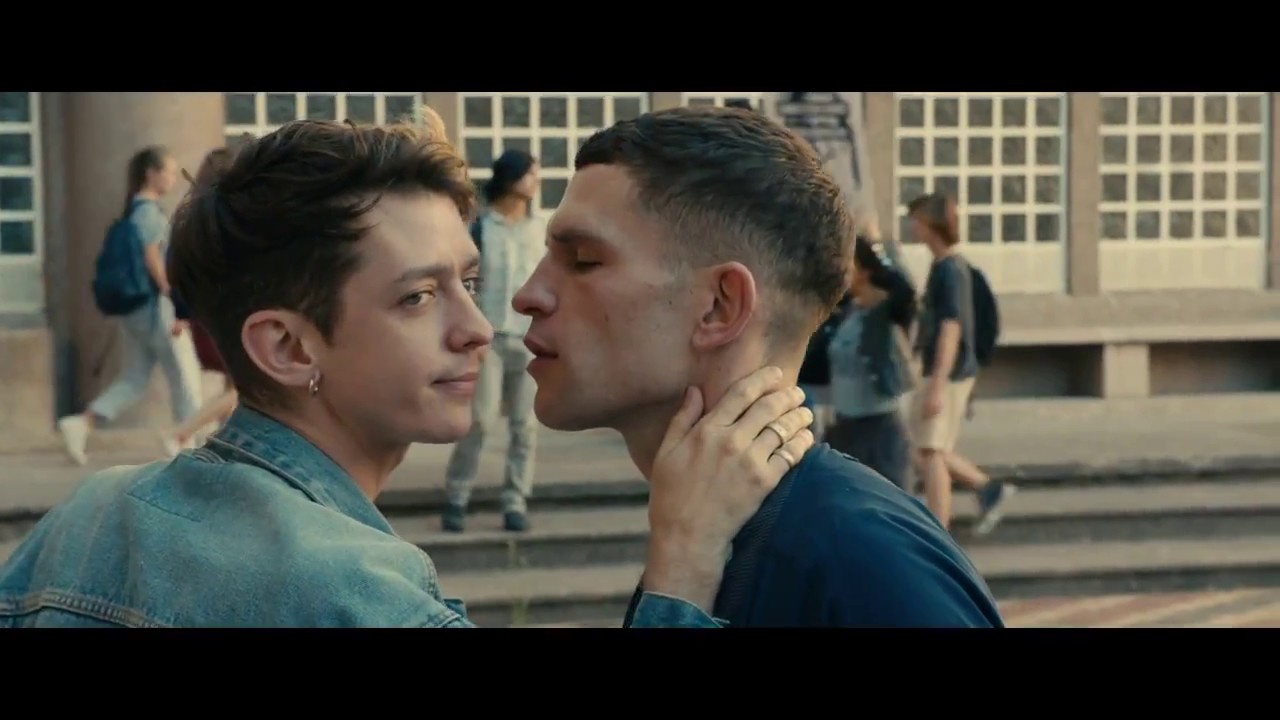


Director: Robin Campillo
Cast: Nahuel Pérez Biscayart, Arnaud Valois, Adèle Haenel, Antoine Reinartz, Félix Maritaud
Country: France
UK release date: 6 April 2018
Rating: 3/4

An intelligent yet visceral film about the gay community in '80s Paris, which starts brilliantly – focusing on the protests and meetings of Act Up, a group of guerrilla AIDS activists – before turning into a film about a man dying of the illness.

No matter how compassionately, credibly and intimately it does that, segueing from a film about ideas to one about the individual, contrasting the character's dynamism and beauty with his pain-ravaged impotence, and showing the body – not the city – as the battleground, it's ground we've covered countless times before, and (at the risk of sounding awful) it made the movie increasingly tedious.

At its best, this confrontational, unsentimental but humanistic film has unexpected echoes of Melville's Army in the Shadows, which looked at action, division and necessity within the French Resistance, and I understand why it included so many sequences of illness and fucking, but those elements don't seem as interesting as the story it started to tell. When it returns to it in those final moments, loaded with the suffering and sadness of what's gone before, the results are admittedly astounding.

Nahuel Pérez Biscayart is absolutely terrific as Sean, a founding member, Mesut Őzil-alike and all-round complex human being, first introduced to us justifying the fact that he and his mates have handcuffed a government official to a post during his team's PowerPoint presentation.

***

12. Adriana's Pact


Director: Lissette Orozco
Country: Chile
UK release date: TBC, but it's been picked up by Articial Eye
Rating: 3/4

A riveting documentary about a young Chilean filmmaker, Lissette Orozco, who discovers that her beloved aunt was a member of Pinochet's notorious secret police.

As a (debut) film, its balancing of the disparate elements is perhaps a little off – too much unrelated footage of other family members, too much of the director talking about her feelings – and it does become slightly repetitive towards the end, but its story and levels of access are incredible, and it's one of those few films deserving of that most overused of adjectives: brave.

Also Orozco has a lovely pretty face. Her next film, brilliantly, is about an uncle!

***

11. Ingrid Goes West


Director: Matt Spicer
Cast: Aubrey Plaza, Elizabeth Olsen, O'Shea Jackson Jr., Wyatt Russell, Billy Magnussen
Country: USA
UK release date: 17 November 2017
Rating: 3/4

A genre-blurring indie starring Aubrey Plaza (I will watch anything starring Aubrey Plaza) as the lost, damaged and impressionable Ingrid, who gets out of the psychiatric hospital after one of the great opening scenes, takes the insurance money she got from her mum's death and hot-foots it to LA in the hope of befriending Insta superstar Taylor Sloane (Elizabeth Olsen).

Matt Spicer's film isn't always as piercingly, exaltingly dark as it might be, but it treats Ingrid with just the right balance of interest, empathy and fear, and Plaza − who also produced − is absolutely superb in the lead, bringing a great depth, sadness and humanity to a character who can be the most appalling, manipulative monster, but somehow still isn't that big on Instagram.

There are elements that don't quite come off (Billy Magnussen's Nick is an interesting second act catalyst, but it's such a big performance that he unbalances the film; the love interest's Batman fixation is funny but pushed beyond the bounds of credibility), but it's a very interesting, enjoyable film that works as a black comedy, horror, psychological thriller, character study and satire on the skewed and unhealthy forced perspective of social media, in which everything is 'the best' and everything is put through a filter until it's perfect.

That's not perhaps the most profound observation, but the unexpected human fragility beneath Ingrid's monstrousness gives the film a real resonance, and makes it something slightly different to the razor-sharp, take-no-prisoners movie being sold to us.

#iamingrid


At the screening: It was interesting to hear Plaza (above, with Spicer (second from left) and Magnussen (right) say that her own preference is for an ending with at least a little hope in it, a sentiment hinting at the warmth beneath the nihilistic bravado, which it's tempting to compare with that of April Ludgate, her character in all-time classic sitcom, Parks and Recreation. "In essence, we're all fucked," she said at another point during the Q&A, asked to pontificate on the future of the world.

***

Thanks for reading. Part 2 will be up shortly.

Friday, 11 August 2017

So long, farewell, auf wiedersehen, adieu – Reviews #272

This will be the last update for the time being. I want to take a break from the blog to focus more on my fiction (I've written a kids' book and am trying to get it published), and after 10 years I'm not sure what more I have to say about movies, gigs, books and plays. I may post updates now and then: I enjoy doing the reviews of the year, so I imagine I'll put those up in December.

In the meantime, thanks to each of you who's read, commented on or plugged the blog over the past seven-and-a-half years (and for the three years before that, when it was Films on Friday). Bye then.

BOOKS


A Tree Grows in Brooklyn by Betty Smith (1943) – Betty Smith’s novel about growing up in poverty in Brooklyn at the turn of the century begins with such an accumulation of detail that you feel as if perhaps she can’t distinguish between the mundane and the memorable. But then you realise she’s merely setting the scene, immersing you in the minutiae and the singular atmosphere of this atypical household in this dirt-poor, drably colourful place, so the stories – anecdotal, funny, heartbreaking – have a place to lay their roots. Her heroine Francie Nolan is the bookish, sensitive and poetic daughter of a mother turned hard by penury – just as her hands are cracked and weathered by work – and a father who is too dreamy, deluded and drunk for this world, and will be out of here by 35.

Kazan’s sensational 1945 film condenses the key events to a single year, but this book follows Francies from 10 to 18, flashing back to her infancy, and seeing her grow from a dirty-faced junk hoarder to a confident, intelligent, sexually-aware young woman finding her way in the world, negotiating the pain of betrayal and finally leaving that home in Brooklyn with its improbable, incongruously beautiful, neverendingly resilient tree in the yard. The film has been a precious thing to me for years, and this book has the same tone of yearning, of wisdom learned too young, and character being forged in the furnace of hardship, while offering dozens of deleted scenes with their new insights, moments of deft levity and piercing heartaches. I don’t think it’ll ever leave me, not least those details, like the one about her keeping the old house's carpet for the new one. (4)

***


Winchell: Gossip, Power, and the Culture of Celebrity by Neal Gabler (1994) – Walter Winchell is one of those cultural figures so of his time that they simply evaporate from history. That time was the 1920s to the 1950s, when the former second-rate Vaudevillian turned from a gossip columnist into a political commentator, from a Rooseveltian Democrat into a McCarthyite Republican, and from a slangy if self-obsessed man of the people into a vicious bully forever sidetracked by meaningless, one-sided beefs. At the peak of his fame and influence, he was read or listened to by two-thirds of Americans each week.

It’s hard to write a biography of a man who was so unknowable and aloof – Winchell had few friends and almost no interests beside his career – but this book gets as close as it can through contemporary articles, secondary sources and interviews with his colleagues and near-confidantes, while doubling as a truly exceptional social history of America: an America for whom Winchell democratised but trivialised and sensationalised news, treating gossip, tragedy or politics with the same screaming, shallow reverence, and increasingly – like his protégé Roy Cohn, later the mentor of one Donald Trump – seeing life as a war between an Eastern intellectual elite and the common, simple and simply patriotic American. If you wondered too where Trump got his tweet style, then look at a ‘50s Winchell item, ending with an accentuated, hyperbolic blast like “Seven subpoenas!” or “Party card!”.

Gabler has a superb vocabulary and a grabby but cerebral style, while littering the narrative with mini-profiles of contemporaries, and short essays on the changing America – and how Winchell first powered that change, and then was powerless to resist it, eventually being destroyed by hubris, his association with McCarthy, his personal unpopularity and his utter irrelevance to the world of the 1960s. The author’s set-pieces are dynamic – including a brilliant chronicle of the Hauptmann trial of the 1930s, and Winchell’s initially understandable but then unbearably overbearing hatchet job on Josephine Baker – and so is his deep, thoughtful and truthful analysis, most memorably of his subject’s political conversion, which he attributes to Winchell’s fear of being investigated himself, his genuine, fervent and long-standing anti-Communism, and the opportunity it gave him to lambast James Wechsler, the editor of the New York Post and a former Young Communist League member, whose paper had just written a series dismantling Winchell’s mythos and reputation.

Gabler argues brilliantly that communism was “the weapon, not the object” and that Winchell’s decisions were often more political than personal. He had become a worshipper of Roosevelt only after being charmed personally by the new president, while – like McCarthy and Cohn, both of whom he liked personally – Winchell was earthy, bitter, working-class and attracted to power. Even in the ‘50s he didn’t see himself as a Republican – telling a party functionary who welcomed him to the GOP at Eisenhower’s election party, “I'm not a Republican, you're a Republican” – and never abandoned his one saving grace, the ‘premature anti-fascism’ (as the HUAC would dub it) of the early ‘30s, in which his uncanny antenna for anti-Semitism saw him repeatedly and passionately denounce the Nazis some five years before most of his contemporaries, and root out fascists and Nazi sympathisers throughout the United States (this role inspired Philip Roth to use Winchell as the defender of the people in his brilliant alternate history, The Plot Against America, in which the hero of the air – and of America First – the fascist Charles Lindbergh becomes president).

In the end, Winchell did as much harm as good: opening up the press to working class voices, challenging outdated mores and unquestionably enlivening the medium, but then using his platform to settle scores and wage vindictive vendettas, accumulating more and more wealth (a reaction to his Dickensian childhood), and – in a broader cultural sense – turning news into entertainment, with the accompanying callousness and collateral damage that engendered. He fought fewer and fewer justified or even coherent battles, was a lousy friend, and was an even worse father, but – for better or worse – he was also among the most significant cultural voices of the 20th century, whose life must be understood in order to understand the present. Without ever over-stretching or being caught up in academic-ese, Gabler’s incredibly entertaining book does as good a job as can be imagined of making that possible. (4)

***

FILMS


Grand Hotel (Edmund Goudling, 1932) – It looks like a relic compared to even similar contemporary films like Union Depot, Dinner at Eight and Skyscraper Souls: too static, melodramatic and light on, y’know, story. And yet once you adjust to its size and tempo, and the characters begin to cross into one another’s lives (always a joy of such all-star shenanigans), it becomes damn near unmissable.

John Barrymore is noble (and wearing way too much eye-shadow), Lionel turns from a trivial one-note annoyance into a hero, Crawford discovers an attractively tender humanity, and Garbo is just so damn Garbo: warm, sensual, tragic, and apparently in a different film to everyone else, as she dances badly and her silent film eyebrow works overtime. The moment where she discovers Barrymore’s true character, purring “Norrrr”, is such a transportative treat: dumping you right back into 1932. A mention too for Lewis Stone, playing an omniscient medic who got blown up in the war and is now Two-Face from Batman.

If you show it to someone who thinks black-and-white films are dated, clunky and even a little silly, they’ll laugh you right out of the room, but if you’re receptive to this era of cinema, it’s kind of amazing. (3.5)

***


Tagline clearly influenced by Annie Hall's 'A nervous romance'.

CINEMA: The Big Sick (Michael Showalter, 2017) – American stand-up is just crap, isn’t it*. The rest of the film’s great, though: funny, tender and coming at the rom-com from a different angle to normal, with what’s surely a star-making part for Kumail Nanjiani (who co-wrote the script, based on his own life). In support, Holly Hunter is ACTING and Ray Romano is playing for laughs, and yet what underpins their performances seems real, and so they really work. I liked it a lot. (3.5)
*not Louis C.K.

***


CINEMA: Cría Cuervos 1976 – A miraculous film, quite unlike anything else I’ve seen, that plays out on the face of its young heroine (Ana Torrent from Spirit of the Beehive) and exists in that strange place between memory, reality and fantasy, as scenes bleed one into the next, and Torrent recalls her authoritarian, adulterous father, conjures the gentle spirit of her neurotic mother (Geraldine Chaplin) and cautiously negotiates a new, lonelier life in the bosom of her strict aunt’s family.

Torrent is simply wonderful, as is Chaplin – who also plays the older Ana – and the film’s unpredictable storytelling, offbeat comedy and sumptuous camerawork is allied to a pained understanding of human cruelty – but also a firm conviction in human resilience. For all the political analysis made of the movie (it seems that every Spanish film, even if it’s a comedy about an ice-skating dog, is read as an allegory of the Spanish Civil War), it’s really a film about loss, its unique worldview encapsulated by the inspired use of a contemporary pop song that has the jauntiest tune and the most desolate lyrics, and seems to be the only record Ana owns. (4)

***


"I wrote it."
"I gave you the title."
"Okay, so when they have awards for titles, you can go to that."

CINEMA: Prick Up Your Ears (Stephen Frears, 1987) – Near-perfect biopic of gay '60s playwright Joe Orton (Gary Oldman), focusing on his volatile relationship with live-in lover, Kenneth Halliwell (Alfred Molina), powered by a superb Alan Bennett script, and Oldman's best performance. It has the same appealing, distinctive, slightly washed-out look as almost every good British film of the period and, if it's perhaps a little light on Orton's writing, and its Morocco sequence drags, the film is just as bawdy, erudite, entertaining, non-judgemental and tragic as it should be. A film so fine, in fact, that Vanessa Redgrave is good in it.

Oldman has given so many mannered, lacklustre or just plain bad performances since the early '90s, but in his first few years he must have seemed a revelation, his star soaring as he subsumed himself in a succession of unforgettable, coruscating characterisations. Playful, reckless and morphing from a rough, nervy Midlands youth to a swaggering, dapper jack-the-lad toast-of-London, his Orton is the best of the lot. The relationship he evokes with sister Leoni (Frances Barber) too is wonderfully attractive and real.

'Synthesisers by Hans Zimmer'! (4)

***


CINEMA: The Swimmer (Frank Perry, 1968) – An American tragedy, impeccably constructed, with charming, toothy and toned Burt Lancaster resolving to 'swim home' through his gated Connecticut community via his wealthy friends' sapphire, sun-dappled pools. It's a film about innocence, idealism and moral rot: bombastic, melodramatic and surrealistic, but also human, profound and intensely moving as it depicts a body, a mind and a society running to ruin. There's also a scene in which Lancaster runs around a horse enclosure in slow-motion, leaping over hurdles, which is emblematic of the film's sometimes heavy-handed symbolism, and really very silly indeed. (4)

***


Fixer Dugan (Lew Landers, 1939) – Fast-talking Lee Tracy played reporters, promoters and carnival barkers in a career that saw him rise meteorically during the pre-Code era, then plummet to earth after he allegedly urinated on the Mexican Army whilst shooting on location in November 1933, was booted out of the country, and then sacked by MGM. (I wrote about it here.) Tracy was sensational when given a good script (his turn in Blessed Event, patterned after the life of national sensation Walter Winchell, is one of the great comic performances), but he seemed rather lost without one, and his performances lost much of their zip and vigour as he filled out and toured the cheaper studios in search of his lost career.

He made four films set around carnivals and circuses, where his characters’ conniving, finagling and, well, lying seemed right at home. The first and best of these was The Half-Naked Truth, a spectacular, lightning-paced comedy made while he was on the way up, and pairing him with the ‘Mexican Spitfire’, Lupe Velez. The other three – You Belong to Me, Carnival and this one – are sentimental yarns that offset his scurrilous, take-no-prisoners persona by making him care for an orphan. Here that orphan is Virginia Weidler, one of the better child stars of the era and a key part of the classic B-movie, The Lone Wolf Spy Hunt, the same year, but sadly Fixer Dugan doesn’t amount to much: it’s rather functional and laboured, and its tiny budget sticks out all over the place.

The film reunites Tracy with Peggy Shannon six years after Turn Back the Clock, the brilliant Depression-era fantasy about a tobacconist returning to his youth and reinventing himself as a crusading politician. Here he’s a carnival ‘fixer’, she’s a lion tamer and together they’re trying to do the best for Weidler while keeping hold of Shannon’s big cats (which she accidentally sold to a scheming rival), but neither of them seem to have their heart in it. The scenes of the star sparring with William Edmunds and a funny Ed Gargan are enjoyable enough, and there’s a fair part for Irene Franklin as a has-been, but it’s slightly dispiriting seeing Tracy – formerly a human firecracker – slog his way through the B-movie mire, and the story’s outcome is readily apparent from the 10-minute mark. (2)

Many thanks to Owen for the loan. (I always feel ungrateful giving two stars to something someone’s kindly posted to me, but you’ve got to be honest I think, or what’s the point of reviewing? Spectre of the Rose next!)

See also: I wrote about some of Tracy's key early films in this piece on the American political cinema of 1932-33.

***


Big City Blues (Mervyn LeRoy, 1932) – A bad pre-Code potboiler with a good cast, as Callow Woodenness Personified (Eric Linden) travels from Indiana to New York, where he meets crooked uncle Walter Catlett and brassy showgirl Joan Blondell, before clunky melodrama intervenes.

It's extremely 1932, with some fast-paced dialogue and an impressive-sounding supporting cast (Bogart, Lyle Talbot, Tom Dugan, Ned Sparks being aggressively deadpan, Guy Kibbee playing his usual drink-sodden lech), but the story is silly, muddled and joyless, alternating between hard-boiled posturing and mawkish hand-wringing, and much of the cast is given nothing to do.

The film's only real virtues are some snappy stylistics – including the epitome of old movie in-the-big-city montages, and that great shot of Blondell at the station near the end – Clarence Muse's nightclub numbers, and a pair of good performances: the big-eyed Blondell peddling a typically nice line in worldly-wise empathy, and Jobyna Howland stealing the film as a lonely, kindly socialite looking for a young gigolo. (1.5)

***

Thanks for reading.

Thursday, 22 June 2017

Bruce Dern, The Fire Next Time, and Fritz Lang being silly – Reviews #269

A mini-update, with a book and two movies.

BOOK


The Fire Next Time by James Baldwin (1962)
– This masterly work by James Baldwin, the poet-philosopher of the Civil Rights Movement, may seem superficially dated – written at a time when blacks couldn’t vote – but remains enduringly relevant, articulating the lot of the oppressed black American, but also the white, trapped in a prison of his own making, the shortcomings of his life and society twisted into antipathy against those who have nothing.

Across two letters – one to his nephew and namesake, the other to us – he talks passionately and persuasively of the beauty and strength of the black population, in contrast with the spiritually bankrupt, artistically sexless, self-denying, self-deluding dominant race, drowning in hypocrisy and given its moral authority by a Christianity whose white God has abandoned his black congregation. He rails at the supposed beneficence of RFK – lauded as a civil rights champion – and his ilk, asking why a negro can become President 'in 40 years' time'. Why only one man, exalted above others? Why should they be grateful for this endorsement? And why 40 years? Why not now?


Baldwin rejects, though, Elijah Muhammad’s call for vengeance, demanding instead that blacks and whites re-examine their roles, their relationships and even their lives, in order to forge an understanding, and so an America fit for both. He is writing, really, for a white audience: trying to articulate for them what it means to be black, to have been brought to the country in chains, to still bear the name of those who owned your ancestors, to be without a voice and a vote, feared and loathed and dared to ascend above your allotted station, so they lock you up or beat you down. It’s heartbreaking to read Baldwin’s contention that the state can hardly lock up all African-Americans, and then consider the spiralling prison population documented in the recent film inspired by the author’s work, I Am Not Your Negro.

The Fire Next Time is obligatory reading not just because of its prescience, but due to its far-reaching implications. Its thoughts on the legitimacy of experience, the ‘innocence’ of malignant privilege and the damage that we do by taking refuge in – and taking our cues from – a toxic status quo are messages not just for the far-right, who won’t read them, but for those well-intentioned people who speak when they should be listening (I count myself among them).

Interestingly – and crucially – though, the book isn’t purely polemical. It’s also personal, its conclusions elucidated through memoir: passages recalling Baldwin’s early years caught between the streets and the church, and addressing his relationship with his younger brother – an extraordinarily touching passage alighting upon universal experience. Man can Baldwin write. But more than that, he can think. (4)

***

FILMS


*MINOR SPOILERS*
CINEMA: The Driver (Walter Hill, 1978)
– This chilly, existential ‘70s car film was the inspiration for Nicolas Winding Refn’s Drive, being the story of a nameless, impassive getaway driver (Ryan O’Neal), whose style, arrogance and motoring chutzpah make him a Person of Interest to both criminals and cops. You can see the influence of Melville’s sleek, sad Le Samourai, of Bullitt – which had ignited America’s interest in car chases (though it isn’t actually very good) – and of Hollywood’s new model crime film: violent, ironic and lacking in conventional heroes, from Charley Varrick to The Silent Partner.

The supporting cast here are wooden and O’Neal himself wasn’t much of an actor (his first line, following a long, wordless opening, serves to instantly puncture the impression), but he brings a certain sad-eyed weariness to a role where an absence of expression is a virtue, and Bruce Dern is excellent as the sardonic, garrulous detective who hates O’Neal’s guts – though when wasn’t he? Not all of its script lands, but it mixes terse philosophy with cynicism and black comedy quite effectively, and Walter Hill’s handling is first-rate. I speculated at first that it had traded fatalism for twists, and wondered whether that was a good thing. On reflection, I think you get the best of both worlds: the unpredictability and entertainment value of a script whose destination is unknown, but also an ending that's far deeper than it first appears: its storyline as circular and eternal as a Wile E. Coyote cartoon.


It’s particularly great to see this on the big screen (as part of Edgar Wright’s season of car pictures at the BFI), which throws you into the breathless, exhilarating, squealing car chases that are its raison d’être. A few years ago, I’d have said that nothing would bore me more, but after Fury Road and – curiously – realising during Tabu just what a difference screen size and environment makes to seeing a motorbike ride, I’m coming around. (3)


See also: Dern is an actor I like more and more. I first came across him in Biskind's Easy Riders, Raging Bulls, in which he poured delightful levels of scorn upon the idea that Jack Nicholson was becoming a movie star. Then I saw Silent Running (above) as part of the first live Mayo and Kermode show, at Hyde Park Picture House in Leeds. Later I tracked down Posse, an ingenious revisionist Western, and saw how his countercultural leanings, and his representation of the promise of the '60s – gone to seed – helped to shape the New Hollywood. He's still immense today, in the likes of Nebraska and The Hateful Eight. Seeing The Driver got me thinking about when Dern wasn't excellent: after all, I'd asked the question. Well, he's cut adrift – hackneyed and toothily irrelevant –in Hitchcock's last film, Family Plot, and conspicuously dreadful in Joe Dante's The 'burbs. I wouldn't advise starting there.

***


CINEMA: Destiny (Fritz Lang, 1921) – This Fritz Lang silent, based on an old German folk song and recently fully restored by the Murnau Foundation, is certainly an experience. The first 20 minutes is unbelievably boring and stilted, as two young lovers encounter Death (Bernhard Goetzke) – who's just stuck a massive wall up around his domain, like a less objectionable Donald Trump – and we encounter primitive direction, bad acting and dozens of wordy intertitles. If you thought talkies were talky, you should try silents.

Then Lang remembers he's a film director, jarring us out of our stupor by turning a beer glass into an hour-glass, before – from nowhere and nothing – creating one of the most moving moments of his whole career, as grieving fiancée Lil Dagover tries to clutch the spirit of her lost love (Walter Janssen), only for it to pass right through her. Having failed, she next turns to poison, hoping to join him in the afterlife. Instead, the gate opens, she ascends the steps and she meets the reaper, who amidst the burning candles that are human lives, offers her three chances to save her lover's life – all she must do is outwit Death once. The film is in six chapters (Lang clearly ripping off Tarantino, like everyone does), and these fantasy sequences form 3-5, with Dagover trying each time to save Janssen from death. Or should that be 'Death'?


The first, in Egypt, is a sort of Arabian Nights pastiche (but must be set more recently, as Janssen has a gun) – and it's lively enough, with some suitably grand sets. The second, set in Italy around the masked balls of carnival (prefiguring >Black Orpheus, which relocated the Orpheus myth to the Rio Carnival), is a little melodramatic and predictable, but easily the best of the three: compellingly told, with Lang's visual imagination augmenting the story. The third and final episode is just absolute shit, unless you're a fan of trick photography and offensive Japanese stereotypes, as our heroes try to evade a waddling racist caricature who looks like a fat, anthropomorphic mole.


Thankfully that's not the end of it, as Lang drags it back for the final chapter, adroitly and intelligently articulating the film's powerful, humanist message – facilitated by a respectful, even humane Death – while serving up an action climax with more than a hint of Griffith and DeMille (it's tinted red too, as was a similar scene at the end of that classic Kong-for-kids movie, Mighty Joe Young). At their best, both Dagover and Goetze are very persuasive, complicit in a sort of unstoppable melancholy, his weary and hers frenetic. The story is complemented, too, by a fine new score that builds impressively and helps the film to attain an overall coherence, while mirroring its various worlds.

I'm not quite sure how to judge a film that takes so long to spark into life, only to do so with a vivid verve, anticipates The Seventh Seal before tossing away our goodwill with interminable low comedy about the Japanese and their funny ways, and encompasses some of the worst of silent film, then turns out to be uncommonly profound: particularly about mortality, though also about love.

Two-and-a-half stars, I suppose. (That is a joke. But also what I'm giving it.) (2.5)

See also: 'Arabian Nights,' you say? Why yes, I have written about Doug Fairbanks' The Thief of Bagdad (I'd forgotten that it begins with the line "Put a shirt on, man", for which I would like to congratulate myself.

***

Thanks for reading.

Thursday, 30 March 2017

Ten things I learned about Gas, Food Lodging

The latest in my now-almost-regular series. Recent articles include The Crying Game, Peter Lorre and Lillian Gish.


Yes, I do have excellent seats, thank you for noticing.

Allison Anders’ 1992 indie has been a favourite of mine for years. I’ve lost count of the number of times I’ve watched my battered, pan-and-scan VHS copy, taped off Channel 4 a few years later. I love Anders’ unique viewpoint – empathetic, unsensationalised, real – her film’s delicate balancing of emotions, and its aesthetic and emotional treats: J Mascis’s spare, evocative guitar score, Dean Lent’s decolourised, subtly beautiful cinematography, and Fairuza Balk’s performance, the greatest of a sporadically spectacular career in which she has been unfailingly fine, but in films only sometimes befitting her transcendent gifts.

She’s the teenage, introspective Shade, who lives with her sister Trudie (Ione Skye) and their single mom (Brooke Adams) in a New Mexico trailer. Like River Phoenix’s hero in Idaho, Shade is also searching for a family, but in an inert, haphazard way that keeps her within the boundaries of a drab, colourless small town. Ione, the town slut, has regular shouting matches with her witty, loyal, self-pitying mother, but both are masking a desperate pain, scrolling through romantic misadventures much like Shade’s heroes, those characters depicted by glamorous Spanish movie star Elvia Rivero in the local fleapit.


It’s a series of glorious vignettes – held together within an ingenious, elasticated structure – from those gloriously-realised films-within-a-film, a romantic encounter in a cave lit by violet light, and Adams’ charmingly weird ‘first date’ with an old flame, to Balk’s hilariously incompetent, profoundly moving seduction of Darius (Donovan Leitch, Jr.), and her gradual discovery of a soulmate in the shape of cherubic ‘cholo’ Javier (Jacob Vargas). Balk dominates throughout, with a performance of startling depth and beguiling sensitivity, though I don’t see it as the whole show, as I think I used to. Skye and Adams are both terrific (despite the odd wooden line-reading), James Brolin is superb as a benevolent stranger and, seeing the film as it should be – on a big screen, in a sumptuous new digital print – one is struck by the clarity of Anders’ artistic vision, her lack of judgmentalism, and her consummating shepherding of her creative collaborators, their talents drawn out and drawn together in the service of the story.

That story seems fresh now, was ahead of its time even in 1998, and must have been positively revolutionary six years earlier. Just watch Trudie’s departure for Dallas, a sequence that Kelly Reichardt would be proud of in 2017, and see how Anders deals with these female characters frankly and honestly, employing a deft, humanist poetry born of mutual dependence, pragmatism and real love, in place of the trite sentimentalism that dominates so much of cinema. And watch Balk trailing off into the brush, her ferocious loyalty and protectiveness of her spiky, abrasive older sister paying off not with a Hollywood ending, but with one that’s ultimately more satisfying, because it’s honest.

It's a great film. One of the great films. And, like Idaho, it's not flawless, but it's more important than films which arguably are.


That absolutely American DVD cover (it's never been released over here), with a misleading photo and a dreadful tagline: "When Shade's good, she's very good. But when Trudi's bad, she's better."

On Tuesday, the BFI held a special 25th anniversary screening. Here are 10 things I learnt from writer-director Allison Anders’ post-film Q&A:


1. Learning on a Wim
Anders was mentored by arthouse giant Wim Wenders, after a sustained campaign to win his favour that include writing him letters up to 30 pages long, and – with two of her friends – winning grants to study with him on the set of Paris, Texas, without asking him if it would be OK. When she did, Wenders looked into the distance, and said: “Oh well, you better come along then.” Dean Lent, who went on to shoot Gas, Food Lodging, studied cinematographer Robby Müller obsessively on the set of Paris, Texas. Her second mentor was Martin Scorsese. His Universal deal in the mid-1990s included the capacity to produce five smaller-budget features. His then-girlfriend, Ileana Douglas, asked for a meeting with Anders, they got on well, and decided to make Grace of My Heart (Anders’ 1996 movie, set in the Brill Building). Scorsese had planned a Lieber and Stoller biopic himself, but couldn’t get the knots out of his story. When Anders was briefly away from the Grace set, star Matt Dillon found himself working under Scorsese. “I can’t believe you left me with this hack,” he told her.


2. Chicago fired
Anders’ Belgian producer, Carl Colpaert, picked up Gas, Food Lodging’s source novel – Don’t Look and It Won’t Hurt by Richard Peck – at a thrift store for 10 cents, and optioned the rights. Anders wrote two drafts of the script, in the process scrapping the Chicago setting, streamlining Trudie’s character – “you can’t be both the town slut and the most popular girl in school”, adding a sex life for the mum (“a tired woman who just worked and raised the kids”) – and removing a third kid “because to be honest, [the mum] had enough to do”. By the time filming commenced, almost all of the material was her own.


3. ‘I’m never gonna cease to roam’
The film was set in New Mexico “because the producers wanted to go to New Mexico”. Anders was determined not to shoot somewhere too beautiful, like Santa Fe, as the basic drabness of the setting was integral to her vision, which coupled the mundane and the magical. The scenes set inside the trailer were filmed in a trailer home, put in a warehouse for absolute control over the setting.


4. Caving in
Nick Cave was the original choice for Robert Knepper’s character, an English rock-collector, which would have been ideal, as he spends most of his time in caves. An unnamed, high-profile English actor was then cast, but then dropped out at the last minute. Anders apologised for Knepper’s accent, but it’s actually pretty good.


5. Balking at Barrymore
Anders tested "every actor of that age who is now famous" for the part of Shade, including Drew Barrymore and Reese Witherspoon. She wanted the character to have a range and complexity that was beyond the capabilities of everyone aside from Balk. "All the actors were either bubbly or dark, but Fairuza had that lightness and depth." In my question, I'd said that Balk was "so good" in the film. "Isn't she?!" enthused Anders, adding that she is "great in everything". (I've discussed Fairuza's erratic career here.) She singled out the scene in the hospital room (perhaps the greatest thing the actress does in the picture), joking that she was "incredibly grateful to Milos Forman, as he had taught her to cry effortlessly on demand" while filming Valmont. Anders said Balk's performance resonated so much because "she was quite like that character, and she had been raised by a single mum", as had Skye, while Anders and Adams were both single parents themselves.


6. Darius' vassal
Is Darius, the object of Shade's initial affections, gay? Anders and her editor, Tracy Granger decided in the edit that it should be unresolved. And Leitch, in his performance, had done the same thing. "He's camp, and he's probably gay, but maybe he's just a New Romantic," Anders said.


7. Up to scratch
Granger 'aged' the Elvia Rivero footage by scratching it with her stepdad's Victrola. He was Richard Brooks, and it was the one he had used on the set of In Cold Blood. Her parents, incidentally, were two greats of the British screen: the ethereal Jean Simmons, and matinee idol Stewart Granger.


8. Lost in translation
Anders' one regret with the finished film is that she didn't subtitle the Spanish dialogue (though the Rivera sequences were subtitled when it screened on Channel 4, and I have the beaten-up pan-and-scan video to prove it). The reason, apparently, was money, and Anders' concern that audiences weren't used to watching subtitled films. Mascis was particularly disappointed when he saw the completed version, saying that it spoiled the climactic scene between Shade and Javier.


9. Allison's starting to happen
Having studied the French New Wave, German New Cinema and British Free Cinema at UCLA, Anders (top of frame) wanted to be part of a movement "and then I was": the American arthouse scene of the early '90s. She's directed seven features in total, as well as three TV movies, and has directed episodes of The Mentalist, Orange Is the New Black and a certain vapid show about four single women exploring Manhattan's dating scene. Though Anders isn't a big fan of TV, those four Sex and the City episodes keep the money rolling in even now, and have presumably helped her to realise other, more personal, projects.


10. Terrence's stamp
An essential 10th insight courtesy of the Telegraph's Tim Robey, who asked Anders about the apparent influence of Terrence Malick's breathtaking Days of Heaven, perhaps the most beautiful colour film ever made, which he'd spotted in Shade's voiceover and the final shot. You're right, said Anders, and it was intentional.

... and finally...


Those are not typos above. After all these years, we FINALLY have an answer on the title. It is not 'Gas Food Lodging' (as in the BFI's programme) or 'Gas, Food, Lodging' as it's frequently written but, erm, 'Gas, Food Lodging' (kudos to IMDb, who have it correct). "We couldn't afford a second comma in the credits," according to Anders, which is NOT an explanation and renders the above poster INACCURATE.

***

Thanks for reading.

Wednesday, 22 March 2017

Rauschenberg, Moonlight and Simon Pegg's epiphany – Reviews #260

Cultural excursions, 11 March to date. I also have this stupid thing called Choose Your Own Twadventure, which you can take part in here.

FILMS


CINEMA: Moonlight (Barry Jenkins, 2016) – An intensely beautiful, compassionate film in three parts about a quiet, 'soft' African-American boy being battered by the inner-city experience as he tries to deal with his tortured sexual awakening.

Barry Jenkins' movie has something of Soderbergh's captivating coming-of-age film, King of the Hill, and the same poetic eye as Killer of Sheep and Half Nelson – a camera lapped by waves or jostled by a crowd of laughing boys, fingers spreading in the sand during orgasm – but it feels revelatory and revolutionary in its subject matter, its impeccable structural control and its innate sensitivity, which strips away the distancing, self-mythologising bravado of gang culture to find something vulnerable, human and humane.

Three generations of Chirons and Kevins lead a flawless cast, and from the breathless dash for the sanctuary of a junkie's den to that steadicam shot trailing Black as he heads to the climactic encounter, Moonlight is masterfully directed: an enveloping, once-in-a-lifetime film about the constancy, malleability and complexity of human nature, the pain and ecstasy of love, and the world's vicious but not quite unrelenting assault on the weak. (4)

***


CINEMA: Raising Arizona (Joel Coen, 1987) – This early Coens comedy is sometimes too cartoonish for my own dubious taste, but how do you criticise something that’s clearly exactly what the makers wanted it to be – and so damn good most of the time?

Simon Pegg presented Raising Arizona as part of the BFI’s Screen Epiphanies strand, explaining that it paved the way for Shaun of the Dead, opening his eyes to the fact that even cuts and camera angles could be comic, then took his seat in the auditorium, hooting with laughter throughout. The film has some of the best lines the Coens will ever write (“Do these balloons blow up into funny shapes?” “No... unless round is funny”), a lovely performance from Holly Hunter as a straight-shooting cop who wants a baby so badly that she crosses to the other side of the law, and a genuine sweetness too often absent from Joel and Ethan’s films, particularly in its beautiful closing sequence. It also has Trey Wilson as unpainted furniture tycoon, Nathan Arizona (catchphrase: "... or my name ain't Nathan Arizona").

But at times it’s too noisy, mannered and self-satisfied to get truly lost in, yelling its own subversiveness and invention in your face, or sometimes just yelling for no good reason. It’s possible to be madcap without just being annoying, as Carole Lombard can tell you, and there’s so much here that’s original, interesting and affecting that I wish the Coen Bros had wanted to make a slightly different film, one that I’d really like (I appreciate that this is a selfish, unrealistic proposition).

As a man immune to the self-mythologising post-modern joke that is Nicolas Cage, I’ve got to admit that at times he can be just great, and here (a year after his very worst performance, in Peggy Sue Got Married) he finds a truth in caricature, like Mike Leigh or the young Johnny Depp, that’s really impressive. There are great gags all over the place, showy shots – including that one over the car, up the ladder, through a window and into Florence Arizona’s mouth that the Coens put in as a challenge to Sam Raimi, who bettered it in Evil Dead 2 – and then there’s Holly Hunter singing Down in the Willow Garden. For that I can forgive, if not forget, John Goodman’s endless shouting or those moments when even the leads are asked to push it just a mite too far.

BONUS QUOTES:

“I tried to stand up and fly straight, but it wasn't easy with that sumbitch Reagan in the White House. I dunno. They say he's a decent man, so maybe his advisors are confused.”

"Need a beer, Glen?"
"Does the Pope wear a funny hat?"

(3)

***


Client 9: The Rise and Fall of Eliot Spitzer (Alex Gibney, 2010) – A standard Alex Gibney doc, this time about disgraced former New York governor Eliot Spitzer, with the usual questionable pacing and shambling structure, but also a typically fascinating subject and the filmmaker’s strong journalistic insights in his favoured areas of capitalism, corruption and moral capitulation.

Spitzer was a crusading DA known as ‘the sheriff of Wall Street’ who sought to curb the spectacular, immoral excesses of AIG, Merrill Lynch et al, only to be turfed out of office for using prostitutes. Starting, peculiarly, at the end of the story, and then sort of running in loads of different directions at once, Gibney examines who Spitzer was, what he stood for and why he threw it away, while underlining the hypocrisy and dubious practices of corporate America.

The subject, to give him credit, is fairly frank about his failings, and blames no-one else for his downfall, which feels like not just a betrayal of his family, but also a dereliction of duty with the sub-prime scandal set to blow. The flipside, of course, is that Spitzer bothered to go after these companies like no-one ever had before, so in political terms we're judging him by his own high standards.

There's the usual strong, confessional interview footage, full of Gibney's precise, probing questions, as well as some solid material, though the scuzzy direction doesn't always make for the most coherent storytelling, let alone alight on the most telling juxtapositions. There's a good story here, though, told without sensationalism or triviality, and with a gallery of interesting, colourful supporting characters, including giggly, morally bankrupt pimp, Cecil Suwal, and peroxided right-wing weirdo Roger Stone, who's a fantastic character and also a massive twat. (3)

See also: I wrote about Gibney's 2013 film, The Armstrong Lie, here.

BOOK


Anthem by Ayn Rand (1937)
– Rand’s short dystopian novel is a short, precise critique of totalitarianism, anticipating both 1984 and Fahrenheit 451, and climaxing with the heavy-handed ‘anthem’ of the title: a two-chapter crystallisation of the philosophy that she would late name ‘objectivism’, in which the ego is king. Here the style is substance, the story written in the first person plural at irregular intervals, as Equality 7-2521 – working by candlelight, underground – attempts to understand their flaws and sins, borne of a latent individuality in the age of the masses. There are allusions to the hypocrisy and anti-intellectualism of Soviet Russia (a Russia that robbed the Rand family of everything it had), but it’s not the box-ticking revenge porn you might fear, setting its sights higher and broader than just Bolshevism, with allusions to the torchlight regressiveness of Nazi Germany, and a firm grasp of an alternative ideology, even when pitting it against her usual straw man.

Rand hadn’t fully mastered English when she first wrote the novel, so she returned to it in 1946, after the success of The Fountainhead (1943), cleaning up passages while retaining – as she was clear to stress in her foreword – the meaning of the book. Though the allegory here is cleaner than in The Fountainhead, it’s primarily because Anthem is more simplistic and mannered, lacking the colour, depth and scope of character of that daring, problematic odyssey, and with a climax that seems more like over-the-top wish-fulfilment than an inspiring call-to-arms. For all that, it’s a distinctive and memorable work that does what it’s trying to, highlighting the ideological failings of populist extremism (while extending them to anyone exhibiting basic empathy), with flashes of stark, brutal poetry as Equality 7-2521 learns to love and question and create. (3)

Next up: Just Kids by Patti Smith. I'm nearly done.

***

EXHIBITION


Rauschenberg (Tate Modern)
– Another trip to the Tate Modern, where I stand forever suspended (or rather furiously oscillating) between the opposing schools of ‘This is extraordinary’ and ‘This is pretentious bollocks that means nothing’. I always like it if there’s a good painting somewhere, for the assurance that the other forms of expression are an artistic choice and not a necessity born of basic talentlessness. Rauschenberg’s tactile, 3D works in constant motion are really strong and alive (a bubbling pit; stainless steel machinery reassembled, water running through it forever) and some of his transfers and screen prints are a striking, even overpowering synthesis of ancient themes and modern style, multimedia news and disposable pop culture ripped free and fused to depict a time of drowned hope, desperate sorrow and impotent rage.

Often you see a burgeoning new style develop across a single series of works: his 34 modern illustrations for Dante’s Inferno begin as bitty, exploratory and hard-to-follow; by 32, the painting is tying together the disparate borrowed visuals (transferred from newspapers using lighter fluid and pressure from an empty ballpoint pen) into something cohesive, immersive and provocative. At other times, context makes us at least contemplate the dynamic he is attempting: a wooden box parodying similar holders of religious artefacts but filled with dirt could be a comment on the irrelevance of faith, but seems here to be about the miracle of nature, Picasso’s “found objects” given an earthy, pastoral grandeur. Elsewhere he utterly lost me, with ‘sculptures’ that were just a couple of cardboard boxes – one complete, one disassembled – and ballet routines (captured on video) rendered stale by crass camerawork, the performers’ dated stylistics and choreography that seems turgid, limited and graceless.

As an overview, this exhibition is sumptuously put together, and (as a newcomer to this work) seems close to definitive, but Rauschenberg didn’t move me like Malevich, Matisse or much of the Abstract Expressionism I saw at the Royal Academy last year. It did, however, include the greatest artwork description in the history of the world:


(2.5)

***

Thanks for reading.