
*MINOR SPOILERS*
CINEMA: Rogue One: A Star Wars Story (Gareth Edwards, 2016) – This is great: a film that hums with a love of the original trilogy, that adds layers to the Star Wars universe, but that stands on its own two feminist feet, telling a story which invokes the saga's singular iconigraphy and chimes with its enduring preoccupations – family, destiny and righteous rebellion – while going resolutely its own way. The ending, we know; but the rest is up for grabs, and the results are frequently electrifying.
Felicity Jones is superb as Jyn, the daughter of an imperial collaborator (Mads Mikkelsen), who's dragged into the rebellion after Empire pilot Riz Ahmed defects – and claims to be carrying an important message from her old man. Collecting cosmic detritus on her journey to find him – a scowling scruple vacuum (Diego Luna), a blind monk (Donnie Yen), a hilariously tactless droid (Alan Tudyk) – she discovers a purpose and a principle: rebellions are built on hope, so if the Alliance doesn't take her dad's upbeat message seriously, she's going to kick ass until they do.
The film's a little disjointed to begin with, as it hops from planet to planet, and even after it picks up momentum it has its shortcomings: some characters, like Ahmed's flyer, are disappointingly nondescript, and at its worst it has fleeting moments that plays like a skeptic's idea of Star Wars: daft creatures, tortuous gobbledegook and a surfeit of explosions. (Also Darth Vader doing his first pun.)
Such moments are in a minority; mostly Rogue One is an intricate, loving meshing of series folklore and pulsating action, which plants its feet firmly in the 21st century, but got its clothes and hair done in 1977. The inspired casting of Ben Mendelssohn as one of those transatlantic imperial functionaries with the side-parting and pursed lips is indicative of the care that's gone into crafting this, and at least one departed cast member clambers out of the Uncanny Valley to join in the fun.
I said earlier that the film's highpoints are simply electrifying, and there are many: from a dynamic dust-up in the streets of Jedah to a heartstopping "Father!" – recalling a legendary scene, but crucially credible on its own terms – and a final 10 minutes that just does everything right, climaxing with a ballet of destruction, a farewell on a beach and a closing scene that seems to fuse Empire's explosive malevolence with Old Boy's spatial innovation. The latter is one of those "Did you fucking see that?!" moments that cinema only serves up every couple of years.
As much as that, though, I loved Jones's performance. Rey is a great character, but Daisy Ridley's about as convincing as an action hero as I am. Her plummy vowels, Knightley-esque chin-acting and am-dram line readings constantly tipped me out of The Force Awakens, a film that recaptured the spirit of Star Wars, but in the way that above-average fan fiction might. Rogue One feels like a part of the original (and only) trilogy in a way that nothing has since Luke lit his dad on fire and Alec Guinness turned up as a ghost (sorry, 'as one with the Force') on the proviso he didn't have to say any George Lucas dialogue. The film is commanding, convincing and really fucking cool, and the same goes for Jones.
Its vivid sketching between the lines, its inspired expansion of the universe, and its layering of detail upon detail – including some red-hot X-wing action and a Giacchino score that incorporates Williams' themes superbly while deviating from them in the most perfect ways – is allied to Edwards' visual inventiveness (a sumptuous, turbo-charged Longest Day-style sweep across an invaded beach that he does not once but twice, each time snapping without a cut to action in the foreground) and the best jokes since Empire, most of them coming from K-2SO, a reprogrammed Imperial droid who'll tell you whatever's on his mind. The sense of humour recalled Guardians of the Galaxy, the most charming and least portentous thing Marvel has done in yonks.
So yes, it was great. And if you are a Breitbart reader who has expressed some concerns over the film's progressive gender politics and multicultural cast, I have some good news. There's a Star Wars film you will love: the women are largely decorative and it's chocka with lazy racial stereotypes. It's called The Phantom Menace and meesa thinkin yousa gonna loooove it. (3)
***

A Bigger Splash (Luca Guadagnino, 2015) – I should have known this would be crap, as it's in The Guardian's films of the year.
It's a self-satisfied nothing about middle clarseholes: something like Joanna Hogg's Archipelago relocated to the rock world and to a Sicilian isle, with Tilda Swinton as a singer whose romantic recuperation with Matthias Schoenarts is interrupted by noisy old flame Ralph Fiennes and his daughter (Dakota Johnson).
There's an awful lot of acting, pretension and shagging, but barely a credible character or recognisable feeling in the whole thing, which starts promisingly and then proceeds to go on for ever.
I've now seen Tilda Swinton in 14 films and she's only good in two of them. Her name in the credits seems to be a sure fire warning that I'm about to be annoyed for 124 minutes.
You do get to see Ralph Fiennes' willy, though. (1.5)
See also: Yes, this is even worse than the last Tilda Swinton film about a rock star: Jarmusch's dreadful Only Lovers Left Alive.
***

Anomalisa (Charlie Kaufman and Duke Johnson, 2015) – A disconnected David Thewlis turns up in a foreign city and starts treating its women really badly. It could be Mike Leigh's Naked, except that the city is Cincinnati, Thewlis is stop-motion and the women all have men's voices. In fact, the same man's voice.
Charlie Kaufman's film about love, alienation and the modern world takes overly familiar material and channels it through animation and gimmickry. The results are impressive, visually arresting and occasionally touching, but so sour and nihilistic that by the end I had begun to hate the film, sickened by its sneering superiority and utter lack of compassion for most of its characters. (2)
***

It's incredibly important here to include a photo of Dona Drake.
Kansas City Confidential (Phil Kaufman, 1952) – An absolutely knockout noir, with burly criminal mastermind Preston Foster hiring three career crooks (Jack Elam, Lee Van Cleef and Neville Brand) to pull off the perfect crime, snatching $1.2m from a Kansas bank. When they escape in a flower van, florist's driver John Payne is picked up by the cops, who start to sweat and swat him...
Startlingly directed by unheralded genre giant Phil Karlson, this one's packed with breakneck twists, and has fantastic performances across the board. Elam and Van Cleef are particularly good as giant-featured gunmen for whom the tables are forever being flipped, while Payne excels in an unusually embittered role.
Though the film has none of Out of the Past's dark poetry, it has concessions to noir's other secret strong suit: critiquing post-war America. While something like Pitfall paints crime and punishment as the price to be paid for rupturing the American Dream – whether or not it deserves to be smashed to splinters – Kansas City Confidential shows it as the consequence of a country that deserts its saviours, like Payne's Iwo Jima hero, scratching out a living driving a truck, and a perfect fall guy when the police need a patsy. It helps in narrative and dramatic terms that Payne's army past establishes him as a guy to root for and funds his next move, but that's by no means all that's going on here.
The sets are rather synthetic, the camera spoonfeeds us too much at the opening and the intrusion of a romance slows things a little at first (as well as informing the usual weak coda), but those are minor gripes with a gripping, thrilling and altogether sensational sleeper that traverses at least one big Old Hollywood taboo. (4)
***

"There's something about working the streets I like. It's the tramp in me, I suppose."
Limelight (Charles Chaplin, 1952) – A portrait of the artist as an old man, and a pure artistic statement at that, dripping with the gifts, flaws and excesses of its maker: the incomparable Charlie Chaplin. You can't read an autobiography by one of his contemporaries without finding a story of them essentially being held captive in Chaplin's library, as he insists on acting out feature-length stories until the early hours of the morning. And that's essentially what Limelight is.
He wrote it, directed it, scored it, starred in it and moved his cast around like marionettes, each simply giving the performance he demanded. His arrogance, smugness, compassion, self-obsession and brilliance are much in evidence in a film that's rough-edged, messy, self-aggrandising, sentimental, overlong and not very funny, and yet as perfect a portrait of the ailing, alienated genius in his dotage as you could want.
Chaplin is Calvero, a legendary comedian, a titan of the Music Hall stage, now reduced to drunkenness and irrelevance, until he saves the life of a neurotic, suicidal ballerina (Claire Bloom) and finds a new purpose in life. With shadows of A Star Is Born, her star begins to climb as his drifts into the gutter, and yet there's no bitterness in Calvero, just an apparently endless succession of noble bon mots and capsule philosophies, which will strike you as clever and warming or unbearably patronising, depending on your mood. (He could certainly have varied the line delivery a little, but then he'd only learned to speak in 1940.)
It's clichéd at times, there are countless, Wellesian production errors (from shoddy back-projection to supposedly uproarious sequences that play to audience silence), and it's not always clear which routines are meant to be amusing and which tragically unfunny, but it's also an extremely rewarding, deeply moving film, with a keenly felt romance at its centre, innumerable nods to its creator's legendary career, and many moments of sweetness, tenderness and sincerity that eulogise love, the stage and the noble art of comedy.
When Chaplin's character talks about the "waves of laughter" coming from the audience, it's autobiography not fiction, while there's melancholy and pathos to spare in the film's unspoken undercurrent: his budget had been less than half that of The Great Dictator, released 12 years earlier, and after the HUAC hearings Chaplin was sidelined and about to be banned from America, never to return. This is an artist looking back on his career and making one last major cinematic statement, because he might never get the chance to make another.
Limelight is not the place to start investigating Chaplin's legacy, but if you admire him, it's a must, its virtues ranging from a magnificent score to his only screen pairing with Buster Keaton (I only counted two laughs, but smell the history) via a litany of gifts from an incomparable talent. It's akin to being trapped in his library. (3)
***

The Wild Child (François Truffaut, 1970) – A boy of 10 or 11 is found living wild in the woods, apparently deaf, dumb and feral, and taken under the wing of a doctor (François Truffaut), who sets about trying to educate him. At first you wonder what exactly the point of the film is, or why Truffaut's directing it much of it like an old D. W. Griffith film, ending scenes with an 'iris in'.
But after a while you become accustomed to the stylistics (designed to root the film securely in the past) and the simple story starts to work its magic, accumulating power as it progresses. There are shades of The Elephant Man, as well as Rousseau and Voltaire's disseminations on the subject of savagery vs civilisation, published just 40 years before these real events took place in 1798, but the film is less judgemental than either writer managed (coming from opposite ends of the spectrum), being in praise of both civilisation and innocence, and seeing the doctor as a good man whose passion for discovery may act against his better nature.
Voiceover is often a vice in Truffaut's work, a shortcoming that suggests an absence of ingenuity in his writing, but here it works well, the doctor's original transcripts giving the piece a sense of authenticity and authority. He also draws an excellent performance from Jean-Pierre Cargol, the titular character, which for the most part seems utterly credible, when it could easily have fallen short or stepped over into histrionics or caricature.
Sometimes, especially early on, The Wild Child is too functional and factual, lacking the revelatory spirituality, flecked with surrealism, of Herzog's The Enigma of Kaspar Hauser or the overpowering sadness of Lynch's The Elephant Man. But ultimately the fact that it's so straightforward, understated and unsentimental allows it to sneak up on you, until you're holding your breath, wondering whether the doctor's test of morality and justice will blow their bond to smithereens. (3.5)
See also: I've watched eight of Truffaut's lesser-known movies this year (three to go!). Most of them have been quite disappointing, to be honest – The Wild Child (originally L'enfantssauvage) is the best of the eight – though Le peau douce and The Woman Next Door were very well done. ***

When England was unfortunately ruled by a sad clown.
The Private Lives of Elizabeth and Essex (Michael Curtis, 1939) – This historical romance from Warner Bros is a mixture of the silly and the sublime, with sets and situations that are often patently ridiculous, and yet a score, a central performance and a selection of scenes that are anything but. Bette Davis is the tempestuous, ghost-faced Elizabeth I, who spars with the lover who calls her his liege, the Earl of Essex (Errol Flynn), a proud, charming war hero with a thirst for power.
Across polished floors, in spotless clothes and beneath the baking sun − none of which denote Elizabethan England − they quarrel and make up, their verbiage crackling with intensity (most of it emanating from Davis) before a final 20 that's weighed down in semantics and cursed with an inevitability that's more tedious than fatalistic.
Along the way, there are serious treats in store, including a classic score from the legendary Erich Wolfgang Korngold, a commanding performance from Davis in which − that unmistakable nose and bark aside − she's largely subsumed by her character, and a handful of set pieces that rise way above the ordinary. The pick of the bunch is at the halfway stage: a profoundly moving conversation between Elizabeth and Essex, in which she gives him a ring denoting her affection, no matter how "sharp and wearing days" will change them irrevocably.
It's a remarkably literate passage worthy of Joyce, and acted with immense feeling by Davis, Korngold's music sweeping gently beneath the verse. And in its foreshadowing of less simple times, when the memory of this encounter and the lingering of loyalty may cause nothing but sorrow, it brought to mind one of my favourite pieces of writing: the final chapter of A. A. Milne's 'House at Pooh Corner'.
Much of the film is sadly more prosaic and pretend, with empty pageantry and box-ticking more associated with accounting than artistry, though it's fun to see a gawky 28-year-old Vincent Price as a despicable Sir Walter Raleigh, and Olivia De Havilland cast against type as a bit of a bitch (at least at first). The film's slightly salacious title, by the way, may have been inspired by Alexander Korda's work across the Atlantic, where he used the 'Private Life of' prefix to spice up historical titles, including one about Elizabeth's dad, released in 1933.
The Private Lives of Elizabeth and Essex is something of an anomaly: a splashy Technicolor outing that's often excessively talky and a period Errol Flynn vehicle directed by Curtiz and scored by Korngold with little to no swashbuckling, which gives him Bette Davis as a love interest, despite the presence of regular co-star De Havilland.
Flynn and Davis, incidentally, were mired in mutual antipathy, amusingly recalled in his rakish autobiography. When you see her lamp him in the face in the film's opening moments, she wasn't acting. But while his performance is rather lacking in energy, hers is a testament to a remarkable talent, her physical transformation not in place of a performance − a problem I have with a lot of Meryl Streep's work − but merely a starting point from which she can delve deep into the character and the viewer's being. The material here isn't always worthy of her but, when it is, the results are extraordinary. (3)
***

The Green Man (Robert Day, 1956) – Alastair Sim is an assassin trying to off a government minister in this comedy from Launder and Gilliat, best known for one of their weaker offerings – the St Trinian’s series – but responsible for several of the highpoints of classic British film, including the brilliant Happiest Days of Your Life (St Trinian’s if it was a-gag-a-minute and razor sharp), Hitchcock’s The Lady Vanishes (which they wrote) and the classic 1946 crime-comedy Green for Danger, which inserts Sim’s wry, quipping detective into a murder mystery plot of rare complexity and brilliance.
When I first heard of The Green Man, I assumed it might be more of the same, but it’s not at all: the premise is merely the excuse for an old-fashioned farce that’s well done if you like farce, which with a few exceptions I really don’t. All the stock genre fodder is there: characters nearly seeing each other through closing doors, suspecting affairs because they find people lying together on the floor or finding that a corpse keeps disappearing or re-appearing, and – as you might suspect – it’s mostly too broad to be really funny, accentuated by one of Muir Matheson's overbearing, unbearable 'comic' scores.
Since it’s Launder and Gilliat, there are flashes of quality, though the film’s principal virtue is Sim’s performance, his impeccable timing and ability to throw himself into a scenario – no matter what it is – wringing most of the dark or dry humour from the sitcom-style scenes. When he isn't on screen, as he isn't for much of the middle act, the film noticeably drags. It's not another L&G classic, then, just a pleasant enough timewaster, with the gorgeous Jill Adams and an unusually callow, well-spoken George Cole adequate in support, and Terry-Thomas naturally stealing his two scenes. The title, incidentally, is the name of the hotel where the movie reaches its climax. (2.5)
***

White Dog (Samuel Fuller, 1982) – A heartwarming girl-and-her-pet story, about an actress (Kristy McNichol) who rescues an injured dog, nurses it back to health and finds it's been programmed to attack black people.
Ludicrously banned on racism grounds and then long unavailable, Sam Fuller's B-movie attained a near-mythic status that it would surely never have found otherwise. It's striking and original, with a few excellent set-pieces and a Morricone score, but it's also unfocused, possessed of a Hallmark TV movie aesthetic that sometimes makes it feel like a piss-take, and full of frankly crap acting. While wooden performances lend some of Fuller's early films a disorientating feel, somehow enhancing their outsider status, they undermine White Dog, and expose the atypical weaknesses in Fuller and Curtis Hanson's dialogue.
The problem is that the film works best as an allegory, but is frequently too literal to be one. In Our Friends in the North, the pitbull that savages a former Jarrow March veteran isn't just emblematic of the working class's new-found selfishness, it is the lack of solidarity. Here there are passages that work brilliantly, like the attack in the church, but elsewhere the story stops being about racism and is just about a scary dog. It doesn't help that Fuller dilutes the story with a subplot about Burl Ives training animals for movies, which is mostly used to make jokes about the industry resenting Star Wars, and drags us away from the cracking premise.
In fact, I got the feeling watching White Dog that I experienced with Peckinpah's The Osterman Weekend or Wilder's Avanti!: of a master filmmaker with some of their old powers, the odd flash of genius still crackling through them, but all at sea in a new world with new rules. And with White Dog I really do wonder if it would have the same reputation if Sam Fuller's name wasn't on it, or it hadn't been banned. Though it has an elusive resonance due to its horrific nature and Fuller's eye for an unforgettable image, it winds up as a great idea in search of a great movie, largely sunk by seriously sloppy execution.
I've added half a star because McNichol is glimpsed reading a John Barrymore biography in bed: Gene Fowler's classic 'Good Night, Sweet Prince'. (2.5)
See also: My favourite Fuller films are Pickup on South Street, The Big Red One and Forty Guns. He made a lot of great movies, though: Shock Corridor and The Crimson Kimono are B-movie classics, and Park Row – perhaps his most personal film – is a must for fans.
***
SHORTS

The Royal Rodeo (George Amy, 1939) – Garish nonsense apparently designed to test out John Paine as a singing cowboy. Child star and future cautionary tale Scotty Beckett is a 10-year-old king in a small European state who excitedly receives a troupe of cowboys, including Paine and Cliff 'Ukulele Ike' Edwards (the voice of Jiminy Cricket the next year).
As they're American, they inevitably intervene in a foreign dispute, keeping the 10-year-old puppet leader on his throne. It's faintly diverting fluff, including one hilarious stunt sequence that sees Beckett doubled by a full-grown man about twice his size. That's Doug Fairbanks, Sr's niece, Lucile (technically Hollywood royalty), as Marianne. (2)
***

You remember that time you took acid?
Old Glory (Spike Jones, 1939) – A fascinating curio: overbearing, sanctimonious propaganda, with Uncle Sam coming to Porky Pig in a dream to teach him the great myths about America. I wish Kurt Vonnegut had appeared instead; his clear-sighted, humane and sardonic treatment of US history really should be taught in schools. There are a few nice images in there, shame about the reactionary brainwashing. (1.5)
***
TV

HyperNormalisation (Adam Curtis, 2016) – A fascinating, terrifying new epic documentary from Adam Curtis, about Syria, the internet, Donald Trump, finance, the inter-connectivity of everything, and the fact that we rely on simplistic, erroneous narratives in this 'post-politics' age, because the world is far too complex for us to make sense of.
Curtis's style can be long-winded – as a book this would run to perhaps 70 pages, and much of the material creates only a mood, rather than enhancing his argument – but polemics of such intelligence, boldness and ambition are rarely seen on screen, and for me he's sort of TV's Lars von Trier: there's real depth beneath his attention-grabbing, he forces you to look at the world in a different way, and every new film is a bleak, immersive adventure that I'm compelled to go on, despite myself. (3.5)
See also: I watched Curtis's Bitter Lake last year. Both films are on iPlayer.
***
EXHIBITION
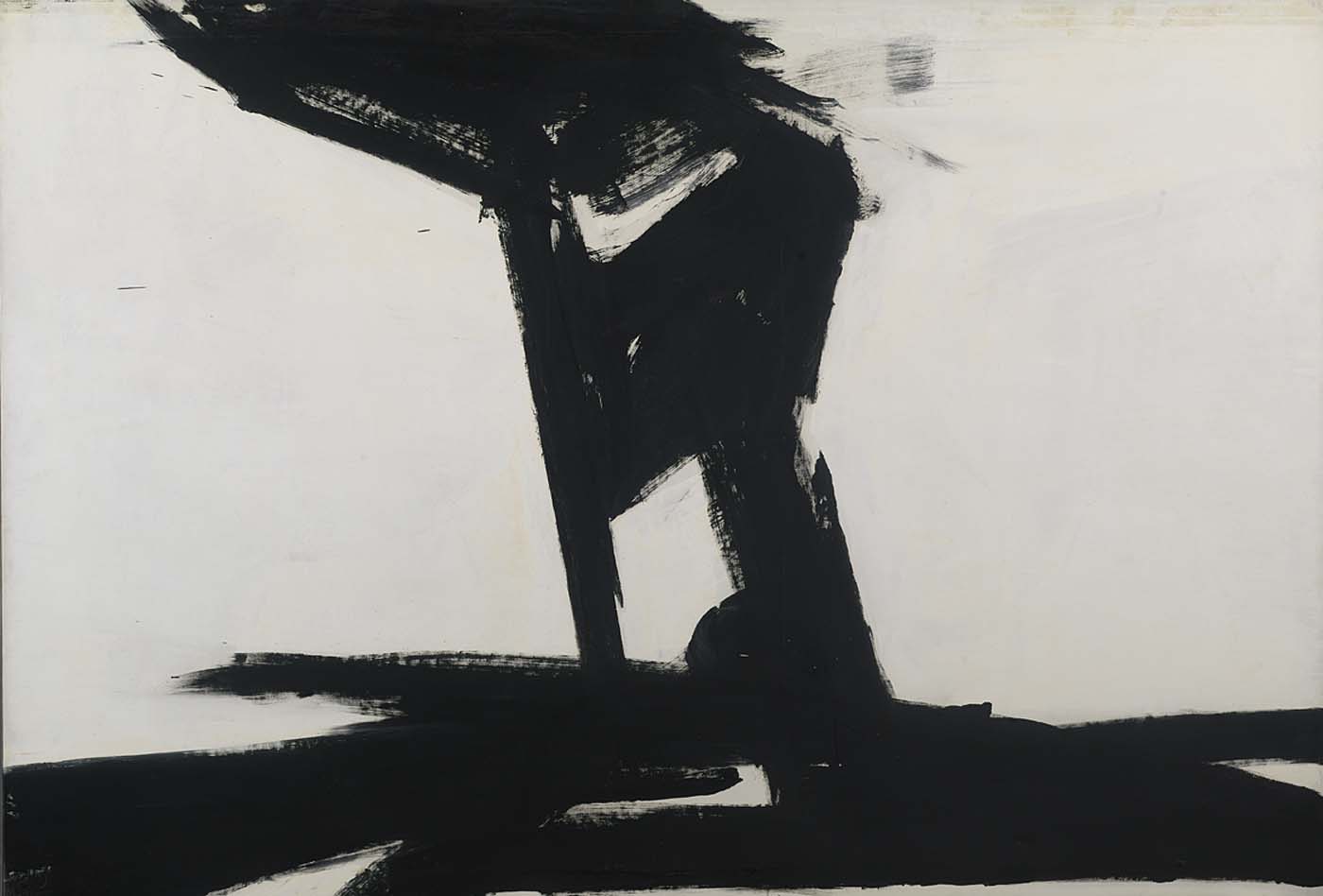
Abstract Expressionism (Royal Academy) – A heavy-hitting overview that did a fair job of making this material accessible to a beginner like me, showing Pollock's versatility, range and the muscularity of his art, expanding my understanding of Rothko beyond his status as a creator of moods, and introducing me to a selection of (apparently well-known) contemporaries. Robert Motherwell's endless evoking of the Spanish Civil War sounded promising but left me cold, but Still's ever-climbing verticals and the "violent marks" of Kline – stark black lines conjuring noirish city scapes – took my breath away, and I found the fleshy eroticism of de Kooning's 'women' period beguiling. The Pollock and Rothko pieces were utterly overpowering, in both scale and content, and a room of drawings and photos included a lovely shot of the former 'disappearing in light' as he dripped onto a vast canvas. For the most part, this was a really interesting, rewarding exhibition, though with the usual moments of nagging unease I get from modern art exhibitions, as some pictures and painters leave me with the distinct feeling that either I'm stupid or they're shit. (3.5)
***
Thanks for reading. And Happy Christmas.


