Showing posts with label Myrna Loy. Show all posts

Monday, 10 July 2017

FDR's Hollywood – Part 2: Nothing to fear (1933-45)


The familiar logo of the National Recovery Administration, seen at the beginning of innumerable '30s films.

The first instalment of this two-part blog looked at political cinema of 1932-3: how the Depression was shown on screen, and how Roosevelt's accession to power encouraged Hollywood to make hard-hitting movies about social issues. In this second article, I'll tell some of the stories of the subsequent decade, looking at the few radical movies made after the imposition of the Hays Code, explaining how Roosevelt's policies made and then broke Orson Welles, and examining the way that FDR himself was depicted on that most silver of screens.

PART 2: NOTHING TO FEAR (1933-1945)

1. Socialism on screen (1934-40)


A popular sport in America is to point at anything remotely progressive or liberal and say that it’s communist. But even a total idiot is correct sometimes, and there is something distinctly red about Our Daily Bread (August 1934), a drama about dispossessed workers throwing in their lot together on a rural commune. The studios wouldn’t go near it and so writer-director King Vidor – a conservative Republican, I’ve no idea what he thought he was doing – made his story as an independent movie, releasing it through United Artists. It’s actually a sequel to his 1928 film, The Crowd, one of the most acclaimed and enduring of all silent movies, rejoining everyman John Sims and his wife Mary (now played by Tom Keene and Karen Morley), as they’re turfed out of their jobs and their home by the Depression, struggle to make a living farming a relative’s land (rural poverty was still a rare topic on screen) and decide to pool their resources with other struggling souls to form a farm collective. The low-budget is evident in the casting of Keene, a B-Western star whose bad performance almost sinks the picture, and some of the plot machinations are synthetic and simplistic, but as a political statement it’s simply like nothing else seen on screen until John Ford’s The Grapes of Wrath, and the climactic irrigation sequence is one of the most thrilling, uplifting and arresting sequences in ‘30s cinema.


It wasn’t until John Ford adapted John Steinbeck’s titanic The Grapes of Wrath (1940) – a rare example of Code-era radicalism pushed through by Fox chief Darryl F. Zanuck, on the right of the political spectrum but a believer in telling stories the public wanted to hear – that a film dealt so frankly and powerfully with deprivation, or suggested socialism as the solution. The only solace that the Joad family find, when fleeing the Dust Bowl of Oklahoma for the fabled land of California, is in a camp run by the Roosevelt administration, Zanuck moving the sequence near the end of the picture so it could end on a note of hope, though not before Tom (Henry Fonda) delivers his extraordinary avowal of collectivism, one of the defining socialist statements of the 20th century:
“I'll be all around in the dark – I'll be everywhere. Wherever you can look – wherever there's a fight, so hungry people can eat, I'll be there. Wherever there's a cop beatin' up a guy, I'll be there. I'll be in the way guys yell when they're mad. I'll be in the way kids laugh when they're hungry and they know supper's ready, and when the people are eatin' the stuff they raise and livin' in the houses they build – I'll be there, too.”
That unassailable classic was the climax of Ford’s ‘Popular Front’ period: though the director moved further to the right over subsequent decades, ending up as a supporter of Richard Nixon, in 1937 he described himself as “a socialist democrat – always left”. His 1939 masterpiece, Stagecoach, which reinvigorated the moribund Western genre, was a thinly-veiled assault on the isolationism that FDR so vigorously opposed, with Berton Churchill (the crooked planter in Cabin in the Cotton, see Part 1) playing a xenophobic capitalist who claims that "what this country needs is a businessman as president", objects to state intervention in the market, and declares: “America for Americans!”


Berton Churchill as Donald Trump

2. Hollywood hits back: the birth of ‘fake news’ (1934)


“The American People will take Socialism, but they won't take the label."

Upton Sinclair, whose 1927 book, Oil! inspired Paul Thomas Anderson’s There Will Be Blood, some 80 years later, was also a socialist politician, who ran unsuccessfully for Congress in the early ‘20s and then twice for the governorship of Califonia. The second time – in 1934 – it was as a Democrat, and the signs augured well. His End Poverty in California (EPIC) movement had attracted phenomenal support, and would ultimately influence Roosevelt’s New Deal programme, and in the primary he received a staggering 436,000 votes, more than all of his other rivals campaign. His rival was incumbent Republican governor Frank Merriam, who had – with shades of Herbert Hoover – just called out the National Guard to shoot striking workers.

The studios, those monoliths of big business, were rattled (as, indeed, was William Randolph Hearst, the media mogul mentioned in Part 1). Mayer had threatened to move MGM to Florida if Sinclair won and, in common with the other dream factories, docked every member of his staff a day’s pay, giving all the money to Merriam. His immediate junior, Irving Thalberg, the wunderkind of MGM, went further. In the run-up to the election, he created three ‘newsreels’ – indistinguishable from the real thing, and screened in the place of genuine reports – in which actors posed as Sinclair and Merriam supporters. The current governor’s supporters were prosperous, intelligent, well-spoken and reasoned. His challenger’s backers were communists, African-American activists and the ‘bums’ supposedly flooding into the state in anticipation of a Sinclair victory. These were the first attack ads, and they were phenomenally successful.

Sinclair supporters rioted in the cinemas, Roosevelt kept his own counsel (having confirmed with Merriam that the governor would support the New Deal programme), and Merriam won. He took 48 per cent of the vote, ahead of Sinclair with 38 per cent and centrist Raymond L. Haight with 13, saying that the election was a “rebuke to socialism and communism”. Sinclair never sought office again. In 1951, he pointed to the success of EPIC and yet his own gubernatorial Waterloo, remarking with typical astuteness: “The American People will take Socialism, but they won't take the label.”

You can watch a clip from one of the newsreels here. I first saw them as uncredited, uncontextualised extras on a VHS of Our Daily Bread.

3. How Roosevelt broke Orson Welles... then broke Orson Welles (1936-42)


The Federal Art Project was one of the most astounding achievements of the New Deal, financially and creatively sustaining 10,000 writers, artists and craftsmen during the depths of the Great Depression. Though it was frequently used as a stick with which to beat the government, Roosevelt’s administration viewed the beneficiaries with sincerity and respect, taking their roles at face value. As one senior official bluntly put it: “Artists and writers have to live too.” The venture ran from 1935-43, creating 200,000 works of art – from murals to sculptures to photography projects documenting the New Deal – and launching the careers of Jackson Pollock and Willem de Kooning (Robert Rauschenberg was later a notable beneficiary of the GI Bill), though its greatest success was in the early years, when it seemed to set the mood of the nation, and gave impoverished communities the chance to experience extraordinary works of art, which spoke of their lives, and featured people who looked like them. Perhaps the FPA’s single most successful event was Orson Welles’ legendary ‘Voodoo’ Macbeth, staged in Harlem in 1936, which transplanted the action to Haiti and featured an all-black cast, including Jack Carter and Canada Lee. It was a sensation, enrapturing the local community, attracting stellar (though not unanimous) reviews, and going on to tour the country, taking in Bridgeport, Connecticut, Chicago, Detroit and Dallas, Texas. Welles was already in the ascendancy, but along with his modern-dress Julius Caesar, the production made his name, culminating in his RKO deal in 1940, which afforded him unprecedented creative freedom and led to his astounding debut feature, Citizen Kane.

The ‘Voodoo’ Macbeth is one of the few Welles stage triumphs captured partly on film, with four minutes of the action included in the Work Progress Administration documentary, We Work Again (1937). The same year, the WPA closed down Welles’ production of The Cradle Will Rock, a pro-union work written by gay communist Marc Blitzstein, after a sustained attack on the play, the Federal Theatre Project and, by extension, the Roosevelt administration. On the first night, the audience marched from the original venue, the Maxine Elliot Theatre, to the larger Venice Theatre – booked at the 11th hour by Welles, Blitzstein and producer John Houseman – where they were joined by other members of the public, admitted free, to watch an impromptu production, with the composer playing the score at the piano, and the cast joining in from the house seats. This extraordinary, largely unplanned event was recreated in Tim Robbins’ exceptional 1999 film, Cradle Will Rock, featuring Angus Macfadyen as Welles.


A 1937 rehearsal for The Cradle Will Rock.

Roosevelt’s most damaging intervention in Welles’ career, though, began with the best of intentions, as his government recruited (ordered) America’s hottest new director to direct a landmark documentary in Brazil as part of the Good Neighbour policy. The filming of It’s All True, which wasn’t released in Welles’ lifetime, became a debacle, and critically took the director out of America during the post-production phase of his second picture, the soon-to-be-notorious The Magnificent Ambersons (1942). With Welles unable to fight for his vision, his 148-minute epic was slashed to just 88 minutes, with the remaining footage dumped into the sea by the studio that had grown to loathe him. Welles would never be the same again. (I've written in great detail about the fate of Ambersons here).


Welles shooting It's All True in 1942.

4. Rom-communists and Russians (1933-44)
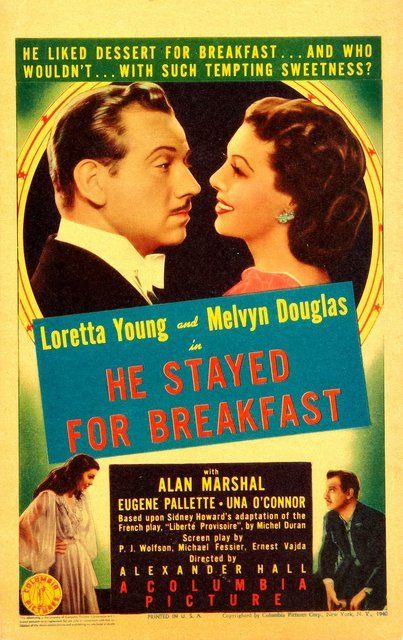

"They've made a rom-com about a communist. Don't mention it on the poster."

Prior to WWII, communists were figure of funs: shouty, silly men, either deluded or dishonest, who came around in the end once confronted with the virtue and basic common sense of The American Way. Even in the socially-progressive Heroes for Sale and the confrontational, uncategorisable Hallelujah, I’m a Bum (both 1933 and dealt with in Part 1), communists were a step too far, epitomised by Harry Langdon’s sad-eyed Egghead, and Robert Barrat’s pathetic ideologue, who ends up a ruthless entrepreneur (Barrat, as I’ve said, ended up being emblematic of the New Deal in Wild Boys of the Road two months later). Other stupid commies included the would-be assassin who takes up with a banker's wife in the risible rom-com He Stayed for Breakfast (1940), played somewhat embarrassingly by leading liberal activist Melvyn Douglas, and the loveably hapless Russian delegation in Ernst Lubitsch’s incomparable Ninotchka (1939), written by Billy Wilder. Though by 1961, Wilder would be firmly on the side of the capitalists in his bristling Berlin-set comic masterpiece, One, Two, Three, here both sides learn from one another, even if the reds are ultimately seduced by the quietly decadent beauty of Paris.


Cinema's cuddliest Stalin

Garbo’s famous line that there would be “fewer but better Russians”, though, wasn’t supported by state-sanctioned films dealing with Soviet Russia. Once the bear had waded into WWII on the Allied side, FDR’s administration encouraged the studios to start making pro-Russian pictures, which became critical pieces of evidence in the subsequent HUAC investigations into supposed communist infiltration of Hollywood. Among the most notorious are The Song of Russia (1944), starring noted red-baiter Robert Taylor, who denounced the film in committee, and Mission to Moscow (1943), a filmisation of US ambassador Joseph Davies’ diaries, which detailed his inability to see the notorious show trials of 1937 as just that: a travesty of justice, a relentless purge of Stalin’s party rivals, who were threatened, tortured and then forced to recount their supposed crimes in open session. The movie ends with Davies (Walter Huston, 10 years earlier the conduit for Walter Wanger’s fascist fantasies, see Part 1) telling the peace-loving Premier: "Mr Stalin, I believe history will record you as a great builder for the benefit of mankind.”

5. The Reich Stuff: Hollywood and the Nazis


Hollywood had a similarly complicated (i.e. dodgy) relationship with Nazi Germany, though here no executive pressure had been brought to bear – except that of the screen censor, Joseph Breen (see Part 1), who exploited the vagueness of one of the Hays Code’s ‘be carefuls’:
International relations (avoiding picturising in an unfavorable light another country's religion, history, institutions, prominent people, and citizenry)
to quash any anti-Nazi projects. His letter to Al Rosen, denying permission for the producer to pursue a project critical of Hitler entitled The Mad Dog of Europe, read:
Because of the large number of Jews active in the motion picture industry in this country, the charge is certain to be made that the Jews, as a class, are behind an anti-Hitler picture and using the entertainment screen for their own personal propaganda purposes. The entire industry, because of this, is likely to be indicted for the action of a mere handful.
Bizarrely and ironically, the script had been written by future Citizen Kane scriptwriter Herman J. Mankiewicz, who – despite having Jewish heritage – was one of the most virulently anti-Semitic figures in the industry (The first volume of Simon Callow’s Welles biography deals with this issue at some length).


I'm sorry, this is not a convincing Nazi

On those rare occasions when Hollywood made films set in Germany, it tended to sidestep the issue completely. In Charlie Chan at the Olympics (1936), which features footage of Jesse Owens at the 1936 Games in Berlin, the teutonic police force weren’t virulent racists, merely officious, old-fashioned types who looked like Kaiser Wilhelm. Studios, afraid of losing the lucrative German market even though all except Fox were run by Jewish businessmen, were happy to oblige, and MGM put pressure on the great and unspoken Myrna Loy to apologise, after she criticised Hitler and her movies were banned. She refused, because she was a badass.

It wasn’t until 1939 (1939!) – 12 months after Breen had followed the Pope's lead in denouncing Nazism, and with the War in Europe breaking – that the censor allowed anti-Nazi pictures to pass, beginning with Warner’s Confessions of a Nazi Spy (1939) and then Frank Borzage’s The Mortal Storm (1940) over at MGM, the world’s richest and most powerful film studio. That was the first American movie to deal with domestic life in the Third Reich, though it doesn’t say the word “Nazi” at any point, and nor does it say the word “Jew” (the Roth family, central to the story, are referred to only as “non-Aryans”, which seems almost more inflammatory). Upon seeing it, Hitler, with his customary good grace, immediately banned all MGM films, past, present and future.


"It's not the *most* exciting picture, but it's- oh."

He didn’t hold a grudge, though (he did sometimes, just not here). He was a huge fan of American cinema – his favourite movie was that classic of imperial derring do, The Lives of a Bengal Lancer (1936) – and later announced an intention to use Clark Gable in German propaganda films, after the Nazis’ inevitable triumph over the US. Goebbels would surely have concurred, being a huge fan of It Happened One Night (1934) (“A funny, lively American film from which we can learn a lot, The Americans are so natural. Far superior to us,” he wrote in his diary). Meanwhile, he added Myrna Loy to his list of post-victory victims.

6. Fala games: FDR on screen


Myrna Loy (second right, eating cake) with Eleanor, Gene Kelly, Ronnie Lake and others, January 1945.

Loy was oft-cited as FDR’s #1 movie pin-up, and was also an activist for the Democratic Party, counting Eleanor Roosevelt among her closest political friends. The president watched movies twice-weekly in a private screening room at the White House, and will have seen himself depicted in quite a few films of the period, from a Three Stooges’ short, Cash and Carry (1937), to an Oscar-winning musical. (John Ford never included him as a character, though, he was too busy making umpteen films about Abraham Lincoln.)

In 1941, Mickey Rooney and Judy Garland performed ‘FDR Jones’ – a song actually written at the low point of the president’s popularity in 1938 – as part of their musical extravaganza, Babes on Broadway. The number celebrated/satirised the then-common practice of African-American families naming a newborn after the Commander-in-Chief, and while it’s heartfelt in its celebration of FDR, it seems sneery, snide and a bit racist, an impression not improved by it being performed in blackface.


Glad to see the back of him: 'The President' in Yankee Doodle Dandy.

The following year, FDR was a character in the George M. Cohan biopic, Yankee Doodle Dandy (1942), which was intended to rehabilitate James Cagney’s career after accusations of communism (in 1933, the actor had described Stalin as “the greatest man in the world”). In a deeply moving framing sequence, FDR – played by Jack Young, who’s shown only from behind, as if he were God – awards Cohan the Congressional Gold Medal (this did really happen, though in 1936, not 1942). Young would ultimately play the president six times on screen, including in Edge of Darkness (1943), Disney’s The Reluctant Dragon (1941), the all-star musical This Is the Army (1943) and Mission to Moscow (1943) (see above), though the others were all voice cameos. The scene in which Cagney – as Cohan – plays FDR on stage, sees the president depicted as an all-singing, all-dancing premier: Roosevelt’s infirmity wasn’t common knowledge during his lifetime.


One of the cutesiest, most unconvincing invocations of Franklin D. was in Princess O’Rourke (1943), an embryonic version of Roman Holiday in which European princess Olivia De Havilland falls in love with serving soldier Robert Cummings. This being wartime, it ends happily (and stupidly), with FDR inviting the pair to stay at the White House, where his dog Fala (played by one-time actor, Whiskers) helps to engineer a happy ending. The picture climaxes with the president summoning a Supreme Court judge to perform the ceremony, and Cummings accidentally tipping Roosevelt on the way out, mistaking him for a butler. Well I said it was stupid.


These FDR-on-film projects are fairly anodyne, and most were made during the war, when a president's politics become relatively unimportant, and he is simply a leader (in FDR's case, as in Churchill's, a leader who has offered an olive branch, and appointed his old political adversaries to his cabinet). The exception to all this is The President’s Mystery (1936), an important and enduring movie, and the only film ‘written’ by a serving president! This fascinating snapshot of the mid-‘30s political scene credits its story to FDR, who as an avid fan of mysteries had posited a poser to the popular short story publication, Liberty Magazine, asking:
"How can a man disappear with five million dollars in any negotiable form and not be traced?"
Seven writers, including Philo Vance creator S. S. Van Dine, contributed a chapter each to a story, which was loosely adapted into the low-budget film (proceeds from which went to the Warm Springs Facility for sufferers of polio, which the president had established in Georgia). In a post-modern touch, the lead character here gets the inspiration to fake his own death from that very magazine story!


Henry Wilcoxon plays James Blake, a corporate lawyer for National Canneries, who's sent down to Washington to destroy a progressive bill that would have given co-operatives a more level playing field on which to face big business (represented, naturally, by the snide, ruddy-faced Sidney Blackmer). While on a fishing trip, Blake comes face to face with the victims of his lobbying: dirt-poor workers and the pretty factory owner trying to keep their cannery open after her father's death at the hands of the Depression. Seeing the story in Liberty, he decides to leave his old life for a new one, but his plans are complicated by the sudden death of his adulterous wife (Evelyn Brent).

Frank Nugent, who went on to pen some of John Ford's best postwar films, was then a film critic for the New York Times, and embraced the film's relevance and thoughtfulness, saying: "It is so unusual to find a motion picture attuned to any serious aspect of the contemporary national scene that 'The President's Mystery,' now at the Globe, deserves to be treated as something more than just another melodrama."

And while it has some scruffy plotting and cartoonish comedy that rubs up awkwardly alongside its more serious intentions, although it's only available nowadays in a 53-minute version (as opposed to the 80-minute original cut), it is a passionate, confident, rousing film, with a left-leaning perspective uncommon in the Code era, which is critical of Wall Street, of lobbyists and of the intrinsic selfishness and greed of big business. Though FDR had commenced his presidency with a tone that encouraged Hollywood it could make progressive, hard-hitting films, by 1936 the Hays Code – as heavy-handedly enforced by Joseph Breen – had largely taken the teeth out of the tiger.

Perhaps it's hard, though, to insist that a script is too radical and must make concessions when the story was made up by the president.

It has a little of Capra in the run on the cannery – crystallising the notion that only fear can harm a harmonious, co-operative community – and its portait of Blake's growth from a lost, cynical husk, old before his time, to a virile, noble leader of men is persuasive and thrilling:


Compare too his closing peroration to that of Cabin in the Cotton, which just prior to FDR's election hedged every bet it made.

"This place isn't only yours," Blake says. "It belongs to thousands of poverty-stricken towns with their men and women on relief. Now they demand the right to work for a decent living and it's up to you boys to help 'em to get it. This idea is bigger than any one man. I can't help you, nor can National Canneries or anyone else stop you, not if you work together."

And then he places the leftist co-operation of the New Deal in the proud and pioneering American tradition. Men died to forge these towns, saying: "This factory is now a fort in a new frontier."

7. How Deanna Durbin fought Tammany Hall: further viewing

For those who wants to dig a little deeper (or, indeed a little wider), here are a few other movies casting light on the world that FDR occupied:


All the King’s Men (1949) is the story of a rabble-rousing, crusading and crooked populist, patterned after Roosevelt’s old sparring partner Huey Long. Long, one of the most important progressive voices of the ‘30s, was partly responsible for FDR’s tack to the left (the president trying to out-flank his rival, whose Share the Wealth programme was simply a phenomenon). He was assassinated in 1935.


The Best Man (1964) provides perhaps the most insightful, incisive look at the smoke-filled rooms and packed halls of the Democratic National Convention, and of the finagling, bottling and compromising that goes on there. It’s lit by Lee Tracy’s miraculous comeback performance as a weary former president (patterned after FDR’s successor, Harry Truman), above. Advise and Consent (1962) does something similar with the Senate, marshalling an extraordinary cast of Golden Age veterans, including Franchot Tone, who hadn’t been this good in decades. Medium Cool (1969), shot partly at the Democratic National Convention of 1968, is New Hollywood’s version of The Best Man: elliptical, fragmented and fatalistic.


This film is rubbish.

FDR spent years fighting with New York's Tammany Hall, the working-class Catholic ‘machine’ that genuinely campaigned for social justice, but did so from the mire of industrial-grade corruption. In 1948, Deanna Durbin starred in a very bad musical-comedy (!) about Tammany in the 1870s, Up in Central Park, co-starring Vincent Price as a crooked politician. When Durbin quit movies saying that her final four films had been “indefensible”, this was one of the movies she had in mind. By contrast, The Last Hurrah (1958), directed by John Ford, is a deeply sensitive, reflective take on similar subject matter, with a fine feel for old time politics. Spencer Tracy plays Frank Skeffington, who rose from dire poverty in the Irish ghetto to becomes mayor of a New England city, aided by the Catholic machine. The film’s profundity is somewhat undercut by Ford’s crass treatment of his younger characters (Ford seemed to regard his son’s generation as callow, gutless and idiotic), but it has some fine moments.

Two films written by Donald Ogden Stewart, from a Philip Barry play, directed by George Cukor and starring Cary Grant and Katharine Hepburn seem to epitomise the battle for America’s soul going on during the 1930s and early ‘40s. Holiday (1938), filmed first in 1930, is the New Deal philosophy of empathy, exploration and spiritual advancement wrapped up in a deeply beautiful rom-com. The Philadelphia Story (1940), by contrast, belittles a boring, nouveau riche duffer for being a ‘man of the people’ (John Howard) and has his wife (Hepburn) elope with an aristocratic yacht designer (Grant) on her wedding day. Frank Capra’s mid-‘30s films (all written by Robert Riskin), Mr Deeds Goes to Town (1936), Lost Horizon (1937) and Mr Smith Goes to Washington all seemed to reflect the FDR ethos to some degree. Riskin was a socially-conscious liberal, in contrast to his director, a conservative Republican who opposed government intervention in the economic meltdown of the early 1930s.


Finally, Philippe Mora’s 1975 documentary, Brother, Can You Spare a Dime is essential for anyone interested in the things I’ve been talking about: an impressive, impressionistic and immersive collage of the Depression and its aftermath, arranged in roughly chronological order and mixing newsreel footage with classic movie clips, the majority from Warner – the studio most pre-occupied with the real world – and many featuring Jimmy Cagney, who's used as a recurring character. It gets across, like little else I've seen, the feel of the '30s: a world in flux, with its poverty, violence, confusion and raw ideological fervour, its vivid contrasts, a decade where fantasy and reality clashed, as contemporary concerns bled into movies, and movie stars came out to endorse politicians. And it's chock-full of classic Franklin D. Roosevelt speeches, America's greatest president providing a virtual narration: idealistic, flavourful and funny.

***

Thanks for reading.

Friday, 12 August 2016

Rick's 100 favourite movies: Part 4

Hello. Here's the final part of my top 100 countdown, containing my favourite 25 films.

The others parts are here: 100-76, 75-51 and 50-26.

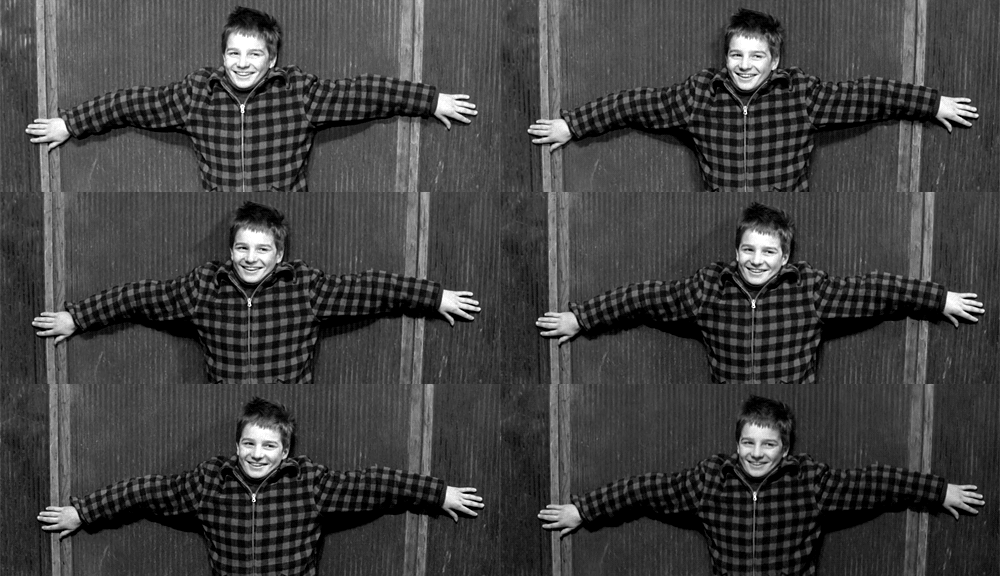
25. Les quatre cents coups (François Truffaut, 1959)

A film that changed my life. Truffaut's debut is a masterpiece on any terms, and was my gateway film to the joys of world cinema, and to cinema as a whole. Full review.

24. Libeled Lady (Jack Conway, 1936)
This is my ultimate comfort movie: I must have seen it 50 times. Aside from one broad slapstick set-piece, a dated Chinese valet and Tracy's competent but uninspired performance, everything works. Loy and Powell simply sparkle together - she at her most arch, warm and beautiful, he turning every line into a mellifluous wonder - while Harlow is in unmissable screwball overdrive, displaying what a truly superb comedian she'd become by this time. Snappily, imaginatively directed by Jack Conway, it's highly quotable, richly romantic and intensely, intensely funny. In fact, it's just about as good as movies get.

23. The Big Parade (King Vidor, 1925)
King Vidor's emotionally overpowering WWI film – of layabout aristo John Gilbert going off to fight in a fug of patriotism, falling in love with French farmgirl Renée Adorée, then finding that war is hell – was a critical and box-office sensation in 1925, and remains unsurpassed in the genre. With a lighthearted first half followed by a brutal second, it's a seamless whole formed of countless unforgettable vignettes, its knockabout comedy and beguiling romance giving way to taut, then horrific action sequences emphasising the brutal lottery of battle. Adorée learning to chew gum; Gilbert arsing about with a barrel on his head, then later sharing a shellhole with the dying German he's just shot; that astonishing ending – its classic scenes are legion, each blessed by an astounding visual poetry. Best of all is the lovers' devastating farewell, one of my favourite scenes in movies, in which a departing Gilbert – finally prised from Adorée's grip – flings his treasured possessions at her from the back of a truck. Finding that he has nothing else of value to throw, he takes off a boot, and chucks that instead. She cradles it in her arms, before collapsing on the road, alone. She's great, as the sexy, pure-hearted, then bereft love interest. And Gilbert's excellent too: this is Exhibit A for the case that his damaged reputation is ill-deserved. The Big Parade made a star out of him, and made the career of Vidor, who would create another contender for 'finest film of the silent era' – The Crowd – and then the first great American talkie (and singie), Hallelujah!

22. Beasts of the Southern Wild (Benh Zeitlin, 2012)

"For the animals that didn’t have a daddy to put them on the boat, the end of the world already happened. They’re down below, trying to breathe through water." What a stunning, dreamlike film this is, and what a beautiful, credible and unique performance lies at its centre, courtesy of the then six-year-old Quvenzhané Wallis, whose Hushpuppy is one of the great characters of recent decades. More here.

21. My Own Private Idaho (Gus Van Sant, 1991)
Gus Van Sant’s dazzling, gutting, phantasmagorical Rent Boy Henry IV. Full review here.

20. Ball of Fire (Howard Hawks, 1941)
That Richard III scene. Oof. Two reviews here.

19. The Apartment (Billy Wilder, 1960)

Like nothing else ever seen in American romantic-comedy. Review.

18. It’s a Wonderful Life (Frank Capra, 1946)
Sometimes you rage against the cinematic canon, and sometimes you realise it's just dead right. Capra's best, Stewart's best, Goodrich and Hackett's best. Just about perfection, and a film that celebrates at once individuality and communality. You have to go through so much pain for the ending, and it's worth it every time. See you at Christmas.

17. How Green Was My Valley (John Ford, 1941)
John Ford's much-maligned film about Welsh miners beat Citizen Kane to the Best Picture Oscar, and rightly so. The opening passage *is* cinema, though only the version of it that we got, the US release doesn't compare.

16. Lucky Star (Frank Borzage, 1929)

Everything Gaynor does is remarkable on one level or another. Review.

15. Paris, Texas (Wim Wenders, 1984)
"I knew these people, these two people..."

14. The Searchers (John Ford, 1956)
The best opening and closing shots in cinema, and what's in between isn't bad either. By my all-time favourite director, and the highest-placed of four John Ford films in this list. I wrote 4,000 words on it here.

13. Amélie (Jean-Pierre Jeunet, 2001)

"No. I'm nobody's little weasel." A wise, warm, whimsical piece of perfection, blessed with an unparalleled Parisian atmosphere and centred on a performance of uncommon brilliance. Review.

12. A Canterbury Tale (Michael Powell and Emeric Pressburger, 1944)
Intrigue and self-revelation amidst the ghosts and games of wartime Britain. Powell and Pressburger fashioned a unique atmosphere in this erotic story of faith and renewal.

11. The Dead (John Huston, 1987)
Oh man, that ending. A dying John Huston took the greatest short story ever written and made a film every bit as good - and perhaps even better.

10. Metropolitan (Whit Stillman, 1990)

Stillman's unique worldview powers this astonishingly clever, literate and moving rom-com about a working class Fourierist seduced by the aristocratic set he happens upon. Chris Eigeman's Nick is the funniest character in the history of movies.

9. Major Barbara (Gabriel Pascal, 1941)
"Did you believe that I was a deserter? That I, who have stood in the streets, and taken my people to my heart, and talked of the holiest and greatest things with them, could ever turn back and chatter foolishly to fashionable people about nothing in a drawing room?" A beautiful, enrapturing performance from the incomparable Wendy Hiller: the perfect, compassionate, warm and beating heart of a satirical, often cynical Bernard Shaw gabfest that cocks a snook at temperance, the Sally Army and those who see nobility in poverty. Many words here.

8. Cinema Paradiso (Giuseppe Tornatore, 1988/2002)
This film isn't perfect but it means so much to me for innumerable reasons. Morricone's score, Tornatore's evocation of Sicily and the magic of movies, and two of my favourite performances of all time (from the young and old Totos) are some (but not all) of them. The film that everyone knows is the 1989 'International Version', but the troubling, more jaundiced 2002 Director's Cut is even better (if markedly less escapist). Review here.

7. A Tree Grows in Brooklyn (Elia Kazan, 1945)

James Dunn towers above all as the twinkly-eyed Irish charmer beset by guilt and self-loathing: the definitive cinematic pipe dreamer. Review.

6. The Student Prince in Old Heidelberg (Ernst Lubitsch, 1927)
"It must be wonderful to be a prince," muses one of the town kids, studying a portrait of the student prince (Novarro). On this evidence, not so much, but then isn't life just about enjoying those perfect moments when they come? This film has more than almost any other. More here.

5. The Life and Death of Colonel Blimp (Michael Powell and Emeric Pressburger, 1943)
Powell and Pressburger's masterpiece about what it means to be British, and at war. Filled with romance, invention and a sad, quiet and reflective wisdom, it's also a film about what it means to be old and sidelined.

4. Ghost World (Terry Zwigoff, 2001)


A melancholy, bitingly hilarious crystallisation of teen ennui, which sees school leaver Thora Birch gravitate towards loner-with-lumbar-support Steve Buscemi. Beautifully written, superbly played and endlessly quotable. "It's America, dude, learn the rules."

3. Hoop Dreams (Steve James, 1994)
You won't forget this documentary in a hurry: four years (and three hours) in the company of two teenage basketball players from inner-city Illinois who dream of the big-time, seeing the NBA as their ticket out of poverty. Shocking, exhilarating and heartbreaking, with astonishing twists of fate, it's a virtuosic, unforgettable film that has as much to say about life itself than any other movie I've ever seen.

2. Les enfants du paradis (Marcel Carne, 1945)
The towering achievement of French cinema: a portrait of a vanished world, a hymn to the art of acting and an allegory about Free France, boasting three of the finest performances ever committed to celluloid. Carné's handling is breathtaking, Prevert's script is clever, witty and worldly-wise and the timeless story seems to grow in strength and resonance with each passing year. More here.

1. Remember the Night (Mitchell Leisen, 1940)

A witty, knockabout Preston Sturges comedy that slips gently into an extraordinarily powerful articulation of romantic love: romantic love as both the saviour of and ultimate threat to family, career and existence itself. Review.

***

Thanks for reading. A few dull stats:

By country:
US: 64
UK: 14
France: 12
Italy: 2
Brazil: 1
Hong Kong: 1
Denmark: 1
Sweden: 1
NZ: 1
Various: 3

By decade:
1920s: 7
1930s: 9
1940s: 16
1950s: 16
1960s: 8
1970s: 6
1980s: 13
1990s: 13
2000s: 7
2010s: 5

Most represented director: John Ford (4)
Colour/black and white: 51/49
Silent films: 8
Musicals: 5
Documentaries: 1
Films in which Eddie Bracken is mistaken for a war hero: 1

And here's the list in pictoral format.

Monday, 8 August 2016

Bette Davis, Heaven's Gate and the legacy of Hitler's favourite film - Reviews #237

I had a holiday the other week, and watched eight films. I've written about them here:


Heaven's Gate (Michael Cimino, 1980) − I love the idea of Heaven's Gate − a peerlessly ambitious artistic statement patronised and dismissed upon release but now rightly given its place among the all-time greats − but the reality is that while every shot is astonishingly and violently beautiful, it's also incredibly boring, Cimino much more interested in creating a world than telling a story. All there is, across 317 minutes on PAL DVD, is a tired love triangle against the backdrop of the Johnston County Wars.

Vilmos Zsigmond had shot three of the best-looking Westerns of all-time before this one: psychedelic experiments The Argument and The Hired Hand, and Altman's grubbily realistic McCabe and Mrs. Miller, which had set the genre off in a new direction. Heaven's Gate, now the most notorious flop in Hollywood history, began with Cimino going 10 days behind schedule two weeks into filming, and on course to spend 500% more than the original budget, due to his painstaking approach, while included demands for 70 takes of many scenes, and his view of each shot as a painting to be filled in by extras.

The resulting imagery is like nothing else in cinema: the shadow of a gunman on a drying sheet, then a dying man seen through the bullet hole ripped in it; rollerskating ranchers dancing in sync in the Heaven's Gate chapel; workers toiling in a spring field; mercenaries appearing over the brow of a hill; endless clouds of smoke and dust backlit by the broiling sun. And it's all accompanied by David Mansfield's magnificent score, which feels totally authentic and utterly fresh.

If this was a tone poem: fine, but it's not, as it spends an inordinate amount of time on its story, with every single scene outstaying its welcome. Cimino offers us nothing to get our teeth into: there's no emotional connection with any of these dislikeable, poorly-drawn characters, except perhaps for John Hurt's dissolute sell-out, and he isn't necessarily believable in this context, even though the actor himself is absolutely sensational. There's one scene between boring gruff Jim (Kris Kristofferson) and confusing, French Ella (Isabelle Huppert) near the end that I found quite affecting, but across three-and-a-half hours, two minutes of emotional interest is quite a poor ratio.

There are quotes all over the DVD case telling me that it's a neglected masterpiece, but it's simply not, and that does a disservice to all the genuinely great movies that can't find an audience because we're too busy pretending that this flaccid, tedious, miraculously-photographed bore is worthy of critical and popular rehabilitation. I don't doubt that Hollywood moneymen relished the opportunity to seize back artistic control from the directors who had briefly held the advantage, but Cimino didn't half give them a good excuse. (2)


Hubris central: Michael Cimino chuckles about going over the one-million-feet-of-film mark, little realising that he'll never be allowed to shoot a major movie again.

Final Cut: The Making and Unmaking of Heaven's Gate (Michael Epstein, 2004) − It seems an easy, lazy jibe to say that this doc is more entertaining than Cimino's film, so I'll do that. It's a fun, fast-moving chronicle of What Went Wrong, with a mixture of talking heads (producers, the assistant editor, a few cast members, and archive interview footage of Cimino, who declined to be interviewed), contextualisation provided by narrator Willem Dafoe and some old news clips, and a handful of illustrative snippets from the movie itself, though it's slightly ridiculous that considering the director shot 250 hours of footage, and we spend so much of the movie talking about his method and the vastly differing takes he requested, that there isn't a single frame of unreleased film in this making-of documentary. You're only really getting the headlines here, but it's such a cracking story that anyone interested in movie history is going to love it. (3)

***


*SOME SPOILERS*
Dangerous (Alfred E. Green, 1935)
− For 50 minutes, this is a quite brilliant drama of sexual obsession, with Franchot Tone as an architect falling for a boozy, washed-up actress (Bette Davis) who's 'jinxed' a half-dozen men, as well as half of Broadway. It's not dissimilar to Of Human Bondage (it even trades on the likeness in the trailer), the film that made Davis's name the previous year and in which her filthy commoner drove Leslie Howard half-insane, though the tone – like its leading man – is a little lighter, while her character is smarter, more sentimental and much more likeable than the cruel, gobby waitress she played there.

It's interesting how much this movie's concerns foreshadow film noir, in which happily married men willingly jack in the American Dream when their dicks start making decisions for them, and Davis was never more fascinating or sexy than she is here - even if her opening two scenes may suggest otherwise! In fact, I've never seen her better than she is for two-thirds of this movie: slipping so casually and convincingly between modes and moods, crafting something timeless from shreds of script, that it's like watching real life, only much more exciting. She's aided by direction that catches her in a succession of Ernest Haller close-ups: harsh and overlit at first, then lush and lingering, lit like a heart-melting dream. Tone, for what it's worth, is giving one of the best performances of an often disappointingly mild and unambitious career, with Alison Skipworth offering solid support as his stoically loyal housekeeper.

Then the film takes a sharp left into melodrama and off a cliff. Of Human Bondage was released three days before the strict imposition of the censorious Production Code, and while it also goes big at the close, it merely loses some momentum, rather than turning into a travesty. By Christmas Day 1935, when Dangerous came out, Hollywood still hadn't worked out how to incorporate the often absurd new rules – which determined that characters must be punished for any behaviour that transgressed its strict teachings on personal morality – without screwing up the endings of its movies. This one becomes so suddenly and violently unhappy at adulterous love that it turns its female protagonist into a psychopath and then forces her to cloyingly repent, a development that's both hideously conceived and incompetently executed.

That's a major disappointment, but it doesn't detract from the enrapturing, adult first 50. I'm glad that the DVD I ordered of '40s rom-com Come Live with Me arrived with this printed on it instead.

***


Margin for Error (Otto Preminger, 1943) − I only happened to see this because it's on a DVD with a film I really like: A Royal Scandal, Tallulah Bankhead's best cinematic vehicle, which was started by rom-com master Ernst Lubitsch but completed − after his untimely demise − by stable-mate Otto Preminger, who also directed Margin for Error. It's the first movie I've ever seen starring wise-cracking radio comic Milton Berle, and I was expecting dated gags and excessive mugging, like you'd get with a George Formby or Eddie Cantor vehicle. Actually, he slots quite effortlessly into this fascinating time capsule, playing a Jewish beat cop who's asked to guard the Nazi consulate in New York, locking horns with a hulking Teutonic sadist played, not unsurprisingly, by hulking Teutonic sadist Preminger.

Its propagandist elements are immediately apparent, but they're handled in a really great way, right from the framing sequence aboard a Naval ship, in which sailor Berle tells his mates to lay off the German-American in their midst (Carl Esmond), who it soon transpires was a Nazi functionary before something changed his mind: cue the flashback. That story ultimately gets a little bogged down towards the end, with a succession of developments more reminiscent of farce than thriller, but for the most part it's a very entertaining ride, with Berle a pleasant hero and Poldi Dur an absolute joy as his love interest: a sweet, cheery German maid just getting to grips with her first smattering of English phrases. Joan Bennett, meanwhile, is cast in the recurring 'attractive woman who naively married a Nazi' role − a key tenet of just about every WWII propaganda film made in Hollywood − though she isn't given a great to deal to do, leaving Preminger and Esmond to make the best of the rest.

You'd be unlikely to mistake it for great art, but it's surprisingly zippy and fun, and − from a historical standpoint − the treatment of anti-Semitism and democratic duty is really interesting throughout. I enjoyed it a lot. (3)

***


I'll let you know if you're being unbearable.

Nobody’s Fool (Robert Benton, 1994) − A gentle, sentimental comedy-drama from director Robert Benton, which is rather off-puttingly smug, perhaps because it stars two actors who are almost supernaturally pleased with themselves: Paul Newman (who I quite like) and Bruce Willis (who I don't really). Newman is Sully (not the blue guy from Monsters, Inc., a different chap), a construction worker dealing with a bum knee, a weird rivalry with his boss (Willis) and the reappearance of the son he abandoned as a baby (Dylan Walsh).

It's Americana of a sort, though it often feels like a TV movie, with a cheap look and a mawkish Howard Shore score, and every time it feels like it's finally getting going, with Newman offering some affecting bit of pathos or sparring pleasantly with Willis's wife (the perpetually excellent Melanie Griffith), its momentum ebbs away again thanks to some annoying line or unrealistic development − like the ridiculous sequence that leads to Sully's arrest.

There's something here: an acknowledgement of life's compromises, an understanding of the nature of redemption, and a small-town atmosphere that at times sparkles with life (Newman's encounter with nemesis Josef Sommer in a packed greasy spoon cafe is delightful), but it's obscured by self-satisfaction, strained comedy and a broadness of approach that's not worthy of Benton's undoubted talent, or indeed Jessica Tandy's persuasive supporting performance as a non-conformist pensioner who's Sully's only real defender. (2.5)

***


The Real Glory (Henry Hathaway, 1939) − Hollywood has always been happy to recycle its hits, and for a while it made a heap of money from clones of Lives of a Bengal Lancer, the hugely successful 1935 movie that had the dubious distinction of being Adolf Hitler's favourite film. As late as 1951 studios were still sending three brothers-in-arms to the colonies for rambunctious, action-packed adventures with more than a little comedy, culminating in the absolutely delightful and almost unknown Soldiers Three, but it was in the late '30s that this cottage industry really thrived, and in cinema's greatest year - 1939 - it made three: George Stevens' crowd-pleaser Gunga Din (a classic in its own right), the sound remake of Beau Geste (admittedly a shot-for-shot update of a silent Ronald Colman vehicle) and The Real Glory, which reunited the star and director of Bengal Lancer: Gary Cooper and Henry Hathaway.

It's the weakest of the three - too damn depressing to be escapism (hurray, cholera!) and too light on action - but there are some fine moments: renegade medic Cooper fighting off his pursuers on a bridge, Reginald Owen (one of my least favourite actors) acknowledging his debt to a hated junior, and the overdue but impressive battle set-piece that closes the picture. There's also a decent cast (if better on paper than in reality), typical of a Sam Goldwyn production in that it's a) thoughtfully assembled and b) includes David Niven, one of the few actors on permanent contract to the mogul.

Cooper is among the performers I hold most dear - a taciturn pretty-boy as popular with male audiences as female, who defined a certain sort of unintellectual all-American stoicism, and was often perfect within his clear limitations - and even when he's not quite in peak form (here he's a little too hesitant and shambling), he's fun to watch. Broderick Crawford and David Niven do what they can with rather one-dimensional roles, and Andrea Leeds − who gave one of the best performances of the decade in Gregory La Cava's Stage Door − makes a rare, sweet appearance as the army brat for whom choosing between these three men is no choice at all. Reginald Owen spent most of his screen career bellowing witlessly in an English voice which seems particularly modulated to loosen the bowels, but here he effectively embodies the destructive obstinacy of commanders that had typified the early staged of the Great War.

Indeed, the story has resonances that stretch far beyond its setting in the Philippines at the turn of the century. Its story about how America must train an indigenous army to fight for itself, while avoiding conflicts in the jungle, is fascinating seen through the prism of 'Nam, while an enemy who take on suicidal missions to kill Westerners in order to reach paradise (including hacking uniformed servicemen to death in public) is extraordinarily timely. That also probably played into my experience of the film, which was fine if not necessarily much fun. (2.5)

***


The April Fools (Stuart Rosenberg, 1969) − A frequently insincere, disorientatingly cartoonish and very irritating rom-com, with investment banker (that's not rhyming slang) Jack Lemmon going to a swinging '60s party held by new boss Peter Lawford, and running off with the guy's wife (Catherine Deneuve).

There are some nice sentimental moments between Lemmon and Deneuve, a few interesting and unexpected jokes, and reasonable bit parts for Myrna Loy and Charles Boyer − Golden Age legends making their first appearance together, as doting senior citizens − but Lawford is so odd, unappealing and otherworldly in his Rat Pack ieration (I know him better as a boy-next-door pin-up in '40s MGM movies), and the film is mostly concerned with lampooning a world so of its time that to modern eyes this satire is barely intelligible and certainly not entertaining.

The April Fools seems to think it's A Thousand Clowns II, but the weirdly alienating effect it conjures is more like reading Fahrenheit 451. It also has the Lemmon Problem: like Mickey Rooney, Lemmon was a very gifted actor, with an unexpectedly affecting sensitivity, who quickly became absolutely unbearable if he was allowed to flex his 'comedic' muscles unrestrained. I spent at least half of this film wanting to flex my own muscles by punching him in the face. (1.5)

See also: Lemmon's best film was The Apartment, though his finest performance surely came in David Mamet's Glengarry Glen Ross.

***


Séraphine (Martin Provost, 2008) − This is such a wonderful film: a movie about art, which is itself great art, taking the kind of real-life story that’s usually done in some hideous, schmaltzy way and ruthlessly rooting out every last bit of sentiment. Each choice it makes, from the delayed gratification of its opening (we don’t see a single painting for a good 40 minutes) to the marginal catharsis of the denouement is perfect, and the result is a French film in the traditions of Renoir, Bresson and the Dardenne brothers: humanist, intelligent and confrontational; about loneliness, connection and the sacrifices we make to create; a film that fights cruelty with an implacable, steely gentleness, a film that shakes you up and changes you.

Yolande Moreau is the titular figure, a cleaner in 1914 France who in the terminology of the period is “touched in the head”, her disability seeming to bring her closer to God. Scrabbling together enough money and materials – through menial work and digging on the riverbanks – to explore and indulge her passion for painting, she comes into contact with the German art dealer and expert (Ulrich Tukur) who launched Braque and Picasso on their careers. He is smitten by her work, while she is gratified, astonished and suspicious. As she begins to explore her talent, the touch paper of World War One is lit, making her patron persona non grata.

It’s such a different sort of movie: spiritually profound, quietly sincere, unusually yet perfectly-paced: not rushing to introduce its obscure, anti-social heroine, taking her faith seriously, and finding both humour and poignancy in her singularity and complete lack of interest in societal niceties or norms. Moreau is absolutely sensational – she won the Cesar for Best Actress, but by immersing herself in this character, not through twitches, short-cuts and glip paraphrasing – and so is everything that surrounds her, from the film’s interest in the details of everyday life in 1914, 1927, 1935, to its handsome but credible cinematography, and its contention that poverty, mental illness, a lack of education – none of these are a barrier to creating earth-shaking art. (4)

See also: This film vaulted into my favourite 100 movies list, which began over here.

***

Thanks for reading.

Monday, 3 November 2014

A Separation, Bing Crosby and seductive vigilantes - Reviews #195

More tales of sitting in a darkened room, with your host, R iCk bURi

N please. proofread this someone thank$


A Separation (Asghar Farhadi, 2011) - An Iranian couple, refused a divorce by the local magistrate, instead begin a separation, setting in chain a series of tragic events that leaves no-one in their vicinity uninjured and untainted.

This bristling, brilliant drama is bleak as hell but simply one of the best movies of recent years, offering rich characterisation, a vivid portrait of Iran's religious, male-dominated society, and a gripping, revealing and constantly surprising narrative that throbs with anger and anguish as bitter recrimination consumes its protagonists, colouring them in the eyes of their children, fast shedding their innocence.

There's not a false line or gesture here, in a searing examination of contemporary morality that offers no easy answers and passes no shallow judgements on its damaged characters, instead giving us something akin to real life, albeit in a world that often seems so very far removed from our own. (4)

***


Kes (Ken Loach, 1969) - Ken Loach's second - and still best - feature is this stunning translation of the Barry Hines novel, with David Bradley perfect as malnourished Barnsley school leaver Billy Casper, who escapes the drudgery of pit village life through his friendship with a savage, graceful hawk.

The hawk represents hope, freedom, aspiration and poetry - none of which are allowed to survive in a Britain that kicks the shit out of its working classes, breeding only vicious alpha males peddling mundane brutality and sadistic teachers blinkeredly hurling their young charges onto the scrapheap.

Though it's lit by frequent flashes of wry humour, glorious music and cinematography, and moments of transcendent escape redolent with rare beauty, it's ultimately a chilling depiction of utter hopelessness; one that packs a devastating emotional wallop, tha knows. (4)

***

"You do swim?"
"Oh yes, almost as well as I dance."
"Then you'll drown."


Libeled Lady (Jack Conway, 1936) - This is my ultimate comfort movie: I must have seen it 50 times.

Aside from one broad slapstick set-piece, a dated Chinese valet and Tracy's competent but uninspired performance, everything works. Loy and Powell simply sparkle together - she at her most arch, warm and beautiful, he turning every line into a mellifluous wonder - while Harlow is in unmissable screwball overdrive, displaying what a truly superb comedian she'd become by this time.

Snappily, imaginatively directed by Jack Conway, it's highly quotable, richly romantic and intensely, intensely funny. In fact, it's just about as good as movies get. (4)

***

Bing Crosby triple-bill


Rhythm on the River (Victor Schertzinger, 1940) - It's lovely to find a gem like this, as sometimes I start to wonder if I've exhausted the '30s and '40s' supply of quality musicals.

Bing Crosby plays a composer who ghost-writes tunes for superficially charming songwriter Basil Rathbone. Due to some fun contrivances, he happens upon Rathbone's secret lyricist - Mary Martin - and the two fall in love. A clever premise, and when you learn that it came from Billy Wilder, that makes perfect sense.

The production is handsome - full of gleaming white sets - there are some fun cameos and in-jokes (like a lovably grouchy Oscar Levant slagging off his own book, and bits for Crosby cohorts John Scott Trotter and Ken Carpenter), while the story is pleasant and quite nicely developed, if cluing in its characters surprisingly early, but where this one really excels is in the music.

The songs by Johnny Burke and James V. Monaco are just brilliant, particularly the moving, timeless Only Forever - sung by Crosby at the piano - and the star clearly knows it, approaching each one with the emotional and artistic commitment it deserves, and investing it with a deep and enduring inner beauty, or a palpable excitement.

Though Bing's jazzy posturing and mannered jive-talk ("Oh make me realise it, Wingston!") during the title track is easy to mock - which is why I've just done it - his vocal and rhythmic, pre-synced drumming is first-rate; Dixieland jazz was the star's overriding musical passion, and it shows.

Martin, who was the lifelong partner of one of my most cherished actresses - Janet Gaynor, vintage gossip fans - also contributes one show-stopping number, a sensational version of Ain't It a Shame About Mame that's flirtatious, funny and quite outrageously enjoyable. (3.5)


Birth of the Blues (Victor Schertzinger, 1941) - Or Cultural Appropriation: The Movie, as Bing Crosby and Brian Donlevy - who's frankly incompetent at miming the playing of a cornet - get the Dixieland jazz bug from the African-American community, and proceed to take it to the (white) masses.

But whereas the ghastly New Orleans - which cast Billie Holiday as a maid - had a certain inherent nastiness about it, and could hardly wait to get to a posh hall where white folks could play jazz to other white folks, here the treatment is more respectful, if still hamstrung by Hollywood cliché and racist censorship, paying tribute to real-life musicians of both colours at its close, which is a nice touch. (For his part, it's worth mentioning that Crosby himself saw racial divisions as ridiculous, performing with black musicians as readily as white: for him it was just never an issue.)

The (fictional) story is unfortunately an unmitigated shambles, taking in a tedious love triangle (hello Mary Martin), incorporating an allegedly cute kid, and having the band terrorised by a gangster, played by the chameleonic J. Carrol Naish.

Where it scores, though, is in that score. The music here is just great, from hot jazz numbers to ballads, including an irresistible version of Melancholy Baby which an overly literal Bing sings to a sleepy child. There's also the immortal St James Infirmary, The Waiter and the Porter and the Upstairs Maid - a tuneful, jaunty effort about poor people having the most fun, featuring the mellifluous tones of Jack Teagarden - and Ruby Elzy's glorious St Louis Blues (provoked by one of the most arbitrary plot developments of all time), the camera rudely wandering away from the African-American vocalist, before deciding that, yes, that's actually amazing and we should go and listen to it.

As a historical piece about the birth of the blues, it's blinkered and racist and basically just a big fib, and as entertainment it's patchy, but it'd make one hell of a CD, and here you get to see Donlevy actively wishing that he'd been paying attention when they told him how to hold a cornet. (2.5)


Rhythm on the Range (Norman Taurog, 1936) - This is another of the '30s' endless It Happened One Night rehashes, with society girl Frances Farmer (of Nirvana namecheck notoriety) falling in love with rodeo bum Bing Crosby while riding a boxcar to the West.

It's a solid if familiar story then, there's one stunningly lit shot of a cigarette-shrouded Farmer pulling on a very '30s hat, and Crosby makes the utmost of a thin song score, but the dialogue and characterisation is trite and the frequent comedy interludes are desperately unfunny, making a promising supporting cast look positively idiotic.

At one point, Samuel Hinds says Martha Raye is the most annoying person he's ever met, which seems fair.

As for Farmer, she's a little better than most of these identikit blondes who made 15 or 20 appearances as leading ladies, but undeserving of the cult attention that has attached itself to her as a result of a troubled life, a fraudulent biopic and a superb Cobain lyric. (2)

***


"Why does he make us feel the questions if he's not gonna give us any answers?"
A Serious Man (Joel Coen, 2009) - The Coens' film about a good man looking for answers as his life falls apart has a superb prologue, two terrific early comic scenes featuring an angry Korean student, and sporadic insights (or non-insights) concerning the meaning of existence. It's also nicely shot by the great Roger Deakins, and accompanied by some nice Jefferson Airplane songs.

But the writer-directors' treatment of the material, for all the originality of its setting - an orthodox Jewish community in the late 1960s - suffers from the age-old Coen problems. Any semblance of sentiment is always just the set up to more nastiness and nihilism, which in this context is frankly baffling, and ultimately both wearing and eye-widening - the cynicism of the ending every bit as unnecessary as the heartless pay-off to their take on True Grit. On one level, I'm intrigued by that approach, but it makes the film dreadfully hard to like. The overall effect is as if Wes Anderson had left the last 10 minutes off The Royal Tenenbaums, and then announced that Royal's illness was real.

On a more prosaic level, it's also quite bitty, but my real problem with A Serious Man is that coldness, that aloofness, the sense that it's laughing at its protagonist, as his world is tipped unceremoniously and brutally upon its head. It's a sad, cynical film, one allergic to genuine catharsis.

***


The West Point Story (Roy Del Ruth, 1950) - Jimmy Cagney reunites with his old comrade-in-arms Roy Del Ruth for this puttin'-on-a-show musical, but sadly the old magic just isn't there.

Cagney's a wisecracking former Broadway big-shot - working his way to the bottom of the ladder, betting on horses all the way - who gets a shot at redemption, in the shape of a revue at the army's West Point College. His covert mission, should he be blackmailed into accepting it, is also to put stars in the eyes of silver-tonsiled soldier Gordon MacRae.

It's a clumsy melange of star vehicle, cartoonish '50s comedy, sentimental drama and puff piece for the military, which reaches a particular nadir with a fascistic salute to the titular college - and the nation's armed forces - that would have made Leni Riefenstahl blush.

Doris Day and hoofer Gene Nelson both have their moments - the former bouncing around like a Duracell Bunny on benzedrine, the latter doing a neat routine with canes and hats - and it's fun to see Cagney sparring with his White Heat and Love Me or Leave Me leading ladies: Virginia Mayo and Day.

But the star seems all at sea with the spotty material, going too big too often, and as a film in itself, it's not nearly as great as it should have been, or as it promises to be in that opening reel.

See also: Lady Killer works in spots, while Del Ruth's Blessed Event - with Lee Tracy in the role originally intended for Cagney - might just be my favourite comedy film of all time.

***


The Saint’s Vacation (Leslie Fenton, 1941) - The bland but affable Hugh Sinclair takes over from George Sanders for this mediocre, visually threadbare series entry, co-written by creator Leslie Charteris.

It starts promisingly, and there are some ingenious touches and nice lines alongside a fair portion of convolution and silliness, but it all begins to drag a long while before its hour is up, with the (alleged) comic support from Arthur Macrae proving particularly irritating.

The first of the series remains by far the best: The Saint in New York, with a white-suited Louis Hayward playing Templar as a seductive vigilante killer. (2)

***


Against All Odds (Taylor Hackford, 1984) - The greatest film noir ever made becomes surely the worst neo-noir, in this staggeringly awful reworking of Out of the Past, with Jeff Bridges in the Mitchum role - reimagined as a beardy, leaden-witted American Football player.

The cast includes James Woods, Richard Widmark and Jane Greer - who played the femme fatale in the exalted original - but almost none of it works, due to the hideous '80s stylistics and one of the most abysmal scripts ever brought to the American screen.

In mild mitigation, Woods does his best, there's one neat (though completely incongruous) car chase and the theme song by Phil Collins is actually quite good, though I prefer the Mariah Carey version. Shut up. (1)

***

Thanks for

r
e
e
a
d
i
n
g
.