Showing posts with label top 100 films. Show all posts

Friday, 12 August 2016

Rick's 100 favourite movies: Part 4

Hello. Here's the final part of my top 100 countdown, containing my favourite 25 films.

The others parts are here: 100-76, 75-51 and 50-26.

25. Les quatre cents coups (François Truffaut, 1959)
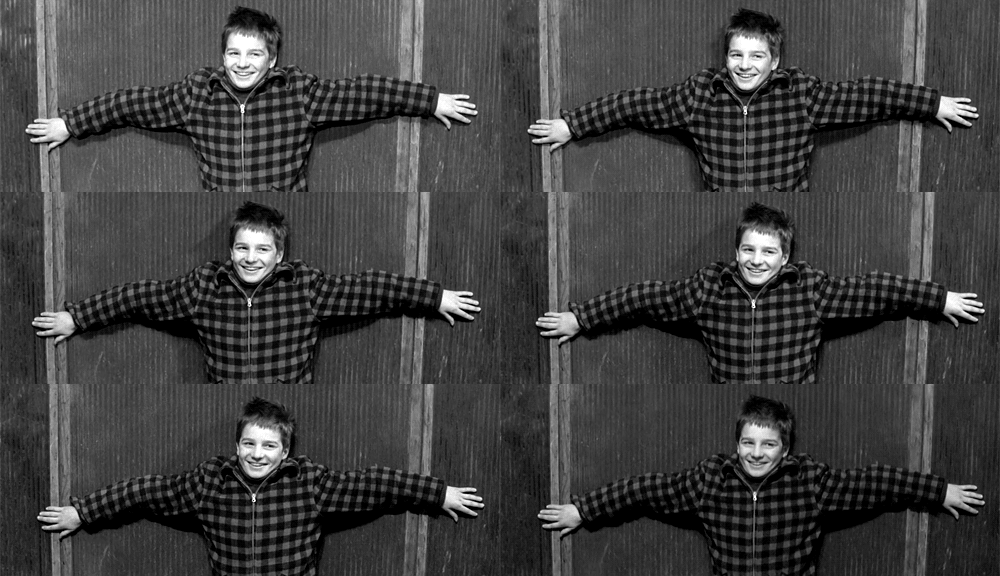
A film that changed my life. Truffaut's debut is a masterpiece on any terms, and was my gateway film to the joys of world cinema, and to cinema as a whole. Full review.

24. Libeled Lady (Jack Conway, 1936)
This is my ultimate comfort movie: I must have seen it 50 times. Aside from one broad slapstick set-piece, a dated Chinese valet and Tracy's competent but uninspired performance, everything works. Loy and Powell simply sparkle together - she at her most arch, warm and beautiful, he turning every line into a mellifluous wonder - while Harlow is in unmissable screwball overdrive, displaying what a truly superb comedian she'd become by this time. Snappily, imaginatively directed by Jack Conway, it's highly quotable, richly romantic and intensely, intensely funny. In fact, it's just about as good as movies get.

23. The Big Parade (King Vidor, 1925)
King Vidor's emotionally overpowering WWI film – of layabout aristo John Gilbert going off to fight in a fug of patriotism, falling in love with French farmgirl Renée Adorée, then finding that war is hell – was a critical and box-office sensation in 1925, and remains unsurpassed in the genre. With a lighthearted first half followed by a brutal second, it's a seamless whole formed of countless unforgettable vignettes, its knockabout comedy and beguiling romance giving way to taut, then horrific action sequences emphasising the brutal lottery of battle. Adorée learning to chew gum; Gilbert arsing about with a barrel on his head, then later sharing a shellhole with the dying German he's just shot; that astonishing ending – its classic scenes are legion, each blessed by an astounding visual poetry. Best of all is the lovers' devastating farewell, one of my favourite scenes in movies, in which a departing Gilbert – finally prised from Adorée's grip – flings his treasured possessions at her from the back of a truck. Finding that he has nothing else of value to throw, he takes off a boot, and chucks that instead. She cradles it in her arms, before collapsing on the road, alone. She's great, as the sexy, pure-hearted, then bereft love interest. And Gilbert's excellent too: this is Exhibit A for the case that his damaged reputation is ill-deserved. The Big Parade made a star out of him, and made the career of Vidor, who would create another contender for 'finest film of the silent era' – The Crowd – and then the first great American talkie (and singie), Hallelujah!

22. Beasts of the Southern Wild (Benh Zeitlin, 2012)
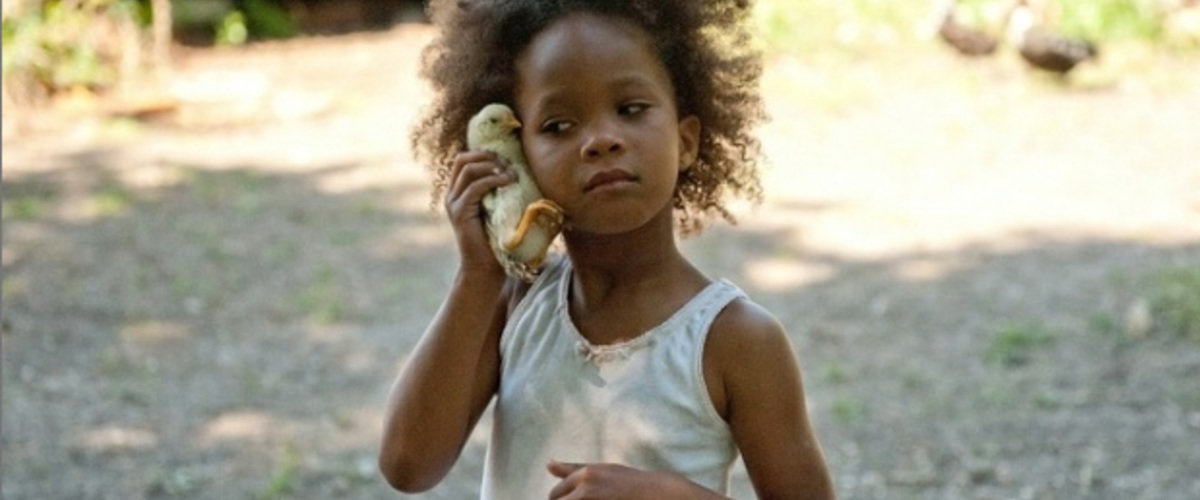
"For the animals that didn’t have a daddy to put them on the boat, the end of the world already happened. They’re down below, trying to breathe through water." What a stunning, dreamlike film this is, and what a beautiful, credible and unique performance lies at its centre, courtesy of the then six-year-old Quvenzhané Wallis, whose Hushpuppy is one of the great characters of recent decades. More here.

21. My Own Private Idaho (Gus Van Sant, 1991)
Gus Van Sant’s dazzling, gutting, phantasmagorical Rent Boy Henry IV. Full review here.

20. Ball of Fire (Howard Hawks, 1941)
That Richard III scene. Oof. Two reviews here.

19. The Apartment (Billy Wilder, 1960)

Like nothing else ever seen in American romantic-comedy. Review.

18. It’s a Wonderful Life (Frank Capra, 1946)
Sometimes you rage against the cinematic canon, and sometimes you realise it's just dead right. Capra's best, Stewart's best, Goodrich and Hackett's best. Just about perfection, and a film that celebrates at once individuality and communality. You have to go through so much pain for the ending, and it's worth it every time. See you at Christmas.

17. How Green Was My Valley (John Ford, 1941)
John Ford's much-maligned film about Welsh miners beat Citizen Kane to the Best Picture Oscar, and rightly so. The opening passage *is* cinema, though only the version of it that we got, the US release doesn't compare.

16. Lucky Star (Frank Borzage, 1929)

Everything Gaynor does is remarkable on one level or another. Review.

15. Paris, Texas (Wim Wenders, 1984)
"I knew these people, these two people..."

14. The Searchers (John Ford, 1956)
The best opening and closing shots in cinema, and what's in between isn't bad either. By my all-time favourite director, and the highest-placed of four John Ford films in this list. I wrote 4,000 words on it here.

13. Amélie (Jean-Pierre Jeunet, 2001)

"No. I'm nobody's little weasel." A wise, warm, whimsical piece of perfection, blessed with an unparalleled Parisian atmosphere and centred on a performance of uncommon brilliance. Review.

12. A Canterbury Tale (Michael Powell and Emeric Pressburger, 1944)
Intrigue and self-revelation amidst the ghosts and games of wartime Britain. Powell and Pressburger fashioned a unique atmosphere in this erotic story of faith and renewal.

11. The Dead (John Huston, 1987)
Oh man, that ending. A dying John Huston took the greatest short story ever written and made a film every bit as good - and perhaps even better.

10. Metropolitan (Whit Stillman, 1990)

Stillman's unique worldview powers this astonishingly clever, literate and moving rom-com about a working class Fourierist seduced by the aristocratic set he happens upon. Chris Eigeman's Nick is the funniest character in the history of movies.

9. Major Barbara (Gabriel Pascal, 1941)
"Did you believe that I was a deserter? That I, who have stood in the streets, and taken my people to my heart, and talked of the holiest and greatest things with them, could ever turn back and chatter foolishly to fashionable people about nothing in a drawing room?" A beautiful, enrapturing performance from the incomparable Wendy Hiller: the perfect, compassionate, warm and beating heart of a satirical, often cynical Bernard Shaw gabfest that cocks a snook at temperance, the Sally Army and those who see nobility in poverty. Many words here.

8. Cinema Paradiso (Giuseppe Tornatore, 1988/2002)
This film isn't perfect but it means so much to me for innumerable reasons. Morricone's score, Tornatore's evocation of Sicily and the magic of movies, and two of my favourite performances of all time (from the young and old Totos) are some (but not all) of them. The film that everyone knows is the 1989 'International Version', but the troubling, more jaundiced 2002 Director's Cut is even better (if markedly less escapist). Review here.

7. A Tree Grows in Brooklyn (Elia Kazan, 1945)

James Dunn towers above all as the twinkly-eyed Irish charmer beset by guilt and self-loathing: the definitive cinematic pipe dreamer. Review.

6. The Student Prince in Old Heidelberg (Ernst Lubitsch, 1927)
"It must be wonderful to be a prince," muses one of the town kids, studying a portrait of the student prince (Novarro). On this evidence, not so much, but then isn't life just about enjoying those perfect moments when they come? This film has more than almost any other. More here.

5. The Life and Death of Colonel Blimp (Michael Powell and Emeric Pressburger, 1943)
Powell and Pressburger's masterpiece about what it means to be British, and at war. Filled with romance, invention and a sad, quiet and reflective wisdom, it's also a film about what it means to be old and sidelined.

4. Ghost World (Terry Zwigoff, 2001)


A melancholy, bitingly hilarious crystallisation of teen ennui, which sees school leaver Thora Birch gravitate towards loner-with-lumbar-support Steve Buscemi. Beautifully written, superbly played and endlessly quotable. "It's America, dude, learn the rules."

3. Hoop Dreams (Steve James, 1994)
You won't forget this documentary in a hurry: four years (and three hours) in the company of two teenage basketball players from inner-city Illinois who dream of the big-time, seeing the NBA as their ticket out of poverty. Shocking, exhilarating and heartbreaking, with astonishing twists of fate, it's a virtuosic, unforgettable film that has as much to say about life itself than any other movie I've ever seen.

2. Les enfants du paradis (Marcel Carne, 1945)
The towering achievement of French cinema: a portrait of a vanished world, a hymn to the art of acting and an allegory about Free France, boasting three of the finest performances ever committed to celluloid. Carné's handling is breathtaking, Prevert's script is clever, witty and worldly-wise and the timeless story seems to grow in strength and resonance with each passing year. More here.

1. Remember the Night (Mitchell Leisen, 1940)

A witty, knockabout Preston Sturges comedy that slips gently into an extraordinarily powerful articulation of romantic love: romantic love as both the saviour of and ultimate threat to family, career and existence itself. Review.

***

Thanks for reading. A few dull stats:

By country:
US: 64
UK: 14
France: 12
Italy: 2
Brazil: 1
Hong Kong: 1
Denmark: 1
Sweden: 1
NZ: 1
Various: 3

By decade:
1920s: 7
1930s: 9
1940s: 16
1950s: 16
1960s: 8
1970s: 6
1980s: 13
1990s: 13
2000s: 7
2010s: 5

Most represented director: John Ford (4)
Colour/black and white: 51/49
Silent films: 8
Musicals: 5
Documentaries: 1
Films in which Eddie Bracken is mistaken for a war hero: 1

And here's the list in pictoral format.

Friday, 5 August 2016

Rick's 100 favourite movies: Part 2

Here's the second of four posts on my favourite films, from Ryan Gosling as a crack addict to Emma Thompson improving Jane Austen, via Charlie Chaplin, rainy France and the slums of Sao Paolo.

You can find the first post here.

75. Little Fugitive (Ray Ashley and Morris Engel, 1953)

Spellbinding, utterly original indie, shot on location in NYC, about a seven-year-old boy (Richie Andrusco) who believes he's killed his brother (Richard Brewster), and so flees to Coney Island. Review.

74. Ride Lonesome (Budd Boetticher, 1959)
The best of Boetticher's 'Ranown' films, perfectly balanced between action, emotion and humour, and with sublime Cinemascope compositions that I'd never really appreciated until I saw it on the big screen today. Randolph Scott is another of his grim, grey anti-heroes, this time a bounty hunter taking giggling James Best to a hanging, accompanied by two gunmen who want a piece of the action (Pernell Roberts and James Coburn), and a widow with enormous pointy boobs and the voice of Marilyn Monroe (Karen Steele). It's exquisitely done, with Roberts absolutely unforgettable as the laidback, uber-cool Sam Boone, whose inscrutable code of ethics seem to be leading us inexorably to a shootout. The final shot is extraordinary. There's more on the film here.

73. Pixote (Hector Babenco, 1981)

The poetry of poverty. This was unavailable for years. I saved up to buy a VHS for £30 on eBay that turned out to be a bootleg. Best decision I ever made.

72. My Childhood (Bill Douglas, 1972)
This blew me away. Douglas made only three short features and the socio-political epic Comrades before his untimely death at the age of 57. This, his debut, is a grainy, uncompromising slice of neorealism – the closest British cinema has come to a Bicycle Thieves or Pather Panchali – shot through with sincerity, compassion and a unique eye for poetic detail. The performances from the two kids (who both died tragically young) are breathtaking and the scene in which the elder, Hughie Restorick, spins and dances atop a bridge in swirling, billowing train smoke is a shot of pure joy in a film dominated by monochrome sadness.

71. Half Nelson (Ryan Fleck, 2006)
As the hollow-eyed lost soul stumbling from one catastrophe to another, Gosling offers a method masterclass that blends quiet tragedy with wry black humour. Full review.

70. One False Move (Carl Franklin, 1992)

A sister to The Crying Game (which is coming up later): nasty violence, comic smarts and a big beating heart, not to mention a fondness for a dock-off twist.

69. City Lights (Charlie Chaplin, 1931)
Not Chaplin's funniest film, but his most poignant and beautiful, with *that* ending.

68. A Star Is Born (George Cukor, 1954)

There aren't many films better than A Star Is Born, the 1937 tragedy that defined most of the rules about how Hollywood saw itself - sprinkled with stardust, drowning in self-loathing - but this remake is one of them. It's more than just a semi-musical update in widescreen and Technicolor, its songs haunt the action, enhancing the air of fatalism and desperation. It's also difficult to detach its atmosphere of ennui and addiction from the story of its star, who died just 15 years later after a succession of personal catastrophes, aged just 47. It's probably the best film Judy Garland ever made and it's certainly both her best performance and the closest she came to a personal statement on film: the show must go on - and it will, mesmerically - but look at the human cost. Judy is Esther Blodgett (shades of her birth name, Frances Gumm), who becomes a star under the name of Vicki Lester and the tutelage of boyfriend Norman Maine (James Mason), a Hollywood heavyweight and helpless alcoholic whose career is heading for the gutter. The film is a gutting, brilliant blend of cynicism and sentiment that's both appalled and entranced by Hollywood - and the starmakers, sycophants and hypocrites who populate it. It scores massively in its performances, though its wildcard is the chemistry they create: when they're bantering they're irresistible, and when they're falling apart, it's almost unwatchable. A Star Is Born is also lit by a slew of brilliant numbers. Top of the pile are 'Born in a Trunk' – added at the 11th hour – an extended, diverse production number in the 'American in Paris Ballet'/'Broadway Melody' vein - 'Lose That Long Face', a knockabout ode to looking on the bright side, and 'The Man That Got Away', perhaps the best song ever put on screen. In it, the only thing more extraordinary than what Garland is doing with her body – apparently trying to rid herself of the song via impassioned posturing – is what she's doing with her voice. That peerless, unapproachable instrument had lost the flawlessness of youth, but gained a remarkable power, as well as a quality and expressiveness akin to Billie Holiday's. Every facet of it is evident in that haunting vocal, which appears when the film is at its most carefree, but foreshadows the movie's central tragedy. The film's invention and heart-stopping evocation of the purest human emotion is perhaps best illustrated by a moment in the 'Born in the Trunk' number. Recounting her singing debut, Garland's vaudevillian (she's playing a character in a number from a film-within-a-film!) goes into corniness overdrive, recalling her dad encouraging her from the wings: "Papa shouted: 'This is it kid, sing…'" A pause, then Garland – dressed in pale blue – starts that old standard with a tranquillity and simplicity that sends a shiver down the spine. "I'll get by," she croons, "As long as I have you..." Throughout, this one-of-a-kind film - a romance, fairytale and Hollywood tragedy rolled into one - destroys you with its story, but exalts you with its realisation.

67. Return to Oz (Walter Murch, 1985)
At one point Dorothy and her pet hen and the weird pumpkin thing escape from a woman who has thousands of heads in jars by getting on a sofa which is also a moose with ferns for wings and making it fly. Five stars.

66. The Long Day Closes (Terence Davies, 1992)
A trip through Terence Davies's memory: guilt and beauty and sexual awakening. The Tammy sequence is my favourite bit of '90s cinema. I interviewed Davies about this movie here.

65. Becket (Peter Glenville, 1964)

The best film I've ever seen about faith. Burton acts everyone else off the screen.

64. The Grapes of Wrath (John Ford, 1940)
This translation of John Steinbeck's immense novel about a Dust Bowl family searching for work and dignity in California is a major work of art in its own right: bristling, poetic and throbbing with anger at the injustice visited upon working people, and filled with stunning imagery and some wonderful acting. Fonda's climactic monologue is is another league. Full review.

63. Bicycle Thieves (Vittorio De Sica, 1948)
Yes I would like to cry a lot, thank you.

62. Tootsie (Sydney Pollack, 1982)
One of the great films. Hoffman is sublime, Lange is the last word in love interests, there's superb comic support from Bill Murray and George Gaynes, and the film refuses to treat any of its characters as a joke (not Durning and not Garr), dealing deftly but properly with every serious issue it raises. It's a rare film that employs drag to interrogate gender stereotypes, not to sit lazily with them, smirking away. It's streaked with greasepaint, charmingly scored, richly romantic, hysterically funny and remarkably poignant. And the last 40 minutes is just utterly sensational. More here.

61. The Man Who Shot Liberty Valance (John Ford, 1962)
John Ford's last word on the Western.

60. Mad Max: Fury Road (George Miller, 2015)

An exhilarating feminist actioner that unleashes torrents of water on the risible '80s Mad Max films from an improbably great height. First off, Ratty Rockatansky has had an upgrade (from Mel Gibson to Tom Hardy); secondly, he's in league with a bunch of gun-toting, patriarchy-defying harem escapees, one of whom (Charlize Theron) can shoot a hell of a lot better than him - and knows it. Introducing such additional, agreeable novelties as grenade-lobbing pole vaulters, a guitar that's also a flamethrower, and a steady, beating heart where once there was none, it's a crunching, breathless, vital piece of genre joy that rewrites most of the rules and resets the action clock to Year Zero. There are moments near the film's beginning where you worry that Miller has again pitched us into a world it's frankly no fun to visit, but as soon as it gets moving - in both senses of the word - it really gets moving. Kudos too for a blockbuster that sees human nature as truly complex and transmutable, epitomised by Nicholas Hoult's pale, Valhalla-bound cult flunkey. Favourite moment? Hardy's little backwards-looking thumbs up, as the first crack appears in his nominal hero's selfish, hard-bitten persona.

59. After the Thin Man (W. S. Van Dyke II, 1936)
Even better than the first, with Loy and Powell their usual sensational team, and given the room to show it, navigating a great plot that gives them plenty of room for comic diversion.

58. The Umbrellas of Cherbourg (Jacques Demy, 1964)

Until Dancer in the Dark came along, this was the gloomiest musical ever made. No real songs, though every word is sung, as it chucks it down in pastel-pretty Cherbourg, and Catherine Deneuve embarks on an ill-advised love affair...

57. Sherlock, Jr. (Buster Keaton, 1924)
Buster's best, though everything he did in the '20s is great. No-one had a decade like it until Woody Allen's 1980s.

56. In My Father’s Den (Brad McGann, 2004)
This film's brilliance, drawn from its unconventionality and unwillingness to deliver any kind of false happy ending, is epitomised by how it handles one key exchange. In the not dissimilar You Can Count on Me, Ruffalo comes up against his child's odious stepfather and pummels his face to the point of oblivion. Here Macfadyen tries the same thing but gets kicked down some steps, his face bleeding. "Prick," mutters his assailant. The great lost film of last decade. See it.

55. Sense and Sensibility (Ang Lee, 1995)


It’s one of the defining scenes of ‘90s British cinema: a star on the cusp of supernova, accompanied by a stunning Patrick Doyle score and Michael Coulter’s sumptuous cinematography, all of it capturing a very old-fashioned sort of English vision. Kate Winslet’s Marianne walks purposefully, forlornly through the driving rain to a hill overlooking her lost love’s house. “Love is not love,” she says, leaning on Shakespearean sonnet in her hour of need, “Which alters when it alteration finds/Or bends with the remover to remove:/O no! It is an ever-fixèd mark/That looks on tempests and is never shaken…” Then the poetry dries up and she just breathes: “Willoughby, oh Willoughby... Willoughby... Willoughby.” I've written about this film a lot over the past couple of years. There's a review here and a feature here.

54. Rocco and His Brothers (Luchino Visconti, 1960)
"I want to make a movie about five brothers," director Luchino Visconti said, "like five fingers on a hand." Yeah, we know what a fucking hand looks like, thanks mate. Its sexual politics is extremely troubling, but Rocco's marriage of neorealism and melodrama makes for compelling viewing, helped by wonderful cinematography and a stunning cast.

53. Secrets & Lies (Mike Leigh, 1996)

There aren’t many films that change the way you see the world. Or many pieces of art, for that matter. Secrets & Lies does just that. It's brilliantly conceived, bracingly authentic and emotionally overpowering, opting at its climax not for soap or sentiment, but something truly remarkable: the truth. More here.

52. The Band Wagon (Vincente Minnelli, 1953)
There are outstanding musical sequences at every turn. The stars’ emotionally overwhelming, artistically dazzling 'Dancing in the Dark' number and hilarious, imaginative, outrageously sensual Girl Hunt ballet are justly celebrated, but the production number montage is no less astounding: four routines in four different styles, almost back-to-back and every one of them smacked way out of the park: the old-fashioned uplift of ‘New Sun in the Sky’, Buchanan and Astaire radiating old-fashioned class in ‘I Guess I’ll Have to Change My Plan’, Fabray’s glorious handling of the melody in the old-fashioned ‘Louisiana Hayride’ and of course three faux-infants shuffling from one leg to the other in the hysterically silly ‘Triplets’. Full review.

51. Stars in My Crown (Jacques Tourneur, 1950)
Tourneur takes a break from defining the horror film and the noir to give us a chunk of gobsmacking Americana, as a gun-toting preacher (though not in the mad way like Harry Powers) played by Joel McCrea brings peace and justice to a small town. It fascinatingly prefigures To Kill a Mockingbird in several respects, but is also an astoundingly powerful movie on its own terms. The central set-piece, in which McCrea faces down a lynch mob of white supremacists, makes me astonished that it isn't better known.

***

Thanks for reading. The final 50 are coming up soon, across two posts. Here's the list so far, in an unwieldy, not-quite-high-res poster format: