Showing posts with label Nazis. Show all posts

Monday, 10 July 2017

FDR's Hollywood – Part 2: Nothing to fear (1933-45)


The familiar logo of the National Recovery Administration, seen at the beginning of innumerable '30s films.

The first instalment of this two-part blog looked at political cinema of 1932-3: how the Depression was shown on screen, and how Roosevelt's accession to power encouraged Hollywood to make hard-hitting movies about social issues. In this second article, I'll tell some of the stories of the subsequent decade, looking at the few radical movies made after the imposition of the Hays Code, explaining how Roosevelt's policies made and then broke Orson Welles, and examining the way that FDR himself was depicted on that most silver of screens.

PART 2: NOTHING TO FEAR (1933-1945)

1. Socialism on screen (1934-40)


A popular sport in America is to point at anything remotely progressive or liberal and say that it’s communist. But even a total idiot is correct sometimes, and there is something distinctly red about Our Daily Bread (August 1934), a drama about dispossessed workers throwing in their lot together on a rural commune. The studios wouldn’t go near it and so writer-director King Vidor – a conservative Republican, I’ve no idea what he thought he was doing – made his story as an independent movie, releasing it through United Artists. It’s actually a sequel to his 1928 film, The Crowd, one of the most acclaimed and enduring of all silent movies, rejoining everyman John Sims and his wife Mary (now played by Tom Keene and Karen Morley), as they’re turfed out of their jobs and their home by the Depression, struggle to make a living farming a relative’s land (rural poverty was still a rare topic on screen) and decide to pool their resources with other struggling souls to form a farm collective. The low-budget is evident in the casting of Keene, a B-Western star whose bad performance almost sinks the picture, and some of the plot machinations are synthetic and simplistic, but as a political statement it’s simply like nothing else seen on screen until John Ford’s The Grapes of Wrath, and the climactic irrigation sequence is one of the most thrilling, uplifting and arresting sequences in ‘30s cinema.


It wasn’t until John Ford adapted John Steinbeck’s titanic The Grapes of Wrath (1940) – a rare example of Code-era radicalism pushed through by Fox chief Darryl F. Zanuck, on the right of the political spectrum but a believer in telling stories the public wanted to hear – that a film dealt so frankly and powerfully with deprivation, or suggested socialism as the solution. The only solace that the Joad family find, when fleeing the Dust Bowl of Oklahoma for the fabled land of California, is in a camp run by the Roosevelt administration, Zanuck moving the sequence near the end of the picture so it could end on a note of hope, though not before Tom (Henry Fonda) delivers his extraordinary avowal of collectivism, one of the defining socialist statements of the 20th century:
“I'll be all around in the dark – I'll be everywhere. Wherever you can look – wherever there's a fight, so hungry people can eat, I'll be there. Wherever there's a cop beatin' up a guy, I'll be there. I'll be in the way guys yell when they're mad. I'll be in the way kids laugh when they're hungry and they know supper's ready, and when the people are eatin' the stuff they raise and livin' in the houses they build – I'll be there, too.”
That unassailable classic was the climax of Ford’s ‘Popular Front’ period: though the director moved further to the right over subsequent decades, ending up as a supporter of Richard Nixon, in 1937 he described himself as “a socialist democrat – always left”. His 1939 masterpiece, Stagecoach, which reinvigorated the moribund Western genre, was a thinly-veiled assault on the isolationism that FDR so vigorously opposed, with Berton Churchill (the crooked planter in Cabin in the Cotton, see Part 1) playing a xenophobic capitalist who claims that "what this country needs is a businessman as president", objects to state intervention in the market, and declares: “America for Americans!”


Berton Churchill as Donald Trump

2. Hollywood hits back: the birth of ‘fake news’ (1934)


“The American People will take Socialism, but they won't take the label."

Upton Sinclair, whose 1927 book, Oil! inspired Paul Thomas Anderson’s There Will Be Blood, some 80 years later, was also a socialist politician, who ran unsuccessfully for Congress in the early ‘20s and then twice for the governorship of Califonia. The second time – in 1934 – it was as a Democrat, and the signs augured well. His End Poverty in California (EPIC) movement had attracted phenomenal support, and would ultimately influence Roosevelt’s New Deal programme, and in the primary he received a staggering 436,000 votes, more than all of his other rivals campaign. His rival was incumbent Republican governor Frank Merriam, who had – with shades of Herbert Hoover – just called out the National Guard to shoot striking workers.

The studios, those monoliths of big business, were rattled (as, indeed, was William Randolph Hearst, the media mogul mentioned in Part 1). Mayer had threatened to move MGM to Florida if Sinclair won and, in common with the other dream factories, docked every member of his staff a day’s pay, giving all the money to Merriam. His immediate junior, Irving Thalberg, the wunderkind of MGM, went further. In the run-up to the election, he created three ‘newsreels’ – indistinguishable from the real thing, and screened in the place of genuine reports – in which actors posed as Sinclair and Merriam supporters. The current governor’s supporters were prosperous, intelligent, well-spoken and reasoned. His challenger’s backers were communists, African-American activists and the ‘bums’ supposedly flooding into the state in anticipation of a Sinclair victory. These were the first attack ads, and they were phenomenally successful.

Sinclair supporters rioted in the cinemas, Roosevelt kept his own counsel (having confirmed with Merriam that the governor would support the New Deal programme), and Merriam won. He took 48 per cent of the vote, ahead of Sinclair with 38 per cent and centrist Raymond L. Haight with 13, saying that the election was a “rebuke to socialism and communism”. Sinclair never sought office again. In 1951, he pointed to the success of EPIC and yet his own gubernatorial Waterloo, remarking with typical astuteness: “The American People will take Socialism, but they won't take the label.”

You can watch a clip from one of the newsreels here. I first saw them as uncredited, uncontextualised extras on a VHS of Our Daily Bread.

3. How Roosevelt broke Orson Welles... then broke Orson Welles (1936-42)


The Federal Art Project was one of the most astounding achievements of the New Deal, financially and creatively sustaining 10,000 writers, artists and craftsmen during the depths of the Great Depression. Though it was frequently used as a stick with which to beat the government, Roosevelt’s administration viewed the beneficiaries with sincerity and respect, taking their roles at face value. As one senior official bluntly put it: “Artists and writers have to live too.” The venture ran from 1935-43, creating 200,000 works of art – from murals to sculptures to photography projects documenting the New Deal – and launching the careers of Jackson Pollock and Willem de Kooning (Robert Rauschenberg was later a notable beneficiary of the GI Bill), though its greatest success was in the early years, when it seemed to set the mood of the nation, and gave impoverished communities the chance to experience extraordinary works of art, which spoke of their lives, and featured people who looked like them. Perhaps the FPA’s single most successful event was Orson Welles’ legendary ‘Voodoo’ Macbeth, staged in Harlem in 1936, which transplanted the action to Haiti and featured an all-black cast, including Jack Carter and Canada Lee. It was a sensation, enrapturing the local community, attracting stellar (though not unanimous) reviews, and going on to tour the country, taking in Bridgeport, Connecticut, Chicago, Detroit and Dallas, Texas. Welles was already in the ascendancy, but along with his modern-dress Julius Caesar, the production made his name, culminating in his RKO deal in 1940, which afforded him unprecedented creative freedom and led to his astounding debut feature, Citizen Kane.

The ‘Voodoo’ Macbeth is one of the few Welles stage triumphs captured partly on film, with four minutes of the action included in the Work Progress Administration documentary, We Work Again (1937). The same year, the WPA closed down Welles’ production of The Cradle Will Rock, a pro-union work written by gay communist Marc Blitzstein, after a sustained attack on the play, the Federal Theatre Project and, by extension, the Roosevelt administration. On the first night, the audience marched from the original venue, the Maxine Elliot Theatre, to the larger Venice Theatre – booked at the 11th hour by Welles, Blitzstein and producer John Houseman – where they were joined by other members of the public, admitted free, to watch an impromptu production, with the composer playing the score at the piano, and the cast joining in from the house seats. This extraordinary, largely unplanned event was recreated in Tim Robbins’ exceptional 1999 film, Cradle Will Rock, featuring Angus Macfadyen as Welles.


A 1937 rehearsal for The Cradle Will Rock.

Roosevelt’s most damaging intervention in Welles’ career, though, began with the best of intentions, as his government recruited (ordered) America’s hottest new director to direct a landmark documentary in Brazil as part of the Good Neighbour policy. The filming of It’s All True, which wasn’t released in Welles’ lifetime, became a debacle, and critically took the director out of America during the post-production phase of his second picture, the soon-to-be-notorious The Magnificent Ambersons (1942). With Welles unable to fight for his vision, his 148-minute epic was slashed to just 88 minutes, with the remaining footage dumped into the sea by the studio that had grown to loathe him. Welles would never be the same again. (I've written in great detail about the fate of Ambersons here).


Welles shooting It's All True in 1942.

4. Rom-communists and Russians (1933-44)
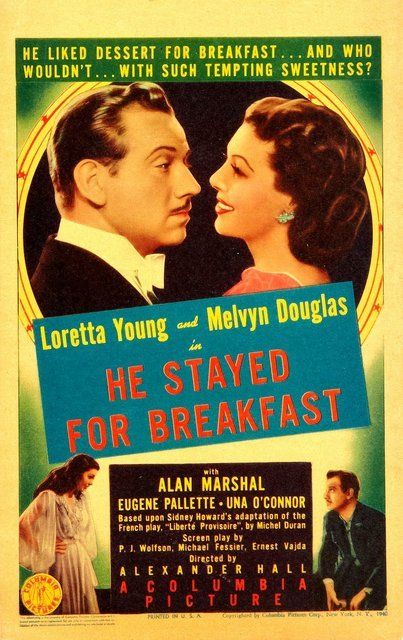

"They've made a rom-com about a communist. Don't mention it on the poster."

Prior to WWII, communists were figure of funs: shouty, silly men, either deluded or dishonest, who came around in the end once confronted with the virtue and basic common sense of The American Way. Even in the socially-progressive Heroes for Sale and the confrontational, uncategorisable Hallelujah, I’m a Bum (both 1933 and dealt with in Part 1), communists were a step too far, epitomised by Harry Langdon’s sad-eyed Egghead, and Robert Barrat’s pathetic ideologue, who ends up a ruthless entrepreneur (Barrat, as I’ve said, ended up being emblematic of the New Deal in Wild Boys of the Road two months later). Other stupid commies included the would-be assassin who takes up with a banker's wife in the risible rom-com He Stayed for Breakfast (1940), played somewhat embarrassingly by leading liberal activist Melvyn Douglas, and the loveably hapless Russian delegation in Ernst Lubitsch’s incomparable Ninotchka (1939), written by Billy Wilder. Though by 1961, Wilder would be firmly on the side of the capitalists in his bristling Berlin-set comic masterpiece, One, Two, Three, here both sides learn from one another, even if the reds are ultimately seduced by the quietly decadent beauty of Paris.


Cinema's cuddliest Stalin

Garbo’s famous line that there would be “fewer but better Russians”, though, wasn’t supported by state-sanctioned films dealing with Soviet Russia. Once the bear had waded into WWII on the Allied side, FDR’s administration encouraged the studios to start making pro-Russian pictures, which became critical pieces of evidence in the subsequent HUAC investigations into supposed communist infiltration of Hollywood. Among the most notorious are The Song of Russia (1944), starring noted red-baiter Robert Taylor, who denounced the film in committee, and Mission to Moscow (1943), a filmisation of US ambassador Joseph Davies’ diaries, which detailed his inability to see the notorious show trials of 1937 as just that: a travesty of justice, a relentless purge of Stalin’s party rivals, who were threatened, tortured and then forced to recount their supposed crimes in open session. The movie ends with Davies (Walter Huston, 10 years earlier the conduit for Walter Wanger’s fascist fantasies, see Part 1) telling the peace-loving Premier: "Mr Stalin, I believe history will record you as a great builder for the benefit of mankind.”

5. The Reich Stuff: Hollywood and the Nazis


Hollywood had a similarly complicated (i.e. dodgy) relationship with Nazi Germany, though here no executive pressure had been brought to bear – except that of the screen censor, Joseph Breen (see Part 1), who exploited the vagueness of one of the Hays Code’s ‘be carefuls’:
International relations (avoiding picturising in an unfavorable light another country's religion, history, institutions, prominent people, and citizenry)
to quash any anti-Nazi projects. His letter to Al Rosen, denying permission for the producer to pursue a project critical of Hitler entitled The Mad Dog of Europe, read:
Because of the large number of Jews active in the motion picture industry in this country, the charge is certain to be made that the Jews, as a class, are behind an anti-Hitler picture and using the entertainment screen for their own personal propaganda purposes. The entire industry, because of this, is likely to be indicted for the action of a mere handful.
Bizarrely and ironically, the script had been written by future Citizen Kane scriptwriter Herman J. Mankiewicz, who – despite having Jewish heritage – was one of the most virulently anti-Semitic figures in the industry (The first volume of Simon Callow’s Welles biography deals with this issue at some length).


I'm sorry, this is not a convincing Nazi

On those rare occasions when Hollywood made films set in Germany, it tended to sidestep the issue completely. In Charlie Chan at the Olympics (1936), which features footage of Jesse Owens at the 1936 Games in Berlin, the teutonic police force weren’t virulent racists, merely officious, old-fashioned types who looked like Kaiser Wilhelm. Studios, afraid of losing the lucrative German market even though all except Fox were run by Jewish businessmen, were happy to oblige, and MGM put pressure on the great and unspoken Myrna Loy to apologise, after she criticised Hitler and her movies were banned. She refused, because she was a badass.

It wasn’t until 1939 (1939!) – 12 months after Breen had followed the Pope's lead in denouncing Nazism, and with the War in Europe breaking – that the censor allowed anti-Nazi pictures to pass, beginning with Warner’s Confessions of a Nazi Spy (1939) and then Frank Borzage’s The Mortal Storm (1940) over at MGM, the world’s richest and most powerful film studio. That was the first American movie to deal with domestic life in the Third Reich, though it doesn’t say the word “Nazi” at any point, and nor does it say the word “Jew” (the Roth family, central to the story, are referred to only as “non-Aryans”, which seems almost more inflammatory). Upon seeing it, Hitler, with his customary good grace, immediately banned all MGM films, past, present and future.


"It's not the *most* exciting picture, but it's- oh."

He didn’t hold a grudge, though (he did sometimes, just not here). He was a huge fan of American cinema – his favourite movie was that classic of imperial derring do, The Lives of a Bengal Lancer (1936) – and later announced an intention to use Clark Gable in German propaganda films, after the Nazis’ inevitable triumph over the US. Goebbels would surely have concurred, being a huge fan of It Happened One Night (1934) (“A funny, lively American film from which we can learn a lot, The Americans are so natural. Far superior to us,” he wrote in his diary). Meanwhile, he added Myrna Loy to his list of post-victory victims.

6. Fala games: FDR on screen


Myrna Loy (second right, eating cake) with Eleanor, Gene Kelly, Ronnie Lake and others, January 1945.

Loy was oft-cited as FDR’s #1 movie pin-up, and was also an activist for the Democratic Party, counting Eleanor Roosevelt among her closest political friends. The president watched movies twice-weekly in a private screening room at the White House, and will have seen himself depicted in quite a few films of the period, from a Three Stooges’ short, Cash and Carry (1937), to an Oscar-winning musical. (John Ford never included him as a character, though, he was too busy making umpteen films about Abraham Lincoln.)

In 1941, Mickey Rooney and Judy Garland performed ‘FDR Jones’ – a song actually written at the low point of the president’s popularity in 1938 – as part of their musical extravaganza, Babes on Broadway. The number celebrated/satirised the then-common practice of African-American families naming a newborn after the Commander-in-Chief, and while it’s heartfelt in its celebration of FDR, it seems sneery, snide and a bit racist, an impression not improved by it being performed in blackface.


Glad to see the back of him: 'The President' in Yankee Doodle Dandy.

The following year, FDR was a character in the George M. Cohan biopic, Yankee Doodle Dandy (1942), which was intended to rehabilitate James Cagney’s career after accusations of communism (in 1933, the actor had described Stalin as “the greatest man in the world”). In a deeply moving framing sequence, FDR – played by Jack Young, who’s shown only from behind, as if he were God – awards Cohan the Congressional Gold Medal (this did really happen, though in 1936, not 1942). Young would ultimately play the president six times on screen, including in Edge of Darkness (1943), Disney’s The Reluctant Dragon (1941), the all-star musical This Is the Army (1943) and Mission to Moscow (1943) (see above), though the others were all voice cameos. The scene in which Cagney – as Cohan – plays FDR on stage, sees the president depicted as an all-singing, all-dancing premier: Roosevelt’s infirmity wasn’t common knowledge during his lifetime.


One of the cutesiest, most unconvincing invocations of Franklin D. was in Princess O’Rourke (1943), an embryonic version of Roman Holiday in which European princess Olivia De Havilland falls in love with serving soldier Robert Cummings. This being wartime, it ends happily (and stupidly), with FDR inviting the pair to stay at the White House, where his dog Fala (played by one-time actor, Whiskers) helps to engineer a happy ending. The picture climaxes with the president summoning a Supreme Court judge to perform the ceremony, and Cummings accidentally tipping Roosevelt on the way out, mistaking him for a butler. Well I said it was stupid.


These FDR-on-film projects are fairly anodyne, and most were made during the war, when a president's politics become relatively unimportant, and he is simply a leader (in FDR's case, as in Churchill's, a leader who has offered an olive branch, and appointed his old political adversaries to his cabinet). The exception to all this is The President’s Mystery (1936), an important and enduring movie, and the only film ‘written’ by a serving president! This fascinating snapshot of the mid-‘30s political scene credits its story to FDR, who as an avid fan of mysteries had posited a poser to the popular short story publication, Liberty Magazine, asking:
"How can a man disappear with five million dollars in any negotiable form and not be traced?"
Seven writers, including Philo Vance creator S. S. Van Dine, contributed a chapter each to a story, which was loosely adapted into the low-budget film (proceeds from which went to the Warm Springs Facility for sufferers of polio, which the president had established in Georgia). In a post-modern touch, the lead character here gets the inspiration to fake his own death from that very magazine story!


Henry Wilcoxon plays James Blake, a corporate lawyer for National Canneries, who's sent down to Washington to destroy a progressive bill that would have given co-operatives a more level playing field on which to face big business (represented, naturally, by the snide, ruddy-faced Sidney Blackmer). While on a fishing trip, Blake comes face to face with the victims of his lobbying: dirt-poor workers and the pretty factory owner trying to keep their cannery open after her father's death at the hands of the Depression. Seeing the story in Liberty, he decides to leave his old life for a new one, but his plans are complicated by the sudden death of his adulterous wife (Evelyn Brent).

Frank Nugent, who went on to pen some of John Ford's best postwar films, was then a film critic for the New York Times, and embraced the film's relevance and thoughtfulness, saying: "It is so unusual to find a motion picture attuned to any serious aspect of the contemporary national scene that 'The President's Mystery,' now at the Globe, deserves to be treated as something more than just another melodrama."

And while it has some scruffy plotting and cartoonish comedy that rubs up awkwardly alongside its more serious intentions, although it's only available nowadays in a 53-minute version (as opposed to the 80-minute original cut), it is a passionate, confident, rousing film, with a left-leaning perspective uncommon in the Code era, which is critical of Wall Street, of lobbyists and of the intrinsic selfishness and greed of big business. Though FDR had commenced his presidency with a tone that encouraged Hollywood it could make progressive, hard-hitting films, by 1936 the Hays Code – as heavy-handedly enforced by Joseph Breen – had largely taken the teeth out of the tiger.

Perhaps it's hard, though, to insist that a script is too radical and must make concessions when the story was made up by the president.

It has a little of Capra in the run on the cannery – crystallising the notion that only fear can harm a harmonious, co-operative community – and its portait of Blake's growth from a lost, cynical husk, old before his time, to a virile, noble leader of men is persuasive and thrilling:


Compare too his closing peroration to that of Cabin in the Cotton, which just prior to FDR's election hedged every bet it made.

"This place isn't only yours," Blake says. "It belongs to thousands of poverty-stricken towns with their men and women on relief. Now they demand the right to work for a decent living and it's up to you boys to help 'em to get it. This idea is bigger than any one man. I can't help you, nor can National Canneries or anyone else stop you, not if you work together."

And then he places the leftist co-operation of the New Deal in the proud and pioneering American tradition. Men died to forge these towns, saying: "This factory is now a fort in a new frontier."

7. How Deanna Durbin fought Tammany Hall: further viewing

For those who wants to dig a little deeper (or, indeed a little wider), here are a few other movies casting light on the world that FDR occupied:


All the King’s Men (1949) is the story of a rabble-rousing, crusading and crooked populist, patterned after Roosevelt’s old sparring partner Huey Long. Long, one of the most important progressive voices of the ‘30s, was partly responsible for FDR’s tack to the left (the president trying to out-flank his rival, whose Share the Wealth programme was simply a phenomenon). He was assassinated in 1935.


The Best Man (1964) provides perhaps the most insightful, incisive look at the smoke-filled rooms and packed halls of the Democratic National Convention, and of the finagling, bottling and compromising that goes on there. It’s lit by Lee Tracy’s miraculous comeback performance as a weary former president (patterned after FDR’s successor, Harry Truman), above. Advise and Consent (1962) does something similar with the Senate, marshalling an extraordinary cast of Golden Age veterans, including Franchot Tone, who hadn’t been this good in decades. Medium Cool (1969), shot partly at the Democratic National Convention of 1968, is New Hollywood’s version of The Best Man: elliptical, fragmented and fatalistic.


This film is rubbish.

FDR spent years fighting with New York's Tammany Hall, the working-class Catholic ‘machine’ that genuinely campaigned for social justice, but did so from the mire of industrial-grade corruption. In 1948, Deanna Durbin starred in a very bad musical-comedy (!) about Tammany in the 1870s, Up in Central Park, co-starring Vincent Price as a crooked politician. When Durbin quit movies saying that her final four films had been “indefensible”, this was one of the movies she had in mind. By contrast, The Last Hurrah (1958), directed by John Ford, is a deeply sensitive, reflective take on similar subject matter, with a fine feel for old time politics. Spencer Tracy plays Frank Skeffington, who rose from dire poverty in the Irish ghetto to becomes mayor of a New England city, aided by the Catholic machine. The film’s profundity is somewhat undercut by Ford’s crass treatment of his younger characters (Ford seemed to regard his son’s generation as callow, gutless and idiotic), but it has some fine moments.

Two films written by Donald Ogden Stewart, from a Philip Barry play, directed by George Cukor and starring Cary Grant and Katharine Hepburn seem to epitomise the battle for America’s soul going on during the 1930s and early ‘40s. Holiday (1938), filmed first in 1930, is the New Deal philosophy of empathy, exploration and spiritual advancement wrapped up in a deeply beautiful rom-com. The Philadelphia Story (1940), by contrast, belittles a boring, nouveau riche duffer for being a ‘man of the people’ (John Howard) and has his wife (Hepburn) elope with an aristocratic yacht designer (Grant) on her wedding day. Frank Capra’s mid-‘30s films (all written by Robert Riskin), Mr Deeds Goes to Town (1936), Lost Horizon (1937) and Mr Smith Goes to Washington all seemed to reflect the FDR ethos to some degree. Riskin was a socially-conscious liberal, in contrast to his director, a conservative Republican who opposed government intervention in the economic meltdown of the early 1930s.


Finally, Philippe Mora’s 1975 documentary, Brother, Can You Spare a Dime is essential for anyone interested in the things I’ve been talking about: an impressive, impressionistic and immersive collage of the Depression and its aftermath, arranged in roughly chronological order and mixing newsreel footage with classic movie clips, the majority from Warner – the studio most pre-occupied with the real world – and many featuring Jimmy Cagney, who's used as a recurring character. It gets across, like little else I've seen, the feel of the '30s: a world in flux, with its poverty, violence, confusion and raw ideological fervour, its vivid contrasts, a decade where fantasy and reality clashed, as contemporary concerns bled into movies, and movie stars came out to endorse politicians. And it's chock-full of classic Franklin D. Roosevelt speeches, America's greatest president providing a virtual narration: idealistic, flavourful and funny.

***

Thanks for reading.

Tuesday, 4 April 2017

Patti Smith, Music for Chameleons, and Ghibli being all weird again – #Reviews 261

Here's a blog I wrote about getting to go behind-the-scenes at Brian Pern: A Tribute, one of this year's televisual triumphs.

And here are reviews of the other cultural things I've ingested recently: three books, a movie and a couple of TV series.

BOOKS


Just Kids by Patti Smith (2010)
– At its best, Smith’s beautifully-titled memoir of her life with idiosyncratic, doomed artist Robert Mapplethorpe is uncommonly insightful, raw and moving, as a trio of fateful encounters blossom into romance, which in time becomes an epic love that endures even as their lives begin to diverge: Smith graduating from artist to poet to pioneering rock ‘n’ roll frontwoman, Mapplethorpe admitting his homosexuality to himself as he turns from a collagist and painter into one of the era’s defining photographers. The passages detailing his death and then flashing back to their early acquaintanceship and their construction and then abandonment of a self-contained world are extraordinarily powerful, shining a light into the corners of Smith’s soul and revealing the importance that her upbringing, her faith and her commitment to creativity and visionary artistry have played in dictating her life’s course.

And yet the book becomes decreasingly revelatory and compelling as it progresses, Smith traversing into pretension with increasing frequency and intensity, as well as boringly listing which thrift shops she visited, which trinkets people gave one another, which outfits she wore every day and what she had to eat. As a fashion icon, it seems obvious in retrospect that she must have spent time and energy crafting her visual identities, but it doesn’t make for great reading, that blissful middle-ground of relatability, frank emotion and economic but literate prose vacated entirely for long stretches, as we oscillate between posturing and pointlessness.

Even then, though, Smith has a way of snapping back to a truthfulness and precision that's immediately and startlingly effective, and while reading between the lines we can deduce that perhaps Robert wasn’t the saintly, selfless figure that his great defender contends, you would have to be a psychopath not to be moved by the pair’s deep, mutual and unstinting dependence, at times breathtakingly evoked by this flawed but distinctive and heartbreaking elegy – not just for an artist, but for a man, and for the heyday of the grungy, bohemian, dangerous, filthy, accepting, unforgiving and enrapturing New York City that was his. (3)

***


Scandals of Classic Hollywood by Anne Helen Peterson (2014) – I don’t want you to develop any preconceptions about this book’s contents, based on this image: if only there were a saying that succinctly crystallised this thought.

Anne Helen Petersen’s book isn’t the tawdry, sensationalist rehashing of age-old scandals it appears from the cover, rather it seems that this is the only way you can get a book like hers published. Instead, it’s a collection of blogs from this ‘doctor of gossip’ (she has a PhD in the history of the industry, from the University of Texas) which examines Hollywood scandals or tragedies, how they were managed (or not) by the studios, and what the events, their handling and the fall-out tell us about American society. Each chapter is around 13 pages long (a couple are much longer), beginning with Mary Pickford’s affair with Douglas Fairbanks, closing with the hysteria around James Dean’s death, and in between looking at everything from the tragic lives of screen sex sirens Clara Bow and Jean Harlow to Bogie and Bacall’s romance, and Montgomery Clift’s ‘long suicide’.

The quoted sources are almost all gossip and fan magazines, a fascinating prism through which to view this history, but also somewhat limiting, if the sections on Bow and Harlow are representative of the whole. Though Petersen alludes to David Stenn’s book on Harlow, she either misinterprets or deviates from his impeccably well-sourced, well-argued narratives of both lives, with an alternate vision that seems myopic and incomplete, with no understanding of (or even reference to) Bow’s tortured upbringing. The contrary assertions it does make aren’t attributed to any sources and so seem more like supposition. Though most of the other essays crackle with energy, as we get a witty, accessible and cleverly contextualised whistle-stop tour of a star’s life, usually zoning in on a controversial, widely-covered scandal (Fatty Arbuckle) or tragedy (Carole Lombard), or – more often than not – the ongoing ‘scandal’ that was their self-destruction (in the case of Judy Garland, Montgomery Clift, Marlon Brando), or their side-lining by censorship (Mae West) or racism (Dorothy Dandridge), as a result I began to question their veracity of completeness. Doubtless some elements are difficult to fact-check through the fog of time and the smoke and mirrors of Hollywood publicity, but her constant get-out of “the accuracy of this claim matters less than…” is frustrating, and there are quite a few typos and errors (Carole Lombard dies in 1941, then signs up to do war work in 1942). That’s a shame, as the Arbuckle section is spot on, the Clift one is a decent effort, and the chapters on West, Dandridge and heroin-addicted silent star Wallace Reid are – at least on the surface – gripping and eye-opening pieces about stars I’ve seen a bit of, but knew little about beyond the headlines.

There’s also certainly no doubt that Peterson is an expert on fan magazines and studio publicity, and it’s a fascinating angle from which to approach these stories. Now and then she'll even turn something you thought you knew about – like Kazan's On the Waterfront, one of the first films I ever loved – so you see it as if for the first time, appreciating how Eva Marie Saint's transformation in the film is fundamentally achieved through Brando's reactions to her. On the other hand, Petersen is writing for an audience with little to no knowledge of these stars and their work, which means that if you’ve read Patricia Bosworth’s book on Clift, Stenn’s definitive works on Bow and Harlow, or even seen – say – Paul Merton’s documentary on Arbuckle, you’re having to sit through an awful lot of familiar (but simplified) material in order to get a little more insight. She’s also somewhat curbed the waspish, sweary tone of her earlier Hairpin articles, which is understandable (I sometimes soften my own writing depending on the audience), but a little disappointing.

It's not that I didn’t enjoy the book. It’s a lot of fun, and I learned quite a bit, but it left me a little unsatisfied. Perhaps I’m just spoiled by Karina Longworth’s superb You Must Remember This podcast, which covers these sorts of stories with such skill, insight and journalistic rigour – and at such length – that she leaves most other film historians trailing in her wake. (2.5)

With enduring thanks (and sincere apologies for my usual ungratefulness) to my friend Soph for sending me this one.

***


Music for Chameleons by Truman Capote (1980) – A book of extraordinary grace, incisiveness and honesty which further bolsters my impression that Capote remains one of the most important, original and underestimated writers of his era. Fuck his artificial image as a catty, trivial, morbid starfucker, and study the work: dark, devastating, morally decent work shot through with his actual character, the shadows of an encroaching darkness creeping across the sun-dappled idyll of his New Orleans childhood. Even fans tend to lean on a popular narrative – pushed in last decade’s cinematic biopics – that sees him in terminal decline after the trial of In Cold Blood, but while it’s true that he degenerated into substance abuse (an affliction dealt with in breathtaking fashion in the last of these 14 pieces), and that with it his work-rate slowed, this book may well be his creative zenith.

In Bob Dylan’s Chronicles, he explains (entirely preposterously) that in the late ‘80s he found a new way to sing: a mathematical formula that has enabled his voice to endure his Never Ending Tour (please post your punchlines below). Here, Capote does much the same, denigrating his entire back catalogue as he seeks to articulate exactly why, and how, he’s developed the new style premiered in this book. Unlike Dylan, who is talking through his silly cowboy hat, Capote is sincere. His style here is so clean, precise and economical, yet to formally inventive, that it takes the breath away. Every decision he makes, from delayed gratification, to leading with dialogue, to drifting into remembrance and reminiscence, seems right, and his evocation of emotion, of nature, and of character is remarkably specific and so uniquely powerful.

There are six short stories and seven conversational portraits, alongside a non-fiction (?) centrepiece about a serial killer, and each is remarkable in one way or another. Perhaps my favourite piece is Dazzle, a multi-layered story with a time-shifting perspective that’s about love, fear and guilt, as Capote relives the story of his paternal grandfather, a fortune teller and two terrible secrets: one comic, the other tragic. It is flecked with wonder, touched by horror, and redolent with an unstudied compassion for his younger self, before a climactic sucker-punch that knocked me sideways. But it’s just one masterpiece among many. The other short stories are rich in irony, but unwaveringly sincere, as they deal with self-loathing, denial and the secrets (or unspoken truths) that dominate the book, while his egalitarian ‘portraits’ take in a weed-smoking cleaner, Marilyn Monroe, pastoral novelist Willa Cather and amoral Manson acolyte Bobby Beausoleil: though you could class the first of those as ‘hilarious’ and the last as ‘chilling’, that’s to reduce them from the multi-faceted, playful, probing, touching, humane and sad works that they are. The only piece that doesn't quite work for me, at least not unequivocally, is Handcarved Coffins, the lengthy true crime chapter at the book's centre. It has passages of great insight – on sexuality, obsession, delusion – but at times its language is oddly forced, and ultimately I'm not sure exactly what the point is that Capote is constantly circling and yet never quite landing upon.

It makes sense, perhaps, that when the book does malfunction, it's in both style and content, for it's the balancing of form, viewpoint and revelation, both overt and within the reader, that is the book's great strength. Music for Chameleons is beautifully-written, but even Capote’s admirers often stop right there, and it’s much more than that. His swaggering, elegant, stylistic brilliance – even as a supposed has-been, with a pickled liver and a nose stuffed with coke – is really a way of packing as much wit, pathos and meaning into each line as possible. His style is not an end in itself, it's the way he carries truth to the reader. (4)

See also: I wrote about In Cold Blood here, and some earlier Capote works here.

***

FILM


Spirited Away (Hayao Miyazaki, 2001)
– It only took me 16 years to see Spirited Away, and what a wondrous, spectacularly odd film it is: Ghibli on an epic yet intimate scale, as a little girl named Chihiro gets waylaid while moving house, and Hayao Miyazaki’s imagination goes into overdrive.

We meet Chihiro just minutes after an emotional farewell to her old friends: she’s sitting in the backseat of her parents’ car, as they trail a moving van to their new home. The family stop to investigate what seems to be an abandoned theme park, and soon the parents have been turned into pigs, Chihiro’s life has been saved by a boy who it turns out is a dragon and also a god, and she’s been forced to find employment in a fully-functioning bathhouse populated by ghosts, assisted by a multi-armed man who lives by a furnace with his friends – sentient bits of soot – and under the cosh of giant-headed Thatcher-a-like Yubaba, whose beloved germaphobe baby is bigger than she is. That’s the first 20 minutes. It carries on in a similar vein from there, as you can see from this short paragraph lifted from Wikipedia:
While visiting her parents' pigpen, Sen finds a goodbye card addressed to Chihiro and realizes that she has already forgotten her name. Haku warns her that Yubaba controls people by taking their names and that if she forgets hers like he has forgotten his, she will not be able to leave the spirit world. While working, Sen invites a silent masked creature named No-Face inside, believing him to be a customer. A 'stink spirit' arrives as Sen's first customer. She discovers he is the spirit of a polluted river. In gratitude for cleaning him, he gives Sen a magic emetic dumpling. Meanwhile, No-Face tempts a worker with gold, then swallows him. He demands food and begins tipping extensively. As the workers swarm him hoping to be tipped, he swallows yet another two greedy workers.
The film takes a little while to begin to weave its magic, but without warning you find yourself enraptured, lost in its peerlessly weird universe, spellbound by its animation – by turns serene, frenetic, opulent, disorientating, immersive and repulsive – and touched by its understated but profound emotional core. Its characters are notable for their complexity, duality and depth – often achieved with minimal exertion – as well as for their malleability. Whether by witchcraft or kindness, they can be corrupted or reformed – these are not the one-trait ciphers often fed to animation audiences – and yet there’s a simplicity in the emotional exchanges that’s completely beguiling, and surprising for a film with such a complicated story, and such a wealth of subtext. Miyazaki’s nostalgic vision acts as a commentary on a modern Japan that has lost its way, betraying its national identity and its environmental responsibility with a greed that’s evoked with both subtlety and a crude, in-your-face literalism. This, it says, it what happens when you only have a yen for yen. On a surface level, it's also great to have this coming-of-age tale led by such a brave, forthright, decent, ass-kicking girl. There should be one in every story.

The film isn’t perfect: while transfixed and impressed by its balls-out, apparently authentic weirdness, I found it initially distancing, and there were times when the movie’s proliferation of oddball supporting characters, the scenes necessary to accommodate them and its general noisiness (compared to my favourites thus far, Totoro and Porco Rosso) began to tire. It always, though, came back to itself: to Miyazaki’s singular if somewhat unregulated imagination, to the sincerity and simplicity of the Chihiro-Haku relationship, and to the aesthetic analogue that is Spirited Away’s exquisite animation. (3.5)

The music's lovely too.

***

TV


The Nazis: A Warning from History (1997)
– A topical rerun of this seminal series, 20 years on. It’s history as investigative journalism, shorn of all sensationalism and ghoulishness, which changes much of what you thought you knew about the Nazis, such as their bizarre, deeply dangerous power structure – competing, antagonistic department heads seeking to turn Hitler’s psychopathic monologues into policy – the role of voluntary, informal informants in making the Gestapo appear omniscient, and the self-justification of ‘ordinary’ Germans who enabled them to commit unprecedented horrors. From its striking credits to Samuel West’s crisp, authoritative voiceover, its unearthing (and understanding) of revelatory documents to its astonishing interviews with perpetrators and victims alike, it’s a class act, which manages to answer (or at least posit a compelling answer) to that eternal, chilling question: how could it happen? (4)

***


Spiral: Season 5 (2014) – For five episodes, this erratic but often exquisite French crime series appears to have given up the ghost. It’s tired, disjointed and – yes – even boring, as Laure Berthaud (Caroline Proust), Gilou (Thierry Godard) and the rest return to solve a slow-moving murder case, a series of ATM ram raids and the mystery of what the hell’s happened to Spiral. Then suddenly, and almost without warning, it explodes into brilliance, its stories dovetailing – and then artfully unfolding – its human subplots becoming uncommonly compelling, and Proust, Godard and Audrey Fleurot (as complex, flamehaired, bad-ass shyster Josephine Karlsson) hitting devastating peak form. It turns out that it’s all about mothers and daughters, and that neither we nor Laure are allowed to have anything nice happen to us ever. It’s back later this year, apparently. I’m going to record them all and then binge. (3)

***

Thanks for reading.

Wednesday, 30 December 2015

An 11th thing I learned about Peter Lorre

This proved popular on Twitter, so I thought I'd put it up here too. It's Lorre (who fled the Nazis in 1933) winding up Basil Rathbone, for no reason:


You can read my original post about Lorre here. Y'know, if you want.

Friday, 9 July 2010

The Hess story - in Ian's own words


Ian Bailey in 1941 and 2005.


In 1941, senior Nazi Rudolf Hess embarked on an ill-fated 'peace mission' to Scotland. After crashlanding in Glasgow, he was guarded by schoolteacher and trainee soldier Ian Bailey. This is the story, in Ian's own words:

“I joined up in 1940. I went into the Scots Guards and I was commissioned the following year into the Highland Light Infantry, City of Glasgow Regiment.

“In the early months of 1941 I went up to Glasgow to the depot, waiting to be posted to a battalion. On May 10th 1941 I was the orderly officer for the day. I went to bed at midnight. At about half past one in the morning the duty officer came up to my room and said, ‘A German prisoner’s been brought in – get up!” ‘Oh,’ I thought, ‘Hell.’ So I had to get up and get dressed again; and then I went into the barracks. It was a moonlit night, and there was a man with his arms around the necks of two of our soldiers, limping.

“When I hoved into sight, one of the soldiers left him, and the fella put his arm around my neck – little did I realise whose arm it was. We hurtled along to the little place we had to look after sick men. The doctor was roused, because this fella had hurt his foot when he parachuted.

“We took his boot off, and he made very Germanic noises, and we thought, ‘A Brit wouldn’t make noises like that’. I thought, ‘I hope they get rid of him, because I want to get back to bed’ – it was cold, and I hadn’t got my overcoat on. They said, ‘There’s a room upstairs, you can guard him.’ So I thought, ‘Damn’.

“Well, a Corporal was laid on as well and we took this chap up to this room and watched him get undressed, and he had very nice long johns on, I remember – very nice clean long johns. Then he got into bed and I put the Corporal in the corridor outside with his rifle and fifty rounds of ammunition, and I sat down in an armchair beside his bedside.

'The poor devil'

“But he didn’t go to sleep, he put his hands behind his head, and just gazed into the distance and I really felt quite sorry for him. I thought, ‘The poor devil, he’s in the bag for goodness knows how long’. And at about half-past five in the morning he got out of bed and started doing knees full-bend exercises, groaning all the while! So, I went outside into the corridor where this Corporal was and said, ‘Get the doctor out again’.

“The doctor was very cross at being roused twice out of his bed by a German, so he sent one of his minions with a Mickey Finn to put him out, and then he was quiet for the rest of the evening. At about half-past eight we gave him some breakfast and I was relieved and the next orderly officer came and took over from me, and so I went to bed – this was Sunday – and I got up later on in the evening, and spent the evening with some relatives I had along the South side of Glasgow, and I remember saying, ‘I had an interesting evening, I had to sit with a German prisoner – they brought in an airman.’ He’d given his name as Alfred Horn and he wore the rank of the equivalent of a Captain on his coat.

“On Monday evening, in the mess, when I went in for dinner that evening, there was a bit of a buzz that that German who’d been brought in on the Saturday night was no ordinary German, and then on Tuesday morning in all the headlines in the papers: ‘HESS LANDS IN GLASGOW!’ I thought, ‘Of course it was Hess' – but you didn’t expect to see Hitler’s Number Two in the barracks in Glasgow!’”

Aftermath

“They often told the story of Hess landing in Glasgow, but they hardly mentioned Maryhill. It was important to me because I’d looked after him. Then, the next move was May 10 1981, forty years later. I woke up early in the morning. They were saying on the radio, ‘We’re going to have a talk by Mr MacRobert’, and Mr MacRobert came on and said, ‘I wonder if my listeners realise that forty years ago today, Hess landed in Glasgow’ – well I woke up!

“He continued, ‘... and he was taken to Maryhill barracks’. And I thought, ‘Here we are – instant fame!” ‘… where he was guarded by Second Lieutenant Ian Bailey’? ‘… where he was guarded by Corporal Willie Ross!’ I thought, ‘To hell with this’ – there was a Corporal, but I put him in the corridor – I was looking after Hess!

“So I stormed into school [Manchester Grammar], and I saw the High Master [headteacher] and I said, ‘Where’s Radio Highland?’ – which is where this talk had come from. ‘Inverness.’ So I wrote to Mr. MacRobert in Inverness and I said, ‘Very interesting talk you gave, but as a matter of interest, it was Second-Lieutenant Ian Bailey who looked after him, not Corporal Willie Ross.’ Just to put the matter straight, you understand.

“And I got a very nice letter back. He said he’d met Corporal Willie Ross after the war was over and he had told him this. And where had he met him? In Holyrood Palace in Edinburgh where the business of Scotland is done. And what was he then? Secretary of State For Scotland in Wilson’s Government! And when he retired he was given a peerage and finished up as Lord Ross of Marnock. I’ve got a book called ‘Famous Scottish Soldiers’ – one is Lord Ross of Marnock. Why? Because he ‘guarded Hess’ in 1941! Sometimes there ain’t no fairness in the world! Corporal Willie Ross, Lord Ross of Marnock! Yes, they didn’t do fairly by me at all.”

- Interview with Ian Bailey, January 2006

This is a full transcript of the interview with Ian. For all the background on the story, see the main article here.


Ian's war mementoes

When Hess came to Scotland

Something a little different now: a feature about Rudolf Hess' ill-fated 1941 'peace mission' to Scotland, based on an interview with the soldier who guarded him.

Hess (left), his wrecked plane and Ian Bailey in 1940.


With its cast of Glaswegian farmers, duplicitous dukes and one high-ranking Nazi, Rudolf Hess’s disastrous solo flight to Scotland remains one of the most extraordinary episodes of the 20th century.

Schoolteacher Ian Bailey was the only man to stand guard over the fallen statesman the night he parachuted into farmland near Glasgow.

Hess was appointed the Deputy Fuhrer of Nazi Germany in 1933. He had known Hitler since May 1920 and was his closest confidante, having edited Mein Kampf from his cell in Landsberg prison after being jailed for his part in the Munich Putsch. Despite becoming alienated from senior figures in the party during the first years of the Second World War, Hess retained Hitler's ear and was an influential player in the Third Reich.

On May 10th 1941, Hess fell out of the sky into a Glasgow field. How he got there - and what happened next – remains shrouded in controversy. Claiming to represent Nazi Germany, Hess – calling himself “Alfred Horn” – asked to see the Duke of Hamilton, who lived about 10 miles away. He had got close to his target, the Duke's estate, then bailed out of his plane as it spiralled out of control.

Germany was on the brink of war with Russia. Hess hoped to negotiate a peace settlement with Britain that would ally the two nations against the communist state. The wreckage of Hess's planeBut historians remain divided over whether Hess’s mission had been sanctioned by Hitler and whether senior British aristocrats including the Duke of Hamilton had invited Hess for talks.

Even the nature of Hess’s initial detainment is unclear. Some sources say he was captured by soldiers on patrol, others that a lone farmer with a pitchfork performed a citizen’s arrest. Soldiers from the Highland Light Infantry were quickly onto the scene, taking Hess – whose identity was to remain undiscovered for 36 hours – to the Maryhill barracks.

Secret history

The history books say that Corporal Willie Ross, later Lord Ross of Marnock, guarded Hess throughout that fateful March night. But, interviewed in January 2006 shortly before his death, Ian Bailey, former Second Lieutenant of the Highland Light Infantry, City of Glasgow regiment, told a different story.

“There was a Corporal,” the 92-year-old schoolteacher said, “but I put him in the corridor – I was looking after Hess!” And so unfolded the incredible story of how the mild-mannered young teacher came face-to-face with one of the most reviled and feared figures in modern history.

“On May 10th 1941 I was the orderly officer for the day," he said. "I went to bed at midnight. At about half past one in the morning the Duty Officer came up to my room and said, ‘A German prisoner’s been brought in – get up!'. ‘Oh,’ I thought, ‘Hell.’ So I had to get up and get dressed again; and then I went into the barracks. It was a moonlit night, and there was a man with his arms around the necks of two of our soldiers, limping.

“When I hoved into sight, one of the soldiers left him, and the fella put his arm around my neck – little did I realise whose arm it was. “Well, a Corporal was laid on as well and we took this chap up to this room and watched him get undressed, and he had very nice long johns on, I remember – very nice clean long johns.

Sympathy

“Then he got into bed and I put the Corporal in the corridor outside with his rifle and fifty rounds of ammunition, and I sat down in an armchair beside his bedside. But he didn’t go to sleep, he put his hands behind his head, and just gazed into the distance and I really felt quite sorry for him.

“On Monday evening, in the mess, when I went in for dinner that evening, there was a bit of a buzz that that German who’d been brought in on the Saturday night was no ordinary German, and then on Tuesday morning in all the headlines in the papers: ‘HESS LANDS IN GLASGOW!’

“I thought, ‘Of course it was Hess' – but you didn’t expect to see Hitler’s Number Two in the barracks in Glasgow!"

Upon learning of Hess's arrest, Hitler issued a statement saying Hess was mentally ill, suffered from hallucinations and had acted of his own accord.

Hess was detained by the British for the rest of the war and stood trial at Nuremburg in 1945. He was imprisoned for life in Spandau Prison in West Berlin, where he died in 1987.
----------------------------------------------------------------------------------
Read Ian's full account of his meeting with Hess here.

Ian bequeathed his life-savings to the school where he had taught, and attended as a boy. For more on that story and his life, click here
.

Friday, 26 February 2010

An interview with Richard Herring

"I didn't want to preach to the converted."


Hitler's moustache will be on show in Harrogate on Monday.

The offending square of facial hair, once modelled by Charlie Chaplin but now more associated with pure evil, will be attached to the face of the excellent stand-up comedian, Richard Herring. Herring’s excoriating, sporadically childish assault on racism and liberal mores – Hitler Moustache – comes to Harrogate Theatre this week.

The comedian says he had been wondering “why this once quite fashionable moustache wasn’t allowed any more”, so last year he decided to fashion one for himself, reporting the results in his weekly podcast, recorded with broadcaster Andrew Collins. He says: “I did it in the podcast – I had a Hitler moustache in the house, just to see how that felt. I was a little bit nervous about what would happen to me and how liberals would respond. I was thinking about whether that would make racists more liberal than liberals and I came up with the routine from that.”

BNP

The show changed direction after the BNP’s election success in June, with the comedian taking aim at voter apathy. “I had the moustache for a week and I thought I would have to do it again, but the day I had chosen was the day of the BNP’s success,” Herring says. “I had to think: ‘Is this going to mean something else today?’ It wouldn’t have been unreasonable for people to assume I was celebrating the BNP’s success. They had been successful because people hadn’t gone out and voted and I wanted to talk about how voting is important and how there must be something better than being represented by a racist.”

The show also plays around with its audience’s prejudices and preconceptions. “It has to have a substance to it, otherwise it’s just a 42-year-old man with a Hitler moustache,” Herring says. “And I didn’t want to be preaching to the converted, so a lot of it is about liberalism.”

Not that the show is remotely po-faced. “It’s funny all the way through and a little bit childish. My comedy isn’t for everyone – this is quite an edgy show,” he says.

Racism row

Hitler Moustache caused a brief storm last year, after Guardian journalist Brian Logan claimed Herring was one of “the new offenders”, quoting lines from the comedian’s show that the comic says were taken out of context and portrayed him as racist. “I thought it was awful, that I could get killed in the street after the way I appeared in that article – and justifiably so,” Herring says. “A man with a Hitler moustache, who supposedly hates Pakistanis? I can understand why that might make someone angry. But it worked out alright in the end - it meant everyone was talking about the show and coming to see it. I should probably give Brian Logan a cut.”

Herring, who was a TV regular in the ‘90s as part of a double-act with Stewart Lee and has written for and appeared in sitcoms, sketch comedy and panel shows, says stand-up is his favourite medium. “Stand-up wasn’t really my forte - it is now,” he says. “It’s about that immediate reaction from an audience. If I had to choose one thing to do for the rest of my career, it would be stand-up.”

Podcasts

Herring has also embraced podcasting - creating audio shows that can be played on a computer or MP3 player. As well as making more than 100 podcasts with Andrew Collins, he has created a topical sketch and stand-up show - As It Occurs to Me (AIOTM) - with each episode written during a single week and recorded live at the Leicester Square theatre in London.

“I quite like the rawness of it,” he says. “It’s very stressful and it uses up a lot of time, but I really believe that eventually talent and hard work will pay off and things will happen for you. The great thing about podcasts is that I can just do it, rather than sitting at home waiting for people to OK my script.” Eight more episodes of AIOTM are planned for May and June, with another to be recorded at the Edinburgh Fringe.

As for the Hitler Moustache tour, Herring says it’s been “pretty good” so far, and he’s looking forward to coming to Harrogate. “You don’t really get much idea of a place when you only come for a day, but the theatre is really lovely,” he says. “I remember some swanky looking shops, as well.”

That’s more of a commendation than the town got from Sean Hughes, anyway. When he played Harrogate last year, he said the town was "the kind of place they hide Nazi war criminals". So does Richard think that will help him fit in? “Hopefully, yes, ” he says, laughing.
----------------------------------------------------------------------------------
This article was written by Rick Burin and appeared on Page 19 of the Harrogate Advertiser, February 26, 2010.