Showing posts with label London Film Festival. Show all posts

Monday, 16 October 2017

Next year's best films: London Film Festival 2017 round-up − Part 2

Here are my 10 favourites from the BFI London Film Festival 2017. To read about the less good films, please toddle on over here. And thanks for reading, it makes me happy.

***

10. Wrath of Silence


Director: Yukun Xin
Cast: Wu Jiang, Yang Song, Wenkang Yuan
Country: China
UK release date: No release confirmed
Rating: 3/4

A genuinely unusual take on that old chestnut, the 'psycho looking for his missing kid' flick, but used to interrogate the iniquities of contemporary Chinese society (without anyone involved in the production gettinh killed), as a mute miner – left behind by the rapid pace of progress – engages in a bleak, apparently hopeless quest that's punctuated by moments of dark comedy and bone-crunching action (there's a lot of him just kicking people really hard).

The final shot could have used a bit of work, but the ending is otherwise superb, a fitting capper to a film with a few rough edges (cartoonish villainy, an opening that's more confusing than intriguing, a little mid-section bagginess) but interesting ideas, superb imagery – that in-camera shot of the desert giving way to the city! – and the best exhausted fight scene in aeons. Clever title too.

It's basically Kurosawa's High and Low, but for China in 2017. Having said that, and as the director acknowledged, there are no state officials involved in wrongdoing: the corruption shown is all in the private sector, even if it's high-ranking lawyers who operate within the public realm and increasingly dominate Chinese society.

... and curiously, like my previous film in the festival, Wonderstruck, it hinges on a mute person and a taxidermical diorama. This one's good, though.


Director Yukun Xin (centre), his producers and friends, outside NFT1 at BFI Southbank.

***

9. Our Time Will Come


Director: Ann Hui
Cast: Zhou Xun, Eddie Peng, Wallace Huo, Paw Hee-ching, Jessie Li
Country: China
UK release date: No release confirmed

Rating: 3/4

Stories from the Chinese underground: a film of great moments, appreciable humanity and unapologetic feminism, those virtues triumphing over some more prosaic flaws, like irregular pacing, a curious framing structure, and a few flirtations with propaganda and artifice.

It's a film of wit, stoicism and sincerity, with two key scenes ruminating on honour and duty that recall those towering triumphs of French cinema, Grand Illusion and Army in the Shadows, for which one can forgive some improbable (but dynamic) action heroics, a monochrome round-table that just made me think of Woody Allen, and a few too many scenes of people wrapping things up in blankets.

***

8. Angels Wear White


Director: Vivian Qu
Cast: Vicky Chen (as Qi Wen), Zhou Meijun, Mengnan Li, Weiwei Liu, Jing Peng
Country: China
UK release date: No release confirmed
Rating: 3.5/4

An excoriating moral thriller about the destruction of innocence – though not, director Vivian Qu says, the debasement of "purity" – which follows two girls left behind by the pace of progress in China: an 11-year-old abandoned to the appetites of a police commissioner, and the 15-year-odd runaway (Vicky Chen), doing odd jobs in a hotel, who's the only witness.

The film's closest analogue is probably Half Nelson – and not just because Qu and Dardennes cinematographer Benoît Dervaux get the most out of some playground tunnels amongst other quasi-surrealist diversions. Like that film, it's an intelligent, consistently surprising heartbreaker that never goes for the soft option when a tough lesson will do.

The writer-director of another Chinese film in the season, Wrath of Silence (see #10), said he steered clear of criticising state officials, as his scripts had to be cleared by the censorship office. Qu (who offers a heroic lawyer where Wrath's was corrupt) clearly doesn't give a shit, and this painful, richly symbolic work – which keeps its violence off camera, and any sentiment or sensationalism off the screen – is a vivid indictment of a society that simply isn't looking after its kids.

Angels Wear White isn't some worthy lecture, though, and while it's slightly uneven, it's a bleakly vibrant, well-acted, quietly poetic, furious film about desperation, the potential for change, and systematic, state-sanctioned abuse masquerading as justice and progress.

It's also the best Marilyn Monroe film since 1961.


Dervaus and Wu trying to ignore the weirdo with the mobile phone all up in their grills.

***

7. On Chesil Beach


<3 Saoirse Ronan. After Brooklyn and this, I'm starting to think she can do no wrong.

Director: Dominic Cooke
Cast: Saoirse Ronan, Billy Howle, Emily Watson, Anne-Marie Duff, Samuel West, Adrian Scarborough
Country: UK
UK release date: 19 January 2018
Rating: 3.5/4

For almost its entire length, this adaptation of Ian McEwan's 2007 novella is close to perfect: the beautifully-modulated, restrained story of a strait-laced couple in the still strait-laced early '60s who look back on their often idyllic courtship from the claustrophobic environs of their honeymoon suite.

McEwan and director Dominic Cooke don't change much of the book: they and their cast just subtly externalise feelings that were elucidated as thoughts on the page, and cast off a few memorable moments that might alienate or unwittingly unnerve a cinematic audience (a spasming muscle, jizz on the face).

The leads are brilliant, particularly Saoirse Ronan as the sexually repressed violin prodigy Florence, and if a couple of elements don't quite work − McEwan's slightly embarrassing fixation with Edward (Billy Howle) liking a good ruck, and Anne Marie-Duff's simplistic scenes as his mother, which are tonally off − those are offset by passages of understated lyricism and rich, convincing romance which clash gloriously with the hysterically uncomfortable wedding night, from the inedible none-more-1962 meal (rendered gloriously on the screen: slice of melon with glace cherry, anyone?) to Edward rolling off the bed because he can't have sex with his shoes on.

When the explosion comes, and it does, it's heartbreakingly portrayed, and one of those sequences that works so well because it's so faithfully rendered. Then McEwan starts to write new scenes that were merely summarised in the book, and all bets are off. The first three − dealing with Edward and his family − are minor but quite satisfying, especially the one with his father, and the fourth is an absolute belter, a slightly obvious but incredibly affecting scene set in a record shop in 1975.

If only they'd ended the film there, as the next has Edward explaining not just the moral but also the text of the story, before a closing sequence set in 2007 that has some of the worst Old Person Make-Up that I've seen: he looks like he's been badly burned, and the rest of the cast are only slightly less ridiculous. Yes, the moment that it's all leading up to got to me, even while I knew I was being manipulated, but from Edward's risible stance at the crease onwards, it's an embarrassing and completely unnecessary coda.

Look, lads, you've got a while till the general release, how about heading back and having another go? Because most of this movie is bloody brilliant.

***

6. Battle of the Sexes


Director: Jonathan Dayton and Valerie Faris
Cast: Emma Stone, Steve Carell, Andrea Riseborough, Sarah Silverman, Bill Pullman
Country: USA
UK release date:
Rating: 3.5/4

A hugely uplifting, entertaining movie, with a typically dynamic central performance from Emma Stone, who inhabits the character of Billie Jean King almost entirely, as the tennis legend breaks away from the sexist tennis establishment, confronts the fact she's a lesbian, and gears up for the eponymous match, opposite self-styled 'male chauvinist pig', the shy and retiring Bobby Riggs.

When I heard about the movie, I thought it might be dressing the occasion up as something it isn't, but it gets Riggs right − played by Steve Carell with great subtlety and chutzpah as a slightly pathetic hustler who plays the press like a violin − seeing the villain (represented by Bill Pullman's Jack Kramer) as the society that allows his phony chauvinistic bluster to land.

Almost everything about the film is first-rate: the montages (I love a sports montage!), the pacing, much of the dialogue, it's just the one-dimensional nature of the human villainy (Kramer, Margaret Court) and the overt on-the-nose social commentary that feels too shallow and Hollywoodised: Alan Cumming's character, a gay costume designer, seems to have wandered in from The Hunger Games and just doesn't seem real. The audience loved him, but he's so magic gay: an acerbic queen who's really a wise and profound guardian angel.

On the whole it's a really lovely film, though: incredibly fun and with such a deep, appealing performance from Stone: that penultimate scene in the changing room is so perfectly played, so complex and apposite, when most movies would have given her an unconvincing and sentimental fictional heart-to-heart with Riggs that explained her character and justified his.


***

At the midway point, let's pause for some trivia.

Cinematic celebrities spotted: Mike Leigh (at the next film in the list), Terry Gilliam at the #1 movie.
Most comfortable screen: Vue Leicester Square: Screen 5
Most exciting screen: Odeon Leicester Square (shame about the leg-room)
Best loos: Vue Leicester Square.
Worst loos: Empire Leicester Square, somehow worst than the portaloos at Embankment Garden Cinema.
Best Q&A: The Florida Project for the lolz and adorableness, Angels Wear White for the insights into Vivian Qu's creative process.
Worst Q&A: The pretentiousness of Zama, both film and Q&A, wound me up. Red carpet feeds (I saw The Battle of the Sexes and 3 Billboards) aren't for me, I just find the fawning absolutely unbearable, and though Emma Stone fielded her questions with a bit of humour and panache, and Martin McDonagh offered some insights into the genesis of his film, there's not much that one can really say to questions like "How are you so brilliant and gorgeous?"
Most exciting person to see in the flesh: AUBREY PLAZA FROM PARKS AND REC, especially as I was just about certain that she wouldn't come over for the film.
Request for next year: Please, more variety in the Q&As for the really big screenings: these always just centre around the same two questions (To the writer/director: 'How did you come up with the idea?'; to the stars: 'How did you get on board?' or 'What did you think when you read the script?'), and subsequently the same two answers, while the format is so rigid that there are never any follow-up questions. As a result, they're nowhere near as insightful as the Q&As for smaller events. It's such a wasted opportunity and makes it seem like we've just got the stars over from Hollywood for a fashion parade. Considering the incredible amount of preparation that clearly goes into this amazing festival, it seems really half-arsed.

All in all, though, it was just such a magical and exciting 11 days, and I feel so privileged to have been able to go to it at all, let alone to so many exciting events.

***

5. The Meyerowitz Stories: New and Selected


Director: Noah Baumbach
Cast: Adam Sandler, Grace Van Patten, Dustin Hoffman, Elizabeth Marvel, Emma Thompson
Country: USA
UK release date: 13 October 2017 (on Amazon)
Rating: 3.5/4

A moving, frequently hilarious comedy-drama – sort of 'Woody Allen's The Royal Tenenbaums – about a family living in the shadow of impossible oft-married patriarch and undiscovered sculptor, Harold Meyerowitz (Dustin Hoffman).

It has perhaps a couple of endings too many, and Emma Thompson misses the mark as a ditsy New York alcoholic, but the rest of the cast is great, some of the comic, character-rooted flourishes are instant classics – Sandler and Stiller's conversation about business, the way Hoffman runs (I tell you, if he'd done this in Marathon Man, it would've been twice as good) – and there are several darkly comic passages addressing neuroses that frequently debilitate me: Stiller asking a nonplussed nurse if he's abandoning his father by going to a meeting, Sandler's summation of his dad's legacy.

In fact, Sandler has several scenes here that are superb, and if his familiar excesses occasionally intrude (or at least call to mind his dual life as the shittest thing on screen), he's now started giving so many good performances that he's in danger of becoming liked and respected. The call with his daughter (Grace Van Patten) early on in the picture is a beauty.

The Meyerowitz Stories is a really terrific film, Baumbach's best since the unassailable Frances Ha, and yet after 10 minutes I thought I was going to hate it, the director setting it up as a film about privileged, self-serious New York intellectuals with their meaningless problems, before tipping us a huge wink with a line about houmous.

***

4. You Were Never Really Here


Director: Lynne Ramsay
Cast: Joaquin Phoenix, Ekaterina Samsonov, Alessandro Nivola, Alex Manette, John Doman
Country: UK/France/USA
UK release date: No release date confirmed, but probably February
Rating: 3.5/4

Well what did you think a Lynne Ramsay noir with Joaquin Phoenix as a hitman would be like?

Ramsay can write great dialogue, but with a Hitchcockian desire to tell stories using just pictures, that visual imagination – CCTV action sequence ftw! – and her matchless ear for apposite pop music, she rarely needs it. Admittedly she loves a long arthouse silence, so your tolerance for her work may depend on whether you do too, but once this one gets going it's unmissable.

There's Phoenix out intense-ing himself to a Jonny Greenwood score, a deeply moving Jonathan Ames story that invokes and updates the likes of Taxi Driver, The Searchers and A History of Violence without ever feeling like a retread, and a lot of people being twatted in the head with a hammer. Really, what more could you ask for?

Except, of course, the star and director turning up pissed to the screening and spoiling the festival director's Q&A with a mixture of in-jokes and gratuitous flirting.

I just can't get over that line in the politician's dining room, this film's inspired inversion of "Let's go home, Debbie." It damn near broke me.


***

3. A Fantastic Woman


Director: Sebastián Lelio
Cast: Daniela Vega, Francisco Reyes, Luis Gnecco, Aline Küppenheim, Nicolás Saavedra
Country: Chile
UK release date: 2 March 2018
Rating: 3.5/4

This is really, really good.

I'm always struck by the sky-high ratings on IMDb for bad LGBT movies, and wonder if it's attributable to a) the comparative paucity of these films, meaning that we should celebrate those we get, regardless of their technical or artistic deficiencies (the extension, I suppose, is the tribalistic mindset this engenders, in which you can't judge them as bad films, as they're not just films); b) my lack of insight into what these films should be doing in relation to their audience and LGBT issues in 2017.

Anyway, no such ruminations necessary on this one, it's fucking brilliant: a dazzling, poetic, sometimes dream-like Chilean film about a trans woman (Daniela Vega) trying to hold it together – and reach some point of resolution – after the death of her boyfriend. I should mention that his family aren't helping.

Vega has the most fascinating face and the camera makes the most of it, not least in a dazzling nightclub sequence that moves from pain to sensuality to a fantasy dance number, but there's such depth to her characterisation too, and the film's refusal to give her easy, sassy victories is uniquely satisfying, grappling profoundly and humanely with issues that are both specific and universal.

The effect is of a Dardennes story adapted by Almodovar, but I haven't seen anyone like Vega before. I'm not sure she can really sing classical (the best use of 'Ombra mai fu' is now and forever in Humphrey Jennings' seismic short film, Spare Time, Handel fans), but the rest of the music's a treat, with British composer Matthew Herbert delivering an audial dreamscape that like the script, photography and performances serves to conjure a very particular mood.


***

2. Bad Lucky Goat


Director: Samir Oliveros
Cast: Jean Bush, Kiara Howard, Ambrosio Huffington, Honlenny Huffington, Elkin Robinson
Country: Colombian
UK release date: No release confirmed
Rating: 4/4

I was expecting Brewster's-Millions-with-a-goat, I got something like the very essence of charm: a wonderfully atmospheric story of burgeoning sibling friendship, set on a Caribbean island, about a brother and sister who accidentally wreck their parents' car by running over a goat, and hatch one scheme after another to try to get level.

Colombian director Samir Oliveros shot the film on Providence Island (an old colonial outpost owned by Colombia) using non-professional local actors, a score written by local musicians (several of whom play on screen) and the locales as another character in a way that recalls a film of escape, change and geographical flavour that I've always loved, Seducing Doctor Lewis. Bad Lucky Goat is very funny when it wants to be, though it's not packed with jokes: much of the joy lies in its genuinely offbeat sensibility and its deceptively lofty ambitions.

Oliveros, who'd made just one previous short and is now doing a master's in LA, told me (as I was bothering him in the lobby) that he shot this one "guerrilla-style" and is now learning how to be a professional filmmaker, ideally in Hollywood. I hope that training doesn't erode the instinctive brilliance of this debut, which is fast-moving but laid-back, packing an astounding amount into its 76 minutes, dealing with themes of superstition, familial loyalty and accidental goat slaughter, and featuring beautiful performances from the two young leads − both of whom are now eyeing careers on screen. Like the rest of the cast, they adapted Oliveros' English-language script into their phonetic local language, Creole, and I could listen to their slang-heavy exchanges all day.

I got lost in its world, and while the film's trip to the cockfights may be a bit of a rude shock to myself and my other libtard cucks, it ultimately did little to dispel the film's very special atmosphere.

***

1. The Shape of Water


Director: Guillermo del Toro
Cast: Sally Hawkins, Michael Shannon, Richard Jenkins, Octavia Spencer, Michael Stuhlbarg
Country: USA
UK release date: 16 February 2018
Rating: 4/4

Guillermo del Toro's wonderful fable – "my favourite thing I've ever done" – is kind of like Arrival starring Amélie, as a shy, mute cleaner (Sally Hawkins) at a government base begins to communicate with the aquaman in the tank, and feels the first flickerings of love.

Set – like my previous film at the LFF, On Chesil Beach (see #7) – in 1962, it's really about today: a plea for tolerance in the light of Trump and co's war on Muslims, blacks and gays, and a monster movie in which the monster isn't the Other, it's right-wing, gung-ho America, represented here by Michael Shannon, as a psychotic vet in a teal Cadillac who'll beat the living shit out of anything that doesn't conform to his very specific notion of a person. The toxic machismo and vicious hatred of otherness isn't restricted to him, though, it's endemic: and hiding behind the most benign of fronts.

Shot in a rich, stylised palette of greens and browns (admittedly more City of Lost Children), set partly above an old, working cinema and filled with little visual effects – though with a creature who's delightfully and resolutely real – it reminded me of nothing as much as Amélie. That 2001 movie might be the last time I felt quite so charmed by a lead character as by Hawkins' Eliza Esposito, whose increasingly appealing, steely, sexy performance recalls that holy trinity of great mute turns: Dorothy McGuire in >The Spiral Staircase, Samantha Morton in Sweet and Lowdown and Jane Wyman in Johnny Belinda, and is just as full of nobility and pathos; just as lacking in gimmickry.

There's nice work too from Richard Jenkins, who is frequently held hostage in underwhelming comedies, but showed in Tom McCarthy's 2007 masterpiece, The Visitor that he's just about the best actor in America when he can be bothered. As Eliza's gay flatmate, a struggling, alcoholic advertising artist, he's never self-pitying or trite, and those traits no more define who he is than the fact he's bald.

The plot is fine: diverting, involving and well-balanced between moments of intrigue, suspense and humour, but it's the passages of poetry that completely bewitched me, including one sequence in a waterlogged bathroom that took the breath away.

There's another beguiling flight of fancy that memorably references Fred and Ginger's 'Let's Face the Music and Dance', and music is critical to this film: Hawkins and Jenkins engage in an impromptu tap, Alexandre Desplat equips her with the most enchanting theme, and del Toro exhibits his great love for – and understanding of – classic Hollywood by including several clips from old Fox musicals, including Bojangles and Shirley Temple in The Little Colonel and colour clips of Alice Faye and Carmen Miranda rendered in the monochrome of '60s tube TV. Realising that I was in a cinema in which a modern audience was being forced to watch old footage of Alice Faye, and listen to a short monologue discoursing on her ill-fad career was just the most delightful thing.

So… a sci-fi, a horror, a monster movie, a romance, a Cold War thriller, and a history lesson about Alice Faye: this genre-bender is many things, but above all it's an emotional experience, a clear-sighted, glowing-hearted picture with some of the most beautiful imagery and a performance I'm going to be rhapsodising about for weeks, months, years.


Del Toro, his producers, and Richard Jenkins. Sally Hawkins got ill. ***

Thanks for reading.

Next year's best films: London Film Festival 2017 round-up − Part 1


If you see this man, do not approach him or he will bore you about films.

Well, you asked for it. Or at least partially dictated the format. So here's all 20 movies I saw at this year's London Film Festival, from worst to best.

Part 1 includes films by the likes of Todd Haynes, Dee Rees and Martin McDonagh, as well as a Chilean documentary on the world's worst aunt, a pulsating French drama about AIDS activists, and Aubrey Plaza being amazing (again). Plus at least two crushing disappointments.

It seems a little odd to make you read an article about the 10 worst films I saw at a festival, but not as odd as publishing a 6,000-word blog, which is why I've split this in two. Also, films #11-14 are really worth s

eeing, and hopefully the reviews of the others are more entertaining than the movies themselves, which isn't the highest bar. Now join me in saying the official catchphrase of the festival, spoken at least four times during every Q&A by a festival programmer: "Congratulations on what I think is an extraordinary movie."

***

20. Wonderstruck


"Make her look a bit cross-eyed with warty eyelids. There we go: old. Done."

Director: Todd Haynes
Cast: Millicent Simmonds, Julianne Moore, Cory Michael Smith, James Urbaniak, Damian Young
Country: USA
Rating: 1.5/4
UK release date: mid-November 2017

How is a Todd Haynes film with a character based on Lillian Gish this bad? And why is this his follow-up to Carol?!

This YA mystery – adapted by its author – has an intriguing dual-time structure, a nice Carter Burwell score and some neat nods to silents, but it's also cloying, not very mysterious, and incredibly longwinded: not trusting its audience to understand anything, and struggling with some laborious translation problems reminiscent of Le mèpris, in which a lot of the dialogue has to be written down and held up. It doesn't help that the central kid seems to have wandered in from a school play. Or that it ends up looking like an extended advertorial for some museums.

It's sort of like Hugo, if everything that Scorsese's film had done had gone a bit wrong.

(The Gish films being homaged, incidentally, are primarily The Wind (the poster of the film-within-a-film starring 'Lillian Mayhew' is based directly on a publicity image for this 1928 masterpiece) and Orphans of the Storm, though she played mothers in few of her starring vehicles and Wonderstruck diverts considerably from her real life.)

***

19. Zama


Director: Lucrecia Martel
Cast: Daniel Giménez Cacho, Lola Dueñas, Matheus Nachtergaele, Juan Minujín, Nahuel Cano
Country: Numerous
UK release date: No release confirmed
Rating: 2/4

"Think of the film as a whiskey... Sometimes you might get drunk and fall asleep. For me that's a good thing. There are some films I love that I've seen five times, and I fell asleep five times." – writer-director Lucrecia Martel

Yeah, I don't feel the same, though that does explain why your film is quite boring.

Zama is about a colonial magistrate who just wants to go home, but forever finds one more obstacle in his way. There's some glorious imagery, and the odd interesting scene – with Lola Dueñas great as a prostitute elevated to society life, and a neat mini-twist near the end – but the characters aren't for the most part well-drawn, and the film's lack of context and air of aloof pretentiousness got on my wick. With a half hour to go, I just couldn't wait for it to end.

The Q&A, as you can tell, managed to be even more annoying than the film (yeah, I shouldn't have stayed). At one point she said that hens have greater attention to detail than humans.

***

... and the award for The Biggest Disappointment of LFF 2017 goes to...

18. The Florida Project


Director: Sean Baker
Cast: Willem Dafoe, Brooklynn Prince, Valeria Cotto, Bria Vinaite, Christopher Rivera
Country: USA
UK release date: 10 November 2017
Rating: 2/4

An Our Gang movie set among the 'hidden homeless' in run-down motels around Disneyworld sounds brilliant, but this tone-deaf film is too horrible and muddled to be anything but a trial.

As it moves from a film about resourceful, anarchic children to one about the world they're forced to inhabit, it forgets that in order to root for a character, they have to not be just the most appalling dickhead. Because of my background, I tend to feel a great affinity towards damaged working-class characters, and subscribe to the lefty notion that there are few bad people, we're shaped more than we might ever like to admit by our privileges and opportunities, rather than by innate attributes. I'm sure, too, that the mum here loves her daughter, as that sweet scene in the rain attests. But she's still a selfish, ungrateful arsehole.

You don't have to love a film's characters to love a film, but from the way Sean Baker has set up this movie, and used it to try to open up a debate about homelessness, you're clearly supposed to feel something, if only pity. For a masterclass, see the Dardennes' The Kid with the Bike, which gave us a self-centred, troublesome protagonist incinerating his second chances and made us want to save his life. Here you see characters like Willem Dafoe's motel manager exhibiting a gentle human kindness towards Bria Vinaite's character, and her treating them repeatedly like shit.

Nor does the kid stuff come off much better. All the child actors are good, especially Brooklynn Prince as Moonee, but most of the jokes grow simply from kids behaving inappropriately like adults: a situation used solely for cheap (but undeniable) laughs, without ever really addressing its essential sadness. I'm as much of a fan as the next person of a kid not really knowing how to swear and just shouting: "You are shit!" at a neighbour, but there's an inmate tragedy there that the film never approaches in its reluctance to acknowledge that while Moonee is slowly waking to a nightmare caused by the callous lie that is capitalism, her mum is also a dick.

It's only when the film slips into an improvisatory mode, allowing its kids to be kids, and a gentle, insular almost surreal silliness to intrude, that it manages to truly evoke childhood, and so achieve the juxtaposition essential to making its premise work. The ending calls to mind Les 400 Coups, surely not accidentally, and it's beautifully done, but it's hardly enough.

The hilarious Q&A with the kids was way better than this unpleasant, inexplicably lauded film.


***

17. Mudbound


Director: Dee Rees
Cast: Carey Mulligan, Garrett Hedlund, Jonathan Banks, Jason Clarke, Jason Mitchell
Country: USA
Rating: 2/4
UK release date: 17 November 2017 (Netflix and simultaneous theatrical release)

Ronsel quick-drying mud stain: it does exactly what it says on the tin – attempts to create a weighty, socially-conscious art movie from Hillary Jordan's plotty, slightly trashy but well-meaning page-turner.

Dee Rees's film spends more time in battle, fleshes out the Ronsel-Jamie relationship, and dwells on the minutiae of African-American life in the Deep South, but in a choppily uninvolving way, and at the expense of Laura's intriguing story of love, repression, sexual and racial guilt.

Critically, it never summons the book's sense of inexorable, fatalistic dread, nor knows what to do as it reaches its climax, which is first silly, then rushed and finally pointlessly and unconvincingly rose-tinted.

Mudbound has a few painterly images, good performances from Jason Mitchell and Carey Mulligan (who has one fantastic scene largely disconnected from the narrative and the worst pregnancy prop in decades) and an unvarnished understanding of the unglamorous, subservient pragmatism needed to survive as a black man in '40s Mississippi, but it isn't very compelling or convincing.

I say this as a middle-class white bloke, but... what promised to be a timely exploration of the African-American experience from an urgent and valuable contemporary voice is instead just a standard book adaptation: a mediocre melodrama that deals with big themes in a handsome but hackneyed way. Plus lots of Mary J. Blige staring out of windows.


***

16. Downsizing


Director: Alexander Payne
Cast: Matt Damon, Hong Chau, Christoph Waltz, Kristen Wiig, Rolf Lassgård
Country: USA
UK release date: 19 January 2018
Rating: 2.5/4

Payne's latest is a funny, sometimes affecting but also confused and rambling satire about everyman Matt Damon joining the growing number of humans 'downsizing' to about 0.035% of their previous body mass, in order to save the environment (and get a better house).

Many of the familiar Payne themes and tropes are here – the search for meaning, economics becoming personal, a climactic moment of supposed quiet catharsis – but the film is all over the shop, mixing neat sight gags, piercing one-liners and heavyhanded comment with variable effects, disastrous diversions and Christoph Waltz being pretty funny but in a different film to everyone else.

Between a broad beginning and an earnest, incoherent end – and seriously, after this, Only Cowgirls Get the Blues (Van Sant), Wanderlust (Wain), keep good American directors away from hippy communes – it does find a sweet spot and a real rhythm for what must be 45 minutes, with Hong Chau absolutely terrific as a bossy Vietnamese dissident (I await the terrible thinkpieces about whether her character is racist). And I loved the fact, perhaps minor to many, that it preached tolerance but took faith seriously: a balance that remains unusual, since evangelical America has rightly revolted anyone with a sense of decency.

But where Election was compact and deadly, and The Descendants elegantly elongated and profound, this feels like about five films cobbled together – and the last couple aren't really any good.

***

15. The Venerable W.


Director: Barbet Schroeder
Country: France/Switzerland
UK release date: TBC
Rating: 2.5/4
A pretty good documentary from Barbet Schroeder − a former Éric Rohmer collaborator who now makes factual films about awful people − dealing with Ashin Wirathu, the world's naughtiest baby. Oh, OK, he's a Buddhist hate preacher. Who's eaten quite enough alms, by the looks of him. It's more a potted history of the path to genocide − with a bit of access and some intelligently-compiled raw footage shot by others − than an in-depth portrait of its subject, though it's an important story and a timely primer on an urgent humanitarian crisis.

As a film, it might be more effective if it had taken the route of its trailer, which makes the Errol Morris-like decision to unveil The Venerable W's toxic Islamophobia at the midway point, rather than leading with it. In the screening, a woman behind me tutted at everything from fascist rhetoric to burning bodies, as if otherwise we'd think that she was endorsing the behaviour in the film.

***

... and the award for The Most Objectionable Audience of LFF 2017 goes to...

14. Three Billboards Outside Ebbing, Missouri (Are McDonagh's films increasingly just an arsehole magnet? Discuss.)


Director: Martin McDonagh
Cast: Frances McDormand, Woody Harrelson, Sam Rockwell, Abbie Cornish, Peter Dinklage
Country: UK/USA
UK release date: 12 January 2018
Rating: 3/4

Martin McDonagh's third film may lack the effortless grace of his stunning debut, In Bruges, but it’s more coherent and confident than his follow-up, Seven Psychopaths, getting its humanistic points across covered by the usual maelstrom of swearing, violence and taboo-punching.

Frances McDormand plays a plain-talking cracker mom who hires three defunct billboards in a bid to attract the attention of a police force that has spent seven months failing to find the man who raped and killed her daughter.

Those cops are led by Chief Willoughby (Woody Harrelson), a family man dying of pancreatic cancer, and the slow-witted, hair-triggered Officer Dixon (Sam Rockwell, brilliant again), one of the most intelligently, interestingly developed characters I’ve seen in a while.

It doesn’t always delve into its serious themes in enough depth – McDonagh’s recent stage hit, Hangmen, dealt with justice and bloodlust in a more intriguing yet incisive way – and the writer-director’s unfortunate predilection for midget gags continues, suggesting a comic imagination that’s as committed to cheap laughs on any terms as it is to shocking us out of apathy (I’ll let him off on the profusion of ‘retard’s, as it makes sense for that to be in these characters’ vernacular).

But his sarcastic, pedantic humour is still great fun to indulge, even when he has to file off the cultural specificity for a mass audience, and there are stunning scenes here: a one-take act of brutality, a breakdown, letters from beyond the grave, and a fiery callback to In Bruges’ Raglan Road set-piece.

I don’t think the movie quite manages to make you feel McDormand’s grief and sorrow, only really her helplessness and exasperation, but this typically outrageous, confrontational and well-acted film is full of surprises, appealingly nuanced characterisation and moments of quiet emotion, and if it feels too disjointed and too detached from the more urgent themes at which it hints, it does have a little to say about the abandoned in America, the seductive symmetry of eye-for-an-eye retribution, and the reasons why tub-thumping calls to arms from a literal moron might currently have the capital that they do.

I might try to see this again when I'm not so tired, as it was my 20th big-screen film in 11 days, and it started really late.

Incidentally, is Lucas Hedges the most morosely uninteresting actor working today?

***

13. 120 Beats per Minute


Director: Robin Campillo
Cast: Nahuel Pérez Biscayart, Arnaud Valois, Adèle Haenel, Antoine Reinartz, Félix Maritaud
Country: France
UK release date: 6 April 2018
Rating: 3/4

An intelligent yet visceral film about the gay community in '80s Paris, which starts brilliantly – focusing on the protests and meetings of Act Up, a group of guerrilla AIDS activists – before turning into a film about a man dying of the illness.

No matter how compassionately, credibly and intimately it does that, segueing from a film about ideas to one about the individual, contrasting the character's dynamism and beauty with his pain-ravaged impotence, and showing the body – not the city – as the battleground, it's ground we've covered countless times before, and (at the risk of sounding awful) it made the movie increasingly tedious.

At its best, this confrontational, unsentimental but humanistic film has unexpected echoes of Melville's Army in the Shadows, which looked at action, division and necessity within the French Resistance, and I understand why it included so many sequences of illness and fucking, but those elements don't seem as interesting as the story it started to tell. When it returns to it in those final moments, loaded with the suffering and sadness of what's gone before, the results are admittedly astounding.

Nahuel Pérez Biscayart is absolutely terrific as Sean, a founding member, Mesut Őzil-alike and all-round complex human being, first introduced to us justifying the fact that he and his mates have handcuffed a government official to a post during his team's PowerPoint presentation.

***

12. Adriana's Pact


Director: Lissette Orozco
Country: Chile
UK release date: TBC, but it's been picked up by Articial Eye
Rating: 3/4

A riveting documentary about a young Chilean filmmaker, Lissette Orozco, who discovers that her beloved aunt was a member of Pinochet's notorious secret police.

As a (debut) film, its balancing of the disparate elements is perhaps a little off – too much unrelated footage of other family members, too much of the director talking about her feelings – and it does become slightly repetitive towards the end, but its story and levels of access are incredible, and it's one of those few films deserving of that most overused of adjectives: brave.

Also Orozco has a lovely pretty face. Her next film, brilliantly, is about an uncle!

***

11. Ingrid Goes West


Director: Matt Spicer
Cast: Aubrey Plaza, Elizabeth Olsen, O'Shea Jackson Jr., Wyatt Russell, Billy Magnussen
Country: USA
UK release date: 17 November 2017
Rating: 3/4

A genre-blurring indie starring Aubrey Plaza (I will watch anything starring Aubrey Plaza) as the lost, damaged and impressionable Ingrid, who gets out of the psychiatric hospital after one of the great opening scenes, takes the insurance money she got from her mum's death and hot-foots it to LA in the hope of befriending Insta superstar Taylor Sloane (Elizabeth Olsen).

Matt Spicer's film isn't always as piercingly, exaltingly dark as it might be, but it treats Ingrid with just the right balance of interest, empathy and fear, and Plaza − who also produced − is absolutely superb in the lead, bringing a great depth, sadness and humanity to a character who can be the most appalling, manipulative monster, but somehow still isn't that big on Instagram.

There are elements that don't quite come off (Billy Magnussen's Nick is an interesting second act catalyst, but it's such a big performance that he unbalances the film; the love interest's Batman fixation is funny but pushed beyond the bounds of credibility), but it's a very interesting, enjoyable film that works as a black comedy, horror, psychological thriller, character study and satire on the skewed and unhealthy forced perspective of social media, in which everything is 'the best' and everything is put through a filter until it's perfect.

That's not perhaps the most profound observation, but the unexpected human fragility beneath Ingrid's monstrousness gives the film a real resonance, and makes it something slightly different to the razor-sharp, take-no-prisoners movie being sold to us.

#iamingrid


At the screening: It was interesting to hear Plaza (above, with Spicer (second from left) and Magnussen (right) say that her own preference is for an ending with at least a little hope in it, a sentiment hinting at the warmth beneath the nihilistic bravado, which it's tempting to compare with that of April Ludgate, her character in all-time classic sitcom, Parks and Recreation. "In essence, we're all fucked," she said at another point during the Q&A, asked to pontificate on the future of the world.

***

Thanks for reading. Part 2 will be up shortly.

Tuesday, 18 October 2016

London Film Festival: Part 4 − Xavier Dolan, Don't Think Twice and a really, really bad film

The last of the fest, and what a joy it was. Well, with a couple of exceptions, for the greatest of which: read on...


SATURDAY 15th


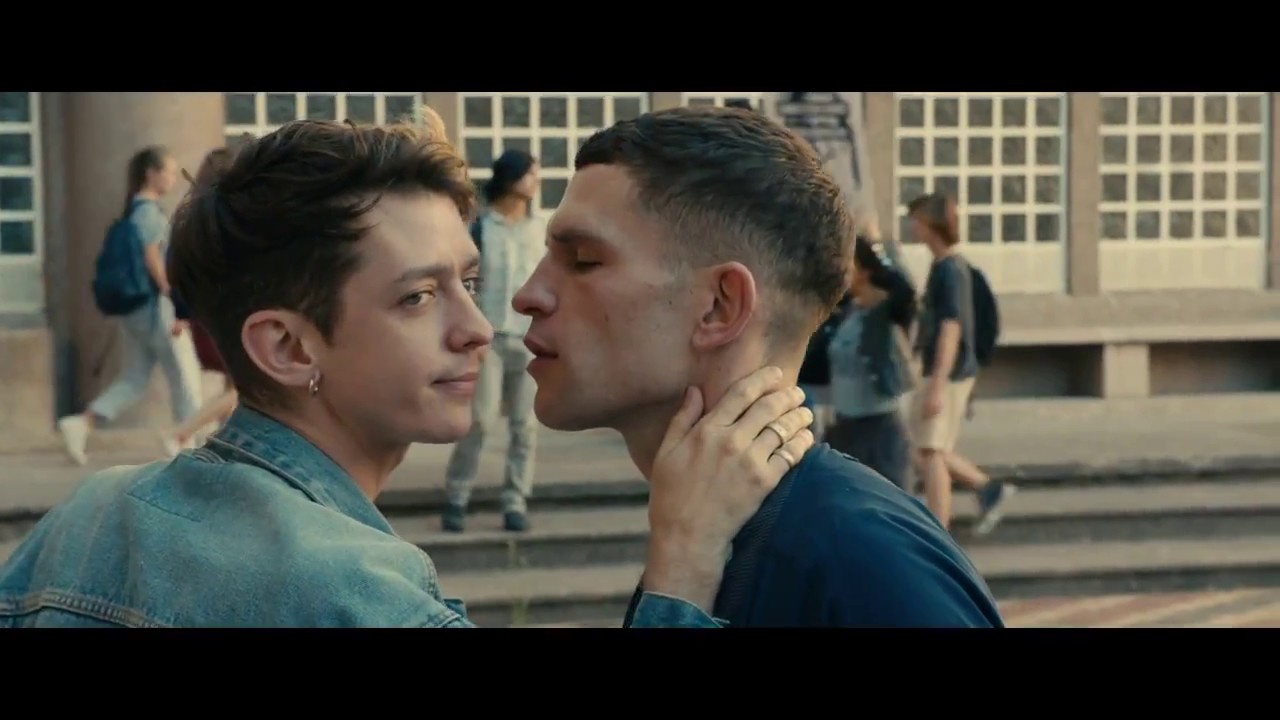
Film 14: It's Only the End of the World (Xavier Dolan, 2016) − A hell of a film, in that I imagine this is probably what Hell is like: a loud, stressful and apparently endless family argument.

Shot almost entirely in close-ups with fuzzy backgrounds (or vice versa), it's intense talkiness - fragments of fractious dialogue murmured or yelled - and awkward silences, as dying playwright Gaspard Ulliel returns to the family home to engage in stilted, vague but excessive dialogue with his unhappy mother (Nathalie Baye), troubled sister (Lea Seydoux), nervy sister-in-law (Marion Cotillard) and brutal, hotheaded brother (Vincent Cassel).

The performances are strong (especially Ulliel's), there are two flashback montages of rare potency, and Dolan's use of sound and music is superb − a song as bad as Numa Numa has never whacked me in the solar plexus before − but the material is so hackneyed that I didn't respond to enough of it, and the film so noisily miserable that I was glad when it was over. (2.5)


Film 15: The Salesman (Asghar Farhadi, 2016) − An utterly compelling moral thriller from the writer-director of A Separation, Asghar Farhadi, about a couple (Shahab Hosseini and Taranah Alidoosti) whose marriage is thrown into turmoil by the hand of fate, as they prepare to appear together in Arthur Miller's Death of a Salesman.

Like A Separation, it's a consistently surprising drama that - when you sit back and consider it at the end - could only ever have been heading for one place, and it's blessed with the same incisive writing and skilful direction, which sees Farhadi apparently effortlessly manufacturing suspense from thin air (a quality I find myself looking for, and understanding far better, since reading Hitchcock/Truffaut). It also seems to offer real insight into Iranian society and the Iranian psyche, in which women are property and slights against them are slights against their husbands.

I don't want to give away even a little of the story, as it's a film that really benefits from going in blind, but I will say that although its allusions to Miller are too loose and then too literal, that thread ends in heartrending style, and the film features both Iran's long-awaited answer to Jonathan Lipnicki and a late shock so well-executed that it made the person next to me in the cinema do a little fart. Now that's movie-making. (3.5)

SUNDAY 16th


Film 16a (SHORT): What's the World Coming To? (Richard Wallace and F. Richard Jones, 1926) − Profoundly unfunny Hal Roach 'two-reeler' (20-minute comedy) that takes a reasonable premise - men are becoming more like women and vice versa, let's skip 100 years into the future - and kills it stone-dead.

Stan Laurel co-wrote and L&H regular James Finlayson appears as the father of a decidedly emasculated bride-groom, but there are only a couple of small laughs and the rest is so dated it's almost incomprehensible: mirthless mugging, non-sequitur slapstick and people being kicked up the arse.

A mention, though, for Laura De Cardi, in proto-Dietrich garb as a wolfish woman preying on the poor, defenceless husband. The only nod to the future setting, incidentally - the heightened premise aside - is that the cars and pie-stands now fly.

It's the kind of silent comedy that makes being a silent comedy evangelist such exhausting work. (1.5)


Film 16b (FEATURE): A Woman of the World (Malcolm St. Clair, 1925) − A bit of silent comedy froth, with an anti-hypocrisy message, about a tattooed Italian countess (Pola Negri) who scandalises a small American town while fleeing a break-up, and catches the eye of fanatical moralist Holmes Herbert. The supporting comedy is too broad for my taste, but the opening scene is a cracker, the ending is agreeably mad, and when the round-faced, bob-haired, overtly sensual Negri is on screen the rest of it mostly works. (2.5)


Film 17: Spaceship (Alex Taylor, 2016)Spaceshit, more like: a film so amateurish and pointless that it shouldn't ever have been backed by the BFI, let alone included in this country's flagship film festival. There are some decent visuals (the element that piqued my interest), but the script is so pretentious, empty and intellectually bankrupt that it makes Gosling's Lost River look like Chinatown. It's like a 90-minute bus journey with the most unbearable, self-satisfied teenagers on Earth, and a waste of money, cameras, my time and a festival spot.

The worst film I've seen since Mamma Mia. And then some. Absolute fucking shit.

On the plus side, they were doing surveys in the foyer, so I got a free biro. (1)


Film 18 (my last of a glorious fest): Don’t Think Twice (Mike Birbiglia, 2016) − A very funny, unexpectedly deep film about a New York improv troupe which goes into meltdown when one of its cast is signed for a Saturday Night Live-style TV sketch show.

Most of the comedy comes from on-stage routines or the improv-ish flourishes that these characters use to get through the day, and that dynamic takes a little getting used to (probably the closest comparison I can think of is to The Trip), but there's no arguing with the number or volume of the belly laughs echoing around the Prince Charles Cinema, and I liked the way that humour is shown as a release, and as a bond that grows and tightens when hardship and tragedy bites.

From the press around the film, I wasn't expecting the melancholic undertow that comes with the comedy, as it deals with the 30-something experience: with heavy break-ups, the dropping or re-shaping of dreams, and our reasons for living, and though the film ultimately becomes too miserable for too long and occasionally deals in cliché (particularly regarding the vacuousness of mainstream culture and how, to paraphrase Morrissey, "we hate it when our friends become successful"), at its best it is unusually honest, perceptive and insightful.

The performances are really well-balanced too, with a specificity and maturity to which I really responded. Gillian Jacobs, who played Britta in Community, is particularly good as a thoughtful woman blossoming into her true self, and Chris Gethard plays Bill with fine, subtle inflections that take you to heart of his character: unassuming and apparently ordinary, but alive in the comfort of the stage, where his quicksilver wit can shine.

It's an imperfect but winning and distinctive film, and you can see why it became a big sleeper hit in the States. It reminded me a little of Renoir's French Cancan, another hymn to creative people, though he was all about giving everything you have in exchange for art; the message of Don't Think Twice is more nuanced and achievable: that you find what inspires you, and keep it in your life. (3)

***

Thanks for reading. Roll on next year.

Saturday, 15 October 2016

London Film Festival: Part 2 − Isabelle Huppert, Manchester by the Sea and the most 1930 thing ever

My continuing adventures at the wonderful London Film Festival.

"I'm not done, right, I got more in me..." (I now see the LFF trailer, which plays before every screening, whenever I close my eyes. I hear it all the time.)

SATURDAY 8th (continued)


Film 5: King of Jazz (John Murray Anderson and Paul Fejos, 1930) at NFT 2 – This musical revue, complete with two-strip Technicolor, is a symphony in green and red, and while it's as hit-and-miss as any, it's a must for fans of old films.

Building on the success of Paramount on Parade and Warner's Show of Shows, which were designed to test the stars and the ground during the transition to the talkies, Universal's King of Jazz focuses on Paul Whiteman and His Orchestra - then the most popular jazz ensemble in the country - presenting a non-stop succession of eye-catching treats, all in that distinctive palette, and ranging from a comic cartoon about Whiteman fighting a lion, to skits, scatting (oh behave) trio the Rhythm Boys (featuring a cherubic Bing Crosby), ponderous ballads and a climactic celebration of America as a 'melting pot' that credits Germany, Spain and Scotland with creating jazz, but not any black people.

At its worst it's dated and dull (the 'bridal veil' and Monterey numbers are definite low points), but it's mostly good and occasionally great, with an astonishingly high success rate in its comic sketches (usually the worst part of a movie revue), as much camera trickery and surrealistic invention as Man with a Movie Camera and a handful of knock-out numbers, most notably So the Bluebirds - preceded by a glorious snatch of Missisippi Mud - stunning dance number Ragamuffin Romeo, and the infectious Happy Feet.

It's the weakest of the five Festival films I've seen so far, but still a lot of fun. It's like "How much more 1930 can you get?" and the answer is none. None more 1930. (3)

Guests: none, unless you count a slideshow of rare production photos (you don't)


Film 6: Manchester by the Sea (Kenneth Lonergan, 2016) at Odeon Leicester Square
European premiere


Kenneth Lonergan's third film is a familiar but extremely well-acted melodrama about haunted, introspective Casey Affleck pitching up in the chilly sea town of Manchester after his brother Kyle Chandler's death, and uncertainly reconnecting with his grieving, smartass teenage nephew (Lucas Hedges).

Affleck is absolutely terrific in a largely internalised role, there's one absolute knockout of a scene where he meets his ex-wife (an otherwise underused Michelle Williams) on the street, and Lonergan's dialogue is typically literate and funny, but the film lacks the originality and deceptive precision of Margaret (it's a sort of hybrid of You Can Count on Me and Tom McCarthy's Win-Win), and its narrative is rather too baggy and heavy-handed to overwhelm you in the same way. I also find the way that Lonergan uses stylised explosions of machismo violence as a shorthand for emotional turmoil a bizarrely shallow trait.

It's still a finer and more affecting film than most others you'll see this year. (3.5)


Guests: Kenneth Lonergan, Casey Affleck, Michelle Williams and members of the crew (pre-film Q&A)


Film 7: Elle (Paul Verhoeven, 2016) at Embankment Garden Cinema
UK premiere


Virtuosic but extremely suspect Verhoeven film, with Isabelle Huppert as a divorced careerwoman who's raped by an intruder, setting in motion a highly unpredictable chain of events. She's astonishing, the excoriating black comedy is jawdropping and there's one of the biggest jump scares ever, but the film leaves an absolutely repulsive taste in the mouth, and for that reason I can't really recommend it.

Verhoeven has quite a history of misogny: Peter Weller is killed in Robocop because Nancy Allen can't help but stare at a bad guy's penis during a shootout, and the director (allegedly) filmed Sharon Stone's vulva without permission in Basic Instinct before broadcasting it to the world. Elle is something else, though. During the post-film Q&A, audience members kept telling Verhoeven they 'loved' his film. How can you 'love' a rape comedy?

I'm still angry. (3)


Guests: Paul Verhoeven, Isabelle Huppert and Anne Consigny (post-film Q&A)

SUNDAY 9th


Film 8: Toni Erdmann (Marin Ade, 2016)


− This cult favourite, which wowed audiences at Cannes, is a genuinely unconventional German film about happiness, dealing with the relationship between a free spirit with a very specific sense of humour (Peter Simonischeck) and the estranged, work-obsessed daughter (Sandra Hüller) he visits in Bucharest after his dog dies.

Marin Ade's film is extremely funny - often in the most unexpected, imaginative ways, with a similar sense of the ridiculous to Le dîner du cons - but underpinning it is an understanding of life's contradictions, man's facility for melancholy and the shifting dynamics of relationships that I found very truthful and powerful. The leads are both wonderful.

There's no reason for it to be 162 minutes, though. (3.5)


Guests: Stars Sandra Hüller and Trystan Pütter


Film 9: Mindhorn (Sean Foley, 2016) at Odeon Leicester Square
World premiere


This comedy from Boosh alumni Julian Barratt and Simon Farnaby is slight, and a little clichéd and formulaic in its premise and structure, though when it's funny it is very, very funny.

Barratt is a an arrogant, washed-up actor who once starred in a Bergerac-like crime series. When murder suspect Russell Tovey says he'll only speak to Mindhorn, it's time for him to strap on the electronic eye that is also a lie detector one more time - and return to the Isle of Man.

There are some brilliant jokes here about grudges and actorly pretension (including two absolute crackers during death scenes) and a pair of extremely funny supporting performances from Farnaby and Kenneth Branagh, though it feels like it's at least a draft away from being a great film. A lot of it feels kind of slapdash and convenient, clever ideas like the lie-detector eye are never properly exploited, and a few of the gags are tasteless in a way that they're not funny enough to justify.

It also gets the Manx flavour completely wrong, which is fine in an audience of self-satisfied Londoners, but is going to ring hollow to anyone who's spent some time there. You can shrug and say that it's not a shortcoming that matters, but a lot of humour works because of its specificity and clarity, and the oddities of the Manx character are funnier and wilder than these invented generalisations.

Having seen the best comedies than Germany, France and Iceland have to offer, this BFI-backed one feels rather minor, and suggests that perhaps we haven't really moved on that far from The Parole Officer. Speaking of which, this must be the most banal contribution Steve Coogan has made since adding nothing to The Other Guys (now that's a great comedy film - no, you shut up). (2.5)


Guests: Sean Foley, Julian Barratt, Simon Farnaby, Harriet Walter and other cast and crew (pre-film Q&A). I also bumped into Steve Oram from Sightseers outside. I love that movie.

***

Thanks for reading. Part 3 will feature the first real flop of the festival and my two wonderful midweek excursions.

Wednesday, 12 October 2016

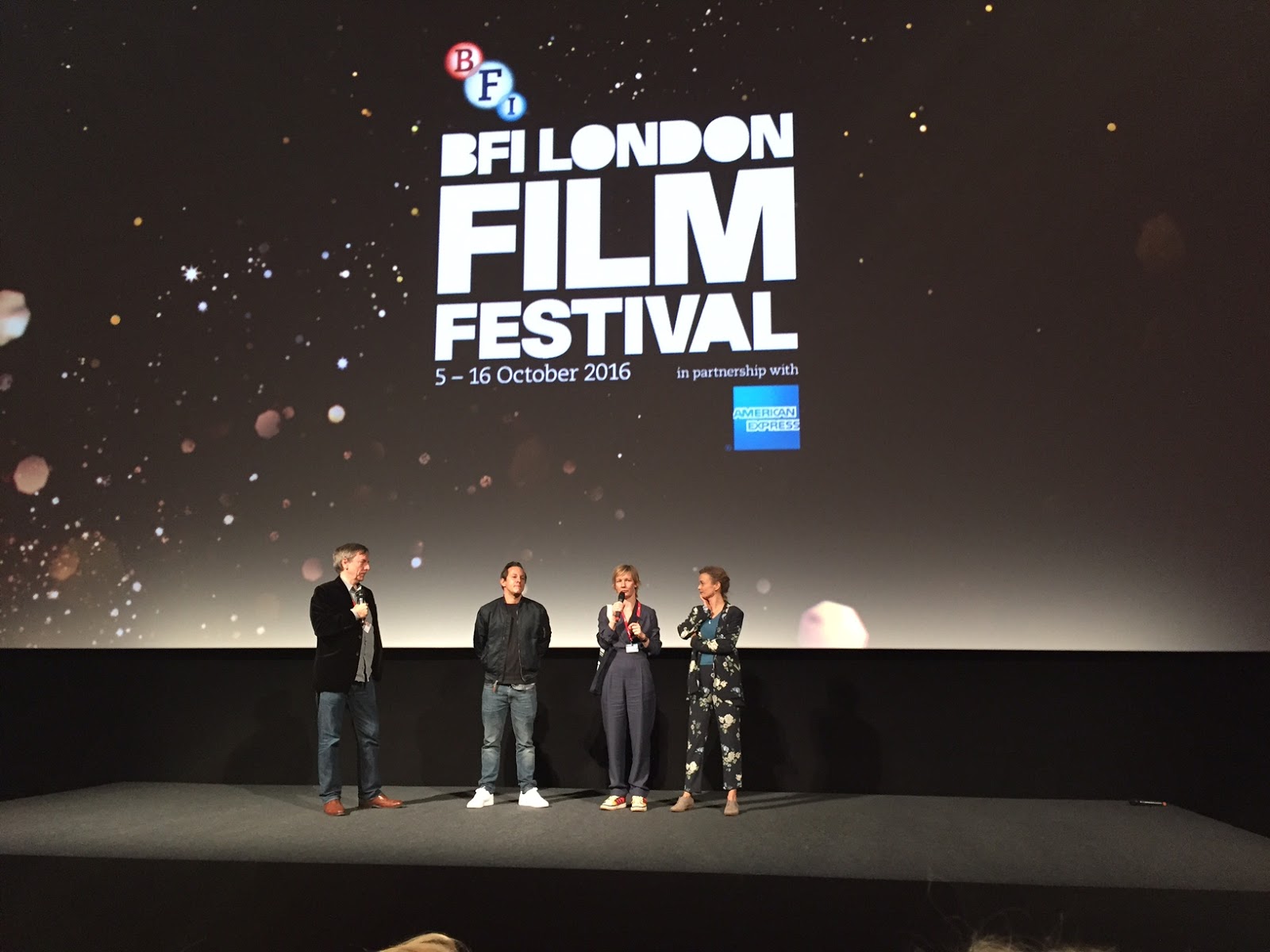
London Film Festival: Part 1 − Rebecca Hall, La La Land and Finnish film

"Do you have any dreams...?"


What a massive treat this is: one of the world's greatest film festivals on our doorstep, glowing amidst the gloom of this lousy year, and bringing the likes of Michelle Williams, Ryan Gosling and Isabelle Huppert to the capital. It's the first time I've got properly involved since moving to London in 2014, and it's been a magical experience. I'm seeing 18 films across the two weeks, from a Finnish boxing drama to a documentary about Syria's answer to Jon Stewart. Here are the first four.

THURSDAY 6th


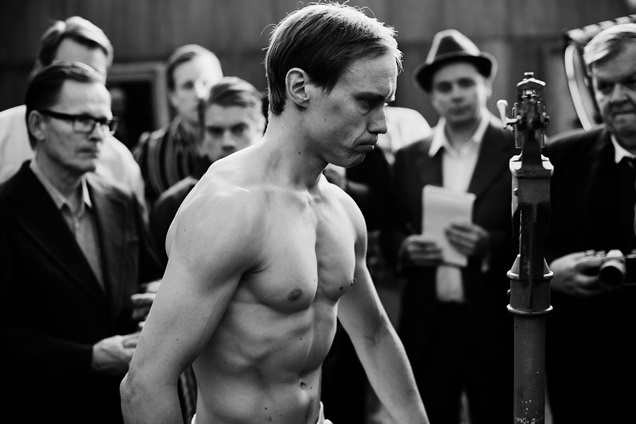
Film 1: The Happiest Day in the Life of Olli Mäki (Juho Kuosmanen, 2016) at Vue West End
– A completely charming, disarming Finnish film, based on a true story, about a boxer who falls in love whilst preparing for a world championship fight. Shot in grainy monochrome, it reminds me a little of Truffaut in its grace notes (lovely, self-contained sequences of children) and also of Half Nelson – with its eye for an arresting, unexpected image or sentiment – though its sensibility, and its sense of humour, are all its own.

Whatever their quality, boxing movies tend to be bruising noirs about proud patsies (Body and Soul, The Set-Up, Champion), shameless stories about underdogs (Rocky) or cynical, bruising portraits of disconnected losers (Raging Bull). Olli Maki, with its humble hero, quiet humanity and knockout ending, could scarcely be more different.

Occasionally it seems unfocused or long-winded, but the performances from stage star Jarkko Lahti (as Olli), newcomer Oona Airola (as his ordinarily beautiful new girlfriend) and Eero Milonoff (playing his ex-champ of a manager) are really fresh, credible and well-judged, the bits of off-kilter humour mesh nicely with the affecting central storyline, and the film’s blending of realism, sweetness and surprise makes it a richly enjoyable experience.

A cracking start to the festival from debuting feature director Juho Kuosmanen – who won ‘Un certain regard’ at Cannes for this one. (3)


Guest: Juho Kuosmanen (post-film Q&A)

***

FRIDAY 7th


Film 2: Christine (Antonio Campos, 2016) at Vue West End
– A stunning character study of a woman whose name is notorious if indeed it’s known at all: Christine Chubbuck (Rebecca Hall), a news reporter in early ‘70s Florida who’s indelibly associated with her final act: shooting herself on live TV.

This richly empathetic film goes beyond the sensationalist headlines to explore her psyche, her environment and her motivations (if something as irrational as suicide can have motivations at all), and though the script’s shorthand and inventions can seem too pat and glib, Hall is just staggeringly good, and the film feels just right.

First, though the script: its mixture of the tough and the tender is right, but at times it’s simply crude and rudimentary: allusions to Chubbuck’s breakdown in Boston are sledgehammer-subtle, the invention of a crush on network anchor Michael C. Hall is simply misleading, and the way the film sometimes presents depression as a series of bad responses to triggers seems simplistic. That kind of paraphrasing or superficiality feels OK in a movie like, for example, Dmytryk’s The Sniper, which also strips away its character’s safety net by episodes, but a real story deserves better than that.

The story does, however, get the performance it deserves: in actuality, one of the best performances in years. As Christine, Rebecca Hall is simply astonishing. Tightly-wound, highly-strung and unable to connect, she has moments of eye-popping neurosis, but there’s nothing here that’s false or overdone. She lashes out in moments of black comedy, embraces the awkward by overstepping the mark quite egregiously with her boss, and then acquires a fittingly unearthly calm once her mind is made: I’ve been with someone about to kill themselves, and I didn’t see it coming either.

The film’s artistry and humanity grows organically from her performance, which places its roots far below the script and nourishes everything else. Michael C. Hall is fine and Tracy Letts is good as her boss, but it’s Rebecca Hall who makes everything work: in moments of disintegration that risk seeming synthetic and smack of screenwriting-by-numbers, her conviction is complete and utterly overpowering.

She’s by no means the only thing about the film I admired. When I say that it ‘feels right’, I don’t just mean that its portrayal of mental illness is extremely realistic and nuanced (sadly I have more experience in this area than I would wish on anyone) in a way that no movie aside from von Trier’s Melancholia has approached, but also that the film replicates the textures of ‘70s Florida in both its look and its sound: its succession of apposite West Coast soft rock classics is some of the best use of music I can remember. And nor is the script a write-off: the final scene seems tacked-on and false, but its opening gambit is amusing, its ability to sometimes give us a good time while putting us through the wringer isn’t to be underestimated, and the shards of black comedy embedded in the tragedy twinkle darkly amidst the heartbreak.

She is, though, the thing about the film that lifts it way out of the ordinary, turning it into an experience to be cherished, as it turns a headline into a portrait that acts too as a plea for empathy. A lot of people are hurting. Try to connect. (3.5)


Guest: Michael C. Hall (post-film Q&A)


Film 3: Tower (Keith Maitland, 2016) at Vue West End A moving, utterly gripping documentary about the University of Texas shooting in 1966, which doesn’t – as the festival literature suggests – use the tragedy to understand subsequent massacres, but instead tells the stories of the victims in mesmerising fashion.

It’s a film about the ways we react in extreme circumstances, and afterwards: the way that life-defining events have an aftermath and, as Kurt Vonnegut wrote in Deadeye Dick (another work that’s superficially about a shooting), the way the story may be over, but the life has to continue.

Director Keith Maitland took five years to make the film: conducting dozens of hours of interviews, then interspersing the footage of talking heads with archive film and new sequences of rotoscopic animation, which enabled him to restage much of that fateful, fatal day at the real locations, without having to get permission to film there.

It’s a striking approach that lends the film an artistic distinctiveness without undercutting its realism, and imbues it with a nauseating tension while keeping its real human stories centre-stage. And the stories are incredible, the characters unforgettable: the reflective, forgiving Claire, the tower itself – since the shooter is unseen, it seems to be picking off innocents at random, like the truck in Duel – and resourceful off-duty cop Martinez.

Best of all is Rita, whose selflessness dominates this story and makes it a portrait of humanity at its best, rather than at its worst. (3.5)

Guest: Keith Maitland (post-film Q&A)

***

SATURDAY 8th


*MINOR SPOILERS*
Film 4: La La Land (Damien Chazelle, 2016) at Odeon Leicester Square
– I’ll be astonished if I see a better film than this at the London Film Festival: Whiplash director Damien Chazelle’s homage to MGM musicals is like Blue Valentine starring Fred and Ginger, with a first half of unparalleled joy and a second that’s almost unbearably poignant.

It’s a movie about people out of time: actress Emma Stone should be in the ‘40s, jazz musician Ryan Gosling should be in the ‘30s and they shouldn’t both be on the cusp of realising their dreams if this relationship is going to work.

Timing is central to people getting together (a fact rarely acknowledged in movies) and La La Land acknowledges the fact that these characters may want to have their time over again (or have it in an idealised realm) in the most spectacular way imaginable: a climax that’s both exhilarating and replaces your entire throat with a lump.

The exuberant opening sequence sets the tone (I wouldn’t dream of spoiling it) and from there on it’s great music, irresistible chemistry and a descent into heartbreaking Technicolor melodrama of which Jacques Demy would be proud.

From Stone’s hair lit like a neon sign (echoes of One From the Heart), to a Band Wagon-ish jaunt in a park, via nods to Gold Diggers (stylised montages! Chorus gals living together!), Broadway Melody of 1940 (challenge dancing!) and the climactic dream ballets of the ‘50s, it fits into the grand tradition without ever feeling like a novelty or a rip-off. And if I say that Mandy Moore’s choreography more than makes for A Walk to Remember, that is no small concession.

The problem with contemporary musicals is the undercurrent that says: “Isn’t this wacky, we’re doing a musical!” It was musicals’ everyday nature, their centrality to the national psyche that made them so magical. Somehow Chazelle has made that live again, and if his leads can’t dance quite like Fred and Ginger, they can sing comparably and act better. Gosling's comic timing is a thing of eternal beauty.

I expected to be charmed by this film, but I didn’t expect to be blown away like I was, or completely broken by the end. This is a wonderful, wonderful movie, and so far the undisputed highlight of a dizzyingly good festival. (4)


Guests: Pre-show Q&A with Ryan Gosling, Damien Chazelle, cinematographer Linus Sandgren and two producers.

***

Thanks for reading. Part 2 includes Bing Crosby, Casey Affleck and a bizarre Isle of Man-set comedy from Julian Barratt and Simon Farnaby of The Mighty Boosh.