Sunday, 20 January 2013

Jeff, jail and Judith Hearne - Reviews #144


*MINOR SPOILERS*
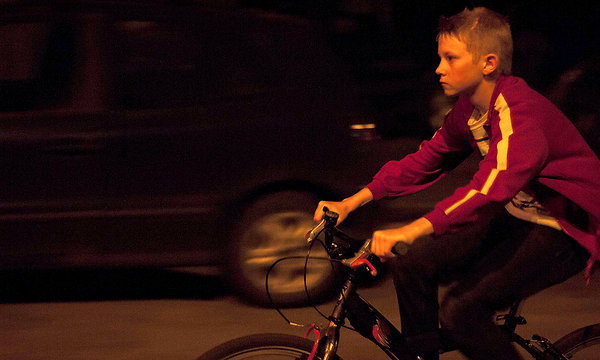
The Kid with a Bike (Dardenne brothers, 2011)
- A young boy (Thomas Doret) with behavioural issues tries to reconnect with his absent father (Jeremie Renier), is fostered by a selfless hairdresser (Cecile De France), then gets involved with a vicious, supercilious gangster (Egon Di Mateo), in this astonishing human drama. I've met quite a few people like the damaged, confused, painfully insular and sporadically aggressive hero of The Kid with a Bike, but I've never seen a movie about one before, and capturing real life on film in this way is to be applauded in itself.

The script and performances are note-perfect, and there's also an invigorating lack of extraneity in the storytelling: the linking scenes you'd find in most films are ruthlessly excised, so everything - even the scenes of the titular kid on his titular bike - serve the gutting, heartbreaking narrative, in which the viewer's response to almost every exchange is, "That's a shame", in which the aimless, lonely protagonist - devoid of masculine guidance - smashes two people with a baseball bat as an act of love for two male role models who throw the gesture back in his face, in which the only real point of comparison - in terms of bleakness, bicycles and the welcome shaft of light at the close - is De Sica's Bicycle Thieves.

The film has elements of fatalism without being pessimistic, tells a simple story that never looks for an easy way out, and eschews sentimentality while radiating a bold and uncompromising sense of humanity. It moved me very deeply.

***


Jeff, Who Lives at Home (Jay and Mark Duplass, 2011) – An emotionally articulate, unusual and deceptively wise film about fate, the universe and the frustrations and disappointments of adulthood, as full-time slacker Jason Segel ventures out from his mum’s basement and begins a tentative day of discovery, interacting with his uptight brother (Ed Helms) and trying to read some mysterious cosmic signs (following several viewings of the film Signs) that relate to the significance of the name Kevin. It’s funny, unpredictable and full of insights about love, loneliness and life, aided by Segel’s fine performance, though a subplot about mum Susan Sarandon’s romantic re-awakening seems a bit forced – and smugly progressive – in comparison. Despite that, and some concessions to conventionality, this consistently interesting indie is still likely to blindside you with the originality of its plotting, the strength of its dialogue and the courage of its convictions. Not that the film doesn’t have a couple of kindred spirits, recalling Matt Bissonette’s – which also concerned two brothers re-connecting during one long, strange day, and is even better – as well as The Tao of Steve, another movie with a philosophical stoner for a hero. (3.5)

***


The House I Live In (Eugene Jarecki, 2012) is a powerful polemic against the War on Drugs, which Jarecki argues is really a war on communities that began as an issue of race, and is now one of class. Assisted by scholars, addicts, dealers, law-enforcers, a judge, one of the creators of The Wire and a series of prisoners (500,000 US citizens are currently in jail for non-violent drugs-related offences), he forms a compelling and invigorating case filled with revealing and shocking detail. Like how the media storm around crack cocaine in the ‘80s (powder cocaine + baking soda + water + heat) saw the introduction of sentences 100 times more punitive than for the original form of the drug. That a “three strikes” policy advocated on film by Clinton has seen a drug addict who trafficked to feed his own habit jailed for life – without parole. And that while only 13 per cent of crack users in the US are African-American, 80 per cent of those behind bars for crack offences are. I didn’t think I could think less of how the US treats its African-American community after Steve James’s The Interrupters, but it turned out I could. As a film, it’s a little messy – curious, considering that Jarecki was responsible for that sleek, streamlined, immaculately-edited Reagan doc – while the decision to frame his investigation in the first person feels misguided, leading to some weak and irrelevant passages, but it’s an important and impassioned work that raises many crucial questions, all of which must be answered by American law-makers. (3.5)

***


*SPOILERS*
The Lonely Passion of Judith Hearne (Jack Clayton, 1987)
– A great performance in search of a great film, as meek, lonely, religious Irish spinster Maggie Smith loses her faith and her mind after being spurned by selfish would-be entrepreneur Bob Hoskins. Smith is absolutely extraordinary – fully immersed in a characterisation so real and true that the film feels almost intrusive – and her flashback sequences, reflecting on a her life spent caring for her addled aunt driven mad by a stroke, provide at least one truly great scene for the mighty Wendy Hiller. But the story is all over the shop, sometimes boring, often laughably overwrought, with supporting characters who’d seem more at home in either gothic melodrama or ‘70s sitcoms – especially ludicrous, slimy, be-moobed poet Ian McNeice – while Hopkins is oddly poor (and cursed with a lousy American accent), and the film expects us to be more disgusted by his character wanting Hearne for her money than the fact he’s a rapist. When Smith’s pitiful, self-pitying character is on screen it works and there are some incredibly powerful passages towards the end, particularly her drunken confrontation with parish priest Alan Devlin and subsequent explosion of emotion at the altar, railing furiously at God, before scratching desperately at the tabernacle and pleading to join him. It’s just a shame that such a remarkable performance, such a stunning study of mental illness, religious doubt and abject loneliness, isn’t housed in a more credible, coherent film, though it’s still worth it to see Smith at the peak of her considerable powers. (2.5)

***


I don't know what you're looking so smug about.

Orange County (Jake Kasdan, 2002) – When an aspiring writer (Colin Hanks) with a dysfunctional family sees his attempts to get into Stanford University scuppered by an incompetent school administrator (Lily Tomlin), he decides to drive there to talk them round, with his girlfriend (Schuyler Fisk) and stoner brother (Jack Black) in tow. Fisk is excellent, Kevin Kline has an unexpectedly effective bit near the close (the way he's incorporated is almost magical) and there are amusing cameos from Tomlin and Ben Stiller, but I found this an unimaginative, comedically lazy film, hampered by an emotional fraudulence that renders its stabs at poignancy completely hollow. It probably would have worked a bit better with Tom Hanks in the lead, mind. Even in 2002. (2)

Friday, 18 January 2013

Cool Runnings, Audrey Tautou and one of the worst rom-coms ever made - Reviews #143

Here are the latest reviews. Comments are welcome below or on Twitter @rickburin.


A Very Long Engagement (Jean-Pierre Jeunet, 2004) – Jeunet’s follow-up to the incomparable Amélie is a transcendent romance, a complex mystery (with no shortage of whimsy) and a chilling evocation of the horror and futility of war, as Mathilde (Audrey Tautou) searches for her fiancé, one of five soldiers sentenced to death for desertion at Bingo Crépuscule three years earlier. It’s an extraordinarily successful melding of apparently incompatible moods and genres, full of vividly-drawn supporting characters (Marion Cotillard’s vengeful prostitute, Jodie Foster’s selfless wife) and featuring one of the only good trump-related gags in all of cinema (“Doggie fart, gladdens the heart”). It’s also beautifully shot, scored and acted – a treat for the eyes, ears and soul. (4)

***


Welcome to the Sticks (Dany Boon, 2008) – The most successful French film of all time – in terms of domestic box-office receipts – is a completely charming culture-clash comedy set in Nord-Pas-de-Calais, the oft-maligned home of star, co-writer and director Dany Boon. Kad Merad is a post office manager in the south of France who tries to wangle a move to the Riviera, but instead winds up in “the Ch’tis”, a deceptively friendly part of the country marked by its uncomplicated lifestyle, smelly delicacies (smellicacies) and a litany of eccentric quirks of speech. It’s classic feelgood fare, with fun performances all round and some fantastic gags. (4)

***


The Informant! (Steven Soderbergh, 2009) is like The Insider played for laughs, as chubby, moustachioed agri-business management nerd Matt Damon turns whistleblower on price-fixing for the FBI, though that's only the beginning of his hilarious, jaw-dropping – and true – story. Dealing in generalities, I tend to enjoy Soderbergh's "serious" films (like King of the Hill and Traffic) far more than his so-called "entertainments", (such as the Ocean's movies), which are often thin and superficial. Here, he eradicates that distinction, taking the bold decision to shoot this serious – though quirky, bizarre – material as a screwball comedy, incorporating a jaunty score and a brilliantly odd characterisation from Damon (complete with outlandish first-person narration), and it pays off superbly, creating an important but offbeat and wildly entertaining, even caper-ish, movie that deals deftly yet properly with heroism, hypocrisy and corporate greed. (3.5)

***


"Nuff people say, you know they can't believe: Jamaica, we have a bobsled team." Cool Runnings (Jon Turteltaub, 1993) – A very entertaining – though almost entirely fictionalised – comedy-drama about the Jamaican bobsled team that competed in the 1988 Winter Olympics. It’s at its best when being sincere, rather than opting for cartoonish characterisation and cheap sight gags, but it’s well-played throughout, and stuffed full of punch-the-air moments. (3)

***


Paris vu par... (Various, 1965) – This portmanteau portrait of Paris and its people is better than the more recent effort (Paris, je t’aime), though not nearly as airy or profound as Eric Rohmer’s trio of tales (Les rendez-vous de Paris), as six New Wave directors offer short stories set in the City of Light. The first three, from the lesser-known filmmakers, are all excellent: Jean Douchet’s Saint-Germain-des-Prés offers romantic twists and turns much in the manner now associated with Rohmer, Jean Rouch provides the ironic, eerie Gare du Nord, and Jean-Daniel Pollet’s Rue Saint-Denis serves up some light relief, as a worldly-wise prostitute runs rings around a nervous Buster-Keaton-a-like. Sadly the last three chapters (from the marquee names) aren’t as good: Rohmer’s thriller about a nervy clerk who may have killed someone is interesting but minor, while both Godard’s story of a capricious two-timer – which hangs on a wry pay-off – and Chabrol’s story of an unhappy boy with warring parents feel forced and uninspired. It’s still worth it on the whole, though, especially if you’re that way about Paris, as most people probably are. (3)

***


Rain Man (Barry Levinson, 1988) - Yuppie twat Tom Cruise finds out that his father's inheritance is going to the autistic brother he never knew he had (Dustin Hoffman), so he swipes his sibling from an institution and holds him for ransom – while taking him on a lengthy road trip. It's flabby (how much wordless footage of two men in a car do we really need?), the Las Vegas stop-off seems like wish-fulfilment, and it might have been more helpful to make a movie about an autistic person WITHOUT superpowers, but Hoffman is magnificent, Cruise isn't far behind and that "Rain Man" sequence in the bathroom remains wonderfully affecting. (3)

***


Me Without You (Sandra Goldbacher, 2001) - A familiar but unusually effective, unsentimental story of childhood soulmates – outgoing, confrontational Anna Friel and introspective, mousey Michelle Williams – falling in and out of friendship against the backdrop of '70s and '80s Britain. There are a few wrong notes (an early line about Belsen lands staggeringly wide of the mark), but the film feels admirably real in its emotional and dramatic messiness, there are a few nicely-realised directorial flourishes (particularly at the start of the 1989 section) and the important performances are good, from Friel, her screen brother Oliver Milburn and particularly Williams, offering an early masterclass in vivid and varied feeling. (3)

***


Julia Misbehaves (Jack Conway, 1948) – A pretty good change-of-pace for one of Hollywood’s favourite dramatic teams, as flirtatious showgirl Greer Garson heads back to ex-husband Walter Pidgeon’s house for the wedding of their daughter (Elizabeth Taylor). It starts a bit shakily, and there are some very iffy “English” accents on show, but it picks up momentum as it goes along, and Taylor is absolutely excellent in a key transitional role, whether sparking off Garson (in the film’s best scene) or suitor Peter Lawford. (2.5)

***


What’s Your Number? (Mark Mylod, 2011) – A vacuous annoyance (Anna Faris) enlists the help of a total idiot (Chris Evans) to help her track down her ex-boyfriends, so she can marry one of them and thus keep the total number of people she's had sex with to 19. I absolutely hated this. It’s just hideous from start to finish, with detestable characters, witless dialogue and a horrible way of looking at life and what it imagines to be love. Chris Pratt provides a couple of amusing moments and Aziz Ansari does a late voice cameo, but it’s a while since I felt so angry or disgusted at a movie. What’s my number? My number is (1). Now fuck off.

Sunday, 13 January 2013

Holidays, Hawks and De Havilland - Reviews #142

I've actually resolved to watch fewer films this year, but I saw a fair number last month. This is the first of two reviews updates; the second should be up on Friday. Ratings, as ever, are out of four.


It Happened on 5th Avenue (Roy Del Ruth, 1947) – A truly sweet natured holiday film about an eccentric old squatter (Victor Moore), who commandeers the home of a joyless millionaire (Charlie Ruggles), and invites other unsheltered souls to spend Christmas there – including, unwittingly, Ruggles, his daughter and his ex-wife (Ann Harding, in fine form). It’s leisurely, funny and sometimes moving, with a very special cast and a great closing gag. (3.5)

***


A Bill of Divorcement (George Cukor, 1932) – A stunning drama about mental illness, with John Barrymore as a war veteran who leaves a sanitarium after 15 years and tries to reconnect with the wife (Billie Burke) and daughter (Katharine Hepburn) he left behind after “God turned his face away”. People talk a lot of nonsense about “brave” performances, but this one really was – Barrymore’s father had died in an asylum and he lived his whole life in fear of losing his mind. The film is very much of its time, subscribing to the notion that those with mental illness shouldn’t have children, but it’s compassionate and superbly scripted, with Barrymore at his considerable best and Hepburn close to hers in a winning and naturalistic debut performance. Their first scene together is a towering achievement. (4)

***


Arthur Christmas (Sarah Smith and Barry Cook, 2011) – I enjoyed this at the cinema and it’s just as good second time around. There’s the odd lull, McAvoy was a curious choice for Arthur and I wonder if the film’s cleverly thought-out mythology might confuse children, but it’s often hilarious (the hand of Peter Baynham is much in evidence), the high-tech present drop is very cool and Grandsanta is a great character. Each of Aardman's features has been better than the last, so while this was the best upon release, it's now been surpassed by The Pirates! The Biebster’s song over the credits sounds like it was cobbled together from 300 takes and fed through autotune. He’s clearly very talented. (3.5)

***


Princess O’Rourke (Norman Krasna, 1943) – A European princess (Olivia De Havilland), looking for excitement, gets all sleepy, meets a charming American (Robert Cummings) and wakes up in his bed, wearing his pyjamas. From there, love blossoms, but will her royal duty stand in the way of their happiness? This prototype Roman Holiday isn’t as transcendent (or realistic), and the demands of the period make it a bit too propagandist, but it’s still great fun, with a good Krasna script and lovely De Havilland. She was at war with Warner, battling illness and had taken to strolling onto set an hour late – if at all – but you wouldn’t know it from her effortlessly charming characterisation. (3)

***


Errol Flynn is doing this expression for most of the film.

Footsteps in the Dark (Lloyd Bacon, 1941) – Investment adviser Errol Flynn launches a second career as a writer of scandalous mysteries, then gets plunged into a case of his own in this daft but diverting detective yarn. The script could be better, but the film’s buoyed by Flynn’s lively comic turn, a strong supporting cast and a rather cool art deco train station. (2.5)

***


Ball of Fire (Howard Hawks, 1941) – This is pretty much my favourite movie ever: a perfectly conceived and masterfully executed romantic comedy in which gangster’s moll Barbara Stanwyck hides out from the cops with an unsuspecting professor (Gary Cooper) and the seven affectionate, ineffectual old men helping him to compile an encyclopaedia. The script by Billy Wilder and Charles Brackett is utterly superb, but so much of the magic lies in the performances, since such a lot of what Cooper and particularly Stanwyck have to play is complex and unspoken. For most of the film she’s neither as smitten as she tells the professor, nor as heartless as she tells her boyfriend (Dana Andrews, in an atypically ruthless characterisation), and she walks that line beautifully, always staying sympathetic and beguiling us, as she does the loveable old fuddy duddies. There’s no denying that elsewhere Stanwyck could be a bit annoying, but she had a certain something that no other actress has ever possessed, an ability to – with just a single expression or line reading – bypass your critical faculties and get you right in the tearducts. The film is a wonderful mix of comedy and sentiment; the leads prove masters at both (how about that "Richard Ill" scene?), and they’re ably supported by the likes of Henry Travers, Allen Jenkins and Richard Haydn, whose bachelor dinner speech is an absolute knockout. The gag count is off the scale (personal favourites are: “I’ve always thought of you as something of a… WOOOH!” and “I don’t know. Where do you live?”), allied to a lush romanticism unlike almost anything else I’ve encountered. It looks sumptuous too, thanks to the talents of the legendary Gregg Toland. To get that startling effect of Stanwyck’s welling eyes shining out from the dark, he blacked up her face, like an outrageous bloody genius. (4)

And for no other reason than that I found it the other day, here's the full-length review I wrote for MovieMail a while back (a shortened version appears on their site here):


There are a handful of romantic comedies so inspired, so deft in their balance of heart and hilarity, that they seem to touch perfection. Joyous on first discovery, revisiting them only serves to show their depth, their invention and their ability to grab a willing participant by the heartstrings – whilst adding a few favourite phrases to the viewer’s vernacular. Ball of Fire is one such movie.

Gary Cooper plays Prof. Bertram Potts, one of eight academics living in a musty townhouse, working on a new encyclopaedia. They’re partway through ‘s’ when an encounter with lingo-heavy binman Allen Jenkins flags up a serious shortcoming: their entry on slang is farcically outdated. So Potts ventures into the real world to brush up on his street talk, and encounters nightclub singer and gangster’s moll Sugarpuss O’Shea (Barbara Stanwyck). Forced to lie low after a mob hit orchestrated by lover Joe Lilac (Dana Andrews), she figures the professors’ house was made to fit – zoning in on Potts to seal the deal.

The script by Billy Wilder and Charles Brackett, loosely based on Snow White and the Seven Dwarfs, is simply glorious – and this cast makes the most of it. Barely a minute passes without a big laugh from a great one-liner, sight gag or bit of character comedy. There’s Cooper accidentally flirting with his benefactor’s daughter, criminal Benny the Creep telling the cops he’s the owner of improbably large pyjamas inscribed with Lilac’s initials and Stanwyck turning up at the professors’ home, expecting room and board. “OK, where do I sleep?” she asks. “I don’t know,” replies Cooper. “Where do you live?”

Such comic brilliance is punctuated by sequences of uncommon emotional clarity, anchored by the beguiling Stanwyck. As in Remember the Night – the transcendent Preston Sturges-scripted romantic comedy that marks perhaps the apex of the genre – she plays a hard-boiled dame transformed in the face of love, and the results are truly unforgettable. Cooper is similarly effective, touching and amusing as a smitten bookworm with the soul of a poet but the naïvety of a child, while the seven ‘dwarfs’ add to both the gag count and the winsome, sometimes wistful atmosphere. It’s a wonderful film.

***


Searching for Sonny (Andrew Disney, 2011) – An entertaining black-comedy-noir, in which aimless 28-year-old Jason Dohring (Logan in Veronica Mars) attends his high school reunion, notices that his best pal has gone missing and winds up neck-deep in conspiracy. I got this low-budget indie to see what Dohring had been up to and – despite the odd bum note (like a running joke about hating the Irish) – it was good all round, with some enjoyably offbeat dialogue (much of it ad-libbed), interesting direction (well, apart for the circling shot near the close, which was like being on the teacups at Alton Towers) and solid performances – particularly from Nick Kocher as Dohring’s loose cannon of a brother. “Coinky-dink? I think ninky-dink.” (3)

***


5th Ave Girl (Gregory La Cava, 1939) – An unhappy industrialist (Walter Connolly) tires of his wife’s infidelity, and hires a working girl (Ginger Rogers) to pose as his mistress. La Cava made perhaps the best social comedy of all time, My Man Godfrey, and while this one can’t compete, it has a few good jokes and observations, Connolly’s as good value as ever and Rogers is unusually – and admirably – restrained. Her two modes of comic playing were “appealingly deadpan” and “unforgivably broad” (see Howard Hawks’ Monkey Business for one such chilling example) – the former serves her well here. Tim Holt, whose whole career was basically just really weird, appears as Connolly’s polo-playing son. (2.5)

***


The Case of the Howling Dog (Alan Crosland, 1934) – Perry Mason’s first screen appearance is a densely plotted, sometimes confusing mystery given a shot in the arm by star Warren William. Some of the supporting cast are a bit wooden, though curiously this B production managed to attract Mary Astor too. She’s always worth a watch, even when not playing as eye-wateringly horny as usual. (2.5)


***


Paradise for Three (Edward Buzzell, 1938) – A competition winner (Robert Young) and a multi-millionaire (Frank Morgan) pitch up at a mountain hotel, where their identities are confused, leading to various romantic complications. The film’s Depression-era ruminations on the incompatibility of the rich and the poor are never quite sorted out, but it’s amusing – when not resorting to slapstick – and the cast is fantastic, a virtual who’s who of ‘30s character comedians, including not only Morgan but also Edna May Oliver, Reginald Owen, Herman Bing and Sig Ruman. Mary Astor dresses as a schoolgirl whilst trying to entrap Morgan. Well of course she does. (2.5)

***


Blast of Silence (Allen Baron, 1961) – A lean, mean Christmas noir, in which a self-hating hitman – violence coursing through him like a virus – comes to NYC to do a job, but finds himself tempted by the lure of a real life. The acting’s not always the best, but Larry Tucker is super as a sweaty gun-dealer, the location photography is absolutely stunning and there’s a florid, doom-laden second person narration by the blacklisted Lionel Stander! (3)

***


Nothing to Declare (Dany Boon, 2010) – A French customs officer (Dany Boon) teams up with his virulently anti-French Belgian counterpart (Benoît Poelvoorde) – also the brother of his secret girlfriend – to take down some drug smugglers in this hugely enjoyable comedy. There’s a curious shift into drama at one juncture and the closing gag is a bit off, but writer, director and lead Boon – France’s biggest movie star – creates a credible, completely charming world set around the border on the eve of the Eurozone launch in 1993, and fills his film with clever sight gags, smart one-liners and funny characters. His impression of a Belgian person is also amazing waffle. (3.5)

***


I can only assume that Fred MacMurray's hair smells really nice.

Take a Letter, Darling (Mitchell Leisen, 1942) – An artist (Fred MacMurray) takes a job as a secretary to get the money he needs to go travelling. But his new boss is a woman: advertising executive Rosalind Russell, who seems to be treating him like a high-class gigolo, throwing his manhood into question (not a euphemism). This one lacks that special quality that hangs around so many of Leisen’s finest – not least Remember the Night, which also starred MacMurray – but the dialogue is zingy, the set-up is agreeably unusual and the credits sequence is awesome. (3)

***


In the Mood for Love (Wong Kar-Wai, 2000) – An elegiac story of two repressed would-be lovers in '60s Hong Kong – a journalist (Tony Leung Chiu-Wai) and a secretary (Maggie Cheung) – who discover that their spouses are having an affair, and begin to tentatively re-enact it, while stopping short of the physical contact they say would shift it from the insightful to the tawdry (though really the reticence smells like apprehension, and the failure to act seems borne of misunderstanding). It's a romance like none other I've ever seen, directed in a more restained way than WKW's contemporary films – such as the jaw-dropping Fallen Angels, one of the best of the '90s – but blessed with his recognisable style, utilising pop music, Christopher Doyle's sumptuous cinematography and a desperately moving pay-off to stunning effect. There's also something truly daring about the bitty narrative structure, which regards only the couple's contact as being worthy of focus, reducing their spouses to off-screen voices (like something from an old sitcom) and presenting a steady succession of loosely-defined fragments in which Leung and Cheung fret, murmur and fall in love. It can be too aloof, it's sometimes a little hard to follow and don't expect much in the way of emotional release, but this is a true original, and a film that lingers long after the credits fade. (3.5)

***


Mad Dog and Glory (John McNaughton, 1993) - Genuinely unusual crime-comedy-drama-romance about an anxious cop (De Niro) who unwittingly saves the life of a mobster and stand-up comic (Bill Murray) – whilst literally wetting himself – and finds that he's repaid by having a frantic, amorous Uma Thurman installed in his flat. There are some really nice offbeat touches and self-contained scenes, as well as a smokily atmospheric (if underused) score from Elmer Bernstein, but it never really goes anywhere or amounts to anything, and ends with a grand anti-climax. For movie nerds, it's an interesting film in terms of where it finds its leads: De Niro (sporting copper-tinged hair) was three years on from his last great performance but yet to dive into mainstream comedy, Murray was entering the (relative) wasteland between Groundhog Day and his indie renaissance, and Thurman was still a year off Pulp Fiction. David Caruso, who's extremely charismatic as De Niro's macho partner, appears on the cusp of a Clooney-like transition into megastardom that never materialised. All told, Mad Dog and Glory doesn't weld absurdism and quiet emotion to the crime template nearly as successfully as something like Brick, but it remains an intriguing and sometimes satisfying watch, due to its offbeat approach and a couple of eye-catching performances, including Murray cast cleverly against type as a ruthless, supercilious gangster. (2.5)

***


Sugar & Spice (Francine McDougall, 2001) - When toothy blonde cheerleading captain Marty Shelton gets up the duff, courtesy of affably gormless quarterback James Marsden, she and her troupe decide that staging a bank robbery would ensure the baby gets the best possible start in life. This mildly diverting teen comedy lacks a coherent voice or viewpoint, oscillating between being offputtingly nasty and sickly sweet, is saddled with one of the unfunniest running gags I've ever seen (one of the group really fancies Conan O'Brien, which is about as much character development as she gets), and ends in oddly muted fashion. The one truly interesting scene in the picture, in which Mena Suvari's troubled teen visits her mum in prison, manages to morph from subtly moving to unwatchably juvenile in the blink of an eye, before McDougall attempts to drag it back, with limited success. I've seen this cited as a spiky sibling to the jaw-dropping Brick – one of the finest movies of the last decade – and the distinctive but compromised Juno. It's nothing of the sort, though it's fairly watchable, Marsden is amusing and there are a handful of good gags, especially the Lincoln mascot looming surreally over the dazed quarterback. I was surprised to see Suvari, two years on from American Beauty, way down the pecking-order in a film I only heard of this week, but her strange performance – sometimes wooden, at others intriguing, as changeable and erratic as the movie itself – went some way to explaining it. (2)

***

TV:


TVM: One Christmas (Tony Bill, 1994) – Truman Capote’s misery memoir, with moments of catharsis, gets the superior TV treatment, thanks to a wobbly-voiced Kate Hepburn (in her last film) and The Fonz. A lot of authors seem to have had feckless fathers (similar pipe dreamers turn up in A Tree Grows in Brooklyn, Parenthood and Imaginary Crimes), but the familiarity of the story does little to dim its resonance, and there is at least some ray-of-light reward for braving its bleakness. (3)

***


*MINOR SPOILERS*
The Snowman and the Snowdog (Hilary Audus, 2012)
– It was never going to touch the original (to which it adheres too slavishly) and the sleigh race wasn’t very good, but for the most part I enjoyed this: the opening, with the dog’s death, was beautifully handled, it was all very handsome to look at and the final shot was very moving. (3)

***


Room on the Broom (Jan Lachauer and Max Lang, 2012) – OK animation: rather repetitive and Simon Pegg’s narration didn’t quite work, but the last five was really good. (2.5)

***


Downton Abbey Christmas Special 2012 (Andy Goddard, 2012) – Wow, that was the most boring episode of Downton EVER! Branson’s a good actor, though. I’m not sure what on earth Phoebe Nicholls was doing. I liked her a lot in Brideshead (the best thing ever on TV), but she really phoned in this one. Also, there was an old dude in it called "Shrimpy". Could do better. (2)

***


Homeland: Season 2 (2012) – “If you are in a minority of one,” Gandhi once opined, “the truth is still the truth.” I’m going to now completely trivialise that quote by applying it to a review of a TV show. Though the backlash has now started and we’ve all stopped watching Homeland because it’s really shit and unrealistic and like 24 or something, and the first season was well better and now it’s just embarrassing and they should have stopped it after 12 episodes rather than spinning it out and Claire Danes hasn’t taken her bra off, not even once, I actually think this second season of Homeland was probably slightly better than the first. The opening two episodes were arguably the finest so far and while Brody’s Norman Wisdom-esque escapades got a bit silly at times (particularly in episodes 3 and 10), and the hit-and-run subplot was possibly the least interesting thing that has ever happened in the world, I thought the acting from Danes, Lewis and particularly Potinkin was tremendous and the programme developed both in the ways that you wanted it to… and in ways that you’d never expect. All rather excellent. Can't wait for the next shit season that none of us are going to watch. (3.5)
Wednesday, 19 December 2012

Review of 2012


Woman of the Year: Janet Gaynor

If you would have told me this time last year that by now I would have finished directing my first movie, skydived from 3,000ft and become a father, I wouldn't have believed you. And with good reason: none of those things have happened. I have watched a lot of films, though.

In this review, you'll find the best films I happened upon all year, the five finest from 2012 itself, and a fun questionnaire that you might like to fill in yourself (feel free to nick it, but give us a mention if you do). The Ghosts of Annual Reviews Past are here: 2010 and 2011.

Are you ready? I was born ready. Sorry, relatively near Reading. I've included a couple of pleasant views later on, in case you get bored.

***

Premier Premieres: The best new old films of the year...

... being an excitable whizz through the finest movies I saw for the first time this year. This excellent blog calls them "discoveries", which is frankly perfect, but I don't like to steal, so I'm going to persist with my terrible title and incredibly long-winded explanation instead.


7th Heaven (Frank Borzage, 1927) – An exalting, extraordinary metaphysical romance that alerted me to the peerless powers of Janet Gaynor. Headily romantic and overflowing with staggering imagery. Full review.

La vie rêvée des anges (Erick Zonca, 1998) aka The Dreamlife of Angels – A profound, poignant drama about the friendship that develops – and then unravels – between two young women who meet at a factory in Lille. Élodie Bouchez is remarkable. Full review.

Little Fugitive (Ray Ashley and Morris Engel, 1953) – An absorbing and subtly moving film – filled with quiet charm – about a seven-year-old boy who goes AWOL to Coney Island, after thinking he's killed his brother. A stunning, hyper-realistic movie, shot entirely on location, that paved the way for Les 400 Coups. Full review.

Lucky Star (Frank Borzage, 1929) – More Gaynor-y goodness, as J-Dog and the Borzagemeister team up for one final blast of silent transcendence. Pastoral, amusing and unfailingly sweet-natured, with an utterly enchanting characterisation at its core. Full review.


A Star Is Born (William A. Wellman, 1937) – The original Hollywood heartbreaker, with two stars falling in love as one goes stratospheric and the other implodes. Lesser-known that the 1954 remake (which is also superb), but with an immediacy and insider feel that's all its own. Stars Janet Gaynor. Full review.

Street Angel (Frank Borzage, 1928) – What an ending – and the rest of it isn't too shabby either. Stars Janet Gaynor. Full review.

Reagan (Eugene Jarecki, 2011) – Simply one of the greatest documentaries I’ve ever seen, an endlessly illuminating, virtuosic study of one of the most fascinating American figures of the 20th century. Full review.

Les dimanches de Ville d'Avray (Serge Bourguignon, 1962) aka Sundays and Cybele – An intensely moving, truly original drama – with increasingly spare comic touches – that confronts the cynicism, horror and alienation of the adult world. The three central players are terrific, and the film boasts some of the most striking black-and-white photography you’ll ever see: an endlessly creative variety of shots drawing you inexorably in to the heartbreaking story. Full review.


Raising Victor Vargas (Peter Sollett, 2002) – An authentic, immersive and charming inner-city indie about a self-proclaimed teen lothario (Victor Rasuk) who falls for a girl clearly out of his league. The film has a unique atmosphere, Sollett immersing you in a fully-realised, insular world, aided by Tim Orr’s stunning close-up photography, and uniformly fine performances from the no-name cast. Full review.

Léon Morin, prêtre (Jean-Pierre Melville, 1961) – One of the best films ever made about man's relationship with God. Full review.

Les rendez-vous de Paris (Eric Rohmer, 1995) aka Rendezvous in Paris – With its endlessly tramping camera pulling you around Paris, this trio of tales brings a painter’s eye, a capricious, coquettish woman’s fancies and a hardened girl’s perspective to bear on the City of Light, creating something indelible and unforgettable from the everyday. Full review.

Young Tom Edison (Norman Taurog, 1940) – Captivating Americana based on the boyhood of the famed inventor. It's a wonderfully-mounted production, with a literate script that mixes things that actually happened, things you wish had happened and MGM staples like the family sing-along. And it climaxes with two extraordinary, unbearably tense suspense sequences. If you're a cynic, just don't bother. For everyone else, this is a rosy primer on Edison's early years and a poignant, exciting and flavourful example of MGM at its absolute best. Full review.


Los amantes del círculo polar (Julio Medem, 1998) aka Lovers of the Arctic Circle - For 70 minutes, an astonishing love story that traces, in alternate chapters, the dovetailing lives of palindromically-named Spanish stepsiblings Otto and Ana. Then the coincidences start to pile up too heavily, and Otto winds up dangling rather impotentently from a tree, a metaphor for the film’s third act struggles. For all that, it remains a remarkable achievement, armed with a tireless but revolutionary concept of the human condition, and the surefooted grasp of aggressively non-linear narrative required to sustain it most of the way. Full review.

Passenger Side (Matt Bissonette, 2009) – A very smart, punchy little indie, with Adam Scott ferrying around his ex-junkie brother for a day. Hilarious, offbeat and genuinely affecting. Full review.

The Interrupters: How to Stop a Riot (Steve James, 2011) – A haunting humanist documentary from Hoop Dreams director James, about ex-gang members trying to stop violence on the streets of Chicago. Both inspiring and utterly devastating. Full review.

Robin Hood (Allan Dwan, 1922) – Copywright wrangles meant that The Adventures of Robin Hood - starring Errol Flynn - couldn't replicate the plot of this silent classic, and so alighted on lesser-known aspects of the story. It's ironic that the '38 film is now a staple of popular culture, and the prism through which we see the legendary Robin. Dwan's film, featuring a perfectly-cast Douglas Fairbanks in the lead, feels more authentic and grown-up, while still brimming with energy, derring-do and romance. I thought it was fantastic. Full review.

***

Top 5 of 2012:

1. Silver Linings Playbook


Director: David O Russell
Starring: Bradley Cooper, Jennifer Lawrence and Robert De Niro
What's it about? "Cooper is a psychiatric patient released after eight months in a hospital, following an explosive episode brought on by his wife’s infidelity. Invited to dinner by his best friend, he meets a bereaved, "slutty" depressive (Jennifer Lawrence) who offers him a deal: she can get a message to his estranged wife, if he helps her compete in a dance contest."
Why's it so good: "It’s nice to see these kinds of characters – and specifically these characters – on a movie screen. Cooper is nothing short of a revelation, and his chemistry with Lawrence – one of the finest actresses working today – is really beautiful. There’s also a nice performance from De Niro, his most interesting in years, as Cooper’s father, who may be trying to build bridges with his son – or may just be using him as a good-luck charm to win money betting on football. His sequences seem distracting early on, taking us away from a beguiling burgeoning friendship, but the film’s apparently disparate elements slot together perfectly as it progresses, leading to a wonderfully satisfying finale. I loved it to pieces."

Full review: http://advicetothelovelorn.blogspot.co.uk/2012/12/silver-linings-playbook-paul-rudd-and.html.

2. Take This Waltz
3. Damsels in Distress
4. Moonrise Kingdom
5. The Pirates! In an Adventure with Scientists

Four American indies and an Aardman animation. Yes, I am a disgrace.

Worst film of 2012: This Means War

***

Rick's end-of-year report:


An enduring preoccupation: the mighty John Barrymore (think John Barrowman mixed with Michael Barrymore, then the opposite of that). He's with a woman, as usual.

Crazes: Janet Gaynor, Douglas Fairbanks, Hayley Mills.
Continuing preoccupations: Wendy Hiller, Buster Keaton, John Barrymore, Frank Borzage.
Revelations: Just how good Janet Gaynor was. And that she didn't sing I Will Survive. Douglas Fairbanks' swashbucklers were even greater than I could have imagined - especially Robin Hood, which may be superior to the Flynn version. I also realised that I'd been spelling Dan Aykroyd's name wrong for my entire life. "Ackroyd", since you ask. That was the only thing I got out of Dragnet.
A few performances that stuck with me: I haven't been able to get Gaynor's performance in Lucky Star out of my head. Nor would I want to. Just beautiful. Elodie Bouchez's turn in The Dreamlife of Angels got to me too, while both the leads in Sundays and Cybele did remarkable things. Ellen Page was chilling – and brilliant – in the very nasty Hard Candy. I revisited two of my favourites: Wendy Hiller in Major Barbara and JGL in Brick. And the younger brother in The Kidnappers was very cute. He went on to produce Superman (oversee the film, not expel him from his body).
Stuff I caught up on: A lot of silent films, some documentaries, some Truffaut, some Rohmer.
Happiest surprises: Lots. 7th Heaven blew me away and set me on a very Janet Gaynor-y path for the remainder of the year (it took in other happy surprises like A Star Is Born – just as good as the Judy version – and a remarkable offbeat comedy called The Young in Heart). I hadn't heard of The Dreamlife of Angels until it turned up on Film4, but it was an extraordinary movie. Both 17 Again and Easy A were great fun, completely immersive and brightened up gloomy days. Kissing Jessica Stein, Raising Victor Vargas and The Tao of Steve proved that the classic romcom has been alive and well over the last 15 years, it's just been hiding. Jimmy the Gent couldn't touch Blessed Event (with which it rhymes) or It's Love I'm After, but it was nice to find another comedy in the same punchy Warner vein. I'm a big Melville fan, but Léon Morin is usually referred to as a lesser work. It's hardly that. Same for Nolan's The Prestige – his best film so far, for me. I'd long laboured under the misapprehension that Eric Rohmer movies would be a bit heavy, largely because I hadn't bothered to find out anything about him except his name. Rendezvous in Paris was anything but, while The Green Ray was merely making you earn that chink of light. He's one to explore further next year.

Still with me? Thanks. Enjoy this photo of Venice, then we'll continue.

Biggest disappointments: A slew of overhyped, overrated sci-fi movies: Avengers, Looper and The Dark Knight Rises. I always imagined that Cocoon would be a delight, but it bored the sexy fly-around alien orgasm spirit out of me. After spending some quality time with John Hughes' finest films, Weird Science was like a kick in the balls. And not in a nice way. I think I may have seen a different Kill List to everybody else. A rubbish one.
Oddest films: Outcast of the Islands took a sensational cast and gave them very strange things to do. It was perplexing, sometimes unsuccessful, completely batshit, but kind of brilliant. Liliom had a handful of things going for it (Lee Tracy, H. B. Warner, the train), but set a new benchmark for stilted awkwardness in early talkies. Kings Row was about 11 different kinds of films in one: most of them very enjoyable.
Worst films: A Touch of Class is a romantic comedy in which the lead characters get together after she jokes that he "can't even rape her" properly. Everything else paled beside that, really. I did watch more crap than usual this year. I better fine-tune my instincts before 2013 kicks off, or just listen to the ones I have.
Tell us about some great movies you saw that no-one's really heard of: Right, there's this film called Manhattan by this guy called Woody Al- Oh right. Matt Bissonette's movies with Adam Scott, Who Loves the Sun and Passenger Side, were a pair of very funny, emotionally satisfying indies. The first 70 minutes of Lovers of the Arctic Circle was staggering, and if the momentum wasn't necessarily maintained, it's still well worth your while – or anyone else's.
Some favourite moments: Gaynor saying bye-bye at the gate as she left Farrell's house for the first time in Lucky Star. The train arriving in Liliom was breathtaking (shame about the rest of the film). And the pony rides in Little Fugitive were a delightful, hilarious touch. I also really enjoyed having a wee at the end of Batman.
And some least favourite moments: That line from A Touch of Class made me feel ill. The little girl (played by Anne Shirley!) mythologising domestic violence in Liliom made me feel angry. Edward Herrmann going on about cock-rings in Wedding Daze made me feel sad.

In a moment, I'll be carrying on. But first: here's Paris at night.

The funniest jokes: The Other Guys still makes me laugh like a wally, especially, "We WILL have sex in your car – it WILL happen again." Marion Davies' impression of Lillian Gish in The Patsy is about as good as it gets for silent film nerds, and Fredric March's Oscar-winning John Barrymore impersonation in The Royal Family of Broadway is much the same for '30s obsessives. Frederic Lederer's "I notice she didn't leave on her own" in Midnight was amazingly funny (that was the only film I didn't review on here this year, as I lost my write-up), and so is everything else about that film and fellow screwballer Twentieth Century. Archive footage of Ronald Reagan saying, "Attaboy, Bonzo" to a chimp and then hugging it, in Reagan, was also hilarious.
2012 was... The year of hype. Or maybe I've just been on Twitter more. I saw around 25 films from this year (compared to the 39 I saw in 2011) and though some were very good, the standard seemed a little lower than last year.
Best musical numbers: Billie Holiday's songs in New Orleans were nothing short of sensational, and I liked the work of an unexpectedly vital, vibrant and energetic young Louis Armstrong in A Rhapsody in Black and Blue, a rather cool short from the early '30s. It was great reliving the fantastic numbers in Girl Crazy, while Kathryn Grayson's Daybreak (not to be confused with Lorraine Kelly and Aled Jones's Daybreak) and Alice Faye's They Met in Rio lit up a couple of mediocre musicals.
Best film I saw at the cinema: Silver Linings Playbook. My instant reaction: "I loved Silver Linings Playbook. Best film I've seen at the cinema this year. Original, screwball-y, w/beautiful chemistry between the leads".
I was bored by: The usual tedious hoopla around Bond. Also, the film Agatha, which I only finished due to my affection for Harrogate.
I wrote this pretty good review of _______________, you should read it if you have a minute (with a link): Damsels in Distress, putting that Whit Stillman buffery to use at long last (http://advicetothelovelorn.blogspot.co.uk/2012/04/whit-stillman-magic-glasses-and-singing.html). It was nice to have him back.
Total number of films I've seen (new watches in brackets): 297 (280) - with the Christmas holiday still to come.

Monday, 17 December 2012

The Hobbit: There and Back There Again - Reviews #141


The Hobbit: An Unexpected Journey (Peter Jackson, 2012)

First impressions: Thursday, December 13 (3D and 48fps).

Bilbo, Bilbo, Bilbo Baggins (the bravest little Hobbit of them all), gets a third of the way towards facing a big dragon, in Peter Jackson’s return to the Lord of the Rings universe.

The first thing to say is that it’s lovely to be back there, and that this isn’t the misfire various posturing critics would have you believe. The second is that Freeman is as perfect a Bilbo as you’d imagine: his impeccable comic timing and understated rendering of heavy emotion filling the film with charm and hobbidity (or whatever the hobbit equivalent of humanity is) whenever he’s on screen. And the third is that it all looks a bit weird. The 48fps innovation does rectify some of the problems that 3D has with fast-moving action, but it also gives the film a weirdly low-budget look, more like a prime-time Saturday night ITV serial than a film which might well be troubling box-office records in the coming weeks.

There’s also a feeling that this is LotR-lite, more episodic, with somewhat less memorable supporting characters (a legion of dwarfs doing some nice work under excessive prosthetics) and a greater accent on broad comedy and gross-out humour. But it’s also very entertaining, with a cracking final 45 that includes the welcome, perfectly-placed and marvellously executed appearance of Gollum. The scenes in which his pluralising, pointy-toothed little scamp – sporting a Bobby Charlton-ish combover – tangles with Bilbo through a series of complex riddles are just a joy to watch, effortlessly reclaiming Serkis’s creation from a decade of spoofery, and unleashing him into the action with barely disguised glee. I also greatly enjoyed McKellen’s twinkling performance as Gandalf the Grey, especially his line about drawing courage from Bilbo. And Jackson knows his way around an action set-piece, as evidenced by the very neat use of a ladder.

I’m not convinced the film will attain the classic status of the LotR trilogy, but last night’s rapturously-received screening (which included a queue out the door as people jostled for the best seats, and a lovely reaction to the film’s most obviously moving moment: awws, then applawws) suggests that Jackson hasn’t ballsed it up after all. Apparently we’re seeing it again next week, so I can report back further then. (3)

***

Actually, it wasn't a week I had to wait, it was three days, as Mrs Rick was rather excited.


The Hobbit: An Unexpected Journey (Peter Jackson, 2012)

Second thoughts: Sunday, December 16 (3D and 48fps again).

There and back there again. After braving the intensity of a first-night screening (lovely audience; I do enjoy nerds), we went back for more of the same on Sunday. The 48fps still looks odd – if a little less so second time around – and Freeman and Gollum are still awesome. But my thoughts don't stop there. No. I had several more.

The Hobbit is a tonally uneven movie, the almost inevitable result of squeezing a children's book – lighter, less doom-laden and more knockabout – into the LotR template, but I'm not sure that's necessarily a problem, and I don't think the criticisms about overlength or padding ring true. People say that not much happens, but our heroes fight trolls, then goblins, and then orcs, almost get crushed to death by rock giants, and watch as an apparently ineffectual little bookworm becomes a stout and noble warrior. If that happened to me in the space of 166 minutes, I'd consider it quite an eventful couple of hours.

I barely touched on the dwarfs in my first review, largely because I wrote it in 10 minutes on my lunch break. On second viewing, I was able to distinguish a little better between them, and I do think that Jackson and his writers have done a reasonable – if flawed – job of sketching out these characters. Bombur's only real contribution is to break a chair by being fat, but Vengeful Dwarf, Old Dwarf, James Nesbitt Dwarf, Chiselled-Yet-Playful Dwarf and Right Up His Jacksy! Dwarf are all given moments to shine, or, in the latter case, look like a ginger Nicholas Lyndhurst shouting rubbish. The tearjerking pay-off between Vengeful Dwarf (Richard Armitage) and Bilbo is an obvious highpoint - I enjoyed Armitage's forthright performance throughout - but James Nesbitt Dwarf's exchange with the apparently departing hobbit is to be treasured just as much, and Old Dwarf's tale of woe ("... for their dead were beyond the count of grief") is very affecting.

The sequences in which the dwarfs pile into battle are also rousing, accompanied by a soaring motif from Howard Shore's triumphant score. The best of the action spectaculars is the encounter with the goblins, particularly the climax, in which second unit director Serkis and his crew have the baddies battered and throttled with a ladder – which is subsequently used to sprint over a crevasse – and then chase a runaway boulder (perhaps it was them behind Indy that time), which skittles their adversaries. I'm not sure that the hideously unattractive goblin king, or the cockney, mucus-filled trolls are the stuff of movie legend, but they're fairly entertaining, while harking back to Jackson's early horror movie Bad Taste (which I still think is dreadful). In fact, Jackson's first forays into film are an obvious touchstone here. There are a few cock-eyed camera angles (including one woozy, swooping shot in the dinner sequence at Bag End) that are more readily associated with ultra low-budget genre flicks than Hollywood blockbusters.

McKellen is excellent reprising his role as Gandalf: I particularly enjoyed his mischievousness - especially the sheepish look he gives Galadriel when she rumbles him (not a euphemism) - his line about Bilbo, and the interplay between wizard and hobbit. Freeman's performance as Bilbo is really lovely. I think most people nodded sagely when he was cast, and that confidence has been vindicated. He's equally good at being a bossy Baggins, a fish-out-of-water or an unexpected hero, and does some impressively childlike gawping when asked to hang, terrified, from a rockface. The only off-notes are a couple of minor technical errors in the way he has been forced to acclimatise to green screen work: firstly when he's looking a good foot away from Gandalf's head, and secondly when he's pointing a sword vaguely near Gollum.

The extraordinary Riddles in the Dark sequence is probably the best thing I've seen in a cinema this year. I was in absolute hysterics, again, at Gollum's delivery. His agitated yelp of "Give us a chance, precious! Give us a chance!" is almost indecently funny, though of course there's terror and menace circling under the surface. It all takes place in a dark, dank cave, lit only by Bilbo's lightsaber (that's what it was, right?), but exists on a higher plane than everything that surrounds it.

For while The Hobbit is an admirable, entertaining and often funny film (the goblin stenographer deserves a quick mention), packed with stunning landscapes, ailing hedgehogs and rabbit sledges, and lit by moments of considerable emotional catharsis, it's also a bit lumpy – and more than a touch erratic. The defiler looks like the action figure of Mum-Ra I had as a kid, the rock giants set-piece feels flat, uninteresting and unbelievable (it's the one instance where the HFR really takes you out of the action, as the integration of CGI and live-action is so transparently false) and a recourse to snot-based humour is rarely to be found in truly great films.

I thought Leonard Maltin's assertion that The Hobbit was "incredibly boring" was so far wide-of-the-mark that he'd been trying to make it with a green screen, but I'll admit that there are a few dips in interest. (Still, these shortcomings seem to have more to do with slack screenwriting than spinning out the story: Jackson has always struck me as someone whose passion is for movies, not money, so who cares why the studio green-lit a trilogy?).

It's that messiness, and those periodic dry spells, that detract from the film rather more than the collision between grown-up chatter and broader fare, like one of the film's greatest gambles, the broadly comedic introduction of Sylvester McCoy as that "foolish fellow", Radagast the Brown. It's a rare movie indeed that can house both an eloquently-scripted set-piece set at a diplomatic think-tank, and a frenetic attempt – by a wizard covered in bird poo – to resuscitate a hedgehog, but both work well, in themselves and as a part of the larger piece.

Many critics seemed to be competing to see who could appear the most discerning by being the most critical (credit to the Guardian's Peter Bradshaw, who can be guilty of one-starring everything in sight, for his measured review), but I think they got this one badly wrong. It's not perfect, by any stretch – and not nearly so unexpected second time around – but it's largely enjoyable, with a trio of superb performances and a handful of truly special moments.

I don't understand why he's called the Neck Romancer, though. He didn't romance anyone's neck during the whole movie. (3) again.

Tuesday, 11 December 2012

Seven Psychopaths, Ricky Gervais and waterfalls - Reviews #140

Apparently life begins at Reviews Update #140, so bring it on. Just the three films this time, as I've been busy making Christmas cards. And writing a lengthy diatribe about that abysmal Ricky Gervais movie (see below). Join me.


Seven Psychopaths (Martin McDonagh, 2012) - A screenwriter called Marty (Colin Farrell), who's working on a script about Seven Psychopaths while wrestling with writer's block, finds himself surrounded by gangsters, murderers and, well, psychopaths, in this second feature from the writer-director of In Bruges. Also along for the uncomfortable ride is Marty's best buddy, grinning dognapper Sam Rockwell – who's snatched a tiny, fluffy pooch belonging to a psychotic ganglord (Woody Harrelson) – and his boss, a softly-spoken Christian (Christopher Walken) whose wife is dying of cancer. And so unfolds a niftily-scripted, neatly-constructed tale of erratic, violent behaviour, that shifts between fantasy and reality, taking in Buddhist gunmen, serial killers who only kill serial killers (enter a shambling, rabbit-carrying Tom Waits, whose monologue is a real showstopper) and serial killers who only kill mid-to-high-ranking-members-of-the-Mafia-and-the-Yakuza.

There's more than a hint of Tarantino about the on-screen notes (a running tally of psychopaths is handily included), the time-shifting narrative and the post-modern dialogue, which trades in biblical allusion, pop culture references and post-modern genre-subversion – and perhaps that's the problem. Because while I thoroughly enjoyed Seven Psychopaths – despite a decided dragginess in the final third, as the meta elements jar and the film's contrariness becomes predictable – In Bruges felt like the work of some sort of genius, whereas this feels like the work of a very funny writer with a dash of class about him (the pay-off line he affords Walken is unexpectedly resonant). Seven Psychopaths is an incredibly funny film, with a host of spectacular gags, a penchant for an inspired diversion – several of which could make great films themselves – and another superb performance from Rockwell (whose habit of responding to the question: "What?" by repeating whatever he's just said verbatim is a superb comic invention), but it's also a slight letdown as a follow-up to one of the defining films of the last decade. I can't think of another filmmaker who could have created In Bruges, but I can name 10 who could have made this. Despite the movie's many virtues, we need McDonagh for something more – something better – than post-modern gangster flicks. (3)

***


*A COUPLE OF VERY RUDE WORDS. APPROACH WITH CAUTION*
The Invention of Lying (Ricky Gervais and Matthew Robinson, 2010)
- In a parallel world where everybody tells the truth, Ricky Gervais's everyman invents falsehood, turning his nobody into a somebody, and giving him a shot at Pouting Sexy-Woman Jennifer Garner. But when he tells a lie to ease his dying mum's mind, he inadvertently invents religion (yawn), investing him with a frightening power and attracting attention from all four corners of the globe. What begins as a mildly entertaining high-concept comedy (with Woody Allen-ish credits) turns into an incredibly heavy-handed atheist satire that operates at the heady intellectual and theological level of an 11-year-old skim-reading Philosophy for Beginners. I've found before that Gervais is fine at ridiculing Karl Pilkington for being stupid, but when he's asked straightforward questions about his own beliefs, he flounders, ums, ahs, and ultimately says something either facile or vague and non-committal, before changing the subject and calling somebody a cunt. Now you can enjoy that sensation at feature-length!

I'm a church-going Irish Catholic, but I've seen and heard some invigorating and impressive take-downs of religion in the past (Richard Herring's 2010-11 show was an extremely passionate and sure-footed examination of his atheism, and accompanying obsession with Jesus, while Maggie Holland's A Proper Sort of Gardener expertly condensed uncertainties about the God of the Old Testament into four tear-jerking minutes). Watching Gervais outline his embarrassingly simplistic views here takes his cringe-comedy to new levels, as if his legendary set at the Diana memorial gig had gone on for three days. And his basic "truthful world" concept, while neat in theory, is frankly bollocks in execution. In his podcasts series, I remember Gervais having a go at Pilkington for saying that he thinks in full sentences. But that's exactly what Gervais' characters do here. It's not that they can't lie, it's that they speak in one-line précis of their most secret or embarrassing thoughts, which doesn't make any sense. That's not to say that the set-up doesn't inspire some clever sight gags or smart sketches (the Coke advert is good), but it's confused beyond belief, even before attempting to meld the tedious-message-movie to the unconvincing-rom-com, with its unbearablly twee recurring mantra of "fat kids with snub noses". There's also a sense that Gervais and Robinson have gnawed off more than they can chew (or at least more than they have time to script), epitomised by a reliance on dire musical montage that removes the need to write dialogue for what you might think were important scenes, like our hero using his new powers to do good. He seems to be lying to people, and they seem to be smiling; beyond that, I've no idea what's going on. That poverty of invention extends to the Lecture Films sub-plot, in which Gervais' screenwriter devises an outlandish new work supposedly based on a true story. A decent idea, but the result is bafflingly unfunny.

Perhaps the problem is that while Stephen Merchant appears in the film's only laugh-out-loud scene, he wasn't around to co-write this one. On the podcasts, he would almost always alight on the funniest way of exploring or expanding a subject, and exhibited impressive editing skills (the conventional wisdom is that great comedy double-acts usually consist of an innovator and an editor; I'd argue that Merchant is both, and should maybe go it alone), while Gervais would contribute relatively little, largely whooping, screeching with laughter or being excessively rude to Pilkington in a jokey way that's nevertheless uncomfortable to listen to. I don't actually dislike Gervais, or his work, as a rule: The Office was excellent, Extras was quite good in places, and Ghost Town - an earlier high-concept affair to which The Invention of Lying bears some similarity - worked rather well. And I do think he plays the emotional scenes here pretty effectively. But I do think that his brand of comedy is very limited and that his rarefied position means that there's simply no-one there to tell him when he's being boring, trivial and wearyingly samey, wasting a stellar comic cast, or delivering his tiresome point with the delicacy and quiet finesse of a wrecking ball. It's a bit like Idiocracy, if Idiocracy was shit. (1.5)

***


*MINOR SPOILERS*
The Mollycoddle (Victor Fleming, 1920)
- Richard Marshall IV (Douglas Fairbanks), the latest in a long line of American pioneers, adventurers and chivalrous gunmen, is something of a disappointment. Raised in Monte Carlo since the age of four, he's an effete, cane-wielding, monocle-wearing fop who's thought to be an Englishman – the indignity! – because he keeps saying things like "ripping". Then all at once he falls in love, is persuaded to return to his homeland and gets mistaken for a secret service agent by a diamond smuggler (Wallace Beery), transforming him into a butch, all-American he-man and solo army (who still talks like a posho). This Fairbanks vehicle starts in scintillating fashion – incorporating a dazzling historical scene featuring Marshall III that perfectly marries humour and action, and a very funny bit establishing his progeny's amusing girliness – and ends with a brilliant, thrilling fight-scene that sees the hero and villain throw each other through walls and plunge, Holmes-like, down waterfalls, but what's in between is a bit slow and stodgy, with too much plot and lacklustre would-be intrigue. A shame, really, as the set-up promises so much, there are flashes of true greatness, and the film boasts an admirable, unexpected progressiveness in its dated but heartfelt message that whites and "Indians" aren't so different. (2.5)

See also: I've done a round-up of several of Fairbanks' finest early films here.