Showing posts with label Sam Rockwell. Show all posts

Monday, 16 October 2017

Next year's best films: London Film Festival 2017 round-up − Part 1


If you see this man, do not approach him or he will bore you about films.

Well, you asked for it. Or at least partially dictated the format. So here's all 20 movies I saw at this year's London Film Festival, from worst to best.

Part 1 includes films by the likes of Todd Haynes, Dee Rees and Martin McDonagh, as well as a Chilean documentary on the world's worst aunt, a pulsating French drama about AIDS activists, and Aubrey Plaza being amazing (again). Plus at least two crushing disappointments.

It seems a little odd to make you read an article about the 10 worst films I saw at a festival, but not as odd as publishing a 6,000-word blog, which is why I've split this in two. Also, films #11-14 are really worth s

eeing, and hopefully the reviews of the others are more entertaining than the movies themselves, which isn't the highest bar. Now join me in saying the official catchphrase of the festival, spoken at least four times during every Q&A by a festival programmer: "Congratulations on what I think is an extraordinary movie."

***

20. Wonderstruck


"Make her look a bit cross-eyed with warty eyelids. There we go: old. Done."

Director: Todd Haynes
Cast: Millicent Simmonds, Julianne Moore, Cory Michael Smith, James Urbaniak, Damian Young
Country: USA
Rating: 1.5/4
UK release date: mid-November 2017

How is a Todd Haynes film with a character based on Lillian Gish this bad? And why is this his follow-up to Carol?!

This YA mystery – adapted by its author – has an intriguing dual-time structure, a nice Carter Burwell score and some neat nods to silents, but it's also cloying, not very mysterious, and incredibly longwinded: not trusting its audience to understand anything, and struggling with some laborious translation problems reminiscent of Le mèpris, in which a lot of the dialogue has to be written down and held up. It doesn't help that the central kid seems to have wandered in from a school play. Or that it ends up looking like an extended advertorial for some museums.

It's sort of like Hugo, if everything that Scorsese's film had done had gone a bit wrong.

(The Gish films being homaged, incidentally, are primarily The Wind (the poster of the film-within-a-film starring 'Lillian Mayhew' is based directly on a publicity image for this 1928 masterpiece) and Orphans of the Storm, though she played mothers in few of her starring vehicles and Wonderstruck diverts considerably from her real life.)

***

19. Zama


Director: Lucrecia Martel
Cast: Daniel Giménez Cacho, Lola Dueñas, Matheus Nachtergaele, Juan Minujín, Nahuel Cano
Country: Numerous
UK release date: No release confirmed
Rating: 2/4

"Think of the film as a whiskey... Sometimes you might get drunk and fall asleep. For me that's a good thing. There are some films I love that I've seen five times, and I fell asleep five times." – writer-director Lucrecia Martel

Yeah, I don't feel the same, though that does explain why your film is quite boring.

Zama is about a colonial magistrate who just wants to go home, but forever finds one more obstacle in his way. There's some glorious imagery, and the odd interesting scene – with Lola Dueñas great as a prostitute elevated to society life, and a neat mini-twist near the end – but the characters aren't for the most part well-drawn, and the film's lack of context and air of aloof pretentiousness got on my wick. With a half hour to go, I just couldn't wait for it to end.

The Q&A, as you can tell, managed to be even more annoying than the film (yeah, I shouldn't have stayed). At one point she said that hens have greater attention to detail than humans.

***

... and the award for The Biggest Disappointment of LFF 2017 goes to...

18. The Florida Project


Director: Sean Baker
Cast: Willem Dafoe, Brooklynn Prince, Valeria Cotto, Bria Vinaite, Christopher Rivera
Country: USA
UK release date: 10 November 2017
Rating: 2/4

An Our Gang movie set among the 'hidden homeless' in run-down motels around Disneyworld sounds brilliant, but this tone-deaf film is too horrible and muddled to be anything but a trial.

As it moves from a film about resourceful, anarchic children to one about the world they're forced to inhabit, it forgets that in order to root for a character, they have to not be just the most appalling dickhead. Because of my background, I tend to feel a great affinity towards damaged working-class characters, and subscribe to the lefty notion that there are few bad people, we're shaped more than we might ever like to admit by our privileges and opportunities, rather than by innate attributes. I'm sure, too, that the mum here loves her daughter, as that sweet scene in the rain attests. But she's still a selfish, ungrateful arsehole.

You don't have to love a film's characters to love a film, but from the way Sean Baker has set up this movie, and used it to try to open up a debate about homelessness, you're clearly supposed to feel something, if only pity. For a masterclass, see the Dardennes' The Kid with the Bike, which gave us a self-centred, troublesome protagonist incinerating his second chances and made us want to save his life. Here you see characters like Willem Dafoe's motel manager exhibiting a gentle human kindness towards Bria Vinaite's character, and her treating them repeatedly like shit.

Nor does the kid stuff come off much better. All the child actors are good, especially Brooklynn Prince as Moonee, but most of the jokes grow simply from kids behaving inappropriately like adults: a situation used solely for cheap (but undeniable) laughs, without ever really addressing its essential sadness. I'm as much of a fan as the next person of a kid not really knowing how to swear and just shouting: "You are shit!" at a neighbour, but there's an inmate tragedy there that the film never approaches in its reluctance to acknowledge that while Moonee is slowly waking to a nightmare caused by the callous lie that is capitalism, her mum is also a dick.

It's only when the film slips into an improvisatory mode, allowing its kids to be kids, and a gentle, insular almost surreal silliness to intrude, that it manages to truly evoke childhood, and so achieve the juxtaposition essential to making its premise work. The ending calls to mind Les 400 Coups, surely not accidentally, and it's beautifully done, but it's hardly enough.

The hilarious Q&A with the kids was way better than this unpleasant, inexplicably lauded film.


***

17. Mudbound


Director: Dee Rees
Cast: Carey Mulligan, Garrett Hedlund, Jonathan Banks, Jason Clarke, Jason Mitchell
Country: USA
Rating: 2/4
UK release date: 17 November 2017 (Netflix and simultaneous theatrical release)

Ronsel quick-drying mud stain: it does exactly what it says on the tin – attempts to create a weighty, socially-conscious art movie from Hillary Jordan's plotty, slightly trashy but well-meaning page-turner.

Dee Rees's film spends more time in battle, fleshes out the Ronsel-Jamie relationship, and dwells on the minutiae of African-American life in the Deep South, but in a choppily uninvolving way, and at the expense of Laura's intriguing story of love, repression, sexual and racial guilt.

Critically, it never summons the book's sense of inexorable, fatalistic dread, nor knows what to do as it reaches its climax, which is first silly, then rushed and finally pointlessly and unconvincingly rose-tinted.

Mudbound has a few painterly images, good performances from Jason Mitchell and Carey Mulligan (who has one fantastic scene largely disconnected from the narrative and the worst pregnancy prop in decades) and an unvarnished understanding of the unglamorous, subservient pragmatism needed to survive as a black man in '40s Mississippi, but it isn't very compelling or convincing.

I say this as a middle-class white bloke, but... what promised to be a timely exploration of the African-American experience from an urgent and valuable contemporary voice is instead just a standard book adaptation: a mediocre melodrama that deals with big themes in a handsome but hackneyed way. Plus lots of Mary J. Blige staring out of windows.


***

16. Downsizing


Director: Alexander Payne
Cast: Matt Damon, Hong Chau, Christoph Waltz, Kristen Wiig, Rolf Lassgård
Country: USA
UK release date: 19 January 2018
Rating: 2.5/4

Payne's latest is a funny, sometimes affecting but also confused and rambling satire about everyman Matt Damon joining the growing number of humans 'downsizing' to about 0.035% of their previous body mass, in order to save the environment (and get a better house).

Many of the familiar Payne themes and tropes are here – the search for meaning, economics becoming personal, a climactic moment of supposed quiet catharsis – but the film is all over the shop, mixing neat sight gags, piercing one-liners and heavyhanded comment with variable effects, disastrous diversions and Christoph Waltz being pretty funny but in a different film to everyone else.

Between a broad beginning and an earnest, incoherent end – and seriously, after this, Only Cowgirls Get the Blues (Van Sant), Wanderlust (Wain), keep good American directors away from hippy communes – it does find a sweet spot and a real rhythm for what must be 45 minutes, with Hong Chau absolutely terrific as a bossy Vietnamese dissident (I await the terrible thinkpieces about whether her character is racist). And I loved the fact, perhaps minor to many, that it preached tolerance but took faith seriously: a balance that remains unusual, since evangelical America has rightly revolted anyone with a sense of decency.

But where Election was compact and deadly, and The Descendants elegantly elongated and profound, this feels like about five films cobbled together – and the last couple aren't really any good.

***

15. The Venerable W.


Director: Barbet Schroeder
Country: France/Switzerland
UK release date: TBC
Rating: 2.5/4
A pretty good documentary from Barbet Schroeder − a former Éric Rohmer collaborator who now makes factual films about awful people − dealing with Ashin Wirathu, the world's naughtiest baby. Oh, OK, he's a Buddhist hate preacher. Who's eaten quite enough alms, by the looks of him. It's more a potted history of the path to genocide − with a bit of access and some intelligently-compiled raw footage shot by others − than an in-depth portrait of its subject, though it's an important story and a timely primer on an urgent humanitarian crisis.

As a film, it might be more effective if it had taken the route of its trailer, which makes the Errol Morris-like decision to unveil The Venerable W's toxic Islamophobia at the midway point, rather than leading with it. In the screening, a woman behind me tutted at everything from fascist rhetoric to burning bodies, as if otherwise we'd think that she was endorsing the behaviour in the film.

***

... and the award for The Most Objectionable Audience of LFF 2017 goes to...

14. Three Billboards Outside Ebbing, Missouri (Are McDonagh's films increasingly just an arsehole magnet? Discuss.)


Director: Martin McDonagh
Cast: Frances McDormand, Woody Harrelson, Sam Rockwell, Abbie Cornish, Peter Dinklage
Country: UK/USA
UK release date: 12 January 2018
Rating: 3/4

Martin McDonagh's third film may lack the effortless grace of his stunning debut, In Bruges, but it’s more coherent and confident than his follow-up, Seven Psychopaths, getting its humanistic points across covered by the usual maelstrom of swearing, violence and taboo-punching.

Frances McDormand plays a plain-talking cracker mom who hires three defunct billboards in a bid to attract the attention of a police force that has spent seven months failing to find the man who raped and killed her daughter.

Those cops are led by Chief Willoughby (Woody Harrelson), a family man dying of pancreatic cancer, and the slow-witted, hair-triggered Officer Dixon (Sam Rockwell, brilliant again), one of the most intelligently, interestingly developed characters I’ve seen in a while.

It doesn’t always delve into its serious themes in enough depth – McDonagh’s recent stage hit, Hangmen, dealt with justice and bloodlust in a more intriguing yet incisive way – and the writer-director’s unfortunate predilection for midget gags continues, suggesting a comic imagination that’s as committed to cheap laughs on any terms as it is to shocking us out of apathy (I’ll let him off on the profusion of ‘retard’s, as it makes sense for that to be in these characters’ vernacular).

But his sarcastic, pedantic humour is still great fun to indulge, even when he has to file off the cultural specificity for a mass audience, and there are stunning scenes here: a one-take act of brutality, a breakdown, letters from beyond the grave, and a fiery callback to In Bruges’ Raglan Road set-piece.

I don’t think the movie quite manages to make you feel McDormand’s grief and sorrow, only really her helplessness and exasperation, but this typically outrageous, confrontational and well-acted film is full of surprises, appealingly nuanced characterisation and moments of quiet emotion, and if it feels too disjointed and too detached from the more urgent themes at which it hints, it does have a little to say about the abandoned in America, the seductive symmetry of eye-for-an-eye retribution, and the reasons why tub-thumping calls to arms from a literal moron might currently have the capital that they do.

I might try to see this again when I'm not so tired, as it was my 20th big-screen film in 11 days, and it started really late.

Incidentally, is Lucas Hedges the most morosely uninteresting actor working today?

***

13. 120 Beats per Minute


Director: Robin Campillo
Cast: Nahuel Pérez Biscayart, Arnaud Valois, Adèle Haenel, Antoine Reinartz, Félix Maritaud
Country: France
UK release date: 6 April 2018
Rating: 3/4

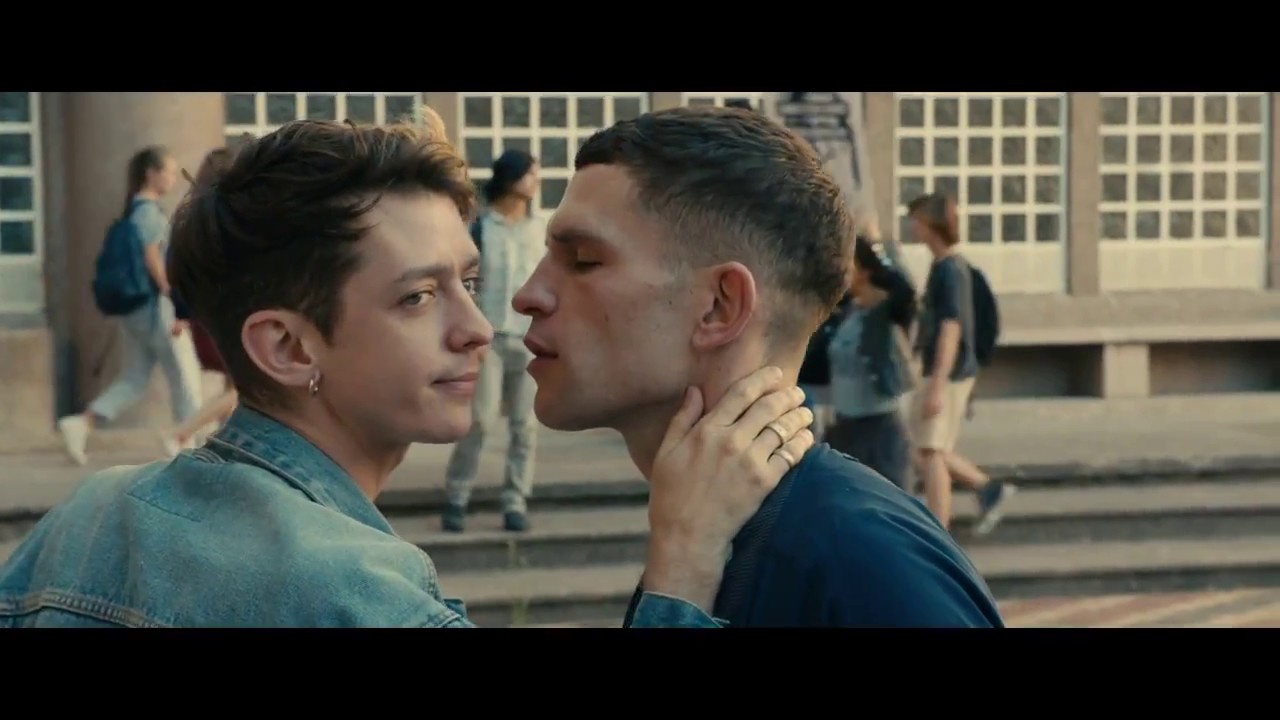
An intelligent yet visceral film about the gay community in '80s Paris, which starts brilliantly – focusing on the protests and meetings of Act Up, a group of guerrilla AIDS activists – before turning into a film about a man dying of the illness.

No matter how compassionately, credibly and intimately it does that, segueing from a film about ideas to one about the individual, contrasting the character's dynamism and beauty with his pain-ravaged impotence, and showing the body – not the city – as the battleground, it's ground we've covered countless times before, and (at the risk of sounding awful) it made the movie increasingly tedious.

At its best, this confrontational, unsentimental but humanistic film has unexpected echoes of Melville's Army in the Shadows, which looked at action, division and necessity within the French Resistance, and I understand why it included so many sequences of illness and fucking, but those elements don't seem as interesting as the story it started to tell. When it returns to it in those final moments, loaded with the suffering and sadness of what's gone before, the results are admittedly astounding.

Nahuel Pérez Biscayart is absolutely terrific as Sean, a founding member, Mesut Őzil-alike and all-round complex human being, first introduced to us justifying the fact that he and his mates have handcuffed a government official to a post during his team's PowerPoint presentation.

***

12. Adriana's Pact


Director: Lissette Orozco
Country: Chile
UK release date: TBC, but it's been picked up by Articial Eye
Rating: 3/4

A riveting documentary about a young Chilean filmmaker, Lissette Orozco, who discovers that her beloved aunt was a member of Pinochet's notorious secret police.

As a (debut) film, its balancing of the disparate elements is perhaps a little off – too much unrelated footage of other family members, too much of the director talking about her feelings – and it does become slightly repetitive towards the end, but its story and levels of access are incredible, and it's one of those few films deserving of that most overused of adjectives: brave.

Also Orozco has a lovely pretty face. Her next film, brilliantly, is about an uncle!

***

11. Ingrid Goes West


Director: Matt Spicer
Cast: Aubrey Plaza, Elizabeth Olsen, O'Shea Jackson Jr., Wyatt Russell, Billy Magnussen
Country: USA
UK release date: 17 November 2017
Rating: 3/4

A genre-blurring indie starring Aubrey Plaza (I will watch anything starring Aubrey Plaza) as the lost, damaged and impressionable Ingrid, who gets out of the psychiatric hospital after one of the great opening scenes, takes the insurance money she got from her mum's death and hot-foots it to LA in the hope of befriending Insta superstar Taylor Sloane (Elizabeth Olsen).

Matt Spicer's film isn't always as piercingly, exaltingly dark as it might be, but it treats Ingrid with just the right balance of interest, empathy and fear, and Plaza − who also produced − is absolutely superb in the lead, bringing a great depth, sadness and humanity to a character who can be the most appalling, manipulative monster, but somehow still isn't that big on Instagram.

There are elements that don't quite come off (Billy Magnussen's Nick is an interesting second act catalyst, but it's such a big performance that he unbalances the film; the love interest's Batman fixation is funny but pushed beyond the bounds of credibility), but it's a very interesting, enjoyable film that works as a black comedy, horror, psychological thriller, character study and satire on the skewed and unhealthy forced perspective of social media, in which everything is 'the best' and everything is put through a filter until it's perfect.

That's not perhaps the most profound observation, but the unexpected human fragility beneath Ingrid's monstrousness gives the film a real resonance, and makes it something slightly different to the razor-sharp, take-no-prisoners movie being sold to us.

#iamingrid


At the screening: It was interesting to hear Plaza (above, with Spicer (second from left) and Magnussen (right) say that her own preference is for an ending with at least a little hope in it, a sentiment hinting at the warmth beneath the nihilistic bravado, which it's tempting to compare with that of April Ludgate, her character in all-time classic sitcom, Parks and Recreation. "In essence, we're all fucked," she said at another point during the Q&A, asked to pontificate on the future of the world.

***

Thanks for reading. Part 2 will be up shortly.

Friday, 17 January 2014

Crime, Clara and Cagney running wild - Reviews #181

Plus: Peter Lorre, Chuck Palahniuk and Kate Hepburn's first Oscar win, in this latest reviews update. Ratings are out of four, because that's how I and also old men rate things.


Classe tous risques (Claude Sautet, 1960)

The short version: "A masterpiece of crime cinema: bleak, brilliant and grubbily realistic, influencing everything from Melville to Godard to Eddie Coyle. Will almost certainly take up smoking on account of Belmondo."

The long version: "Which movie character would you turn to in a crisis? As tempting as it might be to go for, say, Dumbledore, or Batman, I'm inclined to pick Jean-Paul Belmondo's Eric Stark in this Gallic crime classic: a noble, personable and resourceful small timer willing to stick his neck out, right out, for a total stranger.

That stranger is career criminal Abel Davos (Lino Ventura), a big-shot-turned-petty-thief who's left down, out and injured – with his two young kids on his hands – after a fateful encounter with some heavily-armed custom officials. Stark's job is to get him back to Paris and then out of sight, though Davos wants a few words with his former partners, who owed him a debt of honour, and didn't really deliver.

Director Sautet, branching out after years as an assistant director, called his style of filmmaking 'pure cinema': light on dialogue, strong on faces and physicality, this time vividly employing Ventura's past experience as a wrestler. "A big plus for Classe tous risques was his instinct for abrupt violence," recalled Sautet decades later. "It was great!" The film was also integral in defining one of the most important screen personas of the 1960s: the ugly-handsome Belmondo's image as a dapper, unflappable modern man with a singular code of ethics and a socially irresponsible way of making smoking look like a really good idea.

For all his stylishness, though, this understated, wintry masterpiece of gangster cinema, about a man in decline in a dirty, deadly business, is bleak, full of regret and stunningly filmed at authentically drab locations. Written, suitably enough, by ex-con José Giovanni, it remains both a massive achievement on its own terms and a model for a new breed of film, its DNA present in everything from Melville's mesmerising Le Doulos to Peter Yates' The Friends of Eddie Coyle. In an overt nod to Sautet's movie, Jean-Luc Godard even went so far as to name a whole film after one of its unseen characters, an underworld figure called Pierrot le Fou.

Often ignored amidst its showier contemporaries, Classe tous risques looks better – and greater – with every passing year."

(4)

***

Then I revisited a couple of old Woody Allen films: one almost perfect, the other merely pretty damn great:


"Who is Pearl Harbor?"
Radio Days (Woody Allen, 1987) - Woody's most personal and nostalgic film: a rough collection of tall tales and reminiscences, dealing with his childhood - he's played by a young Seth Green - and his beloved radio shows of the 1940s.

Lovingly narrated by the director, it's a time machine made of celluloid, beautifully devised and executed, with sumptuous period music and design, and the usual stunning work from his great '80s collaborators, Dianne Wiest and Mia Farrow - the latter showing her range once more in a sweet, funny, Judy Holliday-ish part.

Sentimental and deceptively deep, it's a simply wondrous movie - back from when it all seemed so effortless for Woody - casting its spell like a rosy, American Distant Voices. (4)


Bullets Over Broadway (Woody Allen, 1994) - An often joyous Woody confection - all surface, but what surface!

John Cusack is a pretentious, highly-strung playwright in early '30s Broadway who sells out, while being forced to deal with a monstrous luvvie (Dianne Wiest), a mobster backer (Joe Viterelli) and his moll (Jennifer Tilly), her abrasive bodyguard (Chazz Palminteri) and a leading man who can't stop eating (Jim Broadbent).

It lacks the depth and resonance of the director's greatest, and doesn't always quite tie together, but it looks utterly stunning, the cast is superb, and there are plenty of great characters, funny lines and inspired ideas - particularly the development of Palminteri's heavy.

For fans of the period, there are also fun references to the likes of Philip Barry, Eugene O'Neill, Jerome Kern and Clara Bow, as well as a soundtrack full of lovely old standards, including that cracking Irving Aaronson version of Cole Porter's Let's Misbehave. Such compensations should help you to stomach a little of Woody's usual smirking at non-intellectuals (imagine someone not knowing who Hamlet is!). (3)

***


Three Strangers (Jean Negulesco, 1944) - Good old Warner: you couldn't imagine MGM ever greenlighting a succession of films with leading men who looked like Peter Lorre and Sydney Greenstreet. Their lack of conventional glamour, of course, was offset by a staggering amount of talent - particularly in the case of the strangulated, bug-eyed Lorre, beautiful in his own way and one of the greatest actors in the history of film.

This is one of the pair's best: an ironic, unpredictable and sometimes shockingly violent drama about three strangers - they're joined by Geraldine Fitzgerald - who wish upon a Chinese deity for wealth, with a couple of them having a particular reason for needing a mountain of cash, and fast.

I wouldn't think of spoiling even the smallest of plot points in this original, moodily-photographed and deeply affecting movie: a mesmerising mix of mystery, thriller and character study, superbly acted by all three leads (though especially Lorre), as well as Joan Lorring in a crucial supporting role, and unusually well-directed by Negulesco.

Allergic to formula, yet richly and enduringly fatalistic in the familiar manner of co-writer John Huston, it's one film you won't forget in a hurry, right down to that classic final scene. (4)

See also: Lorre and Greenstreet made eight films together, starring in three of them. The others were The Verdict and The Mask of Dimitrios.

***


*SOME SPOILERS*
Picture Snatcher (Lloyd Bacon, 1933)
- This Cagney film is like many of the ones he made in the early '30s, going great guns at first, before getting a bit bogged down in censor-soothing melodrama, as he falls in love and seeks to atone for his sins. Here he's an ex-con who becomes a star reporter at a yellow tabloid, the story based - very, very loosely - on the photographer who snapped the notorious 1929 photo of murderess Ruth Snyder in the electric chair. (Trivia fans: that chap's grandson is Norm from Cheers, and his greatgrandson is Jason Sudeikis.)

There's a rich vein of sex jokes being mined throughout, and Cagney is as he usually was during this period: dynamic, fun, sometimes a bit annoying. The best scene in the picture comes early on, as he announces that he's going legit to a roomful of his former associates, facing them down with hard-won wisdom, righteous anger and a touch of old-fashioned toughness. The momentum slows after the first 15, though, as the melodrama and the message intrude, leaving us with another good film, rather than a great one.

In support, Ralph Bellamy is a standout as Cagney's alcoholic editor, playing a part not unlike his one in Capra's Forbidden, and Alice White - who once starred in a film called The Naughty Flirt - does that Pre-Code thing she generally does. While I'm not a fan of director Lloyd Bacon, and the film's most memorable shot - an electrician setting up for the big one - seems as much through necessity as design, he does handle the bullet-heavy machine gun shoot-out quite excitingly. (3)

See also: Other early Cagney comedies include Taxi!, Hard to Handle, and the rather wonderful Jimmy the Gent. As well as this one:


Lady Killer (Roy Del Ruth, 1933) - A crackling early Cagney vehicle, directed at Del Ruth's usual breakneck speed, and featuring jokes about drugs and sex, and a bit where Jimmy kisses Mae Clarke's boob (that'll make up for the time he used her face as a grapefruit squeezer).

The plot is complete nonsense - with two-fisted conman Cagney storming the picture business - though the film knows it some of the time, and there are as many salty, nifty one-liners as dated ones. There's also a scene where some monkeys invade a birthday party, and another where Cagney plays a Native American with a sore bottom. Incidentally, I think his tyrannical Teutonic action director is patterned after Warner's own Michael Curtiz.

The star is clearly having a whale of a time, spending most of the film laughing at his own jokes and slapping people around, and Clarke is also extremely good as his flirty moll, whom he can't trust as far as he can throw - though it turns out he can throw her quite far. (More of that unsavoury woman-beating that Warner, and Cagney in particular, seemed to go in for).

Lady Killer is basically all over the shop, but good fun with it. (3)

***


Good Ol' Freda: The Beatles' Secretary (Ryan White, 2013) - A sweet, affectionate and even moving documentary about Freda Kelly, the tough, vivacious Liverpudlian teenager who met the Beatles in 1961, became their secretary in '62, and contined to reply to fans five years after the band had split up, such was their astonishing popularity - and her part in retaining it.

At one point she was responding to over 3,000 letters a day: colluding with John to make sure photos were properly signed, scooping up George's hair to post back to fans and nipping over to Ringo's so he could sleep on a pillowcase sent by one excitable girl.

Freda never cashed in on the connection, though, and has spent the last 40 years as, well, still a secretary, but this time a legal secretary. This portrait of her life then and now has no major revelations (she even refuses to discuss which of the band she stepped out with), but many minor ones, as well as a few insights into working class Liverpool life in the 1960s. And while it's fairly standard in presentation, with a little too much reliance on period, non-Beatles music, it makes good use of archive film and photos (albeit with a couple of conspicuous errors - that's the Queen Mum, not the Queen), and some thoughtful, intelligent location shooting.

Freda herself is unassuming and good-natured: an ordinary person telling a sometimes extraordinary story in a good-humoured, down-to-earth way, her transparent fondness for her fellow fans enduring to this day.

I was an absolute Beatles nut as a kid, and spent my 12th birthday at the Beatles Story museum and on the Magical Mystery Tour bus (along with John Lennon's uncle, who used to hop on it to pick up his pension). That part of me was happy to wallow in nostalgia one more time, and for serious fans of the band it's definitely worth checking out. McCartney even licensed the rare use of four Beatles recordings due to his eternal bond with the subject, while Ringo pitches up at the end to deliver a personal message, and do that peace sign he always does. (3)

***


Morning Glory (Lowell Sherman, 1933) - Kate Hepburn won her first Oscar for this backstage drama, playing an insecure, self-obsessed and stagestruck young woman who pitches up in New York, flitting around the theatrical circle of producer Adolphe Menjou, writer Douglas Fairbanks, Jr. and a peroxided Mary Duncan, as she looks for a break.

It's stagy and rather mannered, but also believable and entertaining for the most part, and while Hepburn isn't as good as she had been in A Bill of Divorcement or would be in countless other films, she's still quite persuasive, and her playing of Romeo and Juliet's balcony scene at a party is beautiful. Fairbanks, cast in an unusually sensitive role, is in fine form as the playwright secretly in love with her - especially when revealing his crush to Menjou - matched by C. Aubrey Smith as the mentor Hepburn forcibly adopts.

Unfortunately the film ends in rather anti-climactic fashion, serving up a cliched wish-fulfilment ending right out of 42nd Street, then failing to show us even a line from the play-within-a-film, an almost wilfully perverse decision that would have rendered the finale just about meaningless, had the closing monologue not proceeded to do that job itself.

It's worth seeing, especially for Hepburn buffs, but her 1937 classic, Stage Door, also made by RKO and featuring Menjou, tackled a very similar story in a vastly superior manner. (2.5)

***


Choke (Clark Gregg, 2008) - For the most part, an almost indiscriminate jumble of sex, offbeat sweetness, sex, boobs, sex, satire, sex, and black comedy about addiction and psychological and sexual abuse, based on the Chuck Palahniuk novel and anchored by a physically, mentally scruffy Sam Rockwell, who's frankly had better hair.

He's a sex addict (that's where all that sex I mentioned, erm, comes in) and history re-enactor who supplements his income by feigning choking fits in restaurants, donating all the money towards expensive hospice care for his mother (Anjelica Huston, in unusually mediocre form) - once a paranoid psychopath tormenting his various pretty young foster parents, now a passive-aggressive dementia sufferer lamenting her impending demise.

Whilst chasing every woman with a pulse and without a bus pass, sparring with Agent Coulson (who also directs) - as his officious, scrupulously colonial boss - and trying to stop his friend from masturbating in public, Rockwell finds himself thoroughly unable to get it up with his mum's doctor (Kelly Macdonald). But is that because he loves her, or just because they're having sex in a chapel? And then there's the small matter of his true parentage...

For a long time the film seems to be going nowhere, albeit fairly divertingly, before rather dropping off as its mean-spiritedness becomes overbearing. Then, with about 15 minutes to go, it somehow pulls its many disparate strands together in a way that makes much - though certainly not all - of what precedes a whole lot better in retrospect. Rockwell has a couple of nice moments then - he's pretty good in a somewhat muddled part - but it's Macdonald who completely steals the show, and really with only one meaty scene in which to shine; what an exceptional actress she is. (2.5)

See also: For more news on Macdonald saving films somewhat beneath her talents, see this review of The Decoy Bride. And the film, if you insist.

***


*MINOR SPOILERS*
Dancing Mothers (Herbert Brenon, 1926)
- The intuitive essayist and former silent film icon Louise Brooks was an unstinting champion of her phenomenally popular then long-neglected contemporary, Clara Bow, with whom she shared a natural sensuality, though Brooks herself was a long, sultry seductress and Bow a flirtatious bundle of fun.

There were two Bow performances for which Brooks reserved special praise: one was unsurprisingly Mantrap, Bow's favourite of her movies (and mine, for what it's worth), but the other wasn't the legendary It or the first Best Picture winner, Wings: it was this one.

For while Dancing Mothers didn't give Clara a starring role, nor create her "flapper" image - key elements of which had turned up in the previous year's The Plastic Age - it certainly cemented the recognisable Bow image, adding a degree of unrepentant hedonism to her persona, and providing her with a character called "Kittens", which always helps.

The film begins in a fug of moral dissolution, with Bow neatly cast as a spoilt, sex-crazed young woman who goes on the pull with her dad to Napoleon-themed brothels, while her suitor (Donald Keith) impotently broods and her blameless mum (Alice Joyce) sits on her lonesome, poring over old newspaper cuttings about when she was famous. (For those who know about Bow's intense and fractious relationship with her own alcoholic, brothel-frequenting father, who abused her as a teenager and contributed to her terrible mental health problems, watching her act out a similar scenario on screen is rather upsetting.) Naturally Joyce eventually comes to her senses, turning into a massive MILF - at least in the eyes of the movie - as she tries to take sexy womaniser Conway Tearle away from her daughter, partly by pretending to be French, only for the pair to develop, like, "feelings" for one another.

The material is spotty, though leading up to a decent reveal and a progressive pay-off, while the whole cast is rather dull with the exception of Bow. For much of the film she offers only an energetic but posturing cartoon (she was after all the partial inspiration for Betty Boop), curiously playing direct-to-camera at various junctures. In the final third, though, she has two key scenes, and plays them both well: first moving from anger to surprise, mirth and finally dejection as the object of her affections spurns her; then, in the finale, acting gentle, vulnerable and quite appallingly selfish, her playing displaying many of the virtues for which she would soon become renowned, being vibrant, natural and entirely lacking in technical affectation. I can't quite see what Brooks was getting at when she hailed it as a performance for the ages, but there is at least a fair bit to admire and enjoy. In truth, Bow isn't helped by the lacklustre handling from future Laugh, Clown, Laugh director Brenon, who rarely holds her in close-up. Perhaps he simply didn't realise what he had.

It's nothing special, then: not as gloomy and laughably melodramatic as Bow and Keith's Parisian Love from the previous year, but rather drab and lacklustre, rarely making the most of its possibilities. It's worth a look for Bow, though, as well as three little things that made me smile: 1) The bit where Joyce's best friend tells her that they have long lives ahead of them, and they both light up; 2) One of the characters being credited as Butter and Egg Man; and 3) Joyce's accidentally hilarious confession: "I've lied to you - I'm not a French woman." (2)

***


*A FEW MINOR SPOILERS*
Change of Heart (John G. Blystone, 1934)
- Janet Gaynor and Charlie Farrell were one of the most popular romantic teams in pictures, back when such things existed. He was limited if personable, but she was arguably the best actress of her or any other era, possessing a beguiling sincerity, and from the silent period - when they kicked off with three incredible Frank Borzage films: 7th Heaven, Street Angel and Lucky Star - through to early musicals like Sunnyside Up and Delicious, they were a reliable box-office banker with a solid screen chemistry.

Tastes changed, though, and this 1934 effort, blandly directed by former Buster Keaton collaborator Blystone, proved to be the last of their 12 (12!) teamings, across just seven years. The pair play a prospective lawyer (Farrell) and a writer (Gaynor) who arrive in New York hoping to make a mark, forming a love quadrangle with their college buddies: a superficial actress (Ginger Rogers) and a guy who keeps making rubbish jokes (James Dunn), followed by self-congratulatory remarks like: "Oh, that was a subtle one", after which he whips out a comb and does his hair. In 1945, the alcoholic Dunn confounded expectations by producing one of the greatest and most astonishingly raw of all screen performances, as a dissipated pipe dreamer in A Tree Grows in Brooklyn, but that was a way off. Here he's merely competent in a daft role.

The film isn't really very good. Its script, co-written by playwright and character actor James Gleason - a familiar face in many of the period's best comedies - is anaemic, abrupt, luducrously melodramatic and full of excessive exposition, if occasionally effectively evoking the atmosphere of mid-'30s New York from the point of view of outsiders.

Dunn we've dealt with, Rogers is a pain - playing the "bad girl" part that was briefly her stock-in-trade - and Farrell's a mopey annoyance turned potential adulterer, leaving only Gaynor's attractive naturalism to cling onto, along with a bit of future-star-spotting in the shape of Shirley Temple - just prior to her breakthrough in Little Miss Marker - Mischa Auer and a debuting Dick Foran, billed as "Nick".

There is one absolutely brilliant scene, though, completely at odds with the silliness surrounding it, in which Gaynor shaves the recovering Farrell's face as they discuss their future. Recalling Lucky Star, one of my all-time favourites, it's a completely genuine, tender and affecting passage, full of Gaynor's warmth and understated sense of humanity, and augmented by her fond, delightful and realistic facial quirks. After that, the film brightens a little, while never approaching such lofty heights again.

This was one of two DVDs I bought with my Christmas money. (The other was Dancing Mothers.) For that one special scene, and really that scene alone, it was worth it. (2)

***

TV


The Spy Who Went Into the Cold - Kim Philby: Russian Super Spy (George Carey, 2013) - This cumbersomely-titled Storyville doc deals with the most senior member of the "Cambridge Five", a communist penetration agent who rose to the upper echelons of MI6, while feeding secrets to the Russkies and getting blind drunk. The film is as erratic as they come, with a few vague psychological insights into its subject, an interesting theory that fellow spy Anthony Blunt tipped Philby off about his cover being blown, and an almost endless parade of footage in which Carey shows us the sites where some of the things happened, which is sometimes eerily interesting but more often not. To be honest, he really should have got some more source material before handing this one in to BBC4, as close-ups of Google searches of people's names don't really cut it as far as documentary imagery is concerned. There are some interesting talking heads, not least the subjects's daughter Josephine, and a few good clips - including interesting analysis of Philby's supposed British boss speaking later on a TV chat show - but overall it's a scrappily unsatisfying addition to the wealth of Philby films. (2.5)

***

Thanks for reading.

Wednesday, 25 December 2013

Review of 2013: Part one - Best films of this year

This year's review comes in two parts. The first is my top 10 of 2013, taking in everything from indie comedies to animation - and a couple of neat returns to form. The second contains my 20 favourite "discoveries" of the year, from silent film to a documentary from last year, along with the usual round-up of the year's highs and lows. Previous annual reviews are available here:

2010
2011
2012

Top 10 of 2013

1. Frances Ha


Director: Noah Baumbach
Starring: Greta Gerwig, Mickey Sumner, Adam Driver and Michael Zegen
What we said: "What a great film: Baumbach doing his thing, and Gerwig doing hers, this plotless ramble emanating its writer-director's usual good-natured angst, uncertainty about contemporary life and warm-hearted, off-kilter sentimentality. It cares about in-jokes, the intensity of true friendship (in the shape of Mickey Sumner, whose chemistry with Gerwig is absolute), and the random, aimless but fulfilling way in which we muddle through this world, in a way that's very unusual. It's also a very funny film in that shambling Baumbachian way, jokes tossed this way and that, muttered, thrown away and occasionally properly milked: like the beauty that closes the picture. What seems at first to be a succession of mild comic sketches is really a character study of a conflicted, grown-up child afraid of the world into which she's been unceremoniously dumped. Its cumulative impact is enormous." Full review.

2. The Way, Way Back


Directors: Nat Faxon and Jim Rash
Starring: Liam James, Sam Rockwell, Steve Carell and AnnaSophia Robb
What we said: "This is like a big hug in cinematic form, as awkward, taciturn teen Duncan (Liam James) is taken under the wing of a flamboyant motormouth (Sam Rockwell) whom he happens upon at a rundown waterpark. It's a bit like Adventureland, a lot like every other coming-of-age film you've ever seen - the stifling domestic strife, the pubescent blushing, then the sudden blossoming of one's self-confidence - and there are familiar lines and some unconvincing readings to go with the trite, cliched character of the boozy, easy next-door neighbour. But damn it if this isn't the funniest, loveliest film I've seen in ages, with a perfectly-pitched central relationship, a sure-footed story leading to a hugely satisfying climax, and a staggering performance from Rockwell as the wise, reflective, comically phantasmagoric Owen: a true screen maverick but one with a real and recognisable human frailty."

3. Paperman


Director: John Kahrs
What we said: "An intoxicating short: a silent, black-and-white masterwork that pays oblique - and then overt - homage to The Red Balloon, as a paper plane with a mind of its own (and a fair few friends) tries to unite two lonely souls. It's extraordinary."

4. Wreck-It Ralph


Director: Rich Moore
Starring (voice only): John C. Reilly, Jack McBrayer, Jane Lynch and Sarah Silverman
What we said: "We've seen a friendship between a hulking monster with a heart of gold and a sweet, brown-haired little girl before - in exec producer John Lasseter's Monsters, Inc. - and yet this feels so fresh and funny and original. We've been pitched into a 3D video game world packed with peril and racing cars, in the execrable Spy Kids 3: Game Over, but that was a film that did almost everything wrong, just as this one does almost everything right. There's a sense of ambition and imagination here that's been missing from most Disney animations since its brief renaissance in the '90s - I haven't seen them do anything this good since The Lion King." Full review.

5. Django Unchained


Director: Quentin Tarantino
Starring: Jamie Foxx, Christoph Waltz, Leonardo DiCaprio and Kerry Washington
What we said: "Tarantino’s direction has seemed to falter in recent years, being geared towards people with the world’s shortest attention span (Kill Bill: Vol 2), those with limitless patience who really like fire and blood (UpROARious P0th3ads), or sado-masochists (Death Proof). Here he’s absolutely on top form, delivering the requisite thrills through a fusion of pyrotechnics and restraint that he hasn’t had in check since Pulp Fiction. And this is, unquestionably, his best film since Pulp Fiction: a masterful, genre-bending movie that’s full of superb exchanges and exceptional individual scenes, but also works as a compelling and consummately confident whole." Full review.

6. Nebraska


Director: Alexander Payne
Starring: Bruce Dern, Will Forte, June Squibb and Bob Odenkirk
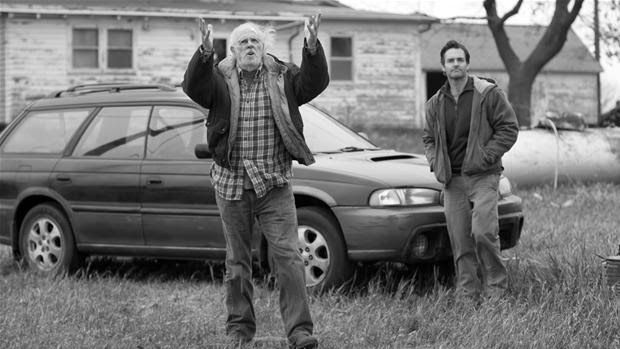
What we said: "A(nother) road movie about old age and family: an unsentimental, monochrome variation on the likes of Don't Come Knocking and The Straight Story, bearing the unmistakable handprint of the mighty Alexander Payne." Full review.

7. Blue Jasmine


Director: Woody Allen
Starring: Cate Blanchett, Alec Baldwin, Peter Sarsgaard and Sally Hawkins
What we said: "Woody Allen’s erratic latter-day renaissance continues with this throbbingly neurotic update of A Streetcar Named Desire. Back from Europe, he proves at home in San Fran, with a central character he understands, and who feels completely human, thanks to a writer on form and an actress on fire." Full review.

8. Gravity


Director: Alfonso Cuaron
Starring: Sandra Bullock, George Clooney, Ed Harris and Orto Ignatiussen
What we said: "This film turned me into the aliens from Toy Story. 3D tears in zero gravity? 'Oooooooooooooh.'" Full review.

9. The World's End


Director: Edgar Wright
Starring: Simon Pegg, Nick Frost, Martin Freeman and Rosamund Pike
What we said: "The first half is a wonder: affecting, surprising - with a first scene just as clever as Wreck-It Ralph's similar opening salvo - and full of brilliant gags. Despite being the weakest of Wright's "Cornetto trilogy", it's a fitting wrap-up too: narratively the most inconsistent, with an unconvincing, barely escalating external threat - a legion of blue-blooded aliens - but also the most ambitious, and arguably successful of the three in terms of characterisation, emotional maturity and belly laughs." Full review.

10. The Place Beyond the Pines


Director: Derek Cianfrance
Starring: Ryan Gosling, Bradley Cooper, Eva Mendes and Anthony Pizza
What we said: "People Magazine's two sexiest men of 2011, together at last. It begins as Drive, turns into Prince of the City and then becomes a film all its own, and all the better for it: an epic tale of fathers and sons, heading inexorably for that place beyond the pines. I admire the film's sense of grandeur, its scope and scale, the energy of the action interludes, the artistry of much of the storytelling, and the intensity of the performances." Full review.

Wednesday, 20 November 2013

Clueless, Sam Rockwell, and Steinbeck done right - Reviews #176

I've been busy trying to finish the first draft of my kids' book (around 7,000 words to go, thanks for asking) and even pitched it to a grown-up (that's me in the tie), so movies have taken a long overdue backseat (there are 13 here, but that's in the last month). I still love them, of course, but every once in a while you have to try to achieve something with your life. This book is my thing. Also, several of the films I've seen lately have been absolutely appalling. They're in this round-up, along with the good ones. I've been doing some freelancing about films too - I'll tell you more about that some other time.


Clueless (Amy Heckerling, 1995) - I saw this at the cinema when I was 11, when I found the whole thing slightly too grown-up and confusing, and then later when I was perhaps 15, at which time it seemed like a slightly superficial teen comedy. In fact, it's kind of the opposite: a satire, based on Jane Austen's Emma, about a spoilt, self-centred teen (Alicia Silverstone) who reinvents the new girl at school (an unrecognisable Brittany Murphy), but has to make over her own personality in order to get the man she wants (Paul Rudd).

I'm 29 now, and I can see where my confusion set in, as the film does rather want to retain its cake while scoffing it whole, taking place around vast mansions and revelling in Silverstone's eye-catching outfits, while telling us that really such things don't matter at all. It takes a lot of side-swipes at her Cher ("I've divided them into aperitifs and mains," she says, after collecting food for a charity appeal), but her transformation is a little unconvincing and hardly complete.

The reason I revisited the film is because it's heralded as something of a classic nowadays, and recently topped The Guardian's list of the 10 best teen movies of all time: a list that couldn't find space for Ghost World, Brick, Knock on Any Door - hardly a great film, but unquestionably a crucial one, popularising the "live fast, die young" catchphrase - Some Kind of Wonderful or Rebel without a Cause.

So, 17 years on, should it be troubling a list like that? As if! It's essentially a stick-thin comedy in eye-watering colours that has just about enough good gags, fun semantic inventions and wordy, erudite one-liners to secure a decent report card, but is a long way off that coveted A-grade, even given Cher's gift for wrangling. Rudd, then looking like he might turn into a slightly bland leading man rather than an offbeat improv king, is good value, and his sparring with Silverstone provides the film with its best moments, but even then he appears extraordinarily uncomfortable when forced to negotiate the soppy, clichéd wrap-up.

Compared to writer-director Heckerling's Fast Times at Ridgemont High (see below), penned by Cameron Crowe, Clueless is simply too light, inconsequential and lacking in heart, its characters caricatures rather than real people. It's entertaining and distinctive, sure, but hardly one of the best teen films ever made. (2.5)

See also: My review of Knock on Any Door is on the MovieMail website here.

***


Of Mice and Men (Lewis Milestone, 1939) - Two drifting ranch hands blow across California during the Depression. Lenny (Lon Chaney, Jr.) is huge, hulking and slow-witted, with a childlike innocence; George (Burgess Meredith) is his protector: a smart, selfless man who's happy to keep telling that same old story: one day they'll own their own place, and Lenny can pet the rabbits. Having fled the town of Weed (it isn't a marijuana metaphor, but imagine if it was), the pair pitch up at a ranch fairly teeming with trouble, most of it coming from the owner's son Curley, and his sexually frustrated wife (Betty Field).

Lewis Milestone's translation of the Steinbeck novella is an immersive, extraordinary powerful experience, exceptionally well-acted, particularly by Chaney and Meredith, and shot in painterly tones by Norbert Brodine, even if his and Milestone's visual sense sometimes seems to have more to do with aesthetics - the re-sizing of the frame by shooting between trees or with machinery in the foreground - than alighting on details actually integral to an understanding of a scene.

That's not much of a problem, though, and it's not always the case: the two key scenes here - the first concerning the potential shooting of a dog, the second the potential shooting of a man - are dealt with perfectly, eliciting a nauseating dread and bitter anguish quite unlike anything I've felt watching a movie before. Those sequences, and indeed the whole film, are also extremely well-scored by the modern musical visionary Aaron Copland, who would write the soundtrack for Milestone's next (and far inferior) Steinbeck adaptation, The Red Pony, a decade letter.

Somehow Hollywood managed to make an even better Steinbeck film the year after this one, as John Ford and Darryl F. Zanuck brought The Grapes of Wrath to the screen with a vivid scope, political punch and sense of photographic realism that this one just can't match. It isn't bad for starters, though: another incredible triumph from Hollywood's greatest year, with an emotional impact that's all too rare. (4)

***


Lawn Dogs (John Duigan, 1997) - In simplest terms, it's like Sundays & Cybele relocated to the Scissorhands universe, but Lawn Dogs is very much its own film, its familiarly fatalistic story full of strange details, the characterisation fresh and original, and the perfectly-judged introduction of fantasy elements paving the way for Beasts of the Southern Wild.

Mischa Barton is Devon, a weird, precocious 10-year-old girl who's just moved to a bright, idyllic gated community with her parents, but quickly becomes obsessed with a terse, tortured piece of trailer trash (Sam Rockwell, exceptional in his breakout part) who tends the lawns of this rarefied estate.

As with all films of its type, from Cybele to Sling Blade to Half Nelson, you know it's unlikely to end well, but the story is doggedly unsentimental, the idiosyncratic, generation-spanning friendship is truly affecting and Duigan has an eye for curious, subversive imagery - an American flag dropped on the gravel or used to mop up after a crime, a hysterically funny "war" scene, a tree dressed in ribbons - that drags his film to some glorious hinterland where folk story, fantasy and class-conscious America somehow sit side by side. (4)

***


Indisputably the best bathtub on film.

"Wherever there's smoke, there must be... somebody smoking." Easy Living (Mitchell Leisen, 1937) - My favourite movie of all time is Remember the Night. This is writer Preston Sturges and director Mitchell Leisen's other collaboration. It's also amazing. Light on plot, long on Leisen getting a bit distracted by nice clothes and the coolest bathtub in the history of the world, but amazing nonetheless.

The one and only Jean Arthur, possessor of the best voice in movies - an instrument of purest husky-hinted squeak - is Mary Smith, an ordinary working stiff who's mistaken for the mistress of New York's third biggest banker (Edward Arnold) and finds that now everybody wants to give her things for free: a hotel room, a new wardrobe, a supper for two... She's in love with an ordinary Joe, though (Ray Milland), little realising that the apparently homeless ex-automat employee is Arnold's son.

This effortless mix of satire, slapstick and romantic comedy lacks the combination of light and shade that makes Remember the Night such a staggering film, and which you'll find in all of Sturges' best films as director, but it is extraordinarily clever, hysterically funny and irresistibly charming, with Arthur at her unapproachable best, Milland a fairly fun love interest, and a trio of classic supporting turns from Arnold, butler Robert Greig, and Luis Alberni - as an incompetent, scheming hotelier called Louis Louis. (4)

***


This bears very little resemblance to anything that happens in the film.

Fast Times at Ridgemont High (Amy Heckerling, 1982) - I was watching this on the train, but I had to stop, as people were staring at the boobs. Whether they were gazing in slack-jawed disgust at the appalling pervert or whether they just like boobs, I'm not sure, but it was making me uncomfortable, so I finished it at home.

It's a trendsetting, hugely enjoyable teen movie, scripted by Cameron Crowe from his book, that gave a break to a half-dozen future stars, and influenced everything from John Hughes' run of school-set comedy-dramas to Bill & Ted, and Dazed and Confused.

It's an ensemble piece, but the focus is weighted towards Jennifer Jason Leigh's virginal 15-year-old Stacy, making her first ventures into the world of romance and boffing. Mike Backer is a sweet classmate who's stuck on her, Robert Romanus the smooth-talking ticket-scalper helping him out, Judge Reinhold her hard-working, perpetually unlucky brother, and Phoebe Cates her worldly-wise best friend - the latter two combining to great effect in the obligatory wanking scene.

Almost everyone in the cast went on to fame and fortune to some degree: Sean Penn plays a bolshy stoner named Spicoli - battling memorably with authoritarian history teacher Ray Walston - Forest Whitaker is imposing as a combustible football star, Nicolas Cage's big, stupid face looms into view a few times, and there are small parts for Eric Stoltz, James Russo, Anthony Edwards, Crowe's wife Nancy Wilson and future Beverly Hills Cop director Martin Brest.

I realise that so far I've mostly just listed some people's names and talked about boobs, so how about a review? Fast Times is a real breath of fresh air, like a bonus Hughes film made before the fact, peopled by welcome faces, soundtracked by catchy tunes and touched with that Crowe earnestness that can send everyone running for the hills - but here suits the subject matter, and these characters, just fine.

It's an episodic film, with a bit of '80s gimmickry - check out that football scene - and I was often surprised at the way it curtailed scenes, sometimes after an abrupt punchline, but it's heartfelt, true-to-life, largely unsentimental and extremely entertaining: full of memorable encounters, likeable characters and funny sight gags.

The performances vary in quality: Backer is OK, and Cates, Reinhold and Romanos all manage to be slightly wooden and yet very convincing, but Leigh and Penn steal the show: she very affecting as a sweet-natured, uncertain, resourceful but deceptively strong young woman, he the last word in massive stoners, with the undulating intonation, delayed laugh and wavy hair used by just about every screen weed-smoker since.

The last third perhaps takes a bit of a dip. Though it does resort to some of the teen film staples I was impressed it had avoided, it deals with them in an unusually unmelodramatic, matter-of-fact way. A more significant problem is its inability to satisfactorily tie up some of its many story threads, though, if I'm being charitable, I suppose teenage life is a bit like that. Despite a few shortcomings, it is both tremendous fun and one of the key films in its genre: if Pretty in Pink and Some Kind of Wonderful are better still, I doubt they'd exist without this one. (3.5)

***


The Man Who Came to Dinner (William Keighley, 1942) - Caustic columnist Sheridan Whiteside (Monty Woolley) fractures his hip whilst on a lecture tour, leaving him holed up in the home of a ball bearings manufacturer and his shrill wife, where his brand of self-centred posturing, empty sentimentality and slightly tiresome insults changes the lives of those around him - for better or worse.

This celebrated comedy, from the Kaufman-Hart play based on the character of theatre critic Alexander Woollcott, starts off in an alarmingly one-note vein, but gets better and better as it goes along, culminating in a memorable tussle between Whiteside's long-suffering secretary Bette Davis and his superficial protegee Ann Sheridan for the heart of country newspaper editor Richard Travis, incorporating hilarious supporting parts for Reginald Gardner and Jimmy Durante - the latter playing a fun-loving movie star called Banjo, patterned after Woollcott's best friend, Harpo Marx.

There are rather too many of those archive one-liners rendered meaningless by changing comedy tastes and Woolley's massive performance falls the wrong side of greatness for me, but it's an entertaining film that builds to a typically funny, frantic climax, and Davis is absolutely excellent as an acerbic, lovelorn woman with little faith in her ability to keep her man. (3)

***


Old Small Chin doing her big-eyed bit.

Young Bess (George Sidney, 1953) - Perhaps Jean Simmons never fulfilled the potential she showed as a young actress, from that film-stealing bit in Give Us the Moon as a chain-smoking teenager, through Great Expectations, Black Narcissus and Olivier's Hamlet, where she was a mesmerising Ophelia.

There are great performances dotted about her career, including in Elmer Gantry and The Grass Is Greener (both 1960, the year she also made Spartacus), but at times she struggled for work and struggled to make an impact when she found it, seeming to possess a fragile confidence to go with her delicate, distinctive appearance: sweeping black eyebrows over huge violet eyes, a long, slender nose, and a full, wide mouth above an extraordinarily tiny chin.

There were certainly two serious factors contributing to the erratic nature of her career: her mental health problems - including serious bouts of depression and accompanying alcoholism - and the unwanted attentions of megalomaniac RKO owner Howard Hughes, who blacklisted her at the peak of her powers, after she repeatedly rebuffed his advances. The situation was so extreme that Simmons and her husband, Stewart Granger, fantasised about murdering Hughes. In the event, they chose a less extreme method of redress, with Simmons winning her freedom from the mogul in 1952.

Young Bess was made by prestigious MGM the following year and, while it isn't a great film, it is a fabulous showcase for her abilities. Simmons is very, very good as the lonely, impetuous, improbably attractive future Elizabeth I, triumphing over a rather flimsy romantic narrative - with a hint of intrigue - through sheer force of personality.

There's a steeliness to her performance, removed from the bitterness of Great Expectations or the shallow histrionics she exhibited in the overrated Angel Face that I found really eye-opening, particularly when she purposefully recalls the mannerisms and proclamations of her father (Charles Laughton, recreating his Oscar-winning role), chest out and hands on hips, or spouting off, dreamy-eyed about the greatness of Britain.

Despite a cast that also includes Granger and Narcissus alumni Deborah Kerr and Kathleen Byron, the film feels very much like an old-fashioned star vehicle, attuned to Simmons' gifts, and simply allowing her to express and articulate a great breadth of emotion - as well as to prove a remarkably dishy redhead - rather than providing a terribly noteworthy or cohesive narrative.

Having said that, there are other notes of minor interest: a little mileage to be got out of villain Guy Rolfe's Fassbender-like fizzog, and a performance by over-enunciating child star Rex Thompson that's either the best or worst thing I've ever seen. He had me in hysterics repeatedly - I think by accident. It's also quite a handsome production, and there's one particularly brilliant shot near the close, in which Simmons' shadow grows and grows until she's as tall as the castle wall. It's an absolute beauty.

Young Bess isn't good history and lacks the ambition in its storytelling to provide much beyond solid entertainment, with a narrative that's rather too slight, low-key and initially bitty, but it is a diverting watch, as well as an effective showcase for one of Britain's most interesting and attractive actresses. Having said all that, Miranda Richardson remains the definitive Elizabeth I. "It's up to you: either you can shut up, or you can have your head cut off." (3)

***


Thieves' Highway (Jules Dassin, 1949) - An apple-flavoured film noir, with war vet Richard Conte hauling crates of Golden Delicious over to San Francisco, where he wants a few words with the greengrocer (Lee J. Cobb) who left his dad in a wheelchair.

Its mechanics are sometimes a little obvious - like the shallow fiancee or the self-righteous cop punching us in the face with a moral - it gets slightly bogged down when we first arrive in San Fran, a symptom of pacing issues, and there's some of that violence towards women that always makes you wince, but it's an interesting, unusual movie with a great many virtues.

As well as the genuinely original setting - an agreeably banal backdrop for the story of an avenging son - there's a nice supporting performance from the oft-ridiculed Valentina Cortese, playing a jaded prostitute with bad hair, some deliriously perilous trucking scenes that may have influenced The Wages of Fear, and fine turns from both Cobb and the forceful, intense Conte, their scenes together crackling with menace. There are also a handful of nice visual flourishes from Dassin and photographer Norbert Brodine, including a perhaps unrealistic but nevertheless striking bit of staging that sees Cobb back-pedalling through a bar-room, dispensing scrunched-up bank notes as he goes.

This isn't in the top tier of Fox films noir, with Fallen Angel and Where the Sidewalk Ends, nor can it quite compete with Cry of the City - which Conte made the same year - but it's pulpy, sweet and sour in equal measure: not ideal for an apple, but about right for the genre. (3)

***


Häxan: Witchcraft Through the Ages (Benjamin Christensen, 1922) is a silent Danish drama-doc in seven parts: an outrageous, confusing, sometimes quite scary movie about witchcraft, demons and the Devil - part reconstruction, part dramatisation, part vintage PowerPoint presentation.

Three years in the making and overflowing with ambition and naked bottoms, it focuses chiefly on a witchcraft scare in 15th century Germany, but also seeks to provide a wider context, regaling us with officiously sourced tales from the dark ages, drawing parallels between 20th century "hysteria" (mental illness) and symptoms of possession, and throwing in another short story for good measure, in which a horny maiden tries to seduce a fat monk using some cat poo and a dead sparrow.

The film is illuminating on a subject of which I knew little, has a richly toxic atmosphere thanks to some very impressive imagery - most showily the animated money set-piece and a fantastic flying sequence that predates Murnau's Faust by four years - and includes a scene in which a gaggle of witches queue to literally kiss the Devil's bum (I was heartened to find that the monks conducting the inquisition found this just as funny as me). But it's also quite hard to follow, can be tedious and poorly-acted, and suffers from both a muddled viewpoint and a short attention span: I'm not sure any of the stories ever actually got finished.

All this is probably compounded by the fact that I don't have much stomach for the subject matter or for horror movies in general. Certainly I found it more impressive than enjoyable, and struggled to get or stay engaged with the narrative. It did bolster my self-esteem, though. The sky is made of steel? Ancient Egyptians were idiots. (2.5)

***


Madame X (David Lowell Rich, 1966) - Top tip: if you've faked your own death, don't forget to buy a newspaper with your photo on the front, and stand in the middle of the street shaking your head at it.

Madame X is a preposterous, sometimes persuasive Sirk-like soaper, based on a hoary old melodrama and featuring Lana Turner's biggest performance, though hardly her best. It's camp beyond belief, coincidence-driven beyond credibility and has a pay-off that's only about half as good as it has to be in order to justify the sacrifices made to get there. It's also pretty watchable, with a few nice moments towards the end.

Turner is a shopgirl who has married into a wealthy, powerful family. While her husband (John Forsythe) is away in North Africa, she enjoys an ill-advised dalliance with a notorious playboy (Ricardo Montalban), which naturally ends with him dead and Turner staging her own demise, helped by the mother-in-law (Constance Bennett) who despises her. Years later, and having become a massive fan of absinthe, Turner again has a few legal difficulties, bringing her back into the lives of her husband and her son, who's now all grown up (and is Keir Dullea).

The presentation is Sirk-ish, with the same fondness for filtered lighting and big emotions, but there's little of the artistry and none of the nuance, the quiveringly intense cast - all subscribers to the "more is more" mode of acting - operating remorselessly at fever pitch, so there's nowhere for them to go, and no way for you to become invested or immersed in their incredibly unrealistic plight.

Burgess Meredith probably fares best, as an absolute twat, but both Dullea and Turner do pretty well with a script that drifts into the realm of the very silly at regular junctures. The moment where she realises his true identity in the penultimate scene is as effective as it should be - if only the film had properly followed through on the promise of that moment. As soapy anti-climaxes go, this one gives Frank Capra's Forbidden a run for its money.

Incidentally, Turner dyed her hair blonde near the start of Slightly Dangerous (actually her best performance, at least of those I've seen), having just faked her own death, so as to live the high life. Here she dyes it brown to slide down the social ladder. Typically disgraceful anti-brunette/redhead bias. (2)

***


*A FEW SPOILERS*
Big Jake (George Sherman, 1971)
- This late-period John Wayne vehicle is absolutely terrible - even in the context of his early '70s movies like Chisum and Cahill U.S. Marshal - a film for casually right-wing middle-aged men whose children need to show them some respect.

Wayne phones it in spectacularly as Big Jake, a man so tough, unsentimental and generally John Wayne-like that he's named his dog "Dog". When the grandson he's never seen is swiped by a gang of baddies who for some reason require a very long and boring introductory voiceover, he sets off in pursuit, accompanied by his idiot offspring, who aren't as cool or clever or as good at punching people in the face as he is. One is played by Wayne's own son Pat, Freud fans, while the other is Bob Mitchum's son Christopher, a sweet-natured man who couldn't act for love nor toffee. There's also a lone Native American amongst the hunting party, of course, with the usual negligible life expectancy.

It's real by-the-numbers stuff: Wayne is proved right about something, Wayne is proved right about something again, one of his Moron Children fires a gun badly and Wayne has to jump in some water, Wayne gets into a fight with a big man and the music goes all silly, the Native American gets killed. Where there is novelty, it's misjudged to the point of comedy, like Mitchum taking advantage of the 1909 setting by piddling around the hills on a motorbike during a gunfight, and not actually getting at all involved, but just doing some jumps. It's very hard to believe the script came from the husband-and-wife duo who wrote Dirty Harry the same year. The only real plus points are leathery old Richard Boone as the villain, acting everyone off the screen even though he doesn't look very interested, and a rousing, tuneful theme by Elmer Bernstein.

The film does pick up a little towards the end, when some Actual Things Happen, but it never shakes that hideous tone of youth-hating, reactionary self-congratulation, which has far more to do with 1971 and John Wayne than anything that ever happened in the Wild West. (1.5)

***


Track of the Cat (William Wellman, 1954) - The things a Mitchum completist has to sit through... William Wellman's attempt to make a black and white colour film - about a panther stalking snowy ground - is pictorially striking but otherwise a total write-off: talky, static, laughably melodramatic and painfully boring, somehow managing to waste a cast that includes Mitch, Beulah Bondi, former child star Diana Lynn, who had transformed from a wry, sarky kid into a throaty, elfin ingénue, and Alfalfa from Our Gang playing a 100-year-old Native American. It's a contender for Mitchum's worst film, right up there with White Witch Doctor, though I haven't seen the one about a boxing kangaroo yet. (1)

***


Penguin Pool Murder (George Archainbaud, 1932) - I'd heard great things about this one - the first film in the Hildegarde Withers comedy-mystery series - but it's absolute drivel. I didn't laugh once. The infernally annoying Edna May Oliver is a schoolteacher who witnesses the aftermath of a murder, and muscles her way into the investigation, helping out a detective (James Gleason) who keeps leaping to the wrong conclusions. Oliver's line-readings are all exactly the same - a sort of posh, strangulated, sphincter-tightening wail - Gleason had yet to learn how to tone it down a bit, and the culprit becomes painfully obvious from about a third of the way through.

Its only virtues are that you get to see some penguins and the final half a minute is mildly pleasant. I may get around to the sequels, but only when I've watched all the other films in the world. Twice. (1)

***

Thanks for reading.