Showing posts with label documentary. Show all posts

Monday, 29 May 2017

Allan Ahlberg, High Fidelity, and a bundle of old things – Reviews #266

Three all-new reviews, and a few I've had lying around since last year.

FILM:


O.J. "in full Naked Gun mode", as the film so superbly and disgustedly puts it

O.J.: Made in America (Ezra Edelman, 2016) – While the montaged credits and eerie theme tune suggest that this got green-lit because ESPN wanted the closest thing they could find to Making a Murderer, this complex, even-handed and multi-faceted five-part documentary portrait of O. J. Simpson is really an exceptional addition to the recent spate of documentaries about African-American history (The 13th, I Am Not Your Negro), viewing his remarkable story – quite reasonably – through the prism of race.

It’s all here: exhilarating footage of Simpson at his athletic zenith, the Hertz ads (“Go, O. J., go!”), the Naked Gun years, the Bronco, the trial, the glove and the acquittal – which the film convincingly argues only makes sense in the context of post-Rodney King L. A. The narrative of his football career could be neater, and the convoluted Las Vegas debacle doesn’t exactly emerge in crystal clarity here, but the crux of the series – his abuse of his wife, the subsequent double-murder and the trial – is simply hypnotic*: brought to life through recordings, court footage, rare documents, news reports and a brilliant selection of interviewees from jurors to laywers to journalists and preachers (Jeffrey Toobin and Rev Mark Whitlock are my MVPs), who don’t just contextualise the trial, but seem to embody the very viewpoints they’re espousing.

It remains a heartbreaking indictment of America that the only black man to benefit from its justice system was a multi-millionaire who had refused to engage with the civil rights movement, purposefully become an honorary white and only reconnected with his proud heritage to avoid being convicted of murdering his wife. His acting, cunning and cultivation of distinct, useful personas is chilling and extraordinary. Did I mention that he is an absolute piece of shit? And his nickname’s rubbish. I only learned recently that he’s called ‘The Juice’ not because of his stamina and speed on the football field, but because in America they call orange juice ‘OJ’. Also lol at the court clerk fluffing her one line, that gets me every time.

*especially for a legal or quasi-legal nut like me: I love courtroom dramas, have been obsessed with HUAC for years and did my undergrad dissertation on Stalin’s show trials

***

BOOKS:


High Fidelity by Nick Hornby (1995)
– “Did I listen to pop music because I was miserable? Or was I miserable because I listened to pop music?” Rob Fleming is a 34-year-old North London record store owner whose life is dominated by rejection, top 5 lists and music: pop, rock, Motown, STAX, oddities, dance numbers, floor-fillers and melancholy, idealistic, shimmeringly beautiful songs that have given him some unrealistic ideas about love, lust and break-ups. Unceremoniously dumped by girlfriend Laura, a former human rights lawyer who has grown out her spiky hair and moved into corporate work, he muses about men, women and relationships, while hanging out with exes, prospects and the two losers who work in his shop.

Hornby’s neatly-titled 1995 novel – made into a Hollywood film starring John Cusack four years later – is remarkably incisive, insightful and honest, in a way that makes me wish I’d read it 10 years ago and not turned my personal life into a binfire… and then makes me realise that basing our life choices on popular culture is exactly what this book is guarding against. It’s very 1990s – with a Harry Enfield cover quote and a left-leaning hero who’s unapologetic in his maleness, rather than drowning in self-loathing like the contemporary equivalent – and Hornby’s irritating, pedantic riffing on familiar phrases is a stylistic shortcoming (that “negative interest scenario” passage), but High Fidelity is also fast and funny and subversive, breaking the fourth wall while allowing us to judge the selfish, self-justifying Rob, and stripped of extraneous elements like lengthy scene-setting or laborious description.

I expected it to be funny and accessible (and London-centric and nerdy about music), but its concentration of hard-earned wisdom took me completely aback. (3.5)

***


The Bear Nobody Wanted by Allan Ahlberg (1992) – This children’s classic concerns a nameless bear who arrives off the production line feeling smug and superior – after all, a bear’s character is defined by his facial features – only to be tossed in a bin, rescued, rejected, burnt, used as a duster, savaged by a dog, repaired, briefly welcomed, relegated, forgotten, lonely, nameless, catatonic and bombed by the Nazis, on the way to a cathartic and happy ending. Telling the story in the third person but from the bear’s perspective, Ahlberg’s prose is beautiful, witty and whimsical, offering a lesson in humility and empathy, and peppered with memorable, perfectly-sketched characters and bits of human (or bearish) warmth – even as the story becomes perilously melancholy and dark.

It also economically evokes the vanished Britain of the author’s childhood: that world of smoking chimneys, cobbled streets and poky working-class houses which he wrote about so memorably in his great memoir, The Boyhood of Burglar Bill (and its sister title, My Brother’s Ghost), while ushering in a little of the timeless warmth of contemporary popular song, from 'My Blue Heaven' to 'Look for the Silver Lining'. It’s an offbeat, timeless and chokingly poignant book, and the line drawings by Janet Ahlberg (Handsome bears staring out of giant windows? Check. Chubby women with chubby sock noses? Check) are the perfect accompaniment. (4)

***

OLD REVIEWS COVERED IN COBWEBS

And now some odds and ends I saw or read last year, but never wrote about, because I was citing the books in the pitching of my novel, because the films were presents and I felt bad for criticising them, and because I forgot I'd written the one about the McGarrigles DVD.

FILMS


When you're playing an impoverished Irish waif but you're a star in 1930s Hollywood.


The Plough and the Stars (John Ford, 1936) - An abrasive, tone-deaf and dreadfully conceived film about the Easter Rising, which condenses Sean O'Casey's four-act play into just over an hour of shouting. There are a few passages of quiet lyricism, one memorably utilising the beautiful old Irish song Kathleen Mavourneen and another trading on Barbara Stanwyck's miraculous sensitivity, but for the most part it's loud, unconvincing and ugly: where badly framed bombs meet bombastic Blarney. (1.5)


Frontier Blues (Babak Jalali, 2009) - Proof that you can make any old shit and if it's in a foreign language it'll find an arthouse audience (1.5)

***

DVD


A Not So Silent Night (Gerard Schmidt, 2009) - Well that was extremely disappointing. I had high hopes for this December 2008 Christmas concert from the McGarrigle clan – Kate, her sister Anna, her children Rufus and Martha Wainwright, and assorted relatives – but it’s just completely shambolic: not in the charming, ramshackle manner it might have been, but in a crowded-stage, everyone-singing-from-sheet-music, Anna’s-lost-her-voice, tons-of-tuneless-guest-stars kind of way. Occasionally it does spark into life, with Lily Lanken kicking arse on 'Cherry Tree Carol', Rufus doing a heartbreaking 'What Are You Doing New Year’s Eve', and Martha singing 'I’ll Be Home for Christmas' with a crack in her voice, before a storming, punk-inflected Christmas Wrapping (the effect is of Greta Gerwig playing Patti Smith and just as wonderful as that sounds), but four songs out of 24 isn’t a great success rate, and the direction is lifeless and witless, fading out between songs to ensure that we don’t hear any cheering or really feel like we’re there. (2)

See also: I wrote about the obscure McGarrigles documentary from 1982 here.

***

BOOKS

I was reading lots of kids' books to help me pitch my own novel for eight to 12-year-olds (no, nothing yet, though Miranda Hart has a book deal).


Timecatcher by Marie Louise Fitzpatrick (2010) - An enjoyable, flavourful children's book, set in a Dublin-button-factory-turned-detective-agency, about a lonely girl who becomes involved with ghosts and a time travel portal. The writing is mediocre, relying on cliché and with a dubious understanding of how modern children talk, but the plot is exceptional, with a succession of brilliant twists and a most satisfying conclusion. (3)


Dead Man's Cove by Lauren St John (2010) - A magical detective story with a rich sea-swept atmosphere, in which 11-year-old heroine Laura Marlin finds her first permanent home − in St Ives, with a mysterious, brooding uncle − while pursuing a mystery just as dark and fascinating as the novels that have given her such welcome escape. It was sold with Blyton comparisons but aside from the title, a couple of minor plot elements and a helpful canine companion, it's not very similar and indeed dynamically subverts such expectations, while creating a gripping plot, an endearingly imperfect protagonist and the welcome promise of much more to come. There's one development near the close that I found simply too twee and clichéd, but for the most part it's an absolute winner. (3.5)


Kidnap in the Caribbean by Lauren St John (2011) - A dire sequel to the delightful Dead Man's Cove, which seems to have been written in one hell of a hurry. Laura Marlin is tricked into attending a pleasure cruise to Antigua, and from there on in it's all predictable plot-twists, painful expository dialogue and interminable polemicising about why we should protect sealife. Don't get me wrong, we should, but not like this. (1.5)


Skellig by David Almond (1998) - This short, simply-plotted story about a boy who finds a mysterious, winged man in his garage has a deceptive emotional impact. Some of that's down to Almond putting a seriously ill baby in the centre of his story - not perhaps the most subtle way of pulling at our heartstrings - but even if I'm not quite sure that Skellig is the unassailable, timeless classic it's often painted as, there's something special about it, in its intuitive understanding of childhood emotion, the author's graceful, spare and precise prose (when it isn't just going on about dead bluebottles again), and an agreeable lack of sentiment in its treatment of the titular character. (3)


Magyk by Angie Sage (2005) - A long, richly-textured book - attractively written and gorgeously designed - about a 10-year-old princess and the family of wizards who raised her and are now trying to keep her alive in the face of deathly danger, with the help of a ghost, an arrogant ExtraOrdinary Wizard in snakeskin boots, and a brainwashed former army cadet called Boy 412. Its big reveal is obvious, its villain is cliched and it sometimes feels as if Sage is making up the rules as she goes along, but its world is a fun place to visit, it's stuffed with incident and there's a pleasant unsentimentality about the book's emotional subtext, which manages to move you without being maudlin or mawkish. Sage also makes the most of the endless possibilities of writing, with an extremely ambitious action climax that comes off fairly well. (3)

***

Thanks for reading.

Next time: Line of Duty: Series 1 (I'm diving in at last), and a book by an LAPD detective who is convinced his dad committed the perhaps most notorious unsolved murder in American history.

Tuesday, 1 November 2016

Amanda Knox, The Jinx and Bridget on Brexit – Reviews #246

A few things I've seen over the last couple of weeks.

FILM


I Married a Communist (Robert Stevenson, 1949) – If you’re interested in the history of Hollywood, then this is essential viewing: a movie released at the height of the communist witchhunt, which slips the commies seamlessly (and stupidly) into a standard crime melodrama template. And who else would have made it – at least like this – but red-baiting RKO studio chief Howard Hughes, his rationality thrown to the wind by three too many plane crashes.

Robert Ryan, whose presence is as dispiriting proof as any that prominent liberals were complicit in this dark chapter of American history, stars as the VP of a shipping line who’s targeted by his former comrades in the party, who like nothing better than seducing vulnerable young men and throwing older ones in the river.

It’s clear that the screenwriters either don’t want to expose the public to leftist ideas, don’t want to risk boring their audience with ideology or don’t know what communism is, as the sequences of indoctrinated worker John Agar making speeches at union meetings are done as a wordless montage (!), and the whole exercise is really extremely silly (compounded by Laraine Day’s terrible performance as Ryan’s concerned wife)… but there’s something about the movie that kept me enthralled.

Partly the rich characterisations from lovesick party whore Janis Carter and hired assassin William Talman – a womanising shooting gallery owner – partly the fact that it’s shot by Nick Musuraca and utilises RKO’s undeniable genre expertise, and partly the considerable curio value of seeing a film this vile, irresponsible and thick: Cold War paranoia writ large, if not very well. (2)

***

TV


The Jinx (Andrew Jarecki, 2015)Capturing the Friedmans director Andrew Jarecki explores the life (and possible crimes) of real estate scion and suspected triple murderer Robert Durst, in this six-part HBO mini-series. It starts uncertainly, unnecessarily padding its run time and becoming frequently entangled in an unnecessarily complicated structure, but by the straightforward, utterly gripping Episode 4 (surely no coincidence) – based around a murder trial – it's really motoring, and the final two episodes are outstanding, some long-winded making-of elements compensated for by the sheer scale of the subsequent revelations.

I remember, when training as a journalist, my class being given reams of paperwork about an ongoing murder investigation. We spent a good half hour searching dedicatedly for the truth, before our trainer helpfully pointed out that we were journalists. "I'm not expecting you to solve the case," he said witheringly, "you just have to write a news piece about it."

We did, but it wasn't nearly as satisfying. And that's where The Jinx comes into its own. It's perhaps less effective as a creative exercise than either Serial or Making a Murderer, and yet unlike those retrospective pieces it actually moves the story along, and – incredibly – manages to solve the case. While there are serious questions to answer about the documentary's own timeline and its commitment to entertainment over, say, morality, the final 15 seconds are as extraordinary as anything I've ever seen on TV.

See if you can spot the almost imperceptible 'tell' that Robert Durst does when he might be telling an untruth. Lol. (3.5)

***


Amanda Knox (Rod Blackhurst and Brian McGinn, 2016) – The Amanda Knox story done Making a Murderer-style: though the teaser trailers and the opening monologue play with the idea of her possible guilt, this Netflix Original is a single-sided polemic aimed at clearing her name. Which has, of course, already been cleared by the Italian Supreme Court, so fair enough.

This film does a fine job of undermining the case against her and underlining the media feeding frenzy that assisted it, by letting tabloid sleazeball Nick Pisa and mad prosecutor Giuliano Mignini speak for themselves, and then elegantly slicing their testimony into finest fillets of unapologetically self-serving bullshit and dangerous, errant nonsense. Among Mignini's more outlandish pieces of deduction (and there are several) is that when he accused Knox of murder she put her hands over her ears because she was reliving the screams of her victim. Pisa is just an unmitigated arsehole, who either didn't know or didn't care what normal, empathetic people would make of his contributions. It takes something to be the most appalling person in a documentary about a murder, when you were just there to report on it, so well done to him. 'Nick Pisa-shit', am-I-right?!

Speaking about the case, and glimpsed in incredibly eerie home videos shot just before her trip to Italy, Knox is so appealing and so pretty that you can't help but hope that she's innocent (shallow, I know), and certainly there's no smoking gun included, though her decision to try to pin the murder of English student Meredith Kercher on her own boss was, at best, astonishingly selfish. Her then boyfriend and co-defendant Raffaele, meanwhile, is just an adorable bundle of cute, with his broken English and wide open face and, oh yeah, four years spent in prison for murder. Whoops.

This isn't the best true crime work you'll ever see, but it's professionally put together, and weirdly entertaining for a film that's about what it's about. It somewhat skids about on the surface rather than providing the depth of research or emotion that would blow you away, but for its multi-faceted approach and its access - if not its intimacy - it's well worth seeing.

So did Knox do it? Probably not. There definitely isn't enough credible evidence to say anything stronger against her: the most damaging piece is that Raffaele told the police that her alibi was false, but then he was under unfathomable pressure, the adorable bastard. (3)

***


Spiral: Season 4 (2012) – "Précédemment dans Engrenages..." This knockout fourth season of the French crime series is for the most part a return to realism after the silliness of the previous run, with Laure and co investigating both left-wing bombers and Kurdish paramilitaries. And while it never comes close to Season 2 – a devilishly intense, tightly-coiled beast of an eight-parter – it's the second-best series of shows that Spiral has offered, with Tintin given more to do than ever before, and a final episode that offers everything you could want, and then some. It's hard to recall a show with so many great recurring characters, the programme's nuanced view of its heroes and effortless way of manipulating our sympathies - either gradually or via short, sharp shocks - creating a litany of special moments that jar your emotions as they pull the rug out from under you. A dark, nauseatingly suspenseful joy. (3.5)

***

LIVE


Bridget Christie: Because You Demanded It (Leicester Square Theatre, 20 October 2016)
– This new show from my absolute favourite stand-up is very good, but with a few obvious flaws. Christie's delivery is rarely utterly seamless, but at the Leicester Square Theatre on Thursday she stumbled over her words at least a dozen times and at others seemed to be almost reciting by rote: of course that's mostly what stand-up is, but the illusion of it just having occurred to the performer is central to its success. And while the material has some dizzying peaks (including one masterfully contextualised routine in which she argues that "A paedophile who voted for Remain is better than a non-paedophile who voted Leave"), it has just a handful of small additions to the show that premiered at the Edinburgh Festival a couple of months ago.

Since it's essentially a show about Brexit − set up with the premise that we all need a break, so the show will be about gardening, bringing her on to thoughts about foreign and indigenous plants − that's problematic. The news, particularly this news, is moving so fast that you could conceivably write five minutes of great new material every day, but then quantity was never Christie's strongpoint: while in her award-winning purple patch, she was essentially repurposing the same material across different mediums: radio, interviews, shows and even a (completely delightful) book. All of which makes it sounds like I didn't like enjoy the show, which I absolutely did.

My problem (well, one of my many problems) is that I wanted the things I like to be things I can love: I want Thea Gilmore to stop writing two songs an album about how you'll never be able to stop her from speaking out, and actually just speak out: as far as I'm aware, she's only ever written one real protest song, and that was 10 years ago. Christie can be staggeringly incisive, is superb at mining the humour from almost impossible sources (women's rights, feminism, FGM, an 80-year-old man falling down a lift shaft) and is better at building a routine than just about anyone I've ever seen, as evidenced by the brilliant (if familiar) story of the Daily Mail printing a photograph of her, believing it to be Charles II.

The material frequently spears the ludicrousness of racism, the decision to hold the EU referendum in the first place, and our decision to vote to punch ourselves in the face − and there's a brilliant bit about a short, fat, sweaty bald man propositioning her in a hotel lift − before a climactic piece of unexpected (and unexpectedly sublime) physical comedy, but the show doesn't quite deliver on the promise of the premise (Bridget Does Brexit), due to some uncertain delivery and the fact that, even in just two months, the story has rather moved on. (3)

***

Thanks for reading.

Wednesday, 16 December 2015

The McGarrigles, Little Women ('49) and apocalypse later - Reviews #220

Four docs, four books, an old favourite and a big disappointment...

FILMS


Hearts of Darkness: A Filmmaker's Apocalypse (Eleanor Coppola, 1991) - There's nothing worse than a pretentious movie, Francis Ford Coppola says in this film, which is a shame, as his wife's just made one. WILL PEOPLE STOP COMPARING THE MAKING OF APOCALYPSE NOW TO A WAR? Thanks. Now onto the movie.

This near-mythic doc comes a lot closer than the unilluminating Burden of Dreams, which dealt with the making of Werner Herzog's Fitzcarraldo, to achieving its objectives: painting a vivid if disjointed portrait of the obsession, ambition, brilliance, idiocy and atrocious luck that lay behind the extraordinary accomplishment of Coppola's 1979 masterpiece, Apocalypse Now.

There's an ailing Martin Sheen confronting his demons, absolutely pissed off his face, as he shoots the opening scene of the film; a very fat Marlon Brando neglecting his background reading and insisting on improvising all of his scenes; and Dennis Hopper, who seems to have actually toned down his drug-addled madness to play one of the most spaced out characters in movie history.

In between that often remarkable footage - I should mention also that the Filipino government kept taking their helicopters back from Coppola to quell a rebellion and that the 14-year-old Laurence Fishburne says the Vietnam War was "cool" because people could just smoke weed all day - Eleanor Coppola reads from her diary in voiceover, and talking heads like George Lucas, a mythmaking John Milius and the cast and crew turn up to dissect the project in retrospect.

It's an incomplete but completely fascinating and immersive film that makes one thing very clear: the making of Apocalypse Now was an incredible experience: addled, ragged and saturated with drugs (Sam Bottoms did the famous acid dancing scene whilst off his face on weed and speed, saving the LSD for other sequences), BUT IT WAS NOT LIKE A WAR, NOTHING LIKE A WAR, SHUT UP. (3)

***


Kate and Anna McGarrigle (Caroline Leaf, 1981) - A charming documentary, funded by the National Film Board of Canada (who also bankrolled Buster Keaton's The Railrodder!), about Quebecois treasures Kate and Anna McGarrigle, the ethereal close-harmony duo who created some of the best folk music of their generation - and in Kate's case raised two of the most distinctive voices of the next, in her children Rufus and Martha Wainwright.

Created by animator Caroline Leaf, whom the McGarrigles had hoped to recruit to design some of their videos, this 28-minute film focuses on their debut appearance at New York's Carnegie Hall (JOB BOAST CLANG: from my day job at the Royal Albert Hall, I know what a big deal those career landmark concerts are), as well as meeting their mum, chatting to the pair about their songwriting and home lives, and trying to ascertain exactly why they're not the biggest musical sensation that the world has ever seen - a distracting and rather adolescent editorial angle that somewhat distracts and detracts from the piece.

It's largely a delight, though, and stuffed with the most incredible music, including heart-stopping clips from the Carnegie Hall show, a stunning version of Johnny's Gone to Hilo (later recorded for The McGarrigle Hour) featuring their sister and business manager Jane, and apparently shot in a train station, and an extraordinary demo that's wasted on a rather unimpressed radio host and - to the best of my knowledge - has never appeared anywhere else.

The rest of it is a real ragbag of treasures and debris: insightful murmured quotes, charming behind-the-scenes studio clips, lots of Leaf's slightly crap animations that make Anna look like a wizened old fairytale witch, and cameos from an eight-year-old Rufus in short shorts and a tiny Martha interrupting an interview with her nan shouting something about a pen, along with much footage that utterly validates my insane crush on the young Anna McGarrigle. So job done, really. You can watch it here. (3)

***


*SOME SPOILERS*
The Age of Love (Steven Loring, 2014)
- A charming, low-budget documentary about a speed dating event for senior citizens, some of them widowed, others divorced and one – perhaps most poignantly – who didn’t win the love of her life, and never found another. Director Steven Loring spent three years working on this movie (his degree thesis), exploring the backgrounds of all 30 people taking part in the event, and then sharing the most valuable, touching and funny stories. Shuffling between the past, present and future, we see the characters open up to him about their lives, fleetingly and often hesitatingly interact with one another, then sometimes pair off, as others face the pain of rejection, the emotional bruising all the worse for coming in their twilight years.

The Age of Love’s strong suit is perhaps in other ways its slight shortcoming: namely a lack of editorialising and an eschewing of formula. There are sweet moments and triumphant ones, but the facts aren’t shoehorned into some pre-determined narrative, and the result – while entertaining, ordered and intelligently edited – reflects the scrappy, difficult, often unsatisfying nature of life. That means that it lacks a real finish, and a couple of the storylines seem to simply peter out, but that’s probably more real than a big Hollywood ending.

What Loring does do superbly is juggle our emotions: one minute we’re laughing at Fran’s absurd reminiscences of catastrophic dates, and at 85-year-old bodybuilder Lou telling a prospective partner: “You’re 70? I would have put you at probably… 71, 72. Yeah, 72”, the next you’re floored by Jan’s devastatingly sad worldview: her life coloured by an unhappy, abusive marriage, her reaction to finding that two of the speed daters would like to see her again being simply that she was rejected by the other 13. In listening to voices that are usually silent not just in the movies but in the wider world, The Age of Love does something very valuable, insightful and important. That it does so whilst making you laugh and think and feel is better still. (3)

***


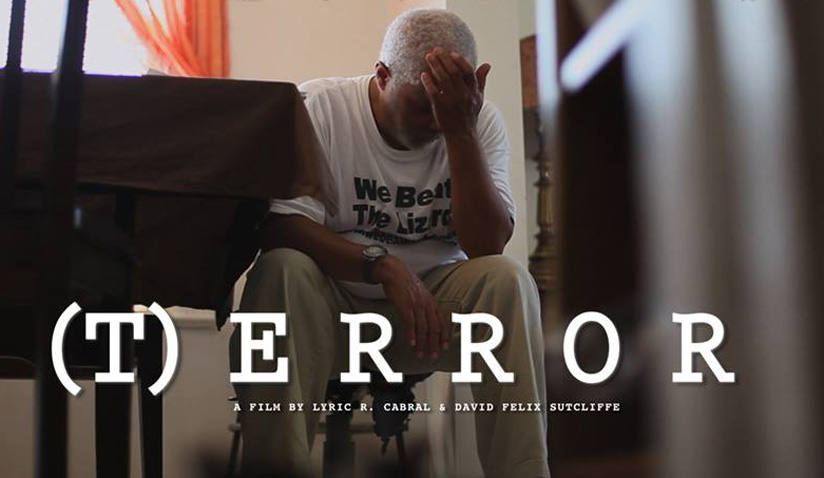
(T)ERROR (Lyric R. Cabral and David Felix Sutcliffe, 2015) - This documentary, which purports to be the first to ever chronicle an ongoing FBI investigation from the inside, manages to take that access and create something that's often bafflingly boring.

Shown as part of the BBC's Storyville strand, under the title 'FBI Undercover', it tells the story of informant - sorry, "surveillance operative ... working for the people" - Saeed Torres, a Muslim and former Black Panther used by the Feds to entrap potential domestic terrorists. The POI (Person of Interest) this time is Khalifah Al-Akili, a keyboard warrior and former Protestant who appears to be all mouth and no trousers save for the traditional Islamic dress that he's adopted.

Considering how much has happened in Torres's life, from his free-scoring days as Atletico Madrid's youngest ever captain to his incredible first season at Liver- sorry, wrong Torres. Considering how much has happened in Torres's life, from his roots in black activism (blacktivism?) to his part as the principal incriminating witness in the trial of a former friend, to his later activities as a surveillance operative working for the people - motivated by a desire to stay solvent and stay out of jail - you'd think this has all the potential to be a Eugene Jarecki-style triumph.

But no, having given his consent to be filmed, Torres is an obstructive, taciturn and ultimately infuriating interviewee, the movie is unfocused and maddeningly incomplete, with numerous shots of Saeed sitting around, moaning, and it's only when the director takes an extremely dubious editorial decision that his film sparks into life, raising some very serious questions about the FBI - and so the procedures of the American government itself - if failing to interrogate the issues as precisely or completely as it might.

Despite that late rally, and the promise of its premise, it's ultimately too bitty and frustrating to unequivocally recommend. Also the original title is awful. (2)

***


Little Women (Mervyn LeRoy, 1949) - There are three great versions of Louisa May Alcott's immortal 19th century novel, made in 1933 (with Katharine Hepburn as Jo), 1949 (June Allyson) and 1994 (Winona Ryder - that's the one where Christian Bale slobbers spit all over her face and they left it in the film); this is the least faithful and literate, but also perhaps my favourite, and certainly the one I've watched most often.

The cast is like one of those Tumblr posts where people imagine the casting of a modern film with classic actors, and just put all their favourite people in it: the sisters are Allyson, Janet Leigh, Elizabeth Taylor and Margaret O'Brien (the ages of the younger two swapped so O'Brien could take the role), the parents - as in Meet Me in St Louis - are Mary Astor and Leon Ames, and there are supporting parts for Peter Lawford (as Laurie), Rossano Brazzi (the professor), Harry Davenport, Lucile Watson, Elizabeth Patterson and that twinkly-eyed old British rascal, C. Aubrey Smith. It's directed by Mervyn LeRoy, who made punchy Pre-Code movies at Warner Bros, before specialising in slushy melodramas over at MGM.

This film is a little episodic in places, and it takes a while to adjust to Allyson's slightly folksy, sometimes too broadly comedic characterisation, but that is ultimately the film's great attraction: a vibrant, intense and intelligent performance - Jo's emotions ever pressed to the surface - that leads to a succession of irresistible, extraordinarily moving sequences: especially her chat with Lawford under the tree, and the devastatingly restrained heart-to-heart with her mother, which has always stayed with me. She is, simply, exquisite.

Margaret O'Brien isn't far behind. Though she's maligned in some quarters today - particularly for the producers' propensity to get her to cry, an O'Brien party piece - she was one of the greatest child actors that cinema has seen; no less an authority than Lionel Barrymore once opined (possible prompted by the studio publicity machine) that "if she had been born in the Middle Ages, they'd have burned her as a witch". She made just one more film - The Secret Garden - before MGM put her out to pasture, but she shows here what a staggering and unteachable sincerity she possessed, and how painlessly she might have graduated to adolescent roles, had she been given the right ones. The scene on the stairs... the scene with the piano… the scene when Allyson returns: she is magnificent, and might another five years have made her the perfect candidate to play Mansfield Park's Fanny Price? Taylor, meanwhile, shows her comic smarts in a performance that has really grown on me over the years, and Astor is superb as the immortal Marmee, that idealised portrait of motherhood. In real life she was basically a nymphomaniac, so she really is doing good acting here.

Critics have derided this MGM version for looking like a chocolate box, but its gorgeous Technicolor cinematography and handsome sets never stunt the emotion of the piece: if anything they bring the periodic harshness of the material into sharp relief, whilst enrapturing the senses. Better still is Adolph Deutsch's stunning, sensitive score, which is never overused nor tips over into schmaltz, being used simply to augment the movie's towering peaks.

It doesn't all work: there are flat scenes (like Taylor arguing tediously with her schoolmates) and dud lines, Leigh is completely nondescript as Meg, and Watson turns a cleverly-written part into a parody of MGM period excess, but at its best it's a bewitching, exceptionally rewarding adaptation lit by Allyson's warm characterisation, O'Brien's lump-to-the-throat emoting, and cinematography and music that - at least to me - seems perfectly pitched. (3.5)

***


House of Strangers (Joseph L. Mankiewicz, 1949) - The problem with this melonoirma from the great Joseph L. Mankiewicz - who went on to make All About Eve, for anyone interested in staggering genius - is that it isn't The Little Foxes. I'll tell you what is The Little Foxes: The Little Foxes. So if you want a devastating familial drama with a banking background that's about sickening greed and severed ties, just watch that. It's the second best 'first watch' I've seen this year (after Secrets & Lies).

This one, which also laid the template for the 1954 Western, Broken Lance (also a much better film), is a spirited, sometimes compelling muddle, with Richard Conte excellent in a rare good(ish)-guy role as an ex-con who blunders into a bank one day to tell the board - his brothers - that he's back and they better watch out.

In flashback, we get the full story, and it's about what you'd expect, except that the extremely underrated, often brilliant Edward G. Robinson screws up his role as Conte's all-powerful, up-by-the-bootstraps father, by affecting an absolutely ridiculous Italian accent. It's a big, big performance, kind of commanding, but also extremely silly, and it does serious damage to the film. As does a minor reveal that essentially negates the opening scene.

It's worth a look, though: for Mankiewicz's sharp dialogue, a punchy ending, Conte's slick, angry turn, and a strong supporting performance from an actress on the cusp of stardom: Susan Hayward, whose smart, unashamed and deceptively selfless character gives the movie most of its heart. (2.5)

***


Ten Wanted Men (H. Bruce Humberstone, 1955) - A terrible Western about very bad man Richard Boone stirring up trouble over a woman, much to the chagrin of local rancher Randolph Scott. Scott's production company, Ranown, went on to make a series of classic oaters directed by the brilliant Budd Boetticher, including The Tall T, which pitched the star against the same adversary. But without Boetticher's sure hand (the man behind the camera is former Charlie Chan director H. Bruce Humberstone) and a writer of the talent of Burt Kennedy, even leathery, charismatic old Boone can't make this one seem credible or in any way interesting. I didn't finish it, life is famously short. (1)

***

BOOKS


The Mitford Girls by Mary S. Lovell (2002)
- A thoroughly-researched but rather curiously prioritised biography of the Mitford sisters - two Nazis, a commie, an author, a Duchess and the boring rural one - that seems unable to differentiate between important things (Unity being a witness to the prelude of WWII through her intense personal relationship with Hitler) and things that aren't important (like someone buying an Aga). The fact remains that four of the Mitfords were fascinating and two of them weren't really, and an attempt to even that out is never going to quite work. Still, the conflicting characters of the sisters come through admirably and Lovell does a fine job of bringing each of them to life whilst focusing on their interrelationships: an approach more likely to fascinate those especially preoccupied with the family than more casual fans of modern history. The same goes for the extensive detail about coming-out balls and interior decorating, which might have perhaps have been excised to examine, say, Decca's dealing with the House Un-American Activities Committee in more detail. (3)

***


Slapstick or Lonesome No More! by Kurt Vonnegut (1975) - This slight, wilfully bleak and aggressively weird book begins with an extraordinarily powerful fragment of memoir about Vonnegut's family, before dropping us into an extremely silly, extraordinarily clever story about a physically repugnant, two-metre quasi-Neanderthal who is 100 years old, the former president of the United States of America, and when formerly placed in contact with his twin sister, possessed a rare and uncontrollable genius. It's a short book and less ambitious than many of his others: despite its scope in terms of time, it's largely interested in the ideas of "alternative families" - or "granfalloons" as the author termed them in Cat's Cradle - here, his hero attempts to alleviate loneliness with his sole presidential innovation: giving everyone a new middle name that identified them as part of a larger group. It was successful, but the fuel ran out, the shrinking Chinese found a way to tinker with gravity, and so most people are now dead. It's ridiculous, inspired and barely finished, the low-key ending coming out of nowhere to take the breath away. (3.5)

***


The Men Who Stare at Goats by Jon Ronson (2004) - Wow, they really did a fucking number on this, Ronson's most well-known book. The subsequent Hollywood film is a piece of detestably broad whimsy that accuses the American military of being nothing but a bit wacky. Ronson's source book takes a different tack: showing how the hippy counterculture was commandeered by the armed forces, leading to the sickening treatment of prisoners in Iraq, Afghanistan and at Guantanamo Bay. Some of it, almost by definition, is reported rumour, and it's not always a coherent thesis, but it is a hilarious, chilling, righteously angry book that casts great light on a barely reported subject. Not that you'd know it from the movie, or the book blurb. (3.5)

***


Mansfield Park by Jane Austen (1814) is a quiet, restrained book that explores new themes within Austen's familiar world, as the painfully shy, relentlessly self-critical Fanny Price grows up in her wealthy uncle's home, becoming a woman while being buffeted by the winds of prejudice, immorality, and thwarted love. It stumbles in terms of execution when Fanny returns home near the close, the aloof wrap-up is again frustrating and it's a lot more judgemental than Austen's other works, with reams of puritanical, almost impenetrable material about self-denial, humility and the evils of putting on a play in your house (by contrast, Fanny's adversary, Mary Crawford, is actually a bit of a laugh), but it is also devilishly witty, extremely heartfelt and full of stunning ruminations on everything from memory to the problems with banter. Now that's one opinion we can all get behind. (3.5)

***

TV


London Spy (2015) - I'm actually angry about how crap this turned out to be, because for a while it had something. A real something. It was a jumble, definitely: mixing novelty with big honking clichés, offering insight one minute, appallingly mannered speeches the next, and seeming alternatively sympathetic to, and repulsed by, a gay lifestyle. But at times this strange, confused series about a reformed hedonist (Ben Whishaw) being dragged into a conspiracy by his romance with a spy (Edward Holcroft) could be brilliant. Mainly, I think, because of Whishaw, one of the most exciting, unbelievably talented actors working today. The chance to watch him, almost unbroken, for a solid hour at a time, was worth any amount of terrible dialogue, because with his subtlety, his urgency, his latent dynamism and stage-hewn fondness for a killer gesture - all allied to those unmistakable line-readings - you could barely drag yourself away.

Then that bombshell fell near the end of Episode 4 and you realised that even he wasn't enough, and that the series had just fallen off the extremely high, structurally unsafe cliff on which you'd been wandering for well over three hours. I don't lament the time spent watching it, because at times it awoke emotions I wasn't expected, hit me in places I couldn't have anticipated, and - as ludicrous as the plot development was, as ostentatiously showy as the presentation - the one-take in which Whishaw has an HIV test is an absolutely stunning, emotionally overwhelming set-piece. A shame, then, that his performance couldn't have served a programme that was less completely stupid. (2)

***

Thanks for reading.

Thursday, 24 July 2014

The National, Lance Armstrong and A Perfume Ad: The Movie - Reviews #192

A quartet of documentaries in this belated round-up of stuff I watched in the small portion of free time not allocated to watching the World Cup.


CINEMA: Mistaken for Strangers (Tom Berninger, 2013) - This documentary about delightful indie mumblers The National is so meta that it almost swallows itself whole, but also sweet and tender and funny, tracing the relationship between their serious, sharp-suited frontman and the slacker brother he invites to be their roadie, but who spends all his time trying to make a film... this film. The gulf between the rockumentary he imagines himself to be making and the one he ends up with is bafflingly and brilliantly big.

There isn't a great deal of music, but you can get that on CD. It's more a shambling, insightful piece about brotherly bonds, with some (possibly staged) comic interludes that scale the heights of absurdity. (3)

***


The Spirit of '45 (Ken Loach, 2013) - Ken Loach's powerful, poignant polemic - about communal goals dreamt of, fought for, won and lost in the postwar period - is at once uplifting and soul-destroying, as the astonishing programme of reforms achieved by Attlee's administration are eroded, picked apart or junked by grasping free-marketeers.

The film also brought home to me how completely socialist ideas are kept out of the mainstream media: it felt bizarre to see people on my TV advocating the renationalisation of key public services - and yet YouGov says that's a majority view in this country.

Occasionally Loach loses the thread of his argument (and the RMT spokesman he chooses is poor), but the diverse selection of left-leaning contributors effectively mix the personal and the political - the best, and the one with the saddest story, is an 87-year-old Scouser supping beer in a pub - while the archive footage is simply stunning. There's some sizzling footage of NHS architect Nye Bevan railing against injustice, which nestles nicely beside interviews with my personal hero, the late Tony Benn.

The overall effect is of watching Terence Davies' Of Time and the City but injected with urgency and righteous, white-hot fury. Call it confirmation bias, but I wish everyone in the country was forced to watch this beautiful socialist propaganda. (3.5)

***


The Armstrong Lie (Alex Gibney, 2013) - Thank goodness Alex Gibney has found a use for all that footage he shot of Lance Armstrong in 2009 and then wasn't able to use.

I jest! (Slightly.)

This slightly messy, repetitive but nonetheless riveting documentary asks the question no-one else has: why did Armstrong return in 2009, and risk jeopardising his legacy. At first it appears that Gibney is only asking it so he has an excuse to roll out the wealth of access-most-areas film he shot whilst improbably constructing an Anderson hagiography five years back, but thankfully that's not the case. It turns out to be a very worthwhile question, and a worthwhile exercise.

For the uninitiated: Lance Armstrong was a young national cycling champion when he was struck down by cancer in 1996. After fighting his way back to health, he did the inconceivable, winning the sport's most gruelling worldwide competition - the epic Tour de France - a full seven times in succession, whilst becoming an inspiration to millions and amassing a personal fortune of $150m.

Perhaps unsurprisingly, given the sport's reputation and his improbable success, throughout he was dogged by accusations of doping, which he withstood thanks to the brassiest of brass necks and a policy of bullying, smearing and suing anyone who aired those allegations. Last year, he finally came clean to Oprah Winfrey, after the doping organisation USADA handed his arse to him on a plate, via an extraordinarily thorough and damning report.

His story, then, was The Armstrong Lie - and he tells it again and again here, in press conferences where he humiliates bolshy British journalists, in direct-to-camera addresses where he spins that impeccably-conceived tale of triumph over adversity and, in a new and modified version given to Gilbey five months after Oprah, where he admits that, yes, he doped, but it wasn't cheating, the facts once more moulded to fit a narrative of his making.

Armstrong is a fascinating subject - extraordinarily charismatic, with a will of iron and a habit of looking you dead in the eye and lying his face off - and though Gibney was taken in like so many others: willing to embrace the myth rather than question the man, the intervention of fate (or more specifically USADA) has led to a valuable film, if almost by accident.

You can see why Armstrong's defenders wanted to believe, and not just because of the story. The superbly-edited footage of him trouncing his rivals is genuinely exhilarating, at least until you hear him calling one detractor a "whore" on television, publicly belittling an opponent who dared speak out about Anderson's drug-pushing associate, and purposefully and repeatedly humiliating another accuser four years after an enforced legal wrangle.

That collision between the idyllic fantasy and the cold, heartless reality makes for chilling, compulsive viewing, as does the juxtaposition of heartwarming comeback footage with post fall-from-grace humility. While Gibney may not always be in control of his structure or his story, the compensations are vast. (3)

***


"Wanna meet Lars."
Mission to Lars (William Spicer and James Moore, 2012) - A Telegraph journalist takes her brother Tom - who suffers from Fragile X or "autism with bells on" - on a road trip through America. Her mission? To get him in a room with Lars Ulrich, the Metallica drummer with whom he has an almost unaccountable obsession.

I say "almost" because, as a Fragile X-pert informs us, Tom has few inhibiters halting his thought processes, leading to obsessive behavioural patterns. That only explains why he would have an obsession, though, not why he would have an obsession with Lars Ulrich.

This documentary is formulaic in the extreme, feels padded even at 76 minutes and forces you to spend quite a lot of company with a woman I frankly found quite annoying (Tom is the only person in the film who doesn't seem acutely aware of the cameras).

But as a film it has two major things going for it. Firstly, it's a valuable character study, offering insight not just into Fragile X, but into a single, singular sufferer, with his many individualistic idiosyncracies. And, secondly, the final 10 minutes left me with a huge grin plastered all over my stupid face. If it doesn't do the same to you then you're a horrible person and I hate you. (2.5)

***


Somebody Up There Likes Me (Robert Wise, 1956) - A young, Brando-ish Paul Newman is the inarticulate, brutalised inner-city middleweight Rocky Graziano - definitely - in this bruising boxing biopic.

While the star doesn't unfailingly convince as a thick, Italian-American New Yorker, he does bring a compulsive dynamism to the part, while anticipating a trio of his most indelible creations: Fast Eddie Felson, Hud and Cool Hand Luke.

The rest of the film is interesting too, its clichés and the disjointed coupling of its various elements offset by frequent Hitchcock screenwriter Ernest Lehman's smart decision to frame this as a story of poor immigrant communities trying (hopelessly?) to make something of themselves - without being stitched up by the establishment.

It lacks the myth-making cohesion of Body and Soul, the highlight of the '40s boxing movie cycle, but it's a solid film, with a good cast, some authentic location shooting and a few flourishes from Wise, including commentary of Graziano's title fight drifting out into a deserted street: everyone in his former community glued to their radio sets as he punches - and takes the punishment - for his pride and theirs. (3)

***


Bluebeard's Eighth Wife (Ernst Lubitsch, 1938) - A quick rewatch, as I was reviewing for MovieMail. The sanatorium coda is horribly dated, but overall it's an underrated Lubitsch outing, with a typically witty Wilder/Brackett script and good performances across the board. Cooper sometimes looks a little hesitant in one of his first comic roles, but he had a flair for humour, and that shows - especially during an irresistibly goofy song. David Niven remains the stand-out, though, as Colbert's hapless, idiotic suitor. (3)

***


*SPOILERS*
Johnny Eager (Mervyn LeRoy, 1941)
- Robert Taylor's cynical crimelord takes quite a while to reform for love in this crime melodrama, that flimsy central story augmented by a litany of incidental pleasures.

It's big-eyed, guileless Lana Turner who does it - her rather fortunate re-appearance in Taylor's life just one of a string of ridiculous if not unwelcome coincidences populating the film - loving him not wisely but too well, then going insane after he uses her to get his greyhound track approved (well, I said it was flimsy).

The film rather hobbles from one sporadic highlight to the next, the majority provided by a stellar supporting cast, from Van Heflin's poetically acerbic Oscar-winning rants, to Paul Stewart's brooding bits as a fickle gunman and - best of all - the mighty Glenda Farrell turning up to steal the film as Taylor's proud, desperate ex. Turner's good too, in a daft part, that excellent voice and instinctive emoting put to good use, though Taylor remains in fifth gear, which was his top gear.

While the plotting is slight, over-familiar and bears the hallmarks of being made up on the spot, those stand-out turns are supported by some fine dialogue - particularly for Heflin; shades of Thomas Mitchell in Angels Over Broadway - a decent shoot-out in an almost Western style, and a very LeRoy fondness for shots of people walking urgently through busy, exciting rooms, almost to the point of self-parody. I also like the way its hysterical early speechifying is completely (though subtly) subverted by what immediately follows, exhibiting a disregard for the spirit of the Hays Code that was very unusual in 1941.

Made as gangster pictures were giving way to that genre we later called "film noir", it's an uncertain picture but also a worthwhile one, if more for what comes with it than what it intended to be. (2.5)

***


The Girl on the Bridge (Patrice Leconte, 1999) - A stylised, monochrome French drama from the late '90s, with the look, feel and depth of a perfume ad. Vanessa Paradis is a suicidal young woman, forever waiting for something to happen, who's saved from a watery grave by knife-thrower Daniel Auteuil, and becomes a part of his act. The part he chucks knives at.

After a rather neat opening scene, this smug, sloppy film quickly unravels, hopping from a makeover scene to casino wins to infidelities, its thoughts on love and luck only half-developed, and a gaping chasm where its heart should be. In mitigation, I did kind of like the narrative device near the close, and the final exchange is quite good, though it's hardly earned by what precedes it. (1.5)

***

Thanks for reading.

Wednesday, 5 February 2014

Ten things I learned about Woody Allen

Woody Allen - A Documentary (Robert B. Wiebe, 2012)


First things first, as it's all over the papers. I don't know the truth about Dylan Farrow's allegations against Woody Allen. I'm a huge fan of Allen as an artist, and would hate for these things to have been happened (I haven't been able to watch a Polanski film in years), but the crucial thing is that the truth be established. This typically superb Onion piece says something about the quandary facing fans, as trivial as this is in the context of the allegations.

It seems an odd time to watch an Allen doc, then, but it arrived in the post recently, I had a spare three hours, and this insightful, incredibly entertaining film is chiefly about Allen's work, rather than his life. And rather wonderful it is too, if you can put the headlines briefly out of your mind, full of intimate interviews and rare footage, even if it becomes a little shapeless towards the end, and seems to think Match Point is a great film. The clips from that and Vicky Cristina - along with on-set footage from You Will Meet a Tall Dark Stranger - do illustrate just what a creative slump he was in prior to Midnight in Paris. The doc scores a (3.5).

Ten things I learned:

1. Allen (born Alan Konigsberg) chose a nom de plume because he didn't want people at school asking him about his gag-writing for newspaper columnists, and picked "Woody" because it was the first thing that came into his head.

2. As a nipper, he was too active and "too much of a child" for his mum. She later regretted being so strict, saying he would otherwise have been a softer, warmer and less impatient person.

3. He regards his first four or five films as funny but "essentially trivial".

4. What does he see as his legacy? If his life had been snuffed out by a nanny at an early age, as it almost was, the world "would be poorer a number of great one-liners".

5. Production nuggets: cinematographer supreme, Gordon Willis, was known as "The Prince of Darkness" due to his grouchy disposition and fondness for low-level lighting (as showcased in The Godfather). The first scene he ever filmed for Allen was the celebrated lobsters sequence in Annie Hall. He shot Manhattan in super-widescreen (2.35:1) because Allen thought it would be interesting to make a small romance on that visual scale. Woody was never as specific as to tell him to shoot Stardust Memories in a Fellini-esque way. Casting director Juliet Taylor kept a folder of "Woody faces": eccentric-looking character actors she thought he could use.

6. Allen decides his next project by emptying a draw full of scribbled ideas onto his bed and going through them one by one, waiting for inspiration to strike. One says: "a man inherits all the magic tricks of a great magician".

7. Purple Rose originally had Michael Keaton in the Jeff Daniels part, but Allen thought him too contemporary.

8. He sends a personalised but formulaic covering letter to every actor along with the script, essentially saying they can embellish it and chuck out the speeches they hate, and if they find the prospect of working on this one nauseating/disgusting/grim, he still hopes they can work together in this lifetime. He only seems to have signed off the one to Scarlett Johansson with "I'm a big fan."

9. He claims Hannah is a bleak film that audiences thought was optimistic due to his incompetence (I think this might be a fib if you look at the final scene, which he admittedly added belatedly).

10. Farrow confronted Allen about his pictures of Soon-Yi Previn over the phone, whilst Allen was with producer Robert Greenhut. Which must have been quite tricky for everyone involved.

It's highly recommended for committed Allen fans, though I'd caution against others getting a copy, because if you hate him you'll hate this, and if you're still investigating his work there are a lot of spoilers. I'll leave you with this beaut from one of the stand-up clips:

"I had a rough marriage. Well, my wife was an immature woman and, ah, that's all I can say, she... see if this is not immature to you: I would be home in the bathroom, taking a bath, and my wife would walk right in, whenever she felt like, and sink my boats."

See also: The first in my "Ten things I learned..." series was on Michael Winterbottom.

Tuesday, 5 February 2013

The Imposter, Lon Chaney and the impossible job - Reviews #145

In this latest reviews update: four documentaries, two silents, Mandy Moore, Ken Loach and Mack Sennett. Join me (please)...


The Imposter (Bart Layton, 2012) - Like Man on Wire, The Imposter features a charismatic Frenchman explaining - direct-to-camera - how he pulled off the impossible. But unlike Philippe Petit - the visionary (and admittedly adulterer) - who walked above cities to bring a sense of wonderment to people's everyday lives, this guy is a sociopath. And a twat. And he is most certainly not Nicholas Barclay. Or "Nick-oh-las Bar-clay", as he would pronounce it. And does. You may know the story by now. In 1994, Nicholas Barclay, a blonde, blue-eyed 13-year-old Texan, went missing without trace. Three years later, he was found in Spain, and welcomed back into the bosom of his family. Only it wasn't him. It was a swarthy, brown-haired, brown-eyed, 23-year-old French-Algerian. What you're probably thinking is: "What?" And then presumably: "How could this happen?" This astonishing documentary cuts to the heart of the matter in invigorating fashion, allowing the imposter (the consummate unreliable narrator) to guide us through much of the early action, before letting the family, American diplomats and even the FBI have their say, as the story gets increasingly dark - and stays just about the same level of strange.

Looking at Layton's credits (which include several episodes of Banged Up Abroad), critics have sought to say that it's the story gaining him plaudits, not the way he tells it. I'd disagree. Almost every decision he makes is the right one. If you're asking how the subject established and sustained his audacious ruse, then much of the answer surely lies in his mesmerising charisma and his unshakeable self-belief. By putting him front and centre, and letting the imposter draw us into his weird logic, his plays for sympathy and his bizarre, sad life, we're put in the same position as the family. Crammed in alongside the director's incisive interviews, and some immaculately incorporated home video snippets, are superb reconstructions, which, since Layton offers no objective truth, bring to vivid life the interviewees' claims, lies and suspect memories. And finally there's the measured, intelligent withholding of information, which keeps the viewer guessing - and laughing, incredulously - as the knot in the stomach tightens.

If there is a shortcoming, it's that the cross-cutting in the final third - presumably meant to provide a kind of hypnotic rhythm and cumulative impact - feels forced and distracting, while the digging-in-the-backyard climax doesn't really come off. Still, Layton saves a wallop for the coda: not his imposter's much-quoted line hinting at psychopathy (which we'd kind of got anyway), but that chilling clip of him in the detention centre, where he'd been giving false hope to thousands of parents. What a dickhead. It's an incredible story, though, and a brilliant, compelling and ultimately unforgettable film. (4)

***


*SOME SPOILERS*
The Queen of Versailles (Lauren Greenfield, 2012)
– A Wall Street timeshare shark and his trophy wife start building the biggest house in America – patterned after a certain French retreat – only to see the recession hit their finances. Hard. This "riches to rags" tale is a film about everything: love, greed, ambition, relationships, the financial crisis and – above all – the American Dream, providing vivid character portraits of the pair, their kids, their in-house staff and their employees, none of whom are quite what they seem at first glance. The former Miss Florida really loves her husband (goodness knows why), their adopted daughter starts by being a voice of reason before wealth consumes her – if not her self-awareness – and his bolshy businessman of a son turns out to be a lost kid desperate to side with his father even when it risks ruining the lot of them. It’s one of the best documentaries of the decade so far, full of hilarious details ("I didn't know we had a lizard," says one of the eight kids after they're admonished for not feeding it), but also blessed with a sadness, melancholia and wisdom that renders it far more than mere Schadenfreude. (4)

***


Why We Fight (Eugene Jarecki, 2005) - This typically superb polemic from liberal documentarian Jarecki takes its name from Frank Capra’s World War Two propaganda films and its cue from Eisenhower’s farewell speech of 1961, in which the departing president warned of the dangers of the “military-industrial complex”. What he spoke of, what he feared, was the possibility of the country's foreign policy being dictated by its swelling, corporate-sponsored defence sector. Speaking to DC insiders, war veterans, Iraqis and left-leaning theorists, while peppering his film with apposite archive footage (Eisenhower’s statistics about the cost of weaponry compared to schools and hospitals feel particularly resonant), Jarecki presents a bleak, often brilliant portrait of a nation that claims to fight for freedom, but is locked into a self-perpetuating cycle of war-mongering, habitually lying to its citizens and engaging in conflicts out of avarice, political expediency and self-interest – both national and personal. It’s unlikely to sway anyone not already attuned to Jarecki’s viewpoint, but it’s extremely well done, and far more focused, articulate and well-argued than Michael Moore’s similarly-themed Fahrenheit 9/11. (3.5)

See also: Jarecki's masterpiece, Reagan, is reviewed here. There's a write-up of his latest, The House I Live In, here.

***

I was going to be all clever (sorry, "clever") and write this next review in Helvetica, but my computer doesn't have it. Sorry.


Helvetica (Gary Hustwit, 2007) – Perhaps I might have had a better time if I was more interested in fonts. What promises to be an intriguing look at the most divisive typeface this side of Comic Sans – the all-conquering Helvetica – too often turns pretentious and self-indulgent when trying to evaluate the role that fonts play in articulating, obscuring or subverting the message they’re meant to convey; in theory a very interesting idea. Much of the problem lies with the interviewees, who are mostly pretty insufferable, either talking very pedantically about letter shape or spouting hideously superficial Sugar Ape-like bollocks. One very confusing American graphic designer says, hopefully joking, that Helvetica was “the font of the Iraq War”. Tsk, you can sponsor anything these days. There are some insights about the homogeneity of corporate identity, and the very likeable David Carson tells an amusing story about a Bryan Ferry interview, but the film is saturated with a self-importance that isn’t merited, loaded down as it is with industry chat, vague historical analysis and endless footage of signs written in the titular font. It’s also a bit difficult to tell what most of the people are saying (I had the subtitles on; they weren’t in Helvetica), while the guy who argues that a font on your MySpace profile (lol, MySpace) is as a great an expression of identity as your haircut has terrible hair. I got a bit bored. (2)

***


The Angels' Share (Ken Loach, 2012) – A new father (Paul Brannigan), struggling to make ends meet and keep his violent temper under wraps, develops a taste for whisky-tasting, then spies the chance for a new start, in the shape of a priceless cask of the stuff. What a lovely film this is: a humane, charming but hard-edged collision of typical Loach fare and caper comedy, with a very understated, impressive central performance. As with On a Clear Day, another Scottish-set film that makes you earn its cheerier moments, the more cartoonish comic elements seem to have wandered in from a different movie, but it’s a minor complaint about a bruising, winning and wonderful movie blessed with a touch of sentiment and great performances across the board. (3.5)

***

A Lon Chaney double-bill:


The Unknown (Tod Browning, 1927) - When the police pitch up at a gypsy circus to look for the criminal who's just strangled the ringmaster, they don't suspect foot-centric knife-thrower Lon Chaney - after all, he seems quite armless. Meanwhile, the big fraud's plotting to marry swarthy Joan Crawford, the victim's daughter, who's sworn off sex after encountering too many sleazeballs, and really, really hates men's hands. Still, at least Chaney doesn't have a double-thumb. Oh wait. This classic silent horror from Freaks director Tod Browning is short, sharp and spectacularly eerie, with a superb premise (more than compensating for some overly convenient plotting), a fantastically charismatic performance from Chaney and a frantic, fitting and discordant score on the TCM release that can best be filed under "completely bonkers". The ending is a bit rushed, and features one notably un-special effect, but it is gloriously intense. Two thumbs up. And that's just on my left hand. (3.5)


The Ace of Hearts (Wallace Worsley, 1921) - Love and jealousy among the anarchists, as gloomy, lank-haired Lon Chaney and romantic John Bowers compete for the hand of single-minded revolutionary Leatrice Joy, while their terrorist cell plots to blow up a restaurant. It's an interesting but imperfect mix of drama, love story and thriller that's a bit too ponderous, and foolishly telegraphs some of the cards up its sleeve through spoiler-heavy on-screen chapter titles, though Chaney and Joy are good, the story is timely and original, and there are a couple of very tense set-pieces. (3)

***


Private Detective 62 (Michael Curtiz, 1933) – William Powell goes from spy to PI in this fast-paced Pre-Code crime comedy, before riding to the rescue of society girl Margaret Lindsay, who’s suspected of murdering his crooked boss. The story is nothing out of the ordinary and the love interest in introduced hurling a string of snobbish invective at what she thinks is a doorman, but the dialogue and direction both have a bit of class about them (aside from the above), with the latter incorporating a powerful montage depicting job-hunting in the Depression. It’s also interesting to see a ‘30s film with a “snowbird” (cocaine addict) for a hitman; such grimy, realistic touches would be shorn from the genre by the following year’s censorship clampdown. The real reason to watch, though, is Powell – among the best leading men of his or any other era – whose inimitable delivery could inject untold humour, pathos or even menace into whatever material he was given. He’s simply excellent here, fashioning a tough, sardonic but good-hearted private detective more world-weary than his Philo Vance and more likely to brutishly threaten a drug addict with a gun than Nick Charles. (3)

***


Baby Face Harrington (Raoul Walsh, 1935) is a rare starring vehicle for Charles Butterworth, one of the most popular character comedians of the ‘30s. He’s perfectly cast as a meek, downtrodden insurance agent who’s reinvented – through misunderstanding and via a rabid tabloid press – as the eponymous gangster, a transformation he rather enjoys. The film turns too dark near the close, before lurching into slapstick, but for the most part it’s a delightfully funny, offbeat and engaging comedy, similar in tone to Three Men on a Horse, which gave Frank McHugh a rare leading part, and lit by Butterworth’s hilarious performance, Una Merkel’s touching characterisation as his loving wife, and a funny supporting bit by Stanley Fields (who appeared in Little Caesar), playing Harrington’s cell mate. The script, co-written by Nunnally Johnson and with extra dialogue by Charles Lederer, is as sharp as you'd expect, and equipped with an agreeable fondness for sly genre subversion. The scene in which Butterworth is interrogated by the police is just brilliant. “Take him back to the cell,” says chief Eugene Pallette, as their questioning proves fruitless. “That’s a good idea, Uncle Henry,” replies Butterworth. “Where I’m sitting there’s been a light shining right in my eyes.” (3)

***


Saved! (Brian Dannelly, 2004) - A lively satire about religious intolerance, in which Jena Malone's cloistered teen tries to save her boyfriend from gayness through the power of sex, setting in motion a chain of events that rock her evangelically-minded school. At times it feels a little too conventional - the prom night surprise wouldn't be out of place in She's All That - but at its best it recalls Heathers, Election and Mean Girls, with the same predilection for stinging one-liners and taboo-busting, and a prize one bitch (Mandy Moore, compensating marginally for A Walk to Remember) with more than a touch of the Heather Chandler/Tracy Flick/Regina George about her. It's also nice to find a film so focused in its viewpoint and, on a personal level, to find that its message is: if there is a God, he wouldn't want you to hate everybody who's different to you. Malone is good in a role that never tends towards cliche, though the real acting honours go to Macaulay Culkin, superb as her comrade-in-arms, a poster boy for unfailingly acerbic wheelchair users everywhere. (3)

***


*SOME SPOILERS*
2 Days in New York (Julie Delpy, 2012)
- 2 Days in Paris was a perceptive, intelligent and richly entertaining film about a Franco-American couple bickering, splitting up and getting back together across 48 hours in the City of Light. This sequel joins up with Julie Delpy's artist five years on, to find her separated from the father of her daughter, living with talkshow host Mingus (Chris Rock), the only brother who doesn't smoke weed, and welcoming a trio of familiar to the Big Apple: her eccentric father (Delpy's dad Albert), vindictive sister (Alexia Landeau) and ex-boyfriend (Alex Nahon). When they arrive, all hell naturally breaks loose, while Delpy turns into a "psycho bitch". (She also sells her soul, but I'm not telling you who to.) It’s difficult to know how to rate this one. In a way it’s a disappointment: it's conspicuously lacking the effortlessness, energy and curiously profound meanderings with which the original fairly overflowed, the subplot about Delpy pretending to have a brain tumour is completely misguided and approximately half the running time consists of her sister just repeatedly saying "Mingoooose", but Rock, Nahon and Delpy, Sr are great value, there are sporadically insightful observations about relationships both familial and romantic, and I was certainly never bored. (2.5)

***

I've started working my way, happily, through Treasures V: The West, the incredible NFPT box-set that Mrs Rick bought for me at Christmas. So many exciting-looking movies still to come. First up were these...


SHORT: The Tourists (Mack Sennett, 1912) – Pretty funny Sennett half-reeler about Mabel Normand and her family visiting a Native American tourist town. Their plan is to buy as many bowls as possible and get the hell out of there, but fate, lust and misunderstanding intervene, and they end up being pursued by a lot of indigenous folks with hatchets. The primitive production techniques count against the film, and it doesn't live up to the promise of the first minute, but it’s an interesting snapshot of the time and quite subversive in its own silly way. (2.5)


SHORT: The Sergeant (Francis Bogg, 1910) – A strictly standard plot about a sergeant restoring his reputation – after a pesky Indian steals his horse and makes it look like he’s shagged the colonel’s daughter – coupled with an unfortunate propensity to shoot everything in medium to long shot might have done for this one, were it not for the stunning locations. It was shot entirely in the Yosemite Valley, which looks frankly astonishing. (2.5)


SHORT: Sunshine Gatherers (George E. Stone, 1921) – It’s from the ‘20s! It’s in colour! It was made by Del Monte to publicise the way they picked and packed fruit, but includes a prologue about the discovery of California! I enjoyed the outdoor photography and historical recreations more than the bits about which fruit salads are the nicest and how to preserve a tinned peach, but the steaming machine was pretty nifty. (2.5)

***

TV:


An Impossible Job (1994)
- Rick: "This legendary documentary about Graham Taylor's disastrous reign as England manager paints him as an avuncular, unlucky and only occasionally misguided figure - rather than the clueless idiot portrayed by the tabloid press - and remains remarkable for the level of access to training sessions, press conferences and, most extraordinarily, the matches themselves. One thing that really struck me, and which may count against Taylor, is that he's often seen on the bench during a game just having a bit of a chat, rather than planning his next masterstroke. That might be why his planned masterstroke is usually just "Bring Wrighty on" or "Bring Nigel on". There are countless great moments, though Lawrie McMenemy's classic repetition of "I don't believe it... I don't believe it" is a personal favourite, along with that famous bit of the three men on the bench all giving John Barnes the same instructions. (3.5)"

Phil Neal: "This legendary documentary about Graham Taylor's disastrous reign as England manager paints him as an avuncular, unlucky and only occasionally misguided figure - rather than the clueless idiot portrayed by the tabloid press - and remains remarkable for the level of access to training sessions, press conferences and, most extraordinarily, the matches themselves. One thing that really struck me, and which may count against Taylor, is that he's often seen on the bench during a game just having a bit of a chat, rather than planning his next masterstroke. That might be why his planned masterstroke is usually just "Bring Wrighty on" or "Bring Nigel on". There are countless great moments, though Lawrie McMenemy's classic repetition of "I don't believe it... I don't believe it" is a personal favourite, along with that famous bit of the three men on the bench all giving John Barnes the same instructions. (3.5)"

Thank you to Phil Neal - the human echo, history's most virtuosic yes man - for contributing to that review. Some great insights, if I do say so myself.

***


*SOME SPOILERS*
Bored to Death (Season 3, 2011-12)
- The first season of Jonathan Ames' deadpan, post-modern noir series – something like Wes-Anderson-does-Raymond-Chandler – was very good, especially the pilot. The second was even better. So when I heard the show had been cancelled after its third season, I was gutted. Watching the final run, though, I can see why, and really it doesn't feel like a great loss. The cast tries hard, the Brooklyn locations are great and some of the dialogue still zings ("The rat's on fire!" and "We still have the briefcase" both made me guffaw), but Ames seems completely out of ideas when it comes to story. Jason Schwartzman's central PI has hardly any crimes to solve, aside from an exciting one near the start that's over too soon, and an over-arching mystery to do with his biological dad that's badly-paced and has a horrible, indefensible pay-off. His sidekick, Zach Galifianakis, “breastfeeds" a baby whisky, accidentally steals another child and shags a pensioner (a shame, as when he’s given anything halfway decent to do, like skipping down a street or arguing with arms dealer Patton Oswalt, he’s hilarious). Ted Danson, meanwhile, spends most of the season sparring with his irritating, needy daughter and her over-aged boyfriend. The rest of the season is just spent going on and on and on about weed. Bored to Death used to be about writing, crime-solving and witty one-liners. Now it's about incest, granny sex and making a baby drink alcohol that a grown man has smeared on his nipple. And weed. Lots and lots of weed. Bored is right. (2)