Showing posts with label Netflix. Show all posts

Tuesday, 13 June 2017

Dustin Hoffman, The Black Dahlia, and bent coppers – Reviews #267

... in which I arrive five years late to the Line of Duty party to find that all the bent coppers have already been caught.


Black Dahlia Avenger by Steve Hodel (2003/2015) − In 2003, former LAPD homicide detective Steve Hodel held a press conference to announce that he had solved perhaps the most notorious unsolved murder case in American history: the 1947 slaying of the 'Black Dahlia', an aspiring actress named Elizabeth Short, whose brutally mutilated body was found in a parking lot in Los Angeles. The unforgettable appellation − often misattributed to tabloid hacks repurposing the film noir title, The Blue Dahlia − was actually Short's nickname in life, and, with the singularly horrifying manner of the body (cut in two with surgeon-like precision), may explain why it became such a sensational newspaper story. Yellow journalism fanned the flames of a tale that had everything − a beautiful victim, a sadistic villain, and innumerable conspiracy theories − turning the hunt for the killer into a dark parlour game, rather than it remaining what it should always have been: the search for justice after the death of a young woman, almost certainly murdered by an abusive ex-boyfriend. By 1950, she was a line in Sunset Blvd. Four decades later, James Ellroy revisited the crime in the dark, semi-fictional opening novel of his LA Quartet.

Hodel's theory, which made his book an international best-seller, is that the killer was his own father: a doctor, former musical prodigy and bona fide genius, by the name of George Hill Hodel. And for a third of its 500-page length, Black Dahlia Avenger − the name the killer gave himself, and Steve's self-appointed role here − is a gripping read: clumsily written and riddled with typos, but presenting a compelling narrative piecing together a timeline from innumerable press cuttings, fascinatingly documenting George's past, underscored by Steve's uneasy but loving relationship with him, and incorporating a remarkable gallery of supporting players, from Maltese Falcon director John Huston to surrealist, sadistic photographer Man Ray, and the big players in law enforcement in 1940s LA.

Then we get to the 'evidence' and it's sketchy as hell, Steve consistently going about a third of the way to proving something, and then considering the job done, and calling back to it, with an "as I have shown". The bits at the beginning were decidedly questionable too, including two supposed pictures of Short in George's personal effects which don't look like her at all (one of them has since been proven, by Steve himself, not to be her), but I'd hoped that was just the catalyst for his investigation, not a central part of it. Parts of the investigation at least support the case for further analysis of Hodel, Sr as a suspect − particularly handwriting comparisons − but the author seems conspicuously unable to differentiate between credible evidence, coincidence and batshit conspiracy theory. He'll also do things like (on p. 275 of the 2015 edition) show how his dad looked just like a composite picture, by airbrushing out his dad's moustache. Yes, OK, but your dad had a moustache. At one point he suggests, without further elaboration or investigation, that the "wealthy Hollywood man" being sought by police must have been his father.

"Who's your father?"
"George Hill Hodel."
"Ah yes, George Hill Hodel, the only wealthy man in Hollywood."

I do have some sympathy for Steve. His dad was clearly an awful, awful person − as evidenced by his rape of Steve's 14-year-old half-sister, of which he was cleared, but clearly guilty − and he may well have been capable of this crime. He may even have done it. But the author's obsessive attempt to link him to every unsolved rape and homicide in LA in the 1940s is less than convincing. His cries of a cover-up, as supposedly evidenced by the 1949 grand jury hearings into the failure to find the killer, are also patchy. In the 'Aftermath' section, added in 2005, we hear from Lt Jemison, appointed by the DA's office to look into the initial LAPD investigation, who attributes the failings to incompetence, rather than wrongdoing.

It's in the Aftermath section − missing, of course, from the original 2003 edition − that we realise Steve wasn't as mad as we thought. He may have begun the investigation because he decided that a photo of a random woman was Elizabeth Short, but his father really was a suspect, to the extent that he was bugged, and his phone tapped, by the DA's investigators. And there, in the transcripts, he seems to hint at some complicity in the Black Dahlia killing ("Supposin' I did kill the Black Dahlia? They couldn't prove it now"), while practically confessing to the murder of his secretary, Ruth Spaulding. But, as we see from Jemison's subsequent report, something cleared Hodel, Sr from suspicion, and he was eliminated as a suspect. Steve's contention that Jemison was being forced to drop the investigation into his father, and used the phrase "tends to eliminate him as a suspect" to show his unease, is unconvincing and not backed up by any evidence.

It's a frustrating book, then, and by no means 'case closed'. And while Steve clearly cares about Short, and makes a good fist of reclaiming her as a lovelorn young woman, rather than the dissolute slut painted by misogynistic cops and writers down the decades, he also wallows in the depravity and sadism of her murder and countless other murders of young women. I was suckered in by my fascination with Ellroy, LA noir and an unsolved mystery, but found myself feeling sickened, exploited and depressed by the end.

Hodel has since alienated most of his defenders by asserting that his dad was also the Zodiac Killer. (2.5)

See also: For a long time I avoided 'true crime', because it made me feel either guilty or unhappy. Those concerns were overridden by a couple of books which sounded too fascinating to neglect: Michael Finkel's True Story and Truman Capote's In Cold Blood. Now I may be back where I started.

***


The Folks That Live on the Hill by Kingsley Amis (1990) – Amis’s blinding wit can’t always rescue this poisonously misanthropic book about outwardly avuncular academic Harry Caldecote and his troubled family: the bereaved Clare, alcoholic Fiona, henproteckted Freddie, brutalised Bunty, and feckless, possibly criminal Piers, who exist in a Torily-realised London of crushing mundanity, waspish disgust and drab, brownly toneless multiculturalism. And at times even that voice fails altogether, turning in on itself to birth such laboriously self-satisfied sentences as the Amis of Lucky Jim would himself have lampooned, and necessitating that one read each of them several times to unpick the text, subtext, etc. That’s a parody of one of them.

There are others when the author’s unparalleled, deliciously English turn of phrase still dazzles, Amis cramming deadpan observations and dismissive putdowns into exposition and description, places where most other writers wouldn’t dare (or indeed bother). But he’s forever punching downwards, the malevolence and jaundice of his worldview rendering his work less than human, while he articulates the working class experience about as effectively as David Mitchell attempting a cockney accent. Or Andrea Leadsom. Occasionally, particularly towards the end, he offers his characters a little solace and understanding – if not a lifeline – but for far too long Amis seems to treat his characters with contempt, smugly revelling in not only their imperfections, but in the misogyny and absence of compassion that he mistakes for charming roguishness.

It’s also boring: rooted in a time and place (the Primrose Hill of 1990) that seems not only fleeting but also desperately uninteresting, people by characters whom it’s difficult to care about, since the man who created them can’t really be bothered. Amis displays flashes of lucid empathy – particularly in the deeply moving final chapter – where he effectively humanises and empathises with Clare, while I found the passages dealing with why an alcoholic like Fiona drinks truthful and even profound, but the bulk of this detached, inert book has uninteresting characters doing almost nothing aside from thinking about why they dislike one another, a prejudice that ultimately I couldn’t help but share. (2)

***

FILM


CINEMA: Little Big Man (Arthur Penn, 1970) – This revisionist Western from Bonnie and Clyde director Arthur Penn is unfocused when it should be freewheeling, and cartoonish in a way that undermines its seriousness and integrity, but it has a few vivid moments, and helped pave the way for not only Blazing Saddles and Altman's Buffalo Bill, but Jarmusch’s deadpan Dead Man and Costner's brilliant Dances with Wolves, which also portrayed the bluecoats of the U. S. Cavalry as lying, duplicitous murderers.

Dustin Hoffman is Jack Crabb, at 121 years old the only white survivor of the Battle of Little Bighorn (or 'Custer's Last Stand'), that monument to arrogant, genocidal, imperialist complacency. During the film's 139 minutes, Crabb becomes a multitude of genre archetypes, from orphaned pioneer kid to gunslinger, Indian to Indian Fighter, medicine man to town drunk, hermit to trail scout, as the film swings wildly between sincerity and surrealism, subversion and sex comedy.

It’s possible to be both cartoonish and deftly satirical – Frank Tashlin did it with his 1957 masterpiece, Will Success Spoil Rock Hunter? – but Little Big Man is far too erratic to sustain that for more than a few minutes of time, drifting from its fine opening 30 into spoofs of Stagecoach, Shane, The Searchers and My Darling Clementine and some risible sex comedy little better than what you’d find in a Carry On film (the same year, Peckinpah interrupted his superb, elegiac Western, The Ballad of Cable Hogue with Benny Hill-like inserts), even if having Faye Dunaway deliver it means that you can at least gorge yourself on her translucent beauty (those cheekbones, fuck me).

Its passages in the Indian camp are often affecting, sensitive and richly ironic, deeply rooted in a wise, glowing humanity, and blessed with a fantastic performance from Chief Dan George as Hoffman’s adopted grandfather (George played a similar role in Clint’s The Outlaw Josey Wales). There are also flashes of brilliance in Penn’s direction: Sunshine framed in the tepee doorway, silence after a killing, and the chilling and unforgettable first appearance of the cavalry – announced by Hoffman’s desperate sprint through the camp-site, which is captured on handheld camera, and eerily, masterfully utilising the music and iconography of the bluecoats familiar from a hundred films in which they were the heroes (perhaps most memorable, Ford’s She Wore a Yellow Ribbon.

But the film as a whole is a bit of a shambles: tonally incoherent, frequently and offputtingly aloof, and rarely as pointed and furious as it needs to be: Richard Mulligan’s Custer is amusingly trivial, but playing him as a vainglorious imbecile makes him seem more like Maid Marian and Her Merry Men’s Robin than the deluded, arrogant bigot of history, and the climactic battle – crucial to the whole picture – is irritating and badly-staged, trading comprehension for what it imagines wrongly to be visceral excitement, and then trading any vestiges of that for low comedy and sledgehammer satire.

Hoffman is also way out of his depth for much of the film. Perhaps he’s here as a post-modern joke – because you wouldn’t expect to find a titular Jewish nebbish as a Western hero, because his recognisable persona only really makes sense in 1970s America – but he seems merely miscast, and cast adrift by a script that chucks out its sense of anger and purpose not only at will, but for not discernible reason, aside from the instant gratification of a cheap laugh. (2.5)

***

TV

Here are some thoughts on Line of Duty. My 8,000-word fan theory on how the length of Vicky McClure's hair relates to the scale of her inner turmoil is still to come.


Line of Duty: Season 1 (2012) – OK, I'm finally diving in. A principled counter-terrorism officer (Martin Compson) botches a case and winds up in anti-corruption, where he's asked to investigate the charismatic, popular Tony Gates (Lennie James), whose crime-solving stats are off the scale. It's not great timing for Tony, who's just helped his mistress (Gina McKee) cover up a hit-and-run, or perhaps for ambitious young cop Kate Fleming (Vicky McClure), trying manfully to get on his team. This gripping, consistently surprising cop series is simply too far-fetched and melodramatic at times, but it's also beautifully acted – especially by James and McClure – with above-average dialogue from creator Jed Mercurio, and intelligent, extremely effective direction, with a blue tint to proceedings, and characters up-close-and-personal, or dwarfed by monolithic buildings or the enormity of their burdens. Its greatest virtue, though, and it has a few, is its scope of characterisation. It's not non-judgemental, exactly, it's more that it's even-handed, with Mercurio assured in his ability to economically, and without warning, skewer our sympathies: to engender sympathy for a villain or cause us to rage at a hero's sanctimony. That shifting perspective, allied to an impeccably-plotted narrative, saw me race through the bulk of this in one sitting. (3.5)

***


Line of Duty: Season 2 (2014) – A sometimes stunning second season: a bit messy, a bit silly, but keeping you guessing throughout, and with a fantastic performance from Keeley Hawes. She’s DI Lindsey Denton, the sole survivor of a hit on a protected witness, and so ripe for investigation by Steve (Martin Compston), Kate (Vicky McClure) and their hard-nosed, Roman-nosed boss (Adrian Dunbar). But is she a criminal mastermind, a victim or something else entirely? Line of Duty can be gimmicky at times, with a bit of screenwriting-by-the-book – the oldest trick in that book being to give every supporting character a quirk (like the pathologist with a heavy cold in the first series), or to half-inch your highlights, the hospital sequences here using tricks familiar from both The Godfather and Nighthawks – but it’s also thrilling and gripping and with truly great set-pieces, including the powerhouse interview sequences that are its calling card, and are now prefixed by that ominous, unpleasant honking on the tape.

The show does a good job, too, of drawing you in, both by developing its characters and by withholding information about them: that tends to work better when you’ve got an actor like Mark Bonnar (as a questionable DCC) rather than Sacha Dhawan (whose performance I found both flat and unconvincing), a truth underlined by McClure working wonders with a somewhat underwhelming subplot about an affair. Former Ken Loach discovery, Compston, is also so effective – and defines the tone and feel of the series – with a very definite style that initially struck me as woodenness, but is a sort of unyielding, unpolished and awkward stoicism. The important thing, I think, is just how wrapped up in this all I became: it’s possible to pick holes in it, perhaps even to pick it till it unravels, and I don’t think it quite matches The Shadow Line – that weird, dark and bleak vision of endemic moral and professional corruption – but I just can’t wait to return to it. I’ve started Season 3 already. (3.5)

***


*A FEW SPOILERS FOR SERIES 1 AND 2*
Line of Duty: Series 3 (2015)
– One of my problems with the (delightful) French cop drama, Spiral, is that is has no memory: it ended its first series on a cliffhanger that was never mentioned again, while undercover agent Sami disappeared from the series for four years, and wasn’t brought back again until the writers got a bit stuck in Series 4. Line of Duty looked to be going down the same route for a while, but by the beginning of Series 3 it became clear that the revelations of its past two seasons hadn’t been forgotten about, they’d just been put on a timer, and they were about to blow. The result is the best season yet, taut, compelling and compulsive, giving two knockout characters – historically corrupt DI, Dot Cottan (Craig Parkinson), and it’s-way-more-complicated-than-that DCI Lindsey Denton (Keeley Hawes) – extraordinarily gripping storylines.

This one kicks off with hotheaded, bullying tough-nut Danny Waldron (Daniel Mays) shooting dead a suspect, and dressing it up as self-defence. As always, it takes a little time to acclimatise to the new characters (I just want to see Ted, Steve and Kaaaaaate), but Mays is explosive and arresting (ironic, really), and his storyline’s topicality is just the sort of thing TV should be doing, even in this showy, tabloid way. The other new cops are less than convincing – with the supporting cast members either average (Arsher Ali) or actively poor (Leanne Best and Will Mellor, who was once excessively rude to my secondary school am-dram group at a charity event) – but our intense personal investment in these people (and particularly the relationship between Steve and Kate) informs the programme’s balance of characterisation and rug-pulling revelation, which reaches fever pitch in the final two episodes (the last a bumper edition).

Its imperfections, particularly its underwhelming bit-players and concessions to ridiculousness (not to mention unnecessary inaccuracy) can frustrate, because it is so nearly great. As it is, it’s great fun: addictive, immersive and with passages of brilliance. A mention too for Neil Morrissey, whose supporting bits are always welcome, even though the second series changed his storyline from one of quiet, bitter pathos to one of astounding and off-putting cynicism. (3.5)

***

Thanks for reading.

Monday, 29 May 2017

Allan Ahlberg, High Fidelity, and a bundle of old things – Reviews #266

Three all-new reviews, and a few I've had lying around since last year.

FILM:


O.J. "in full Naked Gun mode", as the film so superbly and disgustedly puts it

O.J.: Made in America (Ezra Edelman, 2016) – While the montaged credits and eerie theme tune suggest that this got green-lit because ESPN wanted the closest thing they could find to Making a Murderer, this complex, even-handed and multi-faceted five-part documentary portrait of O. J. Simpson is really an exceptional addition to the recent spate of documentaries about African-American history (The 13th, I Am Not Your Negro), viewing his remarkable story – quite reasonably – through the prism of race.

It’s all here: exhilarating footage of Simpson at his athletic zenith, the Hertz ads (“Go, O. J., go!”), the Naked Gun years, the Bronco, the trial, the glove and the acquittal – which the film convincingly argues only makes sense in the context of post-Rodney King L. A. The narrative of his football career could be neater, and the convoluted Las Vegas debacle doesn’t exactly emerge in crystal clarity here, but the crux of the series – his abuse of his wife, the subsequent double-murder and the trial – is simply hypnotic*: brought to life through recordings, court footage, rare documents, news reports and a brilliant selection of interviewees from jurors to laywers to journalists and preachers (Jeffrey Toobin and Rev Mark Whitlock are my MVPs), who don’t just contextualise the trial, but seem to embody the very viewpoints they’re espousing.

It remains a heartbreaking indictment of America that the only black man to benefit from its justice system was a multi-millionaire who had refused to engage with the civil rights movement, purposefully become an honorary white and only reconnected with his proud heritage to avoid being convicted of murdering his wife. His acting, cunning and cultivation of distinct, useful personas is chilling and extraordinary. Did I mention that he is an absolute piece of shit? And his nickname’s rubbish. I only learned recently that he’s called ‘The Juice’ not because of his stamina and speed on the football field, but because in America they call orange juice ‘OJ’. Also lol at the court clerk fluffing her one line, that gets me every time.

*especially for a legal or quasi-legal nut like me: I love courtroom dramas, have been obsessed with HUAC for years and did my undergrad dissertation on Stalin’s show trials

***

BOOKS:


High Fidelity by Nick Hornby (1995)
– “Did I listen to pop music because I was miserable? Or was I miserable because I listened to pop music?” Rob Fleming is a 34-year-old North London record store owner whose life is dominated by rejection, top 5 lists and music: pop, rock, Motown, STAX, oddities, dance numbers, floor-fillers and melancholy, idealistic, shimmeringly beautiful songs that have given him some unrealistic ideas about love, lust and break-ups. Unceremoniously dumped by girlfriend Laura, a former human rights lawyer who has grown out her spiky hair and moved into corporate work, he muses about men, women and relationships, while hanging out with exes, prospects and the two losers who work in his shop.

Hornby’s neatly-titled 1995 novel – made into a Hollywood film starring John Cusack four years later – is remarkably incisive, insightful and honest, in a way that makes me wish I’d read it 10 years ago and not turned my personal life into a binfire… and then makes me realise that basing our life choices on popular culture is exactly what this book is guarding against. It’s very 1990s – with a Harry Enfield cover quote and a left-leaning hero who’s unapologetic in his maleness, rather than drowning in self-loathing like the contemporary equivalent – and Hornby’s irritating, pedantic riffing on familiar phrases is a stylistic shortcoming (that “negative interest scenario” passage), but High Fidelity is also fast and funny and subversive, breaking the fourth wall while allowing us to judge the selfish, self-justifying Rob, and stripped of extraneous elements like lengthy scene-setting or laborious description.

I expected it to be funny and accessible (and London-centric and nerdy about music), but its concentration of hard-earned wisdom took me completely aback. (3.5)

***


The Bear Nobody Wanted by Allan Ahlberg (1992) – This children’s classic concerns a nameless bear who arrives off the production line feeling smug and superior – after all, a bear’s character is defined by his facial features – only to be tossed in a bin, rescued, rejected, burnt, used as a duster, savaged by a dog, repaired, briefly welcomed, relegated, forgotten, lonely, nameless, catatonic and bombed by the Nazis, on the way to a cathartic and happy ending. Telling the story in the third person but from the bear’s perspective, Ahlberg’s prose is beautiful, witty and whimsical, offering a lesson in humility and empathy, and peppered with memorable, perfectly-sketched characters and bits of human (or bearish) warmth – even as the story becomes perilously melancholy and dark.

It also economically evokes the vanished Britain of the author’s childhood: that world of smoking chimneys, cobbled streets and poky working-class houses which he wrote about so memorably in his great memoir, The Boyhood of Burglar Bill (and its sister title, My Brother’s Ghost), while ushering in a little of the timeless warmth of contemporary popular song, from 'My Blue Heaven' to 'Look for the Silver Lining'. It’s an offbeat, timeless and chokingly poignant book, and the line drawings by Janet Ahlberg (Handsome bears staring out of giant windows? Check. Chubby women with chubby sock noses? Check) are the perfect accompaniment. (4)

***

OLD REVIEWS COVERED IN COBWEBS

And now some odds and ends I saw or read last year, but never wrote about, because I was citing the books in the pitching of my novel, because the films were presents and I felt bad for criticising them, and because I forgot I'd written the one about the McGarrigles DVD.

FILMS


When you're playing an impoverished Irish waif but you're a star in 1930s Hollywood.


The Plough and the Stars (John Ford, 1936) - An abrasive, tone-deaf and dreadfully conceived film about the Easter Rising, which condenses Sean O'Casey's four-act play into just over an hour of shouting. There are a few passages of quiet lyricism, one memorably utilising the beautiful old Irish song Kathleen Mavourneen and another trading on Barbara Stanwyck's miraculous sensitivity, but for the most part it's loud, unconvincing and ugly: where badly framed bombs meet bombastic Blarney. (1.5)


Frontier Blues (Babak Jalali, 2009) - Proof that you can make any old shit and if it's in a foreign language it'll find an arthouse audience (1.5)

***

DVD


A Not So Silent Night (Gerard Schmidt, 2009) - Well that was extremely disappointing. I had high hopes for this December 2008 Christmas concert from the McGarrigle clan – Kate, her sister Anna, her children Rufus and Martha Wainwright, and assorted relatives – but it’s just completely shambolic: not in the charming, ramshackle manner it might have been, but in a crowded-stage, everyone-singing-from-sheet-music, Anna’s-lost-her-voice, tons-of-tuneless-guest-stars kind of way. Occasionally it does spark into life, with Lily Lanken kicking arse on 'Cherry Tree Carol', Rufus doing a heartbreaking 'What Are You Doing New Year’s Eve', and Martha singing 'I’ll Be Home for Christmas' with a crack in her voice, before a storming, punk-inflected Christmas Wrapping (the effect is of Greta Gerwig playing Patti Smith and just as wonderful as that sounds), but four songs out of 24 isn’t a great success rate, and the direction is lifeless and witless, fading out between songs to ensure that we don’t hear any cheering or really feel like we’re there. (2)

See also: I wrote about the obscure McGarrigles documentary from 1982 here.

***

BOOKS

I was reading lots of kids' books to help me pitch my own novel for eight to 12-year-olds (no, nothing yet, though Miranda Hart has a book deal).


Timecatcher by Marie Louise Fitzpatrick (2010) - An enjoyable, flavourful children's book, set in a Dublin-button-factory-turned-detective-agency, about a lonely girl who becomes involved with ghosts and a time travel portal. The writing is mediocre, relying on cliché and with a dubious understanding of how modern children talk, but the plot is exceptional, with a succession of brilliant twists and a most satisfying conclusion. (3)


Dead Man's Cove by Lauren St John (2010) - A magical detective story with a rich sea-swept atmosphere, in which 11-year-old heroine Laura Marlin finds her first permanent home − in St Ives, with a mysterious, brooding uncle − while pursuing a mystery just as dark and fascinating as the novels that have given her such welcome escape. It was sold with Blyton comparisons but aside from the title, a couple of minor plot elements and a helpful canine companion, it's not very similar and indeed dynamically subverts such expectations, while creating a gripping plot, an endearingly imperfect protagonist and the welcome promise of much more to come. There's one development near the close that I found simply too twee and clichéd, but for the most part it's an absolute winner. (3.5)


Kidnap in the Caribbean by Lauren St John (2011) - A dire sequel to the delightful Dead Man's Cove, which seems to have been written in one hell of a hurry. Laura Marlin is tricked into attending a pleasure cruise to Antigua, and from there on in it's all predictable plot-twists, painful expository dialogue and interminable polemicising about why we should protect sealife. Don't get me wrong, we should, but not like this. (1.5)


Skellig by David Almond (1998) - This short, simply-plotted story about a boy who finds a mysterious, winged man in his garage has a deceptive emotional impact. Some of that's down to Almond putting a seriously ill baby in the centre of his story - not perhaps the most subtle way of pulling at our heartstrings - but even if I'm not quite sure that Skellig is the unassailable, timeless classic it's often painted as, there's something special about it, in its intuitive understanding of childhood emotion, the author's graceful, spare and precise prose (when it isn't just going on about dead bluebottles again), and an agreeable lack of sentiment in its treatment of the titular character. (3)


Magyk by Angie Sage (2005) - A long, richly-textured book - attractively written and gorgeously designed - about a 10-year-old princess and the family of wizards who raised her and are now trying to keep her alive in the face of deathly danger, with the help of a ghost, an arrogant ExtraOrdinary Wizard in snakeskin boots, and a brainwashed former army cadet called Boy 412. Its big reveal is obvious, its villain is cliched and it sometimes feels as if Sage is making up the rules as she goes along, but its world is a fun place to visit, it's stuffed with incident and there's a pleasant unsentimentality about the book's emotional subtext, which manages to move you without being maudlin or mawkish. Sage also makes the most of the endless possibilities of writing, with an extremely ambitious action climax that comes off fairly well. (3)

***

Thanks for reading.

Next time: Line of Duty: Series 1 (I'm diving in at last), and a book by an LAPD detective who is convinced his dad committed the perhaps most notorious unsolved murder in American history.

Wednesday, 3 May 2017

James Baldwin, Absolute Beginners, and Kerouac falling apart – Reviews #'264

Since you've been very good, I've written some reviews for you, taking a look at I Am Not Your Negro, Julien Temple's bizarre, fascinating 1986 musical, a Fassbinder film (he's the subject of a BFI season at the moment, so there are more on the way), and Jack Kerouac's phenomenal follow-up to On the Road, 1962's Big Sur.


CINEMA: I Am Not Your Negro (Raoul Peck, 2016) – A profoundly powerful polemic that forces you to view the African-American experience through the piercing gaze of writer, thinker and activist James Baldwin, who speaks with authority, insightfulness and a broiling anger about the way his people have been exploited, abandoned and killed by their own country.

The script is taken entirely from his unfinished book, Remember This House, which was to explore the history of black America through the murders of community leaders Medgar Evers, Malcolm X and Martin Luther King. Those passages, perfectly performed by Samuel L. Jackson, are mixed with footage of Baldwin in interview or debate (I love his voice), and a wealth of material showing everything from reviled character actors Stepin Fetchit and Willie Best – who epitomised the slurring, slow-witted black American in ‘30s comedies – to public information films, contemporary news reports of police shootings, and clips of Doris Day and Gary Cooper, the paragons of toxic white innocence whom Baldwin draws into his crosshairs.

At times that footage matches, showing the prescience – or more often the enduring relevance – of Baldwin’s words, but director Raoul Peck seems more interested in creating a collage of cumulative effect. In some ways, I do find it difficult that the film goes after RFK – who’s derided for his commitment to pragmatic realpolitik – and John Ford, one of the most thoughtful mainstream directors when it came to race, but that’s kind of Baldwin’s point: black people shouldn’t have to be grateful to the benevolent white man who nobly recognises their worth, they have as much right to their country as the white people who nicked it from the Native Americans.

As filmmaking, it may have rough edges or clumsy segues, but it’s wrenchingly powerful: an extraordinarily rich, humane and unsettling work, dominated by Baldwin’s unique moral and intellectual voice, which it brings to the masses. His polemicising is startlingly clear-sighted and incisive in a way that yanked the scales from my own eyes, and while it’s also wide-ranging and complex – bringing in such relevant but apparently disconnected concerns as the gulf between Americans’ private and public personas – perhaps its purest essence is contained in the speech that closes the film.

There, Baldwin rightly argues that since the grotesque caricature of black men (or of Jews in Nazi Germany or Muslims in Britain and the US today) bears such little relation to reality, it must have another purpose. “What white people have to do,” he says, “is try and find out in their own hearts why it was necessary to have a n***** in the first place, because I'm not a n*****, I'm a man, but if you think I'm a n*****, it means you need it.” (3.5)

***


Absolute Beginners (Julien Temple, 1986) – Julien Temple's notorious musical is one of the oddest and most perversely interesting British films of its era: a sort of West Side Story for '50s Soho, shot in the fantastical neon style of One From the Heart (or the 'Girl Hunt' ballet in The Band Wagon) and featuring arguably the most peculiar cast of all time. Ever wanted to see David Bowie and Patsy Kensit share the screen? Dying to find a movie where Lionel Blair, Profumo affair luminary Mandy Rice-Davies, and Sade all feature? Searched all your life for a film graced by the talents of Irene Handl, Sylvia Syms, Ray Davies, Edward Tudor Pole, Alan 'Fluff' Freeman, James Fox, and Steven Berkoff as an Oswald Mosley-like fascist hate preacher? Well step right up and enjoy the weirdness.

Kensit is Crepe Suzette, an annoyingly-voiced model and fashion designer whose romance with clean-cut dirty-picture-photographer Colin (Eddie O'Connell) is sacrificed on the altar of career advancement, as London gets ready to erupt into race riots in the boiling summer of 1958. No-one can act and the script is infuriating pretentious rubbish stuffed with shallow sub-and-pseudo beatnik proclamations, but the music's mostly excellent, the energy of the film is thrilling, and it's startlingly directed from start to finish, kicking off with a roaming five-minute tracking shot introducing us to a vividly-realised '50s Soho.

Self-contained scenes like Bowie's 'That's Motivation' and Ray Davies's 'The Quiet Life' aren't just like music videos, they are music videos, a stipulation made by the Americans financiers (who stepped in part-way through and insisted on adding famous names to the cast list). That might have corrupted Temple's original vision, but those set-pieces are a lot better than much of the narrative that surrounds them: while the film's themes of gentrification, racism, and art vs commerce (centring on the idea of 'selling out', an idea that obsessed my adolescent, music-loving mind) are more timely now than at any time since the film was made, the screenplay is enormously irritating, and the leads are risible, especially the squeaky, blank-faced Kensit. For her big number on the catwalk, Temple uses most of the Busby-Berkeley-meets-Baz-Luhrmann tricks in the book to keep it moving, and make it dynamic and convincing, but he can't quite mask her absolutely bloody awful dancing.

The screening at Regent Street Cinema included a Q&A with jazz club owner Chris Sullivan. He appears briefly in the film and supplied most of the extras, who largely wore their own clothes, the late-'50s look being fortuitously in vogue in the London of 1986. He remains keen for Temple to create a director's cut reinstating all the footage that was shot but then junked after the film was taken out of the director's hands following his original editor's death. It's only then, I suppose, that we can see whether Temple's vision was intended to be as divergent from the source novel, and if it would have made a more convincing film overall, with stronger characterisation and a greater consistency of tone than this compromised final cut.

Sullivan also shared some stories about production: the entire cast being off their face on beer, speed or coke, the climactic pitched battles exploding into genuine violence (since none of the non-professional actors were used to faking fight scenes), and a woman having 12 stitches in her bum because − while almost everyone was shagging behind the sets − she was the only one who decided to do it on top of an antique pinball machine with a flimsy glass top.

He didn't have too much to say about the film itself, which is − to pervert the Manics lyrics − "all surface and no feeling", a sumptuous stylistic delight with nothing to it, Temple's 'Carry on Punking' approach to everything rendering its characters and attempts at sincerity visceral, shallow and grotesque. It is a wonder of sound and vision, though, capped by Bowie's theme tune and 'That's Motivation', Sade's 'Killer Blow', the jazz club numbers and Davies's 'The Quiet Life', complete with a Finders Keepers-style cutaway house and unbearable cartoonish shenanigans, while unexpected explosions of movement and music pepper the half-finished, artistically bankrupt script. (2.5)

***


Mood Indigo (Michel Gondry, 2013) – When I heard that Michel Gondry was making a phantasmagorical romance starring perhaps my favourite three French stars of recent decades, I was excited, but bad reviews and an inability to find the full-length cut that played to home audiences sapped my appetite, so it took a while.

The film – adapted from a book by singular, surrealistic author Boris Vian – tells the story of rich layabout Colin (Romain Duris), who spends his time in a spectacular, stop-motion apartment, being cooked for by his perma-grinning lawyer, Nicolas (Omar Sy). When Nicolas and his other best friend begin romantic relationships, he realises just what is missing from his life, and begins to court Chloe (Audrey Tautou), a playful, post-modernly joshing young woman he seeks out at a party. On their wedding night, a water-lily begins to grow in her lung, puncturing their perfect existence and sending Colin out into a merciless, absurd and unforgiving world, as his cloistered home descends into rot and ruin.

It begins (at least in this 95-minute version) like a music video stretched well beyond breaking point, coming off as twee and shallow – if fitfully amusing – when its quirks should be shorn of some of their self-consciousness, and rooted in a world both transcendent and idealised. But then, as it slips into prolonged, joyless, existential anguish, its style becomes substance, which is a good job as there's precious little else to cling on to here.

It is Gondryan excess in the service of Vian, with mere silvers of story, and its stars left out in the cold, or deluged by an avalanche of whimsy. Here, Duris has neither the fascinating looks nor the commanding intensity that power his most compelling vehicles, Tautou is thoroughly underused – while the mountain diversion never gives you the epic money-shot of flowers wilting all around her – and Sy comes across as a mere comic adornment, with the script and effects doing all his heavy lifting.

It does draw you in, and by the second half you’re immersed and engaged in its characters’ plight, so arrestingly articulated by the restlessly innovative visuals, leading to a final scene that makes use of one of its calling cards – a mouse realised through in-camera effects and played by a man in a mouse suit – before breaking into a simple and simply beautiful animation.

It lacks the novelty of Eternal Sunshine, which first brought Gondry’s delirious DIY aesthetic to audiences, or the sublime comedy and off-balance emotional centre of The Science of Sleep – easily my favourite of his films – but it’s just about worth seeing if you’re receptive to his preoccupations, and the way he serves them through ostentatious stylistics. (2.5)

See also: Here's one film each that spotlights Gondry (The Science of Sleep), Sy (Chocolat), Tautou (Amélie) and Duris (The Beat That My Heart Skipped), and which I'd really recommend.

***


*SOME SPOILERS*
CINEMA: Fox and His Friends (Rainer Werner Fassbinder, 1975)
– This resonant Fassbinder allegory tells the story of a virile, happy-go-lucky prole (the director) who wins the lottery, then loses his dignity, identity and all his money after falling for a calculating middle-class snob (Peter Chatel).

Its presentation of gay society can feel a little forced and it has moments of woodenness, but the film's combination of fatalistic poise and rough-and-ready spontaneity is pure Fassbinder, while his script blends excoriating satire with human drama and mordant humour.

Fox and His Friends also expands the director's familiar world to incorporate society drawing rooms, Marrakech and the kind of factory office you'd see in a Dardennes film, but doesn't skimp on the trappings you rightly expect from a Fassbinder film: moustaches, dingy bars, brown clothes, trashy '20s cabaret glamour, and squalid flats that stink of fags, booze and stifling urban desperation.

It's also interesting to Karlheinz Böhm, the star of Michael Powell's immortally creepy horror, Peeping Tom, in his more natural habitat. He's initially inscrutable – but unexpectedly suave and well-balanced in an Anthony Andrews vein – as an upper middle class antiques dealer who picks up Fassbender in a public toilet.

From the absurd, witty carnival intro to the pitiful dance of tragic greed that closes the picture, it's a hard-bitten but humane movie which suggests that the world is a terrible, cynical, rapacious place, but there are good people in it. What happens to those people, though, doesn't bear thinking about it, especially if they're from the proletariat and get ideas above their station. (3)

***


"No, I'm not gay!"
"Okay, alright, calm down. Look, this gay panic situation you're having right now, it's coming off a little homophobic."
"What, I'm homophobic because I don't want a penis in my mouth?"
"Exactly. That's exactly what homophobic means."

We're the Millers (Rawson Marshall Thurber, 2013) – An above-par comedy, with scuzzy weed dealer Jason Sudeikis moving into smuggling after losing loads of drugs, and recruiting a fake family (stripper neighbour Jennifer Aniston, homeless punk Emma Roberts, all-time dork Will Poulter) to help put the authorities off the scent. It's sensitive more often than sentimental, undercuts some occasional misogyny with clever pay-offs and Aniston's strong female character, and − while at times it's guilty of obviousness or signposting jokes or virulent misanthropy − when it's funny it is very funny. For that, you can forgive its lurches in tone, the clumsy recuts and post-synced dialogue synonymous with a film they thought was in trouble, and Ed Helms offering precisely nothing as Sudeikis's amoral boss. 'Very funny' covers a lot of sins (and how can you dislike a film in which the two main characters love Tom Waits? Shame he doesn't feature on the soundtrack). (2.5)

***

BOOKS


Big Sur by Jack Kerouac (1962)
– Kerouac's follow-up to On the Road finds him retreating from the pressures and moral privations of fame to a lonely cabin in foggy, violent, howling, rocky Big Sur. Between there and the city, alone or with gentle, conspiratorial Cody, ailing George Baso − his slowness and Zen-ness corrupted by illness − with his eternal future bride Evelyn, with Ben Fagan, Monsanto, Dave Wain and the tortured, destructively depressed Billie, he finds only mounting madness, which comes at first in fleeting signs that interrupt his tranquil but restless, probingly creative diversion, then grows in the fertile ground of a wine-soaked mind, until chapters of exhausting, harrowing, unrelenting terror that evoke mental malaise as well as anything I've ever read.

It is a breathtaking work, written in Kerouac's roving, unstinting style, basking in naturalistic, colloquial language, in the juxtapositions of ideas and words, in the unvarnished, unprettified honesty of a man at the end of his tether, who despairs at his lack of 'human beingness' and yet in Big Sur shows the compassion, innate, clear-sighted judgement of character and ruthless, pitiless self-awareness that is being human. It is a book of wisdom, hope and relentless artistic accomplishment, a journal of illness and uncertain, incomplete redemption, haunted by the spectre of insanity and total self-destruction but blessed with the gentleness, empathy, childlike playfulness and richly-textured world of this unique poet: wine bottles, fireplace, old green t-shirt, singing bluejays, rolling mist, sacred burro and all. (4)

***

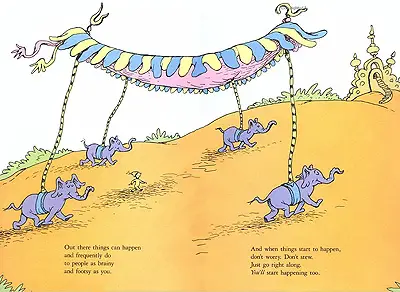
I also greatly enjoyed Dr Seuss's immortal Oh, the Places You'll Go, which has everything you need to know for a life on earth. See also: Vonnegut's Timequake.

***

Thanks for reading.

Wednesday, 14 December 2016

Omar Sy, The Hateful Eight, and the rise of the far-right − Reviews #251

Merry Christmas!

FILMS


The Hateful Eight (Quentin Tarantino, 2015)
– A bloody, bloody brilliant fusion of Western, horror and black comedy that confirms Tarantino's return to relevance after the glorious surprise that was Django Unchained, a swaggering, effortless movie following 17 years of self-conscious, self-plagiarising films.

The Hateful Eight is even better: potentially self-restricting in its claustrophobic, dialogue-heavy set-up, but with an ambition and chutzpah that causes it to leap from the screen. At times it’s reminiscent of a Ranown movie – one of those cynical, weary chamber pieces that marked a highpoint of the B-Western – with some DNA shared with Carpenter's The Thing, but when anyone is talking… well only one person could have written those lines. The stylisation in his writing is still there, but then it always was: what’s changed is that his naturalism is back and so is his range: for a while, every character in his films seemed to speak in the same, stilted way – or actually in one of two ways, sassy woman or malevolent man – but now they’re distinct, different and speaking in a way that drags you into the film, not reminds you that you’re watching one. I think that by Inglourious Basterds his writing was once more starting to sing, and his gift for suspense was much in evidence, but such virtues were rather obscured by the film’s overbearing smugness and silliness.

This one begins with bounty hunter John Ruth (Kurt Russell) transporting $10,000 prisoner Daisy Domergue (Jennifer Jason Leigh) to the town of Red Rock. En route, he and driver O. B. Jackson (James Parks) pick up a former Civil War hero, Major Marquis Warren (Samuel L. Jackson) and a self-proclaimed sheriff (Walton Goggins), before a blizzard drives them to a haberdashery. There, a loquacious English hangman (Tim Roth, sounding like Edmund Blackadder), a hulking Mexican (Demián Bichir), a racist retired general (Bruce Dern) and a mystery man named Joe Gage (Michael Madsen) are waiting, and at least one of them has a secret that’s about to soak these walls in blood.

Since reading Truffaut/Hitchcock earlier this year, I’ve begun to look at films in a different way, particularly the way in which they create suspense – and by suspense I don’t just mean nerve-shredding tension caused by sky-high stakes (though I do partly mean that), but also basic dramatic interest. Tarantino does this unbelievably well from the get-go: from a standing start we care implicitly, overwhelmingly and relentlessly what happens next, and frequently we care so much not because the characters are likeable (see: the title), but because of Tarantino’s imagination, specificity and meticulous, tight-as-a-drum scene construction. Catharsis, when it comes, is via revelation, sardonically cartoonish violence and some of the best jokes in ages. For a director who sometimes gives the impression that he’s making films so black people will think he’s cool, he certainly gives his give detestable, racist antagonists some of the funniest lines. In a more straightforward but equally crucial sense, the film is spectacularly unpredictable, and when we can guess what's about to happen, that too's a tool, Tarantino using it to ratchet up the tension we feel.

The performances are generally good, but with superb work by Jackson (in unusually committed, dynamic form – he hasn’t been this good in 20 years), Goggins, a foully credible Dern and – probably best of all – Jennifer Jason Leigh. She’s always been a cracking actress and here she’s just superb: putrid, virulently unpleasant and increasingly covered in blood, she becomes more and more central to the story and, with it, grows in power, reaching an apogee of almost supernatural gothicism. It’s slightly ironic, then, that Tarantino seems to have borrowed her surname from RKO actress Faith Domergue, the most notoriously untalented (and most conspicuously underage) of Howard Hughes's innumerable mistresses.

I said earlier that Tarantino’s worst films seemed to be cursed by self-plagiarism. I think the problem was that this seemed more like desperation than auteurism, as here he also draws on his past, but to devastating effect. Reteaming Roth and Madsen isn’t the only sign that he’s reviving the spirit of Reservoir Dogs, the mesmerising mission statement that announced his arrival as a major new director. It’s dressed in furs, not sharp, identikit black suits, but The Hateful Eight is also a talky, gun-heavy movie about eight bad men trapped in a single room, trying to work out which one of them sold out the others. John Carpenter would appove: his hero Howard Hawks made Rio Bravo three times in various guises, before Carpenter himself had a go with Assault on Precinct 13.

The Hateful Eight might not be for all tastes – if you cringe at the n-word or gratuitous gore, give it a wide berth – but it seems an objectively good film. The scene-setting is inspired, Morricone’s sparsely-used music is marvellous, and Tarantino’s dialogue is incredibly rich: unmistakably his yet steeped in the Western tradition, with its grand allusions to the Civil War, its bitter dark humour and its contemporary resonances (which are basically what the Western is for). The film takes a massive gamble with an hour to go, and takes a little while to stop wobbling – its raison d’etre less compelling, Zoe Bell farcically wooden – but even then it regathers itself and goes again, before a final chapter of dazzling, blood-drenched Carpenter-esque Boys’ Own potency. I’ve long since given up trying to reconcile Tarantino’s embarrassing public persona – braying, posturing and misrepresenting his cinematic forefathers – with the man who can write like this.

So yes, Django wasn’t a happy accident, a brief hiatus from a spiral downwards into complete irrelevance, it was a comeback: an invigorating example of a filmmaker rediscovering his voice. The Hateful Eight goes one better, breathing new life into a moribund genre. It’s a delirious, down-and-dirty exercise in restrained mayhem that doubles as a clarion call: Tarantino is back and if he’ll never make another film as incredible as Pulp Fiction, the very literal car crash that was Death Proof is receding in the rear-view mirror, after a Western one-two of power, persuasion and startling panache. (4)

See also: I love Jennifer Jason Leigh's performance in Fast Times at Ridgemont High.

***


CINEMA: Chocolat (Roschdy Zem, 2016) – A prestigious French biopic of black clown, Chocolat (Omar Sy), who became a superstar in the first years of the 20th century, which succeeds on the strength of its story and performances, but could do with playing a little less safe.

There's no denying that the story is a grabber: a penniless black refugee, posing as a 'savage' in a travelling circus, graduates to becoming a clown and become one of the most celebrated comics in the country – but longs for respect in a deeply racist society, while dealing (somewhat less interestingly) with the temptations of sudden fame.

And the mighty Omar Sy, star of that massive international hit, The Intouchables, gives it his all, delivering a deep, multi-faceted performance that infuses the film with whatever mood it's attempting to evoke, from knockabout fun to the melancholic self-loathing that comes with debasing your race for a living (even if it means giving people of your background a success story to cheer, a situation that later faced Hollywood character comics like Stepin Fetchit and Willie Best).

He's well supported by (the exceptionally handsome) James Thierrée as Footit, the arrogant, closeted but basically decent clown with whom he forges a partnership and proceeds to take Paris by storm, though most of the other characters merely represent viewpoints or challenges faced by Chocolat, and that's indicative of the film's shortcomings.

There are some nice flourishes – a notably fine wide shot of the circus stage, shot from low down; a neat montage trick that feels both slick and old-fashioned, as different parts of the frame are filled with smartly juxtaposed shots – but in a lot of ways the presentation, and the writing, are functional rather than arresting. A feeling seems to pervade the film that the story and the performances are enough to ensure that it works; and it does, but it should be more than that. Certainly there are few biopic or period piece clichés that aren't checked off (a rise-and-fall narrative, a moustachioed villain enticing our hero to betray his conscience, a man with TB coughing blood into a hanky), and its closing moments betrays a certain artlessness that frustrated me: why pan to a night sky, rather than a circus tent?!

But for all that, it is a good film. The story is fascinating, the movie never pulls its punches when dealing with difficult and even morally complex subject matter, and Chocolat and Footit's routines are impressively and exuberantly evoked, particularly given that at first you wonder if this is going to be a chore, because clowns.

More importantly than that, it's a welcome corrective in sharing Chocolat's neglected story with the world, and provides a showcase for Thierrée and more importantly Sy, who in some ways is his character's spiritual successor: a brilliant black performer in a racially-divided France, who risks his career as a comic to take on ambitious and important roles with real social significance. While the film may be safe – at least in its lack of formal ambition – its leading man is anything but. (3)

***


"THIS IS AN EMERGENCY!"
CINEMA: Chi-Raq (Spike Lee, 2015) – It seems a bit churlish to say it, but Spike Lee’s important film about the ongoing scandal of gun deaths in Chicago is an absolute shambles. It sometimes seems like he’s never seen a film before (in terms of his structure and scripting, not his natty visual sense) and while at the beginning of the movie that’s a virtue – his confrontational collage crackling with life – by the end it’s because he’s asking you to swallow an incoherent mixture of mawkishly-done melodrama and incredibly boring sex comedy. There’s a real argument for making entertainments out of critical issues, as Adam McKay did so well with The Big Short recently, because it’s a way of reaching a mass market and changing minds. But the pitfalls are obvious from Chi-raq, which simply alternates between speechifying and superficiality, and ultimately fails a subject that Lee clearly cares deeply about. Perhaps he’s just too close to this issue.

Kicking off with a dazzling credits sequence that’s basically just a YouTube lyrics video, the opening is decidedly grabby: a black urban update of Aristophanes’ Lysistrata, with musical sequences, rhyming dialogue and some shouty fourth-wall-breaking from Samuel L. Jackson, basically doing his tiresome Barclaycard schtick, because he’s apparently unable to do anything else nowadays. Like Lysistrata, it’s a comedy about a sex strike, which here sees gangster’s girl Teyonah Parris trying to bring an end to mob violence by padlocking her poonani (not literally, that would be awful) and agitating for other women to follow. Nick Cannon is her eponymous lover, an extravagantly tattooed rapper with twitchy pecs who might as well be a different species considering how little I could relate to anything he said.

There are elements that work: a eulogy from throaty local priest John Cusack that starts as mere journalism but builds to a ferocious climax; a fine performance from the mighty Angela Bassett as a voice of angry, responsible reason; apposite song choices, moments of cinematic style and bits of blistering rage from a filmmaker who’s always had plenty to spare. But as a film it’s increasingly shapeless, redundant and, well, tedious, ultimately to the point of severe embarrassment. By then I was too bored and annoyed to be turned on. (2)

***


CINEMA: Remember the Night (Mitchell Leisen, 1940) – My all-time favourite film: a work of simple grace and beguiling beauty about the relationship between a shoplifter (Barbara Stanwyck) and the DA who lands her in jail over Christmas (Fred MacMurray), before feeling the first stirrings of conscience.

The marriage of Stanwyck's consummate, unique artistry and screenwriter Preston Sturges' fusion of the hard-boiled and heartfelt begins to work its magic instantly, and by the time they pitch up in Indiana to spend the holidays with MacMurray's family, I'm a mess. MacMurray too is astonishingly good, giving far and away the greatest, deepest performance of a long and erratic career.

Probably the 12 most moving moments in cinema history are crammed into this one film – among them, a meltdown at a New York nightclub, Elizabeth Patterson's love letters and Stanwyck's immortal "you bet" – while former costume designer and set dresser Leisen's very specific style (including props in the foreground to colour the whole frame) leads to some astonishing imagery: including a New Year's kiss shot through streamers and a Niagara Falls scene filmed almost entirely in silhouette. Its atmosphere is like nothing else I've ever experienced.

The movie's hilarious too, from MacMurray's ironic admission of state-sanctioned hedonism ("Oh yes, my life is just one endless parade of whoopee"), through Sturges' memorable ruminations on honesty, to a climactic courtroom scene that's both emotionally redolent and gloriously petulant, as MacMurray goes from intimidating the defendant to insulting the jury. Even the supporting characters are given pure gold: deftly sketched personas spouting stellar lines, including a ludicrously loquacious lawyer (Willard Robertson), dullwitted bondsman Fat Mike (Tom Kennedy) and overstretched orphan Willie (Sterling Holloway) – working for his supper at MacMurray's ma's house.

But the film's much more than a smart, moving, even heady rom-com: it's a plea for love, tolerance and social justice, a film about second chances, the malleability of human nature and the conditions that breed criminals, all masquerading as a holiday romance.

I've seen it perhaps a dozen times now – this was my second time on the big screen this year – and there's nowhere I'd rather be than at Beulah Bondi's house, as her son Jack (MacMurray) and the thief he's prosecuting (Stanwyck) swap songs, stories and presents, while falling desperately and irredeemably in love. (4)

See also: Here's my all-time top 25, with Remember the Night in first place.

***

BOOK


Chavs: The Demonisation of the Working Class by Owen Jones (he’s the author, he didn’t demonise the working class) (2011/12)
– Jones’ star-making polemic is a very fine book: hopeful, angry and humane as it drags the media and politicians of all stripes over the coals for systematically destroying the British working class, sneering at the consequences and then managing to shift the blame to immigrants. Much of the material is familiar if you’re a student of modern British political history (one of the few things of which I’m a student), but there are surprises – who knew that more people worked in call centres in 2011 than ever worked in coal mining at one time? – and the accumulation of detail allied to Jones’ clear-sighted analysis and rich on-the-ground reporting adds up to a populist polemic of urgency, eloquence and unusual power. Despite the crispness of the writing, there’s a little too much repetition in both his contentions and his language (he repeatedly uses the words “rump” and “brew” like some sort of bawdy northern witch), but it’s an immensely valuable work and also a prescient one, laying bare the sheer irrationality and cruelty of a country as unequal as the one in which we live, as well as anticipating the continuing rise of the far-right, which makes it as relevant to the post-Brexit dystopia we’re inhabiting as the world Jones was addressing five years ago. (3.5)

Next up: Evelyn Waugh's Vile Bodies.

***

Thanks for reading.

Tuesday, 1 November 2016

Amanda Knox, The Jinx and Bridget on Brexit – Reviews #246

A few things I've seen over the last couple of weeks.

FILM


I Married a Communist (Robert Stevenson, 1949) – If you’re interested in the history of Hollywood, then this is essential viewing: a movie released at the height of the communist witchhunt, which slips the commies seamlessly (and stupidly) into a standard crime melodrama template. And who else would have made it – at least like this – but red-baiting RKO studio chief Howard Hughes, his rationality thrown to the wind by three too many plane crashes.

Robert Ryan, whose presence is as dispiriting proof as any that prominent liberals were complicit in this dark chapter of American history, stars as the VP of a shipping line who’s targeted by his former comrades in the party, who like nothing better than seducing vulnerable young men and throwing older ones in the river.

It’s clear that the screenwriters either don’t want to expose the public to leftist ideas, don’t want to risk boring their audience with ideology or don’t know what communism is, as the sequences of indoctrinated worker John Agar making speeches at union meetings are done as a wordless montage (!), and the whole exercise is really extremely silly (compounded by Laraine Day’s terrible performance as Ryan’s concerned wife)… but there’s something about the movie that kept me enthralled.

Partly the rich characterisations from lovesick party whore Janis Carter and hired assassin William Talman – a womanising shooting gallery owner – partly the fact that it’s shot by Nick Musuraca and utilises RKO’s undeniable genre expertise, and partly the considerable curio value of seeing a film this vile, irresponsible and thick: Cold War paranoia writ large, if not very well. (2)

***

TV


The Jinx (Andrew Jarecki, 2015)Capturing the Friedmans director Andrew Jarecki explores the life (and possible crimes) of real estate scion and suspected triple murderer Robert Durst, in this six-part HBO mini-series. It starts uncertainly, unnecessarily padding its run time and becoming frequently entangled in an unnecessarily complicated structure, but by the straightforward, utterly gripping Episode 4 (surely no coincidence) – based around a murder trial – it's really motoring, and the final two episodes are outstanding, some long-winded making-of elements compensated for by the sheer scale of the subsequent revelations.

I remember, when training as a journalist, my class being given reams of paperwork about an ongoing murder investigation. We spent a good half hour searching dedicatedly for the truth, before our trainer helpfully pointed out that we were journalists. "I'm not expecting you to solve the case," he said witheringly, "you just have to write a news piece about it."

We did, but it wasn't nearly as satisfying. And that's where The Jinx comes into its own. It's perhaps less effective as a creative exercise than either Serial or Making a Murderer, and yet unlike those retrospective pieces it actually moves the story along, and – incredibly – manages to solve the case. While there are serious questions to answer about the documentary's own timeline and its commitment to entertainment over, say, morality, the final 15 seconds are as extraordinary as anything I've ever seen on TV.

See if you can spot the almost imperceptible 'tell' that Robert Durst does when he might be telling an untruth. Lol. (3.5)

***


Amanda Knox (Rod Blackhurst and Brian McGinn, 2016) – The Amanda Knox story done Making a Murderer-style: though the teaser trailers and the opening monologue play with the idea of her possible guilt, this Netflix Original is a single-sided polemic aimed at clearing her name. Which has, of course, already been cleared by the Italian Supreme Court, so fair enough.

This film does a fine job of undermining the case against her and underlining the media feeding frenzy that assisted it, by letting tabloid sleazeball Nick Pisa and mad prosecutor Giuliano Mignini speak for themselves, and then elegantly slicing their testimony into finest fillets of unapologetically self-serving bullshit and dangerous, errant nonsense. Among Mignini's more outlandish pieces of deduction (and there are several) is that when he accused Knox of murder she put her hands over her ears because she was reliving the screams of her victim. Pisa is just an unmitigated arsehole, who either didn't know or didn't care what normal, empathetic people would make of his contributions. It takes something to be the most appalling person in a documentary about a murder, when you were just there to report on it, so well done to him. 'Nick Pisa-shit', am-I-right?!

Speaking about the case, and glimpsed in incredibly eerie home videos shot just before her trip to Italy, Knox is so appealing and so pretty that you can't help but hope that she's innocent (shallow, I know), and certainly there's no smoking gun included, though her decision to try to pin the murder of English student Meredith Kercher on her own boss was, at best, astonishingly selfish. Her then boyfriend and co-defendant Raffaele, meanwhile, is just an adorable bundle of cute, with his broken English and wide open face and, oh yeah, four years spent in prison for murder. Whoops.

This isn't the best true crime work you'll ever see, but it's professionally put together, and weirdly entertaining for a film that's about what it's about. It somewhat skids about on the surface rather than providing the depth of research or emotion that would blow you away, but for its multi-faceted approach and its access - if not its intimacy - it's well worth seeing.

So did Knox do it? Probably not. There definitely isn't enough credible evidence to say anything stronger against her: the most damaging piece is that Raffaele told the police that her alibi was false, but then he was under unfathomable pressure, the adorable bastard. (3)

***


Spiral: Season 4 (2012) – "Précédemment dans Engrenages..." This knockout fourth season of the French crime series is for the most part a return to realism after the silliness of the previous run, with Laure and co investigating both left-wing bombers and Kurdish paramilitaries. And while it never comes close to Season 2 – a devilishly intense, tightly-coiled beast of an eight-parter – it's the second-best series of shows that Spiral has offered, with Tintin given more to do than ever before, and a final episode that offers everything you could want, and then some. It's hard to recall a show with so many great recurring characters, the programme's nuanced view of its heroes and effortless way of manipulating our sympathies - either gradually or via short, sharp shocks - creating a litany of special moments that jar your emotions as they pull the rug out from under you. A dark, nauseatingly suspenseful joy. (3.5)

***

LIVE


Bridget Christie: Because You Demanded It (Leicester Square Theatre, 20 October 2016)
– This new show from my absolute favourite stand-up is very good, but with a few obvious flaws. Christie's delivery is rarely utterly seamless, but at the Leicester Square Theatre on Thursday she stumbled over her words at least a dozen times and at others seemed to be almost reciting by rote: of course that's mostly what stand-up is, but the illusion of it just having occurred to the performer is central to its success. And while the material has some dizzying peaks (including one masterfully contextualised routine in which she argues that "A paedophile who voted for Remain is better than a non-paedophile who voted Leave"), it has just a handful of small additions to the show that premiered at the Edinburgh Festival a couple of months ago.

Since it's essentially a show about Brexit − set up with the premise that we all need a break, so the show will be about gardening, bringing her on to thoughts about foreign and indigenous plants − that's problematic. The news, particularly this news, is moving so fast that you could conceivably write five minutes of great new material every day, but then quantity was never Christie's strongpoint: while in her award-winning purple patch, she was essentially repurposing the same material across different mediums: radio, interviews, shows and even a (completely delightful) book. All of which makes it sounds like I didn't like enjoy the show, which I absolutely did.

My problem (well, one of my many problems) is that I wanted the things I like to be things I can love: I want Thea Gilmore to stop writing two songs an album about how you'll never be able to stop her from speaking out, and actually just speak out: as far as I'm aware, she's only ever written one real protest song, and that was 10 years ago. Christie can be staggeringly incisive, is superb at mining the humour from almost impossible sources (women's rights, feminism, FGM, an 80-year-old man falling down a lift shaft) and is better at building a routine than just about anyone I've ever seen, as evidenced by the brilliant (if familiar) story of the Daily Mail printing a photograph of her, believing it to be Charles II.

The material frequently spears the ludicrousness of racism, the decision to hold the EU referendum in the first place, and our decision to vote to punch ourselves in the face − and there's a brilliant bit about a short, fat, sweaty bald man propositioning her in a hotel lift − before a climactic piece of unexpected (and unexpectedly sublime) physical comedy, but the show doesn't quite deliver on the promise of the premise (Bridget Does Brexit), due to some uncertain delivery and the fact that, even in just two months, the story has rather moved on. (3)

***

Thanks for reading.

Monday, 27 May 2013

Arrested Development: Season 4 - Reviews #161

Some musings on everyone's favourite Happy Days spin-off, now back for a fourth season, only on your local interweb.


*DON'T EVEN THINK ABOUT READING THIS UNTIL YOU'VE WATCHED IT*
Arrested Development (Season 4, 2013)


You are Mitchell Hurwitz, creator of the most revered American sitcom of its era. Your baby, Arrested Development, may have bowed out ahead of time, but it's constantly held up as a model comedy, endlessly invoked as a classic of its type, and frequently features in lists of the best TV shows of all time. Do you:

a) Leave it
b) Wait seven years - until anticipation is at fever pitch, but you would naturally be forced to account for the gaping gulf in plot terms - circumnavigate your cast's scheduling conflicts by constructing wildly diverging narratives for each and every character, then dump a sprawling eight-hour pseudo-mystery sequel onto the internet, its story a farce of truly epic proportions, packed to bursting with misunderstandings, double-crosses and delirious attempts to pull the rug out from under your audience. And, of course, make the show's original moral centre a desperate, needy loser living in his son's dorm-room. All this, despite the fact that your show traded heavily - and dangerously - on the line: "I've made a huge mistake."

Obviously you do the second. You are Mitchell Hurwitz.

Such is the scope of Arrested Development Season 4 that a plot summary is nigh-on impossible. But here goes: Michael (Jason Bateman) becomes a movie producer at Ron Howard's company, planning to film a movie of his family's life (that this never amounts to anything appears a sly dig at reunion cliches), while his son (associate producer Michael Cera) becomes a man. As Lucille (Jessica Walter) languishes in prison, George and Oscar (Jeffrey Tambor) unwittingly trade personalities - the former's masculinity failing as he tries to build a wall between the US and Mexico - and Lindsay (Portia de Rossi) falls in love with an ostrich-farming militant, as well as having an affair with an adulterous politician (transparently patterned after Herman Cain). Her husband Tobias (David Cross) is accused of being a sex offender, starts dating a heroin addict, and stages a musical of the Fantastic Four. G.O.B. (Will Arnett) becomes a hanger-on to a clean-cut pop star (and thinks he might be gay, after experiencing friendship for the first time), Buster (Tony Hale) rejoins the army, and Maeby (Alia Shawkat) amounts to nothing. Steve Holt! (Justin Grant Wade) works in pest control.

These stories are split into 15 episodes of between 28 and 37 minutes, each told from a single character's point of view, but with others strolling in and out. Though the stories wander as far as India, they're steeped in a familiar claustrophobia, reinforced by the fact that the characters share plane journeys, tents and partners, without their knowledge - a comic fall-back that Roger Ebert speared so memorably in his review of Big Business. The time-shifting narrative sees us begin each episode at some crucial juncture, before flashing back. And the whole thing is meticulously constructed, its plotting so labyrinthine it makes Pulp Fiction look like Ice Age: throwaway lines take on significance hours later, garbled phone calls only begin to make sense in retrospect, and the truth behind various mysterious encounters (like the spirit of an ostrich appearing to George and Oscar) is ultimately revealed.

That wasn't really what Arrested Development was about, was it? No it wasn't. As well as brutish unsentimentality and stinging satire, it was more about jokes. It crammed in a lot of plot (courtesy of Ron Howard's fast-paced voiceover), but that was a way to get us to the funny stuff. And really we could have done with more of it here, particularly in the early part of the run. Episodes two and three are almost entirely bereft of laughs, and were presumably the point at which fans took to social media, saying: "This is shit." It gets a whole lot better, and there are some stunningly brilliant gags in Season 4 - the pay-off to G.O.B.'s first episode may be my favourite thing that the show has ever done - but I still found I was only laughing two or three times during some of these super-sized helpings, and that isn't really enough. Nodding in appreciation of a clever plot development doesn't really plug that gap. That's what she said.

There's another problem too. I'd class myself as a fan of Arrested Development, but I have always had a problem with its more unpleasant elements. I can stomach, if not really enjoy, Lucille's malevolent misanthropy, as it's central to the show's identity. What I don't like is the way that the programme mines humour from the supposed grotesquery of people with problems. The subplot with Tobias being suspected of being a sex offender is hilarious (despite the notably appalling undercurrent), because it's set up with such panache and finesse, all leading to a perfect confrontation at the model home. The subplot about his girlfriend - a heroin user - is, by contrast, just gratuitously nasty: there's nothing sharp, insightful or intelligent about it, it simply involves laughing at the degradation of drug addicts' bodies. Even in the unlikely event that you can find something funny about a heroin addict's teeth falling out, I think there's an argument that a show like this should pick its targets, not just because of its privileged position, but because it smacks of incredible laziness. Though it aims some barbs at Christianity (at least a strong target, if a familiar one), Arrested Development makes just one concession to the politically-charged subversion that characterised much of its earlier work: Buster's apt new job, which is devastatingly satirical in a way that the show seemed to have forgotten how to be. Elsewhere, it's just happy to take a funny, fairly timely punchline - let's make The Social Network starring George Michael Bluth, but he doesn't have any software except half a woodblock app, and his hangers-on are all sex offenders - and works out how to make it so.

So, swelling with ambition but a little light on jokes and with a mid-section that's simply too mean-spirited, how does it work as a whole? Actually pretty well. There's little to touch its Season 2 high-spots, but nor is there anything worse than the Charlize Theron sub-plot of Season 3, the second-half of Hand to God (i.e. everything that follows that majestic Gloria Grahame gag) or the Ed-Begley-Jr-has-alopecia running joke that bored everyone to tears. There are some excellent episodes here, and I for one found the block-viewing rewarding, the series gaining momentum - and confidence - as it progresses. At first it feels like we're treading water: the characters are the same, but they're not, and too many of the early episodes trade on our well of affection for the series. Then it begins to get a life of its own: its callbacks feel clever rather than desperate, our emotional investment is cranked up, and as the two funniest characters - G.O.B. and Buster - get to take centre-stage, the gag-rate increases (if not quite enough).

There's G.O.B.'s amazing call-to-arms on an Evangelical TV show, his periodic breakdowns, his badgering of George Michael with the words: "Are we good?" and his roofie-ing of his brother ("Poor, forgetful Michael"). There's also "Anus tart", Steve Holt! shouting "Dave Holt!", Buster shouting at some Afghan nurses and a Taliban wedding, and George Michael appearing at the back of a college crowd, joining in with the group who are laughing at the stair car wedged under a low roof. Even in the opening episodes, there's the classic exchange: "That was a low blow, Bob Loblaw", "That was a Bob Loblaw law bomb" (a recycled gag, but a great one), the freeze-frame-or-you'll-miss-it test to be a religious leader, and Ed Helms' pushy catchphrase of: "That way you have it." That appearance is an exception, though. While the returning cast are in pretty good form - particularly Shawkat and Arnett - on the whole the roster of guest stars add very little; still, special mention to Andy Richter and his fictional brothers for continuing to baffle me with their irrelevant unfunniness. Perhaps you have to be familiar with his TV work, in that insular American way. And while the stuff with Ron Howard does allow for that rather brilliant Imagine sign, and a sublime outburst from Tobias, for the most part it feels too much like Julia Roberts pretending to be Julia Roberts in Ocean's Twelve - and no-one wants that.

What I will say, though, is that I watched eight hours of Arrested Development in less than two days (and I might have fitted it into one if I didn't have some Clara Bow movies I wanted to watch); I didn't get past episode six of Modern Family, and I sold a 30 Rock box-set after finishing Season 2. And this wasn't just curiosity value, or getting the most for my money - after all, my Netflix trial was free. I really got a lot out of the show: I found it consistently entertaining, admirably original and sometimes superb. I don't think Arrested Development Season 4 was ever likely to recapture the magic of the show's heyday, but nor does it tarnish its remarkable reputation. People seem increasingly compelled to say that everything is brilliant or terrible, but - like almost everything - this lies somewhere in-between; happily a little closer to "brilliant". Make no mistake, this venture was risky; balls-out bold, even - a stylistic and structural departure that at the same time embraced a new medium. It's far from perfect and it should be funnier than it is, but when it works, it works, and that final image is a thing of absolute beauty.

I'll see you in the queue for the movie. We can meet afterwards and discuss what's wrong with it.

(3 out of 4)