Black Box, Galway, Ireland – 19 April 2024
St Canice’s Cathedral, Kilkenny, Ireland – 20 April 2024
Vicar Street, Dublin, Ireland – 21 April 2024
The Old Fruitmarket, Glasgow, Scotland – 24 April 2024
The Hall @ Aviva Studios, Manchester, England – 25 April 2024
Barbican Centre, London, England – 27, 28 (matinee) and 28 (evening) April 2024
Bristol Beacon, England – 29 April 2024
She is a label PR's darkest nightmare, and we love her for it.
Four shows into Adrianne Lenker's 'Bright Future tour', promoting the biggest album of her career so far, our generation's greatest songwriter has got around to performing fewer than half the tracks on the record. In that time, she has played 30 other things instead, including a cover of a Chris Smither blues number, most of her previous album, and 'Oldest', which was cut from Bright Future, but which she appears to prefer to many of the songs on it. The opening, solo, portion of her climactic concert at the Barbican, arguably the most important date of her career so far, will consist, in its entirety, of the following: two tracks from 2014, one of which she has relearnt while on tour, and four unreleased songs, including a reworking of 'Evol' so new that it doesn't appear to have a name. "If love is simple, can you please explain this?", it begins. I can't explain much of this at all, if I'm honest, but I'll try.
A précis for the until-now-uninitiated: Lenker is a 32-year-old1 singer-songwriter from Indianapolis, via Minneapolis, Boston and Brooklyn, who for close to a decade has carried on a dual existence as a solo artist – playing what we can broadly term ‘alt. folk’ – and as the frontwoman and major creative force behind Big Thief, a band of Berklee music graduates whose approach to genre is largely summarised by the phrase “go on then”, and whose most recent shows have oscillated thrillingly between country and metal. While Lenker doesn’t do any Pantera covers on this latest tour, the country influence on her solo material is becoming ever more apparent: during an afternoon off, she pitches up at an open-mic in a Dublin pub and performs ‘I Don't Love You Much Do I’ by Guy Clark, off the cuff2; her new record has both a yearning fiddle and a cover photo of her in a cowboy hat. (The hat makes it onto the tour: she premieres it in Glasgow, never takes it off on the Sunday in London.) That she is wrangling with this supposedly reactionary genre while exploring the tender intricacies of queer experience does seem more interesting than whatever Beyonce is trying to do over there.
'Someday I'm gon' be a steamboat, baby'
Though Lenker played one date at EartH in London two years ago, she hadn’t toured solo in the UK since 2019. Back then, she seemed paralysingly shy and uncomfortably exposed – hiding behind a thatched fringe in front of the Union Chapel's organ – though that impression would evaporate every time she started to play. When she returned, to EartH, it was off the back of four sold-out nights with Big Thief at the Shepherd’s Bush Empire, and with her bleached buzz cut and swish jacket, she seemed to have segued into a rock star. Then she picked up her guitar, and began to cycle through songs, and it was like you’d dropped in on a mutual mate, only to find a genius in their front room.
That’s the feeling you get again in Dublin on this tour: that night is an extraordinarily intimate experience, Adrianne in cowboy boots on a fittingly carpeted stage, tossing off definitive versions as easily as falling off a log. But almost every show is special in its own way. The only exception is Galway, unspecial in its own way, with the crowd breaking various cardinal rules of gig-going, and seeming half-set on breaking the artist with it.3 After the show, I considered with a chill whether our musical hero might be passing into the realm of Mitski or Phoebe Bridgers, turned into a living meme by the most irritating people on earth, but no: it turns out that’s just Galway…
Because Kilkenny, the next night, is an incalculably special evening: Adrianne on a black platform within a startlingly beautiful 13th-century cathedral; fuchsia lights; the audience seated and hushed in reverence. “You’re so quiet and respectful,” she says at one point, and you think she’s referring bleakly – obliquely – to the previous rowdiness, but then you see how much fun she has in Dublin, and wonder if she just meant we’d been a little quiet. The atmosphere at those two shows fits each venue perfectly, though – and fits each set. They're the two stand-out dates of the tour. The St Canice concert ends with Lenker singing ‘Real House’, a song about her mum, with tears running down her face.
'I'm happy with you – why do I need to explain myself?'
She’s at her most transparently happy in Ireland’s capital (at ease before an audience who offer a saintly spin on Galway, their backing vocals swelling, apposite and perfectly-timed), save perhaps for the second night at the Barbican, when the joy of collaboration is followed by the scale of the send-off. Every seated show ends with the audience on its feet, but that clamour in London hits another level. Between those shows, Glasgow is an over-amplified but good-natured gig in the Dublin vein: an art student called Amy is sketching Adrianne on the front row, someone has brought a monkey on a stick, a requester shouts “my angel!”, followed a few seconds later by the clarification, “…the song”, while Manchester is St Canice’s revisited, just with a touch more joining in and a lot less stained glass. The swansong of this leg of the ‘Bright Future’ tour, in Bristol, features a cheery but less obviously obsessive crowd, mildly befuddled by the deep-cutting of the mammoth setlist (the number of unreleased songs tie with those off the new album, 4-4; in an early fit of whimsy, Lenker plays her two John Prine-iest songs, ‘Cactus Practice’ and ‘Once a Bunch’4 back to back).
By then, you feel like you’ve got to know her a little, not simply as an artist, but as a person. In Kilkenny, Lenker talks openly about her nerves, saying she’s just taken the longest break from touring of her life – which turns out to be just eight months – but she otherwise gives the impression of being quite uncannily relaxed. Now at ease in a way she never quite was before, she begins to open up…
'Please, cut my hair'
While the psychodrama of Adrianne's ever-changing hairstyle is a compelling subplot of any tour (the tousled 2014 shoulder-bob is back, baybee), here we get backstory. In Manchester, she punctures the delicate illusion of between-songs badinage by quipping, “It's good to be in Manchester, I always love coming through… I’m trying to small talk with you while I tune, so it's smooth.” But it's also true, she says: she used to use her friend Bernie's house here as a base, and it was in Manchester that a 24-year-old Lenker first lopped off her hair (me too – we have so much in common, we should hang out some time?). She shares one of her favourite semi-jokes – someone replying to “I’ve had a haircut” with “Which one?” – exhibiting the delight in wordplay and the guileless goofiness as crucial to the Lenker persona as her pained earnestness, before grinningly challenging the audience to identify various baffling chords. When she loses her thread during 'Sadness As a Gift, she spends five minutes telling us about her day (radio session, nap, dilemma over how quickly to eat chicken soup).
It is in Manchester too, and most memorably of all, that the ever-changing ‘Vampire Empire’ is welded to a snatch of Lucinda Williams’ ‘Like a Rose’. Lenker’s song, premiered on Colbert, exploding on TikTok, was essentially a recruiting tool that hoovered up young lesbians, but the first recording of the track (by Big Thief while on tour last year) was savaged online by entitled pricks. Perhaps as a result (though hopefully not), Adrianne re-recorded it for Bright Future, and she plays it six different ways during this tour, from a ‘Spud Infinity’-style5 parade of silliness in Dublin ("OK, freestyle solo,” she tells the audience near the end, "everyone do something different") to a blisteringly-paced honkytonk in Bristol. The great version, though, is Manchester’s, the medley rounding out the song, bringing together the various Lenker identities by spotlighting her open-hearted, open-armed sincerity. In London, she does something striking if less transcendent, adding an extra chorus, her voice plummeting through the octaves in tandem with the word ‘falling’, a vocal risk that replaces the physical jeopardy of last year’s performance in Hammersmith, during which she tipped over backwards, and dropped, laughing, to the floor.
In London, too, she tells us she could never be a stand-up comedian because she laughs at all her own jokes, and indeed she spends a lot of these shows laughing, the fragile music interspersed with sips of water, lengthy retuning and those dorky, squeaky giggles. Conspicuously, she doesn’t go near the two truly desolate songs on her recent heartbreak/heart-reclaiming record: ‘Evol’ and ‘Ruined’. She played one verse of ‘Evol’ as an encore back in March, and whether that was always the whole plan, she never went further: just sat stone still and silent, said brightly, “That’s all”, and went home.
'I see God here and there'
Instead, she plays a joyous ‘Born for Loving You’, which is introduced with a disarming simplicity: “Here’s a song I wrote for my girlfriend, it’s nice to sing it in a church.” When I interviewed Lenker’s Big Thief co-conspirator and ex-husband, Buck Meek, last year, he said that the one thing he admired about Lenker more than any other was her honesty. At greater ease between songs, that has manifested itself in her being utterly candid; with her latest writing, it has resulted in a startling new literalism. If you think ‘Real House’ is brutishly direct, wait until you hear ‘Before You’ (which is what we’re calling her as-yet-unnamed song, premiered in Galway). Here’s how she describes that marriage and its aftermath, her life folded into a standard folk-country frame:
New York City
‘fell in love with a man
He asked me to marry
and I gave him my hand
So simple
I’ve lived a whole life through
But I don’t remember nothin’
Before you
I ended my marriage
‘went back home
I needed to scatter
Those ashes alone
'A convulsion of honesty brought me to life'
“You know, honesty can be brutal,” Meek said to me, “but it’s always the right way.” ‘Before You’ is like In My Life if Lennon’s song had zoned in on the detail, before breaking both your heart and your legs. Seeing Lenker in love is quite something, though: ‘Born for Loving You’ (which I’ve written about here) is one of the great modern love songs, while ‘Baby, Honey, Sweetheart, Darlin'’, played for the second time ever at the first Barbican show, evokes McCartney’s ‘Here, There and Everywhere’, fitting Lenker’s crooked-hanging sentimentality into an ingenious pop-folk template. There is no feeling in modern music even remotely akin to the exhilaration of hearing Lenker unspool some new masterpiece for the first time, each line that she drops into the air somehow better than the one before. We felt it with the instantly immortal ‘Wait a While’ in Bristol in 2020, and with ‘Already Lost’ in Edinburgh last year. We’ve felt it more often than any audience would have any right to expect. Here, shaking her head, hair flicking, one eye on her left hand, she sings:
Honey
Whatcha smilin’ at, what’s funny?
Is it how I am with money?
Now my nose is gettin’ runny
You hold me when I cry
And make it sunny
When people smugly traduce pop lyrics committed to paper, what they miss are the intricacies: here, with Adrianne, it’s the effortless evocation of the fondness of her relationship, the specificity of her imperfection, the intentional lapse into quirky bathos, immediately spun on its head by the revelation of sorrow, and then the sun blasting through like in a ‘60s soul record. It is, too, the imploring quality of her voice, so affectionate and assured: comfortable in love. After she plays ‘I Don’t Love You Much Do I’ in a pub (and how I wish I’d been in The Cobblestone for those three minutes), she shares Guy Clark’s original on Instagram, together with a photo taken by her girlfriend.
'Men are baptized in their anger and fighting'
That song is one of many she’s been voraciously learning during an extended period of musical autodidacticism. In Kilkenny, after covering ‘Leave the Light On’ by Chris Smither, she says guilelessly: “I didn’t grow up learning songs, I just learned guitar by writing songs. So learning other people’s songs is this new thing I’m really into: it’s amazing. There are so many good songs in the world!” The Smither number showcases her extraordinary guitar-playing6 and is, as my friend Peter observed, closer to her own style of writing than anything else she’s ever covered, both cosmic and intimate in the vein of ‘Spud Infinity’. She plays slide guitar too on her own ‘half return’, a throwaway, faintly Gothic ditty enlivened by that flitting finger. At other times she is the consummate country artist, a cowgirl picking, Travis-style, with a hint of a swagger. A music writer once said of cult folkie Nic Jones that he had an orchestra in his right hand. Well, that’s Lenker too.
The only thing she struggles with is telling people off – or telling them to sing (well, that and the fact that she can’t quite whistle). In Dublin, she gently quietens the hum of chatter by saying, “You guys are missing the tuning… it’s the best part,” before pointedly adding, “‘kind of serious, though… it does help to hear when you’re tuning.” In Manchester, she tells the crowd that it’s “a rare treat to hear you sing”, before an encouraging, “Alright, last chance to sing, guys” as she embarks on the final stretch of her signature solo song, ‘anything’. During the matinee in London, when the phrase, “If anyone happens to know any words on any of these songs, you are invited to sing along... formally” fails to elicit the desired response, she ‘forgets’ the words to the song’s second verse, prompting the first communal crooning of the afternoon. The crowd in Glasgow is so good-humoured that she's able to risk one of her drier jokes, mock-apologetically responding to audience requests at the start of the encore by smiling a touch, and saying, “We have such a specific plan. I like these songs, so…” It's clear that Lenker is unusually – indeed, universally – beloved by her collaborators and crew, but it's also true that you don't scale the heights she has without being able to occasionally flash the steel on behalf of your art.
'Places you have been that I needed'
That’s the only night where she plays ‘Already Lost’, one of 17 numbers that receive just a single airing across these nine shows. In total, she plays 50 different songs. Two are covers. The other 48 are her own, and they break down something like this: great (42), good (six). Given that she doesn’t dip into most of the heavier Big Thief material (there’s no acoustic rendering on this tour of ‘Not’ or ‘Masterpiece’ or ‘Real Love’ or ‘Black Diamonds’ or 'Contact' or 'Flower of Blood', or even songs she's played solo at Big Thief shows, like 'Change', though she does do the gentler version of ‘Dragon New Warm Mountain’), it’s an astonishing testament to her micro-consistency, prolificity and, yes, now you happen to mention it, genius.
The finest of the one-shot wonders is a desperately affecting version of the 2019 Big Thief title track, ‘Two Hands’, at the first Barbican show. “You somehow let me down,” she softly wails, the enduring ambiguity of that opening shooting a chill down the spine, the song breaking you and then putting you back together again, as most of her greatest ones do, from “the more that we try … to deny, deny…” to a wild recalibration of how we might see hand-kissing, and finally the guileless reassurance of, “New friends: you can make some too/I know.” In Dublin, there’s a stunning, slowed-down ‘Cattails’. It’s been more commonly a lolloping, propulsive 12-string stomper, but suddenly now it’s a slip of a song, distinct from the mumblecore of ‘half return’ or ‘heavy focus’, instead delicate and bucolic: the perennials don’t dance anymore, they sway. There's also ‘Jonathan’ (from her 2014 EP, a-sides, in Galway), ‘From’ (in Bristol), and Bright Future highlight, ‘Donut Seam’ (the last night at the Barbican).
In terms of Lenker’s lyric-writing, it was the combination of the formative ‘Indiana’ (“…the talk that is told through the teeth of the mouth of the millions dyin’ to meet ya”) and ‘Mary’ (“your hands were making artefacts in the corner of my mind”) that first made me sit up and then slump back down again in amazement, and ‘Donut Seam’, from its pun title to its moth-Icarus motif, via climate dread and the confessional, is that talent seen a decade on. “Oh my heart has holes in it/And there you were exposing it” is the kind of rhyme that other artists spend a lifetime trying to find. ‘Candleflame’, meanwhile, is the current record’s secret weapon, and yet she doesn’t deploy it till the matinee in London. “I feel God here and there,” she murmurs, “people tell me he’s everywhere.” Well, he was definitely in the room during that song, so let's hope he doesn’t feel slighted. Hilariously, Adrianne also gives an airing to 'Bright Future', a song that gave its name to the album... but isn't on the album. And if it seems perverse that she repeatedly prioritises ‘No Machine’ over a song as remarkable as ‘Cell Phone Says’, the former does come to life in person. So does the woozy shoegaze of ‘heavy focus’, with its punchline of blissful release. So does ‘The Only Place’, its guitar part suddenly pulsating with purpose. I’ve said it before, but I’ll repeat it unto death – if you haven’t heard Lenker live, then you haven’t heard her at all.
'Wednesday in August, I was playing with my band'
Other new songs return time and again. ‘Sadness As a Gift’ might be the single best thing that Lenker has ever written, though like another masterwork, ‘Already Lost’, it works better as a solo number. The album versions may be lovely, but they’re not the equal of this ‘Sadness As a Gift’ or this ‘Already Lost’. What Adrianne does retain in the collaborative version of 'Sadness', though, even when it becomes a sing-along, is the stripped-back beauty of its seventh stanza. Her voice has never sounded lovelier, or more ethereal – strident then soft – than when it lands on “every second brimming with a majesty”, a time when time always stands still, and you are left immersed in that moment, wishing it wouldn’t ever pass.
My private theory has always been that the best version of any Adrianne Lenker song is done by her alone, as slowly as possible. However, the fleet-footed take on ‘Free Treasure’ that reaches its apogee in London – gorgeous three-part harmonies and an aching, climbing violin – makes me wonder if my take is watertight. She starts every show solo, but in Glasgow and Manchester is joined by the bear-like pianist (and support act) Nick Hakim, the developing threesome of ‘Bright Future’ alumni rounded out for the final four dates by be-fringed Swedish violinist Josefin Runsteen, whom Lenker met on a musical retreat in Italy.
I wrote after the 2022 shows that, like Dylan, Lenker’s songs are always in flux, and there are innumerable innovations on this tour. ‘Orange’ now has a gorgeous, a capella final verse, and, in Bristol, a busier picking style; ‘Simulation Swarm’ comes with a new staccato solo coda; and at the end of ‘symbol’, a hypnotic track from 2018’s abysskiss, Lenker dispenses a melodic, enormously satisfying ticking into her mic, her mouth sounding like a combination synth and Geiger counter. After a heartstopping version of ‘Born for Loving You’ at Hammersmith last year, she asked fans on Instagram if they could share their audio of the performance, so she could study how she’d done it; now she always sings it that way, save for an added country inflection in the chorus.
'I wanted so much for magic to be real'
‘Pretty Things’, meanwhile, the delicate opener from Big Thief’s Captivity (2017), has become a subtle sort of a monster, building to that devastating sting in its tail, and mounting in menace throughout the tour. ‘anything’, too, is a song that changes across eight shows, the frenzied intensity of the chorus in Galway junked in favour of a tenderness that escalates from each rendition to the next: in Glasgow and London, the people are around me in tears, though there’s a lighting-in-a-bottle feel to this version in Manchester, Lenker seguing straight from ‘Real House’ into a dazed and sibilant ecstasy.
If some people left the London matinee disappointed not to hear ‘anything’, and departed Bristol trying to work out what on earth they’d just heard, usually Lenker’s sweet eccentricity and her audience’s deepest desires collide. In Dublin, she gets off so much on the audience’s backing vocals that she throws an extra chorus into ‘not a lot just forever’. In Manchester, she takes things far further. After a moving piano-and-voice take on ‘zombie girl’, her guitar largely silent in her lap, Hakim on the keys, Lenker murmurs: “I just want to sing that one over and over: that one feels good.” Someone in the audience shouts out: “Play it again!” And so she does, the whole thing, just slower. In Bristol, when Runsteen nips off stage for a sneezing fit, Lenker picks up a guitar and plays ‘ingydar’ off the cuff. Her tours are full of such small, semi-improvised miracles.
Other songs are excavated from her past. The first time she plays ‘Steamboat’, a decade-old highlight from her first album proper, she's yet to relearn its intro (a fact she realises while on stage in Kilkenny), but it's slotted back into the song in time for London. In Galway, someone in the crowd asks atypically sweetly for a deep cut – 2014’s ‘Angels’, with that insane guitar part – and Lenker says she can’t remember how to play it anymore, but is the audience member going to any later shows? "Yes, Chicago." It's all agreed: Adrianne writes that in her songbook7. A week later, she plays the song at two Barbican shows, her fingers flying over the fretboard. Just magic.
And then there are her standards, like 'not a lot just forever' (from 2020's modestly-titled, songs), which trades in Lenker-ish imagery (a dog, a wolf, a rock, a sweater) before trading that imagery in for a vulnerability that remains truly rare and daring, her vocal imploring and her heart wide open, stealing your breath as you stand:
And your dearest fantasy
Is to grow a baby in me
I could be a good mother
And I wanna be your wife
'Both arms cradle you now'
Though her usual dexterity with words fails her between songs in Galway – language an amorphous thing crumbling amid discomfort – her sense of playfulness quickly returns. In Glasgow, she trails ‘forwards beckon rebound’ with the Wodehouse-ish words, “This has always been one of my favourite songs to play, since I wrote it”, before revelling in the dual meaning of ‘since’, and setting the date of composition as “December 34th”. In London, when she invites the audience to sing, she does so first “formally” and then “casually” and in a handful of other ways, rifling through synonyms and variations. The most enjoyable linguistic experimentation, though, is in ‘Free Treasure’, her ode to unconditional love, in which she toys endlessly with the behaviour of “the guy at the nape of my neck who hangs out there all day”: sometimes on this tour, he tells her not to play, sometimes what to play, and, finally, in Bristol, not, what and how to play, these night-to-night changes subtly tinkering with the feel of the verse.
On that final night, she forgets a stanza of ‘Once a Bunch’ (“I might just have to skip to the best verse at the end”); in Dublin, she had aborted the opener, ‘two reverse’, before coming back to it later, because her energy had been too “up”. Her shows are like an art piece about the preparation and performance of a gig, in which the frequent retuning is part of the experience, turning the songs into a suite. And if she fluffs a line – or decides to change the key, or to interrupt with a brief anecdote8 – she doesn't restart the number, she just picks back up from where she was. That charming and scuzzy scrappiness throws her shimmering talent into thrilling relief – and makes it all seem even less explicable. In crudest terms: you see how the sausage is made, and you still haven't got a fucking clue.
I began the 2020 Big Thief tour piece by rather pretentiously suggesting that “every time you see Adrianne Lenker, she’s three different people”. Certainly there are several different Adriannes crammed into the one woman9: the millennial goof; the cosmic balladeer; the unshakably confident Travis-picking, throwback king of country; and the untrammeled soul who writes and sings those pained songs of unwanted experience, searching through the rubble for the glint of solace.
***
NOTES
1In her song, ‘Simulation Swarm’, which is primarily about the brother she has never met, the 31-year-old Lenker describes herself as being “on the 31st floor of the simulation swarm”, if you wanted a cool way to refer to your age.
2That's the song listed on setlist.fm, perhaps because Adrianne shared Clark's recording on Instagram shortly afterwards... but isn't it more likely that she played his 'Dublin Blues'?
3It isn’t just the constant yelling of requests, but the tuneless chanting of the lyrics over her vocals, which smacks less of devotion than narcissism. "Such beautiful... singing," Adrianne says politely at one point, before immediately playing something (the new song, 'Before You') with which they can't join in. After she well-meaningly but unwisely refers to Galway as being “in the UK”, the crowd makes a distinctly ugly warning noise, and while Lenker clearly doesn’t quite grasp the nature of the gaffe, she refers endlessly back to her mistake in a kind of wounded panic, ruminating nervously and contradictorily on the pointlessness of borders and yet the importance of cultural pride. Some of the worst people on the internet had already taken to hectoring her online for being too pro-Israeli (Big Thief’s bassist is Israeli) or too pro-Palestinian (Lenker recently recorded a fundraising mini-album for Palestinian refugees), and in Galway, she is, for want of a better word (perhaps because this one is about right), bullied into addressing the conflict in Gaza by a between-songs cry of ‘Free Palestine!’ She immediately segues into a discussion of the charity record, to establish her bona fides, before, having not made a setlist, launching into a song off the mini-album, ‘fangs lungs ankles’. The earlier – standing – shows also feature an uncanny number of audience members halting the show by fainting, especially when caught in the secondary glow of the blazing blue stage lights. In Glasgow, this means we never do get the end of a Lenker story about her purchasing of a small antique chair.
4When Lenker was a child, she thought the words ‘Once upon a time…’ were ‘Once a buncha times’, which is how the song begins.
5‘Spud Infinity’ typically closes Big Thief shows and has become a cosmic country hoedown featuring improvised solos, including one by Adrianne’s brother Noah, on a jaw harp. He joins Adrianne on stage for an acoustic version at the Barbican’s matinee show, as well as shooting footage for a mini-documentary, which will focus mostly on the backstage experience of putting on a tour, with some bits of audience interaction and a few song clips.
6The best version is in Galway, but a decidedly more stop-start rendering, from Kilkenny, is up here. Apparently, the problems arose from the fact that Smither has, and here I defer to Lenker, “big hands”. After the performance breaks down, she says she’s going to play the song every night, and by the end it will be note-perfect. She plays it twice more. Both times it is.
7This is perhaps an innovation borrowed from one of her heroes, the folk songwriter, Tucker Zimmerman. There was one incredibly moving moment at Shepherd’s Bush in 2022, when the octogenarian Zimmerman, opening for Big Thief in front of 2,000 people, forgot to bring his cherished songbook out with him, and Lenker, who had walked him onto the stage, scooted off to fetch it.
8This sample from midway through the first chorus of ‘Steamboat’ at Kilkenny Cathedral: “I just realised I wrote this when I was 21, before I had ever gone overseas at all, or gone anywhere.” The post-song verdict: “Yeah, I still feel it. I still feel that sometimes.”
9You can even get a sense of this from her stage outfits, which sometimes inform the tenor of a show. The first night, she is sporting a green beanie, from which one of her ears obstinately peeks out. The next evening, in the cathedral, Lenker is a vision in white, resembling nothing so much as a heavenly painter-decorator, her hair tied back, and wearing make-up for the only time on the tour. In Dublin, she's the boy-next-door, in blue jeans and a tattered old motorcycle-shop sweater, but the next time we see her, she has gone Nashville, dressed in a plaid lumberjack shirt, a stetson and work boots. For London, she often seems to make a special effort (one of her few concessions to commercialism, along with exaggerating her mannerisms for show photographers, and thanking her manager from the stage), and though she's dressed for the opening night there in black jeans and boots, she's also wearing a see-through top, under a bralette embroidered with large red roses. She rolls up her sleeve, anyway, ready for action. "Gotta free the arm" for fingerpicking, she explains in Bristol, dressed down once more.
SUPPORT:
Queer Irish singer-songwriter Ellie O’Neill opens the first three dates, her voice racing around the octaves. She’s great, with killer melodies, and lyrics that slip between memoir and abstraction on standouts like ‘Song for Peter’ and ‘Anna with the Silver Arrow’. Nick Hakim, who’s known Adrianne since they were 17, and has often played on the same bill, is the support for the other six shows, singing slow, introspective indie ballads at the piano, including a touching cover of Chocolate Genius Incorporated's 'My Mom'.
SETLISTS:
Thanks to Peter, Fran, Paul, Sorrel, Jamie, Jordan and Jess for their company and friendship on the tour. And thanks to you for reading.
The abiding mental image from this tour is of Adrianne frowning with a kind of emotional concentration, head tilted to one side, eyes closed and lips pouting, words flowing out of the right side of her mouth.
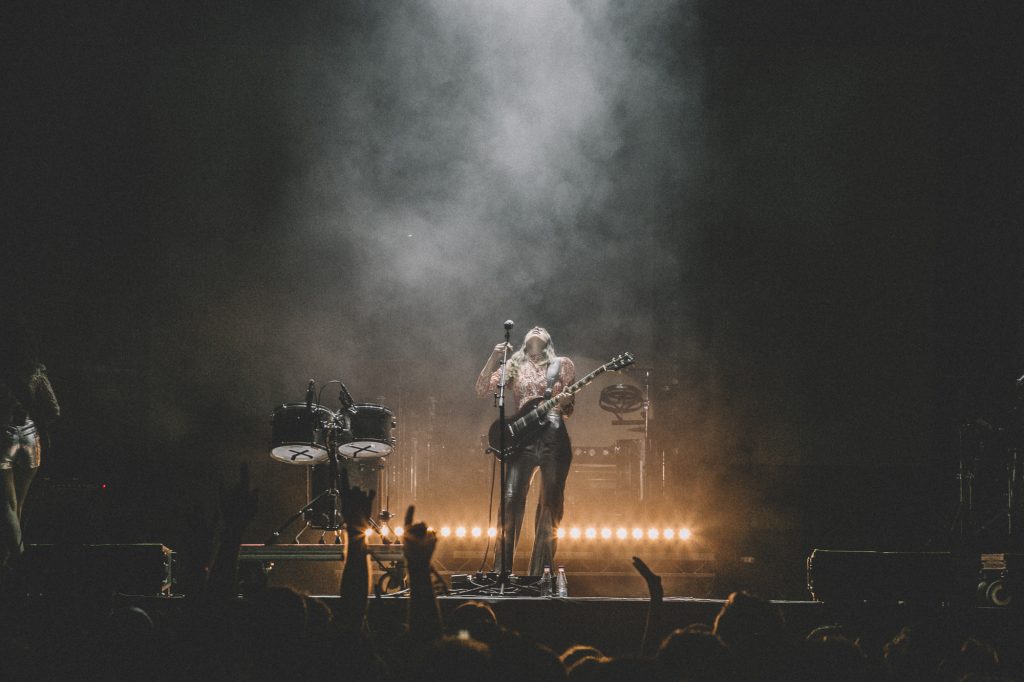
Words and pictures by Rick Burin. Photos, in order, are: 'Real House' in Dublin; London (final night); 'Real House' in Kilkenny; Dublin; the main window at St Canice's, Kilkenny; Adrianne and Nick Hakim in Glasgow; Dublin; Glasgow; Adrianne and Josefin Runsteen at the Barbican (final night); Manchester; Galway; Ellie O'Neill in Dublin; Galway; Dublin (below).
Showing posts with label Barbican. Show all posts
Wednesday, 1 May 2024
Sunday, 23 December 2018
Review of 2018: Part 2 – Live
This part focuses on LIVE things: mostly music and theatre. Part one (the best part) was about books, you can read that here. Without additional ado, here goes:

2018 had its challenges, but its artistic compensations too. If my seven-year-old self could have seen me in the staff box as Morrissey played 'Everyday Is Like Sunday', he would have first asked whether I'd already retired as a footballer, then asked me to explain exactly how my job was a job, and then felt curiously proud. It was a pinch-yourself moment, of which I've been lucky to have many. I may not see eye-to-eye with Mozza on Anne-Marie Waters, but we'll always have Viva Hate. Most of it, anyway. Not 'Bengali in Platforms'. I saw Lynne Ramsey talk about Morvern Callar (her reaction to seeing the movie for the first time since release, "What a weird fucking film"), Sally Rooney talk about Conversations with Friends, and Tom Courtenay get heckled by opponents of the 1960 Education Act during a seminar on Woodfall's kitchen sink cycle. The world seems to have moved on from stand-up Bridget Christie, judging by the words of friends and the empty seats, which is a shame, as she is better than ever and better than anyone else. I was invited to Edith Bowman's Soundtracking with Lenny Abrahamson, lured to the 2018 Panzini Lectures – blank space has never been so much fun – and dragged others to Elis James and John Robins' book tour. Is watching a man drunkenly planking while his friend recreates the whole of Freddie Mercury's Live Aid set in mime entertaining? I'm still not sure, but I think it is.
***
Gigs of the year:

This man was not in attendance.
10. A Celebration of John Williams/Star Wars: A New Hope in Concert (Royal Albert Hall) – Don't worry, they won't all be things that took place in my office and for which I was responsible for the PR. Just three of the first four, and then the #2. The Williams show was originally 'An Evening with John Williams' and then became 'An Evening without John Williams' as he was regrettably checked into hospital while preparing for the show in London. This created an awful lot of work for the Hall's handsome Press Manager, but we found enough Blitz Spirit that wasn't already being used for Brexit to rally round and win the day. I say 'we', it was mostly the London Symphony Orchestra and substitute conductor Dirk Brossé. It was a hell of a night: poignant, nostalgic, life-affirming, with one great piece of music after another: a triumphant Superman, a lilting, heartbreaking Schindler's List. No-one sounds quite like this orchestra. They were back the following month to accompany the original Star Wars (well, the '97 version) in full: as the two suns rose over Tatooine, the LSO rose to meet them.

9. HAIM (Alexandra Palace) – Being a HAIM fan is like being in a cool gang where everyone is really nice. Support came from Maggie Rogers, who rocked up on stage wearing a cape and got increasingly less interesting.

8. The Snowman (Royal Albert Hall) – I watch this every Christmas. For me it is Christmas, though it was only this year that I realised its ending is a metaphor for Christmas as a grown-up – or at least can be. I watched it with thousands of children, and the Royal Philharmonic playing the music live, and the moment when it becomes clear (after a little ingenious use of perspective) that The Snowman and Young David Bowie are flying was as exalting as ever. The kids loved the show, though despite the neat jokes (pineapple nose!), the bit they laughed at most was when the boy gets changed out of his pyjamas and you see his bum. (Technically this was the second half of a show, but it was on in the middle of the afternoon and I do have to do some work.)

This is actually from the 2016 performance, don't tell anyone.
7. Guy Barker's Big Band Christmas (Royal Albert Hall) – This is one of my favourite things we do, and now an indispensable part of my Christmas. Paloma Faith turned up in a Big Hat, but as ever the incomparable Vanessa Haynes stole the show. She is our Aretha and I still don't understand how she isn't the biggest star in the world.

Still not quite sure about this publicity shot tbh.
6. Paul Brady and Andy Irvine (Barbican Centre) – It's not every day you get to see one of your all-time favourite records played live, long after you thought any such opportunity must have passed. The first half was deep cuts and obscurities, the second half that immortal debut album, featuring Irvine's 'Bonny Woodhall' and Brady's immortal 'Arthur McBride', up there with the best seven minutes of my year.

Somewhere in there is Bjӧrk.
5. All Points East: Bjӧrk and Father John Misty (Victoria Park) – I returned to the fray of the 'outdoor gig' after six years, irresistibly tempted by the two headliners. Neither were as good as the last time I saw them (Bjӧrk in 2016, Misty last year), but those were some unscalable bars. Her absurd sets, magical soundscapes and conga of flautists, and his stripped-back singer-songwriter shtick made for a lovely night. Highlights: 'Isobel' and 'Holy Shit'. And the queues for the loos weren't too bad at all.

4. David Ford presents Milk and Cookies 2018 (Bush Hall) – With #s 8 and 7, think of this as the third part of an informal trilogy of Christmas musical traditions, in which Eastbourne's finest digs out the charity buckets, lays off the songs about dashed dreams and macro-economics, and cranks up his guitar for a succession of unmissable covers. This year's highlights included a heartbreaking piano-led take on Lionel Richie's 'Hello', a gorgeous 'God Only Knows' and an uproarious 'Go Your Own Way', before he made his peace with 'YMCA' (once his punchline in a muddled interview with Rolling Stone) in thrilling, climactic fashion. There was space for his own material too, including a metal-ish freakout to 'Requiem'.

3. Courtney Barnett (Brixton Academy) was blistering and brilliant: intense and heavy and heart-open, warts-and-all joyous. Go get her new record – her best yet – and I'll see you there next time.

2. Nine Inch Nails (Royal Albert Hall) – Fourteen years ago I came down from Manchester on the £1 Megabus to see my first gig in London: Nine Inch Nails at Brixton Academy. This time I got to promote the show. That's not a humblebrag, it's just a brag. I knew this would be great, but not how confrontational and brutal and majestic the new material would sound against the old. Amidst songs from The Downward Spiral and The Fragile, the absolute stand-out was a relentless, furious 'Copy of A'. Sensational light show too: snapping timers casting rhythmic, perverse and iconic shadows.

1. Susanne Sundfør: Music for People in Trouble AV (Barbican Centre) – She just gets better and better. A suite of 11 songs, staged with a deceptively tricksy, pixie-ish sense of fun (the whole band dressed alike in hooded black capes, behind a mesh of projections, so Sundfør will be apparently sat behind a guitar at stage left, then pop up at the piano on the far side), but with a greater emotional heft than any gig I have been to in years. The album, and the show, begin with the quiet naïve simplicity of 'Mantra' and build, via 'Undercover' (the song of the decade), to the towering, escalating wall of sound that is 'Mountaineers'. An utterly singular experience that for an hour takes you out of the world, and then allows you to live in it a little more happily.
***
Theatre of the year...
... is quite a grand title considering I've only seen a dozen things, but here are my six favourites.

6. Julius Caesar (Bridge Theatre) – My artistic appreciation of this production was hampered by having an overloaded kidney and a back spasm, meaning that Caesar was the only person who came out of this play worse than me... but through wincing eyes and a cloud of codeine I found much to love, especially the heartstopping 'Et tu, Brute?' set-piece, a sequence so profoundly moving that it has led me to stop using the phrase as a joke. The acting was variable and the Trumpian trappings a fairly unconvincing gimmick, but at its best it made Shakespeare new.

5. Witness for the Prosecution (County Hall) – As purely entertaining as anything I saw this year: a cleverly-staged production of the Agatha Christie story (memorably filmed by Billy Wilder in 1957): never profound or touched by genius, but remarkably enjoyable. It seems I can live without genius now and then.

4. Guys and Dolls in Concert (Royal Albert Hall) – I'm glad this was good, as I spent about a month working intensively on press for the show and we convinced lots of people to attend. Its abridged nature slightly undercut the play's emotional impact, but the numbers were astonishingly good. Clive Rowe's reprisal of his Olivier-winning role as Nicely Nicely meant that a show-stopping 'Sit Down, You're Rocking the Boat' was guaranteed, Adrian Lester's 'Luck Be a Lady' was great fun and director Stephen Mear's take on the 'Crapshooters' Ballet' was inspired, but it was Australian cabaret star Meow Meow who absolutely stole the show, shrinking the Hall's notably large stage with her mammoth talent, presence and charisma.

It's-a-me, Iago!
3. Othello (The Globe), in which Mark Rylance (as Iago), manages to play the first half of the play almost exclusively for laughs. Genuinely. Rather than wickedness, Iago's evasiveness commences (at least in appearance) as a kind of shameless, confounded innocence – and his plotting as a clever caper – somehow dragging us to his side. Then he starts to drip cruel and complex villainy, all the time looking like Super Mario. Sheila Atim, as a bullish, knowing Emelia, is excellent in support too. The best five quid I've spent since the Merlin Premier League 1993-4 sticker album.

2. The Sea Wall (The Old Vic) – Andrew Scott stands on an otherwise empty stage for half an hour and breaks our hearts. Theatre at its most primal, modern and moving.

1. The Writer (Almeida Theatre) – Oh to write like this. Ella Hickson's confounding, irresistible, meta-textual exploration of gender and sexuality begins with a two-hander between a misogynistic but superficially reasonable theatre director (Samuel West) and a feminist audience member (Lara Rossi), then snaps back to reveal that these are just characters, and that writer Romola Garai is going somewhere else: perhaps to a quasi-psychedelic lesbian rural idyll (complete with a subsequent, sarcastic post-modern deconstruction), perhaps to the brink of masculinity and beyond, attaining power and control at the expense of her identity. It is so entertaining, so funny, so clever and so packed with ideas that it's exhilarating, but it's also utterly haunting: a profoundly disquieting and disorientating piece of theatre. And it even acknowledges that preaching to a small, committed choir in an Islington theatre is a complete waste of time. Maybe I do need some genius now and again.
***

Exhibitions get just a brief mention this year, as I didn't go to many. My favourite was Ocean Liners: Speed and Style at the V&A, which included genuine bits of the Titanic, alongside a celebration of the Normandie's hilarious levels of excess (perhaps not so hilarious during the Depression), and a crash course in liner design. The Great British Seaside, at the National Maritime Museum, was also a lot of fun, bringing together the work of four very different photographers, each preoccupied with a vanishing culture, whether capturing its inherent quirkiness (Martin Parr), its poetry, offbeat dignity and key to national character (Tony Ray-Jones), or its scale if you put a camera a long way away (I wasn't as into Simon Roberts).
***
Thanks for reading. Part three will be about FILMS.

2018 had its challenges, but its artistic compensations too. If my seven-year-old self could have seen me in the staff box as Morrissey played 'Everyday Is Like Sunday', he would have first asked whether I'd already retired as a footballer, then asked me to explain exactly how my job was a job, and then felt curiously proud. It was a pinch-yourself moment, of which I've been lucky to have many. I may not see eye-to-eye with Mozza on Anne-Marie Waters, but we'll always have Viva Hate. Most of it, anyway. Not 'Bengali in Platforms'. I saw Lynne Ramsey talk about Morvern Callar (her reaction to seeing the movie for the first time since release, "What a weird fucking film"), Sally Rooney talk about Conversations with Friends, and Tom Courtenay get heckled by opponents of the 1960 Education Act during a seminar on Woodfall's kitchen sink cycle. The world seems to have moved on from stand-up Bridget Christie, judging by the words of friends and the empty seats, which is a shame, as she is better than ever and better than anyone else. I was invited to Edith Bowman's Soundtracking with Lenny Abrahamson, lured to the 2018 Panzini Lectures – blank space has never been so much fun – and dragged others to Elis James and John Robins' book tour. Is watching a man drunkenly planking while his friend recreates the whole of Freddie Mercury's Live Aid set in mime entertaining? I'm still not sure, but I think it is.
***
Gigs of the year:

This man was not in attendance.
10. A Celebration of John Williams/Star Wars: A New Hope in Concert (Royal Albert Hall) – Don't worry, they won't all be things that took place in my office and for which I was responsible for the PR. Just three of the first four, and then the #2. The Williams show was originally 'An Evening with John Williams' and then became 'An Evening without John Williams' as he was regrettably checked into hospital while preparing for the show in London. This created an awful lot of work for the Hall's handsome Press Manager, but we found enough Blitz Spirit that wasn't already being used for Brexit to rally round and win the day. I say 'we', it was mostly the London Symphony Orchestra and substitute conductor Dirk Brossé. It was a hell of a night: poignant, nostalgic, life-affirming, with one great piece of music after another: a triumphant Superman, a lilting, heartbreaking Schindler's List. No-one sounds quite like this orchestra. They were back the following month to accompany the original Star Wars (well, the '97 version) in full: as the two suns rose over Tatooine, the LSO rose to meet them.

9. HAIM (Alexandra Palace) – Being a HAIM fan is like being in a cool gang where everyone is really nice. Support came from Maggie Rogers, who rocked up on stage wearing a cape and got increasingly less interesting.

8. The Snowman (Royal Albert Hall) – I watch this every Christmas. For me it is Christmas, though it was only this year that I realised its ending is a metaphor for Christmas as a grown-up – or at least can be. I watched it with thousands of children, and the Royal Philharmonic playing the music live, and the moment when it becomes clear (after a little ingenious use of perspective) that The Snowman and Young David Bowie are flying was as exalting as ever. The kids loved the show, though despite the neat jokes (pineapple nose!), the bit they laughed at most was when the boy gets changed out of his pyjamas and you see his bum. (Technically this was the second half of a show, but it was on in the middle of the afternoon and I do have to do some work.)

This is actually from the 2016 performance, don't tell anyone.
7. Guy Barker's Big Band Christmas (Royal Albert Hall) – This is one of my favourite things we do, and now an indispensable part of my Christmas. Paloma Faith turned up in a Big Hat, but as ever the incomparable Vanessa Haynes stole the show. She is our Aretha and I still don't understand how she isn't the biggest star in the world.

Still not quite sure about this publicity shot tbh.
6. Paul Brady and Andy Irvine (Barbican Centre) – It's not every day you get to see one of your all-time favourite records played live, long after you thought any such opportunity must have passed. The first half was deep cuts and obscurities, the second half that immortal debut album, featuring Irvine's 'Bonny Woodhall' and Brady's immortal 'Arthur McBride', up there with the best seven minutes of my year.

Somewhere in there is Bjӧrk.
5. All Points East: Bjӧrk and Father John Misty (Victoria Park) – I returned to the fray of the 'outdoor gig' after six years, irresistibly tempted by the two headliners. Neither were as good as the last time I saw them (Bjӧrk in 2016, Misty last year), but those were some unscalable bars. Her absurd sets, magical soundscapes and conga of flautists, and his stripped-back singer-songwriter shtick made for a lovely night. Highlights: 'Isobel' and 'Holy Shit'. And the queues for the loos weren't too bad at all.
4. David Ford presents Milk and Cookies 2018 (Bush Hall) – With #s 8 and 7, think of this as the third part of an informal trilogy of Christmas musical traditions, in which Eastbourne's finest digs out the charity buckets, lays off the songs about dashed dreams and macro-economics, and cranks up his guitar for a succession of unmissable covers. This year's highlights included a heartbreaking piano-led take on Lionel Richie's 'Hello', a gorgeous 'God Only Knows' and an uproarious 'Go Your Own Way', before he made his peace with 'YMCA' (once his punchline in a muddled interview with Rolling Stone) in thrilling, climactic fashion. There was space for his own material too, including a metal-ish freakout to 'Requiem'.

3. Courtney Barnett (Brixton Academy) was blistering and brilliant: intense and heavy and heart-open, warts-and-all joyous. Go get her new record – her best yet – and I'll see you there next time.

2. Nine Inch Nails (Royal Albert Hall) – Fourteen years ago I came down from Manchester on the £1 Megabus to see my first gig in London: Nine Inch Nails at Brixton Academy. This time I got to promote the show. That's not a humblebrag, it's just a brag. I knew this would be great, but not how confrontational and brutal and majestic the new material would sound against the old. Amidst songs from The Downward Spiral and The Fragile, the absolute stand-out was a relentless, furious 'Copy of A'. Sensational light show too: snapping timers casting rhythmic, perverse and iconic shadows.

1. Susanne Sundfør: Music for People in Trouble AV (Barbican Centre) – She just gets better and better. A suite of 11 songs, staged with a deceptively tricksy, pixie-ish sense of fun (the whole band dressed alike in hooded black capes, behind a mesh of projections, so Sundfør will be apparently sat behind a guitar at stage left, then pop up at the piano on the far side), but with a greater emotional heft than any gig I have been to in years. The album, and the show, begin with the quiet naïve simplicity of 'Mantra' and build, via 'Undercover' (the song of the decade), to the towering, escalating wall of sound that is 'Mountaineers'. An utterly singular experience that for an hour takes you out of the world, and then allows you to live in it a little more happily.
***
Theatre of the year...
... is quite a grand title considering I've only seen a dozen things, but here are my six favourites.

6. Julius Caesar (Bridge Theatre) – My artistic appreciation of this production was hampered by having an overloaded kidney and a back spasm, meaning that Caesar was the only person who came out of this play worse than me... but through wincing eyes and a cloud of codeine I found much to love, especially the heartstopping 'Et tu, Brute?' set-piece, a sequence so profoundly moving that it has led me to stop using the phrase as a joke. The acting was variable and the Trumpian trappings a fairly unconvincing gimmick, but at its best it made Shakespeare new.

5. Witness for the Prosecution (County Hall) – As purely entertaining as anything I saw this year: a cleverly-staged production of the Agatha Christie story (memorably filmed by Billy Wilder in 1957): never profound or touched by genius, but remarkably enjoyable. It seems I can live without genius now and then.

4. Guys and Dolls in Concert (Royal Albert Hall) – I'm glad this was good, as I spent about a month working intensively on press for the show and we convinced lots of people to attend. Its abridged nature slightly undercut the play's emotional impact, but the numbers were astonishingly good. Clive Rowe's reprisal of his Olivier-winning role as Nicely Nicely meant that a show-stopping 'Sit Down, You're Rocking the Boat' was guaranteed, Adrian Lester's 'Luck Be a Lady' was great fun and director Stephen Mear's take on the 'Crapshooters' Ballet' was inspired, but it was Australian cabaret star Meow Meow who absolutely stole the show, shrinking the Hall's notably large stage with her mammoth talent, presence and charisma.

It's-a-me, Iago!
3. Othello (The Globe), in which Mark Rylance (as Iago), manages to play the first half of the play almost exclusively for laughs. Genuinely. Rather than wickedness, Iago's evasiveness commences (at least in appearance) as a kind of shameless, confounded innocence – and his plotting as a clever caper – somehow dragging us to his side. Then he starts to drip cruel and complex villainy, all the time looking like Super Mario. Sheila Atim, as a bullish, knowing Emelia, is excellent in support too. The best five quid I've spent since the Merlin Premier League 1993-4 sticker album.

2. The Sea Wall (The Old Vic) – Andrew Scott stands on an otherwise empty stage for half an hour and breaks our hearts. Theatre at its most primal, modern and moving.

1. The Writer (Almeida Theatre) – Oh to write like this. Ella Hickson's confounding, irresistible, meta-textual exploration of gender and sexuality begins with a two-hander between a misogynistic but superficially reasonable theatre director (Samuel West) and a feminist audience member (Lara Rossi), then snaps back to reveal that these are just characters, and that writer Romola Garai is going somewhere else: perhaps to a quasi-psychedelic lesbian rural idyll (complete with a subsequent, sarcastic post-modern deconstruction), perhaps to the brink of masculinity and beyond, attaining power and control at the expense of her identity. It is so entertaining, so funny, so clever and so packed with ideas that it's exhilarating, but it's also utterly haunting: a profoundly disquieting and disorientating piece of theatre. And it even acknowledges that preaching to a small, committed choir in an Islington theatre is a complete waste of time. Maybe I do need some genius now and again.
***

Exhibitions get just a brief mention this year, as I didn't go to many. My favourite was Ocean Liners: Speed and Style at the V&A, which included genuine bits of the Titanic, alongside a celebration of the Normandie's hilarious levels of excess (perhaps not so hilarious during the Depression), and a crash course in liner design. The Great British Seaside, at the National Maritime Museum, was also a lot of fun, bringing together the work of four very different photographers, each preoccupied with a vanishing culture, whether capturing its inherent quirkiness (Martin Parr), its poetry, offbeat dignity and key to national character (Tony Ray-Jones), or its scale if you put a camera a long way away (I wasn't as into Simon Roberts).
***
Thanks for reading. Part three will be about FILMS.
Labels:
Almeida,
Barbican,
blog,
Brixton Academy,
Courtney Barnett,
Ella Hickson,
gig,
Mark Rylance,
music,
Nine Inch Nails,
review,
review of the year,
Romola Garai,
Royal Albert Hall,
setlist,
Susanne Sundfor,
The Writer
Location:
London, UK
Wednesday, 28 December 2016
Review of 2016: Part 2 – Live
Hello again. Thanks to those of you who read the first part of my review of the year, it means a lot to me, genuinely. And thanks especially to those who shared it on Twitter and Facebook.
Part 1 was about movies, which is when you go into a darkened room and watch a filmed record of people pretending to be other people for about two hours at a time. This second part will cover gigs, exhibitions and the theatre, the last two of which have become an increasing part of my life since I moved to That London, which for all of its many flaws – and the unacceptability of this being the case – dwarfs the rest of Britain when it comes to cultural opportunities. Unless you would care for some more ado, here it is:
THEATRE
5. Sunset Blvd. (London Coliseum)

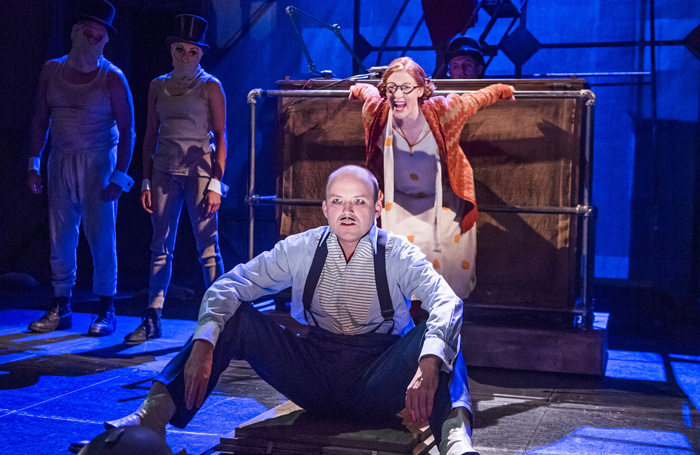
I saw this whilst in the midst of personal trauma and, despite a few flaws, it enraptured and obsessed me. It's an Andrew Lloyd Webber adaptation of Billy Wilder's Hollywood nightmare, brought to the home of the English National Opera with a bare set, a 48-piece orchestra and Glenn Close in the lead (on the rare occasions when she wasn't indisposed). I ended up seeing it twice, and the second time was a more arresting experience, thanks to a front row seat and a stirring, moving performance from Close's big-voiced understudy, Ria Jones, whose performance I much preferred. Oddly, the things I liked most about it, though, were elements that wouldn't necessarily come to mind when you uttered the title: the lush melody of Too Much in Love to Care, the explosions of inventively choreographed dance, and the pairing of Michael Xavier as cynical screenwriter Joe Gillis, and Siobhan Dillon playing his possible lifeline: bright-eyed studio scribe Betty Schaefer. Their irresistible chemistry made Joe's story as much of a tragedy as that of Close and Jones' character – deluded former screen queen, Norma Desmond – lending an undertug of humanity to this story of stifling desperation, laced with bitter, bullet-ridden, waterlogged wisdom.
4. Letters Live (Freemasons' Hall)

A must-see event, if you're a human and in London: letters from history, both well-known and unknown, read by some of the leading lights in the arts, including the likes of Benedict Cumberbatch, Jude Law and Meera Syal. The most profound of these was written, and read, by Caitlin Moran, and immediately and fundamentally transformed my conception of her. It has moments of self-aggrandisement, but it affected me very deeply, and I've looked to it time and again this year when things seemed a little too great to bear.
3. The Threepenny Opera (National Theatre)

A lewd, sharp and sordid version of Brecht and Weill’s classic musical that provides deliciously amoral fun while doubling as a critique of establishment hypocrisy – and perhaps humanity itself. Seeing the play the day after Jo Cox’s murder, the brooding, putrid patriotism that infests the characters – sprawled beneath a gargantuan St George’s flag – cast a pall over the theatre: one of those moments when great art captures the national mood almost through chance. Full review.
2. Ellen Terry with Eileen Atkins (Sam Wanamaker Playhouse, The Globe)

A monumental achievement on an intimate scale, with Atkins recreating a lecture on Shakespeare's women by 19th century actress Ellen Terry. Staged in the Globe's sumptuous smaller room, it was educational, enrapturing and exhilarating, with Atkins/Terry discoursing on gender politics, sketching deft portraits of characters and breaking into dazzling performances of apposite Shakespearean scenes. A quietly breathtaking night.
1. Groundhog Day (The Old Vic)

It's incredibly rare that an actor takes a role indelibly associated with someone else and makes it completely, and perhaps irrevocably, their own. But that's what's happened with Groundhog Day's Phil Connors in this musical adaptation of Harold Ramis's 1993 film. As realised by Broadway star Andy Karl, Connors is a comic whirlwind, powering a jawdropping production that's both a technical and an artistic triumph, using a rotating stage and several travelators, a song style fusing Lorenz Hart with hip hop, and an inspired broadening of its focus to wring every laugh, gasp and tear from the source material, and from its audience. A complete triumph. Full review.

Round-up: Glenda Jackson returned to the stage in a genderblind King Lear at The Old Vic: a mixture of the terrific and the tedious. Romeo and Juliet at the Garrick was interesting and enjoyable, but hampered by an understudy ill-equipped to deal with a framing of the play as a study of sexual obsession. Kinks musical Sunny Afternoon had great moments and laboured griping, The Entertainer recovered from serious inertia to provide a vivid portrait of a past (and present?) Britain, and Day Job at the Bread and Roses Theatre showed that some of the most interesting and dynamic work is done in small rooms by people who aren't on telly. The cast was superb. This year's worst were Show Boat, a play that may need to be either re-tooled or retired, and an unbearable take on The Caretaker at The Old Vic, featuring the lesser-spotted Bad Timothy Spall Performance (above).
***
GIGS
Oddly for me, almost everything I've seen this year has been at work, perhaps because the line-up at the Hall this year was quite ridiculously good.
7. Brian Wilson performs Pet Sounds (Royal Albert Hall)

A deeply moving celebration of one of the 20th century’s greatest artists, but it’s more than that: it’s a show that’s vivid, alive and invigoratingly enjoyable: an exploration and reinvention of some of the finest songs ever written, with Wilson its centre and its beating heart, even if a part of him is still lost somewhere in the 1960s. Full review.
6. Radio 2 Folk Awards (Royal Albert Hall)

A truly magical evening, not least because I spent much of it with Georgia Lucas, the daughter of my great hero, Sandy Denny, as well as meeting people I'd grown up listening to, including Norma Waterson, Linda Thompson and Ralph McTell. The show itself was a wonder, including a tribute to Sandy, Sam Lee singing 'Lovely Molly' and The Unthanks doing a clog dance. I wrote a feature about Sandy's shows at the Hall here.
5. John Grant (Royal Albert Hall)

Not the loud, sweaty, hyper-intensive show we got at Hammersmith Apollo in November, but no less memorable a night, with Grant in balladic, hypnotic and rhapsodic mood. I still haven't recovered from that heartstopping version of Mary MacGregor’s 'Torn Between Two Lovers', featuring Welsh singer-songwriter Cate Le Bon on lead vocals. Full review.
4. CHVRCHES (Royal Albert Hall)

A dancy, high-octane show from Scottish electronica heroes, CHVRCHES. 'Leave a Trace' damn near blew the roof off the building (it's not actually attached, it merely rests on the Hall ). The most fun I've had without laughing, as Woody Allen once said. Review.
3. Björk (Royal Albert Hall)

A mesmerising night in the company of one of our time's truly great artists, centred largely on her tortured last album, Vulnicura, the most harrowing break-up record I’ve heard in years. Before a sell-out crowd of over 5,000, backed purely by the strings of the Aurora Orchestra and wearing a flamboyant mask that lights up midway through the first half (obviously), she gives a mesmerising performance that’s utterly raw: flaying her wounds till they’re tender, then cauterising them till they’re healed. Full review.
2. Paul Simon (Royal Albert Hall)

A stunning, moving, exultant tour of one of the finest back catalogues in popular music. Dylan is a contrarian and McCartney a crowdpleaser, but Simon's something else: a man at peace with his legacy who'll give you the hits in a new way, and knows you'll love it. The show brought us to our feet and dancing countless times, prompted four standing ovations and included both the best ('Stranger to Stranger') and worst ('Wristband') of his current record, but it was his haunting hymn to serenity and sorrow, 'The Sound of Silence', that really took my breath away. Full review.
1. Basia Bulat (Hoxton Square Kitchen)

She topped last year's list too, but nothing prepared for me this, though: the whispery, wispy, baby-faced Bulat reincarnated as a power-pop diva in a gold cape, charisma bursting from her, as she belted out crowd-pleasers from behind a keyboard, like some improbable, magnificent union between Janis Joplin and Carly Simon. She also had an adorable smear of lipstick on her cheek for the entire show. Full review. And I saw her in Hackney in September too.

Round-up: Other highlights include Belle and Sebastian's 20th anniversary 'If You're Feeling Sinister' show, Guy Barker's warming Big Band Christmas (graphic above), and the Manics doing Everything Must Go. I saw a couple of Proms too, including one in a car park.
***
EXHIBITIONS
7. States of Mind : Tracing the Edges of Consciousness (Wellcome Collection)

This study of the fringes of the mind began simply enough, with paintings representing synaesthesia and photos attempting to capture dreams, then became increasingly unsettling as it journeyed through somnambulism, resistance to anaesthesia, temporary paralysis and memory disorders, augmented by eerie soundscapes and alarming, atmospheric installations. Isn't reality terrifying?
6. Real to Reel (Imperial War Museum)

A handsome, scholarly and accessible exhibition about war and its fictional representation on screen, curiously rather better on movie artefacts than those from genuine battles, but I wasn't complaining. The highlight was right at the end: IDs, the letters of transit and a bona fide cafe chair from Warner Bros' really rather good 1942 movie, Casablanca. Full review. (That's Steve McQueen's bike from The Great Escape in the photo.)
5. Annie Leibovitz – WOMEN: New Portraits (Wapping Hydraulic Power Station)

An interesting exhibition in a startling location of bare, weathered brick and standing striplights. The photos (all of women) alternated vapid society worship and striking, distinctive work, and while seeing that volume, largely projected, created some semantic saturation, it largely engendered admiration for a sure style that avoids self-plagiarism. Leibovitz also captures character quite well, exhibiting a valuable, unexpected humility for a widely proclaimed superstar of the medium. The pub across the road did nice pies too.
4. Abstract Expressionism (Royal Academy)

A heavy-hitting overview that did a fair job of making this material accessible to a beginner like me, showing Pollock's versatility, range and the muscularity of his art, expanding my understanding of Rothko beyond his status as a creator of moods, and introducing me to a selection of (apparently well-known) contemporaries. Robert Motherwell's endless evoking of the Spanish Civil War sounded promising but left me cold, but Still's ever-climbing verticals and the "violent marks" of Kline – stark black lines conjuring noirish city scapes – took my breath away, and I found the fleshy eroticism of de Kooning's 'women' period beguiling. The Pollock and Rothko pieces were utterly overpowering, in both scale and content, and a room of drawings and photos included a lovely shot of the former 'disappearing in light' as he dripped onto a vast canvas. For the most part, this was a really interesting, rewarding exhibition, though with the usual moments of nagging unease I get from modern art exhibitions, as some pictures and painters leave me with the distinct feeling that either I'm stupid or they're shit.
3. Björk Digital (Somerset House)

There’s something endlessly fascinating, dizzyingly esoteric and yet gloriously specific about the shape-shifting, now 50-year-old Björk, for whom music is emotional expression and visual art is avant garde experimentation. This exhibition, tied into her big one-off show at the Royal Albert Hall, was led by four VR experiences, which possessed an enrapturing, all-encompassing embracing of immersion. It was artistically dazzling, its architect’s intrepid, idiosyncratic pursuit of new worlds to conquer enabled by technology that’s amazing to experience, even if it’s not quite there yet. Full review.
2. Warhol (Ashmolean Museum)

A small, brilliant celebration of Warhol's work, from striking but superficial tracings of socialites and celebrities to loops of experimental films and bold, brilliant, perfectly contextualised prints, the best of which finds him sticking great big honking portraits of his friend and polar opposite Joseph Beuys on a cheap laundry bag. From this vantage point, he seems more like a conflicted commentator on his times - bemoaning the unthinking acquisitiveness of art collectors while being commissioned to draw titled millionaires - than a hypocrite, pushing the boundaries of both imagery and popular culture, and exploring his own obsessions and failings, as he cuts a singular swathe through counter-culture and then mainstream America.
... and the winner is...
1. Ragnar Kjartansson (Barbican Centre)

All I knew about Ragnar Kjartansson before this glorious exhibition was that he once got American indie heroes The National to play their song Sorrow over and over again for six hours. Feats of endurance were a recurring theme during the Kjartansson retrospective at the Barbican, but these aren’t just stunts, they’re part of a body of work that treats popular culture with both reverence and scorn (often simultaneously), deals with deadly serious subjects like familial strife and mortality with a beguiling playfulness, and manages to tread that line between being dully prescriptive about what we take from the work and seeming to be about nothing much at all. The piece de resistance (or "stykki de viðnám" in Icelandic), though, was The Visitors, a gorgeous meditation on music, communality and individuality, as eight musicians in separate rooms of a historic building some miles from New York perform a song together, build once more around a single mantra, this time heartbreakingly beautiful: "Once again, I fall into my feminine ways.” I experienced it walking round and round, as in turn each screen came to life, and then each performer began to make music, accentuated as you reached them, from the professionalism of the drummer to the pianist’s classical flourishes, the artist himself crooningly in a bubble bath (a slightly glib gesture) and, best of all, the accordion player singing in an unaffected, Joanne Newsom-ish squeak. It’s an absolutely devastating, exultant and euphoric piece of work: a manifesto, memoir and concert film that you experience in a new way each time, and in a completely unique way based simply on where you stand and where you walk. Full review.
Round-up: I enjoyed Endless Endeavours, a one-room exhibition at the LSE Library celebrating suffragism and described by this reviewer as 'sexy'. Exhibitionism at the Saatchi Gallery was both impressive and infuriating (I took my dad for his birthday), while the Science Museum's Our Lives in Data served up both insight and imagination, right up until the point that it stopped very abruptly.
***
MISCELLANY

Paul Verhoeven and Isabelle Huppert apparently not finding the need to justify the repulsive Elle at LFF2016.
As always, I saw a fair bit of stand-up, enjoying (though not unreservedly) Stewart Lee's Southbank marathon and new Leicester Square show, catching a disappointing but nevertheless entertaining Bridget Christie performance dealing with Brexit, and experiencing David Cross's rather laboured contributions to the medium.
Film-wise, I watched Love and Friendship in the company of Kate Beckinsale and the incredible Whit Stillman (meeting him was a great thrill), saw the likes of Ryan Gosling, Michelle Williams and Kenneth Lonergan at the London Film Festival, and was fortunate enough to both catch Aliens Live at work, and be invited by Neil Brand to the premiere of his score for Allan Dwan's Robin Hood (which I seem to have forgotten to add to my blog), still the best take on that thieving git from Nottingham.
An improbable event teaming Ray Davies and Mark Hamill was one of those once-in-a-lifetime shows you're compelled to go to, regardless of penury or the fact it's in Hornsey, though somehow finer than all of these things was the live reunion of Adam and Joe at BFI Southbank this month, which brought tidings of comfort, joy and delirious silliness at a time when they've scarcely been more needed.
***
Thanks for reading. The final part will be on books and TV, but virtually none of them came out this year, so it probably won't be that interesting for anyone except me.
Part 1 was about movies, which is when you go into a darkened room and watch a filmed record of people pretending to be other people for about two hours at a time. This second part will cover gigs, exhibitions and the theatre, the last two of which have become an increasing part of my life since I moved to That London, which for all of its many flaws – and the unacceptability of this being the case – dwarfs the rest of Britain when it comes to cultural opportunities. Unless you would care for some more ado, here it is:
THEATRE
5. Sunset Blvd. (London Coliseum)

I saw this whilst in the midst of personal trauma and, despite a few flaws, it enraptured and obsessed me. It's an Andrew Lloyd Webber adaptation of Billy Wilder's Hollywood nightmare, brought to the home of the English National Opera with a bare set, a 48-piece orchestra and Glenn Close in the lead (on the rare occasions when she wasn't indisposed). I ended up seeing it twice, and the second time was a more arresting experience, thanks to a front row seat and a stirring, moving performance from Close's big-voiced understudy, Ria Jones, whose performance I much preferred. Oddly, the things I liked most about it, though, were elements that wouldn't necessarily come to mind when you uttered the title: the lush melody of Too Much in Love to Care, the explosions of inventively choreographed dance, and the pairing of Michael Xavier as cynical screenwriter Joe Gillis, and Siobhan Dillon playing his possible lifeline: bright-eyed studio scribe Betty Schaefer. Their irresistible chemistry made Joe's story as much of a tragedy as that of Close and Jones' character – deluded former screen queen, Norma Desmond – lending an undertug of humanity to this story of stifling desperation, laced with bitter, bullet-ridden, waterlogged wisdom.
4. Letters Live (Freemasons' Hall)

A must-see event, if you're a human and in London: letters from history, both well-known and unknown, read by some of the leading lights in the arts, including the likes of Benedict Cumberbatch, Jude Law and Meera Syal. The most profound of these was written, and read, by Caitlin Moran, and immediately and fundamentally transformed my conception of her. It has moments of self-aggrandisement, but it affected me very deeply, and I've looked to it time and again this year when things seemed a little too great to bear.
"Here is a promise, and a fact: you will never, in your life, ever have to deal with anything more than the next minute. However much it feels like you are approaching an event – an exam, a conversation, a decision, a kiss – where, if you screw it up, the entire future will just burn to hell in front of you and you will end, you are not.
That will never happen. That is not what happens.
The minutes always come one at a time, inside hours that come one at a time, inside days that come one at a time – all orderly strung, like pearls on a necklace, suspended in a graceful line. You will never, ever have to deal with more than the next 60 seconds.
Do the calm, right thing that needs to be done in that minute. The work, or the breathing, or the smile. You can do that, for just one minute. And if you can do a minute, you can do the next.
Pretend you are your own baby. You would never cut that baby, or starve it, or overfeed it until it cried in pain, or tell it it was worthless. Sometimes, girls have to be mothers to themselves. Your body wants to live – that’s all and everything it was born to do. Let it do that, in the safety you provide it. Protect it. That is your biggest job. To protect your skin, and heart."
3. The Threepenny Opera (National Theatre)

A lewd, sharp and sordid version of Brecht and Weill’s classic musical that provides deliciously amoral fun while doubling as a critique of establishment hypocrisy – and perhaps humanity itself. Seeing the play the day after Jo Cox’s murder, the brooding, putrid patriotism that infests the characters – sprawled beneath a gargantuan St George’s flag – cast a pall over the theatre: one of those moments when great art captures the national mood almost through chance. Full review.
2. Ellen Terry with Eileen Atkins (Sam Wanamaker Playhouse, The Globe)

A monumental achievement on an intimate scale, with Atkins recreating a lecture on Shakespeare's women by 19th century actress Ellen Terry. Staged in the Globe's sumptuous smaller room, it was educational, enrapturing and exhilarating, with Atkins/Terry discoursing on gender politics, sketching deft portraits of characters and breaking into dazzling performances of apposite Shakespearean scenes. A quietly breathtaking night.
1. Groundhog Day (The Old Vic)

It's incredibly rare that an actor takes a role indelibly associated with someone else and makes it completely, and perhaps irrevocably, their own. But that's what's happened with Groundhog Day's Phil Connors in this musical adaptation of Harold Ramis's 1993 film. As realised by Broadway star Andy Karl, Connors is a comic whirlwind, powering a jawdropping production that's both a technical and an artistic triumph, using a rotating stage and several travelators, a song style fusing Lorenz Hart with hip hop, and an inspired broadening of its focus to wring every laugh, gasp and tear from the source material, and from its audience. A complete triumph. Full review.

Round-up: Glenda Jackson returned to the stage in a genderblind King Lear at The Old Vic: a mixture of the terrific and the tedious. Romeo and Juliet at the Garrick was interesting and enjoyable, but hampered by an understudy ill-equipped to deal with a framing of the play as a study of sexual obsession. Kinks musical Sunny Afternoon had great moments and laboured griping, The Entertainer recovered from serious inertia to provide a vivid portrait of a past (and present?) Britain, and Day Job at the Bread and Roses Theatre showed that some of the most interesting and dynamic work is done in small rooms by people who aren't on telly. The cast was superb. This year's worst were Show Boat, a play that may need to be either re-tooled or retired, and an unbearable take on The Caretaker at The Old Vic, featuring the lesser-spotted Bad Timothy Spall Performance (above).
***
GIGS
Oddly for me, almost everything I've seen this year has been at work, perhaps because the line-up at the Hall this year was quite ridiculously good.
7. Brian Wilson performs Pet Sounds (Royal Albert Hall)

A deeply moving celebration of one of the 20th century’s greatest artists, but it’s more than that: it’s a show that’s vivid, alive and invigoratingly enjoyable: an exploration and reinvention of some of the finest songs ever written, with Wilson its centre and its beating heart, even if a part of him is still lost somewhere in the 1960s. Full review.
6. Radio 2 Folk Awards (Royal Albert Hall)

A truly magical evening, not least because I spent much of it with Georgia Lucas, the daughter of my great hero, Sandy Denny, as well as meeting people I'd grown up listening to, including Norma Waterson, Linda Thompson and Ralph McTell. The show itself was a wonder, including a tribute to Sandy, Sam Lee singing 'Lovely Molly' and The Unthanks doing a clog dance. I wrote a feature about Sandy's shows at the Hall here.
5. John Grant (Royal Albert Hall)

Not the loud, sweaty, hyper-intensive show we got at Hammersmith Apollo in November, but no less memorable a night, with Grant in balladic, hypnotic and rhapsodic mood. I still haven't recovered from that heartstopping version of Mary MacGregor’s 'Torn Between Two Lovers', featuring Welsh singer-songwriter Cate Le Bon on lead vocals. Full review.
4. CHVRCHES (Royal Albert Hall)

A dancy, high-octane show from Scottish electronica heroes, CHVRCHES. 'Leave a Trace' damn near blew the roof off the building (
3. Björk (Royal Albert Hall)

A mesmerising night in the company of one of our time's truly great artists, centred largely on her tortured last album, Vulnicura, the most harrowing break-up record I’ve heard in years. Before a sell-out crowd of over 5,000, backed purely by the strings of the Aurora Orchestra and wearing a flamboyant mask that lights up midway through the first half (obviously), she gives a mesmerising performance that’s utterly raw: flaying her wounds till they’re tender, then cauterising them till they’re healed. Full review.
2. Paul Simon (Royal Albert Hall)

A stunning, moving, exultant tour of one of the finest back catalogues in popular music. Dylan is a contrarian and McCartney a crowdpleaser, but Simon's something else: a man at peace with his legacy who'll give you the hits in a new way, and knows you'll love it. The show brought us to our feet and dancing countless times, prompted four standing ovations and included both the best ('Stranger to Stranger') and worst ('Wristband') of his current record, but it was his haunting hymn to serenity and sorrow, 'The Sound of Silence', that really took my breath away. Full review.
1. Basia Bulat (Hoxton Square Kitchen)
She topped last year's list too, but nothing prepared for me this, though: the whispery, wispy, baby-faced Bulat reincarnated as a power-pop diva in a gold cape, charisma bursting from her, as she belted out crowd-pleasers from behind a keyboard, like some improbable, magnificent union between Janis Joplin and Carly Simon. She also had an adorable smear of lipstick on her cheek for the entire show. Full review. And I saw her in Hackney in September too.

Round-up: Other highlights include Belle and Sebastian's 20th anniversary 'If You're Feeling Sinister' show, Guy Barker's warming Big Band Christmas (graphic above), and the Manics doing Everything Must Go. I saw a couple of Proms too, including one in a car park.
***
EXHIBITIONS
7. States of Mind : Tracing the Edges of Consciousness (Wellcome Collection)

This study of the fringes of the mind began simply enough, with paintings representing synaesthesia and photos attempting to capture dreams, then became increasingly unsettling as it journeyed through somnambulism, resistance to anaesthesia, temporary paralysis and memory disorders, augmented by eerie soundscapes and alarming, atmospheric installations. Isn't reality terrifying?
6. Real to Reel (Imperial War Museum)

A handsome, scholarly and accessible exhibition about war and its fictional representation on screen, curiously rather better on movie artefacts than those from genuine battles, but I wasn't complaining. The highlight was right at the end: IDs, the letters of transit and a bona fide cafe chair from Warner Bros' really rather good 1942 movie, Casablanca. Full review. (That's Steve McQueen's bike from The Great Escape in the photo.)
5. Annie Leibovitz – WOMEN: New Portraits (Wapping Hydraulic Power Station)

An interesting exhibition in a startling location of bare, weathered brick and standing striplights. The photos (all of women) alternated vapid society worship and striking, distinctive work, and while seeing that volume, largely projected, created some semantic saturation, it largely engendered admiration for a sure style that avoids self-plagiarism. Leibovitz also captures character quite well, exhibiting a valuable, unexpected humility for a widely proclaimed superstar of the medium. The pub across the road did nice pies too.
4. Abstract Expressionism (Royal Academy)

A heavy-hitting overview that did a fair job of making this material accessible to a beginner like me, showing Pollock's versatility, range and the muscularity of his art, expanding my understanding of Rothko beyond his status as a creator of moods, and introducing me to a selection of (apparently well-known) contemporaries. Robert Motherwell's endless evoking of the Spanish Civil War sounded promising but left me cold, but Still's ever-climbing verticals and the "violent marks" of Kline – stark black lines conjuring noirish city scapes – took my breath away, and I found the fleshy eroticism of de Kooning's 'women' period beguiling. The Pollock and Rothko pieces were utterly overpowering, in both scale and content, and a room of drawings and photos included a lovely shot of the former 'disappearing in light' as he dripped onto a vast canvas. For the most part, this was a really interesting, rewarding exhibition, though with the usual moments of nagging unease I get from modern art exhibitions, as some pictures and painters leave me with the distinct feeling that either I'm stupid or they're shit.
3. Björk Digital (Somerset House)

There’s something endlessly fascinating, dizzyingly esoteric and yet gloriously specific about the shape-shifting, now 50-year-old Björk, for whom music is emotional expression and visual art is avant garde experimentation. This exhibition, tied into her big one-off show at the Royal Albert Hall, was led by four VR experiences, which possessed an enrapturing, all-encompassing embracing of immersion. It was artistically dazzling, its architect’s intrepid, idiosyncratic pursuit of new worlds to conquer enabled by technology that’s amazing to experience, even if it’s not quite there yet. Full review.
2. Warhol (Ashmolean Museum)

A small, brilliant celebration of Warhol's work, from striking but superficial tracings of socialites and celebrities to loops of experimental films and bold, brilliant, perfectly contextualised prints, the best of which finds him sticking great big honking portraits of his friend and polar opposite Joseph Beuys on a cheap laundry bag. From this vantage point, he seems more like a conflicted commentator on his times - bemoaning the unthinking acquisitiveness of art collectors while being commissioned to draw titled millionaires - than a hypocrite, pushing the boundaries of both imagery and popular culture, and exploring his own obsessions and failings, as he cuts a singular swathe through counter-culture and then mainstream America.
... and the winner is...
1. Ragnar Kjartansson (Barbican Centre)

All I knew about Ragnar Kjartansson before this glorious exhibition was that he once got American indie heroes The National to play their song Sorrow over and over again for six hours. Feats of endurance were a recurring theme during the Kjartansson retrospective at the Barbican, but these aren’t just stunts, they’re part of a body of work that treats popular culture with both reverence and scorn (often simultaneously), deals with deadly serious subjects like familial strife and mortality with a beguiling playfulness, and manages to tread that line between being dully prescriptive about what we take from the work and seeming to be about nothing much at all. The piece de resistance (or "stykki de viðnám" in Icelandic), though, was The Visitors, a gorgeous meditation on music, communality and individuality, as eight musicians in separate rooms of a historic building some miles from New York perform a song together, build once more around a single mantra, this time heartbreakingly beautiful: "Once again, I fall into my feminine ways.” I experienced it walking round and round, as in turn each screen came to life, and then each performer began to make music, accentuated as you reached them, from the professionalism of the drummer to the pianist’s classical flourishes, the artist himself crooningly in a bubble bath (a slightly glib gesture) and, best of all, the accordion player singing in an unaffected, Joanne Newsom-ish squeak. It’s an absolutely devastating, exultant and euphoric piece of work: a manifesto, memoir and concert film that you experience in a new way each time, and in a completely unique way based simply on where you stand and where you walk. Full review.
Round-up: I enjoyed Endless Endeavours, a one-room exhibition at the LSE Library celebrating suffragism and described by this reviewer as 'sexy'. Exhibitionism at the Saatchi Gallery was both impressive and infuriating (I took my dad for his birthday), while the Science Museum's Our Lives in Data served up both insight and imagination, right up until the point that it stopped very abruptly.
***
MISCELLANY
Paul Verhoeven and Isabelle Huppert apparently not finding the need to justify the repulsive Elle at LFF2016.
As always, I saw a fair bit of stand-up, enjoying (though not unreservedly) Stewart Lee's Southbank marathon and new Leicester Square show, catching a disappointing but nevertheless entertaining Bridget Christie performance dealing with Brexit, and experiencing David Cross's rather laboured contributions to the medium.
Film-wise, I watched Love and Friendship in the company of Kate Beckinsale and the incredible Whit Stillman (meeting him was a great thrill), saw the likes of Ryan Gosling, Michelle Williams and Kenneth Lonergan at the London Film Festival, and was fortunate enough to both catch Aliens Live at work, and be invited by Neil Brand to the premiere of his score for Allan Dwan's Robin Hood (which I seem to have forgotten to add to my blog), still the best take on that thieving git from Nottingham.
An improbable event teaming Ray Davies and Mark Hamill was one of those once-in-a-lifetime shows you're compelled to go to, regardless of penury or the fact it's in Hornsey, though somehow finer than all of these things was the live reunion of Adam and Joe at BFI Southbank this month, which brought tidings of comfort, joy and delirious silliness at a time when they've scarcely been more needed.
***
Thanks for reading. The final part will be on books and TV, but virtually none of them came out this year, so it probably won't be that interesting for anyone except me.
Labels:
2016,
Barbican,
best concerts,
best gigs,
Bjork,
exhibitions,
gig,
Groundhog Day,
Imperial War Museum,
John Grant,
music,
musical,
Paul Simon,
Ragnar Kjartansson,
review,
Royal Albert Hall,
tickets
Location:
London, UK
Subscribe to:
Posts (Atom)