Showing posts with label top 100 movies. Show all posts

Friday, 12 August 2016

Rick's 100 favourite movies: Part 4

Hello. Here's the final part of my top 100 countdown, containing my favourite 25 films.

The others parts are here: 100-76, 75-51 and 50-26.

25. Les quatre cents coups (François Truffaut, 1959)
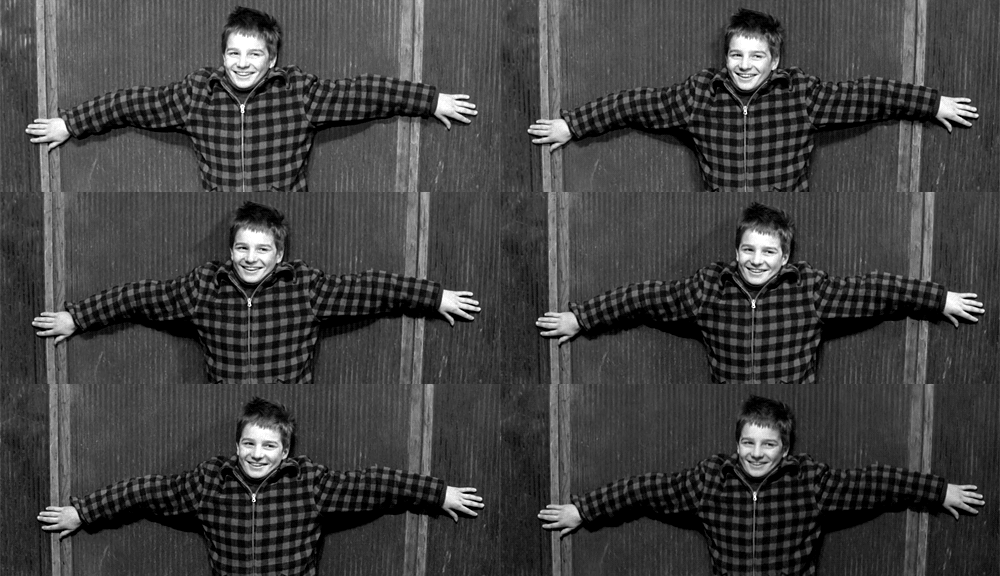
A film that changed my life. Truffaut's debut is a masterpiece on any terms, and was my gateway film to the joys of world cinema, and to cinema as a whole. Full review.

24. Libeled Lady (Jack Conway, 1936)
This is my ultimate comfort movie: I must have seen it 50 times. Aside from one broad slapstick set-piece, a dated Chinese valet and Tracy's competent but uninspired performance, everything works. Loy and Powell simply sparkle together - she at her most arch, warm and beautiful, he turning every line into a mellifluous wonder - while Harlow is in unmissable screwball overdrive, displaying what a truly superb comedian she'd become by this time. Snappily, imaginatively directed by Jack Conway, it's highly quotable, richly romantic and intensely, intensely funny. In fact, it's just about as good as movies get.

23. The Big Parade (King Vidor, 1925)
King Vidor's emotionally overpowering WWI film – of layabout aristo John Gilbert going off to fight in a fug of patriotism, falling in love with French farmgirl Renée Adorée, then finding that war is hell – was a critical and box-office sensation in 1925, and remains unsurpassed in the genre. With a lighthearted first half followed by a brutal second, it's a seamless whole formed of countless unforgettable vignettes, its knockabout comedy and beguiling romance giving way to taut, then horrific action sequences emphasising the brutal lottery of battle. Adorée learning to chew gum; Gilbert arsing about with a barrel on his head, then later sharing a shellhole with the dying German he's just shot; that astonishing ending – its classic scenes are legion, each blessed by an astounding visual poetry. Best of all is the lovers' devastating farewell, one of my favourite scenes in movies, in which a departing Gilbert – finally prised from Adorée's grip – flings his treasured possessions at her from the back of a truck. Finding that he has nothing else of value to throw, he takes off a boot, and chucks that instead. She cradles it in her arms, before collapsing on the road, alone. She's great, as the sexy, pure-hearted, then bereft love interest. And Gilbert's excellent too: this is Exhibit A for the case that his damaged reputation is ill-deserved. The Big Parade made a star out of him, and made the career of Vidor, who would create another contender for 'finest film of the silent era' – The Crowd – and then the first great American talkie (and singie), Hallelujah!

22. Beasts of the Southern Wild (Benh Zeitlin, 2012)
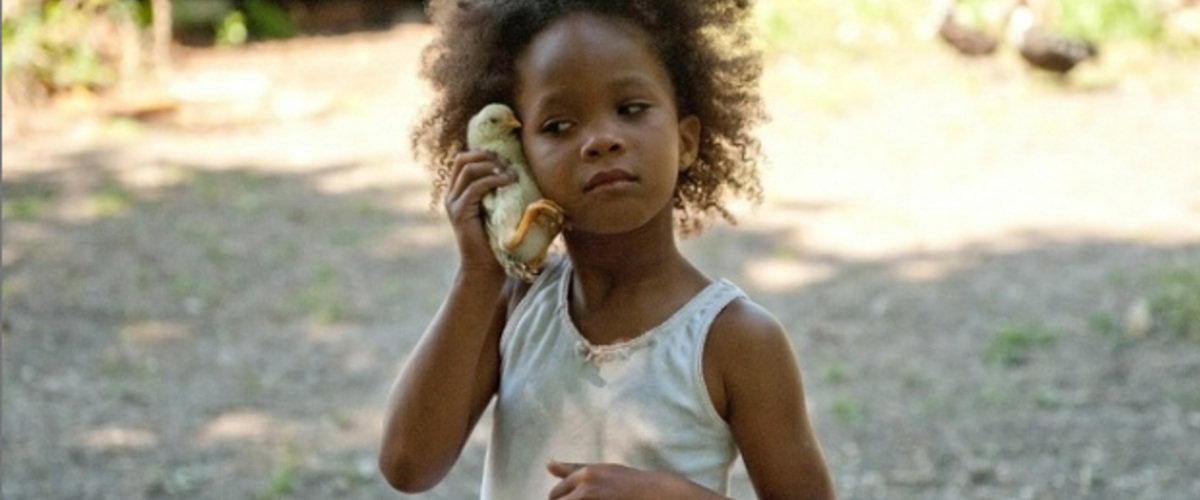
"For the animals that didn’t have a daddy to put them on the boat, the end of the world already happened. They’re down below, trying to breathe through water." What a stunning, dreamlike film this is, and what a beautiful, credible and unique performance lies at its centre, courtesy of the then six-year-old Quvenzhané Wallis, whose Hushpuppy is one of the great characters of recent decades. More here.

21. My Own Private Idaho (Gus Van Sant, 1991)
Gus Van Sant’s dazzling, gutting, phantasmagorical Rent Boy Henry IV. Full review here.

20. Ball of Fire (Howard Hawks, 1941)
That Richard III scene. Oof. Two reviews here.

19. The Apartment (Billy Wilder, 1960)

Like nothing else ever seen in American romantic-comedy. Review.

18. It’s a Wonderful Life (Frank Capra, 1946)
Sometimes you rage against the cinematic canon, and sometimes you realise it's just dead right. Capra's best, Stewart's best, Goodrich and Hackett's best. Just about perfection, and a film that celebrates at once individuality and communality. You have to go through so much pain for the ending, and it's worth it every time. See you at Christmas.

17. How Green Was My Valley (John Ford, 1941)
John Ford's much-maligned film about Welsh miners beat Citizen Kane to the Best Picture Oscar, and rightly so. The opening passage *is* cinema, though only the version of it that we got, the US release doesn't compare.

16. Lucky Star (Frank Borzage, 1929)

Everything Gaynor does is remarkable on one level or another. Review.

15. Paris, Texas (Wim Wenders, 1984)
"I knew these people, these two people..."

14. The Searchers (John Ford, 1956)
The best opening and closing shots in cinema, and what's in between isn't bad either. By my all-time favourite director, and the highest-placed of four John Ford films in this list. I wrote 4,000 words on it here.

13. Amélie (Jean-Pierre Jeunet, 2001)

"No. I'm nobody's little weasel." A wise, warm, whimsical piece of perfection, blessed with an unparalleled Parisian atmosphere and centred on a performance of uncommon brilliance. Review.

12. A Canterbury Tale (Michael Powell and Emeric Pressburger, 1944)
Intrigue and self-revelation amidst the ghosts and games of wartime Britain. Powell and Pressburger fashioned a unique atmosphere in this erotic story of faith and renewal.

11. The Dead (John Huston, 1987)
Oh man, that ending. A dying John Huston took the greatest short story ever written and made a film every bit as good - and perhaps even better.

10. Metropolitan (Whit Stillman, 1990)

Stillman's unique worldview powers this astonishingly clever, literate and moving rom-com about a working class Fourierist seduced by the aristocratic set he happens upon. Chris Eigeman's Nick is the funniest character in the history of movies.

9. Major Barbara (Gabriel Pascal, 1941)
"Did you believe that I was a deserter? That I, who have stood in the streets, and taken my people to my heart, and talked of the holiest and greatest things with them, could ever turn back and chatter foolishly to fashionable people about nothing in a drawing room?" A beautiful, enrapturing performance from the incomparable Wendy Hiller: the perfect, compassionate, warm and beating heart of a satirical, often cynical Bernard Shaw gabfest that cocks a snook at temperance, the Sally Army and those who see nobility in poverty. Many words here.

8. Cinema Paradiso (Giuseppe Tornatore, 1988/2002)
This film isn't perfect but it means so much to me for innumerable reasons. Morricone's score, Tornatore's evocation of Sicily and the magic of movies, and two of my favourite performances of all time (from the young and old Totos) are some (but not all) of them. The film that everyone knows is the 1989 'International Version', but the troubling, more jaundiced 2002 Director's Cut is even better (if markedly less escapist). Review here.

7. A Tree Grows in Brooklyn (Elia Kazan, 1945)

James Dunn towers above all as the twinkly-eyed Irish charmer beset by guilt and self-loathing: the definitive cinematic pipe dreamer. Review.

6. The Student Prince in Old Heidelberg (Ernst Lubitsch, 1927)
"It must be wonderful to be a prince," muses one of the town kids, studying a portrait of the student prince (Novarro). On this evidence, not so much, but then isn't life just about enjoying those perfect moments when they come? This film has more than almost any other. More here.

5. The Life and Death of Colonel Blimp (Michael Powell and Emeric Pressburger, 1943)
Powell and Pressburger's masterpiece about what it means to be British, and at war. Filled with romance, invention and a sad, quiet and reflective wisdom, it's also a film about what it means to be old and sidelined.

4. Ghost World (Terry Zwigoff, 2001)


A melancholy, bitingly hilarious crystallisation of teen ennui, which sees school leaver Thora Birch gravitate towards loner-with-lumbar-support Steve Buscemi. Beautifully written, superbly played and endlessly quotable. "It's America, dude, learn the rules."

3. Hoop Dreams (Steve James, 1994)
You won't forget this documentary in a hurry: four years (and three hours) in the company of two teenage basketball players from inner-city Illinois who dream of the big-time, seeing the NBA as their ticket out of poverty. Shocking, exhilarating and heartbreaking, with astonishing twists of fate, it's a virtuosic, unforgettable film that has as much to say about life itself than any other movie I've ever seen.

2. Les enfants du paradis (Marcel Carne, 1945)
The towering achievement of French cinema: a portrait of a vanished world, a hymn to the art of acting and an allegory about Free France, boasting three of the finest performances ever committed to celluloid. Carné's handling is breathtaking, Prevert's script is clever, witty and worldly-wise and the timeless story seems to grow in strength and resonance with each passing year. More here.

1. Remember the Night (Mitchell Leisen, 1940)

A witty, knockabout Preston Sturges comedy that slips gently into an extraordinarily powerful articulation of romantic love: romantic love as both the saviour of and ultimate threat to family, career and existence itself. Review.

***

Thanks for reading. A few dull stats:

By country:
US: 64
UK: 14
France: 12
Italy: 2
Brazil: 1
Hong Kong: 1
Denmark: 1
Sweden: 1
NZ: 1
Various: 3

By decade:
1920s: 7
1930s: 9
1940s: 16
1950s: 16
1960s: 8
1970s: 6
1980s: 13
1990s: 13
2000s: 7
2010s: 5

Most represented director: John Ford (4)
Colour/black and white: 51/49
Silent films: 8
Musicals: 5
Documentaries: 1
Films in which Eddie Bracken is mistaken for a war hero: 1

And here's the list in pictoral format.

Thursday, 11 August 2016

Rick's 100 favourite movies: Part 3

This is the third of four posts about my favourite movies, taking in everything from Elia Kazan's apologia for informing to Pixar's finest film, via martial arts, pastries and Lillian Gish with a big gun.

Part 1 (100-76) is here, and part 2 (75-51) can be found here.

50. Stage Door (Gregory La Cava, 1937)

A crackling feminist masterpiece that passes the Bechdel Test 90 times a minute, as a flawless ensemble cast trades blistering, bitchy, pitch-black wisecracks while hanging out in a theatrical boarding house for women. It's also the tearjerker to end them all, though it only seems to be me who feels that way. Full review.

49. The Last Picture Show (Peter Bogdanovich, 1971)
Sex and death in Texas, as dissolution sweeps an ailing town and its picture house gets ready to close. Ben Johnson gives one of my favourite performances, as that old, sad voice of reason, Sam the Lion, delivering a waterside monologue that's perhaps the best three minutes of the New Hollywood.

48. The Crowd (King Vidor, 1928)
One of the great late silents, with Vidor interrogating the American Dream like the big leftie he was. Completely heartbreaking.

47. The Dreamlife of Angels (Erich Zonka, 1998)

Profound, poignant film about the friendship that develops – and then unravels – between two young women who meet at a factory in Lille. Ila (Élodie Bouchez) is friendly, compassionate and happy to ask for help; self-centred Maria (Natacha Régnier) throws her pride and practicality to the wind as she embarks on a self-destructive affair with an utter shit. A wise, insightful and immersive study of human relationships, and the nature of friendship, with exceptional performances from the two leads – especially the big-eyed, expressive Bouchez.

46. Unforgiven (Clint Eastwood, 1992)
Unforgiven is Clint Eastwood's masterpiece: a towering dismantling of Western mythos, extraordinary in every way. I wrote one of my best pieces on it.

45. Brief Encounter (David Lean, 1945)
"I want... to die." *sob*

44. On the Waterfront (Elia Kazan, 1954)

With Les 400 Coups (see the final part of the list!) and Star Wars, this was the movie that got me into movies, and inspired a Marlon Brando obsession that's never really gone away. I must have seen it 30 times. It's also fascinating – though troubling – from a historical perspective, as writer Budd Schulberg and director Elia Kazan's apologia for naming names to HUAC. I still know the entire taxicab scene off by heart. Try me.

43. Le Doulos (Jean-Pierre Melville, 1962)
Melville par excellence, with Belmondo at his best and a killer twist.

42. Blessed Event (Roy Del Ruth, 1932)
Arguably the greatest comedy film of all time, with “that kid from advertising” Alvin Roberts (Lee Tracy) commandeering his newspaper’s society section, and turning it into the filthiest gossip column in America. Tracy is my favourite male actor and was once one of the biggest stars in the world, until the Production Code outlawed his brand of comedy and he compounded matters by allegedly urinating on the Mexican Army, with the result that he was unceremoniously fired by the biggest film studio in the world. I've reviewed the film here, and written about Tracy here.

41. Smiles of a Summer Night (Ingmar Bergman, 1955)

Bergman does sex comedy - and the result is a deep, delicate, just about perfect movie, like the best of Lubitsch and Ophüls mixed with Partie de campagne. And while it's influenced everyone from New York-based Jewish songwriter Stephen Sondheim to New York-based Jewish filmmaker Woody Allen, the original remains by far the best. A lawyer, his young wife, his mistress, her lover, her lover's wife, the mistress's mother, the lawyer's son and a couple of horny servants flirt, argue and try to cop off with each other (except the mum), the whole group ultimately coming together for a sunlit weekend in the country. Beautifully written, acted and photographed, it's equal parts sentiment, melancholia, absurdism, witty badinage, and timeless, mind-expanding philosophy on the nature of love, lust and language, full of surprises, clever bon mots and rich characterisation. There's even a bit where someone falls in a puddle.

40. Broadway Danny Rose (Woody Allen, 1984)

Danny Rose: What'd you do, you divorced him, or got a separation, or what?
Tina Vitale: Nah, some guy shot him in the eyes.
Danny Rose: Really? He's blind?
Tina Vitale: Dead.
Danny Rose: Dead. Of course, 'cause the bullets go right through.

I don't think this is Woody's greatest film, but it's the one I return to most often: a sweet, funny, utterly charming tall tale - with hidden emotional heft - about a loveable Broadway talent agent (Woody Allen) trying to escort his best client's mistress (Mia Farrow) to a crucial show, and unwittingly incurring the wrath of the mafia. What seems at first glance a slight, minor movie holds untold pleasures, from Allen's script - stuffed with gems - to Gordon Willis's mesmerising monochrome cinematography, and an unforgettable, uncharacteristic performance from an unrecognisable Farrow, as the forceful, temperamental Tina Vitale, her late husband a juice man for the mob. "He made juice for the mob?" asks a baffled Allen.

39. Crouching Tiger, Hidden Dragon (Ang Lee, 2000)

Crouching Tiger is one of the great films of last decade, often claustrophobic in scale, but epic in its treatment of human emotion, and chock-full of magic, magnificence and good old-fashioned fucking mayhem. It looks beautiful, it sounds beautiful - hell, it is beautiful - and where it's going, we don't needs roads, or even floors. Much more on it here.

38. The Bakery Girl of Monceau (Éric Rohmer, 1963)
A mesmerising, intoxicating Rohmer short that's as close to a personal manifesto as you'll ever see on screen. His enduring preoccupation was where eroticism touches romance, and his view of both was heady, wise, ironic. After the false start that was the director's abysmal debut feature, the tedious, neorealist Signe du Lion, this story of a law student (Barbet Schroeder) flirting with a counter girl at a Parisian bakery (Claudine Soubrier) as he waits for his true love (Michèle Girardon) to walk past is extraordinarily affecting, honest and insightful: grubbily conspiratorial as we're asked to see everything from his jaundiced viewpoint (it's a 'moral tale' in so much as it's about personal morality), a little eerie as it ponders fate and chance, and gloriously sensual when they duck into an alleyway to talk and he starts stroking her neck. The first of Rohmer's Six Moral Tales, and – at 23 minutes – the best film I've seen this year.

37. Black Orpheus (Marcel Camus, 1959)

An astonishing movie that I only heard of for the first time in May; it sounded amazing, so I got a ticket to a BFI screening. It's the Orpheus myth transplanted to the Rio Carnival, with womanising guitarist Breno Mello falling in love with pure, troubled Eurydice (Marpessa Dawn). They dance, have sex, and save one another, but his feisty ex-girlfriend and Eurydice's psychotic, death-faced stalker hint at the unlikeliness of a happy ending. It's a feast for the eyes and ears, with impossibly vibrant Eastman Color cinematography showcasing Rio and its carnival (those yellows!), invigorating dance and intoxicating bossa nova music, while the story moves effortlessly from utterly joyous to blackly terrifying and then abstractly spiritual. Perhaps it runs out of steam towards the very end, but for the most part it captures Rio with a startling immediacy: its characters pulsating with passion, natural charm and an unapologetic, everyday eroticism. The story - adapted from a Brazilian play - struck me as one of those high-concept ideas that might extract a certain truth from its material by dropping it into Rio. In actuality, it's difficult to believe when watching Black Orpheus that it would or could make sense anywhere else, such is the film's complete conviction, and the virtuosic skill that Camus displays in meshing these diverse elements together, while capturing the penury, charm and beauty of the setting, and inspiring a host of pitch perfect performances. It's extraordinary.

36. The Wind (Victor Sjöström, 1928)
One of the high watermarks of silent cinema: a stunningly atmospheric drama ignited by a tour-de-force performance from the incomparable Lillian Gish, who plays a tormented, tortured waif driven to madness as she’s buffeted by a desert wind and by unfettered male sexual aggression. More here.

35. Breaking the Waves (Lars von Trier, 1996)
My favourite performance of all time, courtesy of the incomparable Emily Watson. I also find von Trier the most interesting director working today.

34. Winter's Bone (Debra Granik, 2010)

Debra Granik's feminist masterwork is the key film of the decade so far: an unorthodox, spine-tingling thriller, a humanist fable, and a staggering study of a good person under almost intolerable pressure. In her breakout role, Jennifer Lawrence is Ree Dolly, a strong, selfless, smart-mouthed 17-year-old living with her vacant mother and two young siblings in Missouri's Ozark Mountains. Once it ran with bootleg moonshine, now this here's Meth Country, and if her crystal-cooking father doesn't turn up for his court hearing, they're going to lose the house, the woods and the whole family unit. So Ree sets out in search of him, facing threats, silence and regular beatings from pinch-faced people who share a lot of the same blood that runs in her veins, and down her face. Full review here.

33. All About Eve (Joseph L. Mankiewicz, 1950)
From the astute, literate voiceover and classic freeze-frame that launches the story, via stinging one-liners, sublime reaction faces and a litany of unimprovable set-pieces, to one of the most memorable, satisfying (and scary) endings in the history of movies, All About Eve is a landmark of Hollywood’s Golden Age: an unassailable classic with the kind of dialogue that a moviegoer dreams about. More here.

32. The Snowman (Dianne Jackson and Jimmy T. Murakami, 1982)
What Christmas Eves were invented for (as well as venerating the baby Jesus), and the first film I ever loved.

31. The Crying Game (Neil Jordan, 1992)
The twist. That twist. This mercurial masterpiece of ‘90s cinema has now been reduced to just one thing. Not that its twist isn’t magnificent, but it’s certainly not the film’s raison d’etre, or its reason to be celebrated. It doesn’t explain why the film continues to enrapture, enthral and grow in emotional resonance as the years pass and the viewings rack up. And, unlike most twists, it doesn’t come at the end, but at the halfway point, meaning that if you’ve avoided seeing the film because you think you know how it ends – you really don’t. Full review.

30. Top Hat (Mark Sandrich, 1935)

My favourite musical, starring my favourite musical star, Fred Astaire. The immortal 'Cheek to Cheek' is unquestionably the highlight, but this slice of ineffable, irrepressible escapism is stuffed with great jokes, timeless Irving Berlin songs and irreproachable dancing.

29. Ninotchka (Ernst Lubitsch, 1939)
Garbo Laughs! And Ernst Lubitsch reminds everyone once again that he's the best director of romantic comedies in the history of movies.

28. The Night of the Hunter (Charles Laughton, 1955)
One of the great films, a beguiling, bewitching, sometimes bewildering collision of Gothic horror and fairytale, a haunting, hypnotic vision of pure evil, of goodness, of redemption, of innocence lost and perhaps regained, of greed and guilt, loss, delusion, sexual obsession and puritanical perversion. It has some weak acting, wild lurches in tone and even a little Schufftan silliness, and yet also many of the most striking, magical sequences of its era, climaxing with a half-hour confrontation between good and evil that is amongst the most indelibly artistic and impossibly moving passages of pure cinema ever put onto celluloid. And just when you think it can’t get any better, silent screen icon Lillian Gish turns up, armed with the only truly worthy role of her sound career. Full write-up here.

27. Listen to Britain (Humphrey Jennings, 1942)

Incredible short from propagandist (and anarchist, and surrealist) Humphrey Jennings, one of my favourite filmmakers. Listen to Britain, Fires Were Started and Diary for Timothy are his most well-known films, and this one contains my favourite shot in his ouevre (it's the bloke exhaling smoke through his nose while watching Flanagan and Allen), though most of his work from 1939 onwards is great, especially Spare Time and The Silent Village.

26. Up (Pete Docter and Bob Peterson, 2009)
This is the review I wrote for the paper when it came out: "PIXAR'S latest - and greatest - is a very special piece of work, a deliriously enjoyable yarn that packs a considerable emotional wallop. It begins, gloriously, with a scrupulously detailed faux '30s newsreel, as a Lindbergh-esque aviator − Charles Muntz − returns triumphant from exploring the Venezuelan wilds only to fall from grace amidst accusations of fakery. Watching, transfixed, is Carl Fredricksen, a bespectacled, toothy wannabe adventurer. Returning home from the theatre, he stumbles across a fellow Muntz afficionado, the talkative Ellie, and a friendship blossoms. Through an exquisite, intensely moving wordless montage ('Married Life'), we see Carl and Ellie's life together, as they fall in love, marry and grow old, their dream of exploring South America dashed time and again - the savings jar smashed and raided to cover house repairs and hospital bills. Ending with Ellie's passing, this four minute sequence is a bold, breathtakingly brilliant bit of moviemaking that evokes It's a Wonderful Life and stands shoulder-to-shoulder with that exalted predecessor. Having lost his wife, and set to relinquish his home and independence, retired balloon salesman Carl (voiced by Edward Asner) does the only thing he can, affixing 20,000 balloons to his house in a bid to fly it to Paradise Falls - the lost world of Muntz's famous mission. Accidentally along for the ride is Russell, a young Wilderness Explorer who's desperate to secure his "assisting the elderly" badge and has been hunting for a snipe under the porch. From then on in, all bets are off, as the film's boundless imagination and anarchic sensibility conjure up a world of neurotic talking dogs, androgynous, chocolate-gobbling birds and paranoid adventurers, whilst never forgetting that we care what happens to its damaged, appealing central duo. Hysterically funny and emotionally resonant, Up hums with invention from first frame to last and, in having the guts to tackle big subjects with honesty, subtlety and intelligence, emerges as one of the finest films of recent years."

***


Thanks for reading.

Friday, 5 August 2016

Rick's 100 favourite movies: Part 2

Here's the second of four posts on my favourite films, from Ryan Gosling as a crack addict to Emma Thompson improving Jane Austen, via Charlie Chaplin, rainy France and the slums of Sao Paolo.

You can find the first post here.

75. Little Fugitive (Ray Ashley and Morris Engel, 1953)

Spellbinding, utterly original indie, shot on location in NYC, about a seven-year-old boy (Richie Andrusco) who believes he's killed his brother (Richard Brewster), and so flees to Coney Island. Review.

74. Ride Lonesome (Budd Boetticher, 1959)
The best of Boetticher's 'Ranown' films, perfectly balanced between action, emotion and humour, and with sublime Cinemascope compositions that I'd never really appreciated until I saw it on the big screen today. Randolph Scott is another of his grim, grey anti-heroes, this time a bounty hunter taking giggling James Best to a hanging, accompanied by two gunmen who want a piece of the action (Pernell Roberts and James Coburn), and a widow with enormous pointy boobs and the voice of Marilyn Monroe (Karen Steele). It's exquisitely done, with Roberts absolutely unforgettable as the laidback, uber-cool Sam Boone, whose inscrutable code of ethics seem to be leading us inexorably to a shootout. The final shot is extraordinary. There's more on the film here.

73. Pixote (Hector Babenco, 1981)

The poetry of poverty. This was unavailable for years. I saved up to buy a VHS for £30 on eBay that turned out to be a bootleg. Best decision I ever made.

72. My Childhood (Bill Douglas, 1972)
This blew me away. Douglas made only three short features and the socio-political epic Comrades before his untimely death at the age of 57. This, his debut, is a grainy, uncompromising slice of neorealism – the closest British cinema has come to a Bicycle Thieves or Pather Panchali – shot through with sincerity, compassion and a unique eye for poetic detail. The performances from the two kids (who both died tragically young) are breathtaking and the scene in which the elder, Hughie Restorick, spins and dances atop a bridge in swirling, billowing train smoke is a shot of pure joy in a film dominated by monochrome sadness.

71. Half Nelson (Ryan Fleck, 2006)
As the hollow-eyed lost soul stumbling from one catastrophe to another, Gosling offers a method masterclass that blends quiet tragedy with wry black humour. Full review.

70. One False Move (Carl Franklin, 1992)

A sister to The Crying Game (which is coming up later): nasty violence, comic smarts and a big beating heart, not to mention a fondness for a dock-off twist.

69. City Lights (Charlie Chaplin, 1931)
Not Chaplin's funniest film, but his most poignant and beautiful, with *that* ending.

68. A Star Is Born (George Cukor, 1954)

There aren't many films better than A Star Is Born, the 1937 tragedy that defined most of the rules about how Hollywood saw itself - sprinkled with stardust, drowning in self-loathing - but this remake is one of them. It's more than just a semi-musical update in widescreen and Technicolor, its songs haunt the action, enhancing the air of fatalism and desperation. It's also difficult to detach its atmosphere of ennui and addiction from the story of its star, who died just 15 years later after a succession of personal catastrophes, aged just 47. It's probably the best film Judy Garland ever made and it's certainly both her best performance and the closest she came to a personal statement on film: the show must go on - and it will, mesmerically - but look at the human cost. Judy is Esther Blodgett (shades of her birth name, Frances Gumm), who becomes a star under the name of Vicki Lester and the tutelage of boyfriend Norman Maine (James Mason), a Hollywood heavyweight and helpless alcoholic whose career is heading for the gutter. The film is a gutting, brilliant blend of cynicism and sentiment that's both appalled and entranced by Hollywood - and the starmakers, sycophants and hypocrites who populate it. It scores massively in its performances, though its wildcard is the chemistry they create: when they're bantering they're irresistible, and when they're falling apart, it's almost unwatchable. A Star Is Born is also lit by a slew of brilliant numbers. Top of the pile are 'Born in a Trunk' – added at the 11th hour – an extended, diverse production number in the 'American in Paris Ballet'/'Broadway Melody' vein - 'Lose That Long Face', a knockabout ode to looking on the bright side, and 'The Man That Got Away', perhaps the best song ever put on screen. In it, the only thing more extraordinary than what Garland is doing with her body – apparently trying to rid herself of the song via impassioned posturing – is what she's doing with her voice. That peerless, unapproachable instrument had lost the flawlessness of youth, but gained a remarkable power, as well as a quality and expressiveness akin to Billie Holiday's. Every facet of it is evident in that haunting vocal, which appears when the film is at its most carefree, but foreshadows the movie's central tragedy. The film's invention and heart-stopping evocation of the purest human emotion is perhaps best illustrated by a moment in the 'Born in the Trunk' number. Recounting her singing debut, Garland's vaudevillian (she's playing a character in a number from a film-within-a-film!) goes into corniness overdrive, recalling her dad encouraging her from the wings: "Papa shouted: 'This is it kid, sing…'" A pause, then Garland – dressed in pale blue – starts that old standard with a tranquillity and simplicity that sends a shiver down the spine. "I'll get by," she croons, "As long as I have you..." Throughout, this one-of-a-kind film - a romance, fairytale and Hollywood tragedy rolled into one - destroys you with its story, but exalts you with its realisation.

67. Return to Oz (Walter Murch, 1985)
At one point Dorothy and her pet hen and the weird pumpkin thing escape from a woman who has thousands of heads in jars by getting on a sofa which is also a moose with ferns for wings and making it fly. Five stars.

66. The Long Day Closes (Terence Davies, 1992)
A trip through Terence Davies's memory: guilt and beauty and sexual awakening. The Tammy sequence is my favourite bit of '90s cinema. I interviewed Davies about this movie here.

65. Becket (Peter Glenville, 1964)

The best film I've ever seen about faith. Burton acts everyone else off the screen.

64. The Grapes of Wrath (John Ford, 1940)
This translation of John Steinbeck's immense novel about a Dust Bowl family searching for work and dignity in California is a major work of art in its own right: bristling, poetic and throbbing with anger at the injustice visited upon working people, and filled with stunning imagery and some wonderful acting. Fonda's climactic monologue is is another league. Full review.

63. Bicycle Thieves (Vittorio De Sica, 1948)
Yes I would like to cry a lot, thank you.

62. Tootsie (Sydney Pollack, 1982)
One of the great films. Hoffman is sublime, Lange is the last word in love interests, there's superb comic support from Bill Murray and George Gaynes, and the film refuses to treat any of its characters as a joke (not Durning and not Garr), dealing deftly but properly with every serious issue it raises. It's a rare film that employs drag to interrogate gender stereotypes, not to sit lazily with them, smirking away. It's streaked with greasepaint, charmingly scored, richly romantic, hysterically funny and remarkably poignant. And the last 40 minutes is just utterly sensational. More here.

61. The Man Who Shot Liberty Valance (John Ford, 1962)
John Ford's last word on the Western.

60. Mad Max: Fury Road (George Miller, 2015)

An exhilarating feminist actioner that unleashes torrents of water on the risible '80s Mad Max films from an improbably great height. First off, Ratty Rockatansky has had an upgrade (from Mel Gibson to Tom Hardy); secondly, he's in league with a bunch of gun-toting, patriarchy-defying harem escapees, one of whom (Charlize Theron) can shoot a hell of a lot better than him - and knows it. Introducing such additional, agreeable novelties as grenade-lobbing pole vaulters, a guitar that's also a flamethrower, and a steady, beating heart where once there was none, it's a crunching, breathless, vital piece of genre joy that rewrites most of the rules and resets the action clock to Year Zero. There are moments near the film's beginning where you worry that Miller has again pitched us into a world it's frankly no fun to visit, but as soon as it gets moving - in both senses of the word - it really gets moving. Kudos too for a blockbuster that sees human nature as truly complex and transmutable, epitomised by Nicholas Hoult's pale, Valhalla-bound cult flunkey. Favourite moment? Hardy's little backwards-looking thumbs up, as the first crack appears in his nominal hero's selfish, hard-bitten persona.

59. After the Thin Man (W. S. Van Dyke II, 1936)
Even better than the first, with Loy and Powell their usual sensational team, and given the room to show it, navigating a great plot that gives them plenty of room for comic diversion.

58. The Umbrellas of Cherbourg (Jacques Demy, 1964)

Until Dancer in the Dark came along, this was the gloomiest musical ever made. No real songs, though every word is sung, as it chucks it down in pastel-pretty Cherbourg, and Catherine Deneuve embarks on an ill-advised love affair...

57. Sherlock, Jr. (Buster Keaton, 1924)
Buster's best, though everything he did in the '20s is great. No-one had a decade like it until Woody Allen's 1980s.

56. In My Father’s Den (Brad McGann, 2004)
This film's brilliance, drawn from its unconventionality and unwillingness to deliver any kind of false happy ending, is epitomised by how it handles one key exchange. In the not dissimilar You Can Count on Me, Ruffalo comes up against his child's odious stepfather and pummels his face to the point of oblivion. Here Macfadyen tries the same thing but gets kicked down some steps, his face bleeding. "Prick," mutters his assailant. The great lost film of last decade. See it.

55. Sense and Sensibility (Ang Lee, 1995)


It’s one of the defining scenes of ‘90s British cinema: a star on the cusp of supernova, accompanied by a stunning Patrick Doyle score and Michael Coulter’s sumptuous cinematography, all of it capturing a very old-fashioned sort of English vision. Kate Winslet’s Marianne walks purposefully, forlornly through the driving rain to a hill overlooking her lost love’s house. “Love is not love,” she says, leaning on Shakespearean sonnet in her hour of need, “Which alters when it alteration finds/Or bends with the remover to remove:/O no! It is an ever-fixèd mark/That looks on tempests and is never shaken…” Then the poetry dries up and she just breathes: “Willoughby, oh Willoughby... Willoughby... Willoughby.” I've written about this film a lot over the past couple of years. There's a review here and a feature here.

54. Rocco and His Brothers (Luchino Visconti, 1960)
"I want to make a movie about five brothers," director Luchino Visconti said, "like five fingers on a hand." Yeah, we know what a fucking hand looks like, thanks mate. Its sexual politics is extremely troubling, but Rocco's marriage of neorealism and melodrama makes for compelling viewing, helped by wonderful cinematography and a stunning cast.

53. Secrets & Lies (Mike Leigh, 1996)

There aren’t many films that change the way you see the world. Or many pieces of art, for that matter. Secrets & Lies does just that. It's brilliantly conceived, bracingly authentic and emotionally overpowering, opting at its climax not for soap or sentiment, but something truly remarkable: the truth. More here.

52. The Band Wagon (Vincente Minnelli, 1953)
There are outstanding musical sequences at every turn. The stars’ emotionally overwhelming, artistically dazzling 'Dancing in the Dark' number and hilarious, imaginative, outrageously sensual Girl Hunt ballet are justly celebrated, but the production number montage is no less astounding: four routines in four different styles, almost back-to-back and every one of them smacked way out of the park: the old-fashioned uplift of ‘New Sun in the Sky’, Buchanan and Astaire radiating old-fashioned class in ‘I Guess I’ll Have to Change My Plan’, Fabray’s glorious handling of the melody in the old-fashioned ‘Louisiana Hayride’ and of course three faux-infants shuffling from one leg to the other in the hysterically silly ‘Triplets’. Full review.

51. Stars in My Crown (Jacques Tourneur, 1950)
Tourneur takes a break from defining the horror film and the noir to give us a chunk of gobsmacking Americana, as a gun-toting preacher (though not in the mad way like Harry Powers) played by Joel McCrea brings peace and justice to a small town. It fascinatingly prefigures To Kill a Mockingbird in several respects, but is also an astoundingly powerful movie on its own terms. The central set-piece, in which McCrea faces down a lynch mob of white supremacists, makes me astonished that it isn't better known.

***

Thanks for reading. The final 50 are coming up soon, across two posts. Here's the list so far, in an unwieldy, not-quite-high-res poster format:


Thursday, 4 August 2011

My 100 favourite movies of all time


From October 2009, I counted down my 100 favourite movies on the Harrogate Advertiser website, with little blurbs and everything. Changes to the site mean the list has since lost its formatting, but the text is all still on there if you're interested, beginning here and concluding here.

The other day I decided to freshen up the list, throwing in 21 new entries. There's no Godfather, Detour, Cry Danger or In Bruges, but then space was tight.

My 100 favourite movies of all time

1. Remember the Night (Mitchell Leisen, 1940) - pic above
2. The Life and Death of Colonel Blimp (Michael Powell and Emeric Pressburger, 1943)
3. Hoop Dreams (Steve James, 1994)
4. Ghost World (Terry Zwigoff, 2001)
5. The Searchers (John Ford, 1956)
6. Les enfants du paradis (Marcel Carne, 1945)
7. Diary for Timothy (Humphrey Jennings, 1945)
8. Cinema Paradiso: Director's Cut (Giuseppe Tornatore, 1988/2002)
9. Metropolitan (Whit Stillman, 1990)
10. A Tree Grows in Brooklyn (Elia Kazan, 1945)

11. The Grapes of Wrath (John Ford, 1940)
12. It’s a Wonderful Life (Frank Capra, 1946)
13. Stars in My Crown (Jacques Tourneur, 1950)
14. Blessed Event (Roy Del Ruth, 1932)
15. The Dead (John Huston, 1987)
16. Paris, Texas (Wim Wenders, 1984)
17. Rocco and His Brothers (Luchino Visconti, 1960)
18. The Crowd (King Vidor, 1928)
19. The Man Who Shot Liberty Valance (John Ford, 1962)
20. Sherlock, Jr. (Buster Keaton, 1924)


21. The Student Prince in Old Heidelberg (Ernst Lubitsch, 1927) - pic above
22. How Green Was My Valley (John Ford, 1940)
23. The Shop Around the Corner (Ernst Lubitsch, 1940)
24. The Long Day Closes (Terence Davies, 1992)
25. Bicycle Thieves (Vittorio de Sica, 1947)
26. Ninotchka (Ernst Lubitsch, 1939)
27. My Own Private Idaho (Gus Van Sant, 1991)
28. The Thin Man (W. S. Van Dyke II, 1934)
29. Listen to Britain (Humphrey Jennings, 1942) - SHORT
30. Up (Pete Docter and Bob Peterson, 2009)

31. Spare Time (Humphrey Jennings, 1939) - SHORT
32. A Canterbury Tale (Michael Powell and Emeric Pressburger. 1944)
33. Young Mr. Lincoln (John Ford, 1939)
34. A Thousand Clowns (Fred Coe, 1965)
35. The Snowman (Dianne Jackson and Jimmy T. Murakami, 1982) - SHORT
36. The Apartment (Billy Wilder, 1960)
37. Ball of Fire (Howard Hawks, 1941)
38. Return to Oz (Walter Murch, 1985)
39. The Last Picture Show (Peter Bogdanovich, 1971)
40. Top Hat (Mark Sandrich, 1935)


41. Louisiana Story (Robert Flaherty, 1948) - pic above
42. In My Father’s Den (Brad McGann, 2004)
43. I Love You Again (W. S. Van Dyke II, 1940)
44. The Silent Village (Humphrey Jennings, 1943) - SHORT
45. Whistle Down the Wind (Bryan Forbes, 1961)
46. Le Doulos (Jean-Pierre Melville, 1963)
47. The Wind (Victor Sjostrom, 1928)
48. Wagon Master (John Ford, 1950)
49. The Philadelphia Story (George Cukor, 1940)
50. The Crying Game (Neil Jordan, 1992)

51. Les quatre cents coups (Francois Truffaut, 1959)
52. A Room with a View (James Ivory, 1986)
53. One False Move (Carl Franklin, 1992)
54. Becket (Peter Glenville, 1964)
55. Amélie (Jean-Pierre Jeunet, 2001)
56. Ride the High Country (Sam Peckinpah, 1962)
57. Breaking the Waves (Lars von Trier, 1996)
58. The Railway Children (Lionel Jeffries, 1970)
59. City Lights (Charles Chaplin, 1931)
60. Hannah and Her Sisters (Woody Allen, 1986)


61. The Killer (John Woo, 1989) - pic above
62. A Star Is Born (Vincente Minnelli, 1954)
63. The Royal Tenenbaums (Wes Anderson, 2001)
64. The Purple Rose of Cairo (Woody Allen, 1984)
65. The Lives of a Bengal Lancer (Henry Hathaway, 1935)
66. Distant Voices, Still Lives (Terence Davies, 1988)
67. Broadway Melody of 1940 (Norman Taurog, 1940)
68. Sullivan’s Travels (Preston Sturges, 1941)
69. Chinatown (Roman Polanski, 1974)
70. Casablanca (Michael Curtiz, 1942)

71. The Iceman Cometh (John Frankenheimer, 1973)
72. Singin’ in the Rain (Stanley Donen and Gene Kelly, 1952)
73. The Sorrow and the Pity (Marcel Ophuls, 1969)
74. Charlie Chan at the Olympics (H. Bruce Humberstone, 1937)
75. Kiss Me Kate (George Sidney, 1953)
76. Half Nelson (Ryan Fleck, 2006)
77. Pixote (Hector Babenco, 1981)
78. Lawrence of Arabia (David Lean, 1962)
79. Hail the Conquering Hero (Preston Sturges, 1944)
80. Three Smart Girls (Henry Koster, 1936)


81. The Night of the Hunter (Charles Laughton, 1955) - pic above
82. The Umbrellas of Cherbourg (Jacques Demy, 1964)
83. The General (Clyde Bruckman and Buster Keaton, 1926)
84. Naked (Mike Leigh, 1993)
85. Out of the Past (Jacques Tourneur, 1947)
86. On the Waterfront (Elia Kazan, 1954)
87. The Man Who Would Be King (John Huston, 1975)
88. Five Easy Pieces (Bob Rafelson, 1970)
89. Born Yesterday (George Cukor, 1950)
90. Judge Priest (John Ford, 1934)

91. Dead Man (Jim Jarmusch, 1995)
92. Punch-Drunk Love (Paul Thomas Anderson, 2002)
93. Went the Day Well? (Alberto Cavalcanti, 1942)
94. His Girl Friday (Howard Hawks, 1940)
95. Bugsy Malone (Alan Parker, 1976)
96. Ikiru (Akira Kurosawa, 1952)
97. Citizen Kane (Orson Welles, 1941)
98. Letter From an Unknown Woman (Max Ophuls, 1948)
99. Roman Holiday (William Wyler, 1953)
100. Thank Your Lucky Stars (David Butler, 1943)

Goodness me, I really like films.

***

Some stats:

Decade-by-decade breakdown
1910s - 0
1920s - 5
1930s - 11
1940s - 27
1950s - 12
1960s - 11
1970s - 7
1980s - 11
1990s - 9
2000s - 7
2010s - 0

Most represented directors: John Ford (7), Humphrey Jennings (4), Ernst Lubitsch (3)
Number of foreign-language films: 10
Number of musicals: 8
Number of documentaries: 7
Number of films in which Humphrey Bogart plays himself and uses the phrase "movie fans": 1
Number of films starring Eddie Bracken: 1