Monday, 6 May 2013

Unforgiven, Kathleen Turner and men shouting: "Aaaaaaaaaaaaaaaaaaaaah!" - Reviews #157

Welcome! Eight reviews for your delectation/disgust, including three from ClintFest '13, one of Dustin Hoffman's best, one of Coppola's worst, and the definitive Michelle Yeoh movie.

ClintFest '13:


*SOME SPOILERS*
Unforgiven (Clint Eastwood, 1992)


"Well, I guess they had it comin'."
"We all have it comin'."

Unforgiven is Clint Eastwood's masterpiece: a towering dismantling of Western mythos, extraordinary in every way. It's the best and most important oater since John Ford's supposed "last word" on the genre - The Man Who Shot Liberty Valance - and arguably the most morally and thematically interesting since The Searchers, the Ford film that cast John Wayne as a violent racist hell-bent on revenge, and for once held him to account. It's a film so complex, in fact, that I still don't know how to read its ending, pitched somewhere between Dirty Harry and Gran Torino, with that lingering shot of a cut-up face expressing... what? Gratitude? Longing? Disillusionment?

Eastwood is cast as Will Munny, a merciless killer turned stumbling pig farmer who gets in the saddle once more when a bounty is placed on the heads of two cowboys who beat up a prostitute. The film begins as a fascinating ensemble piece - dealing with Morgan Freeman's past-it partner, a young gun full of bravado, Richard Harris's extravagant liar, English Bob, and the sadistic sheriff who sets in motion this chilling chain of events (Gene Hackman) - before zoning in, tighter and tighter, on its unforgettable anti-hero.

Superbly scripted by David Webb Peoples, who also wrote Blade Runner and Gilliam's Twelve Monkeys, it's a film that subverts just about every stereotype in Western history. This isn't contrariness for its own sake, but a clear and singular vision of the re-writing of reality. There's that old Western town - built in that New Hollywood way, rather than the synthetic efforts of the '40s - the departing stagecoach and the central saloon, but the people who populate this familiar world are like nothing that the movies have ever seen before. Eastwood can barely get on his horse and can't shoot for shit, while the bloodthirsty young gunhand is a short-sighted blowhard who's never pulled the trigger, these characteristics coming to a head after they gun down an unarmed man who's on the toilet, before a haphazard escape that has more to do with Munny's fabled good fortune than any traditional Western virtues. Also key to the narrative is Hackman's brilliant speech about the irrelevancy of being quick on the draw, a point expertly made by the closing set-piece. Meanwhile, in a sublime development, Harris is accompanied by a hagiographer who writes historical novels based on the patriotic old soak's accounts of his exploits. Magnificently, the journo seems to tire of "printing the legend" after he hears the truth from Hackman, but ultimately plans to turn the ugly events of the final reel into a lyrical new book, with Munny the star.

It's a movie that's endlessly preoccupied with death, as evidenced by those remarkable visions that accompany Eastwood's fever, all the more striking for arriving only through dialogue: the ghost of a blameless victim with his head blown off, an Angel of Death coming for Munny, and his wife's corpse crawling with worms. In those passages, Eastwood achieves a level of performance unlike anything he's ever approached, in its authority, sincerity and emotional resonance. Of course Clint's no killer in real life, but you do sense in these later films that he is atoning for the bloodlust of his early vehicles, with their reductionist view of human nature and plethora of unsavoury character traits. This, he's saying, is the cost of killing: the damage that it does to a man's soul.

As a director, too, he's operating in a heightened mode. I love High Plains Drifter (aside from its dodgy sexual politics) and I like Pale Rider, but Unforgiven knocks them both into a ten-gallon hat. Right from the opening scene, with its spare score, stately sense of composition and masterful title card, written in archaic, flavourful Western language, it's clear that he's reaching for a definitive statement - and finding it. This isn't just a solid genre piece or a lively revenge flick with vivid stylistic trappings. Not this time. Unforgiven is a character study of epic proportions in which a reformed man, clinging to sobriety and the morality of his late wife, still haunted by past deeds committed in a fog of booze, slowly begins to transform back into that hollow-eyed compassion-vacuum: an Angel of Death who revels in blood-letting and mythologises murder.

He's blessed, too, with one of the best casts of the decade. Jaimz Woolvett is formidably annoying as the "Schofield Kid" - but his whining, bragging and repetitive dialogue is rather the point - while Hackman is magnificent as the malevolent sheriff, and Freeman stays mercifully clear of the cliches that have dogged his later work. Saul Rubinek, as the nervy writer trying to navigate a world he really doesn't understand, brings something altogether new to the genre, but best of all - almost as good as Eastwood, in fact - is Richard Harris. Yes, his English accent falters a little during his farewells, but it's an irrelevant quibble with a jaw-dropping performance. Arriving in the film as that Western ever-present, the gunfighter with a past whose mere name results in widespread quivering, he moves from garrulous theatricality - recalling Alan Mowbray's heroics in My Darling Clementine - to despondent self-loathing, and then bitter verbal recrimination. The sequence in which Rubinek passes him a gun with which to shoot Hackman, is one of the most unusual, arresting and memorable scenes in Western history, shot through with tension, sadness and a gleeful contempt for genre convention. You think it's reached its zenith when Harris places an emphatic hand on his cell bars, as an admission of defeat, only for Hackman to prolong his misery, dropping the shells onto the floor, each one prompting a jerk of agony from the "Duck of Death". Sorry, "Duke".

Of the women who earn their living "playing billiards" with strangers, only Frances Fisher and Anna Levine really get anything to do. Fisher is a sort of player-manager madam, whose escalating, even horny, desire for revenge is cleverly juxtaposed with Levine's apparent apathy: she may be the real victim in all of this (even without her ears being cut off), but the only wish she expresses in the whole film is to give Munny "a free one". Incidentally, Fisher's fairly broad performance and the staging of the pivotal beating remind you how far Eastwood has come, calling to mind the nasty harpies and knife-wielding psychos who tended to turn up in his lesser work. Happily, we're light years away from the offensive triviality and gratuitous unpleasantness of Play Misty for Me and Sudden Impact. There's a reason why Unforgiven is the film that Clint chose to dedicate to his mentors: Sergio Leone and Don Siegel.

The '50s was the Golden Age of the Western, a decade when filmmakers like John Ford, Anthony Mann and Budd Boetticher took every old-hat notion going, and sat it on its head. Mann turned Jimmy Stewart and Gary Cooper into vicious killers, Ford x-rayed John Wayne's screen persona, and Boetticher and his screenwriter Burt Kennedy created a series of fascinating antagonists often more human than their nominal hero (Randolph Scott). Unforgiven takes those movies, rips out every romantic notion and leaves the bloodied, rotting carcass in front of the saloon. No-one need ever make another Western, because Eastwood's genre epitaph says it all.

***


The Rookie (Clint Eastwood, 1990) - Near the start of this film, you think that Clint's talking about a car, but really he's talking about a woman. Classic. As you might expect, he plays a tough cop who's on the trail of one of the Scousers from Harry Enfield (Raul Julia) and his nympho bird, but finds himself saddled with a blazer-wearing foetus haunted by a voice in his head saying "Jump, Joey! Jump!" (Charlie Sheen). Aside from his moustache and three-stripe tracksuit, Julia may be the least interesting adversary of Eastwood's career, largely because of the laughable disconnect between his main avenue of work (stealing and re-spraying cars) and the measures he takes to cover it up: namely shooting everyone in sight.

Many regard The Rookie as Eastwood's worst ever movie: perhaps swayed by the atrocious dialogue (it's essentially just people saying "motherfucker"), his preposterous partner, and the bit where he's (perhaps) raped by the razor-wielding Sonia Braga. There's certainly further evidence of the nastiness that pervades most of Clint's lesser movies, as well as sort of hypnotic idiocy in excess of almost everything else he's ever done. But, for all that, the first half is great fun, lit by a neat freeway chase staged by Dead Pool director Buddy Van Horn - in which Clint has to dodge swanky sports cars being shoved off the back of a moving lorry - and the star's masterclass in grizzly growling. Then the focus shifts almost entirely to Sheen's titular cop - a man so tormented that he headbutts a mirror - and the bottom falls out of the film. Still, at least Sheen, one of the only Brat Packers to miss out on The Breakfast Club, gets to moan about his dad. That final hour of the film is almost entirely stupid, though a special mention is required for the hilarious set-piece in which Charlie Sheen runs around shouting, "Come on! Come on", and then shoots a dog.

It's an inauspicious re-teaming for Julia and Braga, who won international plaudits in Hector Babenco's Kiss of the Spiderwoman, but Clint's motivations are rather clearer. Hollywood folklore has it that he had to make this one, a kind of Dirty Harry 6 (albeit with a pay-off in which his Nick Pulowski makes Callahan look like a Liberty activist), in order to get the backing for Unforgiven. That seems a reasonable trade-off, even in light of the woof woof bang bang. (2)

***

And here's one I wrote a few weeks back, but forgot to tack up. Note the poverty of my invention, as I again justify a lousy Clint film by harping on about Unforgiven:


Play Misty for Me (Clint Eastwood, 1971) - When a smug radio DJ - who would be faithful to his girlfriend if only he didn't have so many demons (wanker) - opts to boff Lucille Bluth, little does he know that she's going to go all Stabby Titmus on him. But that's what happens, as Lucille graduates from behaving a bit like me as a teenager - needy, desperate, not very good at dealing with rejection - to behaving like me now: scary, fond of lounge pyjamas and weirdly obsessed with Clint Eastwood.

The star's debut behind the camera isn't my sort of film, and isn't very well-directed - goodness knows how he went from this erratic, of-its-time slice of slasher silliness, full of clunky cuts, extraneous coastal footage and ostentatious crane shots, to High Plains Drifter in the space of a year and using the same DP (Bruce Surtees) - but if he hadn't made Play Misty, then I suppose we might never have had Unforgiven, so sitting through it seems a small price to pay.

Lucille (oh, OK, Jessica Walter) brings a dynamism and an appealing vulnerability to her role, alongside all the silly shouting and stabbing, but it's not enough to sustain a film this dated, dislikeable and tiresomely sensationalist - especially when Clint and Donna Mills are so utterly dreadful. The "twist", which is set up with an almost insulting lack of subtlety, is fairly well handled once it arrives, though my favourite bit was when the movie decided to dispense with its plot for 15 minutes while everyone went to the Monterey Jazz Festival. Had I been enjoying it up to that point, I might have felt a bit more annoyed. The musical footage includes that popular number, Willie and the Hand Jive. Smirk. (2)

***


The Raid (Gareth Evans, 2011)

INT. RUNDOWN TOWER BLOCK - DAY

Some men run towards a cop, shouting.

MEN
Aaaaaaaaaaaaaaaaaaaaaaaah!

They fight.

Repeat for an hour and a half.

(2)

***


Wing Chun (Yuen Woo-Ping, 1994) - Kung fu meets Benny Hill in this delirious helping of cartoonish nonsense from Yuen Woo-Ping. It's a bad, magnificent, beautiful, stupid mixture of jaw-dropping wire-work, abysmal comedy and shambolic plotting that expects us to accept Michelle Yeoh as a bloke and Donnie Yen as goofy comic support. Yeoh is the allegedly mannish kung fu supremo and spinster Wing Chun, who becomes entangled with a wronged woman, a gold-digger and a gang of marauding bandits, whilst falling for guileless wally and childhood sweetheart Yen, resulting - of course - in all manner of airborne martial arts mayhem.

It's Yeoh's definitive role, as her lone, aloof fighting machine allows her defences to crumble - though only in romantic terms - leading to some wonderfully sweet moments alongside the film's more visceral delights. Though the plot is all over the shop, the film is grounded and imbued with real resonance by her dynamic performance: not just the whirling, diving and high-kicking that you'd expect, but her subtle expressiveness, variety and swagger too, Wing's calm, personable persona swelling with bravado whenever she's compelled to fight. It goes without saying, of course, that most of her action scenes are stunning. The fiery duel is rather a non-event - and utilises a double due to competing filming commitments - but her rescue mission is nicely done, the tofu fight is a wow and her three scenes with a rather vague villain are just absolutely gobsmacking.

There's also a nice night-time scrap featuring Donnie Yen, who shot the action scenes. He's cast against type as a thick, endlessly grinning comic character - and unlikely love interest - and does OK, coming to life in the fight sequences as you'd expect. Incidentally, he was disappointed that Woo-Ping - his mentor - barely used any of the titular style in the movie. Wing chun was spotlighted memorably in Yen's 2008 film Ip Man, and its sequel, prompting a resurgence of popularity in China. Here, I do think Woo-Ping sometimes pushes too far with his innovative action staging, going past fantastical to unsatisfyingly artificial. I'm far fonder of Crouching Tiger's magical flights of fancy than Kung Fu Hustle's knowing excesses, and there are hints of the latter throughout. There is, though, a respect for Yeoh's balletic grace and mastery of the medium that seems to rein him in. Well, a bit. Some of the time.

Wing Chun is a mess, and appears almost proud to be so, wearing its low comedy, negligible story and transparent improbabilities like a badge of honour, and regarding a running gag about halitosis as at least as valuable as its actual strong suits. But the film is also staggeringly brilliant, full of virtuosic fight scenes, striking location photography and moments of quiet, tender revelation, and lit by the mother of all performances from the mother of all female action heroes. To illustrate the film's problem with its own brilliance/ineptitude, take a look at the film's gender politics, which include not only the initially contemptuous treatment of Kingdom Yuen's smelly sidekick, but also a female hero who bows to no man, and an unexpectedly mature treatment of female sexuality that comes out of nowhere in the movie's second half. Or have a listen to the score: part rousing battle music, part nostalgic love theme and part what appear to be outtakes from The Benny Hill Show that were thrown out for being too heavy-handed. The whole thing is just ridiculous. It should be better than it is. But it doesn't care. (3)

***


Tootsie (Sydney Pollack, 1982) - A brilliantly-scripted, very old-fashioned comedy about a frustrated actor and full-time chauvinist (Dustin Hoffman) disguising himself as a woman to land a part in a soap, then falling for co-star Jessica Lange. It's incredibly witty, slyly satirical in both its take on sexual politics and modern entertainment, and positively reeks of greasepaint, recalling such fine movies about the thespian trade as Twentieth Century, A Double Life and John Osborne's The Entertainer (the poster of which is tacked above Hoffman's bed). The film gambles on a rather conventional trip to the country (with one notable exception) to affirm the central relationship, but pulls it off magnificently, the diversion so well-handled that it draws comparison (perhaps intentionally) with my favourite film of all time, Mitchell Leisen's Remember the Night, while the wrap-up - always the hardest part in a film of this type - is simply flawless.

Movies about cross-dressing tend to be a drag (pun very much intended), or at least to fall down in those sections - I Was a Male War Bride and Love Crazy are a pair of fun comedies that stop firing when Cary Grant and William Powell put on women's clothes, but Tootsie belongs in that rarefied bracket that don drag for their entire length, and yet succeed superbly, a Some Like It Hot for the '80s. Of course, whether it works depends a great deal on whether Hoffman can convince as a woman. He can, while exhibiting impeccable timing, displaying that effortless ability with quick-fire dialogue, and unleashing a succession of magnificent reaction faces. The supporting cast is also note-perfect, with Lange tremendously appealing as the self-deprecating love interest (this was before she decided to get a different face), Charles Durning and director Pollack excelling in well-written parts, and Bill Murray scoring big as Hoffman's roommate, his humour so dry it's in danger of catching alight. It's just an absolute joy from start to finish. (4)

***


Peggy Sue Got Married (Francis Ford Coppola, 1986) - This is an astonishingly awful spin on Back to the Future, with middle-aged divorcee and mother-of-two Kathleen Turner passing out at her school reunion, and waking up back at school, a few weeks shy of graduation. That promising premise is given the most appallingly flat, confused and meaningless treatment, with no apparent dramatic stakes, no plot developments of even the slightest interest, and Turner repeatedly vocalising her plight - and her considerable life experience - for no apparent reason, much to the general bafflement of every other character in the film. She also keeps saying that she loves and misses her kids, but toys relentlessly with the idea of dumping their father (Nicolas Cage), meaning that they wouldn't - of course - ever exist.

Turner is actually very good, but she's powerless against a script that's more concerned with churning out smug one-liners than giving us anything even resembling an engaging story, and a turn from Cage that may genuinely be the worst performance I have ever seen in a movie. As a whining, bleached-blonde crooner, Cage behaves in a way that bears so little relation to how humans actually act that I think he may have been sent by robots to destroy our movies. You know how bad Gary Oldman was in Leon, with every conceivable recognisable trait replaced by some fucking terrible twitch? Well that's what Cage is like here, only he's so committed to sinking Coppola's melancholy sci-fi romance that he can't even speak properly. Bizarrely, though, he can sing - actually rather well. It's a good job that Cage (Coppola's nephew) is so bad, though, because otherwise I'd be forced to round on the ever-wooden Sofia Coppola (the director's daughter) and the perma-gurning Jim Carrey (apparently no relation), whose mindless supporting characterisation makes his part in The Mask look like the very model of restraint.

There are a couple of nice moments dealing with Turner's late grandparents (now, of course, in her life once more), but both times the film immediately jettisons the emotional impact by doing something unfathomably stupid. When Turner breaks down at hearing her grandmother's voice on the phone, and proceeds to touchingly discuss mortality with her mother, the writers decide that now is just the right time for a cock joke. And after she opts to visit her grandparents ('30s movie legends Leon Ames and Maureen O'Sullivan), the lovely set-up is spoilt by a shallow conversation about reincarnation, partially redeemed by the revelation that Turner's daughter is named after O'Sullivan, and then trampled into the dirt by a deus ex machina of a lodge meeting that's so fucking dreadful I thought my eyes were about to start bleeding. All that, and an ageing make-up job in the book-end scenes that appears to have been done by the team responsible for Brokeback Mountain - and my primary school nativity play.

Helen Hunt's in the movie - looking the same age she does now - Joan Allen does a bit, John Carradine has a walk-on and John Barry contributes a reasonable if repetitive score, but whatever the film's promising credentials, it remains a load of absolute fucking shit. (1)

***


*A FEW SPOILERS*
Millions (Danny Boyle, 2004)
- This is a magical, charming fable written by Frank Cottrell Boyce, and shown through the eyes of a hallucinating child - much like The Butcher Boy or In America - that, sadly, starts to falter in its final third. The story sees a fortune fall from the sky into the laps of little Alex Etel and his elder brother. The catch: they have 12 days to spend the lot, before the Euro comes in. The other catch: someone wants it back. And while Etel is desperate to help the poor, guided as he is by visions of the saints, his brother wants a scuba suit, a bike chauffeur and someone to hang up his coat for him at school. Boyce's script is whimsical, wise and clever, recapping and re-writing Bible stories to supplement its vivid view of the world, which is sentimental and idealistic whilst still practical and rooted in realism. The portrait of young minds is recognisable and attractive, and there are loads of good jokes and some very funny supporting characters, including Pearce Quigley as an incredibly ineffective PCSO ("Statistically, you're going to get burgled," he tells a roomful of unhappy looking residents).

Unfortunately, after that glorious bus ride with a papier-mache donkey, the film slightly loses its way: the only thing that really works in the muddled last half-hour is a devastatingly effective chat by the railway tracks that gave me a lump in my throat the size of a football. Most of Boyle's films run out of steam before the end, but I think here the problem is with the script, which vehemently rejects formula, but sadly kicks out clarity at the same time, whilst incorporating an overbearing subplot about a nasty bank robber, and a familial disagreement that's interesting at first, but doesn't pan out well enough. Perhaps Boyce's much-lauded novelisation does a neater and more coherent job of developing and tying up the story. I wasn't impressed by Etel in Cranford, but these first roles are usually more effective because the young actor is just right for the role, and so it is here. His limitations lend his character an earnestness and slight detachment from the real world that suits the material. I'm not really sure what accent James Nesbitt is attempting to approximate as the dad, but he's quite an underrated actor, and he's very good here in a relatively challenging part.

This low-key, low-budget movie does a lot right, but after that wonderfully engaging first hour - notable for a delightfully light touch - it does somewhat lose its way, becoming muddled and a little draggy. And a Cartman figurine is frankly an inappropriate Christmas present for a child. Still, a film this unusual, literate and appealing is always welcome, and kids should love it, especially since the film's youngsters are so adept at outwitting their adult counterparts. (3)

See also: Slumdog Millionaire, my favourite Boyle film, is reviewed here. I didn't think quite so much of Trance.

***

Thanks for reading.

Wednesday, 1 May 2013

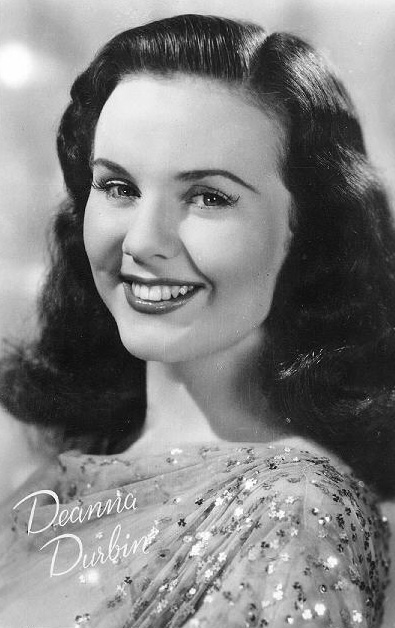
Deanna Durbin RIP


Deanna Durbin, who has passed away aged 91, was a performer of almost supernatural talents.

Not just the voice - that voice - as beautiful an instrument as the movies have ever heard, but the dramatic chops that meant Renoir was desperate to work with her (and which led to some of the loveliest moments of the Golden Age), and that ever-underrated comic ability, incorporating a singular, faux-grown-up "lovestruck" mode, rolled out at regular intervals ("I know, David"), that remains one of the great joys of cinema.

Not all of her pictures were great - she thought the last four so poor that she quit movies and went to live in France - but she was an unfailingly magnificent screen presence, and, when the scripts were worthy of her gifts, the results were just spectacular. 100 Men and a Girl was Churchill's favourite movie (he used to watch it as a treat after major military victories) and the success of that and her other starring vehicles saved Universal studios. Without Durbin, no Destry Rides Again, Jaws, E.T., Back to the Future or Happy Gilmore (sorry about the last one).

Deanna had only pitched up at Universal after being snubbed by MGM. She'd appeared in a two-reeler with Judy Garland, intended as a glorified screen test. MGM could only take on one of them. "Get rid of the fat one," said studio head Louis B Mayer. They got rid of Durbin. He meant Garland. Nice guy.

Her mentor, Joe Pasternak, famously passed up any credit for spotting her talent, declaring: "Deanna's genius had to be unfolded, but it was hers and hers alone, always has been, always will be, and no one can take credit for discovering her."

And genius isn't too strong a word for what she had. When she broke into song, the other actors were usually required to just stare slack-jawed in amazement, or burst into tears. It can't have been hard: I'm usually doing the same thing. Not many comedians could elicit so many laughs from such erratic material, and only a handful of actresses could carry a movie on their shoulders like Durbin. But it's the voice - that voice - that deserves the final word. It's technically flawless but it's also wrenchingly powerful, thanks to the abundance of emotion she invests in everything she sings. Her heartbreaking balladeering on songs like Goin' Home and I'll Take You Home Again Kathleen destroys me. Precious few singers have ever moved me so deeply.

***

Here's a quick primer on one of the greatest talents ever to grace a cinema screen.

Six essential recordings:


My Own (from That Certain Age)
Ave Maria (from It's a Date)
There'll Always Be an England (from the British print of Nice Girl?, a sort of Easy A for the late '30s)
Goin' Home (from It Started with Eve, opposite the mighty Charles Laughton - sorry about the squashed image)
Nessun Dorma (from His Butler's Sister, which sounds like a made-up '40s movie, but really does exist)
I'll Take You Home Again Kathleen (from For the Love of Mary, an iffy romantic comedy about romantic complications at the White House)

***

Six essential films:


Three Smart Girls (Henry Koster, 1936)
A starmaking vehicle, model romantic-comedy and peerless helping of Depression-era escapism all in one, as Durbin - in her feature debut - appears as bright-eyed 14-year-old, Penny Marshall, who reunites her parents with the help of two older siblings. It's funny, moving and wonderfully uplifting, with great numbers and a notable early role for Ray Milland. Durbin is introduced bellowing My Heart Is Singing at the top of her lungs, as is only right. This box-office smash was followed by two sequels: the first is well-acted but overly glum, the second a bit of a slog.

Mad About Music (Norman Taurog, 1938)
Swiss-set boarding school shenanigans, with film star's daughter Durbin pretending her dad is a holidaying composer (Herbert Marshall). A particular treat for fans of people singing whilst riding around on bicycles, and a sweet, perfectly-formed little film.

That Certain Age (Edward Ludwig, 1938)
Deanna grows up, a little, in this completely charming age-gap rom-com, written by Billy Wilder and Charles Brackett, falling for suave middle-aged man Melvyn Douglas, much to the disgust of her suitor, Jackie Cooper. It includes Durbin's spellbindingly beautiful rendition of My Own, which got a Best Song nom.


Spring Parade (Henry Koster, 1940)
The hardest to find of all Durbin's films - it was missing from the 19-disc DVD retrospective, along with It's a Date - but well worth the effort. Cleverly integrating romance, song and dance, it has a feel all its own, with a rich (Americanised) Viennese atmosphere fashioned on a Hollywood soundstage. Durbin's four songs are all sensational.

The Amazing Mrs Holliday (Bruce Manning, 1943)
This is easily the worst film on the list, but it's also perhaps the most interesting: a WWII drama, originally directed by Jean Renoir, that was bashed into the shape of a weak, family-orientated rom-com after Universal got cold feet over the rushes. Durbin gives a sensitive, beguiling dramatic performance - by far the best of her career - and her reading of Mighty Lak' a Rose is extraordinarily moving.

Lady on a Train (Charles David, 1944)
Back in the game! After a few misfires, Durbin came roaring back, her hair bleached blonde, with this Christmas-set fusion of comedy, whodunit and film noir. She's brilliant, leading man David Bruce is hilarious and there's a stunning supporting cast featuring Edward Everett Horton, Ralph Bellamy, Samuel Hinds, Allen Jenkins and Dan Duryea. The numbers include a lovely reading of Silent Night that's curiously imagined but exquisitely sung, the sultry Give Me a Little Kiss, and Cole Porter's Night and Day, cleverly staged and given a complex, tom tom-led arrangement. She appeared in one other noir, Christmas Holiday, directed by genre legend Robert Siodmak, and co-starring Gene Kelly. That's a muddled, overly melodramatic film, but her fascinating turn just about keeps it afloat.

***

If you get a chance to see a Durbin picture, don't pass it up. Perhaps the final few weren't so hot, but she was always incredible to watch, and her vocal numbers are unfailingly magnificent. She'll be much missed, but at least she lived a long and happy life, giving it all up to do what she really wanted. (Incidentally, the bit about her last four movies inspiring her retirement was an exaggeration, but there is some truth behind it. See her only post-retirement interview for more.)

RIP Deanna Durbin.

Tuesday, 30 April 2013

Michelle Yeoh, Skyfall and why philosophers love Thor - Reviews #156

A couple of these are in-depth, the rest are mostly jokes (you'll be the judge of that), as I had a busy weekend, without much time to scribble. This reviews update includes... Peter Lorre! James Bond! The return of ClintFest! But first, a Michelle Yeoh double-bill:


Reign of Assassins (Su Chao-pin and John Woo, 2010) - A reformed killer (Michelle Yeoh) with a new face gets a visit from her old gang, and must take up her flappy sword once more in this colourful wuxia film overseen by John Woo. It's Crouching Tiger-lite, but it's enjoyable, affecting and, at their best, the action scenes are a joy to watch. They all involve swords. Yeoh doesn't move with the same breathless speed that she once did, but, like Fred Astaire in the '50s, she's adapted to middle-age delightfully, and that peerless physical grace is still present and correct. Unlike Fred Astaire in the '50s, she could also still have you in a fight.

While the story, which sees various sword-wielding assassins vying to get their hands on the two halves of a corpse that will give them supreme martial arts abilities, is too confusing in places, it's agreeably personal in nature, with most of the characters getting a nice little sketch of a back story: one wants to open a noodle shop, another fears he isn't a real man, and newcomer Barbie Hsu is great fun as a promiscuous psychopath who's offed her fiance and his family, and now can't seem to keep her clothes on. As with The House of Flying Daggers, a third act twist that threatens to derail the whole movie instead provides a wholly unexpected but completely satisfying ending, which in this case should leave you with a tear in the eye and a stupid grin splashed across your face.

Of course, you don't just watch a martial arts movie for the plot, you watch it because you want to see people pretending to have a fight. At first, the action scenes here are infuriatingly mediocre, particularly in the imprecise way they're directed, so you can't quite see what's transpiring. But as the movie progresses, they improve exponentially.

Yeoh's scenes are typically superb - I could watch her just hopping up and down walls all day - and the scene in which she reveals her kung fu smarts is as superb as you'd expect, though perhaps the most memorable scrap has a chap called The Magician nattily employing a load of fire as he engages in a night-time duel. The scene, which sees no fewer than five assassins facing off (pun intended) in a courtyard, has a real whiff of Crouching Tiger about it, even if at that stage the human context hasn't been amped up as effectively nor are the characters as pure and well-defined for it to pack quite the same heavy emotional punch. But, really, what does? It's still an ace set-piece. And while there's scant evidence of Woo's fingerprints in this lively actioner, I do wonder if he suggested that tasty 3D-photo gimmick used to introduce the characters at the beginning.

Reign of Assassins is slightly too inconsistent in both its narrative and its fight sequences to approach the true classics of the genre, but it's entertaining, touching and has a fantastic pay-off. And without wanting to sound like a massive, creepy, lovestruck weirdo, it's just good fun hanging around with Yeoh for an hour-and-a-half - she's an excellent actress and the finest female action star on the planet by an almost insulting distance.

***


Magnificent Warriors (David Chung, 1987) - There's an action sequence here - in which Michelle Yeoh decides to "distract" the enemy - that's among the most extraordinary things I've ever seen on screen: five solid minutes of eye-popping combat, stuntwork and feats of outrageous derring-do that sees her evading, fighting and escaping from a slew of soldiers, and is akin to watching the very best of Jet Li, Yakima Canutt and Buster Keaton all at once. It's worth the £2.99 that I paid for the DVD at least 10 times over. The rest of this period, Indy-ish adventure movie is quite fun too, hampered by a bitty, rather uninvolving story, some tiresome comedy and an unfortunate predilection for slo-mo, but with many incidental pleasures and enjoyable individual scenes. Can't say I think much of Yeoh's hairdo, mind. (3)

***


Skyfall (Sam Mendes, 2012) - What the hell have they done to this Bond movie? It's got real characters, an interesting story, and even a good supporting cast. And wait, Bond can act? And his best gadget's a gun? It's almost like they made a proper film, and it only took them 50 years. Craig Not Bond (Daniel Craig) is James Bond, international man of misogny, who gets shot by a sexywoman (Naomie Harris), but survives to enjoy further encounters with sexywomen, and to do battle with a cyber-psycho (Javier Bardem), who's gunning for Bond's boss (Judi Dench). Chock-full of imagination and shot through with a Tinker Tailor-ish view of patriotism, it's exciting, amusing, even pleasantly sentimental at times, and though a smidgen of silliness remains and the offbeat final act goes on a bit, Mendes and his team still deserve great credit for trying something a bit different, particularly in the pay-off, while still retaining the requisite number of massive explosions. The whole piece is exalted by a great cast, with Harris, Ralph Fiennes and Ben Whishaw all wonderful additions, and both Craig and Dench making the most of the hidden depths revealed across this unusually elegiac, reflective and grown-up action movie (that still includes a bit where a man gets eaten by a Komodo dragon). The name's Bond, and for once my reaction isn't to yawn in his face. (3)

See also: Casino Royale was my previous favourite; it was alright.

***

ClintFest '13:


The Dead Pool (Buddy Van Horn, 1988) - Have you ever wanted to hear Clint call Liam Neeson "love"? Stupid question, of course you have. Received wisdom has it that the Dirty Barry movies follow the law of diminishing returns. I disagree. The Enforcer, a daft, gimmicky flick pairing Clint with a female sidekick, is far more entertaining than Magnum Force - which squanders a fine premise and has no concept of its own muddled worldview - while the widely-reviled swansong, The Dead Pool, for all its many and glaring faults, is a whole lot easier to take than the disgusting rape revenge movie that preceded it, Sudden Impact.

Yes, the story here about a serial killer is daft (even with its then-novel twist), the script has an unfortunate tendency to explain its own one-liners - along with easy-to-grasp phenomena like celeb deaths coming in threes - and the guy playing the hospital psychiatrist seems to have been fashioned from the same block of wood that once produced Charlton Heston. But look at what else we get: Jim Carrey miming to Guns N' Roses as a hopped-up rock star, Liam Neeson sporting a proto-Qui-Gon Jinn ponytail as an egomaniacal horror director, and future indie darling Patricia Clarkson cooking up some surprisingly strong chemistry with the greying Clint, in her role as a saucy TV journalist.

Most excitingly of all, the film features one of the best and most surreal car chases in movies (though I'll acknowledge that I find almost all car chases deathly dull), as Clint is forced to speed around the streets of San Francisco, pursued by a toy car. And, of course, there's the solid entertainment value that comes with each one of these films: their winning formula, strong sense of location and charismatic central performance, which carry them through even when the improbabilities begin to pile up, the stock situations start to tire or the unsuccessful catchphrases ("Marvellous", "Swell") get trotted out one more time. You'd be hard pushed to argue that it's a great film, or that it deserves to be mentioned in the same breath as that unassailable original, but - at least until it tips over into nastiness in the final reel - it's good, silly fun: a diverting little curio undeserving of its dreadful reputation. And Clint calls Liam Neeson "love". Nope, no idea why. (2.5)

Trivia note: Clint becomes the first person to take a harpoon to a gunfight since Sterling Hayden in Terror in a Texas Town. Almost certainly. ***


*SOME SPOILERS*
Mr. District Attorney (William Morgan, 1941)
- Hurray, it's the New York Times' least favourite film of 1941! And to be honest, you can see why: the dialogue is dire and the story's even worse. Dennis O'Keefe plays a wannabe lawyer from a powerful family who becomes attached to the DA's office, thanks to his uncle's connections, then attached to the pretty newspaper reporter he keeps accidentally walking into (Florence Rice). That's all very well, a suitable set-up for a screwball mystery, but, from then on in, the characters' actions make no sense: he overrides a colleague to purposefully botch a case (while supposedly observing), the central couple reconcile immediately after she tries to write in the paper that he's hounded someone to suicide, and they wrap up the case of mystery man Mr Hyde (Peter Lorre) through a heady fusion of dumb luck, incoherence and unfunniness. There's one laugh in the whole picture (the DA's exasperated retort to O'Keefe when sending him back to his office), which is half the number of hideously misjudged gags: one about a stroke, and the other Rice's baffling exclamation in the climactic scene: "Don't waste ammunition, hit something - if it's only an innocent bystander." Err, what?

So why the two stars? Well, for two of the stars. Rice is cute and appealing as our perky, sparky heroine, calling to mind her performance in the Thin Man rip-off par excellence, 1938's Fast Company. And Peter Lorre is just mesmerising. I'm a big Lorre fan - I'd have him in my five favourite actors of all time - but that fondness for his singular artistry isn't obscuring my judgement. His performance drips with menace and creeping malevolence, turning the movie from a stale programmer to something truly remarkable each time he appears. He has only three scenes, but those passages, shot in an Expressionistic style completely at odds with the rest of this bland movie, are visually superb and dramatically electrifying. We hear a lot about Hyde before he appears, but nothing prepares you for that ominous entrance - emerging from the shadows like Harry Lime - or his quiet, introductory spiel, the potentially banal dialogue lent a chilling air by Lorre's unapproachable delivery. And he even hides out after a murder by just inching up some stairs, as he had in the "first noir", Stranger on the Third Floor, the previous year.

O'Keefe, who would find a niche as a cynical, brutish leading man in Anthony Mann's superb noirs of the late 1940s, is simply miscast as our lolloping, effete lawyer, though there's a ridiculously strong supporting cast for a film from the cheapo Republic studio. Almost a dozen recognisable character actors appear in some form or another: camp southerner Grady Sutton, bespectacled Charles Halton, even gaunt, blonde-haired Billy Benedict, whose sole contribution is to walk down a corridor. Charles Arnt - who played a cheery banker memorably in I Love You Again - is neatly cast against type as, well, a banker again, but one driven to theft by pure animal lust. Joan Blair is also quite interesting as unrepentant bad girl Betty Valentine, overcoming some dodgy material thanks to a dose of unexpected charisma. She had a bit part in Citizen Kane, of all things, the same year.

Mr District Attorney is a patchy, brainless affair that begins with a crap "meet cute" and ends in a blizzard of incoherence and improbability, but it is worth it for Lorre's startling contribution, and Rice's best efforts to inject some sense of charm and realism into an almost wilfully scrappy hotchpotch of improbable plotting, inconsistent characterisation and deeply unamusing irascibility. O'Keefe returned six years later for a film with an identical name, based on the same successful radio series, though no longer playing for laughs. Not that he, or anyone else, get many here. (2)

***


Also, I found this great quote by Heidegger about how much he enjoyed the film Thor: "The less we just stare at the hammer-thing, and the more we seize hold of it and use it, the more primordial does our relationship to it become, and the more unveiledly is it encountered as that which it is." He's right, you know. He also likes it in Avengers when Hulk goes smash.

Wednesday, 24 April 2013

Delicacy, Donnie Yen and John Wayne's bottom - Reviews #155

This week's reviews update includes a martial arts masterpiece, a wonderful, disarming rom-com and a couple of old B-Westerns. Plus: other stuff.


*SOME SPOILERS*
Ip Man (Wilson Yip, 2008)
- This is, simply, one of the three or four best kung fu films I've ever seen, a back-to-basics classic with a realistic setting, a powerful story and a series of superbly-choreographed fight scenes that place an accent on technical skill, and possess a heartening reverence for visual clarity. There are no mystifying close-ups of unidentifiable feet, and the film benefits from both a negligible amount of wire-work and a complete absence of juvenile comedy, placing it in a bracket almost by itself. It's also rooted in a stunning evocation of time and place, complete with poignant, beautiful bleached-out cinematography that calls to mind old sepia photos.

Donnie Yen starred in Yuen Woo-Ping's groundbreaking Iron Monkey (perhaps the first film to properly spotlight the stylistic preoccupations that would find a worldwide audience through The Matrix and Crouching Tiger), and had supporting parts opposite Jet Li in the jaw-dropping Once Upon a Time in China II and Zhang Yimou's disappointing Hero. But, unlike Li, he hasn't had it all his own way. As Yen searched for worthy starring vehicles, so fans had to suffer dreck like New Big Boss, a film which boasts the unique distinction of having a story so mystifyingly convoluted that it makes The Tree of Life look like Under Siege. When Yen ventured abroad, it was to appear as the villain in Shanghai Knights, and then to choreograph the action scenes in Stormbreaker. The poor bastard.

Ip Man, happily, is the perfect vehicle for his talents, casting him as the eponymous aristocrat, a quiet, noble family man who is forced to give up his home, his lifestyle and his beloved Wing Chun martial arts after the Japanese invade in 1937. After a fun, fight-heavy opening, we follow Ip Man and his compatriots through all manner of physical, moral and spiritual degradation, a process of dehumanisation that reaches a symbolic pinnacle when the martial arts masters are offered rice to prostitute their talents in front of the military brass. Ip Man doesn't want the rice, not at that cost, but he would quite like to fight 10 Japanese guys at once, train a factory-full of workers to stick up for themselves, and face down the general in front of the whole town.

It's a story of great heart, masterfully-conceived and perfectly-paced, with numerous punch-the-air(/punch-the-baddie) moments, the dramatic entrances from Yen's near-mythic hero - fists clenched in fury - set-up with such intelligence and emotion that, when he appears, the spirits soar. Each fight scene serves a purpose within the narrative, and every one is viscerally, intensely exciting, Yip and his action director, Sammo Hung, respecting Yen's artistry to such a degree that he's frequently shown in full-length shot, cuts only made to better showcase his skill or to transmit the pure power inherent in those twisting hands and flitting feet.

Agreeably, Yen's hero is also one of the most sensitive and progressive in action movie history. He uses a style of fighting devised by a woman, refuses to fight until given permission by his missus, and dismisses the taunts of a thuggish brute who's just turned up in his house by saying that there is nothing wrong with a man who "respects his wife". Take that, '70s Clint, you chauvinist twat. The thuggish brute, incidentally, is Siu-Wong Fan, who I saw in the terrible Supercop 2 just the other day (see below). There he was a pleasant, slim, slightly vacant young man with big eyes, who turned out to be fairly handy in a scrap. Let's just say that he's eaten several few pies and a lot of creatine since then. And grown a little beard.

Ip Man is an exhilarating experience, one of those films that uplifts you through its sheer brilliance and makes you ask: "Why can't ALL movies be this good?" I never thought I'd type these words, but it's like Fist of Legend. Only better. (4)

***


Ip Man 2 (Wilson Yip, 2010) - A silly, synthetic sequel that begins brilliantly, before turning into Rocky IV for reasons unknown. We pick up the story with Ip Man (Donnie Yen) pitching up in Hong Kong, where he establishes a rooftop martial arts school, attracting some rather cocky students. That promising story is dropped rather abruptly upon the arrival of a patently ludicrous English boxer called Twister, who insists on punching out the kung fu masters, and showcasing his loud, uber-confident and preternaturally gung-ho persona. Surely he's an American, then. If he were English, he'd be wearing cricket whites, constantly doubt himself and lose the climactic contest in a penalty shoot-out.

The opening 40 is riotously entertaining, peppered with superb action scenes, including a much-celebrated string of wire-work duels atop a table and - even better - a frenetic battle at a fish market that's among the finest fight scenes ever filmed. But then the one-dimensional villains arrive and the film starts to stutter, with much melodrama and a Chinese v Western boxing match between Twister and a very special guest that exhibits the latter's amazing two-footed flying kicks, but seems to go on for about three years. The movie builds, of course, to a high-stakes confrontation between the English boxer and our hero, but it's an ugly, unenjoyable and graceless affair full of ridiculous touches (Yen is told he's not allowed to kick his opponent, but only at the end of the third round?!), which dismantles the mythology around the title character.

This movie wasn't necessary, but it could - and should - have been great. Instead, it squanders a sensational opening to emerge as a curiously joyless affair, no better than Jet Li's foray into similar territory, Born to Defend, and light years behind that extraordinary first outing. (2.5)

***


Delicacy (David and Stéphane Foenkinos , 2012) is a charming romantic comedy with plenty going on under the surface, which sees grieving widow Audrey Tautou - who's devoted herself to work after her husband's untimely death - feeling a strange attraction to an ungainly, balding Swede (Francois Damiens), much to the mystification of everyone else, including him. Tautou's films away from Jeunet tend to be either rather wonderful (like Priceless) or absolutely terrible and enlivened solely by her presence. While 2010's Beautiful Lies promised whimsical escapism but delivered only a refined form of cinematic stress, this potentially heavy, gloomy film does quite the opposite, tackling complex subject matter but emerging as a wonderfully entertaining romantic comedy thanks to real characters experiencing real emotions, a pair of lovely performances and a great lightness of touch. Tautou is typically affecting as the sweet-natured Nathalie, who represses her playful, tender side upon the death of her soulmate, and Damiens is simply hilarious as a man who can't believe his good fortune, and is frankly terrified by it.

The film starts in a heightened romantic vein, full of joshing and snogging, moves sure-footedly through tragedy - with the confidence and conviction to give us nothing else for 20 minutes - and then sparks up a romantic comedy, clambering over a couple of contrivances to provide not only a succession of big laughs but also some very real feelings, ending with an ambitious closing solliloquy that strikes just the right note: staying true to its story whilst also looking to the future. There's the romantic scene filmed against the Eiffel Tower that you might expect - though with an amazing punchline that's entirely out of the blue - but my favourite scene is one you won't have seen in any other romantic comedy. After an underwhelming introduction to Tautou's friends, happily lacking in crass Meet the Parents-style disaster, the pair return to her house, where they just sit happily and quietly in one another's company, before nodding off.

These are characters whose mutual attraction has as much to do with a shared sense of humour and a similar way of seeing the world as it does the physical connection that dominates the genre, and I think that's true in real life. For this affable, lanky, socially uncomfortable nerd, batting similarly out of my league with a funny, brown-eyed brunette, I found the film a welcome change: an unusually mature, intelligent and nuanced romance, albeit with a few clear concessions to broad comedy. It's also nice to see Tautou's preposterous talents used to their full. She's too rare a talent to have to wade through rubbish like Beautiful Lies. I watch a lot of romantic comedies (shut up); if only they all had this film's humour, wisdom and view of humanity. (3.5)

***


The Master (Paul Thomas Anderson, 2012) - Another tale of two men tied together by love and loathing from Paul Thomas Anderson, one of the few directors from whom every movie is a must-see. And, as with his last one, the story is framed so tightly around these central characters that there's barely any room for anyone or anything else to squeeze in. But whereas There Will Be Blood was a gripping experience - that ill-judged ending aside - this follow-up is as erratic as its protagonist: a frustrating, pretentious and unsatisfying film that builds up a head of steam time and again, only to repeatedly fall away to nothing. Joaquin Phoenix is an unpredictable, alcoholic and horny World War Two vet still crippled by PTSD, five years on from being demobbed. Wandering by chance into the life of a cult leader and skilled manipulator (Philip Seymour Hoffman), he falls under his spell, prompting numerous peculiar psychological experiments.

What power the film has comes largely from its performances. Amy Adams is decent but underused in an underwritten part, while Hoffman plays a man of menace and charisma with oodles of both, but it's Phoenix who leaves the greatest impression, with surely his finest performance to date. Gaunt, haunted and hampered by a slow mouth and a slower mind, his characterisation is coarse, violent, dislikeable and yet human, a man living in the shadow of past failings, but too inarticulate and fuzzy-minded to put things right. Unfortunately his efforts and the strong period atmosphere - created by an ingenious photography sequence and a slew of jazzy period tunes - are spent on a script that has a great many virtues and fine individual scenes, but even more flaws, with many sequences that are laughably written, elliptical to the point of parody or just plain boring. Anderson is out of his comfort zone, striving for the existential majesty of a Malick film, and frankly he seems out of his depth.

The Master is a film with an enquiring mind and an intriguing view of cultery - shown insightfully from the inside - but it's also extremely self-satisfied, entirely humourless and a good deal less than the sum of its parts. (2.5)

See also: My favourite Anderson film is still Punch-Drunk Love.

***


I thought it safer to Google the poster.

Wild Things (John McNaughton, 1998) - Like every other boy who was 14 in 1998, I've seen two minutes of this film before. The rest of it's good too, probably better: a pervy, shallow but very entertaining neo-noir that plays like The Last Seduction made by FHM. Matt Dillon is a Gareth-Bale-faced guidance counsellor who's accused of rape by two students: a pair of lips with a blue bikini attached (Denise Richards) and a weed-smoking malcontent from the wrong side of the tracks (Neve Campbell). As his life is torn to shreds by Richards' wealthy mother and her society friends ahead of the much-publicised trial, he enlists the services of a lawyer and some time insurance fraudster (Bill Murray), who starts to look for dirt on the accusers, while cop Kevin Bacon sniffs around.

There's no depth to the characters and I do have an issue with the utilisation of such serious subjects in such a light-hearted film, but there's no quibbling with its entertainment value, and just as you think the momentum may be starting to flag, so the twists and turns start coming again, at breakneck speed, and don't you dare switch off once the credits begin to roll. Murray, who's not on screen for more than 10 minutes, steals the show as the low-rent but deceptively brilliant shyster, directed by John McNaughton, who drew such an interesting performance from him in Mad Dog and Glory, but who made his name with one of the best and most shocking films of the '80s, Henry: Portrait of a Serial Killer. George S. Clinton's swampy if repetitive score is another plus.

Incidentally, that scene (not the one with Kevin Bacon's penis), whilst a formative part of my adolescence, looks entirely gratuitous and a bit silly to grown-up eyes, not least because Campbell appears to be so incredibly uncomfortable, but it's still, y'know, alright. (3)

***


Not a great photo, but then it's not a great film.

Supercop 2 (Stanley Tong, 1996) - An idiotic, interminable spin-off from Supercop, one of the best actioners of the '90s, with Michelle Yeoh reprising her role as the high-kicking Inspector Yang, who pitches up in Hong Kong to fight bank robbers. She's always a joy to watch, with a balletic grace, an invigorating physicality and a cat-like ability to spring to improbable heights - or to fall from them, and land on her feet. Sadly the film has a terrible story, banal, ridiculous characters, and an abundance of abysmal dialogue (at least in the dub), with Yeoh simply given too few opportunities to do her thing. Many of the action scenes don't feature her at all, instead just offering endless footage of people firing machine guns. It's as if you've decided to watch a musical, and most of the songs just consist of people shouting (a bit like an Ethel Merman film, then). Jackie Chan, who starred in the original, appears only in a woeful three-minute cameo, dressed in drag. A couple of the fight scenes did briefly rouse me from my stupor, and Siu-Wang Fan isn't bad in a scrap, but this is still one of the most boring, confusing and poorly-directed films I've seen in quite a while. It's full of product placement too. I would tell you more, but I can barely see the computer screen through the smoke from these MARLBORO CIGARETTES BUY MARLBORO CIGARETTES BUY CIGARETTES CHOOSE MARLBORO DELICIOUS MARLBORO MARLBORO ARE THE BEST MARLBORO MARLBORO. (1.5)

***


Ride Lonesome (Budd Boetticher, 1959) - It was John Wayne who started it all. Budd Boetticher needed a star for his next Western, Seven Men from Now, and his big-name producer had an idea. "Let's use Randolph Scott," said Wayne, "he's through". And so began a remarkable collaboration in which, to quote the director, he and his spirited team "shoved Randolph Scott up Duke's ass". Fans known them as the 'Ranown Cycle': seven lean, mean chamber Westerns usually featuring the athletic, stoic Scott as a bereaved gunslinger searching for redemption. The highlights, Seven Men, The Tall T, Ride Lonesome and Comanche Station, hold a strong case for being the best B-Westerns ever made, lit by breathtaking cinematography, Burt Kennedy's spare, poignant dialogue and a complex worldview that allows for a succession of fascinating antagonists. Ride Lonesome, which sees bounty hunter Scott escorting prisoner James Best to a hanging, accompanied by Pernell Roberts' mesmerising anti-hero and a debuting James Coburn, is probably the greatest of the lot: an action-packed, emotionally arresting oater that takes hold from the first, and just never lets go. (4)


Comanche Station (Budd Boetticher, 1960) - The last film in the Ranown Cycle is a fitting swansong: the saddest and most elegiac of the bunch, with a heavy human cost that recalls Douglas Fairbanks' farewell to swashbucklers, The Iron Mask. Randolph Scott stars as a mysterious stranger who frees a married woman (Nancy Gates) from captivity a year after she was swiped by Comanches. But with the Indians on the warpath and a reward posted for her return, the pair are soon forced into an uneasy alliance with a shady figure from his past (Claude Akins), and a pair of young gunmen with an unexpectedly human side. From the unorthodox opening to one of the greatest endings in Western history, Comanche Station is a masterful film, full of warmth and wisdom, but touched by an acute melancholia, and featuring a hero not unlike The Searchers' Ethan Edwards. Scott is more noble, certainly, and has a more progressive view of Native Americans, but he's a man consumed by his endless quest, which in the end isn't so different to Wayne's. (4)

***

Thanks for reading.

ClintFest '13 will return in Reviews #156.

Ten things I learned from Michael Winterbottom

The excellent British filmmaker Michael Winterbottom came to give a talk at St Anne's College in Oxford yesterday. I didn't make notes, as I didn't have my journalism hat on, but I do have a memory. Here are 10 things I learned:


1. A recurrent theme of his films is people in exile. This, more than any other themes or stylistic preoccupations, is a thread running through his work.

2. He favours a "cinema verite" visual style largely because it makes it easier to cut together various takes. Often he'll film actors talking to one another for 20 minutes, then chop the best bits together during editing. He doesn't watch rushes.

3. He doesn't have any favourite directors, as there are so many diverse and random elements in the filmmaking process that he thinks it's a nonsensical concept. He does enjoy many of Steven Soderbergh and Gaspar Noe's movies.

4. If he could have made any film of the past few years, it would be City of God.

5. His favourite experiences have been making In This World and working with Coogan, particularly on 24 Hour Party People, where he vicariously enjoyed that Factory Records feeling. His most stressful and least enjoyable project was The Shot Doctrine, as he spent six months compiling archive footage, before being told that wasn't what was wanted.

6. The graphic 9 Songs was partly a response to the endless conversations on the set of Code 46 about what precisely could be shown during the sex scenes. He says he has an inclination to "annoy", rather than provoke, but doesn't understand why anyone would be resistant to the idea of seeing people "making love" on screen.

7. He abhors a film with a "journey of discovery", because life isn't like that.

8. The idea behind Genova was wanting to explore the relationship between a father and his daughters. They kept coming up with different endings, but never found one they liked.

9. Jude, his film based on Thomas Hardy's Jude the Obscure, finishes sometime before the end of the source material, because the 500-word book is so densely plotted that shooting it all as a two-hour film would have made it "absurdly melodramatic".

10. He will never cast a non-professional actor and then ask them to act. The idea should be that they are able to bring an insight to a character that a professional never could, but this can only happen if the character is close to their real-life experiences. Casting a mixture of big-name stars and non-professional actors creates an atmosphere that is conducive to great performances.

Monday, 15 April 2013

Maurice Elvey, The Place Beyond the Pines, and Clint going to a girls' school - Reviews #154

Yo homeslice. Mo' reviews all up in yo' grill, starting with my birthday present from Mrs Rick.


The Life Story of David Lloyd George (Maurice Elvey, 1918) - Intended as a morale-booster in the wake of World War One, this staggeringly ambitious British epic simply disappeared when Elvey and his team were paid £20,000 by parties unknown to bury it just prior to release. Considered lost for decades, it was found in the house of Lloyd George's grandson more than 75 years later, and finally screened in 1996. Such is the film's scale of ambition and level of success that silent film scholars argue that if it had been released in 1918 as planned, it may have altered the course of British cinema forever.

Viewed almost a century on, it's a remarkable achievement: storytelling on a grand scale. The sequence depicting a riot at Birmingham Town Hall utilises 10,000 extras, intelligently orchestrated (well, once some of them stop grinning); there are victory parades, fog-shrouded war scenes and symbolic tableaus: France's Marianne raises her sword triumphantly upon a Great War battlefield, we flash back into American history, and receive a visit from the ghost of premiers past. There are rural scenes of breathtaking bucolic beauty, and tours of wartime factories which, even if they go on a bit, offer a valuable history lesson, and provide a glimpse of Elvey himself.

Made with the blessing of Lloyd George's family, and featuring a distinctly hagiographic tone, the film begins by showing his genuine birth certificate and snapshots of his parents, shoots extensively at genuine locations, and features numerous details and anecdotes from his career, shared by friends and confidantes, alongside his notable political triumphs. From a humble background, he becomes a solicitor, before his gift for oratory finds him a place in the House of Commons, then the cabinet, and then the hot-seat. He fights for the poor, runs away from the Suffragettes like a big girl's blouse, and then inspires his nation to triumph against the empire-builders of Germany - while lamenting the human cost of the conflict - in what may be a slightly fanciful retelling of the Great War. (I also can't help but notice that the French celebrate his uplifting wartime speech in Paris by waving white handkerchiefs in the air; typical French.)

Lloyd George is played, as an adult, by Norman Page, with Alma Reville - Hitchcock's wife and sometime collaborator - as his spouse, and Ernest Thesiger, the great Golden Age character actor, best-known for The Old Dark House and The Bride of Frankenstein, as Joseph Chamberlain. It's Page's show, though, he's rarely off-screen and proves a charismatic screen presence, with a perma-pointing finger.


Such is its antiquity that the flaws are obvious to the modern viewer: there's little dramatic tension throughout the narrative, the scenes of ordinary people's lives being transformed by the beneficent title figure are heavy-handed in the extreme, and where the writers don't have access to speeches from the late 19th century, they're resistant to speculation, and so simply show Lloyd George speaking with no intertitles. There's also a truly baffling scene in which the film breaks off from its story about social reform to let us know that Dave enjoyed a day off and scored a bogey on the first hole of the golf course, an impressive achievement that's then expressed pictorially. Sadly, no mention is made of Lloyd George's greatest attribute; greater even than his golfing prowess. In his diaries, Tony Benn recalls how he was showing a group of students around the Strangers' Gallery at the House of Commons when he happened to mention the former prime minister. At this point he was interrupted by a very old man, who rose to his feet and announced, "Lloyd George had a prick like a donkey".

As a director, Elvey shows extraordinary promise, but also comes up short compared to, say, Griffith, due to a marked lack of close-ups. The film is rousing and frequently compelling, with an eye for a crowd scene and an ear (or another eye?) for a great line of speech-making, but it's missing the human touch that comes from photographing the face. Elvey is a whizz with a long shot and a wonder with a montage, but a film is often too aloof if you can't read people's expressions. Having said that, on one of the rare occasions when we do get a medium close-up, it's in order to view what must be the most unconvincing false beard I've ever seen. Lloyd George's dad looks like someone has affixed a doormat to his face.

For all the film's highlights - which while strung together rather episodically are great in number - stretching from little Lloyd George shaking his fist at a grown-up buying off the family furniture, to refusing to say the catechism at Sunday school, through speeches in the Commons, a genuinely funny scene about a big liar, and that huge riot, my favourite is by far the short procession sequence, tinted in red, lit by night fires and accompanied by the loveliest portion of Neil Brand's beautiful score, in which Lloyd George's supporters celebrate his election with a sign that reads, "VICTORY FOR YOUNG WALES". Shot from high above, masterfully-composed and effortlessly moving, it's the highlight of an inevitably dated but extraordinarily confident and mightily impressive landmark in British silent cinema. (3.5)

See also: I was alerted to this wonderful movie by Elvey expert Lucie, who spoke about it on the Silent London podcast.

***


CINEMA: The Place Beyond the Pines (Derek Cianfrance, 2012) - People Magazine's two sexiest men of 2011, together at last.

It begins as Drive, turns into Prince of the City and then becomes a film all its own, and all the better for it: an epic tale of fathers and sons, heading inexorably for that place beyond the pines. Ryan Gosling stars as a stunt biker turned bank robber, with Eva Mendes as his ex-girlfriend - and the mother of his child - and Bradley Cooper a dedicated cop who turns up on his tail. Their actions, whether pre-planned or decided in a split-second, echo down the decades, informing the lives of their children, one a gentle loner stoner (Dane DeHaan), the other probably the most irritating character ever in a film (Emory Cohen).

Cianfrance's follow-up to the remarkable Blue Valentine is a vividly-directed movie full of invigorating action sequences, moments of pathos, and surprises in both plotting and characterisation. Yes, it strikes false notes on occasion and threatens to get bogged down in genre rehashing at others, but it's cerebral, emotional and visceral in the tradition of something like Cimino's Thunderbolt and Lightfoot, and has a sense of ambition that keeps it afloat - as well as some of the best performances we'll see this year. Gosling is extremely good, if doing something we've seen rather too many times, Mendes gives arguably her first showing of note, and Cooper builds on the goodwill he began stockpiling in Silver Linings with an extremely unusual, effective performance (and by wearing a nice shellsuit). There are also impressive supporting turns from the red-eyed Dane DeHaan, and particularly Ben Mendelsohn, as Gosling's confidante, while Middle-Aged Spread's Ray Liotta appears to have turned into Ed Balls.

Though the narrative is beset with a certain bittiness, there are a great many fine scenes, and the film acquires a considerable cumulative power as the emotions rise in the final third, culminating in that stunning scene at the titular spot. Having said that, I do have a problem with the film's message. As a teenager, I would have found Gosling's stylish, self-destructive hero an admirable and exciting alternative to his son's strait-laced adoptive father, but now I just think he's a bit of a prick. The idea that we should side with someone just because they look really fucking cool smoking a cigarette is one that I've largely dispensed with, and the suggestion that someone's bond with their biological father effortlessly and unquestionably overrides one with their loving, adoptive dad is hideously offensive. I do admire the film's sense of grandeur, though, its scope and scale, the energy of the action interludes, the artistry of much of the storytelling, and the intensity of the performances. And obviously the two really cute babies and the dancing dog. (3.5)

***


The Verdict (Don Siegel, 1946) - This superb Warner whodunit, set in Victorian London, stars Sydney Greenstreet as Scotland Yard's finest, who finds himself out of a job after sending an innocent man to the gallows. As he tries to get to the bottom of the mystery, another body is found and the investigators begin to drown in a sea of red herrings. Siegel's first film behind the camera sags slightly in the middle, but it's astmospheric, meticulously-plotted and boasts a pair of stunning performances from Greenstreet and Peter Lorre, stealing the show as usual as the hero's macabre best friend. (3.5)

***

ClintFest '13


The Beguiled (Don Siegel, 1971)
- The worst thing about the American Civil War was that nobody got to have any sex. Yankee soldier Clint Eastwood is picked up in the woods, dying, by a girl picking mushrooms (Pamelyn Ferdin, who voiced Lucy in the Charlie Brown cartoons). Though her father perished at the hands of the Union, she takes him back to her schoolhouse, where the brooding invalid becomes a target of love, lust or both for the lonely, sex-starved, all-female inhabitants, including an incestuous headmistress (Geraldine Page), her naive protégé (Elizabeth Hartman) and a transparently horny coquette (Jo Ann Harris). Siegel's film may not paint on the broadest canvas, but it has as good a feel for the Civil War as any film I've seen, from the sepia-toned credits to the vivid snippets of battle, and, most tellingly here, the realities of living with but not within the conflict: tying a ribbon to your gate as a code for passing soldiers, consuming rumour and counter-rumour of the latest shifts in dominance - a war shadowed in the schoolhouse - and trying to balance one's humanity, or selfish needs, with one's duty. This vividly-recreated world is a backdrop for mind games and power games heated by a bubbling cauldron of awakening sexuality, and heading who-knows-where. It's a highlight of ClintFest so far, and jostling with Dirty Harry as the best of the Siegel-Eastwood collaborations. (4)

See also: If you only became aware of ClintFest '13 mere seconds ago, you can catch up here, here, here and here. Or not. Your choice.

***


Entertaining Mr. Sloane (Douglas Hickox, 1970) - This perverse adaptation of Joe Orton's play takes complex, loaded material that should really be played as a black farce, with elements of satire, kitchen sink drama and offbeat chiller, and turns it into a blunt, garish sex comedy, full of wobbly women, lascivious, lip-smacking businessmen and aggressively bespectacled old men shouting: "Bollocks!" It's as if The Servant had been taken off Harold Pinter and turned into Confessions of a Servant, starring Robin Askwith. Peter McEnery - who played Boy Barrett in Victim, the groundbreaking social drama that led to the legalisation of homosexuality in Britain - is Mr Sloane, a toned, blonde-haired murderer who charms his way into the house of a flabby, sexually frustrated housewife (Beryl Reid, far too old for the part and being outrageously irritating), shags her, and then sets about seducing her wealthy, repressed older brother (Harry Andrews). There's enough of the censor-baiting play, its themes and its sardonic one-liners to make it just about tolerable, and Alan Webb is amusing as the ailing Dadda, but it's far too broad, simplistic and ugly-looking to really score, and the scenes where the three main players really click into gear - McEnery asking Andrews for guidance, or Reid staring at her withered reflection in a mirror - are far outnumbered by those consisting of nothing but hamming and repetition. The bowdlerised ending is just an embarrassment. (2)