Showing posts with label Frances Ha. Show all posts

Thursday, 4 August 2016

Rick's 100 favourite movies: Part 1


I love movies. The film bug got me when I was 13. I was nursing a knee injury and looking for something to do that didn't involve playing football. I saw Star Wars, then not long afterwards On the Waterfront and Les 400 Coups, and that was that. Since then, my obsessions have moved from method-ish tough guys like Brando, John Garfield and Jean Gabin (and the juvenile delinquent poster boys such as Jean-Pierre Leaud), through the Empire, Leonard Maltin and Cahiers canons, to the current state of affairs, a heady, happy place where I can watch anything, enjoy the connections between everything, and mine whatever I like, lauding unheralded celluloid heroes like Lillian Gish and Jack Conway, trumpeting B-movie mystery-comedies from the 1940s (a constant and total favourite) and arguing the case for maligned or barely seen movies, whether it's MGM's "chocolate box" Little Women, Bernard Shaw's miraculous Major Barbara, or astounding arthouse movies such as The DreamLife of Angels and Seraphine.

As a massive nerd, I've always been an obsessive list-maker, as well as a journalist and writer, so I can tell you how many feature films I've seen (4,137), which ones I've seen on the big screen, and what the best movie I saw in 2011 was (Ghost World, again). Now and then I'll put together a list of my favourite movies. I have far more than a hundred favourites, but it's a fun game to play and hopefully representative of what I love about cinema: its ability to transport and transform, and its use as a crutch, a time machine and a tool for social change, in the best and worst senses of all those ideas. I created a new list this week (looking at the last top 100 I compiled, at the end of 2014, I've swapped out a quarter of the hundred), so I thought I'd share it with you here. Numbers 100-76 are below, with the others coming up soon. Did I mention that I love movies?

100. The Killer (John Woo, 1989)

Woo's A Better Tomorrow had as good a plot, and his Hard Boiled matched this one for action, but The Killer was by far the director's most effective marriage of the two, as noble hitman Chow Yun-Fat attempts to pay back the innocent woman caught in the crossfire, bringing him into conflict - and then partnership - with cop Danny Lee. It's full of breathtaking shoot-outs (yes of course with doves) and effective reflection, transcending its pulpy origins to become the definitive modern action film.

99. Little Women (Mervyn LeRoy, 1949)
A bewitching, exceptionally rewarding adaptation lit by Allyson's warm characterisation, O'Brien's lump-to-the-throat emoting and cinematography and music that - at least to me - seems perfectly pitched. Full review.

98. Inside Llewyn Davis (Joel Coen, 2013)
Unusually and arrestingly affecting. Perhaps my relationship with the Coens could yet blossom. Full review.

97. Forbidden Games (Rene Clement, 1952)
Its high points are so high, its view of childhood so arresting and deftly realised, that poorly-framed interiors and a handful of duff scenes seem a little beside the point. Full review.

96. Brigadoon (Vincente Minnelli, 1954)
Is it better than Singin' in the Rain? Well, no, but this is 'favourites', not 'best'. Enrapturing and deeply moving, with an ending that destroys and exalts me every time. Watch 'The Heather on the Hill' here.

95. Hail the Conquering Hero (Preston Sturges, 1944)

Perhaps the best of Sturges' immortal satires, though they're all pretty special. He coached star Eddie Bracken intensely on both this and The Miracle of Morgan's Creek, and the results are astonishing.

94. The Railway Children (Lionel Jeffries, 1970)
"Daddy! My daddy!"

93. Born Yesterday (George Cukor, 1950)
A dazzling film, containing one of the three or four best female performances in American cinema in the shape of Judy Holliday's endearing, eye-wateringly hilarious Billie Dawn. Born Yesterday is a flawless metaphor about the working classes and the emancipating power of knowledge posing as an utterly delightful romantic comedy. Full review.

92. The Iceman Cometh (John Frankenheimer, 1973)
One of the great casts brings to life one of the great plays. I love the 1960 TV version with Jason Robards (who did more than anyone to reinvigorate interest in the work), and he's a better Hickey than Lee Marvin, but screen titans Robert Ryan and Fredric March are in sensational form.

91. Once Upon a Time in America (Sergio Leone, 1984)
Appallingly and sickeningly misogynistic, but that opening 40 is like nothing else I've ever seen, an astounding meditation on the impermanence of memory and the fatal allure of the past. I was obsessed with watching the film as a teenager, and completely overwhelmed by it when I did.

90. My Life as a Dog (see below)

"This movie, directed and largely written by Lasse Hallström and released in 1985, when he was thirty-nine and I was sixty-three, made me like life and human beings much more than I had ever done before. Quite a favour!” - Kurt Vonnegut

89. A Place in the Sun (George Stevens, 1951)
Chaplin said this was the best movie ever made about America, and who am I to disagree? The pre-crash Monty Clift was surely the handsomest man ever to have lived.

88. Hannah and Her Sisters (Woody Allen, 1986)
Probably Woody's best movie, though I have another of his films higher up since I watch it the most. Review.

87.Chinatown (Roman Polanski, 1974)
It's a shame I can't watch this any more because I hate Polanski so much (though I can watch Woody Allen films, apparently). Still, I know the script off by heart, so perhaps I can just say it to myself. In some ways it's the ultimate '70s movie, a paranoid howl of despair that explodes genre convention, but it's also a gorgeous homage to the '40s, full of the most extraordinary Robert Towne dialogue.

86. The Lone Wolf Spy Hunt (Peter Godfrey, 1939)
Probably my favourite studio-era B-movie, though Confessions of Boston Blackie and The Saint in New York are up there too. A mixture of thriller tropes and screwball comedy, with Ida Lupino in incredible form as PI Warren William's dizzy new girlfriend, and Rita Hayworth as the femme fatale, just months from Only Angels Have Wings.

85. Séraphine (Martin Provost, 2008)

It’s such a different sort of movie: spiritually profound, quietly sincere, unusually yet perfectly-paced: not rushing to introduce its obscure, anti-social heroine, taking her faith seriously, and finding both humour and poignancy in her singularity and complete lack of interest in societal niceties or norms. Full review.

84. Frances Ha (Noah Baumbach, 2013)
A plotless ramble through the life of a 27-year-old dancer - who encounters assorted epiphanies and disappointments - shot like Woody's Manhattan or À bout de souffle, scripted with a nod to Whit Stillman and emanating its writer-director's usual good-natured angst, uncertainty about contemporary life and warm-hearted, off-kilter sentimentality. Full review.

83. Partie de campagne (Jean Renoir, 1936)
Renoir couldn't be bothered to finish this film because it kept raining. Review.

82. The Little Foxes (William Wyler, 1941)
Writer Lillian Hellman’s vision of America – imagined by Gregg Toland, enlivened by a killer ensemble, given order by the gifted Wyler – is far darker than anyone could have expected, the blanched Davis poisoned by greed, leaving goodness, humanity and virtue all gasping for breath. Full review.

81. Pulp Fiction (Quentin Tarantino, 1994)
This film is just so, so good. More than 20 years on, the freshness and effortlessness of it all is still astounding. Its vernacular. Its spiky, absurdist humour. Its moments of heart. Those long, wordless takes. The diner. The toaster. The watch up Walken’s ass. The legion of stylised lines that never feel mannered or forced. Actors like Samuel L. Jackson, Travolta and Uma Thurman producing performances from nowhere that continue to reward and astound. QT hasn’t done anything comparable since. Nowadays I will him to succeed – and with Django he did – but there was a brief time when all you could do was watch in slack-jawed amazement as he created dizzying, dazzling films that re-wrote the rules of genre cinema.

80. Another Country (Marek Kanievska, 1984)

"A sad, scintillating film." Full review.

79. A Thousand Clowns (Fred Coe, 1965)
85% of this film resulted in outright, prolonged laughter. 60% visibly moved me. 100% of Robards' performance is beyond brilliant.

78. The Friends of Eddie Coyle (Peter Yates, 1973)
"This is real life. But with better dialogue." Full review.

77. Groundhog Day (Harold Ramis, 1993)
I had this in my previous two lists too.

76. Sunrise: A Song of Two Humans (F. W. Murnau, 1927)
Perhaps the most famous silent film of all, and one of the best, equipped with an emotional tractor beam too often absent from Murnau’s eye-wideningly inventive works. Full review.

***

Thanks for reading. The other 75 are coming up soon, here's the list so far:

Monday, 24 August 2015

Bette Davis, Mistress America, and Bogart poisoning his wife - Reviews #214

I've been to an exhibition, to the theatre and to my bed, where I reclined whilst watching the following movies...

BETTE DAVIS TRIPLE-BILL


I'm starting to acquaint myself better with the movies of Bette Davis. The big-name highlights - All About Eve; Now, Voyager; Jezebel - I know, and I'm au fait with a lot of her earlier work at Warner's... but her less high-profile star vehicles have thus far eluded me, and seem a suitable subject for my next obsessive venture in the world of classic film. I revisited All About Eve - because why wouldn't you? - and then made in-roads on this rather attractive box-set.


*I'VE TRIED TO AVOID SPOILERS, BUT TAKE CARE JUST IN CASE*
All About Eve (Joseph L. Mankiewicz, 1950)


“How about calling it a night?”
“And you pose as a playwright? A situation pregnant with possibilities and all you can think of is ‘everybody go to sleep’.”

The greatest film ever made about the theatre (or the best I’ve seen, anyway): a movie I love still more every time I watch it, whilst wrestling with my continuing astonishment that anyone could write anything this good. That anyone was Joseph L. Mankiewicz, the verbose writer-director responsible for such enchanting, weighty and ominous fare as A Letter to Three Wives and People Will Talk, before he rather forgot what his strong suit was and started adapting other people’s work.

In arguably her definitive role, Bette Davis is seasoned Broadway star Margo Channing, whose mentoring of mousy, stage-struck kid Eve Harrington (Anne Baxter) inflames her demons whilst causing small explosions in the lives of her boyfriend Bill (Gary Merrill), a playwright and his wife (Hugh Marlowe and Celeste Holm) and an acidic, vicious but extraordinarily charming columnist by the name of Addison DeWitt (George Sanders).

The script is as good as any ever written. It’s steeped in the theatre, in a hypocrisy and misery and masochism offset by the electrification of applause. It’s wise yet devilishly witty, giving as many unbeatable lines to its villains as its heroes. It’s about love and ambition and mistakes and chance and the cleansing power of celebrity. Its story – of effortlessly shifting fortunes and sympathies, of breakneck turns – is timeless, full of surprises and grips like nothing else: the fate of its villainess as chilling as a man being bricked up alive in a Val Lewton horror.

The cast, too, could scarcely be better, with career-best turns from everyone involved, aside from perhaps Thelma Ritter, who’s characteristically superb, but had rather more to do in The Mating Season and Pickup on South Street. In a characterisation stripped of glamour, playing a bitter, bitterly funny heroine, caked in make-up remover, drenched in self-pity and marinated in booze, Davis is the last word in fading stage stars. As her potential replacement, the bright-eyed Baxter gives a performance that came from nowhere and which she never approached again, nailing a succession of chilling, unforgettable scenes to which the word ‘ruthless’ really doesn’t do justice. Marlowe was always a little bland, but Merrill shows an unexpected force and conviction as Davis’s patient – but not limitlessly patient – beau, tiring of her complexes, Marilyn Monroe has a hysterical bit as a savvy starlet, while Holm is simply the archetypal Mankiewicz character: sad-eyed, good-hearted and ultimately omniscient, but entirely shorn of the power to act.

Sanders, meanwhile, is just... wicked.

From the astute, literate voiceover and classic freeze-frame that launches the story, via stinging one-liners, sublime reaction faces and a litany of unimprovable set-pieces, to one of the most memorable, satisfying (and scary) endings in the history of movies, All About Eve is a landmark of Hollywood’s Golden Age: an unassailable classic with the kind of dialogue that a moviegoer dreams about. (4)


The Old Maid (Edmund Goulding) - A somewhat far-fetched but moving story of warring Southern cousins Bette Davis and Miriam Hopkins, and the four weddings and a funeral that define their lives. Adapted from a Pulitzer Prize-winning play, it's extremely episodic but very entertaining and sometimes artistically valuable, lit by Davis's star turn, as she ages from a bright-eyed belle to a harsh, scolding shrew alienated from her beloved daughter, aided by atypically convincing make-up, characteristic charisma and that ability to immerse herself within the particular, peculiar minutiae of a role, without forgetting to emotionally connect. She has one line near the end that is liable to absolutely floor you.

The supporting cast is variable: George Brent is better than usual, but only as good as George Brent can be, which is not very; his principal mannerism being sighing and looking down (like Mark Kermode says that Richard Gere does), while Jane Bryan is too vague and broad as Davis's grown-up daughter, though there are decent performances from former silent star Louise Fazenda, and veteran Scottish character actor Donald Crisp.

Really, though, it's about Davis and to a lesser extent Hopkins, their convincing characterisations housed in a good-looking, sensitive and sometimes bitterly explosive movie that throws the stereotype of the 'old maid' askew, whilst delivering some universal truths about love, happiness and self-sacrificial devotion. The stars reteamed for Old Acquaintance, which was altogether lacking in nuance, with Hopkins cast as one of the most annoying characters in the history of anything.


In This Our Life (John Huston, 1942) - Bette Davis and Olivia de Havilland play sisters named Stanley and Roy (what is going on?) in this excitable melodrama, which sacrifices truth for dramatic dynamism.

Bette's an amoral, husband-stealing whirlwind who takes after her ruthless capitalist uncle (Charles Coburn), Olivia's more like her softly-spoken, kind-hearted father (Frank Craven), at least at first, though both women are entirely free spirits, a pleasant antidote to the conformity peddled so frequently during Hollywood's Golden Age.

As is Ernest Anderson's character, a young black trainee lawyer who gets a stirring but understated speech about the lack of promotion or recognition typically offered to African-Americans. Meanwhile, Dennis Morgan - as an unhappy puppet of lust - and the ever-wooden George Brent, playing a lawyer made of wood, are your male leads this evening.

The plotting becomes increasingly unrealistic in the second half, but a strong cast helps (including an uncredited cameo from Walter Huston, the director's father), as well as Ernest Haller's atmospheric photography. Just try to take your eyes off Bette. (2.5)

(Incidentally, movie folklore has it that John Huston - directing this, his second film - included most of the cast of his debut, The Maltese Falcon, in walk-ons: Bogart, Mary Astor, Peter Lorre, Sydney Greenstreet. Sadly it's not the case.)

***


The Big Parade (King Vidor, 1925) - King Vidor's emotionally overpowering WWI film - of layabout aristo John Gilbert going off to fight in a fug of patriotism, falling in love with French farmgirl Renée Adorée, then finding that war is hell - was a critical and box-office sensation in 1925, and remains unsurpassed in the genre.

With a lighthearted first half followed by a brutal second, it's a seamless whole formed of countless unforgettable vignettes, its knockabout comedy and beguiling romance giving way to taut, then horrific action sequences emphasising the brutal lottery of battle.

Adorée learning to chew gum; Gilbert arsing about with a barrel on his head, then later sharing a shellhole with the dying German he's just shot; that astonishing ending - its classic scenes are legion, each blessed by an astounding visual poetry.

Best of all is the lovers' devastating farewell, one of my favourite scenes in movies, in which a departing Gilbert - finally prised from Adorée's grip - flings his treasured possessions at her from the back of a truck. Finding that he has nothing else of value to throw, he takes off a boot, and chucks that instead. She cradles it in her arms, before collapsing on the road, alone.

She's great, as the sexy, pure-hearted, then bereft love interest. And Gilbert's excellent too: this is Exhibit A for the case that his damaged reputation is ill-deserved. The Big Parade made a star out of him, and made the career of Vidor, who would create another contender for 'finest film of the silent era' - The Crowd - and then the first great American talkie (and singie), Hallelujah! (4)

(Thanks to DirectorsCut for suggesting that I pick up the recent Region 1 Blu-ray of The Big Parade, which is surely a high watermark in terms of print, music and presentation.)

***


CINEMA: Inside Out (Pete Docter, 2015) - This is a major return to form for Pixar: an extremely creative, wilfully different movie that draws on inspirations as diverse as The Beano’s Numskulls, Norton Juster’s The Phantom Tollbooth and Disney’s Wreck-It Ralph, but has an existential imagination and emotional sensibility more akin to an arthouse movie.

The film takes place largely in the brain of 11-year-old Riley, who moves from an idyllic existence in Minnesota to a cripplingly different one in San Francisco, where her ties to friends and family start to sever. And that’s about it.

Within her brain, the emotions of Joy, Sadness, Fear, Disgust and Anger try to restore equilibrium (or merely fight for supremacy), abetted or distracted by a litany of imaginative - even imaginary - supporting characters, as they carry core memories, brave the subconscious or ride the Train of Thought.

A few of the jokes are broad or bad – didn’t Toy Story 2 teach Pixar that incongruous movie spoofs are far beneath the standard that the studio prizes and so often meets? – and it seems odd that the script feels it needs to explain gags about broccoli but not about neurological functions.

On the whole, though, it’s a triumph: extremely funny and intensely moving (oh Bing Bong!), with superb animation, apposite voicework from the likes of Amy Poehler and Phyllis Smith, and a melancholy disposition that punctures and subverts the appealing but naïve character of Joy, who regards putting a brave face on a situation as a universal panacea.

(Stay around for the credits too, the cat joke is amazing.) (3.5)

***


*MINOR SPOILERS*
CINEMA: Mistress America (Noah Baumbach, 2015)
- After a little while apart so he could make the patronising misstep, While We’re Young, Noah Baumbach is reunited with Greta Gerwig, the stunningly gifted comedian who is to screen humour what Michelle Williams and Jennifer Lawrence are to drama – i.e. better at playing it than anyone else on the planet. And for Mistress America, the director has reinvented himself as Howard Hawks for a fast-talking, ultimately old-fashioned screwball comedy of absurdism and interruption in which Gerwig is essentially his Ros Russell.

Lola Kirke is college starter Tracy, for whom campus life is not really that much fun. Enter her new big step-sister Brooke (Gerwig), a shimmering beacon of compulsive likeability, spurious theorising and increasingly apparent neuroses, who envelopes and enraptures the strait-laced, closeted Kirke, her influence unlocking a side of ‘baby Tracy’ that didn’t necessarily need to be seen. The first half is fairly Baumbachian in structure – with his usual slight self-satisfaction and spirited subversion of genre cliches – before he kicks off his shoes, rolls up his sleeves and essentially slips in a disc of ‘30s screwball mayhem, Hawksian in pace and volume, but inhabiting the ‘wacky family’ world of something like Merrily We Live.

The film isn’t in the same league as Frances Ha, the monochrome masterpiece that established Gerwig as an actress of almost unparalleled if strictly parametered ability, but it is full of great ideas and one-liners - from “’Adultery’? Since when do you have such grown-up ideas about morality. You’re 18, you should just be touching each other all the time” to "I like compressed MP3s", a perfect, contrarian rebuke to the tiresome fetishisation of vinyl in indie cinema - as well as rug-pulling twists that consistently brook convention. It manages to be extremely touching whilst refusing to fall back on almost any of the stock scenarios that even independent movies lean upon to generate emotion.

Particularly welcome is Tracy’s pathological lack of remorse when she does what’s widely agreed upon to be A Very Bad Thing. Like Whiplash’s Neimann, she just doesn’t really care, an approach borrowed from a sublime exchange earlier in the movie where Brooke encounters a girl she bullied at school, refuses to apologise and still come out on top.

It’s that kind of moral and narrative daring that sets the film apart and sustains it even when the frantic, frenzied exchanges risk degenerating into shrillness or pastiche. That, a vivid NY atmosphere and a pair of exceptional performances: Kirke’s pretty, pretty lost freshman holding her own against Brooke, another superb entry in Gerwig’s gallery of appealing, aimless young women, drifting attractively towards oblivion. (3.5)

***

WENDY HILLER DOUBLE BILL

... in which I investigate some more obscure entries in the sporadic, highly odd career of screen legend Wendy Hiller, whom I adore.


Sorry about the watermark, but you try to find a picture of Hiller in this film.

Something of Value (Richard Brooks, 1957) - A sincere but muddled movie about the Mau Mau uprising in colonial Kenya, with Rock Hudson and Sidney Poitier as childhood friends caught on opposite sides of the conflict. It's a gruelling watch and its narrative flaws are legion, but there are some very powerful moments, Poitier is superb and Wendy Hiller steals the film (doesn't she always?) being variously sexy and transcendent and covered in blood and shooting a gun. Phwoarr. (2)


Same deal with this pic.

Toys in the Attic (George Roy Hill) - Toys in the attic and skeletons in the closet: a very entertaining slice of Southern Gothic from commie playwright Lillian Hellman: a little ripe, a little familiar, but extremely well done.

Geraldine Page and Wendy Hiller are spinster sisters in New Orleans whose sheltered life is shaken by the return of ne'er-do-well brother, Dean Martin, suddenly flush with cash but somewhat reticent to say why. In his company is his neurotic young wife (Yvette Mimieux), whose harsh, strident mother (Gene Tierney) may have made the match.

It's largely shot on one set, but future New Hollywood hero George Roy Hill directs it all extremely nicely, and much of the acting is an absolute treat, with Page and Hiller dominating in two mesmerising characterisations.

Both play women who are blind and deluded, though in quite different ways, Page hitting a peak of quivering self-loathing, Hiller shuffling the moods as she did so superbly in these mid-career characterisations that she loved to (infrequently) take on: not the shimmering archetypes she had embodied in Bernard Shaw plays, but starkly real characters made beautiful by their flaws and contradictions. Though billed fourth, it's actually a rare instance during her postwar career that she was front and centre, and the results are simply sublime. (3.5)

***


The Bad Sleep Well (Akira Kurosawa, 1960) ... whereas Toshiro Mifune's mysterious, whistling avenger is up till all hours.

Kurosawa's homage to '40s Warner gangster movies is long and mostly enthralling, doubling as a furious indictment of corporate corruption, as Mifune goes undercover in a crooked administration, then finds himself tormented by love, his own growing cruelty and the stone cold psychopaths he's dealing with.

The plotting wobbles a bit here, especially in the second half, but it's tough, intriguing and - as usual with AK - provides an insightful look at the structures and strictures of Japanese society.

It's also quite brilliantly directed, distinctively shot in widescreen Tohoscope and showing both another side and the very definite fingerprints of a master filmmaker.

The first half hour, as Scorsese observes on the DVD case, is an absolute knockout. (3)

***


Well, yeah.

The Two Mrs Carrolls (Peter Godfrey, 1947) - Silly, joyless thriller about psychotic painter Humphrey Bogart offing his first wife and trying to do the same to his second (Barbara Stanwyck). It's derivative, particularly of Gaslight, and frequently makes no narrative sense, though there are lolz to be had from a terrifying villain being called Geoffrey, and Alexis Smith is really rather hot as Bogie's mistress. She transmitted complete horniness better than anybody in classic Hollywood, except for perhaps Mary Astor. You can kind of see why Bogart's poisoning his wife for her, especially as Stanwyck is being so very shrill. (1.5)

See also: To read about Bogart being rather more in his element, here's my piece on the original cut of The Big Sleep, complete with graphic I made on MS Paint.

***

Thanks for reading.

Wednesday, 25 December 2013

Review of 2013: Part one - Best films of this year

This year's review comes in two parts. The first is my top 10 of 2013, taking in everything from indie comedies to animation - and a couple of neat returns to form. The second contains my 20 favourite "discoveries" of the year, from silent film to a documentary from last year, along with the usual round-up of the year's highs and lows. Previous annual reviews are available here:

2010
2011
2012

Top 10 of 2013

1. Frances Ha


Director: Noah Baumbach
Starring: Greta Gerwig, Mickey Sumner, Adam Driver and Michael Zegen
What we said: "What a great film: Baumbach doing his thing, and Gerwig doing hers, this plotless ramble emanating its writer-director's usual good-natured angst, uncertainty about contemporary life and warm-hearted, off-kilter sentimentality. It cares about in-jokes, the intensity of true friendship (in the shape of Mickey Sumner, whose chemistry with Gerwig is absolute), and the random, aimless but fulfilling way in which we muddle through this world, in a way that's very unusual. It's also a very funny film in that shambling Baumbachian way, jokes tossed this way and that, muttered, thrown away and occasionally properly milked: like the beauty that closes the picture. What seems at first to be a succession of mild comic sketches is really a character study of a conflicted, grown-up child afraid of the world into which she's been unceremoniously dumped. Its cumulative impact is enormous." Full review.

2. The Way, Way Back


Directors: Nat Faxon and Jim Rash
Starring: Liam James, Sam Rockwell, Steve Carell and AnnaSophia Robb
What we said: "This is like a big hug in cinematic form, as awkward, taciturn teen Duncan (Liam James) is taken under the wing of a flamboyant motormouth (Sam Rockwell) whom he happens upon at a rundown waterpark. It's a bit like Adventureland, a lot like every other coming-of-age film you've ever seen - the stifling domestic strife, the pubescent blushing, then the sudden blossoming of one's self-confidence - and there are familiar lines and some unconvincing readings to go with the trite, cliched character of the boozy, easy next-door neighbour. But damn it if this isn't the funniest, loveliest film I've seen in ages, with a perfectly-pitched central relationship, a sure-footed story leading to a hugely satisfying climax, and a staggering performance from Rockwell as the wise, reflective, comically phantasmagoric Owen: a true screen maverick but one with a real and recognisable human frailty."

3. Paperman


Director: John Kahrs
What we said: "An intoxicating short: a silent, black-and-white masterwork that pays oblique - and then overt - homage to The Red Balloon, as a paper plane with a mind of its own (and a fair few friends) tries to unite two lonely souls. It's extraordinary."

4. Wreck-It Ralph


Director: Rich Moore
Starring (voice only): John C. Reilly, Jack McBrayer, Jane Lynch and Sarah Silverman
What we said: "We've seen a friendship between a hulking monster with a heart of gold and a sweet, brown-haired little girl before - in exec producer John Lasseter's Monsters, Inc. - and yet this feels so fresh and funny and original. We've been pitched into a 3D video game world packed with peril and racing cars, in the execrable Spy Kids 3: Game Over, but that was a film that did almost everything wrong, just as this one does almost everything right. There's a sense of ambition and imagination here that's been missing from most Disney animations since its brief renaissance in the '90s - I haven't seen them do anything this good since The Lion King." Full review.

5. Django Unchained


Director: Quentin Tarantino
Starring: Jamie Foxx, Christoph Waltz, Leonardo DiCaprio and Kerry Washington
What we said: "Tarantino’s direction has seemed to falter in recent years, being geared towards people with the world’s shortest attention span (Kill Bill: Vol 2), those with limitless patience who really like fire and blood (UpROARious P0th3ads), or sado-masochists (Death Proof). Here he’s absolutely on top form, delivering the requisite thrills through a fusion of pyrotechnics and restraint that he hasn’t had in check since Pulp Fiction. And this is, unquestionably, his best film since Pulp Fiction: a masterful, genre-bending movie that’s full of superb exchanges and exceptional individual scenes, but also works as a compelling and consummately confident whole." Full review.

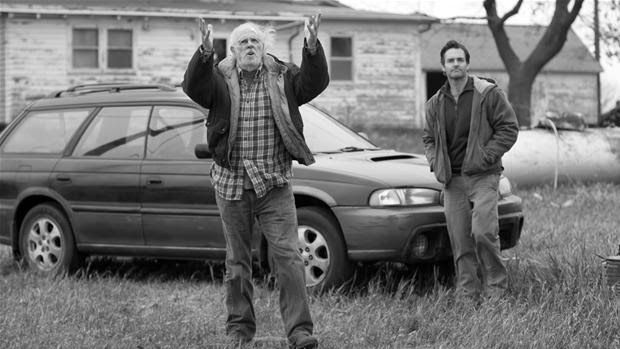
6. Nebraska


Director: Alexander Payne
Starring: Bruce Dern, Will Forte, June Squibb and Bob Odenkirk
What we said: "A(nother) road movie about old age and family: an unsentimental, monochrome variation on the likes of Don't Come Knocking and The Straight Story, bearing the unmistakable handprint of the mighty Alexander Payne." Full review.

7. Blue Jasmine


Director: Woody Allen
Starring: Cate Blanchett, Alec Baldwin, Peter Sarsgaard and Sally Hawkins
What we said: "Woody Allen’s erratic latter-day renaissance continues with this throbbingly neurotic update of A Streetcar Named Desire. Back from Europe, he proves at home in San Fran, with a central character he understands, and who feels completely human, thanks to a writer on form and an actress on fire." Full review.

8. Gravity


Director: Alfonso Cuaron
Starring: Sandra Bullock, George Clooney, Ed Harris and Orto Ignatiussen
What we said: "This film turned me into the aliens from Toy Story. 3D tears in zero gravity? 'Oooooooooooooh.'" Full review.

9. The World's End


Director: Edgar Wright
Starring: Simon Pegg, Nick Frost, Martin Freeman and Rosamund Pike
What we said: "The first half is a wonder: affecting, surprising - with a first scene just as clever as Wreck-It Ralph's similar opening salvo - and full of brilliant gags. Despite being the weakest of Wright's "Cornetto trilogy", it's a fitting wrap-up too: narratively the most inconsistent, with an unconvincing, barely escalating external threat - a legion of blue-blooded aliens - but also the most ambitious, and arguably successful of the three in terms of characterisation, emotional maturity and belly laughs." Full review.

10. The Place Beyond the Pines


Director: Derek Cianfrance
Starring: Ryan Gosling, Bradley Cooper, Eva Mendes and Anthony Pizza
What we said: "People Magazine's two sexiest men of 2011, together at last. It begins as Drive, turns into Prince of the City and then becomes a film all its own, and all the better for it: an epic tale of fathers and sons, heading inexorably for that place beyond the pines. I admire the film's sense of grandeur, its scope and scale, the energy of the action interludes, the artistry of much of the storytelling, and the intensity of the performances." Full review.

Tuesday, 17 September 2013

The Way Way Back, Greta Gerwig and hating the moo-er - Reviews #171

I haven't seen many movies over the past three weeks, but the ones I have seen have almost all been fantastic. I think my good film radar must have been fixed. Ratings are out of four, if you weren't aware of exactly how I rolled.


The Way Way Back (Nat Faxon and Jim Rash, 2013) - This is like a big hug in cinematic form, as awkward, taciturn teen Duncan (Liam James) is taken under the wing of a flamboyant motormouth (Sam Rockwell) whom he happens upon at a rundown waterpark. It's a bit like Adventureland, a lot like every other coming-of-age film you've ever seen - the stifling domestic strife, the pubescent blushing, then the sudden blossoming of one's self-confidence - and there are familiar lines and some unconvincing readings to go with the trite, cliched character of the boozy, easy next-door neighbour. But damn it if this isn't the funniest, loveliest film I've seen in ages, with a perfectly-pitched central relationship, a sure-footed story leading to a hugely satisfying climax, and a staggering performance from Rockwell as the wise, reflective, comically phantasmagoric Owen: a true screen maverick but one with a real and recognisable human frailty. If he doesn't win every award going, this world can do one. (4)

***


Frances Ha (Noah Baumbach, 2013) - What a great film: Baumbach doing his thing, and Gerwig doing hers, this plotless ramble through the life of a 27-year-old dancer - who encounters assorted epiphanies and disappointments - shot like Woody's Manhattan or À bout de souffle, scripted with a nod to Whit Stillman and emanating its writer-director's usual good-natured angst, uncertainty about contemporary life and warm-hearted, off-kilter sentimentality.

It wobbles briefly with the introduction of Adam Driver as the poorly-enunciating would-be lothario Lev ("Ahoy, sexy!") who lacks charisma and mangles his dialogue, but that's a minor quibble in a movie dominated by Gerwig's arresting, appealing, frankly extraordinary performance, and nailing a multitude of experiences and emotions ill-served by cinema. Not just its headily romantic sensibility, epitomised by Gerwig's monologue about what she's looking for in life, but the comfort and painful nostalgia of visiting your childhood home, the premature internal ageing of 20-somethings who feel their boat has passed, and the acute anguish that comes with feeling entirely lonely and alienated in a theoretically idyllic place. It cares about in-jokes, the intensity of true friendship (in the shape of Mickey Sumner, whose chemistry with Gerwig is absolute), and the random, aimless but fulfilling way in which we muddle through this world in a way that's very unusual. It's also a very funny film in that shambling Baumbachian way, jokes tossed this way and that, muttered, thrown away and occasionally properly milked: like the beauty that closes the picture.

In the same way as the director's debut, Kicking and Screaming, it seems at first to be a succession of mild comic sketches, but is really a character study of a conflicted, grown-up child afraid of the world into which she's been unceremoniously dumped. As such, its cumulative impact is considerable, though its tactics are somewhat different to that earlier Baumbach film, setting Gerwig up for a fall that we can see coming a mile off, but she apparently can't - or perhaps won't. Eschewing melodrama but not afraid to confront real life, the film then leaves us with an ending that's pure Woody - in fact, pure Manhattan - but which works perfectly, without feeling like a '70s cast-off in the way that, say, a J. J. Abrams film does.

All that and Gerwig's dancer spinning and striding to the strains of Bowie's Modern Love, jump-cutting through New York, oblivious to everything except the joy of movement.

Like I said: it's a great film. (4)

See also: Gerwig also appeared in Baumbach's Greenberg. She's similarly fantastic there.

***


The Tragedy of Othello: The Moor of Venice (Orson Welles, 1952) - In 1948, Orson Welles left Hollywood, the town in which he had arrived with such fanfare eight years earlier. After the success of Kane, he watched - helpless - as his next three projects were taken out of his hands, recut and sometimes even re-shot. His fifth picture, Macbeth, was a travesty that he failed to deliver for two years, apparently disillusioned with movies and burnt out at 33.

What he did next was startling. The former boy genius, who had conquered the worlds of theatre, radio and film by his 26th birthday, simply became a nomad, pitching up in Europe to fashion fiercely independent projects, which he funded by taking on any - and every - acting role that came his way.

Othello, his first film free from the shackles of Hollywood, took a staggering three years to complete, with filming in Venice, Tuscany and Morocco, and even now isn't exactly finished: there are at least five versions in existence, including the one that won the Palme d'Or in 1952 (available solely on French VHS), the enduringly controversial 1992 "restoration" - the only one I'd previously seen - and this edit, an American cut released in 1955, which was issued on a Criterion laserdisc in the '90s, and has been handily uploaded to YouTube.

I haven't seen the restoration since 2005, so I'm afraid I can't be too specific on the differences here (perhaps a blessing), but this version uses different takes or angles of several scenes, overdubs Canadian actress Suzanne Cloutier with the pure, imploring tones of Gudrun Ure - a Scot - and features some very out-of-sync dialogue, due to Welles' endless tinkering in the post-Cannes editing process (a problem remedied somewhat in the restoration).

A restless innovator, egomaniac and improviser who had repeatedly tried to make films with a pre-recorded dialogue track (oh Orson), he never seemed to regard poor syncing as a problem - perhaps figuring we'd be so wowed by everything else that we wouldn't notice - but it's a basic technical flaw that detracts a little from some of these mid-period pictures. This '55 cut also has written rather than spoken credits - at the request of the distributor - and the original recording of the score, which was perhaps unwisely re-done in 1992.

Welles, his hair thickened, his face subtly darkened and his voice booming in the unmistakable manner, is Othello, a world away from the peculiar greenface, cod-Caribbean routine that his Shakespearean rival - Olivier - would follow 13 years later. Emoting not wisely but too well, and overcoming a frankly odd, declamatory reading of the "It gives me wonder" speech, he's in rare form, throbbing with torment as his mind is poisoned by his malevolent aide. Biographer Simon Callow has long suggested that Welles was a great speaker rather than a great actor: a mellifluously-voiced reader of dialogue who rarely engaged with his characters. It’s often true, but here his performance seems deeply felt: perhaps something about a great man laid low by whispering campaigns and his own insecurities chimed with him – or perhaps his great and lifelong love of Shakespeare is to thank. Opposite him, Cloutier is a somewhat overly angelic Desdemona, though Micheál MacLiammóir - Welles' friend and nemesis from his first professional assignment at Dublin's Gate Theatre - is a magnificent foil, making for a scintillatingly cynical Iago.

The film's troubled production makes it a genuinely weird experience - it's a film whose abrupt, disjointed style takes some getting used to, and even then can prove something of a liability. At times its bitty form adds to the sense of a fragmented nightmare unfolding at strange angles, in snippets of prose often spat, strained or strangled, but at other times it's simply flawed filmmaking, the director once again robbed of the tools, the time or the money to meet his vision - but at least left largely to his own devices within those limitations.

Despite that patchwork quality, which includes non-matching reaction shots that flicker for a mere instant, it's still a film of overpowering intensity and rich atmosphere, set entirely around the castle and its puddled environs and lit by rich, chiaroscuro visuals both gothic and baroque. Welles' typically imposing use of sound, is, if not always exactly in sync with the pictures, at least a striking tapestry of haunting music and arresting, often intensely involving oratory.

His fabled script-editing skills, meanwhile, which here involve snipping a four-hour play to 90 minutes and would find a still more testing challenge with Chimes at Midnight, are much in evidence, with the story stripped down to its central conflict, and beginning and ending with the funerals of Othello and Desdemona, a claustrophobic, fatalistic move that essentially turns Shakespeare into a writer of film noir.

This clever framing and the film's disorientating, shadow-drenched, perma-dripping presentation - alive with misery, malice and a mounting horror - form the perfect environment for Welles and MacLiammóir to wrestle with one another, their genuine mutual obsession and antipathy fuelling a deliciously unhealthy screen relationship in which Shakespeare's greatest baddie tries to destroy his boss's life. "I hate the moo-er," MacLiammóir so memorably draws at the play's opening, and indeed he does. He's sensational, so is Welles – giving arguably the greatest performance of a long career marred by minimal quality control – and so is the film: still its director's most underrated movie, and back in 1952 a telling statement of intent from a true maverick. (3.5)

***


Lincoln (Steven Spielberg, 2012)

Ten observations about Lincoln:

1. I heard tell once of an actor from London who was vastly overpraised for his work in Gangs of New York and There Will Be Blood, after emerging from the studio every day with bits of the scenery stuck in his teeth. Then, one day, this actor got to play Abraham Lincoln and he turned out to be the greatest Lincoln that the big screen had ever seen - and I'll confess that I've made rather a study of them, Henry Fonda in Young Mr Lincoln being the previous high watermark - playing not the myth, but the man, and providing new insights into a character we thought we knew. The moral of the story, gentleman, is that despite being the most appalling luvvie, he's also one hell of an actor. Sometimes.

2. It's an unusually mature film for Spielberg, with the jaw-dropping caveat that only he would show Lincoln's assassination from the point of view of the President's youngest son, which is self-parodical to the point of tears. The most striking screen presentation of the murder remains that at the start of John Ford's The Prisoner of Shark Island.

3. The score is horrible. Every time the film approaches some genuine moment of understated, human truth, John Williams pops us to tip a mixture of cheese and treacle over it.

4. The script has been both lauded and derided, but the truth lies somewhere in the middle. It's intelligently devised and sometimes admirably complex in its morality, but also has concessions to cliche, alternately explains too much and too little of the political developments integral to the plot, and unwisely plays out the voting climax in real time, and with a distinct lack of realism. As a result, the film - despite many fine moments - has no dramatic climax.

5. David Strathairn is one of American cinema's greatest treasures and is never less than thoroughly fantastic. Here, his affectionate uber-pragmatist is a fine counterpoint to the ambitious, single-minded Honest Abe.

6. The rest of the supporting cast is ridiculously good, with Hal Holbrook turning up to gobble scenes like a jowly old lizard, Sally Field proving a fragile, combustible Mary Todd, and Tommy Lee Jones peddling that usual brand of hard-earned wisdom.

7. I like the bit where Jones takes off his wig and you realise he's Lex Luthor.

8. In the opening battle scenes, Spielberg has a delightful time using a trick John Ford once told him about: holding the horizon at either the top or the bottom of the frame. The surrender sequence seems to bear the stain of Sam Fuller's Run of the Arrow too.

9. That hagiographic, drippingly sentimental opening scene, which seeks to "print the legend", before the film sets about getting to the truth, is still extraordinarily awful, and makes The Littlest Rebel look like the height of neorealism.

10. It's sorely missing a scene where Day-Lewis yells: "I emancipate yoooooouuuuur milkslaaaaave!" and beats John Wilkes Booth to death with a bowling pin.

(3)

See also: I did that last joke in this piece about "Lincoln on film" too. It traces depictions of Lincoln on the big screen from The Birth of a Nation to Black Dynamite, and it's got clips and everything.

***


Sullivan’s Travels (Preston Sturges, 1941)

"You been in Hollywood long?"
"Long enough."
"Trying to crash the movies or something?"
"Something like that."
"I guess that's pretty hard to do, huh?"
"I guess so. I never got close enough to find out."

Preston Sturges' immortal Hollywood satire stars Joel McCrea as a frustrated director who sets out to craft "a true canvas of the suffering of humanity", but first has to find out what trouble is - and gets more than he ever bargained for. Veronica Lake is the acerbic wannabe actress who buys the phony tramp some ham and eggs.

This was the thousandth film I ever saw (I can't remember whether that was by accident and design, though it was number one on my "to see" list for years, back when Sturges' films were unavailable on any format in the UK). Though I must have seen it seven or eight times now, I'm still discovering new things: a line or an industry in-joke here or there that gets caught in the maelstrom of razor-sharp dialogue, or Sullivan's sneezing fits and itchy clothes calling back to the titles of his early hits: Hey Hey in the Hayloft and Ants in Your Plants of 1939. Robert Greig's magnificent monologue about the foolishness of the director's opus also seems to grow wiser and more insightful with each passing year.

Sturges' most serious-minded work, Sullivan's Travels remains one of the best, most ambitious and most thematically dizzying films ever made, being a message movie that argues that comedy is as important as any message movie, but which turns into a bleak portrait of social degradation at its midway point.

Its first half is just astonishingly funny: full of unforgettable, rapid-fire dialogue that seems to spear a different target each time - pretension, hard-luck stories, privileged upbringings, Hollywood's obsession with sex and suspicion of communism, and that's just in the opening scene - and topped off with the great supporting actor Eric Blore falling into a swimming pool. The second is heavy, emotionally draining and full of haunting, Expressionistic imagery, before the gloom is lifted in that legendary sequence at the gospel church, Mickey Mouse and Pluto - projected onto a cotton sheet - giving ex-cons a moment of transcendence from their brutal everyday lives.

Significantly, while Sturges is more celebrated today for his incredible exchanges than his beloved slapstick ("a pratfall is better than anything," concluded his rules of cinema), the film has no fewer than four extended silent sequences. While the "jackrabbit" set piece isn't really my sort of thing - above-par though it might be - the others are superb: a gutting, wryly comic montage of vagrant life, a thriller sequence shot like a noir, and a madcap, lightning-paced, brilliantly-choreographed "studio tour", complete with a cameo for Sturges, Lake pushing over two "Red Indians" and Franklin Pangborn getting bummed by a door.

Pangborn was one of Sturges' stock company, many of whom turn up here - Jimmy Conlin, William Demarest, Alan Bridges, Porter Hall - and all of whom are in fine form. Perhaps above all his other, more celebrated talents, Sturges was a great director of actors, magnificent at drawing laughs from them, just as good at eliciting a beguiling sincerity that they would never match with anyone else (take a look at Eddie Bracken's two lead performances for him, then watch Bracken elsewhere). "There's always a girl in the picture," McCrea says at one point, and while he's as good as ever, an extraordinary amount of the film's charm and timeless appeal comes from Lake, belying her bruised critical reputation, whose impeccable comic timing, considerable natural gifts (that voice!) and faultless underplaying give the film an immeasurable amount of punch, emotion and charm. I'm a vegetarian, but even I might have to give in to Lake's pouty demand of "buy me some ham and eggs, before I bite you".

Few directors have ever produced a film as unusual, incisive or original, a film whose disparate elements - slapstick, satire, social drama and polemic - congeal into such a staggering, successful whole. The great irony is that while Sturges' message is "It's OK to just make people laugh" - and his films have given me inutterable joy over the years - he had more to say than just about any other American filmmaker of his era. And that while Sullivan never made a serious, "important" film, Sturges did. (4)

***


The Marriage Circle (Ernst Lubitsch, 1924) - Lubitsch's favourite of his own films, musicalised by the director eight years later as One Hour with You, is a perfectly crafted comedy-drama on his favoured topic of adultery. Monte Blue, in the role later immortalised by Maurice Chevalier, is a happily married man who's powerless under the spell of his wife's best friend, the saucy, vampish Mizzi (Marie Prevost). Meanwhile, his spouse is enthusiastically if sexlessly pursued by his own best friend. It's missing the catchy tunes and lush romanticism of the later film, but it's funnier, sexier and more resonant (thanks to its greater realism): masterfully conceived and directed, and with an exceptional turn from Prevost. (4)

***


*SPOILERS*
Ramrod (André de Toth, 1947)
- This early "Western noir" - a delicious bastard genre that emerged in '47 and seemed to disappear just two years later - is one of the oddest films ever to come out of mainstream Hollywood, a brooding, perplexing, morally murky film that fills its standard genre template with strange details, peculiarly abrupt plot developments and weird, censor-baiting characters, including a femme fatale who gets turned on by making men die for her. Bizarrely paced and packed with liars and cowards - somewhat at odds with the preferred presentation of the West - it's also notable for reuniting the leads of Preston Sturges' astonishing Sullivan's Travels (see above), giving a lie to Joel McCrea's famous line that "life's too short for two films with Veronica Lake".

Lake, with her iconic "peekaboo" hairstyle wrenched into a sort of glamourless cob loaf, stars as a strong-willed woman who declares war on her sadistic ex-boyfriend (Preston Foster) and gruff rancher father (avuncular, dithering comedian Charlie Ruggles - what the hell?!). Meanwhile her "ramrod" (ranch foreman), reformed alcoholic McCrea, has his own axe to grind, and comes complete with an erratic, hot-blooded second-in-command (Don DeFore).

Starting with a sequence that's more confusing than mysterious, subsequently hitting us with a solid minute of improbably expressed exposition, and displaying almost no conception of when to cut a scene off or let it run, De Toth and screenwriter Nunnally Johnson (who loved to start in the middle) seem almost reluctant to give their movie a chance. And yet, despite a litany of narrative problems, it is a fine film, featuring some of the most unusual, unconventional and multi-layered characters of the era. Is Lake cold, calculating and manipulative, or just beaten, lonely and out for what's hers? DeFore thinks nothing of shooting a man in cold blood and provokes a land war through lust alone, but he's also a fiercely loyal friend who'll risk his life for his love rival. And McCrea, for all that nobility that came so easily to the actor, says only of his friend's admission that he committed pre-meditated murder: "I thought you did."

McCrea is always good, but the same can't be said of all his Westerns, which are often more comfort movie than classic. He made almost nothing save oaters from 1946 onwards (when he himself bought a ranch), and if we except the transcendent Stars in My Crown on the grounds that it doesn't really count, then the only one that's truly great is Ride the High Country. This is comfortably in the second tier, though, with offbeat entries like Four Faces West and Colorado Territory. In fact, it's so good that he isn't even the best thing about it. Though he delivers another of those wonderfully understated performances so memorably described here as "Joel McCrea mumblecore" - which she meant as an insult, but I regard as high praise - he's competing for attention with both Lake (the director's then wife) and DeFore.

The 4' 11" Lake, that most '40s of actresses, was far, far more talented than she is ever given credit for, but her strange, mercurial gifts seem almost entirely natural. There's that exquisite voice, which pitches you as surely into the realm of old movie escapism as Jean Arthur's, and that pouty, unmoving, deceptively intense face with which she insistently, beseechingly if hardly expansively emotes. Here, she's terrifyingly steely, imploringly vulnerable and seductively passionate, often all at the same time, and she's matched, perhaps at times exceeded, by DeFore, whom I have never seen do anything comparable to his performance here: deep, complex, moving, and alive with danger, compassion and a smirking grasp of his own mortality. Incidentally, he made one of his first appearances as a soldier in The Human Comedy, with Western noir icon Bob Mitchum as one of his wingmen.

Ramrod is a film of weird longueurs, complete with generic, boring sequences of people riding or climbing. It explodes into life in fits and starts, cramming in plot one minute, going quiet the next. And it ends in somewhat conventional style, despite a strangely erotic final close-up. But it's a mad, wonderful, ferocious little Western: starkly shot, often devastatingly played and full of brilliant moments: perhaps the best and most sensual has the diminutive Lake cradling the sleeping, injured McCrea's head, her expression the very model of inscrutability.

If not quite the sum of its parts, Ramrod is - at least - a film of remarkable parts. (3)

***


"He's got a shooter!"
Alan Partridge: Alpha Papa (Declan Lowney, 2013) - When I first read the premise of the Alan Partridge movie, my reaction was: "He... err, what now?" Turning Norwich's finest nasally-whistling, self-preserving, leather-gloved "disc-J" into a hostage negotiator seemed perhaps a step too far, even for someone who's driven to Dundee in his bare feet, threatened his former boss with a wheel of cheese and been de-bagged at a pharmaceuticals conference.

In the event, the movie milks the outlandish and surprisingly apt premise for much of its worth, trading on Alan's resurgent egotism as he becomes the centre of a media storm, and giving Coogan's monstrous creation free rein to posture, fantasise and bore to his heart's content. It seems entirely fitting that Alan would only find swelling fame and a captive audience through something as horrific and transient as an armed siege, and that he would have no qualms about turning it to his advantage.

But while a sitcom character can be almost unredeemably unpleasant across a half-hour, you can't get away with that in a movie. This can be where big screen translations fall down, slipping into slack sentiment or misguided mawkishness. Alpha Papa generally avoids that and, in one extraordinary scene, produces a depth of emotion you would have thought impossible for Alan. In a moment that reminded me of those text exchanges between Chris Huhne and his estranged son that turned up in the papers the other month, he offers a muddled final message to his kids, while being threatened (jokily?) by a loose cannon of a cop - a fellow siege history afficionado, as it so happens. Another beautifully-played scene sees Lynn reacting wth barely-restrained euphoria to being named as Alan's next-of-kin.

But a solid plot - quite imaginatively spun out across 90 minutes - fidelity to its central character, and a welcome, subtle emotional edge would be worth nothing if it wasn't funny.

It is.

Replete with Alan's familiar preoccupations (himself, FM rock), prejudices (gays, gypsies, the Irish) and disappointments (his children), it's full of inspired one-liners and pathetic parable-like reminiscences - I, Partridge having apparently stirred something in the writers. There are also plenty of visual gags, which are mostly good, and a few gross-out jokes, a touch above what you might expect, but not much more than that. Crucially, it retains a resolutely British, parochial sense of humour, refusing to broaden the characters' narrow worldview in search of a global audience. And for those who've worked in local news in recent years, there are some sharp, well-aimed barbs at tieless, downsizing, tech-obsessed management types. It is perhaps better in its first half, which is breathlessly funny, or perhaps you just can't laugh at that frequency, intensity and volume for an entire film. Except The Other Guys.

While Colm Meaney offers a bit of dramatic weight as Alan's psychopathic counterpoint, and there are a couple of nice moments with Tim Key and I'm Alan Partridge's Lynn and Michael, the rest of the supporting cast is rather lacklustre, with Phil Cornwell's recovering alcoholic seeming completely out of place.

So the whole thing has to be powered by Coogan, and it is: a nasally-whistling, self-preserving, leather glove-slapping tour-de-force that makes the weaker stuff bearable, the fair stuff good, and the good stuff great.

If it's possible to compare such disparate media, my favourite Partridge is still the Knowing Me, Knowing You radio show, but they did a far better job with the movie than I could have hoped for. Especially when I read the premise. (3)

***


*SPOILERS*
Wait Until Dark (Terence Young, 1967)
is famous for featuring one of the most terrifying screen villains of all time: bespectacled little girl-next-door Gloria, who reacts to being called a "monster" by shouting and throwing saucepans on the floor. It also features Alan Arkin as a homicidal maniac.

Sporting a pudding-basin and some very '60s shades, he's one of a trio of hoods terrorising repeatedly self-proclaimed "bliiiahnd laihdy" Audrey Hepburn in search of a doll stuffed with heroin. Any idea where it might be? I have, but this stagy film still plays some neat tricks on its audience, on Hepburn and on Arkin, even if these might have worked even better in the oppressive, pared-down atmosphere of the theatre.

Aside from excessively informing us that Hepburn is blind - "I go to blind school," she explains, in case anyone hadn't quite grasped what was going on - the script is nicely done: an erudite, high-concept scareathon in the Spiral Staircase mold that begins with an absolutely irresistible scene featuring the three crims and illuminated by Arkin's electrifying presence. After that, he's given surprisingly little to do except wear some disguises, until a disappointingly nasty, conventional climax that sees the tables repeatedly turning in a room littered with broken glass and lit by matches, but bottoms out with a knife-crazed frenzy and an attempted rape, an overlong, poorly-directed sequence notable only for one exceptional scare (you'll know it when you see it).

Instead, the bulk of this cleverly-plotted suspenser is built around an elaborate game of role play, as Mike Talman (Richard Crenna) - hopefully named after William Talman, who gave us one of the screen's great baddies in The Hitch-Hiker - appears to come to the aid of the smart, naïve, deceptively resourceful Hepburn, whose beloved husband is supposedly at the centre of a gathering storm. To help her, though, he needs that doll.

Crenna and Hepburn are both very good, with a very thin Audrey overcoming a little woodenness by amping it up in a way she rarely did, but the film is dominated by Arkin's presence, such is the majesty of that opening sequence. It's only when his malicious megalomaniac gives up his aura of omniscient control that the film fails to satisfy. Despite that underwhelming pay-off, this analogue Panic Room does a good job of playing on our fears, giving us a character to really root for, and then putting her in jeopardy through a deft mixture of gimmickry, stock shocks and invention, effectively rooted in the character's ocular deficiency.

This movie got me thinking about which senses are underrated by the cinema. I have an idea for a film in which Janet Leigh is tormented by androgynous, sex-crazed, drug-fuelled bikers, hampered all the while by having no sense of touch. I call it... Touch of Evil. Sorry. (3)

***

Thanks for reading.