Best films of 2016*
10. Rogue One: A Star Wars Story

Director: Gareth Edwards
Cast: Felicity Jones, Diego Luna, Alan Tudyk, Donnie Yen, Wen Jiang and Ben Mendelsohn
What we said: "This is great: a film that hums with a love of the original trilogy, that adds layers to the Star Wars universe, but that stands on its own two feminist feet, telling a story which invokes the saga's singular iconigraphy and chimes with its enduring preoccupations – family, destiny and righteous rebellion – while going resolutely its own way. The ending, we know; but the rest is up for grabs, and the results are frequently electrifying."
9. Weiner

Director: Josh Kriegman and Elyse Steinberg
What we said: "From a spectacular opening that shows what a barnstorming, populist performer Weiner was in his congress days, through to a desperately and increasingly uncomfortable chance to be a fly on the wall as his marriage falters and his campaign implodes, it's a remarkable portrait − with remarkable access − of a narcissist who clearly cares about ordinary people, and yet is destroyed by his own rampaging demons and a recurrent shittiness in his private life."
8. Nocturnal Animals

Director: Tom Ford
Cast: Amy Adams, Jake Gyllenhaal, Michael Shannon, Aaron Taylor Johnson and Isla Fisher
What we said: " A film about emotional violence, cruelty and revenge, as disquieting and unpleasant as any mainstream Hollywood movie I can remember, and for that reason both an experience that I can’t recommend and that I must. An extremely unusual and refreshing reworking of genre clichés, novelistic but also invigoratingly cinematic. It’s a model of how to utilise cinematic grammar (particularly abrupt, busy but restrained editing) to tell a story, and to layer that story so densely and virtuosically that it embeds itself in you."
7. Love & Friendship

Director: Whit Stillman
Cast: Kate Beckinsale, Morfydd Clark, Tom Bennett, Jenn Murray, Lochlann O'Mearáinn, Sophie Radermacher and Chloë Sevigny
What we said: "It's so great to have one of America's best ever writer-directors back making movies again, and this one's a wonder. I was incredibly excited when I heard this movie was in the works, and I'm delighted that it didn't disappoint, its short shooting schedule (entirely in Dublin) and small budget nowhere in evidence, except perhaps to lend it the same zippy, breakneck feel as The Thin Man, a film with the same modern, offhand sensibility, and delirious sense of fun."
6. The Big Short

Director: Adam McKay
Cast: Christian Bale, Steve Carell, Ryan Gosling and Brad Pitt
What we said: "An audacious, counter-intuitive and richly entertaining polemic about the financial crisis, its raw anger cooked up into a fun old caper movie, studded with vividly sketched characters, sourly profane dialogue and a heap of meta gags: a few of them overdone, but most melting in the mouth before leaving an aftertaste akin to charred vomit. McKay knows what he’s doing, and even if he’s sometimes doing it too loudly or just with tits, it’s ultimately worth it. The Big Short may be playful but it’s pointed enough to draw real blood, asking you to question your preconceptions and priorities – while being ferociously funny and quite ludicrously fun."
5. Spotlight

Director: Tom McCarthy
Cast: Mark Ruffalo, Michael Keaton, Rachel McAdams, Liev Schreiber and John Slattery
What we said: All the Pederasts' Men, with an exceptional ensemble bringing to life this true story of the Boston Globe's investigation into child abuse by the Catholic Church. It makes me proud to be a (lapsed) journo and a Tom McCarthy cheerleader, ashamed to be a Catholic. McCarthy, like Alexander Payne, has that rare gift for making films that entertain as you watch them, then reward you a dozen times over in retrospect. This one diverges considerably from the tried-and-tested formula of his first three – and is perhaps more obviously weighty and virtuous – but once more gives the impression of having not just passed your time pleasantly, but left an indelible mark upon you, with its quiet anger, compassion, and hard-won wisdom, never dampened by naïvete or sensationalism."
4. Julieta

Director: Pedro Almodovar
Cast: Emma Suárez, Adriana Ugarte, Daniel Grao, Inma Cuesta, Darío Grandinetti and Michelle Jenner
What we said: "A wonderful, extremely powerful film about a middle-aged woman (Emma Suarez) willing to give up everything she has for a chance to reconnect with her estranged daughter. In flashback, we learn her story. It sucks you in for 100 minutes, and when it's over it stays with you. Not just the gradually unwrapping story, nor Suarez's superb performance, but the way it forces you to interrogate the way that you live your own life. It's quite something."
3. Zootropolis

Director: Byron Howard and Rich Moore
Cast: (voices of) Ginnifer Goodwin, Jason Bateman and Idris Elba
What we said: "The jokes are superb, the action's better than in almost any other animated movie, and its balance of story, character and wider resonance – as well as the freshness and distinctiveness of each – kicks it way above most of the fare we've been fed by Disney since the pioneering spirit of its early years gave way to mawkishness, formula and safety. It's zooperb."
2. The Hateful Eight

Director: Quentin Tarantino
Cast: Samuel L. Jackson, Walton Goggins, Jennifer Jason Leigh, Kurt Russell, Bruce Dern and Michael Madsen
What we said: "A bloody, bloody brilliant fusion of Western, horror and black comedy that confirms Tarantino's return to relevance. The scene-setting is inspired, Morricone’s sparsely-used music is marvellous, and Tarantino’s dialogue is incredibly rich: unmistakably his yet steeped in the Western tradition, with its grand allusions to the Civil War, its bitter dark humour and its contemporary resonances. It’s a delirious, down-and-dirty exercise in restrained mayhem that doubles as a clarion call."
1. Arrival

Director: Denis Villeneuve
Cast: Amy Adams, Jeremy Renner, Ruth Chiang and Forest Whitaker
What we said: "It opens like Up, with a breathtakingly beautiful, vividly universal montage of Adams' life with her daughter, then threatens to fall away, as you wonder if it will have anything to it at all. That's a false impression: Villeneuve is zoning in slowly but unerringly on the film's emotional centre, and when that grabs you, you can't get loose. His movie blends the literate, sun-dappled nostalgia of The Tree of Life, with Gravity's sense of nervous wonder and Moon's freaky but human edge, but it meant a lot more to me than any of those films. It's still commandeering my brain now, almost a day later, with its rich tapestry of emotions, Adams' characteristically immersive performance and a reveal that you won't forget in a hurry."
***
*Only films released in the UK this year are eligible. Thanks to #LFF2016, some of the best new movies I saw this year won't be on general release here until 2017. The best five were: La La Land, Certain Women, Tickling Giants, The Salesman and Christine. The first two of those are films for the ages.
Previous winners of my 'best film of the year' award are:
2010 – Toy Story 3
2011 – Attack the Block
2012 – Silver Linings Playbook
2013 – Frances Ha
2014 – Boyhood
2015 – Amy
***
Top 16 discoveries of 2016:

16. Safety Not Guaranteed (Colin Trevorrow, 2012) – An unexpectedly fantastic movie – based on a classified ad – about journo Jake Johnson and intern Aubrey Plaza going in search of eccentric Mark Duplass, who believes he’s built a time machine. It has a distinctive (and hilarious) sense of humour, a penchant for the unexpected and an abundance of genuine human emotion, thanks chiefly to the chemistry between Duplass and Plaza – both of whom are superb, though especially her. The way she looks at him when they’re by the campfire is worth a spot in this list by itself.
15. Beggars of Life (William Wellman, 1928) – I've wanted to see this for a decade or more, and – finally enjoyed with a live musical accompaniment from Neil Brand and the Dodge Brothers – it didn't disappoint. A grim but intoxicating silent wonder from William Wellman, with a rough-and-ready storyline, Louise Brooks' best American performance and a first 45 minutes of almost perpetual motion, as our heroine kills an attempted rapist, dresses as a bloke and then hops freights with hobo Richard Arlen, trying to shake the "dicks" on their tail (stop sniggering).

14. Bound for Glory (Hal Ashby, 1976) – A brilliant – and for the most part brilliantly unconventional – biopic of the legendary protest singer Woody Guthrie, which until its final 30 provides no stock storytelling, no obvious Hollywood moments and no real antagonists aside from the system itself, just the man with his great flaws and virtues, and a succession of episodes within a spellbinding evocation of Depression-era America, in all its grim beauty and despair.
13. Harlan County, U.S.A. (Barbara Kopple, 1976) – Documentary maker Barbara Kopple lived with coal miners’ families for a year in order to make this startling, far-reaching film, which uses a desperate localised strike – called by workers seeking union recognition – to examine the way America treats its poor. Kooper soundtracks the whole thing with a succession of beguiling, soot-choked renditions of bluegrass songs about mining, some done professionally, others sung with an overpowering intensity by minor players in the film; the CD has been my most-listened record this year, along with Pronto Monto by Kate & Anna McGarrigle, and the soundtrack to the number four film in this list.

12. Kansas City Confidential (Phil Karlson, 1952) – A late entry in the list: I only caught it this week. It's an absolutely knockout noir, with burly criminal mastermind Preston Foster hiring three career crooks (Jack Elam, Lee Van Cleef and Neville Brand) to pull off the perfect crime, snatching $1.2m from a Kansas bank. When they escape in a flower van, florist's driver John Payne is picked up by the cops, who start to sweat and swat him... Startlingly directed by unheralded genre giant Phil Karlson, this one's packed with breakneck twists, and has fantastic performances across the board. The gorgeous Dona Drake, whose role is essentially ornamental, was a mixed race black actress who passed for Mexican, somewhat circumventing the toxic racism of America in the 1940s and '50s.
11. Stories We Tell (Sarah Polley, 2012) – If you're ever worried you might be oversharing, watch Sarah Polley's immaculate 2012 documentary, Stories We Tell, in which the incisively intelligent, staggeringly honest writer-director of Take This Waltz lays bare her family's history while telling the story of her late mother, Diane. As in my review, I'll avoid saying much about its subject or its style, but it is a remarkable film: haunting and bravura and with a genuine ovaries-out bravery that knocked me sideways.

10. French Cancan (Jean Renoir, 1955) – Renoir's whimsical, beautiful film about the birth of the Moulin Rouge is handled largely with the lightest of touches, reaching eternal truths along the way, before exploding into an ecstasy of music, dance and colour. Taken minute-by-minute, it's not a faultless film, but it's a heart-melting, uniquely textured and utterly rousing experience, with just the right undertug of melancholy and sacrifice, as Renoir suggests that a great creative life means no other life at all, but that the ultimate creation makes everything else pale into nothing. On this evidence, you can see his point.
9. El Sur (Victor Erice, 1983) – A completely overpowering movie from Spirit of the Beehive director Victor Erice, about a young girl in northern Spain who loses her innocence as she begins to observe and understand her complex, haunted father. 'El Sur' (The South) is the place he left and never returned to, somewhere in his mind the Civil War guns still firing. There are so many things to love and admire. The detachment and relentless, unpleasant repetition of the opening. The unsentimental, multi-layered characterisation that evades simple categorisation. The dream-like vignettes we encounter and experience as we wander through Estrella's memories. I found this bucolic, melancholy film both exquisitely beautiful and utterly heartbreaking.

8. Abe Lincoln in Illinois (John Cromwell, 1940) – This is one of the best films I've seen in a long time: an extraordinarily mature, literature drama of the sort that has never really been in vogue. Massey is absolutely immense as the former president, particularly in the film's gobsmacking second half, full of magnificent dialogue, complex ideas and a complete lack of Hollywood sheen. It's bruising, difficult, heartbreaking: his journey from gangliness to greatness a picture of sacrifice and self-denial, a Black-Dog-and-all portrayal of a character most commonly shown in American cinema as being akin to Jesus.
7. Margaret: extended version (Kenneth Lonergan, 2011) – A breathtaking, one-of-a-kind character study about a high-school student (Anna Paquin) wrestling harrowingly with life's vicissitudes after causing a fatal accident. Kenneth Lonergan's belated follow-up to You Can Count on Me, eventually released after a six-year legal battle, is novelistic in its elliptical, conversational, almost aggressively uncommercial approach, with long takes, chapters and characters whose relevance isn't always immediately obvious, and stately, slo-mo interludes of pedestrian traffic soundtracked only by orchestral music, which not only place the narrative vividly in New York, and hint at the frailty of all human lives, but also seem to underline that this is just one story among millions.

6. Mulholland Drive (David Lynch, 1999) – David Lynch’s spin on Sunset Blvd. is a Hollywood nightmare, a uniquely disconcerting experience that builds to a glorious, incomprehensible climax. There are scenes here of utter brilliance, of heart-stopping terror, raven black humour and intoxicating sensuality: a psychic neighbour babbling harrowing warnings, a botched hit, the punchline to the Winkie’s set-piece, and Watts’ mesmerising audition (as much nibbling, biting and heavy breathing as actually acting). Those stand-out, almost self-contained passages are trapped in an unfolding, enveloping head-fuck of a film that’s comfortably one of the three or four scariest I have ever seen.
5. Séraphine (Martin Provost, 2008) − This is such a wonderful film: a movie about art, which is itself great art, taking the kind of real-life story that’s usually done in some hideous, schmaltzy way and ruthlessly rooting out every last bit of sentiment. Each choice it makes, from the delayed gratification of its opening (we don’t see a single painting for a good 40 minutes) to the marginal catharsis of the denouement is perfect, and the result is a French film in the traditions of Renoir, Bresson and the Dardenne brothers.

4. Inside Llewyn Davis (Joel Coen, 2013) – This sad, whimsical and purposefully baggy story of missed opportunities and shambling urban alienation – set in Greenwich Village moments before the '60s folk boom, and centring on Oscar Isaac's titular troubadour – is an extraordinarily special piece of work. I'm interested by the Coen brothers, and watch everything they make, but this is the first time I've ever truly loved one of their films; and the more I think of it, the more I love it. That performance. That soundtrack. That cat.
3. The Big Red One: The Reconstruction (Samuel Fuller, 1980/2004) – Sam Fuller's masterpiece, released in butchered form in 1980 then 'reconstructed' 24 years later according to his original shooting script, is a war movie like no other: the episodic, wryly fatalistic story of four dogfaces, dubbed 'the four horsemen of the apocalypse' who fight the battles that the writer-director had in World War Two. It's the best war movie I've ever seen.

2. Black Orpheus (Marcel Camus, 1959) – An astonishing movie that I only heard of for the first time in May, when it was scheduled to play at the BFI in London; it sounded amazing, so I got a ticket. It's the Orpheus myth transplanted to the Rio Carnival, with womanising guitarist Breno Mello falling in love with pure, troubled Eurydice (Marpessa Dawn). They dance, have sex, and save one another, but his feisty ex-girlfriend and Eurydice's psychotic, death-faced stalker hint at the unlikeliness of a happy ending. It's difficult to believe when watching Black Orpheus that the story would or could make sense anywhere else, such is the film's complete conviction, and the virtuosic skill that Camus displays in meshing these diverse elements together, while capturing the penury, charm and beauty of the setting, and inspiring a host of pitch perfect performances.

1. The Bakery Girl of Monceau (Éric Rohmer, 1963) - A mesmerising, intoxicating Rohmer short that's as close to a personal manifesto as you'll ever see on screen. His enduring preoccupation was where eroticism touches romance, and his view of both was heady, wise, ironic. After the false start that was the director's abysmal debut feature, the tedious, neorealist Signe du Lion, this story of a law student (Barbet Schroeder) flirting with a counter girl at a Parisian bakery (Claudine Soubrier) as he waits for his true love (Michèle Girardon) to walk past is extraordinarily affecting, honest and insightful.
***
Everyone likes lists. Here's one.

Seeing this on the big screen was a highlight.
Crazes: Éric Rohmer (I bought a Blu-ray box-set of all his films whilst drunk) and London Film Festival (I saw 18 movies in 11 days).
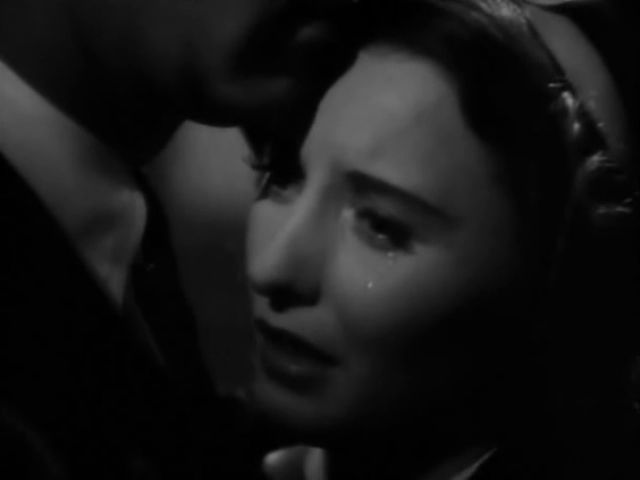
Continuing preoccupations: Lillian Gish, Barbara Stanwyck and Bette Davis, three actresses who have given me an incredible amount of pleasure (and a little heartache) over the years.
Stuff I caught up on: François Truffaut's more obscure films. A lot of them are little-known for good reason, though L'enfant sauvage (aka The Wild Child) is an extremely fine piece of work. I also watched the rest of Buster Keaton's shorts for Educational Pictures, which had flashes of inspiration amidst much depressing floundering.
Revelations: La La Land will be the only thing anyone is talking in January (apart from Brexit and Trump).
Happiest surprises: Tarantino cementing his return to form with The Hateful Eight, Whit Stillman being allowed to take a crack at adapting Jane Austen (the fact that the resulting film was brilliant was no surprise at all). Tickling Giants being an absolute riot (after an exhausting day at work), rather than an exhausting slice of docu-realism, was such a treat. Somewhere in the Night is perpetually overlooked or patronised in discussions of Joseph L. Mankiewicz's work, but it's a fantastic little movie with a host of unexpected delights.
Biggest disappointments: Richard Kelly's Southland Tales and Michael Cimino's Heaven's Gate have a reputation as being visionary artistic statements sunk by grasping moneymen. Both are a bit crap, really (though the latter is shot and scored like a dream). Trumbo was bold enough to be a film about the Hollywood blacklist that had an unrepentant communist for a hero (Guilty by Suspicion in 1991 notoriously changed Abraham Polonsky's screenplay so that its Marxist protagonist was instead a liberal), but it was an otherwise cartoonish, shallow and pathetic attempt to do justice to an enduringly fascinating and important period of American history.
Oddest film: I Married a Communist, released at the height of the witchhunt I just mentioned, is an unmissable cocktail that drops some teeth-achingly awful Red Scare nonsense into a a fairly straighforward shot of urban noir.
Worst films: Spaceship, the nadir of
a largely intoxicating and uplifting London Film Festival. I left the cinema genuinely furious.
Some favourite moments: Experiencing the campfire scene from My Own Private Idaho, the 'Girl Hunt' ballet in The Band Wagon and the Niagara Falls climax of Remember the Night on the big screen was a luxury that will live long in the memory. The conversation in the cafe in Victor Erice's El Sur was acutely painful, and gloriously offset by Black Orpheus's deliriously enjoyable samba sequences. How far can we stretch 'favourite? The insane babbling on the doorstep in David Lynch's Mulholland Drive was certainly memorable, but I don't plan to 'enjoy' it again any time soon.
2016 was... the worst year since 2002, though I loved visiting my nephews, going to the London Film Festival and seeing Adam and Joe's live reunion.
Number of films I saw at the cinema: A preposterously high 54, as I'm now a BFI member (I'd recommend it to anyone in London who loves movies).
Best film I saw at the cinema: My favourite film, Remember the Night.
I was bored by: Billy Wilder's atrocious The Emperor Waltz, one of those catastrophes from a major director that are actually surprisingly common.
I wrote this pretty good review of _______________, you should read it if you have a minute: If you want a head's up on next year's best films, my series about #LFF2016 is here. I was pleased with my write-up of Abe Lincoln in Illinois, a remarkable independent film (though it was distributed by RKO) from 1940.
***
Thanks for reading. The next two instalments will follow before the year is out.