Showing posts with label FDR. Show all posts

Monday, 10 July 2017

FDR's Hollywood – Part 2: Nothing to fear (1933-45)


The familiar logo of the National Recovery Administration, seen at the beginning of innumerable '30s films.

The first instalment of this two-part blog looked at political cinema of 1932-3: how the Depression was shown on screen, and how Roosevelt's accession to power encouraged Hollywood to make hard-hitting movies about social issues. In this second article, I'll tell some of the stories of the subsequent decade, looking at the few radical movies made after the imposition of the Hays Code, explaining how Roosevelt's policies made and then broke Orson Welles, and examining the way that FDR himself was depicted on that most silver of screens.

PART 2: NOTHING TO FEAR (1933-1945)

1. Socialism on screen (1934-40)


A popular sport in America is to point at anything remotely progressive or liberal and say that it’s communist. But even a total idiot is correct sometimes, and there is something distinctly red about Our Daily Bread (August 1934), a drama about dispossessed workers throwing in their lot together on a rural commune. The studios wouldn’t go near it and so writer-director King Vidor – a conservative Republican, I’ve no idea what he thought he was doing – made his story as an independent movie, releasing it through United Artists. It’s actually a sequel to his 1928 film, The Crowd, one of the most acclaimed and enduring of all silent movies, rejoining everyman John Sims and his wife Mary (now played by Tom Keene and Karen Morley), as they’re turfed out of their jobs and their home by the Depression, struggle to make a living farming a relative’s land (rural poverty was still a rare topic on screen) and decide to pool their resources with other struggling souls to form a farm collective. The low-budget is evident in the casting of Keene, a B-Western star whose bad performance almost sinks the picture, and some of the plot machinations are synthetic and simplistic, but as a political statement it’s simply like nothing else seen on screen until John Ford’s The Grapes of Wrath, and the climactic irrigation sequence is one of the most thrilling, uplifting and arresting sequences in ‘30s cinema.


It wasn’t until John Ford adapted John Steinbeck’s titanic The Grapes of Wrath (1940) – a rare example of Code-era radicalism pushed through by Fox chief Darryl F. Zanuck, on the right of the political spectrum but a believer in telling stories the public wanted to hear – that a film dealt so frankly and powerfully with deprivation, or suggested socialism as the solution. The only solace that the Joad family find, when fleeing the Dust Bowl of Oklahoma for the fabled land of California, is in a camp run by the Roosevelt administration, Zanuck moving the sequence near the end of the picture so it could end on a note of hope, though not before Tom (Henry Fonda) delivers his extraordinary avowal of collectivism, one of the defining socialist statements of the 20th century:
“I'll be all around in the dark – I'll be everywhere. Wherever you can look – wherever there's a fight, so hungry people can eat, I'll be there. Wherever there's a cop beatin' up a guy, I'll be there. I'll be in the way guys yell when they're mad. I'll be in the way kids laugh when they're hungry and they know supper's ready, and when the people are eatin' the stuff they raise and livin' in the houses they build – I'll be there, too.”
That unassailable classic was the climax of Ford’s ‘Popular Front’ period: though the director moved further to the right over subsequent decades, ending up as a supporter of Richard Nixon, in 1937 he described himself as “a socialist democrat – always left”. His 1939 masterpiece, Stagecoach, which reinvigorated the moribund Western genre, was a thinly-veiled assault on the isolationism that FDR so vigorously opposed, with Berton Churchill (the crooked planter in Cabin in the Cotton, see Part 1) playing a xenophobic capitalist who claims that "what this country needs is a businessman as president", objects to state intervention in the market, and declares: “America for Americans!”


Berton Churchill as Donald Trump

2. Hollywood hits back: the birth of ‘fake news’ (1934)


“The American People will take Socialism, but they won't take the label."

Upton Sinclair, whose 1927 book, Oil! inspired Paul Thomas Anderson’s There Will Be Blood, some 80 years later, was also a socialist politician, who ran unsuccessfully for Congress in the early ‘20s and then twice for the governorship of Califonia. The second time – in 1934 – it was as a Democrat, and the signs augured well. His End Poverty in California (EPIC) movement had attracted phenomenal support, and would ultimately influence Roosevelt’s New Deal programme, and in the primary he received a staggering 436,000 votes, more than all of his other rivals campaign. His rival was incumbent Republican governor Frank Merriam, who had – with shades of Herbert Hoover – just called out the National Guard to shoot striking workers.

The studios, those monoliths of big business, were rattled (as, indeed, was William Randolph Hearst, the media mogul mentioned in Part 1). Mayer had threatened to move MGM to Florida if Sinclair won and, in common with the other dream factories, docked every member of his staff a day’s pay, giving all the money to Merriam. His immediate junior, Irving Thalberg, the wunderkind of MGM, went further. In the run-up to the election, he created three ‘newsreels’ – indistinguishable from the real thing, and screened in the place of genuine reports – in which actors posed as Sinclair and Merriam supporters. The current governor’s supporters were prosperous, intelligent, well-spoken and reasoned. His challenger’s backers were communists, African-American activists and the ‘bums’ supposedly flooding into the state in anticipation of a Sinclair victory. These were the first attack ads, and they were phenomenally successful.

Sinclair supporters rioted in the cinemas, Roosevelt kept his own counsel (having confirmed with Merriam that the governor would support the New Deal programme), and Merriam won. He took 48 per cent of the vote, ahead of Sinclair with 38 per cent and centrist Raymond L. Haight with 13, saying that the election was a “rebuke to socialism and communism”. Sinclair never sought office again. In 1951, he pointed to the success of EPIC and yet his own gubernatorial Waterloo, remarking with typical astuteness: “The American People will take Socialism, but they won't take the label.”

You can watch a clip from one of the newsreels here. I first saw them as uncredited, uncontextualised extras on a VHS of Our Daily Bread.

3. How Roosevelt broke Orson Welles... then broke Orson Welles (1936-42)


The Federal Art Project was one of the most astounding achievements of the New Deal, financially and creatively sustaining 10,000 writers, artists and craftsmen during the depths of the Great Depression. Though it was frequently used as a stick with which to beat the government, Roosevelt’s administration viewed the beneficiaries with sincerity and respect, taking their roles at face value. As one senior official bluntly put it: “Artists and writers have to live too.” The venture ran from 1935-43, creating 200,000 works of art – from murals to sculptures to photography projects documenting the New Deal – and launching the careers of Jackson Pollock and Willem de Kooning (Robert Rauschenberg was later a notable beneficiary of the GI Bill), though its greatest success was in the early years, when it seemed to set the mood of the nation, and gave impoverished communities the chance to experience extraordinary works of art, which spoke of their lives, and featured people who looked like them. Perhaps the FPA’s single most successful event was Orson Welles’ legendary ‘Voodoo’ Macbeth, staged in Harlem in 1936, which transplanted the action to Haiti and featured an all-black cast, including Jack Carter and Canada Lee. It was a sensation, enrapturing the local community, attracting stellar (though not unanimous) reviews, and going on to tour the country, taking in Bridgeport, Connecticut, Chicago, Detroit and Dallas, Texas. Welles was already in the ascendancy, but along with his modern-dress Julius Caesar, the production made his name, culminating in his RKO deal in 1940, which afforded him unprecedented creative freedom and led to his astounding debut feature, Citizen Kane.

The ‘Voodoo’ Macbeth is one of the few Welles stage triumphs captured partly on film, with four minutes of the action included in the Work Progress Administration documentary, We Work Again (1937). The same year, the WPA closed down Welles’ production of The Cradle Will Rock, a pro-union work written by gay communist Marc Blitzstein, after a sustained attack on the play, the Federal Theatre Project and, by extension, the Roosevelt administration. On the first night, the audience marched from the original venue, the Maxine Elliot Theatre, to the larger Venice Theatre – booked at the 11th hour by Welles, Blitzstein and producer John Houseman – where they were joined by other members of the public, admitted free, to watch an impromptu production, with the composer playing the score at the piano, and the cast joining in from the house seats. This extraordinary, largely unplanned event was recreated in Tim Robbins’ exceptional 1999 film, Cradle Will Rock, featuring Angus Macfadyen as Welles.


A 1937 rehearsal for The Cradle Will Rock.

Roosevelt’s most damaging intervention in Welles’ career, though, began with the best of intentions, as his government recruited (ordered) America’s hottest new director to direct a landmark documentary in Brazil as part of the Good Neighbour policy. The filming of It’s All True, which wasn’t released in Welles’ lifetime, became a debacle, and critically took the director out of America during the post-production phase of his second picture, the soon-to-be-notorious The Magnificent Ambersons (1942). With Welles unable to fight for his vision, his 148-minute epic was slashed to just 88 minutes, with the remaining footage dumped into the sea by the studio that had grown to loathe him. Welles would never be the same again. (I've written in great detail about the fate of Ambersons here).


Welles shooting It's All True in 1942.

4. Rom-communists and Russians (1933-44)

"They've made a rom-com about a communist. Don't mention it on the poster."

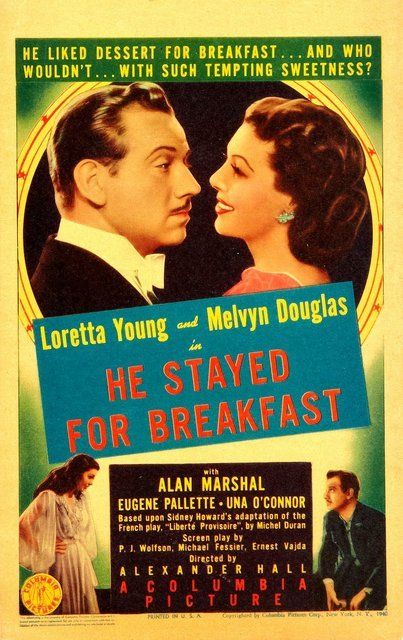
Prior to WWII, communists were figure of funs: shouty, silly men, either deluded or dishonest, who came around in the end once confronted with the virtue and basic common sense of The American Way. Even in the socially-progressive Heroes for Sale and the confrontational, uncategorisable Hallelujah, I’m a Bum (both 1933 and dealt with in Part 1), communists were a step too far, epitomised by Harry Langdon’s sad-eyed Egghead, and Robert Barrat’s pathetic ideologue, who ends up a ruthless entrepreneur (Barrat, as I’ve said, ended up being emblematic of the New Deal in Wild Boys of the Road two months later). Other stupid commies included the would-be assassin who takes up with a banker's wife in the risible rom-com He Stayed for Breakfast (1940), played somewhat embarrassingly by leading liberal activist Melvyn Douglas, and the loveably hapless Russian delegation in Ernst Lubitsch’s incomparable Ninotchka (1939), written by Billy Wilder. Though by 1961, Wilder would be firmly on the side of the capitalists in his bristling Berlin-set comic masterpiece, One, Two, Three, here both sides learn from one another, even if the reds are ultimately seduced by the quietly decadent beauty of Paris.


Cinema's cuddliest Stalin

Garbo’s famous line that there would be “fewer but better Russians”, though, wasn’t supported by state-sanctioned films dealing with Soviet Russia. Once the bear had waded into WWII on the Allied side, FDR’s administration encouraged the studios to start making pro-Russian pictures, which became critical pieces of evidence in the subsequent HUAC investigations into supposed communist infiltration of Hollywood. Among the most notorious are The Song of Russia (1944), starring noted red-baiter Robert Taylor, who denounced the film in committee, and Mission to Moscow (1943), a filmisation of US ambassador Joseph Davies’ diaries, which detailed his inability to see the notorious show trials of 1937 as just that: a travesty of justice, a relentless purge of Stalin’s party rivals, who were threatened, tortured and then forced to recount their supposed crimes in open session. The movie ends with Davies (Walter Huston, 10 years earlier the conduit for Walter Wanger’s fascist fantasies, see Part 1) telling the peace-loving Premier: "Mr Stalin, I believe history will record you as a great builder for the benefit of mankind.”

5. The Reich Stuff: Hollywood and the Nazis


Hollywood had a similarly complicated (i.e. dodgy) relationship with Nazi Germany, though here no executive pressure had been brought to bear – except that of the screen censor, Joseph Breen (see Part 1), who exploited the vagueness of one of the Hays Code’s ‘be carefuls’:
International relations (avoiding picturising in an unfavorable light another country's religion, history, institutions, prominent people, and citizenry)
to quash any anti-Nazi projects. His letter to Al Rosen, denying permission for the producer to pursue a project critical of Hitler entitled The Mad Dog of Europe, read:
Because of the large number of Jews active in the motion picture industry in this country, the charge is certain to be made that the Jews, as a class, are behind an anti-Hitler picture and using the entertainment screen for their own personal propaganda purposes. The entire industry, because of this, is likely to be indicted for the action of a mere handful.
Bizarrely and ironically, the script had been written by future Citizen Kane scriptwriter Herman J. Mankiewicz, who – despite having Jewish heritage – was one of the most virulently anti-Semitic figures in the industry (The first volume of Simon Callow’s Welles biography deals with this issue at some length).


I'm sorry, this is not a convincing Nazi

On those rare occasions when Hollywood made films set in Germany, it tended to sidestep the issue completely. In Charlie Chan at the Olympics (1936), which features footage of Jesse Owens at the 1936 Games in Berlin, the teutonic police force weren’t virulent racists, merely officious, old-fashioned types who looked like Kaiser Wilhelm. Studios, afraid of losing the lucrative German market even though all except Fox were run by Jewish businessmen, were happy to oblige, and MGM put pressure on the great and unspoken Myrna Loy to apologise, after she criticised Hitler and her movies were banned. She refused, because she was a badass.

It wasn’t until 1939 (1939!) – 12 months after Breen had followed the Pope's lead in denouncing Nazism, and with the War in Europe breaking – that the censor allowed anti-Nazi pictures to pass, beginning with Warner’s Confessions of a Nazi Spy (1939) and then Frank Borzage’s The Mortal Storm (1940) over at MGM, the world’s richest and most powerful film studio. That was the first American movie to deal with domestic life in the Third Reich, though it doesn’t say the word “Nazi” at any point, and nor does it say the word “Jew” (the Roth family, central to the story, are referred to only as “non-Aryans”, which seems almost more inflammatory). Upon seeing it, Hitler, with his customary good grace, immediately banned all MGM films, past, present and future.


"It's not the *most* exciting picture, but it's- oh."

He didn’t hold a grudge, though (he did sometimes, just not here). He was a huge fan of American cinema – his favourite movie was that classic of imperial derring do, The Lives of a Bengal Lancer (1936) – and later announced an intention to use Clark Gable in German propaganda films, after the Nazis’ inevitable triumph over the US. Goebbels would surely have concurred, being a huge fan of It Happened One Night (1934) (“A funny, lively American film from which we can learn a lot, The Americans are so natural. Far superior to us,” he wrote in his diary). Meanwhile, he added Myrna Loy to his list of post-victory victims.

6. Fala games: FDR on screen


Myrna Loy (second right, eating cake) with Eleanor, Gene Kelly, Ronnie Lake and others, January 1945.

Loy was oft-cited as FDR’s #1 movie pin-up, and was also an activist for the Democratic Party, counting Eleanor Roosevelt among her closest political friends. The president watched movies twice-weekly in a private screening room at the White House, and will have seen himself depicted in quite a few films of the period, from a Three Stooges’ short, Cash and Carry (1937), to an Oscar-winning musical. (John Ford never included him as a character, though, he was too busy making umpteen films about Abraham Lincoln.)

In 1941, Mickey Rooney and Judy Garland performed ‘FDR Jones’ – a song actually written at the low point of the president’s popularity in 1938 – as part of their musical extravaganza, Babes on Broadway. The number celebrated/satirised the then-common practice of African-American families naming a newborn after the Commander-in-Chief, and while it’s heartfelt in its celebration of FDR, it seems sneery, snide and a bit racist, an impression not improved by it being performed in blackface.


Glad to see the back of him: 'The President' in Yankee Doodle Dandy.

The following year, FDR was a character in the George M. Cohan biopic, Yankee Doodle Dandy (1942), which was intended to rehabilitate James Cagney’s career after accusations of communism (in 1933, the actor had described Stalin as “the greatest man in the world”). In a deeply moving framing sequence, FDR – played by Jack Young, who’s shown only from behind, as if he were God – awards Cohan the Congressional Gold Medal (this did really happen, though in 1936, not 1942). Young would ultimately play the president six times on screen, including in Edge of Darkness (1943), Disney’s The Reluctant Dragon (1941), the all-star musical This Is the Army (1943) and Mission to Moscow (1943) (see above), though the others were all voice cameos. The scene in which Cagney – as Cohan – plays FDR on stage, sees the president depicted as an all-singing, all-dancing premier: Roosevelt’s infirmity wasn’t common knowledge during his lifetime.


One of the cutesiest, most unconvincing invocations of Franklin D. was in Princess O’Rourke (1943), an embryonic version of Roman Holiday in which European princess Olivia De Havilland falls in love with serving soldier Robert Cummings. This being wartime, it ends happily (and stupidly), with FDR inviting the pair to stay at the White House, where his dog Fala (played by one-time actor, Whiskers) helps to engineer a happy ending. The picture climaxes with the president summoning a Supreme Court judge to perform the ceremony, and Cummings accidentally tipping Roosevelt on the way out, mistaking him for a butler. Well I said it was stupid.


These FDR-on-film projects are fairly anodyne, and most were made during the war, when a president's politics become relatively unimportant, and he is simply a leader (in FDR's case, as in Churchill's, a leader who has offered an olive branch, and appointed his old political adversaries to his cabinet). The exception to all this is The President’s Mystery (1936), an important and enduring movie, and the only film ‘written’ by a serving president! This fascinating snapshot of the mid-‘30s political scene credits its story to FDR, who as an avid fan of mysteries had posited a poser to the popular short story publication, Liberty Magazine, asking:
"How can a man disappear with five million dollars in any negotiable form and not be traced?"
Seven writers, including Philo Vance creator S. S. Van Dine, contributed a chapter each to a story, which was loosely adapted into the low-budget film (proceeds from which went to the Warm Springs Facility for sufferers of polio, which the president had established in Georgia). In a post-modern touch, the lead character here gets the inspiration to fake his own death from that very magazine story!


Henry Wilcoxon plays James Blake, a corporate lawyer for National Canneries, who's sent down to Washington to destroy a progressive bill that would have given co-operatives a more level playing field on which to face big business (represented, naturally, by the snide, ruddy-faced Sidney Blackmer). While on a fishing trip, Blake comes face to face with the victims of his lobbying: dirt-poor workers and the pretty factory owner trying to keep their cannery open after her father's death at the hands of the Depression. Seeing the story in Liberty, he decides to leave his old life for a new one, but his plans are complicated by the sudden death of his adulterous wife (Evelyn Brent).

Frank Nugent, who went on to pen some of John Ford's best postwar films, was then a film critic for the New York Times, and embraced the film's relevance and thoughtfulness, saying: "It is so unusual to find a motion picture attuned to any serious aspect of the contemporary national scene that 'The President's Mystery,' now at the Globe, deserves to be treated as something more than just another melodrama."

And while it has some scruffy plotting and cartoonish comedy that rubs up awkwardly alongside its more serious intentions, although it's only available nowadays in a 53-minute version (as opposed to the 80-minute original cut), it is a passionate, confident, rousing film, with a left-leaning perspective uncommon in the Code era, which is critical of Wall Street, of lobbyists and of the intrinsic selfishness and greed of big business. Though FDR had commenced his presidency with a tone that encouraged Hollywood it could make progressive, hard-hitting films, by 1936 the Hays Code – as heavy-handedly enforced by Joseph Breen – had largely taken the teeth out of the tiger.

Perhaps it's hard, though, to insist that a script is too radical and must make concessions when the story was made up by the president.

It has a little of Capra in the run on the cannery – crystallising the notion that only fear can harm a harmonious, co-operative community – and its portait of Blake's growth from a lost, cynical husk, old before his time, to a virile, noble leader of men is persuasive and thrilling:


Compare too his closing peroration to that of Cabin in the Cotton, which just prior to FDR's election hedged every bet it made.

"This place isn't only yours," Blake says. "It belongs to thousands of poverty-stricken towns with their men and women on relief. Now they demand the right to work for a decent living and it's up to you boys to help 'em to get it. This idea is bigger than any one man. I can't help you, nor can National Canneries or anyone else stop you, not if you work together."

And then he places the leftist co-operation of the New Deal in the proud and pioneering American tradition. Men died to forge these towns, saying: "This factory is now a fort in a new frontier."

7. How Deanna Durbin fought Tammany Hall: further viewing

For those who wants to dig a little deeper (or, indeed a little wider), here are a few other movies casting light on the world that FDR occupied:


All the King’s Men (1949) is the story of a rabble-rousing, crusading and crooked populist, patterned after Roosevelt’s old sparring partner Huey Long. Long, one of the most important progressive voices of the ‘30s, was partly responsible for FDR’s tack to the left (the president trying to out-flank his rival, whose Share the Wealth programme was simply a phenomenon). He was assassinated in 1935.


The Best Man (1964) provides perhaps the most insightful, incisive look at the smoke-filled rooms and packed halls of the Democratic National Convention, and of the finagling, bottling and compromising that goes on there. It’s lit by Lee Tracy’s miraculous comeback performance as a weary former president (patterned after FDR’s successor, Harry Truman), above. Advise and Consent (1962) does something similar with the Senate, marshalling an extraordinary cast of Golden Age veterans, including Franchot Tone, who hadn’t been this good in decades. Medium Cool (1969), shot partly at the Democratic National Convention of 1968, is New Hollywood’s version of The Best Man: elliptical, fragmented and fatalistic.


This film is rubbish.

FDR spent years fighting with New York's Tammany Hall, the working-class Catholic ‘machine’ that genuinely campaigned for social justice, but did so from the mire of industrial-grade corruption. In 1948, Deanna Durbin starred in a very bad musical-comedy (!) about Tammany in the 1870s, Up in Central Park, co-starring Vincent Price as a crooked politician. When Durbin quit movies saying that her final four films had been “indefensible”, this was one of the movies she had in mind. By contrast, The Last Hurrah (1958), directed by John Ford, is a deeply sensitive, reflective take on similar subject matter, with a fine feel for old time politics. Spencer Tracy plays Frank Skeffington, who rose from dire poverty in the Irish ghetto to becomes mayor of a New England city, aided by the Catholic machine. The film’s profundity is somewhat undercut by Ford’s crass treatment of his younger characters (Ford seemed to regard his son’s generation as callow, gutless and idiotic), but it has some fine moments.

Two films written by Donald Ogden Stewart, from a Philip Barry play, directed by George Cukor and starring Cary Grant and Katharine Hepburn seem to epitomise the battle for America’s soul going on during the 1930s and early ‘40s. Holiday (1938), filmed first in 1930, is the New Deal philosophy of empathy, exploration and spiritual advancement wrapped up in a deeply beautiful rom-com. The Philadelphia Story (1940), by contrast, belittles a boring, nouveau riche duffer for being a ‘man of the people’ (John Howard) and has his wife (Hepburn) elope with an aristocratic yacht designer (Grant) on her wedding day. Frank Capra’s mid-‘30s films (all written by Robert Riskin), Mr Deeds Goes to Town (1936), Lost Horizon (1937) and Mr Smith Goes to Washington all seemed to reflect the FDR ethos to some degree. Riskin was a socially-conscious liberal, in contrast to his director, a conservative Republican who opposed government intervention in the economic meltdown of the early 1930s.


Finally, Philippe Mora’s 1975 documentary, Brother, Can You Spare a Dime is essential for anyone interested in the things I’ve been talking about: an impressive, impressionistic and immersive collage of the Depression and its aftermath, arranged in roughly chronological order and mixing newsreel footage with classic movie clips, the majority from Warner – the studio most pre-occupied with the real world – and many featuring Jimmy Cagney, who's used as a recurring character. It gets across, like little else I've seen, the feel of the '30s: a world in flux, with its poverty, violence, confusion and raw ideological fervour, its vivid contrasts, a decade where fantasy and reality clashed, as contemporary concerns bled into movies, and movie stars came out to endorse politicians. And it's chock-full of classic Franklin D. Roosevelt speeches, America's greatest president providing a virtual narration: idealistic, flavourful and funny.

***

Thanks for reading.

Thursday, 6 July 2017

FDR's Hollywood – Part 1: Forgotten men (1932-3)


"They used to tell me I was building a dream
With peace and glory ahead
Why should I be standing in line
Just waiting for bread?"
– 'Brother, Can You Spare a Dime?' by Yip Harburg, 1930

This new two-part blog was inspired by reading Jean Edward Smith's excellent FDR biography. Before that, my knowledge of the 32nd POTUS had largely been filtered through the prism of cinema, so I thought it'd be fun to write about how FDR and his times were shown on screen as events happened. Part 1 features morphine addiction, a communist binman and a man being shot in the dick.

FDR'S HOLLYWOOD
PART 1: FORGOTTEN MEN (1932-3)


The 1930s was an incomparably fascinating and fertile time in movie-making. A period of upheaval and revelation, of strictures, compromises, and hedonistic last hurrahs, and of brilliant new voices. It was also a time of radical politics, economic collapse and societal rejuvenation, and, perhaps more than at any other time, America had a responsive cinema, in dialogue with its national identity. Sometimes, it even had a campaigning one. And it rarely shied away from depicting social unrest in a way that seems almost unthinkable in today's mainstream cinema.

That national identity was shaped by one man more than any other: Franklin Delano Roosevelt, the 32nd President of the United States, who on 4 March, 1933 inherited a country on its knees, and lifted it up by the force of his personality, and by a policy programme of unprecedented radicalism.

In this two-part blog, I’ll look at the way the Great Depression, Roosevelt’s New Deal and the president himself were depicted on screen. Won’t that be fun? (Yes.)

1. ‘It is not the object of the producers to take sides’


Joseph Breen, the reactionary, anti-Semitic Hollywood censor. He said of the studio moguls: “Ninety-five percent of these folks are Jews of an Eastern European lineage. They are, probably, the scum of the scum of the earth.”

In 1927 the movies learned to talk, and by 1932 Hollywood had fully mastered the new medium, following a tricky transitional period (to my mind, there were no great ‘talkies’ until King Vidor’s Hallelujah! in 1929, and hardly a deluge after that). Two years later, the Hays Office, led by Nazi sympathiser and joyless prude Joseph Breen, began to properly enforce the ‘Production Code’ censorship restrictions it had drafted in 1930, after unbearable pressure from the Catholic League of Decency (bloody Catholics). That meant, infamously, that showing a “man and woman in bed together” was now forbidden, but it also ripped the teeth out of social justice filmmaking. Though there’s nothing in the rules permitting progressive narratives, aside from a reference to “special care” now having to be shown in dealing with national institutions, scripts had to be passed by Breen before production started, and he was not a liberal man (as I said, he was a Nazi sympathiser).

Before the establishment wrestled back control, though, was an explosive two-and-a-half years of “pre-Code” movies: both a last hurrah for the more sensual(/exploitative) elements of Hollywood, and a white-hot birth for a nascent, doomed movement of vital political cinema, inspired by the hunger and hopelessness of The Great Depression, and alive with the anger of the dispossessed.


Ring Lardner Jr., the communist screenwriter, who later refused to 'name names' to the HUAC during the red scare. "It was a question of choosing to be a 'hero', or a shit," he said memorably.

The lefties didn’t have it all their own way. While many of the most influential writers and directors were liberals, socialists (John Ford, Howard Koch, Lillian Hellman, Donald Ogden Stewart) or communists (John Howard Lawson, Ring Lardner Jr., Dalton Trumbo), the big studios were run by wealthy moguls who were invariably Conservative Republicans (the ‘progressive’ Republican wing did still exist, but not in Hollywood). The powerful producers were on the right too: tubthumping defends of capitalism like Irving Thalberg, the boy genius of MGM, and there was a cabal of leading actors and directors – including Gary Cooper, Barbara Stanwyck, Adolphe Menjou, Sam Wood, Norman Taurog and Cecil B. DeMille – who later formed the backbone of the red-hunting Motion Picture Alliance for the Preservation of American Ideals (MPA).

As a result, the overwhelming number of Hollywood movies were extremely safe, either explicitly championing reactionary values, embedding them into a palatable, escapist narrative or simply ignoring the political climate altogether (while Eddie Cantor’s musicals could occasionally engage with the national picture in their framing devices or glib asides, Fred and Ginger’s transcendent trifles were almost entirely oblivious). The exception, as always, was where money could be made.


Irving Thalberg, the literate, brilliant producer who in 1934 pioneered American 'fake news' to swing a gubernatorial election.

In 1932, the novel and play Cabin in the Cotton (October 1932) made it to the big screen. Though it ends with a workers’ co-operative being formed thanks to the oratory of cotton-pickers’ son Richard Barthelmess, it’s one of the cagiest movies you’ll ever see, stoutly arguing the case of Southern planters, immediately qualifying any radical statement, and explicitly saying in its prologue that it wouldn’t be taking sides (that's where the quote in the heading comes from). It took Roosevelt’s election a month later to convince Warner Bros – admittedly the most earthy, socially-conscious and immigrant-friendly of the big studios – that there was a new mood flooding the country, and that by riding that wave they could start raking in big box office receipts. But first, let me take you back to the dog days of 1929.

2. ‘The big parade of tears’: The Great Depression on film


On Tuesday, 29 October, 1929 – ‘Black Tuesday’ – the American stock market crashed, precipitating the sharpest and most ruinous Depression in its history. ‘Hoovervilles’ – temporary encampments of homeless people living in cardboard boxes and makeshift huts – had bred in all major cities, breadlines of starving citizens snaked around blocks outside ad-hoc soup kitchens, and the President had just called out the National Guard to shoot unarmed veterans pleading to receive their WWI bonus ahead of time. A quarter of American adults were out of work, and that atmosphere of hopelessness, of privation, of deprivation and desperation permeated the national consciousness. By 1932, the height of the Great Depression, it had also reached the screen.

The Roaring Twenties (1939), arguably the greatest of the ‘30s gangster classics, has two fantastic montages fusing newsreel and new footage (edited by Jack Killifer), which bring to life the boom and bust of the 1920s – culminating in the crash – like little else. They also include that footage of gangsters throwing two grenades through a shop window that is in every gangster montage of the 1930s. That punchy, dynamic epic summarised the period from 1918 to 1933 with a stunning verve, but did so in retrospect. There are innumerable fascinating and bizarre films that portrayed the Depression as it was happening.


Like the extraordinarily flavourful Union Depot (January 1932), above: a rich, tough tapestry of early '30s America, masquerading as a melodrama, in which down-on-her-luck dancer Joan Blondell is easy prey for a limping, porn-obsessed sexual maniac (George Rosener) until dirty-faced vagrant Douglas Fairbanks, Jr. arrives on the scene. This minor classic boils an entire era down to 66 mesmerising minutes.


"The weather's getting fine/The coffee tastes like wine/You happy hobo, sing/'Hallelujah, I'm a bum again!'"

Hallelujah, I’m a Bum (February 1933) is one of the period's great curios: a spectacularly misguided comedy-musical-cum-drama about supertramp Bumper (Al Jolson), who gives up his post as the “Mayor of Central Park” for the love of a good amnesiac (Madge Evans), while tangling with a communist binman called Egghead (played by former silent clown, Harry Langdon). Written by Ben Hecht and S. N. Behrman, with songs and rhyming dialogue by Rodgers and Hart, it was a notorious flop on release, as workers who were being laid off in their millions didn’t equate their homelessness and deprivation with freedom, though seen today it’s joyous, subversive and, ultimately, heartbreaking.


Herbert Hoover famously insisted that jobless men had taken to selling apples on the street because they’d decided it was a good career move, but Damon Runyon and Robert Riskin saw this burgeoning industry for what it was. In Frank Capra’s Lady for a Day (September 1933), written by the pair, May Robson plays Apple Annie (above), a downtrodden old woman who lives in a barely-lit flop house, drinks too much and sells fruit out of a basket to survive – at least until her daughter comes to stay, and she turns to benevolent gangster Warren William to help put up a front.

Capra's torn-from-the-headlines American Madness (August 1932) had been confrontational rather than whimsical, depicting a liberal bank president (Walter Huston, more of whom later!) who stands up for the little guy against corporate greed, only for a robbery – shot in eerie Expressionist style – to force a run on the bank (foreshadowing Capra's It’s a Wonderful Life), and his marriage to head for the rocks. It suffers slightly from a familiar problem with Riskin’s work: he sees himself as a liberal, but views ordinary people as stupid and easily manipulated, but it has a progressive view of both capitalism and convicts, and argues passionately that when financial institutions put profit before people, everything goes wrong.


Top: American Madness; bottom: Gold Diggers of 1933

Two brilliant ensemble dramas, spearheaded by Warren William as a rascally, amoral businessman, warned of the dangers of rapacious and unforgiving capitalism, if having rather too much fun doing it. In both Skyscraper Souls (July 1932) and Employees’ Entrance (January 1933), William relentlessly pursued virgins, lied as easily as breathing, and delighted in destroying his business rivals, as a sort of Jordan Belfort of the Hoover era. Proper radical heroes were a fixture throughout the decade, though: the near-mythic screwball comedy My Man Godfrey (1936) discovered its hero down and out in a Hooverville, before moving into a mansion to put a spoilt family in their place.


The 'urgent populism' of Heroes for Sale.

Heroes for Sale (June 1933), one of the most fiercely politicised films of the era, used its hero as an emblem of the Lost Generation. Tom Morris (Richard Barthelmess) misses out on war hero status, gets hooked on prescription morphine, loses his job to his own invention, is jailed for trying to stop a riot, and then gets tagged as a Red and run out of town. Its treatment of communism is pathetically shallow and trivial, but its sequences of drug addiction were the most harrowing put on screen until The Man with the Golden Arm in 1955, while the scenes of broken-down tramps squatting on parkland, eating anything they can lay their hands on, are as valuable and resonant as any depictions during this era.


Heroes for Sale referenced one of the defining photographs of the day (by WPA photographer John E. Allen) in this gut-punch of a sequence.

A less impressive addiction drama was The Wet Parade (March, 1932), a fundamentally confused treatise on Prohibition, though it works as an insightful picture of the national debate around this crucial issue, which threatened to define Roosevelt's first campaign, if not as a movie.


"This depression is so bad I want to have an affair with a murderous gorilla."

The most vivid depictions of the Depression are in two unlikely films: the groundbreaking monster movie, King Kong (March 1933) – in which penniless orphan Fay Wray is first glimpsed stealing food in a bid to not starve to death on the streets of New York, and agrees to the ill-fated trip out of desperation – and an apparently innocuous Busby Berkeley musical, Gold Diggers of 1933 (May 1933). I’ve written at length about how original, ambitious and jaw-droppingly daring its closing number is, but it’s worth restating. For most of its running time, Gold Diggers of 1933 is a standard crowd-pleaser. Though its first half has numerous wry references to poverty, it is primarily a light-hearted musical about having the chutzpah to ride out the Depression (Warner’s key leading men of the period. – William Powell, Lee Tracy and James Cagney – all played ‘go getters’ using their wiles to stay afloat in this crumbling world). And then:
with the daft plot neatly tied up, Berkeley suddenly drops the big one: a climactic number that runs for almost seven minutes and seems to encapsulate an entire generation's experiences ... Men on a downward spiral that begins at the front and ends at the soup kitchen; an army of heroes deserted by America.
‘Remember My Forgotten Man’ (envisioned as a 'Big parade of tears') borrowed the words of FDR’s great April 1932 speech, who had spoken of the need for America to put its faith in “the forgotten man at the bottom of the economic pyramid”. Here was a crystallisation of the Depression experience, from parade to patrol to poverty to protest, the number’s finale becoming almost a religious spectacle (though one shot by Eisenstein), as Joan Blondell and the army of the dispossessed – arms to the Heavens – seem to glimpse some higher power coming to deliver them.


3. Visions of a new America


The previous year, Lee Tracy (above) – usually cast as a cynical, motor-mouthed go-getter – had starred in an early prototype for Frank Capra’s great piece of political wish-fulfilment, Mr Smith Goes to Washington. The film, Washington Merry-Go-Round (October 1932), was released a month before FDR's election and found Tracy’s idealistic yet jaundiced young senator pitching up in DC, where he is first suckered and then sickened by the festering corruption he sees all around him (epitomised, obviously, by Walter Connolly as a crooked politico in the pay of bootleggers). There was a transparent hunger for an administration that cared.

The form that administration should take, though, was still up for grabs, at least in some quarters. Gabriel Over the White House (March 1933), an absolutely batshit political fantasy financed by notorious media mogul William Randolph Hearst – the primary inspiration for Citizen Kane – but devised by maverick producer Walter Wanger (who later made a prison reform picture after being sent to jail for shooting a romantic rival in the dick), stated the case for benign dictatorship, or just fascism.

Played by Walter Huston, President Judson Hammond is a journeyman politician (patterned after Herbert Hoover) who has a car accident and awakens from his coma a changed man (thanks apparently to divine intervention), proceeding to purge his cabinet of business interests, nationalise beer production, cut unemployment and, oh yes, invoke martial law, before forging everlasting peace through a process of nuclear brinkmanship. Hearst was a registered Democrat (though he disliked FDR personally), but the film does look suspiciously like totalitarian propaganda.


The answer to a nation's prayers: Walter Huston with superpowers.

A more uplifting alternate vision of America was offered by Turn Back the Clock (August 1933), a virtually-unknown time-travel drama in which tobacconist Lee Tracy is allowed to relive 20 years of his life, rising to political prominence as he confronts the major social issues of the day:


Wild Boys of the Road (September 1933), directed by Heroes for Sale's William Wellman, is one of the last and loudest yells of the Depression era, but also one of the most hopeful. An angry, bristling and uncompromising portrait of teenagers brutalised by the Depression, hopping freight trains only to find yet more privation and suffering, it anticipates Steinbeck’s The Grapes of Wrath (and was used itself in an award-winning ‘90s documentary about Depression-era itineracy, Riding the Rails) in its portrayal of desperate people forced to wander aimlessly away from their homes and happiness in search of a living, and takes precisely no prisoners. In one scene, Frankie Darro and his mates engage in a pitched battle with police at a Hooverville. In another, they beat an attempted rapist to death, with the movie’s apparent blessing.


At the film's climax, they meet a sympathetic judge (Robert Barrat), who – just when the teenagers fear they will be jailed for miscreancy – instead advocates leniency and, pointing to the logo of a blue eagle on his wall, says: “Things are going to be better now... all over the country.” That eagle was the logo of Roosevelt’s National Recovery Administration, and the symbol of the New Deal.

***

Coming up in Part 2: FDR-on-film, fake news and philosophy.

***

Thanks for reading. I wrote about cinematic presentations of Abraham Lincoln here, incidentally. You'll find it a little narrower in focus and a bit more silly, but only a bit.

Tuesday, 4 July 2017

Why I love FDR, and other stories – Reviews #270

I had a week off, so I read a couple of books, watched a couple of films and went to a castle. I saw Jackson Browne live too (and Kraftwerk, but I was working and I don't know much about them, so my review would be terrible). I haven't managed to crowbar FDR into all of the below, but I've honestly done my best.

BOOKS


I read about the New Deal in Deal, which I continue to insist wasn't intentional.

FDR by Jean Edward Smith (2007) – This immense, one-volume biography of America’s greatest president is weighty in every sense of the word, marshalling a staggering number of facts, characters and insights to evoke and explain the life of FDR – and touching a kilo on the kitchen scales, as it runs to almost 800 pages, including the copious, detailed end notes. Smith, who has previously done a similar job on (18th president) Ulysses S. Grant and military commander Lucius D. Clay, deviates from the general rule of great biographies – which from T. Harry Williams’ groundbreaking Huey Long to Lee Server’s Baby, I Don’t Care draw their life from first-hand interviews – by weaving together a rich, complex and immensely readable narrative from secondary sources and from many memoirs, memos and letters that afford incredible access. He has read every book about FDR, which helps to shape his nuanced and insightful conclusions, but he’s also interested in the real pleasures of historical writing: when Roosevelt sits down with Stalin and Churchill, we feel we're really there.

Roosevelt had a privileged upbringing, his character forged at the independent school Groton, and his ability to ‘read people’ developed during his time at Harvard, where he stayed on to edit the school paper. By the time he entered politics, he was a charming but apparently callow man who didn’t stand for anything, except an outspoken objection to ‘bossism’ (whereby unelected fixers like Tammany Hall’s liberal-minded Charles Murphy wielded great power and patronage). He was changed, according to popular legend, when he contracted polio in 1921, which gave him an understanding of suffering, and also brought him into contact with dirt-poor Georgia farmers – his neighbours at the Warm Springs facility – whose abject poverty caused him to question the economic consensus. Smith, argues, though – and convincingly – that FDR’s doomed extra-marital affair with a gregarious Catholic socialite, Lucy Mercer, did as much to change his outlook: as the experience taught his wife, Eleanor, the complexities of the human heart, so it gave the future president an understanding of love and loss that turned him from a simple man into one with a great capacity for understanding.


The 1933 inauguration.

When FDR ascended to the presidency in 1933, America was in the grips of a calamitous depression in which a quarter of adults were out of work, ‘Hoovervilles’ – temporary encampments of homeless people living in cardboard boxes and makeshift huts – had bred in all major cities, and his predecessor had just called out the National Guard to shoot unarmed veterans pleading to receive their WWI bonus ahead of time. As one of the Bonus Army later put it, after Eleanor Roosevelt visited them: “Hoover sent the army, Roosevelt sent his wife.” Once in the Oval Office, FDR responded to the crisis by enacting the most radical policy programme in American history, introducing the Civil Works Administration as a temporary lifeline, creating the Tennessee Valley Association to reinvigorate Southern farming, finding work for 300,000 people (and 3m in total) through the Civilian Conservation Corps, and pouring money into the Works Progress Administration, which employed 8.5m people across eight years, building hundreds of schools, bridges and parks, and finding work for the likes of Orson Welles as part of its Federal Arts Project. While some of the measures were pragmatic and reactive, resolving the specific problems of early ‘30s America, FDR also introduced social security, unemployment insurance and rural electrification, while his priorities were elucidated by his hard-fought hours-and-wages legislation (1938) and the GI Bill (1944), which after the president’s death in 1945 essentially safeguarded his country, and his draftees, against a repeat of the disastrous fall-out from WWI. Had he lived, America would surely be unrecognisable now from the divided, unequal, poisoned well of democracy that it is. As Michael Moore explained so effectively in his flawed but overpowering polemic, Capitalism: A Love Story, FDR's post-war plan was to implement the Second Bill of Rights detailed in his 1944 State of the Union address, pledging a basic security for all Americans, underpinned by a national living wage and universal healthcare.

For all his vision and virtue, though, Roosevelt did make mistakes, and Smith isn’t afraid to deal with them at length. For a while during 1937-8, everything went wrong, and most of it was FDR’s fault, due to hubris, myopia or vindictiveness. His response to poorly-drafted legislation being overturned by the judiciary was an idiotic attempt at court-packing, he caused the ‘Roosevelt recession’ by cutting federal spending – before acting decisively to reverse the decision and remedy the situation – and his attempts to purge his rivals ahead of the 1938 election was an almost total failure. Later scandals or controversies are notably more complicated, though. Smith rejects out-of-hand the idea that Roosevelt had anything to do with Pearl Harbor (a conspiracy theory that continues to endure), though he does consider whether war could have been avoided (a lot of evidence is missing from the record) and looks at the issue of Japanese-Americans on the California coast being interned – though the decision wasn’t taken by FDR, who trusted his subordinates to make these difficult calls, he did sign off on it, and Smith regards it as one of the “shabbiest” executive orders ever made by a president. He’s more circumspect about Roosevelt’s lack of progressive action on race – the president relied on support from white supremacist Southern Democrats to pass legislation, including especially during WWII – though the GI Bill did cover all African-Americans, and his supposed inaction regarding Jewish refugees. In fact, FDR pushed the question relentlessly, and ultimately saved 150,000 people: a considerable achievement when one looks at how his hands were tied. As regards his stance on black America: you can ask whether it was right, but you can argue that it was realistic.


One of only two known photographs of FDR in a wheelchair, with dog Fala and little Ruthie Bie. The picture was taken by the president's cousin, Margaret Suckley.

Roosevelt emerges from the book as a decent, flawed and often brilliant man: a great communicator, with a gift for a new kind of conversational oratory (and for exploiting the possibilities of radio and television), and a genius for politics. He was loyal, calculating and ruthless, at times too intractable (like when he forced his friend Harry Hopkins, the brilliant socialist administrator, upon the 1940 convention as VP), but able to juggle political friendships and alliances with extraordinary élan. He was not an idealist in the conventional meaning of the word, but he did pursue ideals through pragmatism: offering sops and compromises to the right of his party, to ensure a solid support base that would enable him to force through his more controversial – and usually more important – measures. In the lead-up to World War Two, he shaped the debate and let public opinion run slightly ahead of him every step of the way, displaying integrity, courage and considerable skill, and circumventing the obstructions of opposition, and the small-print of legislation, to offer crucial materiel support to Britain. He also had an extraordinary understanding of political symbolism: prior to his final speech to Congress, he was seen publicly in a wheelchair just twice: firstly when the dean of John Howard University asked him to express solidarity with black students “crippled by race”, and secondly when he visited wounded soldiers who would never walk again.

This moving, powerful book shows an extraordinary sensitivity for both these personal details and the big topics of the day. Smith breaks off to deal with the complexities of race relations or the atomic bomb in one long section. Ahead of Pearl Harbor, he takes us behind the scenes, where we travel with the Japanese on their fateful mission, and meet the brilliant admiral, Isoroku Yamamoto, and his descriptions of battlefield tactics are the most invigorating, accessible and concisely thrilling I've ever read. He also heartbreakingly and brilliantly evokes FDR's subsequent inability to believe that the Navy he exalted had provided itself so thoroughly incompetent. Smith also foreshadows the future, highlighting the enduring significance of decisions, and showing us the fine margins of history: FDR’s plan for dividing Germany after the war wasn't followed because the state department had been excluded from the summit after Secretary of State, Cordell Hull, blackmailed his homosexual rival, Sumner Welles, into resigning. Those are just two of the brilliant characters in the book’s remarkable, brilliantly-sketched supporting cast, including Louis Howe – the gaunt former newspaper editor who did more than anyone to plot FDR’s route to the White House – feminist labour secretary, Frances Perkins, outspoken pro-business troll Al Smith, Winston Churchill – who is naked for much of the time; there’s also a cameo from the mighty Huey Long, described by Roosevelt as "the second most dangerous man in America", after Douglas MacArthur.


Perkins on the front of Time (August 14, 1933).

Smith is simply a great biographer, his comprehensive research matched by a brilliant gift for evoking mood in his writing: euphoria, pride, awe, anger, suspense, disgust or hilarity, and it is exceptionally funny at times: FDR’s tall tales are always good fun, though it’s Howe’s unbelievably cynical one-liners that are the real treat. He gets a taste of his own medicine from commentator John Gunther, who explained that Howe had no agenda of his own: “If FDR had come out for the Devil, it wouldn’t have mattered much to Louis Howe.” And often he just allows one of the greatest spokesman of the 20th century – accompanied by several of the finest speechwriters – to speak for himself. Often there’ll be an idea I’ve been grasping at but failing to articulate, and I’ll find that Roosevelt nailed it 80 years ago. Here he is essentially debunking the Conservative Party manifesto of 2017:

Better the occasional faults of a Government that lives in a spirit of charity than the consistent omissions of a Government frozen in the ice of its own indifference.
This extraordinary book does justice to the man, in all his blazing brilliance and human imperfection. It’s an unanswerable corrective to anyone who says that politics doesn’t change anything, that politicians don’t care, and that a person’s politics are – or should be – determined by their upbringing. It is also an indelible blueprint for how you plot, plan, finagle and compromise to force genuine and crucial change. (4)

***

See also: I've written a little below, in the Cabin in the Cotton review, about how FDR's election changed the cinematic landscape, but I'd like to talk much more about this, as American cinema has perhaps never been as politically engaged, or as in thrall to its incumbent president, as it was during his tenure. So I'll look at 'FDR's Hollywood' as a stand-alone blogpost some time in the coming months. In the meantime, and simply because I like you, here are a handful of bits from the book that amused me:


An FDR anecdote from his time as Assistant Secretary of the Navy.


Oh dear.


In many great non-fiction books, there's a passage that's a bit of a stretch. Here you go.


Stalin proves to be even worse at paying compliments than me.

***


The Heart of the Matter by Graham Greene (1948) – A Graham Greene masterwork about Scobie, a rigorously upstanding colonial policeman in an unnamed African state, whose unimpeachable integrity is challenged by his capacity for pity and lust, threatening him with eternal damnation in the eyes of his Catholic god – or at least to Scobie's fevered, depressed mind. It sounds bleak and heavy, and ultimately it is, but The Heart of the Matter is also sensitive, empathetic and very entertaining, vividly evoking the Sierra Leone of Greene's wartime experience, and being lit both by Scobie's mordant wit and a catalogue of memorable supporting characters.

There's the pink, podgy and poetic Wilson – smitten with Scobie's wife – the unhappy Harris, whose naïvete and loneliness leads him to pen a hilariously heartbreaking letter to his alumni magazine, boomingly hopeless cleric Father Rank, loyal servant Ali, and Yusef, the unfailingly polite, needy minor-league criminal who might just be playing Scobie like a fiddle. And then there are the two women in Scobie's life: his wife Louise, whose passive-aggression he meets with false declarations of love, desperate to protect her from harm, and the waif-like Helen, widowed at 19 and made transcendent by suffering.

Greene writes with such elegance, economy and lucidity of both image and idea that it takes the breath away: there are passages here as inspired as anything I've ever read. He crystallised the nature of memory in 56 words:
He couldn’t tell that this was one of those occasions a man never forgets: a small cicatrice had been made on the memory, a wound that would ache whenever certain things combined–the taste of gin at mid-day, the smell of flowers under a balcony, the clang of corrugated iron, an ugly bird flopping from perch to perch.
the colonial experience in a sentence or two:
For fifteen years he had watched the arrival of a succession of patients … He watched their temperature charts every one–the first outbreak of unreasonable temper, the drink too many, the sudden stand for principle after a year of acquiescence. The black clerks carried their bedside manner like doctors down the corridors; cheerful and respectful they put up with any insult.
and the nature of its protagonist through a description of a room containing nothing of his own, all within the first five pages. Near the end, as the book tumbles into despair, he describes a dead body lying "coiled and unimportant like a broken watchspring under a pile of empty petrol drums", a brilliantly ugly, inglorious, ignominious end. The coup de grâce is the six-page coda, laced with a surprise and irony so bitter you can barely stomach it; the antidote: Greene's Catholic catharsis, unsentimental, clear-eyed, and perfectly-weighted.

Your ability to embrace the book entirely may depend on your interest in the specificities of Catholic faith – I'm Catholic and found its intense, tortured theological relentlessness a little exhausting towards the end – but it's more than just a vehicle for Greene's religious interrogations, it's an insightful character study that engenders empathy, a love story and a colonial policier – the author certainly knew enough from his 'entertainments' not to let his audiences get bored.

For just three pages, The Heart of the Matter is also this gentle, playful thing, as Scobie soothes an ailing child by turning a po-faced missionary memoir, A Bishop Among the Bantus, into a story of murderous pirates being staked out by A. Bishop: Arthur Bishop. Perhaps he's doing it to impress or appeal to Helen, but like the killer in Kieslowski's A Short Film About Killing and as FDR says about Al Smith in a crucial peroration, it is when we see how someone is received by a child that we might glimpse their inherent goodness.


That scene is one of the highlights of the superb 1953 film adaptation of The Heart of the Matter, with Trevor Howard perfectly cast as Scobie, and one that's always meant a lot to me. (4)

***

FILMS


The Cabin in the Cotton (Michael Curtiz, 1932) – This could have been a decent movie if it had been made a year later, given a sensible leading man, and had got off the bloody fence. It’s the story of Marvin Blake (Richard Barthelmess), a penniless ‘peckerwood’ (cotton picker) who’s put through school by stereotypical Southern planter Berton Churchill (white suit, white hair, big belly, booming voice), and finds himself caught between his employer and his persecuted people. This being a Hollywood studio film of the 1930s, those two realms are represented by two women: flirtatious peroxided floozy Bette Davis – the boss’s daughter – and good-but-unglamorous girl, Dorothy Jordan.

Warner Bros were clearly so worried not to threaten their box office receipts, though, that the film refuses to come out on the side of the workers (or for that matter the bosses), instead getting splinters from all its fence-sitting, as we learn that the planters “take the risk” while the pickers – several of whom are thieves and arsonists – are simply disgusted at Barthelmess for “tryna be somebody”, rather than calling him out for selling out. The eleventh-hour machinations required to stress that Churchill was acting illegally, rather than exploiting the inequalities of capitalism, are also frankly embarrassing. A year later, when voters had come out overwhelmingly for the New Deal, Warner gave the public what it wanted, with left-leaning state-of-the-nation classics like Heroes for Sale (also starring Barthelmess), Wild Boys of the Road and I Am a Fugitive From a Chain Gang. Cabin in the Cotton affords Barthelmess one uncompromising spiel in his character’s climactic summation, but even that is followed by a right of reply.

I’m a fan of Barthelmess, but he is woefully miscast here – he was fresh-faced enough to play the boy next door in Way Down East and Tol’able David, but this is more than a decade later! You can’t play a clean-cut young man trying to find your place in the world when you’re 37. It was partly the star’s desire to keep playing these roles that led to his botched face lift in 1930, a time when the cosmetic industry was in its infancy, rendering his face virtually immobile. Though in time he learnt to use that to his advantage, in films like Four Hours to Kill! and Only Angels Have Wings (his great sound role), here he’s borderline hopeless, his mouth a drab smear, his face an expressionless mask.

Jordan, meanwhile, can’t act her way out of a cotton sack, though Davis is great fun in her breakthrough role, playing it broad, saucy and deceptively complex as a pampered Southern belle. Her character is manipulative and selfish, but there’s a vulnerability and an uncertainty there too, beneath the bluster, that anchors it in the realm of the real. She also gets to say one of the best lines of the decade, so perfectly rendered – and easily lampoonable – that it has transcended the movie: “I’d love to kiss ya, but I just washed ma hair.” Henry B. Walthall (like Barthelmess, a D. W. Griffith alumnus) has a nice bit too as an elder statemen, and I quite like the musicality of the film: Clarence Muse singing slave songs as a blind black picker, a jazz ensemble lighting up a planters’ dance as Barthelmess teaches the moneyed bosses how the proles dance.

The script, though, is too simplistic and hedged by timorousness to really score, and the technical limitations of 1932 make its fusing of exteriors and studio footage a little embarrassing (Tarzan, the Ape Man had similar problems with back projection the same year). Cabin in the Cotton is entertaining enough, and worth it for Bette completists and pre-Code nerds (hello, my people), but it’s not actually that, like, good. (2)

***


The LEGO Batman Movie (Chris McKay, 2017) – The Hellzapoppin' of superhero movies, its anarchic imagination throwing everything from dance numbers to Voldemort to a 'Bruce Wayne is a wanker' gag at us.

The density and hit-rate of its jokes is pretty incredible, as is the conception of Bats (perfectly-voiced by Will Arnett) as a conceited, showboating and commitment-phobic loser whose neuroses prevent him from being very good at his job. It can't quite maintain the momentum of its astonishing opening half-hour ("Yeah, as long as they're best friends"), which even makes the logos funny, but then neither could Hellzapoppin' – and it's just such good fun.

I think LEGO could have made as much money putting out safe, less clever, less original movies. It gives me a bit of faith in the world that they didn't. (3)

See also: I wrote about The LEGO Movie here, which first introduced this ridiculous Batman.

***

LIVE: Jackson Browne at the Royal Albert Hall
Saturday 24 June, 2017


I've listened to Jackson Browne's 1977 live album, Running on Empty hundreds of times over the years – it's one of those records that seems like it's always been there, this monolithic, thrilling thing, full of frailty and pain – so hearing him thundering through its title track, the years falling off him, was one of those privileges of my current life that doesn't feel quite real.

The show gets its character from the good-humoured, silver-haired Browne – weathering a deluge of requests, sticking to his setlist while affably pretending not to – leading a tight, subtly virtuosic band who are each given a chance to shine on expanded versions of numbers from across his five-decade career.

Perhaps only a half-dozen of these songs are truly great – 'The Pretender', its sense of vision withstanding its forced rhyming, delivered with a timely urgency; 'Before the Deluge', another piano-led '70s triumph; 'These Days', which becomes more poignant with each passing year – but the others are often played with conviction, panache and thoughtfulness, the intelligent readings tightly-honed in soundcheck, but with room for inspiration. He does a moving ‘Call It a Loan’, homages four inspirations with well-chosen covers – including Carlos Varela’s ‘Walls and Doors’ and Randy Newman’s ‘A Piece of the Pie’, which namechecks Brown himself – and repeatedly exposes his sensitive side with the likes of ‘In the Shape of a Heart’ and ‘For a Dancer’ (another classic, written for a fallen friend, and performed beautifully at the piano), but he finds time too to rock out: and several of the rock-outs really work live, with fantastic guitar solos from Val McCallum, and fine pedal steel work by Greg Leisz.

The star’s voice is remarkably good, a little huskier and deeper, Browne a little shorter of breath than he used to be, but only a little, and that new sound – allied to his understanding of his talent – lends his more backwards-looking, weary songs a mighty pathos. Now and then he can only plod, trapped by a perfunctory number some way beneath his best, but most of the show is admirably adventurous and accomplished, and when he dips into his finest work, and races into that unmistakable ‘Running on Empty’ riff, it's very special indeed. It's that guy off the record I've always loved. He's still around, he's standing right there, and somehow I'm in the crowd. (3.5)

***

Thanks for reading.