Friday, 17 June 2016

Shane Black, Black Orpheus and awfully big problems – Reviews #241

Some reviews. In chronological order.


This tagline has absolutely nothing to do with the story, for which I admire it.

Crime of Passion (Gerd Oswald, 1957) – Tough-talking journo Barbara Stanwyck marries cop Sterling Hayden, then decides he needs a leg up the ladder, in this spirited if rather unbelievable late noir.

It stands out from the competition thanks to its decidedly adult approach, a typically imposing performance from Raymond Burr as Hayden's omniscient, brooding boss, and one fantastic shot after a key character receives a decidedly final comeuppance, though it doesn't change my conviction that Stanwyck did very little of value after 1944.

Hayden plays about the only characters in history who look as dishevelled and sweaty as me after working overtime at the office, which is reassuring and kind of disgusting. (2.5)

***


CINEMA: Black Orpheus (Marcel Camus, 1959) – An astonishing movie that I only heard of for the first time last month; it sounded amazing, so I got a ticket. It's the Orpheus myth transplanted to the Rio Carnival, with womanising guitarist Breno Mello falling in love with pure, troubled Eurydice (Marpessa Dawn). They dance, have sex, and save one another, but his feisty ex-girlfriend and Eurydice's psychotic, death-faced stalker hint at the unlikeliness of a happy ending.

It's a feast for the eyes and ears, with impossibly vibrant Eastman Color cinematography showcasing Rio and its carnival (those yellows!), invigorating dance and intoxicating bossa nova music, while the story moves effortlessly from utterly joyous to blackly terrifying and then abstractly spiritual. Perhaps it runs out of steam towards the very end, but for the most part it captures Rio with a startling immediacy: its characters pulsating with passion, natural charm and an unapologetic, everyday eroticism.

The story - adapted from a Brazilian play - struck me as one of those high-concept ideas that might extract a certain truth from its material by dropping it into Rio. In actuality, it's difficult to believe when watching Black Orpheus that it would or could make sense anywhere else, such is the film's complete conviction, and the virtuosic skill that Camus displays in meshing these diverse elements together, while capturing the penury, charm and beauty of the setting, and inspiring a host of pitch perfect performances.

It's extraordinary. (4)

See also: The overall effect may have been what Orson Welles may have had in mind when he pitched up in Rio to shoot the carnival in 1942, backed by the Roosevelt administration's Good Neighbour policy. In the event, he and studio RKO proceeded to bugger up the entire venture – a process documented in the second volume of Simon Callow's biography of Welles – though tantalising clips surfaced in the 1993 documentary, It's All True.

***


The Pit and the Pendulum (Roger Corman, 1961) – This is the second of B-movie legend Roger Corman's eight movies based on the works of Gothic genius Edgar Allan Poe, and it's a step up from The Fall of the House of Usher: smarter, sharper and far more experimental. You can see it in the tinted flashbacks, a flirtatious attitude towards the truth and its stunning use of sound, which is used to disorientate, haunt and alarm us from the off.

As so often during this series, Vincent Price is a recluse who's either been driven half insane by the death of his wife, or is pretending that he has in order to avoid a few tricky questions, posed in this case by her brother, John Kerr. In comic roles, Price's scenery-chewing could look embarrassing, but amidst the horror milieu it's deliriously enjoyable, while attaining a histrionic truth with this more heightened material.

The movie dips a little in spots − trimming 10 minutes could have meant less time simply getting from one place to the next − but its coherent mix of visual stylistics, intelligent placing between madness and reality, and outstanding horror highlights make it an enjoyable watch, while the climax benefits from the groundwork done in ingratiating us with Price's character, before going off the deep end to delirious effect. (3)

***


TVM: The Best of Friends (Alvin Rakoff, 1991) – A remarkably thoughtful and mature TV movie based on the correspondence between legendary playwright George Bernard Shaw (Patrick McGoohan), esteemed museum curator Sydney Cockerell (John Gielgud) and Dame Laurentia McLachlan, a Benedectine nun who was one of the world's leading authorities on church music. Quite how a play in which the characters simply wander in and out of one another's rooms and gardens, reciting their letters, can be this entertaining, immersive and affecting is rather beyond me, but Hugh Whitmore's script is remarkably incisive, insightful and inspiring − even curiously, enduringly comforting − in its ruminations on friendship, religion and death.

That's especially true in the hands of these performers, with McGoohan a barnstorming but immensely likeable Shaw, and two of the finest actors of all time delivering late masterclasses: Gielgud's Cockerell understated, self-deprecating and self-aware, Hiller's Dame Laurentia radiating compassion, humanity and understanding: a fitting companion piece, in Hiller's penultimate appearance, to the greatest performance she ever gave, in Shaw's own Major Barbara. (4)

***


Last Action Hero (John McTiernan, 1993) – A smug mess of a movie, theoretically in the Sherlock Jr/Purple Rose of Cairo tradition, about an annoying child (Austin O’Brien) who uses a magic ticket to enter the new Arnie movie, Jack Slater IV, causing the abrupt and unnecessary deaths of two people.

Shane Black, one of my favourite writers, was called in to rescue this one, and his dizzyingly post-modern screenplay has some great one-liners and clever, satirical ideas, especially at the beginning – from Arnie as Olivier as Hamlet (actually retained from the original script) to O’Brien’s mum saying “Tell me the story of your life starting this morning, first period” to a cartoon cat who turns up at various moments to smoke the bad guys – but it’s also long, flabby, frequently irritating, and infuriatingly aloof, establishing absolutely no emotional connection with the story and its characters, so that we don’t really care about anything that happens, we’re just waiting for the next spoof, barb, gag or absurdly OTT action sequence.

Nor does it actually seem to make sense within its own parameters (why would the world of a Jack Slater movie include cop characters from across other genres and eras?!), while the kid is really poorly written and played, spending most of the movie trying to convince Slater that he’s a character in a movie, which admittedly leads to a couple of vaguely interesting thoughts on artifice and reality, but is mostly just pointless and boring.

The film’s neither as bad as the initial reviews and box-office takings suggested, nor anywhere near as good as the recent re-evaluation would have it (or as it thinks it is): a shambles with some smart ideas, great gags and mind-boggling stuntwork, but a shambles nonetheless. (2)

***


Dans Paris (Christophe Honoré, 2006) – This is a pretty good homage to the French New Wave with one huge and inescapable problem: Romain Duris’ character. I’ve suffered from depression my whole life, and what you don’t – repeat don’t – do is abuse your partner because of it. We’re asked to side with a protagonist here who spends the first half hour of the film berating and assaulting his girlfriend, and even if the rest of it were as good as Les quatre cents coups, that wouldn’t be OK.

In fact, the remainder of the movie is mostly spent with Duris in bed and his weird, warm-hearted womaniser of a brother (Louis Garrel) attempting to give him some vicarious pleasure by sprinting and shagging his way across the city, the whole thing presented as an updated pastiche of early ‘60s cinema. Around half of its derivative but energetic trickery hits the target: the apeing of Magnolia’s sole excursion into non-diegetic song is brilliant, the opening direct-to-camera address excruciatingly irritating. The non-linear narrative works, the Bande a part-ish dancing doesn’t. Contemporary Paris seen through the Nouvelle Vague lens good, sped-up action shamelessly half-inched from Zazie dans le Metro bad.

It’s also only partly successful in its evocation of mental illness: there’s truth and honesty in Duris’s characterisation (his wordless listlessness, his idea that we are born with a great sadness embedded inside us), but also pretension and falsity (the sections about his sister don’t ring true, much of the chat on the sofa is meaningless twaddle).

I loved Garrel’s appealingly offbeat character, though – just a note off normal, but that note is everything – and the climactic reading of a children’s story: the invasion of innocence into adulthood, seen there whole and like home, amidst the fracture of grown-up life, like the bit in the Ghost World comic where Enid puts on her favourite record from when she was a kid, and it both comforts her and exacerbates her unhappiness. The relationship between the brothers works too: sincere, standoffishness and loving, an unbreakable bond between their mutual exasperation.

Dans Paris isn’t a great film – it’s too annoying for that – but there’s something about it that’s oddly special. Such a shame then that it’s morally repellent.

***


The Heat (Paul Feig, 2013) – An enormously fun movie that revives the spirit of '80s buddy-cop comedies like Stakeout and Running Scared, adds a pinch of Lord and Miller's 21 Jump Street, and injects a heavy dose of Feig's feminism. Sandra Bullock is an arrogant FBI agent from New York, sent to bust a drugs ring in Boston. There she clashes heads with lone wolf cop Melissa McCarthy, whose idea of pounding a beat involves mostly pounding kerb-crawlers and beating drug dealers.

I've loved Bullock for years, so it was her co-star's performance that I found a revelation. I came into this movie as a McCarthy sceptic and left it as a fan: her performance is big but not too big, as interested in creating chemistry as stealing scenes, and to the benefit not the detriment of the material (not the case in Bridesmaids), which is exceptionally good throughout. There are simply dozens of big laughs here, as well as moments of emotion loaded with just the right balance of sentiment and cynicism, right through to a hilarious end-credits scene.

There are a couple of mental illness gags that made me want to section the writer, but hey-ho. (3.5)

***


The Hunger Games: Mockingjay – Part 2 (Francis Lawrence, 2015) – The same deal as before, only more so. Take Lawrence out of the equation, and this series may be barely watchable; with her in it, you can scarcely look away, her matchlessly expressive face rendering every twist, every tragedy believable and real, even when she's sharing the screen with a retired stylist who has inexplicably turned herself into some sort of tiger.

I'm in two minds about the material: it's nice that the movie looks to consider the morality of revolution, but you do worry that it would fall its philosophy SATS, and while I'm glad that this fourth and final film isn't an endless, no-holds-barred battle, the narrative it chooses isn't wholly satisfying. There's also an issue with suspending one's disbelief: if the fascist dictatorship that Lawrence's 'Mockingjay' opposes is really so devious and brilliant, wouldn't the booby traps they set be a bit more, y'know, certain? Throw 10 more gallons of oil into that flood. Set the oil on fire. Nuke all the buildings. Don't put the underground station's exploding floor on a timer. Send a thousand troops into the sewer.

Yet for all that, I found it more entertaining than a couple of films to which I've given five stars − a dichotomy that still confuses me. With Lawrence front and centre, the film sweeps you along, in its love triangle, its story of rebellion, its moments that I recognise as Hollywood hokiness but adore all the same: like when Katniss turns up incognito on the front line, and her co-conspirators begin to recognise and salute her. Something about this series gets to me, even when I know it's trading on cliché, even when I know it it's dealing with big subjects in a juvenile, even trite way.

You can pick holes in the movie − in its narrative, the murkiness of some of the cinematography, the utter redundancy of its patronising sunlit coda − but Lawrence carries it on her shoulders, and makes it work. I'm not sure these movies deserve the performance that she gives in them (the only other people who create anything comparable are Jena Malone and Philip Seymour Hoffman, who have little more than five minutes' screen time between them), but despite James Newton Howard's music, some snippets of strong action, and death scenes that surprise and therefore impress, it's her utter unbendable conviction that drags this out of the ordinary and sears it on your memory.

After the original, this final instalment is the second best of a series that I can watch all day, and then get infuriated about all night. (3)

See also: I've written reviews of The Hunger Games, Catching Fire and Mockingjay – Part 1 at those linked pages there.

***

CINEMA: The Nice Guys (Shane Black, 2016)

"You know someone else who was just following orders? Hitler." *winks*

PI Gosling and thug-for-hire Crowe pool their erratic talents in this rollicking neo-noir buddy comedy from the inimitable Shane Black. It's such fun to gorge yourself on his cracking one-liners, exuberant set-pieces and subversive smarts, though I got full before the end.

(3)

***

Thanks for reading.

Wednesday, 8 June 2016

Alec Guinness, Ranown Westerns, and the best doc on iPlayer – Reviews #240

PLUS: The fall of Saigon, 1930s juvenile delinquents, and Danielle Darrieux destroyed the competition.


The War Room (D. A. Pennebaker and Chris Hegedus, 1993) – An atmospheric, extraordinarily insightful wonk-on-the-wall Pennebaker doc about Bill Clinton’s 1992 presidential campaign, which focuses on inspirational strategist James Carville (who coined the phrase, “It’s the economy, stupid”) and dreamy young communications head George Stephanopolous, whom you’ll know from that episode of Friends. There’s little context – this unapologetically unpolished film was released the following year, so it must not have seemed necessary – but it’s fairly easy to follow anyway, as well as utterly fascinating, remarkably candid and quite unnaturally exciting. It’s also very poignant, viewed either through the prism of Stephanopolous’s fast-building disenchantment with Clinton’s administration, or simply by taking a look at the ever-growing inequality in America, which the incoming president is repeatedly seen pledging to address. An absolute must for any politics or modern history nerd – and probably for any documentary fan too. (3.5)

If you want to watch, it's on iPlayer here until May.

***


Last Days in Vietnam (Rory Kennedy, 2014) – Pretty good doc about the air-lift out of Saigon in 1975. There’s some astonishing footage (special mention for helicopters landing on a boat and then being tipped into the sea by hand!), as well as a gallery of informative talking heads – who are even-handed about the complexities of the evacuation, if not what America was doing there in the first place – but it didn’t quite have the emotional impact I was expecting. That may be a problem with me, but I’m still taking stars off. (3)

This one's also on iPlayer, but watch The War Room first, it's better.

***


The Rage of Paris (Henry Koster, 1938) – A lovely rom-com, with near-legendary French star Danielle Darrieux making her Hollywood debut and running rings around her American co-stars.

She’s an aspiring model who sets herself up – with the help of waiter Mischa Auer’s savings and mentor Helen Broderick’s street smarts – to snare a rich man, but upon catching the eye of a millionaire (Louis Hayward, with little to do) she finds herself doing battle with his best friend (Douglas Fairbanks, Jr.) who owing to a misunderstanding has seen her in her underwear.

The script by a pair of regular Deanna Durbin writers is well above par (her most significant director, Henry Koster, is behind the camera), with plenty of surprises on the way to its predictable conclusion, but it’s Darrieux’s utterly captivating characterisation that makes it: a beacon of beguiling truth (and charm and intelligence and affable, near-perpetual confusion) amidst much artificial wish fulfilment. (3.5)

***


The Comedians (Peter Glenville, 1967) – Two-and-a-half hours of Graham Greene, set in Papa Doc’s corrupt, bloody Haiti, where a group of Westerners tangle with morality, religion and self-worth, from Richard Burton’s isolationist hotelier (shades of Bogart in Casablanca) and his lover (Elizabeth Taylor) to a pair of naïve Americans (Paul Ford and Lillian Gish!) and a war hero (Alec Guinness) trading on his swashbuckling exploits in Burma.

It’s interesting but inconsistent: mostly rather shapeless and murky in motive, though its draggy narrative is studded with fine moments and some arresting imagery. It’s also going somewhere: to a climactic, cathartic scene in a cemetery that’s so brilliant it’s somehow worth the uncertain two-hour build-up, as both Burton and Guinness are laid bare through magnificent, economical writing and confrontational, conspiratorial performance – particularly from the latter, who’s absolutely excellent throughout. While its revelations aren't necessarily a surprise, the way they're expressed and explored certainly is.

Gish is rather underutilised and relies too much on identikit line delivery, while the scene in which she’s struck by a policeman is oddly unconvincing (most scenes were done in just one take, due to the 127-degree heat), though she has a couple of strong bits, particularly when she joins a children’s parade, little guessing what she - and they - are about to see.

Overall, the film's an odd, slightly limp hybrid of Topaz, Outcast of the Islands and Greene's own Heart of the Matter (a cast-iron classic), though it certainly has its moments. (2.5)

***


The Devil Is a Sissy (W. S. Van Dyke II, 1936) – Tennessee Williams once called Mickey Rooney "the greatest actor of all time". I used to think this was absolutely ridiculous but, while I'd still go for Jason Robards or Lillian Gish, when you watch Rooney at his best, you can kind of see where Williams was coming from. Unless he was reined in, Rooney was prone to do something extremely cartoonish and embarrassing, and possibly racist, but in the early '40s, with MGM attuned to his talents and a succession of strong directors guiding him, he gave three of the finest performances of the 20th century, in Young Tom Edison, National Velvet and particularly The Human Comedy.

This earlier film can't compete with those genuinely classic movies, but it does show Rooney to excellent effect. As the son of a murderer, whose father is about to be executed in the state penitentiary, trapped in a cycle of poverty and crime in an NY tenement, he is usually magnificent and sometimes spectacular, eschewing sentiment in a series of scenes in which a town clock announces his father's death, an attempt to buy a fitting tombstone ends in disappointment, and a bruising hood sneeringly derides his father's legacy. Sadly the film isn't in the same class. It starts brilliantly (after a little sloppy exposition), with echoes of the brilliant Pre-Code film, Wild Boys of the Road, and for 52 minutes keeps us entertained and on our toes, as a posh little English boy (Freddie Bartholomew, obviously) moves to New York to be with his father (Ian Hunter, who's good) and falls in with Rooney and Jackie Cooper's gang of minor miscreants.

Rooney's superb, Cooper's very impressive and Bartholomew gives it his best (he's neither in the same league as the other two, nor nearly as bad as his current reputation suggests), even when the film decides that it needs to break up the grinding pathos and genuine emotion with a dance number in a Park Avenue penthouse. Unfortunately, once we get in front of Jonathan Hale's pompous and patronising judge, the film's tone swings from refreshingly modern to unbearably paternalistic, as the plot loses all credibility and intelligence, serving up a succession of clichés and coincidences, and climaxing with a clearly re-shot botch-job every bit as excruciating as the one that ended The Magnificent Ambersons (though you don't get the feeling that we lost a masterpiece here. Bartholomew, incidentally, would have greater success in Captains Courageous the following year, as his posh little English boy was taught life lessons again, this time by Portuguese fisherman Spencer Tracy, who won the first of his two Oscars - his second came the year after, opposite a reforming Mickey Rooney in Boys Town.)

For all that eventual disappointment, there's still lots of fine stuff in here, as well as further welcome evidence that Rooney may have been an insufferable egomaniac with no quality control or notion of what he was good at, but he was also really, really talented. (2.5)

***

I've written about the Ranown Westerns a few times before. Last week I saw two of them on the big screen.


CINEMA: The Tall T (Budd Boetticher, 1959) – Near-classic entry in Budd Boetticher's 'Ranown' cycle, with Randolph Scott as a taciturn rancher waylaid by contemplative criminal Richard Boone and his trigger-happy henchmen. It has a slow, slightly juvenile start, and won't win any feminism contests (Maureen O'Sullivan's plain-Jane heiress is an irritating wet blanket, and the plot hinges on her nearly being raped), but for the most part it's really interesting, with a decent plot, some rich characterisation courtesy of writer Burt Kennedy, and a couple of sudden jolts of extreme violence. Henry Silva's fey, showy gunman threatens to steal the film, only for the craggy, philosophical Boone to muscle him out of it. (3)


CINEMA: Ride Lonesome (Budd Boetticher, 1957) – The best of Boetticher's 'Ranown' films, perfectly balanced between action, emotion and humour, and with sublime Cinemascope compositions that I'd never really appreciated until I saw it on the big screen today. Randolph Scott is another of his grim, grey anti-heroes, this time a bounty hunter taking giggling James Best to a hanging, accompanied by two gunmen who want a piece of the action (Pernell Roberts and James Coburn), and a widow with enormous pointy boobs and the voice of Marilyn Monroe (Karen Steele). It's exquisitely done, with Roberts absolutely unforgettable as the laidback, uber-cool Sam Boone (his surname borrowed from the chap playing his good-bad predecessor in The Tall T), whose inscrutable code of ethics seem to be leading us inexorably to a shootout. The final shot is extraordinary. (4)

***

Thanks for reading.

Monday, 6 June 2016

Fred Astaire, We Bought a Zoo and bricking it with Peter Lorre – Reviews #239


PLUS: Thai kitsch, William Castle and a trendsetting crime drama, in one of those review compendiums I insist upon doing. There's a lovely pattern to the star ratings too, if you are also a weird nerd...

I've also a written a few blogs for the work website lately, on Westerns, frequent actor-director collaborations and Buster Keaton (with gifs!).


The Band Wagon (Vincente Minnelli, 1953) – Perhaps the best musical that MGM ever made: a scintillating argument for escapism – along the lines of Sturges’ Sullivan’s Travels – that offers entertainment as captivating as any of its era. It was producer Arthur Freed and writers Betty Comden and Adolph Green’s follow-up to Singin’ in the Rain, and is arguably even better, having as much fun piercing the pomposity of the theatre as that earlier film did lampooning the movie business, and serving up a succession of treats every bit as tantalising.

Retaining only the title, the star and a handful of the songs from a 1931 stage hit, Comden and Green dropped those elements into a brilliant backstage satire that sees screenwriters Oscar Levant and Nanette Fabray snag a has-been screen star (Fred Astaire) and an ambitious ballerina (Cyd Charisse) for their new light-as-air Broadway smash, only to have it torpedoed by egomaniacal producer Jeffrey Cordova (Jack Buchanan), who wants to turn it into a modern re-telling of Faust. None of Cordova's opus works, but everything in The Band Wagon does: a script that balances the writers’ mordant wit and sense of the absurd with their softer side, two perfectly-matched stars, and a clutch of irresistible Schwartz and Dietz tunes wedded to Michael Kidd’s exquisite choreography: thawing actors, backflipping hoods and a Brylcreemed shoeshine dude riffing off his client in a penny arcade.

There are outstanding musical sequences at every turn. The stars’ emotionally overwhelming, artistically dazzling 'Dancing in the Dark' number and hilarious, imaginative, outrageously sensual Girl Hunt ballet are justly celebrated, but the production number montage is no less astounding: four routines in four different styles, almost back-to-back and every one of them smacked way out of the park: the old-fashioned uplift of ‘New Sun in the Sky’, Buchanan and Astaire radiating old-fashioned class in ‘I Guess I’ll Have to Change My Plan’, Fabray’s glorious handling of the melody in the old-fashioned ‘Louisiana Hayride’ and of course three faux-infants shuffling from one leg to the other in the hysterically silly ‘Triplets’.

Bizarrely, the film tanked, after being trashed by the LA critics, but it looks almost perfect today: as a musical, as a beguiling comedy-drama, and as a hymn to Astaire himself, whose earlier pyrotechnics – like that outrageous office tap routine in You Were Never Lovelier – had been replaced by a quieter, more mature and yet also more adventurous style. After being usurped by Gene Kelly’s mammoth achievement with An American in Paris, this looks an awful lot like Astaire re-asserting his supremacy, aided by a narrative that wholeheartedly embraces the ethos of the song and dance man bringing joy to the masses. Glorious. (4)

***


We Bought a Zoo (Cameron Crowe, 2011) – Completely charming, surprisingly sombre family film from sentimental old Cameron Crowe, with widower Matt Damon, erm, buying a rundown zoo (spoilers) in a desperate attempt to cheer up his kids, a wise, eternally optimistic seven-year-old (Maggie Elizabeth Jones) and a 14-year-old in considerable anguish (Colin Ford).

Some of its shorthand is cliched to the point of banality (Ford's unhappiness is repeatedly illustrated by his gloomy sketches), and Angus Madfadyen and Thomas Haden Church are saddled with shallow, poorly-drawn characters, but much of the writing and playing is desperately moving within its fairly narrow parameters - with echoes of two of my favourites, Pollyanna and Bridge to Terabithia - Scarlett Johansson was never more appealing (as Damon's highly capable second-in-command) and there's a typically brilliant song score, utilising Dylan, Tom Petty, Cat Stevens and Bon Iver - the latter suggesting (as 17 Again's use of Cat Power did) that someone has parachuted into this genre from another world, and lifted it way out of the ordinary.

A truly lovely and unexpectedly excellent film. (3.5)

***


Tears of the Black Tiger (Wisit Sasanatieng, 2000) – I’ve been meaning to see this for 16 years. It’s a stylised, cartoonish pastiche of Spaghetti Westerns* telling the story of outlaw Black Tiger (Chartchai Ngamsan) and his childhood sweetheart, Rumpoey (Stella Malucchi), whose future happiness is threatened by fate, grown-up school bullies and a land war.

It looks and sounds incredible, with eye-popping pastel cinematography, cod-Morricone music and regular explosions of bloody violence, and just about manages to eat and yet retain its cake by asking us to care about these intentionally archetypal characters in the midst of much Tashlinesque (or perhaps Raimi-ish) mayhem. Perhaps that's because it takes its central romance more seriously than the world it inhabits, though its wider reliance on cliche and ironic distancing does undercut its emotional effectiveness, and I’m unlikely to ever love it as I love, say, Shane.

I suppose ultimately this hyper-heightened homage/spoof belongs in the same oddball, sparsely-populated universe as Kung Fu Hustle. It's a better film though, offset by a melancholia and fatalism that make it a whole lot less disposable. (3)

---
*and apparently Thai melodramas, which I know nothing about

***


Tales of Terror (Roger Corman, 1962) – An enjoyable Edgar Allan Poe anthology from director-producer Roger Corman, who made eight colourful horror comedies based on the author's work and starring a stock company of old Hollywood luminaries. This one tells three Poe stories, narrated by and starting Vincent Price, and topped off each time with a well-chosen on-screen excerpt.

The first short, Morella, is OK: the morbid tale of recluse Vincent Price's daughter turning up in his cobwebbed mansion, where he still keeps the rotting corpse of his wife - a bitter, beautiful woman who blamed their infant child for her untimely demise. It's a little draggy, undercutting its potential power through a thin, noisy and hammily sensational approach, but retains some effective surprises and has real heart, which we should have guessed from the jump cuts that open the piece.

The final film, The Facts in the Case of M. Valdemar, is fine, if rather slight, as loathsome hypnotist Basil Rathbone strikes a strange bargain with a dying man (Price again), leading to a fittingly gruesome climax. Rathbone's performance is quite big, but this time it works, as the actor has put the groundwork in - oozing a malevolent gravitas - while Price is gently affecting as his unwitting victim.

It's the middle chapter that dominates, though: a loose, superb and blackly comic realisation of The Cask of Amontillado (titled after another Poe story, The Black Cat, in which gnome-like alcoholic Peter Lorre wreaks a deadly revenge on his unfortunate wife (Joyce Jameson) and her refined, unsuspecting lover (Price). Lorre's great gift was creating both pathos and humour through his unique ability to play two things at once, and here that mercurial fluidity sees him realising one, two, three, four, five elements in unison, drawing snorts of derision, laughter, pity, contempt, respect and alarm. He shifts effortlessly through modes and moods, most obviously in the superb sequence in which he collars a succession of strangers, asking each for money. He's so unpredictable in his response to each that the film pulses with a palpable danger, even though on the surface of it, the actor is basically just arsing around. He also provides one of the biggest laughs of his career (which I wouldn't dream of spoiling), while toasting Price with sherry.

Tales of Terror is good fun overall - I like Corman's Poe movies in general, they offer a weirdly morbid form of escapism - but that central segment is genuinely classic: an unforgettable piece of work true to the spirit of Poe's story, if not quite the letter, with Lorre a pathetic, magnificent and masterful Montres(s)or. (3)

***


The Naked City (Jules Dassin, 1948) – This near-legendary docu-noir-ma from groundbreaking producer Mark Hellinger - who tragically died before its release, aged just 44 - drew raves for its extensive New York location shooting and ambitious attempt to portray the whole of the Big Apple through a single murder case. Almost 70 years on, it's still a pretty interesting, well-done procedural, but rather pales alongside its more poetic, handsome and sourly sexual contemporaries: Out of the Past, Cry Danger, The Glass Key.

Jolly Irish character actor Barry Fitzgerald (the guy who keeps saying "no patty fingers" in The Quiet Man) is cast against type as a shrewd, deceptively tough detective, who keeps a wary eye on compulsive liar Howard Duff after a model is murdered in her bathtub. As we follow the investigation from the scene to the police station to the morgue, Hellinger's voiceover - addressing a huge cast of characters, sometimes incisively, more often portentously - shows us his city: dynamic, sprawling and merciless; liars, losers and desperate chancers rubbing shoulders with you and I.

The vogue for location shooting began in the mid-'40s when Fox made The House on 92nd Street - an FBI-approved thriller, which should give you some idea of how insufferable it is - and Boomerang!, directed by Elia Kazan, both of which were adapted from real-life stories and shot in the same buildings and streets where the events unfolded. This one allies that idea - often superbly realised - to the rather pretentious "symphony of a city" approach of Warner's City for Conquest (made when Hellinger was at the studio), while exploiting the slight loosening of censorship - and associated capacity for titillation - that followed the end of World War Two.

But while Fitzgerald is quite convincing, the realistic approach - all legwork and squalid criminal motivation - is unusual, and the intelligent, downbeat ending works very well, for a movie with such a gargantuan reputation, it rarely hits the dramatic or artistic heights you might expect. It also has one of those weird wrestling subplots that director Jules Dassin put in all of his films unless physically prevented from doing so. (2.5)

***


13 Ghosts (William Castle, 1960) – This haunted house horror from B-movie legend William Castle has a great first 30, as impoverished professor Donald Woods inherits an old mansion and moves in with his family, laughing off the preposterous suggestion that there's a baker's dozen of ghosts already waiting in the place.

After a tedious, uncontextualised opening gimmick showing off the spectres, Castle's command of the story seems absolute: knowing, smart and fun, exemplified by the casting of the house's resident 'witch'.

Then the apparitions materialise and the film's charm evaporates in an endless procession of unconvincing effects and laborious exposition. A real waste. (2)

***


Lady in the Dark (Mitchell Leisen, 1944) – Not a romantic musical, as I was anticipating, but a dreadful drama about psychoanalysis, complete with massive, tuneless musical interludes, as unhappy careerwoman Ginger Rogers goes to see a shrink and has various lavishly-mounted dreams about how women should dress nicely, get married and generally just stop it.

Some of the production design is striking (especially when the smoke machines go into overdrive), but the material is hugely dated and only two of Kurt Weill and Ira Gershwin's songs from the stageplay made the film. The showstopping, Cab Calloway-ish Saga of Jenny, sung and danced by Rogers, is about the only thing here worth seeing, despite the more general presence of Ray Milland, Warner Baxter and a very young Barry Sullivan, who only really makes sense to me in Westerns. (1.5)

See also: Leisen did make my favourite film of all time, though.

***

Thanks for reading.

Friday, 3 June 2016

A love letter to My Own Private Idaho (and some other bits and pieces) – Reviews #238

FILMS


My Own Private Idaho (Gus Van Sant, 1991) – I’ve only had three different favourite films since I was 19: Remember the Night, before that The Searchers, and before that: this. I’ve seen My Own Private Idaho well over a hundred times, but this was my first on the big screen.

It’s Gus Van Sant’s dazzling, gutting, phantasmagorical Rent Boy Henry IV, as narcoleptic hustler River Phoenix searches for his mother across Idaho, Oregon and Rome, in the company of his best friend – and love of his life – Keanu Reeves, the sire of a wealthy family, trapped between his domineering dad and a Falstaffian father figure (William Richert).

Its iconography, its laidback feel, its use of fantasy, of Eddy Arnold, Rudy Vallee and Pogues recordings, of real-life confessionals from genuine prostitutes, is like nothing else I’ve ever seen: beautiful, haunting, horrifying and seductive. And though it’s not without false notes now and then, its lax approach to scene length and oddball characterisation is part of its charm, forming a perfect whole not comprised of perfect pieces.

Its great virtue is Phoenix’s storyline, a tale of abandonment powered by his astonishing performance, which crystallises everything that made him the most important, interesting and artistically successful actor of his generation: the sensitivity, depth of inner life and impeccable, unsung comic timing he exhibited in an eight-year career that ended so abruptly and tragically in October 1993. His monologues which open and close the film are something like the apogee of slacker cinema – with a poetry and lack of pretension so rarely present in the oeuvre – while the scene between him and Keanu by the campfire (almost completely improvised by Phoenix) is simply one of the most genuine articulations of unrequited love that I have ever experienced.

Throughout, his character speaks to me profoundly and personally, a connection that has not lessened or abated over a centenary of viewings. (4)

***


Bonnie and Clyde (Arthur Penn, 1968) – This revolutionary lovers-on-the-lam flick changed the face of Hollywood, ushering in a decade of innovation through its offbeat approach, rich and distinctive characterisation, and spasms of extreme violence.

Warren Beatty is the charming ex-con who has a zeal for bank-robbing where his sex life should be, Faye Dunaway the bored waitress he hooks up with, while his brother (Gene Hackman), his brother’s neurotic wife (Estelle Parsons) and a shy, baby-faced misfit by the name of C. W. Moss (Michael J. Pollard) round out the rest of the notorious Barrow Gang.

Despite decades of rip-offs – and its influence on movies as diverse and wonderful as Thieves Like Us, Bound for Glory and screenwriters Newman and Benton's own Bad Company – Arthur Penn’s film retains its visceral impact, while its overarching fatalism, tied to an unpredictability in the moment and the understated, fleeting nature of its peculiarities, keep both your head and your heart enthralled, as it starts off light, turns goofy, then becomes deadly serious. A special mention too for Pollard’s intriguing, naturalistic performance (Michael Andrew Fox was so impressed that he borrowed the actor’s ‘J’), and Dede Allen’s mesmerising editing, particularly during that unforgettable finale.

Studio head Jack Warner, who rated films based on the reaction of his bladder, memorably dismissed Bonnie and Clyde as “a three-piss picture”, while heavyweight American critics saw their reputations made or destroyed by their reaction to the film. It turns 50 next year and is still as bloody, and as bloody brilliant, as ever. (4)

***


The Fall of the House of Usher (Roger Corman, 1960) – Inoffensive Philip Winthrop (Mark Damon) turns up at a crumbling Gothic mansion, hoping to carry off the woman of his dreams (Myrna Fahey), only to meet her rather difficult brother (Vincent Price). Corman’s first Poe adaptation doesn’t make a lot of sense in either story or execution, but it’s pretty creepy, with some effective suspense sequences and a good performance from a peroxide Price. (2.5)

***


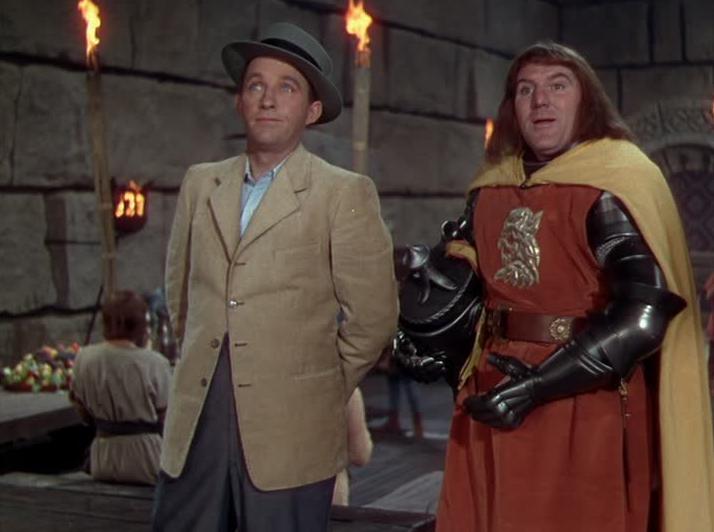
A Connecticut Yankee in King Arthur's Court (Tay Garnett, 1949) – This second version of Mark Twain’s classic story is far better than the 1931 adaptation (which starred Will Rogers), with an effective framing device, a nice feel to its romantic scenes – featuring the not unattractive, flame-haired Rhonda Fleming – and one classic song, Once and For Always, but I’ve begun to find Bing Crosby’s screen persona really irritating: the embarrassing jivetalk, the smug intonation that masks a deficiency of sincerity, and that walky sort of dance he does in lieu of any terpsichorean ability. His singing’s great and the film is diverting enough overall, but it simply grates and stutters too often. (2)

***

TV


The Best of What's Left of 'Not Only... But Also'
– Peter Cook is perhaps the funniest person who has ever lived, so it's odd that this landmark series − his most popular and sustained creative effort − is so incredibly underwhelming. Working in tandem with regular foil Dudley Moore, Cook made a sustained effort to move away from the satire of Beyond The Fringe, only to waste much of his energy on lousy spoofs − which ironically age a lot more quickly than topical political gags. Still, he wanted superstardom, not a legacy.

Only about three hours of the three Not Only... But Also series that they made for the BBC still exist, the rest having been wiped to save expensive tapes, and I was shocked by how little of it is actually, well, funny. There are a handful of truly great sketches − mostly the 'Pete and Dud' routines, including an unassailable classic in the National Gallery complete with Cook ad-libbing to make Moore corpse, and an embryonic Arthur Streeb Greebling effort − and a few other good ones (the goblin cobbler, Alan A-Dale, Bo Dudley), but the rest is a mixture of pastiches that go on forever (the Thunderbirds one is fucking terrible), silly voices, pointless big-money stunts, Cook repeatedly using the word 'substances', and Moore doing the same unfunny faces and breaking off for regular musical interludes. Oof. (2.5)

***


Cunk on Shakespeare (2016) – Fine, but not really sustained, with too many of those awkward Ali G-style segments in which Philomena meets real-life experts. There's nothing in it as funny as this gag:


Oddly, the Guardian article that Morgan wrote to plug the show is better than the programme itself. (2.5)

***

BOOK


One Summer by Bill Bryson (2013)
– An interminable summary of second hand sources (and a few New York papers) that deals with the incredible summer of 1927, in which America saw the first Atlantic crossing, the birth of sound cinema, the invention of the TV, Babe Ruth’s record home run chase, and a whole lot more besides. There are some interesting details and funny stories, but it frequently drags and rarely gives you a sense of what it must have been like to actually be there. The Ruth sections promise much and deliver almost nothing. The book is also so mistaken on the bits I already knew about – attributing silent star Clara Bow’s decision to quit cinema to her voice rather than her mental health, mistaking the technical significance of 1926’s Don Juan – that it made me doubt the rest. Really disappointing. (Lovely front cover, though.) (2)

See also: David Stenn's Clara Bow biography is a gem. As it's in Bryson's bibliography, you might have thought he would have read it.

***

Thanks for reading.

Sunday, 29 May 2016

A few thoughts on Love & Friendship - Reviews #237


CINEMA: Love & Friendship (Whit Stillman, 2016) - Ah, Whit Stillman. It's so great to have one of America's best ever writer-directors back making movies again, and this one's a wonder. Jane Austen has been an influence since the beginning (his first and greatest movie, Metropolitan, is a rom-com in which love flourishes between two Austen fans), and for his fifth film he's presenting the author's first serious work: an epistolary novella written before her six major works, and only published posthumously.

Adapting it freely enough to humanise its widowed, magnificently selfish anti-heroine (Kate Beckinsale), Stillman retains plenty of Austen's acerbic gags, as Lady Susan plays all those around her off against one another in order to get rich, comfortable and laid. I saw the movie at the Curzon Chelsea yesterday, complete with a post-film Q&A with Stillman and Beckinsale, and the director spoke about how he has tried to revive '20s and '30s tricks lost to the grammar of cinema, like iris-ins and a climactic roll-call of characters, complete with clips. That's not all, though: there's also the spirit of Pre-Code and screwball comedy alive here: the ending is pure Jean Harlow vehicle (with more than a hint of Red-Headed Woman), and the debuting Tom Bennett plays a hilariously and distinctively thick posho who'd be very much at home in, say, Merrily We Live.

Stillman also acknowledged the debt he owes to the 1995 version of Sense and Sensibility (a film he was slated to direct, after Rob Reiner and before eventual choice Ang Lee), and that's apparent throughout: its sets and its cinematography are virtual facsimiles of that earlier classic, which is by far Austen adaptation on the big screen so far, with inventions that even improve upon her novel. The feel of this film is very different though, mirroring its protagonist, who's caustic, brutal and duplicitous, where Emma Thompson's Elinor was gentle, wise and human. Beckinsale's slightly synthetic Hollywood glamour is an odd fit, imported back into a British period setting, but her performance is unexpectedly excellent, particularly her pitch-perfect comic delivery: she grandstands when she needs to, tips a wink to us at times, but often tosses away her barbs in a way that makes them even funnier.

The rest of the cast is great too. Morfydd Clark captures the right balance between childishness and burgeoning self-worth as Lady Susan's daughter, Xavier Samuel is suitably sensuous and endearingly naïve as our anti-heroine's next conquest, and Thick of It regular Justin Edwards exhibits his usual exceptional comic timing, as a singularly agreeable man whose wife (the excellent Emma Greenwell) hates Beckinsale's guts. In the bit parts, James Fleet (who also appeared in Lee's Sense and Sensibility) hits the sweet spot between pomposity, likeability and general impotence, Chloe Sevigny is fun as Beckinsale's American confidante (the pair re-uniting 18 years on from Stillman's Last Days of Disco) and Bennett steals every scene he goes near, as a vastly wealthy idiot with some extremely incorrect preconceptions.

I was incredibly excited when I heard this movie was in the works, and I'm delighted that it didn't disappoint, its short shooting schedule (entirely in Dublin) and small budget nowhere in evidence, except perhaps to lend it the same zippy, breakneck feel as The Thin Man, a film with the same modern, offhand sensibility, and delirious sense of fun. It'll take me another couple of viewings to catch all the gags, and to decide − as with Damsels in Distress − whether it's another Stillman masterpiece, or merely a terrific movie, and I simply can't wait. (4/4)

I also had a very quick chat with Whit Stillman. All my life goals are now completed.

Wednesday, 11 May 2016

Jerome Kern, The Boys from Brazil and Wilder's worst film - Reviews #236

Éric Rohmer has now made the best movie I've seen this year, as well as the worst. Also featuring this time around: Buster Keaton, D. W. Griffith and all that other stuff I won't shut up about.

FILMS:

After Le signe du lion, I'm back in love with Rohmer, courtesy of this double-bill:


The Bakery Girl of Monceau (1963) - A mesmerising, intoxicating Rohmer short that's as close to a personal manifesto as you'll ever see on screen. His enduring preoccupation was where eroticism touches romance, and his view of both was heady, wise, ironic. After the false start that was the director's abysmal debut feature, the tedious, neorealist Signe du Lion, this story of a law student (Barbet Schroeder) flirting with a counter girl at a Parisian bakery (Claudine Soubrier) as he waits for his true love (Michèle Girardon) to walk past is extraordinarily affecting, honest and insightful: grubbily conspiratorial as we're asked to see everything from his jaundiced viewpoint (it's a 'moral tale' in so much as it's about personal morality), a little eerie as it ponders fate and chance, and gloriously sensual when they duck into an alleyway to talk and he starts stroking her neck.

The first of Rohmer's Six Moral Tales, and – at 23 minutes – the best film I've seen this year. (4)


Suzanne’s Career (1963) - The second of Rohmer's Six Moral Tales, with quiet, judgemental Bertrand (Philippe Beuzen) observing the relationship between his cruel best friend, Guillaume (Christian Charrière) and the put-upon, unglamorous Suzanne (Catherine Sée), who seems lost and beset by cripplingly low self-worth. The characters are tough to like – or even to spend time with – but Rohmer knows exactly what he’s doing, as he drags us towards a brilliant and completely unexpected climax radiating a peculiar warmth and empathy. A very unusual and interesting movie. (3.5)

***


Ben Affleck doing some acting.

Argo (Ben Affleck, 2012) - '70s-style thriller meets against-the-clock blockbuster in Affleck's Oscar-winning movie, which is best when cranking up the tension unbearably or playing it agreeably scuzzy, less appealing when it gets an attack of the smugs (all that "Argo fuck yourself" stuff is too smirkily Oceans 11-like for my taste, complete with cartoonish performances from John Goodman and Alan Arkin). Ben Affleck is a CIA operative (in the film, not in real life) who attempts to get six American diplomats out of Iran under the guise of a phony film entitled 'Argo'. There's a touch of Dog Day Afternoon about its short time-frame and docu-realism, more of an attempt to place international events in context than you usually get from Hollywood (though protesting Iranians are still portrayed as the 'other') and a really good supporting performance from Bryan Cranston as Affleck's boss, whose reaction to the fate of the mission is beautifully judged. Imperfect but impressive. (3)

***


SHORT: Hayseed Romance (Charles Lamont, 1935) - A funny Buster short from his fallow mid-'30s period, as his hapless handyman gets a job at a farmhouse and comes close to destroying the place. It opens with a tired gag stolen from his 1922 film, My Wife's Relations, but quickly picks up, with more than enough laughs and even some unexpected ingenuity, courtesy of that double-exposure trick he introduced so memorably in Sherlock, Jr (and which here brings his conscience into the picture). It's all fairly minor, but the star's timing is exquisite, whether trying - and failing - to wash dishes, mend a leaky roof or escape from the house via an upstairs window. Well above-par for one of his Educational vehicles. (3)

***


A Nazi smile, if ever I saw one.

The Boys from Brazil (Franklin J. Schaffner, 1978) - Completely stupid movie about Nazi eugenicist Josef Mengele (Gregory Peck) trying to breed a new master race, to the understandable alarm of Ezra Lieberman (Laurence Olivier), a high-pitched, shambling and brilliant ‘Nazi hunter’ patterned after Simon Wiesenthal. It’s complete trash, but there are some very effective moments – especially involving the kids – and Olivier is absolutely excellent in a performance that seems at first to be alarmingly wide of the mark. The stunt casting of Peck works neatly too, though sadly James Mason is given almost nothing to do as his aristocratic confederate. (2.5)

***


Till the Clouds Roll By (Richard Whorf, 1946) - Sometimes you just have to go with the consensus: bad story, good songs. This is a middling musical from MGM about the life of Showboat and Swing Time composer, Jerome Kern, who told the writers that his life had frankly been too boring to adapt into a film, at which time they came up with a largely fictional narrative surely even more tedious than the real thing.

The script is just completely idiotic: a series of individually effective clichés stitched together to form a risible whole in which none of the characters’ actions making any sense. The second half concerns Kern’s entirely uninteresting (fatherly) relationship with his mentor’s daughter, Lucille Bremer – a regular in these musicals primarily because she was having sex with powerful producer Arthur Freed.

The composer’s played, incidentally, by Robert Walker, a reasonable, greatly troubled actor best remembered as Strangers on a Train’s Bruno, where Hitchcock used his essential callowness so chillingly (he is also very good opposite his then-wife, Jennifer Jones, in the Home Front masterpiece, Since You Went Away); here he’s adequate, doing what he can with such poor material. And it is poor: you know you’re in trouble when the amazing Van Heflin can’t make something look good.

I’m not going to say “thankfully Kern died during production”, but thankfully Kern’s tragic death – during production – led to the studio kicking this one into the A bracket, and stuffing it with stars, as well as incorporating a weird coda where he turns up at the studio to watch a gigantic production number medley, in which the ugly backdrop is exactly the same shade of red as singer Tony Martin.

There are quite a few good numbers, including a couple of appearances from June Allyson – who stole the studio’s next big composer biopic, Words and Music – a goofy I Won’t Dance featuring Bremer and Van Johnson, and a snippet of pre-fame Cyd Charisse dancing with Gower Champion to Smoke Gets in Your Eyes, but the film is dominated by three others.

There’s Lena Horne’s plaintive, erotic Can’t Help Lovin’ Dat Man – from the compressed Showboat production that opens the movie (she wanted to reprise the role of Julie La Verne in the studio’s 1951 adaptation, but was overlooked in favour of Ava Gardner) – an incredible version of Look for the Silver Lining sung by Judy Garland and directed by husband Vincente Minnelli, who throws in a superlative tracking shot following her from dressing room to stage that underlines the hopeless, static camerawork elsewhere in the film, and Frank Sinatra’s Ol’ Man River.

The latter is so synonymous with black performers (and particularly Paul Robeson) that this version almost feels like cultural appropriation, but it’s long been one of my favourite things in movies: a breathtaking vocalisation by a complete arsehole at the peak of his unbelievable powers; I could write a thousand words about his breathing technique alone.

So yes, the consensus is right: not a great movie, but a movie with great things in it, and as such a fair tribute to a fine songwriter, even if it’s missing both his best song – The Way You Look Tonight – and the best Kern story, which is when he got stuck in a big glass jar outside Myrna Loy’s house, completely naked. (2.5)

***


The film is approximately this good.

The Emperor Waltz (Billy Wilder, 1948) - Chronically unfunny Wilder film, with a brash, irritating Bing Crosby going to Austria to sell gramophones and falling in love with a horrible, stuck-up countess (Joan Fontaine). It's ugly, dislikeable and boring, with banal dialogue and dreadful songs. Every plot development is to do with dogs. (1)

***


More like bleurgh-glar, am-I-right?

SHORT: The Burglar’s Dilemma (D. W. Griffith, 1912) - I can’t believe that this film only lasts 15 minutes, as I could have sworn that Robert Harron spent literally two hours shaking his head at the police while they took it in turns to shout at him. There are some real gems in director D. W. Griffith’s earliest work – particularly the gangster blueprint, Musketeers of Pig Alley, released just six weeks before – but this isn’t one of them. Henry B. Walthall (the Little Colonel in Griffith’s notorious Birth of a Nation) is a feckless, drunken lout who thinks he’s killed his brother (Lionel Barrymore) and pins the crime on a cowardly crook (Harron) terrorised by his underworld boss (Harry Carey). Despite the presence of those big names, it’s totally drab and uninteresting, with Griffith at his most pious, patronising and long-winded. It’s interesting to see Barrymore and Lillian Gish on screen together, though (she turns up to wish him a happy birthday, which is what sets Walthall off drinking), 34 years before they played husband and wife in the post-war box-office sensation, Duel in the Sun. (1)

***

Thanks for reading.

Thursday, 5 May 2016

Mankiewicz, The Shadow Line and the original House of Cards - Reviews #235

FILMS


Somewhere in the Night (Joseph L. Mankiewicz, 1946) - This was unexpectedly terrific: a very, VERY underrated movie from the great writer-director, Joseph L. Mankiewicz. It’s a brilliantly-plotted mystery-noir, full of that classic Mankiewicz dialogue: wise, hard-boiled and exceedingly sarcastic.

John Hodiak plays an amnesiac war hero searching for a shadowy hoodlum by the name of Larry Cravat, his Third Man-ish investigations bringing him into the orbit of a wry, warm-hearted chanteuse (Nancy Guild), her nice guy suitor (Richard Conte) and a gently omniscient detective (played with great charm by Lloyd Nolan).

There are outstanding self-contained, character-led scenes, including an absolute gem featuring Josephine Hutchinson (a former Warner female lead who never quite made it), fine, unexpected examples of jocular post-modernism – in the shape of meta movie gags about Lugosi, lighting and how detectives behave – and a succession of quite magnificent surprises, right up to the finish.

From the film’s reputation, I was expecting something fairly shabby and perfunctory, but instead got a film that’s impressive, interesting and almost impossible to second-guess. The leads are strictly second-tier, but while Hodiak is fairly bland, the director takes Guild into strong territory (like Hutchinson before her, she was on the cusp of superstardom that never came) – the actress emerging as a sort of Ella Raines-Ronnie Lake hybrid, with a gift for a one-liner – as Nolan and Conte hoover up everything that’s left. (3.5)

See also: I wrote about Mankiewicz's masterpiece, All About Eve, here.

***


They're even giving great performances in the publicity stills.

Watch on the Rhine (Herman Shumlin and Hal Mohr, 1943) - A talky, grown-up and extremely powerful propaganda piece - from Lillian Hellman, via Dashiell Hammett – about German émigré Paul Lukas, his American wife (Bette Davis) and their three children moving to the States, where they face persecution from a dissolute, amoral Nazi sympathiser (George Coulouris). There’s a false note in the characterisation of the kids, who speak in that generic ‘foreign’ Old Hollywood way (all stilted full sentences), and Beulah Bondi is wasted in a weak part as a French maid, but much of the film is truly great, with perfect performances from Lukas and Davis, and mature, incisive writing that hammers its points across – even while showing the Nazis as cruel, sadistic thugs, rather than the genocidal ethnic cleansers they were soon confirmed to be. (3.5)

***


Darling (John Schlesinger, 1965) - A ‘60s time capsule with a European feel about the romantic adventures of capricious British model Julie Christie, who moves through relationships with a TV journalist (Dirk Bogarde), a louche, selfish playboy (Laurence Harvey) and an ageing Italian prince (José Luis de Vilallonga), on her way to partial self-discovery. It’s inconsistent and holds you at arms’ length, but Christie is very good in her Oscar-winning role, and there are some excellent insights and fine lines from Frederick Raphael – who went on to write one of the greatest things I’ve ever seen on TV, the BBC’s novelistic, challenging and brilliant adaptation of his book, The Glittering Prizes. Jim Clark’s editing is also extremely good, full of tricks inspired by the Nouvelle Vague, though the direction from John Schlesinger includes too much that simply feels like padding, particularly a party sequence as incoherent and unfulfilling as the one with which he almost sank Midnight Cowboy. The film’s bagginess and aloofness is compounded by a motivational murkiness and lack of clarity that’s not intentional: it strives to be adult and complex, but comes off as merely unclear, despite Christie’s best efforts. The idea that anybody would go after Harvey while they had Dirk Bogarde at home is also, of course, ridiculous. As you would expect, Harvey is as dreadful as ever. (2.5)

***


It is only as terrible as this half the time.

Excuse My Dust (Roy Rowland, 1951) - A broad, nostalgic musical-comedy about an aspiring inventor (Red Skelton) at the birth of the automobile revolution. Skelton is as funny as a hernia (and his various car crashes as funny as, well, a car crash), but the Arthur Schwartz-Dorothy Fields songs are good and Monica Lewis puts her numbers across with great gusto, sass and style. I like the hilariously incongruous ballet featuring female lead Sally Forrest too: it's very stylish and well choreographed and confusing. In support, Preston Sturges regulars William Demarest and Raymond Walburn are rather wasted, though Demarest does blow a sort of weird raspberry at one point. In addition, an uncredited Buster Keaton came up with a few of the gags and worked behind the camera (some of the Skelton business is a little better than normal, though he himself is dire), while the star's car was previously seen in Orson Welles' butchered 1942 masterwork, The Magnificent Ambersons, which is where the similarities between the two rather cease. (2)

***

BOOKS


The Pursuit of Love by Nancy Mitford (1945) – Nancy Mitford’s romantic comedy about the pretty, fickle, impulsive, small-eyed Linda Radlett is a playfully heightened, impeccably-written slice of escapism, laced with insight, understated emotion and dazzling wit, based upon her own life – and her experiences as a member of Britain’s most notorious family. It’s not especially ambitious in terms of scope, but it is magnificently realised, full of brilliantly-drawn characters, sublime running gags and effortlessly turned phrases. The chance to get a tour of Mitford's world and her brain is a rare sort of treat, and despite her rarefied upbringing, there’s a worldiness and a compassion here, allied to a rare intelligence and a matchless, piercing viewpoint, that can’t be missed. The foreword by her sister Decca is hilarious too. (4)

***


The Thin Man by Dashiell Hammett (1934) – Hammett’s celebrated crime novel is, well, a bit of a damp squib, really. I came to it as a fan of the movie (which came out later the same year, having been shot in just 12 days!), the defining mystery-comedy of its era, and the first time that a modern, happy and equal marriage (at least within the parameters of its period) had been depicted on screen, touched with the alchemic chemistry of stars William Powell and Myrna Loy. All I can say now is that screenwriters Albert Hackett and Frances Goodrich did an incredible job of adapting this book, which is less escapist, more cynical, more repetitive, less funny and conspicuously less fun than the film, consisting chiefly of second-gen Greek immigrant PI Nick Charles saying that he’s not sure who committed a murder, while various dislikeable supporting characters try to either stitch up or have sex with one another. The relationship between Nick and his wife Nora (based on that of Hammett and his long-term partner, Lillian Hellman) isn’t bad, and sometimes the book’s eruptions of violence, drunkenness and cutting sardonism draw you in, but there’s always a long lull just around the corner. A real disappointment. (2)

***

TV

The House of Cards trilogy:


House of Cards (1990)
- One of the most exquisite achievements in the history of British TV: a paraphrasing of Macbeth, with a repulsive psycho-sexual undercurrent, about Tory chief whip Francis Urquhart (Ian Richardson), who reacts very poorly to being overlooked in a cabinet reshuffle, and proceeds to destroy everyone in his path to power. Andrew Davies’s script – including those celebrated, conspiratorial fourth-wall-busting asides – the immersive direction, and a pair of sensational performances from Ian Richardson and Susannah Harker (as his mistress and most prized media contact, Mattie Storrin) make it simply unmissable: a dark, daring and delicious satire about an old soul poisoned by avarice, but with a twinkle in his eye. (4)

To Play the King (1993) - An interesting sequel to House of Cards, about Francis Urquhart (Ian Richardson) locking horns with the Prince of Wales (Michael Kitchen), resulting in a constitutional crisis. It’s less novel and more of-its-time than the original, but exceptionally well-written and acted, with an unforgettable climax containing more than a hint of The Godfather Part II. Kitty Aldridge’s performance as Urquhart’s new mistress, Sarah Harding, is emblematic of this sequel’s standing: better than almost any you’ll see on TV, but not in the same league as Susannah Harker’s last time out. Still, I can't help but think that this was a major influence on one of last year's most overrated plays, Charles III, which has an almost identical storyline (though was written in blank verse). (3.5)

The Final Cut (1995) - A very good but nonetheless slightly disappointing conclusion to the House of Cards trilogy, with prime minister Francis Urquhart (Ian Richardson) dealing with revolt and rebellion that threatens to push him out of Number 10. For the most part, it feels more like a cynical political drama than the black satire of House of Cards – while traversing some rather over-familiar ground – and the supporting cast isn’t in the same class as before (Isla Blair and Paul Freeman are simply lightweights compared to Richardson), but it’s still consistently entertaining, with confrontational storytelling, fine dialogue and a flamboyant if conventional pay-off. (3)

***


The Shadow Line (Hugo Blick, 2011) - The BBC at its best, a bleakly brilliant mini-series from writer-director-producer Hugo Blick that plunges you into an unexplained, nightmarish and narcotic netherworld, then begins to illuminate and tie up a few threads while leaving others dangling for the longest time. Chiwetel Ejiofor is a cop with a past, Christopher Eccleston a dealer with a heart, Rafe Spall an out-there gangster (whose tics are a thing of joy) and Stephen Rea a tall, quiet mystery man by the name of ‘Gatehouse’. It’s idiosyncratic and almost matchlessly imaginative, with more than an echo of Edge of Darkness (arguably the finest thing the Beeb did in the ‘80s) in its marriage of introspection and action, the latter showcased in a succession of creepy, eerie and ultimately breathtaking set pieces. (4)

***


State of Play (David Yates, 2003) - A dazzling drama from the pen of Paul Abbott, about a political scandal that begins to mount after the death of a political researcher, who was having an affair with her boss, up-and-coming MP David Morrissey. As reporters John Simm and Kelly MacDonald begin to investigate, further revelations follow thick and fast, impacting on the livelihoods – and lives – of them all, as well as editor Bill Nighy, a pale, sexy, floppy-haired, cool-as-flip freelancer (James McAvoy), a callow, irritating PR weasel (Marc Warren) and Morrissey’s unhappy, conflicted and opinionated wife (Polly Walker). The meshing of acting styles is simply exhilarating, the direction from future Harry Potter helmer David Yates is swift and immersive, and the writing is absolutely extraordinary: clever, funny, thematically complex but entirely accessible, and eloquently and pointedly personal while operating within a moral morass.

I always remember Abbott telling Charlie Brooker (in a personally inspiring special edition of Screenwipe about how to write) that he would throw in outrageous twists at will, then say to himself: “Write yourself out of that corner, you bastard”, and that gloriously abrasive, unconventional approach works absolute wonders here. It’s only Warren’s subplot that seems a little out-of-place, a cartoonish, relentlessly one-note storyline that occasionally stalls a mini-series of otherwise unstoppable momentum – and magnificence. (Also: Kelly Macdonald is bae, especially her voice.) (4)

***

Thanks for reading.