Showing posts with label Amy. Show all posts

Tuesday, 22 December 2015

Review of 2015: Part 1 - Movies


I may have curbed the obsessive movie-watching a little this year and last, but I still managed to catch 167 movies, 134 of them for the first time, and 31 of them at the cinema. In this, part one of my review of the year (live performances and books are coming up later in separate instalments), I'll talk you through the best of them, imagining myself to be some sort of gold/flax filter, rather than just a 31-year-old man who sits in the dark watching telly. First up are my top 10 movies of the year, then the 15 best new discoveries, followed by a brief round-up and a few old favourites.

Top 10 of 2015:

10. Orion: The Man Who Would Be King


Director: Jeanie Finlay
What we said: "A fantastic story, told almost as well as it could be, about a masked Elvis soundalike who was marketed to a public that didn’t want to believe the King was dead. Working with a limited amount of archive film, director Jeanie Finlay weaves this stranger-than-fiction tale with the use of talking heads, intelligent reconstructions, melancholic bucolic footage and audio interviews, and while a few interesting eyewitnesses are absent – including Ellis’s various wives – and it doesn't always delve as deeply as it might, the result is a compelling, fascinating film with a couple of devastating late twists."

9. Spectre


Director: Sam Mendes
Cast: Daniel Craig, Christoph Waltz, Léa Seydoux, Monica Bellucci, Ben Whishaw, Andrew Scott and Ralph Fiennes
I, erm, went to the premiere of this movie, as it was at my office. What we said: "Since when did Bond movies get good? Spectre isn’t perfect, but it’s pretty damn great: riotously enjoyable, genuinely affecting and with a handling of Bond mythology that’s fresh yet respectful, the film pervaded by a swaggering self-confidence (and featuring additional dialogue by West End superstar Jez Butterworth!). If it is Mendes and Craig’s final Bond, it’s a good one to bow out with, but I really hope it’s not, since its balance of artistry, intelligence and blockbuster smarts lifts it way, way out of the ordinary. Not only did Bond films get good, but they’ve stayed good."

8. Mistress America


Director:
Noah Baumbach
Cast: Greta Gerwig, Lola Kirke, Seth Barrish and Juliet Brett
What we said: "Noah Baumbach is reunited with Greta Gerwig, the stunningly gifted comedian who is to screen humour what Michelle Williams and Jennifer Lawrence are to drama – i.e. better at playing it than anyone else on the planet. And for Mistress America, the director has reinvented himself as Howard Hawks for a fast-talking, ultimately old-fashioned screwball comedy of absurdism and interruption in which Gerwig is essentially his Ros Russell. It’s a film of moral and narrative daring. That, a vivid NY atmosphere and a pair of exceptional performances: Kirke’s pretty, pretty lost freshman holding her own against Brooke, another superb entry in Gerwig’s gallery of appealing, aimless young women, drifting attractively towards oblivion."

7. Star Wars: The Force Awakens


Director:
J. J. Abrams
Cast: Daisy Ridley, John Boyega, Adam Driver and Harrison Ford
What we said: "Well, J. J. Abrams certainly seems to understand what Star Wars fans want more than George Lucas does, because The Force Awakens is fun - and there's not a discussion of international trade tariffs in sight. For great portions of the movie, I just had a big grin plastered across my face. It gets Star Wars, it really does. It knows how much we love the original trilogy, and it loves it too. That affection, evidenced by a million tiny touches, doesn't always blend seamlessly with the new narrative, but it does underpin and underscore everything that happens."

6. Birdman


Director: Alejandro González Iñárritu
Cast: Michael Keaton, Edward Norton, Emma Stone and Naomi Watts
What we said: Like last year's best film, Boyhood, this gave me the feeling of euphoria that comes from seeing something utterly new and startlingly ambitious. Whereas Linklater's movie was wise, universal and steeped in contemporary Americana, this one is pin-sharp, blackly comic and streaked with greasepaint, with at least two scenes of fantastical wonder, one of underpants-based humiliation, and a dozen comprising stylised human drama between vivid, unforgettable characters.

5. Inside Out


Director:
Pete Docter and Ronnie del Carmen
Cast: Amy Poehler, Phyllis Smith, Mindy Kaling, Bill Hader, Lewis Black and Kaitlyn Dias
What we said: This is a major return to form for Pixar: an extremely creative, wilfully different movie that draws on inspirations as diverse as The Beano’s Numskulls, Norton Juster’s The Phantom Tollbooth and Disney’s Wreck-It Ralph, but has an existential imagination and emotional sensibility more akin to an arthouse movie.

4. Whiplash


Director:
Damien Chazelle
Cast: Miles Teller, J. K. Simmons and Melissa Benoit
What we said: For once, the hype barely goes far enough. Whiplash knows what its strong suit is: the dynamic between the combustible conductor and his potential protégé, whose development from a taciturn up-and-comer to a bleeding-handed, budding Buddy Rich not afraid to stand his ground, is invigorating to watch. As an antidote to innumerable 'inspirational teacher' of insurmountable treacliness, it's undeniably welcome. But more than that: it's not just great... it's one of the greats.

3. Mad Max: Fury Road


Director: George Miller
Cast: Tom Hardy, Charlize Theron and Nicholas Hoult
What we said: "An exhilarating feminist actioner that unleashes torrents of water on the risible '80s Mad Max films from an improbably great height." Its hold on me has only grown throughout the year, while the initial impact of Birdman and Whiplash has lessened a little.

2. Carol


Director: Todd Haynes
Cast: Cate Blanchett, Rooney Mara and Kyle Chandler
What we said: A small miracle of a film, about a quiet, emotionally straightforward shopgirl (Rooney Mara) - on the cusp of self-revelation - who falls in love with a middle-aged housewife (Cate Blanchett), herself careening towards divorce; a blissfully textured, stunningly authentic and seductively realistic portrait of love busting up through the floorboards of stifling conformity.

1. Amy


Director: Asif Kapadia
What we said: "A haunting, heartbreaking and stunningly brilliant film from Senna director Asif Kapadia, which takes us into the confidence of Amy Winehouse, as the bolshy, big-voiced, jazzy Jewish girl from North London becomes a megastar, while her personal demons, her relationship with a drug addict, and a ravenous, amoral press proceed to rip her to shreds. It's a tough watch, but it feels essential, not just for its vivid picture of a fascinating, deeply troubled young woman, but also for its wider significance: as a plea for people to stop being so horribly selfish, to stop seeing excess and illness as ‘rock and roll’ and drug abuse as a joke, and for the media to realise that if it wants to paint itself as a crusading Fifth Estate, then some basic humanity wouldn’t go amiss."

***

Top 15 discoveries of 2015:


... being the older movies that I happened upon for the first time this year.

15. Stranger on Horseback (Jacques Tourneur, 1955) - A sensational little Western about the coming of law and order, with gun-toting circuit judge Joel McCrea trying to bring the son of a powerful pioneer to justice. Made by McCrea and director Jacques Tourneur the same year as Wichita, it's a vastly superior outing in every way: a tight, slim oater that does wonders with a tiny budget, boasting a riveting story, a crackling script that includes a superb monologue for villain John McIntire and a stunning climax making full use of whip-cracking desert dominatrix Miroslava.


14. Guardians of the Galaxy (James Gunn, 2014) - Gloriously, this blasts the shit out of those laboriously tagged 'Marvel Cinematic Universe' films, and feels like everything Avengers should have been but wasn't. It's irreverent where Avengers was smug, deft where that film was portentous, and unpredictable where its rival was ponderous and pompous.

13. Day for Night (François Truffaut, 1973) - Examining and celebrating the artifice, the potential for perfection and yet the compromise of cinema (a collaborative medium in which logistical improvisation is king), the film starts with a scene that needs to be retaken and goes on from there, tipping us a wink as it wheels out a gentle set-piece about a misbehaving cat or a hairy stuntman doubling for Bisset, tightening the knot in your stomach as a cast or crew member begins to go to pieces, and then slowly but surely revealing its subtle depths: an ability to move, enchant and beguile, as all truly great movies do.


12. Philomena (Stephen Frears, 2013) - A simply wonderful movie about journo Steve Coogan trying to trace the adopted son of Irish pensioner Judi Dench, a victim of the notorious Magdalene laundries. It’s often desperately bleak, but also unstintingly warm-hearted, full of the most brilliant jokes, and as emotionally and intellectually rewarding as anything I’ve seen this year.

11. True Heart Susie (D. W. Griffith, 1919) (Cinema) - Maybe my favourite ever Lillian Gish performance, with everyone's favourite tiny-mouthed acting titan playing the "simple, plain" Susie, an angelic, motherless farmer who sells her cow to fund sweetheart Robert Harron's college career, then watches, powerless as he falls for a tight-skirted, powder-faced party animal (Clarine Seymour). Yes, that is the best premise for a movie ever, thank you for asking.


10. Toys in the Attic (George Roy Hill, 1963) - Toys in the attic and skeletons in the closet: a very entertaining slice of Southern Gothic from commie playwright Lillian Hellman: a little ripe, a little familiar, but extremely well done. It's largely shot on one set, but future New Hollywood hero George Roy Hill directs it all extremely nicely, and much of the acting is an absolute treat, with Geraldine Page and Wendy Hiller dominating in two mesmerising characterisations. Both play women who are blind and deluded, though in quite different ways, Page hitting a peak of quivering self-loathing, Hiller shuffling the moods as she did so superbly in these mid-career characterisations that she loved to (infrequently) take on: not the shimmering archetypes she had embodied in Bernard Shaw plays, but starkly real characters made beautiful by their flaws and contradictions.


9. Of Human Bondage (John Cromwell, 1934) - A short, sharp shock that still reverberates down the decades.

8. East Side, West Side (Mervyn LeRoy, 1949) - A glossy, unbelievably entertaining Hollywood meller set in New York, with Stanwyck as a wronged wife, Charisse the girl-next-door, Heflin's effortlessly modern performance, Gardner's feline sensuality, Mason's voice, colourful bits for William Conrad, Beverly Michaels and Gale Sondergaard - her last film before being blacklisted. For what it is, close to perfect.


7. Blind Spot: Hitler's Secretary (André Heller and Othmar Schmiderer, 2002) - Err, yes, a second documentary about Hitler on this year's list, meaning that over 13% of favourite discoveries this year are about him. This film is just 87 minutes of a single talking head. Thankfully that talking head is Traudl Junge, an 82-year-old German woman who worked as Hitler’s personal secretary from 1942 until he shot himself. Her reminiscences of the “kindly old gentleman” she worked for – contrasted with the “monster” she regards him as in retrospect – make for utterly gripping viewing, as she talks in circles about her guilt, sorrow and confusion. Her memories are moving, maddening, sometimes baffling, and the film is quite brilliantly structured, with a stunning final sequence.


6. A Cottage on Dartmoor (Anthony Asquith, 1929) - A late, great British silent: a dizzying tale of romantic and sexual obsession, its slight story dazzlingly directed by Anthony Asquith. It's a little masterpiece, and it'll keep you guessing right up to the finish, while exalting you through its refusal to recognise the limits of late silent cinema.

5. The Wonderful, Horrible Life of Leni Riefenstahl (Ray Müller, 1993) - If you find yourself saying things like: “The reason I sent that telegram to Hitler was...” or “... Hitler hated it, ask anyone who was there”, it may be time to take a long, hard look at your life. The greatest female film director of all time – and the only one to have filmed a Nuremberg Rally – had been shopping this project around for a while, and finding that more than 200 respected documentarians wouldn’t touch her with a barge pole. Enter Ray Müller, who somehow manages to walk the trickiest, most perilous of tightropes: making a credible, even-handed and deeply insightful film about Leni Riefenstahl in which she is the only interviewee.


4. Les Diaboliques (Henri-Georges Clouzot, 1955) - The wife and the mistress of the world’s most unpleasant man plot his death in this stunning genre-hopper from Wages of Fear director Clouzot. It’s cynical and gripping, with flashes of humour and humanity, and Simone Signoret exuding malignant cool as a peroxide, jump-suited murderess with killer shades. There's twist after twist after twist - and the final two are just dynamite.


3. American Graffiti (George Lucas, 1973) - Magical, lightning-in-a-bottle stuff: a flavourful, nostalgic and sentimental movie - somehow made by George Lucas - with a cast of future stars as high school kids whose stories interweave on the last night before college in 1962. And it has Harrison Ford as a grumpy drag racer in a cowboy hat.

2. The Little Foxes (William Wyler, 1941) - A caustic, troubling, profound examination of a Southern family brought low – or high and to prominence, depending on how you view it – by a sea of moral dissolution. You could argue that the film’s delineation between good and evil is rather simplistic for a work aspiring to high art, but it’s that heightened sensibility that gives it much of its haunting power, particularly as the vultures gather and you realise that Hellman’s vision of America – imagined by Toland, enlivened by a killer ensemble, given order by the gifted Wyler – is far darker than anyone could have expected, the blanched Davis poisoned by greed, leaving goodness, humanity and virtue all gasping for breath.


1. Secrets & Lies (Mike Leigh, 1996) - A middle-class black woman (Marianne Jean-Baptiste) goes in search of her birth mother and finds a coarse, tearful, loving, unhappy, chain-smoking working-class white woman (Blenda Blethyn), whose family is a powder keg just waiting for a match. There aren’t many films that change the way you see the world. Or many pieces of art, for that matter. Secrets & Lies does just that. It's brilliantly conceived, bracingly authentic and emotionally overpowering, opting at its climax not for soap or sentiment, but something truly remarkable: the truth. It's simply a masterpiece.

***


Miss Gish. Now and always.

Crazes: Bette Davis
Continuing preoccupations: Lillian Gish, Star Wars, Joel McCrea Westerns
Stuff I caught up on: Books, to be honest.
Revelations: Oft-derided silent star John Gilbert. He was weak in La Boheme, but superb in The Big Parade and his early talkie triumph, Downstairs. One to watch.
Happiest surprises: The barely-known, never-before-released Stranger on Horseback being a killer little movie, rather than a generic B Western. The 1949 version of Little Women still casting its strange and enduring spell, after a slightly rocky beginning.
Biggest disappointment: Quite a few. Cobain: Montage of Heck fucked it up badly: it was incoherent, embarrassing and portentous. The original Mad Max films were nothing. The Yearling wasn't awful, but I was expecting more poetry and also more realism from a movie often classed among the greats.
Oddest film: Batman Returns seems to misjudge its audience at every turn. Séance on a Wet Afternoon amorality might give you nightmares.
Worst films: Ryan Gosling's directorial debut, Lost River, was absolutely woeful. That I managed to see several worse films - a couple of B Westerns, the Stanwyck rom-com The Bride Wore Boots, the execrable Adventure in Sahara and particularly the WWII propaganda film, The Power of the Press - was in some ways an accomplishment. In some ways.
Some favourite moments: The dance at the start of Guardians of the Galaxy, the meeting in the cafe in Secrets & Lies, All That Jazz's living room number, which boots Meet Me in St Louis's cakewalk into the modern era and fuses sex, sentiment and sheer, unadulterated genius.
2015 was... A good year at work, a fair one at the cinema.
Best film I saw at the cinema: Winter's Bone at the Barbican
I was bored by: Too many films. Sometimes I fear I'm running out of good ones, especially in my beloved '20s-'40s Hollywood bracket.
I wrote this pretty good review of _______________, you should read it if you have a minute: My series on the original Star Wars movies wasn't bad.

***

15 I revisited in 2015:

The top 10 are actually the best 10 films I've seen all year.

15. The Empire Strikes Back (Irvin Kershner, 1980) (Cinema)
14. A Diary for Timothy (Humphrey Jennings, 1945) (and Spare Time, for that matter, on the same link)
13. Naked (Mike Leigh, 1993)
12. A Thousand Clowns (Fred Coe, 1965)
11. Way Down East (D. W. Griffith, 1920)
10. Kiss Me Kate 3D (George Sidney, 1953) (Cinema)
9. Titanic (James Cameron, 1997) (Cinema, film with live orchestra)
8. The Grapes of Wrath (John Ford, 1940)
7. All About Eve (Joseph L. Mankiewicz, 1950)
6. The Wind (Victor Sjӧstrӧm, 1928) (Cinema)
5. Pulp Fiction (Quentin Tarantino, 1994)
4. The Big Parade (King Vidor, 1925)
3. Winter's Bone (Debra Granik, 2010) (Cinema)
2. The Night of the Hunter (Charles Laughton, 1955)
1. The Crying Game (Neil Jordan, 1992)

***

Thanks for reading. Why not come back for the other instalments, if you can be bothered?

Tuesday, 4 August 2015

Amy, Kurt Vonnegut and Back to the Future live in concert - Reviews #211

The first of three updates, as I haven't done any for a while. This one has a great new film, a great old-ish film with good George Lucas dialogue and a few books, one of them compulsively horrible.

FILMS


CINEMA: Amy (Asif Kapadia, 2015) - A haunting, heartbreaking and stunningly brilliant film from Senna director Asif Kapadia, which takes us into the confidence of Amy Winehouse, as the bolshy, big-voiced, jazzy Jewish girl from North London becomes a megastar, while her personal demons, her relationship with a drug addict, and a ravenous, amoral press proceed to rip her to shreds.

Thanks to an abundance of revelatory home video footage, soundtracked by incisive interviews, we see her not only as the beehived, cat-eyed chanteuse or the alarmingly ribbed tabloid quarry, tumbling out of a club at 3am, but as a shy, spotty teen with a seductive offhand confidence in her vocal gift.

I’m not an enormous fan of Winehouse’s music, I think because her deeply personal writing and distinctive, expressive voice tended to be masked by such contrived, Americanised pastiche – trading first on ‘30s jazz and then ‘60s girl groups – but the portrait that emerges here is uncompromising, thrilling and frequently devastating: of an unhappy girl equipped with a massive talent, but none of the stability or serenity to deal with the perpetual media storm that her success brought upon her.

We see stand-ups and TV presenters laughing at her bulimia and drug abuse, her management pushing her out of rehab and onto foreign stages, and – in the second half – a rapacious, vulturous paparazzi incessantly stalking her, an essential decency chillingly absent. If that was my job, I think I would struggle to watch this film and think: “Yes, what I am doing with my life is essentially fine.”

By contrast, Kapadia’s film is quite beautifully lacking in sensationalism. Though it essentially doubles as an indictment of a society almost entirely lacking in basic compassion and empathy, it’s a work that possesses both virtues in apparently limitless amounts, surely compressing and simplifying an impossibly complex narrative, but attaining something that seems awfully like the truth – and apparently is, according to her closest friends.

Amy is a tough watch, but it feels essential, not just for its vivid picture of a fascinating, deeply troubled young woman, but also for its wider significance: as a plea for people to stop being so horribly selfish, to stop seeing excess and illness as ‘rock and roll’ and drug abuse as a joke, and for the media to realise that if it wants to paint itself as a crusading Fifth Estate, then some basic humanity wouldn’t go amiss. (4)

PS: the director thanked me for this review, which I found very exciting.

***


The Grapes of Wrath (John Ford, 1940) - This translation of John Steinbeck's immense novel about a Dust Bowl family searching for work and dignity in California is a major work of art in its own right: bristling, poetic and throbbing with anger at the injustice visited upon working people, and filled with stunning imagery and some wonderful acting.

Though centrist screenwriter Nunnally Johnson, (then) left-wing director John Ford and union-bashing producer Darryl F. Zanuck juggled the narrative to remove its more salacious, censor-baiting elements and to end the story on a relative high, it remains by far the most radical film ever to come out of the studio system.

Given the strictures of the period, it's incredible that Steinbeck's view of humanity and of his country remains largely intact, culminating in one of the most breathtaking sequences of that or any other era, a monologue by Tom Joad (Henry Fonda) which is both an affirmation if Steinbeck's "phalanx" theory (that we are all part of one soul) and a call-to-arms echoing out across the nation.

It's Fonda's performance that dominates, for me, even if Jane Darwell is an effective though overly folksy Ma Joad, and John Qualen fantastic in a small part as the haunted, 'touched' Muley Graves. The film's other great and timeless virtue is Gregg Toland's spellbinding cinematography, inspired by the work of Dorothea Lange, whose photos had accompanied one of Steinbeck's first non-fiction treatments of this subject matter.

Toland had collaborated with Ford earlier in the year for the expressionist O'Neill adaptation, The Long Voyage Home, and the director's understanding of music and emotional cues, as well as his keen eye for distinctive visual composition, made them ideal collaborators. The shot of Darwell watching Fonda cross the deserted dancefloor as Red River Valley quietly plays is pure gold, and pure Ford.

His film may lack the scope and depth of the source novel - its climactic catharsis is less Biblical, less revolutionary - but it's still one of the great American movies, its confrontational portrait of dirty, desperate and despairing souls finding solace in socialism being something altogether new from the sun-drenched Republican stronghold that was Hollywood in 1940. (4)

***


American Graffiti (George Lucas, 1973) - Magical, lightning-in-a-bottle stuff: a flavourful, nostalgic and sentimental movie - somehow made by George Lucas - with a cast of future stars as high school kids whose stories interweave on the last night before college in 1962.

They dance, drive, make out, drink, race, spar, bicker and try to get laid, to a constant soundtrack of impeccably selected singles from the era.

There's sexy James Dean-alike, Paul LeMat, a boy racer who spends most of the film with a cross, underage girl (Mackenzie Phillips) - my favourite of the tales. Sensitive chauvinist Ron Howard, meanwhile, is busy breaking his long term girlfriend's heart, while thoughtful, insecure Richard Dreyfuss has struck up an unlikely friendship with some teddy boy gangsters, and Charles Martin Smith is serving as a blueprint for foolishly bragging nerds everywhere - particularly Martin Starr's Bill in Freaks and Geeks.

Utilising the talents of New Hollywood heroes like Coppola, sound wizard Walter Murch and cinematographer Haskell Wexler, it's a deft, amusing and completely charming film, with improbably credible Lucas dialogue, a fantastic period atmosphere and an undercurrent of poignant wistfulness: a desire to return not only to innocent youth, but to pre-Vietnam idealism.

Its influence can be seen on countless films since, from Fast Times at Ridgemont High to Diner, Dazed and Confused and even Tin Men, but this cusp-of-college story is better than any of them.

And it has Harrison Ford as a grumpy drag racer in a cowboy hat.

It really is a shame that Lucas has devoted the last 30 years to making his Star Wars universe slightly worse, rather than creating something as warm and wondrous as American Graffiti. (4)

***


CINEMA: Back to the Future Live in Concert (Robert Zemeckis, 1985) - We held the English premiere of Back to the Future Live in Concert at the Royal Albert Hall earlier in the month: two screenings of the movie for around 4,500 people at a time, with Alan Silvestri's score (plus 15 minutes of new music) played on stage by a concert orchestra.

It was a great experience and as well as providing one moment of absolute, jaw-dropping wonder - as the orchestra struck up for the end of Earth Angel, and everybody in the audience promptly burst into tears - also revealed to me the exciting news that everybody else loves George McFly's laugh too.

The film is a textbook, if formulaic, example of cinema as entertainment, which expertly juggles genres, delivers a slew of euphoric set pieces, and features some of the most memorable performances of its decade. There's Christopher Lloyd's archetypal mad scientist Doc Brown, time-travelling, none-more-American teen skateboard whizz Marty McFly, and his mother, the coquettish Lorraine (Lea Thompson), whom he meets after unfortunately travelling back to 1955, and who really fancies him. Best of all is Marty's hideously awkward dad, George, brought to the screen with a glorious gawkiness by the incomparable Crispin Glover.

It's funny, highly romantic and sometimes very moving, with moments of broad wish-fulfilment that are going to make most people between the ages of 12 and 102 punch the air with delight, from Marty lamping arch villain Biff Tannen and escaping on an improvised skateboard to his Johnny B. Goode guitar heroics and Doc riding a zip wire to destiny. Marty's arrival in 1955 Hill Valley is wonderfully handled, the Oedipal subplot is amusing - and refreshingly odd - and the cast breathes all possible life into a script that doesn't look half as good on paper.

The only thing I'm not quite sure about are its oddly macho sexual politics and its worldview, which is most obvious in the coda and couldn't be more typical of '80s America if Reagan was narrating it whilst doing the Thriller dance. Not only does the film hinge on thumping an attempted rapist in the face, not only is Marty's principal quest to save himself - a suitable shorthand for the 'me' decade - but in order to do so he has to avoid some nameless Libyan terrorists, and his ultimate rewards are parents affluent enough to play tennis, a brother who wears a suit and works in an office, and a 4x4. Harrowingly, though the film doesn't seem to realise it, at its close, Marty has also erased his entire existence up to this point, as he understands it.

But it is really cool when they play The Power of Love and he hitches a ride on his skateboard from a passing car and then waves to that aerobics class. As I mentioned, this film is from the 1980s. (3.5 for the film, 4 for the experience)

***


The Thief of Bagdad (Raoul Walsh, 1924) - Put a shirt on, man.

Doug Fairbanks' fourth period film is sensual, opulent and often thrilling, with staggering sets, luscious cinematography and some stunning action, but it's also too slow, and lacking the narrative seamlessness that marks the star's best work, while his charismatic, balletic performance tends towards over-acting.

Based on a story from the Arabian Nights, The Thief of Bagdad is a spirited, ambitious, frequently eye-popping fantasy adventure complete with Fairbanks' usual lengthy lead-up, and definitely worth seeing - sort of Intolerance meets Robin Hood meets a fair number of uninteresting supporting characters - just not quite the classic I was anticipating.

Perhaps it's because one of the most fun things about Fairbanks' historical pieces was the sense that all this could really have happened, and effects-driven wizardry is just much less exciting than seeing him swing from things. Perhaps it's because the whole things feels slightly aloof: more an exercise in spectacle than a story that one can invest in or relate to.

Also Ahmed is such an idiot for using his magic chest to get some bread and a silver lamé suit, rather than doing something for that nice, Obi-Wanish hermit who's been helping him. (3)

***


CINEMA: Jurassic World (Colin Trevorrow, 2015) - Jurassic Park IV (or Blackfish II: The Revenge) - another 24 awkward hours in a theme park gone awry, as a genetically modified dinosaur goes AWOL and apeshit, complicating the lives of an ex-Naval recruit (Chris Pratt), park employee Bryce Dallas Howard and her two nephews, who need to Grow and Learn, whilst dealing with Family Problems.

The plot and characterisation are purely functional - even patronising - and it goes on rather too long, but Pratt is a likeable hero, there are a few big laughs, and the film's understanding of action and iconography is impressive, with some smart innovations (that much parodied 'taming'), several imaginative fight-or-flight sequences and a rightful reverence for Spielberg's 1993 classic that happily feels more like homage than thievery, especially when the kids happen on some archive merchandise...

I only went because a friend fancied seeing it, but it was quite a bit better than I expected. (2.5)

***


Arizona (Wesley Ruggles, 1940) - Racism, gun worship and a finale where all feminist credentials go to the wind - it's all par for the course in this overlong, artificial but fairly watchable Western. Jean Arthur is a rifle-toting, ranch-ogling businesswoman who meets her romantic match in grubby, bearded drifter William Holden (in an unusually robust early role), while tangling with duplicitous crimelord Warren William and his slimy front: nervy saloon-keeper Porter Hall. It's poorly-paced and rather one-dimensional, but Arthur's incredible charm and irresistible voice manage to sustain it most of the way, and there are three particularly good scenes: her shakedown of two thieves, Holden's moonlit serenade and an exciting stampede set-piece in lieu of the tedious gun battle I was expecting. (2)

***


Tower Heist (Brett Ratner, 2011) - Fat jokes, seizure jokes, suicide jokes, prison rape jokes, police brutality jokes, product placement, people constantly saying "bitch" - this stuff's now so ingrained in American popular culture that I don't think they even realise they're doing it.

Apart from those unsavoury aspects, Tower Heist is actually alright: a slightly self-congratulatory, sort-of-socially-conscious heist movie set in a big glitzy tower, directed by Brett Ratner, and starring Ben Stiller and a lot of people who popular in 1999. Curiously, it's also shot by the much-lauded Michael Mann cinematographer Dante Spinotti, whose talent is obvious, but whose results are often superficial and cursed with the same slightly nauseating colour palette.

Stiller is the general manager of the New York tower, which boasts the most expensive real estate in North America. When the owner - slippery, smarmy Alan Alda - robs the employees' pension fund, Stiller and his acolytes try to get the money back, and perhaps a little extra, enlisting the help of the only thief they know, who's obviously black (Eddie Murphy).

For all its flaws - like a lack of jokes and suspense, thin characterisation and a twist basically nicked from David Mamet's Heist - the film seems sincere rather than opportunistic in its topicality, which gives it a novel twist. The performances are also committed, transcending some smug, clichéd writing, with decent work from hissable villain Alda, bankrupt financier Matthew Broderick, Téa Leoni - as an FBI agent - and the leads.

It's hardly Topkapi, and while it's sometimes stupid, it's rarely boring. All in all, definitely worth the 80p I paid for it. (2)

***

BOOKS


God Bless You, Mr Rosewater by Kurt Vonnegut (1965) - Perhaps Vonnegut's best and most polemically dazzling book: an absurdist, turbo-charged spin on Mr Deeds, concerning the eccentric life of multi-millionaire Eliot Rosewater, an alcoholic volunteer fireman of limitless patience and generosity. A prescient, withering critique of capitalism, inherited wealth and American society, it contains some of the satirist's most memorable characters, inspired and incendiary jokes, and - particularly in the 'babies' speech (above) - a simple profundity that takes the breath away. (4)

***


Cat's Cradle by Kurt Vonnegut (1963) - "Science is magic that works." That oft-quoted line, out of context, misses the point by, ooooh, about a million miles. Vonnegut's Atomic Age comedy isn't a book about the wonder of science and the futility of religion, but often quite the opposite: the solace of lies and the horror of the truth and the bomb. But nice try, atheists-who-just-found-a-quote. This one has a great first half, with some stinging satire and the introduction of some of his finest ideas ('granfalloons': "seeming teams that are meaningless in terms of God's way of getting things done", like the Communist Party and people from Indiana), then begins to stutter a little, though the remainder has many fine passages and ideas, and it's interesting to note how the author's experiences during the bombing of Dresden saturated his writing so completely even before he dealt with them directly in his masterpiece, Slaughterhouse-Five. He also closes on a wonder of a paragraph. (3.5)

***


Emma by Jane Austen (1995) - If Jane Austen were writing today, I'm sure she'd doubtless be pilloried for regurgitating the same plots, if not quite the same characters - largely drawn, of course, from her narrow experience - while society's changing mores mean that to modern she may seem to decry snobbery on one page, then exhibit it on the next. She's bloody fantastic, though, I love her to bits, and in some ways Emma is perhaps her most rounded book. Dealing with the affairs and imaginings of a self-possessed 20-year-old romantic, it's not her most philosophical (Persuasion), funny (Sense and Sensibility) or romantic (Pride and Prejudice), but it's perhaps the one that balances those virtues most expertly and effectively, offering the same familiar but delayed wish-fulfilment, while effortlessly juggling its disparate and engaging story strands. Sometimes her characterisation here can be too reductionist, with supporting players relegated to a single attribute, then given too much time, but it's a minor quibble with an excellent book. Emma, said Austen, "is a heroine only I could love". Oh I don't know about that. (3.5)

***


The Secret History by Donna Tartt (1992) - A horrible, compulsively readable book, about a bunch of young scholars, schooled in Classics, who transgress every moral boundary, ending in murder. It's sort of 'Leopold and Loeb Go to Brideshead' or 'Whit Stillman's Crime and Punishment', not without repetition in the writing and gaps in the characterisation, but meticulously plotted and perfectly paced, chilling you to the bone, like the Vermont winters it so bitterly, viciously evokes. (3.5)

***


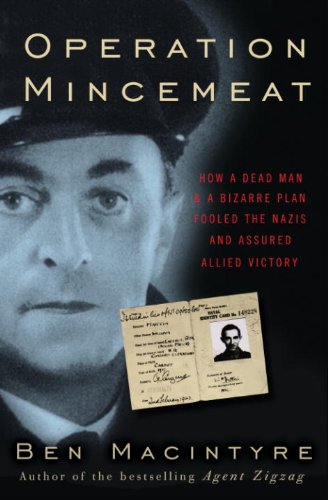
Operation Mincemeat by Ben Macintyre (2010) - It lacks the strong, single human story that illuminates Macintyre's best - he's an author man in perpetual search of a moving bromance - but this novelistic, impeccably researched, often very funny chronicle of the greatest deception of World War Two, in which British intelligence officers dressed a corpse in military uniform, gave him some misleading documents about the upcoming invasion of Sicily, and then floated him towards the enemy, is for the most part quite monstrously entertaining. Macintyre is also the only person I know who goes on about how great his own place of work (The Times) is more than me. (3.5)

***


The Human Stain by Philip Roth (2000) - This professor looks to be gloomily wrestling with an existential crisis, I wonder if by any chance he could be a character in a Philip Roth book. It's yet more dazzling brilliance from Roth: another book about sex, death and the unknowability of everyone, masterfully plotted and infuriatingly intelligent, with its every notion and idea and character interrogated, stripped to pieces and then barely put together again. A masterpiece. (4)

***

Thanks for reading.