Tuesday, 22 December 2015

Cate Blanchett, The Force Awakens and, actually, that's about all - Reviews #221

A couple of new films. One of them's Star Wars. My next three posts will together make up my review of the year. Yes, I thought you'd be excited about that.


*ONLY VERY MINOR SPOILERS, BUT DO NOT READ IT UNLESS YOU'VE SEEN IT. WHY WOULD YOU?*
Star Wars: The Force Awakens (J. J. Abrams, 2015) - Well, J. J. Abrams certainly seems to understand what Star Wars fans want more than George Lucas does, because The Force Awakens is fun - and there's not a discussion of international trade tariffs in sight. Of course, it's only a proportion of Star Wars fans who actually want fun, lots of them want to be 12 years old and for it to be 1977, and are taking out their frustrations on this film. It's for that reason that I'm a little reticent to add yet more words to the incalculable number already written about the movie, whether citing fictional plot-holes (actually just unresolved storylines leading nicely into the next film), whooping uncontrollably or suggesting that George Lucas is likely to be spinning in his mansion. But then I thought: fuck it, it can't be any worse than most of the reviews on IMDb.

The film that's called most to mind by The Force Awakens, perhaps even more than Star Wars (or A New Hope, as we now apparently have to call it), is the Veronica Mars movie that was Kickstarted into existence last year. Though it was catering for a rather smaller demographic and came just eight years after the previous instalment, it also sought to pay loving homage to its original series, while setting in motion a new story. And though its affectionate in-jokes and its handling of its mythology and iconography were very assured, it had a little difficulty meshing its backward-looking fan gratification with the present day narrative. That's also true of The Force Awakens. But for fans, isn't that chumminess, that insider feel, allied to the novelty of new characters on a similar odyssey exactly what you want?

I am going to keep spoilers to an absolute minimum here, as with this one - more than any other film in recent memory - it's best to go in completely blind (don't worry, that's not a dig at Abrams' lens-flare festish, which I didn't see one example of here). But I will map out, in vaguest terms, the beginning of the story, in which a Resistance pilot (Oscar Isaac) gives a map containing the whereabouts of missing Jedi master Luke Skywalker (Mark Hamill) to his droid, shortly before being captured by tantrum-y Sith trainee Kylo Ren (Adam Driver). The droid vamooses, falling by happenstance into the hands of scavenger Rey (Daisy Ridley) and the mystery man who just crash-landed in her back yard: fugitive Stormtrooper, Finn (John Boyega off of Attack the Block). Then fate slings the trio into the path of one Han Solo (Harrison Ford) and his furball sidekick, Chewbacca (Peter Mayhew).

I really liked it. The film moves at a breakneck speed and delightfully jettisons the horrible, talky, po-faced nature of the prequels, injecting a heavy dose of humour and irony into proceedings. There's a sense of fun, of humour, of energy that I found really charming, and though it does have some rather obvious shortcomings, it's probably as good as Return of the Jedi, and parsecs ahead of the restrictive, boring, numbingly fatalistic films that Lucas has inflicted upon us since then. The main characters are perhaps a little self-consciously box-ticky, but in a way that I don't mind, because a black kid and a kick-ass, self-sufficient woman are still such a novelty as blockbuster heroes, and twisting the story to put those positive characters up on the screen is OK with me.

I also loved Adam Driver's performance; it's easy to be disingenuous about his character, but its inversion of the series' mythos is such a smart, simple idea that I hope Kasdan and his writers took the day off after coming up with it. I made the mistake of reading the IMDb reviews and the lack of logic there was quite distressing. Of course Vader was terrifying because he was so cool and calm, and Rey's explosions of callow rage are less chilling, but that is precisely the point of the character - and why go where we've already been? Isn't that exactly what the same fans are moaning about whenever the film looks like it's shadowing A New Hope? The decisions that it makes about his mask, his keepsakes, his ultimate destiny are absolutely spot on and create many of the film's best moments. As someone who's only seen Driver in Frances Ha - where he's a monotonous bore who can barely read his lines - and Baumbach's floppy follow-up, While We're Young, I was expecting him to be a weak link, but he's really the film's strong suit. In support, Oscar Isaac - as the extremely sexy fighter pilot Poe Dameron - and Ford have easily the best of it, along with Chewie, who's used largely for comic relief. Debuting droid BB-8 was fun too, if perhaps a little on the cutesy side.

Boyega, for his part, shows little of the dynamism he exhibited in my favourite film of 2011, Attack the Block, a movie that rests largely on his shoulders, but he is completely credible. Sadly the same can't be said of Ridley. Her character is extremely well-defined and does everything you want it to, but Ridley herself is distractingly poor, with wooden gestures, almost no emotional register and an inability to inject her dialogue with anything approaching sincerity. Less damagingly, but still annoyingly, the film is also saddled with several weak supporting characters: a crap CGI villain (Andy Serkis) seen periodically, who resembles various villains from the Hobbit films, Lupita Nyong'o's Maz Kanata - another computer creation, this time so inept she makes Bib Fortuna look like Gollum - and the various henchmen of the First Order (that's the new name of the re-emerging Empire forces), who in perhaps unwitting tribute to the original films are played by English people acting really poorly. And then there is Carrie Fisher, who I'm sure is doing her best, but I mean, really...

Those aren't the only flaws. For a film so hyped, so anticipated and so long in gestation, it doesn't seem quite finished. It's oddly disjointed at times, and the action sequences are inconsistent: thrilling and imaginative one minute, staid and formulaic the next.

But overall it does deliver. For great portions of the movie, I just had a big grin plastered across my face. It gets Star Wars, it really does. It knows how much we love the original trilogy, and it loves it too. That affection, evidenced by a million tiny touches, doesn't always blend seamlessly with the new narrative, but it does underpin and underscore everything that happens, creating an almost unheard of noise in the cinema (as well as the gasps and cheers): the wry, affectionate, fond chuckle of recognition, as another piece of folklore drifts into the story of these two young loners on an apparently impossible mission.

Is it as good as The Empire Strikes Back?

No, but how many films are?

The Force Awakens is hugely entertaining for the most part, and packs a powerful punch, along with a dozen great jokes and a handful of characters in the honourable tradition of the ass-kicking, stereotype-defying Princess Leia. And with Driver doing something new as Kylo Ren, and Ford in delightfully craggy (and unusually committed) form as Han, I'm really struggling to see how a Star Wars fan wouldn't like it. You know, unless they were trying really hard. For my part, I wasn't sure if Abrams could pull this off. I'm not a huge fan of his work, which tends to be derivative in the extreme. But here it seems to hit on something different, or perhaps that approach simply works in this context. While never skimping on the speed of the story, it's knowing, endearing and fuzzily nostalgic.

How can you not love a Star Wars movie where Rey's house is that? (3)

***


CINEMA: Carol (Todd Haynes, 2015) - A small miracle of a film, about a quiet, emotionally straightforward shopgirl (Rooney Mara) - on the cusp of self-revelation - who falls in love with a middle-aged housewife (Cate Blanchett), herself careening towards divorce.

In 2002, writer-director Todd Haynes made the inspired, delightfully-mannered Far From Heaven, an experiment in which he created a melodrama in the singular style of '50s 'woman's picture' specialist Douglas Sirk, but dealing with subjects that were decidedly off-limits during the postwar years, like adultery or being a gay.

Here, he casts off the cloak of pastiche to revisit the era, creating a blissfully textured, stunningly authentic and seductively realistic portrait of love busting up through the floorboards of stifling conformity. From the bright, rosy, toy store interiors of a New York Christmas to smoky, wood-panelled hotel bars; from a taxi cab dripping in the evening rain to the identikit plastic kitchens of drab, repressive suburbanity, he and cinematographer Edward Lachman capture a very definite sort of Americana: a period of emotional torture and really rather terrific clothes.

Both Blanchett and Mara are superb: there isn't a false note from either of them throughout. It'd be easy for them to go for the big, grandstanding, melodramatic, Oscar-ogling performance, but it'd also be completely artificial. Instead, they just play the characters: with the certainty, the conflicted nature and above all the restraint that's required. Blanchett, with her vivid scarlet lips, is fierce, urbane, sad; the round-faced Mara sweet, deceptively steely and head-over-heels, but with her eyes prised wide open. Those aren't those characters' only facets, though: these are living, breathing creations who act like ordinary people, facing a less than ordinary dilemma. In support, Kyle Chandler is excellent as Blanchett's husband, but he isn't Blanchett-and-Mara excellent.

Perhaps the film's most unexpected virtue, though, is the stunning use of sound, which in turn bewitches, beguiles and disorientates, filtering its period tunes through eerie soundscapes to complement - but never replace or compensate for - the character's inner lives.

The only aspect of the movie that didn't quite work for me at first was a subplot about Blanchett and Chandler's custody battle, but that's probably more to do with my own prejudices than any shortcomings on Haynes and writer Phyllis Nagy's part. I was so wrapped up in the relationship between the lead characters that I wanted to see more of them together, whereas the movie is as interested in examining the broader realities of their dangerous relationship - and the penalties for their perceived transgression. This isn't the stock "I love my kid" device wheeled out by struggling, overworked 1930s screenwriters. Rather, it's what Blanchett's character would undoubtedly have faced in that scenario (minus one perhaps slightly over-the-top detail that impacts on the plot). And ultimately (minus one perhaps slightly over-the-top detail that impacts on the plot), it comes off.

The rest is just sheer perfection. If you haven't seen it, and you like either films or love, you should go before it leaves your nearest poncy cinema. How many other small miracles are you likely to find there? (4)

***

Thanks for reading.

Wednesday, 16 December 2015

The McGarrigles, Little Women ('49) and apocalypse later - Reviews #220

Four docs, four books, an old favourite and a big disappointment...

FILMS


Hearts of Darkness: A Filmmaker's Apocalypse (Eleanor Coppola, 1991) - There's nothing worse than a pretentious movie, Francis Ford Coppola says in this film, which is a shame, as his wife's just made one. WILL PEOPLE STOP COMPARING THE MAKING OF APOCALYPSE NOW TO A WAR? Thanks. Now onto the movie.

This near-mythic doc comes a lot closer than the unilluminating Burden of Dreams, which dealt with the making of Werner Herzog's Fitzcarraldo, to achieving its objectives: painting a vivid if disjointed portrait of the obsession, ambition, brilliance, idiocy and atrocious luck that lay behind the extraordinary accomplishment of Coppola's 1979 masterpiece, Apocalypse Now.

There's an ailing Martin Sheen confronting his demons, absolutely pissed off his face, as he shoots the opening scene of the film; a very fat Marlon Brando neglecting his background reading and insisting on improvising all of his scenes; and Dennis Hopper, who seems to have actually toned down his drug-addled madness to play one of the most spaced out characters in movie history.

In between that often remarkable footage - I should mention also that the Filipino government kept taking their helicopters back from Coppola to quell a rebellion and that the 14-year-old Laurence Fishburne says the Vietnam War was "cool" because people could just smoke weed all day - Eleanor Coppola reads from her diary in voiceover, and talking heads like George Lucas, a mythmaking John Milius and the cast and crew turn up to dissect the project in retrospect.

It's an incomplete but completely fascinating and immersive film that makes one thing very clear: the making of Apocalypse Now was an incredible experience: addled, ragged and saturated with drugs (Sam Bottoms did the famous acid dancing scene whilst off his face on weed and speed, saving the LSD for other sequences), BUT IT WAS NOT LIKE A WAR, NOTHING LIKE A WAR, SHUT UP. (3)

***


Kate and Anna McGarrigle (Caroline Leaf, 1981) - A charming documentary, funded by the National Film Board of Canada (who also bankrolled Buster Keaton's The Railrodder!), about Quebecois treasures Kate and Anna McGarrigle, the ethereal close-harmony duo who created some of the best folk music of their generation - and in Kate's case raised two of the most distinctive voices of the next, in her children Rufus and Martha Wainwright.

Created by animator Caroline Leaf, whom the McGarrigles had hoped to recruit to design some of their videos, this 28-minute film focuses on their debut appearance at New York's Carnegie Hall (JOB BOAST CLANG: from my day job at the Royal Albert Hall, I know what a big deal those career landmark concerts are), as well as meeting their mum, chatting to the pair about their songwriting and home lives, and trying to ascertain exactly why they're not the biggest musical sensation that the world has ever seen - a distracting and rather adolescent editorial angle that somewhat distracts and detracts from the piece.

It's largely a delight, though, and stuffed with the most incredible music, including heart-stopping clips from the Carnegie Hall show, a stunning version of Johnny's Gone to Hilo (later recorded for The McGarrigle Hour) featuring their sister and business manager Jane, and apparently shot in a train station, and an extraordinary demo that's wasted on a rather unimpressed radio host and - to the best of my knowledge - has never appeared anywhere else.

The rest of it is a real ragbag of treasures and debris: insightful murmured quotes, charming behind-the-scenes studio clips, lots of Leaf's slightly crap animations that make Anna look like a wizened old fairytale witch, and cameos from an eight-year-old Rufus in short shorts and a tiny Martha interrupting an interview with her nan shouting something about a pen, along with much footage that utterly validates my insane crush on the young Anna McGarrigle. So job done, really. You can watch it here. (3)

***


*SOME SPOILERS*
The Age of Love (Steven Loring, 2014)
- A charming, low-budget documentary about a speed dating event for senior citizens, some of them widowed, others divorced and one – perhaps most poignantly – who didn’t win the love of her life, and never found another. Director Steven Loring spent three years working on this movie (his degree thesis), exploring the backgrounds of all 30 people taking part in the event, and then sharing the most valuable, touching and funny stories. Shuffling between the past, present and future, we see the characters open up to him about their lives, fleetingly and often hesitatingly interact with one another, then sometimes pair off, as others face the pain of rejection, the emotional bruising all the worse for coming in their twilight years.

The Age of Love’s strong suit is perhaps in other ways its slight shortcoming: namely a lack of editorialising and an eschewing of formula. There are sweet moments and triumphant ones, but the facts aren’t shoehorned into some pre-determined narrative, and the result – while entertaining, ordered and intelligently edited – reflects the scrappy, difficult, often unsatisfying nature of life. That means that it lacks a real finish, and a couple of the storylines seem to simply peter out, but that’s probably more real than a big Hollywood ending.

What Loring does do superbly is juggle our emotions: one minute we’re laughing at Fran’s absurd reminiscences of catastrophic dates, and at 85-year-old bodybuilder Lou telling a prospective partner: “You’re 70? I would have put you at probably… 71, 72. Yeah, 72”, the next you’re floored by Jan’s devastatingly sad worldview: her life coloured by an unhappy, abusive marriage, her reaction to finding that two of the speed daters would like to see her again being simply that she was rejected by the other 13. In listening to voices that are usually silent not just in the movies but in the wider world, The Age of Love does something very valuable, insightful and important. That it does so whilst making you laugh and think and feel is better still. (3)

***


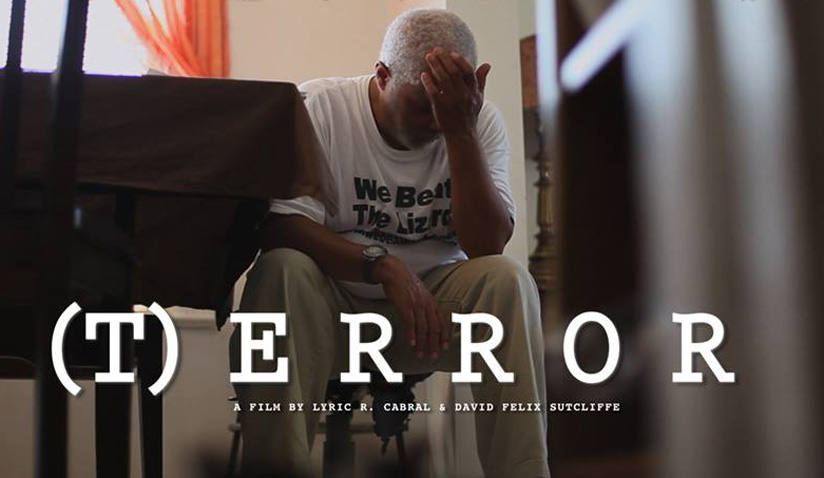
(T)ERROR (Lyric R. Cabral and David Felix Sutcliffe, 2015) - This documentary, which purports to be the first to ever chronicle an ongoing FBI investigation from the inside, manages to take that access and create something that's often bafflingly boring.

Shown as part of the BBC's Storyville strand, under the title 'FBI Undercover', it tells the story of informant - sorry, "surveillance operative ... working for the people" - Saeed Torres, a Muslim and former Black Panther used by the Feds to entrap potential domestic terrorists. The POI (Person of Interest) this time is Khalifah Al-Akili, a keyboard warrior and former Protestant who appears to be all mouth and no trousers save for the traditional Islamic dress that he's adopted.

Considering how much has happened in Torres's life, from his free-scoring days as Atletico Madrid's youngest ever captain to his incredible first season at Liver- sorry, wrong Torres. Considering how much has happened in Torres's life, from his roots in black activism (blacktivism?) to his part as the principal incriminating witness in the trial of a former friend, to his later activities as a surveillance operative working for the people - motivated by a desire to stay solvent and stay out of jail - you'd think this has all the potential to be a Eugene Jarecki-style triumph.

But no, having given his consent to be filmed, Torres is an obstructive, taciturn and ultimately infuriating interviewee, the movie is unfocused and maddeningly incomplete, with numerous shots of Saeed sitting around, moaning, and it's only when the director takes an extremely dubious editorial decision that his film sparks into life, raising some very serious questions about the FBI - and so the procedures of the American government itself - if failing to interrogate the issues as precisely or completely as it might.

Despite that late rally, and the promise of its premise, it's ultimately too bitty and frustrating to unequivocally recommend. Also the original title is awful. (2)

***


Little Women (Mervyn LeRoy, 1949) - There are three great versions of Louisa May Alcott's immortal 19th century novel, made in 1933 (with Katharine Hepburn as Jo), 1949 (June Allyson) and 1994 (Winona Ryder - that's the one where Christian Bale slobbers spit all over her face and they left it in the film); this is the least faithful and literate, but also perhaps my favourite, and certainly the one I've watched most often.

The cast is like one of those Tumblr posts where people imagine the casting of a modern film with classic actors, and just put all their favourite people in it: the sisters are Allyson, Janet Leigh, Elizabeth Taylor and Margaret O'Brien (the ages of the younger two swapped so O'Brien could take the role), the parents - as in Meet Me in St Louis - are Mary Astor and Leon Ames, and there are supporting parts for Peter Lawford (as Laurie), Rossano Brazzi (the professor), Harry Davenport, Lucile Watson, Elizabeth Patterson and that twinkly-eyed old British rascal, C. Aubrey Smith. It's directed by Mervyn LeRoy, who made punchy Pre-Code movies at Warner Bros, before specialising in slushy melodramas over at MGM.

This film is a little episodic in places, and it takes a while to adjust to Allyson's slightly folksy, sometimes too broadly comedic characterisation, but that is ultimately the film's great attraction: a vibrant, intense and intelligent performance - Jo's emotions ever pressed to the surface - that leads to a succession of irresistible, extraordinarily moving sequences: especially her chat with Lawford under the tree, and the devastatingly restrained heart-to-heart with her mother, which has always stayed with me. She is, simply, exquisite.

Margaret O'Brien isn't far behind. Though she's maligned in some quarters today - particularly for the producers' propensity to get her to cry, an O'Brien party piece - she was one of the greatest child actors that cinema has seen; no less an authority than Lionel Barrymore once opined (possible prompted by the studio publicity machine) that "if she had been born in the Middle Ages, they'd have burned her as a witch". She made just one more film - The Secret Garden - before MGM put her out to pasture, but she shows here what a staggering and unteachable sincerity she possessed, and how painlessly she might have graduated to adolescent roles, had she been given the right ones. The scene on the stairs... the scene with the piano… the scene when Allyson returns: she is magnificent, and might another five years have made her the perfect candidate to play Mansfield Park's Fanny Price? Taylor, meanwhile, shows her comic smarts in a performance that has really grown on me over the years, and Astor is superb as the immortal Marmee, that idealised portrait of motherhood. In real life she was basically a nymphomaniac, so she really is doing good acting here.

Critics have derided this MGM version for looking like a chocolate box, but its gorgeous Technicolor cinematography and handsome sets never stunt the emotion of the piece: if anything they bring the periodic harshness of the material into sharp relief, whilst enrapturing the senses. Better still is Adolph Deutsch's stunning, sensitive score, which is never overused nor tips over into schmaltz, being used simply to augment the movie's towering peaks.

It doesn't all work: there are flat scenes (like Taylor arguing tediously with her schoolmates) and dud lines, Leigh is completely nondescript as Meg, and Watson turns a cleverly-written part into a parody of MGM period excess, but at its best it's a bewitching, exceptionally rewarding adaptation lit by Allyson's warm characterisation, O'Brien's lump-to-the-throat emoting, and cinematography and music that - at least to me - seems perfectly pitched. (3.5)

***


House of Strangers (Joseph L. Mankiewicz, 1949) - The problem with this melonoirma from the great Joseph L. Mankiewicz - who went on to make All About Eve, for anyone interested in staggering genius - is that it isn't The Little Foxes. I'll tell you what is The Little Foxes: The Little Foxes. So if you want a devastating familial drama with a banking background that's about sickening greed and severed ties, just watch that. It's the second best 'first watch' I've seen this year (after Secrets & Lies).

This one, which also laid the template for the 1954 Western, Broken Lance (also a much better film), is a spirited, sometimes compelling muddle, with Richard Conte excellent in a rare good(ish)-guy role as an ex-con who blunders into a bank one day to tell the board - his brothers - that he's back and they better watch out.

In flashback, we get the full story, and it's about what you'd expect, except that the extremely underrated, often brilliant Edward G. Robinson screws up his role as Conte's all-powerful, up-by-the-bootstraps father, by affecting an absolutely ridiculous Italian accent. It's a big, big performance, kind of commanding, but also extremely silly, and it does serious damage to the film. As does a minor reveal that essentially negates the opening scene.

It's worth a look, though: for Mankiewicz's sharp dialogue, a punchy ending, Conte's slick, angry turn, and a strong supporting performance from an actress on the cusp of stardom: Susan Hayward, whose smart, unashamed and deceptively selfless character gives the movie most of its heart. (2.5)

***


Ten Wanted Men (H. Bruce Humberstone, 1955) - A terrible Western about very bad man Richard Boone stirring up trouble over a woman, much to the chagrin of local rancher Randolph Scott. Scott's production company, Ranown, went on to make a series of classic oaters directed by the brilliant Budd Boetticher, including The Tall T, which pitched the star against the same adversary. But without Boetticher's sure hand (the man behind the camera is former Charlie Chan director H. Bruce Humberstone) and a writer of the talent of Burt Kennedy, even leathery, charismatic old Boone can't make this one seem credible or in any way interesting. I didn't finish it, life is famously short. (1)

***

BOOKS


The Mitford Girls by Mary S. Lovell (2002)
- A thoroughly-researched but rather curiously prioritised biography of the Mitford sisters - two Nazis, a commie, an author, a Duchess and the boring rural one - that seems unable to differentiate between important things (Unity being a witness to the prelude of WWII through her intense personal relationship with Hitler) and things that aren't important (like someone buying an Aga). The fact remains that four of the Mitfords were fascinating and two of them weren't really, and an attempt to even that out is never going to quite work. Still, the conflicting characters of the sisters come through admirably and Lovell does a fine job of bringing each of them to life whilst focusing on their interrelationships: an approach more likely to fascinate those especially preoccupied with the family than more casual fans of modern history. The same goes for the extensive detail about coming-out balls and interior decorating, which might have perhaps have been excised to examine, say, Decca's dealing with the House Un-American Activities Committee in more detail. (3)

***


Slapstick or Lonesome No More! by Kurt Vonnegut (1975) - This slight, wilfully bleak and aggressively weird book begins with an extraordinarily powerful fragment of memoir about Vonnegut's family, before dropping us into an extremely silly, extraordinarily clever story about a physically repugnant, two-metre quasi-Neanderthal who is 100 years old, the former president of the United States of America, and when formerly placed in contact with his twin sister, possessed a rare and uncontrollable genius. It's a short book and less ambitious than many of his others: despite its scope in terms of time, it's largely interested in the ideas of "alternative families" - or "granfalloons" as the author termed them in Cat's Cradle - here, his hero attempts to alleviate loneliness with his sole presidential innovation: giving everyone a new middle name that identified them as part of a larger group. It was successful, but the fuel ran out, the shrinking Chinese found a way to tinker with gravity, and so most people are now dead. It's ridiculous, inspired and barely finished, the low-key ending coming out of nowhere to take the breath away. (3.5)

***


The Men Who Stare at Goats by Jon Ronson (2004) - Wow, they really did a fucking number on this, Ronson's most well-known book. The subsequent Hollywood film is a piece of detestably broad whimsy that accuses the American military of being nothing but a bit wacky. Ronson's source book takes a different tack: showing how the hippy counterculture was commandeered by the armed forces, leading to the sickening treatment of prisoners in Iraq, Afghanistan and at Guantanamo Bay. Some of it, almost by definition, is reported rumour, and it's not always a coherent thesis, but it is a hilarious, chilling, righteously angry book that casts great light on a barely reported subject. Not that you'd know it from the movie, or the book blurb. (3.5)

***


Mansfield Park by Jane Austen (1814) is a quiet, restrained book that explores new themes within Austen's familiar world, as the painfully shy, relentlessly self-critical Fanny Price grows up in her wealthy uncle's home, becoming a woman while being buffeted by the winds of prejudice, immorality, and thwarted love. It stumbles in terms of execution when Fanny returns home near the close, the aloof wrap-up is again frustrating and it's a lot more judgemental than Austen's other works, with reams of puritanical, almost impenetrable material about self-denial, humility and the evils of putting on a play in your house (by contrast, Fanny's adversary, Mary Crawford, is actually a bit of a laugh), but it is also devilishly witty, extremely heartfelt and full of stunning ruminations on everything from memory to the problems with banter. Now that's one opinion we can all get behind. (3.5)

***

TV


London Spy (2015) - I'm actually angry about how crap this turned out to be, because for a while it had something. A real something. It was a jumble, definitely: mixing novelty with big honking clichés, offering insight one minute, appallingly mannered speeches the next, and seeming alternatively sympathetic to, and repulsed by, a gay lifestyle. But at times this strange, confused series about a reformed hedonist (Ben Whishaw) being dragged into a conspiracy by his romance with a spy (Edward Holcroft) could be brilliant. Mainly, I think, because of Whishaw, one of the most exciting, unbelievably talented actors working today. The chance to watch him, almost unbroken, for a solid hour at a time, was worth any amount of terrible dialogue, because with his subtlety, his urgency, his latent dynamism and stage-hewn fondness for a killer gesture - all allied to those unmistakable line-readings - you could barely drag yourself away.

Then that bombshell fell near the end of Episode 4 and you realised that even he wasn't enough, and that the series had just fallen off the extremely high, structurally unsafe cliff on which you'd been wandering for well over three hours. I don't lament the time spent watching it, because at times it awoke emotions I wasn't expected, hit me in places I couldn't have anticipated, and - as ludicrous as the plot development was, as ostentatiously showy as the presentation - the one-take in which Whishaw has an HIV test is an absolutely stunning, emotionally overwhelming set-piece. A shame, then, that his performance couldn't have served a programme that was less completely stupid. (2)

***

Thanks for reading.

Friday, 4 December 2015

Hulk, Jeanette MacDonald and two men who would be king - Reviews #219

Oh, the usual.

FILMS:


*A FEW SPOILERS*
Hulk (Ang Lee, 2003
)

"So, Ang, the film's due tomorrow. Obviously we know your reputation as the director of The Ice Storm and Crouching Tiger, Hidden Dragon, so we've been happy to just leave you to it. How's it all looking?"
"It’s looking great... Let me just say, I think you're going to be very pleased."
"Fantastic – just what I wanted to hear! Is there lots of action?"
"Yes, there's lots of action."
"Great."
"At one point a psychotic old man sets three rabid dogs on the love interest and they try to rip off her head."
“Err… OK. That’s not exactly... but, yes, as long as there’s lot of action. That’s not the only bit, is it?”
“No, of course not. Do you like bouncing?”
“In what way?”
“You know, people bouncing a lot?”
“No, why?”
“No reason.”
“Erm, right. Now you mentioned a love interest. That’s great, we need that.”
"Yes, lots of love in there."
"Well, so long as the hero’s girlfriend doesn't betray him to the military for no reason!"
"[nervous laughter]"
"So, lots of action, lots of romance, sounds like a lot of fun."
"Yes, it's very fun, it's just a fun summer popcorn movie about a man trying to come to terms with watching his dad stab his mum to death as a child."
"Wait, what?"
"Yes.”
"Why've you done that?"
"What?"
"Made our big, green movie a horrifically gruelling Freudian drama about domestic abuse."
"Action figures?"
“It's frankly a long shot, Ang. Have you seen the Nil by Mouth merchandising numbers? I have, and... oh no, I've just thought of something."
"Go on."
"Eric Bana. We gave you Eric Bana. There's no way he'd be able to pull off a role of this complexity. Is there?!"
"No. He couldn't do it."
"Oh, well that’s a relief, I suppose. But I didn't hear anything about re-casting. Who did you get instead?"
"No-one. We just have Eric Bana not being able to do it. Jennifer Connelly can't do it either. And Nick Nolte does what he can, but his character makes no sense - he'll reach some point of pathos or resonance and then just start screaming abuse or electrocuting himself. To be honest, the premise was kind of spoiled by all of the dialogue and also the cast.”
“I thought you said it was great.”
“No, I said it’s looking great. I’ve got this really cool gimmick where the movie frames look like comic book panels.”
“Is that all?”
“No, Danny Elfman’s written me a nice score. Sam Elliott isn’t bad, I suppose, and Jennifer is gorgeous.”
“And I bet Hulk himself looks great, given that Terminator 2 came out 22 years ago, and even since that landmark in visual effects we’ve had massive advancements in technology.”
“No, he looks like a fat cartoon Jeffrey Hunter.”
“You know I’m going to lose my job, don’t you?”
“I know.”
“Bye.”

(2)

***


The Cat and the Fiddle (William K. Howard, 1934) - A delightful, marvellously inventive if not quite classic musical-comedy about operetta writer Ramon Novarro and Tin Pan Alley-style tunesmith Jeanette MacDonald meeting cute in Brussels, falling in love through their overlooking windows, then breaking up when he decides he needs to make it by himself before they can be happy.

That stock ‘30s rom-com device is the only thing formulaic or over-familiar about this charming concoction, which weaves in its tunes in the same naturalistic but knowing style as Mamoulian’s classic Love Me Tonight (also starring MacDonald), reunites Novarro and Jean Hersholt in a similar master-pupil relationship to the one they enjoyed in Lubitsch’s immortal Student Prince in Old Heidelberg, and casts a certain dizzy Pre-Code spell, by turns romantic, moving and quite preposterously sexy. The moment where Novarro throws his career to the wind, then takes MacDonald back to her room is close to perfection.

Like The Merry Widow – made by Lubitsch and MacDonald the same year, such was the incestuousness of such films – it spends too long being too gloomy after a bewitching beginning, but like that film it’s full of bright music, amusing supporting performances (special mention for the hilarious Charles Butterworth, another Love Me Tonight alumnus) and ineffable old fashioned movie magic, not least when it bursts into colour for the final reel! The leads are simply irresistible. (3.5)

***


Orion: The Man Who Would Be King (Jeanie Finlay, 2015) - A fantastic story, told almost as well as it could be, about a masked Elvis soundalike who was marketed to a public that didn’t want to believe the King was dead. That man was Jimmy Ellis, an unhappy, womanising, frustrated, ultimately tragic artist who made a Faustian pact for fame, and unsurprisingly struggled to live with the consequences. Working with a limited amount of archive film, director Jeanie Finlay weaves this stranger-than-fiction tale with the use of talking heads, intelligent reconstructions, melancholic bucolic footage and audio interviews, and while a few interesting eyewitnesses are absent – including Ellis’s various wives – and it doesn't always delve as deeply as it might, the result is a compelling, fascinating film with a couple of devastating late twists. (3)

***


Samurai and Idiots: The Olympus Affair (Hyoe Yamamoto, 2014) - This insightful documentary is flawed filmmaking but offers a rare, fascinating glimpse of how Japan sees its companies, its visitors and itself, with echoes of Kurosawa’s classic indictment of corporate power, The Bad Sleep Well.

It’s superficially the story of Michael Woodford, a Scouse businessman who rose to the top of the Japanese camera company Olympus before being unceremoniously tipped out of his seat after asking a few awkward questions about dodgy accounting practices. I’d argue that he has surprisingly little news sense, though. He keeps saying he'll go public with "governance concerns" rather than $1.7BN FRAUD.

In some ways the film is a little disappointing – our apparently hero’s rather terrifying feudal adversaries are only given a voice in fascinating archive footage, and the movie could do a better job of both explaining the wrongdoing and remembering that it is not a PowerPoint presentation – and yet it’s ultimately so surprising and enlightening in its portrait of the Japanese national character that it’s almost great. (3)

***


Marked Woman (Lloyd Bacon, 1937) - A distinctive if not exceptional crime film, based on Lucky Luciano’s 1936 trial, about prostitute Bette Davis and her working girl pals helping to bring down a mobster (Eduardo Ciannelli), with the help of crusading assistant D.A., Humphrey Bogart.

This “ripped from the headlines” tale isn’t one of Warner’s gangster classics, being too pedestrian for the most part – cursed with a weak comedy interlude featuring Allen Jenkins and a lousy subplot about Davis’s kid sister (Jane Bryan) – but Body and Soul writer-director Robert Rossen and Abem Finkel contributes some superior lines, Bogart gives probably his best pre-High Sierra performance, and Davis is simply scintillating, finally given something proper to do after years of being taken for granted.

Even without those virtues, the premise would be sufficiently unusual to give this one a look, while director Lloyd Bacon also brings a verve and imagination to Marked Women that’s missing from most of his work (the mark of an uncredited Michael Curtiz, perhaps), including a blast of sickening off-screen violence and a brilliant downbeat ending far removed from Hollywood cliché. (3)

***

BOOK:


Josiah the Great by Ben Macintyre (2004)
– This one didn’t quite do it for me. The story of Josiah Harlan, the 19th century American adventurer who became an Afghan prince (sort of) and provided the pattern for Kipling’s Man Who Would Be King, it’s written in a slightly less formulaic fashion than Macintyre’s later books (I’m not knocking him, he’s a compulsively readable writer, but he has certain stock devices he’s liable to lean on) but based primarily on Harlan’s unpublished memoir, which even in this edited form is long-winded, unfocused and often just about the fruits and flowers he’s seen. It’s also oddly paced and has no real dramatic peaks, with little of the suspense, dry humour or rich emotion that fill Agent Zigzag, Operation Mincemeat and A Spy Among Friends, the author’s books on 20th century history. There’s none of the bromance, either, the primary currency of any Macintyre work. It’s a reasonably interesting tale, with some very valuable parallels to the present day situation in Afghanistan, but I wasn’t itching to pick it back up again and ultimately felt rather underwhelmed. (2.5)

***

Thanks for reading.

Thursday, 26 November 2015

Truffaut, Pulp Fiction and how to spot a psychopath - Reviews #218

Here are all the books and films I've consumed lately. And here's a piece I wrote about actor-director combos to flog tickets in my day job.


Day for Night (François Truffaut, 1973) - I love François Truffaut beyond almost anyone else who has worked in the medium of film. There’s that quote – “I always loved the reflection of life more than life itself” – which seems to crystallise an essential truth about those of us who live through film, or have at one time or another. His movies radiate a love of cinema, its possibilities and its pleasures, its ability to transport us, bewitch us, change us. He also seems to have been invented to cater for my specific tastes: sentimental about love, art and childhood, whilst understanding and articulating the limitations of all three.

This film is the only one he made that’s explicitly about the movies, or as he put it: “The subject of Day for Night was, quite simply, my reason for living.” It’s a deceptively deep ensemble comedy-drama about the making of a melodrama, starring Truffaut himself as the director, his regular cinematic alter-ego Jean-Pierre Leaud as his callow leading man, and Jacqueline Bisset, Valentina Cortese and Jean-Pierre Aumont as the other principal cast members, each with their own insecurity, their own past.

Examining and celebrating the artifice, the potential for perfection and yet the compromise of cinema (a collaborative medium in which logistical improvisation is king), the film starts with a scene that needs to be retaken and goes on from there, tipping us a wink as it wheels out a gentle set-piece about a misbehaving cat or a hairy stuntman doubling for Bisset, tightening the knot in your stomach as a cast or crew member begins to go to pieces, and then slowly but surely revealing its subtle depths: an ability to move, enchant and beguile, as all truly great movies do.

It’s light and playful – impeccably constructed, as Truffaut’s roaming camera drops us into one conversation, one story, then another – but it’s also substantial, with myriad delights that encompass administrator Nathalie Baye’s abrupt, laidback seduction technique, montages of moviemaking that draw you in to a walled-off world, and a breathtaking speech by Truffaut to Leaud about the disparity between fantasy and reality that is one of the most affecting (and clearly autobiographical) things that the director ever did. As, in fact, is the dream sequence so tantalisingly previewed early on, and then revealed in its full majesty near the close.

Not every scene has the same emotional charge or conviction of performance as Truffaut’s urgent pep talk, but for fans of the director – or of cinema in general – it’s still a rare sort of treat: stuffed with in-jokes and fun nods to cinematic icons like Hitchcock, Howard Hawks and Jean Vigo, but more importantly underscored by an implicit understanding of the responsibility of the filmmaker, the collision between art and life, and the joy of the film set itself: what Orson Welles once called “the biggest electric train set a boy ever had”. No-one else could have made this film. (3.5)

***


English, motherfucker. Do you speak it?

Pulp Fiction (Quentin Tarantino, 1994) - This film is just so, so good. More than 20 years on, the freshness and effortlessness of it all is still astounding. Its vernacular. Its spiky, absurdist humour. Its moments of heart. Those long, wordless takes. The diner. The toaster. The watch up Walken’s ass. The legion of stylised lines that never feel mannered or forced. Actors like Samuel L. Jackson, Travolta and Uma Thurman producing performances from nowhere that continue to reward and astound. QT hasn’t done anything comparable since. Nowadays I will him to succeed – and with Django he did – but there was a brief time when all you could do was watch in slack-jawed amazement as he created dizzying, dazzling films that re-wrote the rules of genre cinema. (4)

***


Philomena (Stephen Frears, 2013) - A simply wonderful movie about journo Steve Coogan trying to trace the adopted son of Irish pensioner Judi Dench, a victim of the notorious Magdalene laundries. It’s often desperately bleak, but also unstintingly warm-hearted, full of the most brilliant jokes, and as emotionally and intellectually rewarding as anything I’ve seen this year. It’s also a little formulaic in structure, looks pretty much like every other British drama made in the last 10 years and has some final-reel villainy that’s a little too on-the-nose (not to mention hysterical), but the story is utterly fascinating, the acting and script exceptional, and its ultimate question of how best to move on is one answered with nuance, dignity and grace. (3.5)
***


Ex Machina (Alex Garland, 2015) - Computer programmer Domhnall Gleason wins a company competition to hang out with Google-but-not-Google CEO Oscar Isaac in his remote headquarters, where he's introduced to an AI called Ava (Alicia Vikander), and encouraged to submit her to the Turing Test. But seriously, America, it's pronounced "Tyouring", not "Too-ring", show some fucking respect.

There are plot holes in Alex Garland's zeitgeisty thriller, along with a few obvious 'surprises' to go with the more novel ones, but it's an entertaining, immersive, quite thought-provoking film that maintains the courage of its convictions right up to a superb twisty-turny ending. And then carries on for another five minutes for absolutely no reason. (3)

***


The Leopard Man (Jacques Tourneur, 1943) - I watched The Leopard Man for @ValLeween, the Val Lewton-based live-tweetathon that happens every Halloween (this reviews update has been a while in coming), and the whole thing was a lot of fun.

The film isn’t one of my favourites from the pioneering producer – this tale of a black cat terrifying a Mexican village is a little disjointed, with some iffy acting – but Lewton does a good job of creating a world through scripting, scoring and a handful of sets, and his horror high points are exhilarating, the moments of sustained terror as poetic, beautiful and self-contained as Astaire and Rogers dance numbers.

The blood under the door? Wow. (3)

***


The Limey (Steven Soderbergh, 1999) - Soderbergh’s malevolently playful editing illuminates this brooding thriller, helping to turn it from a potentially straightforward Get Carter transplant into something rather more interesting, aided by an imposing central turn, intelligent use of footage of the star as a younger man – taken from Ken Loach’s debut film, Poor Cow – and a surprising, surprisingly affecting pay-off.

Terence Stamp is a seriously violent ex-con who comes to LA straight from the slammer, plotting revenge on the criminals what caused his daughter’s death, a group apparently led by counter-culture beancounter Terry Valentine (a perfectly cast Peter Fonda). Sometimes the script flounders, especially when resorting to cliché or having Stamp repeatedly use and then explain Cockney rhyming slang – he is a British character written for American audiences – but at other times it’s extremely strong, especially when Fonda is explaining the ‘60s (a speech that passes from the sort of platitudes you can basically mouth along to, to something poignant and surprising) or Stamp is lamenting his mistakes.

Where it really works, though, is in the presentation: fragments of action that drop us forwards or back in time, flashes of pathos at unexpected moments, action scenes that take place off camera or in the back of the frame, Soderbergh drawing thematic parallels like a young Terence Davies, or flicking between scenes in a way that recalls nothing as much as... Easy Rider: the film that launched Fonda and defined a generation, at least in cinematic terms. Stamp’s good too: some of his line readings seem wooden, but he catches the eye and holds it, and that scene in the warehouse still has the ability to shock and appal and rather worryingly excite. All together now: “Tell him I’m coming!” (3)

***


The Chocolate Soldier (Roy Del Ruth, 1941) - This wasn't the gay porn I thought I'd ordered.

Worse than that, it's not even a bona fide operetta. Though its songs come from the 1909 work, The Chocolate Soldier, the writer of the source story, George Bernard Shaw, objected to its being adapted, so they were grafted onto a play by the oft-adapted Ferenc Molnar, The Guardsman, occasionally intelligently, but more often completely incoherently.

Still, at least Nelson Eddy's here, right? A lot of people are sniffy about Nelson Eddy nowadays, in the unlikely event that they've heard of him at all, but I'm quite a fan. He was an underrated actor (catch his performance in Ben Hecht's liberal drama, Let Freedom Ring, for evidence of that) and a magnificent singer, especially vital and appealing when paired with regular leading lady Jeanette MacDonald.

What he wasn't, was a comedian. He proves that beyond any doubt here, playing a jealous husband who - in typical early '40s comedy style - tests his wife's fidelity by posing as an amorous Russian. That stock device of masquerade occasionally worked, but needed subtle writing and intelligent playing, neither of which it gets here. Eddy is so broad and flat it hurts, Metropolitan Opera diva Rise Stevens simply transmits none of the spark required for such battle-of-the-sexes comedy, and Nigel Bruce is really beginning to annoy me now.

The result is a pathologically unfunny film: bitter, laughless, joyless and sexless, with only a handful of reasonable musical numbers relieving the oppressive tedium. And no gay sex. (1)

***


Gunsight Ridge (Francis D. Lyon, 1957) - This atrocious oater plays rather like a parody of B-Westerns by someone who's hardly seen any, as Wells Fargo agent Joel McCrea tries to root out a highwayman in a small town and finds a frustrated pianist prone to fits of hysterical anger (Mark Stevens). Ernest Laszlo's photography is unusually handsome for a movie from a no-name studio, but the ageing stars can do nothing with the abysmal script from MGM veteran Talbot Jennings and his wife Elisabeth, which manages to be both clichéd and completely ludicrous, hopping from one silly scenario to the next with barely a credible line of dialogue to be heard. The great McCrea comes off merely as trivial and smug, but Stevens manages to set fire to the huge pile of goodwill left over from the bristling noir The Dark Corner, crossing over into ridiculousness early on, and never returning. The scene in which he is out-acted by a confused horse is a particular low. (1)

***

BOOKS

Fiction:


The Railway Children by E. Nesbit (1905) - This beloved children's story has a mother who's good to be true, some understandably stuffy contentions about the way the world works and a rather clunky writing style to which it takes some adjusting, but it's also full of vivid characters, fine sentimental moments and thrilling scenes of escapism and middle-class adventure: virtues that ultimately win out over its shortcomings. (3)


Ragtime by E. L. Doctorow (1975) - I liked this kaleidoscopic portrait of early-20th century New York, drawn to its world, its scope, and its moments of terrible clarity (particularly concerning lovelorn depression and the everyday poetry of squalid urban life), but found its quasi-Hemingway, quotation-free style rather one-note, contrived and detached. (3)

Non-fiction:


Hons and Rebels by Jessica Mitford (1960)
- This memoir from The Communist Mitford is good and sometimes brilliant, trespassing into the latter territory when it deals with family dynamics and human emotion, or when the author punctures pomposity with some lancet-like line. I admire Decca's perfectly pitched irony and sense of poignancy, borne of a complete lack of sentimentality. And I like her names for her siblings, such as Boud (Unity), Debo(rah) and the delightful Tudemmy (Tom). Her journey around America is ultimately a lot less interesting than what predates it, though, with many of the tales notably lacking a sufficiently strong punchline. But I'll now be reading absolutely everything about the Mitfords anyway, beginning with Decca's second volume of autobiography. (3)


Them: Adventures with Extremists by Jon Ronson (2005) - More a collection of pre-9/11 features than a coherent work, but an immensely readable, blackly comic journey through the world of political and religious extremism that sees Ronson rubbing shoulders with Muslim fundamentalists, KKK members and David Icke, and finding that - hey guys, maybe you're not all so different after all. Which I suppose is heartening. In a way. (3)


The Psychopath Test by Jon Ronson (2011) - Ronson's study of psychology, psychiatry and psychopathy is fast-moving, consistently hilarious, and completely and utterly fascinating. It's also a little unfocused: a scattershot treatment of the subject in which his angle seems determined by the eccentric people he can find to interview, before he attempts to drag together some conclusions at the death. I did bloody love reading it, though, and I learned a lot: the revelation about the official classification of mental illnesses is absolutely astonishing. (3.5)

TV:


Parks and Recreation: Season 7 (2014-15)
- I'm sad to see my favourite sitcom go, but it's probably about time, as towards the end this started to feel very familiar: at times fuzzily, more often in a rather worn way. These final 13 episodes kicked the story into 2017, a scenario occasionally exploited for poor non-sequitur gags about fictitious world events, but more often used to up the emotional ante, as in a genuinely affecting storyline about the estrangement between central character Leslie Knope (Amy Poehler) and her former boss, Ron Swanson (Nick Offerman). Its flaws are evident, almost all the sign of an enterprise that's gone on for too long - the Johnny Karate novelty episode doesn't really work, Craig (Billy Eichner) remains a horrendously unfunny, one-note character, and the walk-ons by real politicians give the distinct impression that the programme is now on the inside (rarely the best place for a show with a satiric bent) - but it's still hard to say goodbye to a show that's given me so much joy, and which still makes me laugh out loud and tear up with some regularity, even in its seventh and final season. (3)

***

Thanks for reading.

Monday, 2 November 2015

Me at the Spectre premiere


Yes thank you I will have my Pulitzer now

I went to the Spectre premiere last week, as it was at my office. It was amazing. The whole place was transformed, the red carpet was thick and plushy under my feet, I saw the stars of the film and then, after a speech from Sam Mendes, I saw the film.

My premiere experience:

I found out I had been successful in the staff ballot a couple of weeks before the event. There weren't too many to go round, so I was very excited. The ticket arrived in a fancy wallet with gold writing (not pictured).

In the morning, I saw a big mask arriving at Stage Door. It looked like this:


I got changed into my suit jacket from TK Maxx and my bow-tie that I got for £1.50 on eBay and went to join the red carpet. The red carpet looked like this. These are my feet.


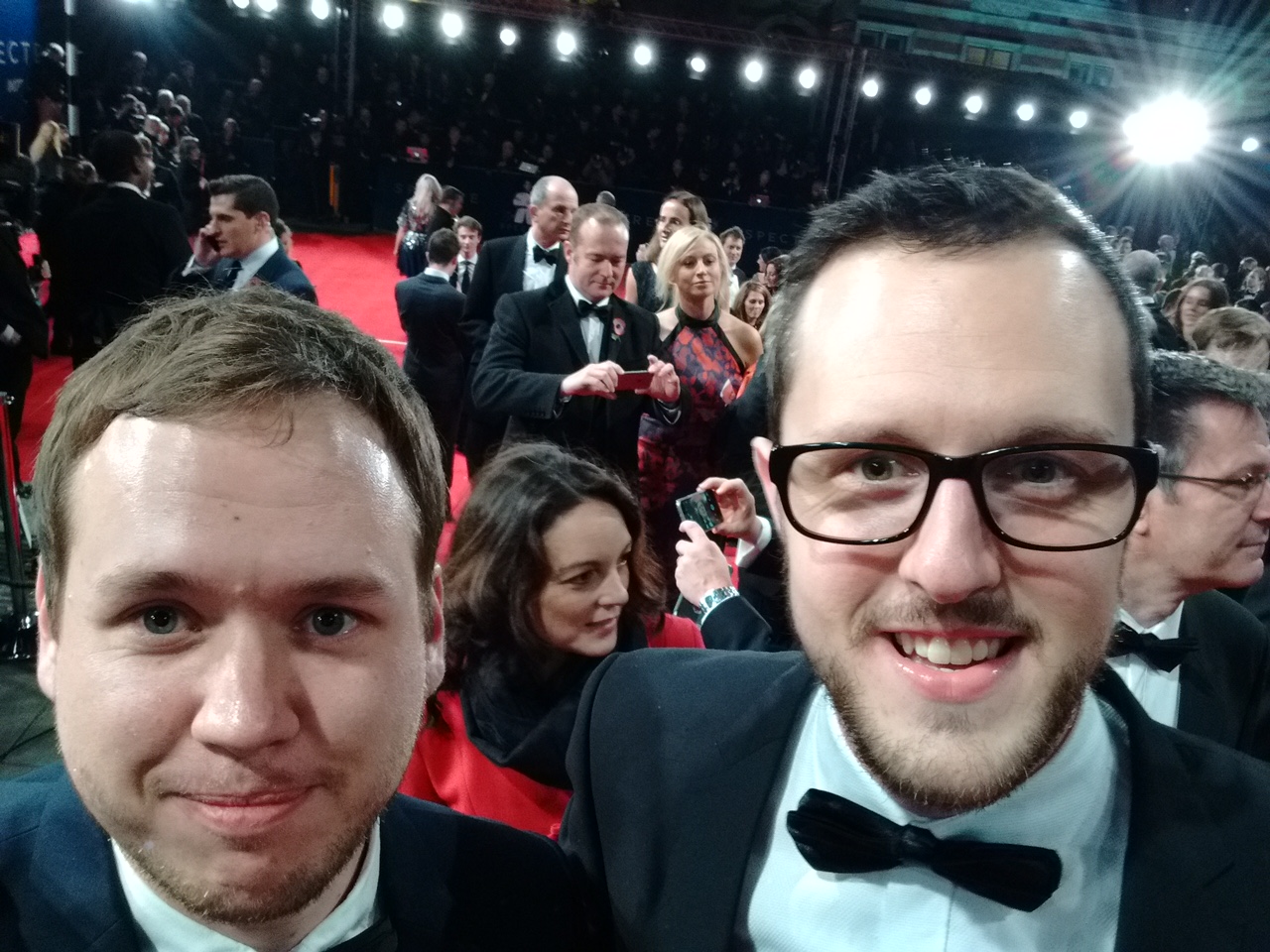
I was joined by my friend-and-colleague Martin and my friend-and-boss Jessica. Here I am with Martin.


Here I am with Jess.


In both cases, I am the one with the bumfluff beard. I was pretty delighted about the whole thing. The premiere and the beard.


This is how the Hall looked as we approached:


Of all the people it was possible to see, I was most excited about seeing Ben Whishaw, as he's a wonderful actor. Here he is being wonderful:


He subsequently registered my excitement and gave me a smile that I like to think was sincere rather than frightened. I also saw Andrew Scott, and took this photo for my wife, who is a big fan. She said I can share it with you too, so that's cool:


After that, I went and stood in the middle of the carpet. Despite this, I have not become a social media sensation (I would suggest #HotBondPremiereGuy if you need a hashtag).


Security guards I'd never seen before kept telling me to hurry up, or else gave me very detailed instructions on how to get into the building where I work, but I managed to enjoy my moment by ignoring them. Eventually they got me to move. On the way past, I saw a car and David Walliams. Martin thought it was Sean Connery on the stage, but it wasn't.


Along the side of the stage, I tried to take an arty shot, but it looked a bit rubbish:


I had some water (shaken, not stirred! - I really hate myself) and met some 'friends' (work colleagues), then I went into the world's bestest auditorium, which was filling up:


They showed the rest of the red carpet stuff on the big screen:


Then Sam Mendes came on with the cast. We had a pretty good view:


But their heads are quite fuzzy irl.


Then the lights went down and the film began.

FILM:


Spectre (Sam Mendes, 2015) - Since when did Bond movies get good? Since Casino Royale really (with one boring, Quantum-shaped wobble), when they discovered emotional depth, quiet pathos and the joys of a knowing reference that isn’t just smugly parodic, and encouraged Bond to embrace his world-weariness, the grubbiness of his profession and a brutal, down-and-dirty fighting style, which is now all rabbit-punches and elbows to the face. I appreciate that this isn’t what everyone wants from Bond, but it is what I want.

Spectre isn’t as great as Skyfall, but that is such a high-watermark: a remarkably tricky act to follow. It is, however, a worthy successor. The scene with the rat is probably my favourite moment in a Bond film – giving him, perhaps for the first time, a sense of humour that’s warm and whimsical and self-mocking – there are wonderful supporting bits for Ralph Fiennes and Ben Whishaw, two of the best British actors working today, and the action sequences repeatedly deliver. My favourite is the opener, which is just a virtuosic piece of movie-making: a five-minute Wellesian tracking shot (a nod to Touch of Evil, perhaps, as we’re in Mexico), which follows two figures dressed as skeletons through the streets on the Day of the Dead, then launches us into a short, sharp assassination attempt ending with a fall to earth.

It’s a stunning start to an extremely entertaining, very likeable film that sometimes leans too heavily on flashy motors and callbacks to previous films at the expense of building a gripping story of its own – the plot is frankly a little scant for a film that runs 2hrs 30 – but delivers in just about every other way, with well-drawn supporting characters, good gags and, like, proper acting. While a craggy Craig doesn’t have as many moments to display dramatic range as he did in either Skyfall or Casino Royale, he’s asked to bear this film on his broad back, and he does it with ease. A mention, too, for Sherlock’s Moriarty, Andrew Scott, who does a lot with a slightly imprecise part, and chief villain Christoph Waltz, whose greying locks and hushed, faux-reasoned erudition calls to mind no-one so clearly as Jose Mourinho – though obviously Jose Mourinho is a lot more evil. By contrast, the Bond women (Lea Seydoux and Monica Bellucci) are fine, just... not that interesting, with the script and cinematography doing most of the heavy lifting. And even then, there's a moment where Seydoux orders Bond to leave her building "in the next 10 minutes" or she'll get security to eject him. That's rather a long time, and conspicuously slack screenwriting.

Spectre isn’t perfect, but it’s pretty damn great: riotously enjoyable, genuinely affecting and with a handling of Bond mythology that’s fresh yet respectful, the film pervaded by a swaggering self-confidence (and featuring additional dialogue by West End superstar Jez Butterworth!). If it is Mendes and Craig’s final Bond, it’s a good one to bow out with, but I really hope it’s not, since its balance of artistry, intelligence and blockbuster smarts lifts it way, way out of the ordinary. Not only did Bond films get good, but they’ve stayed good. (3)

***

Sorry if this was boring.