Here's part two of my Review of the Year, focusing on FILMS. Twenty 'discoveries', six stinkers, six movies re-appraised, five areas of obsession, and some bits and pieces of writing you might enjoy, he added presumptuously.
DISCOVERIES
... being films that I saw for the first time this year, and loved.
1. The Worst Person in the World (Joachim Trier, 2021) – I liked this an awful lot. Loved it, even. It’s wise and surprising and somehow unafraid in a way that few films are. In a sense, it takes a MPDG template – the struggles of a comic book artist with a hot young girlfriend – and instead shows real life, from her side. It’s a film, really, about the messiness of life, which cares deeply about its complicated characters and bothers to understand its female protagonist, rather than celebrating her capriciousness as an inscrutable virtue because she happens to be fit (hello Godard). Aside from one creaky mansplaining gag, it’s also remarkable in managing to engage with so much of contemporary life without being didactic or one-dimensional. Feminism and face-fucking; social media and relationships; art vs morality – it touches deftly on those things, thrown up naturally by the characters, and doesn’t make decisions for you. The non-cheating set-piece, Julie’s tortuous meeting with her father, and the conversations between her and Aksel late in the film are all extraordinary. As is Reinsve throughout. Even the film’s bad trip, the point at which most movies bore the shit out of me, is neat, meaningful and pays off beautifully, first as drama, then as comedy.
2. The Small World of Sammy Lee (Ken Hughes, 1963) – Newley as a neurotically quipping nebbish/mensch/loser, powering the film with a mixture of charm and nervous energy. He's a stripclub comic trying to get 300 quid in five hours to escape the beating of a lifetime. Amazing dialogue, fine Soho atmosphere, brilliant bits for Kenneth J. Warren and Warren Mitchell. The opening, in which we crawl through early-'60s Soho, is like a fucking time machine.
3. The Breaking Point (Michael Curtiz, 1950) – A stunning noir, based on the same Hemingway novel as To Have and Have Not, with a lumpy, sweaty John Garfield playing a flat-broke family man who gets in way over his head ferrying illegal immigrants and gangsters from Mexico to California. The film has a jittery, manic quality, its massively overwritten script requiring everyone to speak too much in short, staccato sentences, as others patiently wait their turn. In the hands of these actors (not Wallace Ford, the other actors), what might have been a flaw seems more like a stylistic choice. Garfield’s last roles all feel like HUAC allegories – a macho guy, suddenly all alone, facing unbearable pressure – but even without the post-facto subtext there’s a lot going on here. The Breaking Point’s greatest virtue is surely its unusually adult treatment of desire. “A guy can be married and still want something exciting to happen,” the hero tells the would-be fatale (Patricia Neal), rebuffing her repeated advances. Even by her standards, Neal is sensational in this, as a vaguely tragic floozie who loves the mug, but has to couch everything in terms of a fling. There are vast currents of feeling beneath each offhand remark, and the sparks she generates with the film’s star are astonishing when you consider the haircut she’s dealing with. If Garfield is only in peak form about half the time, that’s enough, his domestic scenes immeasurably enhanced by Phyllis Thaxter’s best performance, cast as his (theoretically) unglamorous wife, as comfy as her cardigan. Though film noir’s birth as a response to WW2 has been well-documented, the more direct links between the two tend to be underreported: plenty of noir patsies (though few of the most famous ones) are returning soldiers for whom domestic life is now the hallucination, and violent action the only reality they understand. The Breaking Point deals with this idea superbly by setting up Garfield’s character as a man with no choice: it’s purely bad luck and the need to provide for his family that provoke him to transgress. It’s only when his wife pleads with him not to, and we see him cannily strapping handguns to the inside of a boat loft, that we understand: he wants a return to the visceral simplicity of violence as much as he wants to get a little ahead. A guy can be married and still want something exciting to happen. The film is more regularly cited as one of the first to treat a black character with real dignity, and on (close to) an equal footing with the white. If the praise directed at Juano Hernández’s performance can sometimes be a little hyperbolic because of that distinction, he is effective as Garfield’s best mate, repeatedly being ordered off the boat for sentimental but obscured reasons. Though the film has its imperfections – moments of distracting falsity, and some continuity clangers that simply feel bizarre in a Michael Curtiz film – when it gets to the crunch, it doesn’t put a foot wrong. Taking the lead trio off screen is a gamble, but that fantastically unfussy robbery sequence is about the best one on film, and leads into an absolute gut-punch of a screen death, followed by the constantly escalating tension of its climax: Garfield at breaking point, surrounded by gangsters on a moving boat. *SPOILERS* If the movie drifts, in its final reel, into a slightly corny domesticity, it then proceeds to rip your heart in two, as an impotent Neal becomes merely an observer, and a small boy stands on the dock, waiting for a father who’ll never come home.
4. Scaramouche (George Sidney, 1952) – Ingenuity: that’s what any great swashbuckler needs, from Doug zipping down the mast in The Black Pirate to Jack Sparrow hopping onto that second ship. Scaramouche has an abundance of the stuff, its dashing hero (Stewart Granger) swinging on theatre ropes, plunging through trapdoors and treating the architecture of a small town as a gymnastics arena as he morphs from carefree shagger to vengeful swordsman and part-time clown, while evading the blades of the French aristocracy. It's an exquisite movie, blessed with a delicate balance of offhand wit and genuine feeling, the unsurpassed sight of Stewart Granger in a billowing white shirt, and particularly fine performances from Janet Leigh – ideal as the idealised good girl – and Mel Ferrer, playing the superlative foil (who's magnificent with a foil). The casting is inspired across the board. You can spot the film's weak points – some crap back-projection; the sequences with Granger as the clown Scaramouche, which have a dramatic purpose but no intrinsic entertainment value; Eleanor Parker pushing too hard as Granger’s red-haired, fiery-tempered old flame; the meandering of the third act – and yet it’s hard to care too much about them. Because the movie is just so much fun, climaxing with that exhilarating eight-minute duel, still the longest swordfight ever put on screen, and probably the best. The genre works when it’s light on its feet, its heroes improvising in the fact of mortal danger, and made serious – but not joyless – by personal tragedy. Scaramouche does everything that matters so well. It was written, bizarrely, by the same team as Mrs Miniver.
5. The Banshees of Inisherin (Martin McDonagh, 2022) – Easily McDonagh’s best screen work since In Bruges, those derivative, cheaply postmodern, dazzled-by-Hollywood films he made in the interim superseded by something specific, profound and intrinsically, incredibly funny. Colin Farrell is the dull-witted nice guy – living on an island off Ireland in 1923 – who finds himself confounded by the former best friend (Brendan Gleeson) who won’t talk to him anymore. When Farrell refuses to take no for an answer, Gleeson gives him an ultimatum: either leave me alone or I’ll start cutting off my fingers. It's essentially a Roan Inish-style folk tale, infused with both the end-of-an-island melancholy of Michael Powell’s The Edge of the World, and McDonagh’s distinctive sense of humour, both pungent and pained. Whereas his Hollywood missteps felt like rip-offs of other people’s calling cards (first Tarantino, then the Coens), here he’s on his own turf and creating something that comes closest in tone to the deceptively fatalistic Father Ted, with only the utter blackness of McDonagh’s despair setting it apart. The writer-director is dealing, too, with real themes, and themes that actually matter: the desire for legacy – the human need to leave a mark, to create something that endures – versus the beautiful, ephemeral simplicity of enhancing the world immediately around you, as you live in it. That question is purposefully corrupted by McDonagh, who decides that coming down on one side of the argument isn’t necessary once loneliness has got its claws into these characters. The clarity of his vision, the cultural veracity of this world and the typically apposite song score (augmented by Carter Burwell’s strings) are all major virtues, and there’s the finest fetishisation of finger mutilation since Paul Schrader developed his interest in The Yakuza. It’s only McDonagh’s overly conventional visual sense and the film’s muted ending – first drawn-out, then abrupt – that disappoint, coupled to a slight dearth of emotional high spots. The central story, while affecting, doesn’t possess the seismic impact of the stars' pyrotechnics in Bruges, and at times pales alongside Farrell's scenes with his practical and literate sister (Kerry Condon). What lingers above all, though, is Barry Keoghan’s performance as the guileless, possibly stupid Dominic, the film’s damaged and misshapen heart. Everything he does is so strange and affecting and funny, and “there goes that dream, then,” is simply a perfect line, delivered in a way you’ll never forget.
6. Elvis (Baz Luhrmann, 2022) – An orgiastic Baz Luhrmann phantasmagoria, bombarding you with iconography, mythos and music. It’s only when the film occasionally (though increasingly) stops for a dialogue scene that the plates stop spinning and smash on the floor. A biopic needs a strong angle more than it needs fidelity to the facts, and the way this one uses Elvis to talk about race, sexual hypocrisy and creative integrity is superb. It is too long, with a paucity of great scenes in its final hour, but at its best it is just irresistible. Its stadium set-piece is simply a masterpiece, and ‘If I Can Dream’ isn’t too far behind. Butler carries it all, and if Hanks at times becomes a Mitteleuropean cartoon, the compensations include an absolutely explosive cameo from Alton Mason as Little Richard. A film that loves music – and cinema.
7. Primary Colo(u)rs (Mike Nichols, 1998) – An unusually nuanced film about politics, without either the wish-fulfilment of Capra and Sorkin or the empty cynicism of New Hollywood. Instead it argues that the indulging of personal flaws and political hedging is a price worth considering for an administration that will at least help some of the people, some of the time. While its periodic stabs at comedy and satire don’t really work, as a drama about disillusionment – and that question of purity vs practicality – it’s excellent. Playing the barely-veiled Bill Clinton, Travolta gives the best performance of his career, exhibiting a charm that’s irresistible in all the senses of that word, and nailing his character’s smallness, greatness and self-pity. There’s also unforgettable work from Emma Thompson as his pained, pragmatic wife – a wily operator hobbled by hurt – and from Billy Bob Thornton, disappearing into his role as the predatory, perma-swearing Carville figure. If the scene-stealing interventions from Larry Hagman and a rather preachy Kathy Bates are markedly less complex, they’re certainly commanding, while Adrian Lester completes the ensemble as the audience avatar (and George Stephanopoulous surrogate), the actor on the cusp of a Hollywood career that never materialised. That isn’t a showy performance, but he has the right, old-fashioned mix of charm and naivete, as well as one superb scene in which he's sent to pay off the father of a pregnant girl, and feeds him the most horrible, reassuring smile.
Best production surprise: a group photo of the young Travolta, Thompson and Bates in 1973 that actually looks real!
Worst production surprise: it’s bad enough that Nichols plays ‘On the Road Again’ by Willie Nelson to signify the campaign team being on the road. But then he does it again.
8. The Prisoner of Zenda (Richard Thorpe, 1952) – Considering that there was no need to make this movie, it is just wonderful. It’s a remake of the 1937 classic, with the same script and the same score. In theory all it does is add Technicolor and replace the stars with more fashionable ones. With these stars, though – three titans of ‘40s British cinema, since transplanted to Hollywood – that leads to something genuinely new. Kerr is absolutely sensational as Flavia: a queen buffeted by the winds of fate, her performance like a fire beneath glass. A frog-faced James Mason luxuriates in his dialogue, rocking a startlingly contemporary trim as the mellifluous, gleefully villainous Rupert of Hentzau. And while Stewart Granger is a limited actor, he’s a fine star, born of sudden emotion, baritone exclamation and billowing shirts. If these ‘50s swashbucklers are really about anything, then they’re about his torso. The action climax is stunningly done, and if the film is otherwise fairly talky, there are flashes of inventive direction throughout, most notably during Rupert and Michael’s tete-a-tete, in which their plotting becomes a conversation between two armchairs and two sets of hands, the heads largely unseen.
9. Romance on the High Seas (Michael Curtiz, 1947) – Doris Day's debut is an absolutely wonderful musical, with good tunes, good jokes, and chemistry between the star and Jack Carson (her acting mentor) that is simply off the charts. Don DeFore and Janis Paige play a married couple whose mutual suspicions unwittingly set up a cruise-ship romance between nightclub singer Day and private eye Carson. He's there to find out if she's cheating on her husband. She isn't married. They fall in love. FARCE ensues. Michael Curtiz's direction is occasionally laborious (he's oddly fastidious about the idea that we witness each tenuous visual misunderstanding in full) but more often elegant, and allied to stunning Technicolor photography from Woody Bredell. The supporting cast is just out of this world, with S. Z. Sakall unstintingly hilarious as DeFore's panicked, good-natured uncle, and Oscar Levant peerless as a depressed suitor; his shtick didn't always work on screen, but here he's perfect. There are bits too for veteran character comics Eric Blore (playing an ill doctor) and Franklin Pangborn (very funny as a voyeuristic hotel clerk). Busby Berkeley's numbers are relatively restrained, but for the most part utterly charming. If Jack Carson's calypso number is just cheerily racist, Avon Long’s brilliantly-choreographed ‘The Tourist Trade’ delightfully satirises American myopia, and Day’s vocalisations of the Styne-Kahn songs are some of her best. The sight of her bouncing around a nightclub stage, shouting, "I'm in love, I'm in love, I'm in love, I'm in love, I'm in love!" is as good a justification as any for the invention of the talking picture. This is the most enjoyable musical – or rom-com – that I’ve seen in a long time: hilarious, romantic escapism with a scintillating central duo.
10. Cash on Demand (Quentin Lawrence, 1961) – ‘A Christmas Carol’ reimagined as a heist movie. Peter Cushing is a sadistic bank manager visited on 23 December by a psychopath armed with endless intel, four holdalls, and a route to his host’s loved ones. It’s an exceptional festive film: tense, witty and very moving in its starchy, understated British way, with Cushing in simply imperious form. Also there’s snow everywhere and the score keeps segueing from ‘The First Nowell’ into an eerie thriller register. What a treat.
11. The Detective (Gordon Douglas, 1968) – Perhaps the best film ever made about the Nixonian culture wars. Ol’ Blue Eyes is a cop – and old-fashioned liberal – navigating a new world of gays, drugs and noisy activists. Much Younger Blue Eyes (Lee Remick) is terrific as his Mia Farrow-ish wife, a nymphomaniac. Admittedly it’s hard to tell, at times, whether this is accomplished moviemaking or simply an incredibly vivid snapshot of its age – in which gays are deserving of our respect, but also a different species; in which police violence is abhorrent but perhaps worth covering up. But its score, Remick’s performance, and Douglas’s use of the stars’ faces (often depicted in straight-on POV close-up during the domestic sequences; usually captured in medium profile and flux during the procedural elements) are all outstanding virtues. The only real false notes are Jacqueline Bisset’s flat performance, and the laborious reveal. A terrific movie.
12. Dig! (Ondi Timoner, 2004) – A stunning as-it-happened documentary about the contrasting fortunes of Portland scenesters The Dandy Warhols – who make it massive – and their frenemies, The Brian Jonestown Massacre, who don’t. The film attributes the latter development to the BJM’s frontman, Anton Newcombe, who is depicted as a genius, the victim of both a tough childhood and a serious drug habit, and, most crucially, an absolute fucking nightmare. The case for him being a nightmare is, incidentally, rather more compelling than the one for him being a genius. At one point, an A&R talking head tells us that the BJM’s crucial private showcase for an industry bigwig was “a disaster”, to which my reaction was, “Oh, they must have played a bad show.” No, they beat each other up on stage. The camera later finds Newcombe sitting disconsolately outside the building. “You fucking broke my sitar, motherfucker,” he laments. Such black comedy gold is augmented by a deep sadness, and vast, telling insights about the music industry, difficult people and the nature of ‘authenticity’. I’d argue that the Dandies made it bigger partly because they just had better tunes, but they also compromised: there’s nothing in their polished festival shows that’s halfway as exciting as the early clips of them in their Oregon element.
13. Titane (Julia Ducournau, 2021) – In one sense, a frankly terrible movie to choose while experiencing the body horror of post-op convalescence, managing to handily consolidate most of the more unwatchable things imaginable into one handy film. But while its female serial killer is impregnated by a car (yes we do see the birth, thank you for asking), and breaks her own nose on a sink, it's also a secretly sentimental, latently compassionate movie. And that dance on the fire truck contains everything. On the subject of hybrid children, I suppose Titane is most superficially Cronenberg’s Crash + The Imposter + My Life as a Courgette. Most importantly, though, it isn't the self-consciously strange, even attention-seeking film I’d anticipated but a picture about capitalism’s fetishising of bodies and objects, and the connections we make or sever in order to evade it.
14. Mission: Impossible – Fallout (Christopher McQuarrie, 2018) – Easily the best of the series: it’s about the story and the action, and both are exceptional. In one sense it’s a greatest hits package culled from previous films (free-climbing, crashing to earth in a deadweight vehicle, exhausted hand-to-hand combat in the open-air...) but the fight scenes have such weight and kinetic energy to them, and the chases overflow with invention. The bathroom scrap and the sequence in a Grand Palais bar stuffed with assassins are as good as anything in a Hollywood actioner this century. I enjoyed the main villain too, though it’s Vanessa Kirby who completely steals the film, playing an arms dealer with a sideline in flirtation. The only real flaws are Cruise's slightly creepy characterisation ("You need to walk away," he says, like a cult leader encountering a dissenter) and the overdone sentiment: it's a series that rarely gets emotion quite right, and the scene where Cruise comforts a downed gendarme is infinitely more affecting than the ladled-on, soft-focus guff with his wife (a never-knowingly-underemoting Michelle Monaghan).
15. The Pitch o’ Chance/Nugget Jim's Pardner/The Pilgrim (Frank Borzage, 1915-6) – Borzage is probably the least known of the great Golden Era directors. Perhaps because his sincere, romantic style has gone out of fashion. Perhaps because he made films called things like 'Nugget Jim's Pardner'. But he directed Janet Gaynor in two of the three films that won her the first Best Actress Oscar (two of his late silent masterworks, 7th Heaven and Street Angel, made one of the five best films noir (the haunted Moonrise) and had an unparalleled gift for crafting emotional Americana (Lucky Star and The Vanishing Virginian). My #AgeOfBorzage project kicked off this year (let's get it trending, and involves trying to see every one of his extant films in chronological order. Beyond the box-office behemoths and critical darlings of cinema's early years, it's essentially pot luck as to which silent films remain in existence; indeed, only a quarter of them do. Incredibly, Borzage's 1915 debut, a two-reel Western called The Pitch o' Chance, is among those spared by fate, and a pair of his follow-ups have also been preserved and restored. All three films are special in their own way. The Pitch o' Chance, made by Borzage when he was just 21, is remarkably accomplished for a first film: a tender, deeply touching story offering early evidence of the director's interest in the transformative power of love. Nugget Jim's Pardner is a thoroughly likeable comedy with a perfect ending. While The Pilgrim sees a leap forward in terms of Borzage’s style, being a character piece told largely through its images. I can't wait to continue.
16. A Good Marriage (Éric Rohmer, 1982) – Sporadically superb mid-period Rohmer, centred on a scintillating performance from Béatrice Romand (Laura in perhaps his most celebrated film, Claire’s Knee). She’s the capricious, forthright Sabine, who tires of relationships with married men and so decides to get married herself – setting her cap for an emotionally unavailable lawyer who seems scarcely interested. At times it skirts close to self-parody in its sheer Frenchness and maleness (the women are beguiling, the men all have terrible hair and look about 50), but Rohmer is too interested in his protagonist, her convictions and flaws – and Romand is simply too talented – for it not to dig deep. Amid slow scenes and a certain gimmickry of concept that may be its characters’, and may not, it has moments of pain, honesty and hypocrisy that are utterly real, before one of the most beautiful and exhilarating endings I’ve ever seen. Yes Rohmer creates intriguing characters, and delves into enduring questions about sex, but the most extraordinary element of his canon is how he evokes the feeling of love, not between two characters but between one character and the viewer.
17. Righting Wrongs (Corey Yuen, 1986) – Kung fu cinema’s secret weapon, Yuen Biao, plays a prosecutor who tires of defendants wriggling off the hook, and so resolves to start killing them instead. Cynthia Rothrock is the Lady-Di-haired cop who decides that isn’t fine. In story terms, this Corey Yuen actioner is undernourished and rather muddled, but it’s also oddly moving, genuinely bleak, and packed with the most incredible action sequences, the explosive, frenetic fight scenes complemented by car chases, abseiling and freefalling. A small classic. Original-ending fans: assemble!
18. The Cimarron Kid (Budd Boetticher, 1952) – God praise Boetticher. His first Western is just the most stunningly-directed film. There’s so much going on in every frame, but with such a perfect hierarchy of elements. He’s unfussy or stylish as the occasion demands: beautifully blocking the first convention of outlaws; lovingly lingering on Audie Murphy’s body as the hero lounges in his sick bed; indulging an inspired fondness for off-screen gunfire leading to dances of death... And no-one ever did a cinematic “uh-oh, who’s that in the background?” better than Budd. The plot is pat in places – a hard-luck story with a few messy joins – and the ending is dreadful, impacted by both censorship and commercial concerns, but taken as a whole this might just be Murphy’s best vehicle. The supporting characters are particularly vivid, and their fates gratifyingly hard to guess – at least until that botch-job of a finish.
19. Cries and Whispers (Ingmar Bergman, 1972) – My chronological take:
0-5 mins: This is boring. Is it just this?
5-40 mins: This is incredible. The travelling, lamplit figures diminishing in the frame. Chilly childhood memories, thawed by that maternal exhalation of “come”. Ullmann on death watch but there for the taking if the doctor wants her. (He doesn’t.) Their flashback scene: spiteful, erotic, pathetic. Ohhhh, the red washes are blood.
40-55 mins: Where’s Liv gone?
55 mins: Bergman, what the FUCK is wrong with you?
55-65 mins: Wow, he’s given us one of the most beautiful endings of all time. Pure Rohmer.
66 mins: Oh no, it’s carrying on.
67-75 mins: Even worse, there’s a dream sequence.
75-89 mins: Well that was invigoratingly nasty.
89-91 mins: [quiet whimpering]
20. Daisy Kenyon (Otto Preminger, 1947) – An excellent melodrama, with three of the era’s most interesting, nuanced characters engaged in an unpredictable love triangle – the tortured Crawford torn between Andrews’ charming but ruthless attorney and Fonda’s depressed, widowed war vet. The latter delivers every one of his exit lines in some unexpected and affecting way. The film's second half isn’t as deft or as swaggeringly confident as its first, becoming circular and plotty, but it remains intriguing, and Preminger’s inspired utilisation of a ringing phone as the movie reaches its climax is a stunning piece of filmmaking, half-inched by Leone for Once Upon a Time in America.
***
AND SIX OF THE WORST
1. The Beales of Grey Gardens (David and Albert Maysles, 2006) – Shapeless, aimless and pointless. Without a proper narrative this time, it’s just costumes, songs and the bleak, unilluminating spectacle of untreated mental illness.
2. Sutter's Gold (James Cruze, 1935) – I’ve seen 773 films from the 1930s. I think this is the worst. Edward Arnold’s blameless Swiss flautist is accused of a double-murder; leaves his (apparently American) children to move to New York; gets a job as a streetcar driver; is mistaken for a scab and hospitalised by striking workers; and heads for California. These aren’t spoilers, that’s the first 13 minutes of the film. From then on, it’s sanctimony, cardboard characters, terrible comedy, embarrassing philosophising and farcical acting, across an apparently endless number of short scenes, all of them boring. Arnold quickly gives up on his Swiss accent – and apparently on the notion of movie stardom, right before our very eyes – though incredibly the great Lee Tracy is just as bad, well out of his comfort zone, and left high and dry by the appalling material. An unremittingly and eye-wateringly awful film.
3. The Last Movie (Dennis Hopper, 1971) – This reminds me of that Paul McCartney quote about taking LSD: “We only use one-tenth of our brain. Just think what we could accomplish if we could tap that hidden part.” The Last Movie is what happens when you take so many drugs that you can only use one per cent of your brain.
4. Posse from Hell (Herbert Coleman, 1961) – An amazingly boring Audie Murphy Western (probably his worst), with cardboard characters, predictable plot developments and the star at his most sullen and shallow. Even a supporting cast featuring Lee van Cleef and James Bell can’t help – not when the dialogue’s this dire. The film’s sole virtue: a climactic gunfight that isn’t too bad, opening and closing with a bang, and featuring an embryonic version of Rooster Cogburn’s 1969 ride to destiny. The posse are from Hell, incidentally, in the sense that they’re not very good at their job.
5. The Boogie Man Will Get You (Lew Landers, 1942) – A teeth-achingly awful comedy, clearly meant to leech off the success of stage smash Arsenic and Old Lace, with a young couple plagued by murderers and weirdos at their new heritage hotel. In a remarkable misjudgement, Karloff plays the insane scientist as an absent, camp old duffer – rather than just reprising his Mad Doctor persona – and this is the first time I’ve ever seen the incomparable Lorre defeated by his material, though he still has his moments. Larry Parks is just mesmerisingly bad, mugging endlessly as the exasperated hero; it would be cruel to say that he didn’t even embarrass himself this much in front of HUAC, but it would also be funny, so let’s say it. This is a loud, stupid, laughless, incoherent film, and a complete waste of everybody’s time and energy, including mine.
6. Room 237 (Rodney Ascher, 2012) – The Talking Shite Championships of the World: a deeply annoying film in which several of the most pretentious and/or insane people on Earth claim that The Shining is a metaphor for the Holocaust, sex, the genocide of Native Americans or the faking of the Moon Landings. It’s about one per cent as enjoyable as it sounds (the one per cent being that now and then there’ll be a coincidence that makes you go, “Oh yeah, that’s nearly interesting”), with the choice of visuals somehow just as irritating as the interviewees – and not as varied. At one point, the Moon Guy focuses in on the key to Door 237, saying: “The only capital letters on the key are R-O-O-M-N, and there’s only two words you can come up with that have those letters in ‘em, and that’s ‘moon’ and ‘room’.” But he’s wrong. There’s also ‘moron’. It's like being detained on your night off by the nine loneliest pub bores on earth, and somehow even worse than The Shining itself.
***
RE-APPRAISALS
... being movies I revisited, and changed my mind about.
THREE UP
1. Stagecoach (John Ford, 1939) – “Well, you gotta live, no matter what happens.” An essential film, of course, and yet not quite up there with Ford's greatest. That was what I thought until this year. And there's nothing like the zeal of the convert, is there? It is an impeccably constructed film, revitalising and reinventing what was by then a maligned and moribund genre. In one sense, it’s a manifest destiny Western, but it’s also an interventionist parable, a hymn to the outsider, a swaggering satire about American morality. Its heroes are an escaped convict, a sex worker, an alcoholic, and a card cheat who shoots people in the back. Its principal villain is a bank president. This was 1939 and John Ford was still “a socialist democrat – always left.” Ford isn’t merely subverting the hypocrisy of modern America, though, he’s picking at the fabric of the genre: his hero is introduced stranded in the desert with a lame horse; there’s no action for an hour, merely talking. What talking, though; and what art. Welles famously watched the film 40 times while prepping Kane (though I've seen it more often than that, and I'm not prepping anything). When Louise Platt faints in the deserted compound, the ceilinged sets, low angles and shadow-play on the walls are pointing the way towards Kane vs Leland. A mention too for that brief and simple shot of two diverging paths early in the film: as neat an illustration of Ford’s singular genius as you’ll ever see. Then in the final third, the gratification of action: that stagecoach set-piece with its kinetic energy, its grace notes and Yakima Canutt stuntwork; that downbeat, gloriously-conceived gunfight, treated by critics as an underwhelming afterthought. Nothing, though, is quite as memorable as Thomas Mitchell delivering Dudley Nichols dialogue: his Doc Boone would be by far the greatest performance of most actors’ careers; it’s Mitchell’s second or third best of 1939. Trevor is fantastic too: you’d never accuse her of subtlety, but she commands your attention: that throb in her voice, the thought that goes into her physicality, the beguiling, unexpected softness of her and Wayne. What’s not to like? A bit of shoddy back-projection, a bit too much crap comedy in the opening reels. That’s all. One of Ford's greatest, and therefore one of the greatest by anyone. A second viewing only revealed more delights.
2. Sorcerer (William Friedkin, 1977) – Friedkin’s filthy, hard-as-nails Wages of Fear swings from verité to surrealism like the lost link between Battle of Algiers and Fitzcarraldo. The exposition is so artful and economical, and an incredible Tangerine Dream score underscores the fatalism and sense of dread, as the car-chase maestro proves he's just as adept with slow-crawling trucks.
3. Grosse Pointe Blank (George Armitage, 1997) – It has that glib, smug, postmodern post-Reservoir Dogs thing but so much more heart and originality than any of its rivals. There are three or four great scenes, and the bursts of action are unfailingly effective – not least because they're so brief. Driver is just terrific.
THREE DOWN
1. They Were Expendable (John Ford, 1945), in which Ford serves up one of his most confounding pictures, a challenge to critics along the lines of, “Try to work out what the hell you think of that.” It has perhaps John Wayne’s worst performance (his self-consciousness presumably stoked by the director's constant bullying on set about his supposed draft-dodging), and yet one of the great scenes of his career. Throughout the movie, moments of breathtaking beauty jostle for space with the kind of ugly, prosaic filmmaking that tends to accompany any state-sanctioned military film made in the US. Full appraisal here.
2. Meet John Doe (Frank Capra, 1941) – Mr Deeds Goes to Hell. Gary Cooper is an aww-shucks-guy and bush-league baseball pitcher who agrees to help fast-talking reporter Barbara Stanwyck boost her paper’s circulation, by posing as the disaffected, suicidal ‘John Doe’ figure she just dreamt up. Soon the John Doe campaign is sweeping the nation, providing the perfect launchpad for fascist financier and presidential hopeful, Edward Arnold (who has his own blackshirted corps of motorbike-riding thugs). It's an objectively fascinating but also ludicrous, over-familiar film that trades too much on Riskin and Capra’s tried and tested tricks. By 1941, and post-Lindbergh and the Bund, the cagey optimism of their ‘30s films has also been replaced by a muscular libertarianism, and a tendency to alternately patronise and demonise the malleable masses. Most of the film feels as deep as a trailer. Full review here.
3. Running on Empty (Sidney Lumet, 1988) – "I just need you to know: I don't know what I'm doing... and I love you." An unforgettable though unbelievably flawed film, lit up by its performances. The script (by Jake and Maggie Gyllenhaal’s mum) is disorientatingly and at times comically inauthentic, while failing to explore the more intriguing elements of its premise: that of two left-wing radicals still on the run with their kids, a decade and a half after bombing a napalm lab. Wouldn’t it be fascinating if their son wanted to study music at Juilliard? Not necessarily, no. Yet this film (and that subplot) is justified by showcasing the extraordinary sensitivity of River Phoenix, who gives probably the most conventional of his great performances. More here.
***
OBSESSIONS
1. London films! – My current hobby is time-travelling to Londons past through the medium of film. This year, I luxuriated in the locations of films great (The Small World of Sammy Lee, see 'Discoveries'), good (Theatre of Blood, Bunny Lake Is Missing, Otley, A Dandy in Aspic, The Galloping Major, Gideon's Day) and absolutely fucking terrible (Brannigan, Hennessy).
2. Audie Murphy – I've long subscribed to Murphy's Law. That's the idea that although Audie Murphy wasn't much of an actor, the most-decorated soldier of World War Two entered the Western at the time when the genre was at its most daring, and these often well-written movies used him (and his singular baggage) in fascinating ways. But actually I'm coming round to him as an actor too; certainly he's superb in his final film, A Time for Dying, in an extended cameo as a wise and fatalistic Jesse James. That was one of 11 Murphy Westerns I watched this year. Other highlights were the early vehicle, The Cimarron Kid (see 'Discoveries'), The Duel at Silver Creek – notable for one absolutely exhilarating flash of action – and the fascinating Hell Bent for Leather. Posse from Hell, as I already intimated, was not so hot.
3. Budd Boetticher – Like Frank Borzage (see 'Discoveries'), the name 'Budd Boetticher' serves as a password in old-movie circles. He's simply the best Western director that most people have never heard of, reaching his zenith with the 'Ranown' cycle: six (or seven, if you count Westbound, which Boetticher didn't) remarkable chamber pieces featuring Randolph Scott as a greying, taciturn hell-bent on revenge. This year I dipped into some deeper cuts. His first and last Westerns both featured Audie Murphy: The Cimarron Kid is akin to a mission statement; A Time for Dying has a hero who looks like Cristiano Ronaldo and acts even worse, but also moments that'll never leave you. After that, I went onto The Man from the Alamo (stylistically valuable), The Bullfighter and the Lady (a deeply flawed labour of love), and Horizons West (crap).
4. My Darling Clementine (John Ford, 1946) – My health wasn't great this summer, so I ended up missing two big gigs and my summer holiday. On the night I was failing to see Phoebe Bridgers at Brixton Academy, I decided I should do something else that I'd love and which I wouldn't have otherwise been able to. But what? Well, watch My Darling Clementine, of course. The Pre-Release Version, of course. Ford's first postwar Western is a 99-minute art film about loss and nation-building, with some action at the end. And it does just about everything right. Though its principal characters – hero, villain, anti-hero, madonna and whore – are the purest refinements of those archetypes, with destinies that are therefore ineluctable, what the director does with those characters is purely Fordian – and utterly new. The film remains as compelling an argument as any that Ford is by far the greatest director there has ever been, and everyone else has just sort of been piddling around in his wake. That was my conclusion back in July, and another viewing a few months later did nothing to dispel that impression.
5. John Ford generally – The daddy. I revisited favourites for fun (Stagecoach, Clementine, Wagon Master), and mined uneven films both familiar (The Sun Shines Bright, The Whole Town's Talking) and new (Gideon's Day) for recurring themes, images and obsessions.
***
MY BEST WRITING ON FILM
1. EMPIRE – The Masterpiece: Angels with Dirty Faces – For the October issue, a thousand words on Cagney, poverty and gangsterism (above).
2. Remember the Night: 'A good dose of schmerz' (Indicator, 2022) – A 14-page booklet essay about the movie's making, meaning and enduring importance. This limited edition Blu-ray is available to order here.
3. I played Zuzu in It’s A Wonderful Life – then I was jerked out of Hollywood at 15 – An emotional interview with Karolyn Grimes about child stardom, pain and the movies. For the i Paper. Link here.
4. My Sight & Sound ballot – It's always been an ambition of mine to vote in Sight & Sound's poll of the 100 greatest films of all time, held once a decade. And this time I got to. My ballot (with notes) will be on the BFI website in the new year, but for now it's here.
5. Some ruminations on Avatar (and Marvel, and 3D, and the career of James Cameron) for the i Paper, ahead of the release of The Way of Water.
***
Thanks for reading.
Showing posts with label recommendations. Show all posts
Thursday, 22 December 2022
Wednesday, 29 December 2021
Review of the Year: Part 2 – Movies
Here's part two of my Review of the Year, focusing on films. Twenty 'discoveries', six movies re-appraised, five areas of obsession, and some bits and pieces of writing you might enjoy.
DISCOVERIES
... being films that I saw for the first time this year, and loved.
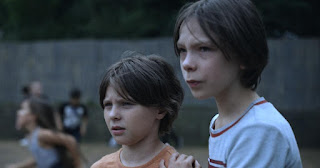
1. Playground (Laura Wandel, 2021) – The highlight of this year's London Film Festival, and a film that I got to rave about in Sight & Sound's annual poll. It's a staggering debut that begins like Être et avoir and ends like a prison movie. Seven-year-old Maya Vanderbeque is extraordinary as Nora, a sensitive young girl trying to negotiate the perilous world of big school, a place of obscure rules and incomprehensible moral codes. “When you help someone, it makes things worse,” she tells a teacher, in the film’s most profound and affecting scene. Shot in shallow focus, at child’s-eye level, it’s fantastically immersive, gripping and moving, the innocence and charm of its opening reels evaporating as Nora is sucked into a vortex of pain. But while it is a film without convenient illusions, and cursed with a memory of childhood’s cruelties and formative, guilt-ridden compromises, it is not merely human but humane, recalling the best of the Dardenne brothers, before a final shot that reminded me of Bicycle Thieves in its sincerity and pained, tear-stained hopefulness. A masterpiece, simply.
2. Princess Cyd (Stephen Cone, 2017) – What if Swimming Pool, but unutterably lovely? A warm and fuzzy film that deals deftly and deeply with faith, love and dead parents – all the good stuff, in fact. It’s unusually attuned to how people talk, and every scene is about something, both on the surface and beneath. Its rough edges, of which there are many, only add to the charm; the slight amateurishness in places serving to make it seem more real, as if it’s a docu-drama starring the people this all happened too. It reminded me, in turn of Housekeeping, Sciamma, Junebug and The Way, Way Back, and yet it’s not derivative in any way. And if its view of the world remains rosily and reassuringly liberal, it is also not uncomplicated. The scene in which Cyd and her aunt talk about sex is some kind of classic.
3. Leave Her to Heaven (John M. Stahl, 1945), in which we learn that Stahl created the Sirkian melodrama, Douglas Sirk just perfected it. While Sirk would go on to remake three of Stahl’s monochrome hits – including Imitation of Life and Magnificent Obsession – the look and feel of his classic cycle of ‘women’s pictures’ seems to have been drawn largely from this Technicolor noir. It’s one of the best-looking colour films I’ve ever seen: sumptuously shot by everyone’s favourite egomaniacal cinematographer, Leon Shamroy, who conjures a chic world of turquoise and cyan that spells d-e-a-t-h. After all, that’s the colour of Gene Tierney’s eyes – as well as the walls of the train carriage, the water on the lake, her gown, her slip-ons and the carpet on those fateful stairs – and her murderously clingy fatale just isn’t going to share new husband Cornel Wilde with anyone. It is a chilly, masterly film that kills the cute, sees perversity and psychopathy within love, and is head over heels with its villain’s face. Full review here.
4. Light Sleeper (Paul Schrader, 1992) – Just the right words, and just the right number of them, as Schrader reworks Taxi Driver again, but finds all kinds of different shadings. For long stretches, it’s his best film, with only the trimmings (particularly the synthetic work by Susan Sarandon and Victor Garber) and the ending dulling its edge. Dafoe was never half as good – as a drug dealer and ex-addict vaguely thinking he might reform – and both Dana Delany and Mary Beth Hurt are absolutely terrific in support. Schrader wraps the existentialism and surprising characterisation in the perfect ambience, helped by a typically apposite score. It’s a film about tormented masculinity, but more than that: its impact on others.
5. Matewan (John Sayles, 1987) – An incredible movie about labour, faith, violence, honour, pragmatism and loneliness, as union organiser Chris Cooper arrives in the town of Matewan to support striking miners, unwittingly but unavoidably setting in motion a chain of violence. It’s a film filled with extraordinary moments, both big and small: Cooper’s little smile at the dinner table and his Mennonites monologue; McDonnell gasping with grief on a porch swing; the procession that follows a killing: Fordian staging and howls of sorrow; and a simply jawdropping finale, Sayles staging a tragedy in the style of a Western gone mad. The film sags just now and then but it has six or seven remarkable scenes, and the feeling of truth. Full review.
6. Ceiling Zero (Howard Hawks, 1936) – In broad plot terms, this second collaboration between director Howard Hawks and star Jimmy Cagney is like every other aviation pic of the ‘30s, and yet what’s going on within that is completely new. You can see it as another film in the vein of MGM’s Night Flight, a rehearsal for writer Spig Wead’s Test Pilot, or a dry-run for Hawks’ Only Angels Have Wings but Cagney’s character – and characterisation – are quite unlike anything else in the genre, or in cinema at large. His Dizzy Davis is introduced as a hellraising ledge, a continuation of Cagney’s fast-talking Pre-Code heroes, who returns to the small commercial airport run by his mate Pat O’Brien and picks up where he left off – spewing wisecracks, pulling stunts and chasing women. But that’s all a trick on the audience: his pioneering pilot is a relic, a danger and almost a joke, a 34-year-old barnstormer with a dicky heart, adrift in a new world filling with college graduates. And how he plays it... cast as an inveterate shagger, he goes for the most unexpected option imaginable, giving the most gentle, sensitive and tactile performance of his career. I wrote a mini-essay on the film here.
7. Run for Cover (Nicholas Ray, 1955) – The second of three films from my extended investigations into the work of Jimmy Cagney. Released five months before the same director’s Rebel without a Cause, Run for Cover finds Nick Ray tiring of the young rebel character he had created in They Live by Night and Knock on Any Door, as everyman Jimmy Cagney invests heart and soul in self-pitying, no-good John Derek. If that seems unexpected, then so is everything else about this Western, from an opening anti-heist to a climactic non-shootout among Aztec ruins. Shot like an Eastwood film and plotted like a Boetticher, it’s resistant to the mythos of genre, with no interest in the idea of the legendary hero or the fastest gun. More thoughts here.
8. Shattered Glass (Billy Ray, 2003) takes 10 minutes to settle into anything even remotely resembling real life – or indeed the world of journalism. After that it is completely riveting, always holding back just enough, in terms of both its information and its emotion. Christensen, Azaria and Lynskey are all excellent, but Sarsgaard is just sensational, those four forming the most 2003 ensemble imaginable with help from Chloë Sevigny, Rosario Dawson and Steve Zahn. The film has surface flaws – including a few duff lines and some odd structural choices – but the central thrust of the story is perfect, and it has more to say about how the media (and therefore the modern world) works than just about any other movie of its type. Its intelligence and incisiveness are way above the ordinary.
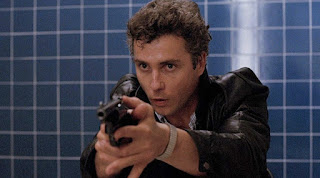
9. To Live and Die in L.A. (William Friedkin, 1985) – A kinetic ‘80s actioner, with cop William Petersen looking to avenge his partner by bringing down psycho Willem Dafoe – using whatever means necessary. What I love most about the film is that it defines its genre and then defies it, offering the most heightened versions of each stock scene, before setting fire to the rulebook in its final reel. That mixture of the traditional and offbeat runs right through the movie. While the dialogue and score are agreeably mainstream, Friedkin’s instinctive handling is incredibly varied. The action sequences are pulsating (I’m not really a car chase guy, but man, that car chase). And yet other parts of it are shot almost like an art film. The extended counterfeiting montage seems amazingly fetishistic, like a Jacques Becker scene filmed by De Palma. The movie can seem meatheaded at times, glorifying the idea of tortured machismo as much as questioning it, but those shades of grey are partly what makes it so interesting. It is also unbelievably entertaining. Bonus thought: by 1995, synths and neon seemed the most impossibly dated elements of the '80s; now they feel more modern than everything else.
10. Remember My Name (Alan Rudolph, 1978) – This pretends to be a slasher and ends up as a noir, but it’s New Hollywood to its bones – provocative and deep, full of subtly striking shots, and lit by one of the best performances of its decade. Geraldine Chaplin is just sensational as the endlessly slippery central figure: brittle, malevolent, vulnerable, sad, with a Chaplinesque physicality and a gameplan we can only guess at. More here.
11. Rocks (Sarah Gavron, 2020) – They should make all films this good. That opening scene is so joyous and yet so alien, its characters the sort of people who sit opposite you on a train and then do your fucking head in for the next two hours. This gloriously empathetic movie allows you into their lives. It’s a film of resilience, desperation and joy, its imagery dotted with spare poetry, its hero all bunged up with unspoken anguish. I was really struck by the parallels with Les 400 Coups. Both begin with their characters symbolically distanced from the touristic image of the city, both end with them seeing the sea for the first time. And, in between, they steal; they run away; we see their parents as lost, childlike figures. If Girlhood is the most obvious parallel in terms of theme, and perhaps Half Nelson in terms of style, the Truffaut film felt like Rocks’ spiritual twin. That it can withstand such a comparison is about as high praise as I can dish out.
12. Under the Skin (Jonathan Glazer, 2013) is about sex and death, the very mundanity of its early dialogue scenes accentuating both the film’s eroticism and the fleeting nature of existence, before it begins to drown its men in black, abstract spaces. The movie’s main card is Scarlett, making an early swerve into low-budget weirdness, and it plays that perfectly. I have rarely seen a film as besotted with its star; I’m surprised that Glazer didn’t get both an Oscar and a restraining order. The camera is obsessed with every line of her face, obsessed with her eyes. And it’s through those eyes that we see the film, that we see Earth as an alien landscape, full of curious natural phenomena and simplistic beings. Under the skin, we are all animals, it says – some of us with vast compassion, some of us without even consent. Further thoughts here.
13. Dr. Jekyll and Mr. Hyde (Rouben Mamoulian, 1931) – A very Pre-Code Jekyll, with the doc using the pursuit of science as an excuse to relieve his unruly horn. It's really a film about toxic masculinity, with Fredric March a superficially sensitive 'good man' barely masking a monster, and Miriam Hopkins allowed to be bawdy and sensual and yet still an affecting victim. The scene in which she flees to Jekyll and pleads for his help, proposing a master-slave relationship that both tickles his fetish and provokes his self-loathing, is really something. Aside from one oddly stagey sequence near the end – March permitted to do some slow emoting on the floor in front of a piano – it's just a beautifully-directed film: so instinctive and inventive and alive. How the hell was Mamoulian three years ahead of everyone else in Hollywood?!
14. Minding the Gap (Bing Liu, 2018) – Skateboarding is an escape from the domestic violence that colours the lives of these young people. Two are victims, haunted by their childhoods. The other may well be a perpetrator, introduced as an outsider hero, but evincing the unstinting self-pity and hollow charm of the abuser. It cheats a little in its presentation of these three characters’ relationships with one another but attains a deep emotional truth in dealing with its central subject.
15. Kikujiro (Takeshi Kitano, 1999) – A warm, sweet, episodic and often very funny film about a gangster (Takeshi) escorting a little boy to his estranged mother – and back again. Takeshi's character is so fantastically and disarmingly rude – just a little boy himself, really, with little filter and no impulse control – which keeps the movie well away from genre clichés, and the ending works so well precisely because it doesn’t try to do too much. A mention too for that beautiful musical theme (even if it is slightly over-used), and the scene in which Kitano tries to get psychic tips on a series of bicycle races: a comic masterpiece.
16. The Lady in Red (Lewis Teague, 1979) – The last great Pre-Code film, 45 years after the fact, as farm girl Pamela Sue Martin is brutalised by a range of obsolete genres, en route to a dalliance with Dillinger. More here.
17. The Shooting (Monte Hellman, 1966) – Warren Oates plays a bounty hunter in this Ranown-style Western that morphs into a Reichardt movie that morphs into a New Hollywood movie that morphs into a hippie headfuck. It mixes existentialism, Old Testament dialogue and a blankly beautiful psycho in the Gene Tierney mould (Millie Perkins), who can’t really act but whose limitations drag the movie into interesting places: namely exploitation territory. Oates is characteristically sensational in a part that imbues him with the gruff humanism of a Van Heflin, while Nicholson plays the Henry Silva/James Coburn/James Best part from the Ranown cycle with his teeth, and a conspicuously modern sense of nihilism. This period of Nicholson’s career always reminds me of Bruce Dern’s incredulous utterance just three years later: “Jack Nicholson’s a movie star now?!” I’ve never seen a Western in which everyone gets so exhausted, man and beast. And only Meek’s Cutoff ever left you feeling satisfied with so few of the answers.
18. Night Moves (Arthur Penn, 1975) – An archetypal New Hollywood neo-noir, with useless PI Gene Hackman searching for a 16-year-old nymphomaniac (Melanie Griffith) – only it's him who's lost. Hackman is great, plastering a smile over every emotion until finally it's pulled away, topped only by Jennifer Warren, scintillating as the double-talking, hard-nippled fatale whose gnomic utterances are part of her weaponry. More here.
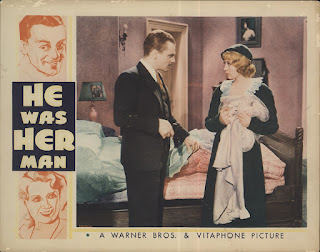
19. He Was Her Man (Lloyd Bacon, 1934) – A tender, erotic Pre-Code drama with soft-voiced safecracker Jimmy Cagney fleeing the hoods he just crossed, while escorting sad-eyed retired sex worker Joan Blondell to her wedding in an immigrant fishing community. It’s similar in plot terms to The Bride Came C.O.D., but very different in tone, with two astonishing central performances. Neither star was ever gentler nor more sensual. More here.
20. Petite Maman (Céline Sciamma, 2021) – A short, sweet, gently magical film about mother-daughter relationships, childhood and depression. It’s surprisingly cheery for a Sciamma movie, its suffering oblique and largely unseen, and perhaps for that reason can’t match the emotional impact of her other features. That small moment, though, where Marion says, “You didn’t invent my sadness”, is one of the most truthful and resonant evocations of mental illness (as I have experienced it) yet put on screen.
***
RE-APPRAISED: MOVIES I REVISITED, AND CHANGED MY MIND ABOUT
THREE UP:
1. The Last Seduction (John Dahl, 1994) – The greatest of the neo-noirs, an intensely funny black comedy in which city trash (and absolute psycho) Linda Fiorentino steals the cash from her husband’s drug deal and holes up in cow town, where she has oodles of malevolent fun manipulating the men around her. It exists not in a credible ‘90s but in a world where Double Indemnity was reality and we’ve just moved on a half-century. The venetian blinds still throw slatted shadows on the walls, and Fiorentino’s ‘backwards writing’ trick is surely a reference to the opening shot of The Maltese Falcon but people can now fuck, and say ‘fuck’, and there’s no censorship code demanding that being a fatale be fatal. Everything about it works: Steve Barancik's misanthropic script, the neat foreshadowing in Dahl's direction, and Fiorentino's for-the-ages performance, which might have won her an Oscar had they not shown the film on HBO first. Peter Berg has just the right amount of callow uncertainty as the patsy, and Bill Pullman and J. T. Walsh are impeccable weasels. I remembered it as a good movie; it's a whole lot more than that. A masterpiece, in fact, but – perhaps more importantly right now – incredible escapism.
2. Babe: Pig in the City (George Miller, 1998) – I remembered this as merely a collection of amusingly insane creative decisions but it is, in fact, a really great film. Babe goes to America in an attempt to save his farm, but instead ends up as a robbery victim, circus punchline and, ultimately, benevolent dictator of a flophouse for abandoned animals. The film takes a simply outrageous risk with its premise, proceeds to capture its city in a similar way to Amélie, and then breaks out seamlessly and stylishly into ingenious or balletic action, including one of the most terrifying and ultimately affecting set-pieces in American film. You'll know it when you see it. The story may be slight and even distractingly eccentric at times (Farmer Hoggett's wife is arrested for being a drug mule in the first 15 minutes, which is perhaps the most normal thing that happens in the film), but the execution is everything, with memorable characters, an undertow of heartbreaking melancholy, and a neat narrative style that surely inspired Pushing Daises. The gracefulness of Miller's camera, and his attendant use of space, is absolutely beguiling. As is the film's sense of originality. Remember originality in mainstream cinema? What was all that about?
3. Johnny Guitar (Nicholas Ray, 1955) – What a knockout: Nick Ray’s meticulous, super-stylised melodrama, got up in Western clothes and shot in garish Trucolor. I saw this as a teenager, when I wanted cool gunslingers and concessions to naturalism, and hated it, regarding the film’s champions as posers and pseuds. Now I’m a pseud myself and can revel in the theatrical choreography, sex-starved sadism and wild gender reversals: those overpowering women and emasculated men. Crawford is quite effective in martyr mode (though her character’s relationship with guns – and the men who draw them – complicates matters), but it’s Mercedes McCambridge who dominates, in her massive performance as the quiveringly cruel Emma, so terrified of her own desire that she starts hanging everyone in sight. Now and then the film falters, abruptly shifting tone with the help of deafening orchestral cues, but mostly it’s fascinating, with incredible use of sound – the characters dictating their own atmosphere like something out of Brecht – and a succession of spectacular pay-offs. In Borgnine’s dance of death and that bullet through the forehead it has two of the greatest flashes of action in Western history. And even its flaws tend to enhance the whole: that cheap and shonky Republic back-projection only adding to the feeling of unreality and claustrophobia. The next year, Ray made Run for Cover (see above), abandoning the strangulated, uptight atmosphere of this one, and toying with genre convention by providing a hero who was a rough reversal of Johnny Guitar: not a legendary gunman posing as a nobody, but a nobody mistaken for an outlaw.
THREE DOWN:
1. The Long Goodbye (Robert Altman, 1973) – A smug, purposefully shambling pseudo-noir, with Altman not so much deconstructing the PI genre as dismantling it. Since the genre was fine as it is, that exercise ends up being rather more fun for him than it is for us. More whinging here.
2. The Baxter (Michael Showalter, 2005) – Showalter’s performance as the title character is so pointlessly weird and artificial that it actively disengages you. Neither it nor his film quite dares to be a parody, and yet they're also fatally lacking in sincerity. I would love to see the movie that Michelle Williams thinks she’s in, as she is sensational.
3. The Ox-Bow Incident (William Wellman, 1943) – I’d forgotten how talky and didactic this is. I like Lamar Trotti as a screenwriter – his work on Judge Priest, Young Mr Lincoln and Yellow Sky is frequently exquisite – but if you’ve ever wanted to know what it would feel like to be bludgeoned to death by liberalism, then now’s your chance. More here.
***
OBSESSIONS
1. Well, Cagney, of course. An actor I loved when I first got into old movies as a teenager, then came to vaguely overlook and underrate. Seeing him electrify a couple of otherwise mundane pictures (Great Guy and 13 Rue Madeleine) back in 2019 reminded me how great he could be, and I properly remedied the situation this year, watching or rewatching a dozen of his films. The toughness I knew about, as well as his Lorre-ish blending of comedy and danger, but the beguiling softness I'd somehow missed. You can find all the reviews here, but these are the best of them: a salute to the neglected majesty of The Roaring Twenties, and more qualified appraisals of White Heat, The Public Enemy and Love Me or Leave Me.
2. André De Toth – I'm not sure he's a great director – and I suspect those who argue he is of a certain pseudiness – but I've certainly had a good time trying to decide. A kind of poor man's Preminger in comportment, De Toth had one eye, seven wives and 21 children (two of them biological), and made one unassailable masterpiece, a 1959 snow Western called The Day of the Outlaw. That one I was already familiar with (though that didn't prevent me from watching it again), but this tweet encouraged me to dig deeper, leading me to Riding Shotgun, as well as more disposable fare like The Bounty Hunter and Man in the Saddle. All three are led by Randolph Scott, perhaps the worst actor of his era, and the star of several of my favourite films.
3. Paul Schrader/William Friedkin – You know, sometimes the Film Bros are just correct.
4. Mae West – Another blind spot for me: I'd seen just one of Mae's movies before Indicator put out a lavish Blu-ray box-set. The pick of the bunch is I'm No Angel, and although the subsequent imposition of the Hays Code certainly curbed her fun (especially at first), West's control of her body, her talents and her destiny is still so refreshing. She didn't just carry these films, she wrote most of them, and frequently brooked the sexist cliches of '30s cinema, both behind the screen and up on it.
5. Holly Hunter – I don't care what it is, if Holly Hunter's in it, I'll watch it. The greatest actor of her generation, if only occasionally given the material to match. Watching Copycat, shortly after revisiting Broadcast News, made me realise that Holly Hunter talking in a choked whisper is the main thing cinema was invented for. She is absolutely staggering in that film – cast as a cop hunting a serial killer with help from boffin Sigourney Weaver, who got strangled by a psycho and hasn’t left the house for 13 months (which in the current climate doesn't seem that long). The movie is like the halfway point between Tightrope and In the Cut: a hybrid of misogynistic serial killer porn and inverted feminist thriller, and isn't great overall, but it's worth it a hundred times over for Hunter’s rich, multi-layered characterisation, a performance that knocks you sideways.
***
MY BEST WRITING ON FILM
1. My favourite piece to write this year was this one. Getting to tell the story of Ghost World on its 20th anniversary was a dream come true. As a teenager, the film struck me like lightning, and it's been hugely important to me ever since. Since I compressed a month of research into 1,800 words, here are a few deleted scenes:
3. Interviewing Benh Zeitlin for Total Film (August issue). (Link to preview)
4. Stray thoughts on Tiger Bay, a revolution in British film. (Link)
5. An American in Paris on the big screen. (Link)
6. Trash as social history: Pit Stop. (Link)
***
AND A COUPLE OF PIECES ABOUT OTHER THINGS
1. On returning to gigs, for the Guardian. (Link)
2. On the Manics' Holy Bible for Record Collector's special edition mag:
***
Thanks for reading. I'll leave you with one of the greatest pieces of dialogue ever written, by Jules Furthman for Hawks' Only Angels Have Wings, a film that I watch at least once a year: Bonnie Lee: You love him, don't you, Kid?
Kid Dabb: Yes, I guess I do.
Bonnie Lee: Why can't I love him the way you do? Why couldn't I sneer when he tries to kill himself, feel proud when he doesn't? Why couldn't I be there to meet him when he gets back? Why couldn't I... What do you do when he doesn't come back when you expect him to?
Kid Dabb: I go nuts.
DISCOVERIES
... being films that I saw for the first time this year, and loved.
1. Playground (Laura Wandel, 2021) – The highlight of this year's London Film Festival, and a film that I got to rave about in Sight & Sound's annual poll. It's a staggering debut that begins like Être et avoir and ends like a prison movie. Seven-year-old Maya Vanderbeque is extraordinary as Nora, a sensitive young girl trying to negotiate the perilous world of big school, a place of obscure rules and incomprehensible moral codes. “When you help someone, it makes things worse,” she tells a teacher, in the film’s most profound and affecting scene. Shot in shallow focus, at child’s-eye level, it’s fantastically immersive, gripping and moving, the innocence and charm of its opening reels evaporating as Nora is sucked into a vortex of pain. But while it is a film without convenient illusions, and cursed with a memory of childhood’s cruelties and formative, guilt-ridden compromises, it is not merely human but humane, recalling the best of the Dardenne brothers, before a final shot that reminded me of Bicycle Thieves in its sincerity and pained, tear-stained hopefulness. A masterpiece, simply.
2. Princess Cyd (Stephen Cone, 2017) – What if Swimming Pool, but unutterably lovely? A warm and fuzzy film that deals deftly and deeply with faith, love and dead parents – all the good stuff, in fact. It’s unusually attuned to how people talk, and every scene is about something, both on the surface and beneath. Its rough edges, of which there are many, only add to the charm; the slight amateurishness in places serving to make it seem more real, as if it’s a docu-drama starring the people this all happened too. It reminded me, in turn of Housekeeping, Sciamma, Junebug and The Way, Way Back, and yet it’s not derivative in any way. And if its view of the world remains rosily and reassuringly liberal, it is also not uncomplicated. The scene in which Cyd and her aunt talk about sex is some kind of classic.
3. Leave Her to Heaven (John M. Stahl, 1945), in which we learn that Stahl created the Sirkian melodrama, Douglas Sirk just perfected it. While Sirk would go on to remake three of Stahl’s monochrome hits – including Imitation of Life and Magnificent Obsession – the look and feel of his classic cycle of ‘women’s pictures’ seems to have been drawn largely from this Technicolor noir. It’s one of the best-looking colour films I’ve ever seen: sumptuously shot by everyone’s favourite egomaniacal cinematographer, Leon Shamroy, who conjures a chic world of turquoise and cyan that spells d-e-a-t-h. After all, that’s the colour of Gene Tierney’s eyes – as well as the walls of the train carriage, the water on the lake, her gown, her slip-ons and the carpet on those fateful stairs – and her murderously clingy fatale just isn’t going to share new husband Cornel Wilde with anyone. It is a chilly, masterly film that kills the cute, sees perversity and psychopathy within love, and is head over heels with its villain’s face. Full review here.
4. Light Sleeper (Paul Schrader, 1992) – Just the right words, and just the right number of them, as Schrader reworks Taxi Driver again, but finds all kinds of different shadings. For long stretches, it’s his best film, with only the trimmings (particularly the synthetic work by Susan Sarandon and Victor Garber) and the ending dulling its edge. Dafoe was never half as good – as a drug dealer and ex-addict vaguely thinking he might reform – and both Dana Delany and Mary Beth Hurt are absolutely terrific in support. Schrader wraps the existentialism and surprising characterisation in the perfect ambience, helped by a typically apposite score. It’s a film about tormented masculinity, but more than that: its impact on others.
5. Matewan (John Sayles, 1987) – An incredible movie about labour, faith, violence, honour, pragmatism and loneliness, as union organiser Chris Cooper arrives in the town of Matewan to support striking miners, unwittingly but unavoidably setting in motion a chain of violence. It’s a film filled with extraordinary moments, both big and small: Cooper’s little smile at the dinner table and his Mennonites monologue; McDonnell gasping with grief on a porch swing; the procession that follows a killing: Fordian staging and howls of sorrow; and a simply jawdropping finale, Sayles staging a tragedy in the style of a Western gone mad. The film sags just now and then but it has six or seven remarkable scenes, and the feeling of truth. Full review.
6. Ceiling Zero (Howard Hawks, 1936) – In broad plot terms, this second collaboration between director Howard Hawks and star Jimmy Cagney is like every other aviation pic of the ‘30s, and yet what’s going on within that is completely new. You can see it as another film in the vein of MGM’s Night Flight, a rehearsal for writer Spig Wead’s Test Pilot, or a dry-run for Hawks’ Only Angels Have Wings but Cagney’s character – and characterisation – are quite unlike anything else in the genre, or in cinema at large. His Dizzy Davis is introduced as a hellraising ledge, a continuation of Cagney’s fast-talking Pre-Code heroes, who returns to the small commercial airport run by his mate Pat O’Brien and picks up where he left off – spewing wisecracks, pulling stunts and chasing women. But that’s all a trick on the audience: his pioneering pilot is a relic, a danger and almost a joke, a 34-year-old barnstormer with a dicky heart, adrift in a new world filling with college graduates. And how he plays it... cast as an inveterate shagger, he goes for the most unexpected option imaginable, giving the most gentle, sensitive and tactile performance of his career. I wrote a mini-essay on the film here.
7. Run for Cover (Nicholas Ray, 1955) – The second of three films from my extended investigations into the work of Jimmy Cagney. Released five months before the same director’s Rebel without a Cause, Run for Cover finds Nick Ray tiring of the young rebel character he had created in They Live by Night and Knock on Any Door, as everyman Jimmy Cagney invests heart and soul in self-pitying, no-good John Derek. If that seems unexpected, then so is everything else about this Western, from an opening anti-heist to a climactic non-shootout among Aztec ruins. Shot like an Eastwood film and plotted like a Boetticher, it’s resistant to the mythos of genre, with no interest in the idea of the legendary hero or the fastest gun. More thoughts here.
8. Shattered Glass (Billy Ray, 2003) takes 10 minutes to settle into anything even remotely resembling real life – or indeed the world of journalism. After that it is completely riveting, always holding back just enough, in terms of both its information and its emotion. Christensen, Azaria and Lynskey are all excellent, but Sarsgaard is just sensational, those four forming the most 2003 ensemble imaginable with help from Chloë Sevigny, Rosario Dawson and Steve Zahn. The film has surface flaws – including a few duff lines and some odd structural choices – but the central thrust of the story is perfect, and it has more to say about how the media (and therefore the modern world) works than just about any other movie of its type. Its intelligence and incisiveness are way above the ordinary.
9. To Live and Die in L.A. (William Friedkin, 1985) – A kinetic ‘80s actioner, with cop William Petersen looking to avenge his partner by bringing down psycho Willem Dafoe – using whatever means necessary. What I love most about the film is that it defines its genre and then defies it, offering the most heightened versions of each stock scene, before setting fire to the rulebook in its final reel. That mixture of the traditional and offbeat runs right through the movie. While the dialogue and score are agreeably mainstream, Friedkin’s instinctive handling is incredibly varied. The action sequences are pulsating (I’m not really a car chase guy, but man, that car chase). And yet other parts of it are shot almost like an art film. The extended counterfeiting montage seems amazingly fetishistic, like a Jacques Becker scene filmed by De Palma. The movie can seem meatheaded at times, glorifying the idea of tortured machismo as much as questioning it, but those shades of grey are partly what makes it so interesting. It is also unbelievably entertaining. Bonus thought: by 1995, synths and neon seemed the most impossibly dated elements of the '80s; now they feel more modern than everything else.
10. Remember My Name (Alan Rudolph, 1978) – This pretends to be a slasher and ends up as a noir, but it’s New Hollywood to its bones – provocative and deep, full of subtly striking shots, and lit by one of the best performances of its decade. Geraldine Chaplin is just sensational as the endlessly slippery central figure: brittle, malevolent, vulnerable, sad, with a Chaplinesque physicality and a gameplan we can only guess at. More here.
11. Rocks (Sarah Gavron, 2020) – They should make all films this good. That opening scene is so joyous and yet so alien, its characters the sort of people who sit opposite you on a train and then do your fucking head in for the next two hours. This gloriously empathetic movie allows you into their lives. It’s a film of resilience, desperation and joy, its imagery dotted with spare poetry, its hero all bunged up with unspoken anguish. I was really struck by the parallels with Les 400 Coups. Both begin with their characters symbolically distanced from the touristic image of the city, both end with them seeing the sea for the first time. And, in between, they steal; they run away; we see their parents as lost, childlike figures. If Girlhood is the most obvious parallel in terms of theme, and perhaps Half Nelson in terms of style, the Truffaut film felt like Rocks’ spiritual twin. That it can withstand such a comparison is about as high praise as I can dish out.
12. Under the Skin (Jonathan Glazer, 2013) is about sex and death, the very mundanity of its early dialogue scenes accentuating both the film’s eroticism and the fleeting nature of existence, before it begins to drown its men in black, abstract spaces. The movie’s main card is Scarlett, making an early swerve into low-budget weirdness, and it plays that perfectly. I have rarely seen a film as besotted with its star; I’m surprised that Glazer didn’t get both an Oscar and a restraining order. The camera is obsessed with every line of her face, obsessed with her eyes. And it’s through those eyes that we see the film, that we see Earth as an alien landscape, full of curious natural phenomena and simplistic beings. Under the skin, we are all animals, it says – some of us with vast compassion, some of us without even consent. Further thoughts here.
13. Dr. Jekyll and Mr. Hyde (Rouben Mamoulian, 1931) – A very Pre-Code Jekyll, with the doc using the pursuit of science as an excuse to relieve his unruly horn. It's really a film about toxic masculinity, with Fredric March a superficially sensitive 'good man' barely masking a monster, and Miriam Hopkins allowed to be bawdy and sensual and yet still an affecting victim. The scene in which she flees to Jekyll and pleads for his help, proposing a master-slave relationship that both tickles his fetish and provokes his self-loathing, is really something. Aside from one oddly stagey sequence near the end – March permitted to do some slow emoting on the floor in front of a piano – it's just a beautifully-directed film: so instinctive and inventive and alive. How the hell was Mamoulian three years ahead of everyone else in Hollywood?!
14. Minding the Gap (Bing Liu, 2018) – Skateboarding is an escape from the domestic violence that colours the lives of these young people. Two are victims, haunted by their childhoods. The other may well be a perpetrator, introduced as an outsider hero, but evincing the unstinting self-pity and hollow charm of the abuser. It cheats a little in its presentation of these three characters’ relationships with one another but attains a deep emotional truth in dealing with its central subject.
15. Kikujiro (Takeshi Kitano, 1999) – A warm, sweet, episodic and often very funny film about a gangster (Takeshi) escorting a little boy to his estranged mother – and back again. Takeshi's character is so fantastically and disarmingly rude – just a little boy himself, really, with little filter and no impulse control – which keeps the movie well away from genre clichés, and the ending works so well precisely because it doesn’t try to do too much. A mention too for that beautiful musical theme (even if it is slightly over-used), and the scene in which Kitano tries to get psychic tips on a series of bicycle races: a comic masterpiece.
16. The Lady in Red (Lewis Teague, 1979) – The last great Pre-Code film, 45 years after the fact, as farm girl Pamela Sue Martin is brutalised by a range of obsolete genres, en route to a dalliance with Dillinger. More here.
17. The Shooting (Monte Hellman, 1966) – Warren Oates plays a bounty hunter in this Ranown-style Western that morphs into a Reichardt movie that morphs into a New Hollywood movie that morphs into a hippie headfuck. It mixes existentialism, Old Testament dialogue and a blankly beautiful psycho in the Gene Tierney mould (Millie Perkins), who can’t really act but whose limitations drag the movie into interesting places: namely exploitation territory. Oates is characteristically sensational in a part that imbues him with the gruff humanism of a Van Heflin, while Nicholson plays the Henry Silva/James Coburn/James Best part from the Ranown cycle with his teeth, and a conspicuously modern sense of nihilism. This period of Nicholson’s career always reminds me of Bruce Dern’s incredulous utterance just three years later: “Jack Nicholson’s a movie star now?!” I’ve never seen a Western in which everyone gets so exhausted, man and beast. And only Meek’s Cutoff ever left you feeling satisfied with so few of the answers.
18. Night Moves (Arthur Penn, 1975) – An archetypal New Hollywood neo-noir, with useless PI Gene Hackman searching for a 16-year-old nymphomaniac (Melanie Griffith) – only it's him who's lost. Hackman is great, plastering a smile over every emotion until finally it's pulled away, topped only by Jennifer Warren, scintillating as the double-talking, hard-nippled fatale whose gnomic utterances are part of her weaponry. More here.
19. He Was Her Man (Lloyd Bacon, 1934) – A tender, erotic Pre-Code drama with soft-voiced safecracker Jimmy Cagney fleeing the hoods he just crossed, while escorting sad-eyed retired sex worker Joan Blondell to her wedding in an immigrant fishing community. It’s similar in plot terms to The Bride Came C.O.D., but very different in tone, with two astonishing central performances. Neither star was ever gentler nor more sensual. More here.
20. Petite Maman (Céline Sciamma, 2021) – A short, sweet, gently magical film about mother-daughter relationships, childhood and depression. It’s surprisingly cheery for a Sciamma movie, its suffering oblique and largely unseen, and perhaps for that reason can’t match the emotional impact of her other features. That small moment, though, where Marion says, “You didn’t invent my sadness”, is one of the most truthful and resonant evocations of mental illness (as I have experienced it) yet put on screen.
***
RE-APPRAISED: MOVIES I REVISITED, AND CHANGED MY MIND ABOUT
THREE UP:
1. The Last Seduction (John Dahl, 1994) – The greatest of the neo-noirs, an intensely funny black comedy in which city trash (and absolute psycho) Linda Fiorentino steals the cash from her husband’s drug deal and holes up in cow town, where she has oodles of malevolent fun manipulating the men around her. It exists not in a credible ‘90s but in a world where Double Indemnity was reality and we’ve just moved on a half-century. The venetian blinds still throw slatted shadows on the walls, and Fiorentino’s ‘backwards writing’ trick is surely a reference to the opening shot of The Maltese Falcon but people can now fuck, and say ‘fuck’, and there’s no censorship code demanding that being a fatale be fatal. Everything about it works: Steve Barancik's misanthropic script, the neat foreshadowing in Dahl's direction, and Fiorentino's for-the-ages performance, which might have won her an Oscar had they not shown the film on HBO first. Peter Berg has just the right amount of callow uncertainty as the patsy, and Bill Pullman and J. T. Walsh are impeccable weasels. I remembered it as a good movie; it's a whole lot more than that. A masterpiece, in fact, but – perhaps more importantly right now – incredible escapism.
2. Babe: Pig in the City (George Miller, 1998) – I remembered this as merely a collection of amusingly insane creative decisions but it is, in fact, a really great film. Babe goes to America in an attempt to save his farm, but instead ends up as a robbery victim, circus punchline and, ultimately, benevolent dictator of a flophouse for abandoned animals. The film takes a simply outrageous risk with its premise, proceeds to capture its city in a similar way to Amélie, and then breaks out seamlessly and stylishly into ingenious or balletic action, including one of the most terrifying and ultimately affecting set-pieces in American film. You'll know it when you see it. The story may be slight and even distractingly eccentric at times (Farmer Hoggett's wife is arrested for being a drug mule in the first 15 minutes, which is perhaps the most normal thing that happens in the film), but the execution is everything, with memorable characters, an undertow of heartbreaking melancholy, and a neat narrative style that surely inspired Pushing Daises. The gracefulness of Miller's camera, and his attendant use of space, is absolutely beguiling. As is the film's sense of originality. Remember originality in mainstream cinema? What was all that about?
3. Johnny Guitar (Nicholas Ray, 1955) – What a knockout: Nick Ray’s meticulous, super-stylised melodrama, got up in Western clothes and shot in garish Trucolor. I saw this as a teenager, when I wanted cool gunslingers and concessions to naturalism, and hated it, regarding the film’s champions as posers and pseuds. Now I’m a pseud myself and can revel in the theatrical choreography, sex-starved sadism and wild gender reversals: those overpowering women and emasculated men. Crawford is quite effective in martyr mode (though her character’s relationship with guns – and the men who draw them – complicates matters), but it’s Mercedes McCambridge who dominates, in her massive performance as the quiveringly cruel Emma, so terrified of her own desire that she starts hanging everyone in sight. Now and then the film falters, abruptly shifting tone with the help of deafening orchestral cues, but mostly it’s fascinating, with incredible use of sound – the characters dictating their own atmosphere like something out of Brecht – and a succession of spectacular pay-offs. In Borgnine’s dance of death and that bullet through the forehead it has two of the greatest flashes of action in Western history. And even its flaws tend to enhance the whole: that cheap and shonky Republic back-projection only adding to the feeling of unreality and claustrophobia. The next year, Ray made Run for Cover (see above), abandoning the strangulated, uptight atmosphere of this one, and toying with genre convention by providing a hero who was a rough reversal of Johnny Guitar: not a legendary gunman posing as a nobody, but a nobody mistaken for an outlaw.
THREE DOWN:
1. The Long Goodbye (Robert Altman, 1973) – A smug, purposefully shambling pseudo-noir, with Altman not so much deconstructing the PI genre as dismantling it. Since the genre was fine as it is, that exercise ends up being rather more fun for him than it is for us. More whinging here.
2. The Baxter (Michael Showalter, 2005) – Showalter’s performance as the title character is so pointlessly weird and artificial that it actively disengages you. Neither it nor his film quite dares to be a parody, and yet they're also fatally lacking in sincerity. I would love to see the movie that Michelle Williams thinks she’s in, as she is sensational.
3. The Ox-Bow Incident (William Wellman, 1943) – I’d forgotten how talky and didactic this is. I like Lamar Trotti as a screenwriter – his work on Judge Priest, Young Mr Lincoln and Yellow Sky is frequently exquisite – but if you’ve ever wanted to know what it would feel like to be bludgeoned to death by liberalism, then now’s your chance. More here.
***
OBSESSIONS
1. Well, Cagney, of course. An actor I loved when I first got into old movies as a teenager, then came to vaguely overlook and underrate. Seeing him electrify a couple of otherwise mundane pictures (Great Guy and 13 Rue Madeleine) back in 2019 reminded me how great he could be, and I properly remedied the situation this year, watching or rewatching a dozen of his films. The toughness I knew about, as well as his Lorre-ish blending of comedy and danger, but the beguiling softness I'd somehow missed. You can find all the reviews here, but these are the best of them: a salute to the neglected majesty of The Roaring Twenties, and more qualified appraisals of White Heat, The Public Enemy and Love Me or Leave Me.
2. André De Toth – I'm not sure he's a great director – and I suspect those who argue he is of a certain pseudiness – but I've certainly had a good time trying to decide. A kind of poor man's Preminger in comportment, De Toth had one eye, seven wives and 21 children (two of them biological), and made one unassailable masterpiece, a 1959 snow Western called The Day of the Outlaw. That one I was already familiar with (though that didn't prevent me from watching it again), but this tweet encouraged me to dig deeper, leading me to Riding Shotgun, as well as more disposable fare like The Bounty Hunter and Man in the Saddle. All three are led by Randolph Scott, perhaps the worst actor of his era, and the star of several of my favourite films.
3. Paul Schrader/William Friedkin – You know, sometimes the Film Bros are just correct.
4. Mae West – Another blind spot for me: I'd seen just one of Mae's movies before Indicator put out a lavish Blu-ray box-set. The pick of the bunch is I'm No Angel, and although the subsequent imposition of the Hays Code certainly curbed her fun (especially at first), West's control of her body, her talents and her destiny is still so refreshing. She didn't just carry these films, she wrote most of them, and frequently brooked the sexist cliches of '30s cinema, both behind the screen and up on it.
5. Holly Hunter – I don't care what it is, if Holly Hunter's in it, I'll watch it. The greatest actor of her generation, if only occasionally given the material to match. Watching Copycat, shortly after revisiting Broadcast News, made me realise that Holly Hunter talking in a choked whisper is the main thing cinema was invented for. She is absolutely staggering in that film – cast as a cop hunting a serial killer with help from boffin Sigourney Weaver, who got strangled by a psycho and hasn’t left the house for 13 months (which in the current climate doesn't seem that long). The movie is like the halfway point between Tightrope and In the Cut: a hybrid of misogynistic serial killer porn and inverted feminist thriller, and isn't great overall, but it's worth it a hundred times over for Hunter’s rich, multi-layered characterisation, a performance that knocks you sideways.
***
MY BEST WRITING ON FILM
1. My favourite piece to write this year was this one. Getting to tell the story of Ghost World on its 20th anniversary was a dream come true. As a teenager, the film struck me like lightning, and it's been hugely important to me ever since. Since I compressed a month of research into 1,800 words, here are a few deleted scenes:
- Enid’s trendsetting look, worked on by Birch and costume designer Mary Zophres, wasn’t purely for show. “It was a great way to express Enid’s mood from day to day,” says Birch, “because she was so stoic and almost monotone in a lot of her expressions and delivery – with the sarcasm and everything – so it really gave you a glimpse of her inner world.”2. A spirited defence of Return to Oz, for the Guardian. (Link)
- Birch on the age-gap relationship: “The only one in control of that relationship was Enid. She’s the driving force in finding him, in building a connection with him, in trying him out in a romantic capacity and then making the decision to go. So there is no power imbalance, other than that she’s got all the power, but doesn’t know what to do with it.”
- Zwigoff on working with the Weinsteins. “United Artists, MGM and Granada pretty much left me alone, for which I’m ever grateful. It was the opposite of my next film, Bad Santa, which was a constant series of battles with the Weinsteins. I refused to let them ruin that film after I’d put so much work into it. I managed to stubbornly navigate around most of their bad ideas, but I’d say that experience took about 10 years off my life. They deserve prison for that alone.”
- Joe Talbot on Ghost World’s ambivalence: “It doesn’t feel like it’s ever judgemental towards its characters. Sometimes directors end up wagging our finger at our characters, to show our own moral superiority, because we’re afraid that we’ll be judged by the flaws of the characters we’ve created. And I really loved Ghost World’s ability to hover above that fear and that judgement.”
- Illeana Douglas made frequent pleas to Zwigoff for Seymour to end up with her character, Roberta. Those fell on deaf ears.
- What does Birch think Enid would be railing against today? “She’d probably be pissed off about everything,” she says. “As much as I am.” Zwigoff says the character would still have “mindless consumerism” in her sights, “and maybe greed, and religion”. Does he think consumerism has worsened since 2001? “Well, you can now buy a $75 ‘vagina’ candle at Gwyneth Paltrow’s Goop website,” he says. “That’s the ‘high-end’ racket. The low-end grifts are more like the Dollar Menu at McDonald’s. But they’re all trying to scramble for more money for which they would eagerly trade off say, the Amazon rainforest for a few more pennies of profit.”
3. Interviewing Benh Zeitlin for Total Film (August issue). (Link to preview)
4. Stray thoughts on Tiger Bay, a revolution in British film. (Link)
5. An American in Paris on the big screen. (Link)
6. Trash as social history: Pit Stop. (Link)
***
AND A COUPLE OF PIECES ABOUT OTHER THINGS
1. On returning to gigs, for the Guardian. (Link)
2. On the Manics' Holy Bible for Record Collector's special edition mag:
***
Thanks for reading. I'll leave you with one of the greatest pieces of dialogue ever written, by Jules Furthman for Hawks' Only Angels Have Wings, a film that I watch at least once a year: Bonnie Lee: You love him, don't you, Kid?
Kid Dabb: Yes, I guess I do.
Bonnie Lee: Why can't I love him the way you do? Why couldn't I sneer when he tries to kill himself, feel proud when he doesn't? Why couldn't I be there to meet him when he gets back? Why couldn't I... What do you do when he doesn't come back when you expect him to?
Kid Dabb: I go nuts.
Labels:
Babe: Pig in the City,
Best Movies,
cinema,
film,
Holly Hunter,
James Cagney,
Laura Wandel,
movies,
Playground,
Princess Cyd,
recommendations,
Review of 2021,
William Friedkin
Location:
London, UK
Subscribe to:
Posts (Atom)