Here's part two of my review of the year, focusing on FILMS. The format: 25 'discoveries', six old favourites, six stinkers, six movies re-appraised, and five areas of obsession.
25 DISCOVERIES
or 'premieres', or 'first watches', or whatever you call films that you saw for the first time this year. Here are the 25 I loved the most, starting with my very favourite...
1. Three Comrades (Frank Borzage, 1938) – An astonishing, utterly unique film that gets its mood of Lost Generation fatalism from Remarque via Fitzgerald, whose only credited script was heavily – and contentiously – edited by Joe Mankiewicz. Scholars are still taking sides, but what’s often overlooked is how strongly Scott still left his mark on the material. We’re in a Germany of manic Bright-Young-Things-energy and encroaching extremism, as a band of three brothers finds a freespirited aristocrat with duff lungs (Margaret Sullavan) drawn into their orbit. Robert Taylor is barely sufficient but Robert Young is superb and Franchot Tone even better, though it’s the combination of Borzage’s sincerity, Fitzgerald’s seductive romanticism and Sullavan’s mercurial magnificence that lifts the picture into some other realm. The way that, early on, Maggie says, “We’re neither dead – nor alive”: defiantly offhand, a touch mannered, a quiver in her voice, but with the rhythm of the real; well, that’s the whole film right there. In her definitive role, she is simply devastating.
2. Shooting Stars (Anthony Asquith, 1928) – Pure cinema, British late-silent style. Cold-hearted screen queen Annette Benson wants to go to Hollywood with her lover, a slapstick clown (Donald Calthrop). The only thing standing in her way? Her sad-eyed leading man... and husband (Brian Aherne). A masterpiece – beginning as a sumptuously shot comedy satirising the gulf between reality and filmic fantasy, before turning into something else entirely. Nothing prepares you for the final 30: that staggering climax, like a sledgehammer to the face, and you half-praying it’ll close on that indelible image… only for the tragic coda to come along and whack you in the heart. Shooting Stars is just perfectly constructed by nepo baby Anthony Asquith (son of the former prime minister), full of double-meanings so witty and deftly deployed that concerns about on-the-nose convenience slip away; it's quite clear that God, or fate, is moving these pieces, making every utterance apposite and ironic. It's ironic too, of course, that of the three stars, it was Aherne who made it to Hollywood, while Benson was soon forgotten. How striking – and cheering – that two silents from 1928 (this and Vidor’s Show People) still do an infinitely better job of spoofing silent cinema than anything made since. And what a treat to see Shooting Stars on the big screen.
3. Alias Nick Beal (John Farrow, 1949) – An outlandish political noir, with Ray Milland as (Old) Nick Beal, who corrupts unimpeachable lawyer Thomas Mitchell with the help of sapphire-studded sex worker, Audrey Totter. It has pleasures both shallow and deep: Milland appearing suddenly from all sorts of locations; ruminations on the power vs purity debate that continues to define much of contemporary politics – and coming down firmly on the side of the latter. Milland has so much fun, beginning small then increasingly anticipating his late-career descent into shlock, in a performance that is legitimately chilling. Sticking a chatty priest into the story (a favourite Code-era tactic) also allows the makers to get away with so much here: an atmosphere of quite unhinged malevolence and moral dissipation. Mitchell and Totter, simply two of the best actors of the era, don’t quite scale the heights of Stagecoach/The Unsuspected, but that’s because something quite different is required here – and something quite different is happening here, a perfect and unholy marriage of moral philosophy and genre thrills.
4. Bug (William Friedkin, 2006) – "I guess I'd rather talk with you about bugs than nothing with nobody." Ain't that true love. An extraordinary humanist body horror in which Ashley Judd improbably joins the roll-call of the immortals with her staggering performance as an abused, coke-sniffing, white-trash alcoholic driven mad by imaginary bugs… and yet, beneath such trappings, just REAL. And beautiful. And in love. It’s mostly just her and Michael Shannon, and he excels too, playing an AWOL freak, decent but irreparably damaged, seeing those same fucking bugs everywhere. Tracy Letts adopted his own play, and while its first half is greater than its second (the human story later overridden by a prescient but less compelling focus on the conspiracy-prone), Friedkin directs the hell out of it all, painting a sexy, horrible story of mutual reliance and mental illness, and striking resounding true notes at least once a minute.
5. Déjà Vu (Tony Scott, 2006) – An absolutely stunning high-concept time-travel thriller, with Denzel as an ATF agent trying to save a murdered woman – and a ferry-full of terror victims – some four days after the fact. An inspired premise is given dizzying execution by Tony Scott: the results are tense, compulsively entertaining and deeply moving. There's also this one little moment where Denzel says nothing more than, "Yeah... OK... alright... OK" to a group of FBI agents, controlling the scene as his character controls the room, that is somehow one of the greatest bits of acting I've ever seen in my life. You think there’s nothing more 2006 than that title font, then you get to the Macy Gray theme song.
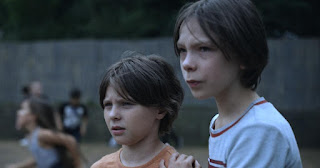
6. Birth (Jonathan Glazer, 2004) – Perhaps Glazer's best film, in that it has at least three moments that briefly make me forget how to breathe. A red-eyed Nicole Kidman believes that her late husband has been reincarnated as a little 10-year-old scally, much to the consternation of her cuckolded fiance (Danny Huston). It's a dazzlingly ambitious, admirably strange film that takes a premise familiar only from romantic comedy (Chances Are! – see below), lends it the cruelty and crippling unease of The Innocents, and then drowns the viewer in haunting, sickly beautiful imagery. If its ultimate explanation is less interesting than its ambivalent obfuscation, it does at least kick the story into some agreeably uncomfortable new places. Anne Heche, her eyes just vast pupils, black as her character's soul, remains so missed. The boy's collapse, and Huston's fantastically petulant tantrum, are scenes for the ages.
7. Two Lovers (James Gray, 2008) – Like Joker, but if instead of becoming The Joker, he fell in love, possibly twice. It’s a wintry, empathetic, thorny, complex film – quite remarkably intelligent and intuitive at times – with an understanding of, and a tolerance for, the knotty dynamics of real relationships that feels vaguely revolutionary. Its only shortcoming is that its well-meaning treatment of mental illness is also erratic, sloppily conflating bipolar disorder with heartbreak, and indulging in the occasional shallow plot element at odds with Joaquin’s deep and multi-faceted performance. I found the film meaningful and original, though, with three richly-drawn central characters, and periodically inspired direction. In Ron (Elias Koteas), it also has one of the great villains, possessed of a chilling, highly recognisable and rarely depicted sociopathy, draped in alpha charm. I’m not sure that the ending of the film is actually a happy one, or that the makers are aware of that fact. (This extremely unfair review made me laugh my arse off, though.)
8. The Winslow Boy (David Mamet, 1999) – Mamet’s terrific adaptation of the Rattigan play, concerning a boy expelled from a naval academy for theft, and featuring outstanding work by Nigel Hawthorne (as the crusading father), Rebecca Pidgeon (the radical sister) and Jeremy Northam (their flamboyant lawyer). The direction isn’t just unobtrusive but unadventurous, and the boy can’t act much, but the script is quite beautifully balanced between dramatic showboating, social comment and deep emotion, and the attention to period detail present in the evocation of the surrounding media circus is a welcome bonus. Unlike in the (excellent) 1948 film, and in keeping with the stage original, the climactic court case is discussed but never shown.
9. Phase IV (Saul Bass, 1974) – Saul Bass’s only movie as director is a trippy sci-fi film so uncommercial it makes Silent Running look like Return of the Jedi. Nigel Davenport and Michael Murphy are the scientists stranded in the desert, trying to combat an alliance of highly intelligent, organised, poisonous ants (normal-sized too, which makes it that much scarier). There’s too much phony jargon, and an absence of deep feeling, but there are also many passages of consummate strangeness, surreal beauty and genuine terror. The shimmering truck, the cut to the shattered tower, the yellow blizzard, the blue spray, the pit of death, and an encounter between two ants and a preying mantis framed and cut like a thriller. If the film is unmistakably the work of a great designer, rather than a rounded director, that also means it is quite beautifully shot and edited. It also contains one of the great uses of ‘Leaning on the Everlasting Arms’, in good company with Night of the Hunter, and the Coens’ True Grit. One of a kind.
10. State and Main (David Mamet, 2000) – "It takes all kinds." "That's what it takes? I always wondered what it took." Perhaps Mamet's best original film: a satire about the movies, apparently, but that's just what it looks like, not what it is. The on-location gimmick is merely a structure to house the writer-director’s thoughts about art, love, work, America, neglected potential and personal honour. And away from the Day for Night/The Player ticks – a roaming camera finding its characters perpetually interrupted – sits an incalculably touching love story. Then, at a crucial juncture (and at the titular junction, and in the middle of the story), Mamet overturns a car, enabling some observations about how personal offence motivates us more than moral turpitude, and you fear that’s he’s lost his plot, only for it to spit out an inspired moral dilemma. While he can’t help himself from throwing in one more rug-pulling twist, I’m kind of glad he did. It was his next film, Heist where that suddenly became exhausting. Philip Seymour Hoffman is particularly excellent in this, and the moment in which he articulates Mamet’s joy at the Eureka!-and-relief of untangling a thorny scene is so much what being a writer is about. Mamet fills this picture with the most exhilaratingly brilliant lines. The only sour note is his familiar preoccupation with rape, an idea he finds inherently funny (see also: Wag the Dog), when he’s not mining it for sociopathic shock value (Oleanna). Rebecca Pidgeon, his other half, may be the most beautiful woman to ever walk before a movie camera.
11. No Greater Glory (Frank Borzage, 1934) – An extraordinary anti-war allegory from Borzage, focusing on a battle between adolescent gangs for a patch of dirt. The performances vary and so does the direction, but at its best it is simply unlike anything else: Our Gang bleeding into La Grande illusion. Frankie Darro is excellent, of course, but so is his counterpart on the opposing side, Jimmy Butler – he was one of two members of the young cast (along with Donald Haines) killed in the next world war.
12. The Deep End (David Siegel and Scott McGehee, 2001) – “His heart had stopped.” “It happens.” The textbook soppy thriller (filmed previously by Ophüls as The Reckless Moment), with Tilda proving that on the rare occasions when she drops the self-conscious eccentricity and just acts, she is quite phenomenally good. The only false note comes when the script briefly stops showing us her character’s everyday mumsy selflessness and decides to make her tell us about it. The film otherwise strikes the perfect balance between slick genre thrills, curveballs and thickening emotion. Plus: baby Tamara Lindeman as a teenage ballet dancer who fixes cars.
13. Little Darlings (Ronald F. Maxwell, 1980) – A wonderful coming-of-age film: a feminist alternative to Porky’s et al, or a little like the camp sequence of The Parent Trap, if instead of being twins the two rivals were 15-year-olds competing to see who could get laid first. There’s a little wish-fulfilment and cartoonish inanity around the edges, but the central storyline featuring Kristy McNichol’s vulnerable, tough-talking chain-smoker is inspired, and she is just utterly brilliant, playing thorny, conflicted and unapologetic. Tatum O’Neal, by contrast, is oddly flat and conventional, but there are showy supporting parts for Matt Dillon, Simone Schachter and Armand Assante, and the song score is superb – and superbly deployed. Vinegar Syndrome/Cinématographe’s 4K restoration shows just how soft and clean everyone’s hair us. The hippie girl is Cynthia Nixon (!).
14. The Zone of Interest (Jonathan Glazer, 2023) – The most interesting thing I have seen anyone do with the medium in quite a while, creating a shadow film in which every image has a dark twin, and challenging us not to zone in on what’s before us and tune out of formless noise.
15. Little Man, What Now? (Frank Borzage, 1934) – Borzage's first collaboration with Margaret Sullavan, which changed things for all time for them both. My essay about their work together is out in a few months' time and explores thie film in detail.
16. Bad Girl (Frank Borzage, 1931) – A beautifully observed Borzage drama about a young couple navigating the Depression – and a pregnancy – with James Dunn irresistible in his screen debut as the grouchy, doting, soft-hearted, stoical, occasionally uncomprehending everyman. Until a slightly forced third act, it’s about as true to life in 1931 as anything I’ve seen. If Sally Eilers is only fairly effective playing the wife (who stopped being such a bad girl in the translation from page to screen), Minna Gombell is just about perfect as her canny but harried best friend, a single mum. I’m not sure about the hospital nurse repeatedly pretending that different babies belong to Eilers – that seems rather like a deranged psychological experment.
17. Only Yesterday (John M. Stahl, 1933) – A gorgeous rip-off of Zweig’s ‘Letter from an Unknown Woman’, transplanted to the Wall Street Crash and flashing back to World War One. It introduced Sullavan to the movies, for which she should all be grateful. She’s enchanting, with layers upon layers in that voice and on that face, never letting Stahl slump into soap. Boles works surprisingly well as the forgetful fuckboy, largely because the rest of the film sells you on the idea. The final moments are beautifully done.
18. Hit Man (Richard Linklater, 2023) – The best Gary Johnson since Team America. Such a smart and sexy film, with a deceptive depth beneath its vast entertainment value – and a gentle strangeness in so much of what it does. If Linklater resorts to occasional gimmickry, and stumbles slightly in the second act, his film comes roaring back, proving for the umpteenth time that genre films are a better vehicle for big ideas than their stuffier rivals. The way Powell slips between his principal guises, without you seeing the switch, is a hell of a magic trick. Adria Arjona and Austin Amelio are quite brilliant in their showy supporting roles.
19. Malice (Harold Becker, 1993) – A deliriously enjoyable neo-noir thriller: trash elevated to some improbable level by the sheer quality across the board. The credits would go perfectly with that Vince McMahon meme: Bebe Neuwirth… 🤗 George C. Scott… 😲 Anne Bancroft… 🤤 Music by Jerry Goldsmith. 🤯 Honestly, this is just so much in my sweet spot: made at the crest of the neo-noir boom, with a none-more-1993 cast (Pullman, a frizzy Kidman, Baldwin when he was flirting with film stardom, Peter Gallagher), and just in time to permit show-stealing one-scene masterclasses from a coupla New Hollywood heavyweights. Sorkin and Scott Frank show no queasiness at all about using blindness, domestic violence, sex murders and miscarriage as twist fodder, but it’s all so slick and agreeably phrased that you can forgive its excesses and a final act that isn’t quite as surprising as much of what precedes it. Bebe Neuwirth as a detective who says “bite me” has changed a few things for me.
20. A Woman’s Vengeance (Zoltán Korda, 1948) – "It's easy to be heroic in times of crisis. What's difficult is to behave even moderately well at ordinary times." An unexpectedly fantastic little noir, with Charles Boyer's charm used in a way it never quite was elsewhere: as a mask for a very ordinary depravity. This is no Gaslight: there is a specificity and a realism here, a shallow callousness, a self-involved disregard for human feeling that I've never seen evoked like this before, and it's really striking. (If I were doing the one-line review, it would say, “Least problematic Frenchman”.) Gradually, though, we realise that this isn't his film at all: it belongs to Jessica Tandy, as the woman he flirts with then chucks away in favour of 18-year-old sexpot Ann Blyth. Tandy's sexual frustration and romantic disappointment must find new avenues, then, and these aren't entirely healthy. She is so beautiful and so ugly, a cousin of Gene Tierney's homicidal angel in Leave Her to Heaven, down to those highly becoming sunglasses. (One occasionally gets a sense, too, of how Tandy's Blanche Du Bois, unveiled on stage the same year, might have looked.) If the Aldous Huxley script is a little overwritten, it's also a cut above. The first half is superbly rendered, with even the smallest characters given superb lines, and while the second is more uneven (the doctor, Huxley's on-screen proxy, beginning to talk and talk), its high points are astonishing. The scene between Boyer and Tandy through the prison grate is just perfect, composed like a nightmare. What's most enjoyable about the film, though, I think, is how removed from cliche its three central characters are: Blyth is just young and out of her depth, not malevolent; Boyer's deep flaws are offset by his latent nobility and sincere passions; and in another life, well, Tandy might have been a saint.
21. Black Widow (Bob Rafelson, 1987) – An exceptionally entertaining movie, with government investigator Debra Winger trying to unmask black widow Theresa Russell, who won’t stop marrying millionaires and poisoning them. In theme, just trash, really, but done about as well as it possibly could be – funny and unrelentingly cinematic, with a fantastic cast. The stars are perfectly matched. Russell is... attractive. Only the ending disappoints.
22. We Own the Night (James Gray, 2007) – When Phoenix is on screen, its cliches seem timeless; when Duvall is on screen, its cliches seem old. It’s The Godfather inverted – or G-Men updated – with Joaquin as a louche, self-satisfied nightclub manager dragged into the family business of being a cop. If it isn’t unstintingly convincing, it is frequently remarkable, with that amazing credit sequence, that rainy car chase, and that slo-mo shot of Mendes in a corset in a corridor that serves as perhaps the best illustration of the surefootedness of Gray’s visual vision. Phoenix is remarkable in this: the way he swallows his words, his face in the scene in the diner, but also two moments that must have just been hell for him to play: on the phone as his brother lies dying, and watching a loved one breathe his last on the street. “I saw him die,” he says, breaking down, and people talk a lot of shit about "brave" acting, but Lordy.
23. Chances Are (Emile Ardolino, 1989) – “Sometimes I wonder why I worry about past lives at all, I’m having so much trouble with this one.” Such a great line. And despite a few odd or bad decisions, I thought this old-fashioned rom-com was such a good film, with an agreeably distinct premise, and a sort of Here Comes Mr. Jordan feel. I gather that is not the majority view. Cybill Shepherd is the 40-something widow who finds her late husband reincarnated as a 22-year-old graduate student with a great bod (Robert Downey, Jr.), much to the suspicion and/or confusion of both her daughter (Mary Stuart Masterson) and doting friend (Ryan O’Neal). Though it’s shoddily and confusingly edited, and makes some mystifying detours – haha an heiress is fat, and bald, and now she’s collapsed dancing – it has that ineffable something, buried, I think, deep at its heart, and each of the four leads brings something different. For RDJ, it’s a star performance; Shepherd is sensitive, O’Neal touching after an opening sequence that makes him seem like an insane voyeur, and Masterson just some kind of wonderful. In truth, she waltzes off with the film. The enduring impression is of a ‘40s-style comedy revived in the New Hollywood manner, but with two of the most interesting young actors of the late ‘80s crashing the party. I found it delightful.
24. Near Dark (Kathryn Bigelow, 1987) – Fuck yeah. This is how you do it. Sex, mythology, the delayed gratification of the bite. Bigelow’s calling-card vampire flick is uneven, with lumps of smug comedy and farmyard sentiment interrupting the good stuff, but the good stuff is so good, and just when you think it’s run out of steam at the start of that third act, it explodes back into life. Slinging this into a 'hypnotic imagery/genre thrills' triple-bill with Touch of Evil and Under the Skin.
25. Naked Alibi (Jerry Hopper, 1954) – Gloria Grahame’s incredible performance just lights up this noir. There’s a moment where she mumbles, “That’s nice”, half-swallowing those sincere, simple words with a too-far-gone weariness, that is just the most stunning piece of acting. When she is introduced, we get the image – the sultry, spaghetti-strapped chanteuse smouldering in a barroom – and then later we get the woman: scared, brutalised, knackered, real. Grahame was so complex and insecure that there’s a little of her bizarre dancing, and that pouting she did increasingly, having packed her upper lip with toilet paper, but if you’re a Grahame fan, the baggage is part of the deal, and a treasured part. The film around her is pretty unusual too: detective Sterling Hayden keeps beating the shit out of an alleged cop killer (Gene Barry)… but is he on the wrong track? For a while the movie keeps you guessing on that score, then Grahame turns up and you find that you’re not really interested in anything except her. Of all her great performances, I think this is probably the greatest. While the film would have worked even better with more gifted male leads and less prosaic dialogue, the pervasive paranoia of all the main characters keeps the sands shifting, and Hayden just thumping Barry in the face at regular intervals never gets old. The movie was produced by Ross Hunter, the influential gay executive better known for his florid Douglas Sirk melodramas.
***
SIX OLD FAVOURITES
1. Stagecoach (John Ford, 1939) – "Well, l used to be a good cowhand, but..." "...things happen." "Yeah, that's it. Things happen." Vast emotion in shards of informal language. How I adore this period of screenwriting. Rewatched as it was my birthday. A stunning, strange, soppy, viscerally exciting film about interventionism and hypocrisy, with such economical Nichols dialogue that it crams about eight novels’ worth of story and back-story into 96 minutes. Mitchell is astounding, the Ringo-Dallas narrative just reduces me to mush, and how does Ford always know where to put the camera? The Master had an uneven ‘30s, then suddenly did… THIS. Amazing, too, to watch the film with someone who was new to it, and see them get knocked sideways by the Canutt stuntwork. I love Dallas.
2. One Way Passage (Tay Garnett, 1932) – Sixty-seven minutes, and the first three are an a capella number interrupted by someone chucking a tip in a spittoon and a woman asking where the loos are, followed by an endless tracking shot of a bar. Cinema! This is just one of the most beautiful films ever made. Kay Francis and Bill Powell are travelling on an ocean liner. She has a terminal illness. He’s about to be hanged for murder. They fall in love. The stars are perfect, and it has perhaps the greatest second-lead pairing in history, with Aline MacMahon touching and droll – playing a phony countess – and Frank McHugh absolutely hilarious as a drunken pickpocket continually being chased by the law. It’s fatalistic, desperately moving, and stunningly filmed by movies-on-boats specialist Tay Garnett, climaxing with a simply spinetingling coda.
3. Some Kind of Wonderful (Howard Deutsch, 1987) – Watts forever ❤️. Hughes’s best film, powered by Mary Stuart Masterson’s scintillating, sad-eyed performance as the drumming tomboy in love with her best friend (art-loving outsider Eric Stoltz), who has his own eyes set on tiny-mouthed popular girl Lea Thompson. The film starts pretty well and just gets better and better – THAT kiss; Stoltz’s inspired heart-to-heart with his father and then with Thompson, sitting on the stage – before climaxing with one of the most moving and euphoric of all movie endings. If it has Hughes’s usual minor moral and stylistic issues, it also has his most complex and human characters, the filmmaker swapping the genders and fixing the ending of his brilliant travesty, Pretty in Pink, but also finding more interesting things to say about class, selfishness and love.
4. I Am a Fugitive from a Chain Gang (Mervyn LeRoy, 1932) – I hope it never comes to this, but if I were pushed, really pushed, to name the single greatest ending in movie history, then… well, it’s gotta be this, hasn’t it?
5. Laura (Otto Preminger, 1944) – A lot of these people are saying “Lara”, not “Laura”, smh. Not really a noir, more like Fox’s trial run for All About Eve, with the same multi-faceted characterisation and witty dialogue – and what was Addison de Witt if not another monstrous, effete, poison-pen-wielding Waldo Lydecker? Seizing us from the start, Clifton Webb’s erudite incel threatens to walk off with the film (the actor eternally queer-coded, which only makes it all weirder), but there’s simply too much else going on here. From Dana Andrews’ half-romantic, half-deranged cop to an ACAB maid, and Judith Anderson’s speech about evil, it’s something literate, strange and special. People see Laura as a Preminger movie. It’s hardly that. Fox was the VP-in-Charge of-Production-as-auteur, and all of this – but especially Tierney’s glacially beautiful titular character – was honed across numerous drafts by the best story editor in Hollywood, Darryl F. Zanuck. And that twist. Fuck yeah.
6. In the Cut (Jane Campion, 2003) – I’ll have what she’s having: orgasms and a fucking horrible time. Campion’s widely reviled erotic thriller is, of course, great: a matchlessly oppressive experience, shot in disorientating shallow focus and saturated with men’s violent hatred of women. Ryan and Ruffalo are both impressive in difficult roles, though Jennifer Jason Leigh is just astonishingly good as Ryan’s desperate, damaged, plain-talking sister. There are a few embarrassing po-faced lines and naff thriller elements, but they’re within a film that is, like so few others, one of a kind.
Makes a great ‘an academic is compiling a list of contemporary slang’ double-bill with Ball of Fire.
***
SIX STINKERS
1. Walk East on Beacon (Alfred E. Werker, 1952) – “Since you met the lady, they’ve been in touch with your son… he says he wants all of your equations.” One of the many interchangable anti-communist films made during the witchhunt era, but somehow scripted by Leo C. Rosten, who had written the classic sociological study of Hollywood (Hollywood: The Movie Colony, the Movie Makers)! It’s shot in the fashionable post-war docu-drama fashion, but in a manner that suggests J. Edgar Hoover was peering over the director’s shoulder at all times, muttering darkly. The results are didactic, patronising, farcically simple-minded, bereft of wit, flair or imagination, and really just quite extravagantly tedious. I ran the equations past *my* dad, a retired maths teacher. His analysis: “They are a whole load of separate equations picked out from different areas of maths. None of them appear to be sequential. Maybe this guy collects equations.”
2. The Siege (Edward Zwick, 1998) – A prescient, fascinating, staggeringly stupid, eye-wateringly racist, and jaw-droppingly misogynistic piece of garbage that despite its pervasive sense of paranoia somehow manages to both over- and under-estimate the terrorist threat. It’s basically Homeland 1998, though Homeland after it fell off a cliff. After a series of attacks by Islamic fundamentalists in New York, a general (Bruce Willis) makes his grab for power, ghettoising and interning the Muslim population, as an FBI agent (Denzel Washington) and a CIA operative (Annette Bening) run around a bit. While a movie like this should probably not be simply enjoyable, the trade-off is that it must be intelligent. This movie is not intelligent. It is completely incoherent, both politically and dramatically. There are two brief flurries of interest: the neatly-paced sequence of pagers and phones going off in a press conference, and a fun diversion during an action scene. The Siege possesses nothing else of value. Even Denzel struggles to make this material look good. Closing thought: how can movies do so many extraordinary things with both practical and visual FX, but can never make it look like Bruce Willis really has hair.
3. Robin Hood: Prince of Thieves (Kevin Reynolds, 1991) – Fuck me. An outrageously uninteresting films, its succession of rote tropes regurgitated onto the screen, and then frowningly ticked off across what feels like about 12 hours, interspersed with terribly-directed action sequences, and interminable lectures about progressive values. (Values I shared before watching this film but am now having second thoughts about.) I'm a Costner apologist but here he is catastrophically wrong: physically leaden but dramatically light, giving the unmistakable impression that he spent a great deal of time making sure his bow-pulling looked cool, but at the expense of absolutely everything else. As with his performance, the film seems to imagine that it is offering a new and grown-up spin on previously cartoonish material, but it isn't dark or adult, it is simply joyless, and faithless, while somehow managing to feel less realistic than Errol Flynn skipping around a soundstage in California. This story was nailed in 1922, and then again in 1938, and we really could have just stopped there, though the fleeting appearances of Rabies from Maid Marian and Her Merry Men reminds us that elsewhere in the '90s a novel and delightful spin was being made on this very material. Alan Rickman's panto villainy and Michael Kamen's unusually conventional score add the merest hint of something, but this must be about the worst blockbuster of its era: dramatically underpowered, atrociously filmed, and completely unconvincing, but worse than that: quite monumentally dull.
4. Defending Your Life (Albert Brooks, 1991) – A great premise executed like a psychoanalysis session that has got badly out of hand. (Its ending is its sole redeeming feature, but feels unearned.) Might I suggest watching Kore-eda’s After Life instead.
5. Closer (Mike Nichols, 2004) – A hilariously self-serious from-the-stage drama about smug London sociopaths Jude Law and Clive Owen destroying themselves for an apparently lobotomised Julia Roberts, as Natalie Portman mopes and pouts. Patrick Marber’s play is just so of its time in style and tone, and so sub-Pinter and sub-Mamet in quality, the actors lengthily savouring the word ‘cunt’, as if talking bluntly and graphically about sex is the most adult and daring thing you can do, and no-one here even faintly resembling a human being. About every 20 minutes there’s a good line to go with all the bad ones, and it’s rarely boring – partly because it is so howlingly awful – but that’s about all you can say for it. Law in seductive everyman mode is one of the most unwittingly creepy things I have ever seen, while Mike Nichols’ understanding of England, or what we do here, is practically nil. Ich nichten lichten.
6. The Cat Creeps (Erle C. Kenton, 1946) – Somehow made in 1946, despite being – in everything but its clothes and haircuts – an incredibly 1932 film, though sadly not a good one. It has hopelessly overwritten wisecracks, a weird hero who comes off as a cross between Alan Ladd and Liberace, and people just endlessly walking into rooms, fainting or accusing one another of murder. Absolutely desperate stuff.
***
SIX RE-APPRAISALS
... being, naturally, movies I revisited, and changed my mind about.
THREE UP
1. Basic Instinct (Paul Verhoeven, 1992) – A tasteless back story, that laboured bisexuality, and Esztherhas’s lunkheaded alpha crap. But damn it if this isn’t one of the most entertaining movies ever made. It has a cracking plot, unforgettable characters, that immortal Jerry Goldsmith score, and Verhoeven and Jan de Bont’s glossy, sometimes startling visuals: the restless but disciplined camera seeking the next panned close-up of some unexpected size; the towering crane shots; those two zippy, stressful car chases. Plus sleazy Douglas, Jackie Kennedy-faced third wheel Jeanne Tripplehorn, and Sharon Stone’s viscerally exciting turn as Catherine Tramell, an author and psychology graduate who’s a dab hand with an ice pick. Hers is never talked about as simply one of the best performances of the decade – which it so transparently is.
2. Manhunter (Michael Mann, 1986) – “Time is luck.” An extraordinary film. I’m not a Mann man, as a rule, but Manhunter really is something. Pure atmosphere. Mann composing with an artist’s eye – but a fixation upon psychology. So much front-on immediacy. POV claustrophobia. Stress. Surrealism. Spinotti. And everything drenched, to drowning point, in synths. There are few scores that pin you down in the milieu with such relentlessness. The director is no writer, which is why plenty of his movies just don’t work, but the source here has enough story to grip, preventing him from plunging into meaningless pretension, while he strips it all back enough – converting prose to existential dialogue – to stop it from being a plotty procedural. Every cylinder he does possess is firing: his spatial sense, his timing and his sense of invention (that tracking shot past the fish tank!). And Petersen is just so good in this period: his performance as the gentle, haunted hero could scarcely be more different from the macho pyrotechnics in To Live & Die in LA that got him the gig. That scene in the cereal aisle? Fuck. Just about every shot is the perfect choice, many of them choices that other filmmakers simply wouldn't know were there.
3. Colorado Territory (Raoul Walsh, 1949) – Walsh dressing his own High Sierra in Western clothes, to unforgettable ends. The story is quite ingeniously transplanted, with almost every aspect an upgrade, though especially the dialogue, the intrusion of sensuality, and the introduction of faith. (Though we do lose Velma's disability and that astonishing shot of a car hurtling towards the Sierra Nevada, I'll take it.) McCrea and a brownface Mayo are great, but in the Leslie role, Malone is just perfect.
THREE DOWN
1. One from the Heart: Reprise (Francis Ford Coppola, 1982) – “I try to stay away from interesting guys, though.” Listening to Waits and Crystal Gayle’s soundtrack – surely the best song score ever written – is a far more emotionally satisfying experience than watching the film, where that music has been applied to a bunch of drab and tawdry bores. The record has three of Tom’s greatest ballads (the super-specific ‘Old Boyfriends’ and ‘Broken Bicycles’; the broader ‘Take Me Home’), as well as perhaps his funniest song, ‘Picking Up After You’ (“I’ve told you before, won’t tell you again/You don’t defrost the icebox with a ballpoint pen), right up to its gorgeous twist at the end. The film, right from its hypnotically self-indulgent, utterly endless opening credits (climaxing with a through-the-sign Citizen Kane homage) is almost indescribably boring: a romantic rhapsody about two irritants who would surely be much happier with other people. And the ‘reprise’ cut, made by a guy who I think with all seriousness, like George Lucas, just has bad OCD, is worse than the original: choppier, with brand new continuity errors, even less evidence of any coherent impetus for the central rupture, and an amended chronology that further dilutes any vestiges of emotional impact. Set in a soundstage Vegas of clever in-camera effects and distinctive lighting, it’s the story of Frederic Forrest and Teri Garr, who celebrate their fifth anniversary by breaking up, resulting in a Lubitschian attempt to move on (vague shades of One Hour with You), she with a piano-playing waiter (Raul Julia), he with a tightrope-walking model (Nastassja Kinski). The film is completely dramatically underpowered, with an awful script, and uniformly bad performances – what happened to Coppola’s ability to direct actors?! His utilisation of the score also simply doesn’t work – at least until the final scene – whether being almost surreally irrelevant to the action, or coupled with deadeningly literal visuals. One From the Heart has elements that usually thrill – beautiful songs, Academy ratio, Kinski’s face – but any virtues are adrift in a sea of amateurishness. There’s a giant Nastassja in the sky with diamonds, who turns out to be one of the worst singers you have ever heard. Garr and Julia’s tango is unexpectedly great but followed by a dance scene that is shot so beautifully and danced with such utter ineptitude (the only improvement in the new edit is at least turning this sequence into a single, self-contained set-piece, which makes the burst-through-the-wall genuinely exciting). The frequent references to Fred and Ginger serve to remind you not only of how beautifully-danced those films were, but the cleverness with which most of their scripts were assembled. Just listen to the album (and skip through to the 'Old Boyfriends' scene if you want to hear Waits' deleted harmonies on that immortal song).
2. A Damsel in Distress (George Stevens, 1937) – It has a Wodehouse script, immortal Gershwin songs, and the greatest dancer in film history during his peak period, but Fred Astaire’s first vehicle without Ginger doesn’t quite come off. It feels shallow, comes with far too much Burns and Allen, and has no second hoofer who can even vaguely keep up with Fred – least of all his leading lady, the 19-year-old Joan Fontaine. So he’s constantly dancing as if he has weights in his shoes, except for in his solo spots, which are great but completely extraneous to the story. There are still pleasures here – a few counter-intuitive romantic lines, that deathless joke about the Hawaiian, and Astaire leaping up to kick two drums at once – but without any heart, it doesn’t add up to enough. The spectacle of Fontaine, who can’t dance, but does, trapped in terpsichorean scenes with Astaire is like a particularly mortifying stress dream.
3. Beat the Devil (John Huston, 1953) – The they-probably-had-more-fun-making-it film par excellence, with a multinational cast lounging around in Italy, trapped in a purposefully convoluted story, revelling in that gloriously overwritten Truman Capote-John Huston dialogue. Bogart said that anyone who liked the film was pretentious, but he was maybe just smarting after it lost him a heap of cash. He’s past his prime by this time, wincing and gnashing his teeth, curiously resembling the zombie he played in The Return of Doctor X, but gorgeous locations, incredible faces and a score that gets very involved make up for increasing longueurs, and perhaps a third of the gags land. Oddly, the film that this most resembles, in its sun-baked, fragmented, ex-pat atmosphere, is Welles’ Othello. Unlike that film, though, it’s extremely self-indulgent – but even if the gang who made it were having more fun than me, I was still having a little. The wrap-up is a beauty, though.
***
OBSESSIONS
1. Denzel Washington – Man I love that guy. But the realisation was a belated one. Out of Time piqued my interest, then The Bone Collector (for all its other flaws) sealed the deal, his character's paralysis having presumably been caused by simply having too much charisma. It's everything, though: that megawatt star quality, the deceptive complexity, and the smile, making him that rarest of phenomena: an actor and a star. I watched 17 of his pictures this year. My favourite of those was Déjà Vu (see 'Discoveries', above), but his finest performance was surely in Courage Under Fire. There's just so much going on in his work there: some of it part of his persona (jutting his chin out as his eyes grow sad, telling people 'OK' when we know that it isn't, but they don't know), and some of it not (the anguished internalisation of grief that shuts down the family unit). He also wears these his little Homer Simpson-style reading glasses.
2. Theresa Russell – This was largely an exercise in hoping she'd somehow recapture the magic of Bad Timing, in which she gives one of the greatest performances I've ever seen. She didn't, while sliding down the ladder towards made-for-TV erotic thrillers, though she looked lovely not doing so.
3. Stanwyck – Who is, let's be honest, my primary cinematic obsession, this and every year. I've been filling in the blanks in Missy's incomparable ouevre. Favourite performances were in The Gay Sisters, Gambling Lady (pictured), and The Woman in Red.
4. Frank Borzage – The greatest director that hardly anybody has ever heard of. I had begun working through his extant films in order, from 1915 onwards (I was up to 1922), but was then commissioned to write about his '30s work, so I scooted forward. You'll see his pictures peppered through the 'Discoveries' section. I'm not going to spoiler my labour-of-love essay here, but I'll let you know when it's out.
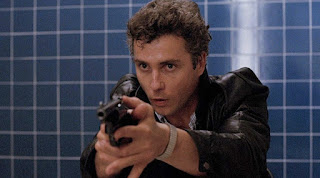
5. '90s trash – Sometimes you have to switch your brain off, and that decade, with its great faces, comforting stylistics and addiction to plotty nonsense, has provided some of my favourite evenings of escape, from Blue Steel to Miami Blues (pictured) to Wild Things to Hackers to Bird on a Wire to Shattered to Single White Female to yeah I mean it happened a lot.
***
Thanks for reading.
Showing posts with label William Friedkin. Show all posts
Friday, 27 December 2024
Wednesday, 29 December 2021
Review of the Year: Part 2 – Movies
Here's part two of my Review of the Year, focusing on films. Twenty 'discoveries', six movies re-appraised, five areas of obsession, and some bits and pieces of writing you might enjoy.
DISCOVERIES
... being films that I saw for the first time this year, and loved.
1. Playground (Laura Wandel, 2021) – The highlight of this year's London Film Festival, and a film that I got to rave about in Sight & Sound's annual poll. It's a staggering debut that begins like Être et avoir and ends like a prison movie. Seven-year-old Maya Vanderbeque is extraordinary as Nora, a sensitive young girl trying to negotiate the perilous world of big school, a place of obscure rules and incomprehensible moral codes. “When you help someone, it makes things worse,” she tells a teacher, in the film’s most profound and affecting scene. Shot in shallow focus, at child’s-eye level, it’s fantastically immersive, gripping and moving, the innocence and charm of its opening reels evaporating as Nora is sucked into a vortex of pain. But while it is a film without convenient illusions, and cursed with a memory of childhood’s cruelties and formative, guilt-ridden compromises, it is not merely human but humane, recalling the best of the Dardenne brothers, before a final shot that reminded me of Bicycle Thieves in its sincerity and pained, tear-stained hopefulness. A masterpiece, simply.
2. Princess Cyd (Stephen Cone, 2017) – What if Swimming Pool, but unutterably lovely? A warm and fuzzy film that deals deftly and deeply with faith, love and dead parents – all the good stuff, in fact. It’s unusually attuned to how people talk, and every scene is about something, both on the surface and beneath. Its rough edges, of which there are many, only add to the charm; the slight amateurishness in places serving to make it seem more real, as if it’s a docu-drama starring the people this all happened too. It reminded me, in turn of Housekeeping, Sciamma, Junebug and The Way, Way Back, and yet it’s not derivative in any way. And if its view of the world remains rosily and reassuringly liberal, it is also not uncomplicated. The scene in which Cyd and her aunt talk about sex is some kind of classic.
3. Leave Her to Heaven (John M. Stahl, 1945), in which we learn that Stahl created the Sirkian melodrama, Douglas Sirk just perfected it. While Sirk would go on to remake three of Stahl’s monochrome hits – including Imitation of Life and Magnificent Obsession – the look and feel of his classic cycle of ‘women’s pictures’ seems to have been drawn largely from this Technicolor noir. It’s one of the best-looking colour films I’ve ever seen: sumptuously shot by everyone’s favourite egomaniacal cinematographer, Leon Shamroy, who conjures a chic world of turquoise and cyan that spells d-e-a-t-h. After all, that’s the colour of Gene Tierney’s eyes – as well as the walls of the train carriage, the water on the lake, her gown, her slip-ons and the carpet on those fateful stairs – and her murderously clingy fatale just isn’t going to share new husband Cornel Wilde with anyone. It is a chilly, masterly film that kills the cute, sees perversity and psychopathy within love, and is head over heels with its villain’s face. Full review here.
4. Light Sleeper (Paul Schrader, 1992) – Just the right words, and just the right number of them, as Schrader reworks Taxi Driver again, but finds all kinds of different shadings. For long stretches, it’s his best film, with only the trimmings (particularly the synthetic work by Susan Sarandon and Victor Garber) and the ending dulling its edge. Dafoe was never half as good – as a drug dealer and ex-addict vaguely thinking he might reform – and both Dana Delany and Mary Beth Hurt are absolutely terrific in support. Schrader wraps the existentialism and surprising characterisation in the perfect ambience, helped by a typically apposite score. It’s a film about tormented masculinity, but more than that: its impact on others.
5. Matewan (John Sayles, 1987) – An incredible movie about labour, faith, violence, honour, pragmatism and loneliness, as union organiser Chris Cooper arrives in the town of Matewan to support striking miners, unwittingly but unavoidably setting in motion a chain of violence. It’s a film filled with extraordinary moments, both big and small: Cooper’s little smile at the dinner table and his Mennonites monologue; McDonnell gasping with grief on a porch swing; the procession that follows a killing: Fordian staging and howls of sorrow; and a simply jawdropping finale, Sayles staging a tragedy in the style of a Western gone mad. The film sags just now and then but it has six or seven remarkable scenes, and the feeling of truth. Full review.
6. Ceiling Zero (Howard Hawks, 1936) – In broad plot terms, this second collaboration between director Howard Hawks and star Jimmy Cagney is like every other aviation pic of the ‘30s, and yet what’s going on within that is completely new. You can see it as another film in the vein of MGM’s Night Flight, a rehearsal for writer Spig Wead’s Test Pilot, or a dry-run for Hawks’ Only Angels Have Wings but Cagney’s character – and characterisation – are quite unlike anything else in the genre, or in cinema at large. His Dizzy Davis is introduced as a hellraising ledge, a continuation of Cagney’s fast-talking Pre-Code heroes, who returns to the small commercial airport run by his mate Pat O’Brien and picks up where he left off – spewing wisecracks, pulling stunts and chasing women. But that’s all a trick on the audience: his pioneering pilot is a relic, a danger and almost a joke, a 34-year-old barnstormer with a dicky heart, adrift in a new world filling with college graduates. And how he plays it... cast as an inveterate shagger, he goes for the most unexpected option imaginable, giving the most gentle, sensitive and tactile performance of his career. I wrote a mini-essay on the film here.
7. Run for Cover (Nicholas Ray, 1955) – The second of three films from my extended investigations into the work of Jimmy Cagney. Released five months before the same director’s Rebel without a Cause, Run for Cover finds Nick Ray tiring of the young rebel character he had created in They Live by Night and Knock on Any Door, as everyman Jimmy Cagney invests heart and soul in self-pitying, no-good John Derek. If that seems unexpected, then so is everything else about this Western, from an opening anti-heist to a climactic non-shootout among Aztec ruins. Shot like an Eastwood film and plotted like a Boetticher, it’s resistant to the mythos of genre, with no interest in the idea of the legendary hero or the fastest gun. More thoughts here.
8. Shattered Glass (Billy Ray, 2003) takes 10 minutes to settle into anything even remotely resembling real life – or indeed the world of journalism. After that it is completely riveting, always holding back just enough, in terms of both its information and its emotion. Christensen, Azaria and Lynskey are all excellent, but Sarsgaard is just sensational, those four forming the most 2003 ensemble imaginable with help from Chloë Sevigny, Rosario Dawson and Steve Zahn. The film has surface flaws – including a few duff lines and some odd structural choices – but the central thrust of the story is perfect, and it has more to say about how the media (and therefore the modern world) works than just about any other movie of its type. Its intelligence and incisiveness are way above the ordinary.
9. To Live and Die in L.A. (William Friedkin, 1985) – A kinetic ‘80s actioner, with cop William Petersen looking to avenge his partner by bringing down psycho Willem Dafoe – using whatever means necessary. What I love most about the film is that it defines its genre and then defies it, offering the most heightened versions of each stock scene, before setting fire to the rulebook in its final reel. That mixture of the traditional and offbeat runs right through the movie. While the dialogue and score are agreeably mainstream, Friedkin’s instinctive handling is incredibly varied. The action sequences are pulsating (I’m not really a car chase guy, but man, that car chase). And yet other parts of it are shot almost like an art film. The extended counterfeiting montage seems amazingly fetishistic, like a Jacques Becker scene filmed by De Palma. The movie can seem meatheaded at times, glorifying the idea of tortured machismo as much as questioning it, but those shades of grey are partly what makes it so interesting. It is also unbelievably entertaining. Bonus thought: by 1995, synths and neon seemed the most impossibly dated elements of the '80s; now they feel more modern than everything else.
10. Remember My Name (Alan Rudolph, 1978) – This pretends to be a slasher and ends up as a noir, but it’s New Hollywood to its bones – provocative and deep, full of subtly striking shots, and lit by one of the best performances of its decade. Geraldine Chaplin is just sensational as the endlessly slippery central figure: brittle, malevolent, vulnerable, sad, with a Chaplinesque physicality and a gameplan we can only guess at. More here.
11. Rocks (Sarah Gavron, 2020) – They should make all films this good. That opening scene is so joyous and yet so alien, its characters the sort of people who sit opposite you on a train and then do your fucking head in for the next two hours. This gloriously empathetic movie allows you into their lives. It’s a film of resilience, desperation and joy, its imagery dotted with spare poetry, its hero all bunged up with unspoken anguish. I was really struck by the parallels with Les 400 Coups. Both begin with their characters symbolically distanced from the touristic image of the city, both end with them seeing the sea for the first time. And, in between, they steal; they run away; we see their parents as lost, childlike figures. If Girlhood is the most obvious parallel in terms of theme, and perhaps Half Nelson in terms of style, the Truffaut film felt like Rocks’ spiritual twin. That it can withstand such a comparison is about as high praise as I can dish out.
12. Under the Skin (Jonathan Glazer, 2013) is about sex and death, the very mundanity of its early dialogue scenes accentuating both the film’s eroticism and the fleeting nature of existence, before it begins to drown its men in black, abstract spaces. The movie’s main card is Scarlett, making an early swerve into low-budget weirdness, and it plays that perfectly. I have rarely seen a film as besotted with its star; I’m surprised that Glazer didn’t get both an Oscar and a restraining order. The camera is obsessed with every line of her face, obsessed with her eyes. And it’s through those eyes that we see the film, that we see Earth as an alien landscape, full of curious natural phenomena and simplistic beings. Under the skin, we are all animals, it says – some of us with vast compassion, some of us without even consent. Further thoughts here.
13. Dr. Jekyll and Mr. Hyde (Rouben Mamoulian, 1931) – A very Pre-Code Jekyll, with the doc using the pursuit of science as an excuse to relieve his unruly horn. It's really a film about toxic masculinity, with Fredric March a superficially sensitive 'good man' barely masking a monster, and Miriam Hopkins allowed to be bawdy and sensual and yet still an affecting victim. The scene in which she flees to Jekyll and pleads for his help, proposing a master-slave relationship that both tickles his fetish and provokes his self-loathing, is really something. Aside from one oddly stagey sequence near the end – March permitted to do some slow emoting on the floor in front of a piano – it's just a beautifully-directed film: so instinctive and inventive and alive. How the hell was Mamoulian three years ahead of everyone else in Hollywood?!
14. Minding the Gap (Bing Liu, 2018) – Skateboarding is an escape from the domestic violence that colours the lives of these young people. Two are victims, haunted by their childhoods. The other may well be a perpetrator, introduced as an outsider hero, but evincing the unstinting self-pity and hollow charm of the abuser. It cheats a little in its presentation of these three characters’ relationships with one another but attains a deep emotional truth in dealing with its central subject.
15. Kikujiro (Takeshi Kitano, 1999) – A warm, sweet, episodic and often very funny film about a gangster (Takeshi) escorting a little boy to his estranged mother – and back again. Takeshi's character is so fantastically and disarmingly rude – just a little boy himself, really, with little filter and no impulse control – which keeps the movie well away from genre clichés, and the ending works so well precisely because it doesn’t try to do too much. A mention too for that beautiful musical theme (even if it is slightly over-used), and the scene in which Kitano tries to get psychic tips on a series of bicycle races: a comic masterpiece.
16. The Lady in Red (Lewis Teague, 1979) – The last great Pre-Code film, 45 years after the fact, as farm girl Pamela Sue Martin is brutalised by a range of obsolete genres, en route to a dalliance with Dillinger. More here.
17. The Shooting (Monte Hellman, 1966) – Warren Oates plays a bounty hunter in this Ranown-style Western that morphs into a Reichardt movie that morphs into a New Hollywood movie that morphs into a hippie headfuck. It mixes existentialism, Old Testament dialogue and a blankly beautiful psycho in the Gene Tierney mould (Millie Perkins), who can’t really act but whose limitations drag the movie into interesting places: namely exploitation territory. Oates is characteristically sensational in a part that imbues him with the gruff humanism of a Van Heflin, while Nicholson plays the Henry Silva/James Coburn/James Best part from the Ranown cycle with his teeth, and a conspicuously modern sense of nihilism. This period of Nicholson’s career always reminds me of Bruce Dern’s incredulous utterance just three years later: “Jack Nicholson’s a movie star now?!” I’ve never seen a Western in which everyone gets so exhausted, man and beast. And only Meek’s Cutoff ever left you feeling satisfied with so few of the answers.
18. Night Moves (Arthur Penn, 1975) – An archetypal New Hollywood neo-noir, with useless PI Gene Hackman searching for a 16-year-old nymphomaniac (Melanie Griffith) – only it's him who's lost. Hackman is great, plastering a smile over every emotion until finally it's pulled away, topped only by Jennifer Warren, scintillating as the double-talking, hard-nippled fatale whose gnomic utterances are part of her weaponry. More here.
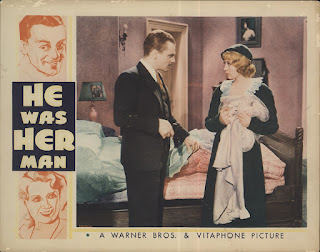
19. He Was Her Man (Lloyd Bacon, 1934) – A tender, erotic Pre-Code drama with soft-voiced safecracker Jimmy Cagney fleeing the hoods he just crossed, while escorting sad-eyed retired sex worker Joan Blondell to her wedding in an immigrant fishing community. It’s similar in plot terms to The Bride Came C.O.D., but very different in tone, with two astonishing central performances. Neither star was ever gentler nor more sensual. More here.
20. Petite Maman (Céline Sciamma, 2021) – A short, sweet, gently magical film about mother-daughter relationships, childhood and depression. It’s surprisingly cheery for a Sciamma movie, its suffering oblique and largely unseen, and perhaps for that reason can’t match the emotional impact of her other features. That small moment, though, where Marion says, “You didn’t invent my sadness”, is one of the most truthful and resonant evocations of mental illness (as I have experienced it) yet put on screen.
***
RE-APPRAISED: MOVIES I REVISITED, AND CHANGED MY MIND ABOUT
THREE UP:
1. The Last Seduction (John Dahl, 1994) – The greatest of the neo-noirs, an intensely funny black comedy in which city trash (and absolute psycho) Linda Fiorentino steals the cash from her husband’s drug deal and holes up in cow town, where she has oodles of malevolent fun manipulating the men around her. It exists not in a credible ‘90s but in a world where Double Indemnity was reality and we’ve just moved on a half-century. The venetian blinds still throw slatted shadows on the walls, and Fiorentino’s ‘backwards writing’ trick is surely a reference to the opening shot of The Maltese Falcon but people can now fuck, and say ‘fuck’, and there’s no censorship code demanding that being a fatale be fatal. Everything about it works: Steve Barancik's misanthropic script, the neat foreshadowing in Dahl's direction, and Fiorentino's for-the-ages performance, which might have won her an Oscar had they not shown the film on HBO first. Peter Berg has just the right amount of callow uncertainty as the patsy, and Bill Pullman and J. T. Walsh are impeccable weasels. I remembered it as a good movie; it's a whole lot more than that. A masterpiece, in fact, but – perhaps more importantly right now – incredible escapism.
2. Babe: Pig in the City (George Miller, 1998) – I remembered this as merely a collection of amusingly insane creative decisions but it is, in fact, a really great film. Babe goes to America in an attempt to save his farm, but instead ends up as a robbery victim, circus punchline and, ultimately, benevolent dictator of a flophouse for abandoned animals. The film takes a simply outrageous risk with its premise, proceeds to capture its city in a similar way to Amélie, and then breaks out seamlessly and stylishly into ingenious or balletic action, including one of the most terrifying and ultimately affecting set-pieces in American film. You'll know it when you see it. The story may be slight and even distractingly eccentric at times (Farmer Hoggett's wife is arrested for being a drug mule in the first 15 minutes, which is perhaps the most normal thing that happens in the film), but the execution is everything, with memorable characters, an undertow of heartbreaking melancholy, and a neat narrative style that surely inspired Pushing Daises. The gracefulness of Miller's camera, and his attendant use of space, is absolutely beguiling. As is the film's sense of originality. Remember originality in mainstream cinema? What was all that about?
3. Johnny Guitar (Nicholas Ray, 1955) – What a knockout: Nick Ray’s meticulous, super-stylised melodrama, got up in Western clothes and shot in garish Trucolor. I saw this as a teenager, when I wanted cool gunslingers and concessions to naturalism, and hated it, regarding the film’s champions as posers and pseuds. Now I’m a pseud myself and can revel in the theatrical choreography, sex-starved sadism and wild gender reversals: those overpowering women and emasculated men. Crawford is quite effective in martyr mode (though her character’s relationship with guns – and the men who draw them – complicates matters), but it’s Mercedes McCambridge who dominates, in her massive performance as the quiveringly cruel Emma, so terrified of her own desire that she starts hanging everyone in sight. Now and then the film falters, abruptly shifting tone with the help of deafening orchestral cues, but mostly it’s fascinating, with incredible use of sound – the characters dictating their own atmosphere like something out of Brecht – and a succession of spectacular pay-offs. In Borgnine’s dance of death and that bullet through the forehead it has two of the greatest flashes of action in Western history. And even its flaws tend to enhance the whole: that cheap and shonky Republic back-projection only adding to the feeling of unreality and claustrophobia. The next year, Ray made Run for Cover (see above), abandoning the strangulated, uptight atmosphere of this one, and toying with genre convention by providing a hero who was a rough reversal of Johnny Guitar: not a legendary gunman posing as a nobody, but a nobody mistaken for an outlaw.
THREE DOWN:
1. The Long Goodbye (Robert Altman, 1973) – A smug, purposefully shambling pseudo-noir, with Altman not so much deconstructing the PI genre as dismantling it. Since the genre was fine as it is, that exercise ends up being rather more fun for him than it is for us. More whinging here.
2. The Baxter (Michael Showalter, 2005) – Showalter’s performance as the title character is so pointlessly weird and artificial that it actively disengages you. Neither it nor his film quite dares to be a parody, and yet they're also fatally lacking in sincerity. I would love to see the movie that Michelle Williams thinks she’s in, as she is sensational.
3. The Ox-Bow Incident (William Wellman, 1943) – I’d forgotten how talky and didactic this is. I like Lamar Trotti as a screenwriter – his work on Judge Priest, Young Mr Lincoln and Yellow Sky is frequently exquisite – but if you’ve ever wanted to know what it would feel like to be bludgeoned to death by liberalism, then now’s your chance. More here.
***
OBSESSIONS
1. Well, Cagney, of course. An actor I loved when I first got into old movies as a teenager, then came to vaguely overlook and underrate. Seeing him electrify a couple of otherwise mundane pictures (Great Guy and 13 Rue Madeleine) back in 2019 reminded me how great he could be, and I properly remedied the situation this year, watching or rewatching a dozen of his films. The toughness I knew about, as well as his Lorre-ish blending of comedy and danger, but the beguiling softness I'd somehow missed. You can find all the reviews here, but these are the best of them: a salute to the neglected majesty of The Roaring Twenties, and more qualified appraisals of White Heat, The Public Enemy and Love Me or Leave Me.
2. André De Toth – I'm not sure he's a great director – and I suspect those who argue he is of a certain pseudiness – but I've certainly had a good time trying to decide. A kind of poor man's Preminger in comportment, De Toth had one eye, seven wives and 21 children (two of them biological), and made one unassailable masterpiece, a 1959 snow Western called The Day of the Outlaw. That one I was already familiar with (though that didn't prevent me from watching it again), but this tweet encouraged me to dig deeper, leading me to Riding Shotgun, as well as more disposable fare like The Bounty Hunter and Man in the Saddle. All three are led by Randolph Scott, perhaps the worst actor of his era, and the star of several of my favourite films.
3. Paul Schrader/William Friedkin – You know, sometimes the Film Bros are just correct.
4. Mae West – Another blind spot for me: I'd seen just one of Mae's movies before Indicator put out a lavish Blu-ray box-set. The pick of the bunch is I'm No Angel, and although the subsequent imposition of the Hays Code certainly curbed her fun (especially at first), West's control of her body, her talents and her destiny is still so refreshing. She didn't just carry these films, she wrote most of them, and frequently brooked the sexist cliches of '30s cinema, both behind the screen and up on it.
5. Holly Hunter – I don't care what it is, if Holly Hunter's in it, I'll watch it. The greatest actor of her generation, if only occasionally given the material to match. Watching Copycat, shortly after revisiting Broadcast News, made me realise that Holly Hunter talking in a choked whisper is the main thing cinema was invented for. She is absolutely staggering in that film – cast as a cop hunting a serial killer with help from boffin Sigourney Weaver, who got strangled by a psycho and hasn’t left the house for 13 months (which in the current climate doesn't seem that long). The movie is like the halfway point between Tightrope and In the Cut: a hybrid of misogynistic serial killer porn and inverted feminist thriller, and isn't great overall, but it's worth it a hundred times over for Hunter’s rich, multi-layered characterisation, a performance that knocks you sideways.
***
MY BEST WRITING ON FILM
1. My favourite piece to write this year was this one. Getting to tell the story of Ghost World on its 20th anniversary was a dream come true. As a teenager, the film struck me like lightning, and it's been hugely important to me ever since. Since I compressed a month of research into 1,800 words, here are a few deleted scenes:
3. Interviewing Benh Zeitlin for Total Film (August issue). (Link to preview)
4. Stray thoughts on Tiger Bay, a revolution in British film. (Link)
5. An American in Paris on the big screen. (Link)
6. Trash as social history: Pit Stop. (Link)
***
AND A COUPLE OF PIECES ABOUT OTHER THINGS
1. On returning to gigs, for the Guardian. (Link)
2. On the Manics' Holy Bible for Record Collector's special edition mag:
***
Thanks for reading. I'll leave you with one of the greatest pieces of dialogue ever written, by Jules Furthman for Hawks' Only Angels Have Wings, a film that I watch at least once a year: Bonnie Lee: You love him, don't you, Kid?
Kid Dabb: Yes, I guess I do.
Bonnie Lee: Why can't I love him the way you do? Why couldn't I sneer when he tries to kill himself, feel proud when he doesn't? Why couldn't I be there to meet him when he gets back? Why couldn't I... What do you do when he doesn't come back when you expect him to?
Kid Dabb: I go nuts.
DISCOVERIES
... being films that I saw for the first time this year, and loved.
1. Playground (Laura Wandel, 2021) – The highlight of this year's London Film Festival, and a film that I got to rave about in Sight & Sound's annual poll. It's a staggering debut that begins like Être et avoir and ends like a prison movie. Seven-year-old Maya Vanderbeque is extraordinary as Nora, a sensitive young girl trying to negotiate the perilous world of big school, a place of obscure rules and incomprehensible moral codes. “When you help someone, it makes things worse,” she tells a teacher, in the film’s most profound and affecting scene. Shot in shallow focus, at child’s-eye level, it’s fantastically immersive, gripping and moving, the innocence and charm of its opening reels evaporating as Nora is sucked into a vortex of pain. But while it is a film without convenient illusions, and cursed with a memory of childhood’s cruelties and formative, guilt-ridden compromises, it is not merely human but humane, recalling the best of the Dardenne brothers, before a final shot that reminded me of Bicycle Thieves in its sincerity and pained, tear-stained hopefulness. A masterpiece, simply.
2. Princess Cyd (Stephen Cone, 2017) – What if Swimming Pool, but unutterably lovely? A warm and fuzzy film that deals deftly and deeply with faith, love and dead parents – all the good stuff, in fact. It’s unusually attuned to how people talk, and every scene is about something, both on the surface and beneath. Its rough edges, of which there are many, only add to the charm; the slight amateurishness in places serving to make it seem more real, as if it’s a docu-drama starring the people this all happened too. It reminded me, in turn of Housekeeping, Sciamma, Junebug and The Way, Way Back, and yet it’s not derivative in any way. And if its view of the world remains rosily and reassuringly liberal, it is also not uncomplicated. The scene in which Cyd and her aunt talk about sex is some kind of classic.
3. Leave Her to Heaven (John M. Stahl, 1945), in which we learn that Stahl created the Sirkian melodrama, Douglas Sirk just perfected it. While Sirk would go on to remake three of Stahl’s monochrome hits – including Imitation of Life and Magnificent Obsession – the look and feel of his classic cycle of ‘women’s pictures’ seems to have been drawn largely from this Technicolor noir. It’s one of the best-looking colour films I’ve ever seen: sumptuously shot by everyone’s favourite egomaniacal cinematographer, Leon Shamroy, who conjures a chic world of turquoise and cyan that spells d-e-a-t-h. After all, that’s the colour of Gene Tierney’s eyes – as well as the walls of the train carriage, the water on the lake, her gown, her slip-ons and the carpet on those fateful stairs – and her murderously clingy fatale just isn’t going to share new husband Cornel Wilde with anyone. It is a chilly, masterly film that kills the cute, sees perversity and psychopathy within love, and is head over heels with its villain’s face. Full review here.
4. Light Sleeper (Paul Schrader, 1992) – Just the right words, and just the right number of them, as Schrader reworks Taxi Driver again, but finds all kinds of different shadings. For long stretches, it’s his best film, with only the trimmings (particularly the synthetic work by Susan Sarandon and Victor Garber) and the ending dulling its edge. Dafoe was never half as good – as a drug dealer and ex-addict vaguely thinking he might reform – and both Dana Delany and Mary Beth Hurt are absolutely terrific in support. Schrader wraps the existentialism and surprising characterisation in the perfect ambience, helped by a typically apposite score. It’s a film about tormented masculinity, but more than that: its impact on others.
5. Matewan (John Sayles, 1987) – An incredible movie about labour, faith, violence, honour, pragmatism and loneliness, as union organiser Chris Cooper arrives in the town of Matewan to support striking miners, unwittingly but unavoidably setting in motion a chain of violence. It’s a film filled with extraordinary moments, both big and small: Cooper’s little smile at the dinner table and his Mennonites monologue; McDonnell gasping with grief on a porch swing; the procession that follows a killing: Fordian staging and howls of sorrow; and a simply jawdropping finale, Sayles staging a tragedy in the style of a Western gone mad. The film sags just now and then but it has six or seven remarkable scenes, and the feeling of truth. Full review.
6. Ceiling Zero (Howard Hawks, 1936) – In broad plot terms, this second collaboration between director Howard Hawks and star Jimmy Cagney is like every other aviation pic of the ‘30s, and yet what’s going on within that is completely new. You can see it as another film in the vein of MGM’s Night Flight, a rehearsal for writer Spig Wead’s Test Pilot, or a dry-run for Hawks’ Only Angels Have Wings but Cagney’s character – and characterisation – are quite unlike anything else in the genre, or in cinema at large. His Dizzy Davis is introduced as a hellraising ledge, a continuation of Cagney’s fast-talking Pre-Code heroes, who returns to the small commercial airport run by his mate Pat O’Brien and picks up where he left off – spewing wisecracks, pulling stunts and chasing women. But that’s all a trick on the audience: his pioneering pilot is a relic, a danger and almost a joke, a 34-year-old barnstormer with a dicky heart, adrift in a new world filling with college graduates. And how he plays it... cast as an inveterate shagger, he goes for the most unexpected option imaginable, giving the most gentle, sensitive and tactile performance of his career. I wrote a mini-essay on the film here.
7. Run for Cover (Nicholas Ray, 1955) – The second of three films from my extended investigations into the work of Jimmy Cagney. Released five months before the same director’s Rebel without a Cause, Run for Cover finds Nick Ray tiring of the young rebel character he had created in They Live by Night and Knock on Any Door, as everyman Jimmy Cagney invests heart and soul in self-pitying, no-good John Derek. If that seems unexpected, then so is everything else about this Western, from an opening anti-heist to a climactic non-shootout among Aztec ruins. Shot like an Eastwood film and plotted like a Boetticher, it’s resistant to the mythos of genre, with no interest in the idea of the legendary hero or the fastest gun. More thoughts here.
8. Shattered Glass (Billy Ray, 2003) takes 10 minutes to settle into anything even remotely resembling real life – or indeed the world of journalism. After that it is completely riveting, always holding back just enough, in terms of both its information and its emotion. Christensen, Azaria and Lynskey are all excellent, but Sarsgaard is just sensational, those four forming the most 2003 ensemble imaginable with help from Chloë Sevigny, Rosario Dawson and Steve Zahn. The film has surface flaws – including a few duff lines and some odd structural choices – but the central thrust of the story is perfect, and it has more to say about how the media (and therefore the modern world) works than just about any other movie of its type. Its intelligence and incisiveness are way above the ordinary.
9. To Live and Die in L.A. (William Friedkin, 1985) – A kinetic ‘80s actioner, with cop William Petersen looking to avenge his partner by bringing down psycho Willem Dafoe – using whatever means necessary. What I love most about the film is that it defines its genre and then defies it, offering the most heightened versions of each stock scene, before setting fire to the rulebook in its final reel. That mixture of the traditional and offbeat runs right through the movie. While the dialogue and score are agreeably mainstream, Friedkin’s instinctive handling is incredibly varied. The action sequences are pulsating (I’m not really a car chase guy, but man, that car chase). And yet other parts of it are shot almost like an art film. The extended counterfeiting montage seems amazingly fetishistic, like a Jacques Becker scene filmed by De Palma. The movie can seem meatheaded at times, glorifying the idea of tortured machismo as much as questioning it, but those shades of grey are partly what makes it so interesting. It is also unbelievably entertaining. Bonus thought: by 1995, synths and neon seemed the most impossibly dated elements of the '80s; now they feel more modern than everything else.
10. Remember My Name (Alan Rudolph, 1978) – This pretends to be a slasher and ends up as a noir, but it’s New Hollywood to its bones – provocative and deep, full of subtly striking shots, and lit by one of the best performances of its decade. Geraldine Chaplin is just sensational as the endlessly slippery central figure: brittle, malevolent, vulnerable, sad, with a Chaplinesque physicality and a gameplan we can only guess at. More here.
11. Rocks (Sarah Gavron, 2020) – They should make all films this good. That opening scene is so joyous and yet so alien, its characters the sort of people who sit opposite you on a train and then do your fucking head in for the next two hours. This gloriously empathetic movie allows you into their lives. It’s a film of resilience, desperation and joy, its imagery dotted with spare poetry, its hero all bunged up with unspoken anguish. I was really struck by the parallels with Les 400 Coups. Both begin with their characters symbolically distanced from the touristic image of the city, both end with them seeing the sea for the first time. And, in between, they steal; they run away; we see their parents as lost, childlike figures. If Girlhood is the most obvious parallel in terms of theme, and perhaps Half Nelson in terms of style, the Truffaut film felt like Rocks’ spiritual twin. That it can withstand such a comparison is about as high praise as I can dish out.
12. Under the Skin (Jonathan Glazer, 2013) is about sex and death, the very mundanity of its early dialogue scenes accentuating both the film’s eroticism and the fleeting nature of existence, before it begins to drown its men in black, abstract spaces. The movie’s main card is Scarlett, making an early swerve into low-budget weirdness, and it plays that perfectly. I have rarely seen a film as besotted with its star; I’m surprised that Glazer didn’t get both an Oscar and a restraining order. The camera is obsessed with every line of her face, obsessed with her eyes. And it’s through those eyes that we see the film, that we see Earth as an alien landscape, full of curious natural phenomena and simplistic beings. Under the skin, we are all animals, it says – some of us with vast compassion, some of us without even consent. Further thoughts here.
13. Dr. Jekyll and Mr. Hyde (Rouben Mamoulian, 1931) – A very Pre-Code Jekyll, with the doc using the pursuit of science as an excuse to relieve his unruly horn. It's really a film about toxic masculinity, with Fredric March a superficially sensitive 'good man' barely masking a monster, and Miriam Hopkins allowed to be bawdy and sensual and yet still an affecting victim. The scene in which she flees to Jekyll and pleads for his help, proposing a master-slave relationship that both tickles his fetish and provokes his self-loathing, is really something. Aside from one oddly stagey sequence near the end – March permitted to do some slow emoting on the floor in front of a piano – it's just a beautifully-directed film: so instinctive and inventive and alive. How the hell was Mamoulian three years ahead of everyone else in Hollywood?!
14. Minding the Gap (Bing Liu, 2018) – Skateboarding is an escape from the domestic violence that colours the lives of these young people. Two are victims, haunted by their childhoods. The other may well be a perpetrator, introduced as an outsider hero, but evincing the unstinting self-pity and hollow charm of the abuser. It cheats a little in its presentation of these three characters’ relationships with one another but attains a deep emotional truth in dealing with its central subject.
15. Kikujiro (Takeshi Kitano, 1999) – A warm, sweet, episodic and often very funny film about a gangster (Takeshi) escorting a little boy to his estranged mother – and back again. Takeshi's character is so fantastically and disarmingly rude – just a little boy himself, really, with little filter and no impulse control – which keeps the movie well away from genre clichés, and the ending works so well precisely because it doesn’t try to do too much. A mention too for that beautiful musical theme (even if it is slightly over-used), and the scene in which Kitano tries to get psychic tips on a series of bicycle races: a comic masterpiece.
16. The Lady in Red (Lewis Teague, 1979) – The last great Pre-Code film, 45 years after the fact, as farm girl Pamela Sue Martin is brutalised by a range of obsolete genres, en route to a dalliance with Dillinger. More here.
17. The Shooting (Monte Hellman, 1966) – Warren Oates plays a bounty hunter in this Ranown-style Western that morphs into a Reichardt movie that morphs into a New Hollywood movie that morphs into a hippie headfuck. It mixes existentialism, Old Testament dialogue and a blankly beautiful psycho in the Gene Tierney mould (Millie Perkins), who can’t really act but whose limitations drag the movie into interesting places: namely exploitation territory. Oates is characteristically sensational in a part that imbues him with the gruff humanism of a Van Heflin, while Nicholson plays the Henry Silva/James Coburn/James Best part from the Ranown cycle with his teeth, and a conspicuously modern sense of nihilism. This period of Nicholson’s career always reminds me of Bruce Dern’s incredulous utterance just three years later: “Jack Nicholson’s a movie star now?!” I’ve never seen a Western in which everyone gets so exhausted, man and beast. And only Meek’s Cutoff ever left you feeling satisfied with so few of the answers.
18. Night Moves (Arthur Penn, 1975) – An archetypal New Hollywood neo-noir, with useless PI Gene Hackman searching for a 16-year-old nymphomaniac (Melanie Griffith) – only it's him who's lost. Hackman is great, plastering a smile over every emotion until finally it's pulled away, topped only by Jennifer Warren, scintillating as the double-talking, hard-nippled fatale whose gnomic utterances are part of her weaponry. More here.
19. He Was Her Man (Lloyd Bacon, 1934) – A tender, erotic Pre-Code drama with soft-voiced safecracker Jimmy Cagney fleeing the hoods he just crossed, while escorting sad-eyed retired sex worker Joan Blondell to her wedding in an immigrant fishing community. It’s similar in plot terms to The Bride Came C.O.D., but very different in tone, with two astonishing central performances. Neither star was ever gentler nor more sensual. More here.
20. Petite Maman (Céline Sciamma, 2021) – A short, sweet, gently magical film about mother-daughter relationships, childhood and depression. It’s surprisingly cheery for a Sciamma movie, its suffering oblique and largely unseen, and perhaps for that reason can’t match the emotional impact of her other features. That small moment, though, where Marion says, “You didn’t invent my sadness”, is one of the most truthful and resonant evocations of mental illness (as I have experienced it) yet put on screen.
***
RE-APPRAISED: MOVIES I REVISITED, AND CHANGED MY MIND ABOUT
THREE UP:
1. The Last Seduction (John Dahl, 1994) – The greatest of the neo-noirs, an intensely funny black comedy in which city trash (and absolute psycho) Linda Fiorentino steals the cash from her husband’s drug deal and holes up in cow town, where she has oodles of malevolent fun manipulating the men around her. It exists not in a credible ‘90s but in a world where Double Indemnity was reality and we’ve just moved on a half-century. The venetian blinds still throw slatted shadows on the walls, and Fiorentino’s ‘backwards writing’ trick is surely a reference to the opening shot of The Maltese Falcon but people can now fuck, and say ‘fuck’, and there’s no censorship code demanding that being a fatale be fatal. Everything about it works: Steve Barancik's misanthropic script, the neat foreshadowing in Dahl's direction, and Fiorentino's for-the-ages performance, which might have won her an Oscar had they not shown the film on HBO first. Peter Berg has just the right amount of callow uncertainty as the patsy, and Bill Pullman and J. T. Walsh are impeccable weasels. I remembered it as a good movie; it's a whole lot more than that. A masterpiece, in fact, but – perhaps more importantly right now – incredible escapism.
2. Babe: Pig in the City (George Miller, 1998) – I remembered this as merely a collection of amusingly insane creative decisions but it is, in fact, a really great film. Babe goes to America in an attempt to save his farm, but instead ends up as a robbery victim, circus punchline and, ultimately, benevolent dictator of a flophouse for abandoned animals. The film takes a simply outrageous risk with its premise, proceeds to capture its city in a similar way to Amélie, and then breaks out seamlessly and stylishly into ingenious or balletic action, including one of the most terrifying and ultimately affecting set-pieces in American film. You'll know it when you see it. The story may be slight and even distractingly eccentric at times (Farmer Hoggett's wife is arrested for being a drug mule in the first 15 minutes, which is perhaps the most normal thing that happens in the film), but the execution is everything, with memorable characters, an undertow of heartbreaking melancholy, and a neat narrative style that surely inspired Pushing Daises. The gracefulness of Miller's camera, and his attendant use of space, is absolutely beguiling. As is the film's sense of originality. Remember originality in mainstream cinema? What was all that about?
3. Johnny Guitar (Nicholas Ray, 1955) – What a knockout: Nick Ray’s meticulous, super-stylised melodrama, got up in Western clothes and shot in garish Trucolor. I saw this as a teenager, when I wanted cool gunslingers and concessions to naturalism, and hated it, regarding the film’s champions as posers and pseuds. Now I’m a pseud myself and can revel in the theatrical choreography, sex-starved sadism and wild gender reversals: those overpowering women and emasculated men. Crawford is quite effective in martyr mode (though her character’s relationship with guns – and the men who draw them – complicates matters), but it’s Mercedes McCambridge who dominates, in her massive performance as the quiveringly cruel Emma, so terrified of her own desire that she starts hanging everyone in sight. Now and then the film falters, abruptly shifting tone with the help of deafening orchestral cues, but mostly it’s fascinating, with incredible use of sound – the characters dictating their own atmosphere like something out of Brecht – and a succession of spectacular pay-offs. In Borgnine’s dance of death and that bullet through the forehead it has two of the greatest flashes of action in Western history. And even its flaws tend to enhance the whole: that cheap and shonky Republic back-projection only adding to the feeling of unreality and claustrophobia. The next year, Ray made Run for Cover (see above), abandoning the strangulated, uptight atmosphere of this one, and toying with genre convention by providing a hero who was a rough reversal of Johnny Guitar: not a legendary gunman posing as a nobody, but a nobody mistaken for an outlaw.
THREE DOWN:
1. The Long Goodbye (Robert Altman, 1973) – A smug, purposefully shambling pseudo-noir, with Altman not so much deconstructing the PI genre as dismantling it. Since the genre was fine as it is, that exercise ends up being rather more fun for him than it is for us. More whinging here.
2. The Baxter (Michael Showalter, 2005) – Showalter’s performance as the title character is so pointlessly weird and artificial that it actively disengages you. Neither it nor his film quite dares to be a parody, and yet they're also fatally lacking in sincerity. I would love to see the movie that Michelle Williams thinks she’s in, as she is sensational.
3. The Ox-Bow Incident (William Wellman, 1943) – I’d forgotten how talky and didactic this is. I like Lamar Trotti as a screenwriter – his work on Judge Priest, Young Mr Lincoln and Yellow Sky is frequently exquisite – but if you’ve ever wanted to know what it would feel like to be bludgeoned to death by liberalism, then now’s your chance. More here.
***
OBSESSIONS
1. Well, Cagney, of course. An actor I loved when I first got into old movies as a teenager, then came to vaguely overlook and underrate. Seeing him electrify a couple of otherwise mundane pictures (Great Guy and 13 Rue Madeleine) back in 2019 reminded me how great he could be, and I properly remedied the situation this year, watching or rewatching a dozen of his films. The toughness I knew about, as well as his Lorre-ish blending of comedy and danger, but the beguiling softness I'd somehow missed. You can find all the reviews here, but these are the best of them: a salute to the neglected majesty of The Roaring Twenties, and more qualified appraisals of White Heat, The Public Enemy and Love Me or Leave Me.
2. André De Toth – I'm not sure he's a great director – and I suspect those who argue he is of a certain pseudiness – but I've certainly had a good time trying to decide. A kind of poor man's Preminger in comportment, De Toth had one eye, seven wives and 21 children (two of them biological), and made one unassailable masterpiece, a 1959 snow Western called The Day of the Outlaw. That one I was already familiar with (though that didn't prevent me from watching it again), but this tweet encouraged me to dig deeper, leading me to Riding Shotgun, as well as more disposable fare like The Bounty Hunter and Man in the Saddle. All three are led by Randolph Scott, perhaps the worst actor of his era, and the star of several of my favourite films.
3. Paul Schrader/William Friedkin – You know, sometimes the Film Bros are just correct.
4. Mae West – Another blind spot for me: I'd seen just one of Mae's movies before Indicator put out a lavish Blu-ray box-set. The pick of the bunch is I'm No Angel, and although the subsequent imposition of the Hays Code certainly curbed her fun (especially at first), West's control of her body, her talents and her destiny is still so refreshing. She didn't just carry these films, she wrote most of them, and frequently brooked the sexist cliches of '30s cinema, both behind the screen and up on it.
5. Holly Hunter – I don't care what it is, if Holly Hunter's in it, I'll watch it. The greatest actor of her generation, if only occasionally given the material to match. Watching Copycat, shortly after revisiting Broadcast News, made me realise that Holly Hunter talking in a choked whisper is the main thing cinema was invented for. She is absolutely staggering in that film – cast as a cop hunting a serial killer with help from boffin Sigourney Weaver, who got strangled by a psycho and hasn’t left the house for 13 months (which in the current climate doesn't seem that long). The movie is like the halfway point between Tightrope and In the Cut: a hybrid of misogynistic serial killer porn and inverted feminist thriller, and isn't great overall, but it's worth it a hundred times over for Hunter’s rich, multi-layered characterisation, a performance that knocks you sideways.
***
MY BEST WRITING ON FILM
1. My favourite piece to write this year was this one. Getting to tell the story of Ghost World on its 20th anniversary was a dream come true. As a teenager, the film struck me like lightning, and it's been hugely important to me ever since. Since I compressed a month of research into 1,800 words, here are a few deleted scenes:
- Enid’s trendsetting look, worked on by Birch and costume designer Mary Zophres, wasn’t purely for show. “It was a great way to express Enid’s mood from day to day,” says Birch, “because she was so stoic and almost monotone in a lot of her expressions and delivery – with the sarcasm and everything – so it really gave you a glimpse of her inner world.”2. A spirited defence of Return to Oz, for the Guardian. (Link)
- Birch on the age-gap relationship: “The only one in control of that relationship was Enid. She’s the driving force in finding him, in building a connection with him, in trying him out in a romantic capacity and then making the decision to go. So there is no power imbalance, other than that she’s got all the power, but doesn’t know what to do with it.”
- Zwigoff on working with the Weinsteins. “United Artists, MGM and Granada pretty much left me alone, for which I’m ever grateful. It was the opposite of my next film, Bad Santa, which was a constant series of battles with the Weinsteins. I refused to let them ruin that film after I’d put so much work into it. I managed to stubbornly navigate around most of their bad ideas, but I’d say that experience took about 10 years off my life. They deserve prison for that alone.”
- Joe Talbot on Ghost World’s ambivalence: “It doesn’t feel like it’s ever judgemental towards its characters. Sometimes directors end up wagging our finger at our characters, to show our own moral superiority, because we’re afraid that we’ll be judged by the flaws of the characters we’ve created. And I really loved Ghost World’s ability to hover above that fear and that judgement.”
- Illeana Douglas made frequent pleas to Zwigoff for Seymour to end up with her character, Roberta. Those fell on deaf ears.
- What does Birch think Enid would be railing against today? “She’d probably be pissed off about everything,” she says. “As much as I am.” Zwigoff says the character would still have “mindless consumerism” in her sights, “and maybe greed, and religion”. Does he think consumerism has worsened since 2001? “Well, you can now buy a $75 ‘vagina’ candle at Gwyneth Paltrow’s Goop website,” he says. “That’s the ‘high-end’ racket. The low-end grifts are more like the Dollar Menu at McDonald’s. But they’re all trying to scramble for more money for which they would eagerly trade off say, the Amazon rainforest for a few more pennies of profit.”
3. Interviewing Benh Zeitlin for Total Film (August issue). (Link to preview)
4. Stray thoughts on Tiger Bay, a revolution in British film. (Link)
5. An American in Paris on the big screen. (Link)
6. Trash as social history: Pit Stop. (Link)
***
AND A COUPLE OF PIECES ABOUT OTHER THINGS
1. On returning to gigs, for the Guardian. (Link)
2. On the Manics' Holy Bible for Record Collector's special edition mag:
***
Thanks for reading. I'll leave you with one of the greatest pieces of dialogue ever written, by Jules Furthman for Hawks' Only Angels Have Wings, a film that I watch at least once a year: Bonnie Lee: You love him, don't you, Kid?
Kid Dabb: Yes, I guess I do.
Bonnie Lee: Why can't I love him the way you do? Why couldn't I sneer when he tries to kill himself, feel proud when he doesn't? Why couldn't I be there to meet him when he gets back? Why couldn't I... What do you do when he doesn't come back when you expect him to?
Kid Dabb: I go nuts.
Labels:
Babe: Pig in the City,
Best Movies,
cinema,
film,
Holly Hunter,
James Cagney,
Laura Wandel,
movies,
Playground,
Princess Cyd,
recommendations,
Review of 2021,
William Friedkin
Location:
London, UK
Subscribe to:
Posts (Atom)