Showing posts with label best gigs. Show all posts

Tuesday, 24 December 2019

Review of 2019: Part 2 – Live

Part 1 was about books. Part 2 is about events and tbh it never gets as many hits, as you can famously read a book that someone read last year, but you cannot attend a gig in the past.


Gigs of the year:

When I wasn't reading, writing, working or being stabbed in the kidney by that surgeon I mentioned, I've mostly been at gigs. I've seen Knopfler, Clapton, Mariah Carey, the Lake Poets, Sheku Kanneh-Mason, Michael Giacchino and three nights of film scores at the Royal Albert Hall, old favourites David Ford, June Tabor (with Oyster Band), Bjӧrk and Kate Rusby, thrilled to Topic Records' 80th Anniversary show – which introduced me to Emily Portman and Lisa Knapp – and celebrated the long-awaited return of folk hero Ruth Notman, who's been busy in the interim training to become a nurse. And then there was that weird event where I went to an 'immersive screening' of Ghost World, and found myself watching more than an hour of ragtime jazz performed by director Terry Zwigoff and mad sexist Robert Crumb, punctuated by rants about political correctness. Yay!

But here are the 10 gigs that meant the most to me in 2019:


10. The Milk Carton Kids (Barbican) – I’ve got a bit of a thing about Inside Llewyn Davis, the wintry film in which the Coens brothers shrug off their arch, aloof smugness, and burrow into the psyche of their sullen anti-hero, a titular traditional singer wandering freezing Greenwich Village as the folk revival approaches. I can only play four songs on the guitar and three of them are from this film. So when I heard there was a spin-off concert film, Another Day, Another Time, I thought I better see it. And that's how I discovered The Milk Carton Kids, and a lot more besides. The duo's deceptively complex songs at first seemed frozen in time and genre – almost a pastiche of early Simon and Garfunkel – but over time they've diversified and gone deeper, pain and fear bringing not weariness but grace. Their biggest show so far, at London's Barbican, was a fast-paced treat mixing frenetic flatpicking, heartbreaking close harmony and the best between-songs badinage since the Manics stopped saying awful things for attention.


Yes she was, and yes I did.

9. Ariana Grande (The O2) – I liked Ariana Grande, the gay-friendly feminist who became a hero to my home city of Manchester, but I can’t say I liked her music. Then a friend played me ‘Into You’, that intoxicating blast of dance-y horniness, followed by ‘thank u, next’, the sad, wise title-track of her fifth album, and I stopped being a stupid dick who doesn’t know anything. A lot of rubbish gets talked about middle-aged men who spend more than a hundred pounds to go and see Ariana Grande live by themselves, but to me I am a legend. While the O2 isn’t the best place to see any kind of show – it’s essentially a warehouse in which the atmosphere simply evaporates, and everything is just too far away – Grande is a great performer, and when she isn’t also dancing (which takes the edge off the majesty), she has an insane set of pipes. Some songs I loved already (‘Into You’ was spectacular, ‘Fake Smile’ exuberantly misanthropic), and others came to life in concert: the knockabout ‘Be Alright’, the desperate ‘Breathin’’, though the numbers utilising the walkway that looped towards our section of the arena both raised the spirits and underlined just how good it would be to see Grande in a smaller and less antiseptic space. As she ripped through ‘thank u, next’ for the climax, she and the dancers skipped around it, waving Pride flags.


Lily! Martha! Certainly-one-of-the-Thompsons,-not-sure-which-one!

8. Rufus and Martha Wainwright: A Not So Silent Night (Southbank Centre) – The siblings in London together at Christmas for the first time in a decade. The older generation may no longer want to travel, but their own was out in force, including half-sister Lucy Wainwright Roche and their cousin (and personal favourite), the marvellously-monikered Lily Lanken. This all used to be about roots music and family, but Rufus is now the artistic brains behind these jamborees, and he’s made the whole thing so incredibly gay. It’s delightful. Among the guests were Dan Gillespie Sells, Neil Tennant and Sophie Ellis-Bextor, alongside various members of the inter-connected Thompson clan, Guy Garvey and Jenni Muldaur. The show was intended to celebrate the festive season but also the work of Kate McGarrigle, the matriarch who made her last public appearance at the previous London show in 2009. Being in a packed house watching Ellis-Bextor act her way through Kate and Anna McGarrigle’s ‘First Born’, a deep cut from their second record and a song that’s very personal to me, was a surreal experience – as was hearing a second live version of ‘Who Knows Where the Time Goes’ this year; that’s the signature song of my musical idol, Sandy Denny. Lucy Wainwright Roche’s vocal here was better than Olivia Chaney’s, but she didn’t have half of Fairport behind her. Chrissie Hynde’s contributions may have been tuneless, but the rest of the show was scintillating, especially Martha’s Janis Joplin-esque ‘Mary Had a Baby’, her duet with Lanken on Jackson Browne’s left-wing atheist carol, ‘Rebel Jesus’, and Rufus’s ‘O Holy Night’, sung a capella and in French. I went in as a Rufus agnostic, but left as a fan. My affection for Martha Wainwright, you can take as a given. This was just about the perfect Christmas evening.


7. Rhiannon Giddens (Southbank Centre) – An extravagantly gifted performer, whose vocal texture, range, expression and timing is of the sort that most people can only dream about. This show saw her collaborating with Sicilian multi-instrumentalist Francesco Turrisi, his self-deprecating patter and exceptional tambourine solos providing the perfect counterpoint to her spiky lectures on African-American experience and full-lunged outpourings of empathy and collective grief. The shade is balanced by the light. When you know what it’s about, ‘At the Purchaser’s Option’ is as gruelling as beautiful music can ever get, but her uproarious cover of Ethel Waters’ ‘Underneath Our Harlem Moon’, which reinstates the author’s original, unsanitised lyrics, is an uproarious, swinging showstopper, and the Celtic folk of ‘Molly Brannigan’ showcases the facility with a quickening vocal line that made me fall in love with her in the first place.


6. Johnny Marr (Southbank Centre) – I grew up as a huge Smiths fan (thanks Dad), but it had never really occurred to me that I might go to see Johnny Marr live. Then I heard him on the Adam Buxton podcast, asked for his book for Christmas, and ended up buying a ticket to his Meltdown show on the night itself. An encore of ‘Last Night I Dreamt That Somebody Loved Me’ and ‘There Is a Light That Never Goes Out’ will do me, though I was surprised how much I liked his solo stuff – especially the obscenely catchy ‘Easy Money’. I think this show gave me more simple pleasure than any other this year. And Marr himself is so easy to like, which isn’t something one can necessarily say about all the members of the Morrissey-Marr songwriting partnership.


5. 33 Revolutions Per Minute (JW3) – This was such a magical night: an event inspired by Dorian Lynskey’s history of protest songs (which I wrote about here), featuring a gallery of gargantuan contemporary talents. Ayanna Witter-Johnson got the biggest ovation of the evening for her captivating ‘Redemption Song’ – accompanying herself on stand-up cello – but it was one of a string of highlights, from Kathryn Williams’ clear-throated cover of ‘American Tune’, to David Ford’s explosive takes on ‘John Walker’s Blues’ and the ‘Fixin’-to-Die Rag’, and a climactic, unexpected and thoroughly incongruous ‘Up the Junction’ from a very late Chris Difford. It was that kind of night. A few months later, I saw Williams hosting a Daylight Music show at Union Chapel, she and Ford doing a few numbers of their own, and spotlighting various protégés, including Phil Langran, whose ‘Time’s Dark Wing’ is simply one of the finest songs I’ve ever heard.


4. Richard Thompson: 70th birthday party (Royal Albert Hall) – A once-in-a-lifetime show, for those who incline towards folk, with virtually every existing luminary of the British scene coming to pay homage. It’s an embarrassment of riches, and an eclectic one, with guests typically doing one song of theirs and then one song of his. Surprises include Bob Mould’s chugging, punkish ‘Turning of the Tide’ (above), Thompson, his son Teddy and Maddy Prior duetting on a heightened ‘Grey Funnel Line’, and Loudon Wainwright’s ebullient ‘Swimming Song’, alongside more expected treats, like the birthday boy’s own ‘Beeswing’, delivered with a delicacy befitting its title. There’s also Kate Rusby returning to ‘Withered and Died’, half of Fairport Convention’s classic Liege & Lief line-up backing Olivia Chaney on ‘Who Knows Where the Time Goes’, and Harry Shearer alienating the half of the audience who clearly haven’t seen Spinal Tap with an in-character (and interminable), ‘She Puts the Bitch in Obituary’.


3. Bob Dylan; support: Neil Young, Laura Marling and Cat Power (Hyde Park) – At a time when seeing Bob had begun to feel more like a duty than a treat, he came roaring back. Full review here.


2. Big Thief (The Roundhouse) – In January, I saw Adrianne Lenker on-stage in a church (London’s Union Chapel), performing wistful acoustic folk ballads behind a thatch of fringe, murmuring awkwardly through the void in her teeth. Three months later, she’s had a buzzcut, got a replacement tooth and is just screaming, amid a maelstrom of noise in a beer-soaked Roundhouse. This has been a big year for Big Thief, the most exciting band on the planet, ending with two albums in most ‘best of’ lists, and this was their biggest show to date. They can do it all, and at the Roundhouse they did: the hush and whimsy of ‘Spud Infinity’, the apocalyptic squall of ‘Not’ (the year’s best song?), the pure release of ‘Masterpiece’. No-one is writing more interesting material than Lenker’s tortured, introspective, pastoral alt-folk, nor delivering it with such exquisite abandon. The band, though, are not merely a vehicle for one woman’s genius, there’s a chemistry there: the fleet-fingered flat-picking of crooked-grinned Buck Meek, James Krivchenia’s lolloping, long-armed beats, Max Oleartchik... playing the bass (look, I don’t know much about music). I saw them again at Bush Hall in October, premiering new record Two Hands, and it was another experience entirely: every bit as vital, the band still figuring out the songs, groping towards greatness and frequently finding it. Next year I’m going to follow them on tour.


1. Robyn (Alexandra Palace) – Total catharsis, Robyn-style: the sexiest, saddest songs in the pop canon, battered across with the ultimate in quicksilver charisma, clad in white knee-length boots. I’ve never seen a performer with greater stage presence, a firmer grasp of a show’s necessary theatricality, or better dance moves. During ‘Dancing on My Own’, a celebration of jealous, heartbroken melancholia that represents some kind of peak, 10,000 voices join hers, and Robyn bursts into tears. Then it’s a wall of noise – an outpouring of love, and gratitude, for the returning queen of chilly Swedish electro-pop, doing her first UK shows in nine years – that goes on and on and on.

***

Theatre of the year...

... is probably a stretch, as I only saw 10 plays, and there were definitely more than 10 plays out there. Because I'm extremely clever, I didn't end up seeing anything I didn't broadly enjoy, though my tolerance for the annoying affectations of musical theatre (as opposed to the most naturalistic and intimate musical film) seems to be shrinking. While Come From Away (Phoenix Theatre) built to a rather lovely climax, fashioning something largely feelgood out of 9/11, Dear Evan Hansen (Noel Coward Theatre) dealt with its own subject – teen suicide – in a less than humane, intelligent way, though it had some fine moments. Hansard (National Theatre) broke no new ground, and largely recycled its audience's own liberal prejudices, though it was highly entertaining and extremely well-acted by Alex Jennings and Lindsay Duncan. The Lehman Trilogy (Piccadilly Theatre) went the other way, struggling to get ahold of its themes across three theatrically inventive but rather exhausting hours.

These were my favourites:


6. Anna (National Theatre) – Ella Hickson, who wrote the best play of 2018, returned with this gimmicky thriller, which was about itself and not much else. The audience was complicit in the surveillance state of East Germany, strapping on headphones and hearing only what the heroine heard, as she tried to survive in an atmosphere of spiralling paranoia (and, if we're being very literal about it, in a soundproof box with the rest of the cast). After The Writer, it felt like a slight comedown, but it was neatly conceived and made the most of its quirk, with some neat twists and a couple of great jump scares.


5. Present Laughter (The Old Vic) – Simply Noel Coward done well, with Andrew Scott having the time of his life as a vain, selfish, philandering actor who's making his entourage's life hell in '30s London. It wasn't deep, but it was riotously funny.


4. All My Sons (The Old Vic) – Classy adaptation of the early Arthur Miller play, with – and please excuse the banality – one of the handsomest sets I've ever seen: a quietly idyllic back garden in a small American town. Jenna Coleman couldn't hold her own among a heavy-hitting cast, and Bill Pullman couldn't project to the cheap seats, but he, Sally Field and Colin Morgan captured Miller's anger and anguish – tragedy on an intimate but epic scale.


3. The Starry Messenger (Wyndham's Theatre) – Space, adultery and adult education: this was none-more-Lonergan, with an exceptional performance from Matthew Broderick as a frustrated science lecturer trapped by the quietly festering American Dream. How it can be that, and make me laugh as hard as it did, is some achievement. Elizabeth McGovern, also billed above the title, had little to do until the final act.


2. A Very Expensive Poison (The Old Vic) – Lucy Prebble returned with this freewheeling, meta-textual romp through the Litvinenko tragedy – where, as with Dylan's 'Lonesome Death of Hattie Carroll', perhaps the greatest tragedy happened after the killing. The material positively swaggers, throwing everything into the mix, but the right everything, at the right time, and no-one I can think of, in any medium, writes better off-kilter one-liners. Reece Shearsmith is perfect as a supercilious, bombastic and seductive Putin, at one point hanging out of a box to tell everyone to go home, as the story is clearly over.


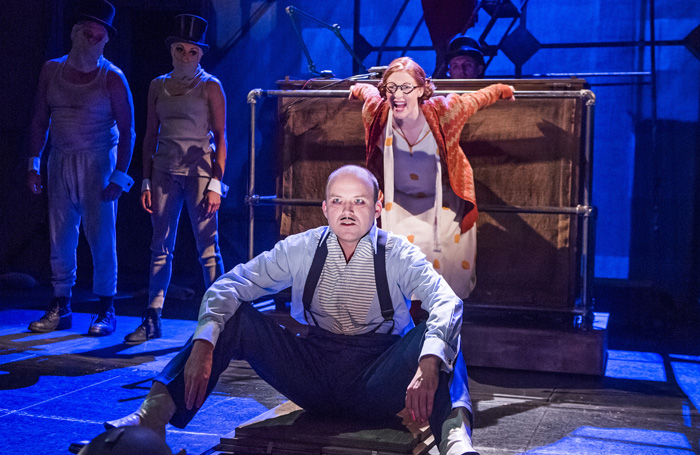
1. Rosmersholm (Duke of York's Theatre) – Ibsen at his bleakest and most pointed, as influential former cleric Rosmer (Tom Burke) strives to understand his relationship with free-spirited Rebecca (Hayley Atwell) – and reconcile his friendship with smooth-talking hatemonger Kroll (Giles Terera) – as an election approaches, and the vultures of the press circle. This electrifying, overpowering adaptation saw writer Duncan Macmillan tease out the parallels with our current national binfire, played out by a note-perfect cast amid the light shafts and dust motes of an ancestral home that boxes in its characters as vividly as their political and personal dilemmas.

***

Other live stuff/exhibitions:


My favourite comedy set of the year was Stewart Lee's new show: Snowflake/Tornado, a succession of inspired, airtight routines about liberalism, Alan Bennett, Netflix, Fleabag, anti-PC campaigners and 'saying the unsayable', the last of which consists of him gurning, spitting, sputtering and striving to make noises for literally ten minutes. This show might be the best thing he's ever done. It's certainly the hardest I've laughed this year. He is simply on a different level to almost any other political comic working today, and probably the second funniest person in his house.

James Acaster's Cold Lasagna Hate Myself 1999 was often brilliant, but genuinely required a better working knowledge of shit TV than I've got to hand. It was also great to see Bassem Youssef doing his first English-language show, and to watch Daniel Kitson confounding a good portion of his audience by pretending for quite some time that his set would consist of him reading out a cabinet's worth of index cards listing his possessions. It didn't. Discovery of the year was Sarah Keyworth, who somehow emerged triumphant from a showcase at Union Chapel also featuring Sara Pascoe, Rose Matafeo and Phil Wang (and Arthur Smith).


And at work I got to be involved with Letters Live, one of the best nights of the year (even when Rory Stewart resigned from the Tory Party on stage and I had to work until 1am). Louise Brealey, pictured, – who can pack so much emotion, so subtly, into any material – Chimamanda Ngozi Adichie and (much to my surprise) Alan Carr were the stand-out stars.

Across the road, Dr Matthew Sweet, Pamela Hutchinson and David Benedict probed the Warner Bros canon in a lovely Proms Plus talk, and at the BFI Malcolm McDowell provided some insights and lols that turned out to be rather well-rehearsed when I decided to venture onto YouTube in search of further #content.


My favourite exhibition of the year was also the smallest, and it was, of course, your penis, a tiny addendum to the Design Museum's gargantuan (and impressive) Stanley Kubrick: The Exhibition, which collected some of his stunning news photography for Look Magazine. Visual art-themed jaunts spotlighted work by Matisse, William Blake, Abram Games and Eva Hesse – while the IWM's oddly disjointed Making a New World delved into WWI from a few odd and interesting angles – but Olafur Eliasson: In real life at the Tate Modern (above) was so great because it was so unlike anything else I'd been to, with a rainbow in one room and a world of coloured fog in another.

***

Thanks for reading. I'll chat about films a bit in the next (and final) part.

Wednesday, 28 December 2016

Review of 2016: Part 2 – Live

Hello again. Thanks to those of you who read the first part of my review of the year, it means a lot to me, genuinely. And thanks especially to those who shared it on Twitter and Facebook.

Part 1 was about movies, which is when you go into a darkened room and watch a filmed record of people pretending to be other people for about two hours at a time. This second part will cover gigs, exhibitions and the theatre, the last two of which have become an increasing part of my life since I moved to That London, which for all of its many flaws – and the unacceptability of this being the case – dwarfs the rest of Britain when it comes to cultural opportunities. Unless you would care for some more ado, here it is:

THEATRE

5. Sunset Blvd. (London Coliseum)

I saw this whilst in the midst of personal trauma and, despite a few flaws, it enraptured and obsessed me. It's an Andrew Lloyd Webber adaptation of Billy Wilder's Hollywood nightmare, brought to the home of the English National Opera with a bare set, a 48-piece orchestra and Glenn Close in the lead (on the rare occasions when she wasn't indisposed). I ended up seeing it twice, and the second time was a more arresting experience, thanks to a front row seat and a stirring, moving performance from Close's big-voiced understudy, Ria Jones, whose performance I much preferred. Oddly, the things I liked most about it, though, were elements that wouldn't necessarily come to mind when you uttered the title: the lush melody of Too Much in Love to Care, the explosions of inventively choreographed dance, and the pairing of Michael Xavier as cynical screenwriter Joe Gillis, and Siobhan Dillon playing his possible lifeline: bright-eyed studio scribe Betty Schaefer. Their irresistible chemistry made Joe's story as much of a tragedy as that of Close and Jones' character – deluded former screen queen, Norma Desmond – lending an undertug of humanity to this story of stifling desperation, laced with bitter, bullet-ridden, waterlogged wisdom.

4. Letters Live (Freemasons' Hall)

A must-see event, if you're a human and in London: letters from history, both well-known and unknown, read by some of the leading lights in the arts, including the likes of Benedict Cumberbatch, Jude Law and Meera Syal. The most profound of these was written, and read, by Caitlin Moran, and immediately and fundamentally transformed my conception of her. It has moments of self-aggrandisement, but it affected me very deeply, and I've looked to it time and again this year when things seemed a little too great to bear.

"Here is a promise, and a fact: you will never, in your life, ever have to deal with anything more than the next minute. However much it feels like you are approaching an event – an exam, a conversation, a decision, a kiss – where, if you screw it up, the entire future will just burn to hell in front of you and you will end, you are not.

That will never happen. That is not what happens.

The minutes always come one at a time, inside hours that come one at a time, inside days that come one at a time – all orderly strung, like pearls on a necklace, suspended in a graceful line. You will never, ever have to deal with more than the next 60 seconds.

Do the calm, right thing that needs to be done in that minute. The work, or the breathing, or the smile. You can do that, for just one minute. And if you can do a minute, you can do the next.

Pretend you are your own baby. You would never cut that baby, or starve it, or overfeed it until it cried in pain, or tell it it was worthless. Sometimes, girls have to be mothers to themselves. Your body wants to live – that’s all and everything it was born to do. Let it do that, in the safety you provide it. Protect it. That is your biggest job. To protect your skin, and heart."


3. The Threepenny Opera (National Theatre)

A lewd, sharp and sordid version of Brecht and Weill’s classic musical that provides deliciously amoral fun while doubling as a critique of establishment hypocrisy – and perhaps humanity itself. Seeing the play the day after Jo Cox’s murder, the brooding, putrid patriotism that infests the characters – sprawled beneath a gargantuan St George’s flag – cast a pall over the theatre: one of those moments when great art captures the national mood almost through chance. Full review.

2. Ellen Terry with Eileen Atkins (Sam Wanamaker Playhouse, The Globe)

A monumental achievement on an intimate scale, with Atkins recreating a lecture on Shakespeare's women by 19th century actress Ellen Terry. Staged in the Globe's sumptuous smaller room, it was educational, enrapturing and exhilarating, with Atkins/Terry discoursing on gender politics, sketching deft portraits of characters and breaking into dazzling performances of apposite Shakespearean scenes. A quietly breathtaking night.

1. Groundhog Day (The Old Vic)

It's incredibly rare that an actor takes a role indelibly associated with someone else and makes it completely, and perhaps irrevocably, their own. But that's what's happened with Groundhog Day's Phil Connors in this musical adaptation of Harold Ramis's 1993 film. As realised by Broadway star Andy Karl, Connors is a comic whirlwind, powering a jawdropping production that's both a technical and an artistic triumph, using a rotating stage and several travelators, a song style fusing Lorenz Hart with hip hop, and an inspired broadening of its focus to wring every laugh, gasp and tear from the source material, and from its audience. A complete triumph. Full review.


Round-up: Glenda Jackson returned to the stage in a genderblind King Lear at The Old Vic: a mixture of the terrific and the tedious. Romeo and Juliet at the Garrick was interesting and enjoyable, but hampered by an understudy ill-equipped to deal with a framing of the play as a study of sexual obsession. Kinks musical Sunny Afternoon had great moments and laboured griping, The Entertainer recovered from serious inertia to provide a vivid portrait of a past (and present?) Britain, and Day Job at the Bread and Roses Theatre showed that some of the most interesting and dynamic work is done in small rooms by people who aren't on telly. The cast was superb. This year's worst were Show Boat, a play that may need to be either re-tooled or retired, and an unbearable take on The Caretaker at The Old Vic, featuring the lesser-spotted Bad Timothy Spall Performance (above).

***

GIGS

Oddly for me, almost everything I've seen this year has been at work, perhaps because the line-up at the Hall this year was quite ridiculously good.

7. Brian Wilson performs Pet Sounds (Royal Albert Hall)

A deeply moving celebration of one of the 20th century’s greatest artists, but it’s more than that: it’s a show that’s vivid, alive and invigoratingly enjoyable: an exploration and reinvention of some of the finest songs ever written, with Wilson its centre and its beating heart, even if a part of him is still lost somewhere in the 1960s. Full review.

6. Radio 2 Folk Awards (Royal Albert Hall)

A truly magical evening, not least because I spent much of it with Georgia Lucas, the daughter of my great hero, Sandy Denny, as well as meeting people I'd grown up listening to, including Norma Waterson, Linda Thompson and Ralph McTell. The show itself was a wonder, including a tribute to Sandy, Sam Lee singing 'Lovely Molly' and The Unthanks doing a clog dance. I wrote a feature about Sandy's shows at the Hall here.

5. John Grant (Royal Albert Hall)

Not the loud, sweaty, hyper-intensive show we got at Hammersmith Apollo in November, but no less memorable a night, with Grant in balladic, hypnotic and rhapsodic mood. I still haven't recovered from that heartstopping version of Mary MacGregor’s 'Torn Between Two Lovers', featuring Welsh singer-songwriter Cate Le Bon on lead vocals. Full review.

4. CHVRCHES (Royal Albert Hall)

A dancy, high-octane show from Scottish electronica heroes, CHVRCHES. 'Leave a Trace' damn near blew the roof off the building (it's not actually attached, it merely rests on the Hall). The most fun I've had without laughing, as Woody Allen once said. Review.

3. Björk (Royal Albert Hall)

A mesmerising night in the company of one of our time's truly great artists, centred largely on her tortured last album, Vulnicura, the most harrowing break-up record I’ve heard in years. Before a sell-out crowd of over 5,000, backed purely by the strings of the Aurora Orchestra and wearing a flamboyant mask that lights up midway through the first half (obviously), she gives a mesmerising performance that’s utterly raw: flaying her wounds till they’re tender, then cauterising them till they’re healed. Full review.

2. Paul Simon (Royal Albert Hall)

A stunning, moving, exultant tour of one of the finest back catalogues in popular music. Dylan is a contrarian and McCartney a crowdpleaser, but Simon's something else: a man at peace with his legacy who'll give you the hits in a new way, and knows you'll love it. The show brought us to our feet and dancing countless times, prompted four standing ovations and included both the best ('Stranger to Stranger') and worst ('Wristband') of his current record, but it was his haunting hymn to serenity and sorrow, 'The Sound of Silence', that really took my breath away. Full review.

1. Basia Bulat (Hoxton Square Kitchen)

She topped last year's list too, but nothing prepared for me this, though: the whispery, wispy, baby-faced Bulat reincarnated as a power-pop diva in a gold cape, charisma bursting from her, as she belted out crowd-pleasers from behind a keyboard, like some improbable, magnificent union between Janis Joplin and Carly Simon. She also had an adorable smear of lipstick on her cheek for the entire show. Full review. And I saw her in Hackney in September too.


Round-up: Other highlights include Belle and Sebastian's 20th anniversary 'If You're Feeling Sinister' show, Guy Barker's warming Big Band Christmas (graphic above), and the Manics doing Everything Must Go. I saw a couple of Proms too, including one in a car park.

***

EXHIBITIONS

7. States of Mind : Tracing the Edges of Consciousness (Wellcome Collection)

This study of the fringes of the mind began simply enough, with paintings representing synaesthesia and photos attempting to capture dreams, then became increasingly unsettling as it journeyed through somnambulism, resistance to anaesthesia, temporary paralysis and memory disorders, augmented by eerie soundscapes and alarming, atmospheric installations. Isn't reality terrifying?

6. Real to Reel (Imperial War Museum)


A handsome, scholarly and accessible exhibition about war and its fictional representation on screen, curiously rather better on movie artefacts than those from genuine battles, but I wasn't complaining. The highlight was right at the end: IDs, the letters of transit and a bona fide cafe chair from Warner Bros' really rather good 1942 movie, Casablanca. Full review. (That's Steve McQueen's bike from The Great Escape in the photo.)

5. Annie Leibovitz – WOMEN: New Portraits (Wapping Hydraulic Power Station)

An interesting exhibition in a startling location of bare, weathered brick and standing striplights. The photos (all of women) alternated vapid society worship and striking, distinctive work, and while seeing that volume, largely projected, created some semantic saturation, it largely engendered admiration for a sure style that avoids self-plagiarism. Leibovitz also captures character quite well, exhibiting a valuable, unexpected humility for a widely proclaimed superstar of the medium. The pub across the road did nice pies too.

4. Abstract Expressionism (Royal Academy)

A heavy-hitting overview that did a fair job of making this material accessible to a beginner like me, showing Pollock's versatility, range and the muscularity of his art, expanding my understanding of Rothko beyond his status as a creator of moods, and introducing me to a selection of (apparently well-known) contemporaries. Robert Motherwell's endless evoking of the Spanish Civil War sounded promising but left me cold, but Still's ever-climbing verticals and the "violent marks" of Kline – stark black lines conjuring noirish city scapes – took my breath away, and I found the fleshy eroticism of de Kooning's 'women' period beguiling. The Pollock and Rothko pieces were utterly overpowering, in both scale and content, and a room of drawings and photos included a lovely shot of the former 'disappearing in light' as he dripped onto a vast canvas. For the most part, this was a really interesting, rewarding exhibition, though with the usual moments of nagging unease I get from modern art exhibitions, as some pictures and painters leave me with the distinct feeling that either I'm stupid or they're shit.

3. Björk Digital (Somerset House)

There’s something endlessly fascinating, dizzyingly esoteric and yet gloriously specific about the shape-shifting, now 50-year-old Björk, for whom music is emotional expression and visual art is avant garde experimentation. This exhibition, tied into her big one-off show at the Royal Albert Hall, was led by four VR experiences, which possessed an enrapturing, all-encompassing embracing of immersion. It was artistically dazzling, its architect’s intrepid, idiosyncratic pursuit of new worlds to conquer enabled by technology that’s amazing to experience, even if it’s not quite there yet. Full review.

2. Warhol (Ashmolean Museum)

A small, brilliant celebration of Warhol's work, from striking but superficial tracings of socialites and celebrities to loops of experimental films and bold, brilliant, perfectly contextualised prints, the best of which finds him sticking great big honking portraits of his friend and polar opposite Joseph Beuys on a cheap laundry bag. From this vantage point, he seems more like a conflicted commentator on his times - bemoaning the unthinking acquisitiveness of art collectors while being commissioned to draw titled millionaires - than a hypocrite, pushing the boundaries of both imagery and popular culture, and exploring his own obsessions and failings, as he cuts a singular swathe through counter-culture and then mainstream America.

... and the winner is...

1. Ragnar Kjartansson (Barbican Centre)


All I knew about Ragnar Kjartansson before this glorious exhibition was that he once got American indie heroes The National to play their song Sorrow over and over again for six hours. Feats of endurance were a recurring theme during the Kjartansson retrospective at the Barbican, but these aren’t just stunts, they’re part of a body of work that treats popular culture with both reverence and scorn (often simultaneously), deals with deadly serious subjects like familial strife and mortality with a beguiling playfulness, and manages to tread that line between being dully prescriptive about what we take from the work and seeming to be about nothing much at all. The piece de resistance (or "stykki de viðnám" in Icelandic), though, was The Visitors, a gorgeous meditation on music, communality and individuality, as eight musicians in separate rooms of a historic building some miles from New York perform a song together, build once more around a single mantra, this time heartbreakingly beautiful: "Once again, I fall into my feminine ways.” I experienced it walking round and round, as in turn each screen came to life, and then each performer began to make music, accentuated as you reached them, from the professionalism of the drummer to the pianist’s classical flourishes, the artist himself crooningly in a bubble bath (a slightly glib gesture) and, best of all, the accordion player singing in an unaffected, Joanne Newsom-ish squeak. It’s an absolutely devastating, exultant and euphoric piece of work: a manifesto, memoir and concert film that you experience in a new way each time, and in a completely unique way based simply on where you stand and where you walk. Full review.

Round-up: I enjoyed Endless Endeavours, a one-room exhibition at the LSE Library celebrating suffragism and described by this reviewer as 'sexy'. Exhibitionism at the Saatchi Gallery was both impressive and infuriating (I took my dad for his birthday), while the Science Museum's Our Lives in Data served up both insight and imagination, right up until the point that it stopped very abruptly.

***

MISCELLANY


Paul Verhoeven and Isabelle Huppert apparently not finding the need to justify the repulsive Elle at LFF2016.

As always, I saw a fair bit of stand-up, enjoying (though not unreservedly) Stewart Lee's Southbank marathon and new Leicester Square show, catching a disappointing but nevertheless entertaining Bridget Christie performance dealing with Brexit, and experiencing David Cross's rather laboured contributions to the medium.

Film-wise, I watched Love and Friendship in the company of Kate Beckinsale and the incredible Whit Stillman (meeting him was a great thrill), saw the likes of Ryan Gosling, Michelle Williams and Kenneth Lonergan at the London Film Festival, and was fortunate enough to both catch Aliens Live at work, and be invited by Neil Brand to the premiere of his score for Allan Dwan's Robin Hood (which I seem to have forgotten to add to my blog), still the best take on that thieving git from Nottingham.

An improbable event teaming Ray Davies and Mark Hamill was one of those once-in-a-lifetime shows you're compelled to go to, regardless of penury or the fact it's in Hornsey, though somehow finer than all of these things was the live reunion of Adam and Joe at BFI Southbank this month, which brought tidings of comfort, joy and delirious silliness at a time when they've scarcely been more needed.

***

Thanks for reading. The final part will be on books and TV, but virtually none of them came out this year, so it probably won't be that interesting for anyone except me.