Showing posts with label Jean Arthur. Show all posts

Tuesday, 4 August 2015

Amy, Kurt Vonnegut and Back to the Future live in concert - Reviews #211

The first of three updates, as I haven't done any for a while. This one has a great new film, a great old-ish film with good George Lucas dialogue and a few books, one of them compulsively horrible.

FILMS


CINEMA: Amy (Asif Kapadia, 2015) - A haunting, heartbreaking and stunningly brilliant film from Senna director Asif Kapadia, which takes us into the confidence of Amy Winehouse, as the bolshy, big-voiced, jazzy Jewish girl from North London becomes a megastar, while her personal demons, her relationship with a drug addict, and a ravenous, amoral press proceed to rip her to shreds.

Thanks to an abundance of revelatory home video footage, soundtracked by incisive interviews, we see her not only as the beehived, cat-eyed chanteuse or the alarmingly ribbed tabloid quarry, tumbling out of a club at 3am, but as a shy, spotty teen with a seductive offhand confidence in her vocal gift.

I’m not an enormous fan of Winehouse’s music, I think because her deeply personal writing and distinctive, expressive voice tended to be masked by such contrived, Americanised pastiche – trading first on ‘30s jazz and then ‘60s girl groups – but the portrait that emerges here is uncompromising, thrilling and frequently devastating: of an unhappy girl equipped with a massive talent, but none of the stability or serenity to deal with the perpetual media storm that her success brought upon her.

We see stand-ups and TV presenters laughing at her bulimia and drug abuse, her management pushing her out of rehab and onto foreign stages, and – in the second half – a rapacious, vulturous paparazzi incessantly stalking her, an essential decency chillingly absent. If that was my job, I think I would struggle to watch this film and think: “Yes, what I am doing with my life is essentially fine.”

By contrast, Kapadia’s film is quite beautifully lacking in sensationalism. Though it essentially doubles as an indictment of a society almost entirely lacking in basic compassion and empathy, it’s a work that possesses both virtues in apparently limitless amounts, surely compressing and simplifying an impossibly complex narrative, but attaining something that seems awfully like the truth – and apparently is, according to her closest friends.

Amy is a tough watch, but it feels essential, not just for its vivid picture of a fascinating, deeply troubled young woman, but also for its wider significance: as a plea for people to stop being so horribly selfish, to stop seeing excess and illness as ‘rock and roll’ and drug abuse as a joke, and for the media to realise that if it wants to paint itself as a crusading Fifth Estate, then some basic humanity wouldn’t go amiss. (4)

PS: the director thanked me for this review, which I found very exciting.

***


The Grapes of Wrath (John Ford, 1940) - This translation of John Steinbeck's immense novel about a Dust Bowl family searching for work and dignity in California is a major work of art in its own right: bristling, poetic and throbbing with anger at the injustice visited upon working people, and filled with stunning imagery and some wonderful acting.

Though centrist screenwriter Nunnally Johnson, (then) left-wing director John Ford and union-bashing producer Darryl F. Zanuck juggled the narrative to remove its more salacious, censor-baiting elements and to end the story on a relative high, it remains by far the most radical film ever to come out of the studio system.

Given the strictures of the period, it's incredible that Steinbeck's view of humanity and of his country remains largely intact, culminating in one of the most breathtaking sequences of that or any other era, a monologue by Tom Joad (Henry Fonda) which is both an affirmation if Steinbeck's "phalanx" theory (that we are all part of one soul) and a call-to-arms echoing out across the nation.

It's Fonda's performance that dominates, for me, even if Jane Darwell is an effective though overly folksy Ma Joad, and John Qualen fantastic in a small part as the haunted, 'touched' Muley Graves. The film's other great and timeless virtue is Gregg Toland's spellbinding cinematography, inspired by the work of Dorothea Lange, whose photos had accompanied one of Steinbeck's first non-fiction treatments of this subject matter.

Toland had collaborated with Ford earlier in the year for the expressionist O'Neill adaptation, The Long Voyage Home, and the director's understanding of music and emotional cues, as well as his keen eye for distinctive visual composition, made them ideal collaborators. The shot of Darwell watching Fonda cross the deserted dancefloor as Red River Valley quietly plays is pure gold, and pure Ford.

His film may lack the scope and depth of the source novel - its climactic catharsis is less Biblical, less revolutionary - but it's still one of the great American movies, its confrontational portrait of dirty, desperate and despairing souls finding solace in socialism being something altogether new from the sun-drenched Republican stronghold that was Hollywood in 1940. (4)

***


American Graffiti (George Lucas, 1973) - Magical, lightning-in-a-bottle stuff: a flavourful, nostalgic and sentimental movie - somehow made by George Lucas - with a cast of future stars as high school kids whose stories interweave on the last night before college in 1962.

They dance, drive, make out, drink, race, spar, bicker and try to get laid, to a constant soundtrack of impeccably selected singles from the era.

There's sexy James Dean-alike, Paul LeMat, a boy racer who spends most of the film with a cross, underage girl (Mackenzie Phillips) - my favourite of the tales. Sensitive chauvinist Ron Howard, meanwhile, is busy breaking his long term girlfriend's heart, while thoughtful, insecure Richard Dreyfuss has struck up an unlikely friendship with some teddy boy gangsters, and Charles Martin Smith is serving as a blueprint for foolishly bragging nerds everywhere - particularly Martin Starr's Bill in Freaks and Geeks.

Utilising the talents of New Hollywood heroes like Coppola, sound wizard Walter Murch and cinematographer Haskell Wexler, it's a deft, amusing and completely charming film, with improbably credible Lucas dialogue, a fantastic period atmosphere and an undercurrent of poignant wistfulness: a desire to return not only to innocent youth, but to pre-Vietnam idealism.

Its influence can be seen on countless films since, from Fast Times at Ridgemont High to Diner, Dazed and Confused and even Tin Men, but this cusp-of-college story is better than any of them.

And it has Harrison Ford as a grumpy drag racer in a cowboy hat.

It really is a shame that Lucas has devoted the last 30 years to making his Star Wars universe slightly worse, rather than creating something as warm and wondrous as American Graffiti. (4)

***


CINEMA: Back to the Future Live in Concert (Robert Zemeckis, 1985) - We held the English premiere of Back to the Future Live in Concert at the Royal Albert Hall earlier in the month: two screenings of the movie for around 4,500 people at a time, with Alan Silvestri's score (plus 15 minutes of new music) played on stage by a concert orchestra.

It was a great experience and as well as providing one moment of absolute, jaw-dropping wonder - as the orchestra struck up for the end of Earth Angel, and everybody in the audience promptly burst into tears - also revealed to me the exciting news that everybody else loves George McFly's laugh too.

The film is a textbook, if formulaic, example of cinema as entertainment, which expertly juggles genres, delivers a slew of euphoric set pieces, and features some of the most memorable performances of its decade. There's Christopher Lloyd's archetypal mad scientist Doc Brown, time-travelling, none-more-American teen skateboard whizz Marty McFly, and his mother, the coquettish Lorraine (Lea Thompson), whom he meets after unfortunately travelling back to 1955, and who really fancies him. Best of all is Marty's hideously awkward dad, George, brought to the screen with a glorious gawkiness by the incomparable Crispin Glover.

It's funny, highly romantic and sometimes very moving, with moments of broad wish-fulfilment that are going to make most people between the ages of 12 and 102 punch the air with delight, from Marty lamping arch villain Biff Tannen and escaping on an improvised skateboard to his Johnny B. Goode guitar heroics and Doc riding a zip wire to destiny. Marty's arrival in 1955 Hill Valley is wonderfully handled, the Oedipal subplot is amusing - and refreshingly odd - and the cast breathes all possible life into a script that doesn't look half as good on paper.

The only thing I'm not quite sure about are its oddly macho sexual politics and its worldview, which is most obvious in the coda and couldn't be more typical of '80s America if Reagan was narrating it whilst doing the Thriller dance. Not only does the film hinge on thumping an attempted rapist in the face, not only is Marty's principal quest to save himself - a suitable shorthand for the 'me' decade - but in order to do so he has to avoid some nameless Libyan terrorists, and his ultimate rewards are parents affluent enough to play tennis, a brother who wears a suit and works in an office, and a 4x4. Harrowingly, though the film doesn't seem to realise it, at its close, Marty has also erased his entire existence up to this point, as he understands it.

But it is really cool when they play The Power of Love and he hitches a ride on his skateboard from a passing car and then waves to that aerobics class. As I mentioned, this film is from the 1980s. (3.5 for the film, 4 for the experience)

***


The Thief of Bagdad (Raoul Walsh, 1924) - Put a shirt on, man.

Doug Fairbanks' fourth period film is sensual, opulent and often thrilling, with staggering sets, luscious cinematography and some stunning action, but it's also too slow, and lacking the narrative seamlessness that marks the star's best work, while his charismatic, balletic performance tends towards over-acting.

Based on a story from the Arabian Nights, The Thief of Bagdad is a spirited, ambitious, frequently eye-popping fantasy adventure complete with Fairbanks' usual lengthy lead-up, and definitely worth seeing - sort of Intolerance meets Robin Hood meets a fair number of uninteresting supporting characters - just not quite the classic I was anticipating.

Perhaps it's because one of the most fun things about Fairbanks' historical pieces was the sense that all this could really have happened, and effects-driven wizardry is just much less exciting than seeing him swing from things. Perhaps it's because the whole things feels slightly aloof: more an exercise in spectacle than a story that one can invest in or relate to.

Also Ahmed is such an idiot for using his magic chest to get some bread and a silver lamé suit, rather than doing something for that nice, Obi-Wanish hermit who's been helping him. (3)

***


CINEMA: Jurassic World (Colin Trevorrow, 2015) - Jurassic Park IV (or Blackfish II: The Revenge) - another 24 awkward hours in a theme park gone awry, as a genetically modified dinosaur goes AWOL and apeshit, complicating the lives of an ex-Naval recruit (Chris Pratt), park employee Bryce Dallas Howard and her two nephews, who need to Grow and Learn, whilst dealing with Family Problems.

The plot and characterisation are purely functional - even patronising - and it goes on rather too long, but Pratt is a likeable hero, there are a few big laughs, and the film's understanding of action and iconography is impressive, with some smart innovations (that much parodied 'taming'), several imaginative fight-or-flight sequences and a rightful reverence for Spielberg's 1993 classic that happily feels more like homage than thievery, especially when the kids happen on some archive merchandise...

I only went because a friend fancied seeing it, but it was quite a bit better than I expected. (2.5)

***


Arizona (Wesley Ruggles, 1940) - Racism, gun worship and a finale where all feminist credentials go to the wind - it's all par for the course in this overlong, artificial but fairly watchable Western. Jean Arthur is a rifle-toting, ranch-ogling businesswoman who meets her romantic match in grubby, bearded drifter William Holden (in an unusually robust early role), while tangling with duplicitous crimelord Warren William and his slimy front: nervy saloon-keeper Porter Hall. It's poorly-paced and rather one-dimensional, but Arthur's incredible charm and irresistible voice manage to sustain it most of the way, and there are three particularly good scenes: her shakedown of two thieves, Holden's moonlit serenade and an exciting stampede set-piece in lieu of the tedious gun battle I was expecting. (2)

***


Tower Heist (Brett Ratner, 2011) - Fat jokes, seizure jokes, suicide jokes, prison rape jokes, police brutality jokes, product placement, people constantly saying "bitch" - this stuff's now so ingrained in American popular culture that I don't think they even realise they're doing it.

Apart from those unsavoury aspects, Tower Heist is actually alright: a slightly self-congratulatory, sort-of-socially-conscious heist movie set in a big glitzy tower, directed by Brett Ratner, and starring Ben Stiller and a lot of people who popular in 1999. Curiously, it's also shot by the much-lauded Michael Mann cinematographer Dante Spinotti, whose talent is obvious, but whose results are often superficial and cursed with the same slightly nauseating colour palette.

Stiller is the general manager of the New York tower, which boasts the most expensive real estate in North America. When the owner - slippery, smarmy Alan Alda - robs the employees' pension fund, Stiller and his acolytes try to get the money back, and perhaps a little extra, enlisting the help of the only thief they know, who's obviously black (Eddie Murphy).

For all its flaws - like a lack of jokes and suspense, thin characterisation and a twist basically nicked from David Mamet's Heist - the film seems sincere rather than opportunistic in its topicality, which gives it a novel twist. The performances are also committed, transcending some smug, clichéd writing, with decent work from hissable villain Alda, bankrupt financier Matthew Broderick, Téa Leoni - as an FBI agent - and the leads.

It's hardly Topkapi, and while it's sometimes stupid, it's rarely boring. All in all, definitely worth the 80p I paid for it. (2)

***

BOOKS


God Bless You, Mr Rosewater by Kurt Vonnegut (1965) - Perhaps Vonnegut's best and most polemically dazzling book: an absurdist, turbo-charged spin on Mr Deeds, concerning the eccentric life of multi-millionaire Eliot Rosewater, an alcoholic volunteer fireman of limitless patience and generosity. A prescient, withering critique of capitalism, inherited wealth and American society, it contains some of the satirist's most memorable characters, inspired and incendiary jokes, and - particularly in the 'babies' speech (above) - a simple profundity that takes the breath away. (4)

***


Cat's Cradle by Kurt Vonnegut (1963) - "Science is magic that works." That oft-quoted line, out of context, misses the point by, ooooh, about a million miles. Vonnegut's Atomic Age comedy isn't a book about the wonder of science and the futility of religion, but often quite the opposite: the solace of lies and the horror of the truth and the bomb. But nice try, atheists-who-just-found-a-quote. This one has a great first half, with some stinging satire and the introduction of some of his finest ideas ('granfalloons': "seeming teams that are meaningless in terms of God's way of getting things done", like the Communist Party and people from Indiana), then begins to stutter a little, though the remainder has many fine passages and ideas, and it's interesting to note how the author's experiences during the bombing of Dresden saturated his writing so completely even before he dealt with them directly in his masterpiece, Slaughterhouse-Five. He also closes on a wonder of a paragraph. (3.5)

***


Emma by Jane Austen (1995) - If Jane Austen were writing today, I'm sure she'd doubtless be pilloried for regurgitating the same plots, if not quite the same characters - largely drawn, of course, from her narrow experience - while society's changing mores mean that to modern she may seem to decry snobbery on one page, then exhibit it on the next. She's bloody fantastic, though, I love her to bits, and in some ways Emma is perhaps her most rounded book. Dealing with the affairs and imaginings of a self-possessed 20-year-old romantic, it's not her most philosophical (Persuasion), funny (Sense and Sensibility) or romantic (Pride and Prejudice), but it's perhaps the one that balances those virtues most expertly and effectively, offering the same familiar but delayed wish-fulfilment, while effortlessly juggling its disparate and engaging story strands. Sometimes her characterisation here can be too reductionist, with supporting players relegated to a single attribute, then given too much time, but it's a minor quibble with an excellent book. Emma, said Austen, "is a heroine only I could love". Oh I don't know about that. (3.5)

***


The Secret History by Donna Tartt (1992) - A horrible, compulsively readable book, about a bunch of young scholars, schooled in Classics, who transgress every moral boundary, ending in murder. It's sort of 'Leopold and Loeb Go to Brideshead' or 'Whit Stillman's Crime and Punishment', not without repetition in the writing and gaps in the characterisation, but meticulously plotted and perfectly paced, chilling you to the bone, like the Vermont winters it so bitterly, viciously evokes. (3.5)

***
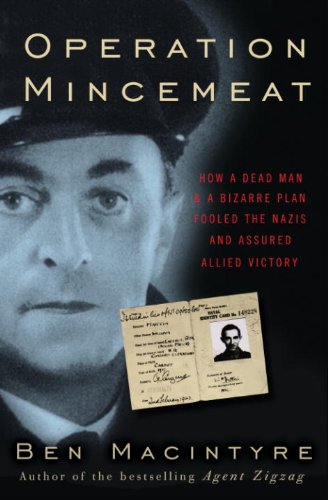


Operation Mincemeat by Ben Macintyre (2010) - It lacks the strong, single human story that illuminates Macintyre's best - he's an author man in perpetual search of a moving bromance - but this novelistic, impeccably researched, often very funny chronicle of the greatest deception of World War Two, in which British intelligence officers dressed a corpse in military uniform, gave him some misleading documents about the upcoming invasion of Sicily, and then floated him towards the enemy, is for the most part quite monstrously entertaining. Macintyre is also the only person I know who goes on about how great his own place of work (The Times) is more than me. (3.5)

***


The Human Stain by Philip Roth (2000) - This professor looks to be gloomily wrestling with an existential crisis, I wonder if by any chance he could be a character in a Philip Roth book. It's yet more dazzling brilliance from Roth: another book about sex, death and the unknowability of everyone, masterfully plotted and infuriatingly intelligent, with its every notion and idea and character interrogated, stripped to pieces and then barely put together again. A masterpiece. (4)

***

Thanks for reading.

Wednesday, 25 December 2013

Joan Crawford, Nebraska and the B-movie actor, Jack Nicholson - Reviews #179

A mammoth round-up of recent cinema releases, things I watched on a tiny laptop on a train, and a few we had on in the run-up to Christmas.


CINEMA: Nebraska (Alexander Payne, 2013) - I saw this in a triple - yes, triple! - bill with Gravity and Don Jon, and I think it was my favourite of the three, a(nother) road movie about old age and family: an unsentimental, monochrome variation on the likes of Don't Come Knocking and The Straight Story, a bit overburdened with non-sequitur comedy, but nonetheless bearing the unmistakable handprint of the mighty Alexander Payne, whose films Election and Sideways are about as impressive as writer-director calling cards come.

Bruce Dern - the cult performer who once greeted Jack Nicholson's belated rise to prominence with the contemptuous remark: "Jack Nicholson's a star now? That B-movie actor?" - is an aged alcoholic trying to wander off to Lincoln, Nebraska at every opportunity, convinced he's won a million dollars in a patently phony mailing scam. In a bid to shake him to his senses, and perhaps enjoy some quality time with his old man, his gentle son Will Forte agrees to drive him there, the trip taking in family members, old watering holes and Dern's childhood home.

SNL regular Forte is best known for his comedy work, and he has that slightly simplistic way of rendering dramatic emotion onscreen common with crossover performers, but for this material that actually works very well, his sad-eyed puppy-dog routine an effective counterpoint to Dern's complex performance as an unrepentant, unyielding old man with none of Alvin Straight's hard-won gravitas, but rather the full gamut of human virtues and flaws: a proud, ailing, bitter individualist who did more for his friends than his kids and is now trying to atone for those failings - perhaps - while not willing to admit a single one of them.

June Squibb's comic relief as his wife, while sometimes very funny, detracts from the film's realism and quality when pushed too far, and there's one very misjudged joke that turns Forte's cousins from affable wallies into something else entirely, but Nebraska is mostly very good indeed, doing a few new things with one of the oldest of indie chestnuts, aided by fine acting, crisp photography of an alternately lovely and ugly America, and a typically incisive, amusing Payne script. The line "one and a half days" made me lose control of my face entirely, and the ending does absolutely everything right. (3.5)

***


CINEMA: Blue Jasmine (Woody Allen, 2013) - Woody Allen’s erratic latter-day renaissance continues with this throbbingly neurotic update of A Streetcar Named Desire in which a deluded, substance-abusing depressive (Cate Blanchett) moves in with her relatively unrefined sister (Sally Hawkins), only to clash with her host’s boorish working-class boyfriend.

But whereas Tennessee Williams’ landmark play – which made a star out of Marlon Brando, as an overly hunky incarnation of legendary slob Stanley Kowalski – gave equal prominence to the interloper and her rival, this one focuses almost unwaveringly on the sisters. For someone periodically dismissed as a bit of a sexist, Allen has always been a great director of women, and a great writer of female characters. Here, with Blanchett, he has potentially found another Mia Farrow: a muse for his mercurial gifts.

Her Jasmine (born plain Jeanette) is a dynamically nervy, pill-chomping conduit for Allen’s fevered examinations of a crumbling psyche, a fully-realised character, rather than a plaything of fate, as so many of his more recent creations have been. Flitting between time frames, she’s variously a red-eyed freak incapable of holding it together, or an airy, graceful hostess with just about the perfect existence. That perfection, though, is a fantasy, as surely as the films that Farrow sought solace in in Purple Rose, or the transparently false rewritten history that allowed Blanche Dubois to just about function in Streetcar. While the other key theme of Williams’ play: the death of purity in a masculine world (“You didn’t know Blanche as a girl – nobody but nobody was as tender and as trusting as she was, until people like you abused her and forced her to change”), is nowhere to be seen, the central, Allen-ish toss-up between self-delusion and brutal reality is beautifully handled, a performance every bit as good as Dianne Wiest’s in September or Gena Rowlands’ in Another Woman: two of the high points of the director’s dramatic oeuvre.

Because, despite a few broader moments and some concessions to black comedy, this is Allen on firmly dramatic ground. With Midnight in Paris he showed he could still pull off the kind of deceptively deep whimsy that came so naturally to him in the ‘70s; with Blue Jasmine, his other outstanding film of the past decade, he proves that he still has what it takes to be something like the dramatic writer-director he always imagined himself – even if it never felt quite so effortless as when he could lace the narrative with jokes.

The other notable performance is from Sally Hawkins, Allen making up for giving her a dog of a part in his worst movie, Cassandra’s Dream, by providing her with a meaty role as Blanchett’s working class counterpoint, a loyal, conflicted woman easily led astray, whose one chance of climbing out of her rut was pissed up a wall by Blanchett’s conman of a husband (Alec Baldwin). The rest of the cast is solid rather than remarkable. Baldwin is good if hardly stretching it as a slimeball, Peter Sarsgaard gets a taste of his own medicine following An Education, and Louis C. K. essentially reprises his part from Parks and Rec as a clumsily earnest bachelor – at least at first.

For anyone who’s familiar with the blow-up over Allen and his relationship with his long-term partner’s 17-year-old adopted daughter (the pair are now married), there’s a fascinating subtext to some of the later revelations. If Baldwin is Allen and Blanchett is Farrow, then, well… I don’t want to offer any spoilers, but the allegory isn’t very thinly-veiled.

There is some of the clunkiness and clumsiness that has marred Woody’s later work: the staging of a pivotal party is so unconvincing as to be faintly embarrassing, the scene outside the jewellery store is a very mechanical, convenient piece of writing, and everybody talks like Woody – fine for Blanchett, not so suitable for the macho, blue-collar types surrounding her – but there’s a confidence and a general realism in the story and the characterisation that makes an invigorating change. Back from Europe, he proves at home in San Fran, with a central character he understands, and who feels completely human, thanks to a writer on form and an actress on fire. (3.5)

See also: Woody's previous film, To Rome with Love, isn't quite the turkey it's been described as.

***


CINEMA: Gravity (Alfonso Cuaron, 2013) - This film turned me into the aliens from Toy Story. 3D tears in zero gravity? "Oooooooooooooh."

It's a solid but standard Hollywood script - disaster, fleeting romance, somebody running from their past - taken to a whole new level by Cuaron and Emmanuel Lubezki, whose gobsmackingly beautiful photography creates a litany of unforgettable images, and features by far the best use of 3D that cinema has thus far found. It sounds incredible too, an ominous score and some adventurous editing foreshadowing and soundtracking several of the most exciting and nerve-wracking sequences you'll experience on the big screen this year.

As you may have heard (I came to this one rather late), Sandra Bullock is an engineer, haunted by personal tragedy, who becomes stranded in space with astronaut George Clooney after their mission goes tits-up. She's got to stop spinning and somehow get home, via ruined space stations and blasted craft, facing fires, her personal demons and a terrifying barrage of flying debris. The film takes a while to find its rhythm, and it does sometimes turn too Hollywood-y, but Bullock is good, it's frequently thrilling, and it has a visual beauty that's often simply staggering to behold. The ending is perfectly judged too. (3.5)

***


CINEMA: The Hobbit: The Desolation of Smaug (Peter Jackson, 2013) - There's nothing here to match Riddles in the Dark, and the whole thing is a little shapeless - lacking a clear focus or a real climax - but there are some effective emotional moments, most resulting from Ken Stott's nicely judged performance, and Jackson's talent for directing action is much in evidence, especially during the wonderful "barrel riding" set piece. Stray observations: the Leicester Square Odeon is very swanky - I hadn't been before - Gandalf's staff is a giant asparagus spear; I hope Sherlock and Watson make it up before New Year's Day. (2.5)

***


Tootsie (Sydney Pollack, 1982) - I watched this as a Christmas treat. It's one of the great films. I wrote a proper review earlier this year, so this is just a happy recap: Hoffman is sublime, Lange is the last word in love interests, there's superb comic support from Bill Murray and George Gaynes, and the film refuses to treat any of its characters as a joke (not Durning and not Garr), dealing deftly but properly with every serious issue it raises. It's a rare film that employs drag to interrogate gender stereotypes, not to sit lazily with them, smirking away. It's streaked with greasepaint, charmingly scored, richly romantic, hysterically funny and remarkably poignant. And the last 40 minutes is just utterly sensational. (4)

***


Winter’s Bone (Debra Granik, 2010) - My two favourite films of the decade so far are movies of water, poor folk and poetry, centred on a young female character of undefeatable tenacity. One is Beasts of the Southern Wild. The other is this bleak, humanist masterpiece, mixing character study, thriller and a portrait of social degradation and moral courage. It's beyond brilliant. (4)

***


*MINOR SPOILERS*
The Descendants (Alexander Payne, 2011)
- Payne's greatest, and one of the finest of the decade so far, a stunning, beautiful and utterly unpredictable comedy-drama that's about nothing if not life itself.

Clooney is a self-absorbed lawyer - a descendant of genuine Hawaiian royalty - who's forced to take charge of the situation after his wife has a boating accident, and lapses into a coma. Whilst reconnecting with his opinionated daughters, he's also considering a land deal central to the future of the island... then he discovers that his wife was having an affair.

Whilst rarely original in conception, where Payne's films are truly distinctive is in their execution: that off-kilter humour, heart-melting sentiment and ability to immerse you in the lives - and the world - of his characters. Here he's adapting with the help of Way, Way Back creators Nat Faxon and Jim Rash, to unfailingly spectacular effect.

I'm not a huge Clooney fan, but, as with his idol Cary Grant in his later career, when his smug facade is scratched, cracked or punctured, he becomes an entirely different proposition. He was very good in Up in the Air, and he's absolutely exceptional here, asked to play between the lines, and to nail just about every emotion known to man. The results are extraordinarily affecting.

Nebraska has been bafflingly hailed in some quarters as Payne's "return to form". Following what? A perfectly-pitched rumination on existence, in all its chaotic, tragi-comic complexity? The Descendants is a unique and brilliant movie: intelligent, incisive and poignant, its nuanced plotting, distinctive dialogue and glorious central performance accompanied by one of the most exquisite scores of recent decades, a Cooder-ish guitar accompaniment rich in authentic Hawaiian flavour. (4)

***


The Pirates! In an Adventure with Scientists! (Peter Lord and Jeff Newitt, 2012) - Aardman's best feature to date, packed to the gills with gags that exhibit a sharp, silly and deliriously post-modern sense of humour. The "sea monster" line is a thing of genius. (3)

***


The Spirit of the Beehive (Victor Erice, 1973) - Something like the Spanish Whistle Down the Wind: a story of childhood innocence and imagination in which a girl becomes convinced that the murderer in a nearby barn is a cherished figure: there Jesus, here the spirit of Frankenstein's Monster. Set in Franco's Spain, saddled with some deeply uninteresting adults and at times both slow-moving to the point of tedium and narratively confusing to the point of impenetrability, it also contains utterly wonderful performances by the two nippers at its centre, and a few of the most visually and emotionally beautiful passages I've ever seen on film, blessed by a rare and special understanding of childhood in all its intense, sentimental, nonsensical glory. (3)

***


The Oyster Princess (Ernst Lubitsch, 1919) - Ernst Lubitsch was a master of endings, even in these early days, and the final reel of this live-action cartoon is just brilliant. The rest of it, dealing with oyster heiress Ossi Oswalda's attempts to wed a prince - but accidentally marrying his imbecilic, chrome-domed butler - is a bit too self-consciously quirky, riddled with amusing but shallow non-sequiturs like female boxing matches, split-screen foxtrotting and drunken wanderings choreographed in meticulous fashion. With his amazing catchphrase of "I am not at all impressed", oyster king Victor Janson would steal most pictures, but this one - as ever - belongs to Lubitsch's unconventional, unpredictable and hugely likeable leading lady, who's completely lacking in vanity, falsity and synthetic celluloid glamour. She's fast becoming one of my favourite movie stars. (3)


See also: Two earlier films that Ossi made with Lubitsch.

***


Nativity! (Debbie Isitt, 2009) - It's formulaic to a fault, and the nativity sequences go on for far too long - and with far too much cheap sentiment - but Freeman is superb, it's very, very funny during the first hour, and its heart is unquestionably in the right place. It also makes me feel proper Christmassy. Typical BBC, though, eh, funding a movie about a multicultural state school whupping a bunch of privileged white-os. (3)

***


Father of the Bride (Vincente Minnelli, 1950) - This is one of those films so ingrained in cinematic folklore that it’s a little difficult to really get a handle on it: so fondly half-remembered that its mere mention turns a certain sort of audience dewy-eyed and gooey-hearted, and so much a part of Hollywood history that it was one of the three films shown on the big screen during The Last Picture Show.

Removed from all that, and seen as merely another movie, it’s essentially another addition in the “stressful family comedies” sub-genre (Mr Blandings et al), which has a fair amount to say about family and ‘50s America, missteps every now and then, but gets by on the strength of its convictions, and its performances.

Spencer Tracy is the patriarch and lawyer forced to foot the bill for daughter Elizabeth Taylor’s wedding, while speculating blackly about his new in-laws, the unsuitability of wife Joan Bennett’s plans, and the spectre of bankruptcy – which he imagines is just around the corner.

A lot of it is just Tracy grumbling about money or being frustrated in his attempts to join in, and some of the sitcom-ish cuts and fades are rather smug and annoying, but it is a fundamentally decent, good-hearted and often incisive film about family, aspiration and the necessities of adult life, with a few amusing moments thrown in. I did find it a little galling to see what 1950s Hollywood imagined a “small house” and an average lifestyle to be, but then I am perpetually broke.

Tracy was a far better dramatic actor than he ever was a comedic one, lacking a lightness of touch and often coming across as sullen and awkward rather than sardonic or witty, but he’s good here, dealing with the funny moments pretty well – the sequence in which he tries to squeeze into an old, excruciatingly tight suit sees him display an unexpected flair for visual comedy – and the emotional ones just as superbly as you’d expect.

The film’s real ace, though, is the young Elizabeth Taylor, who displays a heartbreaking sincerity, an intense sensitivity – everything so keenly and purely felt – that would soon be eroded by who knows what (Hollywood? Her lifestyle? Her lack of discipline?). She had played a similar role in Julia Misbehaves two years previously, and done it very well, but here she’s simply exceptional: wracked with unhappiness, shaking with anxiety, bursting with love.

Just look at the scene she has with Tracy near the close, navigating material that saddles her with nerves about the service, when something deeper and more profound, rendering her more fragile, might have worked so much better. Despite that, she handles it superbly, eliciting a strong, believable and memorable connection with her screen dad, who’s just experienced a vivid Expressionist nightmare of his own. And then there’s her acting in the pay-off, which, is just, y’know... *bursts into tears*

Her performance is something very real at the centre of a film that has a few too many cop-outs and weak gags to justify its lofty position in the cinematic canon, but also some great and enduring strengths that periodically lift it way out of the ordinary.

And the church looks just like the one where I got married. Cool. (3)

***


The Mask of Dimitrios (Jean Negulesco, 1944) - An intriguing, boldly non-linear biography of pure evil (Zachary Scott), as writer Peter Lorre delves Citizen Kane-style into the past of a man washed up dead, bumping into a hulking mystery man (Sydney Greenstreet) on the same trail. It's not quite as successful as The Verdict, as its raison d'être is less clear and its destination less impressive, but there are many enjoyable performances and scenes within its less than perfect story. (3)

***


"I beg your... complete pardon."
The Curse of the Jade Scorpion (Woody Allen, 2001) - Woody's much-maligned version of a battle-of-the-sexes screwball comedy, set in 1940, is overlong and rather repetitive, but full of nice period flavour and good music, and sometimes simply hilarious. The scene in which his investigator searches rival Helen Hunt's office is one of the funniest things he's ever done. The film as a whole is minor, a little one-note, and has too many gags that fall flat, but it's still a fun watch, and certainly undeserving of its sullied reputation. (2.5)

***


The Conspirators (Jean Negulesco, 1944) - I realised halfway through this film that I'd seen it before, which says a little about me and quite a lot about the movie.

It's a solid but unremarkable Casablanca knock-off made by the same studio, Warner Bros, and featuring Paul Henreid as another freedom fighter engaged in a relationship with a brooding, accented mystery woman (Hedi Lamarr going all Ingrid Bergman on us). Whereas in Casablanca he was striving to get to Lisbon, here he's trying to leave it, but gets drawn into the local espionage scene, encountering such superb character actors as Sydney Greenstreet and Peter Lorre, in another of their fine teamings.

The incomparable Lorre is actually a little underused, but Greenstreet is superb, Joseph Calleia has a nice bit as an understanding detective, and both Henreid and Lamarr give it their best, despite the rather formulaic and overly propagandist material. Lamarr is frequently derided nowadays, but I think she could be a decent actress when not asked to merely be a clothes horse. In King Vidor's H. M. Pulham, Esq. and her nudey breakout role, Extase, (I've already seen everything), she was absolutely excellent.

Director Negulesco also creates a handful of memorable suspense sequences, as well as a few tedious ones. While the action finale is completely uninvolving, Henreid's attempted prison break is a knockout in the Mesrine vein, and the climactic, Hitchcockian roulette sequence is cleverly handled, despite the obviousness of the culprit, which seemed like a muddle-headed cop-out even on first watch. I'm sure I'll enjoy another first viewing one day. (2.5)

***


Fancy Pants (Charles Walters, 1950) - A very loose, slightly racist remake of Leo McCarey's Ruggles of Red Gap, re-imagined as a Bob Hope vehicle. He's an American actor who poses as an English butler, then an earl, while tangling with various Western sorts, getting to meet Teddy Roosevelt, and taking the mickey out of how Chinese people speak.

It's slight and very inconsistent, but overall not bad. Lucille Ball is excellent as the combustible love interest gradually falling for our hero (while cultivating her new screen persona), and the best moments see her giving Hope a peck on the cheek - one of those small, sweet touches that can make a film - and the amazing punchline to his story of imperial derring-do, which is as good (and subversive) a gag as he ever delivered.

There's also a fun appearance early on from the great character comic Eric Blore, playing a sort of embryonic version of the Fast Show's Rowley Birkin QC - perhaps based on a character from the 1937 comedy Personal Property - a largely unintelligible aristo with strange moments of clarity. (2.5)

***


*SPOILERS FOR THIS AND WHEN LADIES MEET*
Susan and God (George Cukor, 1940)
- On paper this sounds pretty good: a comedy-drama based on the most celebrated work of grown-up playwright Rachel Crothers - whose play When Ladies Meet was made into one of the most intelligent American films of the '30s - adapted by one of the best screenwriters of all time, Anita Loos, and featuring a promising cast that includes the likes of Fredric March, Ruth Hussey and Rita Hayworth. Unfortunately it rarely catches fire, due to weak writing and a disastrous choice of leading lady.

Was there ever a more dislikeable actress than Joan Crawford? That's a rhetorical question. No there wasn't. Kudos to Crawford for taking a part turned down by Norma Shearer because she wouldn't portray a character with a teenage daughter, but that's where the praise ends. With her maniacal stare, grating sanctimoniousness, shiny head, massive shoulder pads, innate lack of warmth and critical lack of talent, Crawford managed to torpedo many a movie from the mid-'30s onwards. She is a disgrace to people like me everywhere with slightly large jaws. I actually quite like some of her earlier work: Tramp, Tramp, Tramp, Grand Hotel, Rain, Love on the Run and The Women (cast most convincingly against type as a bitchy adulteress), when she was a proper performer rather than a riotously vain star upon which to pin entire films. After that, she was usually a bloody nightmare (Mildred Pierce is an exception of sorts) - and that's before we even consider her noted aversion to wire hangers.

So why do I persist with her films? Because there's often so much good stuff filling up the rest of those vehicles: like everyone else in The Last of Mrs Cheyney and Sudden Fear, Melvyn Douglas's engaging antics in They All Kissed the Bride, John Garfield's pyrotechnics in Humoresque, and as much quality in every area, in just about every film, as America's biggest studios could conceivably sling at a picture. Incidentally, the secret to Crawford's longevity was partly contained in The Greatest Put-Down of All Time - "She was the original good time that was had by all" ((c) Bette Davis) - and while the unusual, indomitable and outrageously talented Davis seemed to sum up Warner Bros, the earthy, socially-conscious studio where she made her name, so Crawford epitomised the magnificent, ugly and terrifying monolith that was Metro-Goldwyn-Mayer.

Here she's cast as a deluded, maniacally-staring socialite with a shiny head who returns from a jaunt to England full of fervour and constantly mouthing off about God. Her alcoholic husband (Fredric March) wants to reconnect - and have them spend some time with daughter Rita Quigley - but she's more concerned about self-righteously condemning the behaviour of all her friends, including a pair of dating divorcees (Bruce Cabot and Rose Hobart), a former actress (Rita Hayworth), who's thinking of cheating on her husband (Nigel Bruce!), and the stoical spinster in love with March (Ruth Hussey).

While it's tagged as a comedy-drama, I'm not sure I spotted a single joke. Rather, Susan and God is a wearying, single-note film, obvious in the extreme, about a selfish person being very annoying for two hours, and then quite nice for five minutes. And while Hussey is very good and March is absolutely exceptional, it's hard to stay on good terms with a movie that sees Crawford's ultimately repentant egomaniac as better marriage material than the caring, compassionate, empathetic, witty, intelligent and good-looking Hussey. (What is it with pretty brunettes with sticky-out ears getting their hearts broken in Crothers adaptations? It's a conspiracy.) But maybe I'm projecting again. Still, a word on Crawford's hilarious outfits. There's one featuring a miniscule satchel that makes her look like a giant postman, a second that seems to feature several lassos, and another that's like a beekeeper's outfit, but topped off with a Dick Whittington-style bundle on a stick.

Certainly the film as a whole is nothing better than a low-rent, unconvincing American spin on Bernard Shaw's Major Barbara - an immaculate work that deals with faith, femininity and moral want in spectacular fashion - which squanders a good cast on a muddled script with a simply dire characterisation at its centre. Incidentally, that's Joan Leslie in a non-speaking part as one of Quigley's friends. Within a year she would be one of the biggest stars in the world at just 16. And within a year Crawford would take the Myrna Loy role in a remake of When Ladies Meet. *Punches own face*

***


The Impatient Years (Irving Cummings, 1944) - War bride Jean Arthur and her husband Lee Bowman, with whom she's only spent four days, are reunited after 18 months. He's grown a moustache, she's now a dedicated mother with a fixed daily routine, and frankly they don't like each other much. But instead of being granted a divorce, they're forced into a court-ordered courtship - thanks in part to her father Charles Coburn, whose character oscillates between very wise and completely stupid - retracing those four days in San Francisco, where they begin to reconnect.

I reckon I could have written a better script than this: most of the gags concern Arthur and Bowman inexplicably half-explaining their plight to character actors like Grant Mitchell, Charley Grapewin and Charles Arnt, then - having being met with complete confusion - saying something vague and petulant before leaving the room. The only scene where the gimmick works is a nightclub sequence featuring amorous sergeant Frank Jenks, because at least here Arthur has a proper reason for misleading him.

The other good scene has the couple meeting justice of the peace Harry Davenport and his wife Jane Darwell. It's very sentimental, but it shifts the viewpoint of the film from a shallow celebration of the first flowering of romance (which I believe may have been done becore) to the less escapist but more timely subject of building a marriage in the face of adversity, which, given the characters it's dealing with, feels completely right.

And, while the film isn't very funny or romantic or particularly credible, it does at least have the almighty Arthur, one of the great Hollywood actresses, who can make anything look - and particularly sound - a whole lot better, squeaking her way through every contrived situation with the absolute maximum of charm. Aside from perhaps Garbo in Ninotchka, who has ever pronounced the word "silly" in such a marvellous manner?

Sadly, the other central players are disappointing. Bowman is simply weak: he was a passable second lead who should never have become a star (and didn't stay as one for long), while Coburn is completely coasting, and few of the many familiar faces who turn up in support are given anything memorable to do, with several of them being actively annoying.

I don't really ever say "meh", but "meh". (2)

***


Great poster. Weak film.

The Family Man (Brett Ratner, 2000) - Nic Cage is high on my list of least favourite actors, a little below Joan Crawford. He just can't do anything that isn't massive, which is a Bad Thing. He's asked to carry this Christmas fantasy (which riffs on It's a Wonderful Life) and does a predictably hamfisted job. The second half's a lot better than the incredibly flat, pointless first - with an agreeably nuanced approach to its premise - and Tea Leoni is pretty good as the one who got away, but it never quite comes together, and the ending doesn't really work. (2)

Wednesday, 20 November 2013

Clueless, Sam Rockwell, and Steinbeck done right - Reviews #176

I've been busy trying to finish the first draft of my kids' book (around 7,000 words to go, thanks for asking) and even pitched it to a grown-up (that's me in the tie), so movies have taken a long overdue backseat (there are 13 here, but that's in the last month). I still love them, of course, but every once in a while you have to try to achieve something with your life. This book is my thing. Also, several of the films I've seen lately have been absolutely appalling. They're in this round-up, along with the good ones. I've been doing some freelancing about films too - I'll tell you more about that some other time.


Clueless (Amy Heckerling, 1995) - I saw this at the cinema when I was 11, when I found the whole thing slightly too grown-up and confusing, and then later when I was perhaps 15, at which time it seemed like a slightly superficial teen comedy. In fact, it's kind of the opposite: a satire, based on Jane Austen's Emma, about a spoilt, self-centred teen (Alicia Silverstone) who reinvents the new girl at school (an unrecognisable Brittany Murphy), but has to make over her own personality in order to get the man she wants (Paul Rudd).

I'm 29 now, and I can see where my confusion set in, as the film does rather want to retain its cake while scoffing it whole, taking place around vast mansions and revelling in Silverstone's eye-catching outfits, while telling us that really such things don't matter at all. It takes a lot of side-swipes at her Cher ("I've divided them into aperitifs and mains," she says, after collecting food for a charity appeal), but her transformation is a little unconvincing and hardly complete.

The reason I revisited the film is because it's heralded as something of a classic nowadays, and recently topped The Guardian's list of the 10 best teen movies of all time: a list that couldn't find space for Ghost World, Brick, Knock on Any Door - hardly a great film, but unquestionably a crucial one, popularising the "live fast, die young" catchphrase - Some Kind of Wonderful or Rebel without a Cause.

So, 17 years on, should it be troubling a list like that? As if! It's essentially a stick-thin comedy in eye-watering colours that has just about enough good gags, fun semantic inventions and wordy, erudite one-liners to secure a decent report card, but is a long way off that coveted A-grade, even given Cher's gift for wrangling. Rudd, then looking like he might turn into a slightly bland leading man rather than an offbeat improv king, is good value, and his sparring with Silverstone provides the film with its best moments, but even then he appears extraordinarily uncomfortable when forced to negotiate the soppy, clichéd wrap-up.

Compared to writer-director Heckerling's Fast Times at Ridgemont High (see below), penned by Cameron Crowe, Clueless is simply too light, inconsequential and lacking in heart, its characters caricatures rather than real people. It's entertaining and distinctive, sure, but hardly one of the best teen films ever made. (2.5)

See also: My review of Knock on Any Door is on the MovieMail website here.

***


Of Mice and Men (Lewis Milestone, 1939) - Two drifting ranch hands blow across California during the Depression. Lenny (Lon Chaney, Jr.) is huge, hulking and slow-witted, with a childlike innocence; George (Burgess Meredith) is his protector: a smart, selfless man who's happy to keep telling that same old story: one day they'll own their own place, and Lenny can pet the rabbits. Having fled the town of Weed (it isn't a marijuana metaphor, but imagine if it was), the pair pitch up at a ranch fairly teeming with trouble, most of it coming from the owner's son Curley, and his sexually frustrated wife (Betty Field).

Lewis Milestone's translation of the Steinbeck novella is an immersive, extraordinary powerful experience, exceptionally well-acted, particularly by Chaney and Meredith, and shot in painterly tones by Norbert Brodine, even if his and Milestone's visual sense sometimes seems to have more to do with aesthetics - the re-sizing of the frame by shooting between trees or with machinery in the foreground - than alighting on details actually integral to an understanding of a scene.

That's not much of a problem, though, and it's not always the case: the two key scenes here - the first concerning the potential shooting of a dog, the second the potential shooting of a man - are dealt with perfectly, eliciting a nauseating dread and bitter anguish quite unlike anything I've felt watching a movie before. Those sequences, and indeed the whole film, are also extremely well-scored by the modern musical visionary Aaron Copland, who would write the soundtrack for Milestone's next (and far inferior) Steinbeck adaptation, The Red Pony, a decade letter.

Somehow Hollywood managed to make an even better Steinbeck film the year after this one, as John Ford and Darryl F. Zanuck brought The Grapes of Wrath to the screen with a vivid scope, political punch and sense of photographic realism that this one just can't match. It isn't bad for starters, though: another incredible triumph from Hollywood's greatest year, with an emotional impact that's all too rare. (4)

***


Lawn Dogs (John Duigan, 1997) - In simplest terms, it's like Sundays & Cybele relocated to the Scissorhands universe, but Lawn Dogs is very much its own film, its familiarly fatalistic story full of strange details, the characterisation fresh and original, and the perfectly-judged introduction of fantasy elements paving the way for Beasts of the Southern Wild.

Mischa Barton is Devon, a weird, precocious 10-year-old girl who's just moved to a bright, idyllic gated community with her parents, but quickly becomes obsessed with a terse, tortured piece of trailer trash (Sam Rockwell, exceptional in his breakout part) who tends the lawns of this rarefied estate.

As with all films of its type, from Cybele to Sling Blade to Half Nelson, you know it's unlikely to end well, but the story is doggedly unsentimental, the idiosyncratic, generation-spanning friendship is truly affecting and Duigan has an eye for curious, subversive imagery - an American flag dropped on the gravel or used to mop up after a crime, a hysterically funny "war" scene, a tree dressed in ribbons - that drags his film to some glorious hinterland where folk story, fantasy and class-conscious America somehow sit side by side. (4)

***


Indisputably the best bathtub on film.

"Wherever there's smoke, there must be... somebody smoking." Easy Living (Mitchell Leisen, 1937) - My favourite movie of all time is Remember the Night. This is writer Preston Sturges and director Mitchell Leisen's other collaboration. It's also amazing. Light on plot, long on Leisen getting a bit distracted by nice clothes and the coolest bathtub in the history of the world, but amazing nonetheless.

The one and only Jean Arthur, possessor of the best voice in movies - an instrument of purest husky-hinted squeak - is Mary Smith, an ordinary working stiff who's mistaken for the mistress of New York's third biggest banker (Edward Arnold) and finds that now everybody wants to give her things for free: a hotel room, a new wardrobe, a supper for two... She's in love with an ordinary Joe, though (Ray Milland), little realising that the apparently homeless ex-automat employee is Arnold's son.

This effortless mix of satire, slapstick and romantic comedy lacks the combination of light and shade that makes Remember the Night such a staggering film, and which you'll find in all of Sturges' best films as director, but it is extraordinarily clever, hysterically funny and irresistibly charming, with Arthur at her unapproachable best, Milland a fairly fun love interest, and a trio of classic supporting turns from Arnold, butler Robert Greig, and Luis Alberni - as an incompetent, scheming hotelier called Louis Louis. (4)

***


This bears very little resemblance to anything that happens in the film.

Fast Times at Ridgemont High (Amy Heckerling, 1982) - I was watching this on the train, but I had to stop, as people were staring at the boobs. Whether they were gazing in slack-jawed disgust at the appalling pervert or whether they just like boobs, I'm not sure, but it was making me uncomfortable, so I finished it at home.

It's a trendsetting, hugely enjoyable teen movie, scripted by Cameron Crowe from his book, that gave a break to a half-dozen future stars, and influenced everything from John Hughes' run of school-set comedy-dramas to Bill & Ted, and Dazed and Confused.

It's an ensemble piece, but the focus is weighted towards Jennifer Jason Leigh's virginal 15-year-old Stacy, making her first ventures into the world of romance and boffing. Mike Backer is a sweet classmate who's stuck on her, Robert Romanus the smooth-talking ticket-scalper helping him out, Judge Reinhold her hard-working, perpetually unlucky brother, and Phoebe Cates her worldly-wise best friend - the latter two combining to great effect in the obligatory wanking scene.

Almost everyone in the cast went on to fame and fortune to some degree: Sean Penn plays a bolshy stoner named Spicoli - battling memorably with authoritarian history teacher Ray Walston - Forest Whitaker is imposing as a combustible football star, Nicolas Cage's big, stupid face looms into view a few times, and there are small parts for Eric Stoltz, James Russo, Anthony Edwards, Crowe's wife Nancy Wilson and future Beverly Hills Cop director Martin Brest.

I realise that so far I've mostly just listed some people's names and talked about boobs, so how about a review? Fast Times is a real breath of fresh air, like a bonus Hughes film made before the fact, peopled by welcome faces, soundtracked by catchy tunes and touched with that Crowe earnestness that can send everyone running for the hills - but here suits the subject matter, and these characters, just fine.

It's an episodic film, with a bit of '80s gimmickry - check out that football scene - and I was often surprised at the way it curtailed scenes, sometimes after an abrupt punchline, but it's heartfelt, true-to-life, largely unsentimental and extremely entertaining: full of memorable encounters, likeable characters and funny sight gags.

The performances vary in quality: Backer is OK, and Cates, Reinhold and Romanos all manage to be slightly wooden and yet very convincing, but Leigh and Penn steal the show: she very affecting as a sweet-natured, uncertain, resourceful but deceptively strong young woman, he the last word in massive stoners, with the undulating intonation, delayed laugh and wavy hair used by just about every screen weed-smoker since.

The last third perhaps takes a bit of a dip. Though it does resort to some of the teen film staples I was impressed it had avoided, it deals with them in an unusually unmelodramatic, matter-of-fact way. A more significant problem is its inability to satisfactorily tie up some of its many story threads, though, if I'm being charitable, I suppose teenage life is a bit like that. Despite a few shortcomings, it is both tremendous fun and one of the key films in its genre: if Pretty in Pink and Some Kind of Wonderful are better still, I doubt they'd exist without this one. (3.5)

***


The Man Who Came to Dinner (William Keighley, 1942) - Caustic columnist Sheridan Whiteside (Monty Woolley) fractures his hip whilst on a lecture tour, leaving him holed up in the home of a ball bearings manufacturer and his shrill wife, where his brand of self-centred posturing, empty sentimentality and slightly tiresome insults changes the lives of those around him - for better or worse.

This celebrated comedy, from the Kaufman-Hart play based on the character of theatre critic Alexander Woollcott, starts off in an alarmingly one-note vein, but gets better and better as it goes along, culminating in a memorable tussle between Whiteside's long-suffering secretary Bette Davis and his superficial protegee Ann Sheridan for the heart of country newspaper editor Richard Travis, incorporating hilarious supporting parts for Reginald Gardner and Jimmy Durante - the latter playing a fun-loving movie star called Banjo, patterned after Woollcott's best friend, Harpo Marx.

There are rather too many of those archive one-liners rendered meaningless by changing comedy tastes and Woolley's massive performance falls the wrong side of greatness for me, but it's an entertaining film that builds to a typically funny, frantic climax, and Davis is absolutely excellent as an acerbic, lovelorn woman with little faith in her ability to keep her man. (3)

***


Old Small Chin doing her big-eyed bit.

Young Bess (George Sidney, 1953) - Perhaps Jean Simmons never fulfilled the potential she showed as a young actress, from that film-stealing bit in Give Us the Moon as a chain-smoking teenager, through Great Expectations, Black Narcissus and Olivier's Hamlet, where she was a mesmerising Ophelia.

There are great performances dotted about her career, including in Elmer Gantry and The Grass Is Greener (both 1960, the year she also made Spartacus), but at times she struggled for work and struggled to make an impact when she found it, seeming to possess a fragile confidence to go with her delicate, distinctive appearance: sweeping black eyebrows over huge violet eyes, a long, slender nose, and a full, wide mouth above an extraordinarily tiny chin.

There were certainly two serious factors contributing to the erratic nature of her career: her mental health problems - including serious bouts of depression and accompanying alcoholism - and the unwanted attentions of megalomaniac RKO owner Howard Hughes, who blacklisted her at the peak of her powers, after she repeatedly rebuffed his advances. The situation was so extreme that Simmons and her husband, Stewart Granger, fantasised about murdering Hughes. In the event, they chose a less extreme method of redress, with Simmons winning her freedom from the mogul in 1952.

Young Bess was made by prestigious MGM the following year and, while it isn't a great film, it is a fabulous showcase for her abilities. Simmons is very, very good as the lonely, impetuous, improbably attractive future Elizabeth I, triumphing over a rather flimsy romantic narrative - with a hint of intrigue - through sheer force of personality.

There's a steeliness to her performance, removed from the bitterness of Great Expectations or the shallow histrionics she exhibited in the overrated Angel Face that I found really eye-opening, particularly when she purposefully recalls the mannerisms and proclamations of her father (Charles Laughton, recreating his Oscar-winning role), chest out and hands on hips, or spouting off, dreamy-eyed about the greatness of Britain.

Despite a cast that also includes Granger and Narcissus alumni Deborah Kerr and Kathleen Byron, the film feels very much like an old-fashioned star vehicle, attuned to Simmons' gifts, and simply allowing her to express and articulate a great breadth of emotion - as well as to prove a remarkably dishy redhead - rather than providing a terribly noteworthy or cohesive narrative.

Having said that, there are other notes of minor interest: a little mileage to be got out of villain Guy Rolfe's Fassbender-like fizzog, and a performance by over-enunciating child star Rex Thompson that's either the best or worst thing I've ever seen. He had me in hysterics repeatedly - I think by accident. It's also quite a handsome production, and there's one particularly brilliant shot near the close, in which Simmons' shadow grows and grows until she's as tall as the castle wall. It's an absolute beauty.

Young Bess isn't good history and lacks the ambition in its storytelling to provide much beyond solid entertainment, with a narrative that's rather too slight, low-key and initially bitty, but it is a diverting watch, as well as an effective showcase for one of Britain's most interesting and attractive actresses. Having said all that, Miranda Richardson remains the definitive Elizabeth I. "It's up to you: either you can shut up, or you can have your head cut off." (3)

***


Thieves' Highway (Jules Dassin, 1949) - An apple-flavoured film noir, with war vet Richard Conte hauling crates of Golden Delicious over to San Francisco, where he wants a few words with the greengrocer (Lee J. Cobb) who left his dad in a wheelchair.

Its mechanics are sometimes a little obvious - like the shallow fiancee or the self-righteous cop punching us in the face with a moral - it gets slightly bogged down when we first arrive in San Fran, a symptom of pacing issues, and there's some of that violence towards women that always makes you wince, but it's an interesting, unusual movie with a great many virtues.

As well as the genuinely original setting - an agreeably banal backdrop for the story of an avenging son - there's a nice supporting performance from the oft-ridiculed Valentina Cortese, playing a jaded prostitute with bad hair, some deliriously perilous trucking scenes that may have influenced The Wages of Fear, and fine turns from both Cobb and the forceful, intense Conte, their scenes together crackling with menace. There are also a handful of nice visual flourishes from Dassin and photographer Norbert Brodine, including a perhaps unrealistic but nevertheless striking bit of staging that sees Cobb back-pedalling through a bar-room, dispensing scrunched-up bank notes as he goes.

This isn't in the top tier of Fox films noir, with Fallen Angel and Where the Sidewalk Ends, nor can it quite compete with Cry of the City - which Conte made the same year - but it's pulpy, sweet and sour in equal measure: not ideal for an apple, but about right for the genre. (3)

***


Häxan: Witchcraft Through the Ages (Benjamin Christensen, 1922) is a silent Danish drama-doc in seven parts: an outrageous, confusing, sometimes quite scary movie about witchcraft, demons and the Devil - part reconstruction, part dramatisation, part vintage PowerPoint presentation.

Three years in the making and overflowing with ambition and naked bottoms, it focuses chiefly on a witchcraft scare in 15th century Germany, but also seeks to provide a wider context, regaling us with officiously sourced tales from the dark ages, drawing parallels between 20th century "hysteria" (mental illness) and symptoms of possession, and throwing in another short story for good measure, in which a horny maiden tries to seduce a fat monk using some cat poo and a dead sparrow.

The film is illuminating on a subject of which I knew little, has a richly toxic atmosphere thanks to some very impressive imagery - most showily the animated money set-piece and a fantastic flying sequence that predates Murnau's Faust by four years - and includes a scene in which a gaggle of witches queue to literally kiss the Devil's bum (I was heartened to find that the monks conducting the inquisition found this just as funny as me). But it's also quite hard to follow, can be tedious and poorly-acted, and suffers from both a muddled viewpoint and a short attention span: I'm not sure any of the stories ever actually got finished.

All this is probably compounded by the fact that I don't have much stomach for the subject matter or for horror movies in general. Certainly I found it more impressive than enjoyable, and struggled to get or stay engaged with the narrative. It did bolster my self-esteem, though. The sky is made of steel? Ancient Egyptians were idiots. (2.5)

***


Madame X (David Lowell Rich, 1966) - Top tip: if you've faked your own death, don't forget to buy a newspaper with your photo on the front, and stand in the middle of the street shaking your head at it.

Madame X is a preposterous, sometimes persuasive Sirk-like soaper, based on a hoary old melodrama and featuring Lana Turner's biggest performance, though hardly her best. It's camp beyond belief, coincidence-driven beyond credibility and has a pay-off that's only about half as good as it has to be in order to justify the sacrifices made to get there. It's also pretty watchable, with a few nice moments towards the end.

Turner is a shopgirl who has married into a wealthy, powerful family. While her husband (John Forsythe) is away in North Africa, she enjoys an ill-advised dalliance with a notorious playboy (Ricardo Montalban), which naturally ends with him dead and Turner staging her own demise, helped by the mother-in-law (Constance Bennett) who despises her. Years later, and having become a massive fan of absinthe, Turner again has a few legal difficulties, bringing her back into the lives of her husband and her son, who's now all grown up (and is Keir Dullea).

The presentation is Sirk-ish, with the same fondness for filtered lighting and big emotions, but there's little of the artistry and none of the nuance, the quiveringly intense cast - all subscribers to the "more is more" mode of acting - operating remorselessly at fever pitch, so there's nowhere for them to go, and no way for you to become invested or immersed in their incredibly unrealistic plight.

Burgess Meredith probably fares best, as an absolute twat, but both Dullea and Turner do pretty well with a script that drifts into the realm of the very silly at regular junctures. The moment where she realises his true identity in the penultimate scene is as effective as it should be - if only the film had properly followed through on the promise of that moment. As soapy anti-climaxes go, this one gives Frank Capra's Forbidden a run for its money.

Incidentally, Turner dyed her hair blonde near the start of Slightly Dangerous (actually her best performance, at least of those I've seen), having just faked her own death, so as to live the high life. Here she dyes it brown to slide down the social ladder. Typically disgraceful anti-brunette/redhead bias. (2)

***


*A FEW SPOILERS*
Big Jake (George Sherman, 1971)
- This late-period John Wayne vehicle is absolutely terrible - even in the context of his early '70s movies like Chisum and Cahill U.S. Marshal - a film for casually right-wing middle-aged men whose children need to show them some respect.

Wayne phones it in spectacularly as Big Jake, a man so tough, unsentimental and generally John Wayne-like that he's named his dog "Dog". When the grandson he's never seen is swiped by a gang of baddies who for some reason require a very long and boring introductory voiceover, he sets off in pursuit, accompanied by his idiot offspring, who aren't as cool or clever or as good at punching people in the face as he is. One is played by Wayne's own son Pat, Freud fans, while the other is Bob Mitchum's son Christopher, a sweet-natured man who couldn't act for love nor toffee. There's also a lone Native American amongst the hunting party, of course, with the usual negligible life expectancy.

It's real by-the-numbers stuff: Wayne is proved right about something, Wayne is proved right about something again, one of his Moron Children fires a gun badly and Wayne has to jump in some water, Wayne gets into a fight with a big man and the music goes all silly, the Native American gets killed. Where there is novelty, it's misjudged to the point of comedy, like Mitchum taking advantage of the 1909 setting by piddling around the hills on a motorbike during a gunfight, and not actually getting at all involved, but just doing some jumps. It's very hard to believe the script came from the husband-and-wife duo who wrote Dirty Harry the same year. The only real plus points are leathery old Richard Boone as the villain, acting everyone off the screen even though he doesn't look very interested, and a rousing, tuneful theme by Elmer Bernstein.

The film does pick up a little towards the end, when some Actual Things Happen, but it never shakes that hideous tone of youth-hating, reactionary self-congratulation, which has far more to do with 1971 and John Wayne than anything that ever happened in the Wild West. (1.5)

***


Track of the Cat (William Wellman, 1954) - The things a Mitchum completist has to sit through... William Wellman's attempt to make a black and white colour film - about a panther stalking snowy ground - is pictorially striking but otherwise a total write-off: talky, static, laughably melodramatic and painfully boring, somehow managing to waste a cast that includes Mitch, Beulah Bondi, former child star Diana Lynn, who had transformed from a wry, sarky kid into a throaty, elfin ingénue, and Alfalfa from Our Gang playing a 100-year-old Native American. It's a contender for Mitchum's worst film, right up there with White Witch Doctor, though I haven't seen the one about a boxing kangaroo yet. (1)

***


Penguin Pool Murder (George Archainbaud, 1932) - I'd heard great things about this one - the first film in the Hildegarde Withers comedy-mystery series - but it's absolute drivel. I didn't laugh once. The infernally annoying Edna May Oliver is a schoolteacher who witnesses the aftermath of a murder, and muscles her way into the investigation, helping out a detective (James Gleason) who keeps leaping to the wrong conclusions. Oliver's line-readings are all exactly the same - a sort of posh, strangulated, sphincter-tightening wail - Gleason had yet to learn how to tone it down a bit, and the culprit becomes painfully obvious from about a third of the way through.

Its only virtues are that you get to see some penguins and the final half a minute is mildly pleasant. I may get around to the sequels, but only when I've watched all the other films in the world. Twice. (1)

***

Thanks for reading.