Showing posts with label Ingrid Bergman. Show all posts

Thursday, 15 September 2016

Abe Lincoln, Notorious and Jack Lemmon being irritating – Reviews #242

Plus: Plan 9: Part 2, Bryan Singer's classic prank and a really horrible book about Leeds.


Abe Lincoln in Illinois (John Cromwell, 1940) – This is one of the best films I've seen in a long time: an extraordinarily mature, literature drama of the sort that has never really been in vogue.

Based on a Pulitzer Prize-winning play by Robert E. Sherwood, it was one of just three movies produced by Max Gordon − the theatrical impresario so much a part of '30s popular culture that he got a name-check in Cole Porter's song, Anything Goes − and the only feature released by his 'Plays and Pictures Corp'.

At the time, RKO − under the guidance of studio head George Schaefer − was partnering with independent producers like Sam Goldwyn and Walt Disney to create ambitious, artistic moneymakers. Though they junked the idea after falling out with Orson Welles in 1942, Abe Lincoln in Illinois came along at just the right time. Having produced the play to great acclaim on Broadway in 1938, Gordon took the property and star Raymond Massey to Hollywood, and RKO assembled a top team of craftsmen to put it together, including cinematographer James Wong Howe and the ever underrated composer, Roy Webb.

In the interim between its stage success and its realisation as a film, Fox had also put out a picture about Lincoln, directed by John Ford. Young Mr. Lincoln was an altogether different beast: magical, manipulative, atmospheric wish-fulfilment with more than a hint of Ford's mythmaking about it. "When truth becomes legend, print the legend," says a cynical journalist in Ford's The Man Who Shot Liberty Valance. Abe Lincoln in Illinois does quite the opposite: heavier, more incisive, more human, stripping away the legend to show The Great Emancipator as a man riddled with melancholy, wrestling with his demons, wanting simply to be left alone, until destiny and a loving but neurotic wife (Ruth Gordon) shove him onto the path of greatness.

It takes a while for the film's themes to coalesce. At first it's wrestling, folksiness and runaway pigs, as the young Mr. Lincoln gets work on a barge, in a shop and as postmaster, while pining for a saloon keeper's daughter named Ann Rutledge (Mark Howard). Then tragedy intervenes, Gordon's Mary Todd appears, and darkness takes hold of Lincoln, sucking you in to a portrayal that's like nothing you've seen before: a journey into history, a window in a man's soul, Lincoln greater than you would ever have thought, because it wasn't easy, because he was just a man, because the burden upon him was so unwelcome and so great. The only biopic of a legend that comes close in its incisive unpicking of received wisdom is Hal Ashby's film about Woody Guthrie, Bound for Glory.

Massey is absolutely immense as the former president, particularly in the film's gobsmacking second half, full of magnificent dialogue, complex ideas and a complete lack of Hollywood sheen. It's bruising, difficult, heartbreaking: his journey from gangliness to greatness a picture of sacrifice and self-denial, a Black-Dog-and-all portrayal of a character most commonly shown in American cinema as being akin to Jesus.

As Mary Todd, Gordon matches him. Lincoln's wife is airy, steely, driven and often dislikeable, the key to his greatness and the barrier to his happiness, and Gordon plays those contrasting facets to perfection. I'd never clocked her before as a young(ish) woman (though I've seen Two-Faced Woman a couple of times), only as the beautiful Auschwitz survivor and unexpected sex object in Harold and Maude and a possible Satanist in Rosemary's Baby. Pitching up in '40s Hollywood, she proceeds to give one of the best, most nuanced and realistic performances of the decade, even though she can't be on screen for more than 15 minutes.

By the end, as Lincoln enlists then rejects the phrase "this too shall pass" to lay out the future of the nation, as his backers patronise him behind closed doors, as his wife's neuroses and the march to war sour his greatest achievement, you realise that not only did they not make films as thematically dense and morally eloquent as Abe Lincoln in Illinois in 1940, but they may not have made one since. (4)

See also: I wrote about my other favourite Lincolns here, and reviewed Spielberg's effort here.

***


*MINOR SPOILERS*
Notorious (Alfred Hitchcock, 1946)
– In some ways the most Hitchcockian film that the Master ever made; in others, like nothing else he ever did, with his familiar style now so effortless and economical that every perfectly-choreographed movement of the camera counts, every minor quirk and flourish is unmistakably his, and yet this matchlessly skilful, distinctive direction is applied to a slick, seductive Hollywood thriller rich in unusually lush romanticism, the heightened emotions and sexy repartee an invigorating counterpoint to the usual nerve-shredding terror.

Ingrid Bergman plays the daughter of a Nazi agent, pressed into doing her bit for Uncle Sam by cynical handler Cary Grant – who won’t express his true feelings for her. Bergman inveigles her way into the confidence – and bed – of shadowy industrialist Claude Rains, but down in the cellar of his mansion things go very wrong, and soon she’s close to death, as an oblivious Grant gets ready to flee the country.

From an inspired opening scene in which we see only the back of Grant's unmistakable head, to that stunning zoom into Bergman’s hand, via the longest kiss in Code-era cinema, it’s a feast for fans of ‘40s film: a trim, sensual story lit by Ben Hecht’s dialogue, Ted Tetzlaff’s glorious cinematography and a pair of leads at their absolute zenith. Grant, a short way into transforming from the best light comedian in Hollywood history to a complacent mahogany annoyance, is curiously and effectively macho, trading kisses, stinging barbs and hurt feelings with the love of his life. Bergman too, tears dripping from her eyes, that voice wavering, that temper flaring, was never better, her gargantuan appeal obscuring her limited range. And as their nemesis, Rains is characteristically superb, managing to wring sympathy from us, even while funnelling funds to Adolf Hitler, because he really, truly loves Bergman – or at least the person he believes she is.

It was the first time the director had had two huge, heavyweight stars and a first-rate foil, and he knows it’s a chance to do something extraordinary. There’s no padding here (save two drab expository scenes almost certainly added by the studio and directed by someone else), but impeccable foreshadowing, plenty of subversion and lashings of black humour, as Hitch acquaints us repeatedly with the staircase that will prove central to the climax, has Rains’ mother (Leopoldine Konstantin) transform from a malignant gossip to a chain-smoking crimelord, and subversively uses champagne bottles – a staple, of course, of trifling, escapist rom-coms – as a symbol of spiralling terror.

Truffaut regarded Notorious as the best film Hitchcock ever made, and the greatest example of “pure cinema” in his canon, the whole story being told by the camera. Having seen it for the first time in 15 years, and for the first time on the big screen, I’m inclined to agree.

***


X-Men: Days of Future Past (Bryan Singer, 2014) – This film opens with an absolutely fantastic prank: an unbelievably boring 10-minute CGI action sequence about robots fighting in the dark – pretty much my least favourite thing in movies – which left me momentarily convinced that Bryan Singer had completely lost the fucking plot.

But then he pitches us into the ‘70s, where a lanky-haired Dr Xavier (James McAvoy) is dealing with addiction, the young Magneto (Michael Fassbender) is awash in his usual megalomania, and Mystique (Jennifer Lawrence) is trying to kill an odious weapons manufacturer (Peter Dinklage), setting in motion events that – unless thwarted – will ultimately lead to the extermination of the mutants. The characterisation is rich, the story is fascinating, and the action set pieces are a joy – though a special mention for Quicksilver’s piece de resistance, which is absolute gold.

Sometimes the film struggles with its attempts to knit its well-worn philosophical investigations to Vietnam and the Nixon era, and like First Class it fails to showcase Lawrence’s incredible talent, before ending in a cacophonous 20-minute yawn of blockbuster redundancy, but for the bulk of its running time it’s both interesting and highly entertaining: second only to X2 in this series as an intelligent, imaginative piece of sci-fi that temporarily abated my intense superhero fatigue.

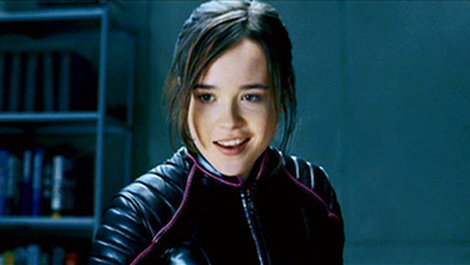
Ellen Page is gorgeous, isn't she. (3)

See also: My favourite Ellen Page movie is Hard Candy, and my favourite Peter Dinklage film...? There's only one serious contender. I've also reviewed X-Men, X2 and The Last Stand on the blog, albeit somewhat briefly.

***


The Fortune Cookie (Billy Wilder, 1966) – This flat Billy Wilder comedy begins poorly and never really gets going, as a news cameraman (Jack Lemmon) gets knocked over at an NFL game and his scheming shyster of a brother-in-law (Walter Matthau) smells big bucks − convincing him that a lawsuit could win him his wife back, and filing for $1m of damages.

It's put together rather like Wilder's last great comedy, One, Two, Three, but it simply doesn't work: the material is weak, Matthau lacks the manic energy of someone like Cagney needed to put this over, and Lemmon is at his most "yaddle addle addle" annoying (that's the sound he makes when he's singing to himself).

There are a few clever lines, Judi West's performance as Lemmon's greedy wife isn't bad, and the ending featuring sentimental football star 'Boom Boom' Jackson (Ron Rich) works fairly well, but I just don't find it funny.

***


Southland Tales (Richard Kelly, 2006) – I have a soft spot for massively ambitious artistic statements crushed by studio beancounters… but Richard Kelly's apocalyptic follow-up to Donnie Darko is basically Plan 9 Part 2. After half an hour I remembered how short life was and switched it off. (1)

***

BOOK


1974 by David Peace (1999) − It must be awful living in David Peace's head. This vitriolic, nasty, uber-violent chronicle of child murders in mid-'70s Yorkshire − and how a local journo gets obliterated by the fallout − is a vivid, visceral portrait of moral bankruptcy and utter alienation. It's altogether unforgettable, but whether that's down to its majestic evocation of a vanished netherworld, its profane poetry or the fact that it's just extremely nihilistic and unpleasant isn't always clear. (3)

***

Thanks for reading.

Wednesday, 24 February 2016

Ten things I learned about Alfred Hitchcock

This is part of a series that I do now and then.


The near-legendary movie tome, Hitchcock/Truffaut (1967, updated 1983), is the subject of a new documentary, so I thought I better finally read it. It’s a sublime exploration of one virtuosic director by another and essential for anyone with 10 quid and a love of film. It changed many of my thoughts and preconceptions about movies, and about Hitchcock himself, while perhaps underlining some reservations I have about his work (he is both annoyed by and painfully conscious of the “plausibles”, those critics who criticise his work for its lack of believability).

Along the way, the Master explains the thinking – and the technical tricks – behind many of the key sequences in his films, displaying a staggering, hypnotic understanding of the medium and revealing an obsessive attention to detail that went far beyond anything I was expecting, even from a legendary filmmaker. Truffaut argues that Hitchcock is the key visual director of the post-silent era (along with Orson Welles), and describes his predecessor’s work as “pure cinema”, a fascinating distinction that prizes visual storytelling – via imagery and editing – beyond dialogue or performance.

Fascinating stuff, and a mine of Hitchcock trivia too – including some incredible ‘deleted scenes’ that were never filmed, let alone cut. I picked these 10 bits to tell you about:


1. Period drama
Hitchcock hadn’t heard of menstruation until 1925, when he was 26.


2. The problem with killing a child
Hitch regretted that suspenseful but ultimately baffling scene in his British film, Sabotage (1936), in which a child is blown up on a bus. “I made a serious mistake in having the little boy carry the bomb,” he says, with no small understatement. “The boy was involved in a situation that got him too much sympathy from the audience, so that when the bomb exploded and he was killed, the public was resentful”. He suggests that it would have worked better if the villain of the piece had killed the child on purpose – rather than by mistake – giving his sister a stronger reason for revenge, while keeping the audience on side.


3. Technicolor slaughter
Had Foreign Correspondent been shot in colour, the director could have worked in a Holland-set scene that he was never able to bring to fruition: a murder in a tulip field. A Jack-the-Ripper type approaches a girl in a tulip field from behind. As his shadow creeps up on her, the camera pans to their struggling feet, then dollies into one of the tulips, the sound of the struggle in the background. “One petal fills the screen, and suddenly a drop of blood splashes all over it.” Cut.


4. Sal-y sausage (or How Not to Use the Most Beautiful Woman in Hollywood)
Salvador Dali’s original idea for his dream sequence in Spellbound was hilariously impractical, but kind of brilliant. Hitchcock aimed “to convey the dreams with great visual sharpness and clarity … I wanted Dali because of the architectural sharpness of work”. Instead, the legendary surrealist “wanted a statue to crack like a shell falling apart, with ants crawling all over it, and underneath, there would be Ingrid Bergman, covered by the ants! It just wasn’t possible.” Shame.


5. Unstable behaviour
The director had little time for The Paradine Case, his cataloguing of its flaws beginning with star Gregory Peck (“I don’t think he can properly represent an English lawyer”) and ending with the casting of Louis Jourdan as a sexy stable hand, a character that should have “really reeked of manure”. His actor of choice was Robert Newton, whose characterisation would have had “horny hands, like the devil!”.


6. Suspense v surprise
Hitchcock explains his preference for suspense over surprise with the example of a bomb that we don’t know about going off, or a bomb being about to explode at 1pm. “In the first case we have given the public 15 seconds of surprise at the moment of the explosion. In the second we have provided them with 15 minutes of suspense.” In Strangers on a Train he topped a suspense sequence (Farley Granger tackling a threatening dog on the stairs) with a surprise (the identity of the person in the room he’s heading to).


7. Office party
The vertiginous effects in The New Greatest Film Ever Made (TM), Vertigo, were based on Hitch being drunk at my office. This wasn’t exactly new – as we mentioned it in a Film Programme piece last year entitled ‘Hitchcock and the Hall’ – but it’s nice to have the full story. “I always remember one night at the Chelsea Arts Ball at [the Royal] Albert Hall in London when I got terribly drunk and I had the sensation that everything was going far away from me. I tried to get that into Rebecca [in the inquest scene], but they couldn’t do it. The viewpoint must be fixed, you see, while the perspective is changed as it stretches lengthwise. I thought about the problem for 15 years. By the time we got to Vertigo, we solved it by using the dolly and zoom simultaneously.” The effect cost $19,000.


8. Miles from stardom
Vera Miles was the original leading lady in Vertigo, having been fitted for her wardrobe and done final tests, only to be forced to drop out. “She became pregnant just before the part that was going to turn her into a star,” said Hitchcock. “After that I lost interest; I couldn’t get the rhythm going with her again.”


9. Detroitus
One amazing idea that Hitchcock devised for North by Northwest, but never used, was this scene set at the Ford factory in Detroit: “I wanted to have a long dialogue scene between Cary Grant and the factory workers as they walk along the assembly line. They might, for instance, be talking about one of the foremen. Behind them a car is being assembled, piece by piece. Finally, the car they’ve seen being put together from a simple nut and bolt is complete, with gas and oil, and all ready to drive off the lines. The two men look at it and say, ‘Isn’t it wonderful!’ Then they open the door to the car and out drops a corpse.” Sadly he couldn’t find a way to integrate it into the story (that never really stopped him before).


His credits were cool though.
10. Bass, how low can you go
Credits maestro Saul Bass designed the first version of Arbogast’s ascent of the stairs in Psycho, but really badly. Hitch’s explanation explains how he built the tension during the film, and how Bass's ideas threatened to dissipate it: “There was a shot of [Arbogast’s] hand on the rail, and of feet seen in profile, going up through the bars of the balustrade ... it wasn’t an innocent person but a sinister man who was going up those stairs ... We had gone to a lot of trouble to prepare the audience for this scene: we had established a mystery woman in the house; we had established the fact that this mystery woman had come down and slashed a woman to pieces under her shower. All the elements that would convey suspense to the detective’s journey upstairs had gone before and we therefore needed a simple statement. We needed to show a staircase and a man going up that staircase in a very simple way.”

***

Thanks for reading.
Wednesday, 4 July 2012

Buster, Bogart and idolising New York City out of all proportion - Festival blurbs

The World's Smallest Film Festival took place at Rudding Park, near Harrogate, on Sunday. Myself and Harrogate International Festival programme co-ordinator Graham Chalmers picked the six black-and-white movies: Sherlock, Jr was my choice, The Artist was his, and the other four emerged from a 10-minute discussion in the work canteen. For the programme, he penned blurbs about The Thin Man, Les Quatre cents coups and The Artist, while I wrote the other three, which I thought I might as well peg up here.


Sherlock, Jr. (Buster Keaton, 1924, 45 min) - A cinema projectionist (Buster Keaton) falls asleep on the job and dreams of being a brilliant detective – entering the screen itself to solve a jewel theft – in this groundbreaking comedy. Having served an apprenticeship under "Fatty" Arbuckle, Buster branched out on his own in 1920, unleashing a succession of dizzyingly inventive shorts that blended technical wizardry (The Playhouse saw him play no fewer than 25 parts) with devilishly clever incidental gags and astonishing stuntwork. He made his first feature in 1923 and reached his creative zenith the following year with Sherlock, Jr, a 45-minute comic masterwork that begins with whimsy and wonder, toys with the very nature of cinema and climaxes with some of the most extraordinary physical feats ever attempted on screen. Having been tossed around a vaudeville stage by his parents from the age of three, Buster was – in the modern parlance – as hard as nails, and when the water tower opens on him, you are watching a man having his neck broken. He didn't notice until the 1930s. Sherlock, Jr influenced the surrealists and formed the template for Woody Allen's classic 1984 film, The Purple Rose of Cairo, but, more importantly, it's a rollicking good ride, and still feels remarkably fresh and modern almost 90 years on.

(PS: When @Silent_London recently asked followers to nominate their favourite silent comedy, I sent this tweet, which, to my delight, they read out on this superlative podcast.)


Casablanca (Michael Curtiz, 1942, 102 min) - Casablanca is a great advert for chaos. Its script was still being written as it was filmed, it came in $100,000 over budget and Warner belatedly decided to re-shoot all the scenes featuring As Time Goes By, only to find that they couldn't, as Ingrid Bergman had cut her hair. Now regarded as the definitive screen romance, it's a vivid, unforgettable and lushly-shot film (think of the tears shining in the leading lady's eyes) that sees bar owner Humphrey Bogart, ethereal Norwegian Bergman and resistance leader Paul Henreid play out a love triangle in the titular city - which is increasingly overrun by Nazi forces. The leads are sublime, just about every line of the wise and witty script has echoed down the years and there's perhaps the finest supporting cast ever assembled for a film, from Claude Rains and silent movie legend Conrad Veidt to Peter Lorre, Sydney Greenstreet, John Qualen, Dooley Wilson and S.Z. Sakall. All together now: "You must remember this..."


Manhattan (Woody Allen, 1979, 96 min) - There are some sublime moments in Annie Hall, but really it's a bit of a mess. It was from 1979 that Woody Allen began firing on all cylinders, making a successful transition from those "early, funny films" (his words) to more thoughtful, affecting fare, and embarking on a devastating purple patch largely unrivalled in the history of American writer-directors. Surely only Buster Keaton or Preston Sturges have ever close to matching Allen's 13 years of unbroken brilliance, taking in films like The Purple Rose of Cairo, Hannah and Her Sisters and Crimes and Misdemeanours. Manhattan, with its gorgeous black-and-white cinematography (spotlighted in that classic planetarium set-piece), wonderful Gershwin score and climactic concession to subtle sentimentality, is one of his most distinctive and appealing movies, tracking the romantic entanglements of a group of New York intellectuals (surely not!) in characteristically sure-footed and amusing style. There's a knockout of a supporting performance from Mariel Hemingway – playing Woody's 17-year-old girlfriend – and it all builds to a typically inspired pay-off. Just lovely.